E-mail us: [email protected]
Tel: +86-15239857375
 English
 中文简体
中文简体

 Home / Author / Tan Xinyue — After-Sales Technical Coordinator / High-Performance SMC Stator Cores for Efficient Motor Applications
 High-Performance SMC Stator Cores for Efficient Motor Applications
 2026.08.13
 Tan Xinyue — After-Sales Technical Coordinator
Content
- 1 1. Product Overview
- 2 2. Material Characteristics of SOMALOY 700HR-3P
- 3 3. Magnetic Performance and Motor Efficiency
- 4 4. Advantages Compared with Laminated Silicon Steel Cores
- 5 5. Powder Metallurgy Manufacturing Process
- 6 6. Particle Size, Coating Quality, and Final Performance
- 7 7. Dimensional Accuracy and Motor Assembly
- 8 8. Quality Assurance and Reliability
- 9 9. Application in Inverter Air-Conditioner Motors
- 10 10. Commercial HVAC and Fan Motor Applications
- 11 11. Fresh-Air Systems, Air Purifiers, and Smart Appliances
- 12 12. Manufacturing Strengths of the Supplier
- 13 13. Competitive Advantages of the SMC Stator Core
- 14 14. Recommended Design and Purchasing Considerations
- 15 15. Packaging, Storage, and Delivery
- 16 16. Q&A: Frequently Asked Questions
- 16.1 Q1: What is an SMC stator core?
- 16.2 Q2: Why is SMC suitable for inverter-driven motors?
- 16.3 Q3: How does this product compare with a laminated silicon steel core?
- 16.4 Q4: What material is used for this stator core?
- 16.5 Q5: How many teeth does the stator have?
- 16.6 Q6: What are the principal dimensions?
- 16.7 Q7: Can the stator core be customized?
- 16.8 Q8: Can particle size be adjusted for a special motor design?
- 16.9 Q9: Why is insulation coating quality important?
- 16.10 Q10: What quality certifications does the manufacturer have?
- 16.11 Q11: What tests can be performed on the component?
- 16.12 Q12: Is the product suitable for household air conditioners?
- 16.13 Q13: Can it be used in commercial HVAC fan motors?
- 16.14 Q14: How should the stator cores be packaged?
- 16.15 Q15: What information is needed for a quotation?
- 17 17. Conclusion
- 18 References
- 19 Product: SMC Stator Core (SOMALOY 700HR-3P)
Soft magnetic composite (SMC) stator cores are enabling a new generation of compact, efficient, and lightweight electric motors. By combining insulated iron powder particles with precision powder metallurgy forming, an SMC stator core can provide magnetic properties that are fundamentally different from those of conventional laminated silicon steel. The ring-shaped toothed stator core described in this article is designed for high-efficiency motors, including axial-flux motor structures, inverter-driven air-conditioning motors, commercial HVAC equipment, fresh-air systems, air purifiers, dehumidifiers, and other smart appliance drive systems.
This product uses SOMALOY 700HR-3P, a high-performance soft magnetic composite material developed for demanding electromagnetic applications. Its three-dimensional magnetic capability, high electrical resistivity, low eddy current loss, lightweight construction, and integrated toothed geometry make it suitable for motor designs requiring efficient flux management in multiple directions.
Manufactured by Jiande Welfine Technology Co., Ltd., the SMC stator core benefits from an established powder metallurgy production system, precision forming technology, high-temperature processing equipment, and strict quality control. The company has specialized in powder metallurgy sintering and precision components since 2001. Its production capabilities include high-efficiency powder compaction presses, high-temperature sintering furnaces, precision forming machines, dimensional inspection equipment, and magnetic performance testing systems.
The following article explains the structure, material, production process, technical specifications, application advantages, quality controls, and customization possibilities of this SMC stator core. It also compares the product with traditional laminated cores and conventional powder metallurgy components to clarify where the design provides the greatest engineering value.
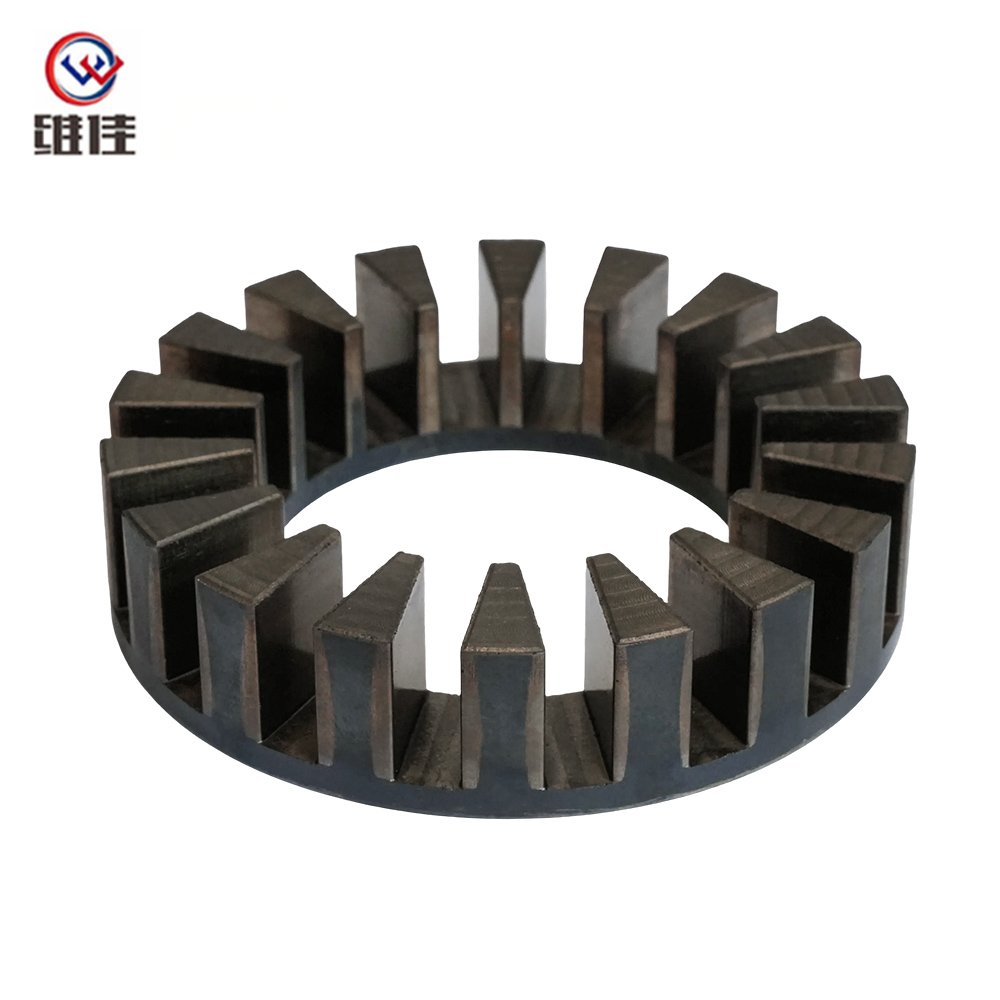
SMC Stator Core (SOMALOY 700HR-3P)
1. Product Overview
An SMC stator core is a magnetic motor component formed from electrically insulated ferromagnetic powder. Unlike a laminated core, which is assembled from numerous thin sheets of electrical steel, an SMC core is compacted as a near-net-shape three-dimensional component. This allows designers to create complex teeth, grooves, radial features, axial passages, and integrated magnetic paths that are difficult or uneconomical to manufacture using sheet laminations.
The featured product is a ring-shaped toothed stator core with 18 teeth. It is identified by model L1C10000557A-001A and has an outer diameter of approximately 100 mm, an inner diameter of approximately 65 mm, and a nominal thickness of 10 mm. The component is manufactured for precise motor assembly, with tight control over tooth profile, flatness, parallelism, and key dimensional interfaces.
The material grade is SOMALOY 700HR-3P. This grade offers a balanced combination of magnetic performance, electrical resistivity, mechanical strength, and thermal stability. The insulated powder structure reduces electrical currents circulating between individual particles. As a result, the material is especially useful in applications where the magnetic field changes rapidly or where the motor operates over a wide frequency range.
In a motor, the stator core guides magnetic flux and supports the windings. Its geometry directly influences torque, efficiency, vibration, heat generation, noise, and the overall size of the motor. A well-designed SMC stator core can support a more flexible magnetic circuit than a two-dimensional laminated stack, particularly when flux travels in axial, radial, and circumferential directions.
2. Material Characteristics of SOMALOY 700HR-3P
SOMALOY 700HR-3P is a soft magnetic composite based on iron particles that are individually insulated. During production, each particle is coated with an electrically insulating layer. The coated powder is then blended, compacted in a precision die, thermally treated, and finished to the required dimensions.
The insulation layer is a critical part of the material design. It increases electrical resistivity and interrupts the paths through which eddy currents would otherwise circulate. In conventional solid iron, changing magnetic fields can generate substantial electrical currents. These currents consume energy and produce heat. In a laminated core, thin steel sheets and interlaminar insulation reduce the current loop area. In an SMC core, particle-level insulation divides the material into a large number of electrically isolated regions.
The particle-based structure also supports three-dimensional flux movement. A laminated core generally provides its best magnetic performance in the plane of the sheets, while flux crossing the insulation between sheets may be less efficient. An SMC component is more isotropic, meaning that its magnetic behavior is more similar in different directions. This characteristic provides greater freedom when designing motors with complex magnetic circuits.
The selected material combines low core loss with adequate permeability and mechanical strength. It is suitable for high-frequency operating conditions, where the reduction of eddy current loss can contribute to improved motor efficiency. Its thermal operating range of approximately -40°C to 180°C also supports use in motors exposed to temperature fluctuations, enclosed motor housings, and continuous-duty HVAC equipment.
2.1 Typical Physical and Mechanical Properties
The specified density is at least 6.5 g/cm³. Density affects magnetic performance because excessive porosity reduces the effective cross-sectional area available for magnetic flux. Higher and more uniform density generally supports improved permeability and mechanical integrity.
The electrical resistivity is specified at a minimum of 80 μΩ·cm. This relatively high resistivity is important for reducing eddy current circulation within the compacted magnetic body. The actual loss behavior also depends on frequency, magnetic induction, waveform, density, coating integrity, and the final heat-treatment condition.
The specified hardness is at least 180 HV, while the bending strength is at least 400 MPa. These values help the component resist handling damage, assembly loads, vibration, and operating stresses. Mechanical strength is particularly important around the teeth, where narrow sections may be exposed to winding pressure or localized forces during motor assembly.
The coefficient of thermal expansion is approximately 12 × 10⁻⁶/°C between 20°C and 100°C. Matching thermal expansion behavior with surrounding components helps reduce stress during repeated heating and cooling. This is beneficial in air-conditioning motors and other appliances that may experience frequent start-stop cycles.
| Property | Specified Value | Engineering Significance |
|---|---|---|
| Material grade | SOMALOY 700HR-3P | High-performance soft magnetic composite |
| Density | ≥ 6.5 g/cm³ | Supports magnetic flux capacity and structural consistency |
| Electrical resistivity | ≥ 80 μΩ·cm | Helps reduce eddy current loss |
| Hardness | ≥ 180 HV | Improves wear and handling resistance |
| Bending strength | ≥ 400 MPa | Supports reliable tooth and ring structures |
| Thermal expansion coefficient | 12 × 10⁻⁶/°C | Promotes dimensional stability over temperature changes |
3. Magnetic Performance and Motor Efficiency
The magnetic performance of a stator core determines how effectively electrical input is converted into useful mechanical output. Important parameters include saturation magnetic induction, initial permeability, maximum permeability, coercivity, and core loss.
The specified saturation magnetic induction is at least 1.5 T. Saturation magnetic induction indicates the approximate point at which a material can no longer accept a proportional increase in magnetic flux for a given increase in magnetizing force. A higher saturation level allows designers to use compact magnetic sections while maintaining adequate flux density.
The initial permeability is specified at a minimum of 300 μ₀, and the maximum permeability is specified at a minimum of 1000 μ₀. Permeability describes how readily a material supports magnetic flux. Higher permeability can reduce the magnetizing force required to establish a magnetic field, although the final motor performance must also account for air gaps, geometry, operating frequency, local saturation, winding design, and assembly tolerances.
The coercivity is specified at no more than 20 A/m. Low coercivity is desirable in soft magnetic materials because it generally corresponds to lower hysteresis loss and easier magnetization reversal. This is valuable in alternating-field motor applications.
Core loss is specified at no more than 1.5 W/kg at 1.0 T and 50 Hz, and no more than 12 W/kg at 1.0 T and 400 Hz. These figures indicate the material’s suitability for both standard and elevated frequency conditions. In practical motor operation, loss will vary according to the magnetic waveform, local flux density, temperature, manufacturing condition, and frequency spectrum generated by the inverter.
| Magnetic Parameter | Specification | Importance in Motor Design |
|---|---|---|
| Saturation magnetic induction | ≥ 1.5 T | Supports compact magnetic sections and high flux density |
| Initial permeability | ≥ 300 μ₀ | Improves magnetic response at lower excitation levels |
| Maximum permeability | ≥ 1000 μ₀ | Supports efficient flux transfer under suitable operating conditions |
| Coercivity | ≤ 20 A/m | Helps reduce hysteresis-related energy loss |
| Core loss at 1.0 T/50 Hz | ≤ 1.5 W/kg | Indicates low loss under standard magnetic excitation |
| Core loss at 1.0 T/400 Hz | ≤ 12 W/kg | Demonstrates suitability for higher-frequency operation |
4. Advantages Compared with Laminated Silicon Steel Cores
Laminated silicon steel remains an important material for electric motors, generators, transformers, and other electromagnetic equipment. It offers strong in-plane magnetic performance and is well established in high-volume production. However, laminated construction can impose design limitations when a motor requires complex three-dimensional flux paths or integrated non-planar features.
The first major advantage of an SMC stator core is design freedom. A laminated core is normally manufactured by stamping individual sheets and stacking them. Features must be compatible with sheet stamping, stacking, bonding, welding, or interlocking. By contrast, a powder metallurgy die can form complex toothed shapes in a single compaction operation, reducing the need for multiple sheet components and extensive assembly.
The second advantage is three-dimensional magnetic behavior. In an SMC core, magnetic flux can travel through the component in multiple directions with comparatively uniform material properties. This supports axial-flux motors, claw-pole designs, transverse-flux concepts, and other structures that do not conform to a simple two-dimensional magnetic path.
The third advantage is reduced high-frequency eddy current loss. The insulated particles interrupt current paths throughout the component. This can be particularly useful in inverter-driven motors, where switching frequencies and rapidly changing magnetic fields may increase high-frequency losses in conventional magnetic materials.
The fourth advantage is weight reduction and component integration. A near-net-shape compact can combine features that might otherwise require several stamped parts. Reducing the number of components can simplify assembly, lower the possibility of alignment errors, and support more compact motor packaging.
SMC cores can also reduce certain manufacturing operations. A toothed stator can be pressed close to its final geometry, with only selected areas requiring precision post-processing. This may reduce scrap associated with stamping, minimize secondary machining, and shorten assembly time when the design is optimized for powder metallurgy.
However, material selection must always be application-specific. Laminated silicon steel may provide higher peak permeability or lower loss in certain low-frequency, high-flux designs. SMC is most attractive when three-dimensional flux, high-frequency performance, component integration, lightweight construction, and geometric flexibility are important. The appropriate comparison should therefore be based on the complete motor system rather than on one material parameter alone.
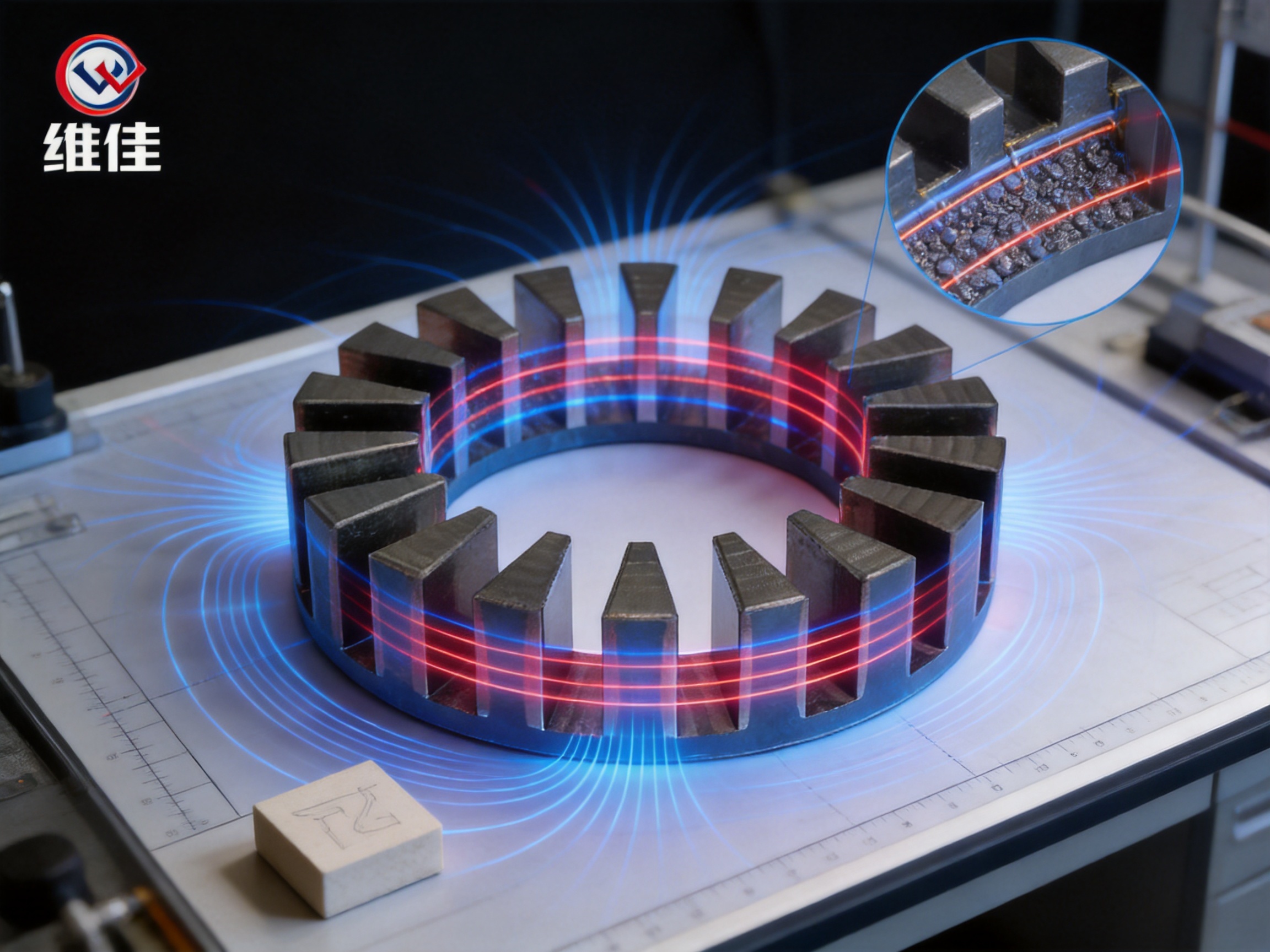
5. Powder Metallurgy Manufacturing Process
The quality of an SMC stator core depends on the entire manufacturing chain. Powder selection, particle-size distribution, insulation coating, mixing, die design, compaction pressure, thermal treatment, dimensional finishing, and inspection must work together. A defect or variation at one stage can affect density, strength, magnetic properties, or assembly accuracy.
5.1 Powder Preparation and Particle-Size Control
The process begins with carefully selected soft magnetic powder. Particle morphology and particle-size distribution influence flowability, compressibility, packing density, green strength, and final magnetic performance. A powder containing only very fine particles may have high surface area and increased friction. This can make die filling and compaction more difficult. A powder containing only coarse particles may flow well but leave larger pores and reduce final density.
An optimized gradation combines particles of different sizes to improve packing. Smaller particles can occupy spaces between larger particles, while the overall distribution remains suitable for die filling. The objective is to achieve a stable balance between flowability, density, insulation coverage, compressibility, and mechanical strength.
Particle-size control is performed using screening, laboratory analysis, and process monitoring. The material is evaluated before production to confirm that the powder meets the intended formulation. Consistent powder preparation helps maintain stable compaction behavior from batch to batch.
5.2 Insulation Coating
Each iron particle requires a reliable insulating coating. The coating should be continuous enough to interrupt electrical current paths, thin enough to avoid excessive magnetic dilution, and sufficiently adherent to withstand mixing, transportation, die filling, compaction, and thermal treatment.
If the coating is too thin or uneven, exposed metallic contact points can develop between particles. These contacts increase eddy current circulation and may raise core loss. If the coating is too thick, the nonmagnetic fraction increases and magnetic flux transfer between particles may be reduced. A coating that lacks adhesion may crack during compaction, while a brittle coating may produce inconsistent results around heavily loaded areas such as stator teeth.
For this reason, coating uniformity is one of the most important controls in SMC production. The formulation, application method, drying conditions, and handling procedures must be carefully managed. The manufacturing team evaluates the coating condition together with resistivity, density, strength, and magnetic test results.
5.3 Powder Mixing and Lubrication
After coating, the powder may be blended with carefully controlled processing additives and lubricants. Lubricants assist die filling, reduce friction against the tooling, and support ejection of the compact. However, excessive lubricant can reduce green strength, occupy volume that could otherwise contribute to magnetic density, or interfere with thermal treatment.
Mixing must be sufficiently uniform to prevent local variations in coating concentration or lubricant content. The sequence of material addition, mixing time, mixing speed, and storage conditions can influence the final result. The powder is protected from moisture and contamination before it reaches the compaction stage.
5.4 Precision Die Compaction
The prepared powder is loaded into a precision die designed for the 18-tooth stator geometry. High-efficiency presses apply controlled pressure to consolidate the powder into a green compact. Tooling design is especially important because the component contains an inner diameter, an outer ring, multiple teeth, and dimensional interfaces that must remain stable after ejection and thermal treatment.
Uniform density distribution is a primary objective. Large density differences can cause dimensional distortion, local weakness, magnetic variation, or cracking. The press settings, filling height, punch movement, compaction speed, and ejection force are adjusted to reduce these risks.
Complex tooth structures can be formed in one pressing operation, which is a major advantage over processes that require the assembly of individual stamped laminations. Single-operation forming improves repeatability and reduces the number of interfaces within the magnetic circuit.
5.5 Thermal Treatment and Sintering
Following compaction, the green compact receives a controlled thermal treatment. The exact cycle is selected to stabilize the component while preserving the insulating characteristics required for soft magnetic performance. Temperature, atmosphere, heating rate, holding time, and cooling rate must be controlled carefully.
Unlike conventional structural powder metallurgy parts, SMC components require particular attention to the relationship between heat treatment and particle insulation. Excessive temperature or unsuitable atmosphere may damage the coating and reduce electrical resistivity. A properly controlled process helps remove processing residues, stabilize the compact, and maintain the desired balance between strength and magnetic performance.
5.6 Precision Post-Processing
Although powder metallurgy produces a near-net-shape part, selected surfaces may require sizing, calibration, grinding, deburring, or other precision operations. Post-processing is used to control the outer diameter, inner diameter, tooth profile, flatness, parallelism, and assembly surfaces.
The specified dimensional requirements include an outer diameter of Φ100.0 ±0.1 mm, an inner diameter of Φ65.0 ±0.1 mm, and a thickness of 10.0 ±0.05 mm. The tooth profile tolerance is ±0.03 mm, flatness is no more than 0.05 mm, and parallelism is no more than 0.03 mm.
These tolerances help ensure that the stator core fits the motor housing and aligns correctly with the rotor and windings. Good dimensional control can reduce air-gap variation, prevent interference during assembly, and help maintain consistent electromagnetic performance across production batches.
6. Particle Size, Coating Quality, and Final Performance
Particle size and insulation coating are not independent variables. They interact throughout compaction and thermal processing. A powder formulation that performs well in a simple ring may behave differently in a toothed stator because the teeth create narrow filling regions, local pressure changes, and more demanding ejection conditions.
Fine particles, generally below approximately 50 μm, can provide a high surface area for insulation and may support a uniform microstructure. Nevertheless, their increased surface area can raise inter-particle friction and reduce compressibility. If the powder does not fill the die effectively, the final density may be lower than expected.
Coarse particles, generally above approximately 150 μm, can improve flowability but may create greater porosity. Larger pores reduce the effective magnetic area and can act as stress concentration points. They may also make it more difficult to maintain the desired surface finish and tooth strength.
An optimized particle-size distribution uses a controlled mixture to improve packing density and contact behavior. The specific blend should be validated through density measurements, transverse rupture or bending-strength testing, resistivity testing, and magnetic characterization.
The insulation coating must remain intact during compaction. The pressure required to produce a strong, dense stator can be substantial, particularly in narrow tooth sections. A coating that cracks excessively can produce conductive bridges between particles. A coating that is excessively thick may reduce the magnetic fraction and lower permeability.
| Material Variable | Potential Benefit | Potential Risk if Poorly Controlled | Manufacturing Response |
|---|---|---|---|
| Fine powder fraction | Improved coating coverage and packing | Higher friction and lower compressibility | Optimize gradation and compaction settings |
| Coarse powder fraction | Improved flowability | Higher porosity and reduced strength | Limit coarse content and verify density |
| Thin insulation coating | Higher magnetic fraction | Conductive bridges and higher core loss | Inspect coating continuity and resistivity |
| Thick insulation coating | Strong electrical isolation | Reduced permeability and magnetic dilution | Control coating thickness and formulation |
| High lubricant content | Easier ejection and lower die friction | Lower green strength and density | Control addition rate and mixing uniformity |
Jiande Welfine Technology Co., Ltd. uses process experience and testing equipment to evaluate these interacting variables. The company’s powder metallurgy background allows it to adjust formulation and forming parameters according to part geometry, required strength, magnetic targets, and production volume.
7. Dimensional Accuracy and Motor Assembly
A stator core is not only a magnetic component; it is also a precision mechanical interface. The inner and outer diameters determine its relationship with the rotor, housing, retaining structure, and winding system. The thickness affects stack height and the position of the magnetic circuit. The tooth profile determines how the winding is supported and how the air gap and flux distribution are formed.
For this product, the outer diameter is controlled to Φ100.0 ±0.1 mm, and the inner diameter is controlled to Φ65.0 ±0.1 mm. These tolerances support accurate positioning in the motor assembly. The nominal thickness is 10.0 mm with a tolerance of ±0.05 mm, helping maintain the designed axial relationship between components.
The 18-tooth arrangement must be evenly formed around the ring. Variations in tooth width, tooth angle, or tooth tip profile can cause unequal magnetic loading, winding difficulty, vibration, or acoustic noise. A controlled tooth profile tolerance of ±0.03 mm supports consistent electromagnetic geometry.
Flatness of no more than 0.05 mm and parallelism of no more than 0.03 mm are important for stable contact with adjacent components. Poor flatness can create local gaps, cause rocking during assembly, or increase stress when the part is clamped. Good parallelism helps ensure that the stator remains correctly positioned throughout operation.
Precision post-processing and inspection are therefore essential even when the initial shape is produced by pressing. The manufacturing route combines near-net-shape efficiency with targeted finishing, providing a practical balance between production economy and motor-grade accuracy.
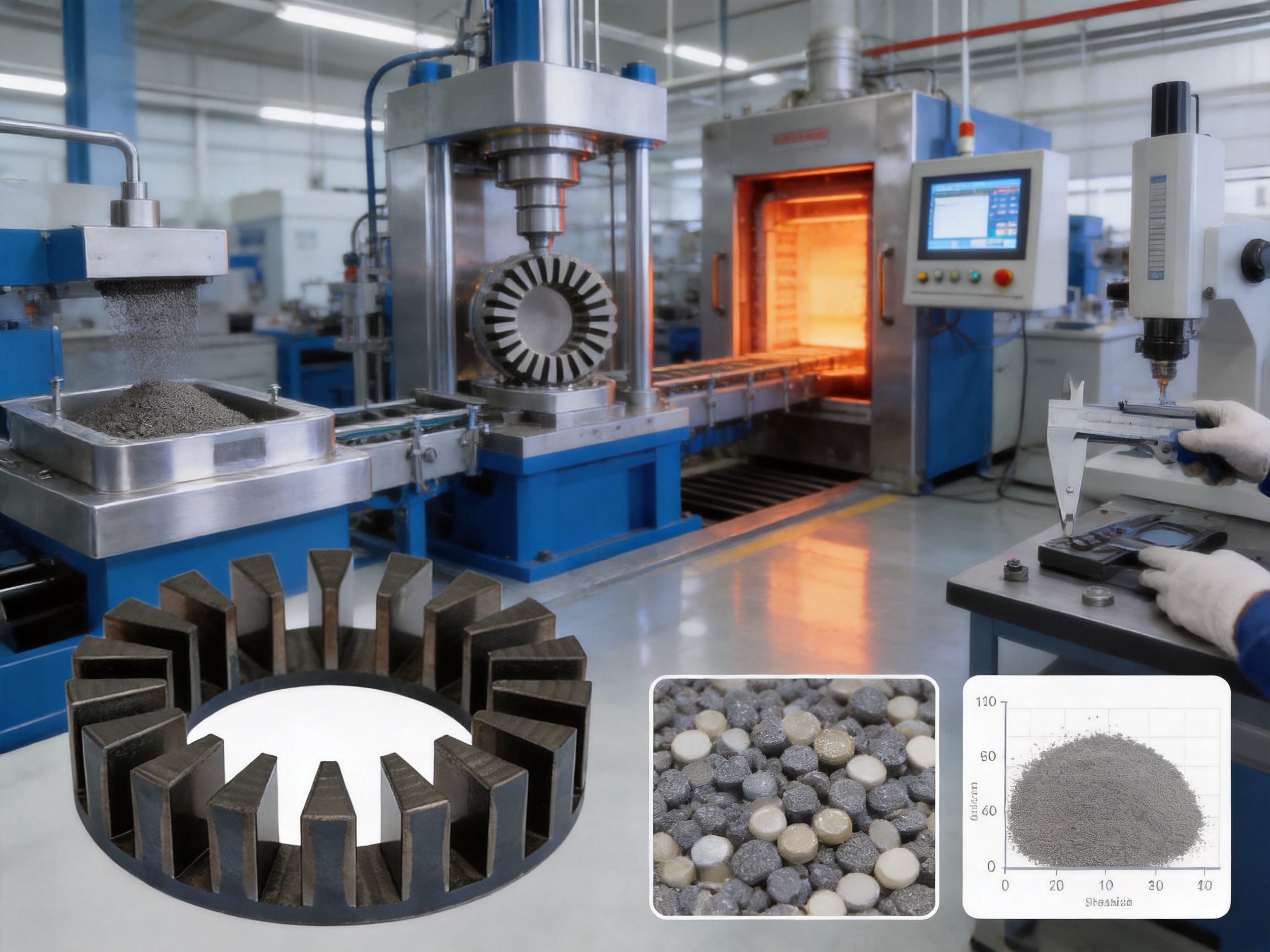
8. Quality Assurance and Reliability
Reliable SMC stator cores require more than final dimensional inspection. Quality must be controlled from incoming powder through packaging and delivery. A robust quality system verifies raw material condition, coating performance, powder flow behavior, compaction stability, thermal treatment, dimensional accuracy, surface condition, and magnetic properties.
Jiande Welfine Technology Co., Ltd. has implemented ISO 9001:2015 and IATF 16949:2016 quality management systems. These certifications support systematic process documentation, traceability, corrective action, equipment maintenance, inspection planning, and continuous improvement. They are particularly valuable for customers that require repeatable OEM production and controlled batch delivery.
Inspection may include density measurement, hardness testing, bending or transverse rupture testing, electrical resistivity testing, magnetic loss evaluation, dimensional measurement, flatness measurement, parallelism verification, and visual examination. The exact inspection plan can be adapted to the customer’s drawing, technical specification, and application risk.
8.1 Environmental and Thermal Reliability
The stated operating temperature range is -40°C to 180°C. This range supports applications exposed to cold starts, elevated motor temperatures, and enclosed appliance environments. The material and processing system are selected to maintain structural and magnetic stability throughout normal service conditions.
The dielectric withstand voltage is specified at a minimum of 500 VAC for one minute. This requirement supports electrical isolation verification, although the complete motor insulation system must also be evaluated independently. The stator core should be integrated with suitable winding insulation, slot insulation, varnish, and housing design.
Corrosion resistance is specified as no significant rust after a 48-hour neutral salt spray test. Moisture control remains important because iron-based components can oxidize when exposed to water, condensation, salts, or contaminated handling environments. Protective packaging and suitable storage conditions help preserve the component before assembly.
Thermal shock testing specifies no cracking after 10 cycles between 150°C and room temperature. This type of test helps evaluate resistance to rapid temperature changes. It is relevant to motors that experience intermittent operation, transportation between different climates, or repeated heating and cooling during service.
| Reliability Item | Specification | Purpose |
|---|---|---|
| Operating temperature | -40°C to 180°C | Supports cold-start and elevated-temperature applications |
| Dielectric withstand | ≥ 500 VAC for 1 minute | Verifies electrical isolation under the stated test condition |
| Neutral salt spray | No significant rust after 48 hours | Evaluates corrosion resistance |
| Thermal shock | No cracking after 10 cycles from 150°C to room temperature | Evaluates resistance to rapid temperature changes |
9. Application in Inverter Air-Conditioner Motors
Inverter air conditioners adjust compressor and fan motor speed according to cooling or heating demand. This operating method can improve comfort and energy efficiency, but it also exposes motor components to variable speed, changing magnetic frequency, frequent load transitions, and long periods of operation.
The SMC stator core is suitable for indoor and outdoor drive motors used in household inverter air-conditioning systems. It is particularly relevant to high-efficiency motors in systems of approximately 1.5 horsepower and above, subject to final motor design validation.
Low core loss can reduce heat generation within the magnetic circuit. Lower heat can help preserve winding insulation, improve motor efficiency, and reduce the thermal burden placed on the housing and cooling system. The three-dimensional magnetic capability can also support compact motor architectures that are difficult to realize with conventional flat laminations.
Dimensional precision is equally important. The stator must fit accurately within the motor housing and maintain a controlled relationship with the rotor. A precise tooth profile supports consistent winding placement, while good flatness and parallelism help reduce mechanical vibration and assembly variation.
Low magnetostriction and a uniform magnetic circuit can contribute to quieter operation. Acoustic behavior depends on the complete motor, including rotor balance, bearing design, winding excitation, inverter waveform, housing stiffness, and mounting conditions. Nevertheless, a consistent stator geometry is an important foundation for noise and vibration control.
10. Commercial HVAC and Fan Motor Applications
Commercial multi-split systems, ducted air conditioners, ventilation equipment, and central HVAC fan systems often operate for long periods. Their motors must maintain efficiency and reliability under continuous or frequent-duty conditions.
An SMC stator core can support these applications through its low-loss magnetic behavior, thermal stability, and integrated geometry. Reduced core loss may help lower the overall energy consumption of a fan motor, especially when the motor operates at elevated frequency or under variable-speed control.
The component’s mechanical strength is valuable in continuous-duty equipment. Stator teeth and ring sections must withstand winding insertion, assembly forces, vibration, and thermal cycling. The specified bending strength and hardness provide a foundation for reliable handling and service performance.
For commercial equipment manufacturers, stable batch production is often as important as individual part performance. Consistent compaction, controlled thermal processing, and documented inspection help reduce motor-to-motor variation. The manufacturer can schedule production flexibly according to order requirements and support stable supply for repeat programs.
11. Fresh-Air Systems, Air Purifiers, and Smart Appliances
Fresh-air systems and air purification equipment frequently use compact drive motors that must operate quietly and efficiently. These motors may run at low speed for extended periods and may require adequate torque without excessive heat or acoustic output.
The SMC stator core provides a lightweight magnetic component with a flexible design profile. Its three-dimensional magnetic behavior can be adapted to compact motor structures, while the insulated particle construction helps control loss under changing excitation conditions.
The same design concept can be extended to dehumidifiers, portable air conditioners, circulation systems, and other smart-home appliances. In these products, a smaller and lighter motor can support easier packaging, lower shipping weight, and improved system responsiveness.
Application-specific validation remains necessary. The final motor designer should evaluate magnetic circuit geometry, winding fill, rotor material, air gap, control algorithm, operating temperature, acoustic targets, and life-cycle requirements. The stator core supplier can support this process by providing samples, drawings, material data, inspection reports, and customized production trials.
12. Manufacturing Strengths of the Supplier
Jiande Welfine Technology Co., Ltd. was established in 2001 and operates as a high-technology enterprise integrating research and development, production, and sales. Its main business includes powder metallurgy bushings, self-lubricating bushings, precision sintered components, and other powder metallurgy products.
The company operates a modern production base of approximately 13,039 square meters and employs more than 150 skilled personnel. Its equipment includes high-efficiency presses, high-temperature sintering furnaces, precision forming machines, and testing equipment. This combination of production capacity and process knowledge supports both standard component manufacturing and customized OEM/ODM projects.
Experience in powder metallurgy bushings and precision parts is directly relevant to SMC stator production. Both product categories require control of powder behavior, compaction pressure, dimensional change, sintering or thermal treatment, tooling wear, surface quality, and batch consistency. The supplier’s established manufacturing discipline helps manage these requirements systematically.
The company provides OEM and ODM services based on customer drawings or samples. For an SMC stator core, customization may involve outer diameter, inner diameter, thickness, tooth count, tooth profile, mounting features, magnetic targets, surface treatment, packaging, and inspection documentation.
Customers may also request adjustments to powder particle-size distribution or insulation coating formulation. Such adjustments should be performed through controlled trials and validated against defined requirements. Possible target ranges include customized relative permeability and transverse rupture strength, depending on the motor design and test method.
The supplier’s quality commitment is supported by ISO 9001:2015 and IATF 16949:2016 certification. These systems help establish disciplined control over production records, supplier management, inspection processes, nonconforming material, corrective action, and customer feedback.
13. Competitive Advantages of the SMC Stator Core
13.1 Integrated Three-Dimensional Geometry
The most important competitive advantage is the ability to form a complex stator geometry as an integrated powder metallurgy component. This reduces reliance on stacks of individually stamped sheets and enables magnetic paths that are not limited to a single plane.
13.2 Reduced High-Frequency Loss
The insulated particle structure provides high electrical resistivity and limits eddy current circulation. This can be advantageous in inverter-driven motors, where high-frequency components may contribute significantly to total core loss and heat generation.
13.3 Near-Net-Shape Production
Powder compaction can produce teeth and ring features close to the final shape. Compared with machining a solid magnetic block, this approach reduces material waste and supports economical mass production. Compared with assembling many laminations, it can reduce the number of parts and assembly steps.
13.4 Lightweight Motor Construction
The design can help reduce motor weight and support compact equipment layouts. Lower weight may improve product handling, reduce structural loads, and provide greater flexibility for appliance and HVAC designers.
13.5 Consistent Dimensional Control
Precision tooling and post-processing support tight control over critical dimensions. Controlled outer diameter, inner diameter, thickness, tooth profile, flatness, and parallelism help maintain predictable motor assembly and electromagnetic performance.
13.6 Custom OEM and ODM Support
The product is not limited to one fixed configuration. The supplier can evaluate customer drawings, samples, and technical requirements to develop customized stator cores. This is valuable for motor manufacturers seeking a component that fits an existing housing or a newly developed magnetic circuit.
13.7 Stable Batch Supply
Production scheduling, documented process control, and an established manufacturing base support repeat orders. Stable supply is essential for appliance manufacturers and motor producers that need consistent components across pilot production, validation, and mass production.
14. Recommended Design and Purchasing Considerations
Before ordering an SMC stator core, the customer should provide complete information about the motor application. Useful details include motor type, rated speed, operating frequency, maximum temperature, duty cycle, winding arrangement, rotor dimensions, housing interface, air-gap requirement, expected service life, and applicable testing standards.
The drawing should identify all critical dimensions and tolerances. These may include the outer diameter, inner diameter, thickness, tooth count, tooth width, tooth angle, root radius, tooth-tip geometry, keyways, locating features, surface requirements, and allowable burrs or edge breaks.
Magnetic requirements should be stated together with the test method. Permeability and core loss can vary with magnetic induction, frequency, waveform, sample geometry, density, and temperature. A customer specification should therefore identify the intended measurement conditions instead of listing only a single value.
Mechanical requirements should include hardness, bending strength or transverse rupture strength, allowable cracks, dimensional stability, and assembly loads. If the stator will undergo winding insertion, adhesive bonding, press fitting, or high-speed rotation, these operations should be considered during component validation.
Environmental requirements should cover temperature, humidity, corrosion exposure, thermal shock, vibration, and storage period. Packaging specifications should be defined when the product will cross international borders or remain in storage for an extended time.
Prototype samples are recommended before mass production. Sample testing can verify the fit within the motor, tooth winding process, magnetic performance, thermal behavior, acoustic output, and control compatibility. After approval, a production control plan can be established for repeat manufacturing.
15. Packaging, Storage, and Delivery
SMC stator cores should be protected from moisture, impact, contamination, and oxidation during transportation. The specified packaging approach uses moisture-proof and rust-resistant independent packaging. This helps reduce contact damage, surface oxidation, and movement-related impact during shipment.
Protective separators or suitable internal supports can prevent the teeth from contacting one another or the outer carton. Packaging should be selected according to part weight, quantity, transportation distance, stacking method, and customer handling process.
Storage areas should be dry, clean, and protected from condensation. Components should remain in their original packaging until they are ready for inspection or assembly. If the parts are exposed to humid conditions, the customer should inspect the surfaces before motor assembly and follow an agreed preservation procedure.
Delivery schedules can be arranged according to order volume and production requirements. For ongoing programs, forecast information and release schedules can help the supplier reserve material, tooling capacity, inspection resources, and production time.
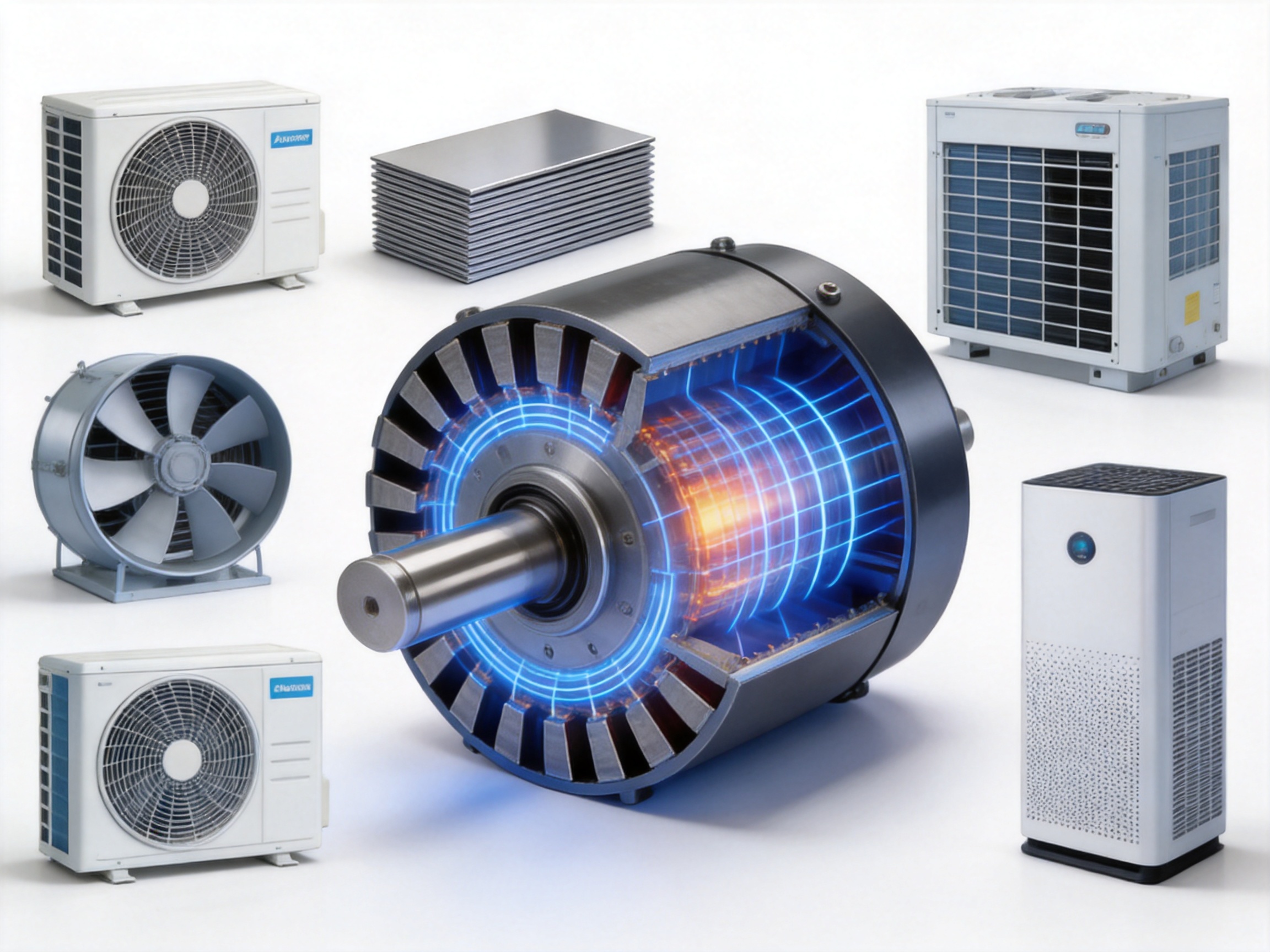
16. Q&A: Frequently Asked Questions
Q1: What is an SMC stator core?
An SMC stator core is a motor stator component made from electrically insulated soft magnetic powder. The powder is compacted into a three-dimensional toothed or ring-shaped geometry and then thermally processed and precision-finished. The insulation between particles increases electrical resistivity and helps reduce eddy current loss.
Q2: Why is SMC suitable for inverter-driven motors?
Inverter-driven motors experience variable frequency and rapidly changing magnetic fields. The insulated particle structure of an SMC material limits circulating electrical currents and can reduce high-frequency core loss. The final result depends on the material grade, magnetic induction, frequency, motor geometry, temperature, and manufacturing condition.
Q3: How does this product compare with a laminated silicon steel core?
The SMC stator core offers greater three-dimensional design freedom, integrated toothed geometry, high electrical resistivity, and potential weight reduction. Laminated silicon steel may remain advantageous in some conventional low-frequency or high-flux applications. The best choice should be determined through complete motor testing and electromagnetic simulation.
Q4: What material is used for this stator core?
The specified material is SOMALOY 700HR-3P, a high-performance soft magnetic composite. The material is selected for its combination of permeability, electrical resistivity, low core loss, mechanical strength, and thermal stability.
Q5: How many teeth does the stator have?
The specified model has 18 teeth. Tooth count and tooth geometry can influence winding space, magnetic reluctance, torque ripple, acoustic behavior, and motor control performance.
Q6: What are the principal dimensions?
The model L1C10000557A-001A has an outer diameter of Φ100.0 ±0.1 mm, an inner diameter of Φ65.0 ±0.1 mm, and a thickness of 10.0 ±0.05 mm. The tooth profile tolerance is ±0.03 mm, flatness is no more than 0.05 mm, and parallelism is no more than 0.03 mm.
Q7: Can the stator core be customized?
Yes. OEM and ODM customization can be developed from customer drawings, samples, or application requirements. Possible adjustments include dimensions, tooth configuration, material formulation, magnetic performance, mechanical strength, finishing, packaging, and inspection documentation.
Q8: Can particle size be adjusted for a special motor design?
Particle-size distribution can be evaluated and optimized according to the required density, permeability, core loss, green strength, final mechanical strength, and die-filling behavior. Any formulation change should be validated through laboratory testing and prototype production.
Q9: Why is insulation coating quality important?
The coating electrically separates iron particles and reduces eddy current paths. Defective or damaged coating can increase core loss and reduce resistivity. An excessively thick coating can reduce the magnetic fraction and lower permeability. Uniform coverage and controlled thickness are therefore essential.
Q10: What quality certifications does the manufacturer have?
Jiande Welfine Technology Co., Ltd. operates under ISO 9001:2015 and IATF 16949:2016 quality management certifications. These systems support traceability, process control, inspection management, corrective action, and continuous improvement.
Q11: What tests can be performed on the component?
Testing may include density, hardness, bending strength, transverse rupture strength, electrical resistivity, core loss, permeability, saturation behavior, dimensional accuracy, flatness, parallelism, corrosion resistance, thermal shock, and visual inspection. The final test plan can be agreed with the customer.
Q12: Is the product suitable for household air conditioners?
The stator core is designed for high-efficiency air-conditioner motors and can be applied to indoor and outdoor drive motors, subject to motor-level validation. Its low-loss magnetic behavior, lightweight structure, dimensional precision, and thermal capability are suitable for inverter air-conditioning applications.
Q13: Can it be used in commercial HVAC fan motors?
Yes. The component can be considered for commercial multi-split systems, ducted air conditioners, ventilation equipment, and other fan motor applications. Continuous-duty testing should confirm temperature rise, noise, vibration, efficiency, and service life in the complete motor.
Q14: How should the stator cores be packaged?
Moisture-proof and rust-resistant individual packaging is recommended. Internal separators or supports should be used to protect teeth and precision surfaces from impact. Storage should take place in a clean, dry environment protected from condensation.
Q15: What information is needed for a quotation?
A quotation normally requires the drawing or sample, material grade, annual or batch quantity, critical tolerances, surface requirements, inspection requirements, packaging method, delivery destination, and any required prototype or tooling program. Motor operating data can also help determine whether the material and geometry are suitable.
17. Conclusion
The SMC stator core made from SOMALOY 700HR-3P is a specialized magnetic component for motor designs that demand low loss, three-dimensional flux capability, lightweight construction, and accurate integrated geometry. Its 18-tooth ring structure is formed through powder metallurgy compaction and supported by controlled thermal processing and precision post-processing.
Compared with traditional laminated construction, the product offers greater geometric flexibility and a more isotropic magnetic structure. Its insulated particles help reduce eddy current loss, particularly under high-frequency operating conditions. Its near-net-shape production route can also reduce assembly complexity and support economical manufacturing of complex stator forms.
Performance depends on disciplined control of powder particle size, insulation coating, lubrication, compaction, heat treatment, finishing, and inspection. Jiande Welfine Technology Co., Ltd. combines more than two decades of powder metallurgy experience with a modern production base, advanced equipment, skilled personnel, OEM/ODM engineering support, and ISO 9001:2015 and IATF 16949:2016 quality systems.
For air-conditioning motors, commercial HVAC equipment, fresh-air systems, air purifiers, dehumidifiers, and other efficient motor applications, this type of SMC stator core provides a practical route toward improved energy performance, compact packaging, lower operating noise, and stable long-term service. Final suitability should be verified through prototype testing and complete motor evaluation, but the material and manufacturing platform provide a strong foundation for customized high-performance motor development.
References
1. SOMALOY 700HR-3P material information and technical data supplied for product evaluation.
2. ISO 9001:2015, Quality Management Systems—Requirements.
3. IATF 16949:2016, Quality Management System Requirements for Automotive Production and Relevant Service Parts Organizations.
4. Powder Metallurgy Principles and Applications, covering powder characterization, compaction, sintering, density control, and dimensional accuracy.
5. Standard engineering methods for evaluating soft magnetic materials, including permeability, coercivity, saturation magnetic induction, electrical resistivity, and core loss.
6. General design practices for inverter-driven motors, HVAC fan motors, axial-flux machines, and three-dimensional magnetic circuits.
Product: SMC Stator Core (SOMALOY 700HR-3P)

Related products
-
-
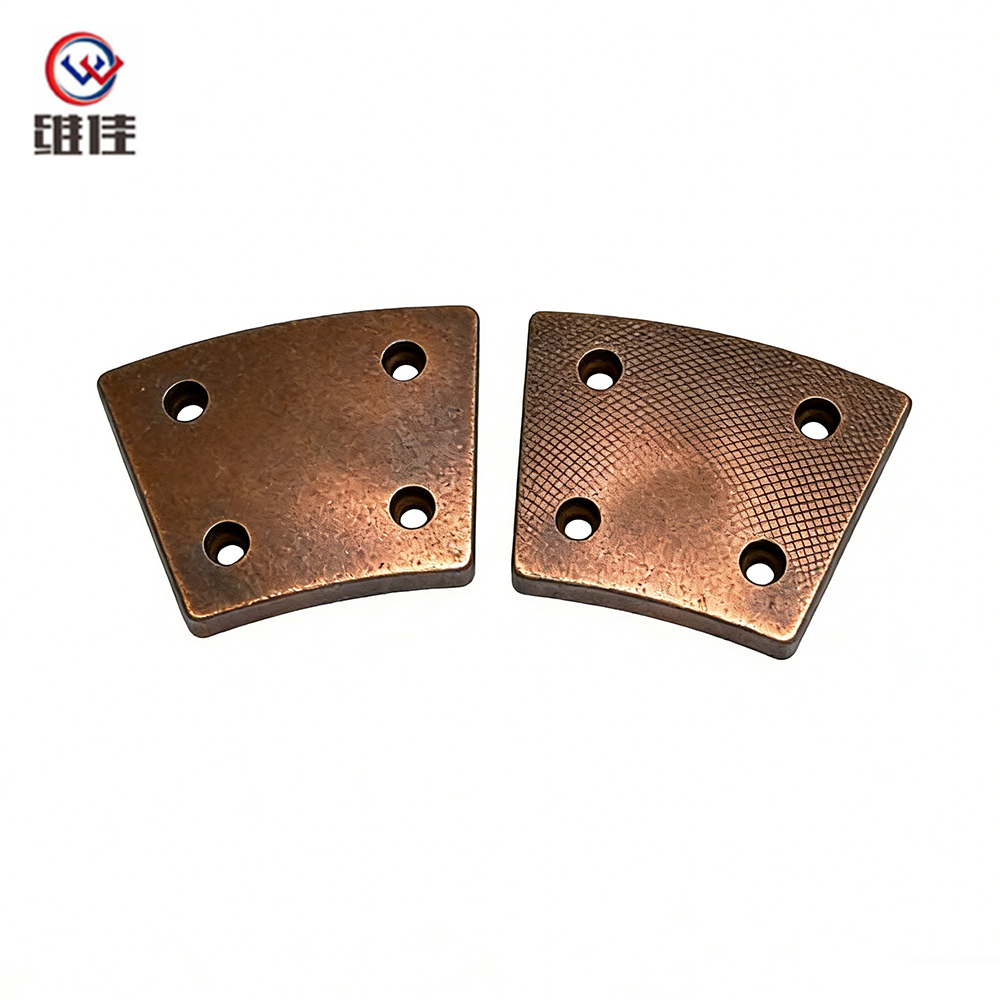
Description: 79.5×62×7.3mm copper-based brake pad with 4-hole design. Density 6.2g/cm³, weight 195g. Free from graphite segregation, cracks, and defects. Ideal for heavy-duty industrial braking system...
See Details -
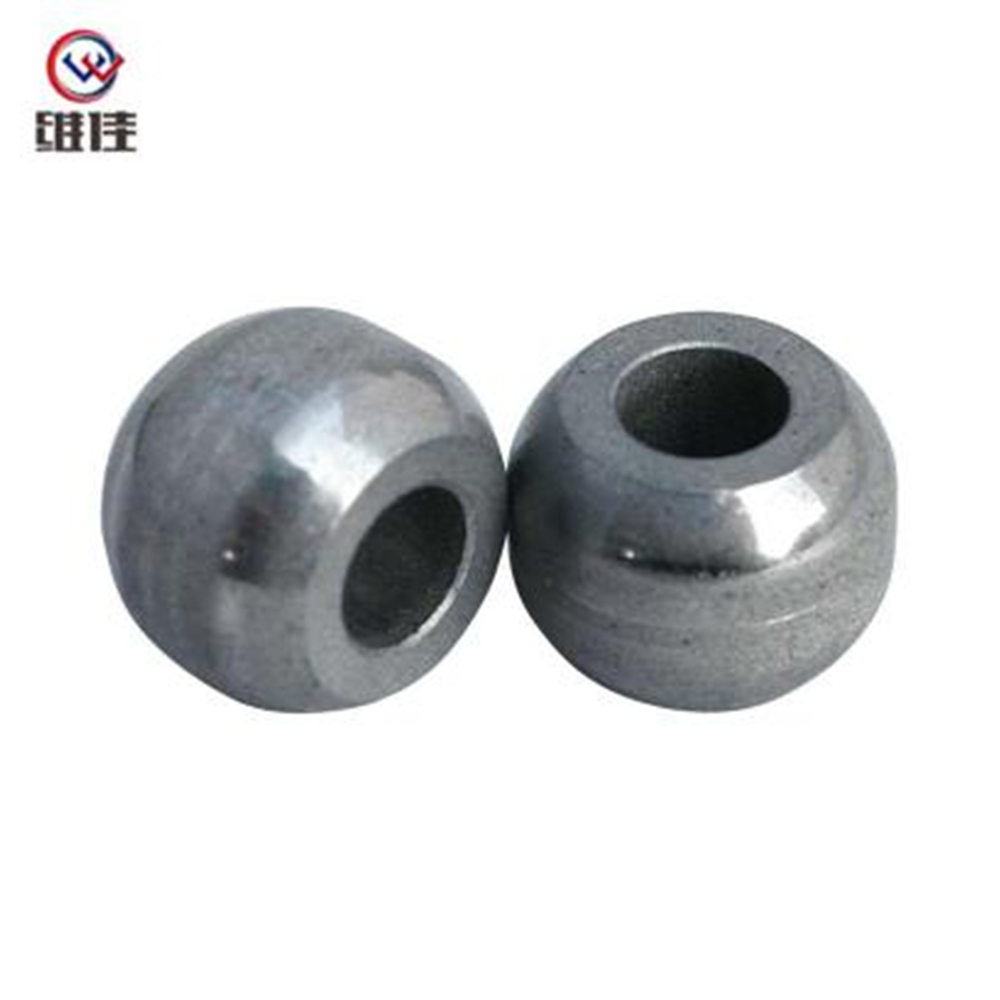
Product Description: High-precision powder metallurgy part (S14*7*10) made of iron material from Jiande Wefine, customized PM components with strict tolerance control.
See Details
Copyright © Jiande Welfine Technology Co., Ltd. All Rights Reserved. Custom Self-lubricating Sintered Bushing Manufacturers
