 English
 中文简体
中文简体
Description: 79.5×62×7.3mm copper-based brake pad with 4-hole design. Density 6.2g/cm³, weight 195g. Free from graphite segregation, cracks, and defects. Ideal for heavy-duty industrial braking system...
See DetailsE-mail us: [email protected]
Tel: +86-15239857375


 Home / Author / Tan Xinyue — After-Sales Technical Coordinator / High-Density Copper-Based Brake Pad for Heavy-Duty Industrial Braking
 High-Density Copper-Based Brake Pad for Heavy-Duty Industrial Braking
 2026.07.02
 Tan Xinyue — After-Sales Technical Coordinator
Content
- 1 Product Overview: A Compact Industrial Brake Lining with High Functional Density
- 2 Why Copper-Based Sintered Friction Materials Are Preferred in Demanding Braking Systems
- 3 High Density as a Performance Requirement
- 4 Zero Graphite Segregation: A Critical Advantage Over Inconsistent Friction Linings
- 5 Crack-Free and Defect-Free Construction
- 6 Optimized 4-Hole Design for Secure Installation
- 7 Technical Parameters
- 8 Manufacturing Strength: Powder Metallurgy as an Engineering Platform
- 9 Company Capabilities Supporting Product Reliability
- 10 Advantages Over Competing Brake Pad Options
- 11 Application Scenarios
- 12 Friction Stability and Wear Behavior
- 13 Thermal Conductivity and Resistance to Brake Fade
- 14 Dimensional Precision and Fitment Reliability
- 15 Quality Control from Raw Material to Shipment
- 16 Maintenance and Service Life Considerations
- 17 Customization and OEM/ODM Support
- 18 Why This Brake Pad Is a Strong Choice for Industrial Buyers
- 19 Q&A Section
- 19.1 Q1: What is the main advantage of a copper-based sintered brake pad?
- 19.2 Q2: Why is the 6.2 g/cm³ density important?
- 19.3 Q3: What does “no graphite segregation” mean?
- 19.4 Q4: Why does the brake pad use a 4-hole design?
- 19.5 Q5: Which industries can use this brake pad?
- 19.6 Q6: How does this product compare with organic brake linings?
- 19.7 Q7: Can the brake pad be customized?
- 19.8 Q8: What quality checks are important for this product?
- 19.9 Q9: What affects the service life of the brake pad?
- 19.10 Q10: Why choose an experienced powder metallurgy manufacturer for brake pads?
- 20 Conclusion
- 21 References
- 22 Product: High-Density Copper-Based Brake Pad | 79.5×62×7.3mm | 4-Hole Industrial Brake Lining
Heavy-duty braking systems in cranes, mining machinery, metallurgical equipment, wind turbine systems, marine deck machinery, conveyors, elevators, and industrial drives depend on friction materials that remain stable under load, temperature, vibration, and repeated emergency stopping cycles. The 79.5×62×7.3 mm high-density copper-based brake pad is designed for these demanding conditions, combining a 6.2 g/cm³ sintered copper-based matrix, a practical 4-hole mounting structure, and strict defect-control standards to deliver reliable braking performance where ordinary friction linings may wear too quickly, fade under heat, or damage the mating rotor.
This brake pad belongs to the friction materials category and is manufactured through powder metallurgy, a process that allows copper, graphite, metallic additives, and performance-modifying phases to be blended, compacted, sintered, and finished into a dense, dimensionally controlled component. Compared with many conventional organic, semi-metallic, or inconsistent low-density sintered linings, this product emphasizes stable friction, effective heat dissipation, rotor-friendly contact behavior, low defect risk, and suitability for continuous industrial service.
Jiande Welfine Technology Co., Ltd. manufactures sintered metal parts, oil-impregnated bearings, bushings, friction materials, magnetic materials, and related powder metallurgy components. With more than 20 years of experience, ISO 9001:2015 and IATF 16949:2016 quality management certifications, a 13,039-square-meter production base, advanced pressing equipment, high-temperature sintering furnaces, precision forming capability, and OEM/ODM customization support, the company is positioned to supply brake pads not only as standard parts but also as engineered friction solutions adapted to customer drawings, samples, and operating requirements.
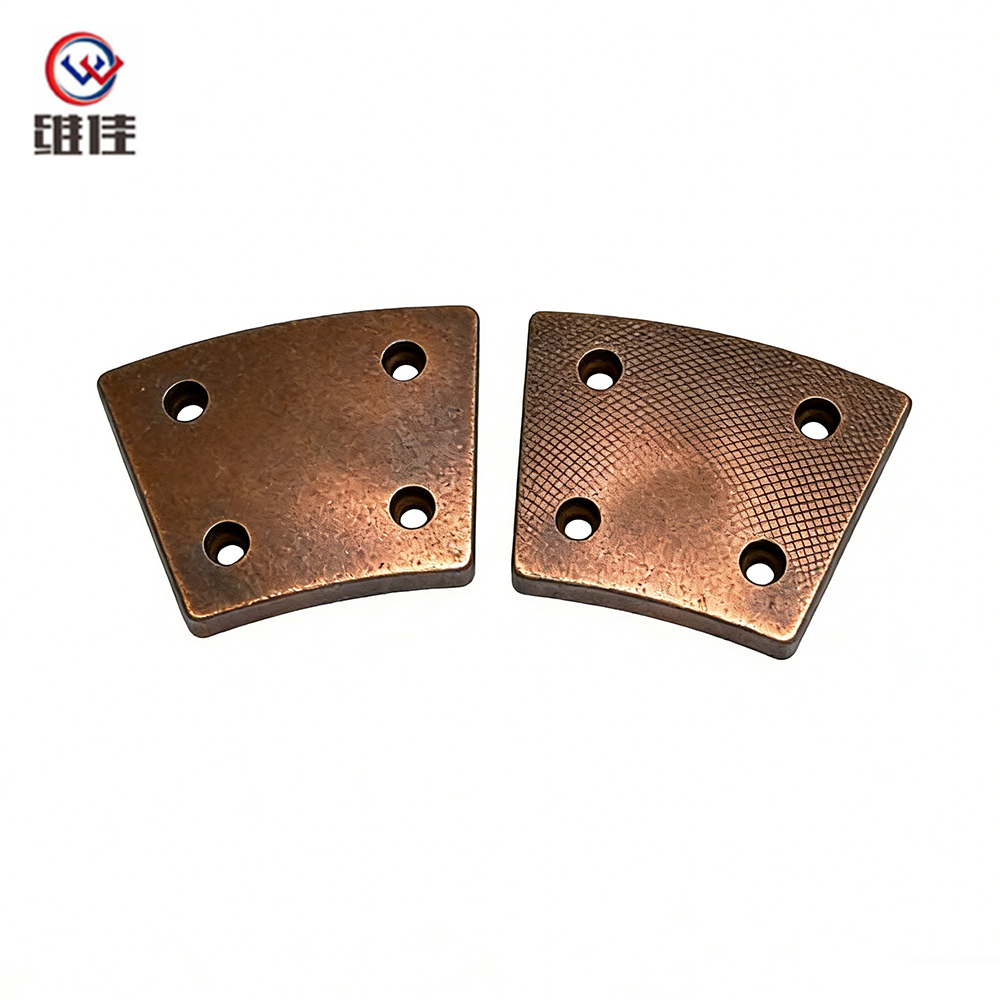
High-Density Copper-Based Brake Pad | 79.5×62×7.3mm | 4-Hole Industrial Brake Lining
Product Overview: A Compact Industrial Brake Lining with High Functional Density
The product is a copper-based sintered brake pad with nominal dimensions of 79.5×62×7.3 mm, a 4-hole installation pattern, a density of approximately 6.2 g/cm³, and a single-piece weight of about 195 g. These parameters are not random catalog details; each one influences performance in real braking systems. The length and width define the effective contact area, the thickness determines lining life and installation compatibility, the 4-hole design affects retention and force distribution, and density strongly influences wear resistance, heat transfer, structural integrity, and friction consistency.
In industrial braking, a friction lining is often required to perform under intermittent high-energy stops, frequent holding operations, and exposure to dust, humidity, temperature variation, and mechanical vibration. A brake pad that works acceptably during a short bench trial may fail prematurely if its density is uneven, if graphite segregates during manufacturing, if internal cracking occurs during compaction or sintering, or if the mounting holes do not align correctly with the brake assembly. This copper-based brake pad addresses those risks through controlled powder metallurgy production and systematic inspection.
The material is described as free from graphite segregation, cracks, and visible defects. This is particularly important for copper-based friction materials because graphite is usually added as a solid lubricant and friction stabilizer. When graphite is distributed evenly, it helps form a transfer film on the mating surface, reducing localized metal-to-metal contact and stabilizing the coefficient of friction. When graphite segregates, however, one area of the brake pad may become too lubricated while another becomes too aggressive, creating uneven wear, vibration, hot spots, and premature failure.
The nominal friction coefficient range under dry conditions is stable around 0.35–0.40, depending on test conditions, mating material, surface state, and application environment. This range is suitable for many heavy-duty industrial braking systems because it provides strong braking force without the excessive rotor aggressiveness often associated with harder, high-friction materials. The wear rate is specified at no more than 1.0×10⁻⁴ cm³/J, while shear strength is specified at no less than 7 MPa. The product is also suitable for a broad working temperature range from approximately -40°C to 600°C, subject to actual assembly design, duty cycle, and customer validation.
Why Copper-Based Sintered Friction Materials Are Preferred in Demanding Braking Systems
Copper-based sintered friction materials occupy a valuable position between softer organic linings and more aggressive iron-based sintered materials. Copper has high thermal conductivity, good ductility, and a relatively rotor-friendly contact behavior. In a brake pad, these qualities help move heat away from the contact interface, reduce the risk of thermal fade, and limit severe scoring of the mating disc or rotor. For equipment where rotor replacement is costly, time-consuming, or operationally disruptive, a copper-based lining can provide a strong life-cycle advantage.
Conventional organic friction materials may be cost-effective in light-duty or low-temperature applications, but they can suffer from binder degradation, smoke, odor, friction fade, and accelerated wear when exposed to high temperatures or heavy clamping loads. Semi-metallic materials improve heat resistance but may still exhibit uneven wear and noise if formulation and processing are not well controlled. Low-quality sintered materials may offer apparent strength but fail due to poor density control, internal porosity, nonuniform phase distribution, or inaccurate dimensions. A high-density copper-based sintered pad is designed to reduce these weaknesses by forming a metallurgically bonded structure with controlled porosity and stable friction phases.
The copper matrix contributes to thermal management. During braking, kinetic energy is converted into heat at the pad-rotor interface. If heat remains concentrated in small contact zones, local temperature may rise sharply, leading to glazing, thermal cracking, unstable friction, or rotor damage. Copper’s ability to conduct heat laterally and through the pad helps reduce temperature gradients. This does not eliminate the need for proper brake system design, ventilation, and maintenance, but it gives the friction material a stronger foundation for high-energy duty.
Another advantage of copper-based sintered materials is their compatibility with carefully distributed graphite. Graphite acts as a solid lubricant and can help stabilize friction under dry and intermittent wet conditions. It also supports smoother engagement, lower noise tendency, and reduced rotor attack compared with more abrasive formulations. However, graphite only performs well when it is properly dispersed in the matrix. That is why anti-segregation process control is a central quality requirement for this brake pad.
High Density as a Performance Requirement
The specified density of 6.2 g/cm³ is a key performance indicator. In powder metallurgy, density reflects the degree of compaction and sintering consolidation. Too much porosity may reduce strength, increase wear, allow fluid ingress, and cause unstable contact behavior. Too little functional porosity, created by inappropriate over-compaction or poor formulation design, may restrict the contribution of lubricant phases and increase friction instability. The objective is not simply to make the pad as dense as possible, but to achieve a controlled density that balances strength, wear resistance, thermal response, and friction stability.
At approximately 6.2 g/cm³, this copper-based brake pad is engineered for heavy-duty use where dimensional stability under pressure is important. During braking, the pad is compressed against the rotor and exposed to tangential shear forces. A low-density pad may compress, deform, or wear quickly, altering contact pressure and reducing service life. A consistently dense pad maintains geometry more reliably, supports uniform load transfer, and helps prevent abnormal vibration caused by uneven contact.
Density consistency across the pad is as important as the average density itself. A product may meet nominal density if measured only by bulk mass and volume, yet still contain local density variations caused by uneven die filling, poor powder flow, or inconsistent compaction. These local variations can become weak points under braking stress. Advanced manufacturing therefore focuses on powder particle size distribution, controlled mixing, calibrated die filling, compaction pressure management, sintering temperature control, and repeatable inspection.
Jiande Welfine Technology Co., Ltd. has long experience in powder metallurgy sintering and precision component production. The same manufacturing discipline used for sintered bushings, self-lubricating bearings, and structural parts is valuable in friction material production because all these products require material uniformity, dimensional repeatability, surface integrity, and reliable metallurgical bonding. The company’s production base is equipped with high-efficiency presses, high-temperature sintering furnaces, and precision forming equipment, supporting consistent manufacturing from raw powder preparation to finished part inspection.
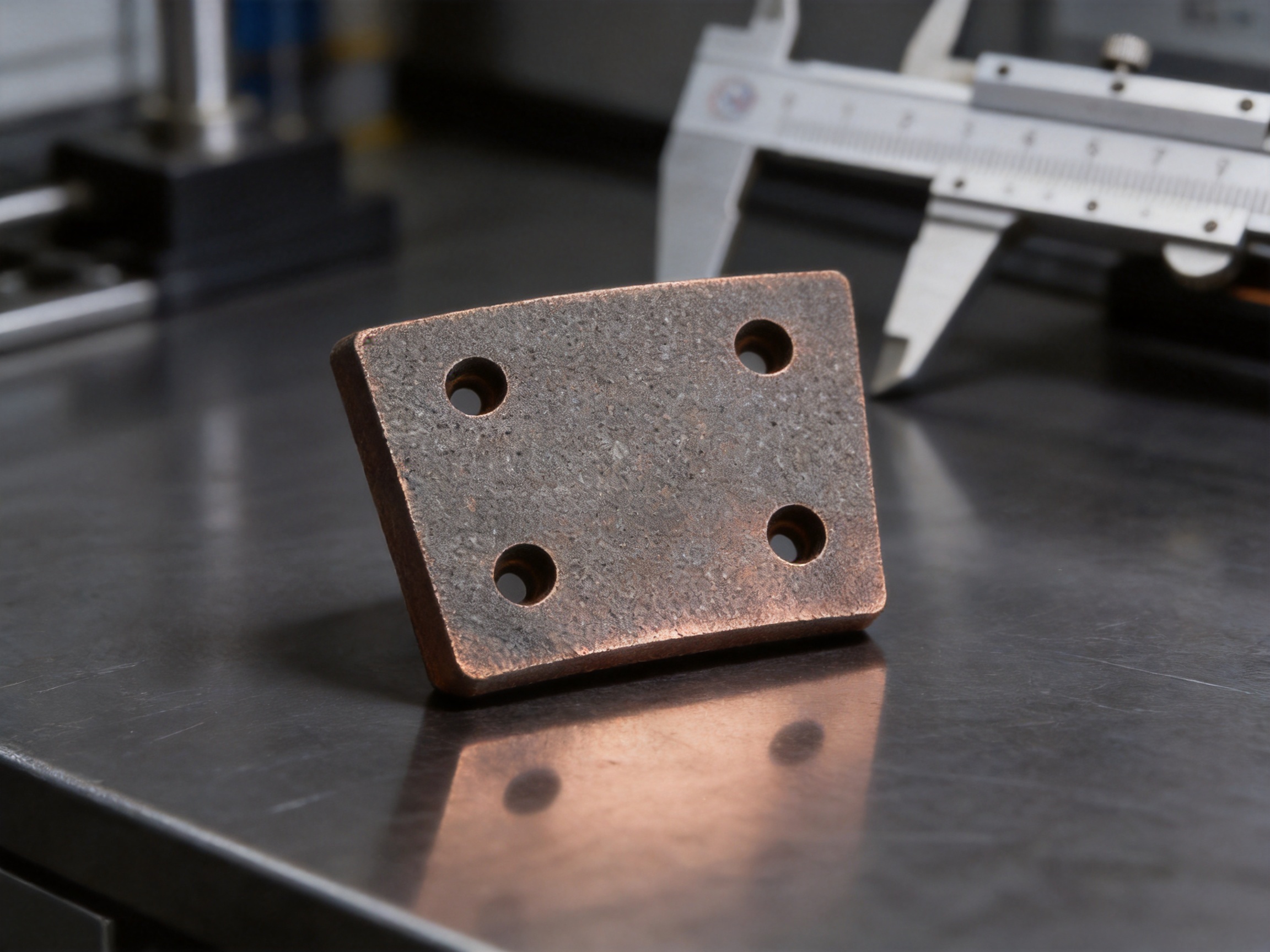
Zero Graphite Segregation: A Critical Advantage Over Inconsistent Friction Linings
One of the most important advertised advantages of this brake pad is freedom from graphite segregation. In copper-based sintered friction materials, graphite usually has a much lower density than copper. Copper powder is dense, while graphite flakes or particles are light and can migrate during mixing, handling, die filling, or vibration. If process control is weak, graphite may concentrate on the surface, gather near edges, or form clusters in localized areas. This creates a brake pad that looks acceptable but performs inconsistently.
Graphite-rich zones may have reduced friction and faster local wear. Graphite-poor zones may become too metallic, increasing friction peaks, heat generation, noise, and rotor scoring. During repeated braking, this uneven behavior can produce hot spots, surface cracking, contact instability, and shortened service life. In safety-related industrial systems, such variation is unacceptable because the braking response must remain predictable over many cycles.
Preventing graphite segregation requires more than simply extending mixing time. Excessive mixing may damage graphite particles, cause agglomeration, or introduce other distribution problems. Effective control starts with raw material selection, powder particle size matching, and a defined blending sequence. Metallic powders and friction modifiers may be pre-blended to create a stable base, after which graphite is introduced under controlled mixing energy to ensure even distribution without separation. Proper powder handling and die filling are also essential because segregation can occur after mixing if powder is allowed to flow or vibrate improperly.
The final inspection requirement that each brake pad be free from graphite segregation, cracks, and defects indicates a quality philosophy focused on functional reliability rather than appearance alone. Visual inspection, dimensional detection, density verification, metallographic sampling, and surface condition checks help identify problems before shipment. For customers, this reduces the risk of receiving pads that pass a simple size check but fail during operation due to internal material nonuniformity.
Crack-Free and Defect-Free Construction
Cracking in sintered brake pads can originate during pressing, ejection from the die, handling, sintering, cooling, or post-processing. Even small cracks can propagate under repeated thermal and mechanical cycling. A crack near a mounting hole can reduce retention strength; a crack below the working surface can lead to spalling; a crack across the pad body can reduce shear resistance and create safety concerns. Therefore, crack prevention is both a manufacturing and inspection priority.
During compaction, powder is pressed into a green compact. If pressure distribution is uneven, if the die design is unsuitable, or if ejection forces are excessive, lamination cracks or edge cracks may occur. During sintering, different material phases expand and contract at different rates. If the heating and cooling profile is not controlled, thermal stresses may cause microcracks. A well-designed process minimizes these risks through proper powder lubrication, die design, compaction control, furnace atmosphere management, and gradual thermal profiling.
Defect-free construction also includes surface quality, dimensional integrity, hole accuracy, and absence of physical damage. In a 4-hole brake pad, hole position and edge quality are especially important. Misaligned holes can cause installation stress, while burrs or chips around holes can interfere with mounting or initiate cracking. Precision dimensional control ensures the 79.5×62×7.3 mm pad fits standard industrial brake assemblies or customer-specific systems without forcing, grinding, or field modification.
Optimized 4-Hole Design for Secure Installation
The 4-hole mounting structure is not merely a convenience feature. Industrial brake pads must remain stable under clamping force, vibration, reverse loading, and tangential shear. A 4-hole pattern distributes mounting pressure more evenly than simpler retention arrangements and helps prevent pad shifting during braking. This improves contact uniformity and reduces the risk of local overload.
In many heavy-duty brake systems, the lining is attached to a backing plate or brake assembly where mechanical retention must resist shear forces generated during stopping. A 4-hole pattern provides multiple load paths and improves installation stability. It can also support easier maintenance because the pad can be positioned consistently during replacement, helping technicians reduce assembly time and alignment errors.
For OEM and replacement applications, hole diameter, countersink design, positional tolerance, and edge finish may need to match existing equipment drawings. Jiande Welfine Technology Co., Ltd. supports customization based on customer drawings or samples. This is a meaningful advantage compared with suppliers that only offer fixed catalog geometries. In industrial equipment, small deviations can cause large maintenance problems, so the ability to customize or precisely reproduce a mounting pattern is valuable.
Technical Parameters
Parameter |
Specification |
Practical Significance |
|---|---|---|
Product Type |
Copper-based sintered brake pad |
Suitable for heavy-duty industrial friction applications requiring heat resistance and stable braking. |
Dimensions |
79.5×62×7.3 mm |
Compact lining geometry for compatible industrial brake assemblies and customized mounting systems. |
Mounting Design |
4-hole structure |
Improves installation stability, retention strength, and force distribution. |
Density |
6.2 g/cm³ |
Supports strength, wear resistance, dimensional stability, and consistent contact behavior. |
Weight |
Approximately 195 g |
Indicates a dense sintered component suitable for robust industrial braking use. |
Friction Coefficient |
Stable, about 0.35–0.40 under dry conditions |
Provides reliable stopping force without excessive rotor aggressiveness. |
Wear Rate |
≤1.0×10⁻⁴ cm³/J |
Helps reduce replacement frequency and maintenance downtime. |
Shear Strength |
≥7 MPa |
Supports resistance to tangential braking loads and mounting stress. |
Working Temperature |
Approximately -40°C to 600°C |
Enables use in severe industrial environments when validated with the brake system. |
Quality Condition |
No graphite segregation, cracks, or defects |
Improves braking consistency, safety, and service life. |
Manufacturing Strength: Powder Metallurgy as an Engineering Platform
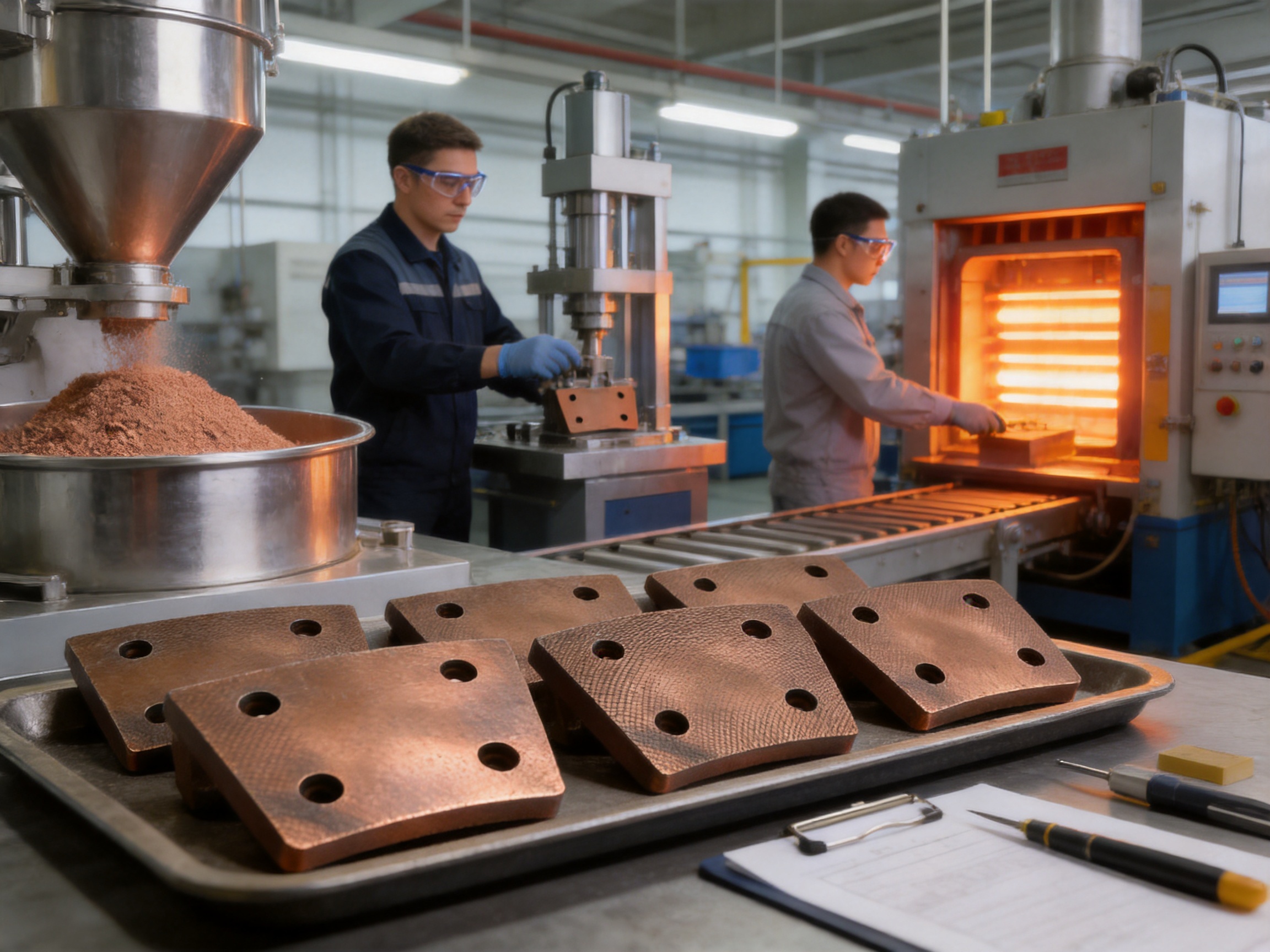
The performance of a sintered brake pad is created long before the finished part reaches inspection. It begins with material selection and powder preparation. Copper powder, graphite, friction modifiers, metallic strengthening phases, and other additives must be chosen to meet the target friction coefficient, wear rate, thermal conductivity, strength, and cost requirements. Powder particle size, shape, purity, and flow behavior influence compaction, sintering, and final properties.
Powder metallurgy offers several advantages for friction materials. It allows the manufacturer to combine materials that would be difficult to process by casting or conventional machining. Copper and graphite, for example, have very different densities and properties, yet powder metallurgy can distribute graphite throughout a copper matrix when the process is controlled. Sintering creates metallurgical bonding without fully melting every constituent, preserving functional phases that contribute to friction stability and lubrication.
After blending, the powder mixture is compacted under controlled pressure. The pressing stage defines green density, part geometry, and initial structural integrity. Calibrated compaction equipment helps ensure the pad reaches the intended shape and density before sintering. The die must fill consistently, the pressure must be repeatable, and ejection must avoid cracks or laminations. For a part with mounting holes and a relatively thin profile, compaction stability is especially important.
Sintering is the stage where the compact gains strength through diffusion bonding and microstructural development. A high-temperature furnace and controlled atmosphere help prevent oxidation while allowing copper particles to bond. Time, temperature, atmosphere, and cooling rate must be balanced to avoid weak bonding, distortion, grain coarsening, or thermal cracking. In copper-based friction materials, sintering must also preserve the role of graphite and other friction phases rather than allowing them to burn, migrate, or react unfavorably.
Post-sintering operations may include sizing, finishing, machining, deburring, surface preparation, and final dimensional inspection. For the 4-hole brake pad, the hole pattern must be accurate and clean. The working surface should be free from cracks, chips, excessive burrs, contamination, or surface conditions that could interfere with bedding-in. Precision control at this stage allows the pad to be installed smoothly and perform predictably from the beginning of service.
Company Capabilities Supporting Product Reliability
Jiande Welfine Technology Co., Ltd. was established in 2001 and has developed as a high-tech enterprise integrating research and development, production, and sales. The company focuses on powder metallurgy sintering and related precision machining. Its product range includes powder metallurgy bushings, self-lubricating bushings, structural parts, and precision sintered components used in many industrial fields. This background is directly relevant to the brake pad because friction materials require the same core strengths: powder control, sintering know-how, dimensional accuracy, inspection discipline, and application-oriented customization.
The company operates a modern 13,039-square-meter production base in Genglou Houtang Industrial Zone, Jiande City, Zhejiang Province, China. More than 150 skilled employees support manufacturing, quality assurance, technical service, and customer communication. Advanced production and testing equipment, including efficient presses, high-temperature sintering furnaces, and precision forming machines, allows the company to control critical process variables rather than relying on outsourced or inconsistent production steps.
ISO 9001:2015 certification demonstrates that the company has established a quality management system for process control, documentation, corrective action, traceability, and continuous improvement. IATF 16949:2016 certification further reflects manufacturing discipline associated with automotive-sector quality expectations, including risk management, defect prevention, and process consistency. For industrial brake pad buyers, these certifications are meaningful because friction materials must be consistent batch after batch, not merely acceptable in a single sample.
The company’s OEM/ODM capability is also important. Industrial customers often require parts based on existing drawings, discontinued components, special brake assemblies, or unique duty cycles. A supplier capable of adjusting dimensions, density, friction properties, mounting hole configuration, and material formulation can help customers reduce procurement complexity. Instead of forcing the customer to adapt the equipment to the lining, the lining can be engineered to fit the equipment and operating conditions.
Advantages Over Competing Brake Pad Options
This copper-based brake pad offers several competitive advantages when compared with ordinary industrial brake linings. First, its high-density sintered structure supports longer service life and lower wear than many low-density or resin-bonded alternatives. Second, copper’s thermal conductivity helps reduce localized overheating and friction fade. Third, stable graphite distribution supports consistent friction rather than unpredictable braking response. Fourth, the 4-hole pattern improves mounting security. Fifth, strict defect inspection reduces the risk of hidden cracks or segregation that could cause field failure.
Compared with organic linings, the copper-based sintered structure is better suited to heat, heavy load, and continuous duty. Organic systems rely on binders that may degrade at elevated temperatures. When degradation occurs, friction can fall, wear can accelerate, and surface glazing may develop. The sintered copper matrix is more stable under high-temperature industrial braking, making it suitable for applications where emergency stops or frequent braking cycles generate substantial heat.
Compared with some iron-based sintered materials, copper-based pads are generally more rotor-friendly. Iron-based materials can deliver high friction and high temperature capability, but they may be more aggressive to the mating disc. In equipment such as cranes, wind turbine yaw systems, marine machinery, and conveyors, rotor life may be a major cost factor. A copper-based lining can offer a balanced solution: strong friction performance with reduced rotor damage tendency.
Compared with low-cost unverified sintered pads, this product emphasizes defect-free production. The absence of graphite segregation, cracks, and visible defects is a decisive advantage. A low-cost pad may appear similar in shape and weight, but if graphite has segregated or microcracks are present, the pad can wear unevenly, generate noise, or fail prematurely. The true cost of a brake pad is not only its purchase price; it includes installation labor, downtime, rotor damage, safety risk, emergency maintenance, and production interruption.
Compared with suppliers that provide only standard catalog parts, Jiande Welfine Technology Co., Ltd. offers customization support. Brake systems vary widely by industry and equipment manufacturer. A pad that is only slightly mismatched in thickness, hole pattern, or friction behavior can cause installation delays or performance problems. Customization based on drawings or samples gives buyers a path to reliable fitment and application-specific performance.
Application Scenarios
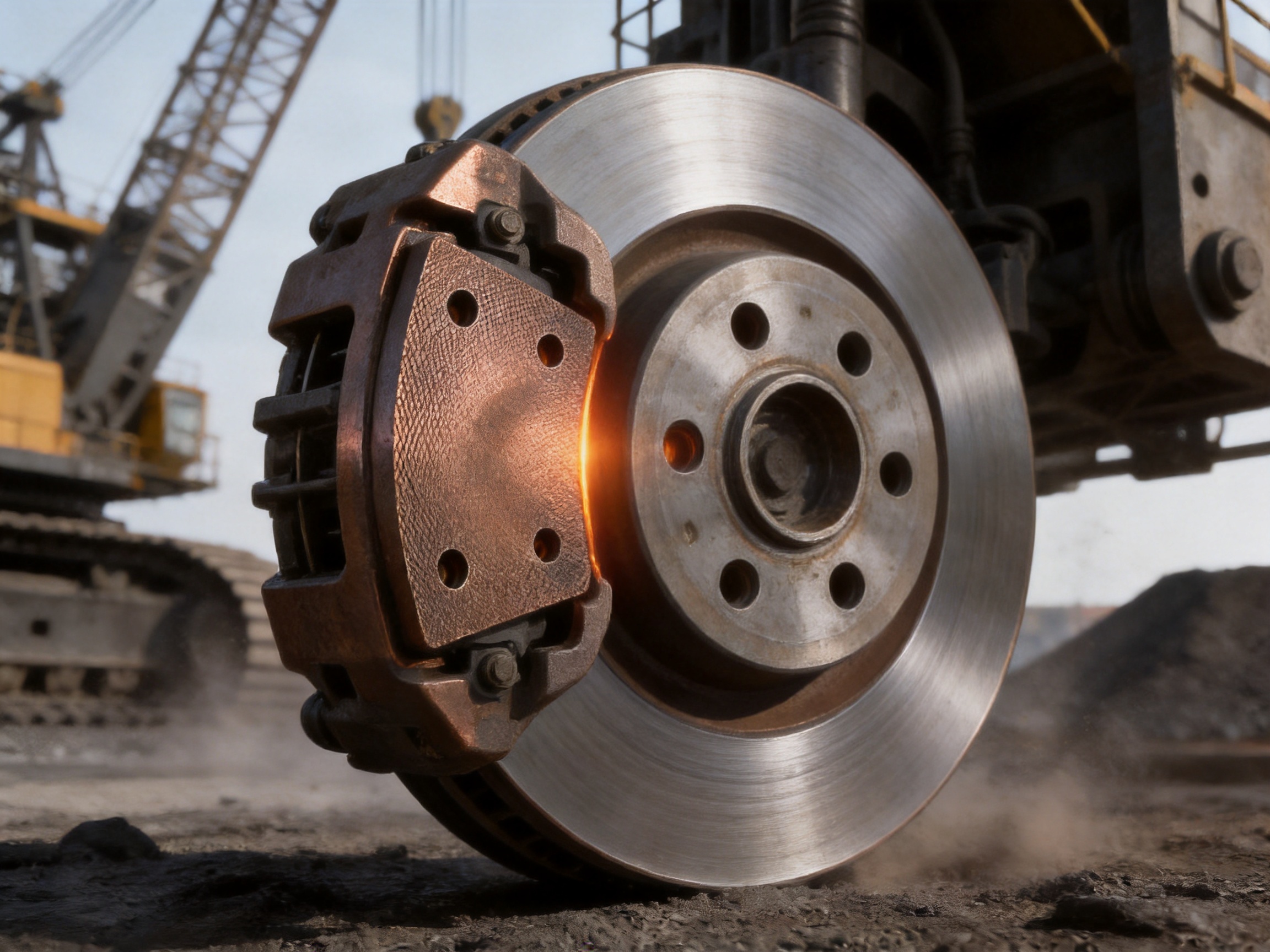
Heavy engineering machinery is a major application field. Cranes, excavators, loaders, and concrete pump trucks require braking materials that can handle high loads, vibration, dust, and frequent operation. In cranes, braking reliability is especially important because load holding and controlled movement are safety-critical. A stable copper-based friction pad helps maintain predictable stopping and holding behavior.
Metallurgical equipment is another demanding environment. Rolling mills, continuous casters, steel plant transport systems, and related equipment may expose brake components to heat, scale, dust, shock, and continuous production schedules. Downtime in metallurgical operations can be extremely costly. A long-life, high-density brake lining supports reduced maintenance frequency and improved equipment availability.
Mining machinery places brake pads under severe mechanical and environmental stress. Mine winches, conveyors, shearer loaders, and hoisting systems may work in dusty, humid, and abrasive conditions. Brake linings must resist wear and maintain friction under contamination risk. Copper-based sintered materials, especially those with controlled graphite distribution and high density, are well suited for these conditions when matched to the correct brake design.
Industrial equipment such as machine tools, elevators, wind turbine generators, and emergency stop systems requires reliability and dimensional precision. Wind turbine yaw and pitch braking systems, for example, may operate outdoors under changing temperature and humidity. A pad with good thermal conductivity, wet-braking stability, and rotor-friendly behavior can contribute to long-term system reliability.
Marine engineering applications include ship deck machinery, winches, cranes, and offshore platform braking systems. These environments introduce moisture, salt exposure, and maintenance access challenges. Although the entire brake system must be designed for corrosion resistance, a dense copper-based friction pad with stable performance can help maintain braking confidence in difficult operating conditions.
Friction Stability and Wear Behavior
Friction stability is often more important than maximum friction. A brake pad with an extremely high coefficient of friction may create harsh engagement, noise, vibration, rotor wear, and thermal spikes. A pad with too low a coefficient may require excessive clamping force and produce insufficient braking torque. The practical target is a stable, predictable friction range that remains consistent over temperature, pressure, speed, and wear state.
The specified dry friction coefficient of approximately 0.35–0.40 is appropriate for many industrial disc brake systems. It offers strong braking torque while avoiding excessive aggressiveness. The copper matrix helps distribute heat, while graphite assists in forming a lubricating transfer film. Together, these features reduce friction coefficient fluctuation and support smoother braking behavior.
Wear behavior depends on material formulation, density, mating surface, pressure, sliding speed, temperature, contamination, and maintenance. The specified wear rate of no more than 1.0×10⁻⁴ cm³/J indicates a design focus on long service life. In practical terms, reduced wear means fewer replacement intervals, less downtime, more stable brake adjustment, and lower spare-part inventory pressure.
A dense sintered pad also helps maintain contact geometry. As the pad wears, it should do so uniformly rather than developing grooves, edge chipping, or localized collapse. Uniform wear protects the rotor and helps maintain braking torque. Nonuniform wear, by contrast, can cause vibration, increased temperature, and uneven pressure distribution.
Thermal Conductivity and Resistance to Brake Fade
Brake fade occurs when friction performance decreases due to temperature rise, surface changes, material degradation, or gas formation at the interface. In industrial systems, fade can be dangerous because braking may be required during high-load operation or emergency stops. Copper-based sintered materials help address fade by conducting heat away from the contact surface and maintaining structural stability at elevated temperature.
The working temperature range of approximately -40°C to 600°C gives the product wide environmental adaptability. Low-temperature capability is important for outdoor equipment, cold storage systems, and machinery used in winter climates. High-temperature capability is important for emergency braking, high-duty cycles, metallurgical equipment, and heavy machinery. However, every application should validate the pad within the complete brake system because rotor material, ventilation, caliper design, pressure, speed, and duty cycle all affect actual interface temperature.
Copper’s thermal conductivity also helps reduce thermal gradients across the pad. Lower gradients reduce the risk of thermal cracking and surface hot spots. Graphite can assist by lowering direct metal contact and smoothing friction behavior. The result is a pad that resists sudden friction changes better than materials with poor heat dissipation or uneven formulation.
Dimensional Precision and Fitment Reliability
The nominal size of 79.5×62×7.3 mm must be controlled tightly to ensure proper fitment. If a pad is too long or wide, installation may require field modification. If it is too small, contact area and retention may be compromised. If thickness varies, clamping position, bedding behavior, and wear allowance may be affected. Precision dimensional control therefore contributes directly to braking safety and maintenance efficiency.
The 4-hole geometry requires accurate hole spacing and clean edges. Poor hole quality can create stress concentrations, interfere with fasteners, or cause uneven seating. In heavy-duty systems, even minor misalignment can lead to vibration or uneven contact pressure. A supplier with precision forming and machining capability can reduce these risks.
Jiande Welfine Technology Co., Ltd. provides products based on customer drawings or samples, which is valuable when replacing obsolete components or supporting equipment from different manufacturers. Customization may include changes to dimensions, hole pattern, density, friction coefficient range, and material composition. This flexibility makes the brake pad suitable not only as a standard item but also as a platform for engineered friction solutions.
Quality Control from Raw Material to Shipment
A reliable brake pad requires a complete quality control chain. Raw materials must be verified for composition, particle size, cleanliness, and consistency. Powder mixing must be controlled to avoid segregation. Pressing must be monitored to ensure green density and dimensional accuracy. Sintering must follow validated temperature and atmosphere profiles. Finishing must avoid cracks, burrs, contamination, and dimensional drift. Final inspection must confirm that the part meets requirements before shipment.
The product is subject to checks for graphite segregation, cracks, defects, and dimensional accuracy. Density measurement confirms that the pad has reached the target consolidation level. Visual inspection detects surface flaws, chips, cracks, and contamination. Dimensional inspection confirms compatibility with the required 79.5×62×7.3 mm geometry and 4-hole pattern. Metallographic analysis or batch sampling can be used to confirm material distribution and internal structure where required.
For industrial buyers, documented quality control reduces supply risk. A brake pad is often a small component within a larger machine, but its failure can stop an entire production line or create a safety hazard. Choosing a supplier with systematic quality management, advanced equipment, and experience in sintered precision components is therefore a strategic decision rather than a simple purchasing action.
Maintenance and Service Life Considerations
The service life of the brake pad depends on load, braking frequency, sliding speed, rotor material, environmental contamination, installation quality, and maintenance practices. Under normal working conditions, a high-quality copper-based sintered pad may last significantly longer than conventional friction materials. The product information indicates that service life can be two to three times that of conventional friction materials under suitable conditions, though actual results must be verified in each application.
Proper installation is essential. The mounting surface should be clean, flat, and free from debris. Fasteners should be tightened according to the brake assembly requirements. The pad should not be forced into position, and hole alignment should be checked before final tightening. After installation, bedding-in may be required to establish full contact with the mating rotor surface and form a stable transfer film.
Routine inspection should include checking pad thickness, wear uniformity, rotor condition, mounting security, surface cracks, contamination, and abnormal noise or vibration. If the pad shows uneven wear, the cause may be caliper misalignment, rotor runout, contamination, improper pressure distribution, or installation error. Replacing the pad without correcting the system issue may lead to repeated failure.
Because copper-based pads are generally rotor-friendly, they can help extend rotor life. However, rotor condition still matters. A heavily scored, warped, contaminated, or incompatible rotor may reduce pad performance. The best braking results occur when pad material, rotor material, pressure, speed, and thermal conditions are considered as a complete system.
Customization and OEM/ODM Support
Industrial equipment often requires nonstandard friction parts. Dimensions may differ by brake manufacturer, equipment model, or regional replacement standard. Some applications require higher friction, while others prioritize low noise, low rotor wear, wet stability, or longer life. Jiande Welfine Technology Co., Ltd. supports OEM/ODM customization to address these variations.
Customers can provide drawings, samples, operating conditions, or target performance requirements. The company can then evaluate material formulation, density, geometry, hole pattern, and processing route. This engineering support is a major advantage for customers who cannot solve braking issues with off-the-shelf pads. Customization also helps reduce the risk of downtime caused by discontinued parts or inconsistent replacement sources.
Possible customization areas include length, width, thickness, density, mounting hole diameter, countersink form, friction coefficient range, wear resistance, backing attachment method, and inspection standard. For high-volume orders, production parameters can be controlled to maintain batch-to-batch consistency. For development projects, sample testing can help validate fitment and performance before full production.
Why This Brake Pad Is a Strong Choice for Industrial Buyers
This high-density copper-based brake pad combines material performance, manufacturing control, and practical installation design. Its copper-based sintered matrix provides heat dissipation and rotor-friendly braking. Its 6.2 g/cm³ density supports strength and wear resistance. Its 4-hole structure improves installation stability. Its defect-free quality requirement reduces the risk of graphite segregation, cracks, and inconsistent performance. Its dimensional precision supports reliable fitment. Its production background is supported by an experienced powder metallurgy manufacturer with modern equipment and certified quality systems.
For procurement teams, the product offers more than a replacement lining. It offers a route to lower maintenance frequency, improved braking reliability, and reduced total cost of ownership. For engineers, it provides a material platform with stable friction, customizable geometry, and controlled density. For maintenance teams, it supports easier installation and predictable service. For equipment owners, it contributes to safer and more reliable operation in demanding industrial environments.
The strongest competitors may offer similar dimensions or claim similar friction performance, but the difference lies in process consistency and defect control. A brake pad must be judged not only by catalog specifications but also by how reliably those specifications are achieved in production. Jiande Welfine Technology Co., Ltd. brings decades of powder metallurgy experience, advanced sintering capability, precision forming, and strict quality management to the production of this brake pad, making it a dependable choice for heavy-duty industrial braking applications.
Q&A Section
Q1: What is the main advantage of a copper-based sintered brake pad?
A copper-based sintered brake pad offers excellent thermal conductivity, stable friction behavior, good wear resistance, and reduced rotor aggressiveness compared with many harder or poorly controlled friction materials. It is especially suitable for heavy-duty industrial braking systems where heat dissipation and service reliability are important.
Q2: Why is the 6.2 g/cm³ density important?
The 6.2 g/cm³ density indicates a high level of powder consolidation with controlled porosity. This supports mechanical strength, dimensional stability, wear resistance, and consistent contact performance. If density is too low, the pad may wear quickly or deform. If density is poorly controlled, braking behavior may become uneven.
Q3: What does “no graphite segregation” mean?
It means graphite is distributed uniformly throughout the copper-based matrix rather than forming clusters or uneven zones. Uniform graphite distribution helps stabilize the friction coefficient, reduce local overheating, limit uneven wear, and improve the predictability of braking performance.
Q4: Why does the brake pad use a 4-hole design?
The 4-hole mounting structure improves installation stability and helps distribute mechanical retention forces more evenly. It reduces the risk of pad shifting, vibration, and uneven loading during braking. It also supports easier replacement and more reliable alignment in compatible brake assemblies.
Q5: Which industries can use this brake pad?
The pad is suitable for heavy engineering machinery, metallurgical equipment, mining machinery, industrial equipment, wind turbine systems, elevators, conveyors, marine deck machinery, and offshore platform braking systems, provided that the dimensions and performance are validated for the specific brake assembly.
Q6: How does this product compare with organic brake linings?
Organic brake linings may be suitable for lighter-duty applications, but they can suffer from heat-related fade, binder degradation, and accelerated wear under severe conditions. This copper-based sintered brake pad is better suited to high-load, high-temperature, and continuous industrial service.
Q7: Can the brake pad be customized?
Yes. Jiande Welfine Technology Co., Ltd. supports OEM/ODM customization based on drawings, samples, and application requirements. Customization may include dimensions, hole pattern, density, friction behavior, material formulation, and inspection standards.
Q8: What quality checks are important for this product?
Important checks include dimensional inspection, density verification, surface defect inspection, crack detection, hole accuracy inspection, and confirmation of uniform material distribution. For demanding applications, metallographic analysis or batch sampling may also be used.
Q9: What affects the service life of the brake pad?
Service life depends on braking load, frequency, speed, temperature, rotor condition, contamination, installation quality, and maintenance. Under appropriate working conditions, the high-density copper-based structure can provide much longer life than conventional friction materials.
Q10: Why choose an experienced powder metallurgy manufacturer for brake pads?
Powder metallurgy friction materials require precise control of powder blending, compaction, sintering, finishing, and inspection. An experienced manufacturer with advanced equipment and certified quality systems can provide more consistent density, fewer defects, better dimensional accuracy, and more reliable batch-to-batch performance.
Conclusion
The 79.5×62×7.3 mm high-density copper-based brake pad is engineered for industrial braking systems that demand stability, heat resistance, wear resistance, and secure installation. Its 6.2 g/cm³ density, 4-hole mounting structure, copper-based sintered matrix, stable friction coefficient, low wear rate, and strict defect-free quality requirements make it a strong alternative to conventional friction linings and inconsistent low-cost sintered pads.
By combining advanced powder metallurgy manufacturing with strict inspection and OEM/ODM customization, Jiande Welfine Technology Co., Ltd. provides a brake pad solution that supports safer braking, longer service intervals, reduced maintenance costs, and reliable fitment. For heavy machinery, metallurgical plants, mining systems, wind turbines, marine equipment, and industrial brake assemblies, this product represents a practical and performance-driven choice.
References
1. German, R. M. Powder Metallurgy and Particulate Materials Processing. Metal Powder Industries Federation.
2. ASM International. ASM Handbook, Volume 7: Powder Metallurgy.
3. Blau, P. J. Friction Science and Technology: From Concepts to Applications. CRC Press.
4. GB/T 5763-2018. Brake Linings and Pads for Automobiles: Test Methods and Performance References.
5. GB/T 10421-2002. Test Method for Wear Properties of Sintered Metal Friction Materials.
6. GB/T 10419-2008. Test Method for Shear Strength of Friction Materials.
7. GB/T 3399-1982. Test Methods Related to Thermal Properties of Metallic Materials.
8. ISO 9001:2015. Quality Management Systems: Requirements.
9. IATF 16949:2016. Quality Management System Requirements for Automotive Production and Relevant Service Parts Organizations.
Product: High-Density Copper-Based Brake Pad | 79.5×62×7.3mm | 4-Hole Industrial Brake Lining
Related products
-
-
Product Description: High-precision powder metallurgy part (S14*7*10) made of iron material from Jiande Wefine, customized PM components with strict tolerance control.
See Details
Copyright © Jiande Welfine Technology Co., Ltd. All Rights Reserved. Custom Self-lubricating Sintered Bushing Manufacturers
