 English
 中文简体
中文简体
Description: 79.5×62×7.3mm copper-based brake pad with 4-hole design. Density 6.2g/cm³, weight 195g. Free from graphite segregation, cracks, and defects. Ideal for heavy-duty industrial braking system...
See DetailsE-mail us: [email protected]
Tel: +86-15239857375


 Home / Author / Tan Xinyue — After-Sales Technical Coordinator / High-Density Copper-Based 4-Hole Brake Pad for Demanding Industrial Braking Systems
 High-Density Copper-Based 4-Hole Brake Pad for Demanding Industrial Braking Systems
 2026.06.04
 Tan Xinyue — After-Sales Technical Coordinator
Content
- 1 Product Overview
- 2 Core Specifications
- 3 Why Copper-Based Friction Material Matters
- 4 Advantages Over Conventional Competitor Products
- 5 Manufacturing Process and Quality Control
- 6 Importance of Zero Graphite Segregation
- 7 Crack-Free and Defect-Free Reliability
- 8 Thermal Conductivity and High-Temperature Stability
- 9 Wear Resistance and Service Life
- 10 4-Hole Design for Secure Installation
- 11 Application in Heavy Engineering Machinery
- 12 Application in Metallurgical Equipment
- 13 Application in Mining Machinery
- 14 Application in Industrial Equipment and Wind Power
- 15 Application in Marine Engineering
- 16 Company Strengths Supporting Product Reliability
- 17 Customization and Engineering Support
- 18 Total Cost of Ownership
- 19 Selection Guidelines for Industrial Users
- 20 Frequently Asked Questions
- 20.1 What is the main benefit of using a copper-based brake pad?
- 20.2 Why is the 4-hole design important?
- 20.3 Why does density matter in a brake pad?
- 20.4 What does “no graphite segregation” mean?
- 20.5 What problems can cracks cause in a brake pad?
- 20.6 Is this brake pad suitable for high-temperature applications?
- 20.7 What industries can use this brake pad?
- 20.8 Can the brake pad be customized?
- 20.9 How long is the service life?
- 20.10 Does the manufacturer provide sample testing?
- 21 Conclusion
- 22 References
- 23 Product: High-Density Copper-Based Brake Pad | 79.5×62×7.3mm | 4-Hole Industrial Brake Lining
Industrial braking systems operate in environments where heat, pressure, vibration, dust, load variation, and continuous duty cycles can quickly expose weaknesses in ordinary friction materials. A brake pad used in cranes, rolling mills, mining equipment, marine deck machinery, elevators, wind turbine systems, and heavy engineering machinery must do more than create friction. It must maintain dimensional stability, resist cracking, dissipate heat, wear predictably, and provide dependable braking force across repeated operating cycles. The high-density copper-based brake pad with a 79.5×62×7.3 mm profile and 4-hole mounting design is engineered for these demanding conditions.
This product is a copper-based industrial brake lining manufactured through powder metallurgy technology. It has a density of 6.2 g/cm³ and a weight of approximately 195 g. Its design emphasizes stable braking, strong heat dissipation, secure installation, and consistent material distribution. It is produced to be free from graphite segregation, cracks, and visible defects, helping users reduce maintenance uncertainty and avoid performance fluctuation during service.
Unlike conventional organic or low-grade friction pads, this copper-based brake pad uses a metallic matrix that delivers higher thermal conductivity, better mechanical strength, and more reliable friction behavior under heavy load. The product is especially suitable for applications where braking safety directly affects equipment productivity, operator protection, and long-term maintenance cost.
High-Density Copper-Based Brake Pad | 79.5×62×7.3mm | 4-Hole Industrial Brake Lining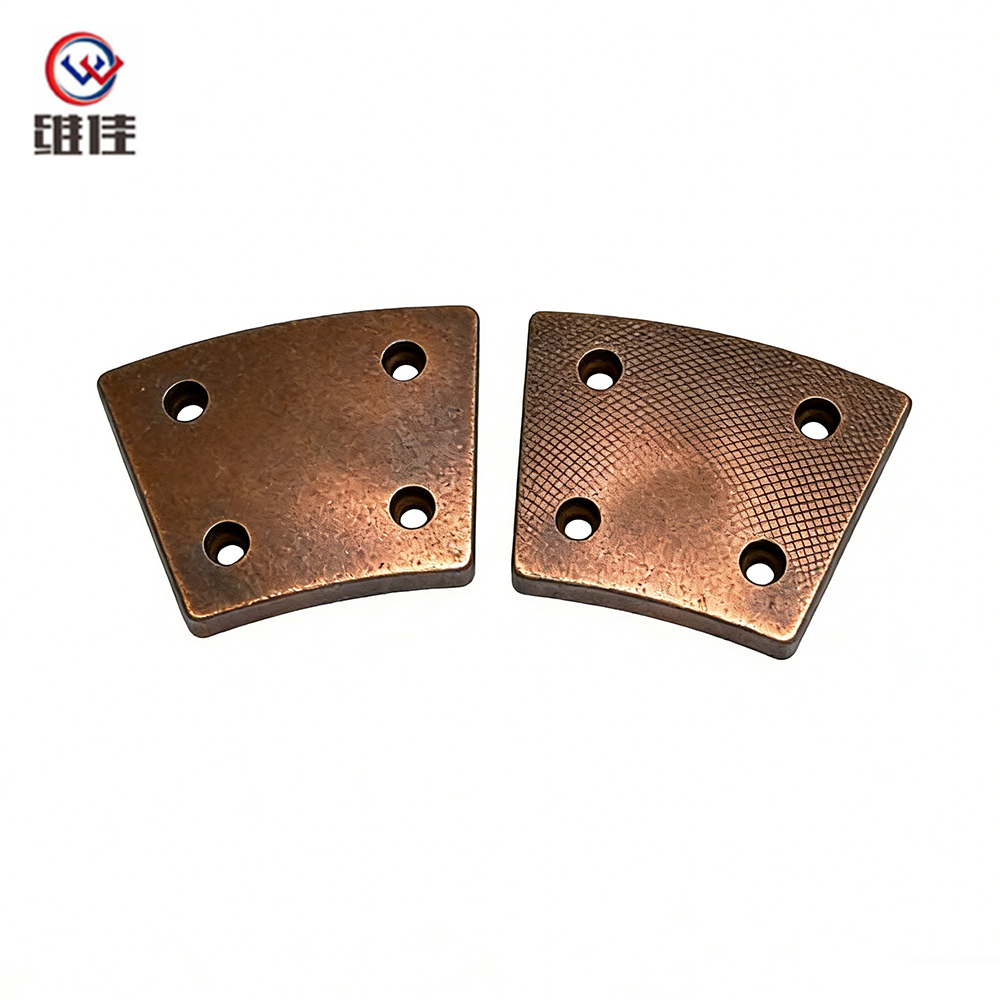
Product Overview
The brake pad measures 79.5 mm in length, 62 mm in width, and 7.3 mm in thickness. These compact but precisely controlled dimensions make it suitable for industrial brake assemblies requiring stable fitment and repeatable installation accuracy. The 4-hole structure improves mounting reliability by distributing clamping force more evenly across the pad surface. This reduces the possibility of pad shift, localized vibration, or uneven contact during braking.
The copper-based friction material is designed to combine the conductivity of a metallic matrix with the controlled friction response required in industrial brake components. Copper helps transfer heat away from the contact surface, reducing thermal concentration and supporting stable braking under repeated engagement. At the same time, the high-density structure contributes to wear resistance and mechanical integrity.
The pad is manufactured with close attention to material uniformity. In friction materials, graphite or other functional constituents must be evenly dispersed. If graphite segregation occurs, the pad may develop zones with inconsistent friction coefficient, uneven wear, local overheating, or reduced structural reliability. By controlling mixing, pressing, sintering, and inspection, the product is made to avoid graphite agglomeration and other material distribution problems.
Its target applications include heavy engineering machinery, metallurgical equipment, mining machinery, industrial production equipment, marine engineering systems, machine tools, elevators, and wind power equipment. In these fields, brake linings must perform reliably during lifting, lowering, stopping, positioning, holding, and emergency braking operations.
Core Specifications
Parameter |
Specification |
Relevance to Application |
Product Type |
Copper-based industrial brake pad |
Designed for high-load friction braking systems |
Dimensions |
79.5×62×7.3 mm |
Supports accurate fitment in compatible brake assemblies |
Mounting Design |
4-hole structure |
Improves installation stability and force distribution |
Density |
6.2 g/cm³ |
Provides high structural compactness and wear resistance |
Weight |
Approximately 195 g |
Indicates controlled material volume and manufacturing consistency |
Friction Coefficient |
Stable, typically 0.35-0.40 under dry conditions |
Supports predictable braking force |
Wear Rate |
≤1.0×10⁻⁴ cm³/J |
Helps extend service life and reduce replacement frequency |
Shear Strength |
≥7 MPa |
Supports mechanical durability during braking load |
Working Temperature |
-40 to 600 degrees Celsius |
Suitable for harsh industrial environments |
Quality Requirement |
No graphite segregation, cracks, or visible defects |
Reduces performance inconsistency and premature failure risk |
Why Copper-Based Friction Material Matters
Copper-based friction materials are often selected for demanding braking environments because copper provides excellent thermal conductivity. During braking, kinetic energy is converted into heat at the friction interface. If heat is not quickly transferred away from the contact surface, the pad may suffer from thermal fade, surface glazing, material degradation, or unstable friction. A copper matrix helps conduct heat through the body of the pad, reducing hot spots and improving temperature balance.
Another advantage of copper-based material is mechanical strength. Heavy industrial equipment does not apply brake force gently. A crane brake, mine winch brake, rolling mill brake, or ship deck machinery brake may face repeated dynamic loads, sudden engagement, and vibration. A metallic friction material with sufficient density and shear strength can better resist cracking, chipping, and deformation compared with many conventional non-metallic alternatives.
The product’s density of 6.2 g/cm³ is an important indicator of its compactness and structural stability. In powder metallurgy, density is closely related to porosity, strength, thermal conduction, and wear behavior. A properly controlled density helps ensure that the pad is neither too porous nor too brittle. Excessive porosity may reduce strength and accelerate wear, while uncontrolled densification may affect friction characteristics. This brake pad is engineered to balance compact structure with functional friction performance.
Copper-based brake pads also tend to provide more stable friction behavior under high temperature than many organic friction materials. Organic binders can degrade or volatilize under severe heat, causing fade and performance loss. A sintered metallic structure is more suitable for long-term exposure to heat, load, and industrial contaminants. For users, this means more predictable braking response and fewer unexpected service interruptions.
Advantages Over Conventional Competitor Products
One of the main differences between this high-density copper-based pad and conventional competitor products is its combination of density control, dimensional precision, and zero-defect inspection. In lower-grade brake pads, users may encounter problems such as inconsistent composition, surface cracking, poor hole alignment, excessive wear, or friction coefficient instability. These issues may not be obvious during initial installation, but they often appear after repeated braking cycles.
This product is manufactured with strict control over raw material mixing. Uniform distribution of copper, graphite, and other functional components is essential. In a poorly mixed friction material, soft lubricating phases may cluster in one region while harder load-bearing phases concentrate elsewhere. The result can be uneven braking, noise, vibration, and unpredictable wear. By preventing graphite segregation, this product provides a more consistent friction surface and more reliable operational behavior.
The 4-hole mounting structure is another competitive advantage. A brake pad that is not mounted securely may shift slightly during braking, especially under vibration or repeated impact load. Even small movement can create uneven contact, accelerate wear, or damage the mating brake disc or drum. Four mounting holes help distribute clamping force more evenly, improve pad positioning, and support stable contact pressure.
Competitor products may also have inadequate thermal management. If a friction pad cannot dissipate heat efficiently, the braking system may experience fade, surface damage, or shortened service life. The copper matrix in this product improves heat transfer and helps maintain stable performance over a wider operating temperature range. This is particularly valuable in continuous-duty applications such as conveyors, hoists, elevators, and metallurgical machinery.
Another advantage is customization support. Many industrial users operate brake systems with specific dimensional, friction, or density requirements. A manufacturer with powder metallurgy capability and machining expertise can adjust dimensions, material formulation, and performance parameters according to drawings or samples. This makes the product not only a standard replacement component but also a practical platform for OEM and ODM braking solutions.
Manufacturing Process and Quality Control
Jiande Welfine Technology Co., Ltd. specializes in powder metallurgy sintering and related precision machining. Established in 2001, the company has accumulated more than 20 years of experience in the production of powder metallurgy parts, self-lubricating bushings, structural components, and precision industrial parts. This background is directly relevant to the production of copper-based friction materials because powder metallurgy requires precise control of powders, forming pressure, sintering atmosphere, temperature curve, and final inspection.
The manufacturing process begins with material selection. Copper powder and other friction material constituents must meet defined standards for particle size, purity, morphology, and consistency. In powder metallurgy, the quality of the final part is strongly influenced by the characteristics of the starting powders. Stable powder quality improves flowability, compaction behavior, sintering response, and final mechanical properties.
After material selection, controlled mixing is performed. This stage is critical for preventing graphite segregation and ensuring uniform distribution of performance additives. Mixing time, mixing intensity, loading sequence, and powder characteristics are all managed to avoid agglomeration. A properly mixed material batch enables each brake pad to have consistent friction behavior across its entire contact surface.
The mixed powder is then formed under controlled pressure. Pressing determines the green density, shape accuracy, and internal compactness of the part before sintering. For a brake pad with dimensions of 79.5×62×7.3 mm and a 4-hole design, forming precision is especially important. The part must meet dimensional requirements while preserving consistent density distribution. Uneven compaction can cause warping, cracking, or performance variation after sintering.
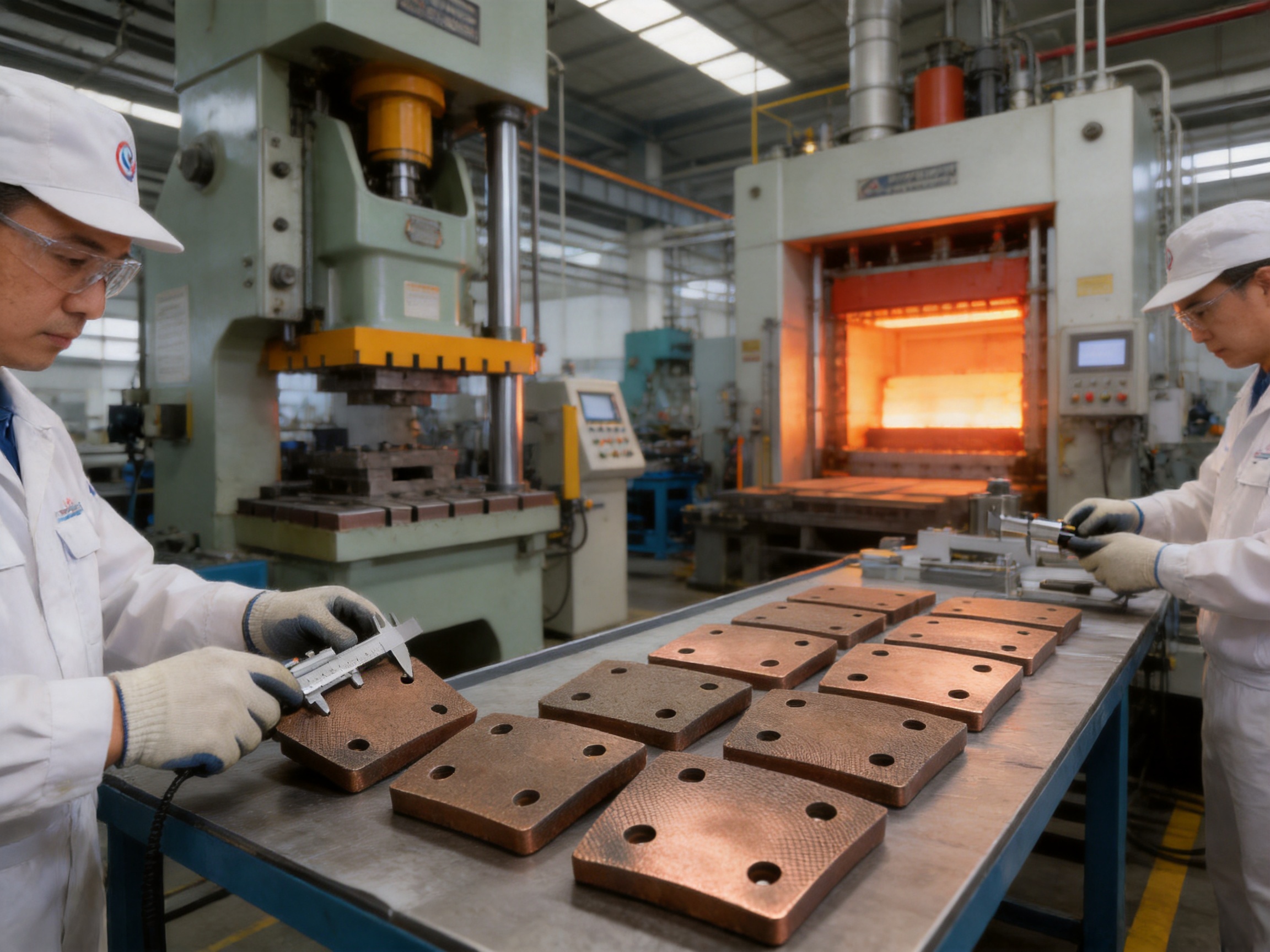
Sintering is the stage where the compacted powder becomes a strong metallic friction component. High-temperature sintering allows powder particles to bond, creating a stable matrix with controlled porosity and mechanical strength. The sintering furnace temperature, holding time, heating rate, cooling rate, and atmosphere control all influence the final density, microstructure, and friction performance. Advanced high-temperature sintering equipment helps ensure that every batch reaches the required standard.
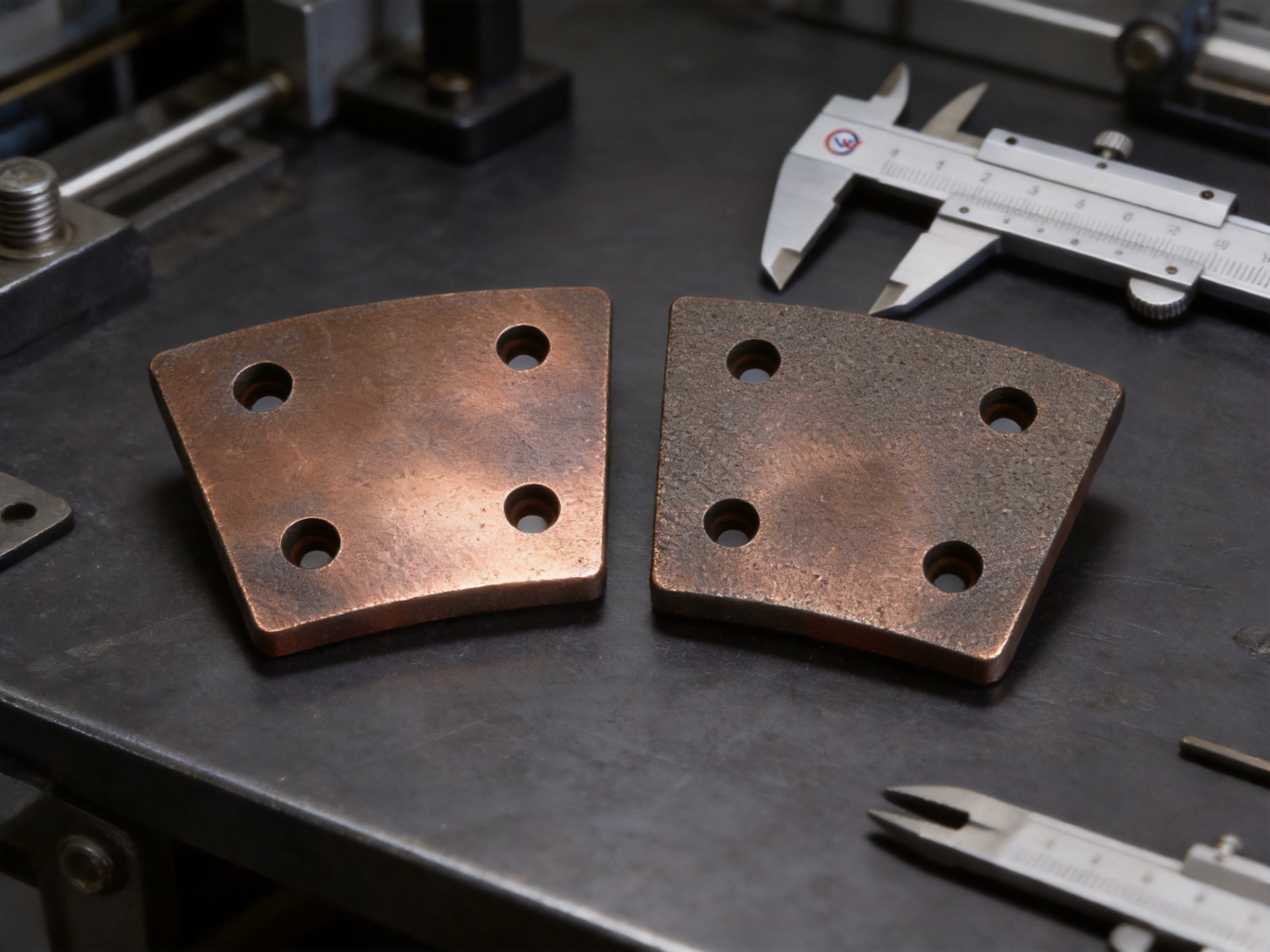
After sintering, precision finishing and inspection are performed. Dimensional checks confirm that the pad matches the required 79.5×62×7.3 mm specification and that the mounting holes meet fitment expectations. Surface inspection is used to detect cracks, chips, deformation, or visible defects. Depending on customer requirements, additional tests may include density measurement, hardness evaluation, shear strength testing, wear testing, and metallographic analysis.
The company operates a modern production base of approximately 13,039 square meters and uses advanced production and testing equipment, including efficient presses, high-temperature sintering furnaces, and precision forming machines. With more than 150 skilled employees and experience across powder metallurgy applications, the company can support both regular production and customized development.
Importance of Zero Graphite Segregation
Graphite plays a functional role in many friction materials. It can influence lubrication, friction stability, wear behavior, and thermal response. However, graphite must be evenly distributed. If graphite segregation occurs, the brake pad may show inconsistent friction in different areas. Some zones may become overly lubricated, reducing braking force, while other zones may become harsher and wear faster.
Segregation can also create weak regions in the material structure. When braking pressure and heat are repeatedly applied, these weak regions may become initiation points for cracks, delamination, or localized wear. In industrial braking, where equipment loads can be high and consequences of failure can be serious, eliminating segregation is a major quality requirement.
This brake pad is designed and inspected to be free from graphite segregation. The manufacturing process focuses on uniform material mixing, controlled pressing, and consistent sintering. Quality inspection may include visual assessment, dimensional checking, and material distribution analysis to ensure that the pad does not contain obvious agglomeration or defects.
For users, the benefit is practical. A pad without graphite segregation is more likely to deliver consistent braking force, uniform wear, reduced vibration, and better long-term reliability. It also improves confidence when pads are installed in multiple machines across a production facility, because each unit is expected to perform similarly under comparable conditions.
Crack-Free and Defect-Free Reliability
Cracks in a brake pad are not merely cosmetic concerns. A crack can expand under thermal cycling, vibration, and mechanical load. Once a crack propagates, the pad may lose contact uniformity, shed particles, damage the mating surface, or fail prematurely. In severe cases, braking efficiency may be compromised. For this reason, crack-free manufacturing and inspection are essential for industrial friction components.
The product is made with advanced powder metallurgy process control to reduce crack risk. Proper powder compaction reduces internal stress. Controlled sintering prevents excessive thermal gradients. Accurate cooling helps avoid distortion and stress concentration. Final inspection ensures that pads with visible defects do not proceed to shipment.
Defect-free production also includes dimensional reliability. A pad may be structurally sound but still unsuitable if its holes are misaligned or its thickness varies beyond tolerance. Poor dimensional control can cause installation difficulty, uneven pressure, abnormal noise, or accelerated wear. Precision dimensional inspection ensures that the brake pad fits correctly in the brake assembly and performs as intended.
In competitive terms, this level of inspection helps distinguish the product from low-cost pads that may rely only on basic visual sorting. Industrial users increasingly evaluate total cost of ownership rather than purchase price alone. A brake pad that avoids cracking, uneven wear, and premature replacement can reduce downtime and maintenance labor, which often matters more than the initial unit cost.
Thermal Conductivity and High-Temperature Stability
Braking systems create heat quickly. In heavy equipment, this heat can be intense because large masses must be slowed, held, or stopped. If the friction material cannot manage heat, the system may experience thermal fade. Thermal fade occurs when the friction coefficient drops as temperature rises, reducing braking effectiveness exactly when the brake is under stress.
The copper matrix of this brake pad provides excellent heat dissipation. Copper transfers heat more efficiently than many non-metallic binders and fillers. By spreading heat through the pad, it reduces localized overheating at the contact interface. This supports more stable friction and helps protect both the pad and mating brake surface.
The working temperature range from -40 to 600 degrees Celsius makes the product suitable for a wide range of operating environments. Low-temperature performance is important for outdoor machinery, mining sites, ports, and northern climates. High-temperature performance is critical for metallurgical equipment, heavy cranes, hoists, and other systems where repeated braking creates intense heat.
Thermal stability also affects maintenance planning. A pad that resists high-temperature degradation can remain usable longer and maintain more predictable wear. This reduces the frequency of emergency inspection and replacement, allowing maintenance teams to schedule service more efficiently.
Wear Resistance and Service Life
Wear resistance is one of the most important economic factors in brake pad selection. A pad that wears too quickly increases replacement cost, labor time, machine downtime, and spare parts inventory pressure. The high-density construction and copper-based matrix of this product help reduce wear under demanding conditions.
The specified wear rate of ≤1.0×10⁻⁴ cm³/J indicates that the material is designed for durability. In practical terms, this means the pad can withstand repeated braking energy input while losing relatively little material. Actual service life depends on operating load, braking frequency, surface condition, environmental contamination, installation accuracy, and maintenance practices, but the product is intended to last significantly longer than many conventional friction materials.
Long service life does not only mean fewer replacements. It also means more stable braking geometry over time. As a brake pad wears, the contact relationship between pad and mating surface changes. Excessive or uneven wear can cause noise, vibration, reduced contact area, and increased heat. A wear-resistant pad helps maintain stable contact conditions for a longer period.
In industrial facilities, every unplanned shutdown can be expensive. Equipment such as cranes, rolling mills, mine conveyors, and marine winches often work as part of a larger production chain. If one braking component fails, the entire process may be delayed. By using a durable copper-based brake pad, operators can improve system availability and reduce unexpected stoppages.
4-Hole Design for Secure Installation
The 4-hole mounting design is a practical feature that improves installation stability. During braking, the pad experiences tangential friction force, normal clamping pressure, vibration, and sometimes impact. A mounting design that distributes force across multiple points reduces the risk of pad movement and improves contact alignment.
Four holes help create balanced mounting pressure. This is important because uneven mounting can cause one side of the pad to contact the brake surface more strongly than the other. Uneven contact leads to taper wear, noise, vibration, and possible overheating. A stable mounting pattern supports more uniform load transfer and helps extend the life of both the pad and the mating component.
The design also simplifies maintenance. When replacement is required, technicians can use the mounting holes for straightforward alignment. Accurate fitment reduces installation time and lowers the risk of assembly error. In large industrial environments with many machines, small reductions in maintenance time can produce meaningful operational benefits.
Compared with pads that rely on less stable mounting configurations, this 4-hole design provides greater confidence for high-vibration equipment. Mining machinery, marine machinery, and heavy construction equipment often operate in environments where shock and vibration are unavoidable. Secure fastening is therefore not optional; it is a key safety and reliability feature.
Application in Heavy Engineering Machinery
Heavy engineering machinery such as cranes, excavators, loaders, and concrete pump trucks requires braking components that can withstand variable load and harsh working conditions. Cranes may need to hold suspended loads safely. Excavators and loaders operate in dust, shock, and irregular duty cycles. Concrete pump trucks may face frequent positioning and stopping requirements. In each case, the brake pad must deliver consistent stopping or holding force.
The copper-based brake pad is well suited to these machines because of its high strength, stable friction coefficient, and heat dissipation ability. When equipment operates outdoors or in dusty environments, friction surfaces may be exposed to contaminants. A robust metallic friction material can tolerate severe service better than many softer alternatives.
For cranes, brake reliability is directly related to operational safety. A pad that resists thermal fade and maintains stable friction can help ensure controlled lifting and lowering. For loaders and excavators, durability and reduced maintenance are important because machines may work far from centralized repair facilities. A long-life brake pad reduces service interruptions and supports productivity.
Application in Metallurgical Equipment
Metallurgical plants present some of the harshest conditions for braking components. Rolling mills, continuous casters, steel plant transport systems, and auxiliary lifting equipment may operate near high temperatures, heavy loads, and continuous production schedules. Brake pads used in these systems must resist heat, dust, vibration, and repeated load cycles.
The copper-based pad’s high-temperature capability and thermal conductivity are especially valuable in this environment. Heat generated during braking is compounded by the ambient heat of steel production. Ordinary friction materials may degrade quickly or lose friction stability. A sintered copper-based structure helps maintain performance when exposed to elevated temperatures.
Wear resistance is also important in metallurgical operations. Replacing brake pads on production equipment may require line stoppage, lockout procedures, and significant labor. Longer service life helps reduce maintenance frequency and supports continuous production. The product’s defect-free structure and crack resistance further improve reliability in this demanding sector.
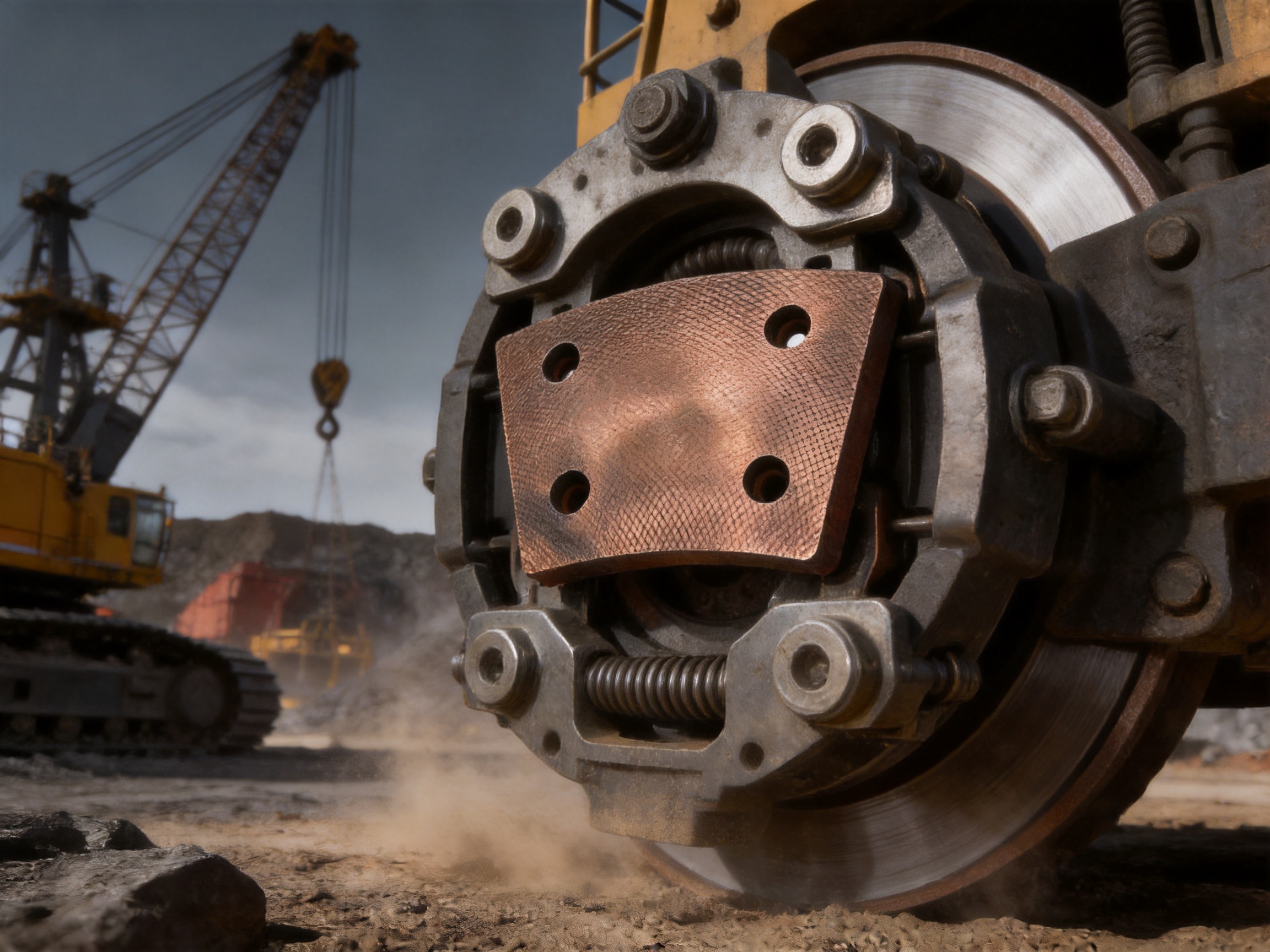
Application in Mining Machinery
Mining equipment often works under heavy load, dust exposure, vibration, moisture, and limited maintenance access. Mine winches, conveyors, and shearer loaders depend on braking systems for safety and productivity. A brake pad failure in a mine can create serious operational and safety consequences.
The high-density copper-based brake pad offers advantages for mining machinery because it combines mechanical strength with wear resistance. Dust and abrasive particles may accelerate wear in ordinary pads, but a dense metallic friction material is better prepared for harsh contact conditions. The stable friction coefficient helps maintain braking control even when equipment operates repeatedly under load.
Secure mounting is particularly important in mining equipment because vibration is common. The 4-hole structure helps keep the pad firmly positioned and reduces the risk of displacement. This supports safer operation and more predictable maintenance planning.
Application in Industrial Equipment and Wind Power
Industrial equipment such as machine tools, elevators, production line machinery, and wind turbine systems often requires precise braking and holding performance. These systems may not always experience the same shock load as mining or construction machinery, but they demand reliability, repeatability, and low maintenance.
In elevators, braking components contribute to passenger and equipment safety. Stable friction and secure mounting are essential. In machine tools, braking accuracy can affect positioning and productivity. In wind turbines, braking systems must perform reliably under variable environmental conditions, including temperature changes, humidity, and long service intervals.
The copper-based brake pad’s temperature range, wear resistance, and consistent material structure support these applications. Its durability can help reduce maintenance visits in difficult-to-access installations, such as wind turbine nacelles or large industrial systems with complex shutdown procedures.
Application in Marine Engineering
Marine equipment faces humidity, salt exposure, vibration, and heavy mechanical loads. Ship deck machinery, offshore platform systems, winches, and handling equipment require brake pads that can resist environmental stress while maintaining dependable braking force. Failure in marine applications can delay operations and increase safety risk.
The copper-based material offers high strength and heat dissipation, while the 4-hole design supports secure installation under vibration. For deck machinery and offshore equipment, long service life is especially valuable because maintenance may be difficult at sea or on remote platforms. A durable, stable brake pad reduces the need for frequent replacement and improves equipment readiness.
Marine braking systems may also experience intermittent heavy loads. A friction material that can manage sudden heat input and repeated engagement is beneficial. The product’s thermal stability and crack-free quality requirements make it suitable for these conditions.
Company Strengths Supporting Product Reliability
Jiande Welfine Technology Co., Ltd. has built its manufacturing capability around powder metallurgy sintering and precision machining. The company’s experience with powder metallurgy bushings, self-lubricating bushings, structural parts, and precision components gives it a strong technical foundation for producing metallic friction materials. Powder metallurgy is not a simple forming process; it requires an integrated understanding of materials, pressure, temperature, tooling, and inspection.
The company was established in 2001 and has more than two decades of industry experience. This long-term experience allows the engineering team to understand common customer problems, such as dimensional mismatch, unstable density, insufficient strength, excessive wear, and inconsistent batch quality. The ability to solve these issues is essential for industrial customers who need reliable components rather than experimental products.
The production base covers approximately 13,039 square meters and includes advanced equipment such as efficient presses, high-temperature sintering furnaces, precision forming machines, and testing equipment. These resources support stable mass production as well as customized manufacturing. Advanced equipment improves process repeatability, while experienced technicians ensure that equipment settings are properly matched to product requirements.
The company employs more than 150 skilled workers and supports OEM and ODM customization based on customer drawings or samples. This is important for brake pad users because industrial brake systems vary widely. A customer may need a different size, density, hole pattern, friction coefficient, or material composition. The company’s ability to develop customized solutions helps customers solve fitment and performance challenges.
Quality management is another strength. The company has passed ISO 9001:2015 and IATF 16949:2016 certifications. These quality systems emphasize documented processes, traceability, continuous improvement, and consistent production control. For customers, certified quality management provides added confidence that each batch is produced under controlled procedures.
Customization and Engineering Support
Not every braking application can be served by an off-the-shelf component. Equipment designers and maintenance engineers may need pads with specific dimensions, mounting holes, density, friction behavior, or working temperature capability. Customization can be essential when replacing obsolete parts, upgrading equipment performance, or adapting to special operating conditions.
The manufacturer can customize brake pad dimensions, density, and friction properties according to customer requirements. Customers may provide drawings, samples, or application data. Engineering evaluation can then determine whether changes are needed in material composition, pressing parameters, sintering process, machining, or inspection criteria.
Customization is not only about changing size. A brake pad used in high-speed equipment may require different friction behavior than one used in a holding brake. A pad used in high-temperature metallurgical equipment may need stronger thermal stability, while a pad used in intermittent machinery may emphasize quiet operation and wear balance. Powder metallurgy provides flexibility because material formulation and density can be adjusted to meet performance targets.
Technical support also helps customers avoid installation and maintenance errors. Proper mounting, mating surface condition, torque control, and running-in procedures can all affect brake performance. A manufacturer with engineering experience can provide guidance on fitment checks, sample testing, and troubleshooting.
Total Cost of Ownership
When purchasing industrial brake pads, the lowest unit price is not always the best choice. A low-cost pad that wears quickly, cracks, or causes unstable braking can create much higher costs through downtime, labor, equipment damage, and safety risk. Total cost of ownership includes purchase price, installation time, replacement frequency, machine availability, and the effect on mating components.
This high-density copper-based brake pad is designed to reduce total ownership cost by extending service life and improving reliability. Its wear-resistant material can reduce replacement frequency. Its crack-free and defect-free quality helps prevent premature failure. Its stable friction coefficient supports predictable braking and may reduce damage caused by vibration or uneven contact.
The 4-hole design also contributes to cost savings by simplifying installation and reducing the likelihood of misalignment. When maintenance technicians can replace pads efficiently and confidently, equipment returns to service faster. In production environments, reduced maintenance time directly supports productivity.
Another cost advantage comes from customization. If a pad is optimized for the customer’s actual equipment, it may perform better than a generic replacement. Correct fitment, suitable density, and appropriate friction behavior help avoid repeated trial-and-error purchasing. Engineering support can therefore reduce long-term operating cost.
Selection Guidelines for Industrial Users
Before selecting a brake pad, users should confirm the required dimensions, mounting hole pattern, working load, braking frequency, operating temperature, and mating surface condition. The 79.5×62×7.3 mm copper-based brake pad is suitable for systems that match its size and require a 4-hole mounting structure. If equipment differs, a customized version may be considered.
Users should also evaluate whether the application involves dry braking, high temperature, continuous duty, emergency braking, or exposure to dust and moisture. These conditions influence material selection. Copper-based friction material is especially beneficial where heat dissipation, strength, and wear resistance are required.
Installation should be performed carefully. The mounting surface should be clean and free of severe damage. The pad should sit flat without forced deformation. Fasteners should be tightened according to equipment requirements. After installation, a controlled running-in period may help establish stable contact between the pad and mating surface.
Regular inspection remains important even when using a high-quality pad. Maintenance teams should check pad thickness, wear uniformity, fastening condition, surface condition, and braking response. Early detection of abnormal wear or vibration can prevent more serious equipment problems.
Frequently Asked Questions
What is the main benefit of using a copper-based brake pad?
The main benefit is the combination of thermal conductivity, mechanical strength, and stable friction performance. Copper helps dissipate heat generated during braking, reducing thermal fade and supporting reliable operation under heavy load and high temperature.
Why is the 4-hole design important?
The 4-hole structure improves mounting stability and distributes clamping force more evenly. This helps prevent pad movement, reduces vibration, promotes uniform contact, and extends the service life of both the brake pad and the mating brake component.
Why does density matter in a brake pad?
Density affects strength, wear resistance, heat transfer, and structural stability. A density of 6.2 g/cm³ indicates a compact copper-based structure designed for demanding industrial braking applications. Proper density control helps avoid excessive porosity, uneven wear, and premature failure.
What does “no graphite segregation” mean?
It means graphite and other functional materials are uniformly distributed throughout the friction material. This prevents localized zones of weak friction, uneven wear, or inconsistent braking response. Uniform composition is essential for predictable performance.
What problems can cracks cause in a brake pad?
Cracks can expand under heat, pressure, and vibration. They may cause material loss, uneven contact, noise, reduced braking efficiency, or premature failure. A crack-free pad is safer and more reliable for industrial use.
Is this brake pad suitable for high-temperature applications?
Yes. The product is designed for a working temperature range from -40 to 600 degrees Celsius. Its copper-based matrix provides strong heat dissipation and helps maintain stable friction under elevated temperatures.
What industries can use this brake pad?
It is suitable for heavy engineering machinery, metallurgical equipment, mining machinery, industrial machinery, wind turbine systems, elevators, marine deck equipment, offshore machinery, and other heavy-duty braking systems.
Can the brake pad be customized?
Yes. Dimensions, density, hole configuration, and friction properties can be customized according to customer drawings, samples, and application requirements. OEM and ODM support is available for specialized equipment needs.
How long is the service life?
Service life depends on load, braking frequency, operating temperature, mating surface condition, installation quality, and maintenance. Under normal working conditions, the product is designed to provide a longer service life than many conventional friction materials.
Does the manufacturer provide sample testing?
Yes. Sample testing can be arranged to verify fitment, braking performance, and compatibility with customer equipment before larger production orders.
Conclusion
The 79.5×62×7.3 mm high-density copper-based 4-hole brake pad is engineered for industrial braking systems that require strength, heat dissipation, stable friction, and dependable service life. Its 6.2 g/cm³ density, approximate 195 g weight, stable dry friction coefficient, low wear rate, and crack-free quality requirements make it suitable for demanding applications in heavy machinery, metallurgy, mining, marine engineering, industrial equipment, elevators, and wind power systems.
Its advantages over conventional competitor products come from the combination of copper-based material performance, powder metallurgy manufacturing, strict dimensional control, uniform graphite distribution, secure 4-hole mounting, and comprehensive inspection. These features help reduce downtime, improve braking reliability, extend maintenance intervals, and lower total cost of ownership.
Supported by more than 20 years of powder metallurgy experience, advanced manufacturing equipment, a modern production base, skilled personnel, and certified quality management systems, Jiande Welfine Technology Co., Ltd. provides not only a brake pad but a reliable industrial friction solution. For customers seeking stable braking performance, customization support, and long-term manufacturing cooperation, this copper-based brake pad offers a strong balance of technical performance and practical value.
References
GB/T 5763-2018, Brake Linings for Automobiles, Industrial Friction Material Testing Reference.
GB/T 10421-2002, Test Method for Wear Performance of Friction Materials.
GB/T 10419-2008, Test Method for Shear Strength of Friction Materials.
GB/T 3399-1982, Test Methods Related to Thermal Conductivity of Metallic and Non-Metallic Materials.
German, R. M., Powder Metallurgy and Particulate Materials Processing, Metal Powder Industries Federation.
ASM International, ASM Handbook: Powder Metallurgy Technologies and Applications.
Blau, P. J., Friction Science and Technology: From Concepts to Applications.
Industrial Tribology: The Practical Aspects of Friction, Lubrication, and Wear in Engineering Systems.
Product: High-Density Copper-Based Brake Pad | 79.5×62×7.3mm | 4-Hole Industrial Brake Lining
Related products
-
-
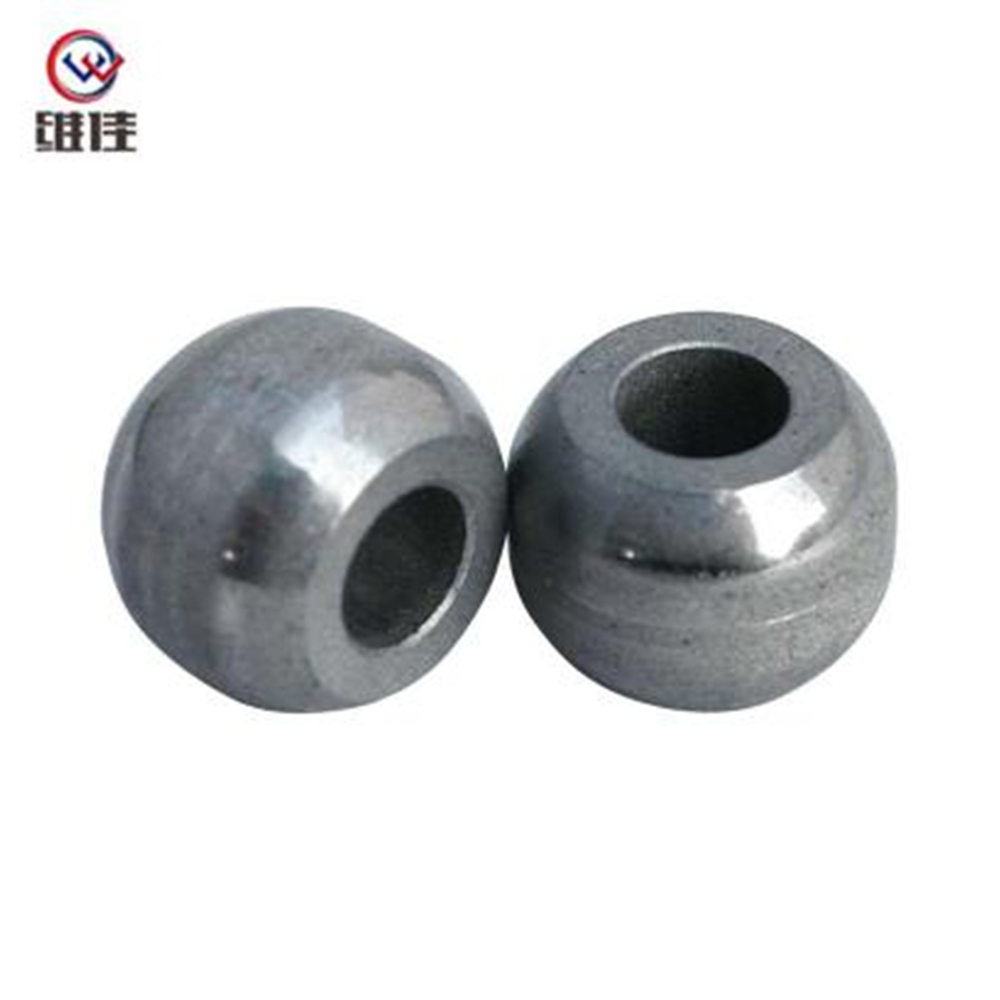
Product Description: High-precision powder metallurgy part (S14*7*10) made of iron material from Jiande Wefine, customized PM components with strict tolerance control.
See Details -
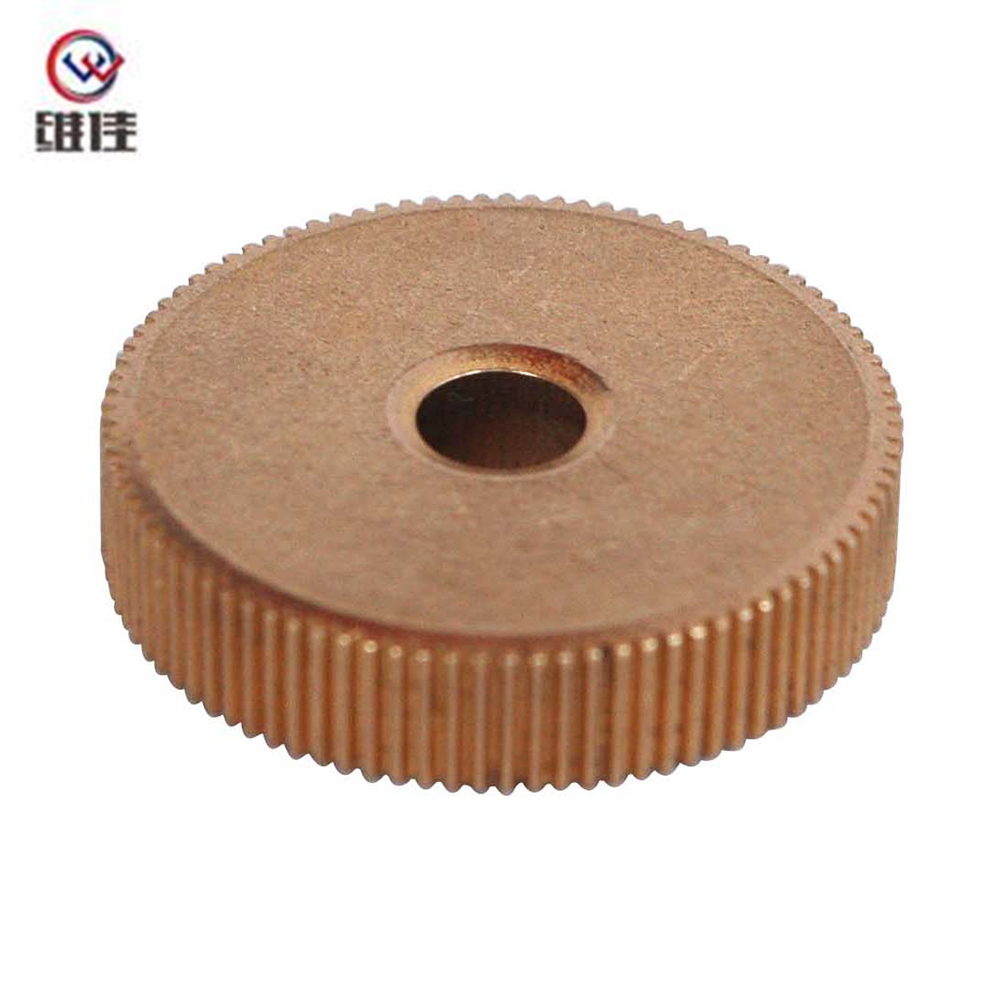
This 4×11.5×5.2mm powder metallurgy gear is manufactured through a precise press-sinter-through hole-oil impregnation process, with strict control of press density (6.7–6.8g/cm³) and sintering tempera...
See Details -
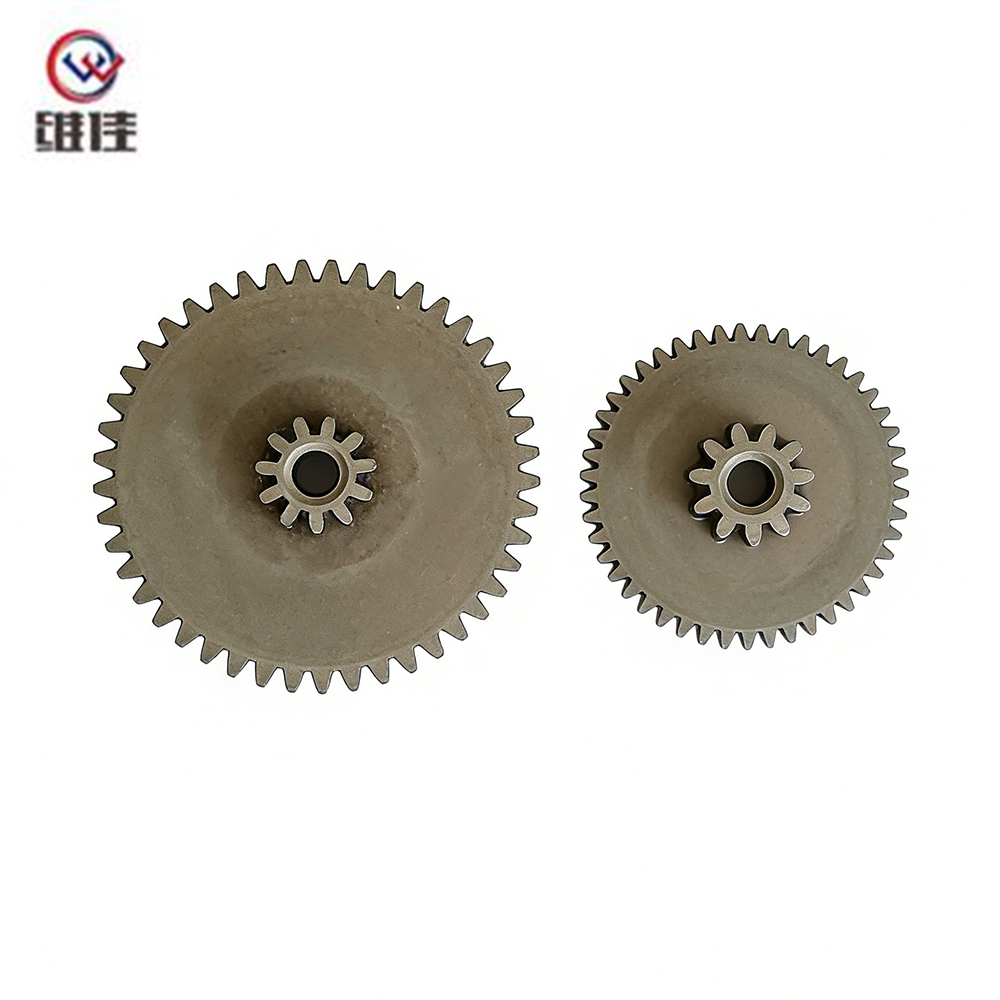
Core Specifications Parameter Specification Gear Teeth Z46 (large gear) & Z11 (small pinion) Module 0.8 Small Gear Bore 11 mm Material AB powder metallurgy (high-strength iron-based all...
See Details
Copyright © Jiande Welfine Technology Co., Ltd. All Rights Reserved. Custom Self-lubricating Sintered Bushing Manufacturers
