 English
 中文简体
中文简体
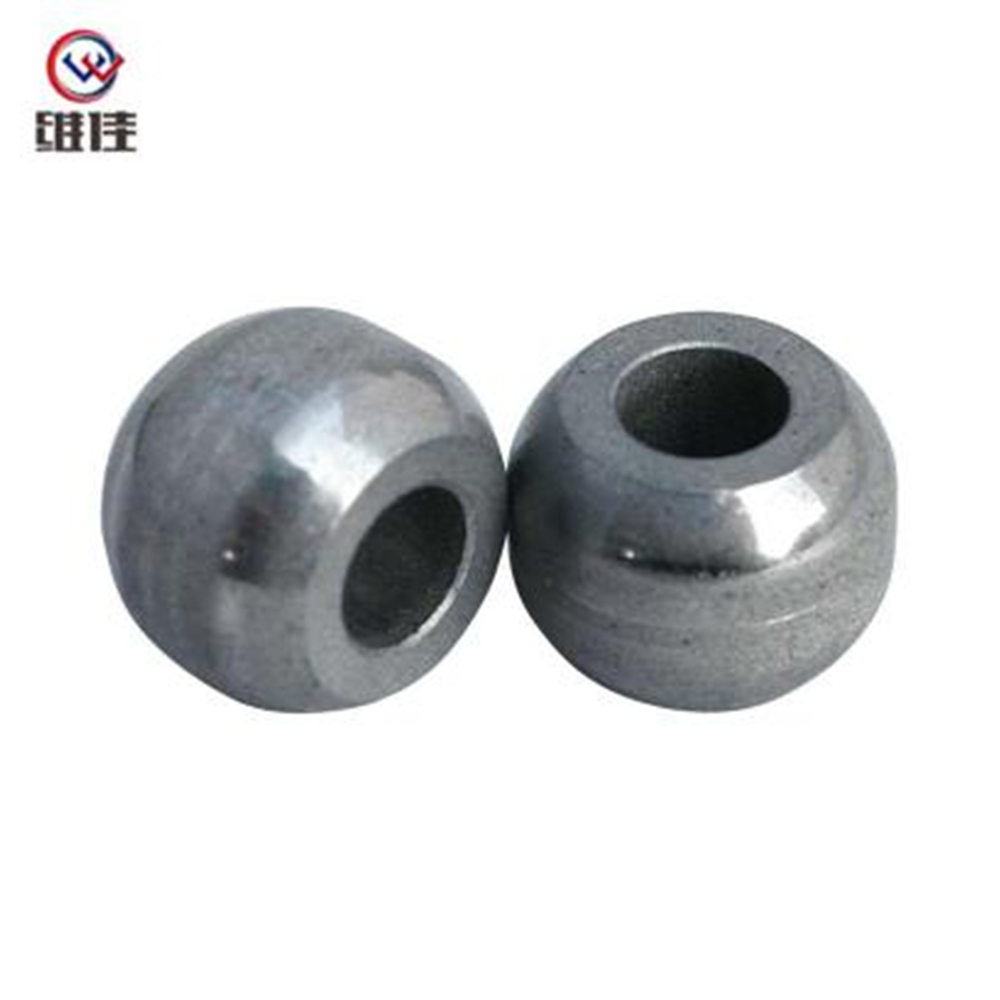
Product Description: High-precision powder metallurgy part (S14*7*10) made of iron material from Jiande Wefine, customized PM components with strict tolerance control.
See DetailsE-mail us: [email protected]
Tel: +86-15239857375


 Home / Author / Tan Xinyue — After-Sales Technical Coordinator / High Precision S14x7x10 Powder Metallurgy Iron Bearing for Self-Lubricating Motion Systems
 High Precision S14x7x10 Powder Metallurgy Iron Bearing for Self-Lubricating Motion Systems
 2026.07.14
 Tan Xinyue — After-Sales Technical Coordinator
Content
- 1 Product Overview: What Makes the S14x7x10 PM Iron Bearing Important?
- 2 Core Advantages Over Conventional and Low-Grade Competitor Bearings
- 3 Technical Features and Performance-Oriented Design
- 4 Manufacturing Process: How Advanced Powder Metallurgy Creates Reliability
- 5 Application in Electric Fans
- 6 Application in Refrigerators and Cooling Equipment
- 7 Additional Industrial Applications
- 8 Why Jiande Welfine Technology Co., Ltd. Is a Strong Manufacturing Partner
- 9 Design Considerations for Selecting the S14x7x10 PM Iron Bearing
- 10 How the Bearing Supports OEM Cost Reduction
- 11 Comparison with Common Alternative Bearing Materials
- 12 Quality Control Points That Distinguish High-Precision PM Bearings
- 13 Customization Possibilities
- 14 Environmental and Production Efficiency Benefits
- 15 Practical Installation and Use Recommendations
- 16 Q&A Section
- 16.1 What is the High Precision PM Component Iron Bearing S14x7x10?
- 16.2 Why is powder metallurgy suitable for this bearing?
- 16.3 How does the bearing compare with ordinary machined bushings?
- 16.4 What advantages does it offer over low-grade competitor PM bearings?
- 16.5 Can the S14x7x10 bearing be customized?
- 16.6 Why is self-lubrication important?
- 16.7 What manufacturing factors most affect accuracy?
- 16.8 What manufacturing factors most affect durability?
- 16.9 Where is this bearing commonly used?
- 16.10 Why choose Jiande Welfine Technology Co., Ltd. as the supplier?
- 17 Conclusion
- 18 References
- 19 Product: Powder Metallurgy Part High Precision PM Component (A3678)
The High Precision PM Component Iron Bearing S14x7x10 is a compact, iron-based, oil-impregnated powder metallurgy bearing designed for motion systems that require dimensional stability, wear resistance, low-noise operation, and dependable self-lubrication. As a powder metallurgy structural component, it combines the strength of iron powder with controlled porosity, precision sizing, and oil retention capability, making it suitable for electric fans, refrigerators, electric motors, gear systems, pumps, automation devices, household appliances, and other rotating or oscillating mechanisms.
Unlike conventional machined bushings or low-grade sintered bearings, this S14x7x10 powder metallurgy iron bearing is developed to support consistent shaft movement while reducing friction and maintenance requirements. Its precision-formed geometry, controlled tolerances, and self-lubricating structure help equipment manufacturers improve product reliability without increasing assembly complexity. For applications where small dimensional errors can cause vibration, abnormal noise, jamming, or premature wear, a high-precision powder metallurgy bearing offers a practical and cost-effective solution.
The product is manufactured by Jiande Welfine Technology Co., Ltd., a specialized powder metallurgy manufacturer established in 2001. The company integrates research and development, production, precision machining, quality management, and custom OEM/ODM services. With a modern production base of 13,039 square meters, more than 150 skilled employees, advanced presses, high-temperature sintering furnaces, precision forming equipment, and strict quality systems certified to ISO 9001:2015 and IATF 16949:2016, Welfine is positioned to supply reliable sintered metal components for demanding industrial applications.
Powder Metallurgy Part High Precision PM Component (A3678)
Product Overview: What Makes the S14x7x10 PM Iron Bearing Important?
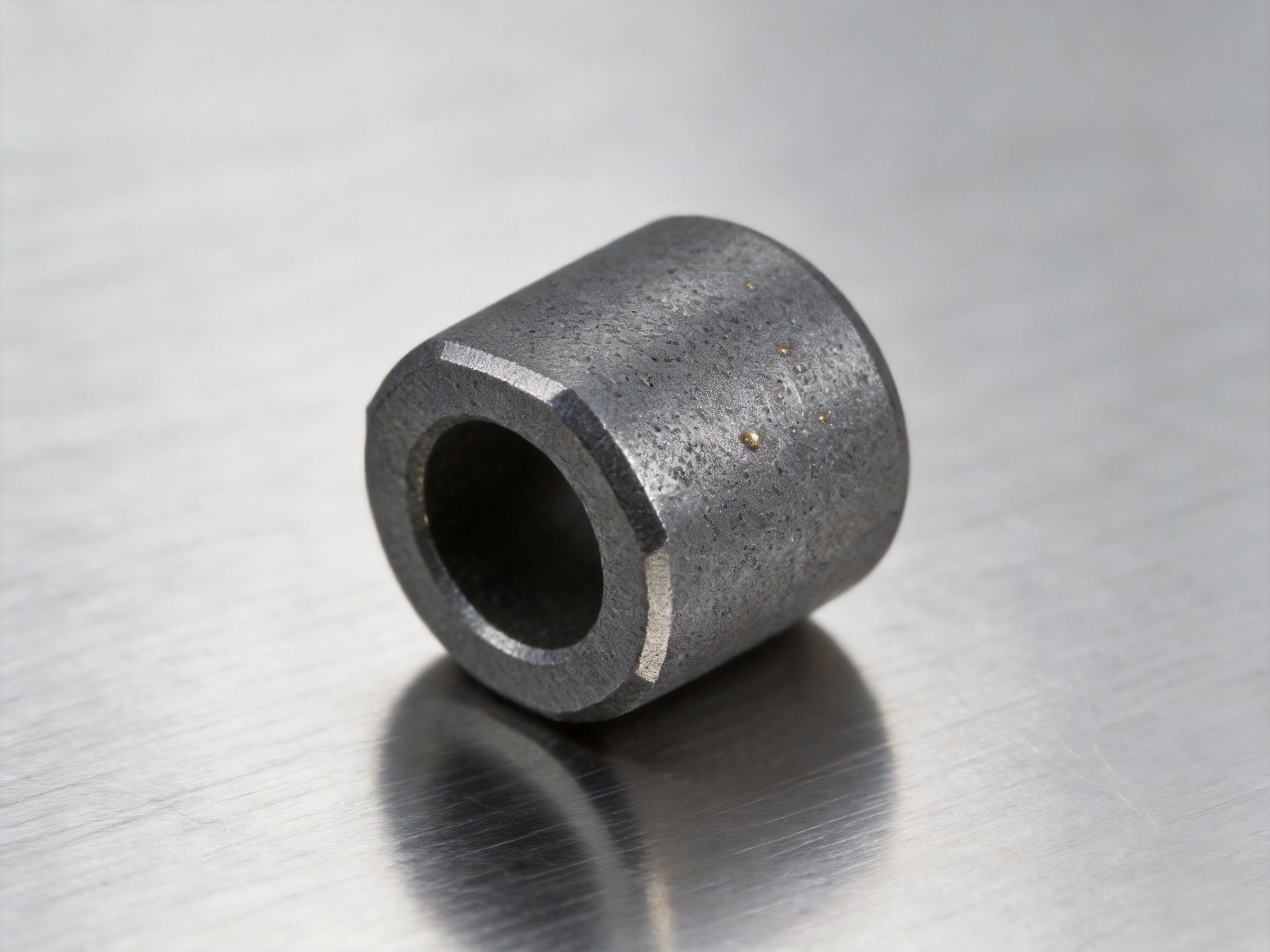
The S14x7x10 bearing is a high-precision powder metallurgy component made primarily from iron powder. Its compact size and carefully controlled geometry make it suitable for assemblies where the bearing must fit into a limited space while still maintaining stable support for a rotating shaft, pivot, or oscillating linkage. The designation S14x7x10 indicates a small, precise bearing configuration that can be adapted according to customer drawings, shaft conditions, operating speeds, lubrication requirements, and installation environments.
As an iron-based oil-impregnated bearing, the component is not simply a metal sleeve. It is a porous sintered structure capable of absorbing and storing lubricating oil within interconnected microscopic pores. During operation, heat and motion cause oil to migrate gradually to the friction surface, forming a lubricating film between the bearing and the mating shaft. When the equipment stops, part of the oil can be reabsorbed into the pore network. This cycle supports long-term lubrication without the need for frequent external oiling.
This self-lubricating capability is a key advantage in equipment where maintenance access is limited or where external grease may attract dust, create contamination, or increase assembly cost. In fans, refrigerator mechanisms, small motors, home appliances, office equipment, and compact electromechanical modules, a self-lubricating sintered iron bearing can improve reliability while reducing part count and service requirements.
The product is also designed with attention to dimensional accuracy. The supplied technical data highlights strict tolerance control, including IT7 grade capability and concentricity control. For small bearing parts, dimensional consistency is essential because shaft fit, alignment, vibration, noise, and service life are all influenced by micrometer-level deviations. A bearing that is too tight may cause high friction and overheating, while a bearing that is too loose may cause wobble, noise, poor positioning, and uneven wear.
Core Advantages Over Conventional and Low-Grade Competitor Bearings
The High Precision PM Component Iron Bearing S14x7x10 offers several advantages over competing bearing solutions, particularly when compared with ordinary machined bushings, cast bushings, low-quality sintered sleeves, or components produced without advanced process control.
1. Self-Lubricating Performance Reduces Maintenance
One of the most important competitive advantages is its oil-impregnated porous structure. Conventional solid metal bushings generally depend on external lubrication. If lubrication is insufficient, the friction surface can quickly wear, generate heat, create noise, and damage the shaft. In contrast, a properly produced powder metallurgy bearing stores lubricant inside its structure and releases it gradually during operation.
This self-lubricating behavior is especially beneficial in electric fans, refrigerator hinges, small motors, and enclosed mechanisms. It helps manufacturers design products that operate quietly for long periods without user maintenance. Compared with competitor parts that use inconsistent porosity or poor oil impregnation, a carefully controlled Welfine sintered bearing provides more stable oil retention and more predictable friction behavior.
2. High Dimensional Accuracy Supports Smooth Assembly
Precision is another major advantage. The bearing is designed for strict tolerance control, with IT7 grade capability and close concentricity management. In practical assembly, high dimensional accuracy reduces the need for rework, sorting, or adjustment during production. It also helps the finished equipment maintain consistent performance from batch to batch.
Lower-grade competitor bearings may show inconsistent inner diameter, outer diameter, roundness, or length. These deviations can result in shaft misalignment, unstable rotation, noise, and shortened service life. By contrast, a high-precision powder metallurgy process supported by sizing and inspection can deliver repeatable dimensions suitable for automated assembly lines and high-volume manufacturing.
3. Iron Powder Provides Cost-Effective Strength
Iron-based powder metallurgy offers a valuable balance between cost, strength, availability, and process flexibility. Compared with bronze or fully machined alloy parts, iron powder can provide lower material cost while still achieving suitable mechanical performance for many bearing applications. The use of iron powder also supports high-volume production because parts can be pressed close to final shape, reducing machining waste and improving production efficiency.
For equipment manufacturers competing in cost-sensitive markets, this balance is crucial. The S14x7x10 PM iron bearing can help control component cost without sacrificing functional reliability. When properly sintered, sized, and oil-impregnated, the iron-based structure can deliver dependable wear resistance and mechanical stability for many light- and medium-duty motion systems.
4. Powder Metallurgy Enables Near-Net-Shape Efficiency
Powder metallurgy is a near-net-shape manufacturing process. Instead of cutting a bearing from a solid bar and removing large amounts of material, metal powder is compacted into a die cavity and sintered into a final or near-final form. This reduces material waste, supports repeatability, and allows efficient production of complex small components.
Compared with conventional machining, powder metallurgy can provide better cost control for high-volume parts. It also allows engineers to design controlled porosity into the bearing, which is not possible with ordinary solid machined components. For buyers evaluating competing solutions, this combination of efficient forming and functional porosity is a major reason to choose a PM bearing.
5. Better Noise Control for Consumer and Industrial Equipment
Noise is a major concern in household appliances, fans, refrigeration systems, and electric motor assemblies. Bearing noise can come from misalignment, insufficient lubrication, surface roughness, or inconsistent shaft support. The S14x7x10 bearing is designed to address these issues through precision geometry, oil-impregnated lubrication, and stable material structure.
In fan swing mechanisms, the bearing can support smooth oscillating motion while preventing jamming or abnormal sound. In refrigerator hinge and vibration-control assemblies, it helps maintain alignment and reduce motion-related noise. Compared with competitor bearings that lack tight tolerance control or sufficient oil capacity, this high-precision PM bearing contributes to quieter product operation and better user experience.
Technical Features and Performance-Oriented Design
The High Precision PM Component Iron Bearing S14x7x10 is engineered around several performance targets: dimensional stability, controlled porosity, wear resistance, oil retention, reliable shaft fit, and long service life. These targets are achieved through material selection, compaction control, sintering control, secondary sizing, oil impregnation, and quality inspection.
| Feature | Performance Benefit | Competitive Advantage |
| Iron-based powder metallurgy material | Good strength, wide material availability, cost efficiency | Lower cost than many machined or bronze alternatives |
| Controlled porous structure | Stores lubricating oil inside the bearing body | Self-lubricating operation with reduced maintenance |
| Precision sizing capability | Improves inner diameter, outer diameter, roundness, and concentricity | More stable assembly fit than low-grade PM parts |
| IT7 grade tolerance capability | Supports accurate shaft positioning and repeatable performance | Suitable for precision mechanisms and automated assembly |
| Oil impregnation | Reduces friction, shaft wear, and operating noise | Longer service life than dry or poorly lubricated bushings |
| Powder metallurgy near-net forming | Reduces waste and improves high-volume efficiency | Better cost-performance balance for OEM production |
| Custom OEM/ODM support | Dimensions, materials, tolerances, and oil type can be adjusted | More flexible than standard-only suppliers |
The bearing can be supplied according to standard specifications or customized based on drawings and samples. This is important because a bearing’s final performance depends on its operating environment. Shaft material, surface finish, load, speed, temperature, assembly method, and duty cycle all influence the ideal bearing design. Welfine’s OEM/ODM capability allows customers to request customized tolerances, dimensions, material formulations, oil impregnation choices, and post-processing operations.
Manufacturing Process: How Advanced Powder Metallurgy Creates Reliability
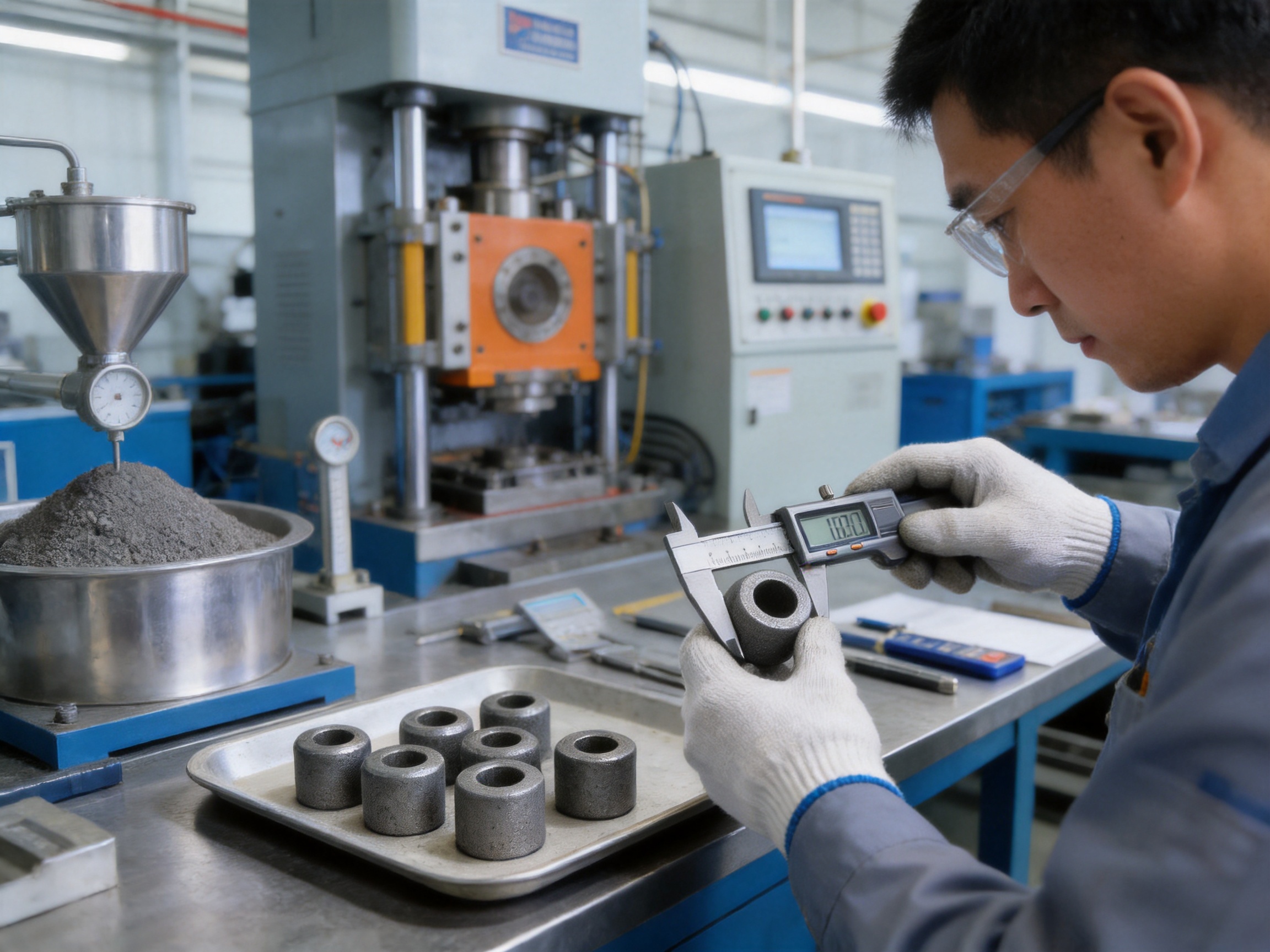
The reliability of a powder metallurgy bearing is determined not only by its drawing dimensions but also by the precision of every manufacturing stage. A good design can fail if powder quality is unstable, compaction is uneven, sintering temperature is poorly controlled, or oil impregnation is insufficient. Jiande Welfine Technology Co., Ltd. focuses on controlled manufacturing from raw material preparation to final inspection, helping ensure that each bearing meets application requirements.
Raw Material Selection and Powder Preparation
The process begins with metal powder selection. For an iron-based oil-impregnated bearing, powder quality directly influences density, strength, porosity, dimensional stability, and sintered structure. Important powder characteristics include particle size distribution, purity, flowability, apparent density, compressibility, and chemical composition.
Uniform powder supports uniform compaction. If powder particles are inconsistent, the pressed part may develop density gradients, weak zones, or dimensional variation after sintering. These defects can cause uneven wear, unstable oil retention, or reduced mechanical strength. By selecting appropriate iron powder and controlling mixing conditions, Welfine can create a more predictable material foundation for precision PM components.
Lubricants or alloying elements may be blended into the powder depending on the required performance. The mixing stage must be carefully controlled to avoid segregation, because inconsistent distribution can lead to inconsistent properties from part to part. For high-volume OEM orders, consistency at this stage is essential for stable production quality.
Precision Compaction
After powder preparation, the mixture is pressed into shape using precision tooling. Compaction pressure determines green density, part geometry, and strength before sintering. For oil-impregnated bearings, compaction must be optimized: the part needs sufficient density for mechanical strength, but it must retain enough interconnected porosity to store lubricating oil.
If compaction pressure is too low, the bearing may lack strength and dimensional stability. If pressure is too high, porosity may be reduced, limiting oil capacity and self-lubricating performance. Proper tool design and press control are therefore essential. Welfine’s advanced forming equipment supports repeatable compaction, helping maintain stable dimensions and consistent density across batches.
Precision compaction also reduces the amount of secondary machining needed. Because powder metallurgy forms parts close to final shape, accurate pressing helps lower production cost while supporting consistent product performance.
Controlled Sintering
Sintering is the thermal process that transforms the compacted powder body into a bonded metal component. The compacted parts are heated below the melting point of the primary metal in a controlled furnace atmosphere. During sintering, powder particles bond together, strength increases, and the final porous structure is established.
Key sintering parameters include temperature, holding time, atmosphere composition, furnace uniformity, and cooling rate. Each parameter affects dimensional change, mechanical strength, pore structure, and final performance. Poor sintering can cause distortion, oxidation, weak bonding, cracking, or inconsistent shrinkage. These problems are especially damaging for small precision bearings because even minor distortion can affect shaft fit and operational noise.
Welfine uses high-temperature sintering furnaces and established process controls to support consistent bonding and dimensional stability. This is a significant advantage over competitors that rely on less controlled furnace conditions or inconsistent sintering cycles. Stable sintering improves strength, wear resistance, fatigue performance, and long-term reliability.
Sizing and Precision Calibration
Although powder metallurgy can produce near-net-shape parts, precision bearings often require secondary sizing or calibration. Sizing compresses the sintered part in precision tooling to improve dimensional accuracy, roundness, and surface quality. For the S14x7x10 bearing, this step is important because inner diameter and concentricity directly affect shaft performance.
Precision sizing helps ensure the bearing fits properly into the housing and supports the shaft with the intended clearance. It can also improve consistency across batches, making the component suitable for automated assembly. For manufacturers of fans, motors, and appliances, this consistency reduces production risk and improves final product quality.
Oil Impregnation
Oil impregnation is a defining process for self-lubricating sintered bearings. After sintering and sizing, the bearing’s porous network is filled with lubricating oil. Vacuum impregnation or controlled soaking processes may be used to ensure oil enters the interconnected pores thoroughly.
Good oil impregnation reduces friction during operation, protects the shaft, lowers noise, and extends service life. Inadequate impregnation may cause dry running, heat generation, and accelerated wear. Welfine’s experience in self-lubricating bushings allows the company to select suitable oil types and impregnation processes according to customer requirements and operating conditions.
Quality Inspection and Process Verification
Quality inspection is essential for high-precision components. Important inspection items may include inner diameter, outer diameter, length, concentricity, density, hardness, surface condition, oil content, visual defects, and functional fit. For OEM applications, inspection plans can be adjusted to customer standards and drawings.
Welfine strictly implements quality management systems and has passed ISO 9001:2015 and IATF 16949:2016 certifications. These certifications reflect systematic control over production, inspection, traceability, corrective actions, and continuous improvement. For customers, this provides confidence that parts are produced under disciplined manufacturing procedures rather than informal batch-by-batch judgment.
Application in Electric Fans
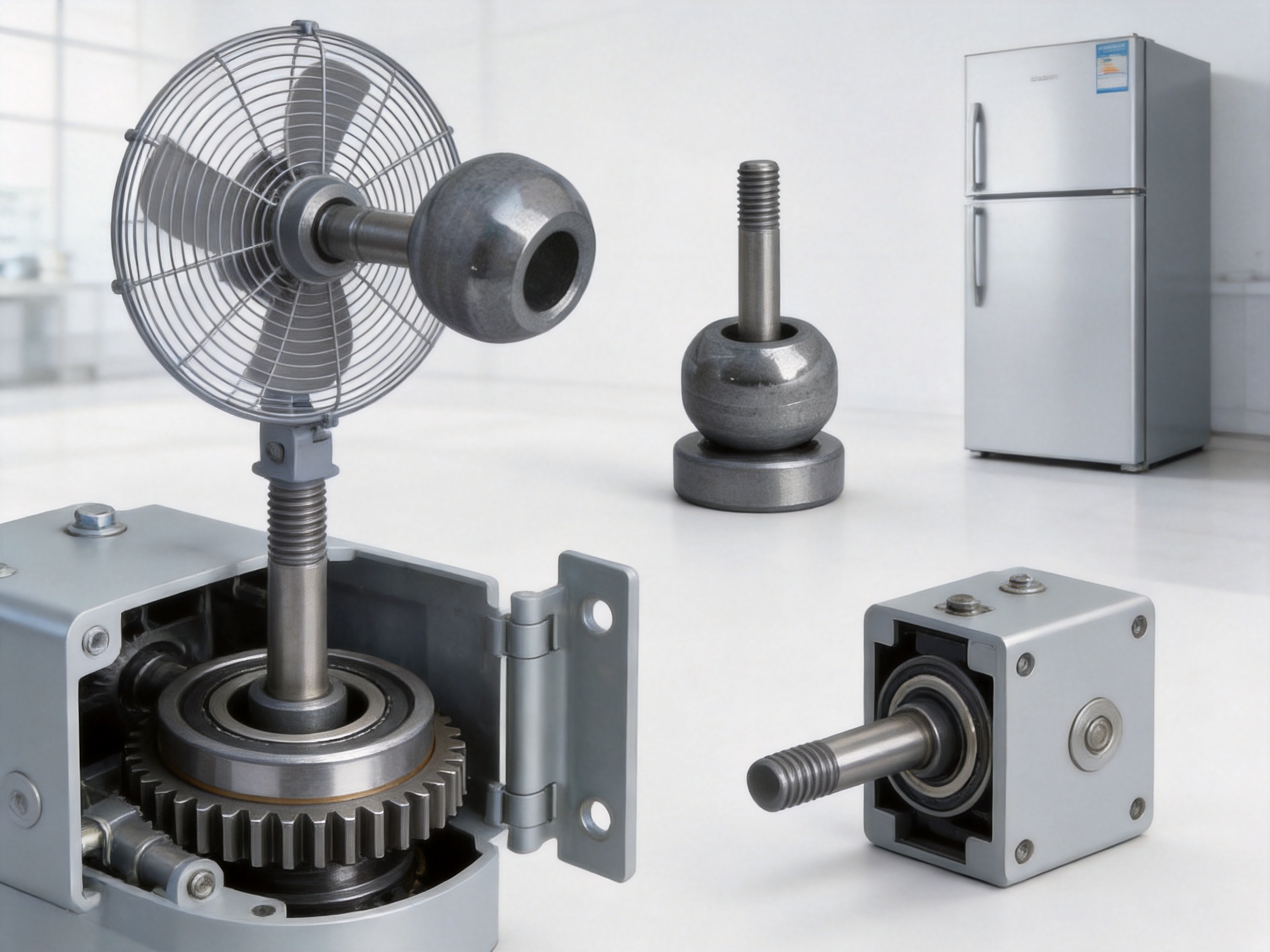
The S14x7x10 PM iron bearing is well suited for electric fan assemblies, including ceiling fans, stand fans, desk fans, and tower fans. In these products, bearings may support the motor shaft, auxiliary rotating elements, or oscillating swing mechanisms. A fan must run quietly, smoothly, and reliably for long periods, often in dusty or warm environments. A self-lubricating powder metallurgy bearing helps meet these requirements.
In fan head swing mechanisms, the bearing can be installed at the joint of the pitch or yaw drive rod. Its precise geometry supports smooth movement while its oil-impregnated structure reduces friction. This helps prevent jamming, intermittent motion, and abnormal noise during long-term oscillation. Because fan users often notice even slight clicking or grinding sounds, bearing quality has a direct impact on perceived product value.
In motor shaft support applications, the bearing can function as a compact sleeve for auxiliary shaft support. A precise inner diameter and stable roundness help maintain alignment, while lubrication reduces rotational resistance. Lower friction can contribute to improved motor efficiency and lower heat generation. Over time, this can extend the service life of both the shaft and the supporting structure.
Compared with competitor bushings that require additional lubrication or have unstable tolerances, the S14x7x10 self-lubricating PM bearing helps fan manufacturers achieve quieter operation, longer service intervals, and more consistent assembly quality. It also supports cost-effective volume production, which is important in the competitive home appliance market.
Application in Refrigerators and Cooling Equipment
Refrigerators and commercial cooling equipment require mechanical components that operate quietly and reliably over many years. Bearing components may appear in door hinge adjustment systems, compressor vibration reduction linkages, fan motors, and small actuator mechanisms. The S14x7x10 powder metallurgy iron bearing provides a useful combination of precision, wear resistance, and self-lubrication for these environments.
In refrigerator door hinge adjustment mechanisms, the bearing can support pivoting movement and help maintain door alignment. Proper alignment is essential because a sagging or poorly positioned door can reduce sealing performance, increase energy consumption, and affect user satisfaction. A precision bearing with controlled dimensions helps the door open and close smoothly while resisting wear at the hinge contact point.
In compressor vibration reduction linkages, the bearing can help reduce metal-to-metal friction and absorb repetitive motion. Powder metallurgy materials can provide a stable structure, while oil impregnation reduces wear under small oscillating movements. Lower friction and stable fit can reduce vibration transmission to the refrigerator body, helping lower operational noise.
Cooling equipment often operates continuously, making maintenance difficult. Self-lubricating sintered bearings are valuable because they reduce the need for external oiling. Compared with ordinary dry bushings, oil-impregnated PM bearings provide more stable performance in long-duration operation.
Additional Industrial Applications
Beyond fans and refrigerators, the High Precision PM Component Iron Bearing S14x7x10 can be used in many small motion systems. Its compact design and stable performance make it suitable for applications where space is limited and reliable shaft support is required.
Electric Motors
Small electric motors require bearings that maintain shaft alignment while reducing friction and noise. The S14x7x10 PM iron bearing can support motor shafts in household appliances, office equipment, power tools, and automation modules. Its self-lubricating design reduces maintenance and supports continuous operation.
Gear Reduction Systems
Gear reducers often contain shafts that rotate under moderate loads. A precision PM bearing can support stable gear alignment and reduce wear. Because powder metallurgy bearings can be produced economically in large quantities, they are useful for compact gearboxes in appliances, actuators, and light industrial equipment.
Pumps and Fluid-Control Equipment
Some pump assemblies and fluid-control mechanisms use small bushings to support rotating or oscillating components. The oil-impregnated structure of the bearing can reduce friction and improve service life in applications where external lubrication is inconvenient.
Automation Equipment
Automation systems require repeatable movement and low maintenance. Bearings used in small positioning systems, linkages, and actuators must maintain dimensional accuracy over repeated cycles. The S14x7x10 bearing’s precision sizing and stable material structure support repeatable operation.
Agricultural Machinery and Power Transmission
Although compact, the bearing can be used in auxiliary mechanisms of agricultural equipment and power transmission systems. Its wear resistance and self-lubricating capability can help reduce maintenance in dusty or difficult-to-access environments, provided the final design is matched to the load and speed requirements.
Why Jiande Welfine Technology Co., Ltd. Is a Strong Manufacturing Partner
Choosing the right bearing is not only about selecting a drawing number. It is also about selecting a manufacturer capable of controlling the entire powder metallurgy process. Jiande Welfine Technology Co., Ltd. offers several strengths that support customers seeking reliable sintered metal parts and custom self-lubricating bushings.
More Than 20 Years of Powder Metallurgy Experience
Established in 2001, Welfine has accumulated more than two decades of experience in powder metallurgy sintering, self-lubricating bushings, and precision components. This experience matters because PM bearing performance depends on practical knowledge of powder behavior, tooling design, sintering shrinkage, porosity control, sizing response, and oil impregnation.
New or inexperienced suppliers may be able to produce basic shapes, but high-precision functional bearings require deeper process understanding. Welfine’s long-term focus on powder metallurgy enables the company to help customers solve issues related to tolerance, lubrication, wear, assembly fit, and material selection.
Modern 13,039-Square-Meter Production Base
The company operates a modern production base covering 13,039 square meters. A planned manufacturing facility supports efficient workflow, equipment layout, quality inspection, and scalable production. For OEM customers, stable capacity is important because component shortages or inconsistent supply can disrupt assembly lines.
The production base includes advanced production and testing equipment, such as high-efficiency presses, high-temperature sintering furnaces, and precision forming machines. This equipment supports repeatable manufacturing of high-precision sintered metal components.
Skilled Workforce and Engineering Support
Welfine has more than 150 skilled employees. In powder metallurgy, trained operators and technical teams are essential because many process details influence final quality. Tooling setup, powder handling, press adjustment, furnace monitoring, sizing control, oil impregnation, and inspection all require discipline and experience.
The company can provide OEM/ODM customized bushing solutions based on customer drawings or samples. This is particularly valuable for customers that need non-standard dimensions, special tolerances, specific oil types, or performance improvements over an existing competitor part.
Certified Quality Management
Welfine has passed ISO 9001:2015 and IATF 16949:2016 certifications. ISO 9001:2015 demonstrates a structured quality management system, while IATF 16949:2016 reflects quality requirements associated with automotive industry supply chains. These certifications help customers evaluate the company’s ability to maintain process control, traceability, inspection discipline, and continuous improvement.
For precision bearings, quality management is not optional. A single dimension outside tolerance can cause assembly problems, and inconsistent porosity can reduce service life. Certified systems support consistent production rather than relying only on final inspection.
Design Considerations for Selecting the S14x7x10 PM Iron Bearing
When selecting a powder metallurgy bearing, customers should consider more than nominal dimensions. The bearing must be matched to the full operating environment. Key factors include shaft diameter, housing fit, load, speed, oscillation angle, temperature, duty cycle, shaft hardness, shaft roughness, lubrication expectations, noise requirements, and assembly method.
Shaft fit is particularly important. If the clearance is too small, the bearing may generate excessive heat or seize under thermal expansion. If clearance is too large, the shaft may vibrate or tilt, causing noise and uneven wear. Precision sizing allows the bearing to meet tighter dimensional requirements, but the final tolerance should be selected according to the application.
Porosity and oil content should also be selected carefully. Higher oil capacity may improve lubrication, but excessive porosity can reduce mechanical strength. Higher density can improve load capacity, but insufficient interconnected porosity may reduce self-lubricating performance. Welfine can support customers in balancing these requirements based on application conditions.
Surface finish of the mating shaft strongly affects bearing life. Even a high-quality PM bearing can wear prematurely if the shaft is too rough, too soft, misaligned, or contaminated. For best results, the shaft should have suitable hardness, smoothness, straightness, and cleanliness.
Operating temperature also matters because lubricant viscosity changes with temperature. For high-temperature or low-temperature environments, oil selection may need to be adjusted. In many household and industrial applications, standard oil impregnation is sufficient, but special operating conditions should be reviewed during product development.
How the Bearing Supports OEM Cost Reduction
OEM manufacturers often need components that combine performance and cost efficiency. The S14x7x10 PM iron bearing can contribute to cost reduction in several ways. First, powder metallurgy reduces material waste compared with machining from solid stock. Second, near-net-shape forming reduces machining time. Third, self-lubrication may eliminate separate lubrication steps or additional grease fittings. Fourth, dimensional consistency supports automated assembly and reduces rework.
Longer service life can also reduce warranty risk. In appliances and small equipment, bearing failure can lead to noise complaints, returns, or brand reputation damage. A reliable self-lubricating PM bearing helps prevent these issues. When compared with the lowest-cost competitor component, the total value of a precision bearing may be higher because it reduces hidden costs associated with assembly problems, field failures, noise complaints, and maintenance.
Comparison with Common Alternative Bearing Materials
Different bearing materials have different advantages. Bronze bushings offer good bearing properties but may be more expensive. Plastic bushings can be lightweight and corrosion resistant but may have limitations in temperature, load, and creep resistance. Solid steel bushings can be strong but require lubrication and may create higher friction if not properly maintained. Low-grade PM bushings may be inexpensive but can suffer from inconsistent porosity, poor sizing, and unstable oil retention.
The S14x7x10 iron-based oil-impregnated PM bearing offers a balanced solution. It provides metal strength, controlled porosity, self-lubrication, precision manufacturing, and competitive cost. This makes it especially attractive for equipment where the bearing must be reliable, compact, quiet, and economical.
Quality Control Points That Distinguish High-Precision PM Bearings
High-quality PM bearings are distinguished by measurable process and inspection controls. Important quality control points include powder batch verification, mixing consistency, green part density, compact weight, sintering atmosphere, sintering temperature, dimensional change, sizing tool condition, inner diameter inspection, concentricity measurement, oil content verification, surface defect inspection, and packaging protection.
Competitor parts may look similar from the outside, but internal pore structure and dimensional consistency can be very different. A bearing with poor pore connectivity may not release oil effectively. A bearing with uneven density may wear unevenly. A bearing with inconsistent inner diameter may cause variable shaft performance. For this reason, selecting a manufacturer with strong process control is essential.
Welfine’s production and inspection capabilities help ensure that customers receive components designed for stable performance. The company’s commitment to technology leadership, quality priority, stable manufacturing, continuous innovation, and long-term cooperation supports dependable supply relationships.
Customization Possibilities
The S14x7x10 bearing can be supplied as a standard high-precision PM component, but customization is often available for customers with specific needs. Possible customization areas include inner diameter, outer diameter, length, chamfer geometry, spherical surfaces, density, porosity, oil type, tolerance grade, material composition, surface finish, and packaging method.
Customers can provide drawings, samples, or application requirements. Based on this information, Welfine can evaluate manufacturability and recommend suitable powder metallurgy solutions. For new product development, early communication is valuable because tooling design, shrinkage allowance, and tolerance planning should be considered before mass production.
OEM/ODM support is especially useful when replacing a competitor part that has performance problems. If an existing bearing causes noise, excessive wear, poor fit, or assembly difficulty, a customized PM solution can improve dimensions, material density, lubrication, or post-processing. This allows equipment manufacturers to upgrade performance without redesigning the entire assembly.
Environmental and Production Efficiency Benefits
Powder metallurgy can offer environmental and production efficiency benefits compared with conventional subtractive manufacturing. Because parts are formed close to final shape, material waste is lower. Reduced machining also means less cutting fluid use, fewer chips, and shorter processing time. For high-volume production, these advantages can be significant.
Self-lubricating bearings may also reduce the need for repeated lubrication during product life. In enclosed appliances and small equipment, this supports cleaner operation and lower maintenance demand. While application conditions vary, the combination of material efficiency and long service life makes PM bearings a practical choice for modern manufacturing.
Practical Installation and Use Recommendations
To obtain the best performance from the S14x7x10 PM iron bearing, proper installation is important. The bearing should be pressed into the housing using suitable tools that support alignment and avoid deformation. Excessive installation force, tilted pressing, or contact with sharp tools can damage the bearing surface or alter the inner diameter.
The housing bore should be manufactured according to the recommended interference or clearance fit. If the housing is too tight, the bearing inner diameter may shrink after installation, causing insufficient shaft clearance. If the housing is too loose, the bearing may rotate in the housing or lose positional accuracy.
The mating shaft should be clean, smooth, and properly sized. Burrs, rust, abrasive particles, or rough surfaces can damage the bearing and reduce service life. During assembly, contamination should be minimized because dust and metal chips can interfere with lubrication and increase wear.
Storage conditions should also protect oil-impregnated bearings from contamination and excessive drying. Proper packaging helps preserve oil content and surface cleanliness before assembly.
Q&A Section
What is the High Precision PM Component Iron Bearing S14x7x10?
It is an iron-based powder metallurgy bearing designed with controlled porosity, precision dimensions, and oil-impregnated self-lubrication. It supports rotating or oscillating shafts in compact motion systems such as fans, refrigerators, electric motors, pumps, gear mechanisms, and appliances.
Why is powder metallurgy suitable for this bearing?
Powder metallurgy allows the bearing to be formed close to its final shape while maintaining a controlled porous structure. This porous structure stores lubricating oil, enabling self-lubricating operation. The process also supports high-volume production, good material efficiency, and consistent dimensions when properly controlled.
How does the bearing compare with ordinary machined bushings?
Ordinary machined bushings are usually solid and require external lubrication. The S14x7x10 PM bearing stores oil inside its pores and releases it during operation, reducing maintenance. It also offers near-net-shape production efficiency and can be more cost-effective for high-volume OEM applications.
What advantages does it offer over low-grade competitor PM bearings?
Its advantages include stricter tolerance control, better concentricity management, more consistent porosity, controlled oil impregnation, advanced sintering, precision sizing, and quality management supported by ISO 9001:2015 and IATF 16949:2016 systems. These factors improve fit, noise performance, lubrication stability, and service life.
Can the S14x7x10 bearing be customized?
Yes. Jiande Welfine Technology Co., Ltd. provides OEM/ODM customization based on drawings, samples, or application requirements. Dimensions, tolerances, materials, porosity, oil type, chamfers, and post-processing can be adjusted according to customer needs.
Why is self-lubrication important?
Self-lubrication reduces friction between the bearing and shaft without requiring frequent external oiling. This improves service life, lowers operating noise, reduces maintenance, and supports reliable performance in enclosed or hard-to-access mechanisms.
What manufacturing factors most affect accuracy?
The most important factors include powder quality, compaction pressure, tooling accuracy, sintering control, sizing precision, and final inspection. Consistent density distribution and accurate sizing are particularly important for achieving tight shaft fit and stable concentricity.
What manufacturing factors most affect durability?
Durability depends on material strength, sintered bonding, porosity balance, oil content, surface condition, shaft compatibility, and correct installation. Proper sintering and oil impregnation are especially important for long-term wear resistance.
Where is this bearing commonly used?
Common applications include electric fan swing mechanisms, fan motor shaft supports, refrigerator door hinge pivots, compressor vibration reduction linkages, small electric motors, gear reducers, pumps, automation equipment, household appliances, and actuator systems.
Why choose Jiande Welfine Technology Co., Ltd. as the supplier?
The company has more than 20 years of powder metallurgy experience, a 13,039-square-meter production base, advanced presses and sintering furnaces, more than 150 skilled employees, OEM/ODM customization capability, and certified quality management systems. These strengths support stable production of reliable high-precision sintered metal components.
Conclusion
The High Precision PM Component Iron Bearing S14x7x10 is a practical and performance-oriented solution for compact motion systems that require reliable shaft support, low friction, quiet operation, and reduced maintenance. Its iron-based powder metallurgy structure combines cost-effective strength with controlled porosity and oil-impregnated self-lubrication. Precision sizing and strict tolerance control help ensure stable assembly fit, while advanced sintering and quality inspection support durability and repeatable performance.
Compared with conventional machined bushings, dry metal sleeves, plastic alternatives, and low-grade competitor PM parts, this bearing provides a strong balance of accuracy, lubrication, wear resistance, production efficiency, and OEM customization flexibility. It is especially valuable in electric fans, refrigerators, household appliances, motors, gear systems, pumps, and automation devices where small components have a large impact on product reliability and user experience.
Jiande Welfine Technology Co., Ltd. strengthens the product value through advanced manufacturing equipment, experienced engineering support, a modern production base, strict quality systems, and more than two decades of powder metallurgy expertise. For customers seeking custom sintered metal parts, self-lubricating bushings, and high-precision PM components, the S14x7x10 iron bearing represents a dependable choice for both technical performance and long-term manufacturing cooperation.
References
1. German, R. M. Powder Metallurgy and Particulate Materials Processing. Metal Powder Industries Federation.
2. ASM International. ASM Handbook, Volume 7: Powder Metallurgy.
3. Metal Powder Industries Federation. Standard Test Methods for Metal Powders and Powder Metallurgy Products.
4. ISO 5755. Sintered Metal Materials, Specifications.
5. ISO 9001:2015. Quality Management Systems Requirements.
6. IATF 16949:2016. Quality Management System Requirements for Automotive Production and Relevant Service Parts Organizations.
7. Schatt, W., Wieters, K. P., and Kieback, B. Powder Metallurgy: Processing and Materials. European Powder Metallurgy Association.
Product: Powder Metallurgy Part High Precision PM Component (A3678)
Related products
-
-
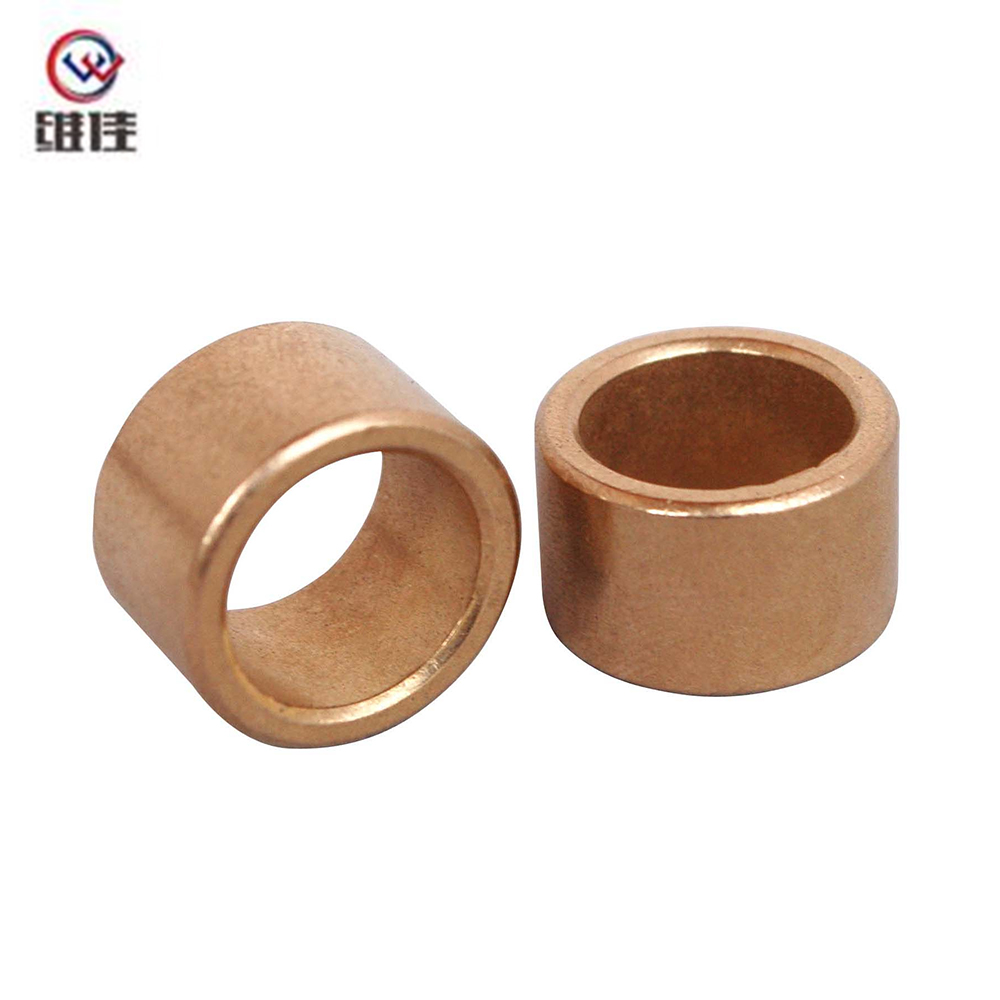
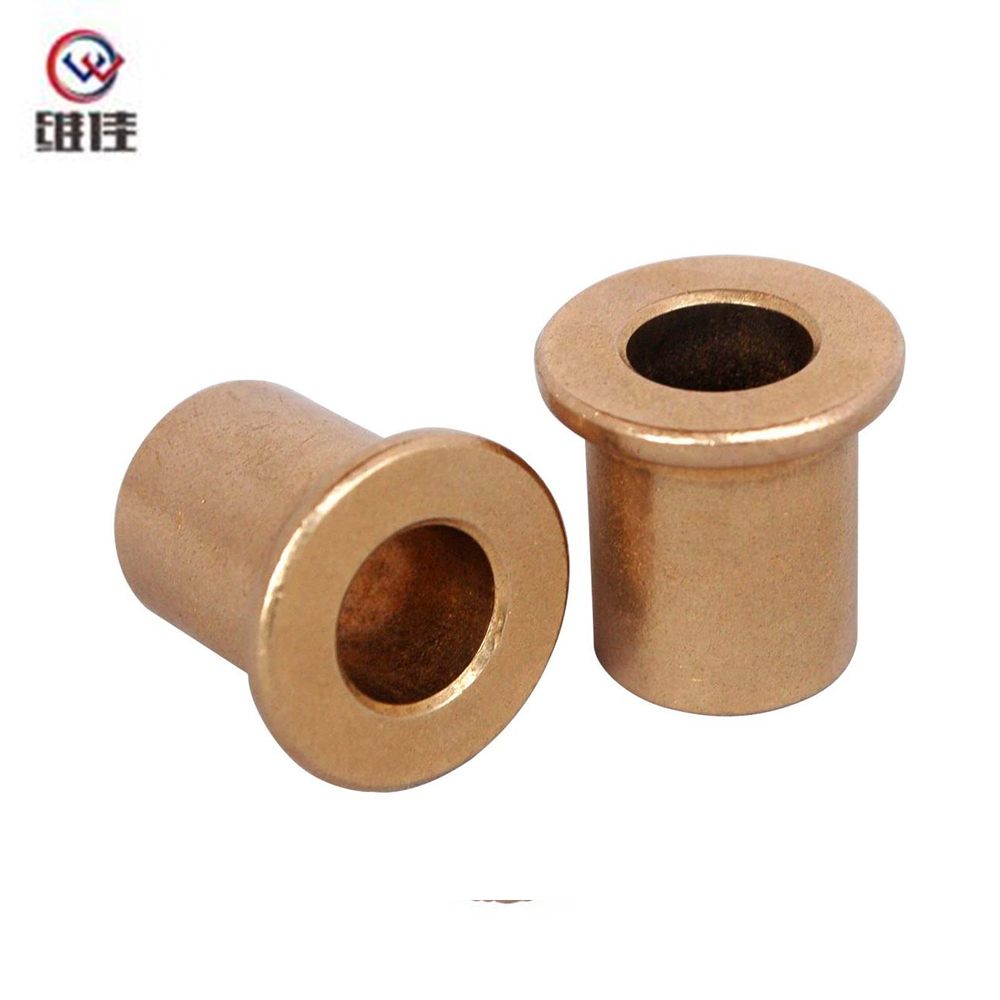
This copper-based powder metallurgy bushing is manufactured through an integrated process of compaction, sintering, sizing, and oil impregnation. It features excellent wear resistance and self-lubrica...
See Details
Copyright © Jiande Welfine Technology Co., Ltd. All Rights Reserved. Custom Self-lubricating Sintered Bushing Manufacturers
