E-mail us: [email protected]
Tel: +86-15239857375
 English
 中文简体
中文简体

 Home / Author / Shen Yiruo — Senior After-Sales Service Manager / Sintered Stainless Steel Self-Lubricating Bushings: Performance, Manufacturing Technology, and Industrial Applications
 Sintered Stainless Steel Self-Lubricating Bushings: Performance, Manufacturing Technology, and Industrial Applications
 2026.08.19
 Shen Yiruo — Senior After-Sales Service Manager
Content
- 1 What Are Sintered Stainless Steel Self-Lubricating Bushings?
- 2 How the Self-Lubricating Mechanism Works
- 3 Principal Advantages of Stainless Steel Construction
- 4 Advantages Compared with Conventional Bushing Materials
- 5 Powder Metallurgy Manufacturing Process
- 6 Manufacturing Strengths of Jiande Welfine Technology Co., Ltd.
- 7 Applications in Food Processing Equipment
- 8 Applications in Medical and Laboratory Equipment
- 9 Applications in Marine Equipment
- 10 Applications in Chemical and Water Treatment Equipment
- 11 Applications in Industrial Automation
- 12 Operating Conditions and Design Considerations
- 13 Product Selection and Customization Process
- 14 Installation and Maintenance Recommendations
- 15 Why Choose a Custom Manufacturer?
- 16 Quality, Reliability, and Long-Term Value
- 17 Frequently Asked Questions
- 17.1 What is the main benefit of a sintered stainless steel self-lubricating bushing?
- 17.2 Are these bushings completely maintenance-free?
- 17.3 Can they operate in water or marine environments?
- 17.4 Are they suitable for food processing machinery?
- 17.5 Can they be used in medical equipment?
- 17.6 What information is required for a custom quotation?
- 17.7 Can the bushing be manufactured according to a customer drawing?
- 17.8 How does powder metallurgy improve production efficiency?
- 17.9 What determines the service life of a self-lubricating bushing?
- 17.10 Can high-speed applications use sintered stainless steel bushings?
- 17.11 Why is internal porosity important?
- 17.12 What certifications does the manufacturer have?
- 18 Conclusion
- 19 References
- 20 Product: Sintered Stainless Steel Self-lubricating Bushings
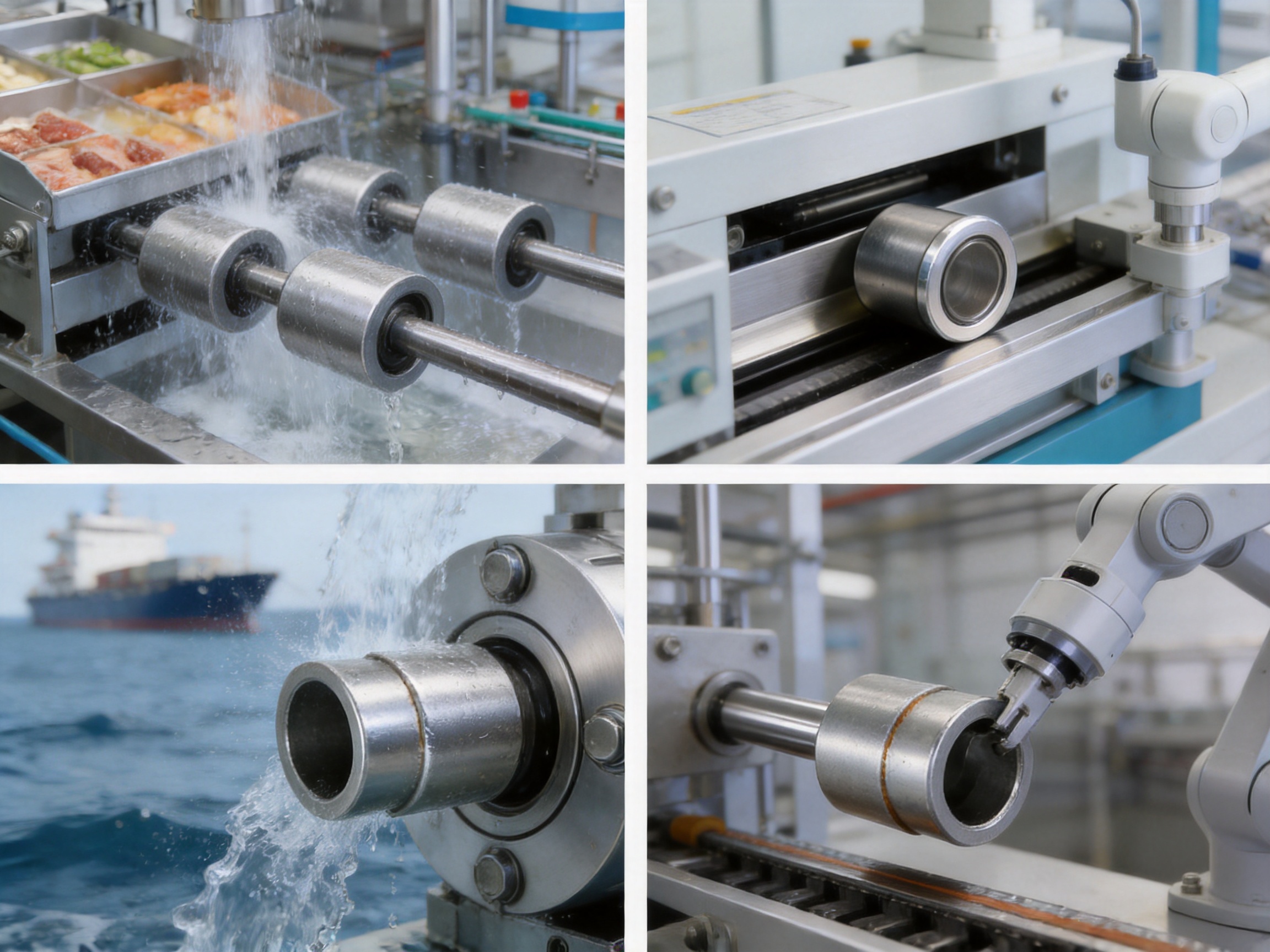
Sintered stainless steel self-lubricating bushings are engineered sliding bearings designed for applications where corrosion resistance, stable dimensional performance, low maintenance, and reliable operation are essential. Manufactured through powder metallurgy, these bushings combine the strength and environmental resistance of stainless steel with a porous structure that stores and releases lubricating oil during operation.
Unlike ordinary solid metal bushings that depend on frequent external lubrication, oil-impregnated sintered bushings contain lubricant within their internal pores. As the shaft moves, frictional heat and capillary action encourage a controlled quantity of oil to reach the sliding surface. When operation stops, much of the oil can migrate back into the pore network. This repeating lubrication cycle helps reduce friction, wear, maintenance requirements, and the risk of premature bearing failure.
Jiande Welfine Technology Co., Ltd. specializes in powder metallurgy sintering, self-lubricating bushings, and related precision components. Established in 2001, the company integrates research and development, production, precision machining, and sales. Its manufacturing base covers approximately 13,039 square meters and includes powder compaction equipment, high-temperature sintering furnaces, precision forming machines, machining equipment, and inspection systems.
With more than 20 years of manufacturing experience and a skilled workforce of more than 150 employees, the company provides custom OEM and ODM bushing solutions based on customer drawings, samples, performance specifications, and application requirements. Its quality management systems include ISO 9001:2015 and IATF 16949:2016 certification, supporting consistent production for demanding industrial customers.
What Are Sintered Stainless Steel Self-Lubricating Bushings?
A sintered stainless steel self-lubricating bushing is a cylindrical or flanged sliding bearing manufactured from stainless steel powder. The powder is compacted into a defined shape and then heated below the material’s melting point. During this controlled sintering process, the particles bond together while retaining a carefully regulated network of microscopic pores.
After sintering and, where required, secondary sizing or machining, the bushing is impregnated with a suitable lubricating oil. The oil fills a substantial portion of the connected pore volume. During service, the porous matrix functions as an internal oil reservoir. Lubricant is gradually supplied to the bearing surface as operating conditions create a demand for lubrication.
The result is a compact, maintenance-reducing bearing solution for shafts, pins, hinges, guide mechanisms, rotary joints, and oscillating assemblies. Depending on the material grade, oil type, geometry, clearance, load, speed, temperature, and surrounding environment, these bushings can be designed for applications that are difficult for conventional lubricated bearings to serve.
The term “self-lubricating” does not mean that the bushing can operate without any consideration of lubrication compatibility. It means that the required lubricant is stored internally and supplied automatically under normal service conditions. Correct material selection and application engineering remain important for achieving the expected service life.
How the Self-Lubricating Mechanism Works
The performance of an oil-impregnated bushing begins with its pore structure. Powder metallurgy makes it possible to produce a controlled level of porosity throughout the stainless steel body. The pores are not random cavities; they form a distributed storage network that can retain lubricating oil by capillary forces.
When a shaft rotates or oscillates inside the bushing, sliding friction generates a small amount of heat at the contact interface. The lubricant near the surface becomes mobile and forms a thin film between the shaft and the bushing. This film reduces direct metal-to-metal contact and helps control friction and wear.
During periods of reduced speed, reduced load, or rest, some lubricant can return to the porous structure. This helps preserve the internal reservoir and supports repeated operation. The actual behavior depends on the oil viscosity, operating temperature, shaft finish, clearance, speed, load, and environmental conditions.
This internal lubrication system offers a practical advantage over a conventional plain carbon steel bushing. A conventional bushing may require grease fittings, oil channels, scheduled lubrication, or manual servicing. A self-lubricating sintered bushing reduces or eliminates these service operations in many applications, especially where access is restricted or contamination must be minimized.
Principal Advantages of Stainless Steel Construction
Excellent Corrosion Resistance
Stainless steel provides a major advantage in humid, wet, chemically exposed, and salt-laden environments. Compared with ordinary carbon steel, stainless steel is less vulnerable to rust and corrosion-related dimensional deterioration. This is especially important for bushings because corrosion on the sliding surface can increase friction, damage the mating shaft, and lead to seizure or excessive clearance.
Sintered stainless steel self-lubricating bushings are suitable for equipment exposed to washdown water, cleaning agents, condensation, coastal air, saltwater spray, and selected chemical atmospheres. The appropriate stainless steel grade must be selected according to the specific medium, temperature, concentration, and exposure time. However, the stainless steel base provides a reliable foundation for corrosion-resistant bearing design.
Stable Performance in Harsh Conditions
Industrial equipment may be exposed to temperature variation, moisture, dust, chemical vapors, vibration, and irregular operating cycles. The combination of a stainless steel matrix and internal lubricant reservoir allows the bushing to maintain stable performance when external lubrication is difficult or impractical.
In applications where conventional lubricants can be washed away, an oil-impregnated bushing may continue to provide lubrication from within its pore structure. It is not immune to extreme conditions, but it can reduce the effects of lubricant loss and maintenance delays.
Low Maintenance Requirements
Maintenance-free or maintenance-reducing operation is one of the most important reasons to select this product. Because the lubricant is incorporated into the bushing, operators may not need to install grease lines or schedule frequent lubrication intervals. This is valuable for sealed assemblies, remote machinery, automated equipment, and mechanisms that are difficult to access.
Reducing lubrication operations can also lower the risk of incorrect servicing. Over-lubrication, under-lubrication, lubricant contamination, and the use of incompatible grease can all shorten the life of a conventional bearing. An oil-impregnated design provides a more controlled lubrication source when correctly specified.
High Wear Resistance
Powder metallurgy allows the manufacturer to control material composition, density, porosity, and sintering conditions. These factors directly influence hardness, strength, wear resistance, and oil-retention capability. A properly engineered stainless steel bushing can provide long service life under repeated sliding, oscillating, or intermittent movement.
Wear resistance is also influenced by the mating shaft. A smooth, correctly hardened, and properly aligned shaft helps the bushing develop a stable lubrication film. Therefore, bearing performance should always be evaluated as a complete shaft-and-bushing system rather than as an isolated component.
Dimensional Stability
Precision compaction, controlled sintering, sizing, and secondary machining enable the production of bushings with consistent dimensions. Stable bore geometry and outside diameter are important for controlling clearance, press fit, alignment, and load distribution.
Dimensional stability is particularly valuable in medical equipment, laboratory instruments, automated machinery, and precision mechanisms where excessive play, binding, or vibration can affect the complete assembly.
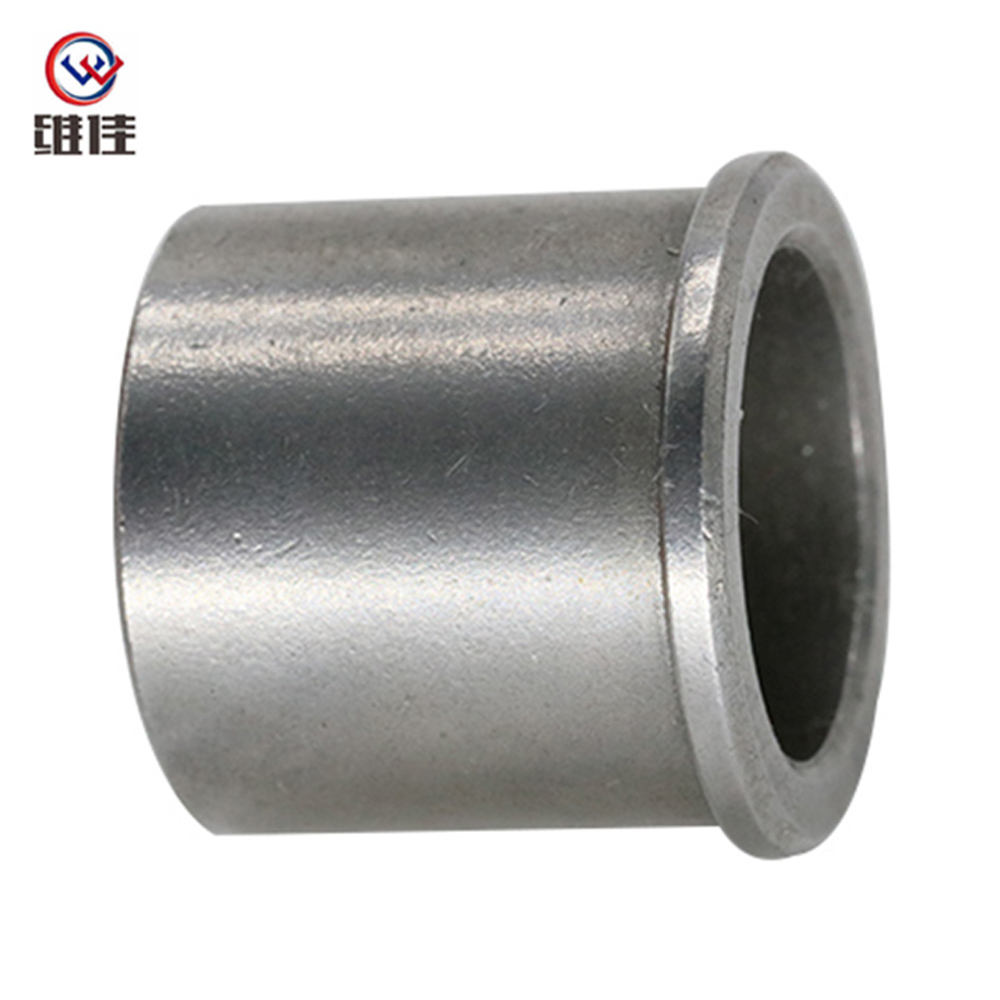
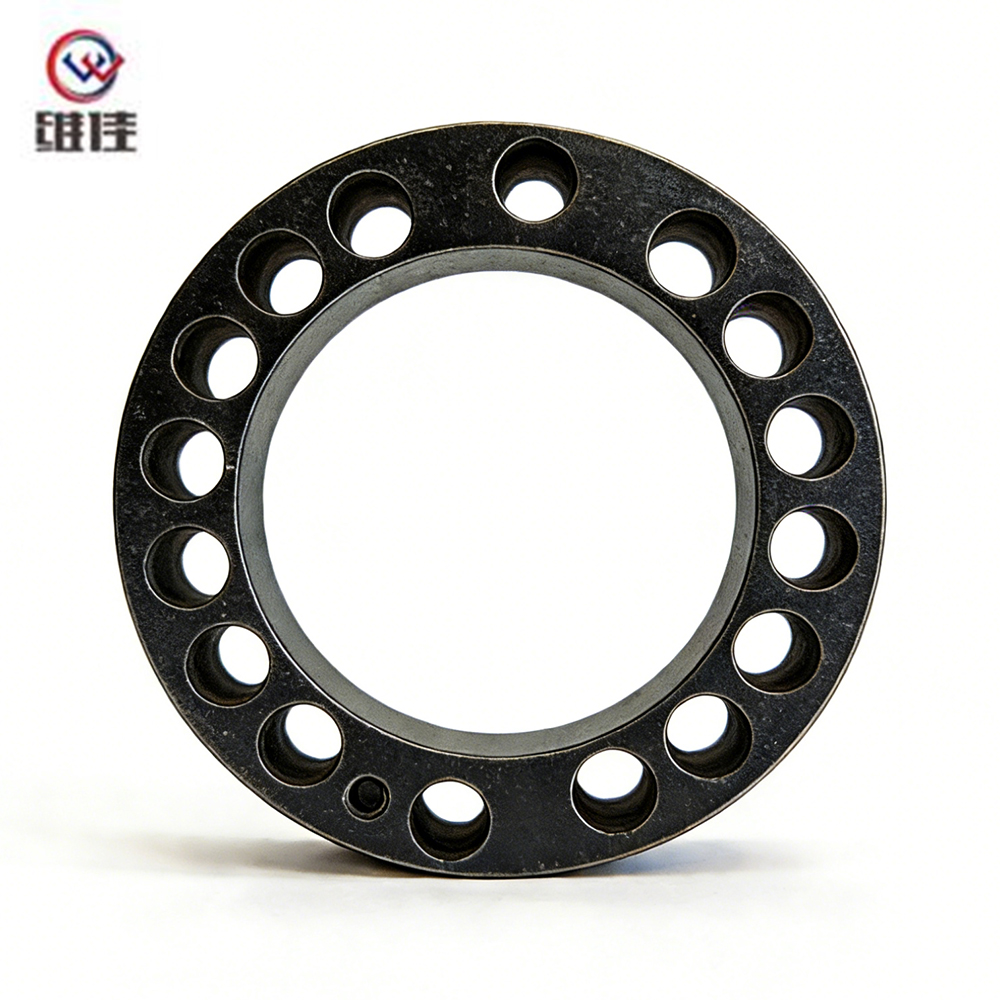
Sintered Stainless Steel Self-lubricating Bushings
Advantages Compared with Conventional Bushing Materials
Traditional bushing materials include carbon steel, bronze, brass, plastic, and composite materials. Each has useful characteristics, but sintered stainless steel self-lubricating bushings can offer a balanced combination of properties that is difficult to obtain from a single conventional material.
| Performance Factor | Sintered Stainless Steel Self-Lubricating Bushing | Conventional Carbon Steel Bushing | General Bronze Bushing | Engineering Plastic Bushing |
| Corrosion Resistance | Excellent when the correct stainless steel grade is selected | Moderate to poor without surface protection | Good in many environments | Generally good, depending on polymer type |
| Lubrication Method | Internal oil reservoir with automatic lubricant release | Usually requires external lubrication | May require external lubrication or special additives | Often dry-running, but temperature and load may be limited |
| Maintenance Requirement | Low | Medium to high | Medium, depending on design | Low in suitable applications |
| High-Temperature Capability | Good with suitable stainless steel and oil selection | Good structurally, but lubricant can degrade | Good within material limits | Often limited by polymer temperature resistance |
| Load Capacity | High for a porous bearing when correctly designed | High, but dependent on lubrication | High in many sliding applications | Moderate and application dependent |
| Suitability for Humid Environments | Excellent | Limited without protection | Good | Good, depending on moisture absorption |
| Manufacturing Flexibility | Excellent for repeatable near-net-shape production | Good through machining, but material waste may be higher | Good through casting or machining | Good for molded designs |
Compared with carbon steel, stainless steel provides substantially better resistance to rust and moisture-related deterioration. Compared with a fully solid metal bushing, the porous structure offers an internal oil supply. Compared with some plastic bushings, stainless steel generally offers better resistance to high loads, elevated temperatures, dimensional changes, and certain mechanical stresses.
Compared with bronze, stainless steel may be preferred when corrosion resistance, structural strength, or compatibility with particular process fluids is more important than the excellent friction characteristics traditionally associated with bronze. Material selection should be based on the complete application rather than on a single performance value.
Powder Metallurgy Manufacturing Process
Material Selection and Powder Preparation
Manufacturing begins with the selection of a suitable stainless steel powder and formulation. The material system is chosen according to the required corrosion resistance, strength, hardness, porosity, wear performance, operating temperature, and compatibility with the impregnating oil.
Powder characteristics such as particle size distribution, morphology, apparent density, flowability, and chemical composition influence the compaction behavior and final properties. Consistent raw material preparation supports stable filling of the tooling cavity and repeatable density throughout production batches.
Precision Compaction
During compaction, stainless steel powder is placed into a specially designed die and compressed under controlled pressure. The tooling determines the outside diameter, bore, flange shape, grooves, steps, and other geometric features that can be produced during pressing.
Accurate powder filling and carefully controlled compaction are essential. If density varies excessively within the part, the finished bushing may have inconsistent strength, dimensional change, or pore distribution. Advanced presses and controlled process parameters help produce components with uniform structure and predictable performance.
Controlled Sintering
The compacted part, often called a green compact, is heated in a controlled-atmosphere furnace. The temperature is selected below the melting point of the principal metal. The particles bond through diffusion, creating a mechanically stable stainless steel structure while preserving the designed porosity.
Sintering temperature, heating rate, holding time, cooling rate, furnace atmosphere, and part arrangement all influence the final properties. A controlled atmosphere helps limit oxidation and supports consistent metallurgical bonding. Precise furnace control is especially important for stainless steel components because surface condition and alloy behavior affect corrosion resistance and mechanical performance.
Sizing and Secondary Operations
After sintering, bushings may undergo sizing, coining, calibration, grinding, turning, drilling, or other precision machining operations. These secondary processes improve dimensional accuracy and ensure that the bore, outside diameter, flange, and other functional features meet customer requirements.
Sizing can correct small dimensional changes caused by sintering and produce a more consistent bore. Machining is used when the design requires tighter tolerances, complex profiles, special grooves, counterbores, or surface features that cannot be completed economically during compaction.
Oil Impregnation
The finished porous bushing is impregnated with lubricating oil through a controlled process. Vacuum impregnation is commonly used to remove air from the pore network before introducing oil. Once the pores are filled, excess surface oil can be removed or controlled according to the application.
Oil selection is important because viscosity, temperature stability, oxidation resistance, evaporation characteristics, and chemical compatibility all influence service performance. Different industrial applications may require different oil formulations. For example, equipment operating at elevated temperature may require a high-temperature oil, while food-processing equipment may require a lubricant with appropriate regulatory suitability.
Inspection and Quality Control
Quality control extends across the complete manufacturing process. Incoming powder is checked for chemical and physical consistency. Compaction is monitored for filling accuracy and pressing behavior. Sintering conditions are recorded and controlled. Finished bushings are inspected for dimensions, surface condition, density, hardness, porosity, oil content, and appearance as required by the product specification.
Functional testing may include friction, wear, load, speed, temperature, and corrosion-related evaluation. The specific tests depend on the product design and customer application. Traceability and documented inspection records support stable production and help customers verify that components meet the agreed technical requirements.
Manufacturing Strengths of Jiande Welfine Technology Co., Ltd.
Long-Term Powder Metallurgy Experience
Since its establishment in 2001, Jiande Welfine Technology Co., Ltd. has concentrated on powder metallurgy sintering and related precision machining. More than two decades of experience provide a practical foundation for tooling development, material selection, process optimization, and problem-solving in complex bushing applications.
Experience is particularly valuable in porous bearing production because performance depends on the relationship between density, pore structure, oil content, dimensional accuracy, and operating conditions. A manufacturer that understands these relationships can better balance strength and lubricant storage capacity during product development.
Integrated R&D, Production, and Sales
The company integrates research and development, manufacturing, quality control, and customer service. This integrated structure allows technical requirements to be reviewed at an early stage, before tooling and mass production begin.
Customer drawings and samples can be evaluated for manufacturability, tolerances, material requirements, press direction, parting considerations, oil impregnation, and secondary operations. Early technical communication helps reduce design changes, improve production efficiency, and prevent avoidable assembly problems.
Modern Production Facilities
The company operates a 13,039-square-meter production base equipped with high-efficiency powder presses, high-temperature sintering furnaces, precision forming machines, machining equipment, and testing instruments. This equipment supports both standard bushing production and customized components with specialized dimensions or performance requirements.
A modern facility also supports process separation and controlled workflow. Raw materials, compacted parts, sintered products, machined components, impregnated bushings, and inspected products can be managed through defined production stages. Such organization improves traceability and reduces the risk of process mix-ups.
OEM and ODM Customization
Industrial customers often require bushings that are not available in standard catalog sizes. Requirements may include a unique bore diameter, outside diameter, flange profile, oil specification, stainless steel grade, tolerance, surface finish, or special installation feature.
Jiande Welfine Technology Co., Ltd. provides OEM and ODM support based on customer drawings or physical samples. The company can help develop custom powder metallurgy bushings for new equipment, replacement parts, and production programs requiring repeatable batch supply.
Customization may cover material selection, geometry, density, porosity, dimensional tolerances, oil impregnation, sizing, machining, packaging, and inspection documentation. The final design should be confirmed through application review and, where necessary, prototype or sample testing.
Certified Quality Management
Quality management certification provides a structured framework for production control, documentation, corrective action, supplier management, and continual improvement. Jiande Welfine Technology Co., Ltd. has passed ISO 9001:2015 and IATF 16949:2016 certifications.
ISO 9001:2015 supports systematic quality management across the organization. IATF 16949:2016 adds requirements associated with automotive quality systems, including process discipline, risk management, traceability, defect prevention, and continuous improvement. These systems are useful not only for automotive components but also for industrial customers who require consistent and documented manufacturing performance.
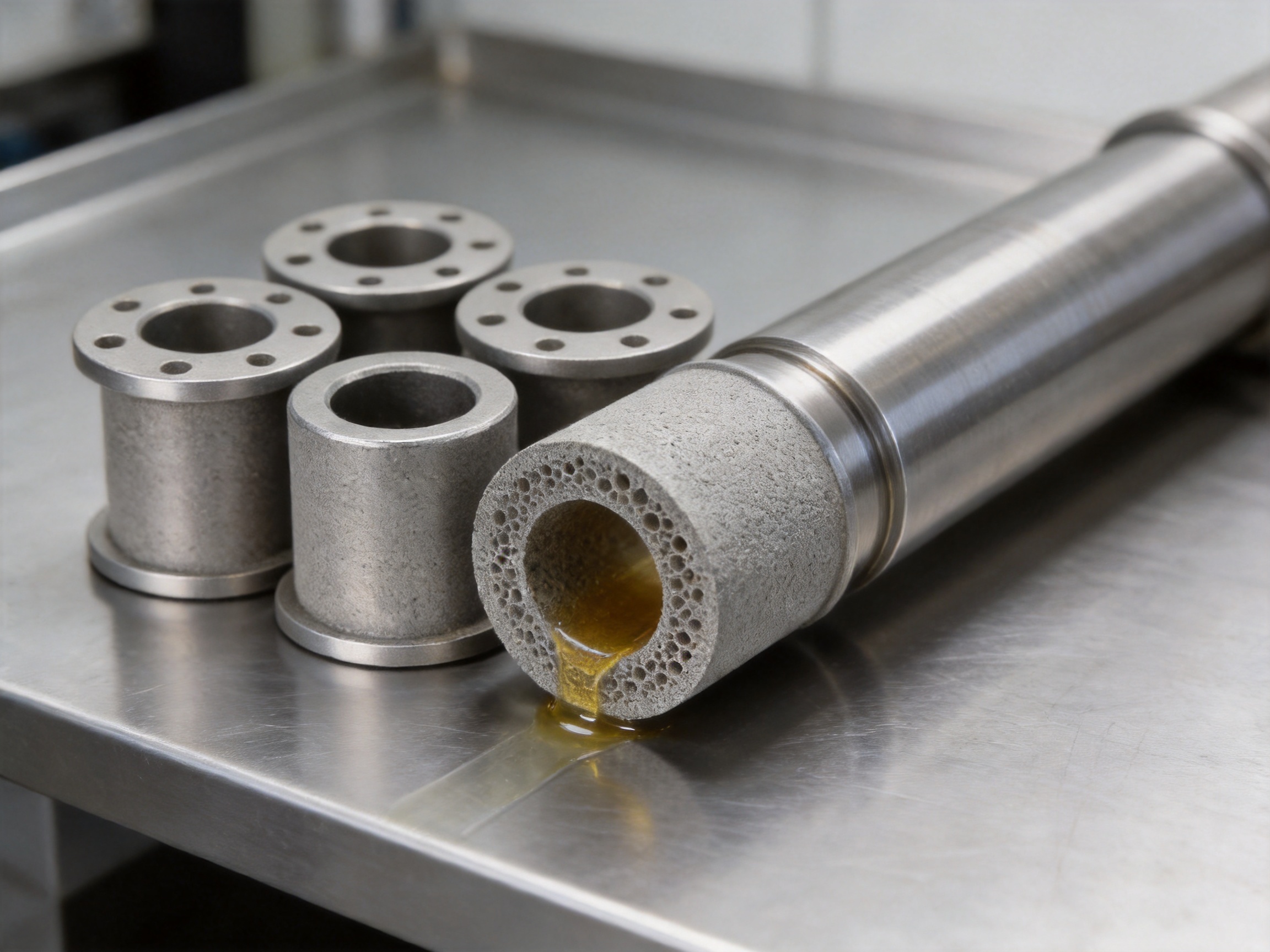
Applications in Food Processing Equipment
Food processing equipment commonly operates in humid conditions and may be exposed to water, steam, detergents, sanitizing agents, food residues, and repeated washdown cycles. Bushings used in conveyors, mixers, filling machines, packaging systems, slicing equipment, and automated handling systems must resist corrosion and maintain smooth movement.
Sintered stainless steel self-lubricating bushings can reduce the need for frequent manual lubrication. This is useful where excessive external lubricant could create sanitation concerns or where maintenance access is limited. The stainless steel structure also helps reduce rust formation compared with ordinary carbon steel components.
Potential applications include pivot points, guide mechanisms, adjustment systems, linkage assemblies, sliding supports, and rotating shafts. The exact oil specification should be reviewed carefully where incidental food contact is possible. A food-processing application may require an appropriate lubricant grade and cleaning compatibility assessment.
The bushing design can also be adapted to packaging machinery. High-cycle packaging equipment often includes repeated oscillating movements and compact linkages. A correctly designed oil-impregnated bushing can provide stable movement while reducing service interruptions caused by lubrication schedules.
Applications in Medical and Laboratory Equipment
Medical equipment and laboratory instruments often require precise, quiet, and repeatable movement. Components may be exposed to cleaning solutions, humidity, sterilization procedures, and controlled operating environments. Excessive friction, vibration, or dimensional change can affect positioning accuracy and user experience.
Stainless steel self-lubricating bushings can be used in diagnostic equipment, laboratory automation, hospital machinery, instrument adjustment mechanisms, and specialized medical devices. Their compact design supports assemblies where space is limited, while their internal lubrication system reduces the need for routine servicing.
Applications involving sterilization require careful evaluation. Temperature, pressure, steam, chemicals, and repeated sterilization cycles may affect the oil and the stainless steel grade. The bushing should be tested under the actual sterilization procedure before approval for production use.
For precision medical mechanisms, dimensional accuracy and controlled clearance are especially important. Jiande Welfine Technology Co., Ltd. can support custom production based on drawings and technical specifications, including defined tolerances and secondary machining requirements.
Applications in Marine Equipment
Marine machinery faces saltwater, high humidity, condensation, salt-laden air, vibration, and changing temperatures. These conditions accelerate corrosion in ordinary carbon steel parts and can increase maintenance requirements for externally lubricated bushings.
Sintered stainless steel self-lubricating bushings are suitable for selected marine applications such as pumps, deck equipment, navigation assemblies, steering mechanisms, hatch systems, linkage components, and auxiliary mechanical equipment. Their corrosion-resistant base material helps maintain the integrity of the sliding surface in outdoor and saltwater-related environments.
Reduced lubrication requirements are also valuable on ships and offshore equipment. Maintenance personnel may have limited access to certain mechanisms, and excessive grease can attract abrasive particles or create contamination problems. An internally lubricated bushing can simplify service planning when the operating parameters fall within its design limits.
Marine applications should still consider galvanic compatibility, immersion time, water pressure, shaft material, and the influence of seawater on the selected oil. Stainless steel selection and system-level corrosion analysis are recommended for long-term service.
Applications in Chemical and Water Treatment Equipment
Chemical processing machinery and water treatment systems may expose components to corrosive liquids, vapors, cleaning fluids, and changing pH conditions. A bushing must resist the surrounding environment while maintaining low-friction movement and dimensional stability.
Stainless steel construction offers improved resistance compared with unprotected carbon steel, although no stainless steel grade is suitable for every chemical. The concentration, temperature, flow rate, and exposure duration should be reviewed before material approval.
Possible applications include valve linkages, pump components, dosing equipment, filtration systems, treatment plant actuators, and automated handling mechanisms. Self-lubrication can help reduce maintenance in installations where external grease or oil is undesirable or difficult to apply.
Applications in Industrial Automation
Industrial automation systems rely on repeatable motion, short maintenance intervals, and compact mechanical assemblies. Bushings may be installed in robotic linkages, linear guides, grippers, indexing systems, packaging automation, and material-handling equipment.
The self-lubricating design supports continuous or intermittent operation without requiring a separate lubrication system at every pivot point. This can simplify machine construction and reduce the number of maintenance tasks required across a production line.
For automated machinery, the designer should calculate projected bearing pressure, sliding speed, duty cycle, temperature rise, and expected life. The relationship between load and speed is commonly expressed using a PV value, where P represents bearing pressure and V represents sliding velocity. A product that performs well at low load may not be suitable for high-load, high-speed operation without additional testing.
Operating Conditions and Design Considerations
Load and Sliding Speed
Bushing life depends strongly on load and speed. Radial load, oscillating load, impact load, and intermittent load each affect the lubrication film and wear mechanism differently. The design engineer should provide the manufacturer with the maximum load, average load, shaft speed, oscillation angle, cycle frequency, and duty cycle.
Some specialized sintered bearing systems can operate at high sliding speeds, including stated applications with speeds approaching 70 to 75 meters per second under specific low-load and controlled conditions. Such figures should not be treated as universal ratings. Actual allowable speed must be confirmed using the material grade, oil, dimensions, cooling conditions, surface finish, and test data.
Temperature
Temperature affects both the stainless steel matrix and the impregnated oil. As temperature rises, oil viscosity usually decreases, which may improve flow but reduce film thickness. Excessive temperature can accelerate oil oxidation, evaporation, or loss of performance.
For high-temperature equipment, the manufacturer should confirm the suitable oil type and operating range. The design should also consider heat transfer through the shaft and housing, nearby heat sources, and the time spent at maximum temperature.
Shaft Material and Surface Finish
A compatible shaft is essential. The shaft should normally have a suitable hardness, smooth surface finish, correct roundness, and accurate alignment. Sharp edges, burrs, excessive roughness, or poor concentricity can damage the bushing and shorten its service life.
Stainless steel shafts, hardened steel shafts, plated shafts, and other materials may be used depending on the application. Compatibility should be checked for wear, corrosion, hardness, thermal expansion, and galvanic effects.
Clearance and Fit
Running clearance must accommodate thermal expansion, shaft tolerance, housing tolerance, lubricant behavior, and expected operating temperature. Excessive clearance can increase vibration and edge loading, while insufficient clearance can cause binding or seizure.
The outside diameter and housing fit must also be controlled. A press fit that is too tight can reduce the internal bore and alter the designed clearance. A fit that is too loose may allow movement of the bushing in the housing. These dimensions should be specified together rather than independently.
Environmental Exposure
Before selecting a bushing, identify contact with water, seawater, solvents, acids, alkalis, cleaning agents, dust, abrasive particles, radiation, or process fluids. The stainless steel grade and impregnating oil must be compatible with the actual environment.
These bushings may be used in radioactive environments when the material system and lubricant have been evaluated for the specific radiation level and service duration. Specialized testing and engineering approval are recommended for critical installations.
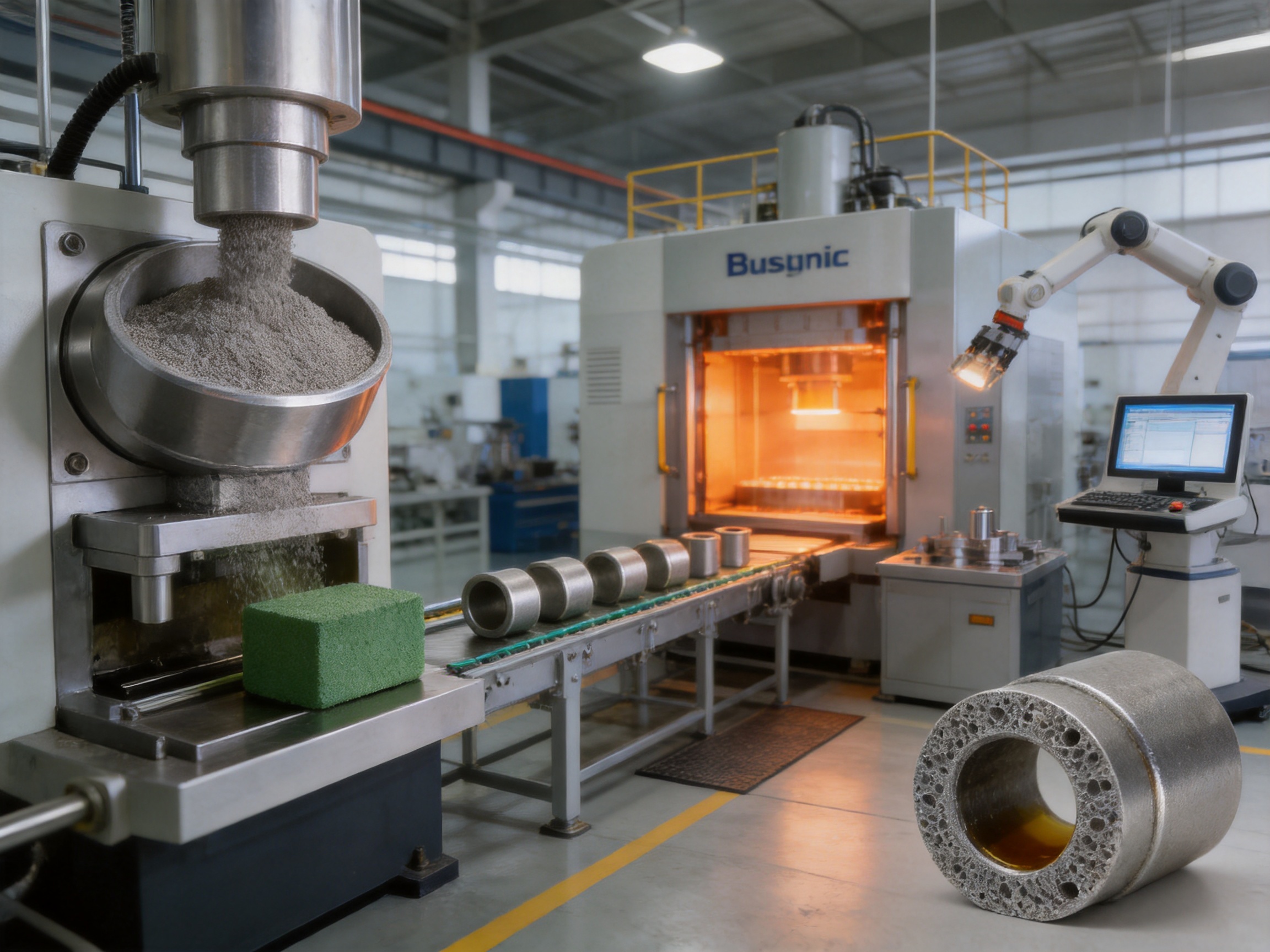
Product Selection and Customization Process
A reliable custom bushing program begins with a complete technical review. Customers should provide a drawing or sample together with the operating conditions. Useful information includes the bushing type, bore diameter, outside diameter, length, flange dimensions, shaft material, housing material, load, speed, temperature, environment, movement type, and expected service life.
The manufacturer can then evaluate whether the geometry is suitable for powder compaction, whether secondary machining is required, and whether the proposed material and oil are appropriate. If necessary, prototypes or trial samples can be produced for assembly and performance verification.
For repeat orders, process parameters and inspection requirements can be documented. This supports consistent production from batch to batch and simplifies future procurement. Packaging should also protect the oil-impregnated bushings from contamination, impact, and unsuitable storage conditions.
| Selection Item | Information to Confirm |
| Geometry | Bore, outside diameter, length, flange, grooves, steps, and special features |
| Material | Stainless steel grade, density, hardness, and corrosion requirements |
| Movement | Rotation, oscillation, reciprocation, or intermittent movement |
| Load | Radial load, axial load, impact load, and load variation |
| Speed | Average speed, maximum speed, cycle frequency, and duty cycle |
| Temperature | Minimum, normal, maximum, and transient temperatures |
| Environment | Water, saltwater, chemicals, cleaning agents, dust, vacuum, or radiation |
| Lubricant | Oil type, viscosity, temperature rating, and regulatory requirements |
| Quality Requirements | Tolerances, inspection plan, certification, traceability, and packaging |
Installation and Maintenance Recommendations
Although self-lubricating bushings require little routine maintenance, correct installation is still essential. The housing should be clean, dimensionally accurate, and free from burrs. The shaft should be inspected for damage, contamination, excessive roughness, and misalignment before assembly.
Press-fitting should be performed with an appropriate assembly tool that applies force evenly. Impacting the bushing directly with a hammer can deform the bore or damage the flange. If the design requires a retaining feature, it should be specified before production rather than added through uncontrolled modification.
The bushing should not normally be washed with solvents that can remove the impregnated oil unless the manufacturer has approved the procedure. If cleaning is required, the method should be compatible with the oil and stainless steel material.
During commissioning, observe temperature, noise, vibration, movement smoothness, and any signs of scoring or abnormal wear. A short running-in period may occur as the lubricant distributes across the sliding surface. Abnormal heat or noise should be investigated immediately.
External lubrication is not always necessary and may not always be beneficial. Adding an incompatible grease or oil can change friction behavior, attract abrasive particles, or interfere with the internal lubricant. Any supplemental lubrication should be confirmed with the manufacturer.
Why Choose a Custom Manufacturer?
Standard bushings are convenient, but custom manufacturing is often necessary for equipment with limited installation space, unusual loading, special corrosion requirements, or strict dimensional tolerances. A custom manufacturer can optimize the bushing geometry and material instead of forcing the application to fit an unsuitable standard part.
Jiande Welfine Technology Co., Ltd. supports custom OEM and ODM production for customers requiring precision powder metallurgy components. Its capabilities cover material and process evaluation, tooling, compaction, sintering, sizing, machining, oil impregnation, inspection, and batch production.
The company’s production experience helps customers address common challenges such as inconsistent bore size, insufficient oil retention, excessive dimensional variation, inadequate corrosion resistance, and premature wear. Technical communication between the customer and manufacturer allows the final bushing to be designed around actual operating conditions.
For large-volume programs, powder metallurgy can provide efficient near-net-shape production. Material waste may be reduced compared with manufacturing the same part entirely from bar stock. Repeated tooling also supports consistent geometry and economical production of complex shapes such as flanged bushings and stepped components.
Quality, Reliability, and Long-Term Value
The value of a bushing is determined by more than its purchase price. Service life, maintenance labor, machine downtime, replacement frequency, corrosion-related failures, and installation costs all influence total operating cost.
A sintered stainless steel self-lubricating bushing can reduce total cost by extending replacement intervals and limiting maintenance operations. In automated or remote equipment, avoiding a single unplanned shutdown may justify the use of a higher-performance bearing material.
Reliability also supports product quality. In food processing, packaging, medical equipment, and precision automation, unstable movement can affect production consistency. A bushing that maintains low friction and controlled clearance helps the complete machine operate more predictably.
Consistent manufacturing is central to this value. Controlled powder preparation, accurate compaction, stable sintering, precise sizing, appropriate oil impregnation, and documented inspection work together to produce a dependable component. Certification and quality records provide additional confidence for customers managing regulated or high-volume supply chains.
Frequently Asked Questions
What is the main benefit of a sintered stainless steel self-lubricating bushing?
The main benefit is the combination of stainless steel corrosion resistance and an internal oil reservoir. The bushing can supply lubricant to the sliding surface during operation, reducing the need for external lubrication while maintaining reliable movement in humid, corrosive, high-temperature, or difficult-to-access environments.
Are these bushings completely maintenance-free?
They are designed for maintenance-free or maintenance-reducing operation under suitable conditions. However, the assembly should still be inspected for alignment, shaft damage, abnormal wear, contamination, and temperature. The correct material, oil, clearance, load, speed, and environment must be confirmed before describing an application as fully maintenance-free.
Can they operate in water or marine environments?
They can be used in selected wet and marine applications, provided the stainless steel grade, oil, shaft material, clearance, and sealing arrangement are suitable. Saltwater exposure, continuous immersion, pressure, and galvanic corrosion should be evaluated during product selection.
Are they suitable for food processing machinery?
They can be suitable for food processing equipment because stainless steel resists corrosion and the internal lubrication design can reduce external lubricant leakage. Where incidental food contact is possible, the impregnating oil and complete assembly must meet the applicable regulatory and hygiene requirements.
Can they be used in medical equipment?
Yes. Potential applications include laboratory instruments, diagnostic equipment, hospital automation, and specialized medical machinery. The design should be reviewed for dimensional accuracy, noise, friction, cleaning, sterilization, lubricant compatibility, and any applicable medical-device requirements.
What information is required for a custom quotation?
Useful information includes a drawing or sample, material preference, bore and outside diameter, length, flange dimensions, shaft and housing materials, load, speed, temperature, movement type, operating environment, expected service life, annual quantity, tolerance requirements, and inspection standards.
Can the bushing be manufactured according to a customer drawing?
Yes. Jiande Welfine Technology Co., Ltd. provides OEM and ODM manufacturing based on customer drawings or samples. The technical team can review the design, recommend suitable powder metallurgy processes, determine whether secondary machining is necessary, and develop a production solution for the required application.
How does powder metallurgy improve production efficiency?
Powder metallurgy can produce many shapes close to their final dimensions, reducing machining time and material waste. It is especially effective for repeat production of bushings with consistent geometry, controlled porosity, and integrated features such as flanges, steps, and grooves.
What determines the service life of a self-lubricating bushing?
Service life depends on load, sliding speed, pressure-velocity conditions, temperature, shaft finish, alignment, clearance, oil selection, corrosion exposure, contamination, and duty cycle. Correct installation and application-specific testing are important for confirming expected life.
Can high-speed applications use sintered stainless steel bushings?
Some specialized designs can operate at high sliding speeds, but the allowable value is application-specific. Published speed figures must be evaluated together with load, temperature, lubrication, dimensions, and cooling. The manufacturer should confirm the design through engineering review or testing before use at extreme speed.
Why is internal porosity important?
Internal porosity provides the storage volume for lubricating oil. The pores allow lubricant to move gradually toward the sliding surface during operation. Porosity must be controlled carefully because excessive porosity can reduce strength, while insufficient porosity may limit oil storage and self-lubricating performance.
What certifications does the manufacturer have?
Jiande Welfine Technology Co., Ltd. has passed ISO 9001:2015 and IATF 16949:2016 certifications. These systems support documented manufacturing control, process consistency, risk management, corrective action, and continual quality improvement.
Conclusion
Sintered stainless steel self-lubricating bushings provide a practical solution for sliding applications that demand corrosion resistance, low maintenance, reliable lubrication, and stable dimensional performance. Their powder metallurgy structure creates an internal oil reservoir, while stainless steel construction improves resistance to moisture, chemicals, saltwater, and harsh industrial environments.
Compared with conventional carbon steel bushings, they offer stronger corrosion protection and reduced dependence on external lubrication. Compared with some plastic alternatives, they can provide greater resistance to high loads, elevated temperatures, and mechanical stress. Their advantages make them suitable for food processing machinery, medical equipment, marine systems, chemical processing, water treatment, laboratory instruments, and industrial automation.
The final performance of any bushing depends on correct application engineering. Load, speed, temperature, clearance, shaft condition, environment, oil compatibility, and installation method must all be considered. With suitable design and testing, oil-impregnated stainless steel bushings can provide long service life and dependable operation.
Jiande Welfine Technology Co., Ltd. combines more than 20 years of powder metallurgy experience with modern production equipment, precision machining capabilities, OEM/ODM development, and certified quality management systems. Its 13,039-square-meter manufacturing base and experienced technical team support the production of customized sintered metal components for customers seeking consistent quality and long-term supply stability.
References
1. ISO 9001:2015, Quality Management Systems — Requirements.
2. IATF 16949:2016, Quality Management System Requirements for Automotive Production and Relevant Service Parts Organizations.
3. Powder Metallurgy Review, Principles of Powder Compaction, Sintering, Porosity Control, and Near-Net-Shape Manufacturing.
4. ASM Handbook, Volume 7: Powder Metal Technologies and Applications.
5. ASTM International, Standard Practices and Test Methods for Powder Metallurgy Materials and Sintered Metal Components.
6. General engineering guidance for plain bearings, oil-impregnated bearings, shaft surface preparation, clearance design, and pressure-velocity evaluation.
Product: Sintered Stainless Steel Self-lubricating Bushings

Related products
-
-
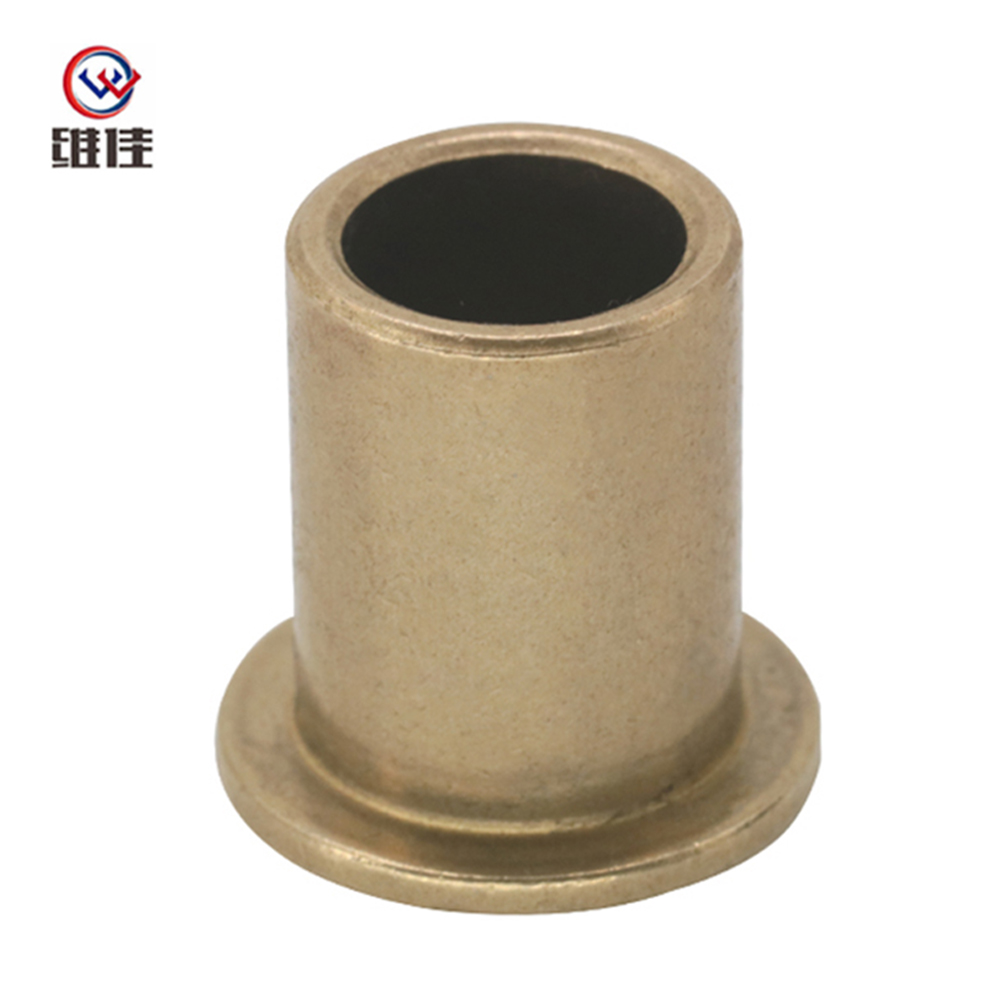
Our sintered bronze self-lubricating bearings are engineered for demanding industrial applications where traditional lubrication is impractical. Designed with advanced powder metallurgy technology, th...
See Details
Copyright © Jiande Welfine Technology Co., Ltd. All Rights Reserved. Custom Self-lubricating Sintered Bushing Manufacturers
