E-mail us: [email protected]
Tel: +86-15239857375
 English
 中文简体
中文简体

 Home / Author / Shen Yiruo — Senior After-Sales Service Manager / High-Precision Sintered Iron Bearing S14x7x10 for Self-Lubricating Applications
 High-Precision Sintered Iron Bearing S14x7x10 for Self-Lubricating Applications
 2026.08.17
 Shen Yiruo — Senior After-Sales Service Manager
Content
- 1 Product Overview
- 2 Why Powder Metallurgy Is Suitable for Precision Bearings
- 3 Material and Porous Structure
- 4 Self-Lubricating and Oil-Impregnated Performance
- 5 Dimensional Precision and Tolerance Control
- 6 Manufacturing Process for the S14x7x10 Bearing
- 7 Manufacturing Strengths and Quality Infrastructure
- 8 Advantages Over Conventional Machined Bushings
- 9 Advantages Over Lower-Control Sintered Components
- 10 Product: Powder Metallurgy Part High Precision PM Component (A3678)
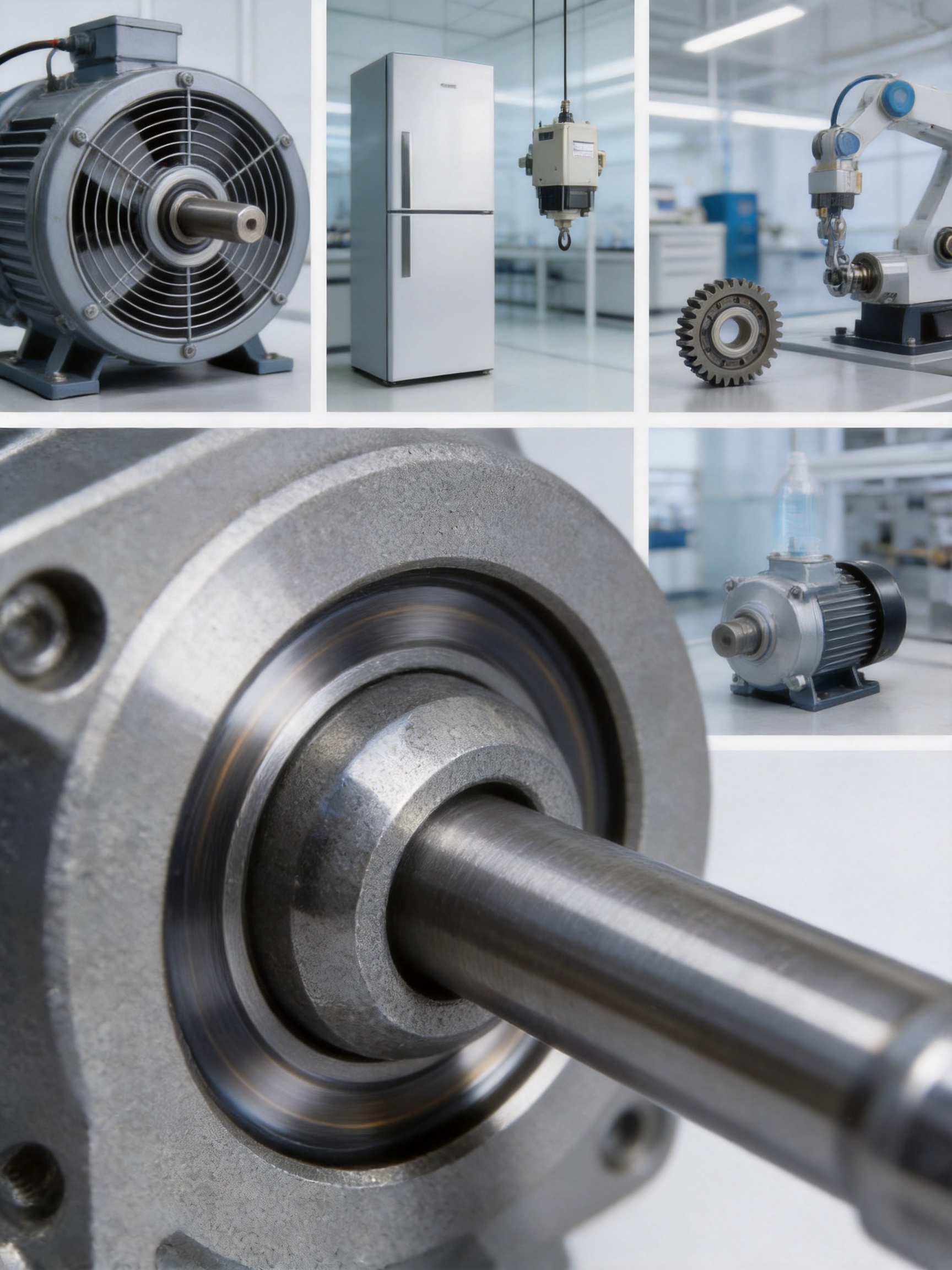
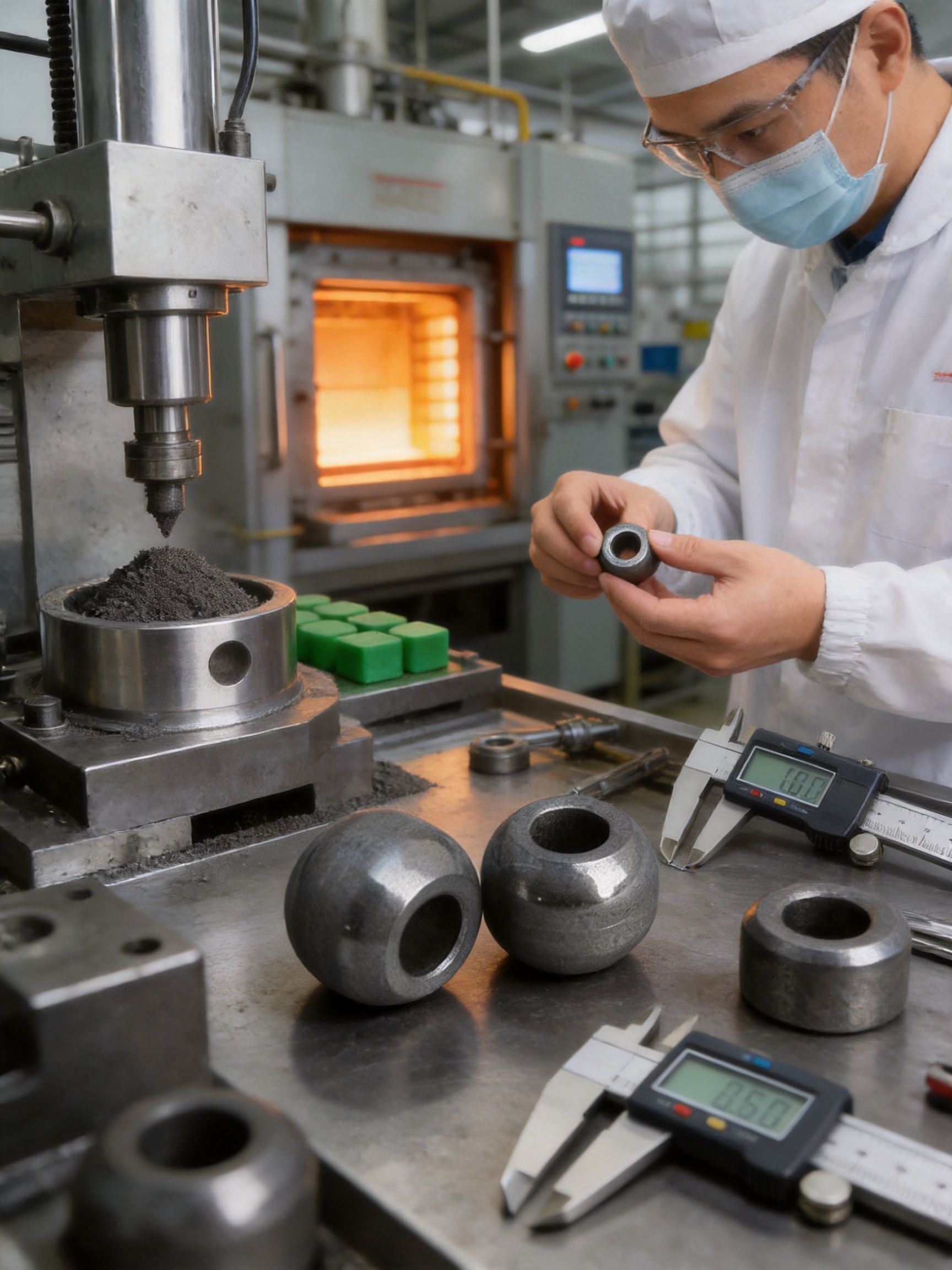
Powder metallurgy has become an important manufacturing technology for producing compact, repeatable, and cost-effective components for motion systems. Among its most practical products are oil-impregnated bearings, also called self-lubricating bushings. These components are designed to support rotating or oscillating shafts while reducing friction, noise, maintenance requirements, and operating costs.
The high-precision PM component iron bearing S14x7x10 is a compact sintered metal component developed for applications that require controlled dimensions, reliable shaft support, and long-term lubrication performance. Manufactured from iron powder, this bearing combines the economic advantages of a widely available material with the functional benefits of a controlled porous structure. After sintering and appropriate secondary processing, the component can provide stable fit, consistent running performance, and dependable wear resistance in equipment such as electric fans, refrigerators, motors, gear mechanisms, pumps, and automation systems.
This article explains the construction, advantages, manufacturing process, quality controls, customization options, and application benefits of the S14x7x10 high-precision PM iron bearing. It also examines why a specialist manufacturer with modern powder metallurgy equipment, precision forming capabilities, and an established quality management system can offer advantages over conventional machined bushings and lower-control sintered components.
Product Overview
The S14x7x10 product is a high-precision powder metallurgy component manufactured from iron-based material. Its compact designation identifies a nominal size configuration, while the final dimensional interpretation should always be confirmed against the customer’s engineering drawing, sample, or approved specification. In powder metallurgy production, the dimensions of the bore, outside profile, spherical or shaped surfaces, length, chamfers, and other functional features may be defined separately according to the application.
The bearing belongs to the iron-based oil-impregnated bearing category. Unlike a conventional solid bushing that requires regular external lubrication, a porous sintered bearing can retain oil within its internal structure. During operation, small quantities of lubricant migrate toward the sliding interface, helping reduce friction and wear. When the operating conditions are suitable, this feature allows the bearing to work for long periods with little or no additional oil.
The supplied product information identifies a target precision level of IT7 and highlights concentricity control. The product is intended for customers that need a compact bearing or PM component with consistent geometry rather than a general-purpose, loosely controlled pressed part. Strict tolerance management is particularly important when the bearing is installed in a motor housing, pivot mechanism, appliance linkage, or transmission assembly where excessive clearance may cause vibration and insufficient clearance may cause binding.
| Product characteristic | Product information |
| Product type | High-precision powder metallurgy iron bearing or PM component |
| Nominal designation | S14x7x10, subject to drawing confirmation |
| Material | Iron powder-based sintered metal |
| Lubrication method | Oil impregnation and self-lubrication |
| Target tolerance grade | IT7 for specified dimensions |
| Concentricity capability | Controlled according to the approved specification; product information references values of 0.03 mm and 0.06 mm for relevant conditions |
| Typical applications | Fans, refrigerators, motors, gear systems, pumps, automation equipment, and household appliances |
| Customization | Dimensions, tolerances, geometry, material, oil, and finishing based on drawings or samples |
Why Powder Metallurgy Is Suitable for Precision Bearings
Powder metallurgy produces parts by compacting metal powder in a precision die and then heating the compact under controlled sintering conditions. This process can create near-net-shape parts with repeatable external geometry and a carefully controlled porous structure. It is especially useful for bushings because the pores can serve as reservoirs for lubricating oil.
Compared with machining a bearing from bar stock, powder metallurgy can reduce material waste and shorten the number of cutting operations. A properly designed die can form the basic shape in one pressing cycle, making the process efficient for medium- and high-volume production. This benefit is important for small components such as the S14x7x10 bearing, where conventional machining may require several operations relative to the size and value of the part.
Powder metallurgy also provides design flexibility. Engineers can specify stepped profiles, flanges, shoulders, grooves, spherical surfaces, relief areas, and other features that would require additional machining when produced from solid material. The process is therefore suitable not only for plain cylindrical bushings but also for specialized parts used in appliance mechanisms and compact transmission assemblies.
The principal challenge is process control. Powder characteristics, die filling, compaction pressure, ejection, sintering, sizing, oil impregnation, and inspection must all be managed carefully. A low-cost production process without adequate control may produce inconsistent density, distortion, poor concentricity, or unstable lubrication. The value of a high-precision PM bearing lies in combining the efficiency of powder metallurgy with disciplined manufacturing and inspection.
Material and Porous Structure
Iron powder is widely used in powder metallurgy because it offers broad availability, practical mechanical performance, and a favorable cost structure. For many bearing applications, an iron-based material provides an effective balance among strength, wear resistance, dimensional stability, and manufacturing economy.
The powder is selected according to the required density, strength, sliding conditions, oil-retention behavior, and production method. Particle size distribution and powder flowability affect die filling and the uniformity of the compact. Chemical composition affects sintering behavior and the final mechanical properties. Lubricants may also be blended with the powder to improve pressing performance and reduce friction between the compact and the tooling.
During pressing, the powder particles are rearranged and compacted into the die cavity. The compact is strong enough for handling but remains relatively fragile before sintering. During heating, the particles bond at their contact points, increasing strength and stabilizing the structure. The remaining interconnected pores become an important functional feature of an oil-impregnated bearing.
Porosity must be balanced carefully. If the structure contains too many or excessively large pores, the bearing may lose strength and wear resistance. If the structure is too dense, it may not retain enough oil to support effective self-lubrication. The correct porosity depends on shaft speed, load, temperature, lubricant viscosity, duty cycle, surface finish, and the required service life.
For this reason, the material specification should not be considered separately from the application. A bearing designed for a lightly loaded oscillating fan mechanism may have different requirements from one used in a continuously rotating motor or a transmission linkage. Customized material and density recommendations can be made after reviewing the working conditions.
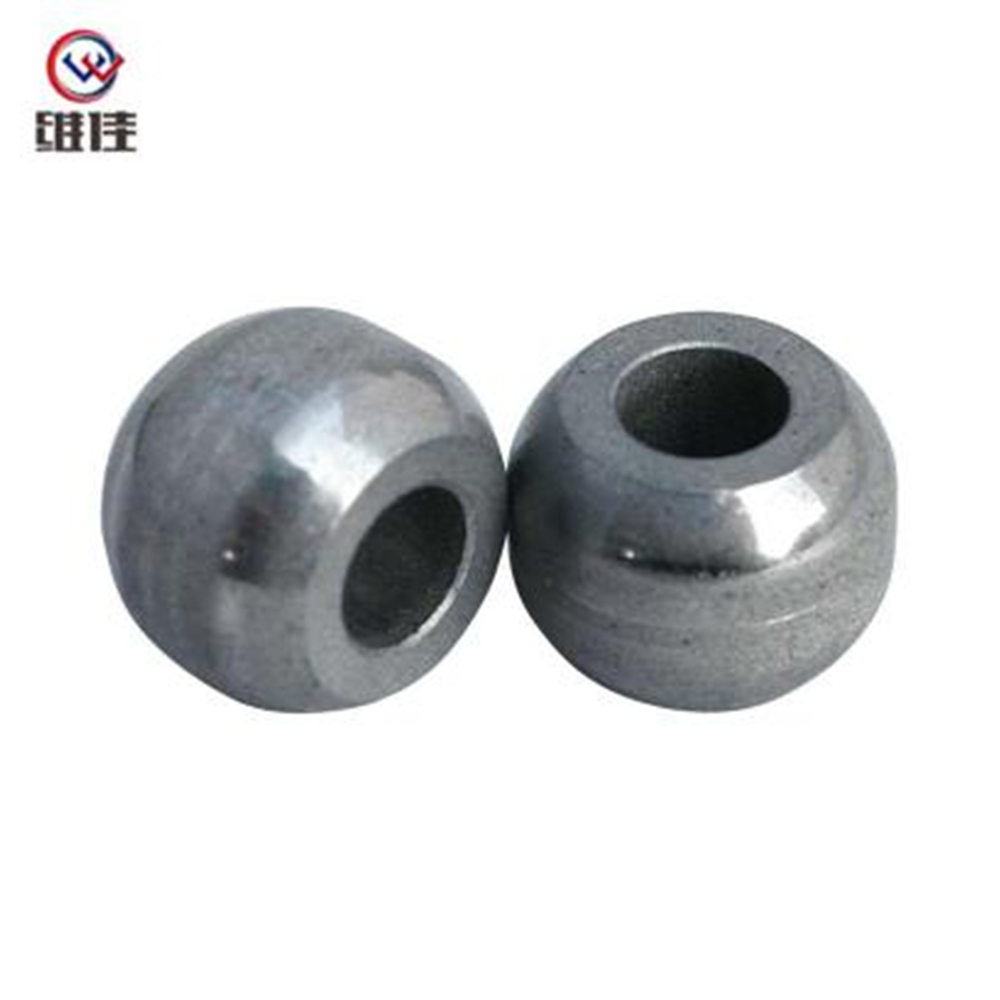
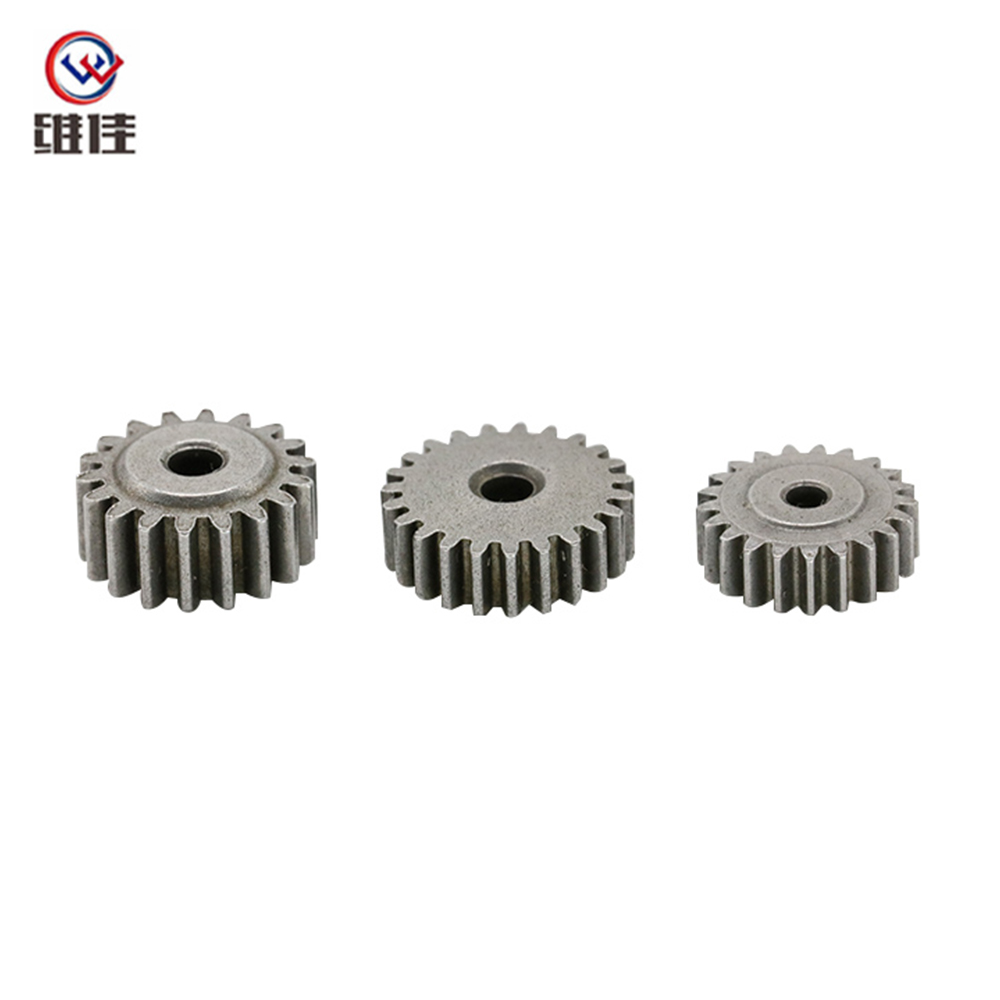
Powder Metallurgy Part High Precision PM Component (A3678)
Self-Lubricating and Oil-Impregnated Performance
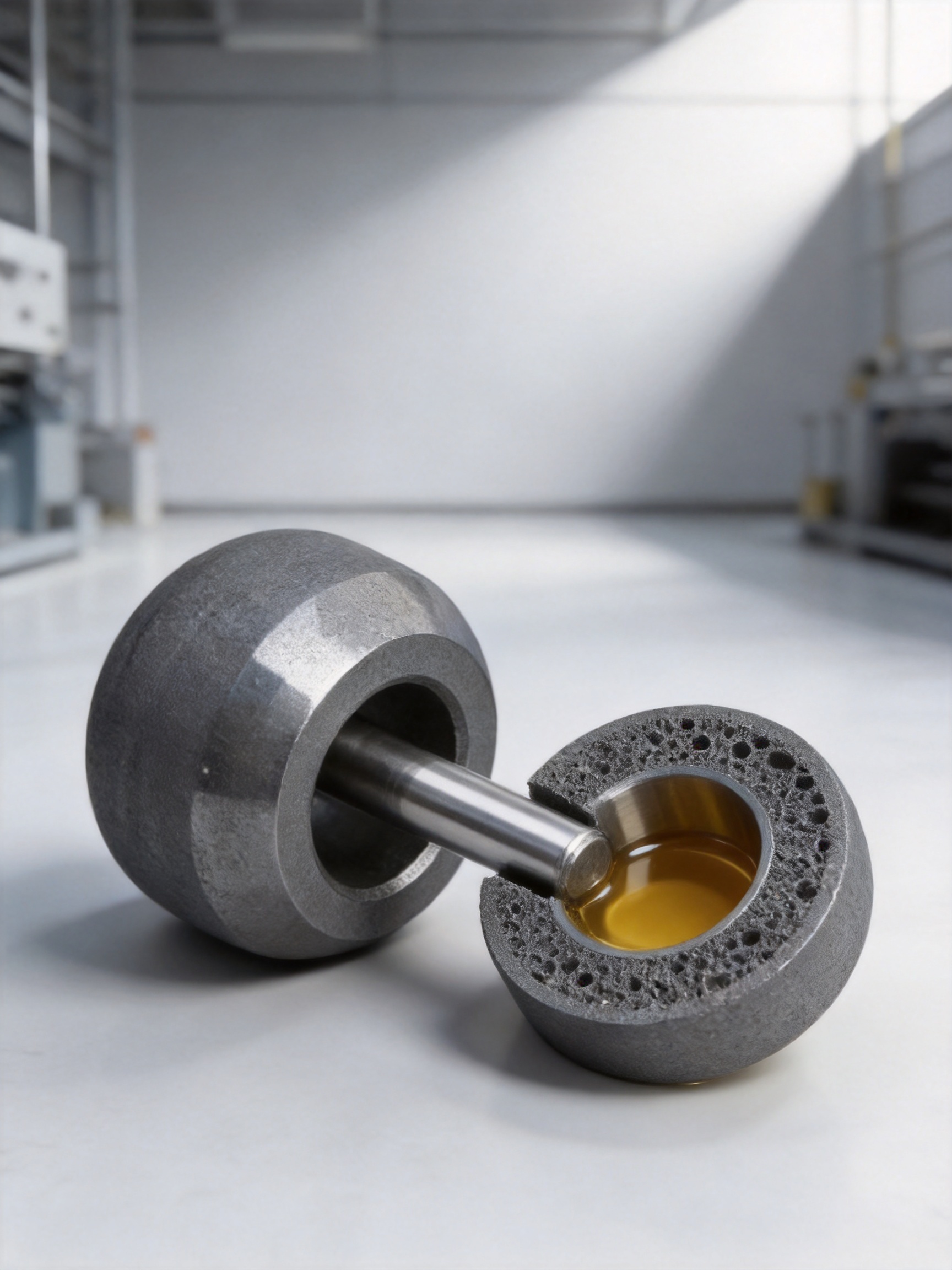
Oil impregnation is one of the defining advantages of a sintered bearing. After sintering and dimensional finishing, the component is placed in lubricating oil under controlled conditions. Vacuum impregnation may be used to remove air from the pores before oil enters the internal structure. Once saturated, the bearing contains lubricant throughout its porous network.
When the shaft rotates or oscillates, frictional heat and capillary action can encourage oil to migrate toward the sliding surface. During periods of reduced operation or cooling, some oil can return into the porous structure. This dynamic behavior helps maintain lubrication over an extended operating period.
The self-lubricating principle can reduce the need for grease fittings, external oil delivery systems, and periodic manual maintenance. It can also simplify assembly because the bearing may be installed as a prepared component rather than lubricated separately during every production cycle.
Self-lubrication does not mean that operating conditions are unlimited. Excessive load, very high speed, unsuitable shaft hardness, contamination, elevated temperature, or incorrect oil selection can reduce service life. The bearing must be matched to the application. In particular, the shaft and mating housing should be controlled for dimensional accuracy, surface finish, alignment, and cleanliness.
The product information references SHC 626 oil for one fan application. The final oil type should be confirmed for the actual environment. Different applications may require different viscosity, temperature resistance, oxidation stability, or compatibility with surrounding plastics, seals, and lubricants. A manufacturer can normally evaluate oil selection based on speed, load, temperature, and expected duty cycle.
Dimensional Precision and Tolerance Control
Precision is essential for any bushing that supports a moving shaft. The internal diameter determines the shaft fit and directly affects friction, vibration, and heat generation. The outside dimensions determine how the bearing locates in the housing. Length, shoulder position, chamfers, spherical surfaces, and concentricity influence assembly alignment and the ability of the mechanism to move smoothly.
The supplied specification identifies IT7 as a target tolerance grade. This is a relatively precise tolerance classification, but the exact permissible deviation depends on the nominal dimension and the specific feature. The tolerance table supplied with the product materials lists values for several ISO dimension ranges and tolerance grades, including IT6, IT7, IT8, IT9, and IT10. These values should be used as a general reference only; the approved customer drawing remains the controlling document.
Concentricity is also important. If the bore and outside diameter are not sufficiently aligned, the bearing may produce uneven clearance around the shaft. This can cause localized contact, increased noise, shaft wear, and reduced rotational efficiency. For a small component, even a small geometric deviation can have a noticeable effect on the operating behavior of a compact mechanism.
High-precision PM production generally combines accurate tooling with sizing or calibration after sintering. Sizing forces the sintered part through a precision tool to improve critical dimensions, roundness, and alignment. Depending on the design, additional machining may be used for the bore, end faces, grooves, chamfers, or special profiles.
| Controlled feature | Importance in operation | Typical control method |
| Internal diameter | Determines shaft fit, friction, and running clearance | Precision pressing, sizing, gauging, and sampling inspection |
| Outside diameter | Controls housing fit and retention | Die accuracy, sizing, and dimensional measurement |
| Length | Maintains axial position and assembly clearance | Controlled compaction, sintering adjustment, and end-face inspection |
| Concentricity | Supports smooth rotation and reduces uneven wear | Precision tooling, sizing, and geometric inspection |
| Roundness | Maintains uniform shaft contact | Forming control and post-sinter calibration |
| Chamfer and edge profile | Prevents assembly damage and improves insertion | Formed tooling or secondary machining |
| Surface finish | Influences friction, oil film formation, and wear | Controlled finishing and surface inspection |
Manufacturing Process for the S14x7x10 Bearing
Engineering Review and Process Planning
Production begins with a review of the drawing, sample, or technical requirement. Engineers evaluate the functional surfaces, nominal dimensions, tolerance grades, material requirements, oil type, expected operating conditions, and production volume. This stage determines whether the component can be formed close to net shape and which features require sizing or machining.
Tooling design is particularly important because powder metallurgy dies determine the shape of the compact. The tooling must support consistent filling, uniform compaction, reliable ejection, and long production life. For a precision bearing, the die design must also consider dimensional shrinkage during sintering and the effect of density distribution on distortion.
Powder Preparation
Selected iron powder is blended with suitable additives and pressing lubricant. The blend must remain uniform so that each compact receives a consistent material composition. Powder flow, apparent density, moisture, and segregation behavior are monitored because variations can affect the mass and density of individual parts.
Good powder preparation helps reduce internal defects and supports stable mechanical and dimensional performance. It also improves production repeatability, which is essential when thousands of small bearings must meet the same customer specification.
Precision Compaction
The blended powder is fed into a precision die and compacted under controlled pressure. The pressing cycle determines the basic shape, density, and strength of the green compact. Multi-level pressing may be used when the part includes different heights, steps, shoulders, or complex profiles.
Compaction pressure must be high enough to provide adequate green strength and final density, but not so high that the required oil-retaining porosity is eliminated. Uniform die filling and controlled powder movement help reduce density gradients. Excessive variation in density can lead to differential shrinkage during sintering and dimensional instability after sintering.
Pressing equipment with accurate force and position control allows the manufacturer to maintain consistent part weight, height, and geometry. Production data can be monitored to identify trends before they result in large quantities of nonconforming components.
Controlled Sintering
The green compact is heated in a controlled-atmosphere furnace. Sintering bonds the powder particles and develops the mechanical strength of the final component. Temperature profile, heating rate, holding time, furnace atmosphere, belt speed, and cooling conditions all influence the result.
A stable atmosphere helps prevent unwanted oxidation and supports consistent metallurgical bonding. The sintering cycle must be selected to achieve the required strength and dimensional stability while preserving the designed porosity. Poor control may cause cracking, distortion, weak bonding, excessive shrinkage, or an unsuitable pore structure.
For high-precision parts, sintering consistency is especially important because small dimensional changes can affect the final fit. Furnace loading patterns and part placement may also be managed to ensure uniform heating. Regular furnace monitoring and process verification help maintain repeatability across production batches.
Sizing and Secondary Processing
After sintering, the bearing may undergo sizing to bring critical dimensions within the required tolerance. Sizing can improve bore diameter, outside diameter, roundness, concentricity, and axial dimensions. It can also improve assembly consistency for applications where a standard as-sintered tolerance is insufficient.
Secondary machining may be applied when the design includes features that cannot be formed economically or accurately enough during pressing. Possible operations include drilling, reaming, turning, grinding, chamfering, groove formation, and end-face correction. The selected process depends on the material, quantity, feature geometry, and tolerance requirement.
Cleaning and Oil Impregnation
Before oil impregnation, the component must be clean and free from loose particles or contaminants that could interfere with the sliding interface. The bearing is then impregnated with the specified oil. Vacuum-assisted impregnation can help fill the internal pores more completely, particularly when a stable lubricant reserve is required.
After impregnation, excess surface oil may be removed or controlled so that the part is ready for assembly and does not contaminate adjacent components. Oil content, appearance, and packaging conditions should be managed according to the customer’s requirements.
Final Inspection and Packing
Final inspection may include dimensional measurements, visual checks, weight verification, density evaluation, hardness or strength testing, concentricity inspection, surface examination, and functional verification. The inspection plan should focus on the dimensions and characteristics that affect the customer’s assembly and operating performance.
Packaging must protect the bearings from impact, contamination, moisture, and oil loss during storage and transport. Appropriate separators, bags, cartons, and labeling help preserve product quality until the components reach the customer’s production line.
Manufacturing Strengths and Quality Infrastructure
Jiande Welfine Technology Co., Ltd. was established in 2001 and focuses on powder metallurgy sintering and related precision machining. Its manufacturing activities include powder metallurgy bushings, self-lubricating bushings, and customized precision parts for industrial applications.
The company operates a production base covering approximately 13,039 square meters. The facility is equipped with production and testing resources that include high-efficiency presses, high-temperature sintering furnaces, and precision forming machines. This combination supports the complete process chain from powder compaction to sintering, sizing, inspection, and customized finishing.
More than 20 years of industry experience provides practical knowledge of powder behavior, tooling design, sintering control, oil impregnation, and bushing application requirements. The company also has more than 150 skilled employees and provides OEM and ODM solutions based on customer drawings or samples.
Quality management is supported by ISO 9001:2015 and IATF 16949:2016 certifications identified in the supplied company information. ISO 9001 provides a framework for controlled processes, documentation, corrective action, and customer-focused quality management. IATF 16949 is associated with the automotive supply chain and emphasizes process discipline, risk management, traceability, defect prevention, and continual improvement.
These systems are valuable for customers purchasing precision bearings because consistent quality depends on more than final inspection. The manufacturer must control incoming material, tooling, process parameters, equipment maintenance, operator procedures, measurement systems, nonconforming product, and corrective actions. A documented quality system helps connect these activities into a repeatable production process.
Advantages Over Conventional Machined Bushings
Material Efficiency
Machined bushings are commonly produced by removing material from bar, tube, or other stock. This can be practical for prototypes and low-volume orders, but it may generate substantial scrap, especially for small parts or components with complex external geometry. Powder metallurgy forms the component close to its final shape, reducing material waste and improving production efficiency.
Integrated Self-Lubrication
A conventional solid bushing normally depends on grease, external oil, or a separate lubrication system. The S14x7x10 PM bearing can retain oil within its porous structure, reducing the need for regular lubrication during service. This simplifies equipment design and can lower maintenance requirements.
Competitive High-Volume Production
Once the tooling has been developed and approved, powder metallurgy can produce large quantities with repeatable cycle times. The process is well suited to appliance, motor, fan, and automation products where many identical bushings are required. The economic advantage generally becomes stronger as production volume increases.
Design Flexibility
Powder metallurgy can form shapes that would require multiple machining operations when made from solid stock. This includes stepped profiles, flanges, spherical matching surfaces, and other compact features. The ability to combine several geometric elements in one pressed component can reduce assembly complexity and part count.
Stable Functional Performance
When density, porosity, dimensions, and oil content are controlled together, a sintered bearing can provide stable friction and wear behavior. This is particularly useful in products that must operate quietly for long periods, such as electric fans, refrigerator mechanisms, and small motors.
Advantages Over Lower-Control Sintered Components
Not all powder metallurgy bearings provide the same performance. A component may be produced from an inexpensive powder blend, but inconsistent powder preparation, inadequate tooling, unstable sintering, or insufficient sizing can undermine its accuracy and durability.
The S14x7x10 product is positioned as a high-precision component with strict tolerance control rather than a basic general-purpose bushing. Its advantages depend on an integrated process that includes controlled raw materials, precision compaction, stable furnace conditions, appropriate secondary processing, controlled oil impregnation, and inspection against defined requirements.
Concentricity is one example. A low-control process may produce a bore that is dimensionally acceptable but not sufficiently aligned with the outside diameter. The bearing may fit into the housing but still cause uneven shaft contact. Precision tooling and sizing help improve alignment and reduce this risk.
Porosity is another example. A component with excessive porosity may retain oil but lack sufficient mechanical strength. A component with insufficient porosity may be strong but lubricate poorly. Process expertise is required to balance these properties for the intended application.
Documentation and quality systems also differentiate an established supplier. Customers need consistent specifications, repeatable inspection, controlled changes, and reliable communication when they integrate a bearing into a production assembly. A supplier capable of OEM and ODM development can
Product: Powder Metallurgy Part High Precision PM Component (A3678)

Related products
-
-
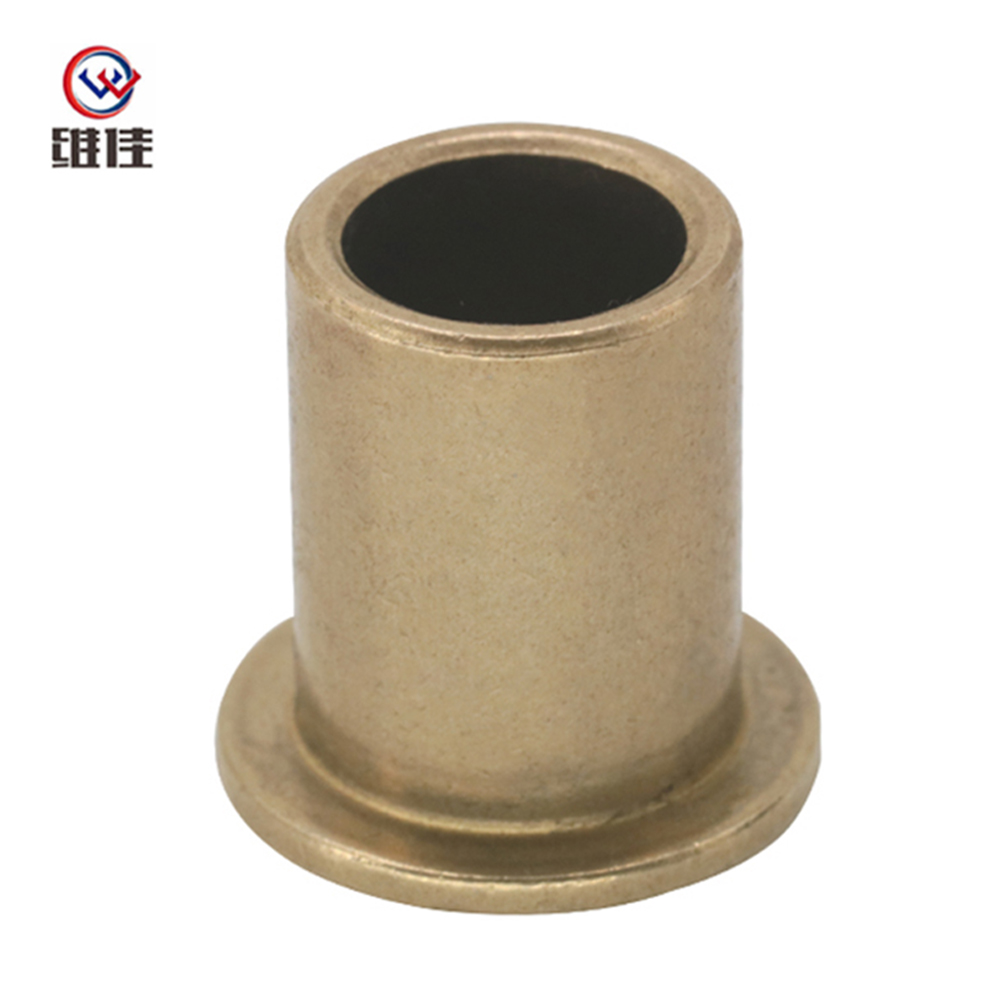
Our sintered bronze self-lubricating bearings are engineered for demanding industrial applications where traditional lubrication is impractical. Designed with advanced powder metallurgy technology, th...
See Details -
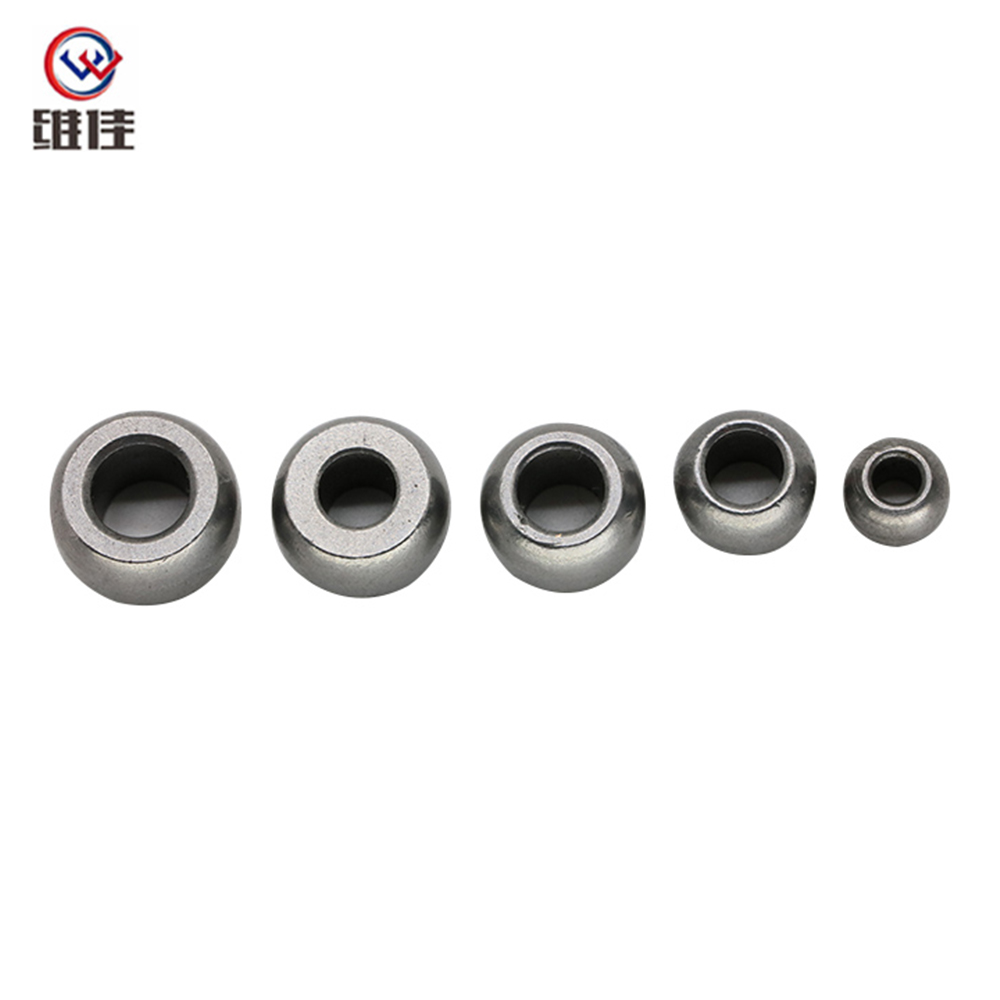
Product Description: High-precision powder metallurgy part (S14*7*10) made of iron material from Jiande Wefine, customized PM components with strict tolerance control.
See Details
Copyright © Jiande Welfine Technology Co., Ltd. All Rights Reserved. Custom Self-lubricating Sintered Bushing Manufacturers
