E-mail us: [email protected]
Tel: +86-15239857375
 English
 中文简体
中文简体

 Home / Author / Shen Yiruo — Senior After-Sales Service Manager / Custom FC0208 Powder Metallurgy Components for Industrial Fuel Heaters
 Custom FC0208 Powder Metallurgy Components for Industrial Fuel Heaters
 2026.07.30
 Shen Yiruo — Senior After-Sales Service Manager
Content
- 1 Product Overview
- 2 Basic Product Specifications
- 3 Why Powder Metallurgy Is Suitable for Fuel Heater Components
- 4 FC0208 Material Characteristics
- 5 Manufacturing Process
- 6 Performance Advantages in Industrial Fuel Heaters
- 7 Advantages Compared with Alternative Manufacturing Methods
- 8 Quality Control and Production Reliability
- 9 Manufacturing Capabilities of Jiande Welfine Technology Co., Ltd.
- 10 Applications
- 11 Design Considerations for Buyers and Engineers
- 12 Cost and Supply Chain Benefits
- 13 Development and Customization Process
- 14 Why Choose This Component for Industrial Heater Production
- 15 Frequently Asked Questions
- 15.1 What is the main material used for this component?
- 15.2 What are the product dimensions?
- 15.3 What is the production process?
- 15.4 Why is machining performed after sintering?
- 15.5 What is the purpose of blackening?
- 15.6 Can the component be customized?
- 15.7 Can FC0208 be used in every area of a fuel heater?
- 15.8 What quality inspections are available?
- 15.9 What industries can use this type of component?
- 15.10 How should the product be stored?
- 15.11 What certifications does the manufacturer hold?
- 15.12 Can customers order samples before mass production?
- 16 Conclusion
- 17 References
- 18 Product: Powder Metallurgy Components for Industrial Fuel Heaters
Industrial fuel heaters operate in demanding environments where structural components must remain dimensionally stable, mechanically reliable, and resistant to heat, vibration, wear, and corrosion. A small component inside a heater can have a significant effect on assembly accuracy, fan or burner alignment, service life, operating noise, and maintenance requirements. For this reason, manufacturers increasingly use powder metallurgy to produce precision structural parts that combine repeatable geometry with efficient mass production.
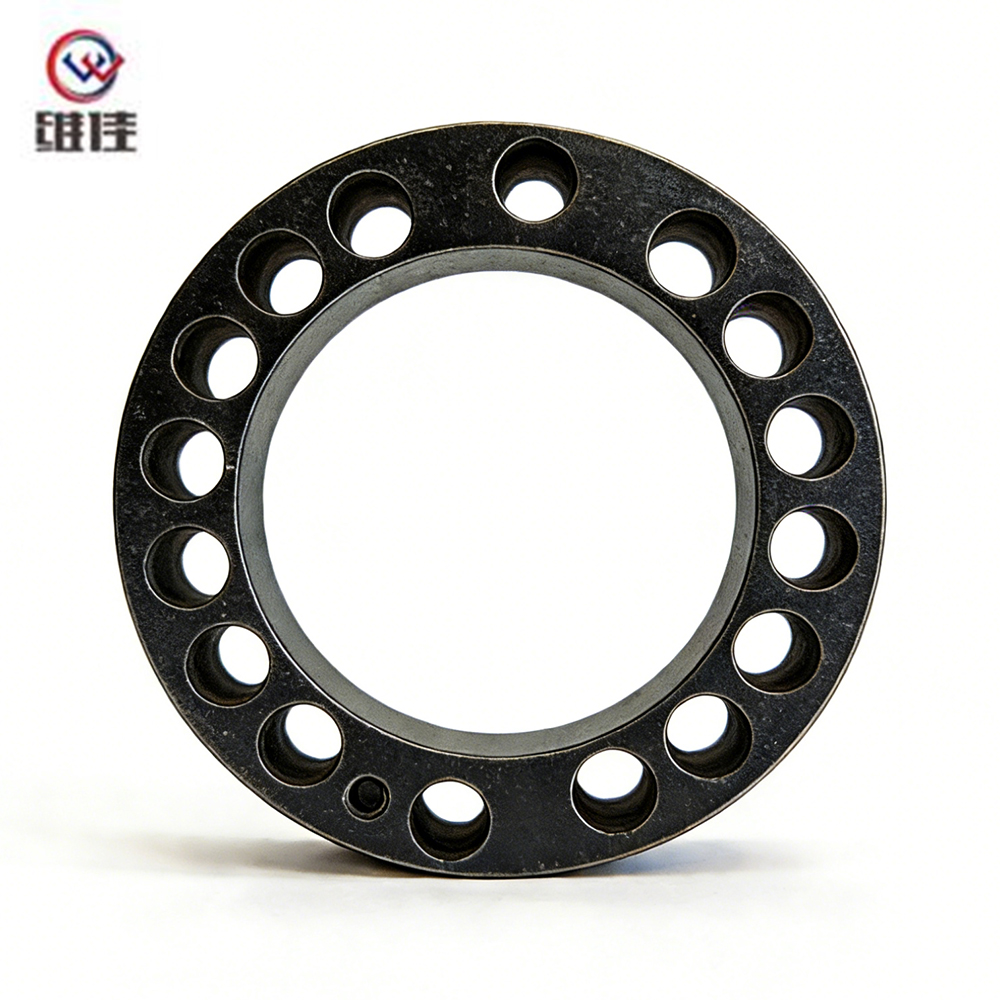
The powder metallurgy component described in this article is a core iron-based structural part developed for industrial fuel heaters, diesel warm air heaters, industrial hot air generators, and related heating equipment. It is manufactured from FC0208 material, commonly identified as an iron-copper-carbon powder metallurgy grade with a nominal composition of Fe-2Cu-0.8C. The production route includes powder mixing, precision compaction, protective-atmosphere sintering, machining, blackening, cleaning, inspection, and protective packaging.
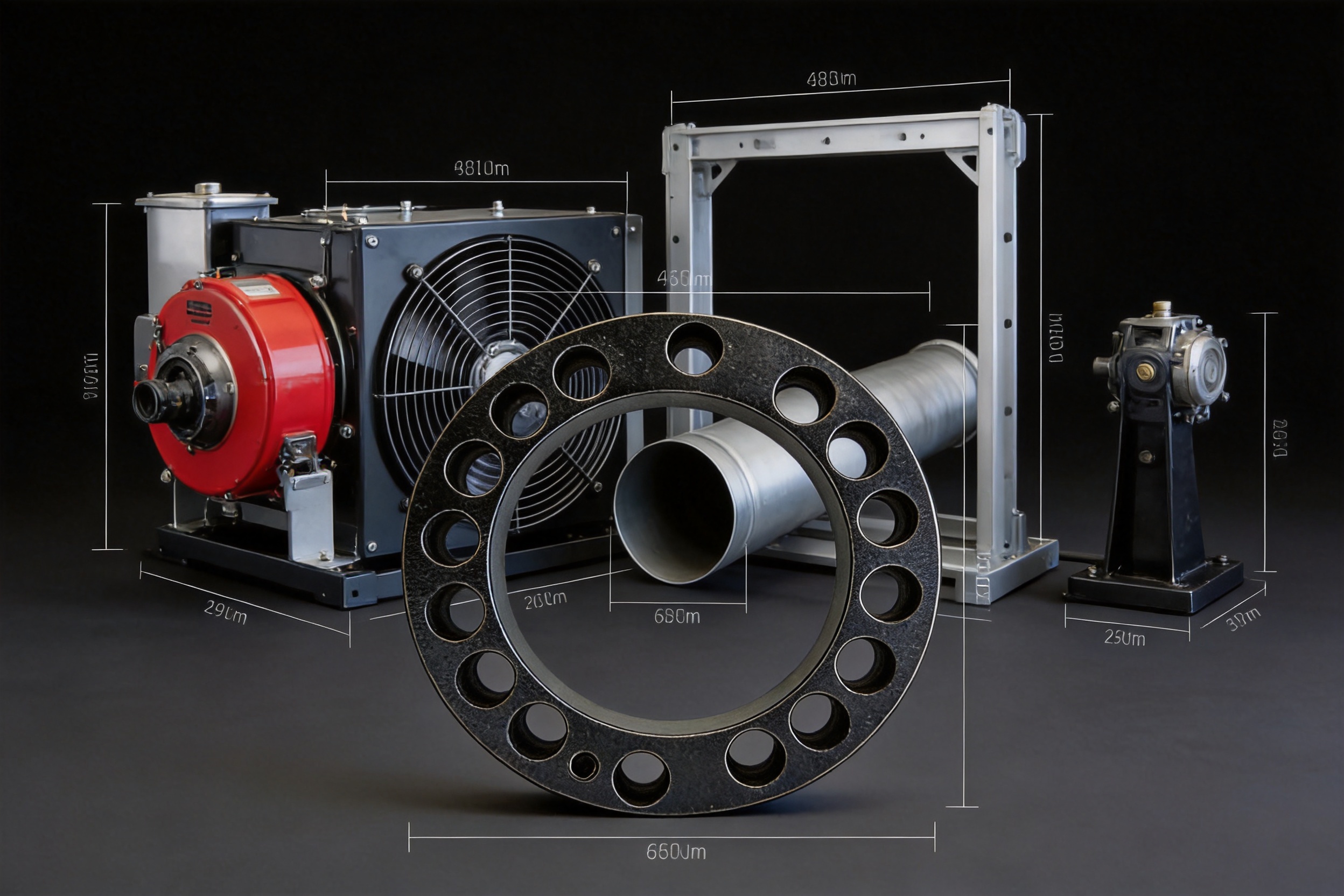
With dimensions of 60.6 mm × 88.9 mm × 15.84 mm, the component is designed to meet the requirements of an application in which reliable fit, consistent performance, and resistance to the surrounding operating conditions are essential. Its manufacturing method offers important advantages over conventional machining from bar stock, simple cast components, and less precisely controlled sintered parts.
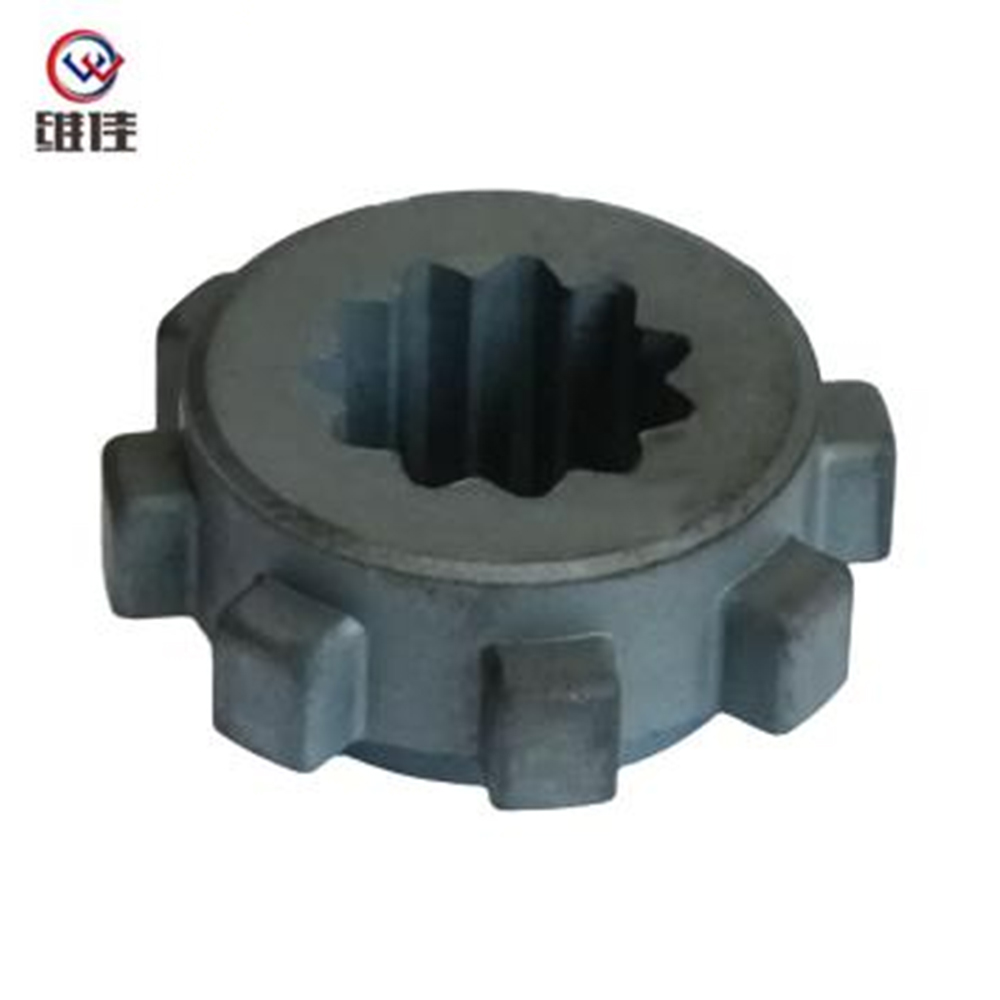
Powder Metallurgy Components for Industrial Fuel Heaters
Product Overview
This powder metallurgy structural part is intended to function as a stable core component within industrial fuel heater assemblies. Its geometry and material are selected for medium-load structural service, where the component may be exposed to repeated vibration, temperature changes, long operating cycles, and contact with an industrial atmosphere.
The product model is PM-FC0208-60.6×88.9×15.84. The part has a finished size of 60.6 mm × 88.9 mm × 15.84 mm and is produced using a controlled powder metallurgy process. After compaction and sintering, selected surfaces are machined to achieve the required dimensional accuracy. A black oxide coating is then applied to improve rust resistance and provide a uniform protective finish.
Unlike a general-purpose stamped or rough-machined component, this part is developed with the complete operating environment in mind. Its design must support accurate assembly while also maintaining adequate strength, stiffness, fatigue resistance, and wear performance. The material and manufacturing process are therefore treated as an integrated system rather than as separate choices.
Powder metallurgy is particularly suitable for this type of component because it allows manufacturers to form a near-net-shape blank close to the required final geometry. This reduces unnecessary material removal, improves production efficiency, and supports repeatable manufacturing when the product is ordered in consistent volumes. Machining remains available for critical dimensions, holes, reference surfaces, or functional areas that require tighter control than direct compaction can provide.
Basic Product Specifications
| Item | Specification |
|---|---|
| Product type | Iron-based powder metallurgy structural component |
| Application | Industrial fuel heaters and related hot air heating equipment |
| Product model | PM-FC0208-60.6×88.9×15.84 |
| Finished dimensions | 60.6 mm × 88.9 mm × 15.84 mm |
| Material | FC0208, nominally Fe-2Cu-0.8C |
| Main process | Powder mixing, compaction, sintering, machining, blackening, inspection, and packaging |
| Surface treatment | Black oxide coating, commonly referred to as blackening |
| Primary performance needs | Dimensional accuracy, strength, vibration resistance, wear resistance, and rust prevention |
| Customization | OEM and ODM production based on drawings, samples, or technical requirements |
Why Powder Metallurgy Is Suitable for Fuel Heater Components
Industrial fuel heaters commonly include combustion, air circulation, temperature control, and support structures in a compact assembly. The internal components must be arranged accurately so that airflow, fuel delivery, heat transfer, and mechanical movement remain stable. A component with excessive dimensional variation can create assembly difficulty or introduce unwanted stress into neighboring parts.
Powder metallurgy helps address this challenge through controlled forming. Metal powder is compacted in a precision die under high pressure, allowing the manufacturer to produce a consistent shape with repeatable external features. The compact is then sintered in a controlled atmosphere so that the individual particles bond and the part develops its basic mechanical integrity.
This process has several practical benefits. First, it can reduce the amount of machining required compared with manufacturing a complete part from solid stock. Second, it supports efficient production of repeated components with consistent geometry. Third, it offers flexibility in material formulation, allowing iron, copper, carbon, and other permitted additions to be combined for a target balance of strength, machinability, wear resistance, and cost.
For medium-load structural applications, a properly controlled sintered iron-based component can provide a useful combination of performance and manufacturing economy. It may be more efficient than a fully machined steel component when the geometry is suitable for compaction. It can also provide more consistent dimensional control than a basic cast component when the tooling and inspection systems are properly managed.
Another benefit is design efficiency. Powder compaction can form features that would otherwise require multiple machining operations. Depending on the geometry, this can include profiles, recesses, steps, bosses, and other repeated details. The final design must still respect powder metallurgy principles, including draft requirements, uniform wall thickness, compaction direction, density distribution, and ejection behavior. When these factors are considered at the development stage, the result can be both technically reliable and commercially competitive.
FC0208 Material Characteristics
FC0208 is an iron-copper-carbon powder metallurgy material used for structural components requiring balanced mechanical performance and reasonable machinability. The nominal composition of Fe-2Cu-0.8C indicates an iron-based matrix with copper and carbon additions. Actual material performance depends on powder characteristics, lubricant selection, compaction pressure, sintering conditions, density, final machining, and any additional treatment.
The iron base provides the principal structural body of the material. Copper can contribute to strength and dimensional behavior during sintering, while carbon supports the development of a stronger iron-based matrix. The final properties are influenced not only by chemical composition but also by the distribution of pores, the degree of sinter bonding, and the consistency of the production cycle.
For the industrial fuel heater component, FC0208 is selected as a practical material for medium-load service. It offers a useful balance between strength, toughness, machinability, and manufacturing cost. It is not presented as a universal solution for every temperature, load, or corrosive environment. Instead, it is well suited to applications where the part requires stable mechanical properties and reliable dimensional performance without the cost or weight of a more highly alloyed material.
Strength and Toughness
The material is intended to provide adequate strength for a structural part exposed to assembly loads, operational vibration, and moderate mechanical stress. Toughness is also important because heater components may experience repeated starts and stops, transportation shocks, or local stress caused by fasteners and adjacent components.
Powder metallurgy materials contain controlled porosity, so material selection and density control are important. The manufacturer must select suitable compaction parameters and sintering conditions to achieve the required balance of density and performance. Consistent production controls help ensure that parts from different batches behave similarly during assembly and service.
Vibration and Fatigue Resistance
Fuel heaters often contain fans, motors, pumps, combustion systems, and other sources of cyclic vibration. A structural component must maintain its position and resist the accumulation of damage caused by repeated loading. FC0208 is suitable for applications requiring reliable resistance to ordinary vibration and fatigue conditions when the design, density, and loading are correctly matched.
Part geometry is as important as material. Sharp internal corners, abrupt section changes, and poorly supported features can concentrate stress. A well-designed powder metallurgy component distributes load more effectively and reduces the risk of premature cracking or deformation. Machining of critical locations can further improve assembly accuracy and load distribution.
Machinability
Although powder compaction and sintering produce a near-net-shape component, selected areas may require post-sinter machining. FC0208 supports machining operations used to refine dimensions, prepare functional surfaces, and meet customer drawing requirements. Suitable machining may include turning, milling, drilling, reaming, chamfering, or other controlled operations depending on the design.
Machinability is valuable because it allows the manufacturer to combine the efficiency of powder forming with the precision of secondary processing. This hybrid approach is often more economical than manufacturing the complete part from billet material while still achieving the accuracy required for assembly.
Manufacturing Process
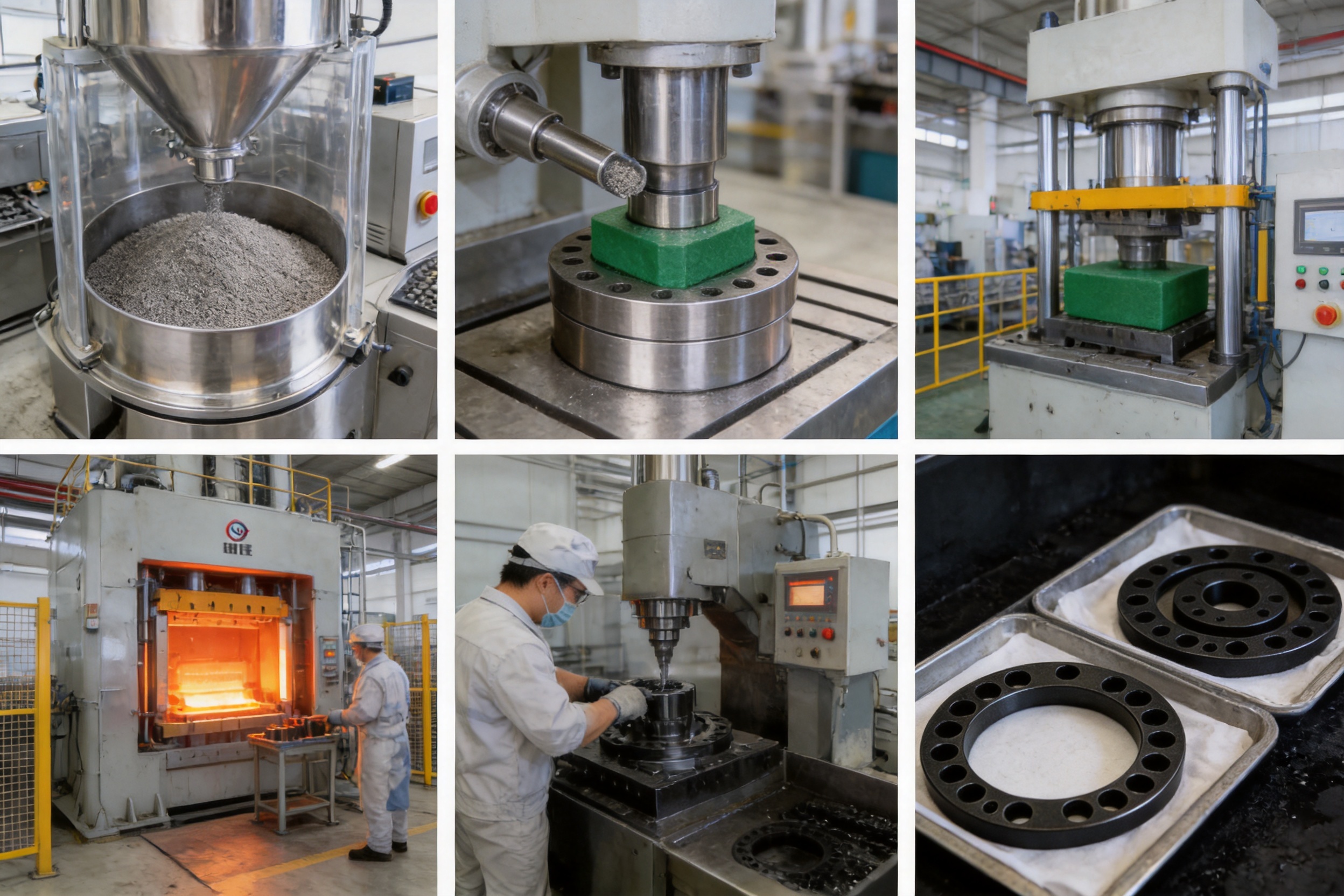
The reliability of a powder metallurgy component depends on the complete manufacturing chain. Powder selection alone does not guarantee a successful part. The powder must be properly mixed, compacted with stable tooling, sintered under controlled conditions, machined according to a defined process, treated for protection, inspected, and packaged correctly.
Powder Mixing and Formulation
The process begins with the preparation of the FC0208 powder blend. Iron powder, copper powder, carbon, and approved processing additives are measured according to the specified formulation. Uniform distribution is essential. Inadequate mixing can cause local differences in composition, density, hardness, and dimensional behavior.
Mixing parameters such as time, sequence, equipment condition, and batch size are controlled to support consistent powder flow and compaction. Lubricants may be incorporated to reduce friction during pressing and ejection. The formulation must be managed carefully because excessive lubricant can influence density and sintering behavior, while insufficient lubrication may increase tool wear or damage the compact during ejection.
Incoming powder inspection may include checks of particle size distribution, apparent density, flow characteristics, moisture, and chemical composition. These controls help identify variations before they affect production. Stable raw materials contribute directly to stable finished parts.
High-Precision Compaction
After mixing, the powder is delivered into a precision die. The powder is then compacted under controlled pressure to create a green compact. The tooling defines the basic shape of the part and must be designed around the material, geometry, compaction direction, ejection requirements, and expected shrinkage during sintering.
Compaction control affects green density, dimensional consistency, strength before sintering, and the final distribution of properties. The press, die, punches, feeders, and measuring systems must operate in coordination. Pressing parameters are monitored so that the compact has adequate integrity for handling and transfer to the sintering stage.
For a component used in a heater assembly, dimensional repeatability is especially important. Features that locate the part or connect it to adjacent components must remain within the specified tolerance. High-precision compaction reduces the burden on later machining and supports efficient production of interchangeable parts.
Protective-Atmosphere Sintering
The green compact is sintered at high temperature in a controlled protective atmosphere. During sintering, the powder particles bond and the component develops its required mechanical structure. Temperature profile, heating rate, atmosphere, conveyor speed, cooling conditions, and furnace loading must be managed consistently.
A protective atmosphere helps limit unwanted oxidation and supports controlled metallurgical bonding. Improper furnace conditions can result in inconsistent strength, excessive oxidation, dimensional variation, or surface defects. For this reason, sintering is one of the most important stages in the process.
The sintered component experiences controlled dimensional change. Tooling design and process development must account for this change so that the final component remains within specification. Furnace monitoring and regular process verification help maintain consistency across production lots.
Precision Machining
After sintering, the component is machined where required. This stage may be used to achieve final dimensions, improve the fit of mating surfaces, create accurate holes, remove excess material, or establish reference surfaces for assembly. Machining is carried out according to technical drawings, approved samples, and process specifications.
The combination of near-net-shape forming and selective machining is one of the product’s important competitive advantages. Conventional machining from solid stock can generate significant waste and require longer cycle times, particularly when the component includes repeated profiles or complex formed features. On the other hand, direct compaction without machining may not provide the accuracy required for all functional surfaces. The combined process offers a practical middle ground.
Process planning also considers the porosity and hardness of the sintered material. Cutting tools, speeds, feeds, workholding, and coolant selection must be matched to the component. Stable machining helps avoid burrs, chipping, dimensional drift, and damage to functional surfaces.
Blackening and Surface Protection
Black oxide treatment, commonly called blackening, is applied to the finished component. The treatment produces a dark protective surface that improves the product’s appearance and helps reduce the risk of rust during storage, handling, and normal service.
Blackening is not intended to replace all forms of corrosion engineering. The final corrosion performance depends on the treatment quality, sealing or oiling conditions, storage environment, exposure to water or chemicals, and the design of the heater assembly. Nevertheless, it is a practical surface treatment for an iron-based structural component where a uniform finish and basic rust prevention are required.
The treatment can also help distinguish finished parts from untreated blanks and provides an additional layer of process identification. Surface appearance, coverage, adhesion, and the absence of unacceptable stains or damage are checked as part of final quality control.
Cleaning, Inspection, and Packaging
After surface treatment, parts are cleaned and inspected. Residual powder, machining chips, oil, treatment deposits, and loose particles must be removed so that the components are suitable for assembly. Inspection may include dimensional checks, visual examination, coating evaluation, hardness testing, density testing, and material verification.
The final step is protective packaging. Anti-rust and anti-collision packaging helps prevent damage during transportation. Moisture-proof bags and cartons are used to reduce exposure to humidity. The components should be stored in a dry, ventilated environment and protected from direct water contact, condensation, and corrosive chemicals.
Performance Advantages in Industrial Fuel Heaters
Resistance to Heat and Temperature Cycling
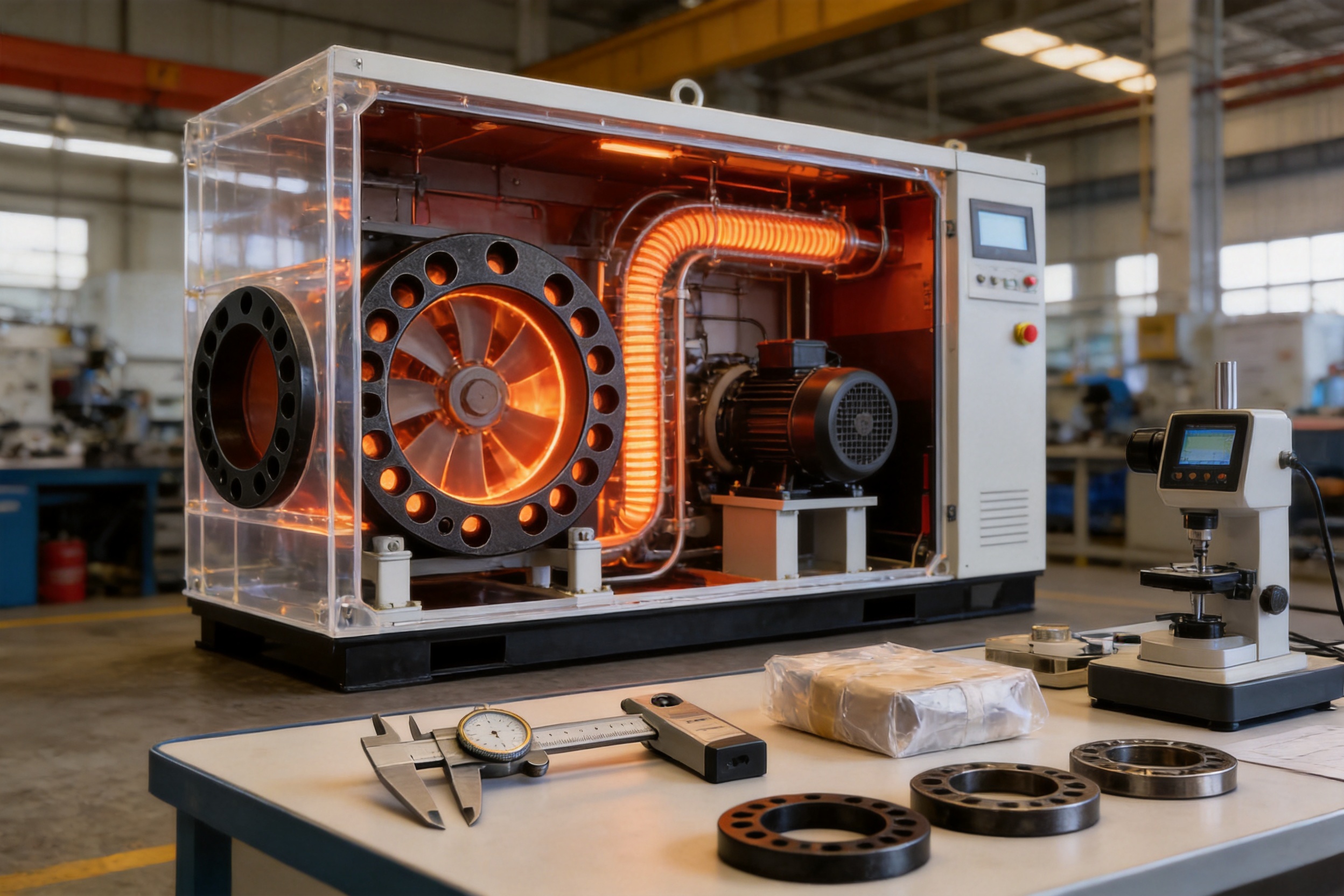
Industrial fuel heaters may operate continuously for extended periods. Internal structural components can be exposed to heat from combustion or hot airflow and may experience repeated temperature changes during starting, stopping, adjustment, and cooling. A material with stable mechanical behavior under the intended temperature conditions helps maintain assembly reliability.
FC0208 provides good high-temperature stability for the intended medium-load structural application. Correct design remains essential. If the component is placed directly in a combustion zone or exposed to unusually high temperatures, the customer should review the temperature, atmosphere, mechanical load, and required service life before final material approval.
Vibration Resistance
Vibration is a common concern in fuel heaters because motors, fans, pumps, burners, and combustion systems can generate cyclic forces. Dimensional changes, loose fits, or weak support features may lead to noise and premature failure. A consistent sintered component with suitable geometry can help maintain the alignment and support of the assembly.
The product’s strength and toughness, combined with controlled dimensions, provide a reliable foundation for applications involving normal industrial vibration. Its performance is further supported by accurate machining of critical mating and locating areas.
Wear Resistance
Some heater components experience rubbing, contact, repeated assembly, or movement against nearby parts. The FC0208 material and blackened surface provide useful resistance to ordinary wear conditions. The actual result depends on contact pressure, lubrication, surface roughness, temperature, speed, and the presence of abrasive particles.
Where the part is exposed to severe sliding wear, the application should be reviewed for an alternative material, increased density, additional treatment, or a design change. For the intended structural role, the product offers a balanced level of wear performance without requiring a highly specialized material system.
Rust Prevention
Iron-based materials can be vulnerable to oxidation when exposed to moisture. The black oxide finish helps reduce surface rust and provides a more stable appearance during storage and service. Moisture-proof packaging is also important because corrosion protection begins before the part reaches the customer’s assembly line.
For long-term storage or humid applications, additional protective oil, sealed packaging, or another surface treatment may be considered. Welfine supports treatment options such as blackening, oil impregnation, and zinc plating according to the customer’s technical requirements.
Dimensional Accuracy and Interchangeability
Accurate dimensions support fast and repeatable assembly. Components that are consistent from piece to piece reduce the need for manual fitting, adjustment, or sorting. This is particularly valuable for heater manufacturers operating an automated or semi-automated assembly line.
The product uses powder compaction to establish the main geometry and precision machining to control selected dimensions. Finished parts are inspected with calipers, gauges, optical measuring devices, and other suitable equipment. A defined inspection process helps ensure that components meet drawing requirements before delivery.
Advantages Compared with Alternative Manufacturing Methods
Every production method has a suitable application range. The advantage of this component is not that powder metallurgy replaces all other methods, but that it provides a strong combination of performance, repeatability, and cost efficiency for this specific type of structural part.
Compared with Fully Machined Components
A fully machined component made from steel bar or billet may offer high density and excellent dimensional control, but it can require substantial material removal. This increases machining time, tooling consumption, material waste, and production cost. The issue becomes more significant when the part has multiple steps, recesses, or repeated shapes.
The powder metallurgy route forms most of the geometry before machining. Only the surfaces requiring additional precision need to be finished by cutting operations. This can reduce waste and shorten the total processing route while preserving the ability to control critical dimensions.
Compared with Basic Cast Components
Casting can be economical for certain large or complex shapes, but a cast component may require additional treatment and machining to achieve the dimensional consistency needed for a compact heater assembly. Casting defects, surface irregularities, and greater variation can also complicate assembly if process controls are insufficient.
Precision powder compaction is well suited to repeated medium-sized components. It provides a controlled starting shape and supports consistent production when the tooling and powder process are properly managed. The resulting part can be more suitable for high-volume interchangeability than a basic cast alternative.
Compared with Stamped or Fabricated Parts
Stamping is highly efficient for sheet-metal components, but it is not appropriate for every three-dimensional structural form. A stamped or fabricated part may require additional bending, welding, drilling, deburring, and inspection. These operations can introduce variation and may create distortion or residual stress.
Powder metallurgy provides a single formed body with integrated geometry. It can be a better choice when the component needs a compact three-dimensional profile, controlled thickness, or features that are difficult to obtain from sheet material.
Compared with Lower-Control Sintered Parts
Not all sintered parts are produced to the same level of control. Variations in powder preparation, tooling, furnace conditions, machining, or inspection can affect the final result. The product described here benefits from an integrated production flow that includes controlled material preparation, high-precision pressing, protective-atmosphere sintering, secondary machining, blackening, and full inspection.
This process discipline provides a competitive advantage over suppliers that offer only basic pressing and sintering without sufficient control of critical dimensions or surface protection. For heater manufacturers, stable quality can be more valuable than a nominally low unit price because inconsistent components may cause line stoppages, rework, field returns, and warranty costs.
Quality Control and Production Reliability
Quality control begins with technical communication. Before production, the supplier reviews the customer’s drawings, three-dimensional data, samples, performance requirements, tolerance needs, surface treatment, packaging expectations, and expected annual volume. This review helps determine whether the selected material and forming process are appropriate.
Dimensional Inspection
Finished dimensions are checked using calipers, gauges, optical measuring devices, and other inspection tools selected according to the tolerance and geometry. Critical dimensions may be monitored during production rather than checked only at the end. This allows process adjustments to be made before a large quantity of nonconforming parts is produced.
Inspection may cover overall length, width, thickness, hole location, profile accuracy, flatness, perpendicularity, and other drawing-defined characteristics. Gauges can be used for rapid production checks, while optical equipment can support more detailed examination of profiles and positions.
Density and Hardness Testing
Density is an important characteristic in powder metallurgy because it influences strength, wear resistance, dimensional behavior, and other performance factors. Density checks help confirm that the compaction and sintering process is operating within the approved range.
Hardness testing provides additional information about the material condition after sintering and any subsequent treatment. Results are compared with internal specifications or customer requirements. These tests are useful for identifying abnormal variation between batches.
Material and Composition Verification
Material composition testing helps confirm that the powder formulation corresponds to the approved FC0208 grade. The supplier may use suitable analytical methods and production records to verify material identity. Traceability of raw materials and production batches supports investigation and corrective action if a quality issue is identified.
Surface and Coating Inspection
The blackened surface is inspected for coverage, adhesion, color uniformity, visible defects, and signs of corrosion or handling damage. The component should be free from unacceptable stains, loose residues, burrs, cracks, and deformation.
Final Inspection
A final inspection is conducted before shipment. The inspection includes appearance, dimensions, quantity, packaging condition, and any customer-specific requirements. The stated quality approach includes 100% inspection before delivery, supporting confidence in the consistency of the supplied components.
Manufacturing Capabilities of Jiande Welfine Technology Co., Ltd.
Jiande Welfine Technology Co., Ltd. was established in 2001 and specializes in powder metallurgy sintering and related precision machining. The company integrates research and development, production, and sales, allowing customers to communicate with one manufacturing organization throughout the product development and supply process.
Its production base covers approximately 13,039 square meters and is equipped with high-efficiency presses, high-temperature sintering furnaces, precision forming machines, machining equipment, and testing systems. These capabilities support the production of powder metallurgy bushings, self-lubricating bushings, structural parts, and other precision components.
More than 20 years of industry experience provide a practical foundation for tooling development, process adjustment, material selection, and mass-production management. The company employs more than 150 skilled employees and serves customers requiring customized components based on engineering drawings or physical samples.
Integrated OEM and ODM Support
Many industrial heater manufacturers do not need a standard catalog part. They require a component matched to a specific housing, burner, fan, motor, bracket, or mounting system. Welfine provides OEM and ODM support for this type of development.
Customers can submit two-dimensional drawings, three-dimensional models, samples, or preliminary design requirements. Engineers can then review the part’s geometry, material, tolerances, compaction direction, machining requirements, surface treatment, and inspection plan. This approach helps identify manufacturability concerns before tooling is finalized.
Customization may include changes to dimensions, holes, profiles, locating features, density requirements, material grade, machining allowance, surface treatment, and packaging. The company supports FC0205, FC0208, other iron-based materials, and selected treatment options such as blackening, oil impregnation, and zinc plating.
Production Equipment and Process Control
High-efficiency presses support stable compaction and repeatable production. High-temperature sintering furnaces provide the thermal environment required for controlled bonding of the powder particles. Precision forming machines and machining equipment allow the company to combine powder forming with secondary accuracy improvement.
Equipment alone does not determine quality. It must be supported by trained operators, documented process parameters, maintenance schedules, inspection standards, and corrective-action procedures. The company’s emphasis on stable manufacturing and continuous innovation supports the practical use of these capabilities across different product families.
Quality Management Certifications
Jiande Welfine Technology Co., Ltd. has passed ISO 9001:2015 and IATF 16949:2016 certifications. ISO 9001 provides a framework for quality management, documented processes, customer focus, and continual improvement. IATF 16949 is associated with the automotive supply chain and emphasizes process control, risk management, traceability, defect prevention, and consistent product quality.
Although an industrial fuel heater component may be used outside the automotive sector, these management practices are relevant to any customer seeking dependable mass production. A structured quality system helps ensure that customer requirements are translated into manufacturing documents and verified through inspection and process monitoring.
Applications
The component is designed for use in industrial fuel heaters and related equipment. Typical applications include diesel warm air heaters, high-power industrial hot air generators, and heating systems used in construction, factories, breeding facilities, storage areas, and other industrial environments.
In a diesel heater, structural parts may support or locate the combustion chamber, fan assembly, motor system, mounting structure, air duct, fuel delivery mechanism, or related housing components. The exact function depends on the customer’s design. Regardless of its specific location, the component must maintain its shape and position under the combined influence of temperature, vibration, assembly force, and long operating periods.
Industrial hot air blowers and fuel-fired heating equipment may operate in dusty, humid, or variable environments. The component’s blackened surface and protective packaging help reduce rust-related problems, while the controlled manufacturing process supports repeatable installation.
The product may also be adapted for other industrial assemblies requiring a compact iron-based structural component with formed geometry, selected machined surfaces, and basic surface protection. Suitability must be confirmed through drawing review and application analysis.
Design Considerations for Buyers and Engineers
Define the Functional Surfaces
Customers should identify which surfaces control assembly, alignment, fastening, movement, sealing, or contact. These areas may require machining after sintering. Other non-functional surfaces may remain in their compacted and sintered condition, helping reduce production cost.
Consider Load and Temperature
The expected static load, cyclic load, vibration frequency, operating temperature, peak temperature, and duration should be provided during development. The FC0208 material is suitable for medium-load structural applications, but the design should be verified if the component is exposed to extreme heat, severe impact, high-speed sliding, or aggressive chemical exposure.
Review Compaction Direction
Powder metallurgy tooling generally forms parts along a defined pressing direction. Features should be designed so that they can be filled, compacted, and ejected reliably. Deep undercuts, isolated thin walls, abrupt thickness changes, and unsupported projections may require additional tooling or machining.
Control Tolerances Rationally
Applying unnecessarily tight tolerances to every feature can increase tooling and machining costs without improving heater performance. A better approach is to assign tighter tolerances to functional features and practical tolerances to non-critical surfaces. Welfine can assist with design-for-manufacturing review to balance performance and cost.
Specify Surface Protection
The customer should define the intended storage period, transportation conditions, humidity exposure, contact with oils or chemicals, and desired appearance. Blackening is suitable for general rust prevention and a uniform dark finish. In more demanding environments, oil impregnation, zinc plating, or another treatment may be considered.
Cost and Supply Chain Benefits
Powder metallurgy can reduce total production cost by minimizing material waste and shortening the machining route. The process is especially competitive when the component is produced in repeated quantities and the design remains stable over time. Tooling costs are considered during development, but the cost per part can become attractive as production volume increases.
Consistent near-net-shape forming also supports more predictable cycle times. Reduced machining requirements may lower tool consumption and simplify production planning. Stable dimensional quality can reduce assembly adjustments and improve line efficiency for the heater manufacturer.
Packaging and storage practices contribute to supply chain reliability. Anti-rust, anti-collision, and moisture-proof packaging help protect components during transportation from the factory to the customer’s plant. Clear batch identification and inspection records can further support inventory management and traceability.
Development and Customization Process
A typical customized project begins when the customer provides a drawing, sample, three-dimensional model, or application description. The supplier reviews the product’s dimensions, material, tolerance, working conditions, surface finish, annual demand, and inspection requirements.
During the technical review, the engineering team assesses whether the geometry is suitable for powder compaction. If necessary, recommendations may be made regarding wall thickness, draft, radii, machining allowance, locating features, or tolerance allocation. These recommendations can improve manufacturability without changing the component’s intended function.
Tooling is then developed and samples are produced for dimensional and functional evaluation. The customer may review the sample against the assembly or drawing. Once the design and process are approved, mass production begins under controlled manufacturing conditions.
Material alternatives may be discussed when the application requires a different strength, density, machinability, or wear level. FC0205 and FC0208 are among the available iron-based options. The correct choice depends on load, temperature, surface contact, dimensional requirements, and cost objectives.
Production quantities can range from sample orders to ongoing mass production. This allows customers to validate a new design before making a larger commitment. Long-term projects can benefit from standardized tooling, documented process parameters, inspection plans, and repeat-order management.
Why Choose This Component for Industrial Heater Production
The component combines several qualities that are important to industrial heater manufacturers. Its FC0208 iron-based material provides balanced mechanical performance for medium-load service. Its powder metallurgy manufacturing route supports repeatable geometry and efficient production. Its post-sinter machining improves critical dimensional accuracy. Its black oxide coating provides practical rust protection and a consistent finish.
Compared with a supplier offering only basic pressed parts, this product benefits from a more complete manufacturing chain. Powder formulation, compaction, sintering, machining, surface treatment, inspection, and packaging are treated as connected stages. This reduces the risk that a quality problem will be transferred from one process to the next without being identified.
Compared with a fully machined alternative, the near-net-shape process can reduce waste and manufacturing time. Compared with a simple cast or fabricated part, the formed geometry can provide improved repeatability for suitable designs. These advantages make the product a practical choice for customers seeking a reliable balance between performance and production cost.
The company’s experience, equipment, quality certifications, and customization capabilities further support the product. Customers receive more than a single component; they receive access to a manufacturing partner capable of helping with material selection, tooling, samples, production, inspection, and surface treatment.
Frequently Asked Questions
What is the main material used for this component?
The component is made from FC0208 powder metallurgy material, nominally composed of iron with approximately 2 percent copper and 0.8 percent carbon. The material is selected for balanced strength, toughness, machinability, vibration resistance, and suitability for medium-load structural applications.
What are the product dimensions?
The specified finished dimensions are 60.6 mm × 88.9 mm × 15.84 mm. Additional tolerances and functional requirements should be confirmed according to the customer’s drawing or approved technical specification.
What is the production process?
The standard process includes powder mixing and formulation, precision powder compaction, high-temperature sintering in a protective atmosphere, precision machining, blackening, cleaning, inspection, and protective packaging.
Why is machining performed after sintering?
Powder compaction forms most of the component close to its final shape, but certain surfaces may require tighter dimensional control. Post-sinter machining is used for critical dimensions, holes, reference surfaces, profiles, or other areas that must meet specific assembly requirements.
What is the purpose of blackening?
Blackening creates a dark oxide surface that provides basic rust prevention, improves appearance, and offers a uniform protective finish. The final corrosion performance depends on storage, environment, sealing, oiling, and exposure conditions.
Can the component be customized?
Yes. Customized development is available based on two-dimensional drawings, three-dimensional models, samples, or application requirements. Possible changes include dimensions, material, density, machining, surface treatment, packaging, and inspection standards.
Can FC0208 be used in every area of a fuel heater?
No material should be considered suitable for every location without application review. FC0208 is intended for medium-load structural service and offers good high-temperature stability for suitable heater applications. If the part is directly exposed to combustion, extreme temperature, aggressive chemicals, severe sliding wear, or unusual mechanical loads, the design should be evaluated before approval.
What quality inspections are available?
Quality control may include dimensional inspection with calipers, gauges, and optical measuring equipment; density, hardness, and material composition testing; visual inspection; coating adhesion or surface checks; batch control; and final inspection before delivery.
What industries can use this type of component?
The main applications include industrial fuel heaters, diesel warm air heaters, industrial hot air generators, and heating equipment used in construction, factories, breeding facilities, storage areas, and similar industrial environments. The component may also be adapted for other equipment requiring a precision iron-based structural part.
How should the product be stored?
The parts should remain in moisture-proof packaging and be stored in a dry, ventilated environment. They should be protected from direct water, condensation, corrosive chemicals, and excessive humidity. For extended storage or demanding environments, additional anti-rust protection may be specified.
What certifications does the manufacturer hold?
Jiande Welfine Technology Co., Ltd. has passed ISO 9001:2015 and IATF 16949:2016 certifications. These systems support documented quality management, process control, traceability, customer focus, and continuous improvement.
Can customers order samples before mass production?
Yes. Sample orders are supported so that customers can evaluate dimensions, fit, surface finish, and application performance before moving to full production. Sample development also provides an opportunity to confirm tooling and inspection requirements.
Conclusion
The FC0208 powder metallurgy component for industrial fuel heaters is designed to deliver stable structural performance in an environment characterized by heat, vibration, repeated operation, and long service periods. Its iron-copper-carbon material provides a balanced foundation for medium-load applications, while the combination of precision compaction, protective-atmosphere sintering, machining, and blackening supports dimensional accuracy, durability, and rust prevention.
The product offers a practical alternative to fully machined, cast, stamped, or less precisely controlled sintered components. Its near-net-shape manufacturing route can reduce material waste and production cost, while secondary machining ensures that critical surfaces meet the required assembly standards. Consistent inspection and protective packaging further improve supply reliability.
Jiande Welfine Technology Co., Ltd. strengthens this product offering through long-term powder metallurgy experience, an integrated production base, modern pressing and sintering equipment, precision machining capability, OEM and ODM support, and ISO 9001:2015 and IATF 16949:2016 quality certifications. For industrial heater manufacturers seeking a customized, repeatable, and cost-effective structural component, this product provides a dependable starting point for both sample development and mass production.
References
1. ISO 9001:2015, Quality Management Systems — Requirements.
2. IATF 16949:2016, Quality Management System Requirements for Automotive Production and Relevant Service Parts Organizations.
3. MPIF Standard 35, Materials Standards for Metal Injection Molding and Powder Metallurgy Structural Parts.
4. European Powder Metallurgy Association, Powder Metallurgy Design Guidelines.
5. ASM Handbook, Volume 7: Powder Metal Technologies and Applications.
6. Company technical information for FC0208 powder metallurgy structural components, manufacturing processes, inspection, surface treatment, and customization services.
Product: Powder Metallurgy Components for Industrial Fuel Heaters

Related products
-
-
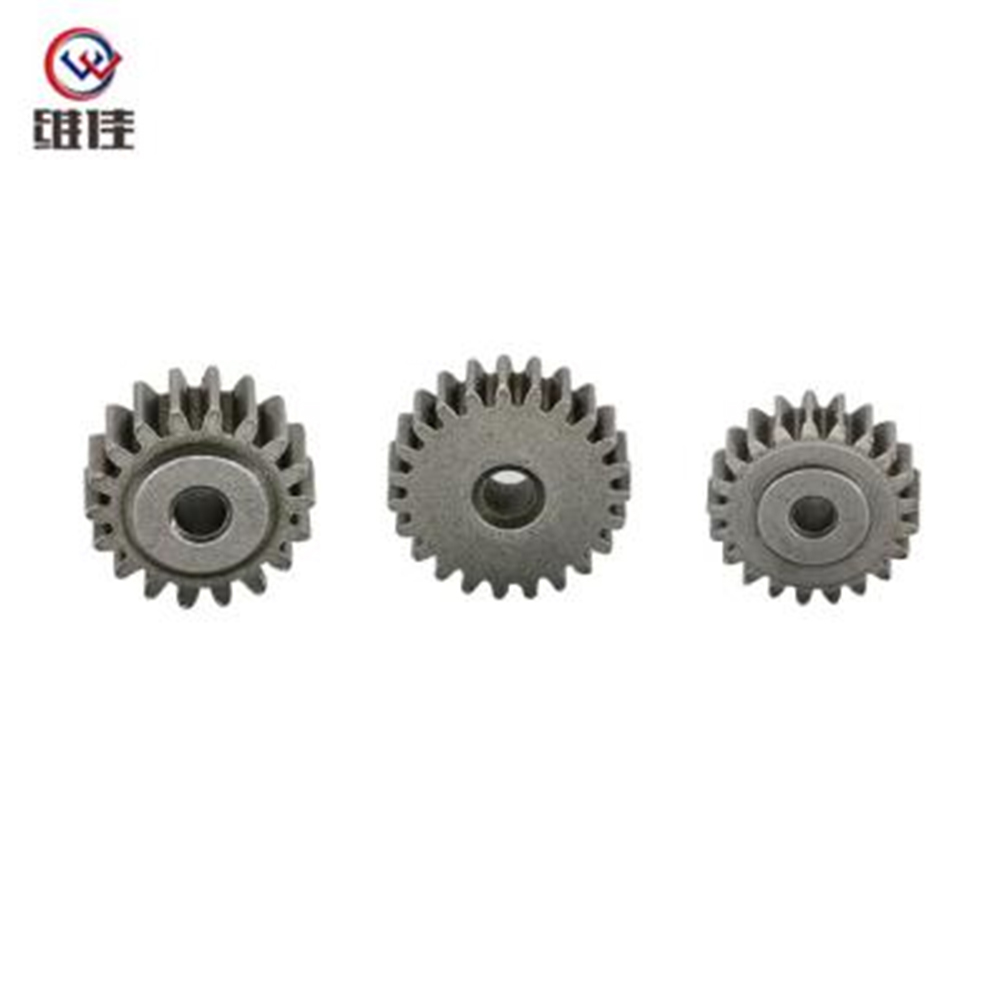
Description: Custom powder metallurgy planetary gear with high precision, wear resistance for automotive, industrial machinery & home appliances. OEM/ODM supported.
See Details -
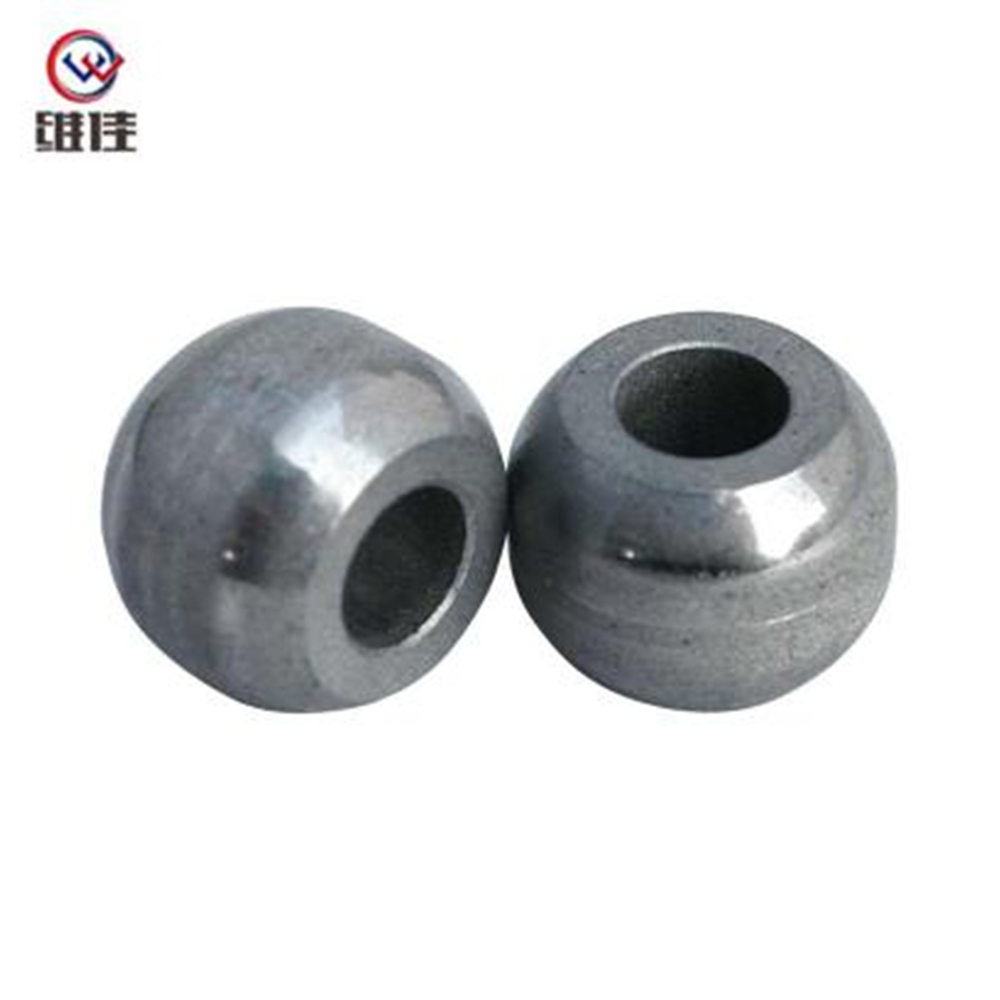
Product Description: High-precision powder metallurgy part (S14*7*10) made of iron material from Jiande Wefine, customized PM components with strict tolerance control.
See Details -
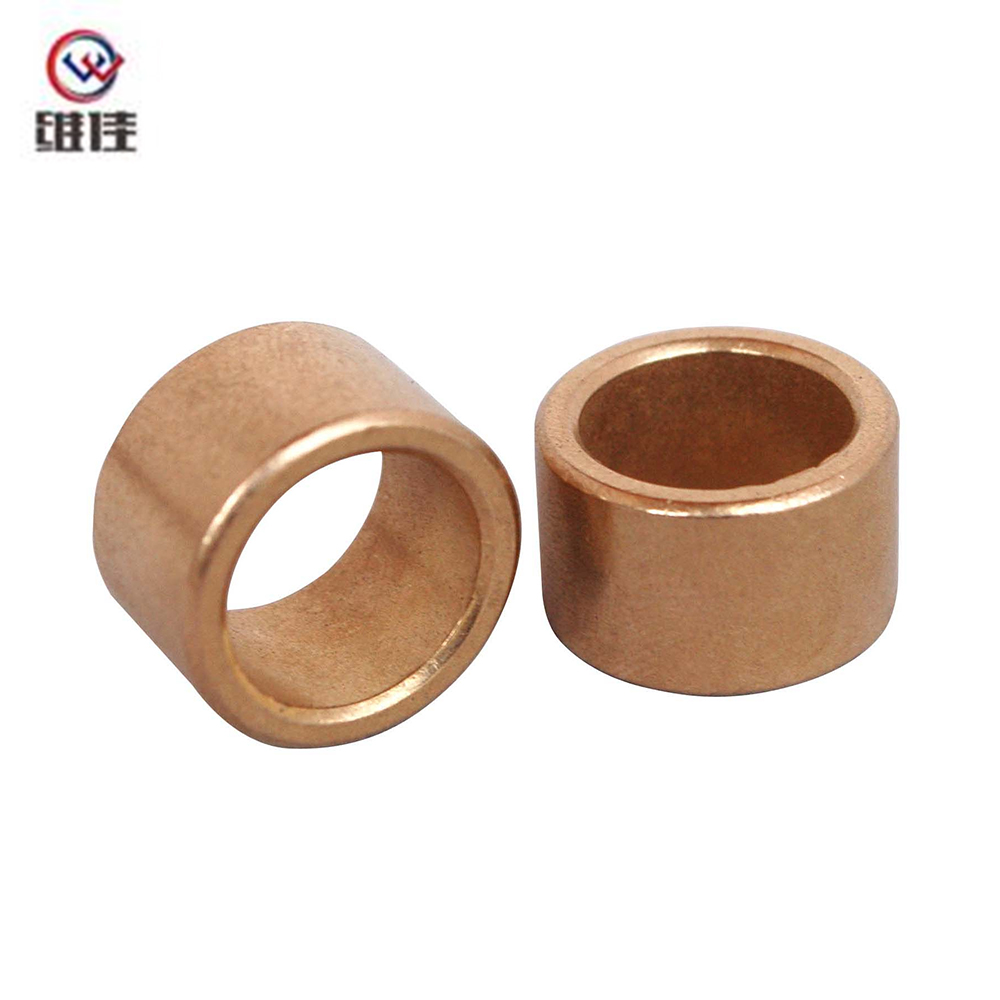
This copper-based powder metallurgy bushing is manufactured through an integrated process of compaction, sintering, sizing, and oil impregnation. It features excellent wear resistance and self-lubrica...
See Details -
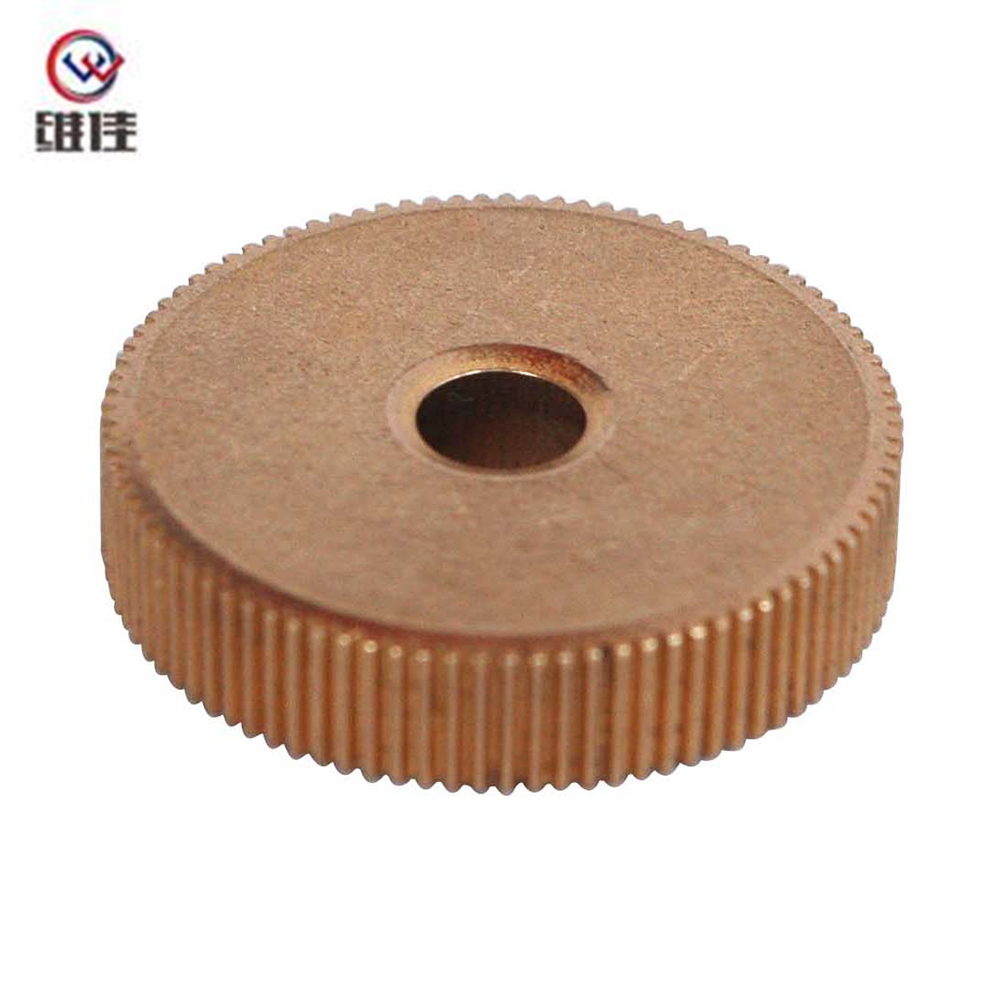
This 4×11.5×5.2mm powder metallurgy gear is manufactured through a precise press-sinter-through hole-oil impregnation process, with strict control of press density (6.7–6.8g/cm³) and sintering tempera...
See Details
Copyright © Jiande Welfine Technology Co., Ltd. All Rights Reserved. Custom Self-lubricating Sintered Bushing Manufacturers
