E-mail us: [email protected]
Tel: +86-15239857375
 English
 中文简体
中文简体

 Home / Author / Shen Yiruo — Senior After-Sales Service Manager / Precision Powder Metallurgy Structural Components for Washing Machine Clutch and Transmission Systems
 Precision Powder Metallurgy Structural Components for Washing Machine Clutch and Transmission Systems
 2026.07.24
 Shen Yiruo — Senior After-Sales Service Manager
Content
- 1 1. Product Overview
- 2 2. Role in Washing Machine Mechanical Systems
- 3 3. Material Design for Structural Performance
- 4 4. Advanced Manufacturing Process
- 5 5. Key Product Advantages
- 6 6. Comparison with Conventional Manufacturing Methods
- 7 7. Engineering and Customization Capabilities
- 8 8. Manufacturing Infrastructure and Company Strengths
- 9 9. Quality Control for Washing Machine Structural Components
- 10 10. Application Benefits in Washing Machine Production
- 11 11. Recommended OEM and ODM Development Process
- 12 12. Design Considerations for Better Performance
- 13 13. Sustainability and Resource Efficiency
- 14 14. Why Choose a Specialized Powder Metallurgy Supplier?
- 15 15. Frequently Asked Questions
- 15.1 Q1: What type of component is this product?
- 15.2 Q2: What materials are available?
- 15.3 Q3: Can the internal spline be customized?
- 15.4 Q4: Can the external serration or gear profile be customized?
- 15.5 Q5: Why is blackening applied to the component?
- 15.6 Q6: Is the component suitable for high-volume washing machine production?
- 15.7 Q7: How does powder metallurgy compare with machining?
- 15.8 Q8: Can samples be provided before mass production?
- 15.9 Q9: What information should a customer provide for a quotation?
- 15.10 Q10: What quality certifications does the manufacturer hold?
- 15.11 Q11: Can the company support both prototypes and mass production?
- 15.12 Q12: Are other powder metallurgy products available?
- 16 16. Conclusion
- 17 References
- 18 Product: Powder Metallurgy Structural Components for Washing Machines
Modern washing machines depend on compact, reliable, and precisely coordinated transmission systems to perform washing, rinsing, and high-speed spinning cycles. Within these systems, structural components must transmit torque, engage and disengage mechanical elements, tolerate repeated load fluctuations, and maintain accurate alignment throughout a long operating life. Powder metallurgy structural components are increasingly selected for these demanding applications because they combine near-net-shape production, controlled material composition, complex geometry, and consistent dimensional accuracy.
Iron-based powder metallurgy components developed for washing machine clutch and transmission assemblies provide a practical alternative to conventionally machined or forged parts. They are manufactured from carefully selected metal powders through compaction, high-temperature sintering, and surface blackening. This process creates components with the strength, wear resistance, and dimensional stability required for repeated mechanical operation while reducing material waste and unnecessary machining.
Jiande Welfine Technology Co., Ltd. specializes in powder metallurgy sintering, self-lubricating bushings, structural parts, and precision components for industrial applications. With more than two decades of manufacturing experience, the company supports OEM and ODM customers with drawing-based production, sample development, material selection, process optimization, and mass-production services. Its production capabilities are suited to the development of custom washing machine clutch parts with splined inner bores, serrated outer profiles, and other application-specific geometries.
The following article explains the product structure, manufacturing process, technical advantages, application value, customization capabilities, and quality controls associated with these powder metallurgy structural components.
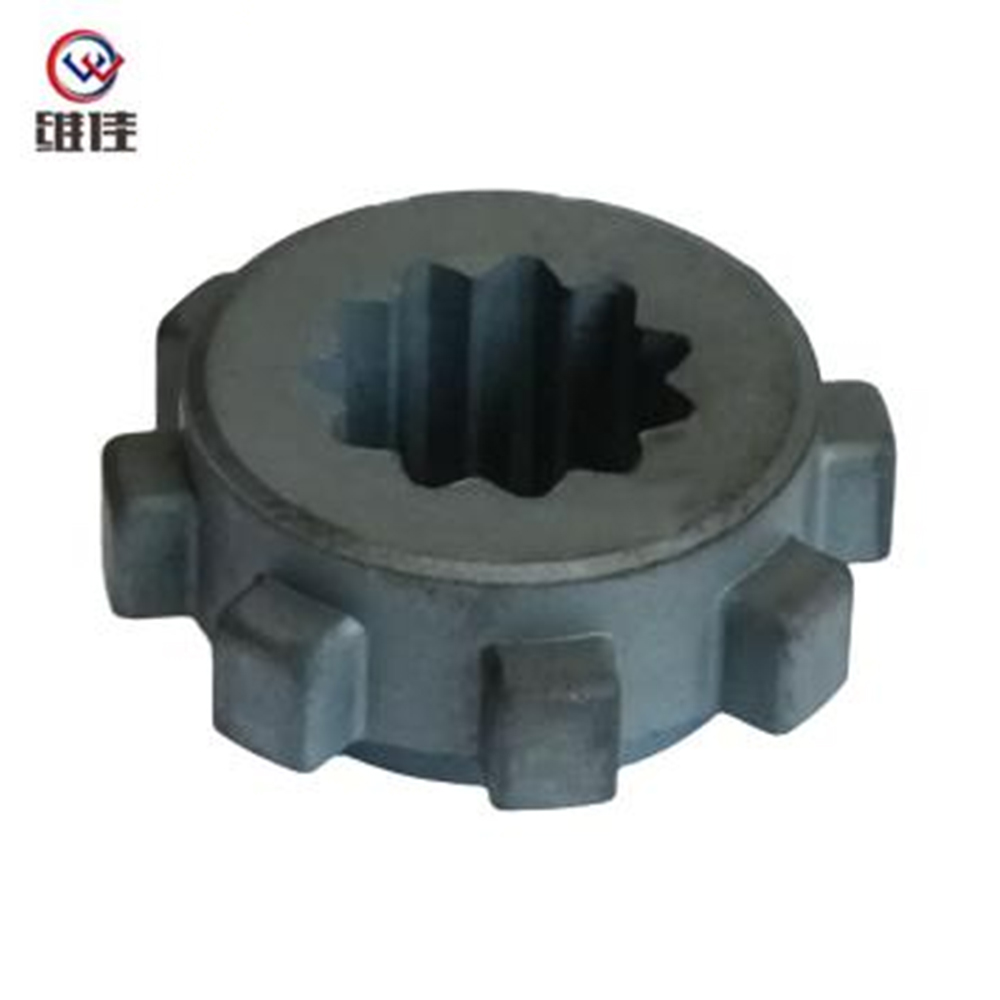
Powder Metallurgy Structural Components for Washing Machines
1. Product Overview
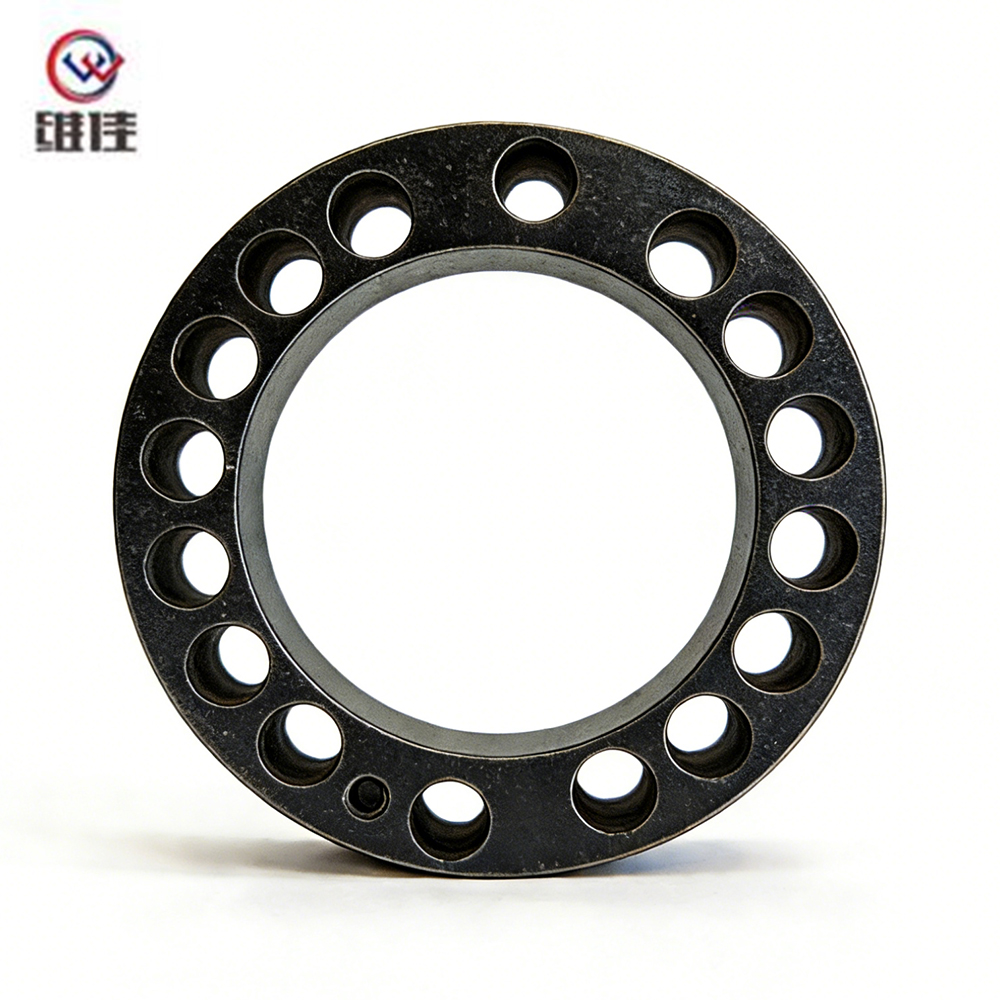
The product is an iron-based powder metallurgy structural component designed for washing machine clutch assemblies and transmission mechanisms. Depending on the design, it may function as a torque-transmitting hub, clutch engagement component, geared ring, support element, or other structural part positioned between the motor, gearbox, and drum drive system.
Unlike a simple washer or non-load-bearing spacer, this type of component is designed to withstand mechanical forces generated during repeated wash and spin cycles. The part may be subjected to torque, radial loading, impact during engagement, vibration, friction against mating components, and sudden changes in rotational speed. Its dimensional accuracy is therefore essential to the overall reliability of the washing machine transmission.
The component is normally manufactured from an iron-based powder metallurgy alloy, such as an Fe-Cu-C or Fe-Ni-C formulation. The exact composition can be adjusted according to the required strength, hardness, density, wear resistance, machinability, and cost target. Copper and nickel additions can contribute to improved strength and hardenability, while carbon supports the development of suitable mechanical properties after sintering and any additional treatment.
Typical product characteristics include the following:
• Iron-based sintered construction for structural strength.
• Splined or serrated inner bore for secure torque transmission.
• Serrated or geared outer profile for clutch engagement or interaction with adjacent parts.
• Near-net-shape production that reduces material waste.
• High-temperature sintering for metallurgical bonding and mechanical stability.
• Black oxide surface treatment for a uniform dark finish and improved corrosion protection.
• Custom dimensions, tooth profiles, material formulations, and tolerances based on customer drawings or samples.
• Suitability for mass production after prototype validation and process approval.
Because the component is produced by compaction in a precision die, the basic shape can incorporate multiple functional features during the forming stage. This is especially valuable when the design includes internal splines, external serrations, stepped surfaces, locating shoulders, or other profiles that would require several machining operations if produced from solid bar stock.
2. Role in Washing Machine Mechanical Systems
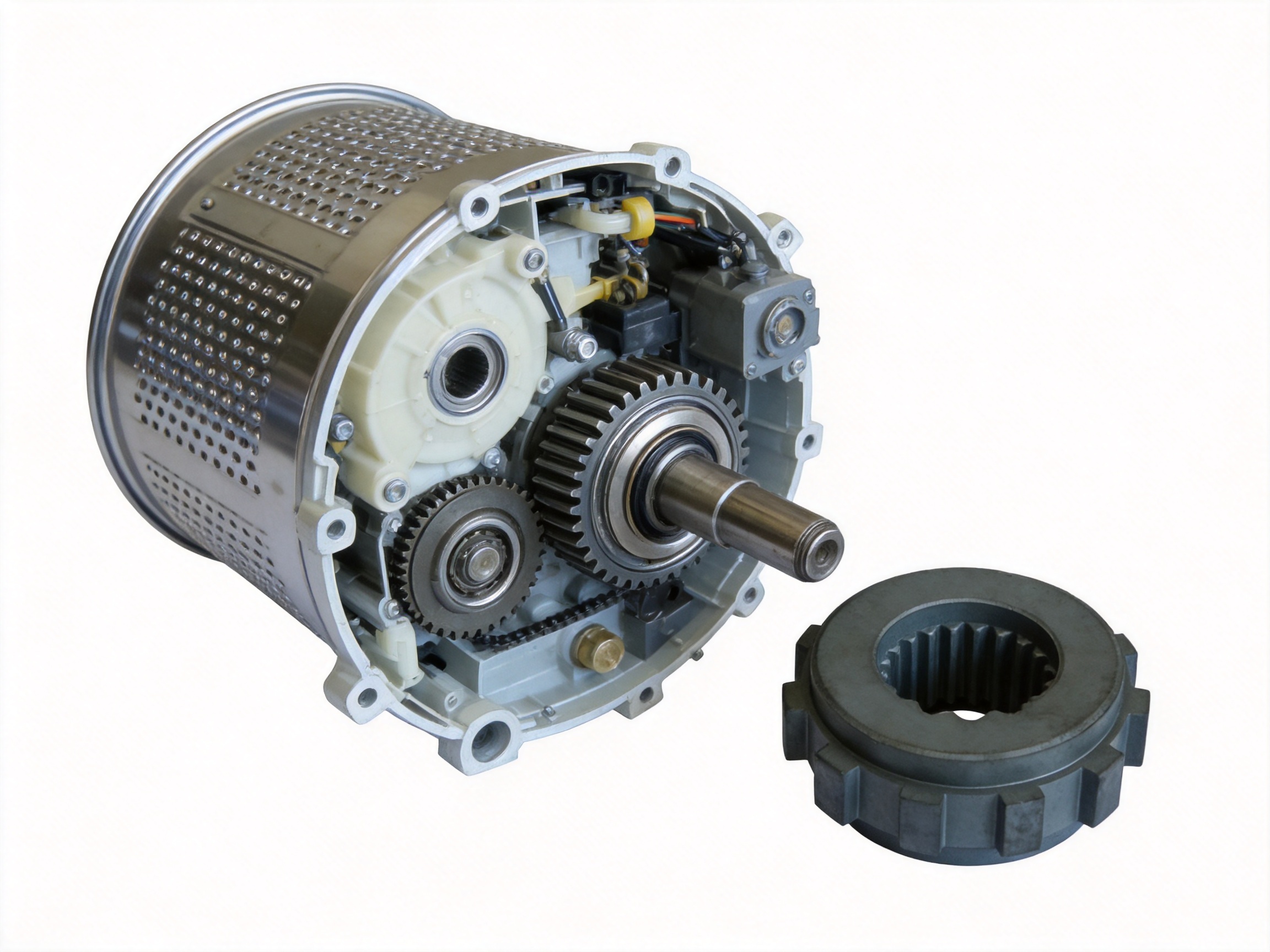
A washing machine transmission system must convert motor rotation into different operating modes. During washing, the drum or agitator may rotate at a relatively low speed with frequent changes in direction. During spinning, the system must support much higher rotational speed while maintaining stable alignment and minimizing vibration. The clutch assembly helps control the relationship between the motor, gearbox, drum, and other rotating or stationary elements.
Powder metallurgy structural components can be used in several positions within this mechanism. A component with an internal spline may connect to a shaft and transfer torque without slipping. An external serrated or geared profile may engage a clutch ring, gear, or actuator-controlled mechanism. Other surfaces may provide axial location, support a neighboring component, or help maintain the correct relationship between transmission parts.
The operating environment creates several important design requirements:
• Accurate internal and external profiles are required for proper assembly and engagement.
• The component must resist deformation under torque and repeated load.
• Contact surfaces must tolerate wear caused by repeated engagement and disengagement.
• Dimensional stability must be maintained across the expected temperature and humidity range.
• The surface must have adequate resistance to rust and environmental oxidation.
• Batch-to-batch consistency is necessary for automated assembly and reliable field performance.
• The overall production cost must remain suitable for high-volume household appliance manufacturing.
Powder metallurgy addresses these requirements by combining controlled powder formulation with a repeatable forming and sintering process. It is particularly effective when the part geometry is relatively compact, production quantities are substantial, and the design includes repeated profiles that can be formed directly in the tooling.
3. Material Design for Structural Performance
The foundation of the product is its iron-based powder metallurgy material. Iron powders provide the primary structural matrix, while alloying elements and carbon are selected to produce the required balance of strength, hardness, toughness, wear resistance, and processability.
3.1 Fe-Cu-C Materials
Fe-Cu-C systems are widely used for structural powder metallurgy components. Copper can improve strength and support dimensional control during sintering, while carbon contributes to hardness and load-bearing performance. This material family may be suitable for components that require reliable torque transmission and moderate-to-high resistance to mechanical wear.
The material formulation can be adjusted by controlling powder particle characteristics, lubricant content, copper level, carbon content, and sintering conditions. These variables influence compacting behavior, green strength, final density, dimensional change, hardness, and machinability.
3.2 Fe-Ni-C Materials
Fe-Ni-C materials are an alternative when the component requires additional alloying performance. Nickel can contribute to strength, toughness, and hardenability. The final selection depends on the design load, mating materials, required hardness, production volume, and target cost.
The use of Fe-Ni-C does not automatically make a component suitable for every application. Material selection must be supported by engineering evaluation, including dimensional analysis, mechanical testing, wear assessment, and validation under representative operating conditions. A powder metallurgy supplier with in-house engineering experience can help determine whether an Fe-Cu-C, Fe-Ni-C, or another formulation is appropriate.
3.3 Density and Mechanical Properties
In powder metallurgy, density is a key performance factor. Higher density generally supports improved strength, fatigue resistance, and impact performance, although the optimum density depends on the geometry and intended use. The pressing force, die design, powder flow, compaction direction, and sintering cycle all affect the density distribution within the part.
Uniform density is especially important in a washing machine clutch component because uneven shrinkage or local weakness can affect spline accuracy, tooth engagement, concentricity, and resistance to torque. Proper tooling design and controlled production conditions help create a consistent compact before sintering and a stable final component afterward.
4. Advanced Manufacturing Process
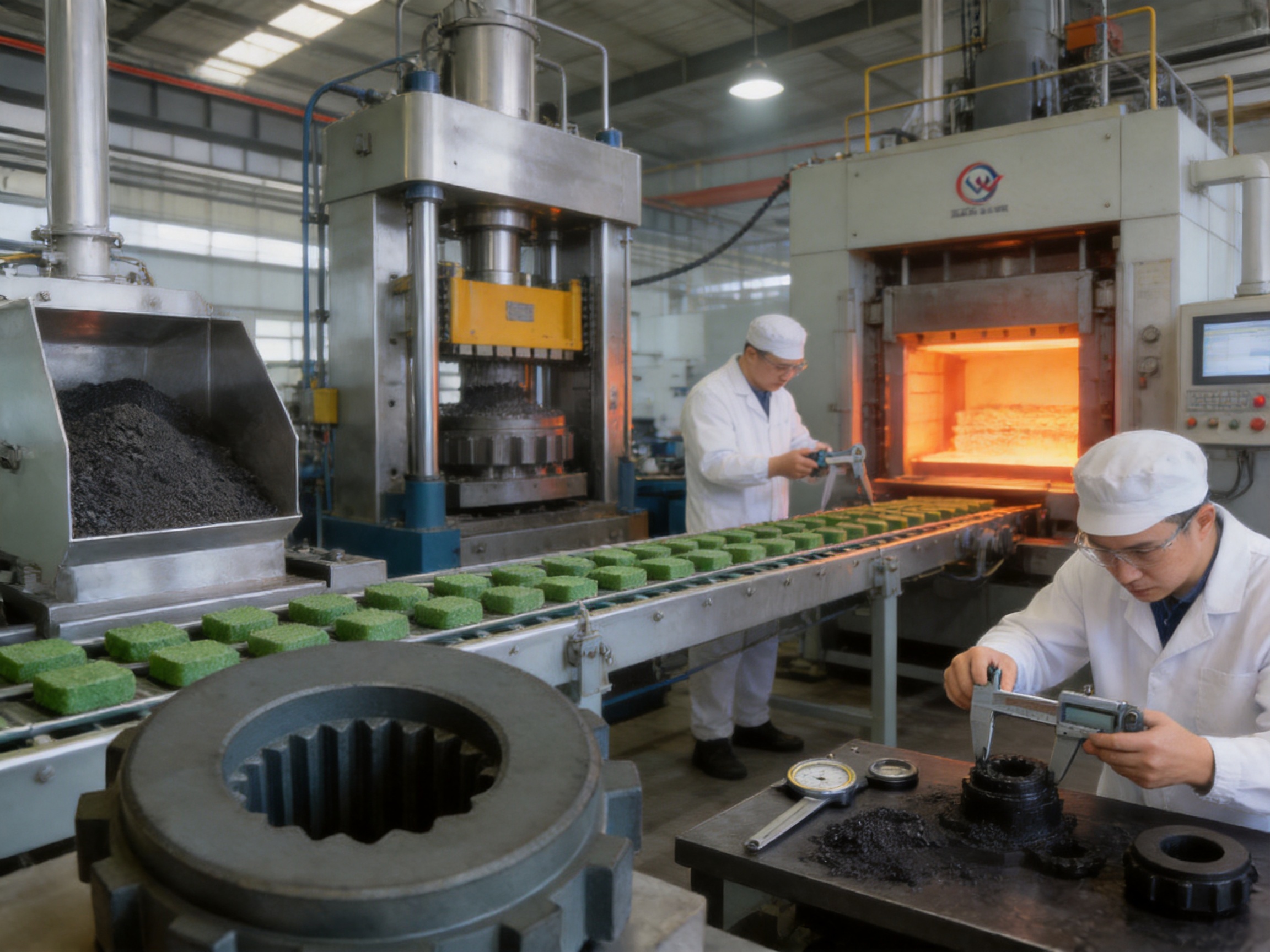
The manufacturing route generally includes powder preparation, die filling, compaction, high-temperature sintering, sizing or secondary operations where necessary, blackening treatment, inspection, and packaging. Each stage contributes to the final performance of the structural component.
4.1 Powder Preparation and Mixing
Raw metal powders are selected according to the approved material formulation. The powders may be blended with alloying additions, carbon, processing lubricants, and other approved constituents. Mixing must be sufficiently uniform to prevent variations in composition from one batch to another.
Powder characteristics influence how effectively the material fills the die cavity. Particle size distribution, apparent density, flowability, compressibility, and lubricant behavior must be considered during process development. A stable powder blend supports consistent filling, which in turn improves compact weight and density control.
For production components with internal splines and external serrations, powder flow is particularly important. Complex die cavities must be filled evenly without creating significant segregation or voids. Process engineers evaluate the powder blend and filling method to reduce the risk of incomplete forming, density variation, or defects around narrow teeth and recessed profiles.
4.2 Precision Die Compaction
During compaction, the blended powder is loaded into a precision die and pressed under controlled force. The die defines the primary shape of the component, including its external diameter, internal opening, shoulders, grooves, serrations, and other features.
Compaction creates a so-called green compact. At this stage, the part has sufficient handling strength for transfer but has not yet developed the full mechanical performance of the final sintered product. The pressing parameters must be controlled carefully because excessive or insufficient compaction can affect density, dimensions, green strength, and subsequent sintering behavior.
Multi-level tooling and carefully designed punches may be used when the component contains stepped regions or variable cross-sections. This helps distribute material more evenly and reduces density differences between thick and thin sections. For internal spline or serration profiles, the tooling must provide accurate tooth geometry and reliable release after pressing.
The advantages of forming the profile during compaction include reduced machining time, lower material consumption, and improved repeatability for large production volumes. The process also makes it practical to reproduce complex shapes that would otherwise require broaching, gear cutting, milling, turning, and additional finishing operations.
4.3 High-Temperature Sintering
The green compacts are conveyed through a controlled high-temperature sintering furnace. During sintering, the particles bond metallurgically through diffusion. The component develops its final structural integrity, strength, hardness, and dimensional characteristics according to the selected material and furnace cycle.
Temperature, atmosphere, heating rate, holding time, cooling rate, and furnace loading all influence the result. A controlled atmosphere helps limit unwanted oxidation and supports the development of stable material properties. Consistent furnace operation is essential for maintaining reliable results across production batches.
Sintering also causes controlled dimensional change. The amount and direction of this change must be considered during die design and process qualification. Experienced powder metallurgy engineers compensate for expected shrinkage or growth so that the finished component meets the required dimensions after sintering.
For washing machine structural parts, the sintering cycle must support a suitable balance of strength and dimensional stability. A part that is too soft may wear prematurely, while a part with insufficient toughness may be vulnerable to impact or repeated load. The process is therefore developed in relation to the actual component geometry and service conditions rather than selected as a generic furnace program.
4.4 Sizing and Secondary Operations
Many powder metallurgy parts can be produced close to their final dimensions. Where a tighter tolerance is required, sizing may be used to calibrate critical diameters, profiles, or flatness. Limited machining, drilling, chamfering, or other secondary operations can also be applied to features that cannot be formed economically or accurately in the initial die.
The near-net-shape capability remains a major advantage even when secondary operations are needed. Instead of machining the entire component from a solid blank, the producer machines only the critical surfaces. This reduces cutting time, material waste, tool consumption, and production cost.
4.5 Blackening Treatment
After sintering and any required finishing operations, the component may receive a black oxide or blackening treatment. This process forms a dark oxide layer on the surface. The treatment provides a uniform appearance and supports corrosion resistance and anti-rust performance in the humid environment associated with washing machines.
Blackening is not a substitute for correct material design, dimensional control, or appropriate storage. However, it can improve the surface condition of the part and help protect it during handling, assembly, transportation, and service. It may also contribute to improved friction behavior and wear performance depending on the mating materials, lubrication conditions, contact pressure, and operating speed.
The black finish gives the component a clean, consistent appearance that can help distinguish treated parts during production and assembly. Treatment parameters must be controlled to ensure uniform coverage without adversely affecting critical dimensions or functional profiles.
4.6 Inspection and Packaging
Finished parts are inspected according to the approved control plan. Inspection may include dimensional measurement, visual examination, weight verification, density evaluation, hardness testing, surface condition checks, and functional gauging of spline or serration profiles.
Packaging must protect the parts from impact, contamination, and excessive moisture. Internal profiles and engagement teeth should be protected from damage during transport. For export shipments and long-distance delivery, packaging design should take account of humidity exposure and handling conditions.
5. Key Product Advantages
5.1 Near-Net-Shape Efficiency
One of the strongest advantages of powder metallurgy is the ability to produce parts close to their final geometry. The forming die creates much of the required shape during compaction, which significantly reduces the amount of material removed later.
Compared with machining a clutch component from steel bar or a forged blank, powder metallurgy can reduce scrap and shorten the production route. This is especially important for parts with a high ratio of finished volume to removed material or with repeated internal and external profiles.
Lower material waste can contribute to a more competitive total cost while also supporting more efficient use of metal resources. For high-volume washing machine production, even a small saving per component can produce a meaningful annual reduction in manufacturing expenditure.
5.2 Complex Spline and Serration Profiles
Washing machine clutch parts often require reliable torque transmission through an internal spline, serrated bore, or external engagement profile. Powder metallurgy tooling can form these features directly or substantially reduce the amount of subsequent machining required.
Accurate profile formation helps maintain proper contact between mating components. It also supports automated assembly by reducing variation in fit and engagement. The design may be adapted to different shaft profiles, tooth counts, pressure angles, outer diameters, or engagement requirements.
5.3 Consistent Batch Quality
Once the powder formulation, tooling, compaction parameters, sintering cycle, and finishing process have been approved, the production route can be repeated consistently. This repeatability is valuable for appliance manufacturers that require stable performance across thousands or millions of units.
Process consistency also simplifies incoming inspection and assembly-line control. Components that remain within the specified dimensional and mechanical ranges are less likely to create fit problems, abnormal noise, premature wear, or clutch engagement failures.
5.4 Mechanical Strength and Wear Resistance
Iron-based sintered materials can provide the structural strength required for torque transmission and repeated mechanical loading. The material formulation and density are selected in accordance with the application rather than relying on a one-size-fits-all material.
Wear resistance is influenced by density, hardness, surface condition, lubrication, contact pressure, mating material, and operating speed. Blackening can further improve the surface condition and contribute to protection against corrosion and wear in the intended service environment.
5.5 Dimensional Stability
Dimensional stability is critical in a clutch mechanism because excessive variation can lead to loose engagement, difficult assembly, noise, vibration, or uneven load distribution. Controlled compaction and sintering help produce repeatable dimensions, while sizing or selective machining can address particularly demanding features.
Careful control of tooling wear is also important. As production volumes increase, die components and forming surfaces must be monitored to prevent gradual changes in tooth dimensions, bore size, or concentricity.
5.6 Cost Efficiency Without Sacrificing Function
Powder metallurgy offers cost advantages through reduced waste, fewer machining operations, lower material consumption, and efficient repeat production. These advantages are most pronounced when the component is produced in substantial quantities and the geometry is suitable for die forming.
Cost efficiency does not mean reducing the component to the lowest possible specification. Instead, it allows the manufacturer to allocate resources to the features that matter most, such as spline accuracy, density distribution, surface protection, and critical dimensions.
6. Comparison with Conventional Manufacturing Methods
Traditional manufacturing methods remain useful for many metal components, but they may be less efficient for compact, repeatable parts with complex profiles. Machining from solid steel can provide excellent precision, but it may require extensive turning, milling, broaching, gear cutting, deburring, and inspection. The process can generate considerable scrap, particularly when the finished component has a relatively small cross-section compared with the original bar or blank.
Forging can produce strong components and is suitable for certain high-load applications. However, forging may require additional machining to achieve accurate internal splines, fine serrations, or complex stepped geometry. Tooling and secondary processing costs must be considered.
Die casting may be attractive for some non-ferrous designs, but it does not provide the same material system as an iron-based structural component. Where high strength, wear resistance, and compatibility with steel shafts or gears are required, an iron-based powder metallurgy solution may be more appropriate.
Evaluation Factor |
Powder Metallurgy Component |
Machined Steel Component |
Forged and Machined Component |
Material utilization |
High, with near-net-shape forming |
Lower when significant stock is removed |
Moderate, depending on blank design and machining allowance |
Complex internal profile |
Can be formed directly in suitable tooling |
May require broaching or specialized machining |
Often requires secondary machining |
High-volume repeatability |
Excellent after process qualification |
Good, but dependent on multiple machining operations |
Good, with additional finishing controls |
Secondary processing |
Often limited to sizing or selected finishing |
Usually extensive |
Commonly required for precision features |
Material customization |
Flexible powder alloy formulation |
Available through steel grade selection |
Available through steel grade selection |
Cost suitability for mass production |
Strong when geometry and volume are suitable |
May be higher due to machining time and scrap |
Depends on forging and machining requirements |
The best manufacturing method always depends on the component design, annual quantity, material requirements, tolerance range, and validation criteria. Powder metallurgy is particularly competitive for washing machine structural components that are compact, rotationally symmetrical or partially symmetrical, and equipped with repeated profiles suitable for die forming.
7. Engineering and Customization Capabilities
Washing machine manufacturers often require components tailored to a specific transmission layout, shaft interface, clutch mechanism, or assembly tolerance. A standard catalog part may not provide the required bore, tooth profile, overall height, or engagement geometry. Custom engineering is therefore an important part of the supply process.
7.1 Drawing-Based Development
Production can be developed from customer drawings, three-dimensional models, technical specifications, or physical samples. The engineering team reviews the design for powder metallurgy suitability, including pressing direction, wall thickness, density distribution, ejection requirements, sintering shrinkage, and potential secondary operations.
Design feedback at an early stage can prevent unnecessary tooling complexity and improve the final cost structure. For example, a small modification to a step, draft angle, corner radius, or nonfunctional tolerance may make the component easier to compact while preserving the required assembly function.
7.2 Spline and Serration Customization
The internal and external profiles can be customized to match the customer’s mating shaft, gear, clutch ring, or actuator mechanism. Important parameters may include tooth count, tooth form, profile dimensions, major and minor diameters, engagement depth, chamfer design, and fit class.
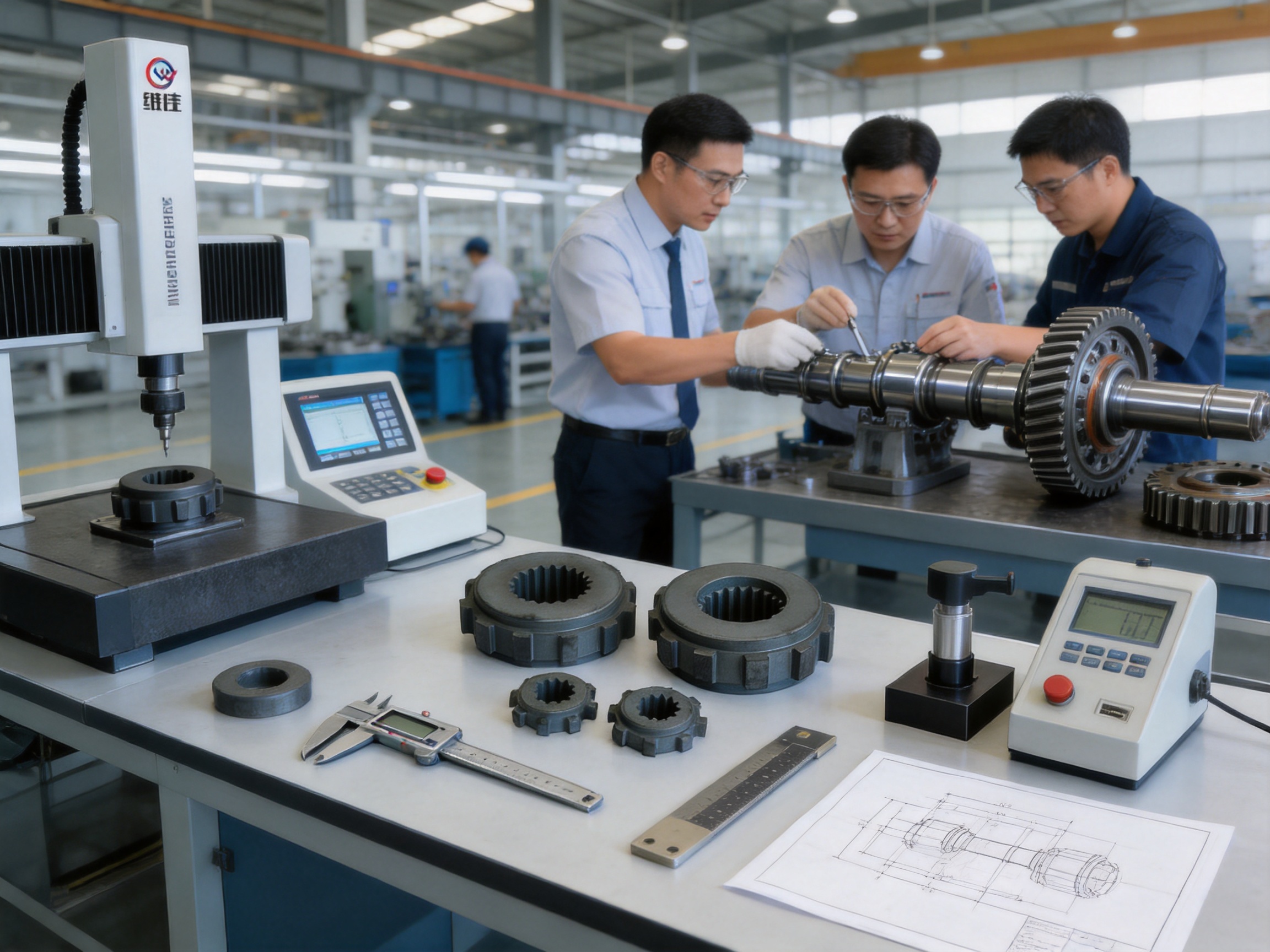
Profile inspection should be defined according to the functional requirement. In some applications, a checking gauge may be more useful than measuring every geometric parameter individually because it confirms whether the component will assemble and transmit torque correctly. Coordinate measurement and optical inspection may also be applied for development or process verification.
7.3 Material and Treatment Selection
Customers can discuss alternative iron-based formulations, density targets, hardness requirements, and surface treatments. The selected material should reflect the expected torque, duty cycle, contact condition, operating temperature, corrosion exposure, and desired service life.
Blackening is a common option for these parts, but the final treatment specification should consider the assembly environment and the compatibility of the oxide layer with lubricants and mating components. Where necessary, additional protection or finishing requirements can be evaluated during the technical development stage.
7.4 Prototype and Sample Testing
Prototype samples help confirm dimensional fit, assembly behavior, material performance, and functional interaction with neighboring components. Sample testing may include installation on the customer’s shaft or clutch system, rotational testing, engagement cycling, torque evaluation, wear assessment, and visual inspection after operation.
Testing with actual mating parts is particularly valuable because the performance of a spline or serrated component depends on the combined accuracy of both components. A part that meets isolated dimensional measurements may still require adjustment if the complete assembly produces excessive backlash, tight engagement, abnormal noise, or uneven contact.
8. Manufacturing Infrastructure and Company Strengths
Jiande Welfine Technology Co., Ltd. was established in 2001 and has developed into a high-tech enterprise integrating research and development, production, and sales. Its primary specialization is powder metallurgy sintering and related precision machining, with product experience covering bushings, self-lubricating bushings, structural components, and other precision parts.
The company operates a modern production base of approximately 13,039 square meters. Its equipment includes high-efficiency presses, high-temperature sintering furnaces, precision forming machines, and testing equipment. This infrastructure supports the complete process chain from powder compaction to sintering, finishing, inspection, and production scale-up.
More than 150 skilled employees contribute to product development and manufacturing activities. Their experience is valuable when a component requires a balance between design complexity, tooling efficiency, material performance, and production cost. Powder metallurgy is a process in which practical knowledge significantly influences results, particularly when parts contain variable wall thicknesses, internal profiles, or multiple functional surfaces.
The company provides OEM and ODM services based on customer drawings or samples. This allows appliance manufacturers, transmission suppliers, and mechanical system integrators to obtain parts developed for their own models rather than adapting their designs to generic components.
8.1 Quality Management
Quality management is supported by ISO 9001:2015 certification and IATF 16949:2016 certification. These systems establish documented procedures for process control, traceability, corrective action, supplier management, inspection, and continuous improvement.
For a washing machine clutch component, quality assurance should extend beyond final visual inspection. It should include control of incoming powders, mixing records, tool condition, compact weight, sintering parameters, dimensional results, mechanical properties, surface treatment, and shipment documentation.
Process records help identify the cause of any deviation and support consistent production from one order to the next. They also provide customers with greater confidence when approving a new part or transferring a validated design into mass production.
8.2 Production Scalability
A successful prototype is only the beginning of an OEM project. The production process must be capable of delivering stable quality at the customer’s required volume. Press capacity, furnace throughput, tooling life, inspection resources, treatment capacity, and packaging arrangements must all be considered before mass production begins.
Welfine’s integrated production experience supports the transition from sample development to repeat manufacturing. Engineering adjustments can be coordinated with production and quality teams, reducing communication delays and helping maintain the approved design intent.
9. Quality Control for Washing Machine Structural Components
Reliable quality control begins with a clear understanding of the component’s critical-to-function characteristics. These may include internal spline dimensions, external serration geometry, concentricity, flatness, overall height, density, hardness, surface condition, and resistance to torque or wear.
9.1 Dimensional Inspection
Dimensional inspection verifies that the component fits correctly within the clutch assembly. Measurements may include outer diameter, inner bore, tooth dimensions, axial thickness, shoulder locations, and runout. Gauges can be used for rapid production checking, while coordinate measuring machines or optical systems may be used for detailed verification.
9.2 Density and Weight Control
Weight control is a practical method for monitoring compact consistency. Because the component is produced from a controlled powder formulation, unusual weight variation may indicate filling problems, powder segregation, incorrect press settings, or incomplete forming.
Density testing provides additional information about the relationship between component mass and volume. Where density distribution is critical, process development may include sectioning, metallographic evaluation, or other methods to confirm that high-load areas have suitable structural support.
9.3 Mechanical Testing
Mechanical tests may include hardness measurement, tensile or transverse rupture evaluation on representative specimens, compression testing, torque testing, and wear testing. The selection depends on the component’s function and the customer’s qualification requirements.
Functional torque testing can be especially useful for clutch parts because it assesses the ability of the spline or serration interface to transmit rotational force without unacceptable deformation or slippage.
9.4 Surface and Corrosion Evaluation
The blackened surface should be checked for uniform appearance, adequate coverage, adhesion, and freedom from damaging defects. Corrosion testing may be specified when the part is exposed to elevated humidity, detergent residues, water splash, or long periods of storage before assembly.
The final corrosion performance depends on the entire system, including base material, blackening quality, oil or grease, neighboring components, packaging, and operating conditions. Testing should therefore reflect the intended environment as closely as possible.
10. Application Benefits in Washing Machine Production
For washing machine manufacturers, the value of a powder metallurgy component is not limited to its individual mechanical properties. It also affects assembly efficiency, supply-chain stability, tooling economics, and product reliability.
A well-controlled spline or serrated profile can simplify assembly and reduce the risk of forced installation. Consistent external dimensions help maintain predictable clearances and alignment. Stable material properties reduce variation in clutch engagement and support consistent operating noise.
Near-net-shape production can also help manufacturers manage overall product cost. When a component requires fewer machining steps, the supply chain may involve less work-in-process, fewer process transfers, and fewer opportunities for handling damage. Reduced scrap can further improve material efficiency.
Because powder metallurgy is suitable for repeatable production, it can support the large quantities typically associated with household appliances. Once the tooling and process parameters have been validated, the same part design can be produced over extended production programs with controlled variation.
The component can also be adapted for different washing machine models. By modifying the inner spline, outer serration, height, diameter, or material grade, a family of related components can be developed while retaining a common manufacturing philosophy.
11. Recommended OEM and ODM Development Process
A structured development process helps ensure that the finished component meets both mechanical and commercial requirements.
11.1 Requirement Definition
The customer should provide available drawings, samples, mating-part information, expected annual volume, operating speed, torque, duty cycle, temperature range, corrosion environment, and target service life. If some information is not available, the supplier can help identify the missing design inputs.
11.2 Technical Feasibility Review
Engineers review the geometry and identify features that can be formed directly, features requiring sizing, and features that may need secondary machining. They also evaluate wall thickness, pressing direction, ejection, density distribution, sintering shrinkage, tooling complexity, and expected production cost.
11.3 Material and Process Proposal
A material proposal is prepared based on the load and wear requirements. The proposal may include Fe-Cu-C or Fe-Ni-C options, density targets, hardness expectations, blackening requirements, and recommended inspection items.
11.4 Tooling and Prototype Production
After the design is approved, forming tools are manufactured and initial samples are produced. The samples are inspected and, where possible, tested in the customer’s actual assembly or a representative test fixture.
11.5 Design Optimization
Results from dimensional inspection and functional testing may lead to adjustments in the die, material formulation, sintering cycle, or blackening process. This stage is intended to resolve issues before mass production and to establish a stable process window.
11.6 Mass Production and Continuous Control
Once samples and process documentation are approved, production can be scaled. Ongoing controls monitor powder batches, tooling condition, press settings, furnace parameters, finishing quality, and final inspection results.
12. Design Considerations for Better Performance
Powder metallurgy components perform best when their geometry is developed with the process in mind. Design engineers should avoid unnecessary abrupt changes in section thickness because they can contribute to density variation or uneven sintering behavior.
Appropriate corner radii can improve powder flow and reduce stress concentration. A suitable draft or release design can help the compact leave the die without damage. Symmetrical geometry is often easier to press, although non-symmetrical designs can also be produced when the tooling concept is properly developed.
Functional tolerances should be separated from nonfunctional cosmetic or dimensional preferences. Holding extremely tight tolerances on every surface may increase tooling and secondary machining costs without improving assembly performance. A tolerance analysis of the complete clutch mechanism can identify which dimensions truly require close control.
The spline or serration design should be evaluated together with the mating shaft or ring. Tooth flank contact, backlash, root clearance, chamfering, and engagement depth can all influence torque transmission and noise. The design should also consider assembly direction and the possibility of minor misalignment during automatic or manual installation.
Surface treatment specifications should be connected to the actual environment. If the component is exposed to water, detergent, lubricating oil, or condensation, the blackening process and packaging method should be qualified accordingly.
13. Sustainability and Resource Efficiency
Powder metallurgy can contribute to more efficient manufacturing because it uses material in a controlled form and produces less cutting scrap than many subtractive processes. The near-net-shape approach also reduces the energy and time associated with removing excess material.
Production efficiency is influenced by the whole process, including powder recovery practices, press utilization, furnace loading, tool life, secondary operations, and packaging. A properly optimized powder metallurgy route can reduce waste while maintaining the mechanical performance required by the component.
Longer service life also supports product sustainability. A durable clutch or transmission component is less likely to require premature replacement and can help maintain the reliability of the washing machine throughout its intended operating period. Material selection, density control, surface treatment, and accurate engagement geometry all contribute to this objective.
14. Why Choose a Specialized Powder Metallurgy Supplier?
A specialized supplier offers more than basic part production. The supplier contributes knowledge of powder behavior, die design, sintering, dimensional compensation, surface treatment, and quality control. This expertise is particularly valuable when the component includes profiles that must be formed accurately and remain stable during high-volume production.
Welfine combines powder metallurgy manufacturing with related precision machining and engineering support. Its experience in bushings, structural parts, and precision components provides a broad understanding of friction, wear, alignment, and mechanical interface requirements.
The company’s production base, equipment, experienced workforce, and documented quality systems support both development projects and established supply programs. Customers can receive technical assistance during prototype design and continue with the same supplier through validation and mass production.
OEM and ODM support also allows the component to be adapted to the customer’s equipment rather than forcing the customer to redesign the transmission around an off-the-shelf part. This approach can help improve fit, reduce assembly problems, and optimize the cost of the complete mechanism.
15. Frequently Asked Questions
Q1: What type of component is this product?
It is an iron-based powder metallurgy structural component developed for washing machine clutch assemblies and transmission systems. Depending on the design, it may transmit torque, engage a clutch mechanism, support adjacent parts, or maintain the position of rotating elements.
Q2: What materials are available?
Typical material options include Fe-Cu-C and Fe-Ni-C iron-based powder metallurgy alloys. The final formulation should be selected according to torque, wear, hardness, density, dimensional stability, cost, and operating conditions.
Q3: Can the internal spline be customized?
Yes. The internal spline or serrated bore can be customized to match the customer’s shaft, including dimensions, tooth configuration, profile, engagement depth, and related fit requirements.
Q4: Can the external serration or gear profile be customized?
Yes. The external profile can be developed for a particular clutch ring, gear, actuator, or transmission assembly. The design should be reviewed together with the mating component to ensure correct engagement and torque transmission.
Q5: Why is blackening applied to the component?
Blackening forms a black oxide layer that supports corrosion resistance, anti-rust performance, surface protection, and a uniform appearance. It may also contribute to wear and friction performance depending on the complete operating system.
Q6: Is the component suitable for high-volume washing machine production?
Yes. Powder metallurgy is well suited to repeat production when the component geometry, material, tooling, and process conditions have been properly qualified. The process supports consistent quality and efficient manufacturing at production scale.
Q7: How does powder metallurgy compare with machining?
Powder metallurgy can reduce material waste, machining time, and the number of secondary operations. It is particularly advantageous for compact parts with repeated internal or external profiles. Machining may still be used for selected critical surfaces when required.
Q8: Can samples be provided before mass production?
Prototype and sample development can be arranged for OEM and ODM projects. Samples allow the customer to verify dimensions, assembly fit, spline engagement, surface condition, and functional performance before production approval.
Q9: What information should a customer provide for a quotation?
Useful information includes a two-dimensional drawing or three-dimensional model, material preference, annual quantity, required tolerances, surface treatment, application conditions, mating-part information, packaging requirements, and expected delivery schedule.
Q10: What quality certifications does the manufacturer hold?
The company operates under ISO 9001:2015 and IATF 16949:2016 certified quality management systems. These systems support documented process control, inspection, traceability, corrective action, and continuous improvement.
Q11: Can the company support both prototypes and mass production?
Yes. The engineering team can support feasibility review, tooling development, prototype production, sample testing, process optimization, and production scaling for OEM and ODM projects.
Q12: Are other powder metallurgy products available?
The company also produces powder metallurgy bushings, self-lubricating bushings, structural parts, and various precision components for industrial applications. Product development can be based on customer drawings or physical samples.
16. Conclusion
Powder metallurgy structural components provide a technically effective and commercially competitive solution for washing machine clutch and transmission systems. Their iron-based construction supports torque transmission and repeated mechanical loading, while compaction and sintering enable efficient production of complex profiles.
The combination of splined or serrated geometry, controlled density, high-temperature sintering, and black oxide treatment provides a strong foundation for reliable operation in household appliance environments. Near-net-shape manufacturing reduces material waste and machining requirements, while customized tooling allows the component to match the customer’s exact assembly requirements.
Jiande Welfine Technology Co., Ltd. supports this product category with powder metallurgy expertise, precision equipment, engineering development, OEM/ODM capabilities, and certified quality management systems. Its experience since 2001, modern manufacturing base, skilled workforce, and ability to provide both sample development and mass-production support make it a suitable partner for customized washing machine structural components.
For customers seeking stable quality, efficient production, complex spline or serration profiles, and application-specific material solutions, these sintered iron-based components offer a reliable path from initial concept to long-term supply.
References
1. Powder Metallurgy: Principles and Applications, general industry reference on powder preparation, compaction, sintering, and material selection.
2. Metal Powder Industries Federation, technical guidance on powder metallurgy materials, component design, density control, and production processes.
3. ISO 9001:2015, Quality Management Systems, requirements for consistent production and customer-focused process control.
4. IATF 16949:2016, Quality Management System Requirements for Automotive Production and Relevant Service Parts Organizations.
5. General engineering references on sintered iron-based alloys, Fe-Cu-C materials, Fe-Ni-C materials, wear behavior, and dimensional control.
6. Technical principles of black oxide surface treatment for ferrous components, corrosion protection, appearance, and post-treatment handling.
7. Design guidance for powder metallurgy components, including die filling, pressing direction, density distribution, sintering allowance, and secondary operations.
Product: Powder Metallurgy Structural Components for Washing Machines

Related products
-
-
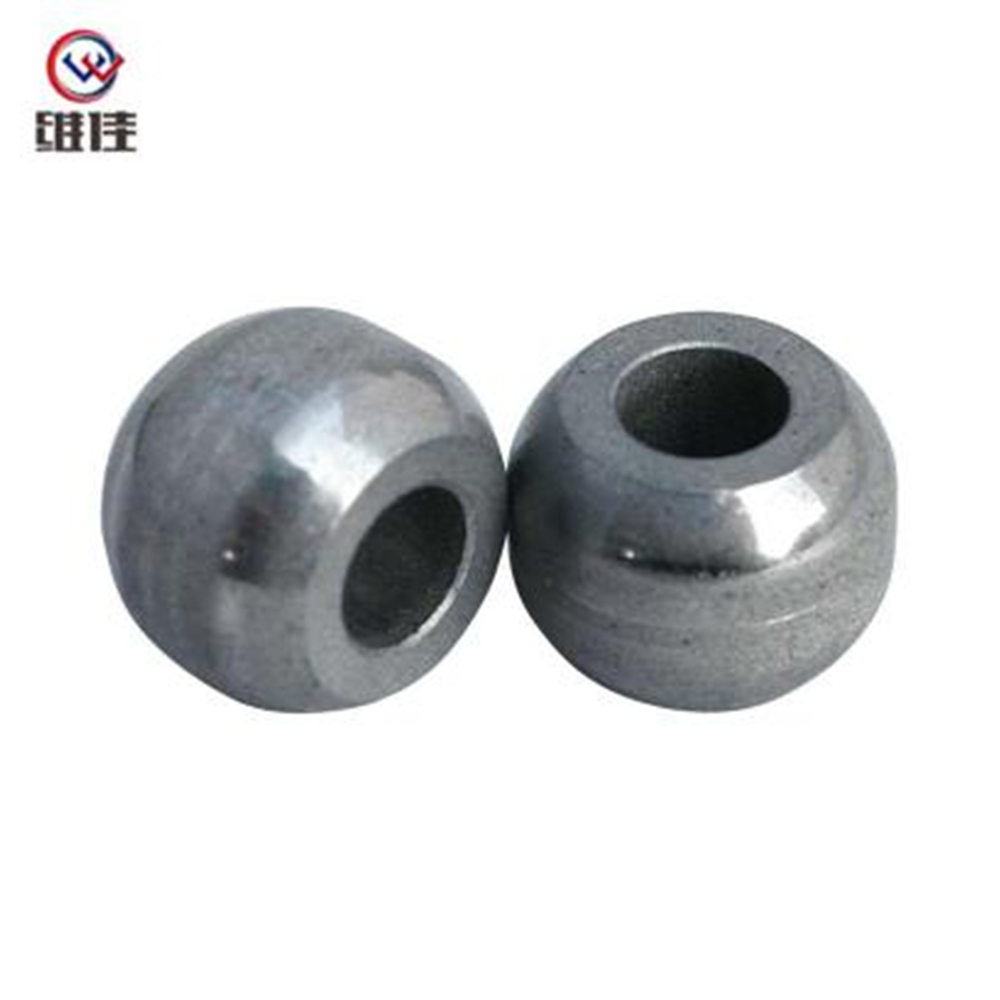
Product Description: High-precision powder metallurgy part (S14*7*10) made of iron material from Jiande Wefine, customized PM components with strict tolerance control.
See Details -
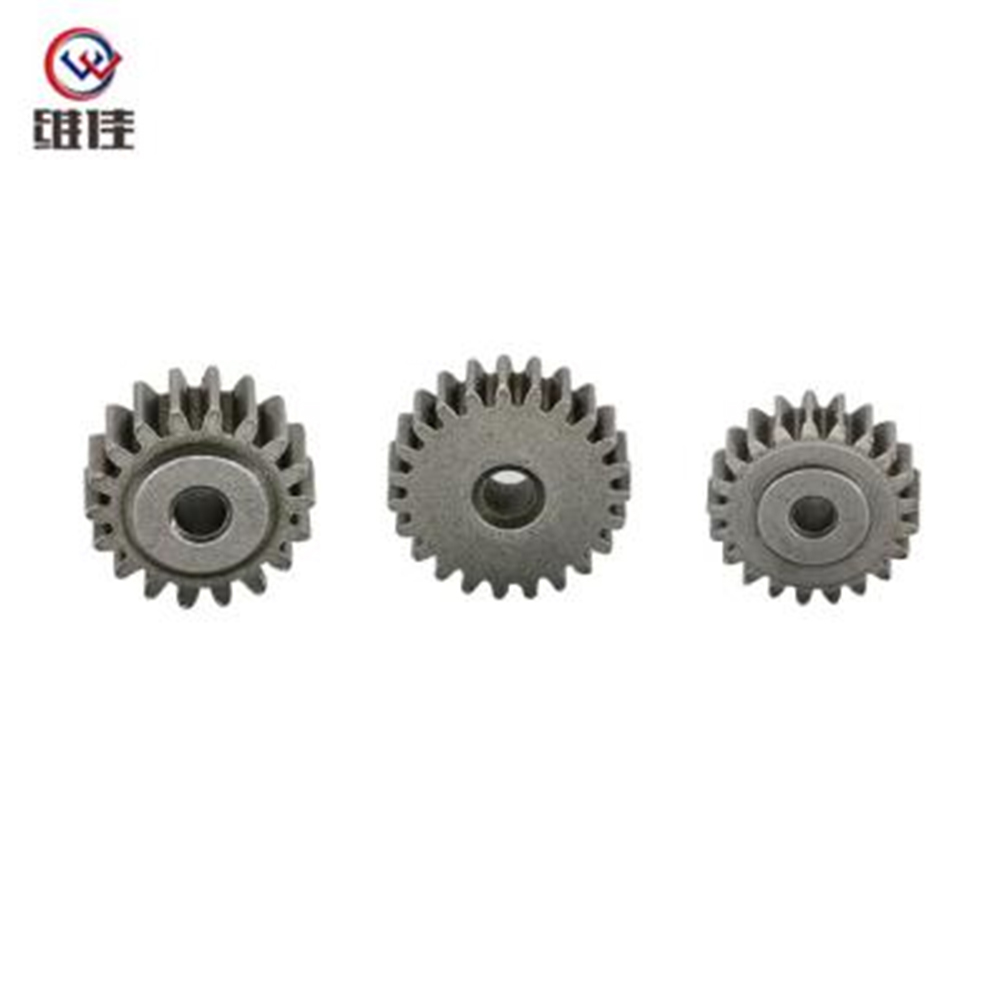
Description: Custom powder metallurgy planetary gear with high precision, wear resistance for automotive, industrial machinery & home appliances. OEM/ODM supported.
See Details -
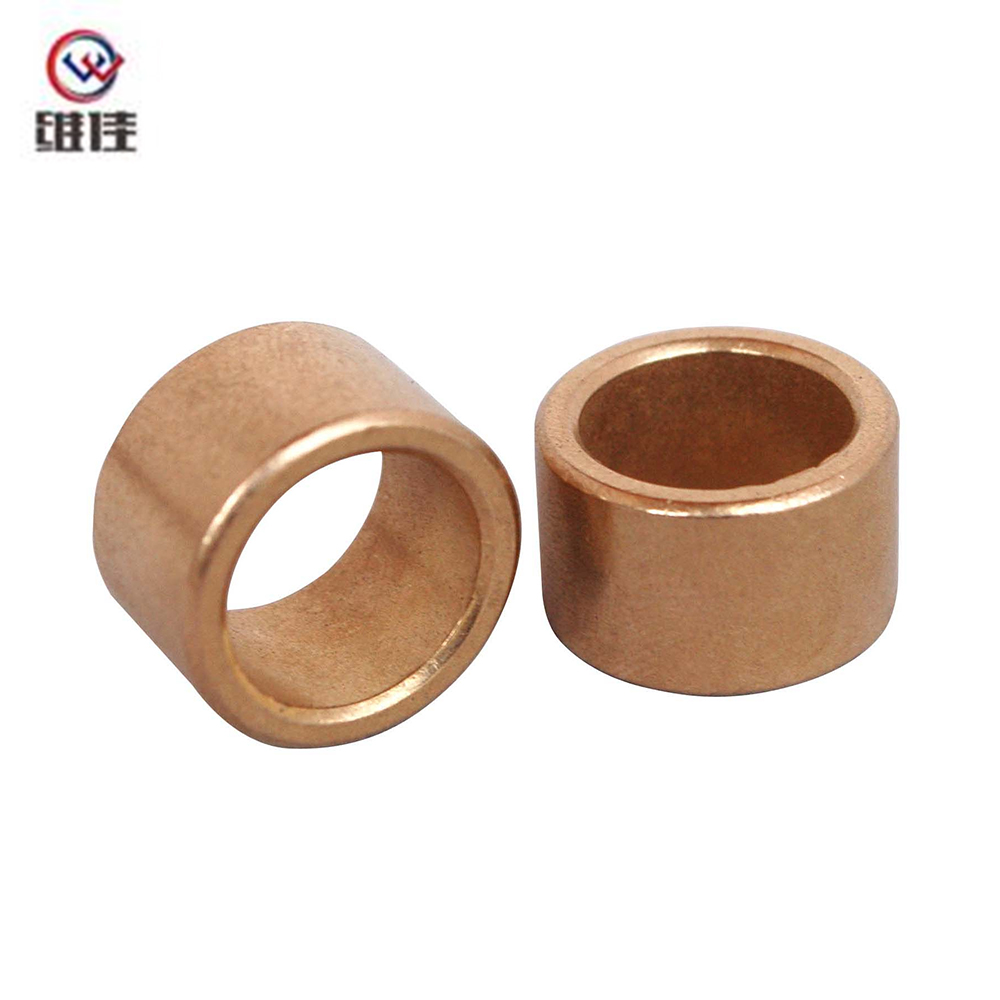
This copper-based powder metallurgy bushing is manufactured through an integrated process of compaction, sintering, sizing, and oil impregnation. It features excellent wear resistance and self-lubrica...
See Details -
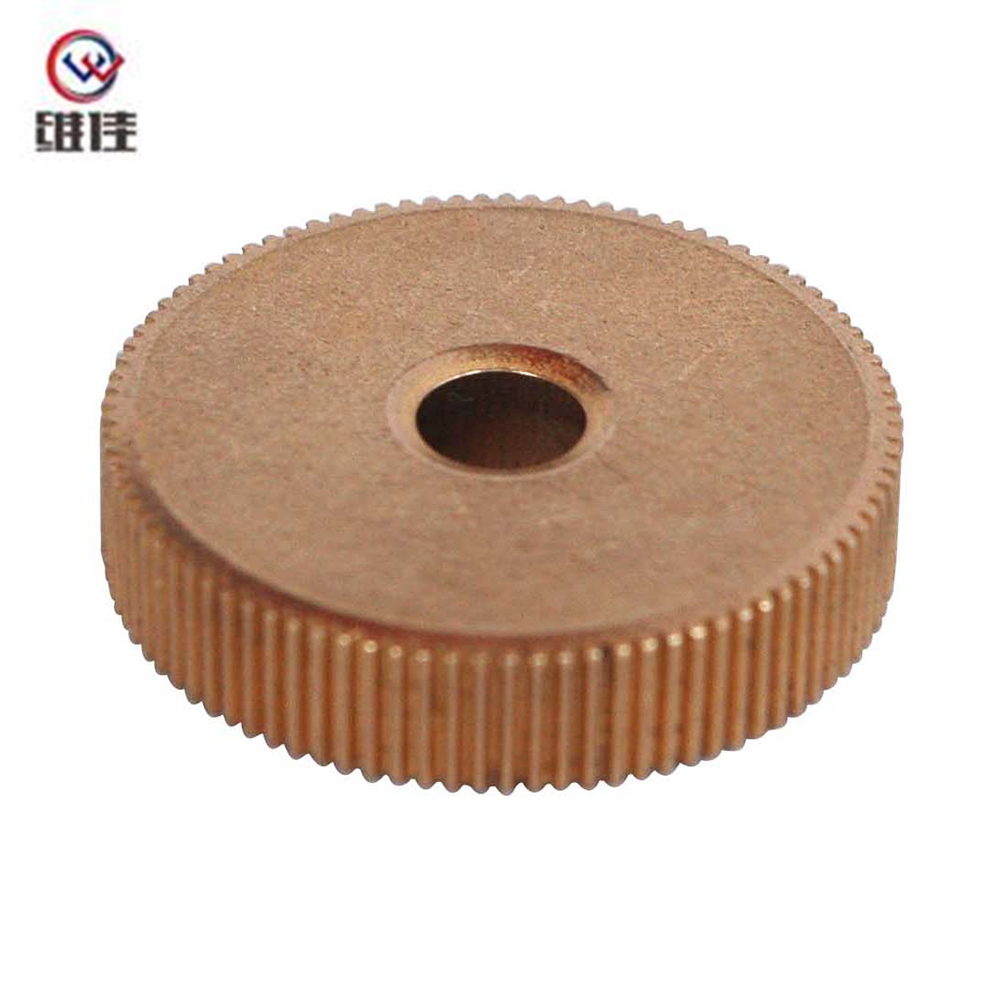
This 4×11.5×5.2mm powder metallurgy gear is manufactured through a precise press-sinter-through hole-oil impregnation process, with strict control of press density (6.7–6.8g/cm³) and sintering tempera...
See Details
Copyright © Jiande Welfine Technology Co., Ltd. All Rights Reserved. Custom Self-lubricating Sintered Bushing Manufacturers
