E-mail us: [email protected]
Tel: +86-15239857375
 English
 中文简体


 Home / Author / Shen Yiruo — Senior After-Sales Service Manager / Precision Sintered Components for Heavy-Duty Forklift Systems
Precision Sintered Components for Heavy-Duty Forklift Systems
 2026.10.22
 Shen Yiruo — Senior After-Sales Service Manager
Content
- 1 Product Overview
- 2 Basic Product Parameters
- 3 Why Forklift Components Require High Precision
- 4 Material Advantages of FeCu20
- 5 Complete Manufacturing Process
- 6 Quality Control and Testing
- 7 Performance Advantages Over Conventional Alternatives
- 8 Manufacturing Comparison
- 9 Application Areas in Forklift Systems
- 10 Company Manufacturing Strengths
- 11 Customization and Customer Support
- 12 Installation and Operating Considerations
- 13 Environmental and Economic Benefits
- 14 How to Select the Correct Sintered Component
- 15 Why This Product Is a Competitive Choice
- 16 Frequently Asked Questions
- 16.1 What is the main function of this forklift component?
- 16.2 What material is used?
- 16.3 What is the purpose of HD460 oil impregnation?
- 16.4 Can the component be customized?
- 16.5 Can the manufacturer produce samples before mass production?
- 16.6 What manufacturing processes are used?
- 16.7 How does powder metallurgy compare with conventional machining?
- 16.8 What quality certifications does the manufacturer have?
- 16.9 What inspections are available?
- 16.10 Is the component suitable for every forklift application?
- 16.11 How should the component be stored?
- 16.12 What information should be provided for a quotation?
- 17 Conclusion
- 18 References
- 19 Product: Sumitomo Forklift Component
Modern forklift trucks operate in demanding environments where components are exposed to high loads, repeated vibration, frequent starts and stops, impact forces, dust, temperature changes, and long operating cycles. In these conditions, a small bearing, bushing, or transmission support component can have a significant effect on equipment reliability. Dimensional variation, insufficient wear resistance, poor lubrication, or inadequate surface quality may lead to excessive friction, noise, unplanned maintenance, and premature system failure.
Precision powder metallurgy components provide an effective solution for these demanding applications. By combining controlled metal powder selection, precision compaction, high-temperature sintering, heat treatment, machining, drilling, and oil impregnation, manufacturers can produce parts with stable dimensions, consistent mechanical properties, and dependable self-lubricating performance.
This article examines a precision iron-based powder metallurgy component developed for forklift applications. The component is manufactured from FeCu20 material and impregnated with HD460 oil. It is designed for use in transmission systems, motion-support assemblies, self-lubricating bearing positions, and other areas requiring reliable load support and controlled friction. The discussion also explains how advanced manufacturing processes, inspection systems, and customization capabilities improve product quality and provide advantages over conventional machined alternatives.
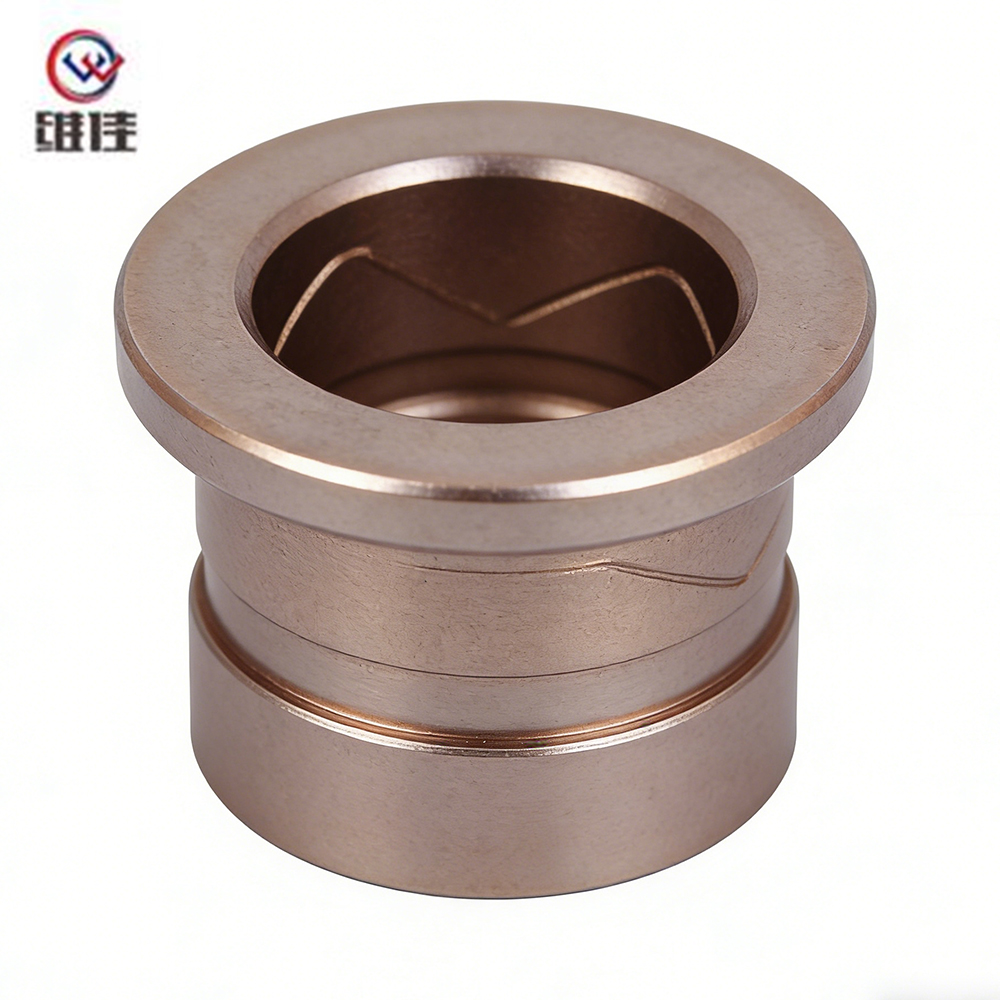
Sumitomo Forklift Component
Product Overview
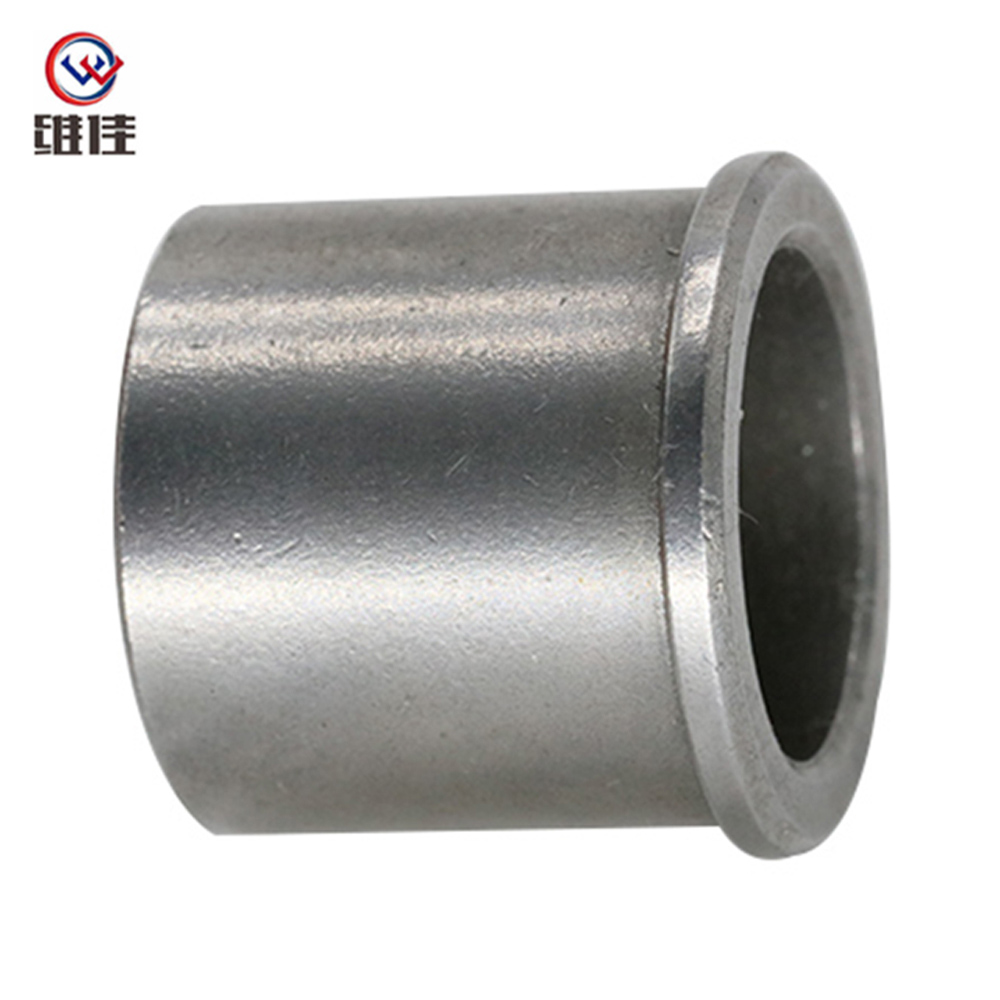
The product is a precision powder metallurgy structural and bearing component designed for heavy-duty forklift systems. It belongs to the category of iron-based oil-impregnated bearings and bushings, although its final geometry and function may be adapted for different transmission, support, or motion-control positions.
The component uses FeCu20, a high-performance iron-copper-based powder metallurgy material. This material provides a useful combination of strength, hardness, wear resistance, fatigue performance, and dimensional stability. Its porous structure can also retain lubricating oil after impregnation, allowing the component to provide self-lubricating performance during operation.
The standard product is manufactured with dimensions of approximately 30.140 by 48.535 millimeters, subject to drawing, application, and production requirements. Because powder metallurgy parts are produced using dedicated tooling and controlled secondary processing, dimensions can be adjusted to match the customer’s assembly design. Production can be arranged for trial samples, small batches, or stable mass supply.
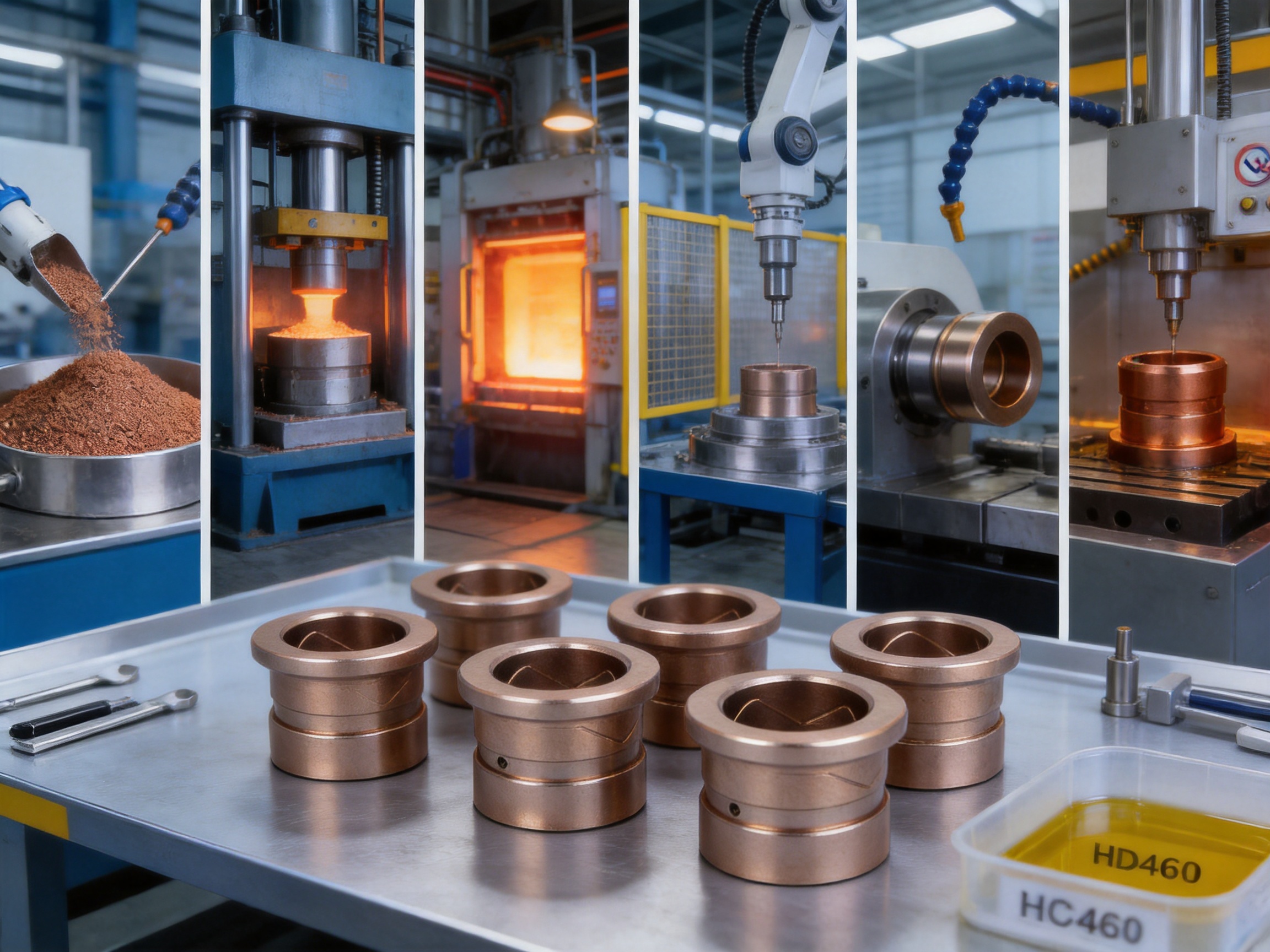
The manufacturing route includes powder pressing, sintering, heat treatment, precision machining, drilling, HD460 oil impregnation, inspection, and protective packaging. Each stage contributes to the final performance of the component. Pressing establishes the basic shape and density distribution. Sintering creates metallurgical bonding between powder particles. Heat treatment improves hardness and wear resistance. Machining and drilling provide the required dimensional accuracy and functional features. Oil impregnation fills interconnected pores with lubricant and supports long-term low-friction operation.
Basic Product Parameters
| Parameter | Specification or Description |
|---|---|
| Product type | Precision powder metallurgy structural and bearing component |
| Material | FeCu20 iron-copper-based powder metallurgy material |
| Typical dimensions | Approximately 30.140 × 48.535 millimeters, subject to drawing confirmation |
| Manufacturing method | Pressing, sintering, heat treatment, machining, drilling, and oil impregnation |
| Impregnation oil | HD460 oil |
| Application | Forklift transmission, support, motion, and self-lubricating bearing positions |
| Quality requirements | OEM drawing requirements and applicable forklift industry standards |
| Supply format | Samples, small batches, and mass production |
| Customization | Available according to customer drawings, samples, material requirements, and operating conditions |
Why Forklift Components Require High Precision
Forklift systems are exposed to operating conditions that are more severe than those found in many light-duty machines. A forklift may repeatedly accelerate, brake, reverse, lift, lower, steer, and carry uneven loads throughout a working shift. These actions create cyclical forces in the transmission, drive mechanism, hydraulic system, steering assembly, and supporting structures.
Components installed in these systems must maintain their dimensions while handling contact pressure and vibration. A bushing with excessive internal clearance may create movement, noise, and uneven load distribution. A part that is too tight may increase friction and operating temperature. An incorrectly positioned hole can interfere with lubrication or assembly. A component with inconsistent density may have localized weak areas that reduce fatigue life.
Precision is therefore important for more than simple fit. It influences alignment, load transfer, friction behavior, lubrication retention, heat generation, vibration control, and service life. Powder metallurgy provides a practical way to manage these requirements because material composition, forming pressure, density, pore structure, and post-processing can be controlled throughout production.
Dimensional Accuracy
Accurate dimensions help the component fit correctly with shafts, housings, pins, gears, and adjacent structural parts. Controlled sizing and machining can improve bore accuracy, outside diameter consistency, length, hole position, concentricity, and roundness. Stable dimensions reduce the risk of assembly problems and help maintain the intended mechanical clearance.
Wear Resistance
Forklift components can experience sliding, oscillating, or rotating movement. FeCu20 material offers a useful balance of hardness and toughness for these conditions. Heat treatment can further improve the surface and core properties according to the application. When combined with oil impregnation, the material can support lower-friction movement and reduced abrasive wear.
Lubrication Stability
Oil-impregnated powder metallurgy components contain interconnected pores that act as small lubricant reservoirs. HD460 oil is introduced into the porous structure through a controlled impregnation process. During operation, changes in temperature and contact conditions can allow lubricant to reach the working surface. This supports self-lubricating operation and reduces dependence on frequent external lubrication.
Load and Fatigue Performance
Forklift components must withstand repeated loads rather than only a single static force. Consistent powder blending, uniform compaction, and controlled sintering help create a stable microstructure. This reduces variation between parts and supports predictable performance under repeated loading and vibration.
Material Advantages of FeCu20
FeCu20 is an iron-copper-based powder metallurgy material selected for applications that require strength, wear resistance, dimensional stability, and reliable processing. The iron base contributes to structural strength and load-bearing capability, while copper supports sintering behavior and can improve certain friction, thermal, and machinability characteristics.
The material is suitable for components that must combine mechanical durability with controlled friction. Compared with a basic low-strength iron powder material, an iron-copper composition can provide improved performance for demanding transmission and support applications when the composition, density, heat treatment, and final geometry are properly controlled.
Strength and Hardness
The component is designed to resist deformation during assembly and operation. Appropriate compaction and sintering create metallurgical bonding between powder particles, while heat treatment can be used to optimize hardness and toughness. The final balance depends on geometry, density, load conditions, and customer requirements.
Wear and Impact Resistance
Forklift systems may encounter sudden load changes and impact during handling operations. A suitable iron-copper material can provide resistance to surface damage and mechanical shock. Its performance is further supported by accurate machining and oil impregnation, which help reduce direct metal-to-metal contact.
Dimensional Stability
Dimensional stability is essential when a component must maintain a controlled clearance or precise relationship with mating parts. Controlled sintering, sizing, heat treatment, and machining reduce dimensional variation. Stable production conditions also help maintain consistency from one batch to another.
Processing Compatibility
FeCu20 can be formed through powder pressing and then processed through standard secondary operations such as turning, drilling, sizing, and surface finishing. This flexibility enables the manufacturer to produce near-net-shape parts while adding precision features where the application requires them.
Complete Manufacturing Process
The quality of a sintered forklift component is determined by the complete process rather than by any single operation. A reliable manufacturing system connects material preparation, tooling, pressing, sintering, heat treatment, machining, impregnation, inspection, and packaging. Process parameters must be documented and controlled so that the finished component provides stable performance throughout its service life.
1. Powder Selection and Preparation
Production begins with the selection of iron-based and copper-containing powders suitable for the required material grade. Powder characteristics such as particle size distribution, apparent density, flowability, chemical composition, and compressibility affect the quality of the pressed compact.
Powder consistency is important because variations can influence filling behavior, density distribution, dimensional change during sintering, and final mechanical properties. Before pressing, the powders are blended with carefully controlled proportions. Mixing must achieve a uniform distribution of alloying elements and any approved processing additives.
Uniform blending supports consistent density and reduces the risk of local composition differences. It also helps ensure that components produced at different times have similar strength, hardness, porosity, and dimensional behavior.
2. Precision Tooling and Powder Pressing
Powder pressing determines the basic shape of the part and establishes the initial compact density. A precision mold is filled with the prepared powder, and a mechanical or hydraulic press applies controlled force. Tool design is especially important for components with stepped profiles, internal bores, grooves, or holes.
Pressing pressure may be selected within a typical industrial range of approximately 400 to 800 MPa, depending on the material, geometry, density target, and tooling design. The objective is not simply to apply high pressure. The objective is to distribute pressure as evenly as possible and avoid density gradients that could cause distortion or weak zones during sintering.
Tooling maintenance is also essential. Worn punches, dies, or guiding components can affect dimensions and lead to burrs, cracks, uneven filling, or inconsistent density. Regular tooling inspection supports stable production and improves the repeatability of mass-manufactured parts.
3. Controlled-Atmosphere Sintering
After pressing, the compact is heated in a controlled-atmosphere sintering furnace. Sintering creates metallurgical bonds between neighboring powder particles and develops the mechanical structure of the component.
A typical sintering temperature for iron-based powder metallurgy components may fall within approximately 1,100 to 1,250 degrees Celsius, depending on the exact material and production specification. Furnace temperature uniformity, heating rate, holding time, cooling conditions, and protective atmosphere must be controlled together.
Hydrogen- or nitrogen-based protective atmospheres may be used to reduce oxidation and support the intended chemical reactions. Correct atmosphere control helps preserve surface quality and promotes stable bonding. Insufficient sintering can result in low strength and poor wear resistance, while unsuitable temperature or excessive time may cause distortion, abnormal grain growth, or dimensional instability.
For a forklift component, sintering must create a structure capable of handling repeated mechanical stress while preserving the porosity required for oil impregnation. The process is therefore optimized to balance strength, dimensional stability, machinability, and lubricant-retention capability.
4. Heat Treatment
Heat treatment is used to adjust the hardness, toughness, wear resistance, and fatigue behavior of the sintered material. The appropriate treatment depends on the component’s location, contact conditions, load, speed, and required service life.
Heat treatment can improve the working surface while maintaining adequate toughness in the body of the component. It may also stabilize dimensions before final machining. Careful control of heating, holding, cooling, and handling reduces the risk of distortion and helps maintain predictable results.
5. Precision Machining
Powder pressing and sintering can produce a near-net-shape component, but some features require secondary machining. Precision machining may be applied to the bore, outside diameter, end faces, grooves, steps, or other functional surfaces.
Machining improves fit and surface finish while allowing the manufacturer to meet drawing tolerances that cannot be achieved by pressing alone. Typical dimensional control may reach approximately ±0.01 to ±0.05 millimeters depending on the feature, material, geometry, and inspection method. Surface roughness may be controlled within a range such as Ra 0.8 to 3.2 micrometers where required.
Maintaining a suitable surface finish is important for sliding and rotating interfaces. Excessive roughness may accelerate wear, while an inappropriate finishing method may close pores or reduce oil-retention performance. Machining parameters are therefore selected to meet both dimensional and lubrication requirements.
6. Precision Drilling
Drilling creates holes used for assembly, alignment, fastening, oil circulation, or other functional requirements. Hole position, diameter, perpendicularity, and edge quality must be controlled carefully.
In some components, drilling may form part of an internal lubrication path or provide a feature required for installation. An incorrectly positioned or partially blocked hole may reduce assembly accuracy or interfere with lubricant distribution. Inspection after drilling helps verify that all required passages and openings meet the drawing specification.
7. HD460 Oil Impregnation
Oil impregnation is a defining step for self-lubricating powder metallurgy bushings and related components. After sintering and machining, the component contains a controlled porous network. The part is placed in HD460 oil under suitable process conditions so that the oil enters the internal pores.
The impregnated oil acts as a reserve lubricant. During service, the oil can migrate toward the working surface as friction and temperature conditions change. When the component cools or operating conditions become less demanding, some oil may return toward the internal pores. This reservoir effect supports stable lubrication over extended operating periods.
Oil impregnation can reduce friction, noise, and wear while lowering the need for frequent maintenance. The actual performance depends on load, speed, clearance, temperature, surface condition, oil compatibility, and operating environment. For this reason, the impregnation process and lubricant selection should be matched to the customer’s equipment conditions.
8. Final Inspection and Packaging
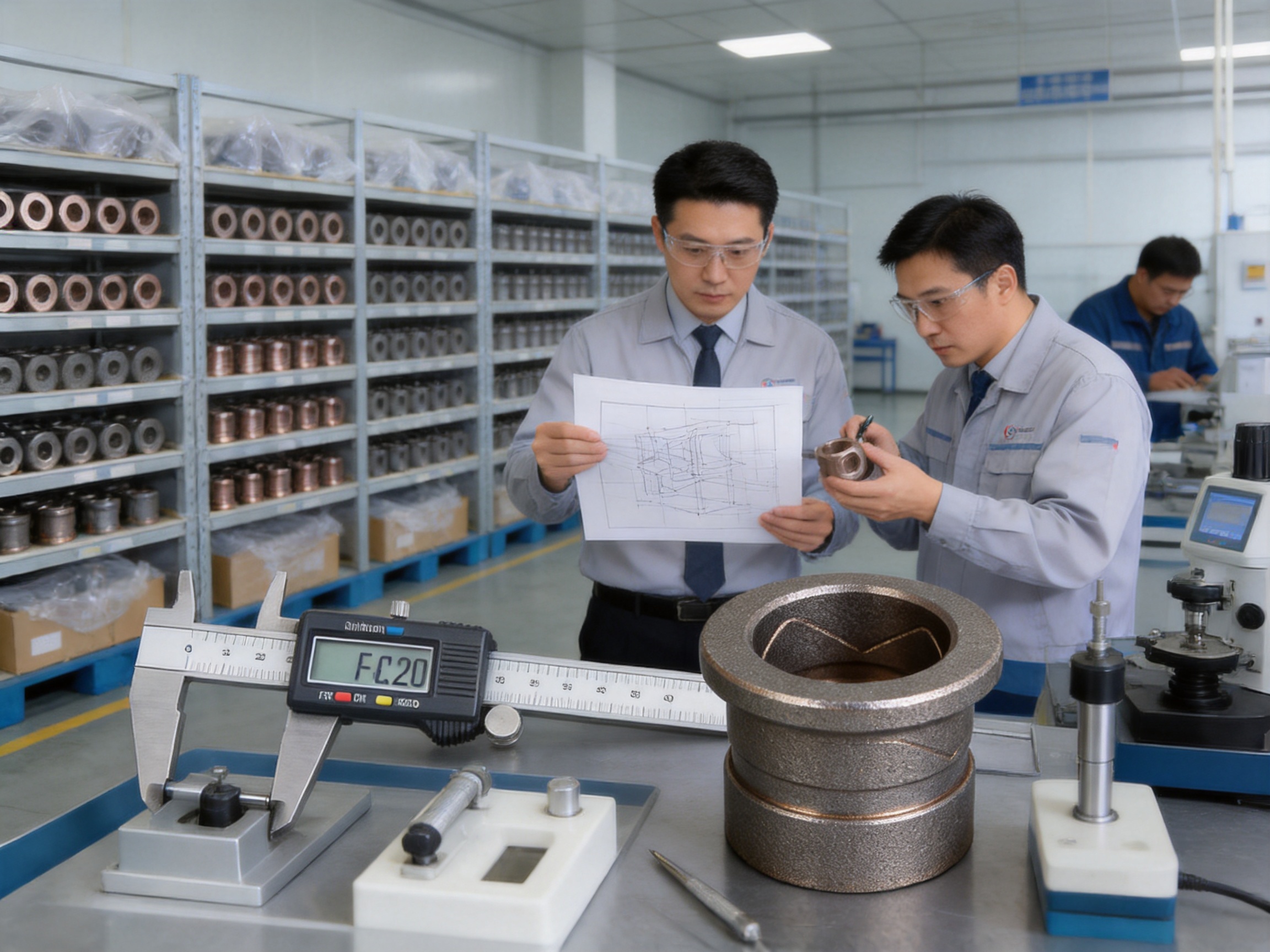
After impregnation, the components are inspected to verify dimensions, appearance, oil condition, and functional requirements. Parts may be checked for internal and external dimensions, roundness, concentricity, hole location, density, hardness, surface quality, and material characteristics.
Packaging is designed to protect the components against rust, impact, moisture, dust, and oil leakage during transportation and storage. Inner packaging may use shock-resistant and moisture-resistant materials, while cartons or pallets provide protection during long-distance shipment. Proper packaging is particularly important for precision parts because damage to a finished surface can affect assembly and performance.
Quality Control and Testing
Reliable production requires a quality system that covers raw materials, tooling, process parameters, in-process inspection, final testing, and shipment approval. A component that appears visually acceptable may still have a density variation, dimensional issue, insufficient hardness, or incomplete impregnation. Multiple inspection methods are therefore used to confirm product conformity.
Dimensional Inspection
Precision measuring instruments are used to verify critical dimensions. Depending on the part design, inspection may include bore diameter, outer diameter, length, thickness, hole diameter, hole position, concentricity, roundness, and parallelism.
Dimensional inspection can be performed during production as well as after final processing. In-process measurements help identify drift before a large quantity of nonconforming parts is produced. Final inspection confirms that completed parts meet the approved drawing and quality requirements.
Material and Density Testing
Material composition, density, and porosity influence mechanical and lubrication performance. Testing helps verify that the FeCu20 material is within the specified composition range and that the component has the required density distribution.
Density control is especially important for oil-impregnated components. Excessive density may reduce the pore volume available for lubricant, while insufficient density may reduce strength. The correct balance depends on the application and is established through product design and process validation.
Hardness and Mechanical Verification
Hardness testing helps confirm the result of heat treatment and provides an indication of resistance to indentation and wear. Additional mechanical testing may be used during development or qualification to evaluate tensile strength, impact resistance, fatigue behavior, or compression performance.
Testing requirements can be adjusted according to the customer’s quality plan. For critical applications, sample-based laboratory testing may be combined with routine production checks and traceability records.
Oil Impregnation Verification
Oil impregnation must be sufficient to provide the intended lubrication benefit without creating unacceptable leakage during handling or operation. Verification may include oil uptake, appearance, weight change, storage behavior, and functional friction or wear testing.
Where required, components can be evaluated under representative load, speed, temperature, and environmental conditions. Such testing helps confirm compatibility between the impregnated component and the mating shaft or housing.
Final Appearance and Packaging Inspection
Finished components are checked for cracks, burrs, corrosion, deformation, machining damage, contamination, and other visible defects. Packaging is inspected to ensure that the quantity, identification, protection, and documentation are correct before shipment.
Performance Advantages Over Conventional Alternatives
Powder metallurgy components offer several advantages compared with components produced entirely through conventional machining from solid bar or tube stock. The best manufacturing method depends on part geometry, volume, material, tolerance, and application requirements. However, for repeat production of small and medium-sized precision components, powder metallurgy can provide important technical and economic benefits.
Near-Net-Shape Production
Powder pressing forms much of the final geometry before machining. This reduces the amount of material that must be removed during secondary processing. Conventional machining often begins with a larger solid blank and removes a substantial portion of the material. Powder metallurgy uses material more efficiently and can reduce machining time for suitable geometries.
Consistent Mass Production
Once the tooling and process parameters have been validated, powder pressing can produce large quantities of components with highly repeatable shapes. Controlled sintering and automated or standardized secondary operations further improve batch consistency.
This is valuable for forklift manufacturers, distributors, repair networks, and equipment service organizations that require stable long-term supply. Consistency helps simplify assembly, reduce sorting, and limit the risk of variation between replacement parts.
Integrated Porosity for Self-Lubrication
Unlike ordinary fully dense machined metal parts, oil-impregnated powder metallurgy components can be designed with a controlled pore structure. These pores store lubricant internally and support self-lubricating operation.
This feature can reduce the need for external grease application and help maintain lubrication in locations where regular maintenance is difficult. It can also reduce operating noise and friction when the component is correctly matched to the load, speed, and mating surface.
Material and Design Flexibility
Powder metallurgy permits the development of iron-based, copper-containing, bronze-based, and other compositions for different combinations of strength, friction, corrosion resistance, and thermal performance. Geometry can also be adapted through tooling and secondary operations.
For forklift components, this flexibility allows the manufacturer to evaluate material density, heat treatment, oil type, clearance, and surface finish according to the actual working conditions.
Reduced Material Waste
Near-net-shape forming generally produces less cutting waste than machining a component from a large billet. Improved material utilization can contribute to lower production cost and more efficient use of raw materials, especially in high-volume production.
Stable Functional Performance
The combination of controlled material composition, accurate geometry, heat treatment, and oil impregnation produces a component designed for stable friction and wear behavior. This can help reduce maintenance frequency and extend the service life of mating parts when the complete assembly is properly engineered.
Manufacturing Comparison
| Performance Factor | Precision Powder Metallurgy | Conventional Machining |
|---|---|---|
| Material utilization | High, because the pressed shape is close to the final geometry | Often lower because material is removed from a larger blank |
| Mass-production consistency | High after tooling and process validation | Depends strongly on machining setup and operator or automation control |
| Self-lubrication | Available through controlled porosity and oil impregnation | Not inherent in a fully dense machined part |
| Complex repeat geometry | Suitable for many stepped, grooved, and formed profiles | May require multiple operations and fixtures |
| Dimensional finishing | Pressing followed by sizing and precision machining | Achieved mainly through cutting, grinding, or honing |
| Production efficiency | Efficient for stable medium- and high-volume demand | Useful for prototypes, low-volume parts, and geometries unsuitable for pressing |
| Lubrication maintenance | Can reduce the need for external lubrication | Usually requires separate lubrication unless another design is used |
| Part repeatability | Supported by controlled powder, tooling, and furnace conditions | Supported by machining control and repeated tool calibration |
Application Areas in Forklift Systems
The component can be used in various forklift assemblies where controlled movement, load support, and low-friction operation are required. The exact position depends on the equipment design and the approved engineering drawing.
Transmission Systems
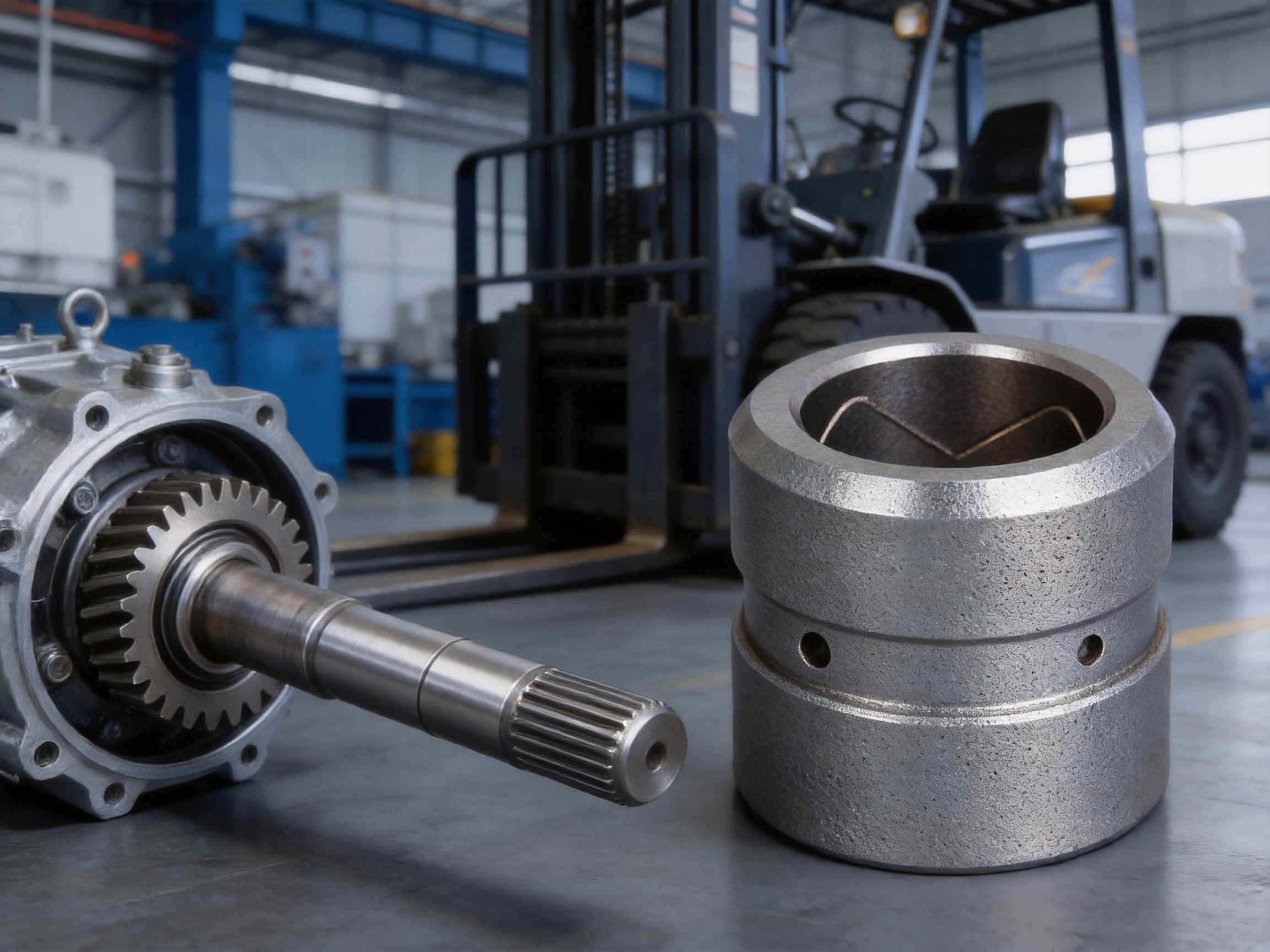
Transmission components operate under repeated torque, vibration, and temperature changes. A precision bushing or support component can help maintain shaft alignment and reduce friction between moving elements. Accurate dimensions are essential because excessive clearance may affect gear engagement or create unwanted movement.
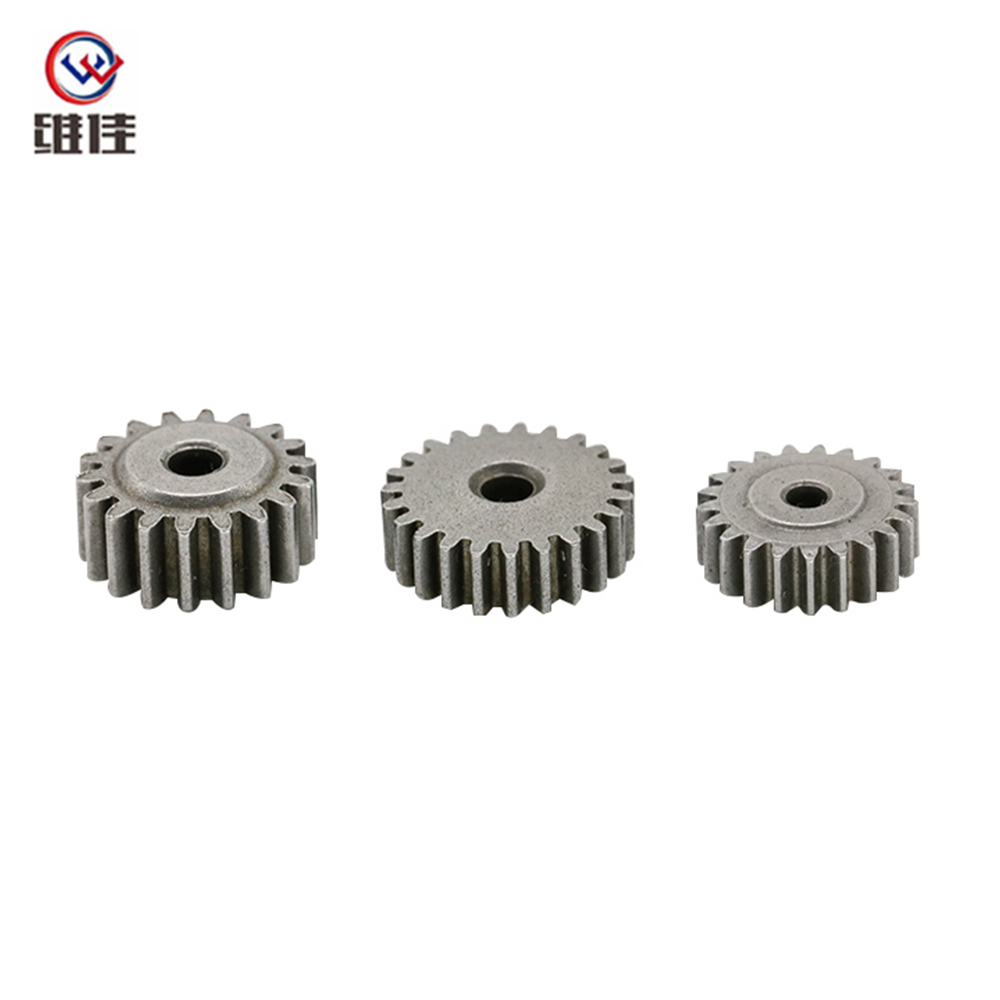
Power Transmission Matching Parts
Forklift drive systems rely on coordinated movement between gears, shafts, pins, and support structures. A sintered component can provide a stable interface and help distribute load within the assembly. Its self-lubricating capability is useful where access for routine maintenance is limited.
Hydraulic and Motion-Support Assemblies
Hydraulic systems and lifting mechanisms contain moving pins, linkages, and supporting joints. Properly designed powder metallurgy bushings may be used in selected positions to reduce friction and wear. The material and oil specification should be confirmed against the pressure, speed, temperature, and contamination conditions of the application.
Steering and Drive Mechanisms
Steering and drive mechanisms require controlled movement and resistance to vibration. A dimensionally stable component can help maintain alignment and reduce looseness in the assembly. Surface finish, roundness, and internal clearance are particularly important for smooth movement.
Load-Bearing Structures
Some structural and support positions experience static load combined with oscillating or intermittent movement. FeCu20 provides a strong base material for such applications when the part is designed with suitable density and geometry. Engineering validation should be completed for high-impact or safety-critical positions.
Company Manufacturing Strengths
Jiande Welfine Technology Co., Ltd. was established in 2001 and specializes in powder metallurgy sintering and related precision machining. The company integrates research and development, production, and sales, enabling it to coordinate product design, tooling, process development, manufacturing, inspection, and customer support.
The company operates a modern production base of approximately 13,039 square meters and has more than 150 skilled employees. Its manufacturing resources include high-efficiency presses, high-temperature sintering furnaces, precision forming equipment, machining equipment, and testing instruments. This combination of production and inspection capability supports stable manufacturing for both standard and customized components.
More than two decades of industry experience provide a foundation for handling different powder metallurgy requirements. The company’s products include powder metallurgy bushings, self-lubricating bushings, structural parts, and other precision components for industrial applications.
Integrated Research and Production
Product development benefits from close coordination between engineering and production teams. The company can review customer drawings, samples, operating conditions, material requirements, tolerances, and expected service life before establishing a manufacturing route.
This integrated approach helps identify potential issues at an early stage. For example, the engineering team may evaluate whether a feature should be formed directly in the mold, added through machining, or modified to improve tool life and dimensional stability. It may also recommend changes to density, oil type, clearance, or heat treatment according to the intended application.
OEM and ODM Customization
Customized production is available based on customer drawings and samples. The customization process may cover dimensions, hole patterns, grooves, material composition, density, heat treatment, surface finish, oil impregnation, packaging, and inspection requirements.
OEM and ODM support is useful for equipment manufacturers and replacement-part suppliers that require a component to fit an existing assembly. It also enables customers to develop improved versions of existing components with better wear resistance, lower friction, reduced noise, or longer maintenance intervals.
Quality Management
The company has passed ISO 9001:2015 and IATF 16949:2016 certifications. These certifications support structured quality management, process documentation, corrective action, traceability, and continuous improvement. Certification alone does not replace product-specific validation, but it provides an organized framework for managing manufacturing consistency.
Quality priorities include raw-material control, equipment maintenance, process monitoring, dimensional inspection, material testing, oil impregnation verification, and final product approval. These controls are intended to ensure that components remain reliable and consistent throughout long-term supply programs.
Stable Supply Capability
A suitable supplier must do more than manufacture an acceptable sample. It must maintain the same performance across repeated production batches. The combination of dedicated equipment, experienced personnel, process documentation, inspection resources, and production planning helps support stable supply for replacement parts and original equipment programs.
Customization and Customer Support
Forklift manufacturers and service-part suppliers often require components that differ from standard catalog dimensions. Customization may be necessary because of a particular shaft diameter, housing size, load rating, clearance, hole position, operating temperature, or lubrication requirement.
The customer can provide a technical drawing, physical sample, three-dimensional model, or application description. The manufacturer can then review the component and confirm the material, process route, tooling requirements, tolerances, inspection plan, and estimated production schedule.
Drawing-Based Development
When a complete drawing is available, the engineering team can evaluate all critical dimensions and functional surfaces. Special attention is given to mating features, tolerances, surface finish, edge treatment, holes, grooves, and requirements that influence oil retention.
Sample-Based Development
Some customers have an existing part but do not have a complete drawing. In this situation, a sample can be measured and analyzed to establish a production specification. Additional information about the equipment, load, speed, temperature, lubrication method, and failure history helps the manufacturer recommend suitable material and process conditions.
Material and Process Optimization
The component can be optimized for different priorities. A heavy-load application may require increased density or a modified heat treatment. A low-speed oscillating application may require a different clearance and surface finish. A high-volume application may benefit from tooling changes that reduce secondary machining. An application with limited maintenance access may require special attention to oil impregnation and lubricant retention.
Sampling and Validation
Sample production allows the customer to evaluate fit, installation, movement, noise, temperature, wear, and compatibility with the existing assembly. Depending on the application, validation may include dimensional inspection, hardness testing, functional testing, endurance testing, or comparison with the original component.
After sample approval, production can move to a small batch or mass-production stage. Process records and inspection criteria should remain consistent between sample development and regular manufacturing.
Installation and Operating Considerations
Even a precisely manufactured component must be installed and operated correctly. The mating shaft or housing should be inspected for damage, excessive roughness, incorrect diameter, misalignment, or contamination. Installation force should be applied evenly and in the correct direction to prevent deformation.
Clearance must match the application conditions. A clearance that is appropriate at room temperature may not be suitable when the assembly experiences high operating temperatures or significant load variation. The customer should confirm the recommended fit and clearance before production approval.
The mating surface should be clean and free from abrasive particles. Foreign material can damage the working surface and interfere with oil movement. Although an oil-impregnated component provides internal lubrication, the initial assembly procedure should follow the equipment manufacturer’s instructions.
Operating conditions should remain within the design range. Excessive load, speed, temperature, misalignment, shock, or contamination may reduce service life. If the component is installed in a position subject to water, chemicals, abrasive dust, or corrosive media, the material and protection requirements should be reviewed in advance.
Environmental and Economic Benefits
Powder metallurgy can support efficient material use because the pressed compact is close to the final shape. Reduced machining waste can lower material consumption and improve production efficiency. This is particularly valuable for large-volume components where small savings per part accumulate over time.
Self-lubricating performance can also reduce maintenance requirements. If an application is suitable for oil-impregnated operation, the component may require less frequent external lubrication. Lower maintenance frequency can reduce labor, downtime, lubricant consumption, and the risk of missed lubrication intervals.
Longer component life can provide further economic benefits by reducing replacement frequency and protecting mating shafts, housings, and other assembly parts from accelerated wear. These benefits depend on correct design, installation, and operating conditions, but they are important reasons why powder metallurgy bushings are widely used in industrial equipment.
How to Select the Correct Sintered Component
Selection should begin with the function of the part and the conditions in which it operates. The following information helps determine whether the FeCu20 oil-impregnated component is suitable:
- Equipment model and assembly position
- Internal and external dimensions
- Load type and maximum load
- Rotational or oscillating speed
- Operating temperature
- Required clearance and fit
- Mating shaft or housing material
- Surface roughness and hardness of mating parts
- Presence of dust, water, chemicals, or vibration
- Required service life and maintenance interval
- Annual demand and expected production volume
- Inspection, packaging, and traceability requirements
Supplying this information allows the manufacturer to confirm the material, density, oil type, geometry, machining route, and testing plan. When the component is a direct replacement, the original part and its failure history can provide useful information for improvement.
Why This Product Is a Competitive Choice
The product combines a load-supporting FeCu20 structure with the practical benefits of oil impregnation. Its design is directed toward forklift systems that require consistent dimensions, wear resistance, low-friction movement, and reliable performance during extended operation.
Its competitive advantages include near-net-shape powder metallurgy production, controlled material composition, high-temperature sintering, heat-treatment capability, precision machining, drilled functional features, HD460 oil impregnation, and inspection before shipment. These features provide a more complete solution than a basic pressed part or an untreated machined bushing.
The product is also supported by a supplier with integrated engineering and manufacturing capabilities. Drawing and sample customization, process development, quality certification, modern equipment, experienced personnel, and long-term production experience make it suitable for both original equipment and replacement-part programs.
Compared with lower-control suppliers, a structured manufacturing process can provide better batch consistency and more dependable traceability. Compared with fully machined alternatives, powder metallurgy can provide improved material utilization and inherent oil-retention capability. Compared with generic bushings, a product developed for a defined forklift application can offer better compatibility with the intended assembly.
Frequently Asked Questions
What is the main function of this forklift component?
The component is designed to support controlled movement, load transfer, alignment, and reduced friction in selected forklift transmission, bearing, bushing, structural, or motion-support positions. Its exact function depends on the equipment assembly and approved engineering drawing.
What material is used?
The component is manufactured from FeCu20, an iron-copper-based powder metallurgy material selected for strength, wear resistance, dimensional stability, and compatibility with oil impregnation.
What is the purpose of HD460 oil impregnation?
HD460 oil fills the interconnected pores within the sintered component. These pores act as internal lubricant reservoirs, helping provide self-lubricating performance, reduce friction and noise, and limit wear during suitable operating conditions.
Can the component be customized?
Yes. Customized production is available according to customer drawings, samples, dimensions, hole positions, material requirements, heat-treatment requirements, oil specifications, inspection standards, and packaging needs.
Can the manufacturer produce samples before mass production?
Yes. Sample trials and small-batch production are available. Sample evaluation allows the customer to confirm assembly fit, dimensions, movement, lubrication behavior, noise, and compatibility before long-term production begins.
What manufacturing processes are used?
The standard process includes powder blending, precision pressing, controlled-atmosphere sintering, heat treatment, precision machining, drilling, HD460 oil impregnation, inspection, and protective packaging.
How does powder metallurgy compare with conventional machining?
Powder metallurgy can provide high material utilization, repeatable mass production, near-net-shape forming, and self-lubrication through controlled porosity. Conventional machining remains useful for prototypes, low-volume production, and geometries unsuitable for pressing. The best method depends on the part design, tolerance, material, volume, and performance requirements.
What quality certifications does the manufacturer have?
Jiande Welfine Technology Co., Ltd. has passed ISO 9001:2015 and IATF 16949:2016 certifications. These systems support structured quality management and process control.
What inspections are available?
Inspection may include dimensional measurement, material composition verification, density testing, hardness testing, surface inspection, hole-position verification, oil-impregnation evaluation, and final appearance and packaging checks. The inspection plan can be adjusted to customer requirements.
Is the component suitable for every forklift application?
Not automatically. Suitability depends on load, speed, temperature, clearance, mating materials, lubrication requirements, contamination, and installation conditions. The application should be reviewed by the customer and manufacturer before final approval.
How should the component be stored?
Components should be kept in clean, dry, protected packaging away from moisture, corrosive materials, excessive heat, and impact. The original packaging should remain sealed until the parts are ready for inspection or installation.
What information should be provided for a quotation?
Useful information includes drawings or samples, annual quantity, required material, dimensions, application, equipment model, inspection requirements, packaging requirements, and expected delivery schedule. Operating conditions such as load, speed, temperature, and environment are also valuable.
Conclusion
Precision powder metallurgy components provide an effective combination of strength, dimensional control, wear resistance, and self-lubricating performance for demanding forklift systems. The FeCu20 material used in this product is suited to applications requiring stable mechanical support and reliable friction behavior. HD460 oil impregnation adds an internal lubrication function that can reduce maintenance requirements and help extend service life.
The product’s performance is based on a complete manufacturing chain. Controlled powder preparation establishes material consistency. Precision pressing forms the component with repeatable geometry. Controlled-atmosphere sintering develops metallurgical strength. Heat treatment improves hardness and wear resistance. Machining and drilling produce accurate functional features. Oil impregnation provides lubricant retention, while inspection and protective packaging preserve quality through delivery.
Jiande Welfine Technology Co., Ltd. supports this product with more than 20 years of powder metallurgy experience, an approximately 13,039-square-meter production base, more than 150 skilled employees, OEM and ODM customization, modern processing equipment, and ISO 9001:2015 and IATF 16949:2016 quality certifications.
For forklift manufacturers, maintenance providers, and industrial distributors seeking a stable supply of precision sintered components, this product offers a practical balance of performance, manufacturing efficiency, customization, and long-term supply capability. Final selection should always be based on the approved drawing and a technical review of the actual operating conditions.
References
1. Powder Metallurgy Review, Fundamentals of Powder Metallurgy Materials and Manufacturing Processes.
2. Metal Powder Industries Federation, Powder Metallurgy Design and Application Guidelines.
3. ISO 5755, Sintered Metal Materials, Excluding Hardmetals, Specifications.
4. ISO 9001:2015, Quality Management Systems, Requirements.
5. IATF 16949:2016, Quality Management System Requirements for Automotive Production and Relevant Service Parts Organizations.
6. ASM Handbook, Volume 7, Powder Metal Technologies and Applications.
7. Standard engineering practices for oil-impregnated bearings, sintered bushings, and industrial transmission components.
8. Manufacturer-provided technical information for FeCu20 powder metallurgy components, HD460 oil impregnation, and customized forklift sintered parts.
Product: Sumitomo Forklift Component

Related products
-
-
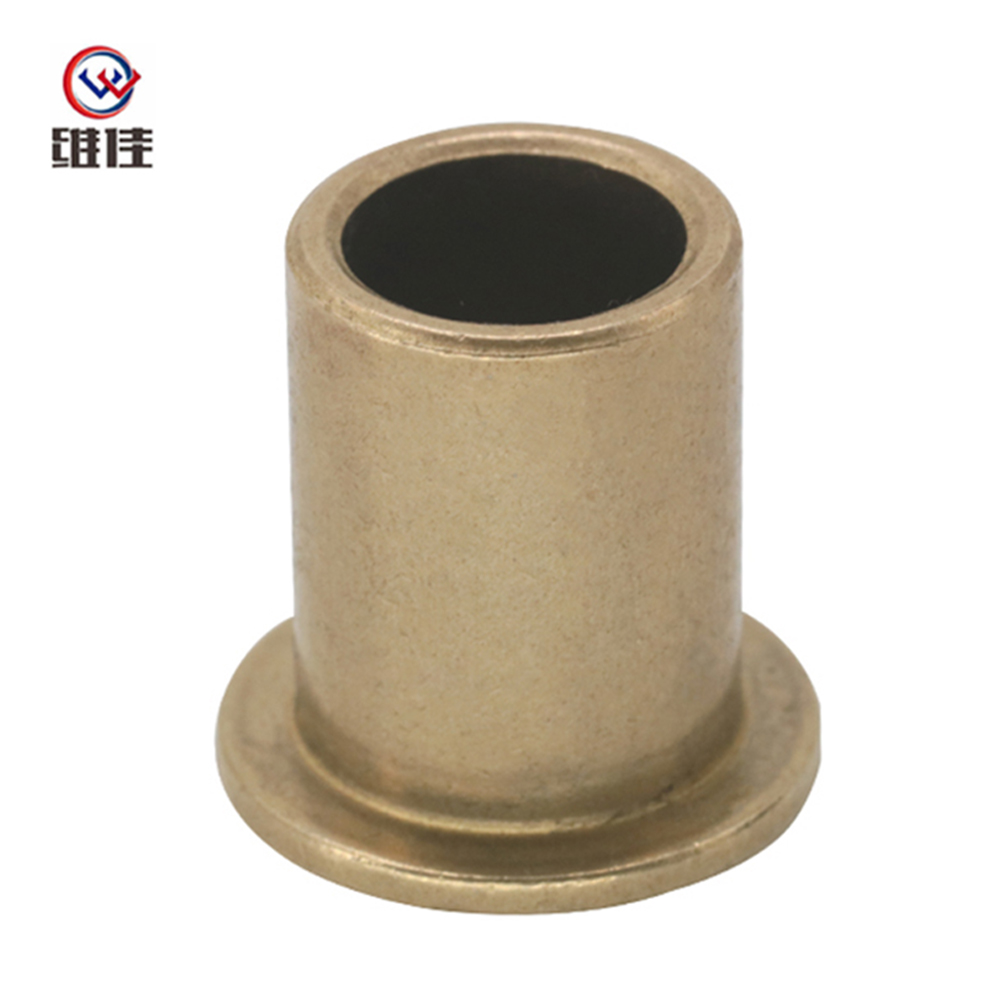
Our sintered bronze self-lubricating bearings are engineered for demanding industrial applications where traditional lubrication is impractical. Designed with advanced powder metallurgy technology, th...
See Details
Copyright © Jiande Welfine Technology Co., Ltd. All Rights Reserved. Privacy Custom Self-lubricating Sintered Bushing Manufacturers
