E-mail us: [email protected]
Tel: +86-15239857375
 English
 中文简体


 Home / Author / Shen Yiruo — Senior After-Sales Service Manager / High-Precision Powder Metallurgy Components for Industrial Fuel Heaters
High-Precision Powder Metallurgy Components for Industrial Fuel Heaters
 2026.10.24
 Shen Yiruo — Senior After-Sales Service Manager
Content
- 1 Product Overview
- 2 Why Powder Metallurgy Is Suitable for Industrial Fuel Heater Components
- 3 FC0208 Material Characteristics
- 4 Detailed Manufacturing Process
- 5 Performance Advantages in Industrial Fuel Heaters
- 6 Application Areas
- 7 Quality Control System
- 8 Manufacturing Capabilities and Company Strengths
- 9 Customization and OEM/ODM Services
- 10 Installation, Storage, and Handling Recommendations
- 11 Cost and Supply-Chain Benefits
- 12 Recommended Selection Criteria for Buyers
- 13 Frequently Asked Questions
- 13.1 What is the main function of this powder metallurgy component?
- 13.2 What material is used for the standard product?
- 13.3 What are the standard dimensions?
- 13.4 Why is blackening applied to the component?
- 13.5 Can the component be machined after sintering?
- 13.6 Is this component suitable for high-temperature operation?
- 13.7 How does the product compare with a fully machined steel part?
- 13.8 How does the product compare with a stamped part?
- 13.9 Can the supplier provide samples before mass production?
- 13.10 What quality certifications does the manufacturer have?
- 13.11 How should the components be stored?
- 13.12 Can other materials or surface treatments be requested?
- 14 Conclusion
- 15 References
- 16 Product: Powder Metallurgy Components for Industrial Fuel Heaters
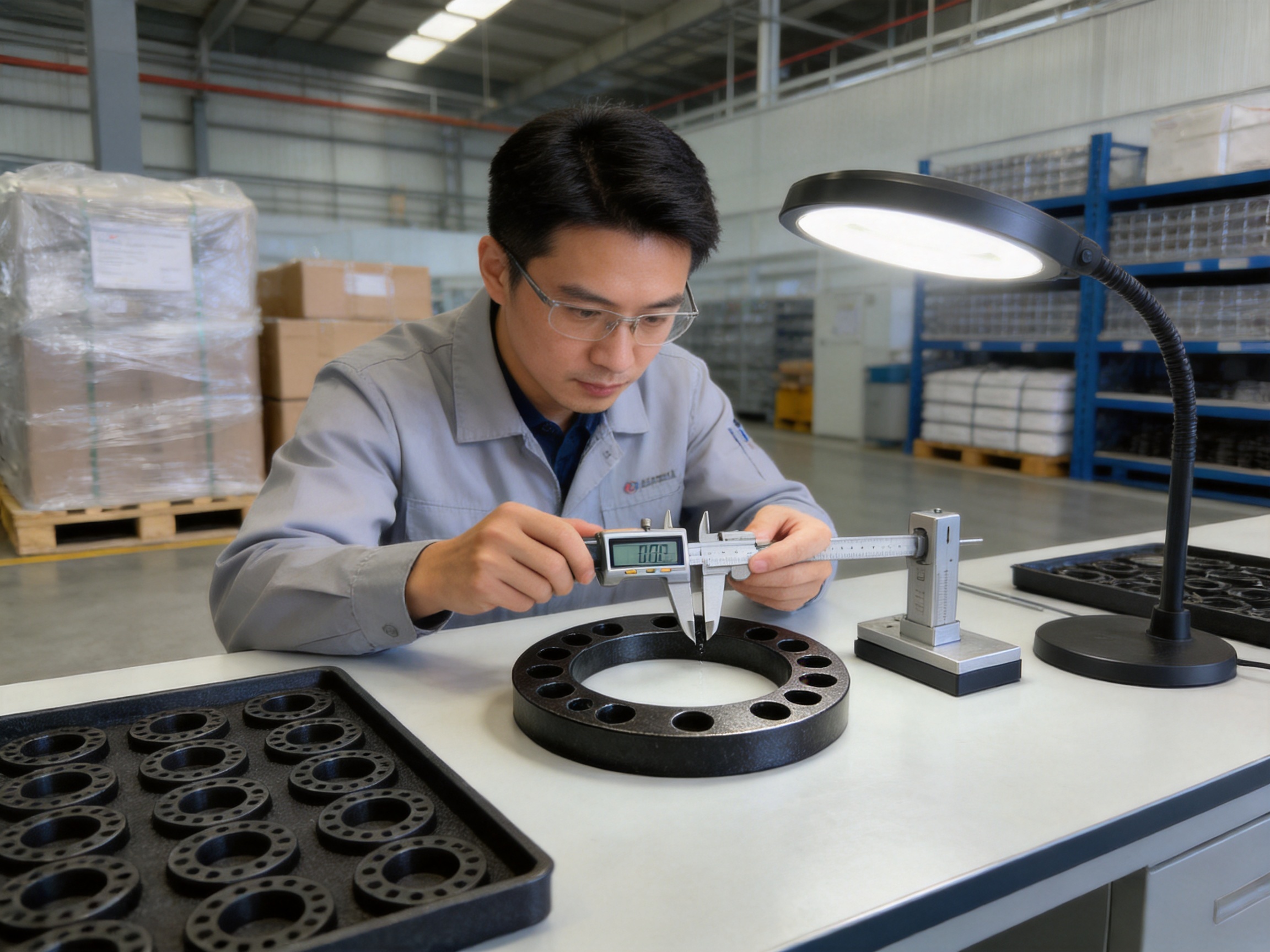
Industrial fuel heaters operate in demanding environments where heat, vibration, dust, continuous running, and repeated thermal cycling can place considerable stress on structural components. A small component with inaccurate dimensions, insufficient strength, poor corrosion resistance, or inconsistent material properties can affect assembly quality and reduce the service life of the complete heater. For this reason, the selection of a reliable structural part is an important factor in the design and production of industrial heating equipment.
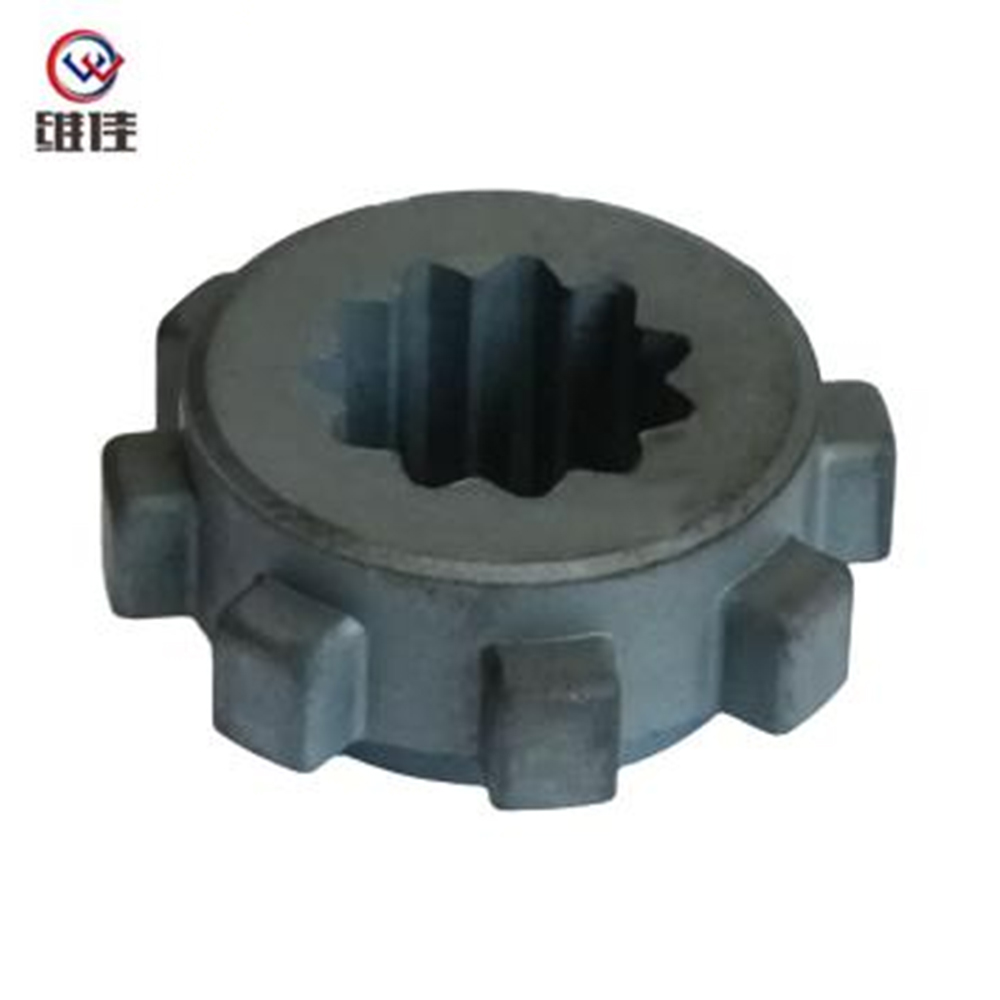
The powder metallurgy structural component described in this article is developed specifically for industrial fuel heaters, diesel warm-air heaters, and high-power industrial hot-air generators. Manufactured from FC0208 iron-copper-carbon powder metallurgy material, the component combines controlled powder compaction, protective-atmosphere sintering, precision machining, black oxide treatment, inspection, and protective packaging. This integrated process is designed to provide stable dimensions, dependable mechanical performance, wear resistance, and improved protection against rust during storage and service.
With a nominal size of 60.6 mm × 88.9 mm × 15.84 mm, the component is suitable for medium-load structural applications in which repeatable geometry and reliable long-term performance are essential. Its production method offers the advantages of powder metallurgy, including efficient material utilization, high repeatability, scalable manufacturing, and compatibility with secondary machining and surface treatments.
Compared with many conventionally machined structural parts, this powder metallurgy component can provide a more efficient balance between manufacturing cost, dimensional consistency, material performance, and production volume. It is also suitable for customization according to customer drawings, samples, assembly requirements, and application conditions.
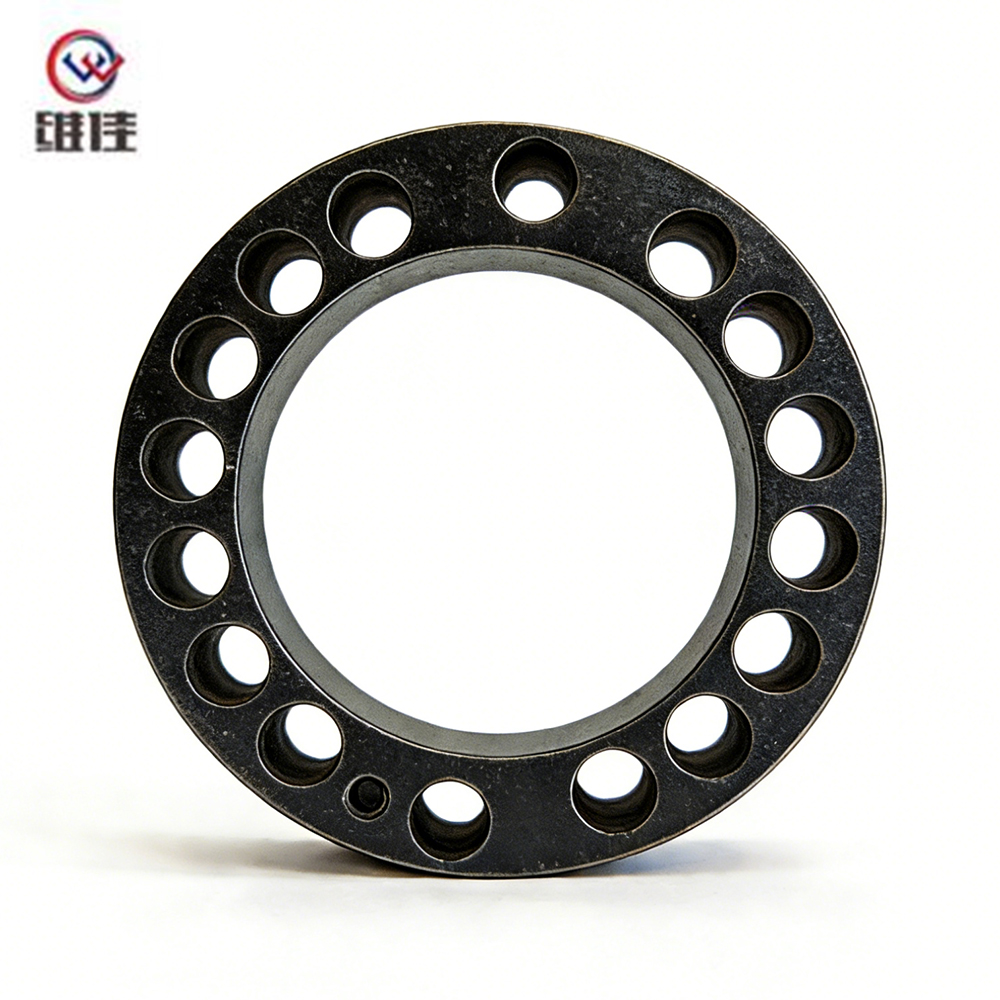
Powder Metallurgy Components for Industrial Fuel Heaters
Product Overview
This product is an iron-based powder metallurgy structural part designed for use in industrial fuel heaters and related thermal equipment. It is produced using FC0208 material, a commonly used iron-copper-carbon powder metallurgy composition containing iron as the base material, approximately 2% copper, and approximately 0.8% carbon.
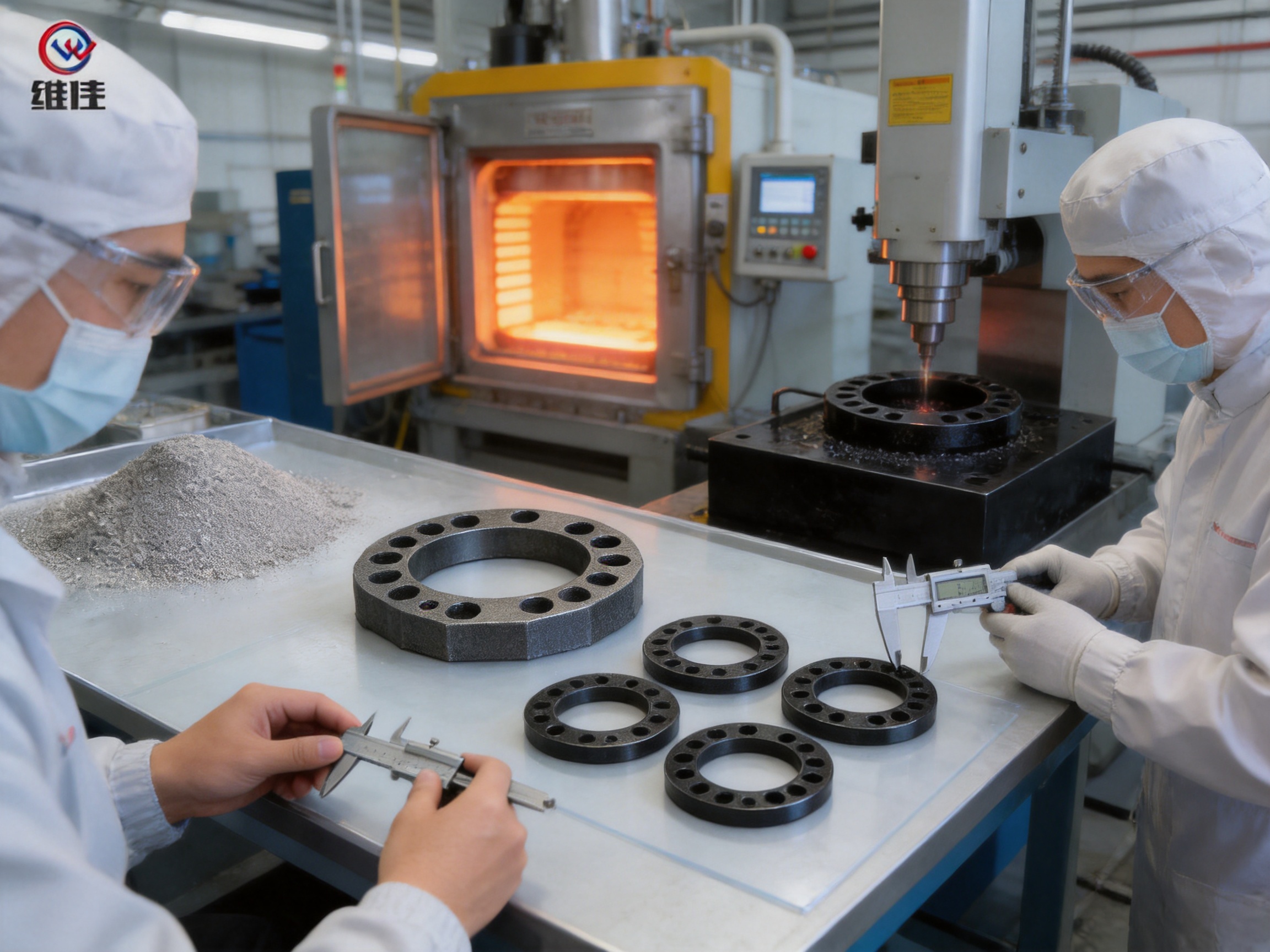
The component is manufactured through a controlled sequence of powder mixing, compaction molding, high-temperature sintering, precision machining, blackening, cleaning, inspection, and packaging. Each stage contributes to the final performance of the part. Powder preparation affects material consistency, compaction determines the basic shape and density distribution, sintering develops the metallurgical bond, machining improves critical dimensions, and blackening provides an additional layer of surface protection.
The product is intended for applications where the structural part must maintain its position and geometry during long-term operation. Industrial fuel heaters commonly experience vibration from motors and fans, repeated start-and-stop cycles, elevated temperatures, and exposure to air, combustion-related contaminants, or humid storage conditions. The component is therefore designed as a practical solution for equipment manufacturers seeking stable and repeatable powder metallurgy parts.
Basic Product Information
| Product type | Iron-based powder metallurgy structural component |
| Product application | Industrial fuel heaters, diesel heaters, hot-air generators, and related heating equipment |
| Product model | PM-FC0208-60.6×88.9×15.84 |
| Nominal dimensions | 60.6 mm × 88.9 mm × 15.84 mm |
| Material | FC0208, approximately Fe-2Cu-0.8C |
| Manufacturing process | Powder compaction, sintering, machining, blackening, inspection, and packaging |
| Surface treatment | Black oxide coating, commonly referred to as blackening |
| Primary performance objectives | Dimensional accuracy, structural stability, wear resistance, and rust protection |
| Production mode | Sample development, customized production, and mass production |
The dimensions listed above represent the standard product configuration. Depending on the heater design, the component may be adapted to customer drawings or approved samples. Important requirements may include mounting features, hole locations, flatness, fit tolerances, density, hardness, surface finish, and compatibility with adjacent components.
Why Powder Metallurgy Is Suitable for Industrial Fuel Heater Components
Powder metallurgy is a manufacturing technology in which metal powders are prepared, compacted into a near-net or net shape, and sintered at a controlled temperature below the material’s melting point. This process allows manufacturers to produce repeatable components with efficient material utilization and carefully controlled properties.
For structural parts used in industrial heaters, powder metallurgy offers several advantages. The process can produce complex or semi-complex shapes without requiring the extensive material removal associated with machining from bar stock. This can reduce material waste and improve production efficiency, especially when the same component is manufactured in large quantities.
Powder compaction also provides a high degree of repeatability. Once the tooling and process parameters have been validated, each production cycle can generate parts with consistent geometry. This is particularly valuable for heater assemblies containing many interchangeable components. A stable part-to-part relationship can simplify assembly, reduce fitting adjustments, and support consistent equipment performance.
Another important benefit is the ability to combine powder metallurgy with secondary operations. Powder compaction forms the general geometry efficiently, while machining can be applied to selected surfaces that require closer dimensional control. Blackening or another surface treatment can then be added to improve appearance and protection. This combination enables manufacturers to balance productivity with precision rather than relying exclusively on either full machining or basic pressed-and-sintered production.
Compared with casting, powder metallurgy can provide more consistent small- and medium-sized production parts with reduced risk of certain casting-related defects, such as shrinkage cavities or extensive machining allowances. Compared with fully machined components, powder metallurgy can reduce raw material consumption and shorten the machining cycle. Compared with simple stamped parts, a sintered iron-based component can provide greater three-dimensional design flexibility and a more substantial structural form.
Advantages Over Conventional Alternatives
The most suitable manufacturing route depends on the component geometry, load, tolerance requirements, quantity, and operating environment. For the heater component covered here, powder metallurgy provides a practical middle ground between performance and cost.
When a part is machined entirely from steel bar or plate, the process may involve turning, milling, drilling, broaching, and extensive removal of material. This approach can be appropriate for prototypes or very low-volume products, but it may become less economical as production quantity increases. Powder metallurgy forms much of the component before machining, reducing cutting time and improving material utilization.
Cast components can be economical for larger shapes, but small or medium-sized structural parts may require additional finishing to meet assembly tolerances. Casting quality can also depend heavily on mold design, filling behavior, cooling conditions, and post-processing. A controlled powder compaction and sintering process offers an alternative route for applications where repeatable dimensions and compact geometry are important.
Stamped sheet-metal parts are efficient for thin components, but their design is limited by sheet thickness, bending geometry, and the need for forming operations. The FC0208 component is more suitable where a thicker, rigid, three-dimensional structural part is needed.
Plastic or die-cast alternatives may offer low cost in selected applications, but they may not provide the same combination of temperature stability, rigidity, wear resistance, and long-term dimensional retention required in an industrial heating environment. Material selection must always be confirmed against the actual temperature, loading, chemical exposure, and safety requirements of the complete equipment.
| Comparison factor | Powder metallurgy FC0208 component | Fully machined steel part | Stamped sheet-metal part | Cast component |
| Material utilization | Generally efficient because the compact is formed close to final geometry | More material may be removed during machining | Efficient for flat or thin shapes | Can be efficient for larger shapes but requires allowances and finishing |
| Three-dimensional design flexibility | Good for compact structural geometries | Good, but machining time may increase | More limited by sheet-forming requirements | Good, depending on mold and casting design |
| Mass-production repeatability | High after tooling and process validation | High, but cycle time may be longer | High for suitable geometries | Dependent on mold, filling, and finishing control |
| Secondary machining | Applied selectively to critical features | Often extensive | Usually limited to holes, trimming, or forming | Often required for precision interfaces |
| Typical application advantage | Balanced cost, consistency, rigidity, and scalable production | Flexible for prototypes and low-volume precision parts | Efficient for thin brackets and covers | Suitable for larger or highly castable geometries |
FC0208 Material Characteristics
FC0208 is an iron-based powder metallurgy material containing copper and carbon as important alloying additions. The designation is commonly associated with a composition of approximately Fe-2Cu-0.8C, although actual chemical composition, density, mechanical properties, and dimensional behavior should be confirmed according to the applicable material specification and the manufacturer’s inspection records.
Iron provides the main structural basis of the material. Copper contributes to strength development and can support the formation of a more robust sintered structure. Carbon influences hardness, strength, wear behavior, and machinability. Through controlled powder formulation and sintering, the material can achieve a balanced combination of strength, toughness, and processability suitable for medium-load structural parts.
The material is well suited to components that must resist vibration and maintain their shape during extended operation. Industrial fuel heaters may run for many hours at a time, and their internal parts can be exposed to repeated mechanical excitation. A consistent iron-based material helps the component maintain reliable contact and positioning when the heater is assembled according to the approved design.
FC0208 also supports secondary machining. Although sintered parts are formed close to their final shape, machining may be used to refine selected holes, faces, slots, or functional interfaces. The ability to combine pressing with machining allows the manufacturer to achieve a practical balance between productivity and dimensional control.
Material Selection Considerations
The appropriate material grade should be selected according to the actual application. Factors include operating temperature, applied load, vibration level, required hardness, contact condition, environmental humidity, exposure to oils or fuels, and the type of surface treatment required.
FC0208 is appropriate for many medium-load structural applications, but no material should be selected solely by name. The final design should be evaluated using the customer’s drawings, technical specifications, functional requirements, and validation procedures. If the part must operate under unusually high loads, severe wear, elevated temperatures, or special corrosion conditions, alternative iron-based formulations or additional treatments may be considered.
Welfine supports material selection for customized orders, including FC0205, FC0208, and other iron-based powder metallurgy materials. The final recommendation can take account of component geometry, production volume, required density, machining needs, and surface protection requirements.
Detailed Manufacturing Process
The performance of a powder metallurgy component depends not only on the material but also on the control of the complete manufacturing process. The production route for this industrial fuel heater part is designed to control geometry, density, surface condition, and final inspection results from the first stage to delivery.
Powder Mixing and Formulation
The first stage is the preparation of the powder mixture. Iron powder, copper powder, carbon, and any approved processing additives are weighed and blended according to the selected formulation. Uniform mixing is important because variations in composition can affect density, hardness, dimensional change during sintering, and final mechanical behavior.
Mixing parameters such as time, sequence, equipment condition, and batch size are controlled to support a consistent material distribution. Proper handling also reduces the risk of contamination and helps preserve the flow characteristics required for stable die filling.
For a mass-produced heater component, batch traceability is valuable. It allows the manufacturer to connect finished parts with the powder batch, production date, equipment, inspection results, and any relevant process records. This supports quality analysis and continuous improvement.
High-Precision Compaction
After mixing, the powder is transferred to a precision die and compacted under controlled pressure. The tooling determines the general shape of the component and influences critical features such as thickness, steps, holes, recesses, and external profiles.
Compaction must be carefully controlled because uneven powder filling or nonuniform pressure distribution may lead to density variation. Density differences can affect sintering shrinkage, strength, machining behavior, and dimensional stability. Appropriate tooling design, powder flow, press settings, and handling procedures help reduce these risks.
The pressed part, commonly called a green compact, has sufficient shape retention for transfer but has not yet achieved its final strength. It must be handled carefully before sintering to avoid cracking, chipping, distortion, or damage to functional features.
Protective-Atmosphere Sintering
Sintering is the thermal process that bonds the compacted powder particles into a coherent metal structure. The green compact is heated according to a controlled temperature profile in a protective atmosphere. The atmosphere helps limit undesirable oxidation and supports the development of consistent material properties.
During sintering, the component undergoes metallurgical bonding and controlled dimensional change. Temperature, time, heating rate, cooling rate, furnace loading, and atmosphere composition can all influence the final result. Stable furnace operation is therefore essential for repeatable production.
For industrial heater components, controlled sintering helps achieve a reliable balance of strength, hardness, toughness, and dimensional stability. The sintered structure must be strong enough for assembly and service while remaining suitable for subsequent machining and surface treatment.
Precision Machining
Although compaction produces the basic component shape efficiently, certain surfaces or features may require precision machining. Machining can be applied to improve dimensional accuracy, correct functional interfaces, refine hole sizes, establish flatness, or achieve the fit required by the heater assembly.
The amount of machining is determined by the product drawing and process capability. Selective machining preserves the cost and productivity benefits of powder metallurgy while allowing tighter control of critical dimensions. This is one of the principal advantages of an integrated powder metallurgy and precision machining process.
Machining parameters must account for the properties of the sintered material. Tool selection, cutting speed, feed rate, workholding, and chip removal influence surface quality and dimensional consistency. Inspection after machining verifies that the finished features meet the approved requirements.
Blackening and Surface Treatment
Blackening, also known as black oxide treatment, is applied to the component as a surface protection and finishing process. The treatment creates a dark protective surface that improves the appearance of the part and contributes to resistance against rust under suitable storage and service conditions.
Blackening is particularly useful for steel and iron-based components that may be exposed to humid air during transportation, storage, or equipment operation. It is not a substitute for proper environmental control or comprehensive corrosion engineering, but it provides an additional protective measure when combined with appropriate packaging and storage.
The surface must be properly cleaned and prepared before treatment. After blackening, the component may receive a suitable post-treatment or protective oil, depending on the specified process. Coating appearance, coverage, adhesion, and cleanliness are checked as part of final quality control.
Cleaning, Inspection, and Packaging
After all production operations are complete, parts are cleaned to remove residual processing materials, loose particles, and contamination. Inspection may include dimensional verification, visual examination, surface-treatment assessment, density testing, hardness testing, and material composition review.
Finished components are then packed using anti-rust and anti-collision methods. Moisture-proof bags and cartons help reduce the risk of humidity exposure during transportation. Packaging design can be adjusted according to order quantity, shipping method, storage duration, and customer requirements.
Performance Advantages in Industrial Fuel Heaters
Dimensional Accuracy and Interchangeability
Industrial equipment manufacturers typically require components that can be assembled repeatedly without extensive manual adjustment. The combination of precision compaction and secondary machining helps establish stable dimensions for the heater component. Consistent geometry supports interchangeability and simplifies inventory management for replacement parts.
Dimensional accuracy is especially important when the part interfaces with a fan housing, motor support, burner assembly, mounting structure, or other internal components. A part that is too large, too small, warped, or incorrectly positioned can create assembly interference, uneven loading, vibration, or reduced equipment reliability.
By controlling the tooling, press conditions, sintering profile, machining operations, and inspection process, the manufacturer can work toward stable production results. Final tolerances remain subject to the customer’s drawings and agreed inspection standards.
Strength and Structural Stability
FC0208 provides a balanced material platform for medium-load structural components. The iron-based composition offers rigidity and structural support, while copper and carbon contribute to the development of useful strength and wear characteristics.
In heater applications, the component may need to maintain its geometry while exposed to mechanical vibration and elevated temperature. A stable sintered structure helps the part remain functional during long operating periods. The design should nevertheless be evaluated against the actual loading conditions, because the strength of a powder metallurgy part is influenced by density, porosity, geometry, heat treatment, and direction of loading.
Vibration and Fatigue Resistance
Fans, motors, pumps, and combustion systems can generate continuous or intermittent vibration. The component’s ability to resist vibration depends on its material properties, geometry, mounting method, stress concentration, and assembly condition.
The FC0208 material and controlled manufacturing route are suitable for applications requiring dependable vibration performance. Consistent density and accurate geometry help reduce unwanted assembly stress, while appropriate design radii and load distribution can further improve fatigue behavior. For demanding applications, customer-specific validation testing can be arranged.
Wear Resistance
Some heater structural components experience contact, friction, or repeated movement during installation and operation. The iron-copper-carbon composition can provide useful wear resistance for medium-load conditions, particularly when the component is correctly designed and paired with compatible mating materials.
Blackening adds surface protection but should not be regarded as a replacement for a dedicated wear coating in severe sliding applications. If the part has a defined wear interface, the design team should identify the contact pressure, sliding speed, lubrication condition, temperature, and expected service life before finalizing the material and surface treatment.
Rust Protection and Storage Stability
Iron-based components require protection from moisture, especially during storage and transportation. The black oxide finish provides a protective surface that can reduce the risk of visible rust when combined with suitable post-treatment, dry packaging, and proper storage.
Moisture-proof bags, protective materials, and cartons help isolate the components from humid environments. Customers should store the parts in a dry, ventilated location and avoid direct contact with water, condensation, corrosive chemicals, or contaminated packaging materials.
High Production Consistency
Powder metallurgy is especially valuable when a customer requires repeatable production over many batches. Once the tooling and process parameters are validated, the production system can deliver a consistent series of parts with controlled geometry and appearance.
Stable production benefits original equipment manufacturers in several ways. It can reduce assembly variation, support predictable purchasing, simplify quality planning, and improve the consistency of finished heating equipment. It can also make long-term spare-part supply more manageable because the component is produced according to an established process and approved specification.
Application Areas
The primary application for this component is industrial fuel heating equipment. These systems are used to produce warm air for factories, workshops, warehouses, construction sites, agricultural facilities, breeding facilities, storage buildings, and other large spaces.
Industrial fuel heaters are often expected to operate in environments where temperature changes, dust, vibration, and long running times are unavoidable. The component is designed to support the structural requirements of such equipment while maintaining a practical production cost for original equipment and replacement-part programs.
Industrial Fuel Heaters
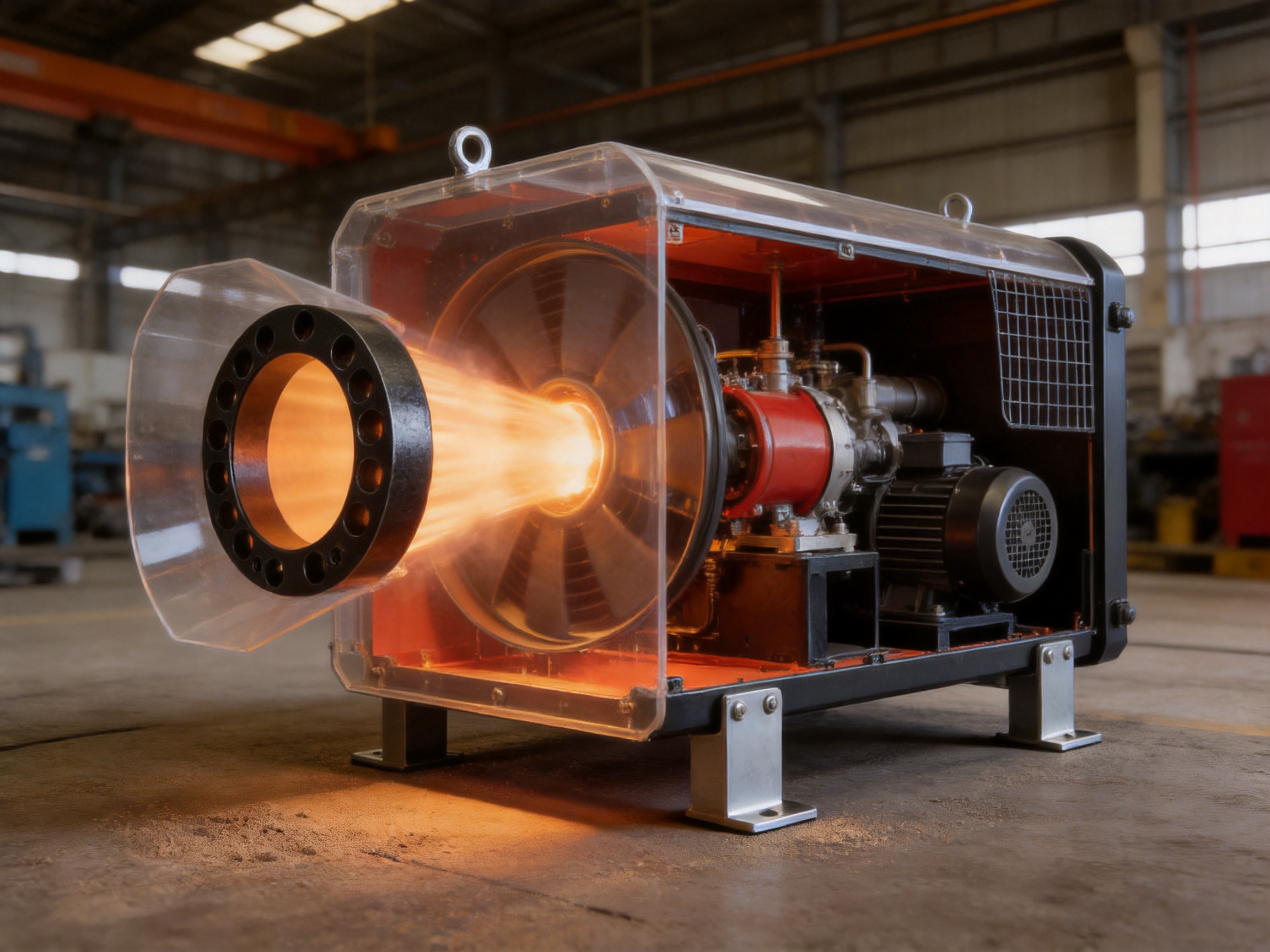
In industrial fuel heaters, the component may be integrated into a structural or support assembly. Its function depends on the specific heater design but may include maintaining the position of internal parts, supporting a mounting relationship, or contributing to the rigidity of the equipment frame.
Stable dimensions are important because heater assemblies may contain rotating fans, fuel-delivery systems, ignition components, ducts, and protective covers. Accurate structural parts help maintain the intended relationship between these elements.
Diesel Warm-Air Heaters
Diesel warm-air heaters are commonly used where rapid heating and mobility are important. Their compact structures may be exposed to vibration during transportation and operation. A durable powder metallurgy component can support repeated assembly and disassembly while maintaining a consistent fit.
High-Power Hot-Air Generators
High-power hot-air generators operate at greater output levels and may experience extended duty cycles. Structural components used in these systems should be selected with attention to temperature distribution, vibration, mounting loads, and maintenance requirements. The FC0208 component provides a practical option for medium-load areas of such equipment.
Construction, Factory, Breeding, and Storage Equipment
Heating equipment used on construction sites, in factories, agricultural buildings, breeding facilities, and storage areas may be exposed to dust, humidity, transportation movement, and irregular maintenance schedules. The combination of a blackened surface, controlled dimensions, and a robust iron-based material supports the practical requirements of these environments.
Quality Control System
Reliable powder metallurgy production requires inspection at multiple stages rather than relying only on a final visual check. Quality control begins with material preparation and continues through compaction, sintering, machining, surface treatment, cleaning, and packaging.
Dimensional Inspection
Calipers, gauges, optical measuring equipment, and other inspection tools can be used to verify product dimensions. Critical features are checked against the approved drawings or specifications. Depending on the customer’s requirements, inspection may include overall length, width, thickness, hole diameter, center distance, flatness, perpendicularity, and other geometric characteristics.
Density and Hardness Testing
Density is an important characteristic of powder metallurgy components because it is related to strength, toughness, wear resistance, and dimensional behavior. Hardness testing provides additional information about the material condition and consistency.
Testing frequency may be based on the product specification, process capability, customer requirements, and internal quality procedures. Results can be recorded for batch traceability and process monitoring.
Material Composition Verification
Material composition testing helps confirm that the selected powder formulation corresponds to the approved material grade. Verification may be performed using suitable analytical equipment and documented according to the company’s quality procedures.
Surface and Coating Inspection
Blackened parts are visually inspected for uniform appearance, incomplete coverage, stains, scratches, excessive deposits, and other surface abnormalities. Coating adhesion and post-treatment condition may also be evaluated when required.
Final Inspection
Before delivery, the parts are subjected to final inspection. The inspection may include dimensional checks, appearance checks, packaging verification, and review of production records. Full inspection or 100% inspection can be arranged according to the customer’s requirements and the risk level of the application.
Quality systems are supported by the company’s ISO 9001:2015 and IATF 16949:2016 certifications. These certifications indicate that formal quality-management procedures are in place, although actual product acceptance must always be determined by the agreed technical specification and inspection results.
Manufacturing Capabilities and Company Strengths
Jiande Welfine Technology Co., Ltd. was established in 2001 and focuses on powder metallurgy sintering, self-lubricating bushings, structural components, and related precision parts. More than two decades of industry experience provide a foundation for process development, tooling coordination, production management, and customer support.
The company operates a production base of approximately 13,039 square meters and employs more than 150 skilled personnel. Its equipment includes high-efficiency presses, high-temperature sintering furnaces, precision forming machines, machining equipment, and inspection facilities. This combination of production and testing resources supports the complete manufacturing route required for the industrial fuel heater component.
An important strength is the ability to manage multiple stages internally. When powder mixing, pressing, sintering, machining, surface treatment coordination, inspection, and packaging are organized within an integrated supply chain, communication between process stages can be improved. This can help reduce delays and make it easier to trace and correct production issues.
The company provides OEM and ODM services based on customer drawings or samples. Engineering support may include manufacturability review, material selection, tolerance analysis, tooling discussion, sample production, and mass-production planning. This is valuable for equipment manufacturers that have a functional concept but require support converting the design into a stable powder metallurgy process.
Production scalability is another advantage. The same basic product can move from prototype or sample development to regular batch production after the design and process have been approved. This supports customers that need to validate a new heater design before committing to larger quantities.
Customization and OEM/ODM Services
Industrial heater manufacturers often require components with unique dimensions or mounting interfaces. A standard product can provide a starting point, but customized production is frequently necessary to match the complete equipment design.
Drawing-Based Development
Customers can provide 2D drawings, 3D models, technical specifications, or physical samples. The engineering team can review the design and determine whether the proposed geometry is suitable for powder compaction, sintering, machining, and surface treatment.
Design review may consider pressing direction, draft angles, wall thickness, density distribution, dimensional change during sintering, machining allowance, and inspection access. Early review can help identify potential manufacturing risks before tooling is completed.
Material Options
FC0205, FC0208, and other iron-based materials may be considered depending on the required strength, hardness, wear resistance, density, and machinability. The final material should be selected according to the load and environment rather than only the lowest material cost.
Surface Treatment Options
Blackening is the standard surface treatment described for this component. Depending on the application, customers may also request oil impregnation, zinc plating, or another suitable treatment. The choice should consider corrosion exposure, dimensional requirements, appearance, contact conditions, and operating temperature.
Samples and Mass Production
Sample orders allow customers to confirm fit, appearance, dimensions, and functional performance before mass production. After approval, production parameters and inspection requirements can be formalized for larger-volume supply.
For repeat orders, production records and quality data can support consistency between batches. Any changes to material, tooling, process parameters, or surface treatment should be reviewed and approved according to the customer’s change-control requirements.
Installation, Storage, and Handling Recommendations
Before installation, customers should confirm that the component matches the approved drawing and is free from visible damage, contamination, or corrosion. Mating surfaces should be clean, and assembly tools should not apply excessive force that could distort the part or damage the blackened surface.
Where the component is part of a vibrating assembly, fasteners and adjacent structures should be installed according to the equipment manufacturer’s specifications. Incorrect tightening, misalignment, or uneven support can create loads that exceed the intended design conditions.
Parts should remain in their original moisture-proof packaging until they are needed for assembly. Storage areas should be dry, ventilated, and protected from condensation. Components should not be placed directly on wet floors or exposed to rain, salt spray, acidic vapors, or incompatible chemicals.
If long-term storage is expected, the customer should discuss additional rust-prevention requirements before shipment. Environmental conditions, storage duration, packaging method, and transport route may influence the appropriate level of protection.
Cost and Supply-Chain Benefits
The value of a powder metallurgy component is not limited to its unit price. A well-designed powder metallurgy part can provide benefits throughout the manufacturing and service cycle. Efficient material utilization can reduce raw material waste, while near-net shaping can reduce machining time and tool consumption.
Stable production dimensions can lower assembly labor and reduce the need for manual correction. Consistent quality can also reduce the risk of field failures and replacement costs. For high-volume heater production, these combined factors may have a meaningful effect on total cost of ownership.
Integrated manufacturing capabilities can simplify supplier coordination. Instead of managing separate suppliers for pressed parts, sintered parts, machining, surface treatment, and inspection, customers may obtain a more complete solution from one experienced powder metallurgy manufacturer.
Long-term supply stability is particularly important for industrial equipment manufacturers. A component may remain in production for many years, and the supplier must be able to maintain tooling, material records, inspection standards, and process knowledge. An established manufacturer with documented systems is better positioned to support this type of continuing requirement.
Recommended Selection Criteria for Buyers
When selecting a powder metallurgy structural component for an industrial fuel heater, buyers should evaluate more than the product description. The following technical and commercial factors are important.
First, confirm the complete dimensional specification, including tolerances and critical interfaces. The nominal dimensions of 60.6 mm × 88.9 mm × 15.84 mm identify the standard configuration, but the customer drawing should define the acceptance criteria.
Second, confirm the required material grade and relevant performance data. Density, hardness, tensile strength, dimensional change, and machinability may be important depending on the component’s function.
Third, evaluate the surface treatment. Blackening provides useful rust protection and a finished appearance, but additional protection may be required for severe humidity, chemical exposure, or long-term outdoor storage.
Fourth, review the inspection plan. Important items include dimensional inspection method, sampling or full inspection, material verification, surface inspection, packaging checks, and record retention.
Fifth, assess the supplier’s production capacity and technical support. The ability to provide tooling development, samples, engineering review, mass production, and stable delivery can be more important than a low initial quotation.
Finally, confirm packaging and storage requirements. Powder metallurgy components should be protected against collision, moisture, and contamination from the time they leave the production line until they are installed in the heater.
Frequently Asked Questions
What is the main function of this powder metallurgy component?
It is an iron-based structural component designed for industrial fuel heaters and related hot-air heating equipment. Its exact function depends on the customer’s assembly design, but it is intended to provide stable geometry, structural support, and dependable performance under vibration and elevated-temperature conditions.
What material is used for the standard product?
The standard material is FC0208, generally described as an iron-copper-carbon powder metallurgy material with an approximate composition of Fe-2Cu-0.8C. Actual material requirements should be confirmed against the approved specification and inspection documentation.
What are the standard dimensions?
The standard model is PM-FC0208-60.6×88.9×15.84, with nominal dimensions of 60.6 mm × 88.9 mm × 15.84 mm. Customized dimensions can be developed based on customer drawings, samples, or 3D models.
Why is blackening applied to the component?
Blackening creates a dark protective oxide surface that improves appearance and contributes to rust protection. It works best when combined with suitable post-treatment, moisture-proof packaging, and dry storage.
Can the component be machined after sintering?
Yes. The manufacturing route includes precision machining after sintering. Machining can be used to refine critical dimensions, holes, flat surfaces, and assembly interfaces while preserving the material and cost benefits of powder compaction.
Is this component suitable for high-temperature operation?
FC0208 offers good high-temperature stability for many medium-load structural applications. However, the actual suitability depends on the operating temperature, duration, applied load, atmosphere, and contact conditions. Application-specific review is recommended before approval.
How does the product compare with a fully machined steel part?
Powder metallurgy can reduce material waste and machining time by forming the component close to its final shape. It also supports repeatable mass production. Fully machined steel parts may provide greater flexibility for prototypes or very low volumes, but they can require more material removal and longer production cycles.
How does the product compare with a stamped part?
The powder metallurgy component is suitable for a thicker, rigid, three-dimensional structural design. Stamped parts are highly efficient for thin sheet-metal shapes but may not provide the same geometry or structural mass required by this application.
Can the supplier provide samples before mass production?
Yes. Sample development and sample orders are supported. Samples can be used to verify fit, dimensional accuracy, surface appearance, and compatibility with the heater assembly before regular production begins.
What quality certifications does the manufacturer have?
The manufacturer has ISO 9001:2015 and IATF 16949:2016 certifications. Product acceptance remains based on the customer’s approved drawings, specifications, inspection plan, and actual test results.
How should the components be stored?
Components should remain in moisture-proof packaging and be stored in a dry, ventilated environment. They should be protected from condensation, rain, corrosive vapors, wet floors, and mechanical impact.
Can other materials or surface treatments be requested?
Yes. Material options may include FC0205, FC0208, and other iron-based powder metallurgy grades. Surface-treatment options may include blackening, oil impregnation, zinc plating, or another process selected according to the application.
Conclusion
The FC0208 powder metallurgy structural component provides a practical and reliable solution for industrial fuel heaters, diesel warm-air heaters, and high-power hot-air generators. Its value comes from the combination of a suitable iron-copper-carbon material, repeatable powder compaction, controlled protective-atmosphere sintering, selective precision machining, black oxide treatment, and systematic inspection.
Compared with fully machined, stamped, or cast alternatives, the component offers a balanced combination of structural stability, dimensional consistency, production efficiency, wear resistance, and corrosion protection. Its design is particularly appropriate for medium-load applications exposed to vibration, elevated temperature, long operating periods, and demanding industrial conditions.
The manufacturer’s experience in powder metallurgy, precision machining, self-lubricating bushings, and customized components supports both standard supply and OEM/ODM development. Customers can obtain sample parts, drawing-based engineering support, material selection assistance, surface-treatment options, and mass-production services from an established manufacturing partner.
For the best result, the component should be selected and validated according to the complete heater design. Operating temperature, load, vibration, dimensional tolerances, surface exposure, packaging, and storage conditions should all be considered. With proper specification and process control, this powder metallurgy component can contribute to stable assembly, dependable equipment operation, and efficient long-term production.
References
1. ISO 9001:2015, Quality Management Systems — Requirements.
2. IATF 16949:2016, Quality Management System Requirements for Automotive Production and Relevant Service Parts Organizations.
3. ASM Handbook, Volume 7: Powder Metallurgy.
4. Metal Powder Industries Federation, Powder Metall
Product: Powder Metallurgy Components for Industrial Fuel Heaters

Related products
-
-
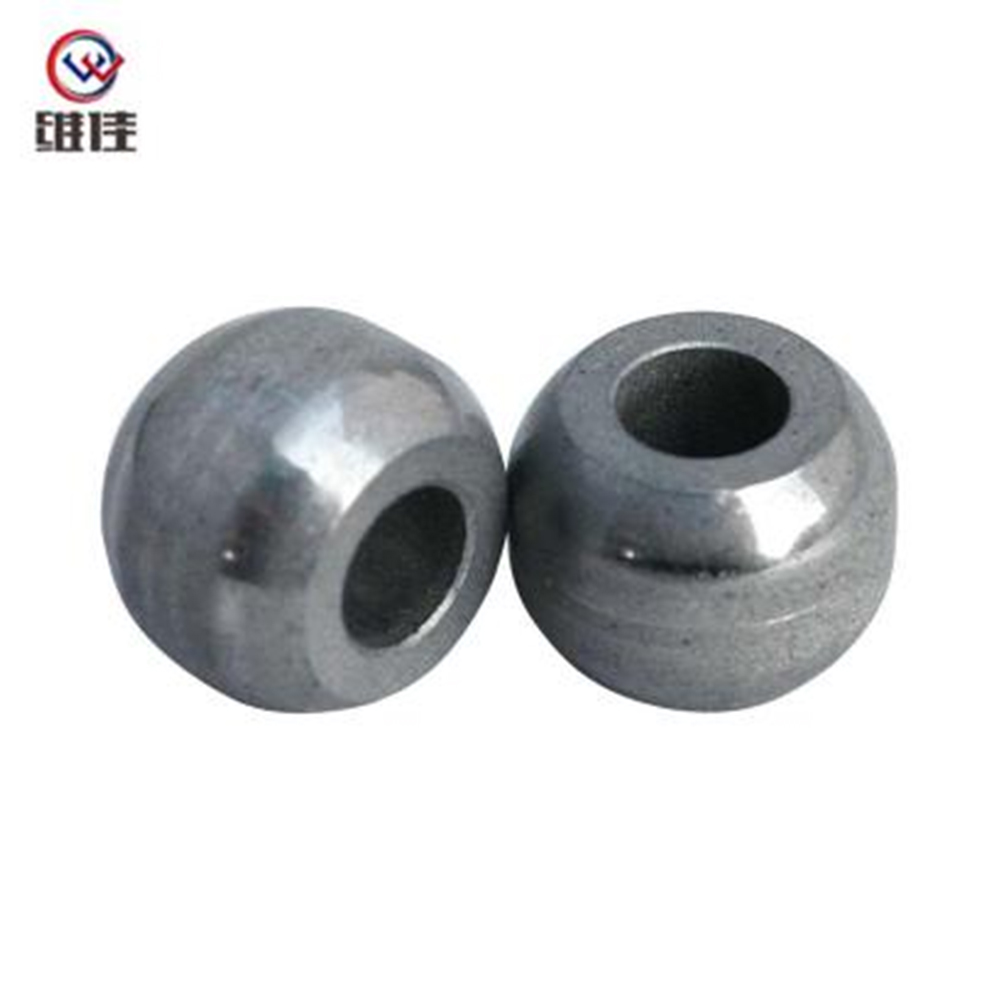
Product Description: High-precision powder metallurgy part (S14*7*10) made of iron material from Jiande Wefine, customized PM components with strict tolerance control.
See Details -
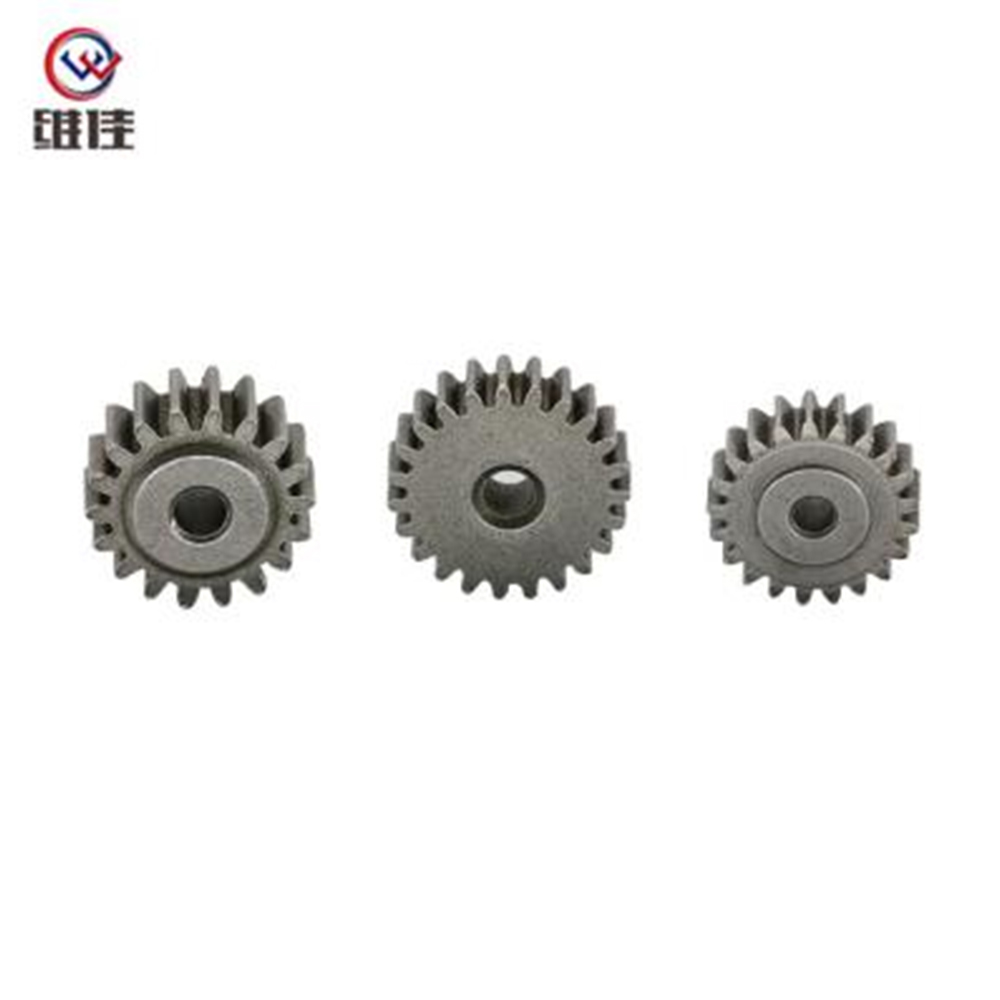
Description: Custom powder metallurgy planetary gear with high precision, wear resistance for automotive, industrial machinery & home appliances. OEM/ODM supported.
See Details -
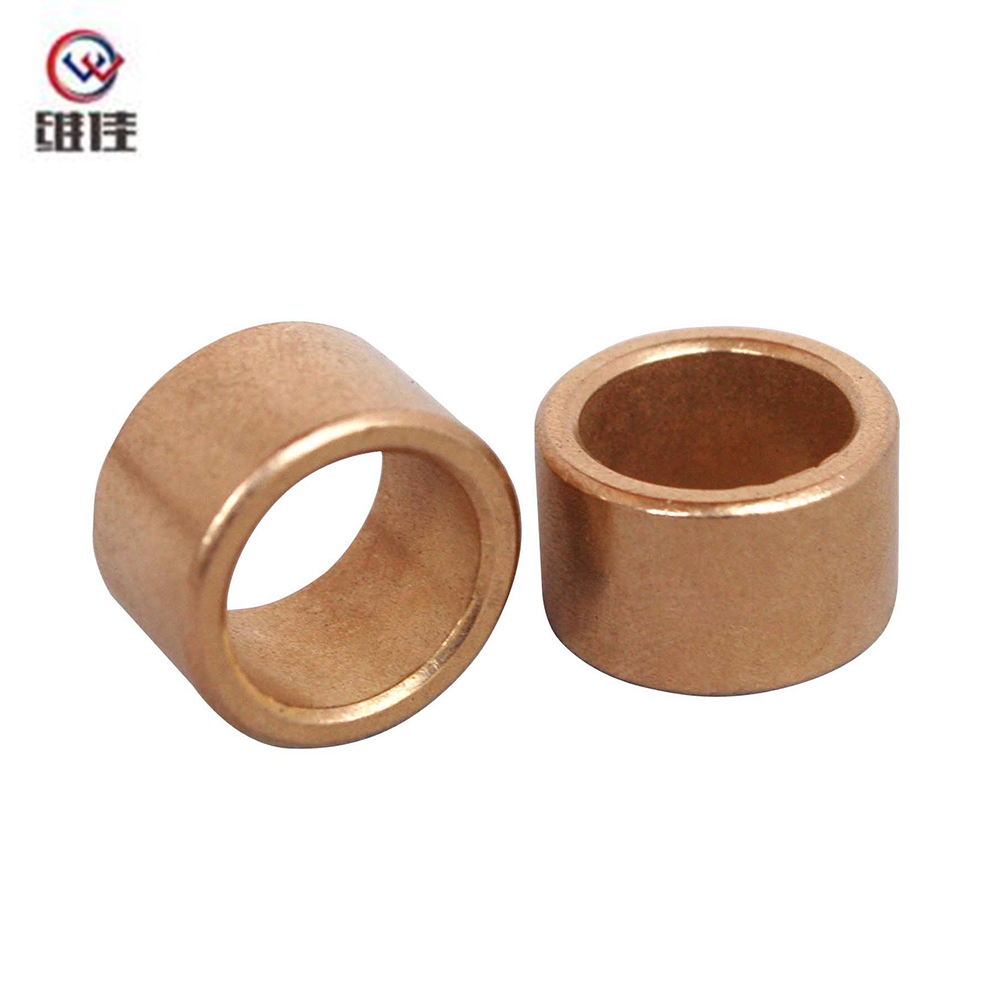
This copper-based powder metallurgy bushing is manufactured through an integrated process of compaction, sintering, sizing, and oil impregnation. It features excellent wear resistance and self-lubrica...
See Details -
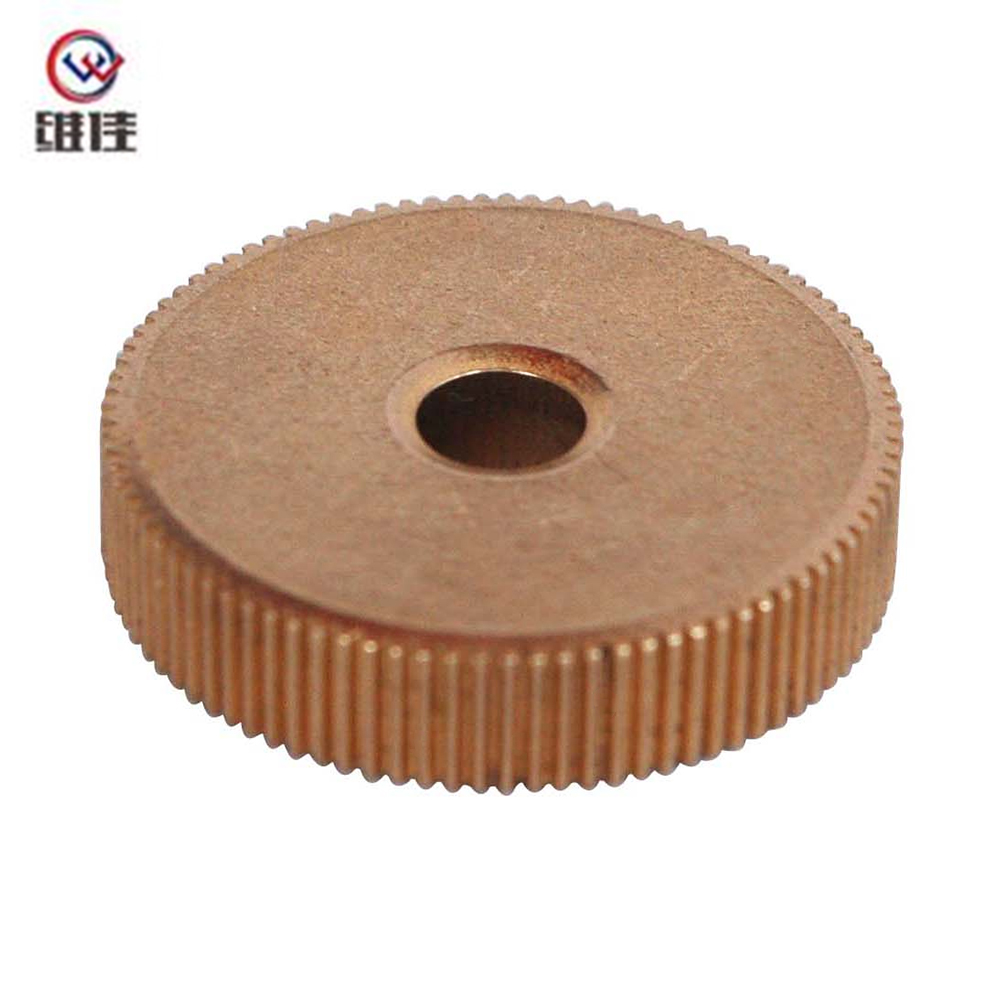
This 4×11.5×5.2mm powder metallurgy gear is manufactured through a precise press-sinter-through hole-oil impregnation process, with strict control of press density (6.7–6.8g/cm³) and sintering tempera...
See Details
Copyright © Jiande Welfine Technology Co., Ltd. All Rights Reserved. Privacy Custom Self-lubricating Sintered Bushing Manufacturers
