E-mail us: [email protected]
Tel: +86-15239857375
 English
 中文简体


 Home / Author / Shen Yiruo — Senior After-Sales Service Manager / Sintered Stainless Steel Self-Lubricating Bushings for Demanding Industrial Applications
Sintered Stainless Steel Self-Lubricating Bushings for Demanding Industrial Applications
 2026.10.20
 Shen Yiruo — Senior After-Sales Service Manager
Content
- 1 What Are Sintered Stainless Steel Self-Lubricating Bushings?
- 2 How Powder Metallurgy Creates a Self-Lubricating Structure
- 3 Key Performance Advantages
- 4 Comparison with Conventional Bushing Materials
- 5 Applications in Food Processing Equipment
- 6 Applications in Medical and Laboratory Equipment
- 7 Applications in Marine Equipment
- 8 Applications in Chemical and Water Treatment Systems
- 9 Applications in Industrial Automation and Packaging
- 10 Advanced Manufacturing Strengths
- 11 Detailed Production Process
- 12 How to Select the Correct Bushing
- 13 Installation and Maintenance Recommendations
- 14 Advantages Over Competing Solutions
- 15 Typical Product Configurations
- 16 Frequently Asked Questions
- 16.1 What makes a sintered stainless steel bushing self-lubricating?
- 16.2 Are these bushings completely maintenance-free?
- 16.3 Can they be used in food processing equipment?
- 16.4 Are they suitable for marine applications?
- 16.5 Can Welfine manufacture custom dimensions?
- 16.6 What information should be provided for a quotation?
- 16.7 Can the bushings operate at high speed?
- 16.8 How does stainless steel compare with carbon steel?
- 16.9 Can external lubricant be added?
- 16.10 What certifications does the manufacturer hold?
- 17 Why Choose an Experienced Powder Metallurgy Manufacturer?
- 18 Conclusion
- 19 References
- 20 Product: Sintered Stainless Steel Self-lubricating Bushings
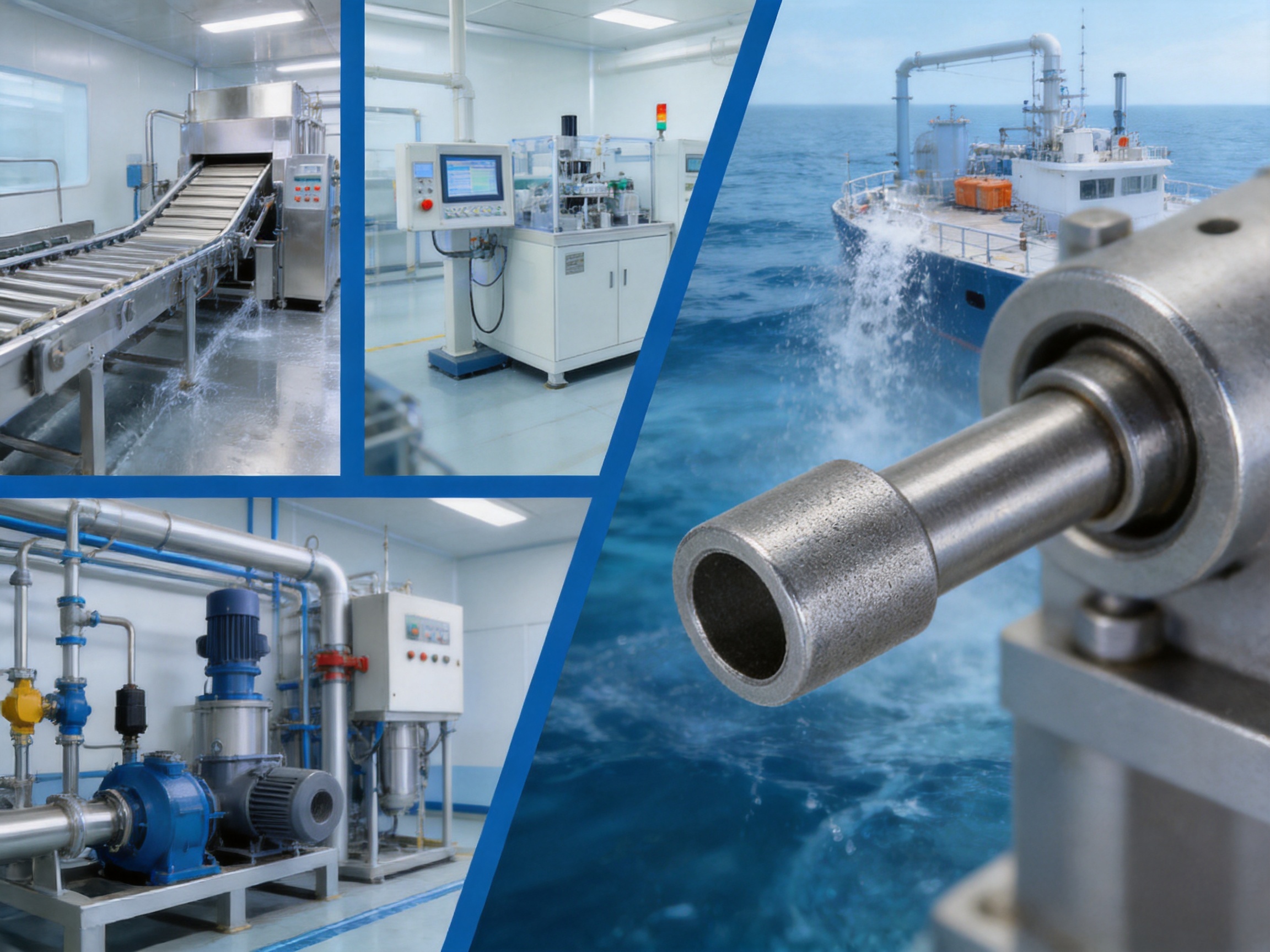
Sintered stainless steel self-lubricating bushings are engineered bearing components designed to provide dependable sliding motion in environments where corrosion, heat, contamination, limited access, or maintenance restrictions make conventional bearings unsuitable. By combining stainless steel powder metallurgy with controlled porosity and oil impregnation, these bushings create an internal lubrication system that supports smooth operation while reducing the need for external lubrication.
Unlike standard carbon steel bushings, which may require frequent greasing and can be vulnerable to rust, sintered stainless steel bushings are designed for long-term performance in humid, corrosive, high-temperature, and difficult-to-service applications. They are widely considered for food processing equipment, medical machinery, marine systems, chemical equipment, laboratory instruments, packaging machines, industrial automation, and specialized mechanical assemblies.
The performance of a self-lubricating bushing depends on more than the choice of stainless steel. Powder quality, compaction accuracy, sintering temperature, pore distribution, oil impregnation, machining precision, inspection procedures, and application-specific design all influence service life. A qualified manufacturer with advanced powder metallurgy capabilities can control these factors to produce stable, accurate, and reliable components according to customer drawings, samples, and operating requirements.
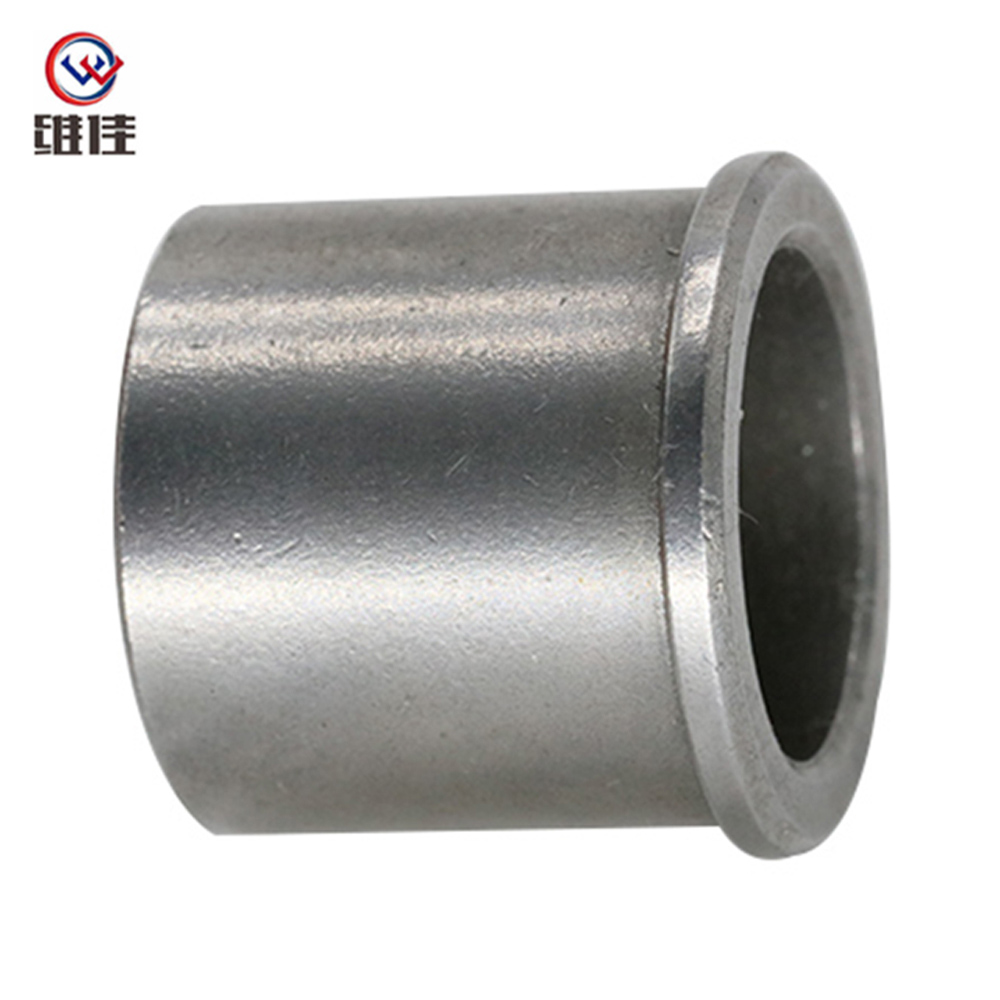
Sintered Stainless Steel Self-lubricating Bushings
What Are Sintered Stainless Steel Self-Lubricating Bushings?
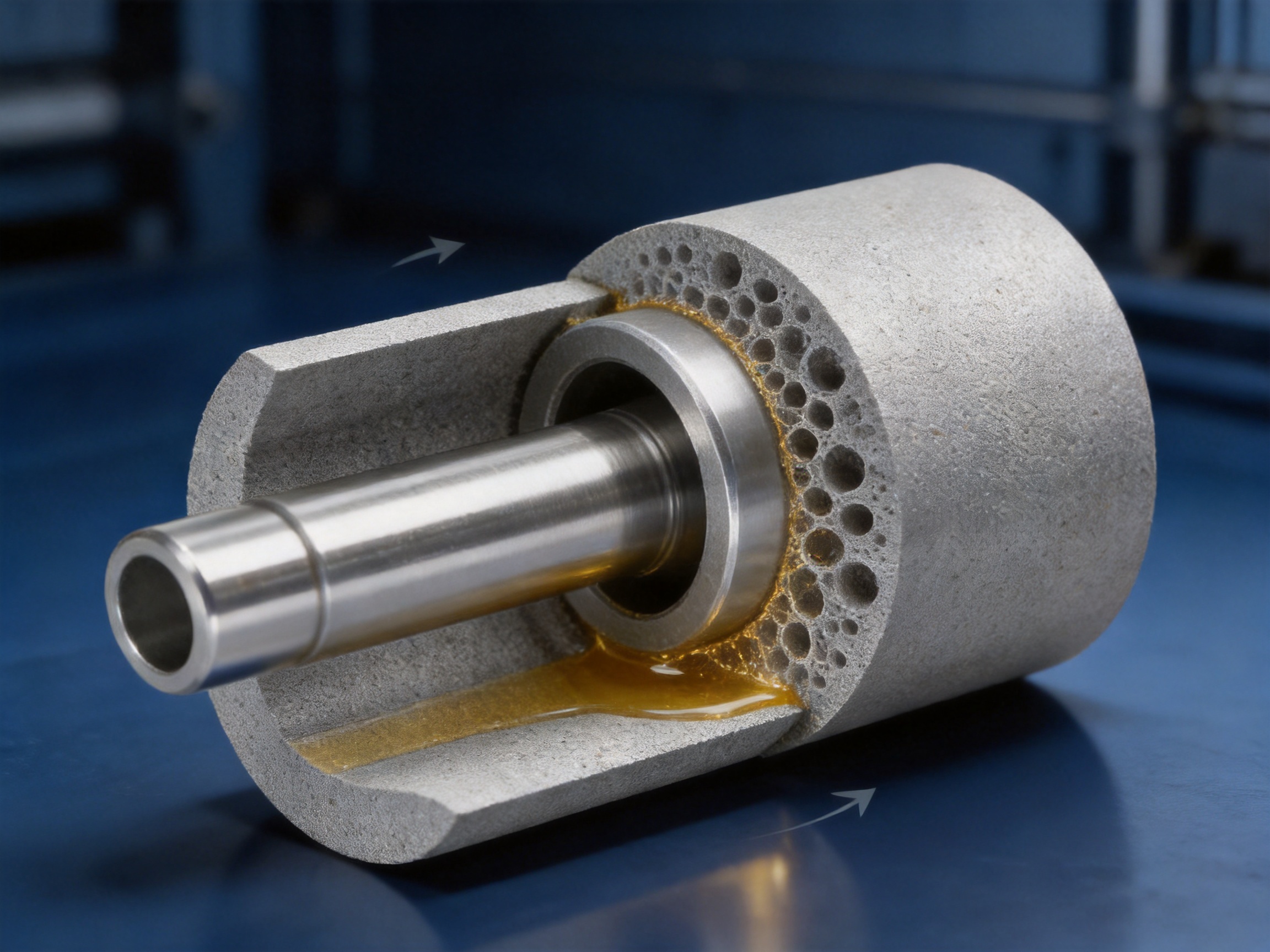
A sintered stainless steel self-lubricating bushing is a sleeve-shaped bearing manufactured from stainless steel powder. The powder is pressed into a required shape and then heated in a controlled atmosphere below the material’s melting point. This process bonds the powder particles and produces a strong metallic structure containing a network of interconnected pores.
After sintering, the bushing is usually impregnated with a suitable lubricating oil. The pores act as microscopic reservoirs that hold the oil inside the bearing body. During operation, frictional heat and surface movement encourage a small amount of oil to migrate toward the sliding interface. This creates a lubricating film between the bushing and shaft, reducing direct metal-to-metal contact.
When the equipment stops or the operating temperature decreases, much of the oil can return to the pores through capillary action. This supports a recurring lubrication cycle throughout the service life of the component. The result is a compact bearing solution that can provide continuous lubrication without a centralized grease system or frequent manual servicing.
The stainless steel material provides resistance to moisture, oxidation, cleaning chemicals, saltwater, and many industrial atmospheres. The porous structure provides the self-lubricating function, while the precision-forming process helps maintain the dimensional accuracy required for reliable shaft guidance.
How Powder Metallurgy Creates a Self-Lubricating Structure
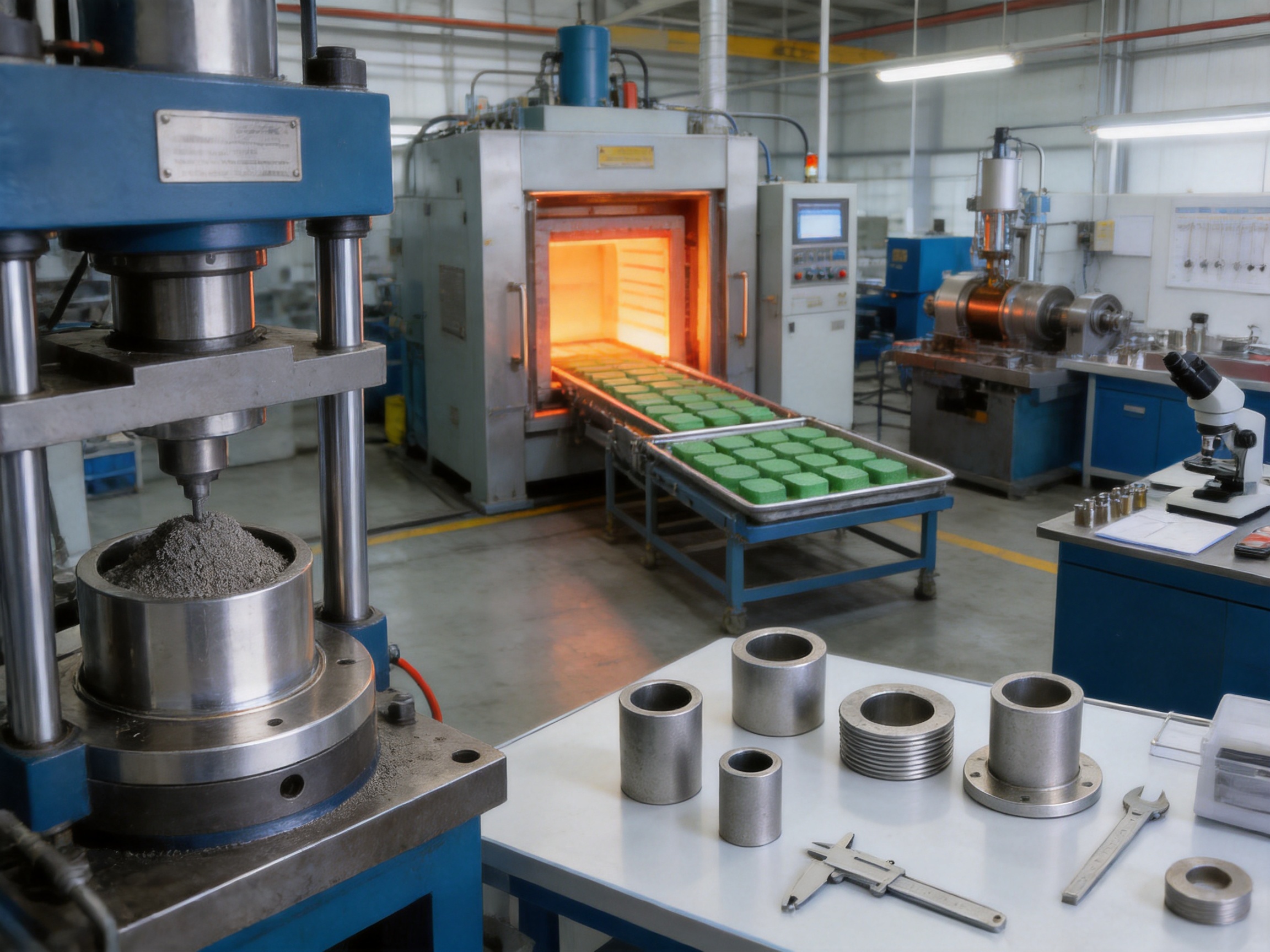
Traditional machining begins with a solid bar, tube, or billet and removes material until the desired bushing shape is achieved. Powder metallurgy follows a different approach. The component is formed close to its final geometry by compacting carefully selected metal powders in a precision die. This reduces material waste and allows the manufacturer to create a controlled internal structure that is difficult to achieve through conventional machining.
The manufacturing process begins with material selection. Stainless steel powder is chosen according to the required corrosion resistance, mechanical strength, operating temperature, wear behavior, and compatibility with the application environment. Alloy composition, particle size, particle shape, and powder cleanliness all affect compaction behavior and final performance.
The powder is then blended to obtain consistent distribution of the alloy constituents and any necessary processing additives. Uniform mixing is essential because variations in powder composition can cause differences in density, shrinkage, hardness, or dimensional stability after sintering.
Next, the prepared powder is placed into a precision mold and compacted under controlled pressure. The pressure must be sufficient to form a stable green compact while preserving the interconnected porosity required for oil retention. Excessive compaction can reduce porosity and limit lubricant storage, while insufficient compaction can reduce strength and cause dimensional instability.
The green compact is transferred to a sintering furnace. During sintering, the part is heated according to a carefully controlled temperature profile and atmosphere. The powder particles bond together through solid-state diffusion, producing a durable stainless steel structure. The furnace atmosphere helps prevent unwanted oxidation and supports consistent metallurgical results.
After sintering, additional operations may be applied. These can include sizing, calibration, machining, surface finishing, deburring, cleaning, dimensional inspection, and oil impregnation. The final oil treatment fills the internal pores with a lubricant selected for the intended operating temperature, speed, load, and environment.
Key Performance Advantages
Excellent Corrosion Resistance
The most important advantage of stainless steel bushings is their ability to resist corrosion more effectively than ordinary carbon steel alternatives. In humid production areas, washdown zones, marine environments, and chemical processing facilities, unprotected carbon steel can develop rust that increases friction, damages shafts, and shortens service life.
Sintered stainless steel provides a more stable material platform for these conditions. It is suitable for equipment exposed to moisture, condensation, cleaning solutions, salt-laden air, and selected chemical atmospheres. The exact resistance depends on the stainless steel grade, lubricant, temperature, chemical concentration, and exposure time, so the material should always be selected according to the actual application.
Corrosion resistance also helps protect dimensional accuracy. When a bushing corrodes, its bore can become rough or irregular. This increases clearance variation and may result in shaft scoring, vibration, noise, and premature wear. A corrosion-resistant bushing maintains a more consistent sliding surface over a longer operating period.
Internal Lubrication and Reduced Maintenance
The oil-impregnated pore structure eliminates or reduces the need for external lubrication in many applications. This is especially valuable when bushings are installed in enclosed assemblies, remote machinery, clean production lines, or equipment with limited access for maintenance.
Because lubricant is stored inside the bearing body, the bushing can gradually release oil during operation. This supports a stable lubrication film and minimizes the risk of dry running. It also reduces the labor, downtime, and contamination associated with repeated greasing.
Self-lubrication does not mean that every bushing can operate indefinitely under every condition. Excessive load, high speed, unsuitable shaft hardness, aggressive chemicals, extreme temperatures, or inadequate alignment can still affect performance. However, when correctly specified, the internal oil reservoir provides a major advantage over plain bushings that rely entirely on external lubrication.
Low Friction and Smooth Movement
A properly impregnated bushing can reduce friction between the bushing surface and the mating shaft. Lower friction helps reduce heat generation, energy consumption, noise, and wear. Smooth movement is particularly important in medical devices, laboratory instruments, automation systems, positioning mechanisms, and precision mechanical assemblies.
The operating result depends on the complete bearing system, not only the bushing. Shaft material, surface roughness, hardness, alignment, load distribution, speed, temperature, and environmental contamination must be considered together. A high-quality bushing combined with an unsuitable shaft may not deliver the expected service life.
High Temperature and Load Capability
Sintered stainless steel bushings can be designed for applications involving elevated temperatures and substantial mechanical loads. Their metallic structure provides greater strength and temperature stability than many polymer-based bearing materials. This makes them suitable for selected industrial equipment, combustion-related mechanisms, thermal processing equipment, and high-temperature assemblies.
High-speed operation may also be possible in applications with suitable load and lubrication conditions. Some product designs are used at sliding speeds approaching 70 to 75 meters per second under carefully controlled conditions. Actual allowable speed must be confirmed through engineering evaluation because the pressure-velocity relationship, shaft condition, temperature, and lubrication behavior are decisive factors.
Dimensional Stability and Long Service Life
Powder metallurgy allows the manufacturer to control the shape, density, and dimensions of the component during forming and post-sintering calibration. Stable dimensions are essential for maintaining the correct clearance between the bushing and shaft.
Controlled porosity also contributes to predictable lubrication. If the pores are too large, oil may drain excessively or the structure may lack sufficient strength. If the pores are too small or poorly connected, the lubricant may not migrate effectively to the working surface. Balanced pore structure supports both mechanical integrity and lubrication performance.
With proper material selection, design, installation, and operating conditions, sintered stainless steel self-lubricating bushings can provide long service life and reduce the frequency of component replacement.
Comparison with Conventional Bushing Materials
Different bearing materials are appropriate for different applications. Carbon steel bushings may be economical in dry indoor machinery where corrosion is not a major concern. Bronze bushings offer good sliding performance and may be selected for applications with external lubrication. Polymer bushings can provide low noise and chemical resistance in selected low-load systems. Sintered stainless steel bushings are particularly valuable when corrosion resistance, internal lubrication, strength, and maintenance reduction are required together.
| Performance Factor | Sintered Stainless Steel Self-Lubricating Bushing | Conventional Carbon Steel Bushing | Traditional Externally Lubricated Bronze Bushing |
| Corrosion Resistance | Excellent when the correct stainless steel grade is selected | Moderate to poor without protective treatment | Good in many environments but dependent on alloy and exposure |
| Lubrication Method | Oil stored in interconnected pores | Usually requires external lubrication | Usually requires grease, oil, or a dedicated lubrication system |
| Maintenance Requirement | Low in suitable applications | Regular inspection and lubrication may be required | Periodic lubrication is commonly required |
| Moisture and Washdown Suitability | Very good with suitable material and lubricant | Limited by rust risk | Good in selected conditions |
| High-Temperature Potential | Good, depending on grade and lubricant | Good mechanically but vulnerable to oxidation | Moderate to good depending on alloy and lubricant |
| Manufacturing Flexibility | Near-net-shape forming plus precision machining | Simple machining or forming | Machining, casting, or powder metallurgy |
| Typical Service Objective | Long-life, low-maintenance operation in demanding environments | Cost-sensitive general mechanical service | High sliding performance with planned lubrication |
This comparison demonstrates why product selection should be based on operating conditions rather than initial purchase price alone. A lower-cost bushing may require more frequent lubrication, replacement, cleaning, or corrosion control. The total cost of ownership can therefore be higher when maintenance labor and production downtime are included.
Applications in Food Processing Equipment
Food processing machinery is exposed to water, steam, detergents, disinfectants, food residues, temperature changes, and frequent washdown cycles. Components must operate reliably while supporting hygiene and contamination-control requirements.
Sintered stainless steel self-lubricating bushings are suitable for selected pivot points, guide mechanisms, conveyors, packaging systems, filling equipment, cutting equipment, and automated handling devices. Their corrosion-resistant construction helps prevent rust formation, while the internally retained lubricant can reduce the need for open grease points.
Reducing external lubrication is useful in areas where excess grease could attract dust or create a contamination risk. However, the lubricant itself must be selected for the application. Where incidental food contact is possible, the lubricant and complete bearing assembly should meet the applicable customer, regulatory, and hygiene requirements.
The bushing design can also support easier equipment cleaning. Smooth, corrosion-resistant surfaces are less likely to retain contaminants than damaged or rusted surfaces. Properly specified bushings can therefore contribute to reliable equipment operation and simplified maintenance procedures.
Applications in Medical and Laboratory Equipment
Medical and laboratory equipment often requires smooth, quiet, precise, and repeatable movement. Components may be installed in diagnostic instruments, laboratory automation systems, sample-handling equipment, hospital mechanisms, imaging-related assemblies, and specialized medical machinery.
Self-lubricating stainless steel bushings can support these requirements by providing low-friction movement with limited routine servicing. Their compact design is useful where installation space is restricted or where a grease fitting would interfere with equipment geometry.
Corrosion resistance is also valuable in environments involving cleaning agents, humidity, sterilization procedures, or repeated disinfection. The product must be selected according to the specific sterilization method and temperature because not every oil impregnation system is suitable for every sterilization process.
Dimensional control is essential in precision medical equipment. Excessive clearance may cause movement error, vibration, or noise, while insufficient clearance can increase friction and lead to seizure. Precision forming, sizing, and final inspection help manufacturers produce bushings with consistent bore dimensions and stable performance.
Applications in Marine Equipment
Marine machinery is exposed to saltwater, high humidity, condensation, vibration, and changing temperatures. Corrosion can progress rapidly in these conditions, particularly when components are difficult to access or maintain.
Sintered stainless steel self-lubricating bushings are used in selected marine pumps, deck mechanisms, navigation equipment, actuator assemblies, steering systems, and auxiliary machinery. Their stainless steel structure provides improved resistance to saltwater exposure compared with ordinary untreated carbon steel.
The self-lubricating design can reduce dependence on frequent maintenance in locations where access is restricted or where grease may be washed away. It can also help maintain consistent movement in outdoor mechanisms subjected to weather and spray.
Marine applications require careful engineering. The selected stainless steel grade, lubricant, shaft material, sealing arrangement, load, oscillation angle, and operating speed should all be evaluated. Where the bushing is directly exposed to seawater, a special design or additional protection may be required.
Applications in Chemical and Water Treatment Systems
Chemical processing and water treatment equipment may encounter corrosive liquids, vapors, suspended particles, and fluctuating temperatures. Bearings installed in these systems must resist the surrounding atmosphere while maintaining reliable movement.
Stainless steel self-lubricating bushings can be considered for valve mechanisms, dosing systems, pump components, filter equipment, agitators, and automated handling machinery. Their low-maintenance operation is valuable in systems where scheduled shutdowns are costly or where external lubricant could come into contact with process fluids.
Material compatibility must be checked carefully. Stainless steel is not universally resistant to every chemical, concentration, or temperature. The lubricant may also react with process media or lose viscosity under extreme conditions. Application engineering should therefore include a review of chemical composition, exposure duration, operating temperature, pressure, and cleaning procedures.
Applications in Industrial Automation and Packaging
Automation equipment depends on repeatable movement, accurate positioning, and low downtime. Bushings may be used in grippers, guide arms, linkages, indexing mechanisms, linear slides, pick-and-place systems, and packaging machines.
In these applications, self-lubrication can eliminate routine greasing points and simplify machine design. The bushing can support rapid reciprocating or oscillating movement while reducing friction and maintenance requirements.
Packaging machinery may operate in environments containing dust, moisture, product residue, and frequent cleaning cycles. Stainless steel construction provides an advantage where ordinary steel components would be vulnerable to rust. The compact near-net-shape design also allows manufacturers to produce customized geometries, flanges, grooves, steps, and other features required by automated equipment.
Advanced Manufacturing Strengths
Integrated Research, Production, and Sales
Jiande Welfine Technology Co., Ltd. was established in 2001 and specializes in powder metallurgy sintering and related precision machining. By integrating research and development, manufacturing, quality control, and customer service, the company can manage the complete product cycle from initial design review to finished bushing delivery.
This integrated structure helps reduce communication gaps between engineering and production. Customer drawings and samples can be evaluated for manufacturability, material suitability, tolerance requirements, and expected operating conditions before mass production begins.
Modern Production Facility
The company operates a 13,039-square-meter production base equipped with advanced powder metallurgy and precision manufacturing equipment. The facility includes high-efficiency presses, high-temperature sintering furnaces, precision forming machines, and related testing equipment.
Modern equipment supports stable compaction pressure, repeatable part geometry, controlled sintering conditions, and efficient production of both standard and customized components. Equipment capability is especially important for bushings because small changes in density, bore size, or porosity can influence friction, oil retention, and service life.
More Than Two Decades of Experience
With more than 20 years of industry experience, Welfine has developed practical expertise in powder selection, tooling design, compaction, sintering, sizing, machining, oil impregnation, and application support. This experience helps the company identify potential manufacturing risks before they affect production.
More than 150 skilled employees contribute to engineering, production, inspection, logistics, and customer support. Experienced personnel can provide useful recommendations concerning wall thickness, draft angles, density distribution, tolerances, machining allowances, and cost-effective production quantities.
OEM and ODM Customization
Many industrial bushings cannot be replaced by an off-the-shelf size. Equipment designers may require special outside diameters, inside diameters, lengths, flanges, oil grooves, stepped profiles, mounting features, or material grades. Welfine provides OEM and ODM manufacturing based on customer drawings or samples.
During the design review, engineers can examine the bushing geometry, mating shaft, load, speed, operating temperature, environment, expected service life, and assembly method. This information supports the selection of a suitable material and manufacturing route.
Customization may include dimensional changes, density adjustments, surface finishing, secondary machining, special oil impregnation, packaging requirements, and inspection documentation. The objective is not simply to reproduce a drawing but to produce a component that performs reliably in the customer’s actual equipment.
Quality Management and Certifications
Welfine strictly implements quality management systems and has passed ISO 9001:2015 and IATF 16949:2016 certifications. These systems support documented procedures for production control, inspection, traceability, corrective action, and continuous improvement.
Quality management is particularly important for self-lubricating bushings because defects may not be visible from external appearance alone. Internal porosity, density variation, incomplete oil impregnation, dimensional deviation, and surface damage can influence service life. A controlled quality system helps ensure that these characteristics are monitored consistently.
Detailed Production Process
Material and Powder Preparation
The process begins with the selection and inspection of stainless steel powder. The material must meet specified requirements for chemical composition, particle distribution, flowability, compressibility, and cleanliness. Powder is stored and handled in a controlled manner to minimize contamination and moisture absorption.
Depending on the product design, lubricants or processing additives may be blended with the base powder. Mixing time and conditions are controlled to ensure even distribution. Consistency at this stage supports consistent density and dimensional behavior during compaction.
Tooling and Compaction
Precision tooling determines the basic shape of the bushing. Tool design must account for powder flow, ejection, wall thickness, dimensional change, and the need for later sizing or machining. Complex profiles require careful engineering to avoid density gradients and stress concentration.
During compaction, the powder is compressed into a green compact. Pressing parameters are monitored to achieve a stable part with the required strength and porosity. Automated or high-efficiency presses help improve production consistency and repeatability.
Controlled Sintering
Sintering bonds the powder particles and creates the final metallic structure. The heating rate, peak temperature, holding time, cooling rate, and furnace atmosphere must be controlled accurately. Improper sintering can result in insufficient strength, excessive shrinkage, distortion, oxidation, or undesirable changes in porosity.
High-temperature sintering furnaces provide a controlled environment for repeatable metallurgical results. Production records and process monitoring help identify variations and support quality traceability.
Calibration and Secondary Machining
After sintering, the bushing may undergo sizing or calibration to achieve the required bore diameter and outside dimensions. Additional machining may be performed on critical surfaces, grooves, shoulders, flanges, or mounting features.
Near-net-shape powder metallurgy reduces machining waste and production time compared with manufacturing the entire part from solid bar stock. At the same time, selective precision machining can provide the accuracy required for demanding assemblies.
Cleaning and Oil Impregnation
Before oil impregnation, the bushing is cleaned to remove loose particles, processing residues, and contaminants. The component is then treated with an appropriate lubricant under controlled conditions so that the internal pore network is filled effectively.
Vacuum impregnation or pressure-assisted methods may be used depending on the product design and required oil content. The choice of oil affects operating temperature, viscosity, friction, evaporation resistance, and chemical compatibility.
Inspection and Testing
Finished bushings may be inspected for dimensions, surface condition, weight, density, hardness, porosity, oil content, and appearance. Depending on customer requirements, inspection can include bore measurement, outside diameter measurement, length verification, metallographic evaluation, wear testing, friction testing, or load-speed testing.
Inspection data supports batch consistency and provides evidence that products meet drawing and quality requirements. For customized components, first-article inspection is valuable because it verifies that the tooling, process, and measurement methods are suitable before full production.
How to Select the Correct Bushing
Correct selection begins with a complete understanding of the operating conditions. The following factors should be reviewed before finalizing a design.
Load and Pressure
Determine the radial load, axial load, shock load, and expected load variation. The projected bearing area is commonly considered when evaluating pressure. High loads may require increased wall thickness, a stronger material, reduced clearance, or a different bearing construction.
Sliding Speed and Motion Type
Identify whether the motion is continuous rotation, oscillation, reciprocation, or intermittent movement. Sliding speed and frequency affect heat generation and lubricant migration. An oscillating mechanism may require different design considerations from a continuously rotating shaft, even if the average speed is similar.
Temperature
Record the minimum, normal, and maximum operating temperatures. Temperature affects oil viscosity, evaporation, expansion, dimensional clearance, and material strength. A lubricant suitable for room-temperature equipment may not be appropriate for high-temperature service.
Environment
Consider exposure to water, saltwater, cleaning chemicals, fuels, gases, dust, steam, process fluids, and radioactive conditions. The stainless steel grade and impregnation oil should be checked for compatibility with the surrounding environment.
Shaft Design
The mating shaft should have suitable hardness, surface roughness, roundness, straightness, and alignment. A shaft that is too soft or rough can accelerate bushing wear. Poor alignment can create uneven pressure and localized heating.
Clearance and Installation
Operating clearance must account for shaft size, bushing dimensions, temperature changes, load, speed, and assembly method. Press-fitting a bushing into a housing can reduce the bore diameter, so the final installed clearance should be evaluated rather than relying only on the free-state bore measurement.
Installation and Maintenance Recommendations
Before installation, inspect the bushing, housing, and shaft for burrs, contamination, damage, and dimensional problems. The housing bore should be clean and correctly aligned. The shaft should be free from deep scratches, rust, sharp edges, and excessive surface roughness.
Use an appropriate press tool or installation fixture. Force should be applied evenly and to the correct end of the bushing. Hammering directly on the bearing can deform the bore or damage the edge.
Do not use an incompatible grease or solvent without confirming its effect on the impregnated oil. Some cleaning chemicals can remove or degrade the lubricant. If additional lubrication is required, it should be compatible with the original impregnation oil and the operating environment.
During operation, monitor unusual noise, temperature rise, vibration, movement resistance, shaft wear, and visible corrosion. These symptoms may indicate misalignment, excessive load, insufficient clearance, contamination, or an unsuitable operating condition.
Although self-lubricating bushings reduce maintenance, equipment should still be inspected according to a preventive maintenance schedule. Early detection of shaft damage or alignment problems can protect both the bushing and the surrounding machine.
Advantages Over Competing Solutions
The principal advantage of sintered stainless steel self-lubricating bushings is the combination of properties they provide in one compact component. Some competing solutions may offer excellent performance in one area but limitations in another.
Plain carbon steel bushings can be inexpensive but may require protective coatings and frequent lubrication. Coatings can eventually wear through, exposing the underlying steel to corrosion. Sintered stainless steel avoids dependence on a surface coating for its basic corrosion resistance.
Bronze bushings are widely used for sliding applications and can provide good load capacity. However, they commonly rely on external lubrication. In equipment where grease contamination, difficult access, or maintenance downtime is a concern, an oil-impregnated stainless steel bushing may offer a more convenient solution.
Polymer bushings can provide quiet operation and chemical resistance, but their load capacity, temperature resistance, dimensional stability, or creep behavior may not suit demanding industrial applications. Sintered stainless steel offers a metallic structure with higher mechanical stability in many high-load or high-temperature conditions.
Rolling-element bearings can achieve low friction but may require more complex seals, greater radial space, and regular maintenance in contaminated or corrosive environments. A self-lubricating bushing is often simpler, more compact, and less sensitive to certain types of shock or oscillating movement.
Typical Product Configurations
Sintered stainless steel self-lubricating bushings can be manufactured in cylindrical, flanged, stepped, or customized configurations. Standard cylindrical bushings are used for general shaft support. Flanged bushings provide axial positioning or support at the end of a housing. Stepped designs can accommodate changes in shaft or housing geometry.
Additional features may include oil grooves, relief areas, mounting shoulders, special chamfers, keyways, or custom outer profiles. Geometry should be designed with powder metallurgy limitations in mind so that the component can be compacted and ejected without creating unstable density distribution or excessive tooling complexity.
When a customer provides a sample, the manufacturer can evaluate the existing dimensions, material, wear pattern, and application conditions. If a drawing is available, the manufacturer can review tolerances, surface requirements, inspection points, and production quantities. In both cases, accurate application information improves the reliability of the final design.
Frequently Asked Questions
What makes a sintered stainless steel bushing self-lubricating?
The bushing contains interconnected pores created during powder metallurgy manufacturing. These pores are filled with lubricating oil after sintering. During operation, oil gradually moves to the sliding surface and forms a lubricating film, reducing friction and wear.
Are these bushings completely maintenance-free?
They are designed to operate with little or no routine external lubrication in suitable conditions. However, the complete machine should still be inspected. Excessive load, contamination, misalignment, extreme temperature, or shaft damage may require corrective maintenance.
Can they be used in food processing equipment?
They can be suitable for food processing machinery when the stainless steel grade, oil impregnation, design, and complete assembly meet the requirements of the application. If incidental food contact is possible, the lubricant and product configuration should be evaluated for the applicable hygiene and regulatory standards.
Are they suitable for marine applications?
Yes, they are commonly considered for marine pumps, deck equipment, navigation systems, and auxiliary assemblies because stainless steel offers improved resistance to moisture and saltwater exposure. The exact material and lubricant should be selected according to the degree of direct seawater contact and operating conditions.
Can Welfine manufacture custom dimensions?
Yes. Jiande Welfine Technology Co., Ltd. provides OEM and ODM manufacturing based on customer drawings or samples. Customization can include dimensions, material selection, density, secondary machining, oil impregnation, packaging, and inspection requirements.
What information should be provided for a quotation?
Useful information includes the bushing drawing or sample, inside and outside diameters, length, tolerance, shaft material, housing material, load, speed, motion type, temperature, environment, required quantity, and expected service life. Details about cleaning agents, chemicals, seawater exposure, or sterilization are also important.
Can the bushings operate at high speed?
Some designs can operate at high sliding speeds, including applications approaching 70 to 75 meters per second under controlled conditions. The allowable speed depends on load, pressure-velocity value, shaft condition, temperature, oil type, and cooling. Each high-speed application should be reviewed by an engineer.
How does stainless steel compare with carbon steel?
Stainless steel provides substantially better corrosion resistance in many humid, chemical, and marine environments. Carbon steel may be suitable for dry, protected applications but can rust when exposed to moisture or cleaning agents. Stainless steel is often preferred when long-term reliability and reduced corrosion-related maintenance are priorities.
Can external lubricant be added?
Additional lubricant may be possible in some applications, but compatibility must be confirmed. An incompatible oil, grease, solvent, or cleaning agent can affect the impregnated lubricant or cause swelling, contamination, or performance changes. The recommended maintenance procedure should be confirmed before adding any external lubricant.
What certifications does the manufacturer hold?
Jiande Welfine Technology Co., Ltd. has passed ISO 9001:2015 and IATF 16949:2016 certifications. These certifications support controlled quality management, process documentation, traceability, corrective action, and continuous improvement.
Why Choose an Experienced Powder Metallurgy Manufacturer?
A self-lubricating bushing may appear to be a simple sleeve, but its internal structure and operating behavior are influenced by many manufacturing variables. An experienced manufacturer understands how powder characteristics, pressing pressure, tooling geometry, sintering conditions, porosity, oil impregnation, and machining interact.
Jiande Welfine Technology Co., Ltd. combines more than two decades of experience with a modern 13,039-square-meter production base and a skilled workforce of more than 150 employees. Its capabilities cover powder metallurgy bushings, self-lubricating bushings, and precision sintered components for industrial customers.
The company’s OEM and ODM approach allows customers to obtain application-specific solutions rather than selecting a generic component that may not meet the equipment requirements. Engineering review, controlled production, precision machining, and quality inspection support consistent performance from prototype to volume production.
For customers seeking corrosion-resistant, low-maintenance, and durable bearing components, sintered stainless steel self-lubricating bushings provide an effective alternative to conventional lubricated bushings. When correctly designed and manufactured, they can improve equipment reliability, reduce maintenance intervals, limit downtime, and support stable operation in demanding environments.
Conclusion
Sintered stainless steel self-lubricating bushings combine the corrosion resistance of stainless steel with the internal lubrication capability of a controlled porous structure. Their advantages include low maintenance, smooth movement, dimensional stability, high wear resistance, and suitability for challenging conditions involving moisture, chemicals, saltwater, heat, and limited access.
These bushings are particularly valuable in food processing equipment, medical and laboratory machinery, marine systems, chemical processing, water treatment, packaging equipment, and industrial automation. Compared with carbon steel bushings, they provide stronger resistance to rust. Compared with externally lubricated bronze or steel bushings, they can reduce maintenance requirements. Compared with some polymer alternatives, they can provide greater mechanical and temperature stability.
The final performance depends on correct material selection, accurate dimensions, suitable oil impregnation, proper shaft design, controlled installation, and appropriate operating conditions. Jiande Welfine Technology Co., Ltd. supports these requirements through integrated research and development, powder metallurgy production, precision machining, quality management, and customized OEM/ODM services.
For industrial buyers and equipment manufacturers, selecting a qualified powder metallurgy supplier is an important step toward achieving reliable, long-lasting bearing performance. A properly engineered sintered stainless steel self-lubricating bushing can provide a practical balance of corrosion resistance, lubrication efficiency, strength, and total operating economy.
References
1. Powder Metallurgy: Principles and Applications, standard technical reference for powder compaction, sintering, porosity, and dimensional control.
2. ASM Handbook, Volume 7: Powder Metal Technologies and Applications, technical guidance on powder metallurgy materials and manufacturing processes.
3. ISO 9001:2015, Quality Management Systems, principles for controlled production, documented processes, customer satisfaction, and continual improvement.
4. IATF 16949:2016, Quality Management System Requirements for Automotive Production and Relevant Service Parts Organizations.
5. Technical literature on porous metal bearings, oil impregnation, sliding friction, wear mechanisms, and pressure-velocity evaluation.
6. Technical guidance on stainless steel corrosion resistance in food processing, marine, chemical, and industrial environments.
Product: Sintered Stainless Steel Self-lubricating Bushings

Related products
-
-
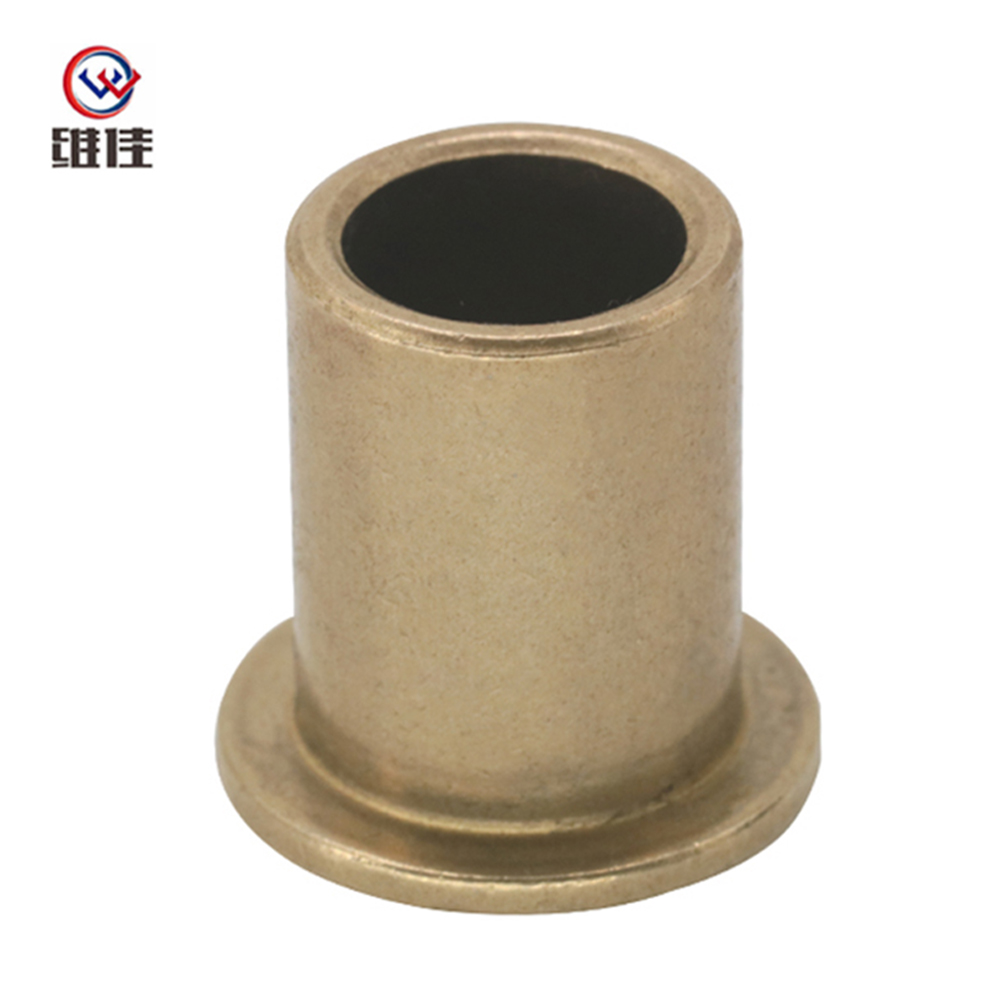
Our sintered bronze self-lubricating bearings are engineered for demanding industrial applications where traditional lubrication is impractical. Designed with advanced powder metallurgy technology, th...
See Details
Copyright © Jiande Welfine Technology Co., Ltd. All Rights Reserved. Privacy Custom Self-lubricating Sintered Bushing Manufacturers
