E-mail us: [email protected]
Tel: +86-15239857375
 English
 中文简体


 Home / Author / Luo Qian — Product Sales Supervisor / Sintered Stainless Steel Self-Lubricating Bushings for Corrosive, High-Temperature, and Maintenance-Sensitive Applications
Sintered Stainless Steel Self-Lubricating Bushings for Corrosive, High-Temperature, and Maintenance-Sensitive Applications
 2026.10.10
 Luo Qian — Product Sales Supervisor
Content
- 1 What Are Sintered Stainless Steel Self-Lubricating Bushings?
- 2 Why Stainless Steel and Powder Metallurgy Work Well Together
- 3 Key Advantages of Sintered Stainless Steel Self-Lubricating Bushings
- 4 How the Self-Lubricating Mechanism Works
- 5 Powder Metallurgy Manufacturing Process
- 6 Manufacturing Strengths of Jiande Welfine Technology Co., Ltd.
- 7 Advantages Compared with Conventional Bushing Materials
- 8 Applications in Food Processing Machinery
- 9 Applications in Medical and Laboratory Equipment
- 10 Applications in Marine Equipment
- 11 Applications in Chemical and Water Treatment Equipment
- 12 Applications in Industrial Automation and Packaging
- 13 How to Select the Correct Bushing
- 14 Customization and OEM/ODM Services
- 15 Quality Control and Consistency
- 16 Installation Recommendations
- 17 Common Causes of Premature Failure
- 18 Q&A
- 18.1 What is a sintered stainless steel self-lubricating bushing?
- 18.2 Are these bushings completely maintenance-free?
- 18.3 Why are they better than ordinary carbon steel bushings in wet environments?
- 18.4 Can they be used in food processing equipment?
- 18.5 Can they be used in medical equipment?
- 18.6 Can they operate in marine environments?
- 18.7 What operating speed can they support?
- 18.8 Can the bushing size and shape be customized?
- 18.9 What information is required for a quotation?
- 18.10 How does powder metallurgy improve production efficiency?
- 18.11 What quality certifications does the manufacturer have?
- 18.12 Does the manufacturer provide OEM and ODM services?
- 19 Conclusion
- 20 References
- 21 Product: Sintered Stainless Steel Self-lubricating Bushings
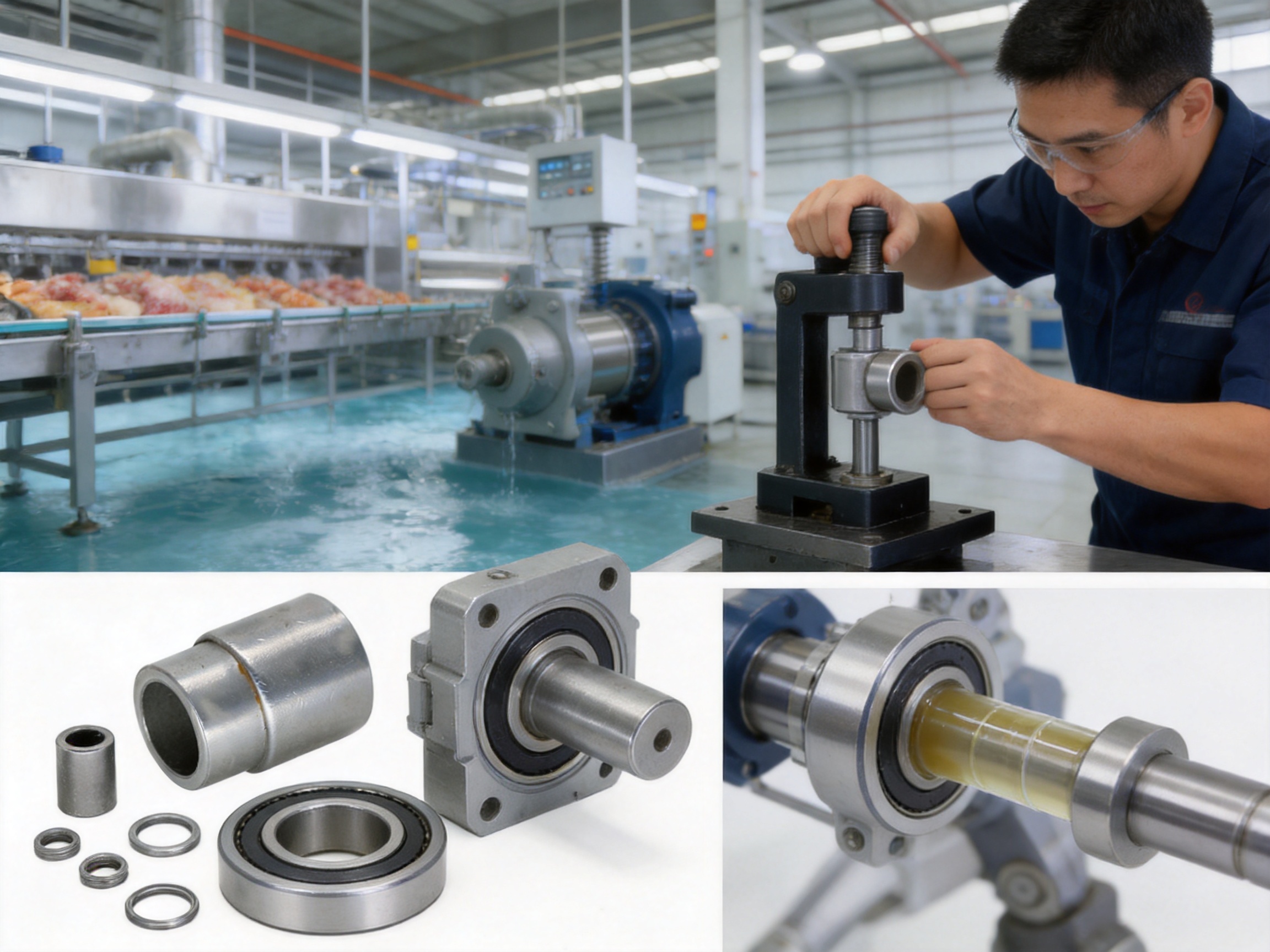
Sintered stainless steel self-lubricating bushings are engineered bearing components designed to provide reliable sliding performance where conventional lubricated bearings may be difficult to maintain. Combining stainless steel corrosion resistance with the controlled porosity of powder metallurgy, these bushings provide an integrated lubrication system within the bearing material itself.
They are particularly suitable for food processing machinery, medical equipment, marine systems, chemical processing equipment, packaging machinery, water treatment systems, and industrial automation. In these applications, components may be exposed to moisture, cleaning agents, saltwater, high temperatures, chemicals, limited maintenance access, or environments where external lubrication is undesirable.
Jiande Welfine Technology Co., Ltd. manufactures powder metallurgy bushings, self-lubricating bushings, and precision sintered metal components for industrial customers. Established in 2001, the company integrates research and development, production, sales, sintering, forming, and precision machining. Its 13,039-square-meter production base, advanced equipment, experienced workforce, and certified quality systems support customized OEM and ODM production based on customer drawings, samples, or technical requirements.
This article explains the structure, manufacturing process, operating principle, advantages, applications, customization options, and quality considerations of sintered stainless steel self-lubricating bushings.
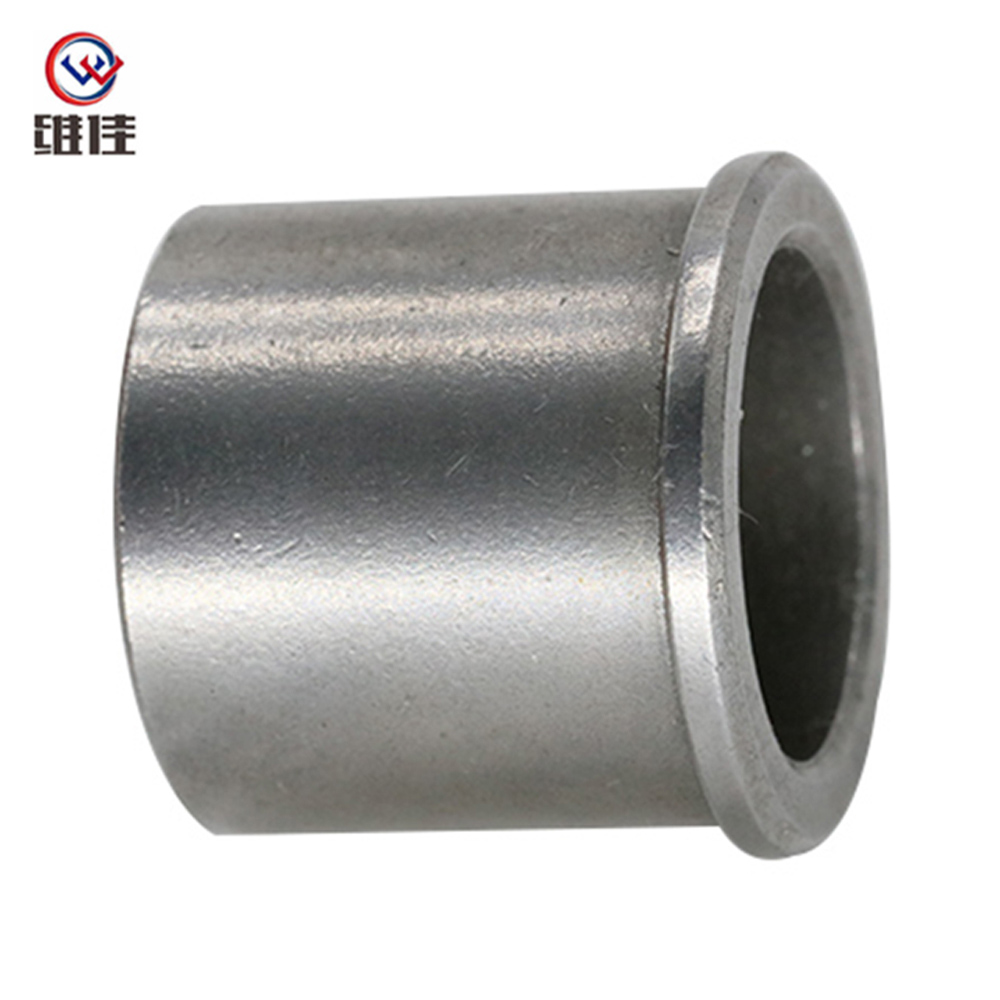
Sintered Stainless Steel Self-lubricating Bushings
What Are Sintered Stainless Steel Self-Lubricating Bushings?
A sintered stainless steel self-lubricating bushing is a cylindrical or specially shaped sliding bearing produced from stainless steel powder. The powder is compacted in a precision tool, sintered at a controlled temperature, machined when required, and impregnated with lubricating oil or another suitable lubricant.
The powder metallurgy process creates a network of interconnected pores throughout the bushing. These microscopic pores function as internal lubricant reservoirs. During operation, frictional heat and surface movement encourage a controlled amount of lubricant to migrate from the pores to the shaft-bushing interface. When the equipment stops, excess lubricant can be reabsorbed into the porous structure, helping maintain the lubrication cycle.
Unlike a solid metal bushing that depends entirely on grease or oil applied from outside, an oil-impregnated bushing carries much of its lubrication internally. This does not mean that every application is completely maintenance-free under all conditions. Operating temperature, load, speed, shaft material, surface finish, environment, and lubricant compatibility must be evaluated before final selection. However, compared with many conventional bushings, the design can substantially reduce relubrication requirements.
Stainless steel provides the structural foundation. Depending on the selected material grade and application requirements, it can offer strong resistance to moisture, atmospheric corrosion, cleaning chemicals, saltwater exposure, and other aggressive conditions. The result is a bearing solution that combines structural strength, corrosion resistance, dimensional stability, and built-in lubrication.
Why Stainless Steel and Powder Metallurgy Work Well Together
Stainless steel is widely used when ordinary carbon steel or standard bearing materials may corrode too quickly. Corrosion can increase friction, damage the shaft, create unwanted particles, alter dimensions, and eventually cause seizure or premature failure. In wet, humid, marine, chemical, or hygienic environments, material selection is therefore a central part of bearing design.
Powder metallurgy adds manufacturing flexibility to the inherent advantages of stainless steel. Instead of removing most of the material from a solid bar, powder metallurgy forms components close to their final geometry. This approach can reduce material waste and make it practical to produce complex profiles, flanges, steps, grooves, recesses, and other functional features.
The process also allows porosity to be managed as a functional property. Porosity is not merely a manufacturing characteristic; it is essential to oil storage and controlled lubricant release. By controlling powder selection, compaction pressure, sintering conditions, and post-processing, manufacturers can balance density, strength, oil capacity, wear resistance, and dimensional accuracy.
This combination is especially valuable when a component must be both corrosion-resistant and self-lubricating. A stainless steel bushing made by conventional machining may provide corrosion resistance, but it does not automatically provide an internal oil reservoir. A porous sintered structure makes that additional function possible.
Key Advantages of Sintered Stainless Steel Self-Lubricating Bushings
Excellent Corrosion Resistance
Corrosion resistance is one of the most important advantages of stainless steel bushings. In marine, food processing, medical, chemical, and outdoor equipment, components may encounter water, condensation, cleaning solutions, salt spray, or chemically active atmospheres.
By selecting an appropriate stainless steel composition and applying suitable production controls, the bushing can maintain a more stable surface than ordinary carbon steel alternatives. Reduced corrosion helps preserve the internal diameter, shaft clearance, surface condition, and operating reliability of the assembly.
Material selection must still be based on the actual environment. The concentration of chemicals, exposure time, temperature, presence of chlorides, and contact with dissimilar metals can all affect corrosion performance. A technical review is recommended for severe chemical or marine service.
Internal Lubricant Storage
The porous structure stores lubricating oil inside the bearing body. This feature supports continuous or intermittent lubricant delivery during shaft rotation or oscillation. It is particularly useful when access for lubrication is limited or when frequent maintenance would interrupt production.
Internal lubricant storage can also reduce the risk associated with inconsistent manual lubrication. Conventional bushings may receive too little lubricant, too much lubricant, or the wrong lubricant. A properly impregnated sintered bushing provides a more predictable lubrication source throughout normal operation.
Reduced Maintenance Requirements
Self-lubricating bushings can reduce scheduled maintenance because they do not necessarily require frequent external oil or grease application. This is beneficial in automated lines, enclosed mechanisms, high-temperature areas, remote equipment, and machinery where disassembly is expensive.
Reduced maintenance does not eliminate the need for inspection. Shaft wear, contamination, abnormal noise, operating temperature, clearance, and lubricant condition should still be monitored in critical equipment. Correct installation and suitable operating conditions remain essential for long service life.
Low Friction and Stable Sliding Motion
The internal lubrication mechanism helps form a protective film between the shaft and the bushing. This film reduces direct metal-to-metal contact, lowers friction, and supports smooth movement. Stable friction behavior is important in mechanisms that require accurate positioning, repeatable motion, low noise, or controlled energy consumption.
Performance depends on the mating shaft. A hardened, smooth, properly aligned shaft usually provides better results than a rough, soft, contaminated, or poorly aligned shaft. Shaft hardness, surface roughness, clearance, and geometry should therefore be included in the bearing design.
High Wear Resistance
A well-designed sintered stainless steel bushing can provide strong resistance to wear under suitable load, speed, and lubrication conditions. The stainless steel matrix supports the mechanical structure, while the impregnated lubricant reduces frictional heat and surface damage.
Wear resistance is affected by the pressure-velocity combination, oscillating or rotating movement, start-stop frequency, shock loading, temperature, and the presence of abrasive particles. For this reason, bushing selection should be based on the complete duty cycle rather than on load alone.
Suitability for Difficult Operating Conditions
These bushings are suitable for many applications involving high temperature, high load, limited lubrication, humidity, corrosive exposure, or restricted access. They can also be considered for equipment operating in gas or liquid environments where conventional external lubrication is impractical.
Some powder metallurgy bearing designs can support high sliding speeds, with certain material and application combinations reported for speeds up to approximately 70 to 75 meters per second. Such values should never be treated as universal limits. The actual allowable speed must be verified against the selected material, pressure-velocity value, shaft condition, temperature, cooling, and lubricant formulation.
How the Self-Lubricating Mechanism Works
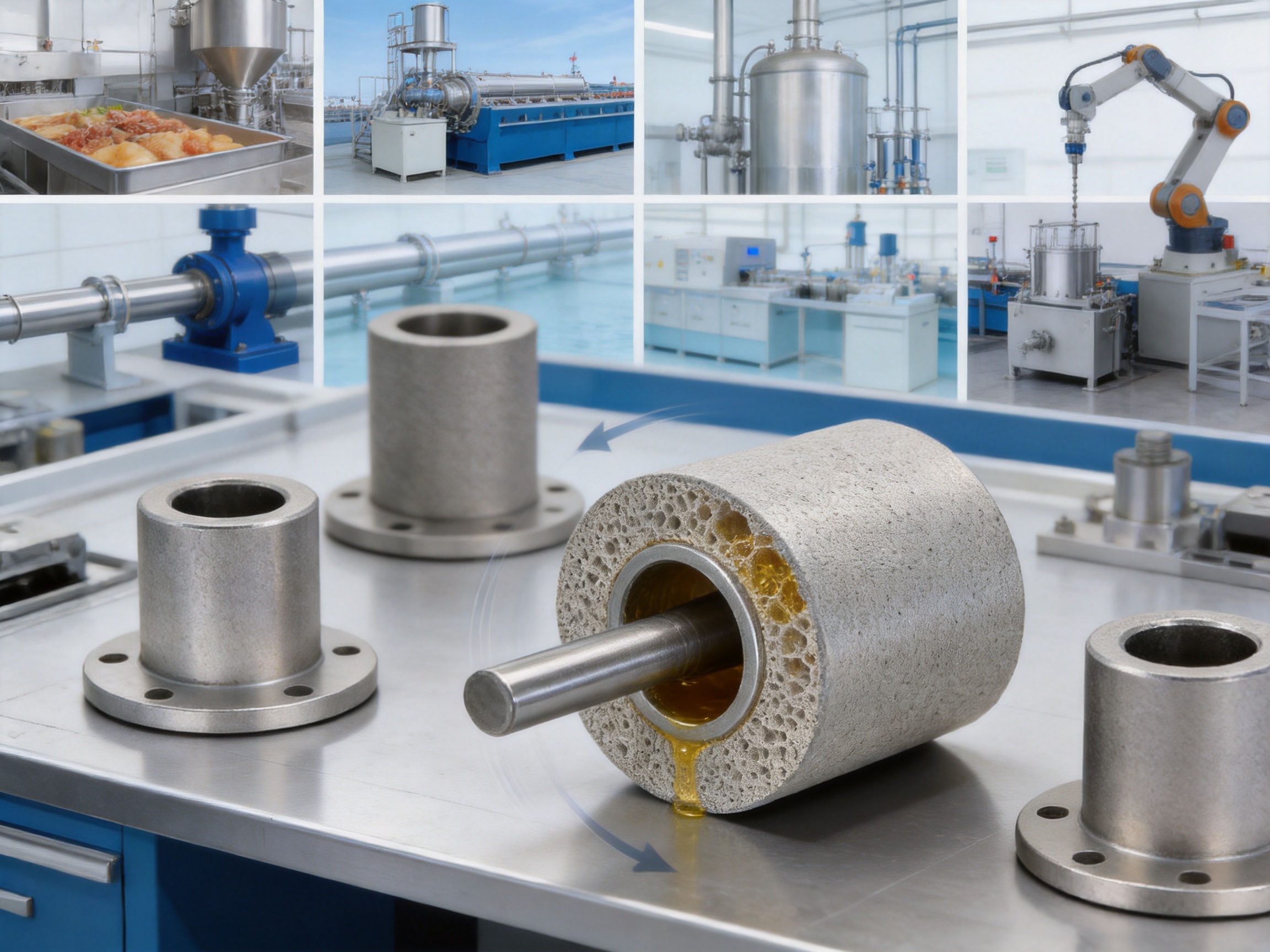
The self-lubricating function begins with the porous structure created during compaction and sintering. Before impregnation, the bushing contains interconnected voids distributed throughout the sintered material. The size, distribution, and volume of these pores influence oil capacity and release behavior.
During oil impregnation, the component is exposed to lubricating oil under controlled conditions. Vacuum or pressure-assisted methods may be used to remove air from the pores and improve oil penetration. After impregnation, the bushing retains lubricant within its internal structure.
When a shaft moves through the bushing, friction generates heat at the contact zone. The temperature change and mechanical action encourage a small quantity of oil to reach the bearing surface. The oil creates a lubricating film that separates the sliding surfaces and reduces friction.
When movement stops and the bushing cools, some of the lubricant can return to the internal pores. This reversible behavior helps replenish the lubricant reservoir and supports repeated start-stop operation.
The effectiveness of this mechanism depends on correct clearance and shaft design. Excessive clearance may permit lubricant loss or unstable movement, while insufficient clearance may restrict oil migration and cause interference. The bearing must also be protected from heavy contamination, because abrasive particles can accelerate wear and obstruct the surface pores.
Powder Metallurgy Manufacturing Process
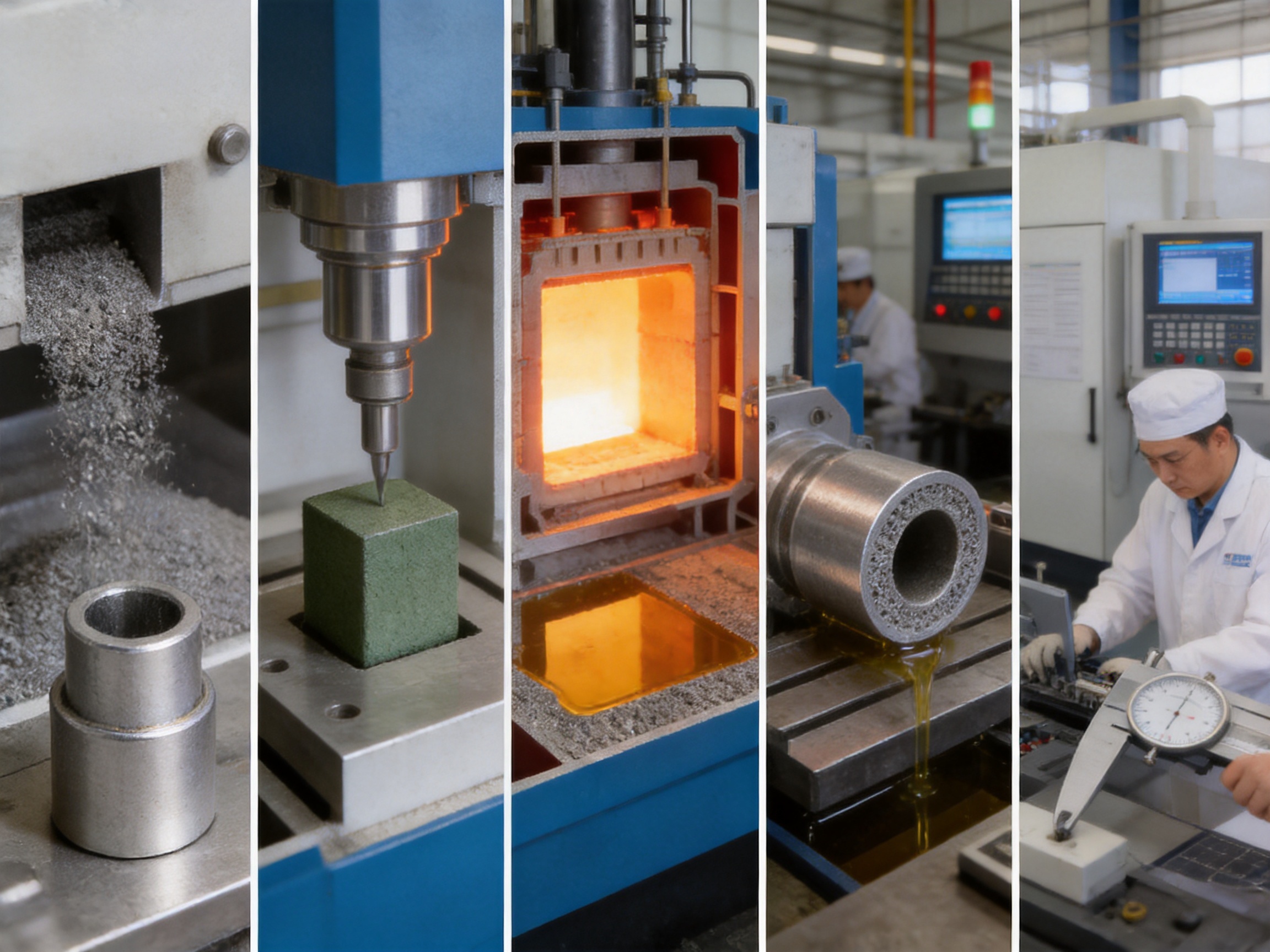
Material Selection
Manufacturing begins with the selection of stainless steel powder and any required alloying or processing additives. The material must be chosen according to corrosion exposure, mechanical load, temperature, wear requirements, dimensional stability, and compatibility with the intended lubricant.
Powder characteristics such as particle size distribution, morphology, apparent density, flowability, and compressibility affect filling, compaction, green strength, sintering behavior, and final porosity. Consistent incoming material is therefore important for stable production.
Precision Tooling and Die Filling
The powder is placed into a precision die designed for the required bushing geometry. Tooling may include features for straight bushings, flanged bushings, stepped components, grooved surfaces, and other custom profiles.
Accurate die filling helps achieve consistent weight and density from part to part. For high-volume production, automated or semi-automated filling systems can support repeatability and production efficiency.
Compaction
In the compaction stage, the powder is pressed under controlled pressure to form a component known as a green compact. The compact has the approximate shape of the final bushing but has not yet reached its final strength.
Compaction pressure influences density distribution, dimensional behavior, mechanical strength, and pore structure. Uneven density can contribute to distortion or inconsistent performance during sintering. Experienced process engineers therefore control filling, pressing direction, tooling movement, and ejection conditions.
Sintering
The green compact is heated in a controlled atmosphere furnace. Sintering bonds the powder particles together without completely eliminating the designed porosity. Furnace temperature, time, atmosphere, heating rate, and cooling rate are carefully managed.
Controlled sintering is essential for stainless steel because oxidation and atmosphere instability can affect surface quality, corrosion performance, dimensional accuracy, and mechanical properties. Proper furnace control helps produce a stable stainless steel matrix while preserving the pore structure needed for lubrication.
Sizing and Calibration
After sintering, the bushing may undergo sizing or calibration to improve dimensional accuracy. This stage can correct small dimensional variations and produce a more consistent internal diameter or external diameter.
Calibration is especially important for bushings because clearance between the shaft and bearing directly affects friction, lubricant movement, noise, temperature, and wear. The required tolerance depends on the operating temperature, shaft size, speed, load, and assembly method.
Machining and Secondary Operations
Powder metallurgy can produce near-net-shape components, but secondary machining may be used when tighter tolerances, special grooves, chamfers, holes, or surface features are required. Precision turning, grinding, drilling, reaming, deburring, and other operations can be integrated into the production plan.
Combining sintering with precision machining allows manufacturers to balance production efficiency with the accuracy required by the customer. It also supports customized designs that cannot be produced economically through pressing alone.
Oil Impregnation
After the bushing reaches the required dimensions and surface condition, it can be impregnated with lubricating oil. The process is controlled to achieve reliable penetration and consistent oil content.
The selected oil must be compatible with the operating temperature, shaft material, surrounding chemicals, speed, load, and expected service life. Different applications may require different viscosity grades or specialized lubricant formulations.
Inspection and Testing
Quality control may include visual inspection, dimensional measurement, density testing, porosity evaluation, oil content verification, hardness testing, surface inspection, and functional testing. For customer-specific requirements, additional tests can be developed according to drawings, standards, or performance specifications.
Inspection data helps confirm that the bushings meet requirements for internal diameter, outside diameter, length, concentricity, roundness, surface quality, and lubricant impregnation. Production records and traceability also support consistent OEM and ODM supply.
Manufacturing Strengths of Jiande Welfine Technology Co., Ltd.
Jiande Welfine Technology Co., Ltd. has more than 20 years of experience in powder metallurgy sintering and related precision machining. The company focuses on powder metallurgy bushings, self-lubricating bearings, and other precision sintered metal components.
Its manufacturing base covers approximately 13,039 square meters and includes equipment for pressing, sintering, precision forming, machining, and testing. High-efficiency presses support repeatable compaction, while high-temperature sintering furnaces provide controlled thermal processing. Precision forming and machining equipment support dimensional consistency and customized geometries.
The company employs more than 150 skilled workers across production, engineering, quality control, and related functions. This combination of experienced personnel and modern equipment helps manage the entire production cycle from material preparation to finished product inspection.
Welfine provides OEM and ODM services based on customer drawings, samples, or technical specifications. This is important for customers who need more than a standard catalog bushing. Customized solutions may involve material selection, dimensions, flange design, grooves, tolerances, oil type, packaging, inspection requirements, and production volume.
The company has achieved ISO 9001:2015 and IATF 16949:2016 certifications. These quality management systems support process control, documentation, corrective action, traceability, continuous improvement, and customer-specific quality requirements. Certification does not replace application engineering, but it provides a structured framework for stable manufacturing and quality assurance.
The ability to combine powder metallurgy, oil impregnation, and precision machining under one manufacturing organization can simplify supplier coordination. It also allows engineering feedback from tooling, sintering, machining, and inspection to be incorporated into product development.
Advantages Compared with Conventional Bushing Materials
| Performance factor | Sintered stainless steel self-lubricating bushing | Conventional carbon steel bushing | Typical practical advantage |
| Corrosion resistance | High when the correct stainless steel grade is selected | Moderate to poor without protective treatment | Better suitability for moisture, chemicals, and salt exposure |
| Lubrication method | Lubricant stored within the porous structure | Usually requires external oil or grease | Reduced dependence on frequent manual lubrication |
| Maintenance demand | Generally low under suitable conditions | Often higher, especially in exposed equipment | Lower service interruption and maintenance labor |
| Wear performance | Supported by stainless steel structure and internal lubrication | Depends strongly on external lubrication and surface treatment | More stable sliding performance in suitable applications |
| Humid environment suitability | Excellent with suitable material and lubricant | Limited unless protected against corrosion | Reduced risk of rust-related seizure or dimensional change |
| Design flexibility | Near-net-shape powder metallurgy with optional machining | Often produced primarily by turning or machining | Efficient production of selected complex geometries |
| Operating reliability | High when load, speed, clearance, and environment are controlled | More dependent on maintenance and corrosion protection | Suitable for demanding, difficult-to-access mechanisms |
The table shows general tendencies rather than universal performance guarantees. A conventional bushing may outperform a sintered bushing in a specific application if it is made from a more suitable material, receives superior lubrication, or operates under more favorable conditions. Correct engineering selection remains essential.
Applications in Food Processing Machinery
Food processing equipment frequently encounters water, steam, cleaning chemicals, product residue, and repeated washdown cycles. Bearing components must resist corrosion and maintain smooth movement while supporting hygiene-oriented maintenance practices.
Sintered stainless steel self-lubricating bushings can be used in conveyors, filling machines, slicing equipment, packaging machinery, guide mechanisms, adjustment assemblies, and other moving components. Their corrosion resistance helps reduce rust formation, while internal lubrication can reduce the risk of lubricant leakage compared with systems that require regular external greasing.
Application designers must select lubricants and materials appropriate for the relevant food equipment requirements. If incidental food contact is possible, the lubricant and complete component design should be reviewed against the applicable regulations and customer standards. A self-lubricating structure does not automatically make a product suitable for direct food contact.
Applications in Medical and Laboratory Equipment
Medical equipment and laboratory instruments often require smooth, quiet, repeatable movement. They may also be exposed to humidity, cleaning agents, sterilization procedures, or controlled operating environments.
Self-lubricating stainless steel bushings can support movement in diagnostic devices, laboratory automation, positioning mechanisms, hospital equipment, analytical instruments, and specialized machinery. Their low-maintenance design is valuable when equipment must remain available for long operating periods.
For sterilization applications, the material, lubricant, dimensional tolerance, and sterilization cycle must be evaluated together. High temperature, steam, vacuum, radiation, or chemical sterilization can affect lubricant viscosity, corrosion behavior, and dimensional stability. A technical validation program should be completed before production release.
Applications in Marine Equipment
Saltwater and humid marine atmospheres are highly demanding for metal components. Conventional carbon steel bushings may corrode rapidly if protective coatings or frequent maintenance are not provided.
Sintered stainless steel self-lubricating bushings can be used in marine pumps, deck equipment, actuator mechanisms, navigation equipment, hinges, control systems, and auxiliary assemblies. Their corrosion-resistant material and internal lubricant reservoir reduce the need for frequent servicing in difficult-to-access areas.
Marine applications may involve water ingress, impact, vibration, biofouling, salt crystals, and temperature variation. The selected bushing should therefore be evaluated for shaft material compatibility, sealing, clearance, load changes, and possible contamination. In continuously submerged or heavily contaminated systems, additional protection may be required.
Applications in Chemical and Water Treatment Equipment
Chemical processing and water treatment systems often operate in wet environments where corrosion protection is essential. Pumps, valves, mixers, conveyors, dosing equipment, and automated mechanisms may require sliding bearings that can function with limited external lubrication.
Stainless steel self-lubricating bushings can be considered for these applications when the stainless steel grade and lubricant are compatible with the process fluid. Chemical concentration, temperature, pH, oxidizing conditions, and exposure duration should be provided during engineering review.
Where the process fluid may remove or degrade the impregnated oil, a different material system or specialized lubricant may be necessary. The bearing should not be selected solely because it is made from stainless steel; the complete chemical compatibility of the bearing, lubricant, shaft, seals, and surrounding equipment must be considered.
Applications in Industrial Automation and Packaging
Automation equipment often contains many compact linear, rotary, oscillating, or indexing mechanisms. These systems may operate at high cycle rates and may be enclosed behind guards or installed in locations that are difficult to reach.
Self-lubricating bushings can reduce routine lubrication points and support cleaner machine operation. They are suitable for guide arms, pivots, linkages, cam followers, positioning systems, feeders, packaging mechanisms, and adjustment assemblies.
For high-cycle applications, engineers should calculate the pressure-velocity relationship, evaluate acceleration and shock loads, and verify heat dissipation. Starting friction may differ from running friction, especially after long periods of inactivity. Prototype testing is recommended for critical mechanisms.
How to Select the Correct Bushing
Load and Pressure-Velocity Conditions
Start with the radial or axial load applied to the bushing. Then determine the projected bearing area and calculate the operating pressure. For sliding applications, speed must be considered together with pressure because frictional heat increases as both parameters rise.
Oscillating motion, reversing motion, and frequent start-stop cycles may create more demanding conditions than continuous rotation. Shock loads and misalignment should also be included in the design review.
Temperature
Temperature affects lubricant viscosity, dimensional clearance, corrosion behavior, and material strength. The maximum operating temperature should include both the surrounding temperature and heat generated by friction.
High-temperature applications may require a specialized lubricant or an alternative bearing material. The temperature range stated for one bushing configuration should not automatically be applied to another configuration without verification.
Shaft Compatibility
A suitable shaft is essential for bushing performance. Shaft diameter, hardness, surface roughness, roundness, straightness, material, and plating should be reviewed. A rough or undersized shaft can cause rapid wear, unstable motion, and lubricant loss.
In corrosive environments, the shaft may require corrosion-resistant material or a protective surface treatment. Galvanic interaction between the shaft and stainless steel bushing should also be evaluated in wet environments.
Clearance and Tolerance
Clearance must accommodate manufacturing tolerance, thermal expansion, shaft variation, alignment, and lubricant behavior. Too little clearance can cause binding, while too much clearance can create vibration, noise, uneven loading, and excessive lubricant loss.
Welfine can review drawings and operating conditions to recommend dimensional tolerances and inspection methods appropriate for the assembly.
Environment and Contamination
Identify whether the bushing will encounter water, salt spray, chemicals, dust, abrasive particles, steam, vacuum, radiation, cleaning agents, or process fluids. Contamination control may require seals, shields, protective housings, or regular cleaning procedures.
Lubricant Requirements
The impregnated oil must match the application. Important factors include viscosity, temperature stability, oxidation resistance, water resistance, chemical compatibility, evaporation, and any regulatory requirements.
Customers should provide information about the surrounding environment and any restrictions on oil composition. This allows the manufacturer to determine whether a standard impregnation oil or a customized lubricant is more appropriate.
Customization and OEM/ODM Services
Industrial customers often require bushings that differ from standard sizes. Customization may include outside diameter, inside diameter, length, flange dimensions, grooves, steps, holes, chamfers, surface treatments, oil type, packaging, and inspection documentation.
Welfine supports OEM and ODM projects using customer drawings or samples. During the initial review, engineers can evaluate whether the proposed geometry is suitable for powder compaction, ejection, sintering, sizing, and machining. Design adjustments may improve tool life, reduce production cost, increase dimensional stability, or enhance final performance.
For new projects, customers should provide as much information as possible, including:
- Part drawings or physical samples
- Material or corrosion-resistance requirements
- Load, speed, and motion type
- Operating and peak temperatures
- Shaft material and surface condition
- Environmental exposure
- Expected service life
- Annual quantity and batch size
- Inspection and packaging requirements
Based on this information, the manufacturer can assist with material selection, tooling design, sample development, process planning, testing, and mass production.
Quality Control and Consistency
Consistent quality is especially important for oil-impregnated bushings because small differences in density, porosity, dimensions, or lubricant content can affect performance. Process control should cover raw materials, die filling, compaction, sintering, sizing, machining, impregnation, inspection, and packaging.
Dimensional inspection confirms that the bushing will fit the mating components. Density and porosity control help confirm mechanical strength and oil storage capacity. Surface inspection helps identify burrs, cracks, damage, or contamination that could affect assembly.
Quality management systems such as ISO 9001:2015 and IATF 16949:2016 provide structured procedures for documentation, risk management, traceability, corrective action, and continuous improvement. For automotive and other demanding industrial applications, these systems can support customer approval and supply-chain reliability.
Where necessary, sample testing can be performed under representative load, speed, temperature, and environmental conditions. Testing is most useful when it reflects the actual application rather than relying only on generalized material data.
Installation Recommendations
Before installation, inspect the bushing, housing, shaft, and surrounding components. Confirm that dimensions, chamfers, alignment, surface finish, and cleanliness meet the design requirements.
Press-fit installation should use appropriate tooling that applies force evenly. Impacting the bushing directly with a hammer can deform the component or damage the edge. If a retaining compound, sealant, or additional lubricant is used, its compatibility with the bushing and impregnated oil should be verified.
The shaft should be inserted without forcing it at an angle. Misalignment can create localized loading and rapid wear. After assembly, rotate or move the mechanism slowly to confirm free movement before applying full operating conditions.
During initial operation, monitor noise, temperature, friction, vibration, and movement quality. Unusual heating or resistance may indicate insufficient clearance, shaft damage, contamination, excessive load, or incorrect alignment.
Common Causes of Premature Failure
Excessive Load or Speed
Operating beyond the recommended pressure-velocity range can generate excessive heat and accelerate wear. Peak loads, impacts, and acceleration should be included in calculations.
Incorrect Shaft Surface
A shaft that is too soft, too rough, tapered, eccentric, or poorly finished can damage the bushing surface. Shaft inspection should be included in troubleshooting.
Contamination
Dust, metal particles, sand, process residue, or crystallized salt can act as abrasives. Protective seals and clean installation practices can substantially improve service life.
Improper Clearance
Clearance that is too tight can cause seizure after thermal expansion. Clearance that is too loose can create vibration and uneven contact. The correct value must account for operating temperature and assembly conditions.
Incompatible Chemicals or Lubricants
Chemicals may attack the stainless steel, alter the lubricant, or remove oil from the pores. External lubricants may also be incompatible with the impregnated oil. Chemical compatibility should be confirmed before use.
Misalignment
Misalignment concentrates load on one side of the bushing. It can produce localized wear, elevated friction, and premature dimensional change. Housing and shaft alignment should be checked during assembly and maintenance.
Q&A
What is a sintered stainless steel self-lubricating bushing?
It is a sliding bearing made from stainless steel powder that is compacted and sintered to create a controlled porous structure. The pores are impregnated with lubricating oil, allowing the bushing to release lubricant during operation.
Are these bushings completely maintenance-free?
They are designed to reduce or eliminate routine external lubrication under suitable operating conditions, but they are not maintenance-free in every application. Inspection of the shaft, housing, clearance, contamination, temperature, and wear remains important for critical equipment.
Why are they better than ordinary carbon steel bushings in wet environments?
Stainless steel generally provides better corrosion resistance, while the internal oil reservoir reduces dependence on external lubrication. This combination helps reduce rust-related damage and maintenance requirements in humid, marine, and washdown environments.
Can they be used in food processing equipment?
They can be considered for food processing machinery when the selected stainless steel grade, lubricant, design, and complete assembly satisfy the application requirements. If incidental or direct food contact is possible, the lubricant and materials must be reviewed against applicable regulations.
Can they be used in medical equipment?
Yes, they may be suitable for diagnostic equipment, laboratory instruments, automation systems, and other medical machinery requiring smooth and low-maintenance motion. Sterilization temperature, chemicals, radiation, lubricant compatibility, and dimensional stability should be evaluated.
Can they operate in marine environments?
They are suitable for many marine applications because stainless steel provides strong resistance to moisture and salt exposure. The exact material grade, shaft, lubricant, sealing arrangement, and immersion conditions must be reviewed for each project.
What operating speed can they support?
Some designs and material combinations can support sliding speeds up to approximately 70 to 75 meters per second under specific conditions. This is not a universal rating. Actual speed capability depends on pressure, temperature, shaft condition, lubrication, cooling, and motion type.
Can the bushing size and shape be customized?
Yes. Custom options may include internal and external diameters, length, flange geometry, grooves, steps, holes, chamfers, tolerances, material, lubricant, and surface requirements. Production can be developed from drawings, samples, or technical specifications.
What information is required for a quotation?
Useful information includes the drawing or sample, material requirement, dimensions, load, speed, motion type, temperature, environment, shaft details, annual quantity, inspection requirements, and packaging preferences.
How does powder metallurgy improve production efficiency?
Powder metallurgy can form parts close to their final geometry, reducing material waste and machining time for suitable designs. It also allows controlled porosity for oil storage and supports repeatable mass production through dedicated tooling.
What quality certifications does the manufacturer have?
Jiande Welfine Technology Co., Ltd. operates with ISO 9001:2015 and IATF 16949:2016 quality management certifications. These systems support documented processes, traceability, corrective action, and consistent production control.
Does the manufacturer provide OEM and ODM services?
Yes. The company provides customized powder metallurgy bushings and precision components based on customer drawings, samples, application requirements, and production specifications.
Conclusion
Sintered stainless steel self-lubricating bushings provide a practical solution for sliding mechanisms exposed to corrosion, limited maintenance access, high operating demands, or restricted external lubrication. Their stainless steel matrix supports corrosion resistance and mechanical stability, while the powder metallurgy pore structure stores and releases lubricant during operation.
Compared with many conventional carbon steel bushings, they can offer lower maintenance requirements, improved performance in humid environments, stable sliding motion, and longer service potential when correctly selected and installed. Their benefits are especially relevant to food processing machinery, medical equipment, marine systems, chemical processing, water treatment, packaging machinery, and industrial automation.
The final performance of any bushing depends on more than material selection. Load, speed, temperature, shaft condition, clearance, alignment, contamination, lubricant, and chemical exposure must be considered together. A qualified manufacturer can help convert these operating requirements into a suitable material, geometry, process route, and inspection plan.
With more than 20 years of powder metallurgy experience, a 13,039-square-meter manufacturing base, advanced pressing and sintering equipment, precision machining capabilities, experienced personnel, and ISO 9001:2015 and IATF 16949:2016 quality systems, Jiande Welfine Technology Co., Ltd. is positioned to support both standard and customized sintered stainless steel self-lubricating bushing projects.
References
1. Powder Metallurgy: Principles and Applications, general technical references on compacting, sintering, density control, and porous metal structures.
2. Metal Powders and Powder Metallurgy Processing, technical references concerning stainless steel powder selection, tooling, sintering atmospheres, and dimensional control.
3. Tribology of Sliding Bearings, engineering references on friction, wear, pressure-velocity relationships, lubrication films, and shaft compatibility.
4. Stainless Steel Materials Engineering, general references on corrosion resistance, alloy selection, chloride exposure, and environmental compatibility.
5. ISO 9001:2015 Quality Management Systems, principles for process control, documentation, traceability, corrective action, and continual improvement.
6. IATF 16949:2016 Automotive Quality Management Systems, quality planning and process-control principles relevant to precision industrial component manufacturing.
7. Manufacturer technical information on sintered oil-impregnated bearings, self-lubricating bushings, powder metallurgy production, and customized precision components.
Product: Sintered Stainless Steel Self-lubricating Bushings

Related products
-
-
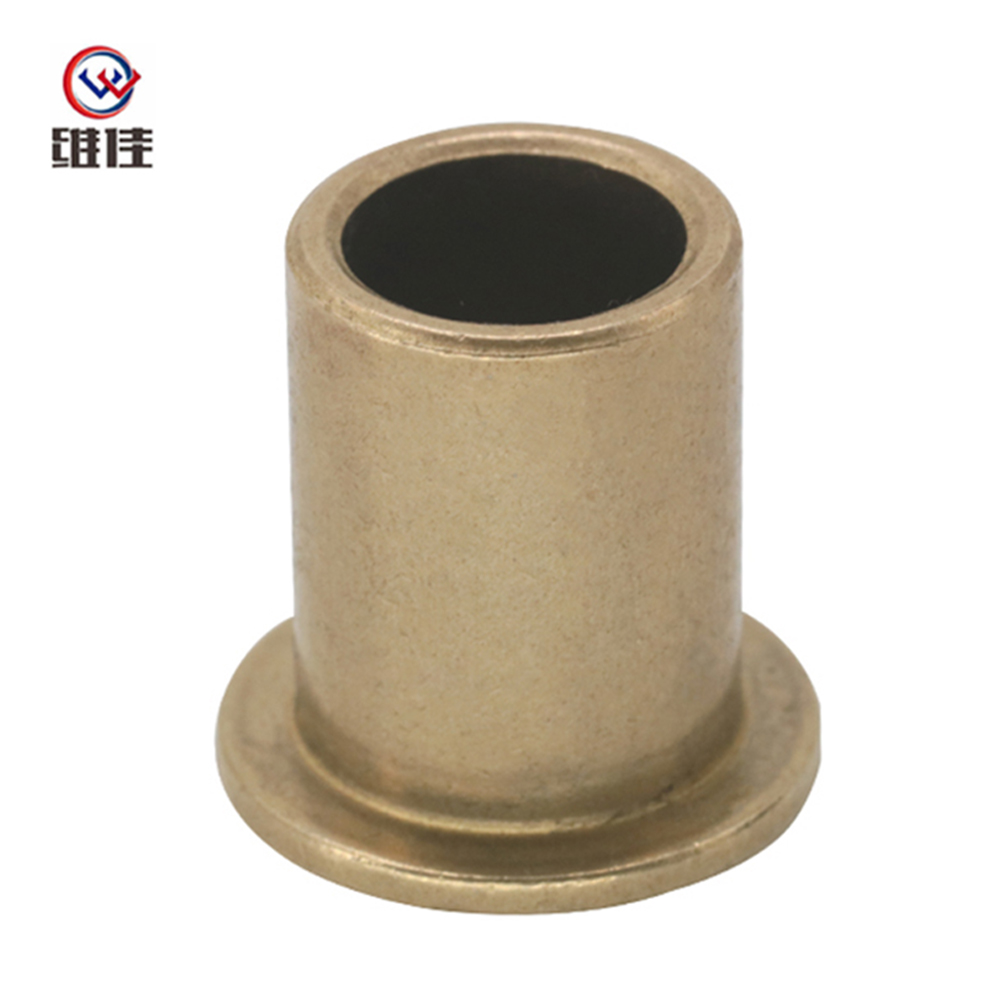
Our sintered bronze self-lubricating bearings are engineered for demanding industrial applications where traditional lubrication is impractical. Designed with advanced powder metallurgy technology, th...
See Details -
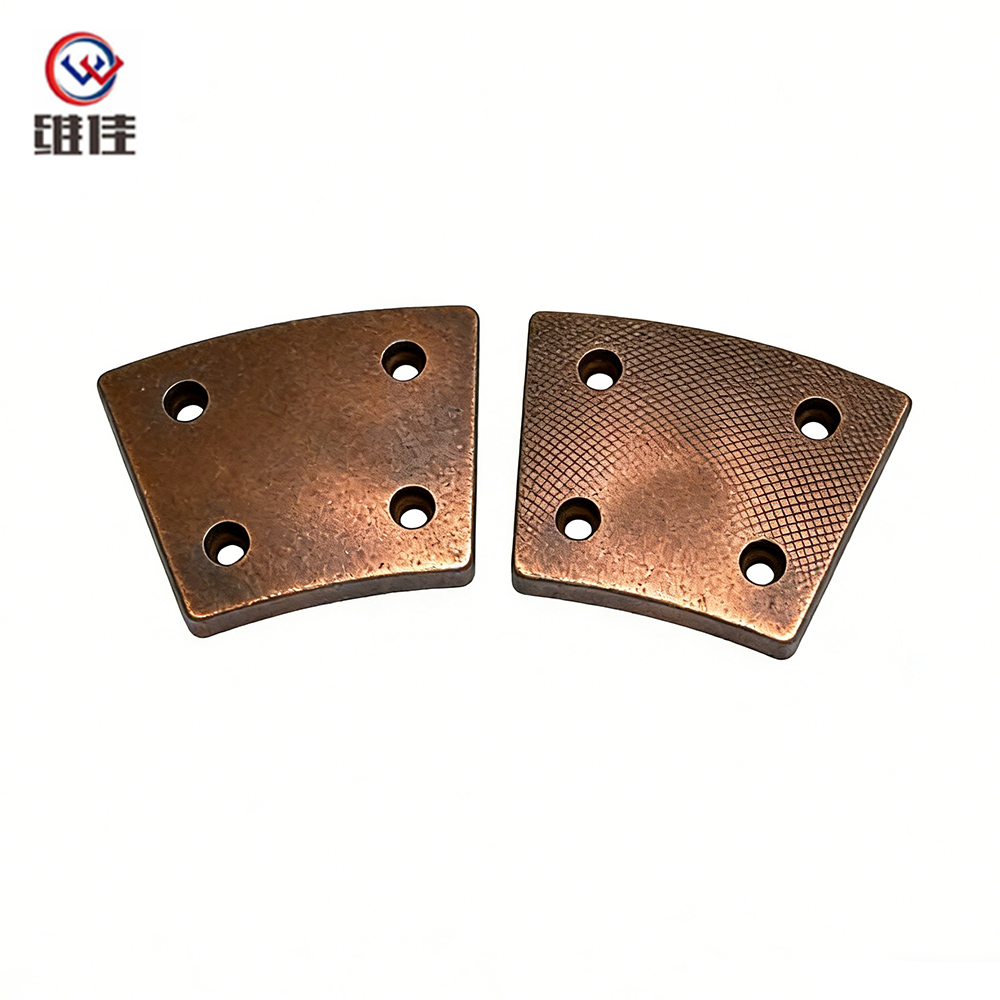
Description: 79.5×62×7.3mm copper-based brake pad with 4-hole design. Density 6.2g/cm³, weight 195g. Free from graphite segregation, cracks, and defects. Ideal for heavy-duty industrial braking system...
See Details
Copyright © Jiande Welfine Technology Co., Ltd. All Rights Reserved. Privacy Custom Self-lubricating Sintered Bushing Manufacturers
