E-mail us: [email protected]
Tel: +86-15239857375
 English
 中文简体


 Home / Author / Luo Qian — Product Sales Supervisor / High Performance Sintered Self-Lubricating Bushings for High-Load Applications
High Performance Sintered Self-Lubricating Bushings for High-Load Applications
 2026.10.16
 Luo Qian — Product Sales Supervisor
Content
- 1 What Are High-Performance Sintered Self-Lubricating Bushings?
- 2 Why Sintered Bushings Are Important in High-Load Machinery
- 3 Material Structure and Lubrication Mechanism
- 4 How Controlled Porosity Supports Self-Lubrication
- 5 Load Capacity and Mechanical Strength
- 6 Wear Resistance and Service Stability
- 7 Self-Lubrication During Start-Up and Continuous Operation
- 8 Performance in High-Temperature Environments
- 9 Advantages Compared with Conventional Machined Bushings
- 10 Benefits Over Less-Advanced Sintered Products
- 11 Powder Metallurgy Manufacturing Process
- 12 Manufacturing Strengths and Production Capability
- 13 Custom OEM and ODM Bushing Solutions
- 14 Typical Applications
- 15 Design and Installation Guidelines
- 16 How to Select the Correct Bushing
- 17 Performance Comparison by Operating Requirement
- 18 Environmental and Operational Considerations
- 19 Quality Control and Reliability Assurance
- 20 Economic Advantages of Sintered Bushing Technology
- 21 Frequently Asked Questions
- 21.1 What is a self-lubricating sintered bushing?
- 21.2 Can a sintered bushing support high loads?
- 21.3 Are sintered bushings completely maintenance-free?
- 21.4 What materials are used in high-performance sintered bushings?
- 21.5 What is the typical friction coefficient?
- 21.6 What is the typical operating temperature range?
- 21.7 Can the bushings be customized according to drawings?
- 21.8 How does powder metallurgy reduce manufacturing cost?
- 21.9 Are self-lubricating bushings suitable for dusty environments?
- 21.10 How should the correct bushing be selected?
- 21.11 What manufacturing capabilities does Jiande Welfine Technology Co., Ltd. provide?
- 21.12 What quality certifications does the company hold?
- 22 Conclusion
- 23 References
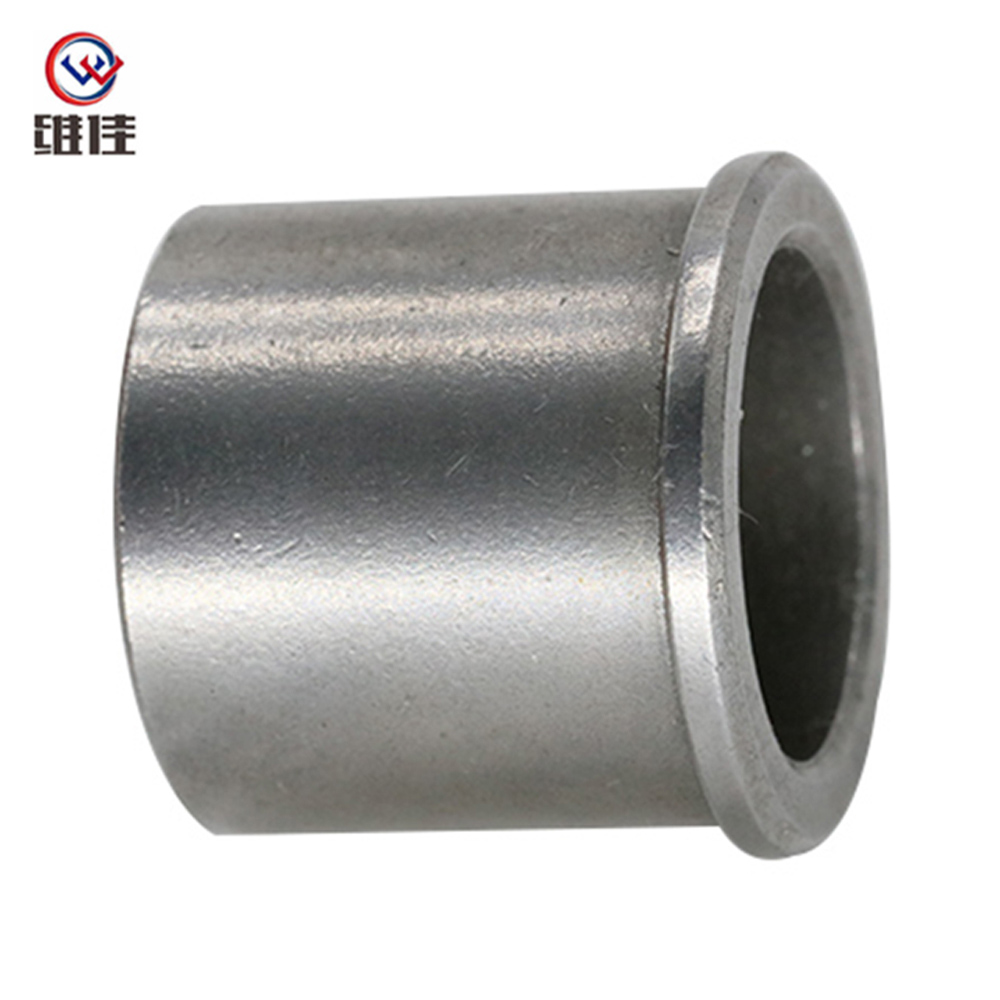
- 24 Product: High Performance Sintered Self-lubricating Bushings
High-performance sintered self-lubricating bushings are engineered for machinery that must operate reliably under heavy loads, repeated motion, vibration, and demanding environmental conditions. Combining powder metallurgy, controlled porosity, high-strength metallic alloys, and internal lubrication technology, these bushings provide a practical alternative to conventional machined bearings that depend on frequent external lubrication.
Designed for rotating, oscillating, and reciprocating movements, sintered bushings can support high static and dynamic loads while reducing friction, wear, maintenance requirements, and the risk of seizure. Their compact construction and adaptable material structure make them suitable for industrial machinery, automotive systems, agricultural equipment, construction machinery, power transmission units, hydraulic systems, and specialized high-temperature equipment.
Jiande Welfine Technology Co., Ltd. specializes in powder metallurgy sintering and related precision machining. With more than 20 years of manufacturing experience, a modern 13,039-square-meter production base, advanced forming and sintering equipment, and ISO 9001:2015 and IATF 16949:2016 certifications, the company provides customized bushing and sintered metal component solutions for global OEM and ODM customers.
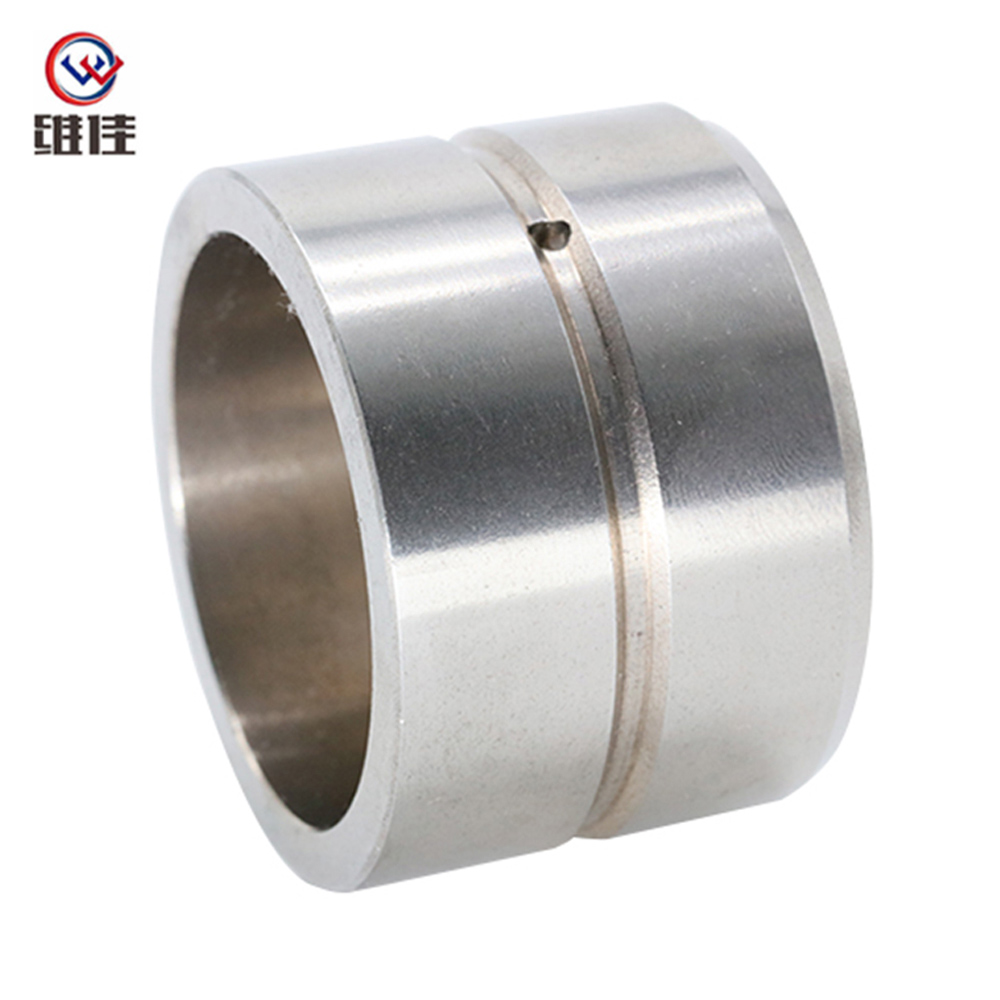
High Performance Sintered Self-lubricating Bushings
What Are High-Performance Sintered Self-Lubricating Bushings?
A sintered self-lubricating bushing is a cylindrical or shaped bearing component produced by compacting metal powders in a precision die and heating the compact below its melting point. This controlled heating process, known as sintering, bonds the powder particles into a strong and dimensionally stable component.
Unlike a fully dense machined bushing, a sintered bushing can be manufactured with a controlled network of microscopic pores. These pores may retain lubricating oil or support the distribution of solid lubricants such as graphite and molybdenum disulfide. During operation, lubrication is gradually supplied to the contact surface, helping maintain a low-friction interface between the bushing and shaft.
The result is a bearing component that combines the structural strength of a metal alloy with the lubrication advantages of an engineered porous or solid-lubricant system. Depending on the material grade and application requirements, the bushing may operate with internal oil retention, embedded dry lubricants, or a combination of both technologies.
High-performance sintered bushings are particularly valuable where conventional grease or oil lubrication is difficult to apply. They can reduce maintenance work in enclosed mechanisms, remote equipment, dusty environments, and systems where external lubrication could contaminate products or attract abrasive particles.
Why Sintered Bushings Are Important in High-Load Machinery
Industrial equipment frequently operates under conditions that place continuous stress on bearing surfaces. Loads may be static, dynamic, impact-related, or a combination of several types. At the same time, the bushing may be exposed to vibration, misalignment, temperature variation, contaminants, and frequent start-stop cycles.
A standard bearing component can fail prematurely when lubrication is interrupted, when the contact pressure exceeds the material limit, or when friction causes excessive heat. A high-performance sintered bushing addresses these risks through coordinated material and manufacturing design.
- High load capacity helps the bushing resist deformation and maintain alignment.
- Controlled porosity supports oil retention and gradual lubricant release.
- Solid lubricants reduce friction during start-up and intermittent operation.
- Wear-resistant alloy structures maintain dimensional stability over extended cycles.
- Precision forming reduces material waste and supports consistent component geometry.
- Custom designs allow the bushing to match specific shafts, housings, loads, and movements.
These characteristics are valuable in construction machinery, agricultural equipment, gear systems, production automation, material handling systems, and automotive mechanisms where bearing failure can result in downtime, repair costs, and production interruptions.
Material Structure and Lubrication Mechanism
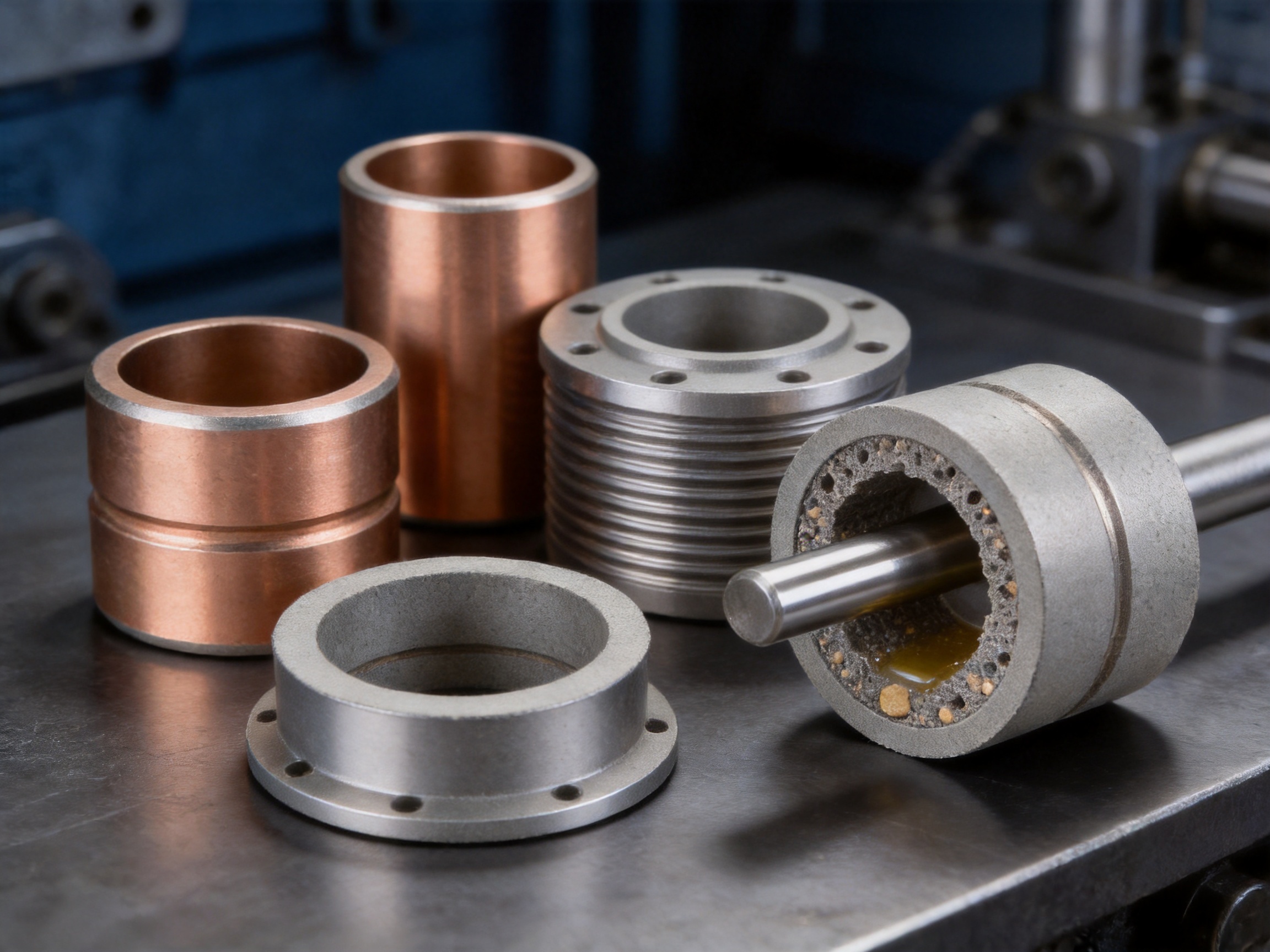
High-performance sintered bushings may be manufactured from iron-based, copper-based, bronze-based, or other engineered powder metallurgy compositions. The appropriate material depends on load, speed, temperature, lubrication conditions, corrosion exposure, shaft material, and the required service life.
For high-load applications, Fe–Cu sintered alloys offer a useful balance of strength, wear resistance, dimensional stability, and manufacturability. Iron contributes structural strength and load-bearing capability, while copper can improve frictional behavior, thermal conductivity, and material compatibility. Additional alloying elements and lubricating additives may be selected according to the working environment.
Graphite and molybdenum disulfide are examples of solid lubricants that may be embedded in the bearing structure. Under sliding contact, these materials can form a transfer film on the mating shaft or bearing surface. The film has a relatively low shear strength, reducing direct metal-to-metal contact and helping stabilize friction.
In oil-impregnated versions, the porous structure is filled with an appropriate lubricating oil after sintering and finishing. When the bearing is stationary, capillary forces help retain the oil inside the pores. During operation, heat and contact pressure encourage a controlled amount of oil to migrate toward the sliding interface. When the bearing cools or operation stops, some of the oil can return to the porous structure.
This self-lubricating action does not mean that every bushing can operate indefinitely without any consideration of operating conditions. Load, speed, temperature, shaft finish, housing fit, environmental contamination, and lubrication compatibility all affect performance. Correct application engineering remains essential for achieving the expected service life.
How Controlled Porosity Supports Self-Lubrication
Porosity is one of the defining features of many powder metallurgy bushings. It is created during compaction and controlled through powder selection, pressing pressure, sintering temperature, sintering time, and post-processing operations.
A bushing with excessively high density may have excellent mechanical strength but insufficient internal volume for oil retention. A bushing with excessive porosity may store more lubricant but have reduced compressive strength and lower resistance to deformation. The manufacturing objective is therefore to achieve a controlled balance between strength, lubrication capacity, and dimensional stability.
Material density is commonly managed through precise control of powder composition and compaction parameters. For iron-based bushings, typical density values may fall within a broad range of approximately 6.2 to 7.2 g/cm³, depending on the alloy, lubricant system, geometry, and performance requirements. The correct value must be established through product design and application testing rather than selected solely from a general range.
When the bushing is correctly designed, the internal pores function as a distributed lubricant reservoir. This can reduce the need for external oil channels, grease fittings, and regular manual lubrication. It may also improve lubrication consistency because the lubricant is released close to the actual sliding interface.
Load Capacity and Mechanical Strength
Load capacity describes the ability of a bushing to support force without excessive deformation, crushing, cracking, or rapid wear. It depends on more than the nominal material type. Density, alloy composition, wall thickness, support from the housing, shaft diameter, contact area, motion type, and temperature all influence the actual load-bearing performance.
High-performance sintered bushings are designed to maintain a stable contact surface under both static and dynamic loads. A properly compacted and sintered Fe–Cu structure can provide the compressive strength needed for heavy-duty applications while retaining useful friction and wear characteristics.
Static load occurs when the bushing supports a stationary or slowly changing force. Dynamic load occurs when the bushing supports a moving shaft or experiences changing forces during operation. Impact load is particularly demanding because it can cause localized stress concentrations and surface damage.
For high-load applications, the bushing design should consider:
- Radial load and axial load requirements.
- Peak load and average operating load.
- Rotational, oscillating, or reciprocating motion.
- Sliding speed and duty cycle.
- Start-stop frequency.
- Shaft hardness and surface finish.
- Housing rigidity and interference fit.
- Operating temperature and heat dissipation.
- Presence of dust, moisture, chemicals, or abrasive particles.
A strong bushing material alone cannot compensate for incorrect clearance, poor shaft alignment, or insufficient housing support. For this reason, custom bushing manufacturing should begin with a review of the complete bearing assembly rather than the bushing dimensions alone.
Wear Resistance and Service Stability
Wear resistance determines how effectively a bushing maintains its geometry, surface integrity, and clearance during repeated operation. Wear can be accelerated by excessive pressure, inadequate lubrication, rough shaft surfaces, contamination, misalignment, vibration, or operation outside the recommended temperature range.
High-performance sintered bushings reduce wear through several coordinated features. The alloy matrix provides a stable structural foundation. The controlled pore system helps supply lubrication. Solid lubricants can form a protective transfer film. Precision finishing helps produce a suitable mating surface. Together, these features support predictable friction and gradual wear rather than sudden surface damage.
Depending on the composition and manufacturing process, material hardness may fall within a broad range such as HRB 50 to HRB 90. Surface roughness may commonly be controlled within approximately Ra 0.8 to 3.2 micrometers, although the correct value depends on the shaft material, lubrication system, motion, and customer requirements.
A surface that is too rough can generate high friction and accelerate abrasive wear. A surface that is excessively smooth may not always retain lubricant effectively, depending on the application. The best surface condition is therefore determined by the entire sliding pair, including the shaft and bushing materials.
Stable wear performance provides several practical advantages:
- Longer replacement intervals.
- Reduced risk of unexpected equipment shutdown.
- More consistent shaft clearance.
- Lower maintenance and spare-parts consumption.
- Improved repeatability in automated machinery.
- Reduced risk of damage to expensive mating components.
Self-Lubrication During Start-Up and Continuous Operation
Start-up is often one of the most demanding stages in a sliding bearing cycle. Before the shaft reaches operating speed, a full hydrodynamic lubricant film may not yet be established. Friction can therefore be relatively high, especially under heavy load or when the equipment has been stationary for an extended period.
The internal lubricant system of a sintered bushing helps reduce this start-up risk. Oil stored in the pores can move toward the contact interface, while solid lubricants can provide low-shear protection during boundary lubrication conditions. This reduces the likelihood of dry metal-to-metal contact and helps limit localized heating.
During continuous operation, frictional heat may encourage further lubricant migration. If the bushing, shaft, and housing are correctly designed, the lubrication system can support relatively stable friction over repeated cycles. Typical friction coefficient values for self-lubricating sintered materials may fall within approximately 0.05 to 0.15 under suitable test conditions, although actual values vary significantly with load, speed, temperature, surface finish, and lubrication type.
Oil retention rates may commonly fall within a range of approximately 12% to 25%, depending on the material and impregnation process. These figures should be treated as design references rather than universal guarantees. Each application should be evaluated against its required operating life and environmental conditions.
Performance in High-Temperature Environments
Temperature affects both the bushing material and the lubricant. As temperature rises, the viscosity of oil may decrease, changing the way lubricant moves through the pores. Excessive heat can also accelerate oxidation, reduce lubricant life, and alter the dimensional relationship between the bushing, shaft, and housing.
High-performance sintered bushings can provide good thermal stability when the alloy, lubricant, clearance, and operating conditions are properly matched. Fe–Cu materials offer useful thermal conductivity and mechanical stability, while dry solid lubricants can remain effective in environments where conventional oil is unsuitable.
The operating temperature range of an oil-impregnated bushing may be approximately -20°C to 120°C for certain oil systems, but the actual limit depends on the selected lubricant and design. Applications involving higher temperatures may require a specialized oil, a dry-lubricated composition, additional heat dissipation, or a different bearing technology.
Temperature evaluation should include both ambient temperature and heat generated by friction. A component operating in a moderate ambient environment may still reach a high local temperature if the load, speed, or clearance is incorrect.
Important thermal design considerations include:
- Maximum continuous and peak temperature.
- Heat generated at the sliding interface.
- Heat transfer through the shaft and housing.
- Lubricant oxidation resistance.
- Thermal expansion of the bushing and mating components.
- Potential exposure to hot fluids, steam, or radiant heat.
Advantages Compared with Conventional Machined Bushings
Conventional machined bushings can provide excellent performance when manufactured from suitable materials and supplied with an effective external lubrication system. However, they may require additional machining, regular lubrication, and more complex maintenance arrangements. Sintered bushings offer a different performance strategy based on integrated material design.
| Performance factor | High-performance sintered bushing | Conventional machined bushing |
| Lubrication method | Internal oil retention or embedded solid lubricants | Usually dependent on external oil or grease |
| Maintenance demand | Low when correctly selected and applied | Often higher because lubrication must be replenished |
| Material utilization | Efficient near-net-shape powder forming | More material may be removed during machining |
| Production repeatability | High when pressing and sintering are carefully controlled | Dependent on machining capability and process consistency |
| Complex geometry | Suitable for many formed profiles and integrated features | Possible, but may require several machining operations |
| Contamination risk | Can operate with reduced external lubricant exposure | External grease or oil may attract dust and particles |
| High-load capability | Can be optimized through density and alloy control | Depends strongly on the selected solid material and design |
| Lifecycle cost | Potentially lower maintenance and replacement cost | May involve higher lubrication and service requirements |
The comparison does not mean that sintered bushings are suitable for every bearing application. Rolling bearings, polymer bushings, bronze bushings, and machined steel components each have their own performance advantages. The benefit of sintered technology is that it combines efficient production with integrated lubrication and customizable mechanical properties.
Benefits Over Less-Advanced Sintered Products
Not all sintered bushings have the same performance. Differences in powder quality, die design, compaction control, sintering atmosphere, dimensional finishing, impregnation, inspection, and application engineering can significantly influence the final product.
A high-performance bushing must provide more than a porous metal structure. It requires consistent density distribution, reliable bonding between powder particles, controlled dimensions, suitable surface characteristics, and a lubrication system matched to the operating environment.
Advanced production can provide the following benefits compared with less-controlled sintered products:
- More uniform density across the bushing wall.
- Reduced risk of weak areas and localized deformation.
- Improved dimensional consistency between production batches.
- More stable oil retention and release behavior.
- Better control of internal and external diameters.
- Improved compatibility with automated assembly.
- More reliable performance under repeated load cycles.
- Greater flexibility for custom material and geometry development.
These advantages are especially important for OEM customers that need to install thousands or millions of components while maintaining consistent equipment performance.
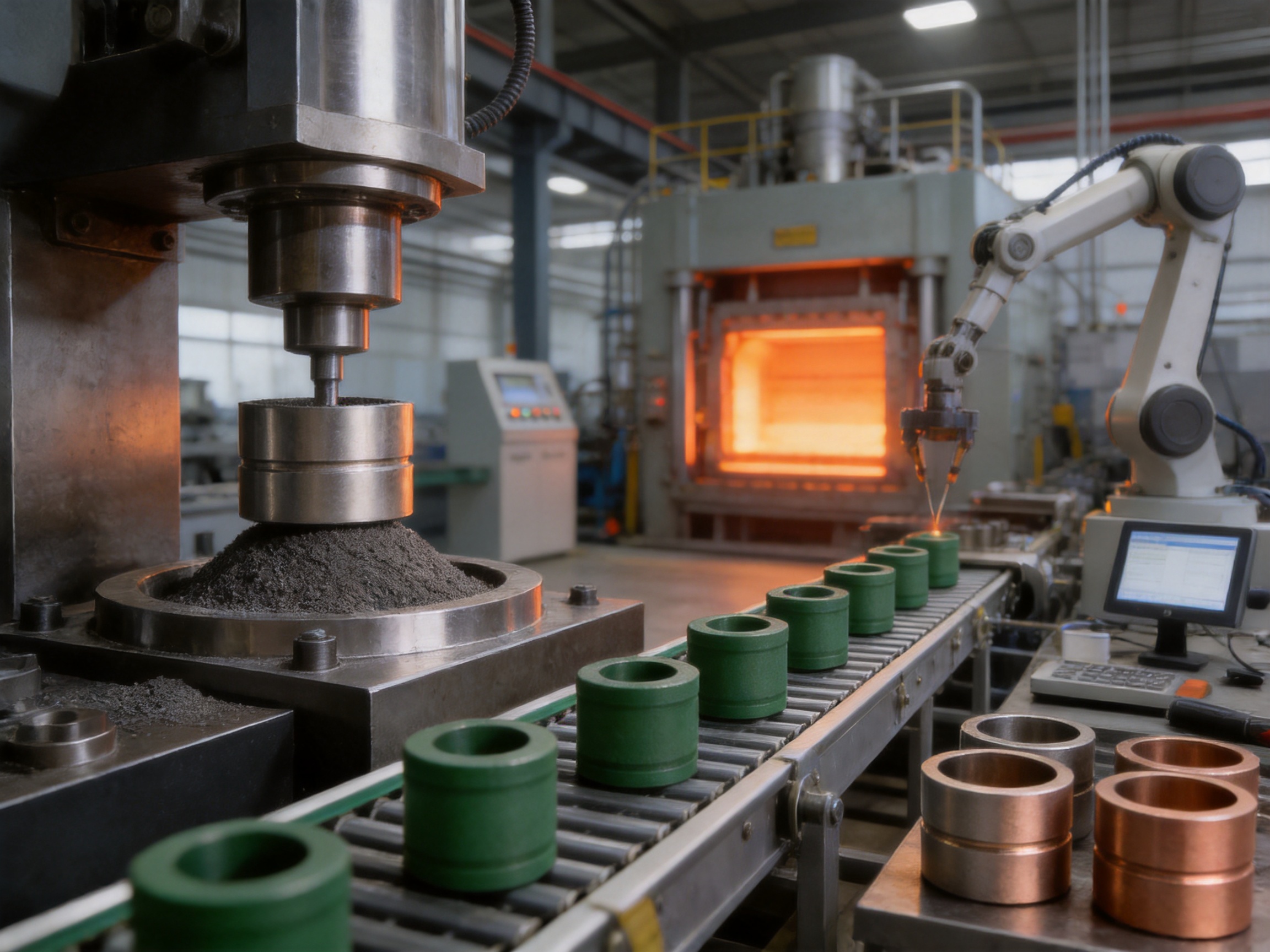
Powder Metallurgy Manufacturing Process
1. Application and Drawing Review
Manufacturing begins with a review of the customer drawing, sample, or application specification. The engineering team considers the shaft diameter, housing dimensions, wall thickness, load, speed, movement type, temperature, environmental exposure, and required service life.
Where a drawing is not available, a physical sample or application description can be used as the starting point for development. The goal is to understand not only the component shape but also the forces and operating conditions that the bushing must withstand.
2. Powder Selection and Blending
Metal powders are selected according to the required strength, friction behavior, wear resistance, thermal performance, and lubrication method. Iron, copper, graphite, molybdenum disulfide, and other additives may be blended in controlled proportions.
Powder characteristics such as particle size, shape, flowability, compressibility, and apparent density affect the forming process. A consistent blend is necessary to maintain uniform material properties throughout the production batch.
3. Precision Die Design
The die determines the external geometry of the bushing and supports the formation of internal holes, steps, grooves, flanges, and other features. Die design must account for powder flow, compaction direction, ejection, dimensional shrinkage, and the final sintering response.
Proper tooling design can reduce secondary machining and improve production efficiency. It can also help control density distribution and reduce the risk of cracks during ejection or sintering.
4. Compaction and Forming
Prepared powder is placed into the die and compacted under controlled pressure. The forming stage creates a green compact with the approximate shape and dimensions of the finished bushing.
Compaction pressure must be carefully managed. Excessive pressure may affect tooling life or reduce the porosity needed for lubrication. Insufficient pressure may produce a weak compact with poor dimensional stability. Modern forming equipment helps maintain repeatable pressure, filling, and ejection conditions.
5. Sintering
The green compact is heated in a controlled-atmosphere furnace. The temperature remains below the melting point of the main metal, allowing particles to bond through solid-state diffusion. This develops the required mechanical strength and stabilizes the component structure.
Sintering temperature, heating rate, holding time, cooling rate, and furnace atmosphere all influence the final result. Stable furnace control is essential for maintaining consistent density, strength, hardness, dimensional change, and surface condition.
6. Sizing and Precision Finishing
After sintering, the bushing may undergo sizing, calibration, coining, machining, grinding, or other finishing operations. These processes improve dimensional accuracy and ensure the component fits correctly into the housing and works with the mating shaft.
Secondary operations are selected according to tolerance requirements. Some bushings can be produced close to final size through powder forming, while high-precision applications may require additional machining of the inner diameter, outer diameter, end faces, oil grooves, or mounting features.
7. Lubricant Impregnation or Solid-Lubricant Treatment
Oil-impregnated bushings are processed using a controlled impregnation method that fills the internal pores with the selected lubricant. Vacuum and pressure techniques may be used to improve penetration and consistency.
For dry-lubricated materials, graphite, molybdenum disulfide, or other solid lubricants may be incorporated during powder blending or placed in designed lubrication pockets. The selected approach depends on the temperature, load, speed, atmosphere, and maintenance requirements of the application.
8. Inspection and Testing
Finished bushings may be inspected for dimensions, density, hardness, surface roughness, appearance, oil content, concentricity, and other customer-defined characteristics. Functional testing may evaluate friction, wear, load capacity, temperature rise, or service life under simulated operating conditions.
Quality records and process controls help identify variation before products are released. This is particularly important for automotive, industrial automation, and other applications where component reliability is directly connected to overall system performance.
Manufacturing Strengths and Production Capability
Jiande Welfine Technology Co., Ltd. was established in 2001 and focuses on powder metallurgy sintering and related precision machining. The company integrates research and development, production, and sales, allowing customer requirements to be addressed through a coordinated engineering and manufacturing process.
The company operates a modern 13,039-square-meter production base equipped with high-efficiency presses, high-temperature sintering furnaces, precision forming machines, and testing equipment. This manufacturing infrastructure supports both standard production and customized OEM/ODM development.
More than 150 skilled employees contribute to product development, tooling, forming, sintering, finishing, inspection, and customer support. More than two decades of industry experience provide practical knowledge of powder selection, die design, process control, and bushing application requirements.
The company can develop products based on customer drawings, technical specifications, or physical samples. This flexibility is useful for customers replacing an existing bushing, improving a current design, consolidating several suppliers, or developing a new machine.
Quality management is supported by ISO 9001:2015 and IATF 16949:2016 certifications. These systems help establish controlled procedures for production planning, inspection, traceability, corrective action, and continuous improvement. Certification does not replace application testing, but it provides a structured foundation for consistent manufacturing.
Custom OEM and ODM Bushing Solutions
Custom manufacturing is often necessary because a bushing must match a specific housing, shaft, load, and movement profile. Standard dimensions may not provide the required clearance, lubrication volume, wall thickness, flange geometry, or mounting arrangement.
Customized features may include:
- Special inner and outer diameters.
- Flanged, stepped, or grooved profiles.
- Oil grooves or lubrication pockets.
- Special wall thicknesses.
- Different material compositions.
- Customized density and porosity.
- Modified hardness and surface finish.
- Special tolerances for automated assembly.
- Protective treatments or secondary machining.
- Packaging and identification according to customer requirements.
During the development process, the customer should provide as much information as possible about load, speed, temperature, movement, shaft material, housing material, environment, and expected service life. This enables the engineering team to select a suitable material and avoid designing solely from dimensional information.
Typical Applications
Construction Machinery
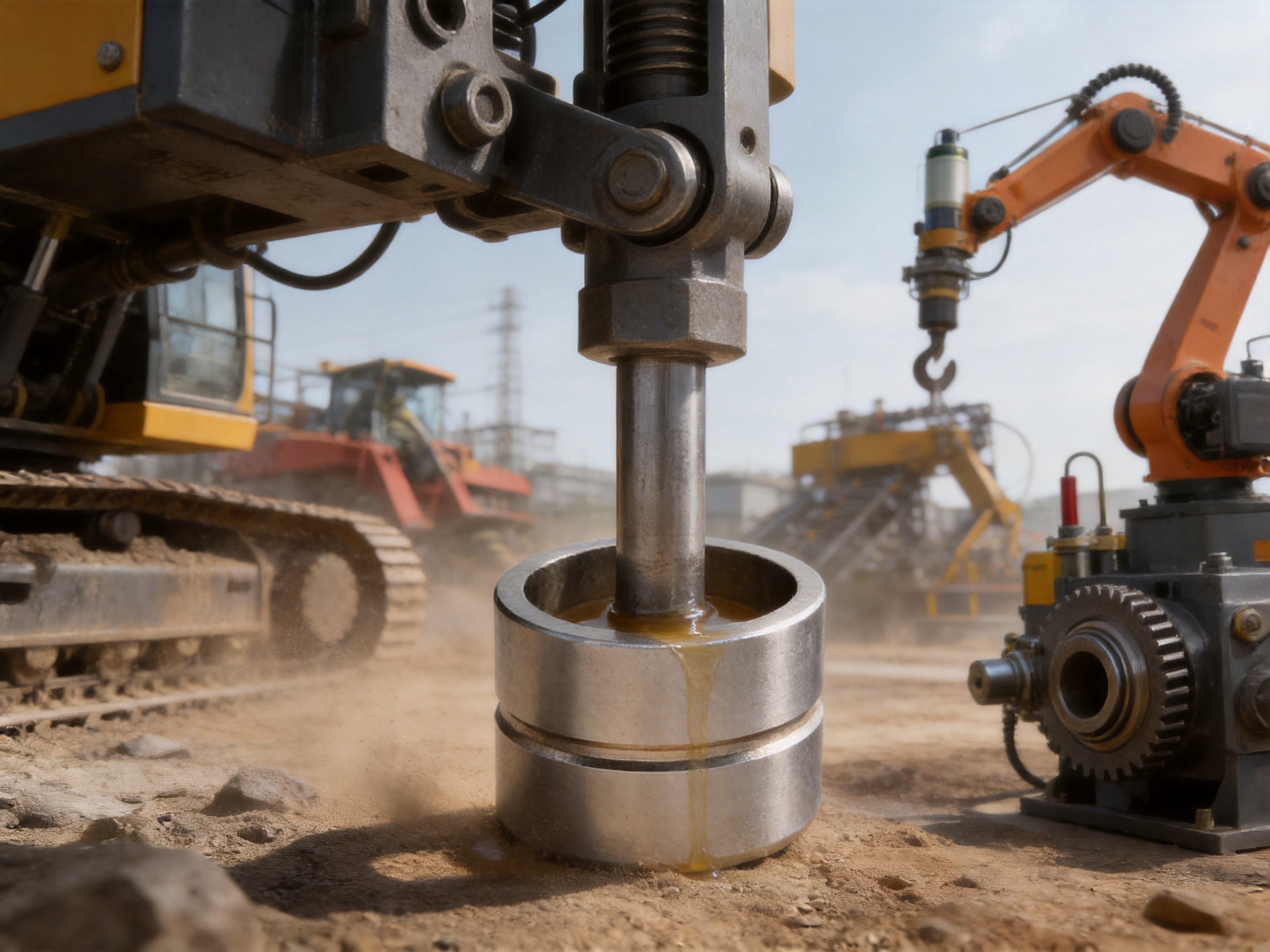
Construction equipment often experiences high loads, vibration, impact, dirt, moisture, and irregular maintenance intervals. Sintered bushings can be used in pivots, linkages, actuating mechanisms, and other areas where reliable movement is required under harsh conditions.
Agricultural Equipment
Agricultural machines may operate in dusty fields, changing temperatures, and seasonal duty cycles. Self-lubricating bushings can reduce maintenance requirements in mechanisms that are difficult to access and can help limit the impact of external contamination.
Automotive Components
Automotive systems require consistent dimensions, repeatable performance, and high-volume manufacturing capability. Powder metallurgy bushings can be used in transmission mechanisms, engine-related components, actuators, pumps, hinges, and other assemblies where compact, low-maintenance sliding bearings are required.
Industrial Automation
Automation systems often perform repeated reciprocating or oscillating movements. Low and stable friction helps improve positioning consistency, while the reduced need for external lubrication supports cleaner equipment design and lower routine service requirements.
Power Transmission Systems
Gear systems, linkages, pulleys, and drive mechanisms may require bushings that maintain alignment under continuous load. Sintered materials can provide a practical combination of load support, wear resistance, and internal lubrication.
Hydraulic and Material Handling Equipment
Hydraulic equipment and material handling systems frequently operate with repeated cycles and substantial mechanical loads. Correctly selected sintered bushings can support pivots, guide mechanisms, and sliding components while reducing the need for frequent lubrication.
Mining and Heavy Industrial Machinery
Mining and heavy industrial equipment may be exposed to abrasive dust, vibration, impact, and difficult service conditions. A suitable self-lubricating bushing can reduce external grease requirements, although protective design and contamination control remain important for long service life.
Design and Installation Guidelines
Correct installation is essential for achieving the expected performance of a sintered bushing. The housing should provide adequate support, and the shaft should have a suitable diameter, hardness, straightness, and surface finish.
The housing bore and shaft dimensions must be controlled to create the correct operating clearance. Excessive interference can reduce the internal diameter and restrict shaft movement. Insufficient interference can allow the bushing to rotate or move inside the housing, causing fretting and dimensional damage.
The bushing should be installed using an appropriate press tool that applies force evenly. Striking the component directly with a hammer may deform the edge, damage the internal surface, or create misalignment. The shaft should be clean and free from burrs before assembly.
During installation, avoid washing oil-impregnated bushings with solvents that may remove or dilute the internal lubricant. If cleaning is necessary, the method should be compatible with the selected material and lubricant system.
Applications with heavy loads, high speeds, or severe contamination should be validated through testing. Initial inspection after a defined operating period can help confirm temperature, wear, clearance, and lubrication behavior.
How to Select the Correct Bushing
The following questions should be answered before final product selection:
- What are the minimum, average, and peak loads?
- Is the movement rotating, oscillating, reciprocating, or intermittent?
- What is the maximum sliding speed?
- How many operating cycles are expected?
- What are the continuous and peak temperatures?
- Will the component be exposed to dust, water, chemicals, or vibration?
- Is external lubrication available or undesirable?
- What are the shaft and housing materials?
- What are the required inner diameter, outer diameter, length, and tolerance?
- Is a flange, groove, oil hole, or special shape required?
- What service life and maintenance interval are expected?
These details help determine whether an oil-impregnated, solid-lubricated, or combined self-lubricating bushing is the most suitable option. They also help define the required material density, hardness, porosity, clearance, and surface finish.
Performance Comparison by Operating Requirement
| Operating requirement | Recommended design focus | Expected benefit |
| High static load | Higher structural strength, suitable density, adequate wall thickness | Lower risk of permanent deformation |
| High-frequency movement | Stable lubrication film, wear-resistant alloy, controlled surface finish | More consistent friction and longer service life |
| Limited maintenance access | Oil impregnation or embedded solid lubrication | Reduced need for frequent external lubrication |
| Dusty environment | Low-exposure lubrication design and suitable sealing strategy | Reduced attraction of external abrasive particles |
| High temperature | Thermally stable alloy and compatible lubricant | Improved dimensional and friction stability |
| Impact and vibration | High compressive strength and secure housing fit | Improved resistance to shock and movement |
| Precision automation | Tight dimensional control and repeatable finishing | Improved positioning and assembly consistency |
Environmental and Operational Considerations
Sintered self-lubricating bushings can be suitable for radioactive, corrosive, dusty, or enclosed environments when the material and lubricant are correctly selected. However, environmental compatibility must be verified for each application.
Corrosive chemicals may affect the alloy, lubricant, shaft, or housing. Moisture may promote corrosion in iron-based materials unless protective measures are provided. Abrasive dust may enter the sliding interface and accelerate wear if the assembly is not adequately protected.
In clean production equipment, reducing external grease may help prevent contamination. In other applications, an external lubricant may still be beneficial for cooling, flushing contaminants, or extending service life. The bushing should therefore be selected as part of the complete lubrication strategy rather than considered in isolation.
Quality Control and Reliability Assurance
Reliable bushing performance begins with consistent raw materials and continues through every manufacturing stage. Powder blending must be controlled to maintain composition uniformity. Tooling must be inspected to preserve dimensional accuracy. Pressing parameters must be stable, and sintering conditions must remain within defined limits.
Inspection may include dimensional measurement, density testing, hardness testing, visual inspection, surface roughness measurement, and lubricant-content verification. For selected products, functional tests can be performed under simulated load and speed conditions.
Process documentation provides traceability from material preparation through final inspection. When a customer reports a performance concern, traceability helps identify the production batch, process conditions, inspection results, and corrective actions.
ISO 9001:2015 supports a systematic quality management approach, while IATF 16949:2016 provides additional process discipline relevant to automotive supply chains. Together with engineering review and application validation, these systems support stable production for demanding OEM and ODM programs.
Economic Advantages of Sintered Bushing Technology
The value of a sintered bushing is measured not only by its purchase price but also by its total operating cost. Near-net-shape forming can reduce material waste and machining time. Integrated lubrication can reduce service labor and lubricant consumption. Long wear life can reduce replacement frequency and equipment downtime.
For high-volume production, powder metallurgy can provide repeatable output with efficient cycle times. Once suitable tooling has been developed, the process can produce complex shapes with limited secondary machining. This may reduce unit cost while maintaining the required dimensional and mechanical performance.
For custom low- and medium-volume products, the cost evaluation should include tooling, finishing, inspection, packaging, and any required validation testing. A technically suitable design may still require optimization to achieve the best balance between tooling investment and long-term production cost.
Frequently Asked Questions
What is a self-lubricating sintered bushing?
A self-lubricating sintered bushing is a powder metallurgy bearing component with a controlled metallic structure and an integrated lubrication system. Its pores may store oil, or its material may contain solid lubricants such as graphite and molybdenum disulfide. During operation, the lubricant reduces friction and wear at the sliding interface.
Can a sintered bushing support high loads?
Yes. High-performance sintered bushings can be designed for high static and dynamic loads through suitable alloy selection, density control, wall thickness, housing support, and operating clearance. The maximum allowable load depends on the complete application, including speed, temperature, shaft condition, and movement type.
Are sintered bushings completely maintenance-free?
They can significantly reduce maintenance, but “maintenance-free” should not be interpreted as independent of application conditions. Periodic inspection may still be appropriate, especially in heavy-duty systems. Shaft condition, housing fit, contamination, temperature, and actual operating load should be monitored when service reliability is critical.
What materials are used in high-performance sintered bushings?
Common material systems include iron-based, copper-based, bronze-based, and specially formulated powder metallurgy alloys. Fe–Cu sintered alloys are often selected for high-load applications because they provide a useful balance of strength, wear resistance, thermal behavior, and friction performance.
What is the typical friction coefficient?
Under suitable test conditions, self-lubricating sintered materials may achieve friction coefficients within an approximate range of 0.05 to 0.15. Actual performance depends on load, speed, temperature, shaft finish, clearance, atmosphere, and the selected oil or solid lubricant.
What is the typical operating temperature range?
Some oil-impregnated designs may operate from approximately -20°C to 120°C, depending on the lubricant and material. Higher-temperature applications may require specialized lubricant systems or dry-lubricated materials. The actual temperature rating should be confirmed for the specific product and duty cycle.
Can the bushings be customized according to drawings?
Yes. Customized inner and outer diameters, lengths, flanges, grooves, oil holes, wall thicknesses, materials, tolerances, and finishing operations can be developed according to customer drawings, samples, or application requirements.
How does powder metallurgy reduce manufacturing cost?
Powder metallurgy can produce components close to the final shape, reducing material waste and the amount of machining required. It also supports repeatable high-volume production and can integrate functional features into the formed geometry.
Are self-lubricating bushings suitable for dusty environments?
They can be suitable when the material, lubrication system, clearance, and protective design are correctly selected. Reducing external grease may help limit the collection of dust, but seals, shields, and contamination-control measures may still be required in highly abrasive environments.
How should the correct bushing be selected?
Selection should consider load, speed, movement, temperature, cycle frequency, shaft and housing materials, surface finish, environmental exposure, available lubrication, dimensions, and required service life. A complete application review is recommended for demanding equipment.
What manufacturing capabilities does Jiande Welfine Technology Co., Ltd. provide?
Jiande Welfine Technology Co., Ltd. provides powder metallurgy sintering, precision forming, related machining, oil-impregnated bushing production, self-lubricating bushing development, and custom OEM/ODM services. The company supports projects from drawing or sample review through tooling, production, inspection, and delivery.
What quality certifications does the company hold?
The company has implemented ISO 9001:2015 and IATF 16949:2016 quality management systems. These certifications support controlled production, process documentation, traceability, inspection, and continuous improvement.
Conclusion
High-performance sintered self-lubricating bushings provide an effective solution for machinery requiring reliable sliding movement under load. Their combination of powder metallurgy strength, controlled porosity, internal oil retention, solid lubrication, wear resistance, and precision forming enables stable operation with reduced dependence on external maintenance.
Compared with conventional machined bushings, these components can offer lower lubrication requirements, efficient material utilization, consistent high-volume production, and flexible customization. Their performance is especially valuable in construction machinery, agricultural equipment, automotive systems, industrial automation, power transmission, hydraulic equipment, mining machinery, and other demanding applications.
The effectiveness of a sintered bushing depends on correct engineering. Load, speed, temperature, shaft condition, housing fit, clearance, contamination, and lubrication must all be considered. When these factors are properly matched, a sintered bushing can help reduce friction, extend service life, protect mating components, and lower total maintenance cost.
With more than 20 years of powder metallurgy experience, a 13,039-square-meter manufacturing base, advanced presses and sintering furnaces, precision forming capabilities, skilled technical personnel, and internationally recognized quality systems, Jiande Welfine Technology Co., Ltd. is equipped to provide customized high-load bushing solutions for OEM, ODM, and industrial customers.
References
1. Powder Metallurgy Design Manual, Metal Powder Industries Federation.
2. ASM Handbook, Volume 7: Powder Metal Technologies and Applications.
3. ISO 9001:2015, Quality Management Systems—Requirements.
4. IATF 16949:2016, Quality Management System Requirements for Automotive Production and Relevant Service Parts Organizations.
5. Engineering Tribology and the Principles of Friction, Wear, and Lubrication.
6. Powder Metallurgy Materials and Processes: Compaction, Sintering, Porosity, and Dimensional Control.
7. Technical principles of oil-impregnated bearings and self-lubricating sliding components.
8. Manufacturer technical data for iron–copper sintered alloys, solid lubricants, and porous bearing materials.
Product: High Performance Sintered Self-lubricating Bushings

Related products
-
-
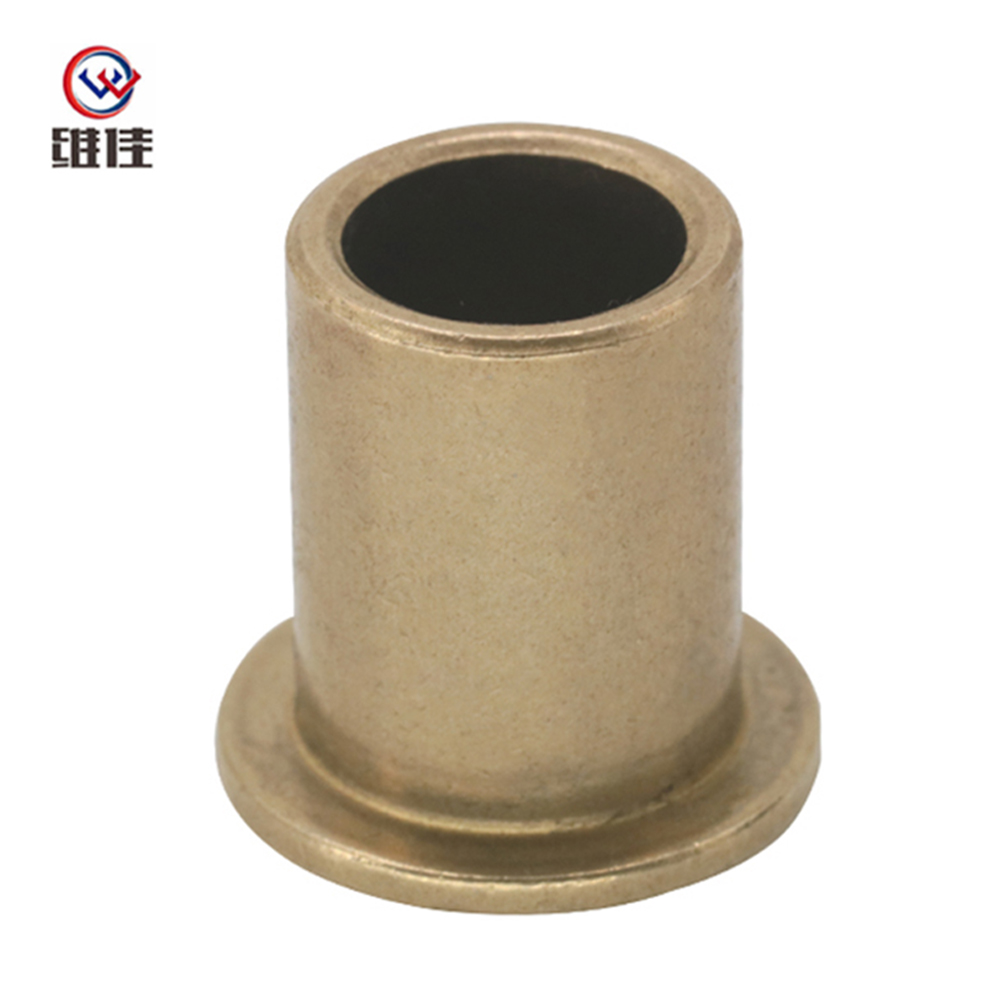
Our sintered bronze self-lubricating bearings are engineered for demanding industrial applications where traditional lubrication is impractical. Designed with advanced powder metallurgy technology, th...
See Details -
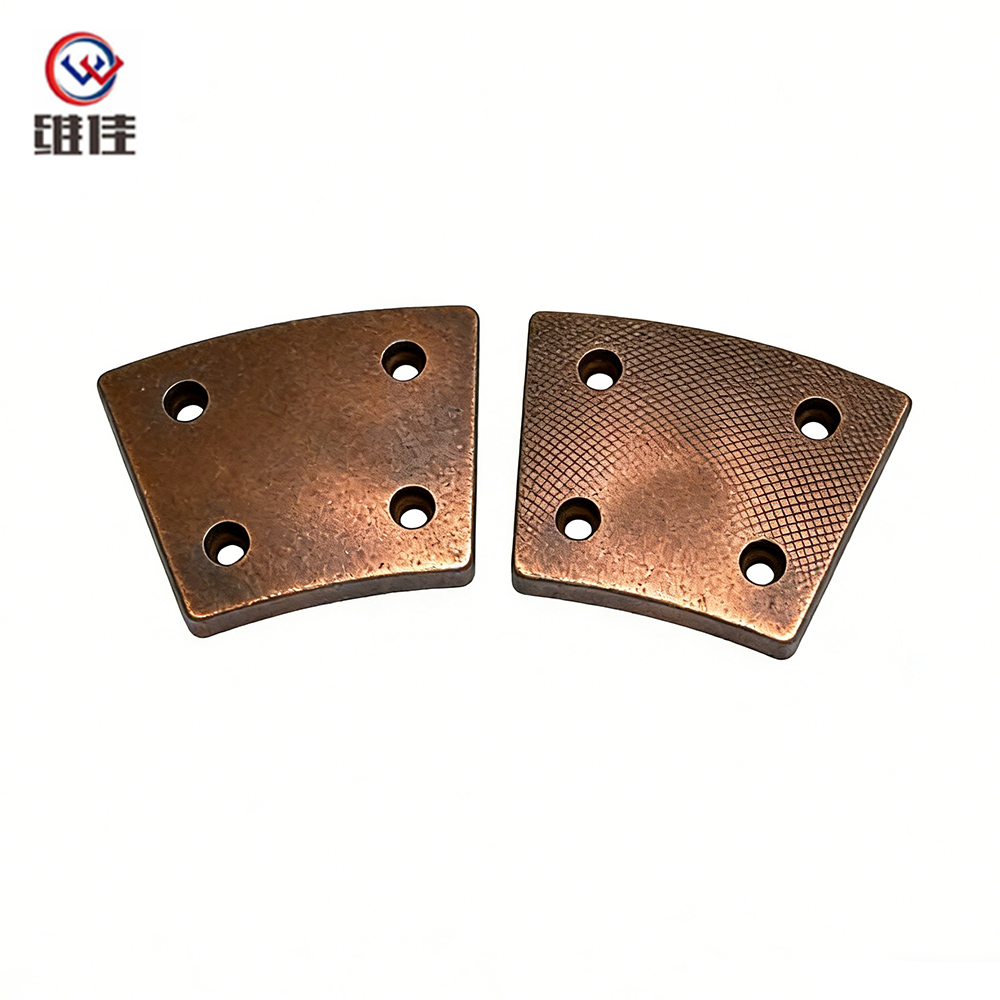
Description: 79.5×62×7.3mm copper-based brake pad with 4-hole design. Density 6.2g/cm³, weight 195g. Free from graphite segregation, cracks, and defects. Ideal for heavy-duty industrial braking system...
See Details -
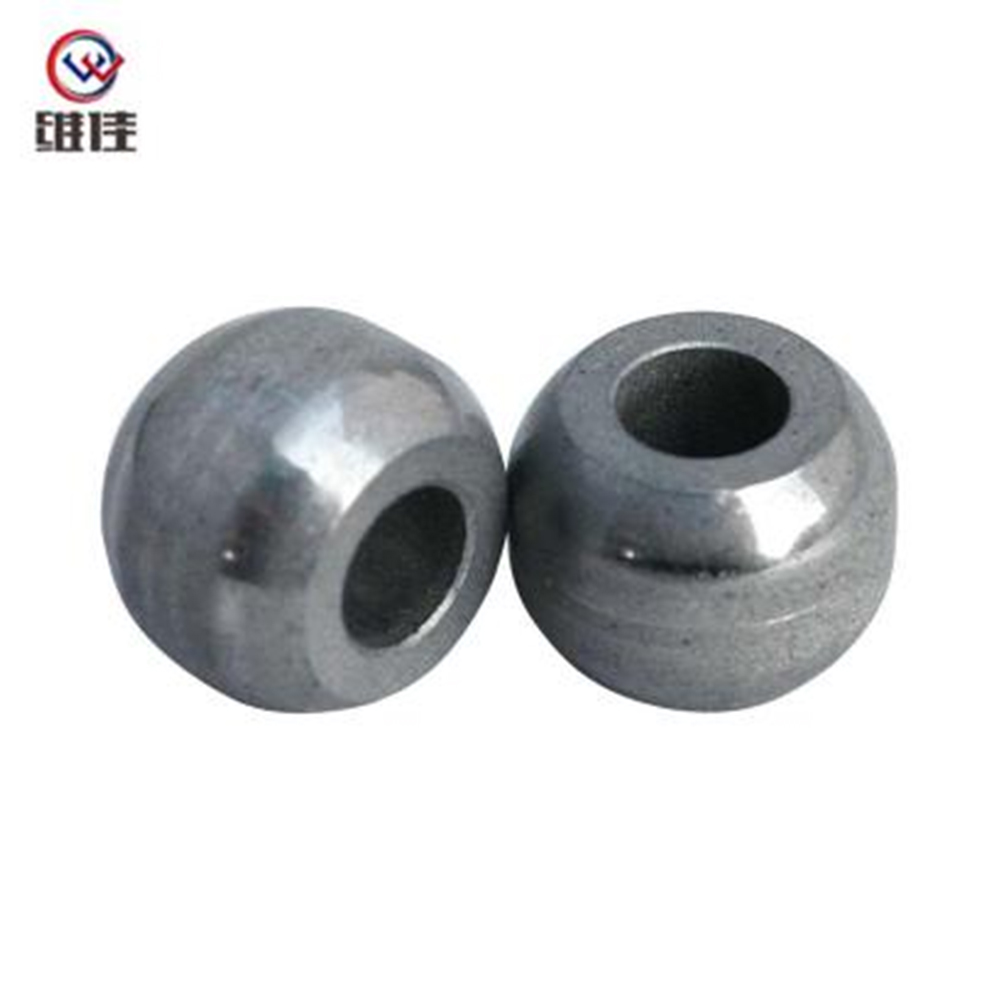
Product Description: High-precision powder metallurgy part (S14*7*10) made of iron material from Jiande Wefine, customized PM components with strict tolerance control.
See Details
Copyright © Jiande Welfine Technology Co., Ltd. All Rights Reserved. Privacy Custom Self-lubricating Sintered Bushing Manufacturers
