 English
 中文简体

Product Description: High-precision powder metallurgy part (S14*7*10) made of iron material from Jiande Wefine, customized PM components with strict tolerance control.
See DetailsE-mail us: [email protected]
Tel: +86-15239857375


 Home / Author / Luo Qian — Product Sales Supervisor / High-Precision S14x7x10 Powder Metallurgy Iron Bearing for Reliable Motion Control
High-Precision S14x7x10 Powder Metallurgy Iron Bearing for Reliable Motion Control
 2026.09.28
 Luo Qian — Product Sales Supervisor
Content
- 1 Product Overview
- 2 Key Technical Advantages
- 3 Why Powder Metallurgy Iron Is Suitable for This Bearing
- 4 Advanced Manufacturing Process
- 5 Dimensional Accuracy and Tolerance Control
- 6 Performance Compared with Conventional Bushings
- 7 Applications in Electric Fans
- 8 Applications in Refrigerators
- 9 Additional Industrial Applications
- 10 Quality Assurance and Manufacturing Strengths
- 11 Customization Options
- 12 Recommended Application and Design Considerations
- 13 Inspection and Testing Recommendations
- 14 Product Specification Summary
- 15 Why Select This High-Precision PM Bearing
- 16 Frequently Asked Questions
- 16.1 What does S14x7x10 mean?
- 16.2 Is the S14x7x10 bearing self-lubricating?
- 16.3 What material is used for this bearing?
- 16.4 What precision can the product achieve?
- 16.5 Can the bearing be customized?
- 16.6 Can the product be used in electric fans?
- 16.7 Can the product be used in refrigerators?
- 16.8 What information is needed for a quotation?
- 16.9 Does the manufacturer support OEM and ODM projects?
- 16.10 How should the bearing be stored?
- 16.11 What is the expected service life?
- 17 Conclusion
- 18 References
- 19 Product: Powder Metallurgy Part High Precision PM Component (A3678)
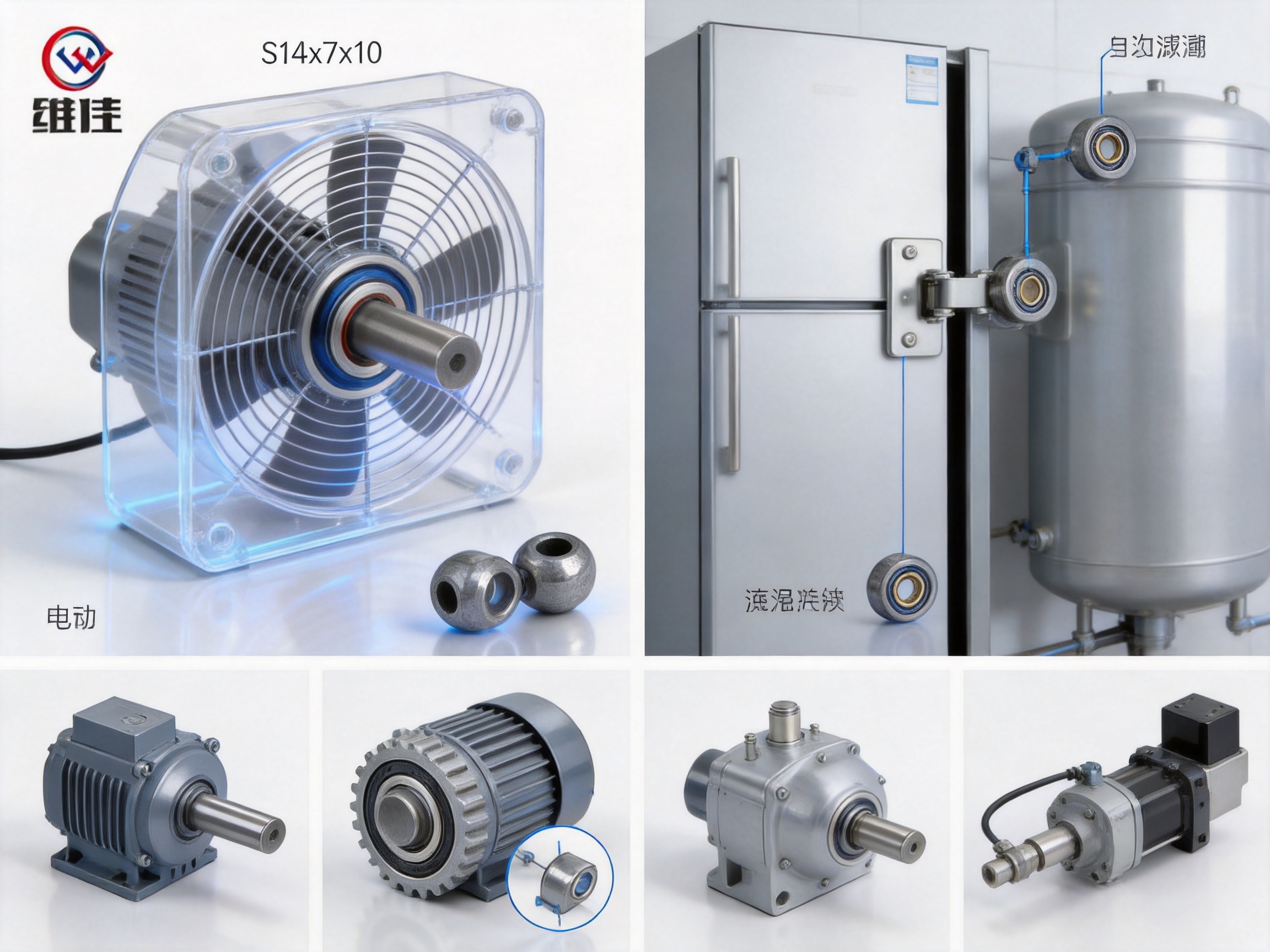
The S14x7x10 high-precision powder metallurgy iron bearing is a compact, self-lubricating component designed for applications that require stable rotation, controlled friction, consistent dimensions, and long service life. Manufactured from iron-based powder metallurgy material, this sintered bearing combines near-net-shape production with precision sizing, controlled porosity, oil impregnation, and strict dimensional inspection.
With a nominal geometry of approximately 14 mm outside diameter, 7 mm inside diameter, and 10 mm length, the component is suitable for small motors, electric fans, refrigerator mechanisms, gear systems, pumps, automation equipment, and other compact mechanical assemblies. Its design can also be customized according to customer drawings, samples, operating conditions, shaft dimensions, load requirements, and lubrication specifications.
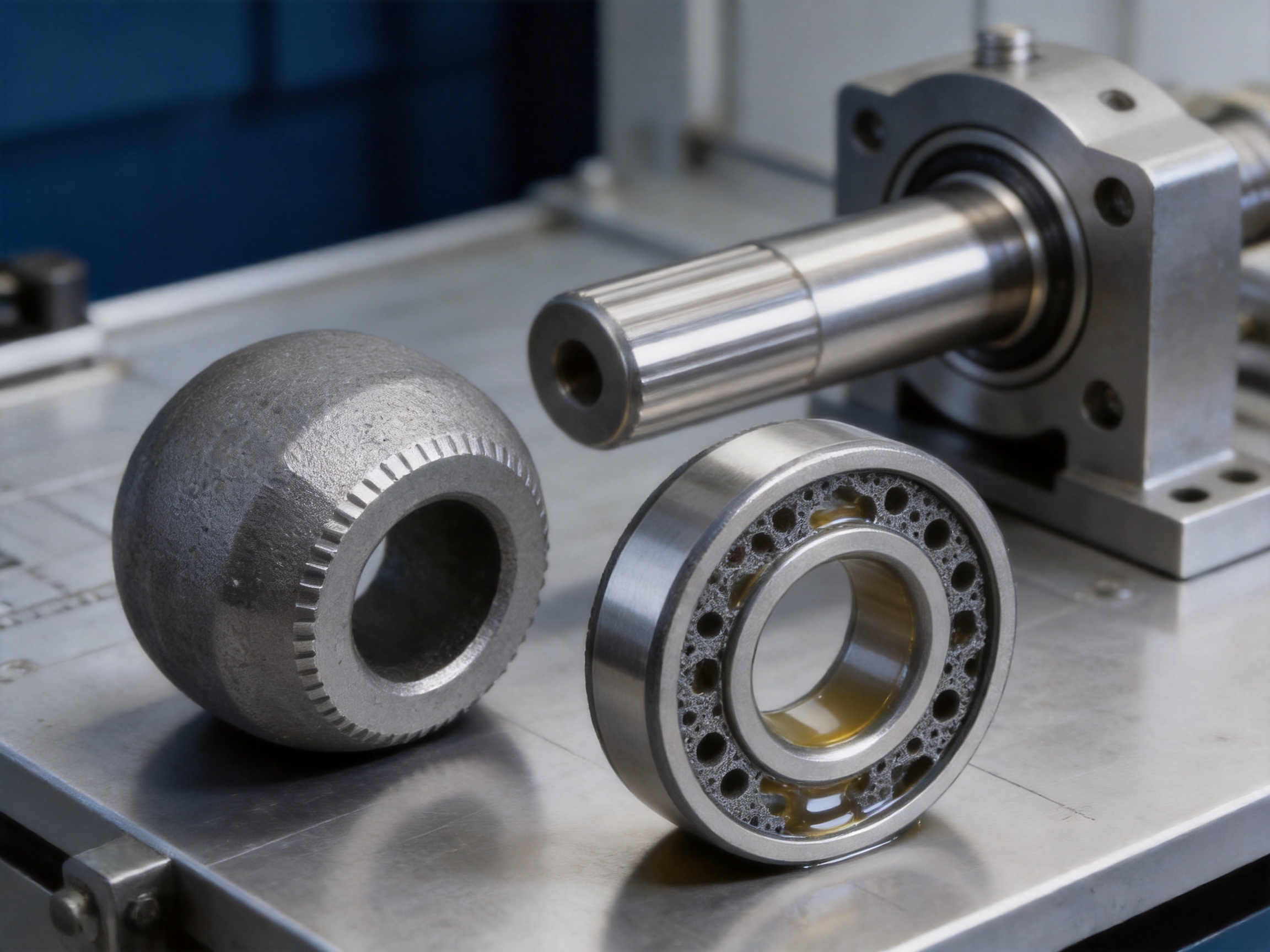
Unlike conventional solid metal bushings that require frequent external lubrication, the porous structure of an oil-impregnated powder metallurgy bearing stores lubricant within the material. During operation, the oil is gradually released to the bearing surface and can return to the pores when the component cools or stops. This creates a practical self-lubricating system that reduces maintenance requirements and supports reliable continuous operation.
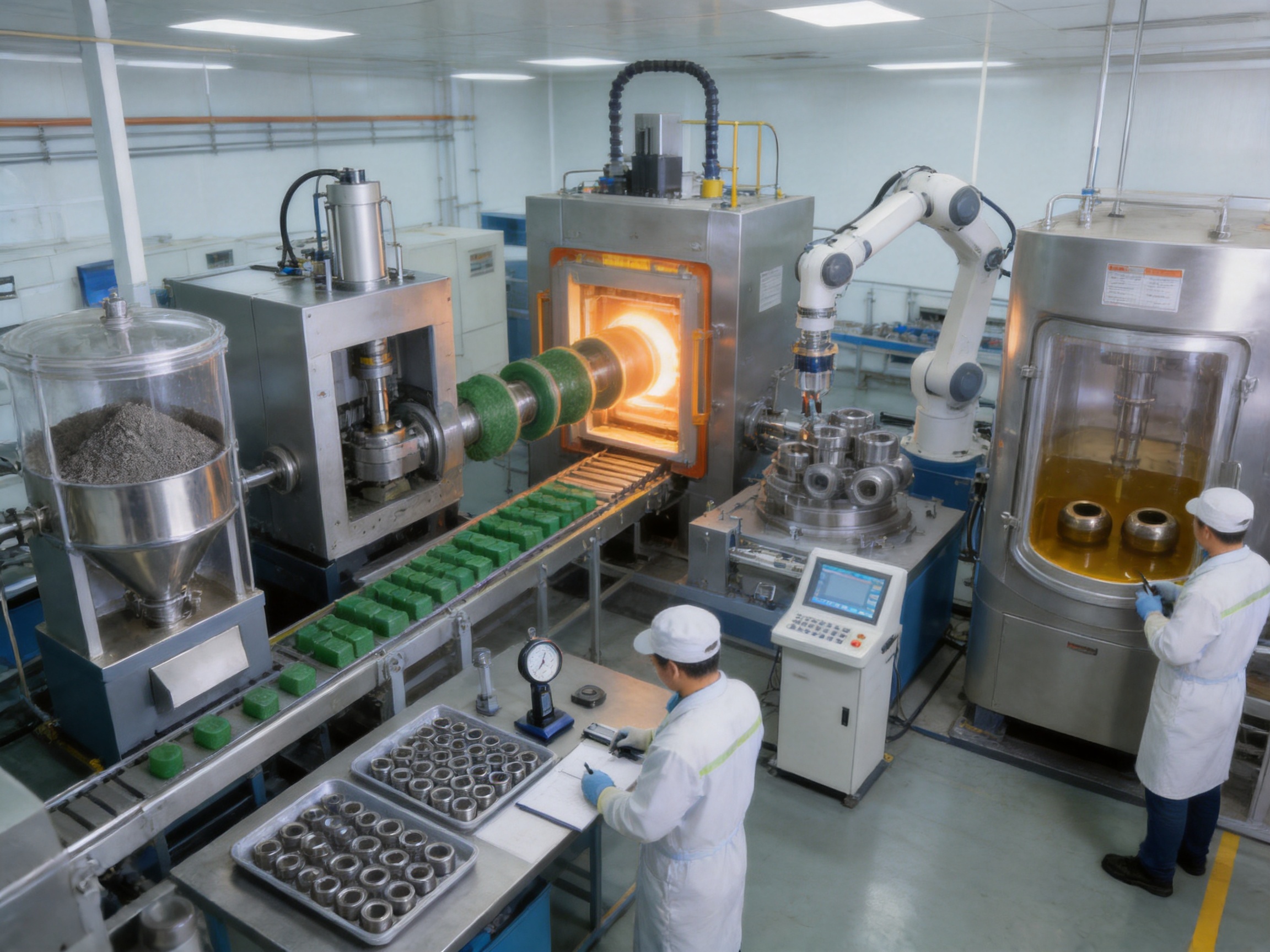
Jiande Welfine Technology Co., Ltd. manufactures this type of precision powder metallurgy component through an integrated process that includes material preparation, powder blending, precision compaction, controlled-atmosphere sintering, sizing, optional machining, oil impregnation, cleaning, and final inspection. The company’s experience in powder metallurgy sintering and related precision machining enables it to provide customized OEM and ODM solutions for international customers.
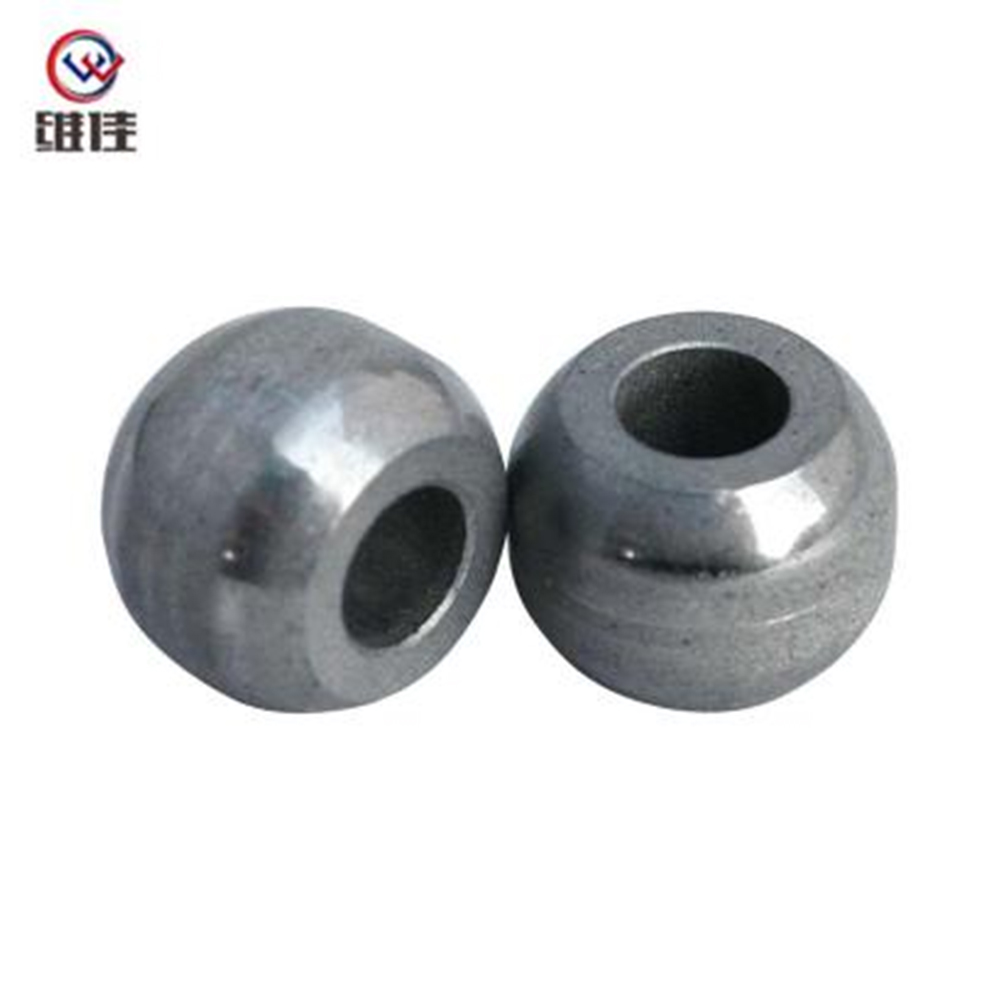
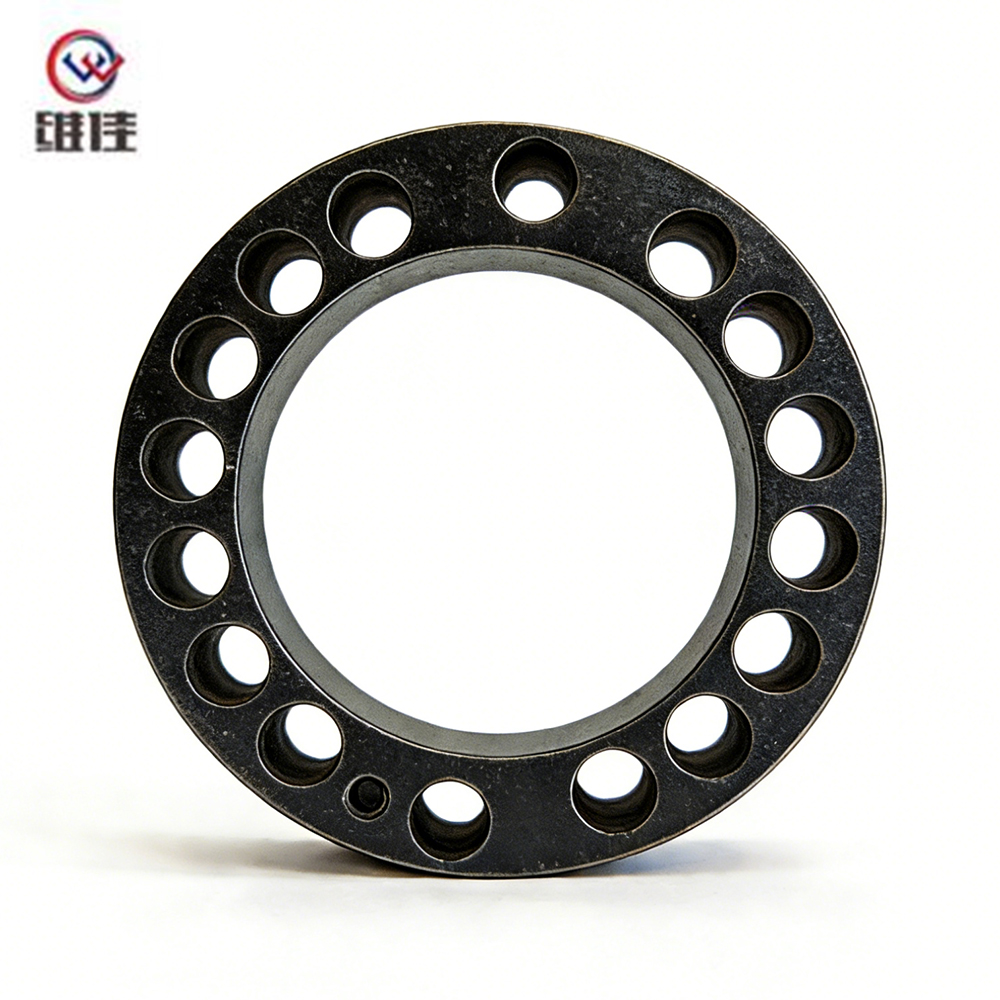
Powder Metallurgy Part High Precision PM Component (A3678)
Product Overview
The S14x7x10 powder metallurgy iron bearing is developed for compact assemblies in which space, friction, noise, and maintenance must be carefully controlled. The bearing can be produced as a cylindrical bushing or as a specially shaped component with additional features such as shoulders, grooves, chamfers, spherical surfaces, or other geometry defined by the application.
The standard reference size is S14x7x10. In many powder metallurgy component descriptions, this designation corresponds to an outside diameter of approximately 14 mm, an inside diameter of approximately 7 mm, and an axial length of approximately 10 mm. The final dimensions, fits, clearances, chamfers, and tolerances are confirmed according to the approved engineering drawing.
The component is made from iron-based powder. Iron powder is widely available, cost-effective, and suitable for a broad range of structural and bearing applications. Through the selection of powder grade, density, porosity, lubricant, and secondary processing method, the material can be adjusted to achieve a practical balance between strength, wear resistance, friction behavior, oil retention, and production cost.
As a sintered metal bearing, the product offers advantages that are difficult to achieve with ordinary machined steel bushings. The powder metallurgy process can produce complex shapes with less material waste, while the controlled pores provide an internal reservoir for lubricant. The result is a component that combines structural support with self-lubricating performance.
Key Technical Advantages
High Dimensional Consistency
Precision is one of the main reasons to select the S14x7x10 bearing for small mechanical systems. The production process is designed to control outside diameter, inside diameter, length, roundness, concentricity, and other functional dimensions. A representative quality target is IT7 dimensional accuracy, with concentricity controlled to approximately 0.03 mm for specified features and applications.
Actual tolerances depend on the dimension, material grade, tooling design, sintering shrinkage, sizing method, and customer drawing. For selected applications, concentricity after sintering may be controlled to approximately 0.06 mm or better, while additional sizing and inspection can support tighter requirements. The final tolerance should always be established during technical review rather than assumed from a general product designation.
Self-Lubricating Performance
The bearing’s porous structure absorbs and retains lubricating oil. When the shaft rotates, frictional heat and capillary action help deliver oil to the contact zone. This reduces the need for an external oil supply and allows the component to operate in locations where adding lubricant is difficult or impractical.
Self-lubrication is particularly useful in household appliances, compact motors, fans, gear mechanisms, and concealed pivot systems. It can reduce service interventions, simplify assembly, minimize contamination caused by excessive external grease, and support consistent friction over extended operating periods.
Low Noise and Smooth Movement
Correctly designed oil-impregnated bearings can contribute to low-noise operation. The oil film helps reduce direct metal-to-metal contact between the shaft and the bearing surface. Consistent roundness and concentricity also help prevent uneven contact, vibration, and periodic noise.
These characteristics are valuable in electric fans, refrigerator mechanisms, small motors, office equipment, and other products used near people. In applications where acoustic performance is important, the oil type, shaft finish, running clearance, load, speed, temperature, and assembly alignment must be evaluated together.
Efficient Material Utilization
Powder metallurgy is a near-net-shape manufacturing method. Compared with machining a bushing from solid bar stock, pressing and sintering can reduce cutting waste and shorten the production route for suitable geometries. This advantage becomes more significant in high-volume production, where dedicated tooling can provide repeatable output and stable unit costs.
The process also allows specific material characteristics to be engineered through powder composition, compaction density, sintering conditions, and post-treatment. As a result, the product can be designed not only around its dimensions but also around its functional performance.
Long Service Life
Long service life depends on correct application design, but the S14x7x10 bearing supports durability through several features: controlled density, stable sintered bonding, suitable porosity, oil retention, wear-resistant material, and precision sizing. When the bearing is correctly matched to the shaft, load, speed, temperature, and lubrication environment, it can provide dependable performance over long operating periods.
Jiande Welfine Technology Co., Ltd. provides a stated ten-year product quality warranty for applicable products and orders. Warranty conditions depend on the approved specification, operating conditions, installation method, and commercial agreement.
Why Powder Metallurgy Iron Is Suitable for This Bearing
Iron-based powder metallurgy materials are used extensively in structural parts, bushings, gears, cams, rotors, magnetic components, and friction-related applications. Iron powder provides a practical combination of availability, strength, processability, and cost efficiency.
For an oil-impregnated bearing, the material must provide enough mechanical strength to support the shaft while retaining an interconnected pore structure. If the density is too low, the component may lack strength and dimensional stability. If the density is too high, the pore volume may be insufficient for oil storage. The manufacturing objective is therefore to establish a controlled balance between mechanical performance and lubrication capacity.
Powder particle size, morphology, chemical composition, apparent density, flowability, and compressibility affect the final bearing. The powder must fill the die cavity evenly and respond predictably to compaction. Consistent powder preparation helps reduce density variation and supports repeatable sintering shrinkage.
Iron-based material can also be combined with alloying elements or other additives when the application requires improved strength, wear resistance, dimensional stability, or special tribological behavior. Material selection is finalized according to factors such as radial load, oscillating or continuous rotation, speed, temperature, shaft hardness, environmental conditions, and expected operating life.
Advanced Manufacturing Process
Engineering and Design Review
Production begins with a review of the customer’s drawing, sample, or technical requirement. Engineers evaluate the bearing geometry, wall thickness, holes, grooves, chamfers, spherical surfaces, density targets, tolerances, and assembly relationships.
Powder metallurgy tooling must be designed differently from ordinary machining tools. The design must account for filling behavior, pressing direction, ejection, powder movement, dimensional change during sintering, and access for sizing or machining. A well-designed die helps maintain consistent density and reduces the risk of cracking, lamination, distortion, or uneven shrinkage.
For the S14x7x10 component, the engineering review may include the shaft diameter, housing fit, required running clearance, expected rotation speed, radial load, temperature, duty cycle, oil type, and noise requirements. This technical approach helps ensure that the final component is suitable for the complete assembly rather than being evaluated only by nominal dimensions.
Powder Selection and Blending
Selected iron powder is blended with appropriate alloying materials, processing lubricants, and functional additives. The purpose of blending is to produce a uniform mixture that can flow into the die, compact consistently, and sinter into a stable structure.
Mixing time, sequence, humidity, temperature, and storage conditions can affect the homogeneity of the blend. Inadequate mixing may result in local variations in composition or density. Excessive handling may affect powder flowability or cause segregation. For this reason, controlled material handling and documented batch management are important parts of quality assurance.
Incoming materials should be checked against defined requirements. Depending on the material grade and customer specification, inspections may include chemical composition, particle characteristics, apparent density, flow rate, moisture, and visual condition. Stable raw materials create a stronger foundation for stable finished-product performance.
Precision Compaction
During compaction, the prepared powder is placed into a precision die and pressed under controlled force. The powder particles rearrange and bond mechanically to create a green compact that has the approximate shape of the finished bearing.
Compaction pressure must be carefully selected. If pressure is insufficient, the green compact may have inadequate strength, low density, or poor edge integrity. If pressure is excessive, the component may lose too much porosity, reducing its ability to retain oil. Uneven pressure distribution can also create density gradients that contribute to distortion or inconsistent shrinkage during sintering.
Modern powder presses can control filling volume, pressing force, stroke position, dwell time, and ejection sequence. These controls help produce repeatable green parts. Tool maintenance is equally important because worn punches, dies, or cores can affect dimensions and cause burrs, cracks, or variations in wall thickness.
Controlled-Atmosphere Sintering
Sintering transforms the compacted powder into a cohesive metal component. The green compact is heated below the melting point of the principal material in a controlled atmosphere. At elevated temperature, diffusion occurs between particles, increasing bonding strength and improving the mechanical integrity of the part.
Important sintering parameters include heating rate, peak temperature, holding time, atmosphere composition, conveyor speed, cooling rate, and furnace loading. The atmosphere protects the material from excessive oxidation and supports the desired chemical reactions during heating.
Incorrect sintering can lead to several defects. Excessive temperature or holding time may cause excessive shrinkage, distortion, or loss of useful porosity. Insufficient sintering may leave weak particle bonds and reduce wear resistance. Poor atmosphere control can affect surface condition and material properties. Stable furnace operation and process monitoring are therefore essential for precision bearings.
Sizing and Calibration
After sintering, the bearing may undergo sizing, also called calibration or repressing. During this operation, the part is passed through a precision tool to improve critical dimensions, roundness, straightness, and concentricity.
Sizing is especially valuable for components used in small motors and precision mechanisms. It can improve the fit between the bearing and the shaft or housing without requiring extensive cutting operations. The process also helps compensate for small variations caused by sintering.
For the S14x7x10 bearing, sizing may be applied to the inside diameter, outside diameter, length, or multiple functional surfaces. The selected process depends on the required tolerance and the material’s density and strength. Where necessary, secondary machining can be used for special profiles, grooves, chamfers, or close-tolerance features.
Oil Impregnation
Oil impregnation fills the interconnected pores of the sintered bearing with lubricant. The component may be placed in oil under vacuum or another controlled process that removes air from the pores and encourages oil penetration.
After impregnation, excess surface oil is removed or controlled according to the product requirement. The remaining oil acts as an internal lubricant reservoir. During operation, the oil migrates toward the sliding interface. When operating conditions change, a portion of the oil can be reabsorbed into the porous structure.
The oil grade should be selected according to speed, load, temperature, environmental exposure, compatibility with the shaft and housing, and expected service life. SHC 626 oil is identified for certain application examples, but the final lubricant should be confirmed for the specific customer design.
Cleaning, Inspection, and Packaging
Finished bearings are cleaned to remove loose particles, excess surface oil, and handling contaminants. Cleanliness is important because small particles can affect shaft rotation, noise, wear, and assembly quality.
Inspection may include dimensional measurement, concentricity, roundness, surface condition, visual appearance, density, oil content, hardness, and functional testing. Depending on the customer’s quality plan, samples may also be tested for wear, friction, load capacity, temperature performance, or continuous running durability.
Packaging is designed to protect the bearings from impact, contamination, corrosion, and oil loss during storage and transportation. Parts may be separated into trays, bags, boxes, or customized packaging systems. Batch identification supports traceability from finished product back to material and process records.
Dimensional Accuracy and Tolerance Control
High-precision PM bearings must be evaluated by functional dimensions rather than by nominal size alone. The inside diameter determines the relationship with the shaft. The outside diameter determines the housing fit. Length affects axial positioning and load distribution. Concentricity and roundness influence running smoothness and contact uniformity.
The product information identifies IT7 as a representative precision grade. The applicable tolerance depends on the size range and the selected dimensional class. General tolerance references may include values for IT6, IT7, IT8, IT9, and IT10, as well as shaft and hole tolerance systems such as E7, F7, F8, G7, and related fits.
For an actual order, the customer drawing takes priority. A technical quotation should identify the nominal dimensions, tolerance class, datum system, surface requirements, inspection method, and acceptance criteria. This avoids misunderstanding caused by using a general tolerance table for a specialized application.
| Characteristic | Representative Requirement | Technical Importance |
| Nominal size | S14x7x10 | Defines the basic bearing geometry |
| Material | Iron-based powder metallurgy | Provides structural support and controlled porosity |
| Precision grade | Up to IT7 for specified dimensions | Supports accurate assembly and stable operation |
| Concentricity | Approximately 0.03 mm for specified requirements | Reduces eccentric rotation and uneven wear |
| Lubrication | Oil-impregnated, self-lubricating | Reduces external maintenance requirements |
| Surface features | Optional chamfers, grooves, or special profiles | Supports assembly and application-specific functions |
| Quality support | Process inspection and product traceability | Improves batch consistency and customer confidence |
Performance Compared with Conventional Bushings
Compared with Machined Solid Steel Bushings
A machined steel bushing can provide high strength and excellent dimensional accuracy, but it normally requires external lubrication unless a separate lubricant system is incorporated. Machining from bar stock may also generate considerable material waste, particularly in high-volume production.
The S14x7x10 powder metallurgy bearing provides internal oil storage and can be manufactured efficiently for repeated production. Its porous structure supports self-lubrication, while sizing and optional machining provide the dimensional accuracy needed for compact assemblies. For applications with moderate loads and suitable speeds, this combination can provide a lower-maintenance alternative to a conventional solid bushing.
Compared with Plastic Bushings
Plastic bushings can be lightweight, quiet, and resistant to certain chemicals. However, their dimensional stability may be affected by temperature, moisture, creep, and load. Some plastic materials may also require special compounds or external lubrication to achieve the desired service life.
An iron-based sintered bearing offers stronger structural support and improved resistance to permanent deformation under appropriate operating conditions. Its oil-impregnated structure can also provide stable lubrication for long periods. The correct choice depends on load, speed, temperature, corrosion exposure, electrical insulation requirements, and cost objectives.
Compared with Fully Dense Sintered Bushings
A fully dense metal component may provide strength, but it does not offer the same internal oil storage capacity as a controlled porous bearing. The S14x7x10 component is designed to use porosity as a functional advantage. Its performance depends on balancing pore volume with density and strength.
Compared with Imported Standard Bushings
Standard catalog bushings may be readily available, but they may not match the exact shaft fit, housing dimension, oil type, chamfer, length, or assembly geometry required by an OEM product. Customized production allows the customer to specify the actual functional requirements and avoid unnecessary adaptation parts.
Jiande Welfine Technology Co., Ltd. supports production based on customer drawings or samples. This helps manufacturers integrate the bearing directly into their assemblies and can reduce redesign work, fitting problems, and unnecessary inventory varieties.
Applications in Electric Fans
The S14x7x10 product family and related spherical or cylindrical powder metallurgy bushings are suitable for electric fans, including ceiling fans, stand fans, tower fans, and other domestic or commercial fan products.
In a fan swing mechanism, a precision bushing may be installed at the connection between the fan head’s pitch and yaw drive components. Smooth movement is important because the mechanism repeatedly changes direction during normal use. The self-lubricating structure helps reduce friction and abnormal noise, while controlled concentricity supports stable movement.
In a motor or auxiliary shaft support, the bushing helps maintain shaft position and reduce rotational friction. A spherical matching surface may be used in specific designs to accommodate alignment requirements. The product information includes a representative spherical matching diameter of approximately 13.7 ± 0.10 mm for a related fan application, but the actual dimension must be confirmed by the customer drawing.
Fan manufacturers benefit from a component that is compact, economical, quiet, and capable of long operating periods without frequent maintenance. The bearing can also be produced in various sizes to suit different fan mechanisms. Sample sizes listed in the product data include inner diameters from approximately 3.17 mm to 12.7 mm, with corresponding outer dimensions and lengths.
Applications in Refrigerators
Powder metallurgy bushings are also used in refrigerator door hinge systems, compressor-related linkages, and other compact mechanisms. In a door hinge adjustment application, the bearing helps maintain the pivot relationship between the door and cabinet.
Accurate dimensions are important because excessive clearance may allow door sag, while insufficient clearance may increase opening force or cause binding. Proper chamfers, including representative 0.4 x 45-degree features where specified, can assist assembly and reduce the risk of edge interference.
In compressor vibration-reduction mechanisms, a sintered bushing can be installed at a connecting rod or bracket pivot. The bearing’s oil lubrication and wear resistance help reduce friction in the linkage. By supporting smooth movement and limiting wear, it can contribute to lower vibration transmission and reduced operating noise.
Refrigerator applications may involve a wide range of temperatures, intermittent operation, vibration, and long service intervals. The oil grade, material density, clearance, and sealing conditions must therefore be reviewed carefully. The bearing should be validated under the actual operating temperature and duty cycle rather than selected by size alone.
Additional Industrial Applications
Electric Motors
Small electric motors often require compact bearing solutions that can operate continuously with limited maintenance. The S14x7x10 bearing can support auxiliary shafts, gear shafts, fan shafts, and other rotating elements where the load and speed are compatible with an oil-impregnated design.
Gear Reduction Systems
In gearboxes and reduction mechanisms, sintered bushings can support gear shafts and pivot points. The material’s wear resistance and internal oil reservoir help reduce friction at locations that may be difficult to lubricate after assembly.
Pumps and Fluid Equipment
Compact pumps may use powder metallurgy bushings for shaft guidance or linkage movement. Application review should include fluid compatibility, temperature, pressure, contamination, and the possibility of external fluid entering the pores.
Automation Equipment
Automation systems frequently use small bushings in actuators, linkages, indexing mechanisms, and positioning units. Dimensional consistency and low friction support repeatable motion, while customized geometry can simplify installation.
Agricultural and Automotive Mechanisms
Powder metallurgy components may be used in agricultural machinery, automotive actuators, control mechanisms, and power transmission equipment. These applications can involve vibration, dust, temperature changes, and high duty cycles. Material and oil selection should be adapted to the environment, and protective sealing may be necessary in contaminated locations.
Quality Assurance and Manufacturing Strengths
Jiande Welfine Technology Co., Ltd. was established in 2001 and focuses on powder metallurgy sintering, self-lubricating bushings, and related precision parts. The company integrates research and development, production, sales, technical support, and customized OEM and ODM services.
The company operates a modern production base covering approximately 13,039 square meters. Its equipment includes high-efficiency powder presses, high-temperature sintering furnaces, precision forming machines, and testing equipment. This production structure supports the manufacture of both standard and customized components.
More than 20 years of industry experience provides a foundation for tooling development, process optimization, material selection, and troubleshooting. The company employs more than 150 skilled employees, including personnel involved in production, quality management, engineering, and customer support.
Welfine implements quality management procedures covering raw material control, tooling management, process monitoring, dimensional inspection, product testing, packaging, and traceability. The company has passed ISO 9001:2015 and IATF 16949:2016 certifications, supporting its ability to serve industrial and automotive-related customers.
The combination of production capacity and engineering experience is an important advantage over suppliers that only trade standard bushings. Customers can submit drawings, samples, or performance requirements and receive support for material selection, tooling development, trial production, inspection, and mass production.
Customization Options
The S14x7x10 reference product can be customized in several ways. Dimensions may be modified to suit the customer’s shaft and housing. The bearing can also be designed with steps, shoulders, grooves, flange features, spherical surfaces, oil holes, chamfers, or other application-specific geometry.
Material options can be evaluated according to load, speed, temperature, wear, corrosion exposure, and lubrication requirements. Different iron-based grades may be considered, and additional alloying or processing adjustments can be used when greater strength or wear resistance is necessary.
Oil impregnation can be customized by lubricant type and filling method. The selected oil should be compatible with the application environment and should maintain suitable viscosity over the expected temperature range.
Surface treatment, secondary sizing, precision machining, and special inspection plans can also be discussed. Customers may request dimensional reports, material certificates, process records, sample approval, capability studies, or functional test data depending on the product’s importance and industry requirements.
For the fastest technical evaluation, customers should provide a two-dimensional drawing, three-dimensional model, sample, annual volume, application description, shaft and housing materials, operating speed, load, temperature, and required service life. This information enables the manufacturer to recommend an appropriate design rather than simply matching nominal dimensions.
Recommended Application and Design Considerations
Shaft Compatibility
The shaft should have suitable hardness, surface roughness, straightness, and dimensional accuracy. A rough or soft shaft can accelerate wear even when the bearing itself is correctly manufactured. The shaft should also be free of burrs and contamination before assembly.
Housing Fit
The housing fit must secure the bearing without excessive compression. Over-compression can reduce the internal clearance and restrict oil flow. Insufficient interference can allow the bearing to rotate in the housing, causing fretting, noise, or dimensional damage.
Running Clearance
Running clearance must account for shaft size, bearing size, temperature, speed, load, oil viscosity, and material expansion. A clearance that is too small may cause friction and seizure, while a clearance that is too large may increase vibration and uneven wear.
Load and Speed
The bearing should be selected according to the combined pressure and sliding speed. Continuous rotation, oscillation, reversing motion, shock loading, and intermittent duty can produce different wear patterns. The manufacturer should evaluate the actual operating profile before confirming the design.
Temperature and Environment
Oil viscosity and material behavior change with temperature. High temperatures may reduce oil viscosity and accelerate oxidation, while low temperatures may increase starting torque. Dust, water, chemicals, and aggressive fluids may also affect performance. Sealing and environmental protection should be considered where necessary.
Assembly Method
Press-fitting should be performed with suitable tooling that applies force evenly. Impacting the bearing directly with a hammer can damage the edge or deform the bore. The assembly process should keep the bearing aligned with the housing and should avoid contamination of the sliding surface.
Inspection and Testing Recommendations
Incoming and finished-product inspection should be based on the application’s critical characteristics. Typical dimensional checks include inside diameter, outside diameter, length, chamfer, roundness, and concentricity.
For higher-risk applications, additional tests may include density measurement, hardness, oil content, surface roughness, torque, friction, wear, temperature rise, and endurance testing. Functional testing with the actual shaft and housing materials can provide more useful results than isolated component testing.
Sample testing should reproduce realistic load, speed, temperature, duty cycle, and lubrication conditions. Where the bearing is used in a fan or refrigerator, testing should include start-stop cycles, reversing or oscillating motion, vibration, and long-duration operation.
Inspection results should be linked to production batches. This enables traceability and helps identify process trends. Statistical monitoring of key dimensions can also reveal tool wear or process drift before nonconforming components become widespread.
Product Specification Summary
| Item | Specification or Option |
| Product type | High-precision powder metallurgy iron bearing |
| Reference model | S14x7x10 |
| Category | Iron-based oil-impregnated bearing |
| Manufacturing method | Powder compaction, sintering, sizing, and optional machining |
| Lubrication method | Oil impregnation and self-lubrication |
| Representative precision | IT7 for specified dimensions |
| Representative concentricity | Up to approximately 0.03 mm for defined requirements |
| Material advantage | Cost-effective iron powder with controlled porosity |
| Typical applications | Fans, refrigerators, motors, gear systems, pumps, and automation equipment |
| Customization | Dimensions, material grade, oil, geometry, tolerance, and inspection plan |
| Quality systems | ISO 9001:2015 and IATF 16949:2016 |
| Service support | OEM and ODM production based on drawings or samples |
Why Select This High-Precision PM Bearing
The S14x7x10 bearing is an effective solution when an application requires more than a basic metal sleeve. Its value comes from the combination of controlled porosity, internal oil storage, precision sizing, iron-based structural strength, and customized manufacturing support.
Compared with ordinary machined bushings, it can reduce lubricant maintenance and material waste. Compared with many plastic bushings, it offers stronger metal support and improved resistance to creep under suitable conditions. Compared with generic standard bearings, it can be adapted to the customer’s actual assembly and performance requirements.
The product is also supported by a manufacturer with dedicated powder metallurgy equipment, a broad range of related products, experienced technical personnel, and established quality systems. The company can assist from initial design review through tooling, sample approval, mass production, inspection, and delivery.
Frequently Asked Questions
What does S14x7x10 mean?
S14x7x10 is the reference designation for a compact bearing with a nominal geometry of approximately 14 mm outside diameter, 7 mm inside diameter, and 10 mm length. The exact interpretation and tolerance must be confirmed on the approved engineering drawing.
Is the S14x7x10 bearing self-lubricating?
Yes. When produced as an oil-impregnated powder metallurgy bearing, its porous structure stores lubricant and releases it during operation. Additional external lubrication may not be necessary under suitable operating conditions.
What material is used for this bearing?
The standard product is made from an iron-based powder metallurgy material. The exact powder grade, density, alloying composition, and porosity can be adjusted according to load, speed, temperature, wear, and service-life requirements.
What precision can the product achieve?
A representative requirement is IT7 dimensional accuracy for selected dimensions. Concentricity can be controlled to approximately 0.03 mm for defined specifications. Actual values depend on geometry, tooling, sintering behavior, sizing, and the customer’s drawing.
Can the bearing be customized?
Yes. Customization may include inside diameter, outside diameter, length, chamfers, grooves, shoulders, spherical surfaces, material grade, oil type, porosity, tolerance, surface requirements, packaging, and inspection documentation.
Can the product be used in electric fans?
Yes. Powder metallurgy bushings are commonly used in fan swing mechanisms, motor shaft supports, and other compact rotating or oscillating locations. The design must be checked against the fan’s load, speed, alignment, noise, and duty cycle.
Can the product be used in refrigerators?
Yes. Suitable applications include door hinge adjustment mechanisms, compressor vibration-reduction linkages, and other pivot points. Temperature, oil compatibility, vibration, and long-term cycling should be included in the validation process.
What information is needed for a quotation?
A drawing or sample is preferred. Additional useful information includes annual quantity, application, shaft and housing dimensions, load, speed, temperature, movement type, lubricant requirements, environmental conditions, tolerance, and inspection expectations.
Does the manufacturer support OEM and ODM projects?
Yes. Jiande Welfine Technology Co., Ltd. provides customized OEM and ODM powder metallurgy components based on customer drawings, samples, or technical requirements. Support can include design review, tooling, trial production, inspection, and mass production.
How should the bearing be stored?
The bearing should be stored in a clean, dry environment away from excessive heat, moisture, chemicals, and dust. Packaging should remain sealed until assembly when possible. Long storage periods should be reviewed with the manufacturer because oil condition and corrosion protection may depend on the selected lubricant and packaging method.
What is the expected service life?
Service life depends on load, speed, temperature, shaft condition, clearance, alignment, oil type, contamination, and duty cycle. A ten-year product quality warranty is stated for applicable products, but the actual operating life must be confirmed through application-specific testing and agreed warranty conditions.
Conclusion
The S14x7x10 high-precision powder metallurgy iron bearing is a compact and efficient component for applications that require controlled dimensions, self-lubrication, low maintenance, and dependable motion. Its sintered iron structure provides a practical balance of strength, wear resistance, cost efficiency, and oil retention.
The product’s performance is supported by a complete manufacturing route: carefully selected powder, controlled blending, precision compaction, controlled-atmosphere sintering, sizing, optional machining, oil impregnation, cleaning, and final inspection. This process helps achieve stable dimensions and consistent performance across production batches.
Jiande Welfine Technology Co., Ltd. strengthens the product offering through more than two decades of powder metallurgy experience, a 13,039-square-meter manufacturing base, advanced production and testing equipment, more than 150 skilled employees, ISO 9001:2015 and IATF 16949:2016 certifications, and OEM and ODM engineering support.
For electric fans, refrigerators, motors, gear systems, pumps, automation equipment, and other compact mechanisms, this high-precision PM bearing offers a reliable alternative to conventional solid bushings and generic standard parts. Customers can submit drawings or samples for a detailed evaluation of dimensions, material, lubrication, tolerance, tooling, and application performance.
References
1. Powder Metallurgy Association, general principles of powder metallurgy compaction, sintering, and material selection.
2. International Organization for Standardization, ISO 9001:2015, Quality management systems — Requirements.
3. International Automotive Task Force, IATF 16949:2016, Quality management system requirements for automotive production and relevant service parts.
4. General engineering references for ISO tolerance grades, limits and fits, dimensional inspection, and geometric accuracy.
5. Technical product information for iron-based oil-impregnated powder metallurgy bearings and self-lubricating sintered bushings.
6. Manufacturer-provided technical information for customized powder metallurgy components, production capabilities, applications, and quality management.
Product: Powder Metallurgy Part High Precision PM Component (A3678)
Related products
-
-
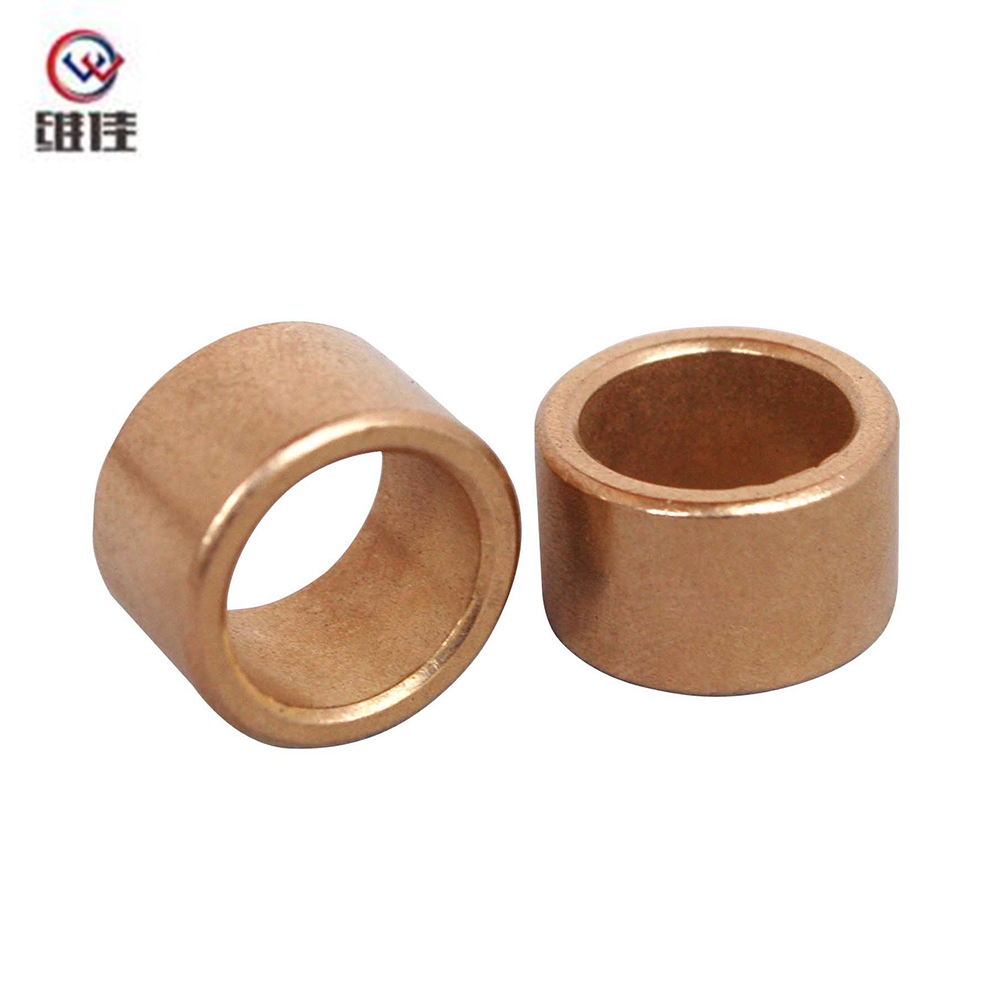
This copper-based powder metallurgy bushing is manufactured through an integrated process of compaction, sintering, sizing, and oil impregnation. It features excellent wear resistance and self-lubrica...
See Details -
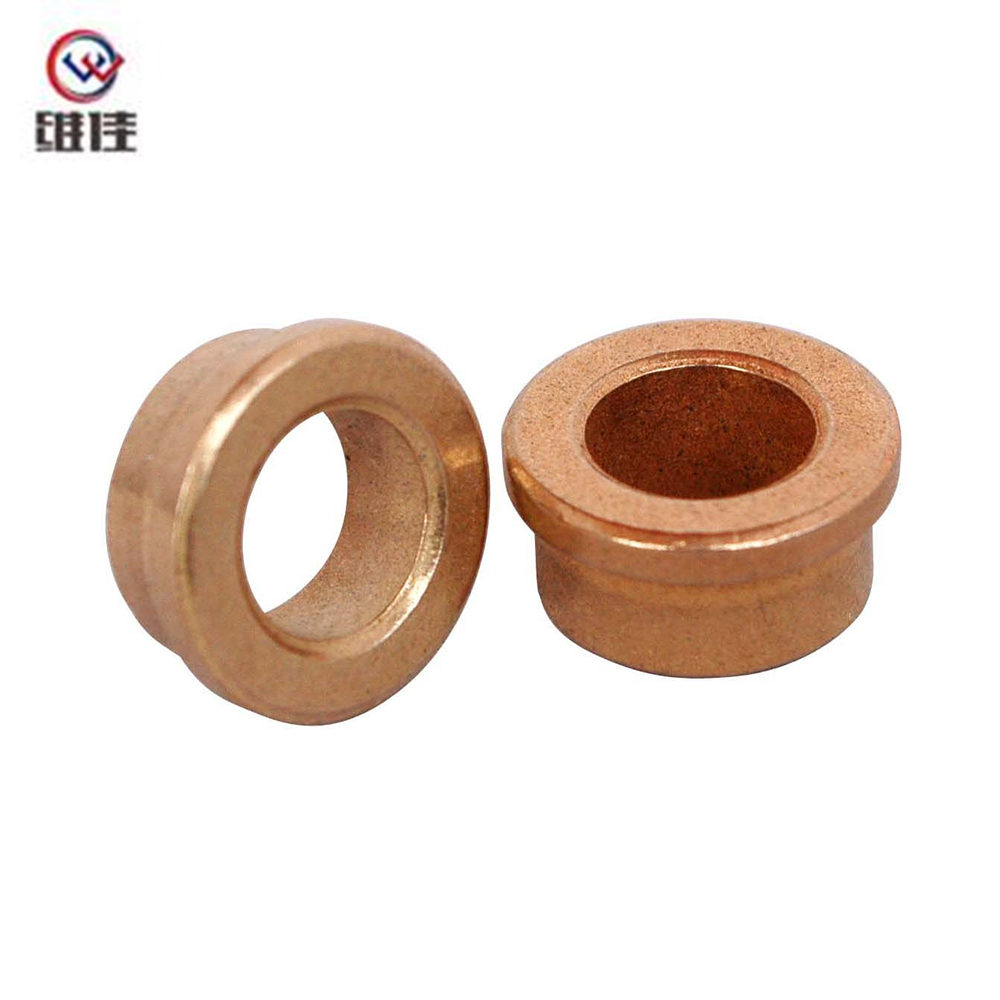
Premium Material: Our flange bushing is crafted from Sint B50 oil-impregnated bronze, featuring an 18% oil content. The high-quality tin bronze material ensures exceptional hardness, wear resistance, ...
See Details
Copyright © Jiande Welfine Technology Co., Ltd. All Rights Reserved. Privacy Custom Self-lubricating Sintered Bushing Manufacturers
