 English
 中文简体
中文简体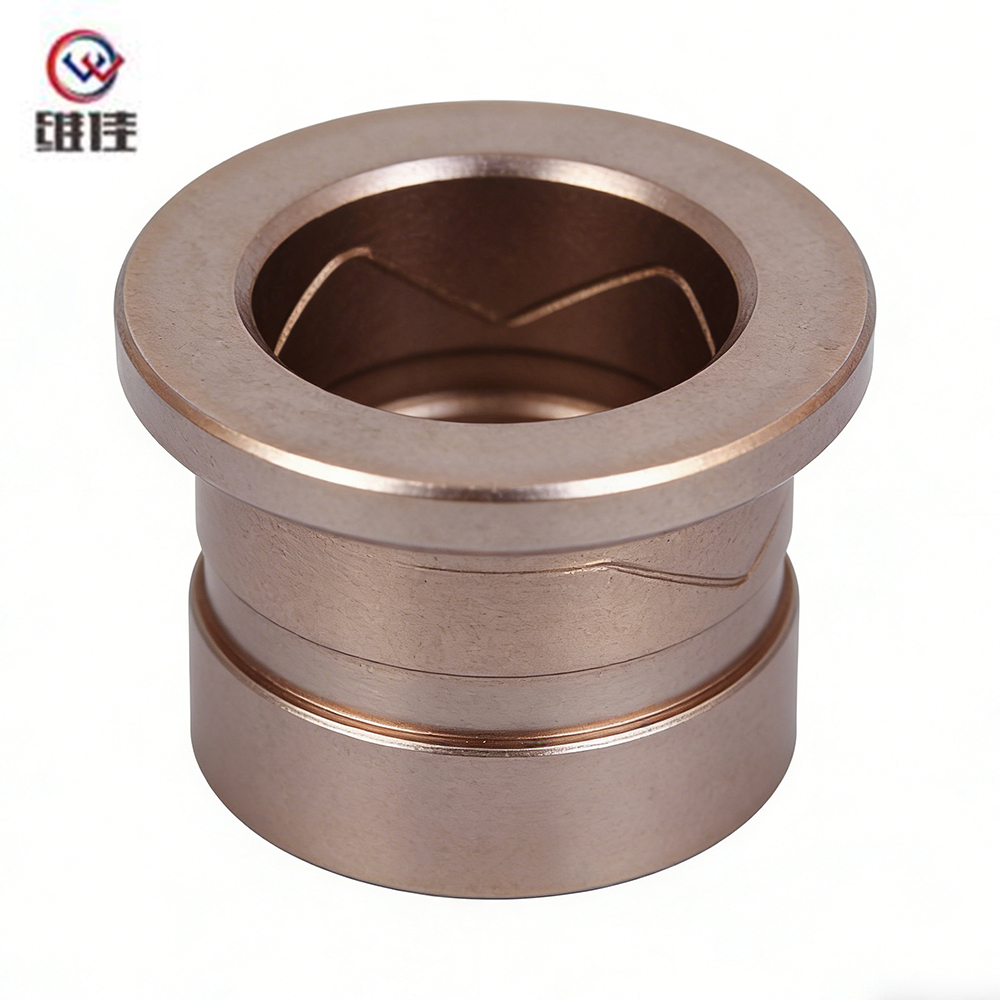

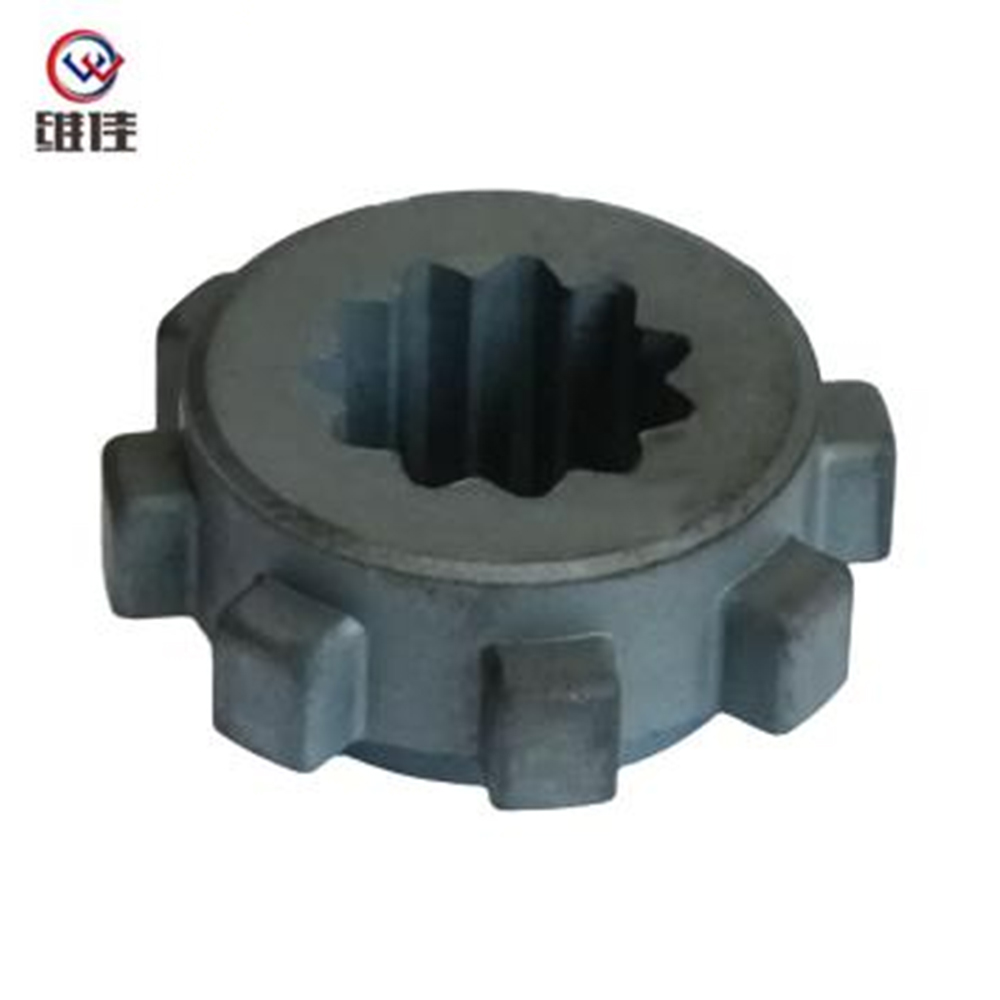
Product Description: High-precision powder metallurgy part (S14*7*10) made of iron material from Jiande Wefine, customized PM components with strict tolerance control.
See DetailsE-mail us: [email protected]
Tel: +86-15239857375


 Home / Author / Luo Qian — Product Sales Supervisor / Precision Iron-Copper Oil-Impregnated Bearing Component for Heavy-Duty Forklift Systems
 Precision Iron-Copper Oil-Impregnated Bearing Component for Heavy-Duty Forklift Systems
 2026.05.29
 Luo Qian — Product Sales Supervisor
Content
- 1 Product Positioning and Engineering Purpose
- 2 Key Product Specifications
- 3 FeCu20 Material: Strength, Stability, and Wear Resistance
- 4 Complete Manufacturing Route and Process Control
- 5 Advantages Over Conventional Alternatives
- 6 Company Manufacturing Strengths
- 7 Quality Assurance and Inspection
- 8 Application Areas in Forklift Systems
- 9 Design Considerations for Custom Orders
- 10 Packaging, Transportation, and Storage Protection
- 11 Why This Component Is a Competitive Choice
- 12 Practical Evaluation Criteria for Buyers
- 13 Q&A Section
- 13.1 Q1: What is the main function of this component?
- 13.2 Q2: Why is FeCu20 used for this product?
- 13.3 Q3: What is the benefit of HD460 oil impregnation?
- 13.4 Q4: How does this product compare with ordinary machined steel bushings?
- 13.5 Q5: Can the component be customized?
- 13.6 Q6: What quality inspections are performed?
- 13.7 Q7: Is this product suitable only for one forklift model?
- 13.8 Q8: Why is powder metallurgy suitable for this kind of component?
- 13.9 Q9: How should the component be stored before installation?
- 13.10 Q10: What information should a buyer provide for a custom order?
- 14 Conclusion
- 15 References
- 16 Product: Sumitomo Forklift Component
In heavy-duty material handling equipment, a small bearing or structural component can determine whether a forklift operates smoothly, quietly, and reliably over long working cycles. The precision iron-copper oil-impregnated bearing component described in this article is engineered for demanding forklift applications where load, vibration, friction, shock, dust, and long operating hours create a difficult environment for conventional parts. Manufactured from FeCu20 powder metallurgy material and impregnated with HD460 oil, this component combines mechanical strength, dimensional stability, wear resistance, and self-lubricating performance in one compact part.
This product is designed as a professional powder metallurgy structural and bearing component for Sumitomo forklift trucks. It is produced through a complete manufacturing route that includes powder pressing, high-temperature sintering, heat treatment, precision machining, drilling, oil impregnation, and protective packaging. Each process stage is selected to improve the internal structure, surface quality, assembly precision, and service life of the final part.
Compared with ordinary machined steel bushings, low-grade sintered parts, or traditional lubricated bearings that require frequent maintenance, this iron-based oil-impregnated component offers a more balanced solution. It provides the strength required for forklift systems while maintaining internal lubricant storage through the interconnected porosity of the sintered structure. During operation, the impregnated HD460 oil is gradually released to the friction interface, reducing metal-to-metal contact, lowering noise, and helping to extend working life.
Product Positioning and Engineering Purpose
The component belongs to the category of iron-based oil-impregnated bearings and powder metallurgy structural parts. Its purpose is not only to support rotational or sliding motion, but also to maintain stable performance under complex forklift working conditions. Forklift systems often operate under repeated starting and stopping, sudden load changes, vibration from uneven ground, and long periods of continuous use. These conditions can quickly expose weaknesses in ordinary parts, especially those with insufficient hardness, poor lubrication retention, unstable dimensions, or low fatigue resistance.
The FeCu20 material system gives the part a strong iron-based skeleton reinforced by copper content. This combination supports a high level of mechanical reliability while improving sintering behavior and dimensional consistency. Through proper process control, the material can achieve a structure suitable for heavy-load applications, including transmission-related parts, support bushings, motion control components, and self-lubricating bearing positions.
The product is especially valuable in applications where regular manual lubrication is inconvenient, neglected, or impossible during continuous operation. The oil-impregnated structure works as an internal lubricant reservoir. When the component is under motion and temperature increases slightly at the contact surface, oil migrates toward the working interface. When the equipment stops and the temperature decreases, part of the oil can be reabsorbed into the porous structure. This self-regulating lubrication mechanism is one of the key advantages of sintered oil-impregnated bearings.
For forklift manufacturers, maintenance companies, and parts distributors, the component offers a practical combination of OEM-compatible fit, stable performance, and long-term supply capability. It can be produced according to drawings or samples, allowing customers to maintain interchangeability with existing forklift systems while upgrading product durability and lubrication reliability.
Key Product Specifications
The component is produced according to strict dimensional and quality requirements. Because forklift assemblies require accurate mating with shafts, housings, and surrounding parts, the final dimensions must be controlled through powder forming, sintering shrinkage management, and post-sintering machining. The following table summarizes the main product information.
| Item | Specification | Engineering Significance |
|---|---|---|
| Product Type | Powder metallurgy structural and bearing component | Combines load support, motion guidance, and self-lubricating function |
| Material | FeCu20 iron-copper powder metallurgy material | Provides strength, wear resistance, dimensional stability, and good sintering performance |
| Application | Forklift transmission, support, and motion systems | Suitable for heavy-load, long-hour, and vibration-prone working environments |
| Oil Impregnation | HD460 oil | Supports long-term lubrication, reduced friction, lower noise, and anti-wear performance |
| Production Process | Pressing, sintering, heat treatment, machining, drilling, oil impregnation, packaging | Ensures controlled shape, mechanical strength, accuracy, lubrication, and transport protection |
| Dimensional Control | Drawing-controlled; final values confirmed by customer specification | Ensures assembly compatibility and repeatability in forklift systems |
| Quality Standard | OEM standard and forklift industry requirements | Supports reliable replacement, stable operation, and long service life |
| Customization | Available according to drawings or samples | Allows optimization of size, material, tolerance, oil type, and finishing process |
Although the part is small compared with the complete forklift, its engineering importance is high. A bearing or bushing with poor accuracy may cause vibration, uneven wear, shaft damage, noise, or premature failure. A component with insufficient oil retention may create dry friction, heat buildup, and accelerated surface degradation. This product is therefore manufactured as a precision component rather than a simple commodity part.
FeCu20 Material: Strength, Stability, and Wear Resistance
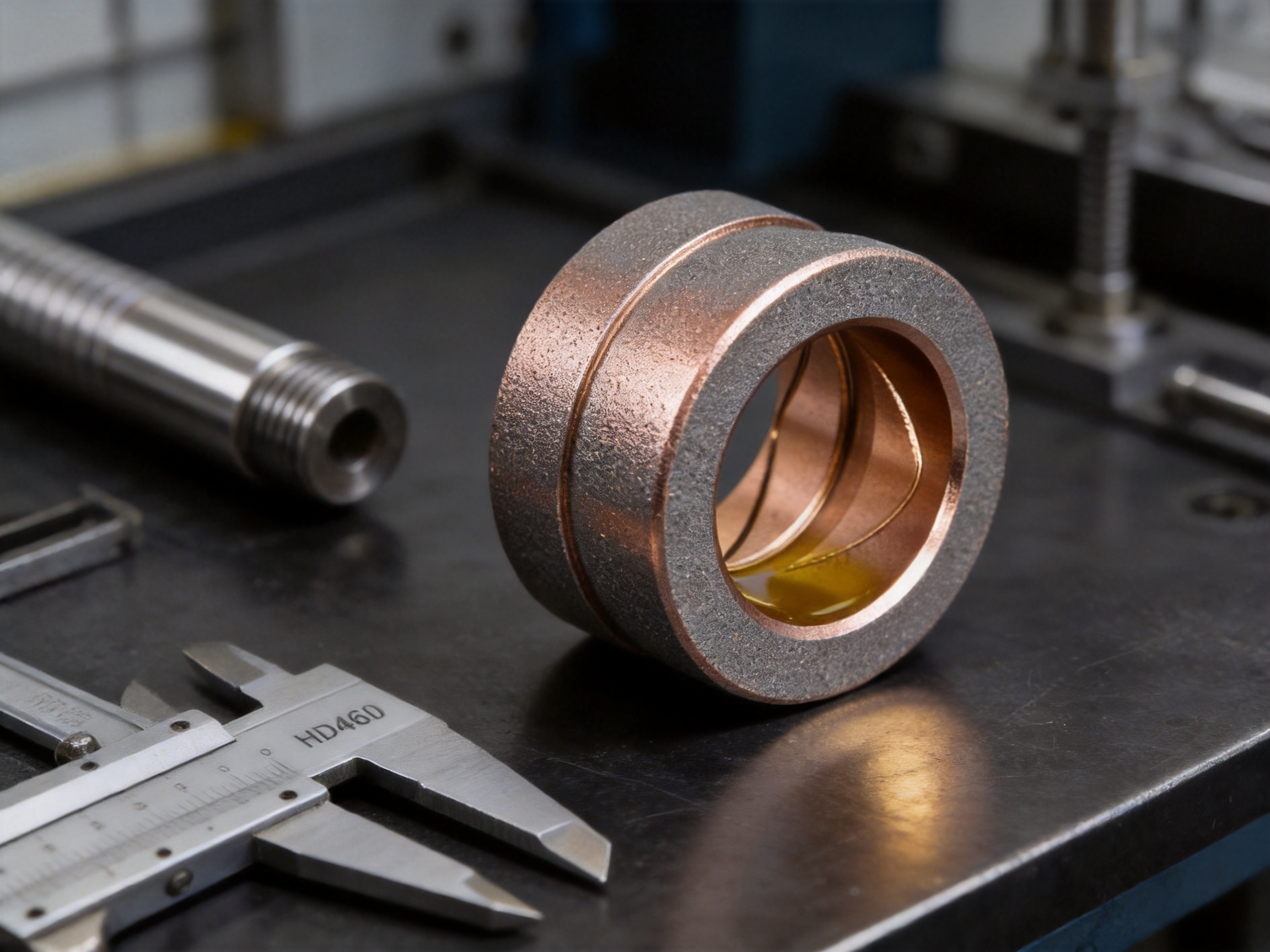
FeCu20 is an iron-copper powder metallurgy material designed for applications requiring both mechanical strength and stable sintered performance. The iron base provides structural rigidity and load-bearing capacity. The copper addition contributes to improved sintering characteristics, enhanced dimensional behavior, and favorable tribological performance compared with many simple iron powder materials.
In forklift applications, material selection must address several stresses at the same time. First, the component must resist compressive loads from assembled shafts or mechanical support positions. Second, it must tolerate sliding or oscillating motion without rapid wear. Third, it must withstand vibration and impact from the forklift’s working environment. Fourth, it must maintain dimensional integrity so that the fit between the component and mating parts remains stable over time.
The FeCu20 system is suitable for these requirements because it can form a dense and stable metallurgical structure after sintering, while still retaining controlled porosity for oil impregnation when designed as a self-lubricating part. This balance is central to oil-impregnated powder metallurgy bearings. If porosity is too high, strength may be reduced. If porosity is too low, oil storage may be insufficient. The manufacturing process must therefore be carefully controlled to achieve the correct combination of density, hardness, strength, and oil capacity.
Compared with ordinary cast or machined materials, powder metallurgy offers special advantages in material efficiency and near-net-shape manufacturing. Instead of cutting away large amounts of metal from a bar or casting, the powder is pressed into a shape close to the final geometry. This improves material utilization and makes high-volume production more consistent. For repeat forklift components, powder metallurgy can provide economical mass production without sacrificing performance when the process is properly controlled.
FeCu20 also supports heat treatment, allowing the component’s hardness and wear resistance to be optimized for the actual operating conditions. In a forklift system, different installation positions may require different balances between hardness and toughness. Excessive hardness without toughness may create brittleness, while insufficient hardness may cause deformation or wear. The heat treatment stage helps fine-tune this balance.
Complete Manufacturing Route and Process Control
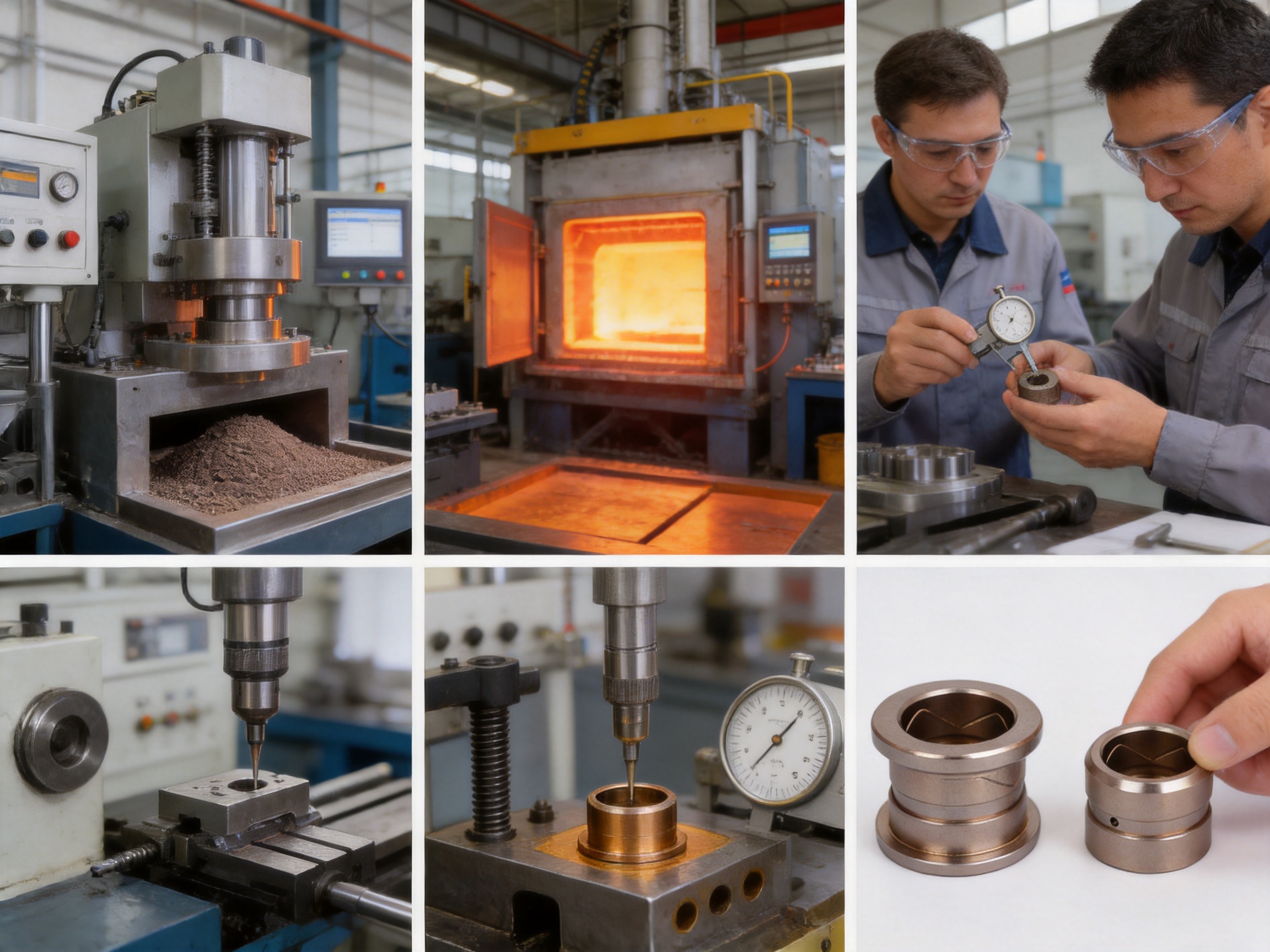
The performance of a powder metallurgy component is determined not only by its material, but also by the quality of every process step. This product is manufactured through a complete production route: pressing, sintering, heat treatment, machining, drilling, oil impregnation with HD460 oil, and packaging. Each step contributes to final quality.
Powder Pressing
The process begins with carefully prepared metal powder. The powder mixture is filled into a precision mold and compacted under controlled pressure. The pressing operation determines the initial shape, density distribution, and dimensional consistency of the green compact. High-quality tooling and stable press parameters are essential because density variation can lead to uneven shrinkage, strength differences, or distortion during sintering.
For a forklift bearing component, pressing accuracy is especially important around functional surfaces, wall thickness, holes, shoulders, and contact areas. A stable green compact improves the success of later sintering and machining operations. It also allows the manufacturer to maintain repeatability in mass production, which is critical for customers who require long-term supply with consistent fit and performance.
High-Temperature Sintering
After pressing, the compact is sintered at high temperature in a controlled furnace atmosphere. During sintering, the powder particles bond metallurgically, creating strength and structural integrity. The copper phase contributes to the formation of a stable iron-copper structure, while the sintering parameters influence hardness, porosity, dimensional shrinkage, and mechanical behavior.
High-temperature sintering is one of the decisive steps in producing a reliable oil-impregnated bearing component. If sintering is insufficient, the part may have weak bonding and poor mechanical performance. If sintering is excessive or uncontrolled, dimensions and porosity may deviate from specification. Advanced sintering equipment and experienced process engineers are therefore vital to the final quality of the product.
Heat Treatment
Heat treatment is applied to improve hardness, toughness, wear resistance, and fatigue behavior. For forklift systems, this stage helps the component endure repeated loading and sliding contact. Heat treatment also helps match the component’s performance to its role in the assembly. A support bushing may need high wear resistance, while a structural matching part may require a slightly different combination of strength and impact resistance.
Process control during heat treatment includes temperature, holding time, atmosphere, cooling rate, and post-treatment inspection. Properly managed heat treatment can significantly improve service life compared with untreated or poorly treated parts. It also gives the product an advantage over low-cost alternatives that may have acceptable shape but insufficient internal mechanical performance.
Precision Machining
Powder metallurgy can create near-net-shape parts, but forklift components often require final precision machining to achieve the necessary tolerances, surface quality, and assembly performance. Machining may include turning, sizing, surface finishing, chamfering, and other operations depending on the customer drawing.
Precision machining ensures that the component fits correctly with shafts, housings, pins, or adjacent parts. It also reduces the risk of assembly difficulty and uneven load distribution. A component that is only slightly out of tolerance may still fit during installation, but it can cause abnormal wear, vibration, or shortened service life during operation. Therefore, machining accuracy is not merely a cosmetic matter; it is directly connected to system reliability.
Precision Drilling
Drilling is performed to meet assembly, positioning, lubrication, or oil circuit requirements. In some bearing and structural components, holes play a functional role in alignment, oil distribution, or fastening. The hole position, diameter, roundness, and burr control must be carefully inspected.
Poor drilling quality can create stress concentration, assembly misalignment, or contamination from burrs. A professional production process uses proper drilling tools, fixtures, and inspection methods to maintain hole accuracy and cleanliness. This is especially important for forklift parts that experience vibration and repeated loading.
Oil Impregnation with HD460 Oil
Oil impregnation is a defining process for this component. The sintered porous structure is filled with HD460 oil so that the component can provide long-term internal lubrication. Under working conditions, the oil assists the sliding interface, reduces friction, lowers noise, and protects against wear.
HD460 oil is selected for heavy-duty operating conditions where a stable lubricant film is beneficial. Its viscosity supports lubrication under load and helps the component maintain anti-wear performance. The impregnation process must ensure that oil penetrates deeply and uniformly into the interconnected pores. Superficial oiling is not enough; the advantage of a true oil-impregnated bearing is the lubricant stored inside the structure.
Protective Packaging
After inspection and oil impregnation, the component is packaged with anti-rust, anti-collision, moisture-proof, and dust-proof protection. Packaging may seem less technical than sintering or machining, but it is essential for preserving product quality during transportation and storage. A precision component can lose value if it is exposed to corrosion, contamination, dents, or oil leakage before installation.
Professional packaging ensures that the component reaches the customer in usable condition. This is especially important for international shipments, long-distance logistics, and warehouse storage where humidity, vibration, and handling conditions vary.
Advantages Over Conventional Alternatives
This product provides several advantages compared with many conventional bearing and structural component options used in forklift maintenance and manufacturing. Its value comes from the combination of powder metallurgy material design, controlled porosity, HD460 oil impregnation, heat treatment, precision machining, and full inspection.
Improved Self-Lubricating Performance
Many traditional bushings depend on external grease or periodic manual lubrication. If maintenance is delayed, the bearing surface may run dry, causing rapid wear, heat, and noise. The oil-impregnated structure of this product reduces dependence on frequent external lubrication because oil is stored inside the sintered pores. This is particularly useful in forklift systems that operate for long shifts or in positions that are difficult to lubricate regularly.
The self-lubricating behavior also contributes to quieter operation. By reducing direct metal-to-metal contact, the component helps lower friction noise and vibration-related sound. For warehouses and production environments where forklifts operate near workers, reduced noise can improve the working environment.
Higher Suitability for Heavy-Load Operation
Low-grade porous bearings may provide lubrication but may not have sufficient strength for heavy-duty forklift systems. Conversely, solid machined metal components may have strength but lack internal lubrication. This FeCu20 component is designed to combine both. The iron-copper structure provides mechanical stability, while the controlled porosity stores oil. Heat treatment further improves hardness and wear resistance.
This balance is a major advantage over alternatives that solve only one part of the problem. Forklift systems require components that can withstand load, maintain alignment, resist wear, and reduce maintenance demands at the same time.
Better Dimensional Repeatability
Inconsistent dimensions can cause serious problems in assembled machinery. A bushing that is too tight may create excessive friction or installation difficulty. A bushing that is too loose may cause vibration, misalignment, or accelerated wear. The production process for this component includes high-precision mold pressing and precision machining to control final dimensions.
Compared with poorly controlled castings or simple machined substitutes, powder metallurgy production with proper tooling can deliver excellent repeatability across batches. This is important for OEM supply, aftermarket replacement programs, and maintenance operations where parts must be interchangeable.
Reduced Maintenance Frequency
Because the component is impregnated with oil and designed for wear resistance, it can help reduce maintenance frequency. This does not mean that forklift systems require no maintenance at all, but it can extend lubrication intervals and reduce the risk of sudden wear caused by lubricant starvation.
For forklift operators, maintenance downtime directly affects productivity. A bearing component that lasts longer and performs more consistently can reduce service interruptions, spare part consumption, and labor costs. Over time, these savings may be more important than the initial purchase price of the component.
Stable Mass Production Quality
Some replacement parts may work acceptably in small quantities but fail to provide consistency in long-term supply. This product is supported by controlled manufacturing processes and quality management, making it suitable for stable batch production. Consistency matters because forklift fleets often require repeated replacement or assembly parts over many years.
Stable production quality also helps customers reduce incoming inspection burden and assembly risk. When each batch follows the same process route and inspection standard, the customer can plan inventory, maintenance, and production with greater confidence.
Company Manufacturing Strengths
Jiande Welfine Technology Co., Ltd. is a high-tech enterprise established in 2001, focusing on powder metallurgy sintering and related precision machining. With more than two decades of industry experience, the company has developed strong capabilities in powder metallurgy bushings, self-lubricating bushings, and customized precision parts. The manufacturing base covers 13,039 square meters and is equipped with presses, high-temperature sintering furnaces, precision forming machines, machining equipment, and inspection instruments.
The company’s strength lies in integrating material selection, powder metallurgy forming, sintering, machining, oil impregnation, inspection, and customization services into one manufacturing system. This integration allows better control over the full production chain. Instead of relying only on outside processing, the company can optimize each stage according to the customer’s part drawing, application environment, and performance requirements.
With more than 150 skilled employees, the manufacturer has the human and technical resources needed for stable mass production and customized development. Experienced technicians understand how powder characteristics, compaction pressure, sintering temperature, tooling design, and oil impregnation parameters affect final component performance. This knowledge is important because powder metallurgy is not simply a matter of pressing powder into a mold; it is a controlled engineering process.
The company has passed ISO 9001:2015 and IATF 16949:2016 certifications, reflecting commitment to quality management, process control, traceability, and continuous improvement. These systems are especially relevant for forklift and industrial components because customers require reliability, repeatability, and documented production discipline. Certified quality systems help ensure that inspection, nonconformity control, corrective actions, and customer requirements are handled systematically.
In addition to standard products, the company supports OEM and ODM services based on customer drawings or samples. This is valuable for forklift components because different models may use different dimensions, materials, oil requirements, tolerances, and surface treatments. The ability to customize allows customers to replace unavailable parts, improve existing components, or develop new designs for specific operating conditions.
Quality Assurance and Inspection
Quality assurance for this component covers material, process, dimensions, mechanical properties, and oil impregnation performance. A reliable forklift part must not only look correct; it must meet internal and functional requirements. The inspection system includes full-dimensional measurement, material composition verification, hardness testing, density testing, oil impregnation evaluation, and final inspection before shipment.
Dimensional inspection confirms whether the component meets drawing requirements. This may involve calipers, micrometers, gauges, coordinate measuring equipment, or specialized inspection fixtures depending on the part geometry. Important features include outer diameter, inner diameter, length, wall thickness, hole position, chamfers, flatness, and surface finish.
Material and density testing help ensure that the FeCu20 structure is consistent. Density is especially important in powder metallurgy because it influences strength, porosity, oil capacity, and wear behavior. If density varies significantly, the part may show uneven performance. Hardness testing confirms whether heat treatment has achieved the required mechanical condition.
Oil impregnation testing verifies that the component has received sufficient internal lubricant. A sintered bearing that appears oily on the surface but lacks proper internal oil saturation will not deliver long-term self-lubricating performance. Therefore, impregnation quality is an essential part of final acceptance.
The company performs complete inspection before ex-factory shipment. This reduces the risk of defective parts entering customer assembly lines or maintenance operations. For customers, strong inspection procedures mean fewer complaints, reduced rework, and more predictable equipment performance.
Application Areas in Forklift Systems
This component is professionally used in Sumitomo forklift trucks and similar heavy-duty forklift applications where drawing compatibility is confirmed. It can be applied to transmission system components, power transmission matching parts, self-lubricating bearing or bushing positions, motion control and support structures, and core matching parts in walking and working systems.
In transmission-related applications, the component may support shafts, pins, or rotating elements that transfer motion and load. Here, dimensional accuracy and wear resistance are essential because misalignment can affect the broader drivetrain. The self-lubricating function helps reduce friction during repeated movement.
In support structures, the component may provide stable positioning and load distribution. Forklifts often encounter impact loads when lifting, lowering, braking, steering, or traveling over uneven surfaces. A strong FeCu20 component can help maintain stability under these changing loads.
In motion control systems, smooth and predictable movement is important. Excessive friction or clearance can lead to poor control response, vibration, or noise. Oil-impregnated bearing performance helps maintain smoother sliding or rotational motion over time.
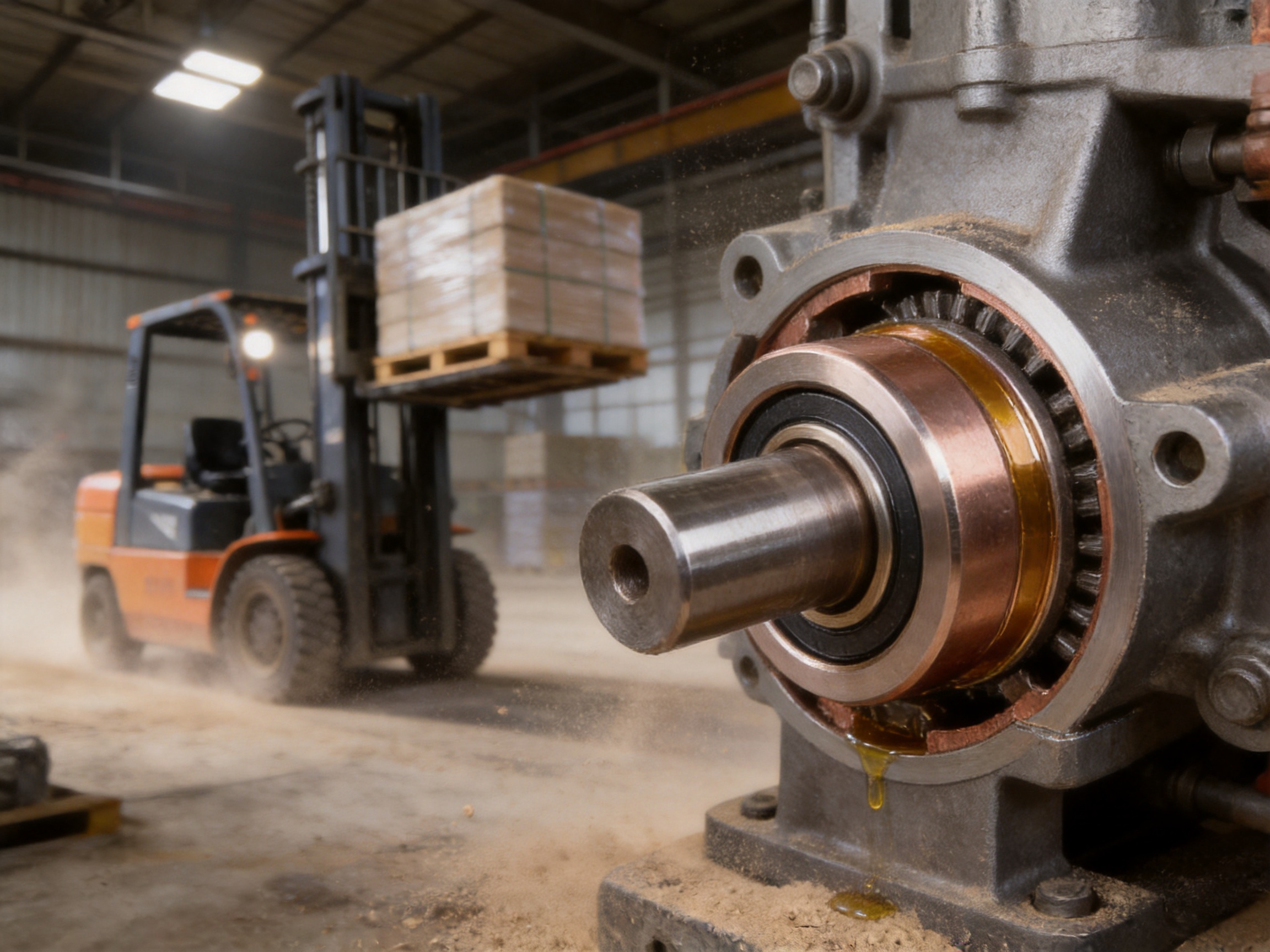
In walking and working systems, the component may be exposed to dust, shock, and long operating hours. The anti-wear properties of the material and the internal lubrication system help improve durability in these challenging environments. Protective packaging and anti-rust treatment also help ensure that the component remains in good condition before installation.
Design Considerations for Custom Orders
Customers who require customized production can provide drawings, samples, or operating condition information. Important design details include dimensions, tolerance requirements, load conditions, shaft material, operating speed, temperature range, lubrication environment, expected service life, and installation method.
If the application involves higher load, the manufacturer may optimize density, heat treatment, wall thickness, or material selection. If the application requires better lubrication, porosity and oil impregnation parameters may be adjusted. If the component must operate in a special environment, oil type, packaging, or surface treatment can be reviewed.
For replacement parts, accurate sample measurement is important. A used component may have wear, deformation, or corrosion, so the manufacturer may need to interpret the original intended dimensions rather than simply copying the worn sample. Drawings are always preferred when available. However, experienced powder metallurgy manufacturers can also support reverse engineering from samples when necessary.
Before mass production, sample trials can be conducted to confirm fit, function, hardness, oil content, and performance. Small-batch production is useful for validation before full-scale supply. Once the design is confirmed, mass production can be stabilized through tooling control, process documentation, and inspection planning.
Packaging, Transportation, and Storage Protection
Packaging is designed to protect the component against rust, oil leakage, impact, moisture, and dust. Because the product is oil-impregnated, packaging must maintain cleanliness while preventing unnecessary oil loss or contamination. Inner packaging is typically selected for shock resistance and part separation, while outer cartons or pallets provide logistics protection.
During long-distance transportation, components may experience vibration, temperature changes, and humidity. If packaging is inadequate, even a precisely manufactured part can arrive with corrosion marks, dents, or contamination. The manufacturer therefore applies professional anti-rust and moisture-proof measures suitable for warehouse storage and international shipment.
Customers should store the components in a clean, dry environment away from corrosive substances. Parts should remain in protective packaging until installation. If the component is stored for an extended period, inventory rotation and packaging inspection are recommended. Proper storage helps preserve the oil impregnation condition and surface quality.
Why This Component Is a Competitive Choice
The competitive value of this product comes from its full engineering package. It is not merely an iron bushing, a machined sleeve, or a generic sintered part. It is a precision powder metallurgy component designed for forklift operation, made from FeCu20 material, heat treated for improved performance, machined for accuracy, drilled for functional requirements, impregnated with HD460 oil, inspected before shipment, and packaged for safe delivery.
Compared with low-cost alternatives, the product provides better confidence in long-term use. Cheap components may reduce immediate purchase cost, but if they cause downtime, shaft damage, noise, or frequent replacement, the total cost becomes higher. A forklift is a productivity machine; every unscheduled repair affects logistics, warehouse flow, and operating efficiency.
Compared with traditional bronze or steel bushings, the powder metallurgy oil-impregnated design offers an excellent balance of material efficiency and lubrication function. Bronze may provide good sliding properties but can be more expensive and may not always deliver the same structural combination required by the application. Solid steel may be strong but usually needs reliable external lubrication. The FeCu20 oil-impregnated component sits between these approaches, combining strength and self-lubrication in a cost-effective design.
Compared with ordinary porous bearings, this product benefits from a complete manufacturing and inspection system. The process includes heat treatment, precision machining, and drilling, not only basic sintering. This makes it suitable for more demanding forklift systems where dimensional precision and mechanical properties are critical.
For buyers seeking stable supply, the manufacturer’s production base, equipment, workforce, certifications, and customization capacity provide additional advantages. A component is only as reliable as the system that produces it. Advanced manufacturing capability helps ensure that product quality remains consistent not just for one order, but for repeated long-term cooperation.
Practical Evaluation Criteria for Buyers
When selecting an oil-impregnated bearing component for forklift systems, buyers should evaluate several factors. First, confirm material suitability. FeCu20 is appropriate for applications requiring iron-copper strength and wear resistance. Second, verify dimensional tolerance and assembly requirements. Even high-quality material cannot compensate for poor fit. Third, review lubrication needs. HD460 oil impregnation is suitable for heavy-duty lubrication support, but special applications may require discussion.
Fourth, consider the manufacturer’s process capability. Powder metallurgy parts require stable pressing, sintering, heat treatment, and machining control. Fifth, ask about inspection procedures, including dimensions, hardness, density, and oil impregnation. Sixth, evaluate packaging and logistics protection, especially for international purchasing. Finally, consider customization support. Forklift components may vary by model, and a capable supplier should be able to work from drawings or samples.
Price should be considered together with service life and reliability. A lower-priced part that fails early can become more expensive than a properly engineered component. For forklift fleets, total cost of ownership includes downtime, maintenance labor, replacement frequency, and possible damage to mating parts.
Q&A Section
Q1: What is the main function of this component?
Its main function is to serve as a precision powder metallurgy structural and bearing component in forklift systems. It supports movement, reduces friction, provides self-lubrication, and helps maintain stable operation under heavy-load and long-hour working conditions.
Q2: Why is FeCu20 used for this product?
FeCu20 is selected because it combines the strength of an iron-based structure with the beneficial sintering and performance characteristics of copper. It offers good wear resistance, fatigue resistance, impact resistance, dimensional stability, and suitability for heavy-duty forklift applications.
Q3: What is the benefit of HD460 oil impregnation?
HD460 oil impregnation fills the internal pores of the sintered component with lubricant. During operation, the oil supports the friction surface, reducing wear, noise, and heat generation. This helps extend service life and reduce reliance on frequent manual lubrication.
Q4: How does this product compare with ordinary machined steel bushings?
Ordinary machined steel bushings may offer strength but typically require consistent external lubrication. This powder metallurgy component combines strength with internal oil storage, making it more suitable for applications where self-lubricating performance and reduced maintenance are important.
Q5: Can the component be customized?
Yes. The product can be customized according to customer drawings or samples. Material selection, dimensions, tolerance, heat treatment, drilling, oil impregnation, and packaging can be adjusted according to application requirements.
Q6: What quality inspections are performed?
Quality inspection may include dimensional measurement, material composition verification, hardness testing, density testing, oil impregnation evaluation, surface inspection, and final full inspection before shipment. These checks help ensure that the component meets OEM and industry requirements.
Q7: Is this product suitable only for one forklift model?
The described component is professionally designed for Sumitomo forklift truck applications, but similar powder metallurgy bearing components can be developed for other forklift systems if drawings, samples, and operating requirements are provided.
Q8: Why is powder metallurgy suitable for this kind of component?
Powder metallurgy allows near-net-shape production, controlled porosity, good material utilization, and stable batch consistency. For oil-impregnated bearings, the controlled porous structure is especially valuable because it stores lubricant inside the component.
Q9: How should the component be stored before installation?
It should be stored in clean, dry conditions and kept in protective packaging until use. The storage area should be protected from moisture, dust, corrosion sources, and excessive contamination to preserve surface quality and oil impregnation condition.
Q10: What information should a buyer provide for a custom order?
A buyer should provide drawings or samples, dimensions, tolerance requirements, application position, load conditions, operating speed, shaft material, working temperature, lubrication environment, expected service life, and any special packaging or inspection requirements.
Conclusion
The precision FeCu20 oil-impregnated bearing component is a high-value solution for demanding forklift applications. Its strength lies in the integration of material performance, powder metallurgy manufacturing, heat treatment, precision machining, drilling, HD460 oil impregnation, inspection, and protective packaging. It is designed to deliver stable operation, wear resistance, reduced friction, lower maintenance demand, and reliable compatibility with forklift systems.
For customers who need more than a basic replacement part, this component offers a strong competitive advantage. It addresses the real challenges of forklift operation: heavy loads, vibration, repeated movement, long working hours, and limited lubrication access. By combining FeCu20 material with controlled self-lubricating performance, it provides a practical route to longer service life and better equipment reliability.
Backed by an experienced powder metallurgy manufacturer with advanced equipment, a large production base, skilled employees, quality certifications, and OEM/ODM customization capability, the product is suitable for both replacement and long-term supply programs. Whether used in transmission systems, support structures, motion control assemblies, or self-lubricating bearing positions, it represents a professional engineering approach to forklift component durability.
References
1. German, R. M. Powder Metallurgy and Particulate Materials Processing. Metal Powder Industries Federation.
2. ASM Handbook, Volume 7: Powder Metal Technologies and Applications. ASM International.
3. ASM Handbook, Volume 18: Friction, Lubrication, and Wear Technology. ASM International.
4. Schatt, W., Wieters, K. P., and Kieback, B. Powder Metallurgy: Processing and Materials. European Powder Metallurgy Association.
5. ISO 9001:2015 Quality Management Systems: Requirements. International Organization for Standardization.
6. IATF 16949:2016 Quality Management System Standard for Automotive Production and Relevant Service Parts Organizations. International Automotive Task Force.
7. Metal Powder Industries Federation. Standard Test Methods for Metal Powders and Powder Metallurgy Products.
Product: Sumitomo Forklift Component
Related products
-
-
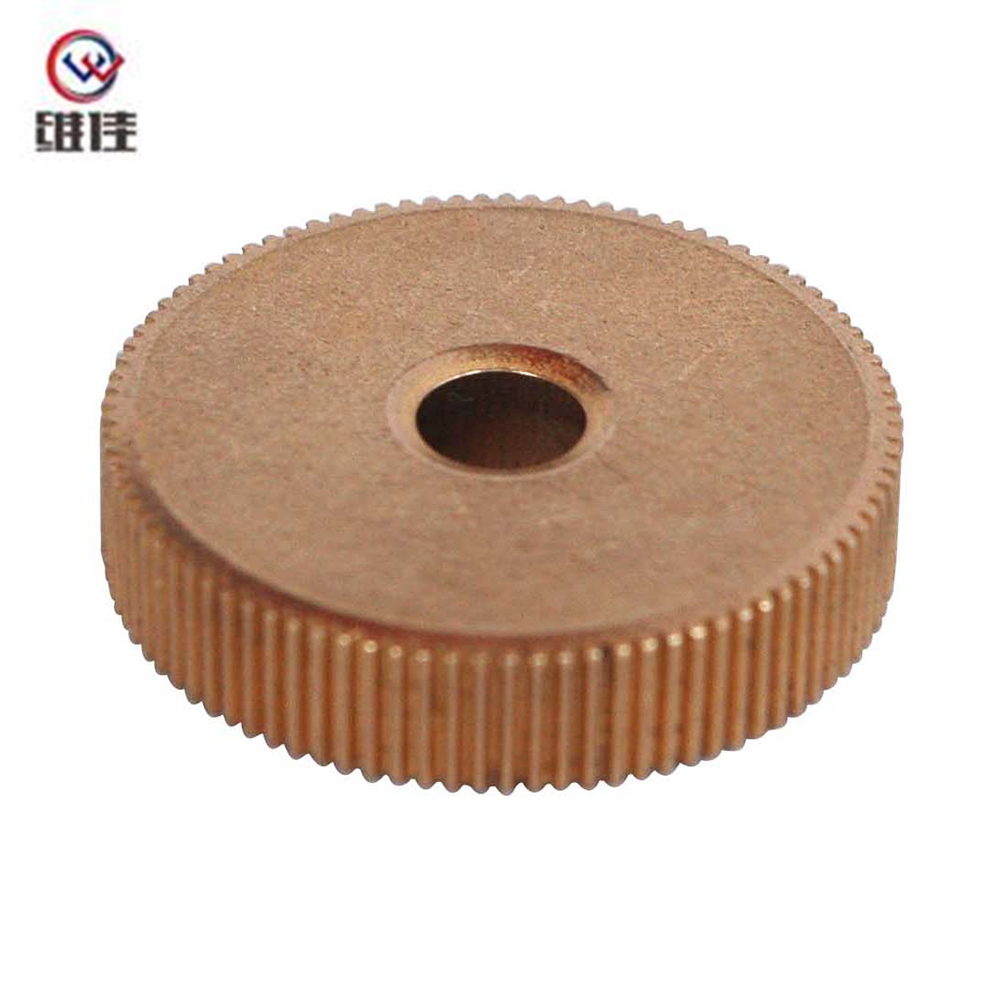
This 4×11.5×5.2mm powder metallurgy gear is manufactured through a precise press-sinter-through hole-oil impregnation process, with strict control of press density (6.7–6.8g/cm³) and sintering tempera...
See Details -
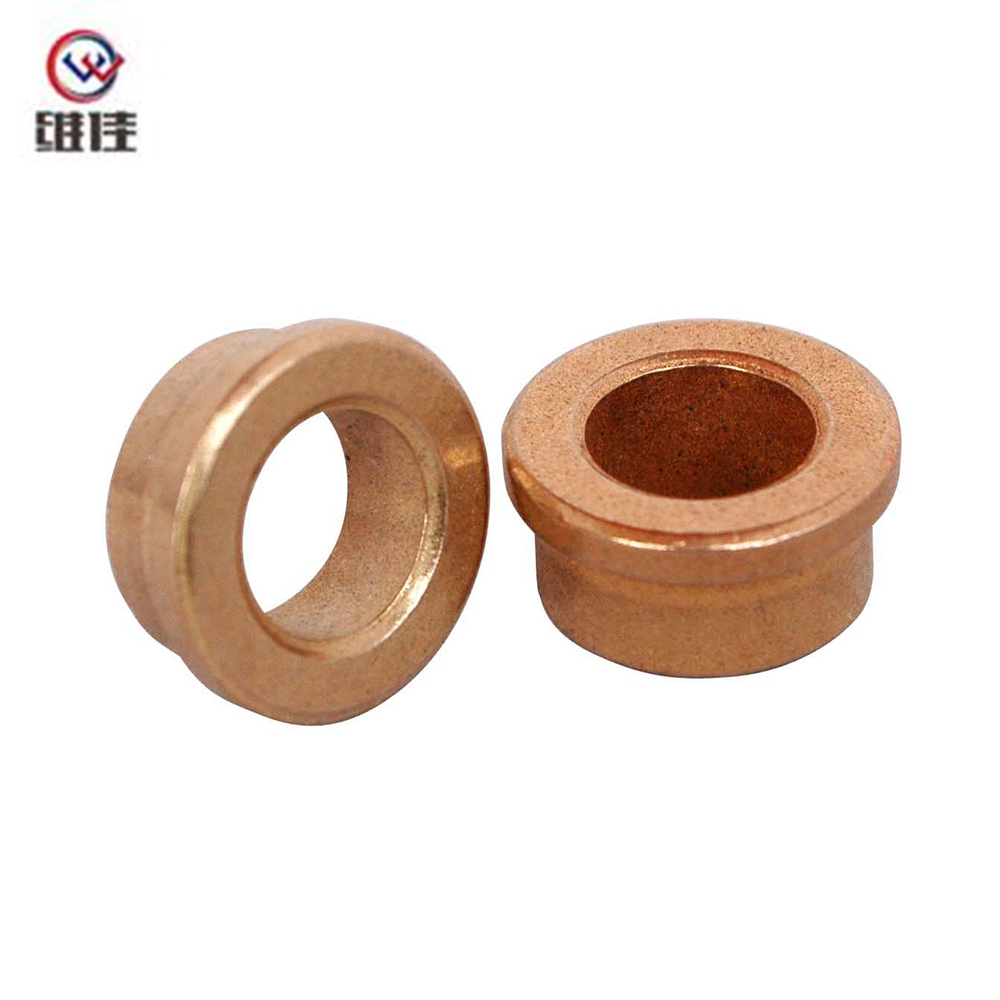
Premium Material: Our flange bushing is crafted from Sint B50 oil-impregnated bronze, featuring an 18% oil content. The high-quality tin bronze material ensures exceptional hardness, wear resistance, ...
See Details
Copyright © Jiande Welfine Technology Co., Ltd. All Rights Reserved. Custom Self-lubricating Sintered Bushing Manufacturers
