 English
 中文简体
中文简体
Description: 79.5×62×7.3mm copper-based brake pad with 4-hole design. Density 6.2g/cm³, weight 195g. Free from graphite segregation, cracks, and defects. Ideal for heavy-duty industrial braking system...
See DetailsE-mail us: [email protected]
Tel: +86-15239857375


 Home / Author / Luo Qian — Product Sales Supervisor / High-Density Copper-Based Brake Pad for Reliable Heavy-Duty Industrial Braking
 High-Density Copper-Based Brake Pad for Reliable Heavy-Duty Industrial Braking
 2026.05.31
 Luo Qian — Product Sales Supervisor
Content
- 1 Product Overview and Industrial Purpose
- 2 Core Material Advantage: Copper-Based Friction Performance
- 3 Precision Four-Hole Design for Stable Installation
- 4 Technical Parameters
- 5 Performance Advantages Over Conventional Competitor Products
- 6 Advanced Powder Metallurgy Manufacturing Process
- 7 Company Strengths Supporting Product Reliability
- 8 Quality Control: From Material Uniformity to Final Inspection
- 9 Application Scenarios in Heavy-Duty Industries
- 10 Long Service Life and Maintenance Cost Reduction
- 11 Engineering Considerations for Selection and Use
- 12 Customization and OEM/ODM Support
- 13 Environmental and Operational Value
- 14 Why This Brake Pad Is a Strong Choice for Industrial Users
- 15 Q&A: Common Questions About the High-Density Copper-Based Brake Pad
- 15.1 Q1: What makes this brake pad different from ordinary industrial brake pads?
- 15.2 Q2: Why is the copper-based matrix important?
- 15.3 Q3: What is the benefit of the four-hole design?
- 15.4 Q4: Why does the product emphasize no graphite segregation?
- 15.5 Q5: What does the density of 6.2g/cm³ mean for performance?
- 15.6 Q6: Is the product suitable for high-temperature applications?
- 15.7 Q7: Which industries commonly use this type of brake pad?
- 15.8 Q8: Can the brake pad be customized?
- 15.9 Q9: How does the company ensure product quality?
- 15.10 Q10: Are samples available for testing?
- 16 Conclusion
- 17 References
- 18 Product: High-Density Copper-Based Brake Pad | 79.5×62×7.3mm | 4-Hole Industrial Brake Lining
High-Density Copper-Based Brake Pad | 79.5×62×7.3mm | 4-Hole Industrial Brake Lining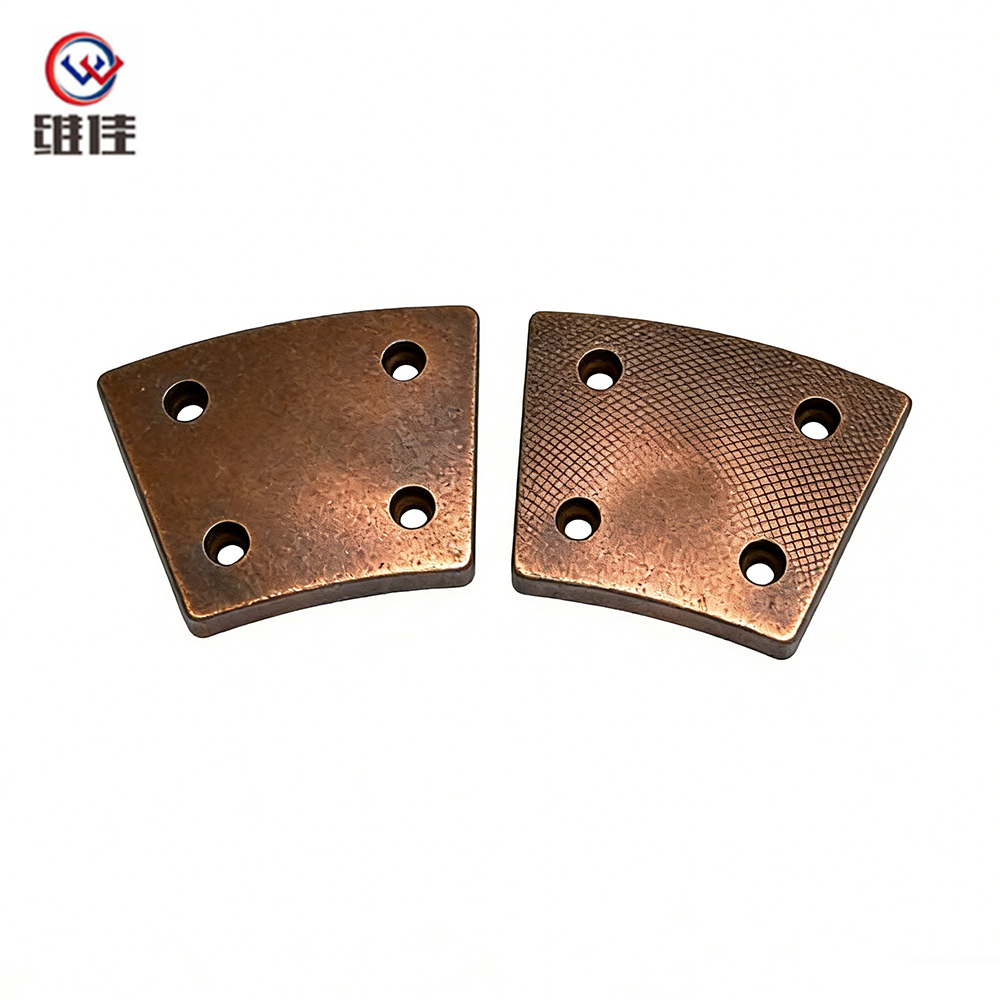
In heavy-duty industrial equipment, braking performance is not a secondary detail; it is a central safety, productivity, and maintenance factor. A brake pad used in cranes, mining winches, metallurgical equipment, wind turbine systems, elevators, machine tools, marine deck machinery, and other demanding applications must remain stable under heat, pressure, vibration, and repeated engagement. The High-Density Copper-Based Brake Pad, sized 79.5×62×7.3mm and designed with a four-hole mounting structure, is engineered to meet these demanding operating conditions with stable friction, high thermal conductivity, strong mechanical integrity, and dependable wear resistance.
This product belongs to the category of friction materials and is manufactured using copper-based powder metallurgy technology. Its high-density structure, with a density of 6.2g/cm³ and an approximate weight of 195g, gives it the strength and durability required for industrial braking systems where conventional organic or lower-density friction materials may wear quickly, suffer thermal decay, or produce inconsistent braking behavior. Its copper-based matrix provides a strong foundation for heat dissipation and friction stability, making the product suitable for continuous or intermittent braking under high-load operating conditions.
The product is designed with a clear emphasis on quality consistency. It is free from graphite segregation, cracks, and visible defects, addressing several common failure risks found in friction materials. Graphite segregation can cause uneven friction response, abnormal wear, surface weakness, and inconsistent braking torque. Cracks can grow during repeated thermal cycling and mechanical loading, leading to premature failure. Defects on the surface or within the structure can reduce service life and threaten safety. By controlling these quality risks through material preparation, forming, sintering, inspection, and dimensional verification, the brake pad delivers reliable performance for industrial users who need predictable results.
Jiande Welfine Technology Co., Ltd. manufactures this copper-based brake pad with the support of more than 20 years of experience in powder metallurgy sintering and precision machining. Established in 2001, the company operates a modern 13,039-square-meter production base in Jiande City, Zhejiang Province, China. Its production capabilities include high-efficiency pressing, high-temperature sintering, precision forming, and strict quality testing. With over 150 skilled employees and quality management systems certified to ISO 9001:2015 and IATF 16949:2016, the company has the technical foundation to provide stable, repeatable, and customized powder metallurgy products for global customers.
Product Overview and Industrial Purpose
The High-Density Copper-Based Brake Pad is a compact but performance-critical component designed for industrial brake assemblies. Its dimensions of 79.5×62×7.3mm make it suitable for brake systems requiring a precise rectangular friction element with four mounting holes. The four-hole configuration helps ensure stable installation, balanced clamping force, and secure contact between the brake pad and the mating brake disc or friction surface. In industrial environments where vibration, shock loading, and repeated braking cycles are common, reliable mounting is essential for both safety and component life.
Copper-based brake pads differ significantly from many conventional friction materials. Copper has excellent thermal conductivity, allowing heat generated during braking to disperse more effectively. This feature is especially valuable in high-load braking, where friction converts kinetic energy into heat. If heat is not managed properly, the friction coefficient may decline, surfaces may glaze, and braking performance may become unstable. By using a copper-based matrix, this brake pad improves heat dissipation and supports consistent friction behavior over a wide working temperature range.
The product’s stable dry friction coefficient, generally in the range of 0.35 to 0.40, provides dependable braking torque for industrial applications. This range is suitable for equipment that requires strong stopping force without excessive aggressiveness that could damage mating components. The product also offers a wear rate of ≤1.0×10⁻⁴ cm³/J, a shear strength of ≥7 MPa, and an operating temperature range from -40℃ to 600℃. These parameters indicate a friction material designed for demanding mechanical environments rather than light-duty or temporary use.
In many industrial braking systems, unexpected downtime can be more expensive than the component itself. A failed brake pad can stop a crane, delay a production line, interrupt a mining operation, or create safety hazards in a steel plant. Therefore, the real value of this product lies not only in its material composition but also in its ability to reduce replacement frequency, stabilize braking response, protect related components, and support continuous operation in harsh environments.
Core Material Advantage: Copper-Based Friction Performance
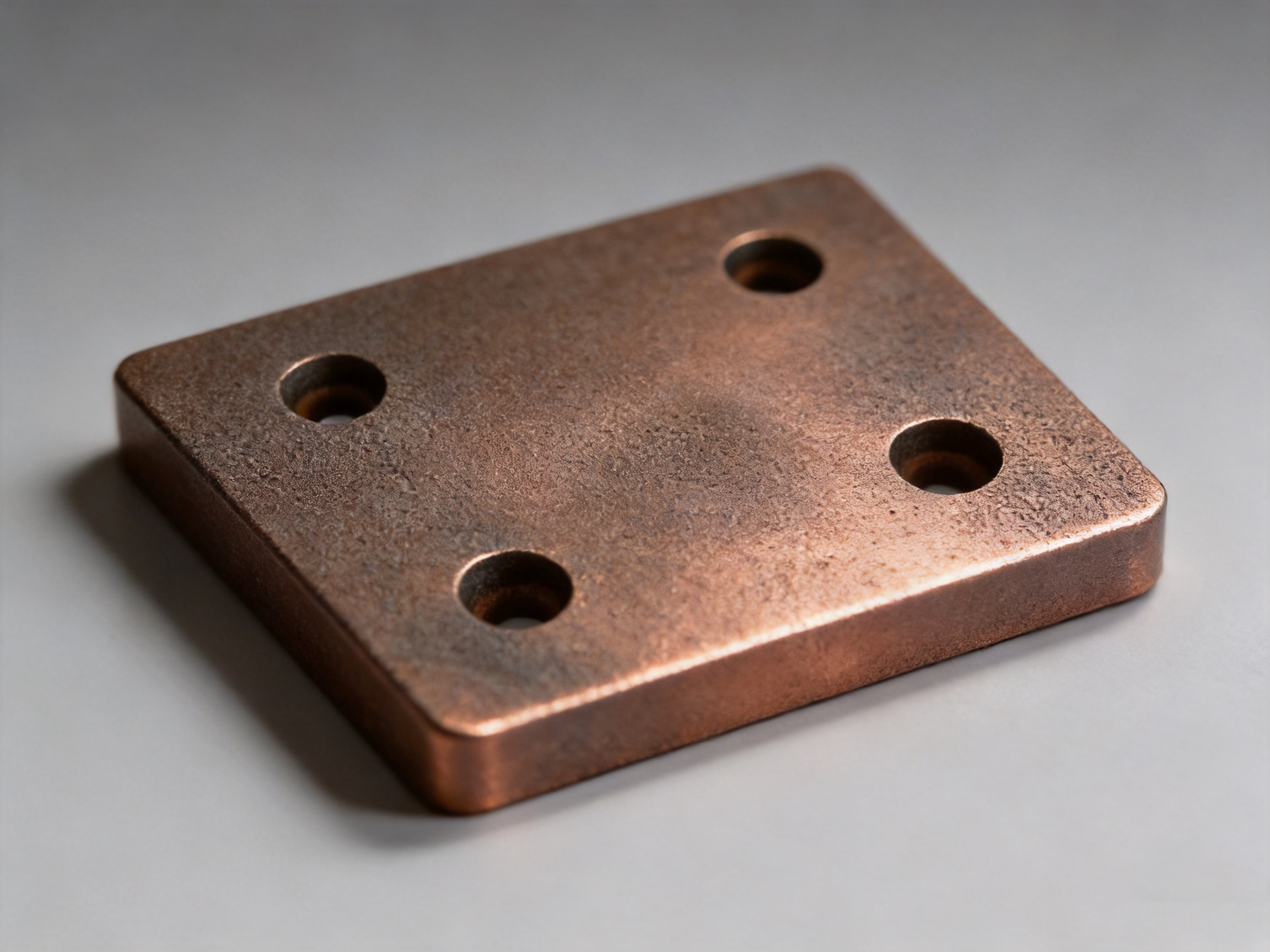
The main competitive advantage of this brake pad is its copper-based friction material. Copper-based materials are widely valued in industrial braking because they combine mechanical strength, thermal stability, and wear resistance. Compared with many resin-bonded or organic friction materials, copper-based pads are generally better suited for high-temperature and high-load environments. They can maintain structural integrity under heat and pressure, making them appropriate for metallurgical, mining, marine, and heavy engineering applications.
Thermal conductivity is one of the most important benefits. During braking, heat is generated at the contact interface between the brake pad and the mating surface. If the pad cannot transfer heat effectively, localized overheating may occur. This can lead to fading, surface cracking, uneven wear, or degradation of friction components. The copper matrix helps conduct heat away from the contact area, reducing thermal concentration and supporting more stable braking. For equipment working in continuous cycles, this heat-management capability can significantly improve reliability.
Another advantage is mechanical strength. A brake pad must resist compressive stress, shear stress, vibration, and thermal expansion. A high-density copper-based matrix provides the physical robustness needed to handle these forces. The product’s density of 6.2g/cm³ indicates a compact structure with reduced porosity and improved load-bearing capacity. Lower-density pads may wear faster, absorb more heat unevenly, or suffer from structural weakness. In contrast, this high-density construction supports longer service life and stronger resistance to fragmentation or deformation.
Friction stability is also essential. A brake pad that performs strongly in the first braking cycle but fades quickly under heat is unsuitable for industrial duty. The copper-based formula is designed to maintain a stable friction coefficient even under high temperature and heavy load. This means operators can expect more predictable braking torque, less vibration, and more controlled stopping behavior. In applications such as cranes, elevators, and winches, predictable braking is directly related to operational safety.
The material is also designed to avoid graphite segregation. Graphite is commonly used in friction materials to modify lubrication, friction behavior, and wear characteristics. However, if graphite is unevenly distributed, it may create soft zones, weak bonding areas, and inconsistent friction surfaces. The absence of graphite segregation in this brake pad reflects careful material mixing, powder distribution, and process control. This is a major quality advantage over poorly controlled friction materials where graphite agglomeration can cause uneven braking and premature wear.
Precision Four-Hole Design for Stable Installation
The four-hole design is more than a simple mounting feature. It is an important engineering element that improves installation stability and braking reliability. In industrial braking systems, friction pads are exposed to repeated clamping, sliding, heat cycling, and vibration. If a pad is not mounted securely, it may shift, vibrate, wear unevenly, or produce noise. A four-hole structure distributes mounting force more evenly than fewer-point fastening arrangements, reducing the risk of localized stress concentration.
Balanced mounting pressure helps ensure that the pad remains firmly positioned during braking. When the brake is engaged, force should be transferred uniformly across the pad surface. If force is concentrated on one side, the pad may develop tapered wear, hot spots, or abnormal contact patterns. The four-hole layout supports improved alignment and reduces unwanted movement, contributing to more consistent contact with the brake disc or mating component.
The design also simplifies maintenance. Industrial equipment often operates in environments where downtime must be minimized. A pad with clear and stable mounting points can be installed and replaced efficiently, reducing maintenance time. Technicians can align the pad more easily, verify fastener placement, and restore equipment to operation quickly. For users managing multiple machines or production lines, this practical maintenance advantage can have meaningful economic value.
In comparison with generic friction linings that may require additional fitting or modification, the precise 79.5×62×7.3mm size supports direct compatibility with intended brake assemblies. Accurate dimensions reduce the risk of installation errors and ensure proper clearance, surface contact, and fastener alignment. Dimensional control is particularly important in systems where braking performance depends on the exact relationship between the pad, brake disc, and actuator.
Technical Parameters
The following table summarizes the main technical parameters of the High-Density Copper-Based Brake Pad. These values are important for engineers, purchasing managers, maintenance teams, and equipment manufacturers evaluating performance suitability.
Parameter |
Specification |
Reference Standard or Note |
Product Type |
Copper-based industrial brake pad |
Friction material component |
Dimensions |
79.5×62×7.3mm |
Precision industrial fitment |
Mounting Design |
Four-hole structure |
Stable installation and balanced force distribution |
Density |
6.2g/cm³ |
High-density powder metallurgy structure |
Weight |
Approximately 195g |
Product-specific measurement |
Friction Coefficient |
0.35–0.40 under dry conditions |
GB/T 5763-2018 |
Wear Rate |
≤1.0×10⁻⁴ cm³/J |
GB/T 10421-2002 |
Shear Strength |
≥7 MPa |
GB/T 10419-2008 |
Thermal Conductivity |
Excellent heat dissipation |
GB/T 3399-1982 reference |
Working Temperature |
-40℃ to 600℃ |
Industrial operating range |
Quality Condition |
No graphite segregation, cracks, or defects |
Controlled manufacturing and inspection |
Performance Advantages Over Conventional Competitor Products
Compared with many ordinary brake pads used in industrial applications, this copper-based product offers a stronger balance of heat resistance, wear resistance, mounting stability, and quality consistency. Competitor products may focus on low initial cost, but in heavy-duty braking, low-cost materials can lead to rapid wear, unstable friction, unexpected downtime, and higher long-term maintenance expense. A superior brake pad should be evaluated by total operating value rather than purchase price alone.
One key advantage is reduced thermal decay. Organic or resin-based pads may perform acceptably at moderate temperatures but can lose friction stability when exposed to repeated high-temperature braking. Copper-based friction materials are better equipped to handle heat, helping maintain braking power under more severe duty cycles. This makes the product especially suitable for rolling mills, cranes, mine equipment, and other systems where braking energy is high.
A second advantage is durability. The high-density structure helps resist wear, deformation, and surface damage. Lower-density or poorly sintered materials may contain excessive porosity, weak bonding, or uneven composition. These weaknesses can accelerate wear and increase the likelihood of cracking. The 6.2g/cm³ density of this brake pad supports mechanical integrity and longer service intervals.
A third advantage is consistency. Some competitor pads may suffer from graphite segregation, uneven powder distribution, or inconsistent friction surfaces. Such defects may not always be visible during basic inspection, but they can appear during operation as vibration, noise, uneven wear, or unpredictable stopping behavior. This product is manufactured with attention to uniform material distribution, helping ensure repeatable performance from batch to batch.
A fourth advantage is installation security. The four-hole structure provides balanced mounting and reduces the risk of pad displacement. In industrial braking systems, even small movement can lead to uneven contact and accelerated wear. A stable mounting design improves braking smoothness and helps protect the brake assembly.
Finally, this brake pad benefits from the manufacturing background of a company experienced in powder metallurgy. A friction material is not simply a mixture of powders; it is the result of controlled formulation, pressing pressure, sintering temperature, atmosphere control, finishing precision, and inspection. When these steps are performed with consistent process discipline, the final product is more reliable than materials produced with less rigorous control.
Advanced Powder Metallurgy Manufacturing Process
Powder metallurgy is a manufacturing method that forms metal components from powdered materials through mixing, pressing, sintering, and finishing. For copper-based brake pads, this process is especially valuable because it allows careful control of composition, density, porosity, and friction characteristics. Instead of relying on casting or machining alone, powder metallurgy creates a controlled microstructure suitable for friction performance.
The process begins with raw material selection. Copper-based powder, friction modifiers, strengthening components, and performance additives must meet strict requirements for purity, particle size, and consistency. Material quality at this stage has a direct influence on friction stability, wear resistance, and mechanical strength. If particle size distribution is inconsistent, the final pad may show uneven density or weak bonding. Therefore, qualified material selection is the first step toward reliable braking performance.
Next is precision mixing. Uniform mixing is critical to prevent graphite segregation and to ensure that every region of the brake pad has consistent friction properties. Advanced mixing methods help distribute each component evenly throughout the powder blend. This stage is particularly important because localized concentrations of graphite or other modifiers can create zones with different hardness, friction, or wear behavior. By controlling mixing time, speed, sequence, and powder behavior, the manufacturer improves the consistency of the final product.
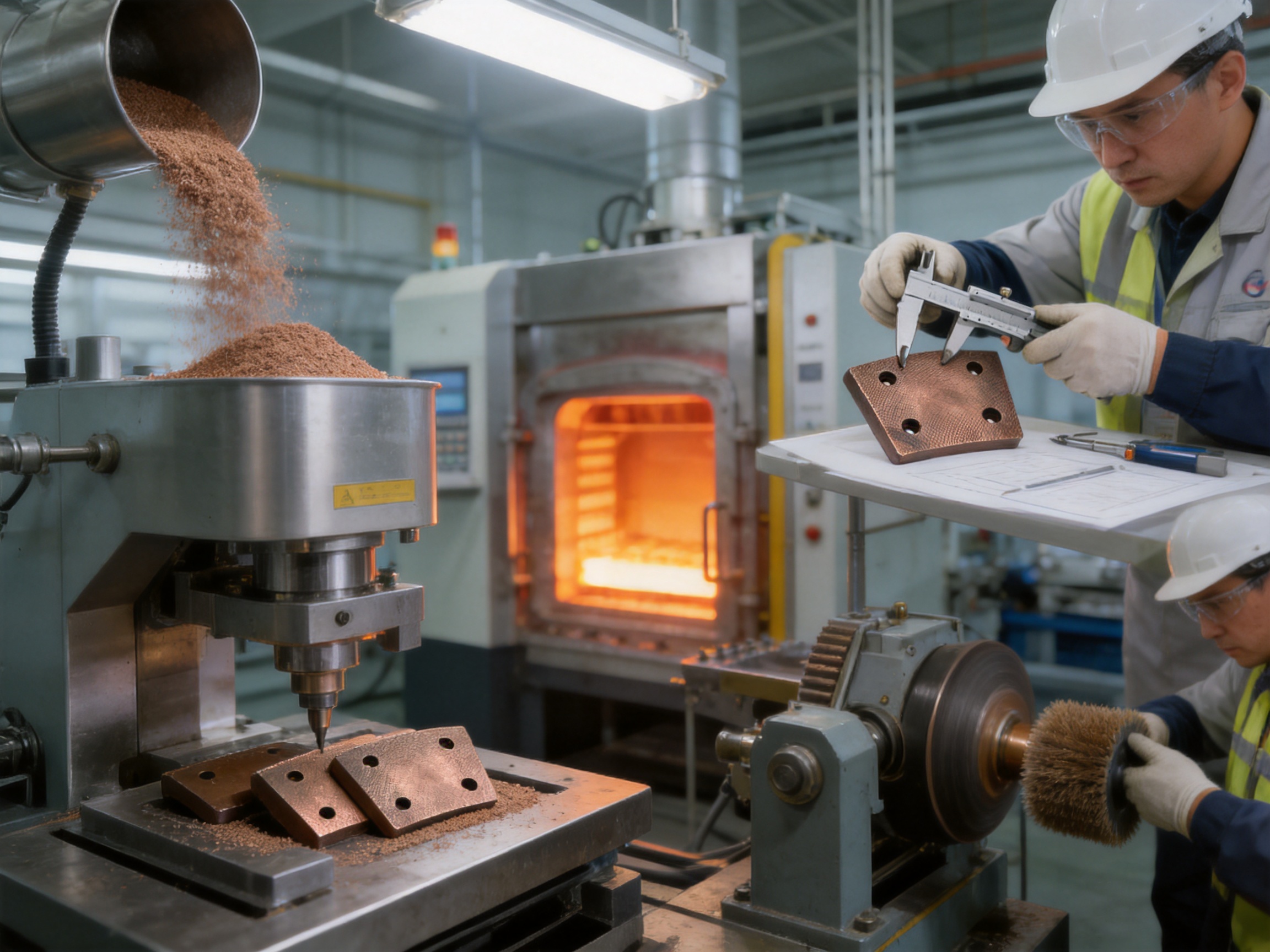
After mixing, the powder is pressed into the required shape. High-efficiency presses compact the powder into a green compact with controlled geometry and density distribution. Pressing pressure must be carefully managed. Too little pressure may lead to weak structure and excessive porosity, while too much pressure may create internal stress or forming defects. The rectangular geometry and four-hole design require precise tooling to ensure dimensional accuracy and hole alignment.
Sintering is one of the most important stages. During high-temperature sintering, powder particles bond together to create a strong metallic structure. Temperature, time, and atmosphere must be controlled to achieve proper bonding without damaging the friction formulation. For copper-based materials, sintering affects density, strength, heat resistance, and wear behavior. A well-controlled sintering process creates a stable matrix that can withstand repeated braking cycles.
After sintering, the brake pad may undergo sizing, finishing, cleaning, and inspection. Precision forming and machining help ensure the final dimensions of 79.5×62×7.3mm. Proper finishing improves contact surface quality and installation fit. Dimensional inspection verifies that each product matches the required size and hole configuration. Surface inspection checks for cracks, chips, deformation, and other defects. Quality control ensures that only qualified products are shipped to customers.
Company Strengths Supporting Product Reliability
Jiande Welfine Technology Co., Ltd. has developed its manufacturing strength through long-term specialization in powder metallurgy sintering and precision machining. Since its establishment in 2001, the company has focused on powder metallurgy bushings, self-lubricating bushings, structural parts, friction materials, magnetic materials, and related precision components. This technical background provides a strong foundation for producing copper-based brake pads with consistent density, controlled composition, and dependable dimensional accuracy.
The company operates a 13,039-square-meter production base equipped with advanced production and testing equipment. High-efficiency presses support stable compacting, high-temperature sintering furnaces provide controlled bonding, and precision forming machines help achieve accurate product dimensions. These manufacturing assets are important because friction materials require more than basic shaping; they require repeatable process control. A brake pad must perform reliably under stress, and that reliability begins in the factory.
More than 150 skilled employees support daily production, engineering, inspection, and customer service. Human expertise remains essential in powder metallurgy, especially when products require customized formulas, dimensional accuracy, and application-specific performance. Experienced technicians understand how material behavior changes during mixing, pressing, sintering, and finishing. Engineers can help customers adapt designs, adjust density, or modify friction properties according to equipment requirements.
The company’s ISO 9001:2015 and IATF 16949:2016 certifications demonstrate a commitment to structured quality management. These systems emphasize process control, traceability, corrective action, documentation, and continuous improvement. For industrial customers, this reduces procurement risk. A certified manufacturing system is better positioned to deliver consistent products across repeated orders and to support quality expectations in demanding industries.
Customization is another important strength. Industrial brake systems are not always standardized, and customers may need different pad dimensions, mounting structures, densities, or friction coefficients. The company provides OEM and ODM services based on customer drawings or samples. This capability is valuable for equipment manufacturers, maintenance suppliers, and repair organizations that require replacement parts matching existing brake assemblies.
Quality Control: From Material Uniformity to Final Inspection
Quality control is particularly important for friction materials because small inconsistencies can produce large performance differences. The High-Density Copper-Based Brake Pad is manufactured with a multi-stage quality control approach designed to prevent graphite segregation, cracks, dimensional errors, and surface defects. These quality priorities directly reflect the practical risks of industrial braking systems.
Material inspection is the first quality gate. Incoming powders and additives must meet defined standards before production begins. Factors such as powder purity, particle size, moisture content, and flowability can affect pressing and sintering performance. Rejecting unsuitable raw materials prevents downstream defects and improves batch consistency.
Mixing quality is then controlled to ensure uniform material distribution. Since graphite segregation is specifically avoided, the process must prevent particle clustering and uneven composition. Metallographic analysis or other inspection methods can be used to verify that the material structure is consistent. Uniform distribution supports stable friction coefficients and reduces the chance of localized wear.
During pressing, dimensional and density control are essential. The product’s high density of 6.2g/cm³ must be achieved consistently without creating internal defects. Pressing parameters are monitored to ensure that the green compact has adequate strength and uniform compaction. Tooling condition is also important because worn tools can cause dimensional drift or poor hole formation.
Sintering quality control includes temperature monitoring, time control, furnace atmosphere management, and batch traceability. A stable sintering process ensures that particles bond properly and that the final pad reaches the required mechanical strength. Poor sintering can lead to weak bonding, excessive porosity, or inconsistent wear behavior. Controlled sintering is therefore central to brake pad reliability.
Final inspection includes visual examination, dimensional measurement, and defect screening. The product is checked for cracks, chips, warping, and other physical defects. The 79.5×62×7.3mm dimensions and four-hole configuration are verified for installation compatibility. Products must also meet performance expectations related to density, friction behavior, wear resistance, and strength. Through 100% inspection before shipment, the company reduces the risk of defective products reaching customers.
Application Scenarios in Heavy-Duty Industries
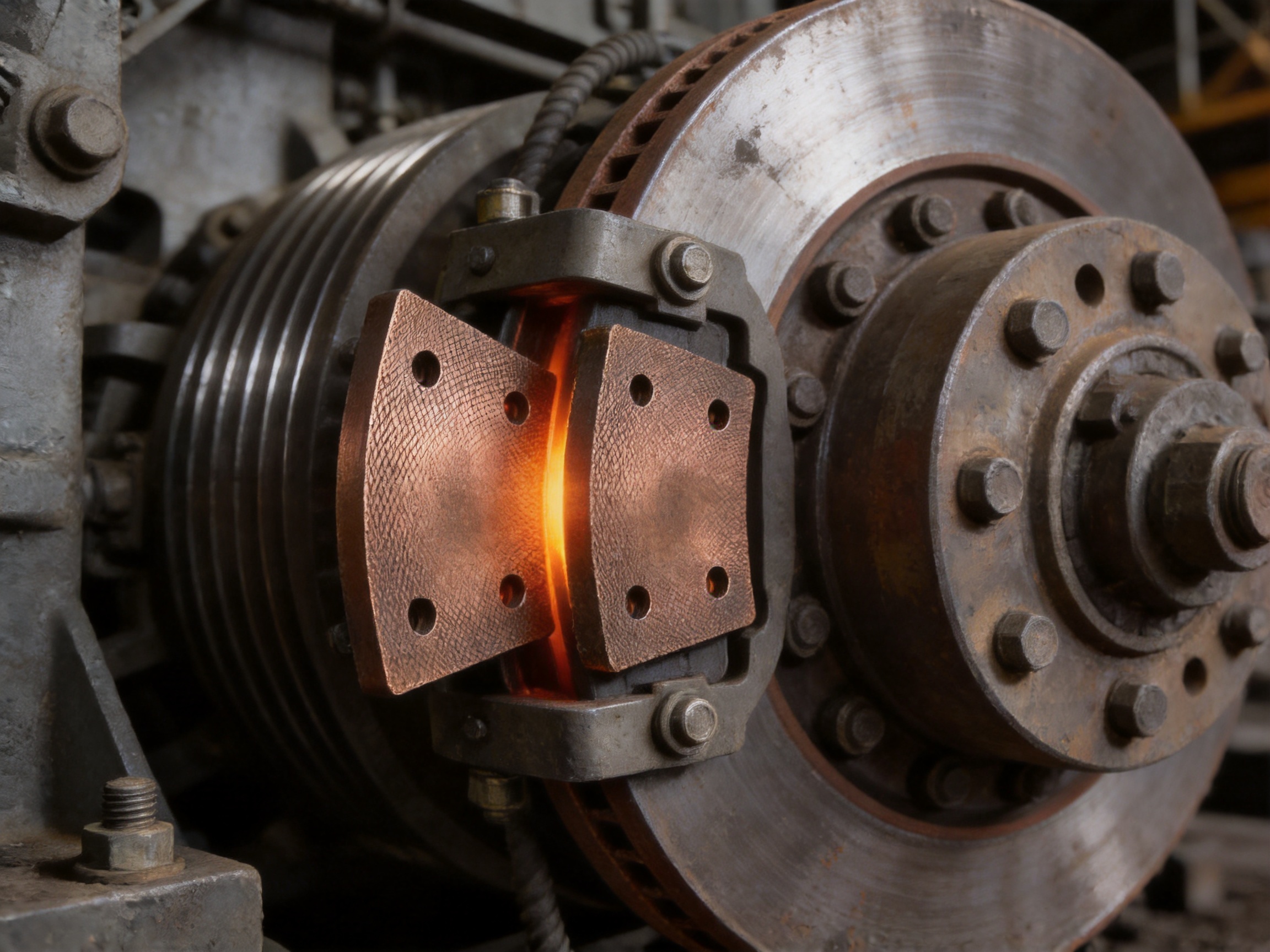
This copper-based brake pad is suitable for a wide range of industrial applications where braking reliability is essential. Heavy engineering machinery is one of the major use areas. Cranes, excavators, loaders, and concrete pump trucks require braking components that can handle heavy loads, frequent movement, and harsh outdoor conditions. A stable brake pad contributes to safe lifting, controlled stopping, and reduced equipment downtime.
Metallurgical equipment is another important application. Rolling mills, continuous casters, and steel plant braking systems operate in high-temperature, high-load, and high-dust environments. Conventional friction materials may degrade quickly under these conditions. The copper-based pad’s heat dissipation and wear resistance make it suitable for these demanding production environments.
Mining machinery also benefits from high-performance friction materials. Mine winches, conveyors, and shearer loaders often operate continuously and may be exposed to dust, vibration, shock, and heavy mechanical loads. Brake reliability is critical to both productivity and worker safety. A high-density pad with stable friction behavior can reduce maintenance frequency and improve operational confidence.
Industrial equipment such as wind turbine generators, machine tools, and elevators requires braking components that combine precision with durability. In wind turbine systems, braking materials may be exposed to changing loads and environmental conditions. In elevators, predictable stopping and holding performance are essential. In machine tools, braking stability helps maintain operational accuracy and safety.
Marine engineering applications include ship deck machinery and offshore platform braking systems. Marine environments present additional challenges such as humidity, corrosion risk, vibration, and limited maintenance access. A copper-based brake pad with strong mechanical structure and stable friction performance can support reliable operation in these environments when properly matched with system requirements.
Long Service Life and Maintenance Cost Reduction
For industrial users, the cost of a brake pad should be evaluated over its full service life. A lower-priced pad that wears quickly or causes unplanned downtime may ultimately cost more than a high-performance pad with longer life and better stability. The High-Density Copper-Based Brake Pad is designed to reduce maintenance frequency through its dense structure, wear-resistant copper matrix, and stable friction behavior.
Reduced wear means fewer replacements. Each replacement may involve equipment shutdown, labor cost, safety checks, and possible production losses. In continuous industrial operations, these indirect costs can be substantial. By extending service intervals, the brake pad helps lower total maintenance cost and improves equipment availability.
Stable friction also reduces stress on related brake components. Pads that produce unstable friction, vibration, or uneven contact can accelerate wear on brake discs, mounting hardware, and actuators. A properly engineered pad with balanced mounting and uniform material distribution helps maintain smoother braking behavior. This can extend the life of the entire brake assembly, not just the friction pad itself.
The crack-free and defect-free quality standard also supports longer life. Cracks can expand during thermal cycling, leading to pad failure or surface breakage. Defects may become starting points for wear, vibration, or uneven contact. Eliminating these issues before shipment reduces field failure risk and improves reliability in service.
Maintenance teams also benefit from the four-hole design and precise dimensions. Faster installation and reliable alignment reduce service time. When technicians can replace components efficiently, equipment can return to operation sooner. This is particularly valuable in mining, steel production, port machinery, and other sectors where every hour of downtime matters.
Engineering Considerations for Selection and Use
When selecting a brake pad, engineers should consider load, speed, braking frequency, operating temperature, mating surface material, installation structure, and environmental conditions. The High-Density Copper-Based Brake Pad is suitable for heavy-duty applications, but proper system matching remains important. A brake pad works as part of an assembly, and its performance depends on correct installation, compatible mating surfaces, and suitable operating conditions.
The friction coefficient range of 0.35 to 0.40 under dry conditions provides a useful reference for braking calculations. Engineers should compare this value with required braking torque and system safety factors. If the equipment operates in wet, oily, dusty, or highly contaminated environments, additional testing may be required to confirm performance under actual working conditions.
The working temperature range of -40℃ to 600℃ allows the product to operate across diverse environments, from cold outdoor machinery to high-temperature industrial equipment. However, temperature distribution in real braking systems can vary significantly. Proper ventilation, heat dissipation design, and braking cycle management can further improve pad life and performance.
Installation quality is also critical. Mounting surfaces should be clean, flat, and free from burrs. Fasteners should be tightened according to equipment requirements. The pad should be aligned correctly to prevent uneven contact. After installation, initial inspection and controlled testing can help confirm proper engagement before full-load operation.
Regular maintenance remains important even with high-performance materials. Operators should monitor pad thickness, wear pattern, surface condition, noise, vibration, and braking response. Early detection of abnormal wear or misalignment can prevent more serious problems. A durable brake pad reduces maintenance frequency, but it does not eliminate the need for responsible inspection.
Customization and OEM/ODM Support
Industrial equipment often requires parts that match specific drawings, samples, or performance requirements. Jiande Welfine Technology Co., Ltd. supports OEM and ODM customization for powder metallurgy components, including friction materials. For customers who need different dimensions, mounting holes, density targets, or friction characteristics, customization can provide a better fit than standard catalog products.
Customization begins with technical communication. Customers may provide drawings, samples, operating conditions, or performance goals. Engineers can evaluate dimensional requirements, material selection, mounting design, and expected working environment. This helps determine whether the current 79.5×62×7.3mm four-hole brake pad is suitable or whether modifications are needed.
Material customization may include adjustments to copper-based composition, friction modifiers, density, and wear characteristics. For example, some applications may prioritize higher heat resistance, while others may require a specific friction coefficient or lower wear on mating components. Powder metallurgy provides flexibility because the composition can be engineered at the powder mixing stage.
Dimensional customization is also possible. Brake pads may require different lengths, widths, thicknesses, hole positions, or surface features. Precision forming and machining capabilities allow the company to produce parts according to customer drawings. This is particularly useful for replacement parts in older equipment where original components may be difficult to source.
Sample testing can be provided to help customers verify fitment and performance. Testing samples before mass production reduces risk and allows adjustments if needed. For industrial customers, this practical approach supports smoother procurement and better long-term cooperation.
Environmental and Operational Value
A high-quality brake pad can contribute to more sustainable industrial operation by reducing waste, lowering replacement frequency, and improving equipment efficiency. Although friction materials naturally wear during use, a longer-life product reduces the number of discarded components over time. Fewer replacements also mean less packaging, transportation, and maintenance resource consumption.
Stable braking performance can also support energy and equipment efficiency. When brake pads operate predictably, machinery can be controlled more accurately. Unstable friction, vibration, or drag may lead to unnecessary energy loss or component stress. A well-designed pad helps maintain mechanical efficiency within the braking system.
Quality consistency also reduces waste during production and use. Products that fail inspection, crack prematurely, or wear unevenly create additional material loss and maintenance burden. By controlling defects and ensuring stable manufacturing, the company supports both product reliability and responsible resource use.
For customers, environmental value is often connected to operational value. A brake pad that lasts longer, performs more consistently, and reduces downtime supports both cost control and more efficient industrial activity. This is especially relevant for companies seeking reliable suppliers that can meet quality, safety, and sustainability expectations.
Why This Brake Pad Is a Strong Choice for Industrial Users
The High-Density Copper-Based Brake Pad combines material performance, structural design, manufacturing control, and application versatility. Its copper-based composition provides superior heat dissipation and mechanical stability compared with many conventional friction materials. Its 6.2g/cm³ density supports strength and wear resistance. Its four-hole structure improves mounting stability and force distribution. Its defect-free quality standard reduces failure risk.
For heavy-duty users, these advantages translate into practical benefits: consistent braking, longer service life, reduced maintenance frequency, improved safety, and lower total operating cost. The product is suitable for harsh industrial environments where braking components must withstand heat, pressure, vibration, and repeated use.
The manufacturing strength behind the product further increases its value. With advanced powder metallurgy equipment, high-temperature sintering furnaces, precision forming capability, skilled employees, quality management certifications, and customization support, Jiande Welfine Technology Co., Ltd. can deliver products that meet demanding customer expectations. This combination of technical process control and customer-oriented service makes the brake pad a competitive solution for industrial braking applications.
Q&A: Common Questions About the High-Density Copper-Based Brake Pad
Q1: What makes this brake pad different from ordinary industrial brake pads?
This brake pad uses a high-density copper-based friction material that provides excellent thermal conductivity, stable friction performance, and strong wear resistance. Compared with many conventional materials, it is better suited for heavy-load and high-temperature industrial braking.
Q2: Why is the copper-based matrix important?
The copper-based matrix improves heat dissipation and mechanical strength. During braking, heat builds up at the contact surface. Copper helps transfer heat away, reducing thermal decay and supporting stable braking performance.
Q3: What is the benefit of the four-hole design?
The four-hole structure provides balanced mounting pressure and secure installation. It helps prevent pad shifting, reduces vibration, supports uniform force distribution, and improves braking stability.
Q4: Why does the product emphasize no graphite segregation?
Graphite segregation can create uneven friction behavior, weak zones, and inconsistent wear. Uniform graphite distribution helps ensure stable performance across the entire brake pad surface.
Q5: What does the density of 6.2g/cm³ mean for performance?
A density of 6.2g/cm³ indicates a compact, high-strength structure. Higher density supports wear resistance, mechanical durability, and reliable braking under heavy-duty conditions.
Q6: Is the product suitable for high-temperature applications?
Yes. The brake pad is designed for a working temperature range from -40℃ to 600℃. Its copper-based composition helps maintain performance under elevated temperatures.
Q7: Which industries commonly use this type of brake pad?
Typical applications include heavy engineering machinery, metallurgical equipment, mining machinery, wind turbine systems, machine tools, elevators, ship deck machinery, and offshore platform braking systems.
Q8: Can the brake pad be customized?
Yes. Jiande Welfine Technology Co., Ltd. provides OEM and ODM customization based on customer drawings, samples, dimensions, density requirements, and friction performance needs.
Q9: How does the company ensure product quality?
The company applies multi-stage quality control, including raw material inspection, uniform mixing control, pressing control, sintering process management, dimensional inspection, and final defect screening.
Q10: Are samples available for testing?
Yes. Samples can be provided for fitment checks and performance verification, helping customers confirm suitability before larger orders.
Conclusion
The High-Density Copper-Based Brake Pad, with dimensions of 79.5×62×7.3mm and a four-hole mounting design, is engineered for industrial braking systems that require strength, stability, and long service life. Its copper-based friction material provides excellent heat dissipation, its dense structure improves durability, and its strict defect-free quality standard reduces operational risk. For heavy-duty equipment working in demanding environments, these features offer clear advantages over ordinary friction materials.
Supported by advanced powder metallurgy production, precision forming, high-temperature sintering, strict quality control, and more than two decades of manufacturing experience, Jiande Welfine Technology Co., Ltd. is capable of delivering reliable brake pad solutions for global industrial users. Whether used in cranes, rolling mills, mining machinery, wind turbines, elevators, marine equipment, or customized braking assemblies, this brake pad provides a strong combination of safety, performance, and long-term value.
References
GB/T 5763-2018, Friction Materials Test Methods and Performance Requirements.
GB/T 10421-2002, Test Method for Wear Rate of Friction Materials.
GB/T 10419-2008, Test Method for Shear Strength of Friction Materials.
GB/T 3399-1982, Test Methods Related to Thermal Properties of Metallic Materials.
German, R. M., Powder Metallurgy and Particulate Materials Processing, Metal Powder Industries Federation.
ASM Handbook, Volume 7: Powder Metallurgy, ASM International.
Blau, P. J., Friction Science and Technology: From Concepts to Applications, CRC Press.
Industrial braking system maintenance manuals and engineering application guidelines for heavy-duty machinery.
Product: High-Density Copper-Based Brake Pad | 79.5×62×7.3mm | 4-Hole Industrial Brake Lining
Related products
-
-
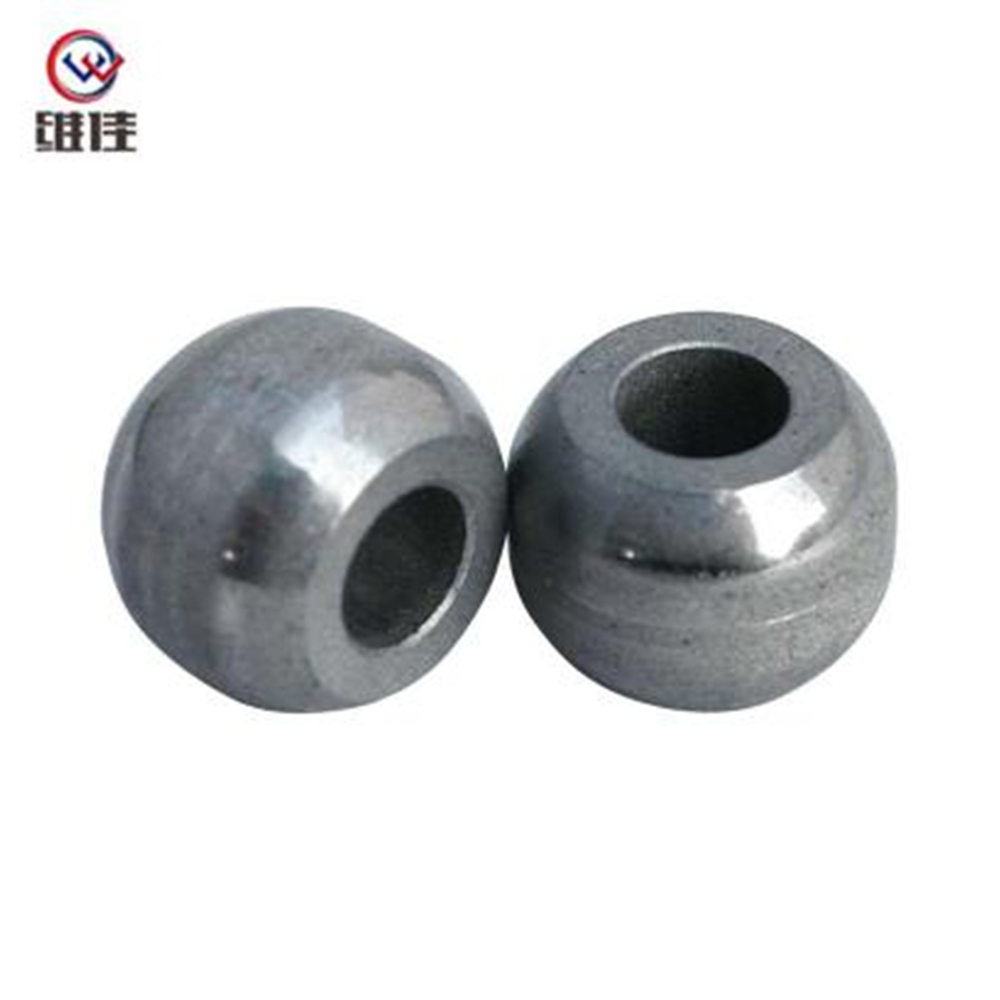
Product Description: High-precision powder metallurgy part (S14*7*10) made of iron material from Jiande Wefine, customized PM components with strict tolerance control.
See Details
Copyright © Jiande Welfine Technology Co., Ltd. All Rights Reserved. Custom Self-lubricating Sintered Bushing Manufacturers
