E-mail us: [email protected]
Tel: +86-15239857375
 English
 中文简体
中文简体

 Home / Author / Luo Qian — Product Sales Supervisor / Powder Metallurgy Structural Components for Washing Machine Clutch and Transmission Systems
 Powder Metallurgy Structural Components for Washing Machine Clutch and Transmission Systems
 2026.07.06
 Luo Qian — Product Sales Supervisor
Content
- 1 Product Overview
- 2 Key Technical Specifications
- 3 Why Powder Metallurgy Is Ideal for Washing Machine Components
- 4 Advantages Over Competing Manufacturing Methods
- 5 Role in Washing Machine Clutch and Transmission Systems
- 6 Material Engineering: Iron-Based Alloy Systems
- 7 Manufacturing Process and Quality Control
- 8 Manufacturing Strengths of the Supplier
- 9 Precision Engineering for Complex Splines and Serrations
- 10 Black Oxide Surface Treatment and Durability
- 11 Cost Efficiency Without Compromising Performance
- 12 Customization for OEM and ODM Projects
- 13 Quality Assurance and Testing
- 14 How These Components Improve Washing Machine Reliability
- 15 Comparison With Ordinary Sintered Parts
- 16 Applications Beyond Washing Machines
- 17 Purchasing Considerations for OEM Customers
- 18 Q&A Section
- 18.1 What are powder metallurgy structural components for washing machines?
- 18.2 What materials are used for these components?
- 18.3 Why is powder metallurgy better than conventional machining for these parts?
- 18.4 What is the purpose of the black oxide surface treatment?
- 18.5 Can the parts be customized for different washing machine models?
- 18.6 How do these components improve washing machine reliability?
- 18.7 What quality certifications support production?
- 18.8 Are these parts suitable for OEM and ODM projects?
- 18.9 What should buyers provide when requesting a quotation?
- 18.10 What makes a high-quality sintered clutch component different from an ordinary one?
- 19 Conclusion
- 20 References
- 21 Product: Powder Metallurgy Structural Components for Washing Machines
Powder metallurgy structural components are essential to the reliability, efficiency, and long service life of modern washing machine clutch and transmission systems. In an appliance that must repeatedly switch between washing, rinsing, draining, and high-speed spinning, every torque-transmitting part must resist wear, maintain dimensional stability, and perform consistently under cyclic mechanical stress. The sintered structural components described here are designed specifically for these demanding operating conditions, combining iron-based powder metallurgy alloys, precision compaction, high-temperature sintering, and surface blackening treatment to create durable parts with complex internal and external profiles.
Unlike conventionally machined components, powder metallurgy parts can be produced close to final shape, allowing splined inner bores, serrated outer edges, geared profiles, and customized engagement features to be formed with high repeatability. This manufacturing route reduces material waste, lowers machining requirements, and improves production efficiency, while still delivering the strength and wear resistance required for washing machine transmission assemblies. For OEM and ODM appliance manufacturers, this means a stable supply of customized structural components that can be adapted to specific clutch designs, motor systems, drum configurations, and performance targets.
These components are manufactured from iron-based powder metallurgy alloys such as Fe-Cu-C or Fe-Ni-C formulations. Through controlled pressing, sintering, and post-treatment, the parts achieve strong mechanical performance, consistent density, accurate dimensions, and excellent surface protection. The black oxide surface finish enhances corrosion resistance, improves anti-rust performance, supports wear behavior, and provides a uniform dark appearance suitable for industrial assembly. In real-world washing machine applications, these properties help reduce premature failure, improve operational smoothness, and extend the service life of the clutch or transmission mechanism.
Jiande Welfine Technology Co., Ltd. brings more than 20 years of experience in powder metallurgy sintering, self-lubricating bushings, and precision metal components. With a modern production base, advanced presses, high-temperature sintering furnaces, precision forming equipment, and certified quality management systems, the company supports customized development from drawings, samples, prototypes, and mass production requirements. Its ISO 9001:2015 and IATF 16949:2016 certifications further demonstrate a commitment to stable manufacturing, consistent quality, and long-term cooperation with appliance and industrial customers worldwide.
Powder Metallurgy Structural Components for Washing Machines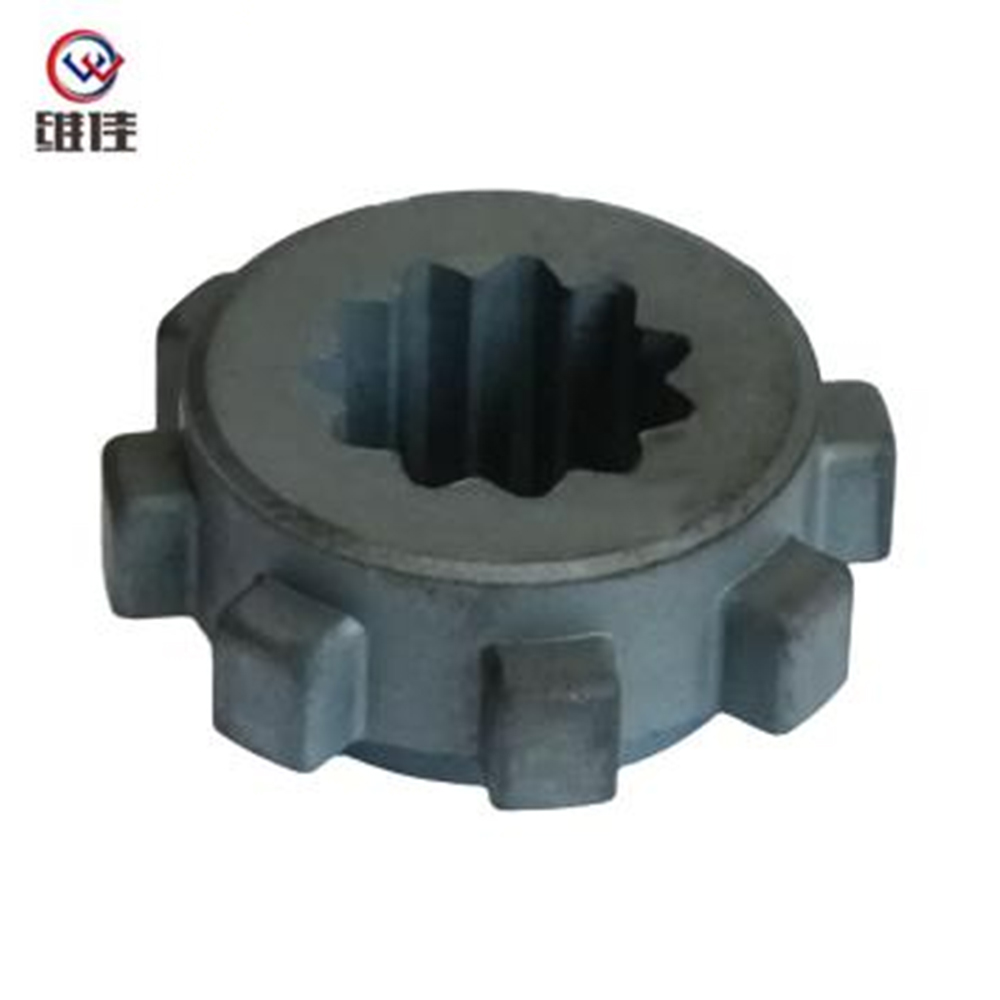
Product Overview
Powder metallurgy structural components for washing machines are precision-engineered metal parts used primarily in clutch assemblies and transmission systems. Their function is to transmit rotational torque, engage or disengage mechanical mechanisms, and withstand repeated load changes during washing and spinning cycles. In many washing machines, the clutch system must operate under variable speed, load, and vibration conditions. The mechanical parts inside this system must therefore provide a combination of strength, wear resistance, dimensional precision, and stable engagement geometry.
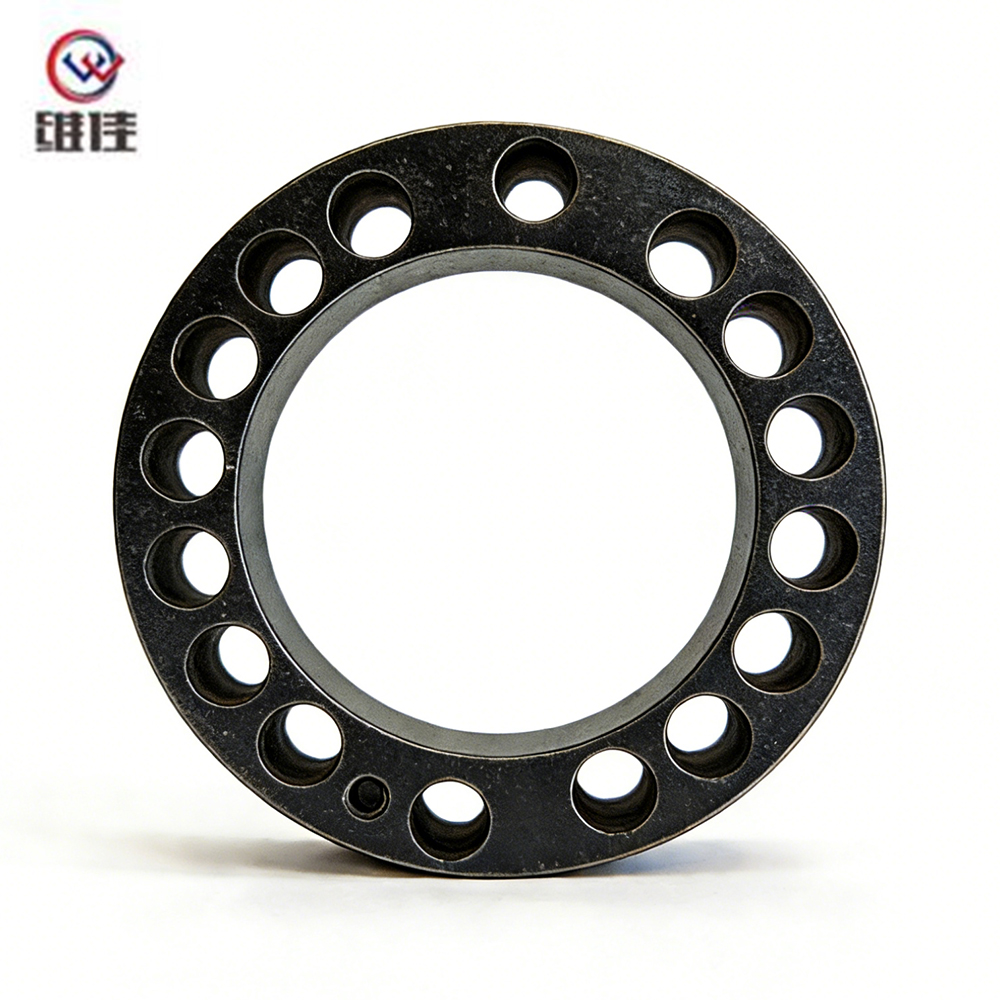
The product is manufactured through a controlled sequence of compaction, high-temperature sintering, and surface blackening. During compaction, metal powder is pressed into a precise die cavity to form the required geometry. This step creates the near-net-shape profile, including inner splines or serrations and outer geared or serrated engagement features. After compaction, the green compact is sintered at high temperature, bonding the powder particles metallurgically and developing the required strength. Finally, a blackening process forms a protective black oxide layer on the surface, improving corrosion resistance and anti-rust performance.
The components are commonly made with iron-based powder metallurgy alloys, including Fe-Cu-C and Fe-Ni-C systems. Copper, nickel, and carbon additions can be adjusted according to mechanical strength, hardness, wear resistance, and cost targets. This flexibility allows manufacturers to choose a formulation suitable for specific washing machine models, from standard household machines to higher-load or longer-life appliance designs. The ability to customize material composition is one of the key advantages of powder metallurgy when compared with fully machined parts made from conventional bar stock or castings.
Structurally, these components typically feature a splined or serrated inner bore that transfers torque between shafts, hubs, or connecting elements. The outer profile may include serrations, teeth, gear-like geometry, or clutch engagement structures. These complex geometries must be accurately formed because even small dimensional errors can cause noise, vibration, poor engagement, or accelerated wear. Powder metallurgy is especially suitable for such profiles because the shape is generated directly in the pressing die, reducing dependence on time-consuming cutting operations.
Key Technical Specifications
The following table summarizes the major technical features and application characteristics of the structural components.
Parameter |
Details |
Value to Washing Machine Applications |
Product Type |
Powder metallurgy structural component |
Designed for torque transmission, clutch engagement, and mechanical load support |
Material |
Iron-based powder metallurgy alloy, such as Fe-Cu-C or Fe-Ni-C |
Provides strength, wear resistance, and adjustable performance for different designs |
Production Process |
Compaction, high-temperature sintering, and surface blackening |
Ensures near-net-shape accuracy, stable mechanical properties, and surface protection |
Surface Finish |
Black oxide coating |
Improves corrosion resistance, anti-rust performance, and wear behavior |
Inner Profile |
Splined or serrated inner bore |
Enables reliable torque transfer and secure mating with shafts or hubs |
Outer Profile |
Serrated, geared, or customized clutch engagement edge |
Supports stable engagement and disengagement during washing and spinning cycles |
Size Range |
Customizable small and large variants |
Allows adaptation to different appliance models and transmission structures |
Main Applications |
Washing machine clutch assemblies and transmission systems |
Supports motor-to-drum torque transfer and repeated mechanical operation |
Why Powder Metallurgy Is Ideal for Washing Machine Components
Washing machine clutch and transmission components are not simple metal parts. They must operate thousands of times under changing loads, moisture exposure, detergent-related environmental factors, and vibration. A conventional machining approach can create accurate components, but it often involves high material waste, multiple machining operations, longer production cycles, and higher cost for complex profiles. Powder metallurgy provides a more efficient and repeatable solution, especially when manufacturing medium- to high-volume components with complex shapes.
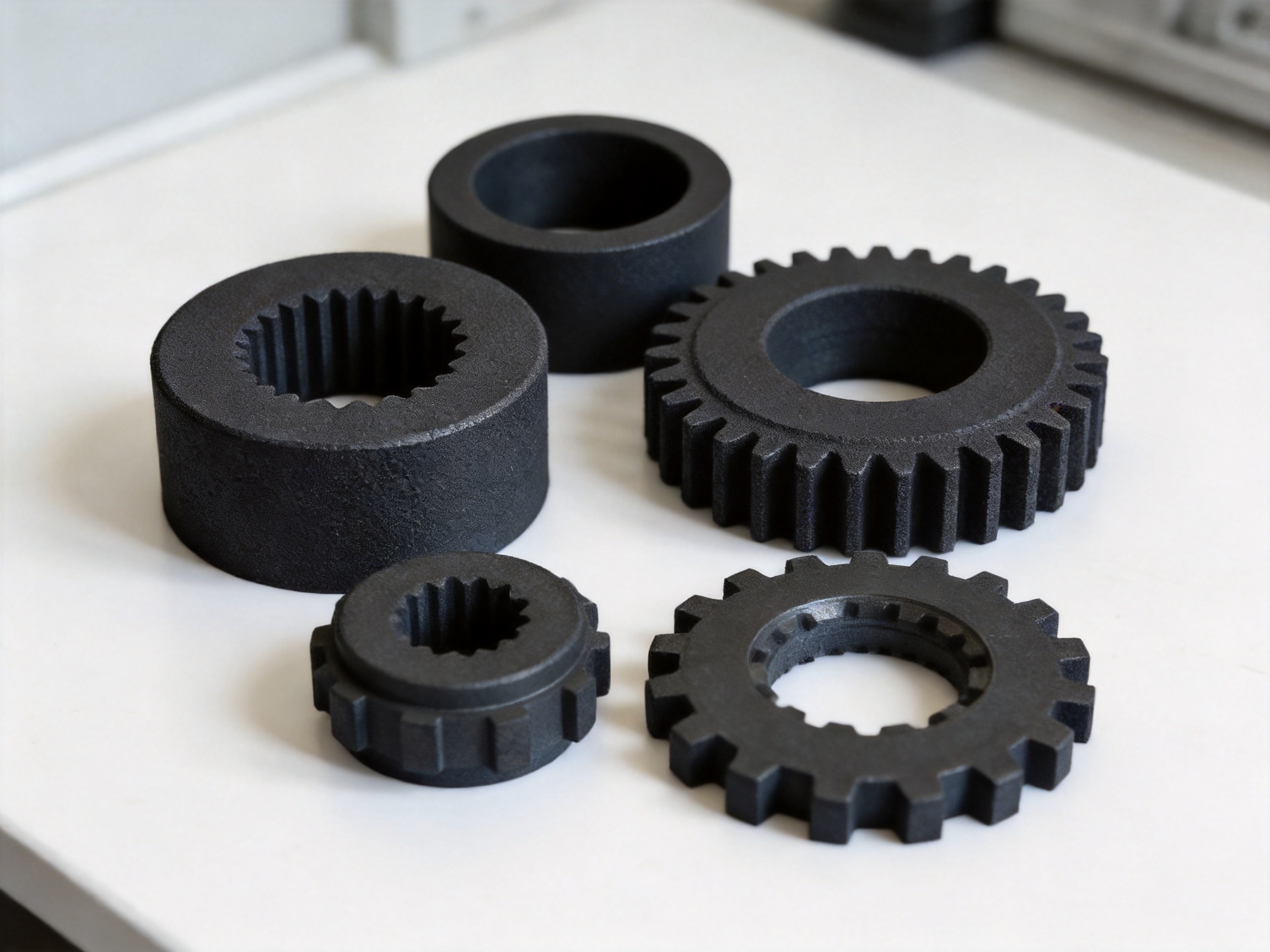
The near-net-shape capability of powder metallurgy is one of its most important advantages. Instead of removing large amounts of material from a solid billet, the component is formed from metal powder in a die that already contains the desired geometry. Internal splines, serrations, tooth forms, and stepped profiles can be produced with excellent repeatability. This reduces the need for cutting, milling, broaching, or grinding. As a result, production is more material-efficient, and the final component can be delivered at a competitive cost without sacrificing functional performance.
Powder metallurgy also allows controlled porosity and density distribution. For structural parts, the pressing and sintering parameters can be optimized to achieve high density and strong mechanical performance. The material formulation can be adjusted by blending iron powder with carbon, copper, nickel, or other alloying additions. This makes it possible to meet different requirements for strength, hardness, toughness, wear resistance, and economic efficiency. Compared with some cast components, sintered parts can offer improved dimensional consistency and reduced finishing requirements.
Another advantage is batch-to-batch consistency. Once the tooling, powder mixture, pressing conditions, sintering cycle, and inspection standards are established, powder metallurgy can produce large quantities of parts with uniform geometry and stable material characteristics. In appliance manufacturing, where thousands or millions of units may require the same component, this consistency is critical. A small variation in a clutch part can affect assembly fit, noise level, transmission smoothness, and service life. Powder metallurgy helps minimize such variation.
In addition, powder metallurgy supports sustainability. By reducing machining waste and improving material utilization, the process supports more efficient use of raw materials. Reduced secondary machining can also lower energy consumption and production time. For appliance manufacturers seeking cost-effective and responsible supply chains, sintered metal parts provide an attractive balance of engineering performance and manufacturing efficiency.
Advantages Over Competing Manufacturing Methods
When compared with machined steel parts, cast metal components, and stamped assemblies, powder metallurgy structural parts offer a combination of advantages that is especially valuable for washing machine clutch systems. Machined steel can provide high strength, but producing complex internal splines and outer serrations often requires multiple operations. Each operation adds cost, time, tooling wear, and potential dimensional variation. Powder metallurgy forms much of the required shape directly during compaction, reducing the need for extensive secondary machining.
Compared with casting, powder metallurgy can deliver more precise dimensional control for small and medium-sized components. Cast parts may require significant finishing to achieve accurate engagement profiles, and casting defects such as shrinkage porosity can affect performance if not tightly controlled. Sintered powder metallurgy parts, by contrast, are made from controlled powders and pressed in precise dies, allowing better repeatability for gear-like features, serrations, and splines. This is particularly important where smooth clutch engagement and reliable torque transfer are required.
Compared with stamping, powder metallurgy offers superior three-dimensional geometry. Stamping is effective for flat or sheet-like components, but it is limited when parts require thick sections, internal bores, complex tooth forms, and high load-bearing capacity. Powder metallurgy can produce thicker, stronger, and more complex structural components in a single forming direction, making it more suitable for torque-transmitting clutch parts. It also allows the use of alloy systems that can be tailored for mechanical properties beyond what is typical for simple stamped steel shapes.
Powder metallurgy parts can also outperform competing sintered components when the manufacturer controls powder selection, die design, sintering atmosphere, temperature, and finishing treatment carefully. Not all sintered parts are equal. The quality of the final component depends on process expertise, equipment capability, inspection discipline, and engineering support. A supplier with deep experience in powder metallurgy can optimize density, dimensional accuracy, strength, surface finish, and cost, while less experienced suppliers may struggle with inconsistent shrinkage, weak tooth profiles, poor surface treatment, or unstable batch quality.
The blackening treatment is another competitive advantage. Washing machine components may be exposed to humidity and changing temperatures, even when they are located inside the mechanical assembly. A dense black oxide layer provides improved anti-rust performance and contributes to longer service life. It also creates a clean, uniform dark surface that is visually suitable for mechanical assemblies. While some competing parts may use simple untreated surfaces or less consistent coatings, controlled blackening adds protection without significantly altering dimensional accuracy.
Role in Washing Machine Clutch and Transmission Systems
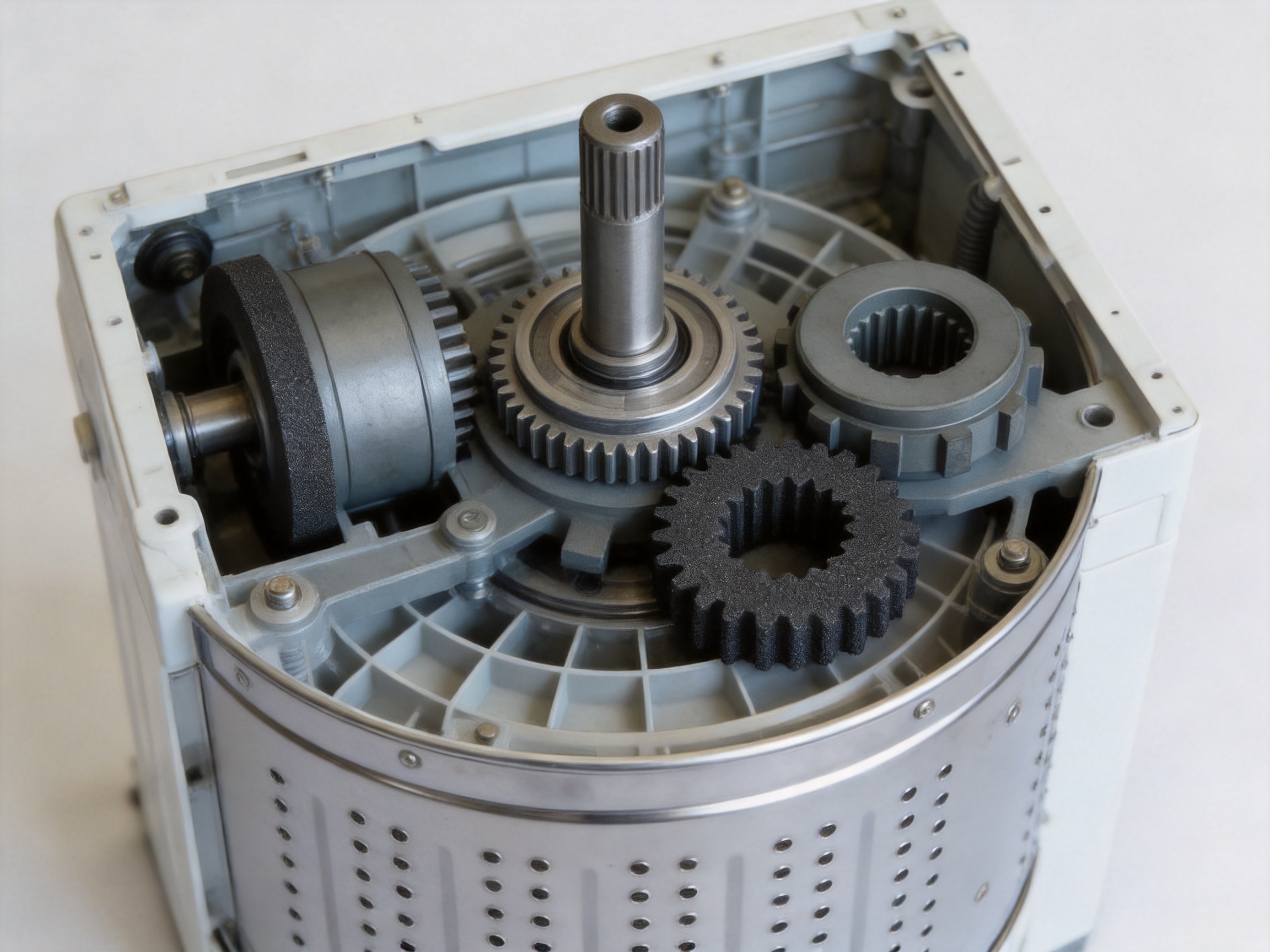
The clutch and transmission system of a washing machine controls the transfer of power from the motor to the drum or pulsator. During a washing cycle, the system may operate at lower speed with frequent direction changes. During spin drying, it must support high-speed rotation and stable torque transmission. These operating modes generate repeated mechanical loading, engagement impacts, vibration, and friction. The structural components within this system must therefore perform reliably over many cycles.
The splined or serrated inner bore of the component enables secure torque transfer. When mated with a shaft or hub, the internal profile distributes load across multiple teeth or contact surfaces. This reduces localized stress and helps prevent slipping. Accurate spline geometry is essential because poor tooth contact can cause uneven loading, noise, wear, and eventual failure. Powder metallurgy tooling can be designed to produce precise and repeatable internal geometry, helping maintain consistent engagement throughout the service life of the appliance.
The serrated or geared outer edge supports clutch engagement. In many washing machine mechanisms, external teeth or serrations interact with other parts to engage, lock, release, or transmit motion. If the external profile is inaccurate, the clutch may engage roughly, produce noise, or wear quickly. Sintered structural components can be manufactured with well-defined outer profiles that support smooth mechanical action. The combination of high-density sintered material and black oxide surface treatment further improves durability under repeated engagement conditions.
Another important role is dimensional stability. Washing machine manufacturers require components that fit accurately into assemblies without excessive variation. Parts must maintain their form after pressing, sintering, cooling, and finishing. Powder metallurgy requires careful control of shrinkage during sintering, because the compacted part changes dimension as particles bond. Experienced manufacturers use established process parameters, tooling compensation, and inspection methods to ensure the final part meets customer drawings and functional requirements.
In practical terms, the structural component helps the washing machine shift smoothly between wash and spin functions, transmit motor torque efficiently, and withstand load fluctuations from wet laundry. A robust part reduces the risk of clutch malfunction, slipping, abnormal noise, and service complaints. For appliance brands, this contributes to better product reliability, fewer warranty issues, and stronger customer satisfaction.
Material Engineering: Iron-Based Alloy Systems
The product is typically manufactured from iron-based powder metallurgy alloys such as Fe-Cu-C or Fe-Ni-C. These systems are widely used for sintered structural parts because they offer a strong balance between cost, strength, wear resistance, and processability. Iron provides the base structure and mechanical strength. Carbon can increase hardness and strength after sintering, while copper can improve strength and sintering behavior. Nickel may be used where improved toughness or enhanced mechanical properties are required.
Fe-Cu-C is a common and economical alloy system for structural parts. Copper addition can strengthen the iron matrix and support improved mechanical properties. Carbon contributes to hardness and wear resistance. This combination is suitable for many washing machine applications where the component must handle moderate to high mechanical loads while remaining cost competitive. The formulation can be adjusted according to the load level, hardness target, dimensional requirements, and customer budget.
Fe-Ni-C systems can be selected for applications requiring enhanced strength or toughness. Nickel can improve the performance of the sintered structure and support better resistance to impact or fatigue in certain designs. For clutch components subjected to repeated engagement impacts or higher stress, material selection becomes particularly important. The ability to tailor the alloy composition gives the manufacturer flexibility to meet application-specific requirements rather than forcing all customers to use a one-size-fits-all solution.
Powder particle characteristics also matter. Particle size distribution, apparent density, flowability, compressibility, and purity all influence the final part. Good powder flow helps fill the die cavity uniformly, which is essential for complex serrated and splined geometries. Good compressibility helps achieve target green density during pressing. Proper blending ensures uniform distribution of alloying elements and lubricants. These details are part of the technical foundation behind stable powder metallurgy production.
After sintering, the microstructure of the part determines its mechanical behavior. Controlled furnace temperature, atmosphere, time, and cooling conditions are used to promote bonding between particles and achieve the desired material performance. For washing machine components, the aim is not only high strength but also reliable fatigue behavior, dimensional consistency, and suitable wear performance at the tooth and spline interfaces. The material engineering process therefore connects directly to the final reliability of the appliance.
Manufacturing Process and Quality Control
The manufacturing process begins with engineering review. Customer drawings, samples, functional requirements, assembly conditions, load expectations, and target costs are analyzed. For OEM and ODM projects, the engineering team evaluates whether the required geometry is suitable for powder metallurgy forming, whether tooling compensation is needed for sintering shrinkage, and whether any secondary operations are required. Early technical communication helps prevent design problems and supports faster development.
The next step is powder preparation. Iron-based powder is blended with selected alloying elements and process additives according to the required material formulation. The mixing process must achieve uniform distribution because inconsistent powder composition can lead to variations in density, strength, hardness, and dimensional behavior. For precision parts, powder consistency is essential. A stable material batch supports stable pressing and sintering results.
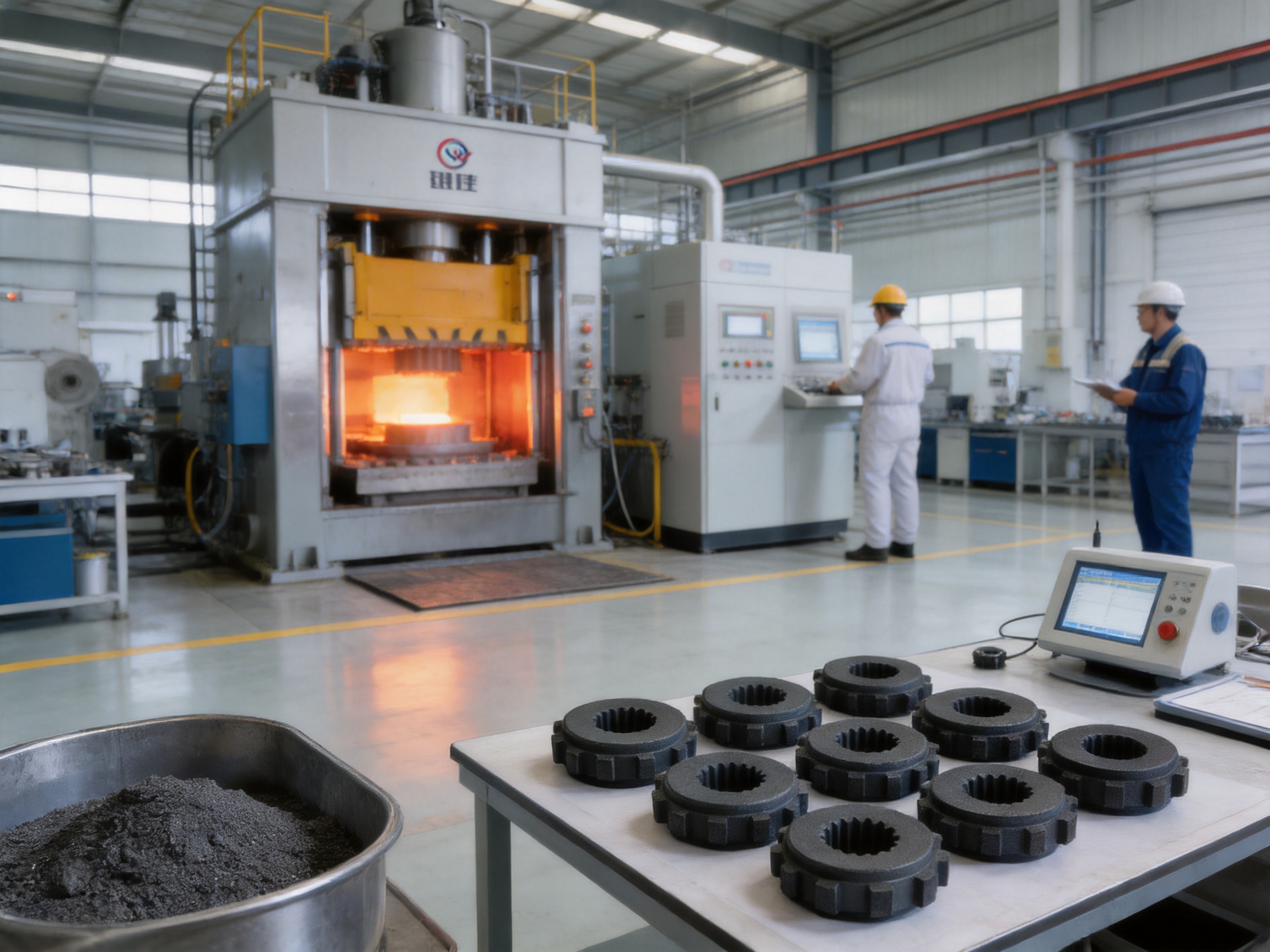
Compaction follows powder preparation. The powder blend is filled into a precision die and pressed under controlled pressure. During pressing, the loose powder becomes a green compact with the required shape. Tooling design is crucial at this stage. Inner splines, outer serrations, chamfers, steps, and edges must be formed accurately without causing cracks or density defects. The compact must have sufficient green strength for handling before sintering. Advanced presses and skilled operators help ensure stable production.
High-temperature sintering is the core metallurgical process. The green compact is heated in a controlled furnace atmosphere to a temperature where powder particles bond together. Sintering transforms the fragile compact into a strong metallic component. Furnace temperature uniformity, belt speed or cycle time, atmosphere control, and cooling conditions must be carefully managed. If sintering is insufficient, the part may lack strength. If dimensions are not controlled, the part may shrink outside tolerance. Experience in sintering is therefore essential for precision structural components.
After sintering, the parts may undergo sizing, calibration, or other secondary operations depending on drawing requirements. Sizing can improve dimensional accuracy by pressing the sintered part through a finishing die. For parts with tight inner bore or outer tooth tolerances, this step can be valuable. Some designs may require machining, deburring, cleaning, or additional inspection. However, because powder metallurgy is a near-net-shape process, these secondary operations are typically minimized compared with conventional machining routes.
The surface blackening treatment creates the final protective finish. Black oxide coating improves anti-rust performance and corrosion resistance, especially in environments where moisture exposure is possible. It also helps improve wear and friction characteristics by providing a treated surface layer. The process must be controlled to maintain uniform color, suitable coating adhesion, and dimensional compatibility. Because clutch components require accurate fit, the treatment must not create excessive buildup or distort precision features.
Quality control is integrated throughout production. Dimensional inspection verifies inner spline profiles, outer serrations, thickness, flatness, bore size, and other critical features. Mechanical property testing may include hardness, density, crushing strength, tensile-related evaluation, or application-specific testing. Visual inspection ensures surface finish quality and identifies defects such as cracks, chips, or incomplete blackening. For mass production, process monitoring and statistical control help maintain consistency from batch to batch.
Manufacturing Strengths of the Supplier
Jiande Welfine Technology Co., Ltd. was established in 2001 and has developed into a high-tech enterprise integrating research and development, production, and sales. The company focuses on powder metallurgy sintering and related precision machining, with products including powder metallurgy bushings, self-lubricating bushings, oil-impregnated bearings, and various precision structural parts. This background gives the company strong technical experience in sintered materials, dimensional control, and application-specific customization.
The company operates a modern production base of approximately 13,039 square meters. This facility is equipped with advanced production and testing equipment, including high-efficiency presses, high-temperature sintering furnaces, and precision forming machines. Such equipment is important for producing washing machine structural components because the parts require stable pressing, controlled sintering, and accurate profiles. Advanced equipment helps reduce variation, improve productivity, and support large-volume orders.
More than 150 skilled employees contribute to production, engineering, inspection, and customer service. In powder metallurgy, operator experience and engineering knowledge are highly valuable because many production details affect final quality. Tooling setup, powder handling, press adjustment, furnace control, and finishing procedures all require technical discipline. A trained workforce helps ensure that customized parts can move from prototype to mass production efficiently.
The company provides OEM and ODM customized solutions based on customer drawings or samples. This is especially important for washing machine manufacturers because clutch systems vary between models and brands. Inner spline dimensions, outer engagement profiles, thickness, hardness, surface treatment, and material formulation may all require customization. The supplier can support technical drawings, sample testing, prototype development, and mass production scaling, helping customers shorten development cycles and reduce supplier coordination complexity.
Quality management is supported by ISO 9001:2015 and IATF 16949:2016 certifications. ISO 9001 demonstrates a structured quality management system for consistent production and continual improvement. IATF 16949, widely used in the automotive supply chain, indicates a higher level of process control, defect prevention, traceability, and quality discipline. Although washing machine components are appliance parts rather than automotive parts, this level of quality management provides additional confidence for customers seeking reliable long-term supply.
Precision Engineering for Complex Splines and Serrations
The internal and external profiles of washing machine clutch parts are among their most critical features. The inner bore may include splines or serrations that connect with a shaft or mating component. The outer edge may include teeth or serrations used for clutch engagement. These features must be produced with accurate pitch, angle, depth, tooth form, and concentricity. If tolerances are loose or profiles are inconsistent, the part may not assemble properly or may fail prematurely.
Powder metallurgy has a clear advantage in forming such features. The die cavity can incorporate the desired tooth and spline shapes, allowing the profiles to be pressed directly into the compact. This reduces reliance on expensive broaching, hobbing, or milling. It also allows many identical parts to be produced with high repeatability after tooling validation. For mass-produced washing machines, this repeatability supports stable assembly line operation and reduces the risk of rejected parts.
However, producing accurate powder metallurgy profiles requires careful tooling design. The manufacturer must account for powder flow, compaction pressure, ejection forces, sintering shrinkage, and possible distortion. Sharp features may require design optimization to avoid stress concentration or weak areas. Tooth roots and spline corners must be formed in a way that balances functional engagement with manufacturability. Experienced engineering support helps customers refine designs for both performance and production efficiency.
Concentricity between inner and outer profiles is also important. In a rotating transmission system, poor concentricity can cause vibration, uneven wear, and noise. Precision forming equipment and robust inspection methods help maintain the alignment of critical features. For higher-performance applications, additional sizing or calibration may be used to improve tolerances. This combination of forming expertise and finishing capability makes powder metallurgy suitable for demanding mechanical components.
The ability to customize profiles is a major benefit for OEM and ODM customers. Rather than relying on standard catalog parts, appliance manufacturers can request specific spline counts, tooth geometry, bore sizes, outer diameters, thicknesses, and material properties. This flexibility allows the component to be integrated into the customer’s mechanical design instead of forcing design compromises around an off-the-shelf part.
Black Oxide Surface Treatment and Durability
The blackening treatment applied to these components forms a dense black oxide layer on the surface. This treatment is widely valued for improving corrosion resistance, reducing rust risk, and creating a uniform dark finish. In washing machine applications, moisture and humidity are common environmental factors. Even if the structural component is not directly exposed to water during normal operation, condensation, detergent vapor, and temperature changes can create conditions that promote corrosion. A protective black oxide surface helps reduce this risk.
Corrosion protection is important because rust can affect both appearance and function. On splines or serrations, corrosion products can interfere with proper engagement, increase friction, generate debris, or accelerate wear. If a clutch part becomes corroded, it may produce abnormal noise or lose smooth operating behavior. By improving anti-rust performance, the blackened surface helps maintain consistent mechanical function over time.
The treatment can also improve wear and friction behavior. While black oxide is not a thick hard coating, it changes the surface condition and can work together with lubricants or contact conditions to reduce unwanted surface damage. In clutch systems where repeated engagement occurs, a stable treated surface can contribute to longer service life. The uniform dark finish also indicates controlled processing and gives the part a professional appearance.
Compared with untreated competing components, blackened sintered parts offer an extra layer of functional protection. Compared with some thicker coatings, black oxide has the advantage of minimal dimensional impact. This is important for precision components because excessive coating thickness could alter spline fit or tooth engagement. Properly controlled blackening supports corrosion resistance while preserving the dimensional characteristics achieved during forming and sintering.
The blackening process must be integrated with cleaning and inspection. Parts should be free from surface contamination before treatment, and the finished coating should be uniform. Any incomplete treatment, stains, or defects may indicate process issues. A supplier with established finishing procedures can ensure that surface treatment quality remains stable during mass production.
Cost Efficiency Without Compromising Performance
Cost efficiency is a major reason appliance manufacturers choose powder metallurgy structural components. Washing machines are produced in large volumes, and each component must meet strict cost targets while still providing reliable performance. Powder metallurgy supports this goal by reducing raw material waste, minimizing machining operations, and enabling high production efficiency.
In conventional machining, a part may begin as a larger steel blank or bar section. Material is removed through turning, milling, drilling, broaching, or grinding until the final shape is achieved. For components with splines or serrations, specialized tools and multiple operations may be needed. The removed material becomes scrap, and machining time adds labor, energy, and equipment costs. Powder metallurgy avoids much of this waste by forming the part close to its final geometry from the beginning.
Tooling investment is required for powder metallurgy, but once the die is developed, the process is highly efficient for repeated production. This makes it especially suitable for OEM parts with stable demand. The cost per part can be very competitive because pressing and sintering are efficient batch or continuous processes. Secondary machining can be limited to only those features that truly require post-processing.
At the same time, cost efficiency does not mean reduced quality. A well-designed powder metallurgy part can meet demanding mechanical requirements while lowering total manufacturing cost. The key is to optimize material composition, density, geometry, and finishing. Experienced suppliers can help customers avoid unnecessary over-engineering while still ensuring adequate strength and durability. For example, the material system can be selected based on actual load requirements instead of automatically using a more expensive alloy.
Powder metallurgy can also reduce assembly-related costs. When parts are dimensionally consistent, assembly lines experience fewer interruptions, fewer rejected parts, and less need for adjustment. Reliable clutch components can reduce warranty costs and after-sales service issues. Therefore, the economic value of the component should be evaluated not only by unit price but also by total lifecycle contribution to appliance reliability.
Customization for OEM and ODM Projects
Customization is one of the strongest advantages of these powder metallurgy structural components. Washing machine manufacturers often require parts that match specific clutch structures, torque requirements, installation spaces, and performance targets. A standard component may not fit the design or may not deliver the ideal mechanical behavior. Custom powder metallurgy production allows customers to specify geometry, material, surface treatment, and performance characteristics.
The customization process can begin with a drawing, sample, or concept requirement. The engineering team reviews the design and provides feedback on manufacturability, tolerances, material selection, and potential cost optimization. If the part includes complex internal splines or outer serrations, the tooling design must be carefully developed. Prototype samples can then be produced for dimensional verification, assembly testing, and functional evaluation.
Sample testing is an important stage because washing machine clutch components must work within a larger mechanical system. A part that meets drawing dimensions may still require adjustment if the engagement feel, noise level, or wear behavior is not ideal in the assembly. The supplier’s willingness to support sample testing and technical communication helps customers refine the product before committing to mass production.
Material customization may include choosing between Fe-Cu-C and Fe-Ni-C systems or adjusting carbon content, density targets, hardness, and surface treatment. Geometry customization may include inner spline count, spline shape, bore diameter, outer tooth form, outer diameter, thickness, chamfers, grooves, and anti-rotation features. Process customization may include sizing, machining, blackening, or inspection requirements. This broad flexibility supports both new washing machine designs and replacement part development.
For mass production scaling, process stability becomes essential. The supplier must ensure that the part produced during prototype development can be manufactured consistently in large quantities. This requires validated tooling, documented process parameters, inspection plans, and quality control records. A manufacturer with established powder metallurgy experience and certified quality systems is better positioned to support this transition smoothly.
Quality Assurance and Testing
Quality assurance for powder metallurgy structural components must cover both dimensional and material performance. Because the parts are used in mechanical transmission systems, failure can affect the entire appliance. Therefore, inspection is not limited to appearance. It includes critical dimensions, density, hardness, strength-related properties, profile accuracy, surface finish, and functional compatibility.
Dimensional inspection verifies that the part matches customer drawings. Inner bore dimensions, spline tooth geometry, outer serration form, outer diameter, thickness, flatness, and concentricity may all be checked. Precision measuring instruments and gauges can be used for high-volume production. Custom gauges may be developed for specific spline or clutch engagement features to ensure fast and reliable inspection.
Density control is important because mechanical strength is closely related to part density. Powder metallurgy parts can be designed with controlled porosity, but structural components usually require sufficiently high density to resist load and wear. Density testing helps confirm that compaction and sintering are stable. If density varies significantly, strength and dimensional behavior may also vary.
Hardness testing provides information about material condition and wear resistance. Proper hardness helps the component resist deformation at contact points. However, excessive hardness without sufficient toughness may increase brittleness, so hardness must be considered together with material formulation and application load. The supplier’s engineering team can help define appropriate hardness targets for each customer application.
Surface inspection confirms that the black oxide coating is uniform and that the part is free from visible defects. Cracks, chips, incomplete teeth, burrs, rust, or coating inconsistencies are unacceptable in precision clutch components. Functional testing may include assembly trial, torque transmission evaluation, engagement testing, or wear testing depending on customer requirements. For OEM projects, customer-specific validation procedures can be supported.
Certified quality systems provide structure for these activities. ISO 9001 emphasizes documented procedures, process control, corrective action, and continual improvement. IATF 16949 adds strong discipline in defect prevention, traceability, risk management, and production part approval practices. These systems help ensure that quality is not dependent on occasional inspection alone but is built into the manufacturing process.
How These Components Improve Washing Machine Reliability
Reliability in washing machines depends on the coordination of electrical, mechanical, and control systems. The clutch and transmission assembly is one of the most mechanically demanding areas because it must transfer torque repeatedly while operating under vibration and load variation. A weak or poorly manufactured structural component can lead to noise, slipping, uneven engagement, premature wear, or complete mechanical failure.
High-density sintered structural components improve reliability by providing stable strength and wear resistance. The iron-based alloy system supports the loads generated during washing and spinning. Accurate splines and serrations ensure that torque is transferred efficiently instead of concentrating stress in a few contact areas. Stable dimensions help maintain proper alignment and fit inside the assembly.
The black oxide surface further supports reliability by reducing rust risk. Corrosion can be especially harmful in mechanical interfaces because it changes surface roughness and generates particles. A protected surface helps preserve the intended contact condition. This is valuable in appliances that may operate in humid laundry rooms or be exposed to moisture over many years.
Repeatability across batches also improves product reliability at the appliance manufacturing level. If every component fits and performs consistently, assembly quality becomes more stable. Appliance makers can reduce variation in noise, vibration, and operating feel. Consistent components also simplify troubleshooting because fewer unexpected part variations appear during production.
For end users, the benefits are experienced indirectly. A reliable clutch component contributes to smooth transitions between wash and spin cycles, reduced abnormal noise, and longer appliance service life. For appliance brands, this means fewer warranty claims, better reputation, and stronger customer satisfaction. Therefore, even though the component may be small relative to the entire washing machine, its engineering quality has a significant impact.
Comparison With Ordinary Sintered Parts
Not every sintered metal component offers the same level of performance. Ordinary sintered parts may be produced with basic tooling, limited process control, lower material consistency, or minimal inspection. Such parts may look similar at first glance, but differences in density, tooth accuracy, surface treatment, and mechanical properties can become evident during operation. For washing machine clutch systems, these differences can affect noise, wear, and durability.
The structural components discussed here are designed with application-specific requirements in mind. They are not generic metal rings or simple pressed shapes. Their inner and outer profiles are engineered for torque transmission and clutch engagement. The material system is selected for mechanical performance. The sintering process is controlled to achieve stable strength and dimensional behavior. The blackening treatment adds corrosion protection. Quality inspection verifies that the part meets functional requirements.
Compared with lower-grade sintered competitors, these components offer stronger customization support. Customers can request specific dimensions, spline configurations, outer profiles, material formulations, and testing standards. This is important because washing machine designs are not identical. A supplier that only offers standard parts may not be able to match the customer’s assembly conditions. A supplier with OEM and ODM capability can provide a more suitable engineering solution.
Process experience is also a differentiator. Powder metallurgy requires understanding how powder, pressure, tooling, temperature, and finishing interact. Inexperienced manufacturers may face problems such as uneven density, cracks after pressing, dimensional drift after sintering, poor tooth filling, or inconsistent blackening. A company with more than two decades of sintering experience is better able to anticipate and solve these issues.
Finally, certified quality management gives customers confidence in long-term supply. Price is important, but the lowest-cost part may become expensive if it causes assembly problems or field failures. A reliable sintered component supplier offers value through stable quality, engineering communication, consistent delivery, and continuous improvement.
Applications Beyond Washing Machines
Although this article focuses on washing machine clutch and transmission systems, the same powder metallurgy expertise can be applied to many other mechanical products. Iron-based sintered structural components are widely used in motors, pumps, automotive mechanisms, power tools, household appliances, office equipment, and industrial machinery. Any application requiring complex geometry, good wear resistance, and cost-effective mass production may benefit from powder metallurgy.
The company’s broader product categories include powder metallurgy structural parts, oil-impregnated bearings and bushings, friction materials, magnetic materials, and steel-cast copper-related products. This broad technical foundation supports cross-application knowledge. For example, experience with self-lubricating sintered bushings helps in understanding wear, porosity, and lubrication behavior. Experience with precision structural parts supports dimensional control and tooling development. Such knowledge can be valuable when designing customized clutch components.
In appliance applications beyond washing machines, sintered components may be used in vacuum cleaners, kitchen appliances, dryers, fans, and small motors. The ability to produce complex shapes with stable quality makes powder metallurgy suitable for many rotating and load-bearing mechanisms. The same principles of near-net-shape manufacturing, material efficiency, and design customization apply.
For customers developing new products, working with a supplier that understands multiple powder metallurgy product types can be beneficial. The engineering team may suggest design improvements, alternative material systems, or manufacturing methods based on experience from related applications. This can reduce development risk and improve the final product.
Purchasing Considerations for OEM Customers
When selecting powder metallurgy structural components for washing machines, OEM customers should evaluate more than unit price. The first consideration is whether the supplier can meet the technical drawing requirements, including critical dimensions, spline accuracy, outer tooth geometry, material properties, and surface treatment. The supplier should be able to explain how the part will be formed, sintered, finished, and inspected.
The second consideration is customization capability. Washing machine clutch components often require special profiles. Customers should confirm whether the supplier can develop tooling based on drawings or samples and whether prototype testing is available. Free technical drawing support and sample testing can be valuable during the development stage.
The third consideration is material and process control. Customers should ask about powder formulation, sintering equipment, density control, hardness testing, and blackening treatment. A supplier with advanced presses and high-temperature sintering furnaces can provide better process stability. Quality certifications such as ISO 9001 and IATF 16949 indicate structured management and traceability.
The fourth consideration is production capacity and scalability. A prototype supplier may not always be able to support mass production. Customers should evaluate facility size, equipment capacity, workforce experience, and delivery capability. A modern 13,039-square-meter production base and more than 150 skilled employees provide a strong foundation for stable supply.
The final consideration is communication. Powder metallurgy projects often require technical discussion before the design is finalized. A responsive engineering team can help optimize the component for manufacturability, performance, and cost. This cooperation is especially important for OEM and ODM projects where the part must integrate with a complete appliance system.
Q&A Section
What are powder metallurgy structural components for washing machines?
They are precision sintered metal parts used in washing machine clutch and transmission systems. Their main functions include torque transmission, clutch engagement, mechanical support, and resistance to repeated operating loads during wash and spin cycles.
What materials are used for these components?
They are commonly made from iron-based powder metallurgy alloys such as Fe-Cu-C or Fe-Ni-C. These alloy systems can be adjusted to meet different requirements for strength, hardness, toughness, wear resistance, and cost efficiency.
Why is powder metallurgy better than conventional machining for these parts?
Powder metallurgy forms complex shapes close to final geometry, reducing material waste and secondary machining. It is especially effective for internal splines, serrated bores, geared outer profiles, and other complex clutch engagement features that would be more expensive to machine.
What is the purpose of the black oxide surface treatment?
The black oxide coating improves corrosion resistance, anti-rust performance, and surface durability. It also provides a uniform dark finish while having minimal impact on the dimensional accuracy of splines and serrations.
Can the parts be customized for different washing machine models?
Yes. Inner spline geometry, outer serration profiles, dimensions, material composition, density, hardness, and surface treatment can be customized according to customer drawings, samples, or application requirements.
How do these components improve washing machine reliability?
They provide stable torque transmission, accurate clutch engagement, wear resistance, corrosion protection, and dimensional consistency. These characteristics help reduce noise, slipping, premature wear, and mechanical failure in the clutch and transmission system.
What quality certifications support production?
The manufacturer operates under ISO 9001:2015 and IATF 16949:2016 quality management systems. These certifications support process control, traceability, defect prevention, and consistent product quality.
Are these parts suitable for OEM and ODM projects?
Yes. The supplier supports OEM and ODM development based on drawings or samples, including technical drawing support, sample testing, prototype development, and mass production scaling.
What should buyers provide when requesting a quotation?
Buyers should provide drawings, samples, material requirements, expected annual quantity, application details, tolerance requirements, surface treatment needs, and any mechanical performance targets such as hardness or load conditions.
What makes a high-quality sintered clutch component different from an ordinary one?
A high-quality component has controlled material composition, stable density, accurate spline and serration profiles, reliable sintering, uniform blackening, and strict inspection. Ordinary parts may lack the process control required for long-term clutch performance.
Conclusion
Powder metallurgy structural components for washing machine clutch and transmission systems provide an effective combination of strength, precision, wear resistance, corrosion protection, and cost efficiency. Their iron-based sintered alloy structure supports demanding mechanical loads, while near-net-shape forming enables complex splined and serrated profiles with excellent repeatability. The black oxide surface treatment adds anti-rust protection and improves the durability of the component in appliance operating environments.
Compared with machined, cast, stamped, or ordinary sintered alternatives, these components offer clear advantages in material utilization, dimensional consistency, customization flexibility, and production efficiency. For washing machine manufacturers, the result is a reliable torque-transmitting part that supports smoother clutch operation, longer service life, and improved appliance quality.
Jiande Welfine Technology Co., Ltd. strengthens this product value with more than 20 years of powder metallurgy experience, a modern production base, advanced presses, high-temperature sintering furnaces, precision forming machines, skilled employees, and certified quality systems. The company’s ability to provide OEM and ODM customization, sample testing, technical support, and mass production capability makes it a strong partner for appliance manufacturers seeking dependable sintered metal components.
As washing machines continue to evolve toward higher efficiency, lower noise, longer service life, and more compact mechanical systems, the demand for precision-engineered sintered structural components will continue to grow. By combining advanced powder metallurgy processes with application-focused engineering, these components deliver the performance, consistency, and economic value required by modern appliance manufacturing.
References
German, R. M. Powder Metallurgy and Particulate Materials Processing. Metal Powder Industries Federation.
ASM International. Powder Metallurgy Technologies and Applications. ASM Handbook.
Upadhyaya, G. S. Powder Metallurgy Technology. Cambridge International Science Publishing.
Metal Powder Industries Federation. Standard Test Methods for Metal Powders and Powder Metallurgy Products.
ASM International. Surface Engineering for Corrosion and Wear Resistance.
ISO 9001:2015. Quality Management Systems Requirements.
IATF 16949:2016. Quality Management System Requirements for Automotive Production and Relevant Service Parts Organizations.
Product: Powder Metallurgy Structural Components for Washing Machines

Related products
-
-
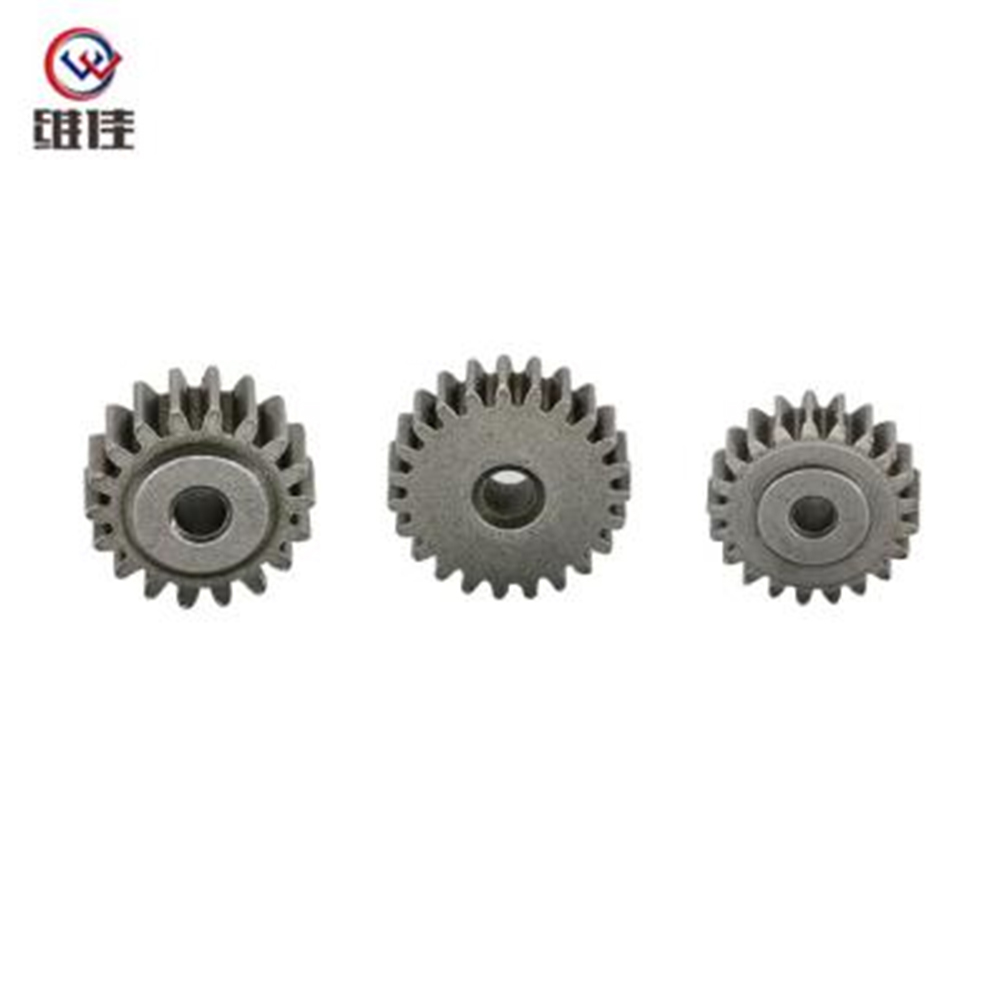
Description: Custom powder metallurgy planetary gear with high precision, wear resistance for automotive, industrial machinery & home appliances. OEM/ODM supported.
See Details -
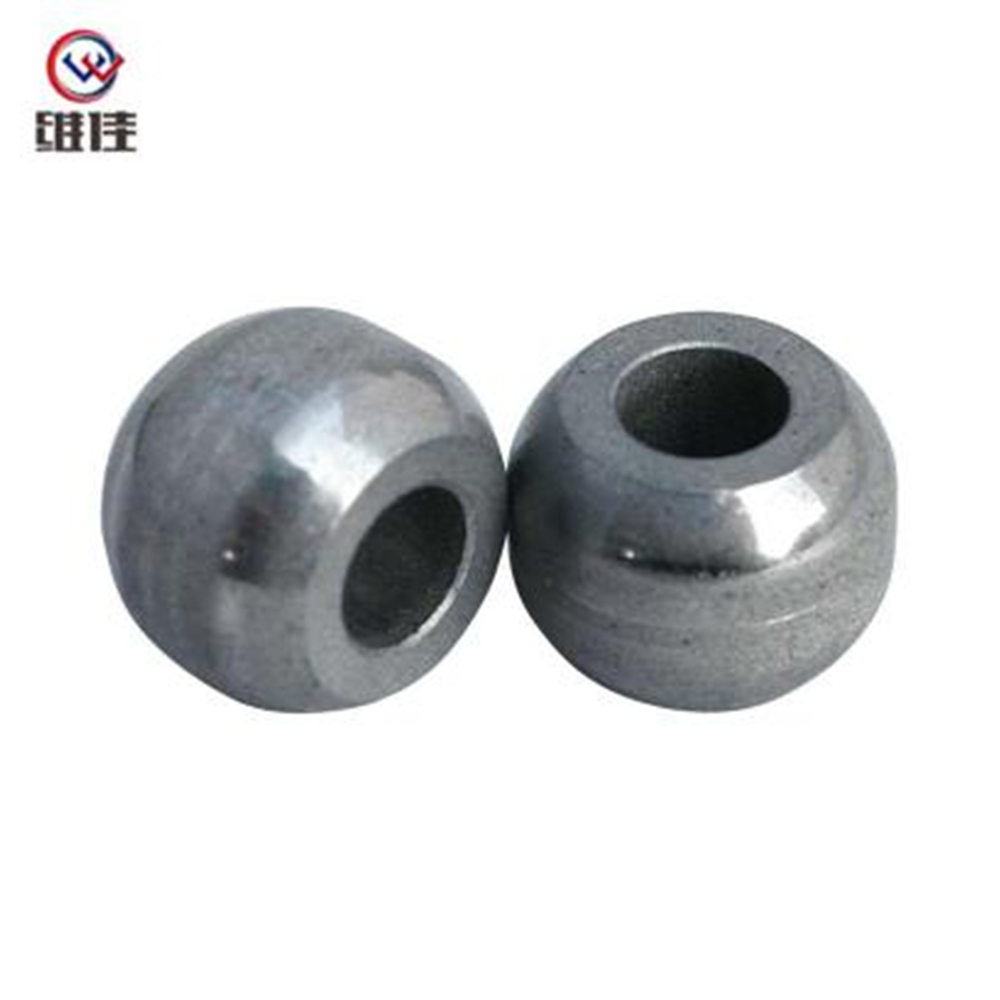
Product Description: High-precision powder metallurgy part (S14*7*10) made of iron material from Jiande Wefine, customized PM components with strict tolerance control.
See Details -
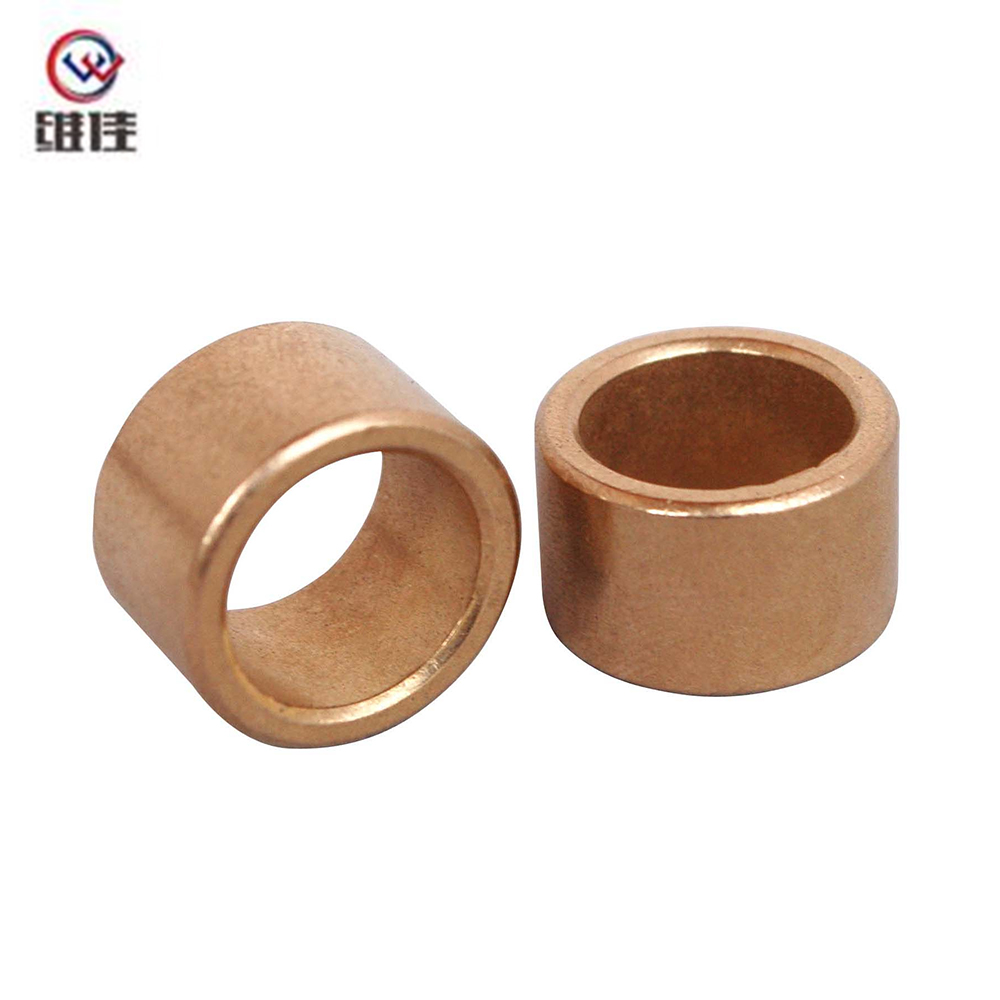
This copper-based powder metallurgy bushing is manufactured through an integrated process of compaction, sintering, sizing, and oil impregnation. It features excellent wear resistance and self-lubrica...
See Details -
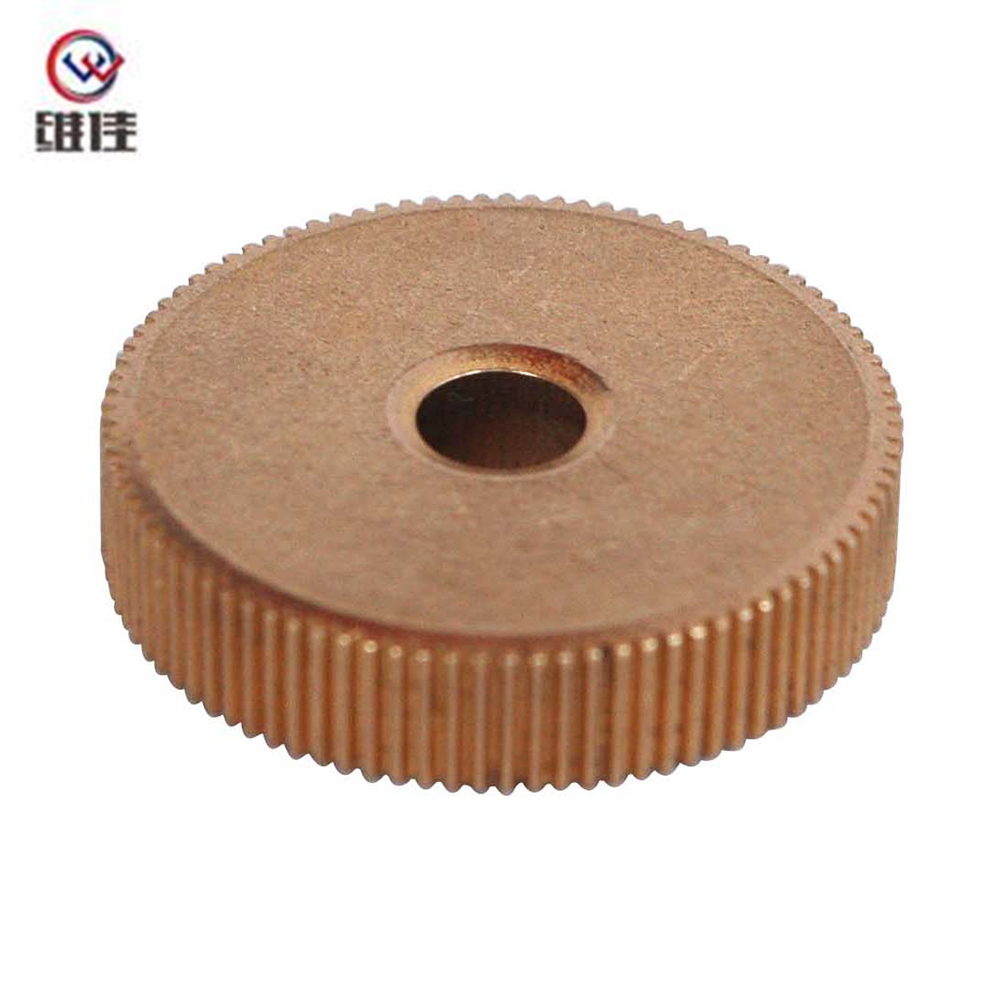
This 4×11.5×5.2mm powder metallurgy gear is manufactured through a precise press-sinter-through hole-oil impregnation process, with strict control of press density (6.7–6.8g/cm³) and sintering tempera...
See Details
Copyright © Jiande Welfine Technology Co., Ltd. All Rights Reserved. Custom Self-lubricating Sintered Bushing Manufacturers
