E-mail us: [email protected]
Tel: +86-15239857375
 English
 中文简体
中文简体

 Home / Author / Luo Qian — Product Sales Supervisor / Oil-Impregnated Sintered Gear for High-Reliability Small Appliances and Precision Machinery
 Oil-Impregnated Sintered Gear for High-Reliability Small Appliances and Precision Machinery
 2026.08.21
 Luo Qian — Product Sales Supervisor
Content
- 1 1. Product Overview and Dimensional Configuration
- 2 2. Why Powder Metallurgy Is Suitable for Small Gears
- 3 3. Controlled Manufacturing Process
- 4 4. Performance Advantages Over Injection-Molded Plastic Gears
- 5 5. Application Areas
- 6 6. Quality Assurance and Testing
- 7 7. Manufacturing Strengths of Jiande Welfine Technology Co., Ltd.
- 8 8. Customization Options
- 9 9. Engineering Selection Guidelines
- 10 10. Installation and Service Considerations
- 11 11. Frequently Asked Questions
- 11.1 FAQ 1: What does oil-impregnated mean?
- 11.2 FAQ 2: Is this gear suitable for coffee grinders?
- 11.3 FAQ 3: Can it replace a POM or PA66 gear directly?
- 11.4 FAQ 4: Is the gear safe for food-related equipment?
- 11.5 FAQ 5: How quiet is an oil-impregnated sintered gear?
- 11.6 FAQ 6: What oil viscosity is available?
- 11.7 FAQ 7: How is oil content measured?
- 11.8 FAQ 8: Can the gear be heat-treated?
- 11.9 FAQ 9: What information is needed for a quotation?
- 11.10 FAQ 10: Does the manufacturer support OEM and ODM projects?
- 12 12. Conclusion
- 13 References
- 14 Product: Powder Metallurgy Oil-Impregnated Gear (4×11.5×5.2mm)
Small gears play a decisive role in the performance, service life, noise level, and safety of many compact machines. Although a gear may measure only a few millimeters, it must transmit torque accurately, maintain tooth geometry over thousands of operating cycles, resist heat and wear, and remain properly lubricated in a confined assembly. These requirements become especially demanding in coffee grinders, food processors, household appliances, office equipment, automotive actuators, and automated mechanisms.
The 4 × 11.5 × 5.2 mm powder metallurgy oil-impregnated gear is designed for applications that require compact dimensions, reliable motion transmission, and low-maintenance operation. Manufactured through a controlled press-sinter-machining-oil-impregnation process, the gear combines the dimensional repeatability of powder metallurgy with the strength, thermal stability, and wear resistance of a sintered metal structure. Its self-lubricating design allows lubricating oil to be stored within the interconnected pores of the metal matrix and released gradually during operation.
Produced by Jiande Welfine Technology Co., Ltd., this small precision gear benefits from more than two decades of experience in powder metallurgy, precision forming, sintered components, and customized OEM/ODM manufacturing. The company operates a modern production base with high-efficiency presses, high-temperature sintering furnaces, precision forming equipment, machining capabilities, and inspection systems. Its ISO 9001:2015 and IATF 16949:2016 quality management certifications support a disciplined manufacturing system for repeatable production and international supply.
This article explains the product structure, manufacturing process, performance advantages, application suitability, quality controls, customization options, and differences between oil-impregnated sintered gears and injection-molded plastic gears. It also presents practical selection guidance for engineers and purchasing teams evaluating compact gears for small appliances and industrial mechanisms.
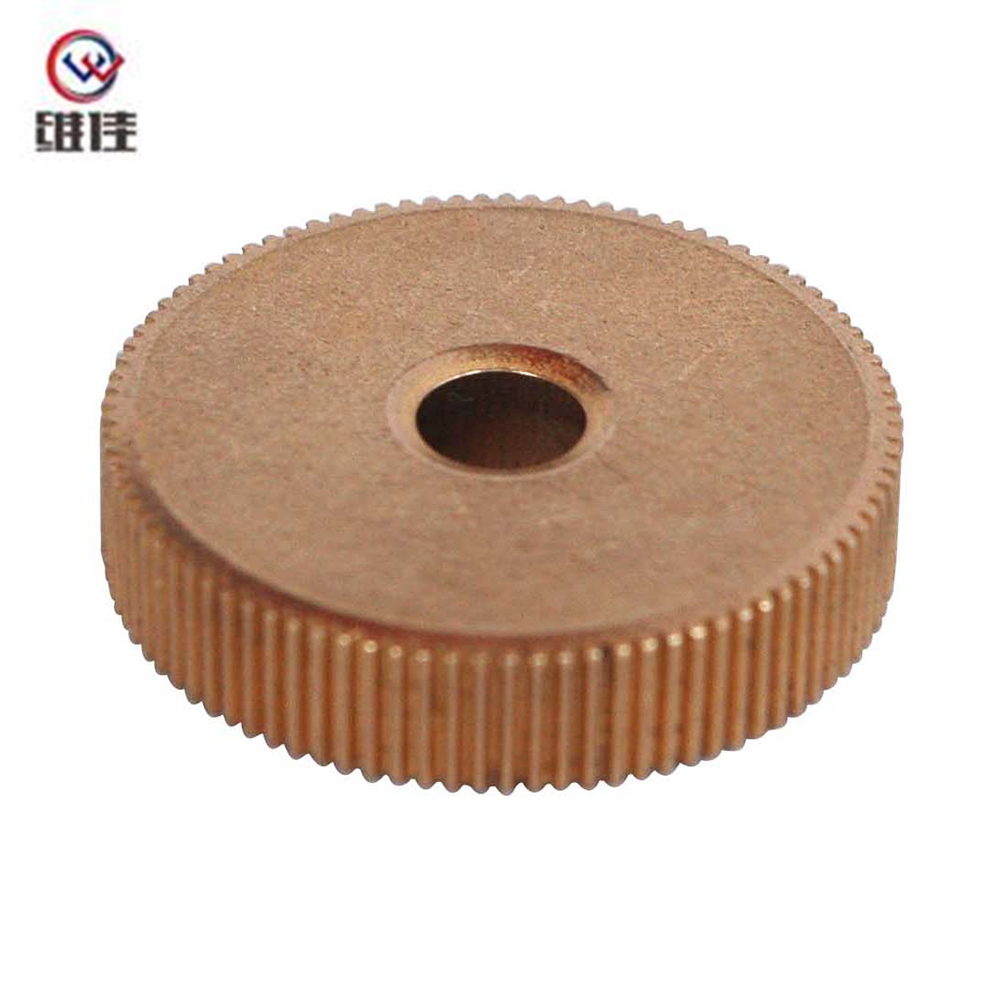
Powder Metallurgy Oil-Impregnated Gear (4×11.5×5.2mm)
1. Product Overview and Dimensional Configuration
The product is a compact powder metallurgy gear with nominal dimensions of 4 × 11.5 × 5.2 mm. These dimensions are suitable for assemblies where available space is limited but the gear must still provide stable torque transmission and accurate alignment. The through-hole configuration supports mounting on a shaft, pin, or spindle, while the compact outside profile allows integration into miniature gear trains.
In a small appliance, the gear may connect a motor to a grinder mechanism, cutter assembly, pump component, actuator, reduction stage, or positioning mechanism. The gear can also operate as part of a multi-stage transmission in an office device, precision instrument, or automated machine. Because such mechanisms often have limited room for maintenance, the oil-impregnated structure is valuable: it reduces the need for external grease application and helps maintain lubrication during repeated operation.
Dimensional accuracy is particularly important in a small gear. A minor error in bore size, tooth profile, concentricity, or gear thickness can produce excessive backlash, uneven contact, vibration, or premature wear. Powder metallurgy allows the basic gear shape to be formed close to the final geometry, reducing material waste and improving production consistency. Subsequent sizing, through-hole processing, and inspection further improve the functional accuracy required by the customer’s assembly.
The exact operating performance depends on tooth geometry, mating gear material, shaft fit, torque, rotational speed, temperature, duty cycle, and lubrication requirements. For this reason, the 4 × 11.5 × 5.2 mm specification should be treated as a dimensional starting point. Jiande Welfine Technology Co., Ltd. can adjust material composition, density, machining allowance, oil type, surface treatment, and other parameters according to technical drawings or samples.
2. Why Powder Metallurgy Is Suitable for Small Gears
Powder metallurgy is a manufacturing technology in which metal powders are blended, compacted in a die, sintered under controlled atmospheric conditions, and finished through sizing or machining when necessary. For gears and other small precision components, the process offers several important benefits.
First, powder metallurgy provides a high level of material utilization. Unlike machining from a solid bar, the component is formed close to its final shape. This reduces cutting waste and can lower production costs in medium- and high-volume manufacturing. Complex external profiles, hubs, shoulders, and holes can often be incorporated into the compacting die.
Second, the process creates a controllable porous structure. In an oil-impregnated gear, porosity is not simply a defect. Properly designed interconnected pores act as microscopic reservoirs for lubricating oil. During operation, frictional heat and capillary action help move oil toward the tooth surfaces and bearing interfaces. When the gear cools or stops, some of the oil can return to the pore network.
Third, the density of the compact can be adjusted to balance strength, wear resistance, dimensional stability, and oil retention. The specified press density range of approximately 6.7–6.8 g/cm³ represents a controlled production target for this gear design. The appropriate density depends on the selected powder system, required mechanical properties, porosity, and application environment.
Fourth, powder metallurgy supports repeatable production of miniature parts. With stable powder preparation, controlled die filling, accurate pressing, consistent sintering, and statistical inspection, large batches can be produced with limited dimensional variation. This is important for appliance manufacturers that need gears to mesh consistently across many finished products.
Finally, powder metallurgy supports material customization. Iron-based, iron-copper-carbon, iron-copper-nickel-molybdenum, stainless steel, bronze, and other powder systems can be selected for different combinations of load, corrosion resistance, wear resistance, magnetic behavior, and lubrication performance.
3. Controlled Manufacturing Process
3.1 Raw Material Selection and Powder Preparation
The manufacturing process begins with the selection of metallic powders and performance additives. For a general oil-impregnated gear, an iron-based system such as Fe-Cu-C may provide a practical balance of strength, dimensional stability, machinability, and oil retention. Copper can improve toughness and assist material bonding, while carbon contributes to hardness and strength after sintering.
For more demanding load conditions, an Fe-Cu-Ni-Mo formulation may be considered. Nickel and molybdenum can improve hardenability and mechanical performance, particularly when the gear will receive heat treatment or operate under higher torque. The final material selection must be based on the mating gear, shaft material, speed, temperature, shock loading, and required service life.
Powder blending must be carefully controlled. The mixture should provide uniform distribution of alloying elements and lubricant additives throughout the batch. Poor blending can lead to density variation, inconsistent shrinkage, localized weakness, and unpredictable gear performance. Production controls may include batch identification, moisture control, powder flow testing, apparent density testing, and blend-time verification.
3.2 Precision Pressing
After preparation, the powder blend is fed into a dedicated gear-forming die. The die determines the basic external tooth profile, bore arrangement, face geometry, and other design features. Accurate die construction is essential because the pressed compact reproduces the die cavity before sintering and finishing.
The pressing stage is controlled to achieve a target density of approximately 6.7–6.8 g/cm³ for the specified product. Pressing force, filling height, punch movement, powder flow, and ejection behavior all influence density distribution. A gear with uneven density may exhibit nonuniform shrinkage, local weakness, tooth distortion, or inconsistent wear performance.
Modern powder metallurgy presses can provide controlled movement of multiple punches. This allows different regions of the part to receive appropriate pressure and helps maintain uniform density across the gear body. For a small gear with a through-hole, the core rod and punch alignment must be precisely maintained to prevent eccentricity and bore displacement.
Pressing also requires attention to ejection. Excessive friction between the compact and die wall can cause cracks, edge chipping, or distortion. Proper powder lubrication, die surface condition, pressing speed, and ejection force reduce these risks. Operators and process engineers monitor the green compact for visual defects before it proceeds to sintering.
3.3 Sintering at a Controlled Temperature
The pressed compact is sintered in a controlled atmosphere furnace. The specified process uses a sintering temperature of approximately 690°C. The actual furnace profile includes heating, temperature holding, and controlled cooling stages. The atmosphere must be suitable for the selected material system and must limit undesirable oxidation or decarburization.
During sintering, particles bond together through diffusion. The compact develops greater mechanical strength, improved wear resistance, and a more stable material structure. Sintering also causes controlled dimensional change. The amount of change depends on powder composition, green density, furnace temperature, holding time, atmosphere, and part geometry.
Temperature uniformity is essential for a small gear. If one area receives substantially different thermal exposure from another, the resulting part may show variation in strength, hardness, dimensional shrinkage, or oil absorption. Furnace calibration, zone monitoring, thermocouple verification, and regular process audits help maintain consistent output.
The sintered structure must be suitable for later oil impregnation. Excessively high density may improve strength but reduce the volume and connectivity of pores. Excessively low density may increase oil capacity but reduce tooth strength and dimensional stability. The manufacturing objective is therefore not simply maximum density, but an optimized combination of density, open porosity, strength, and wear resistance.
3.4 Through-Hole Processing and Sizing
After sintering, the gear may undergo sizing, calibration, or precision machining. Through-hole processing is used to achieve the required bore diameter, roundness, alignment, and surface condition. A precise bore is necessary for correct shaft fit and reliable rotation.
Depending on the drawing, the bore may be formed during pressing and then calibrated, or it may receive additional machining. Sizing can also correct small dimensional changes caused by sintering. For high-accuracy applications, inspection may include bore gauge measurement, pin gauge verification, concentricity measurement, and functional assembly testing with a reference shaft.
Gear tooth dimensions may be checked for outside diameter, root diameter, tooth thickness, pitch, profile, runout, and face width. The inspection method depends on the gear module, tooth count, geometry, and customer requirements. Gear rolling inspection can be used to evaluate mesh behavior against a master gear and identify irregular tooth contact or excessive runout.
3.5 Oil Impregnation
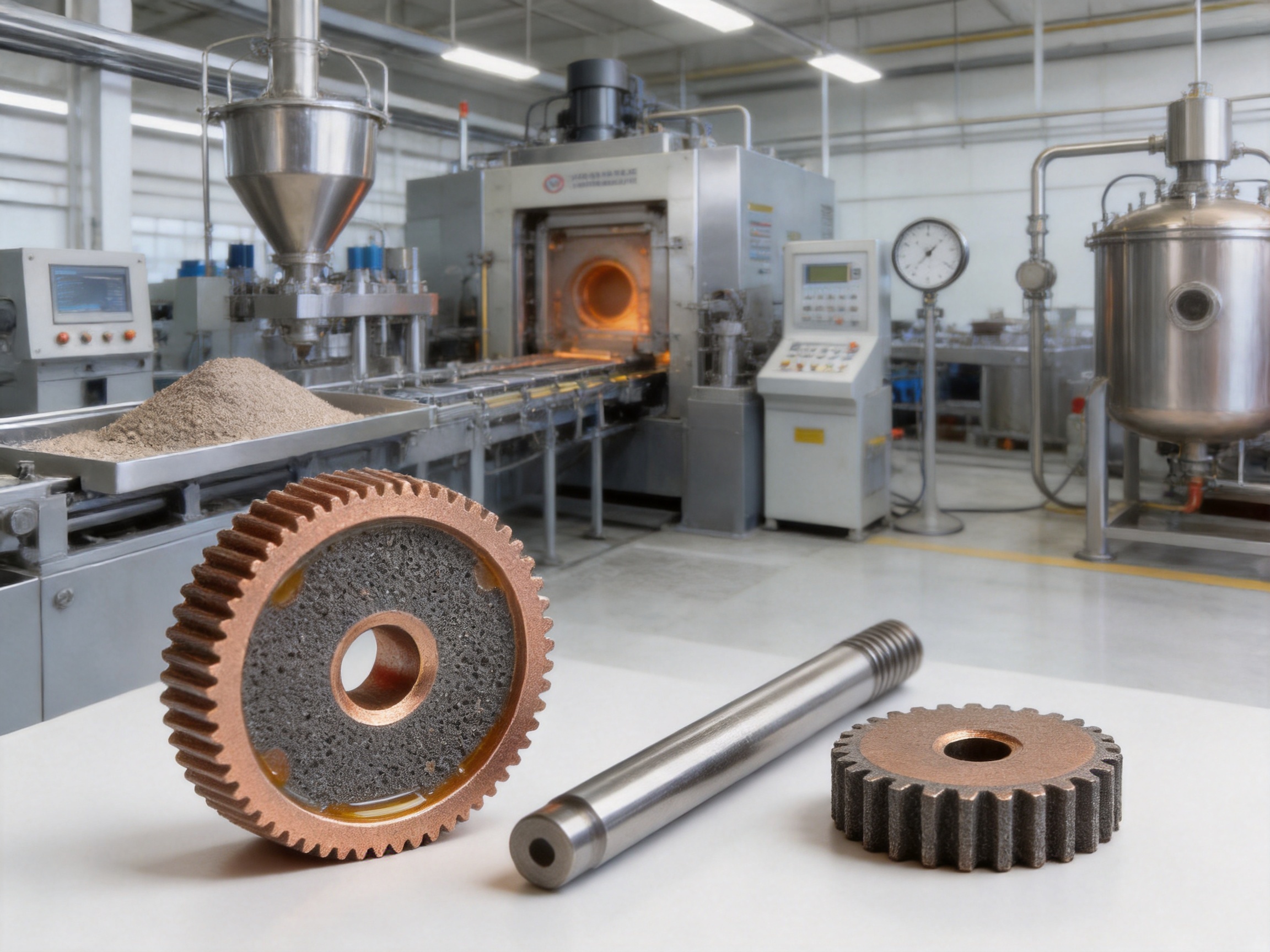
The final major process is oil impregnation. The porous sintered gear is placed in a suitable lubricating oil, and vacuum treatment is used to remove air from the pore network. When the vacuum is released, oil is drawn into the interconnected pores. This method is more effective than simple surface application because it stores lubricant inside the component.
The oil type is selected according to operating temperature, speed, load, material compatibility, environmental requirements, and potential contact with regulated areas. Industrial oils may be suitable for enclosed mechanisms, while food-grade or NSF H1-compatible lubricants may be requested for certain appliance designs. The gear itself should normally remain isolated from the food path unless the complete design has been evaluated for the intended contact conditions.
For a design with approximately 18–22% open porosity, vacuum impregnation can achieve a high level of pore filling. The exact oil content depends on the component volume, pore structure, evacuation conditions, oil viscosity, temperature, and draining procedure. Excess surface oil should be controlled so that the gear can be packed, handled, and assembled without contamination or leakage.
Oil content may be verified through extraction or mass-difference methods. Additional tests can evaluate oil release, rotational behavior, friction, temperature rise, and wear under representative conditions. Proper impregnation helps the gear operate with reduced external lubrication and supports long service in assemblies that are difficult to access after final product assembly.
4. Performance Advantages Over Injection-Molded Plastic Gears
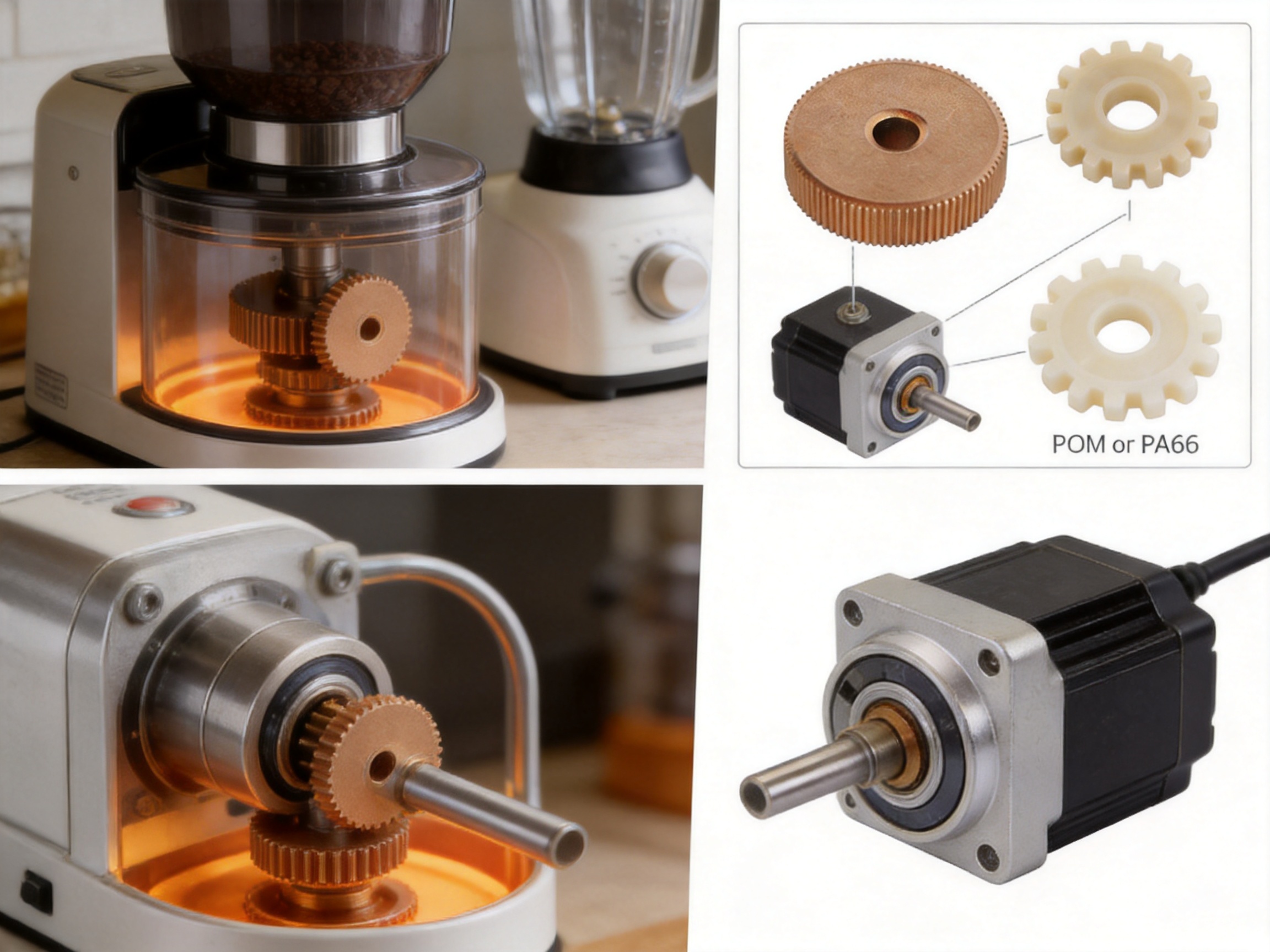
Injection-molded plastic gears made from POM, PA66, or similar materials remain useful in many low-load, low-temperature, and noise-sensitive applications. They are lightweight, economical in certain production volumes, and naturally capable of damping vibration. However, oil-impregnated sintered gears can provide important advantages when the application involves higher torque, elevated temperature, repeated shock, or long-term dimensional requirements.
4.1 Higher Load and Tooth Strength
Typical POM gears may have a tooth bending strength in the approximate range of 60–80 MPa, depending on grade, moisture condition, geometry, and test method. A properly designed iron-based sintered gear with a density around 6.6–6.9 g/cm³ may achieve a substantially higher bending strength, often in the approximate range of 250–350 MPa for suitable material systems and processing conditions.
This difference can be significant in a coffee grinder, food processor, or compact actuator. When the driven mechanism encounters resistance, the metal gear is less likely to experience immediate tooth deformation or fracture. It can therefore support a smaller gear design for a given torque requirement, or provide a greater safety margin within the same envelope.
Surface contact fatigue is another important consideration. Plastic teeth can deform under repeated contact pressure, particularly when exposed to heat. A sintered metal gear maintains its tooth shape more effectively, especially when the material is correctly selected and the gear is properly finished. Contact fatigue limits for sintered materials can be several times higher than those of common plastics under comparable conditions, although actual results depend on lubrication, tooth geometry, hardness, and load distribution.
4.2 Greater Resistance to Stall and Shock Loading
Small appliances can experience temporary overloads. A coffee grinder may encounter a hard foreign object or a compacted mass of beans. A food processor may be overloaded by dense ingredients. A gear in an actuator may stop suddenly at the end of travel. Such events create torque spikes that can strip or permanently deform plastic teeth.
A sintered metal gear generally provides higher short-duration overload tolerance. Under an appropriate design, it may withstand a temporary overload of approximately two to three times the rated torque without permanent tooth damage. This is not a universal guarantee and must be confirmed through application testing, but it illustrates the safety margin that metal can provide over an unreinforced polymer gear.
Where a torque-limiting clutch or electronic protection system is present, the gear material still matters. The gear must survive the time required for the protection system to respond. A stronger gear can reduce unexpected service failures and improve the overall reliability of the appliance.
4.3 Improved Heat Aging Resistance
Heat is a major source of plastic gear degradation. POM and PA66 gears may operate successfully at moderate temperatures, but continuous exposure near their upper temperature limits can accelerate creep, oxidation, loss of strength, and deformation. Depending on grade and design, common plastic gears may have continuous operating limits near 80–100°C.
Oil-impregnated sintered metal gears can generally operate at higher temperatures. With a suitable material and high-temperature oil, continuous operation around 120–150°C may be achievable. The correct limit must be established through testing because oil viscosity, oxidation stability, shaft material, sealing, and gear speed all influence performance.
In a coffee maker, motor-adjacent actuator, or food processor, the additional thermal margin can help prevent premature failure. After long-term exposure to elevated temperature, the metal matrix does not undergo polymer-chain degradation in the same way as plastic. The oil may gradually oxidize or migrate, but the gear substrate remains structurally stable.
For example, a plastic gear may lose a substantial portion of its original bending strength after prolonged exposure at 120°C, while a suitable sintered metal gear can retain most of its mechanical strength. Such comparisons should be confirmed using the exact material and test conditions, but the fundamental advantage of metal is clear: it is less vulnerable to thermal softening and polymer aging.
4.4 Lower Thermal Expansion
Dimensional stability is directly connected to gear noise, backlash, contact stress, and efficiency. POM and PA66 typically have coefficients of thermal expansion in the approximate range of 80–120 × 10⁻⁶/K, while iron-based sintered metals are commonly near 11–14 × 10⁻⁶/K.
The lower expansion rate of sintered metal helps maintain more consistent bore size, tooth geometry, and center-distance relationships as temperature changes. This is especially useful when the gear operates with steel shafts or metal housings. Stable clearances reduce the risk of excessive backlash at one temperature and binding at another.
4.5 Reduced Moisture Sensitivity
Moisture absorption can alter the dimensions and mechanical properties of plastic gears. PA66, for example, may absorb approximately 2–3% moisture by weight depending on environmental conditions, resulting in measurable swelling. This can affect bore clearance, tooth thickness, backlash, and mesh quality.
Sintered metal does not absorb moisture in the same manner. Although surface corrosion must be considered for some material systems, the gear’s dimensional behavior is much less affected by humidity or occasional water exposure. This characteristic is valuable in kitchen appliances, cleaning equipment, humid industrial environments, and products that experience fluctuating storage conditions.
4.6 Lower Long-Term Creep
Plastic gears subjected to constant load can experience creep over weeks or months. A spring-loaded idler, belt tensioner, or continuously loaded transmission may gradually change shape, causing increased backlash or loss of preload. Sintered metal gears exhibit far lower creep under comparable conditions.
In long-term applications, the reduction in creep helps preserve gear alignment and positioning accuracy. After many thermal cycles, a metal gear can maintain a more stable center distance and tooth profile than a plastic gear. This contributes to consistent operation, reduced vibration, and a lower probability of gradual performance loss.
4.7 Balanced Noise Considerations
Plastic gears have a natural noise advantage because polymers have a lower elastic modulus and can absorb more vibration. In some applications, a plastic gear may operate approximately 2–4 dB quieter than a comparable sintered metal gear, depending on geometry, speed, surface finish, and housing design.
However, sintered gears can be optimized for acceptable sound performance. Higher density, accurate sizing, controlled tooth runout, suitable oil impregnation, and careful gear alignment reduce irregular contact. Steam treatment or other surface treatments may also improve surface behavior in appropriate material systems.
The selection should therefore be based on the priority of the application. If minimum acoustic output is the primary requirement and the load is modest, plastic may be appropriate. If durability, heat resistance, torque capacity, and dimensional stability are more important, oil-impregnated sintered metal is often the stronger choice.
5. Application Areas
5.1 Coffee Grinders and Coffee Makers
Coffee grinders place repeated demands on compact gears. The transmission must start and stop frequently, deal with variable resistance from beans, and operate near a motor that generates heat. An oil-impregnated sintered gear can provide durable torque transmission and reduce the need for manual lubrication.
In coffee makers, gears may be used in valve mechanisms, brew-unit drives, actuator assemblies, and positioning systems. If the gear is located below a sealed deck or outside the food path, standard industrial oil may be acceptable. Where there is a possibility of incidental contact with a regulated food-contact zone, a food-grade lubricant and an appropriate containment design should be specified.
5.2 Food Processors and Juice Extractors
Food processors may experience sudden increases in torque when blades encounter dense or fibrous ingredients. The metal gear’s resistance to tooth stripping and deformation can improve reliability during these transient loads. Its lower moisture sensitivity also supports operation in appliances exposed to washing, humidity, or occasional splashing, provided the entire assembly is properly protected against corrosion.
5.3 Automotive Components
Compact powder metallurgy gears can be used in seat adjusters, window lifters, small actuators, instrument mechanisms, and other automotive components. These applications often require repeatable dimensions, resistance to vibration, and dependable operation across changing temperatures.
Automotive specifications may require additional validation, including noise testing, endurance testing, corrosion testing, dimensional capability studies, and traceability. The IATF 16949:2016 quality system at Jiande Welfine Technology Co., Ltd. provides a foundation for automotive-oriented process control, although each customer program still requires application-specific validation.
5.4 Industrial Automation
Automation equipment depends on repeatable positioning and continuous duty. Small gears may be used in compact reducers, feeders, textile machinery, sensor mechanisms, office devices, and robotic subassemblies. Self-lubrication can be beneficial where frequent maintenance would interrupt production or where the mechanism is enclosed.
5.5 Power Tools and Household Equipment
Power tools and household equipment may require compact gears that tolerate vibration, intermittent shock, and repeated start-stop cycles. Sintered metal provides a strong and dimensionally stable alternative to standard plastic gears, particularly when the motor or transmission generates substantial heat.
6. Quality Assurance and Testing
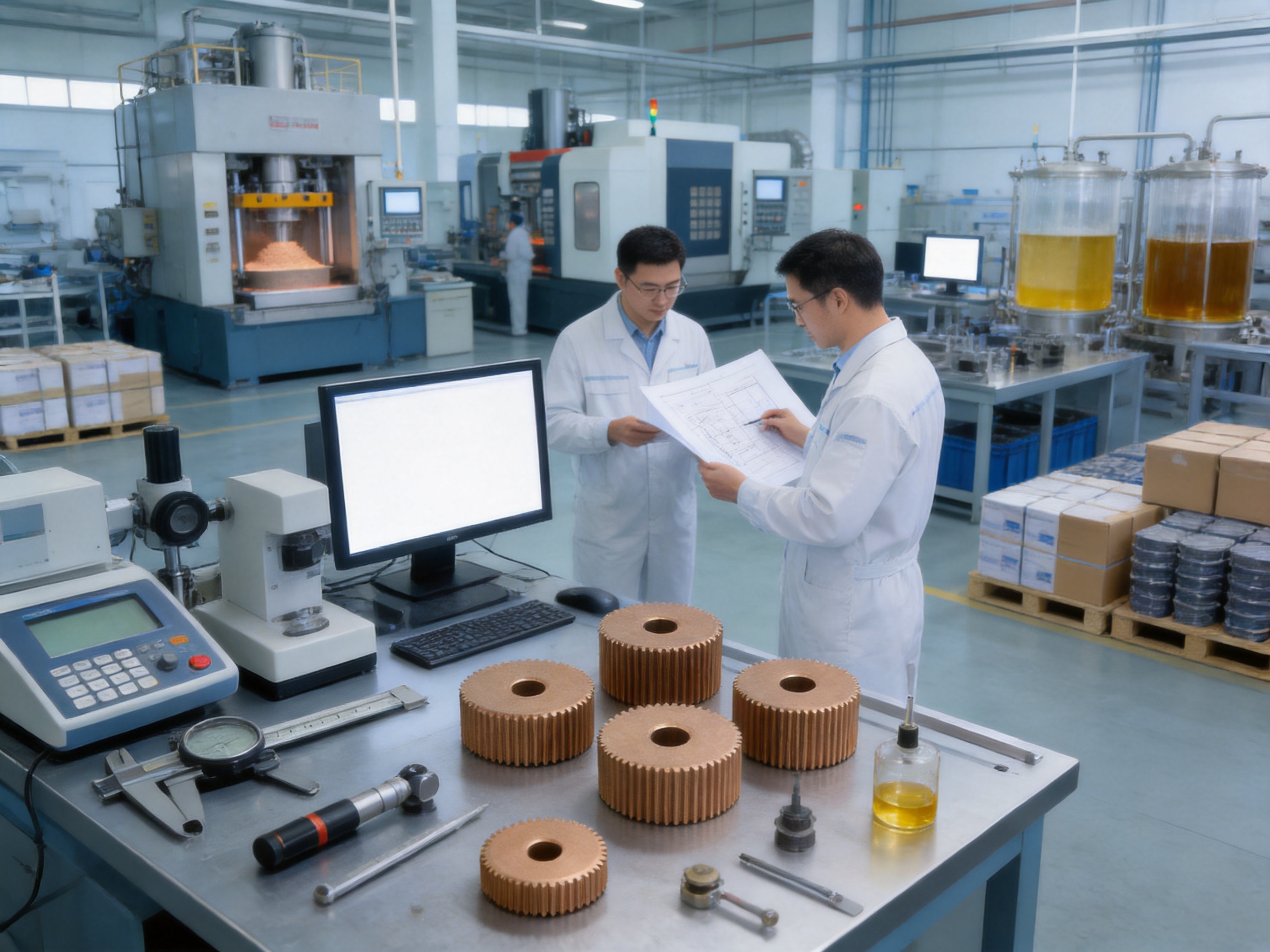
Reliable gear production requires more than a single dimensional inspection. The complete process should be controlled from powder receipt through shipment. A systematic quality program may include incoming material verification, blend traceability, press monitoring, sintering profile checks, dimensional inspection, oil content measurement, mechanical testing, and final packaging audits.
6.1 Density and Dimensional Inspection
Density is a key indicator of the pressed and sintered structure. Production teams can monitor density through mass and volume measurement, while sample sections may be evaluated for porosity and microstructure. The target range of 6.7–6.8 g/cm³ should be maintained according to the approved process specification.
Dimensional inspection may include outside diameter, bore diameter, gear thickness, tooth dimensions, runout, concentricity, and flatness. Gauges, coordinate measurement equipment, optical systems, gear testers, and functional master components may be selected according to the tolerance level.
6.2 Mechanical and Wear Testing
Radial crush strength, tooth bending strength, hardness, and wear performance can be evaluated using standardized or customer-specific methods. The purpose is to confirm that the component can withstand the expected assembly and operating loads.
Endurance tests should reproduce the actual application as closely as possible. Relevant variables include torque, speed, temperature, duty cycle, mating gear material, shaft fit, housing alignment, and contamination. Testing only at room temperature and nominal load may not reveal failure modes caused by heat or overload.
6.3 Oil Content and Impregnation Verification
Oil content can be evaluated by extraction or controlled weighing. The test confirms whether the component has absorbed the intended amount of lubricant and whether the impregnation process is stable between batches. A gear with inadequate oil filling may exhibit higher friction and faster wear, while excessive surface oil may create assembly or packaging issues.
Oil selection should also be verified for compatibility with seals, plastics, adhesives, coatings, and nearby electrical components. For high-temperature applications, oxidation stability and viscosity retention are important. For food-related equipment, the customer should identify whether NSF H1, FDA-compliant, or another regulatory lubricant is required.
6.4 Gear Roll and Functional Inspection
Gear rolling inspection evaluates the interaction between the manufactured gear and a master gear. It can reveal eccentricity, tooth profile variation, pitch errors, and irregular contact. Functional inspection is especially useful for miniature gears because a part may meet several individual dimensional requirements but still produce unacceptable mesh behavior when assembled.
Traceability is also important. Production batches should be identifiable by material blend, pressing date, furnace cycle, oil impregnation lot, inspection status, and shipment record. This supports efficient investigation and corrective action if a customer reports an issue in the field.
7. Manufacturing Strengths of Jiande Welfine Technology Co., Ltd.
Jiande Welfine Technology Co., Ltd. was established in 2001 and specializes in powder metallurgy sintering, self-lubricating components, bushings, gears, and precision metal parts. Its experience covers research and development, production, quality control, and international sales.
The company operates a production base of approximately 13,039 square meters and employs more than 150 skilled personnel. Its equipment includes high-efficiency powder presses, high-temperature sintering furnaces, precision forming machines, machining equipment, and testing systems. This combination supports both standard product manufacturing and customized component development.
A major strength is the ability to provide OEM and ODM solutions based on customer drawings, samples, or application requirements. Engineers can assist with material selection, density targets, tooth geometry, bore tolerances, oil type, surface treatment, and packaging. This is important because a gear cannot be selected by dimensions alone; it must be matched to the complete transmission system.
The company’s ISO 9001:2015 certification reflects a structured quality management approach, while IATF 16949:2016 certification supports automotive-oriented process discipline. These systems encourage documented procedures, inspection records, corrective actions, process monitoring, and continuous improvement.
Export experience is another practical advantage. The 4 × 11.5 × 5.2 mm oil-impregnated gear has been supplied to industrial customers in Bulgaria, demonstrating the company’s ability to manage international packaging, documentation, communication, and delivery requirements. Experience with European customers can help manufacturers address drawing interpretation, material declarations, quality records, and supply-chain coordination.
The company’s broader product portfolio includes powder metallurgy structural parts, oil-impregnated bearings and bushings, friction materials, magnetic materials, and steel-cast copper products. This range can be useful when a customer requires several powder metallurgy components for the same assembly or product family.
8. Customization Options
The standard 4 × 11.5 × 5.2 mm gear can serve as a reference design, but many projects require modifications. Customization may include outside diameter, gear thickness, tooth count, module, pressure angle, bore diameter, keyway, hub geometry, chamfer, surface finish, and tolerance class.
Material customization is also available. Fe-Cu-C may be suitable for balanced performance and general applications. Fe-Cu-Ni-Mo can be considered for higher mechanical loads or heat treatment. Stainless powder systems may be used where corrosion resistance is important, while bronze-based systems may be preferred for certain low-friction or bearing-related applications.
Oil customization includes viscosity, base oil type, temperature range, oil content, and compliance requirements. An application operating at approximately 70°C with intermittent duty may require a different lubricant from a mechanism operating continuously at 130°C. The oil must also be compatible with surrounding materials and environmental conditions.
Surface treatment options may include steam treatment, protective coatings, heat treatment, or other finishing methods. These processes must be evaluated against the required porosity and oil-retention behavior. A surface treatment that seals too much of the pore structure may reduce self-lubrication, while an open surface may need corrosion protection in humid environments.
Packaging can be tailored for export shipment. Small gears should be protected from impact, contamination, humidity, and mixing between part numbers. Appropriate trays, bags, separators, cartons, labels, and batch identification help preserve quality during transportation and simplify customer receiving inspection.
9. Engineering Selection Guidelines
Before approving an oil-impregnated sintered gear, engineers should define the complete operating envelope. Important parameters include transmitted torque, peak torque, rotational speed, duty cycle, operating temperature, ambient humidity, shaft diameter, mating gear material, center distance, expected life, noise limits, and available lubrication.
The gear ratio and tooth geometry should be checked carefully. A gear that is dimensionally correct may still be unsuitable if the pressure angle, module, tooth thickness, or center distance does not match the mating gear. Tooth contact should be evaluated under both nominal and misalignment conditions.
Shaft fit requires equal attention. An excessively tight fit can reduce bore clearance and increase friction, while an excessively loose fit can produce wobble, noise, and uneven tooth loading. Thermal expansion, assembly method, shaft surface finish, and expected oil migration should be included in the fit analysis.
Load calculations should distinguish between continuous torque and transient torque. Startup, stall, impact, reversal, and jam conditions may produce loads several times higher than normal operating torque. The selected material and density should be validated against the most severe realistic condition.
Temperature analysis should include heat generated by the motor, nearby heaters, friction, and the surrounding housing. The oil must remain within its effective viscosity range, and the component should not be evaluated only at room temperature if the final appliance becomes hot during use.
Noise and vibration requirements should be established early. If the application is highly noise-sensitive, a comparison test between plastic and sintered gears may be appropriate. Gear profile accuracy, shaft alignment, housing stiffness, oil condition, and motor vibration can influence sound as much as the gear material itself.
10. Installation and Service Considerations
The gear should be handled in a clean environment before assembly. Although oil impregnation provides internal lubrication, the teeth and bore should not be contaminated with abrasive particles, excessive assembly grease, or incompatible chemicals.
When a separate lubricant is applied during assembly, it should be compatible with the impregnated oil. Excessive grease can block pore openings or alter the intended friction behavior. The assembly drawing should specify whether the gear is to be installed dry, lightly lubricated, or used with a particular compatible lubricant.
The mating gear should have an appropriate surface finish and hardness. A rough or improperly hardened mating gear can accelerate wear, regardless of the sintered gear’s quality. Correct center distance and shaft alignment are essential because misalignment concentrates load on a small portion of the tooth face.
For long-life applications, designers should consider sealing and contamination control. Oil-impregnated gears are self-lubricating, but they are not immune to abrasive dust, aggressive chemicals, or continuous water exposure. A properly designed housing helps retain lubricant and prevents environmental contaminants from entering the mesh.
Service life depends on the complete system. The commonly cited expectation of approximately five to eight years in an intermittent coffee grinder application at around 70°C is an application-specific estimate, not a universal guarantee. Actual life should be confirmed through endurance testing using the final gear train and appliance conditions.
11. Frequently Asked Questions
FAQ 1: What does oil-impregnated mean?
Oil-impregnated means that lubricating oil has been introduced into the interconnected pores of a sintered metal component, usually through vacuum impregnation. During operation, the oil can migrate toward friction surfaces and provide ongoing lubrication. This reduces the need for frequent external oil application.
FAQ 2: Is this gear suitable for coffee grinders?
Yes. Its compact size, metal strength, heat resistance, and self-lubricating structure make it suitable for many coffee grinder transmissions. The final selection must consider grinder torque, speed, tooth geometry, stall conditions, temperature, and food-contact separation. Endurance testing with the actual grinder mechanism is recommended.
FAQ 3: Can it replace a POM or PA66 gear directly?
Not always. A metal gear may have different tooth friction, mass, noise characteristics, thermal expansion, and mating requirements. The module, pressure angle, bore fit, center distance, and shaft strength must be checked. In some cases, the gear train or housing may need minor design adjustments.
The gear substrate is a sintered metal component, but safety depends on the complete assembly and lubricant. If there is any possibility of contact with food or a food-contact surface, the customer should specify the required regulatory standard. Food-grade or NSF H1-compatible oil can be selected where appropriate, and the gear should be isolated from the food path whenever possible.
FAQ 5: How quiet is an oil-impregnated sintered gear?
A plastic gear generally provides better inherent vibration damping. However, a sintered gear can be optimized through accurate tooth forming, higher density, sizing, controlled runout, suitable oil, and correct alignment. Depending on the design, it may produce a slightly higher-pitched sound than POM while offering better load and heat performance.
FAQ 6: What oil viscosity is available?
Oil viscosity can be selected according to speed, temperature, load, and application requirements. The provided manufacturing information identifies ISO VG 32–68 as an available range for suitable designs. The correct grade should be confirmed by testing because high speed, low temperature, high load, and high temperature may require different lubricant characteristics.
FAQ 7: How is oil content measured?
Oil content can be measured through controlled weighing, extraction, or other validated laboratory procedures. ASTM B328 is one reference method associated with determining oil content in porous metal components. The acceptance range should be agreed upon with the customer according to the gear’s operating conditions.
FAQ 8: Can the gear be heat-treated?
Some powder metallurgy material systems can receive heat treatment to increase hardness and load capacity. Heat treatment may alter dimensions, porosity behavior, and oil retention, so it must be considered during the original design. A suitable material, process route, and post-treatment inspection plan should be established before production.
FAQ 9: What information is needed for a quotation?
Useful information includes a two-dimensional drawing or sample, tooth count, module, pressure angle, bore details, material preference, tolerance requirements, torque, speed, operating temperature, duty cycle, lubricant requirements, annual quantity, inspection standards, and packaging expectations. Application photographs or assembly drawings can also help engineers evaluate fit and performance.
FAQ 10: Does the manufacturer support OEM and ODM projects?
Yes. Jiande Welfine Technology Co., Ltd. provides customized OEM and ODM powder metallurgy components based on customer drawings or samples. The company can support material selection, process development, tooling, pressing, sintering, machining, oil impregnation, inspection, and export packaging.
12. Conclusion
The 4 × 11.5 × 5.2 mm powder metallurgy oil-impregnated gear is a compact solution for mechanisms that require more than basic low-load plastic gearing can provide. Its sintered metal structure offers higher tooth strength, better resistance to shock loading, greater thermal stability, lower moisture sensitivity, and improved long-term dimensional consistency. Its internal oil reservoir supports self-lubricating operation and helps reduce maintenance in enclosed or difficult-to-access assemblies.
The product’s performance depends on disciplined manufacturing. Controlled powder blending, pressing at an appropriate density, sintering at approximately 690°C, precision through-hole processing, sizing, vacuum oil impregnation, and functional inspection work together to create a reliable component. Just as important, the gear must be correctly matched to its shaft, mating gear, load, speed, temperature, and duty cycle.
Jiande Welfine Technology Co., Ltd. combines powder metallurgy expertise, modern equipment, experienced personnel, international export capability, and ISO 9001:2015 and IATF 16949:2016 quality systems. Its ability to customize materials, dimensions, oil types, density, finishing, and packaging makes it a suitable manufacturing partner for small appliance producers, automotive suppliers, automation companies, and industrial equipment manufacturers.
For applications where torque capacity, heat aging resistance, dimensional stability, and reduced maintenance are more important than minimum weight or the lowest possible noise, an oil-impregnated sintered gear can provide a durable and cost-effective alternative to injection-molded plastic gearing.
References
1. Powder Metallurgy Parts Association, Powder Metallurgy Design and Materials Guidance.
2. ASTM B328, Standard Test Method for Oil Content, Apparent Porosity, and Density of Sintered Metal Structural Parts and Oil-Impregnated Bearings.
3. ISO 9001:2015, Quality Management Systems—Requirements.
4. IATF 16949:2016, Quality Management System Requirements for Automotive Production and Relevant Service Parts Organizations.
5. ASM Handbook, Volume 7, Powder Metal Technologies and Applications.
6. Dudley’s Handbook of Practical Gear Design and Manufacture.
7. Engineering Plastics Material Data for POM and PA66 Gear Applications.
8. Technical information supplied for the 4 × 11.5 × 5.2 mm oil-impregnated powder metallurgy gear.
Product: Powder Metallurgy Oil-Impregnated Gear (4×11.5×5.2mm)

Related products
-
-
This 4×11.5×5.2mm powder metallurgy gear is manufactured through a precise press-sinter-through hole-oil impregnation process, with strict control of press density (6.7–6.8g/cm³) and sintering tempera...
See Details -
Product Description: High-precision powder metallurgy part (S14*7*10) made of iron material from Jiande Wefine, customized PM components with strict tolerance control.
See Details -
Premium Material: Our flange bushing is crafted from Sint B50 oil-impregnated bronze, featuring an 18% oil content. The high-quality tin bronze material ensures exceptional hardness, wear resistance, ...
See Details
Copyright © Jiande Welfine Technology Co., Ltd. All Rights Reserved. Custom Self-lubricating Sintered Bushing Manufacturers
