E-mail us: [email protected]
Tel: +86-15239857375
 English
 中文简体
中文简体

 Home / Author / Luo Qian — Product Sales Supervisor / Custom Sintered Gears and Mechanical Structure Parts for High-Performance Applications
 Custom Sintered Gears and Mechanical Structure Parts for High-Performance Applications
 2026.08.15
 Luo Qian — Product Sales Supervisor
Content
- 1 Product Overview
- 2 Why Powder Metallurgy Is Suitable for Gears and Structural Components
- 3 Major Product Advantages
- 4 Material Options for Sintered Gears and Mechanical Parts
- 5 Advanced Manufacturing Process
- 6 Manufacturing Strengths of the Supplier
- 7 Quality Control and Inspection
- 8 Performance Compared with Alternative Manufacturing Methods
- 9 Applications
- 10 Design Considerations for Custom Sintered Parts
- 11 OEM and ODM Customization Process
- 12 Cost Efficiency and Supply Advantages
- 13 Environmental and Resource Benefits
- 14 How to Select a Reliable Sintered Parts Manufacturer
- 15 Maintenance and Application Recommendations
- 16 Future Development of Sintered Mechanical Components
- 17 Frequently Asked Questions
- 17.1 What are sintered gears?
- 17.2 Are sintered gears as strong as machined steel gears?
- 17.3 What materials are available?
- 17.4 Can the parts be heat treated?
- 17.5 Can sintered gears be customized according to drawings?
- 17.6 What industries use these components?
- 17.7 What is the difference between a sintered gear and an oil-impregnated bushing?
- 17.8 Can powder metallurgy reduce production costs?
- 17.9 How are gear dimensions controlled?
- 17.10 What information should a customer provide for a quotation?
- 17.11 Can the supplier provide samples before mass production?
- 17.12 Why is design review important?
- 18 Conclusion
- 19 References
- 20 Product: Sintered Gears & Other Mechanical Structure Parts
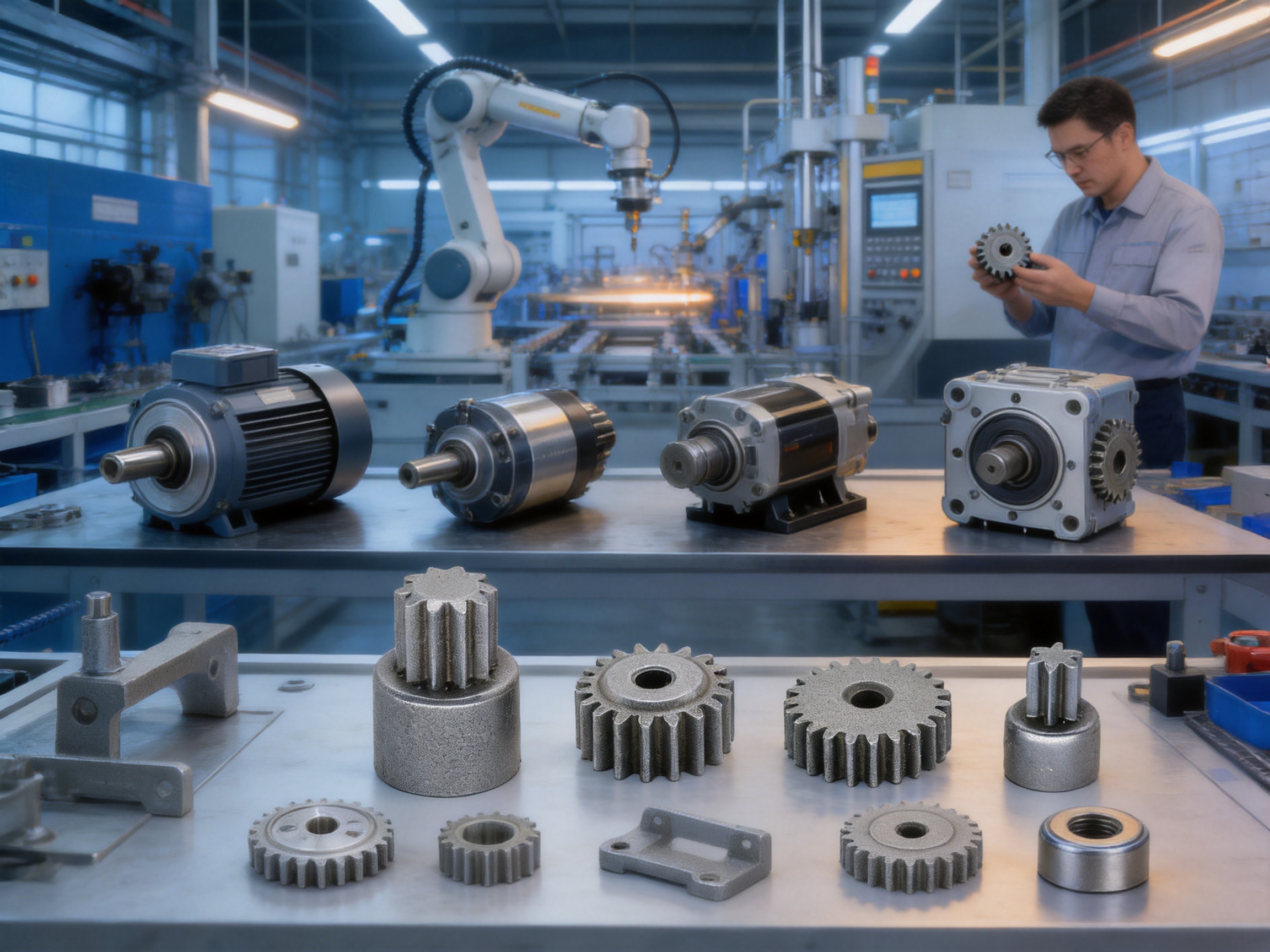
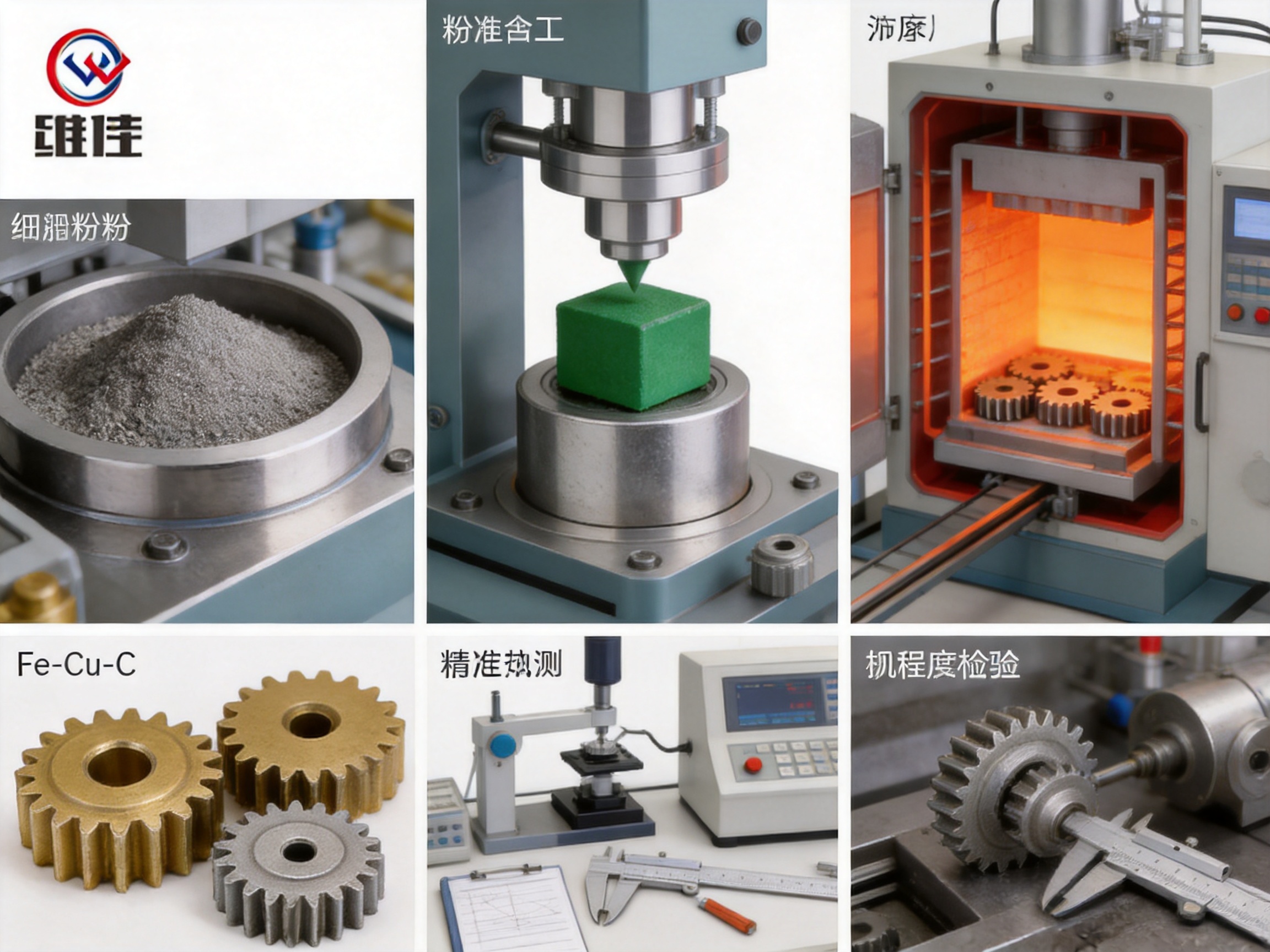
Sintered gears and other mechanical structure parts are essential components in modern transmission systems, electric motors, power tools, home appliances, industrial automation equipment, and precision machinery. Produced through advanced powder metallurgy, these parts combine efficient material utilization with reliable mechanical performance, accurate dimensions, and flexible design possibilities. Compared with many traditionally machined components, powder metallurgy parts can reduce material waste, simplify production steps, and provide stable quality for large-volume manufacturing.
Jiande Welfine Technology Co., Ltd. manufactures custom sintered gears and mechanical structure parts for global OEM and ODM customers. The company combines more than two decades of powder metallurgy experience with modern pressing, sintering, forming, heat treatment, machining, and inspection capabilities. Its products are developed according to customer drawings, samples, performance requirements, and application conditions.
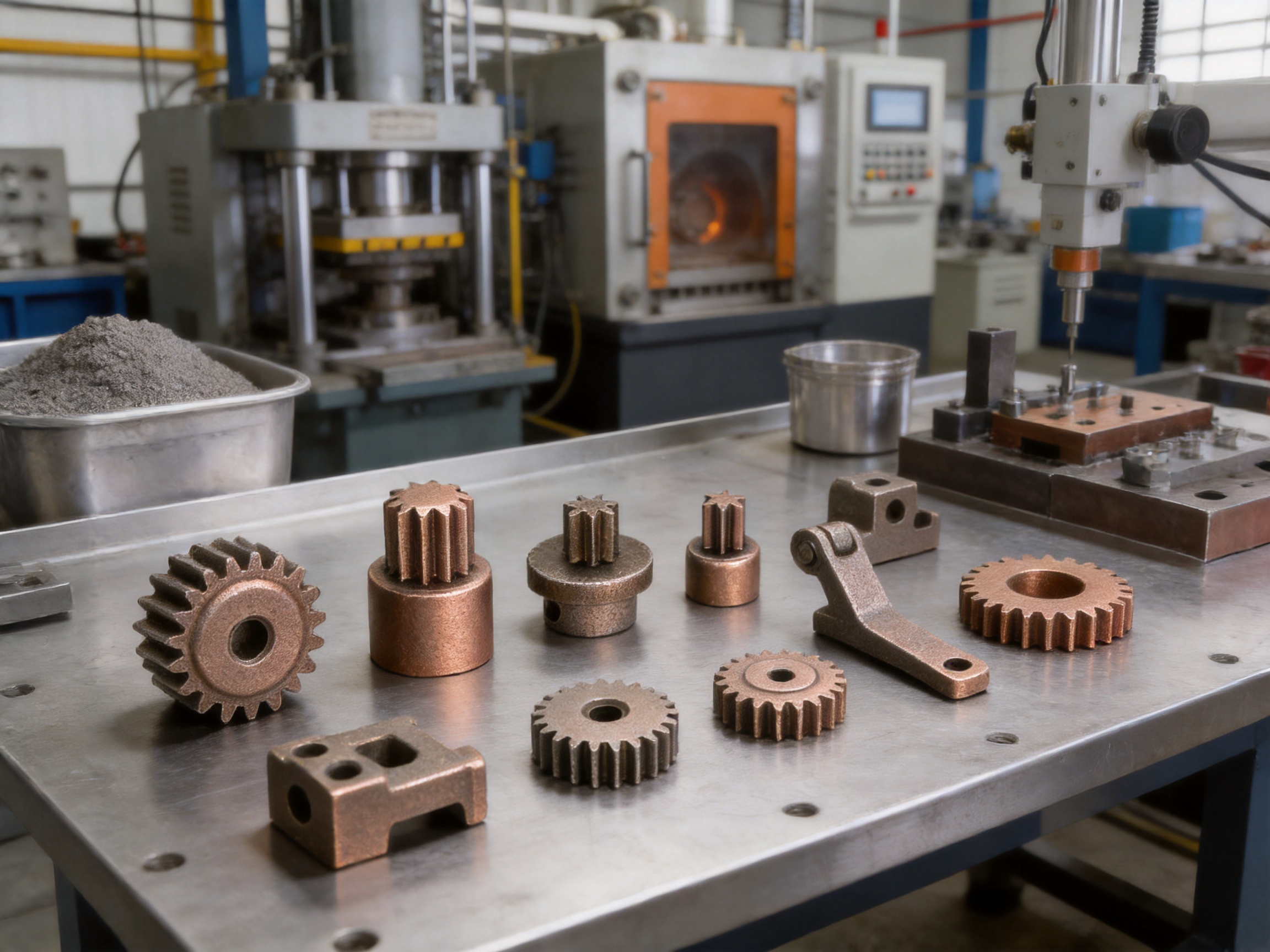
The product range includes sintered gears, structural brackets, drive components, hubs, cams, sprockets, rotors, collars, levers, and other precision parts made from iron-based, copper-based, brass-based, and alloy steel powder materials. Depending on the application, components can be supplied in the sintered state or with secondary operations such as sizing, machining, heat treatment, steam treatment, oil impregnation, surface finishing, and assembly.
Product Overview
Sintered gears and mechanical structure parts are manufactured by compacting carefully selected metal powders in a precision die and then heating the compacted shape in a controlled atmosphere. During sintering, the particles bond together and develop the required mechanical strength. The resulting component retains the geometry formed by the tooling while achieving consistent density and dimensional stability.
This process is particularly suitable for parts with repeated production requirements. Once the tooling has been designed and validated, large quantities of nearly identical components can be produced with dependable repeatability. This is valuable for automotive, electrical, consumer, and industrial customers that require stable performance across thousands or millions of operating cycles.
Unlike conventional machining, powder metallurgy forms much of the final geometry before cutting operations take place. This approach can reduce scrap, shorten production time, and lower the amount of machining required. It also allows engineers to design features such as internal profiles, stepped sections, recesses, small bosses, and integrated functional shapes that may be difficult or expensive to produce from solid bar stock.
Sintered gears can be designed for spur, helical, planetary, idler, timing, pump, and other transmission arrangements. Mechanical structure parts can be developed for load support, positioning, motion transfer, vibration control, or component retention. The final material and density are selected according to the required load, speed, noise level, wear resistance, corrosion environment, and production volume.
Why Powder Metallurgy Is Suitable for Gears and Structural Components
Powder metallurgy offers a practical balance between performance, cost, and design flexibility. A gear or structural part must meet more than one requirement. It may need to carry torque, resist tooth wear, maintain accurate geometry, operate quietly, tolerate impact, and remain stable during temperature changes. At the same time, the component must be economical to manufacture in the required quantity.
Traditional machining can produce high-precision gears, but it may involve extensive turning, milling, hobbing, broaching, drilling, and finishing. These operations remove a significant amount of material and may require several machines and multiple handling steps. Powder metallurgy forms a substantial portion of the part in one pressing operation, allowing the manufacturer to reduce waste and simplify the production route.
Compared with plastic gears, sintered metal gears normally offer higher temperature resistance, better dimensional stability, stronger load-bearing capability, and improved resistance to wear in demanding environments. Compared with many die-cast components, sintered parts can provide more controlled density, stronger local features, and better suitability for compact transmission mechanisms. Compared with fully machined steel gears, powder metallurgy gears can provide significant cost advantages in high-volume applications while maintaining dependable functional performance.
The process also allows material compositions to be adjusted for specific requirements. Iron-copper-carbon alloys can deliver a useful combination of strength, toughness, and machinability. Brass-based powders provide good corrosion resistance and favorable machining characteristics. Nickel-copper-molybdenum alloy steels can achieve substantially higher strength after heat treatment. These options give engineers a broad material platform for selecting the best solution rather than relying on a single standard grade.
Major Product Advantages
High Strength and Load Capacity
Sintered Fe–Cu and Fe–Cu–C alloys are widely used for mechanical structure parts and moderate-load gears. The iron base provides structural strength, while copper can improve toughness, dimensional behavior, and certain processing characteristics. Carbon contributes to hardness and strength when the formulation and sintering conditions are properly controlled.
These materials are suitable for components that experience repeated torque, compression, impact, or vibration. Applications may include gearboxes, drive mechanisms, actuator assemblies, appliance transmissions, and industrial mechanisms. For heavy-duty designs, material density, heat treatment, tooth geometry, and post-sintering processing are evaluated together to ensure that the final component satisfies the actual operating conditions.
The strength of a sintered component is affected by more than its nominal chemical composition. Density distribution, powder particle size, compaction pressure, lubrication, sintering atmosphere, cooling rate, and secondary treatment all influence performance. Welfine controls these factors as part of an integrated manufacturing process rather than treating material selection as an isolated step.
Excellent Wear Resistance
Gears and moving structural parts are exposed to sliding, rolling, contact stress, and repeated friction. Excessive wear can increase backlash, generate noise, reduce transmission efficiency, and eventually cause functional failure. Properly selected sintered materials can provide reliable wear resistance for many mechanical applications.
Wear performance depends on tooth pressure, rotational speed, lubrication, surface hardness, contact pattern, operating temperature, contamination, and the presence of shock loads. The company can recommend different material systems and finishing processes according to these conditions. Heat treatment can increase hardness and improve resistance to tooth surface damage, while oil impregnation may be considered for suitable porous components that require lubrication support.
Powder metallurgy can also create a controlled porous structure. In some applications, this porosity is an advantage because it can retain lubricating oil and help provide self-lubricating behavior. In gear applications, the required porosity must be balanced against strength and contact fatigue requirements. Component density and processing parameters are therefore selected according to the intended function rather than maximized automatically in every case.
Superior Dimensional Stability
Dimensional consistency is critical for gears and structural components. Small variations in tooth profile, bore size, parallelism, or overall thickness can influence assembly, backlash, noise, and service life. Powder metallurgy tooling produces the part geometry repeatedly, while sizing and calibration operations can further improve dimensional control.
Controlled sintering reduces variation caused by inconsistent heating or cooling. Proper powder preparation and die filling help maintain stable density throughout the component. When tighter tolerances are needed, secondary sizing, coining, grinding, turning, drilling, or other precision machining operations can be added to the production plan.
Stable dimensions also benefit automated assembly. Components that arrive with consistent critical dimensions can reduce adjustment time, minimize rejection rates, and support more reliable high-speed production lines. For global OEM customers, dimensional repeatability is especially important because parts may be assembled in different plants and used across multiple product platforms.
Efficient Material Utilization
Powder metallurgy uses metal powder as the primary raw material and forms it close to the required shape. The process can produce less scrap than machining from a large billet or bar. Reduced material waste supports cost control and contributes to more efficient use of metal resources.
Material utilization is particularly important for alloy steels and other higher-cost materials. By forming the component close to its final shape, manufacturers can reduce the amount of expensive material removed during machining. This advantage becomes more significant as production volume increases.
Lower material waste does not mean that quality controls are reduced. Powder characteristics, blending uniformity, storage conditions, and batch traceability remain essential. Consistent raw materials help ensure that the pressed compact and sintered part exhibit predictable properties throughout the production run.
Flexible Structural Design
Sintered mechanical structure parts can incorporate several functional features into one component. A part may include a central bore, external teeth, locating shoulders, key features, flanges, grooves, and stepped surfaces. Integrating these elements can reduce the number of separate components and simplify assembly.
Powder metallurgy is especially useful when designers need repeated axial features or a complex but pressable profile. Although the process has design limitations related to pressing direction, wall thickness, undercuts, and density distribution, early cooperation between the customer and manufacturer can resolve many challenges before tooling is produced.
Welfine supports design evaluation based on component drawings, samples, or functional descriptions. Engineers can review the pressing direction, draft angles, material flow, density requirements, critical tolerances, and secondary processing needs. This design-for-manufacturing approach helps customers avoid unnecessary tooling changes and improve the commercial viability of the final product.
Material Options for Sintered Gears and Mechanical Parts
| Material family | Main characteristics | Typical applications | Possible secondary treatment |
|---|---|---|---|
| Fe–Cu alloys | Good strength, toughness, and general mechanical performance | Gears, hubs, levers, drive parts, structural components | Sizing, machining, heat treatment, surface finishing |
| Fe–Cu–C alloys | Improved hardness and strength with suitable wear resistance | Transmission components, power tools, industrial mechanisms | Heat treatment, steam treatment, machining |
| Brass-based materials | Good machinability and corrosion resistance | Small mechanical parts, fittings, precision structural elements | Machining, polishing, surface finishing |
| Nickel–copper–molybdenum steels | High strength and strong heat-treatment potential | High-load gears and demanding structural components | Carburizing, hardening, tempering, precision machining |
| Oil-impregnated sintered materials | Controlled porosity and lubrication-retention capability | Bushings, selected rotating or sliding components | Oil impregnation, sizing, machining |
Material selection begins with the application rather than with a predetermined grade. Engineers review the expected torque, radial and axial loads, speed, shock conditions, temperature, lubrication, atmosphere, and required service life. They also consider production volume, target cost, tolerance requirements, and the possibility of heat treatment.
Fe–Cu materials are a practical choice for many structural components because they provide a useful balance of strength, processability, and cost. Fe–Cu–C compositions can be used when higher hardness or wear resistance is needed. Brass-based materials are suitable where machinability and corrosion resistance are important. Nickel–copper–molybdenum sintered steels are selected for applications that demand a higher strength level, particularly after heat treatment.
According to the provided performance data, nickel–copper–molybdenum sintered steel parts can achieve tensile strength of approximately 60–70 kgf/mm² in the sintered state. After heat treatment, tensile strength can reach approximately 108–118 kgf/mm², depending on the specific formulation and processing conditions. These figures may provide performance comparable to, or in some cases exceeding, conventional SNCM21, SNCM22, and SNCM23 carburized steels for suitable applications.
Actual performance must always be confirmed through application-specific testing. Gear geometry, density, heat treatment, surface finish, lubrication, and assembly conditions all influence the result. A responsible supplier evaluates the complete component design instead of promising a material property without considering how the part will be used.
Advanced Manufacturing Process
1. Engineering Review and Product Development
The manufacturing process begins with a review of the customer’s drawing, sample, three-dimensional model, or technical requirements. Engineers examine the part’s geometry, critical dimensions, loading conditions, functional surfaces, material requirements, and production quantity.
For a gear, the review may include tooth count, module, pressure angle, face width, bore geometry, tooth accuracy, backlash, rotation speed, torque, and lubrication. For a structural component, the review may focus on load-bearing surfaces, mounting features, dimensional relationships, vibration, impact, and assembly requirements.
At this stage, the manufacturer can advise whether the component is suitable for direct powder compaction, requires secondary machining, or would benefit from a modified geometry. This early technical communication is one of the most effective ways to control cost and improve reliability.
2. Powder Selection and Blending
Metal powders are selected according to the required strength, hardness, corrosion resistance, wear behavior, density, and machinability. Different elemental powders and pre-alloyed powders may be combined to obtain the desired composition.
Blending must be uniform so that each compact receives a consistent material mixture. Lubricants may be incorporated to improve powder flow and reduce friction between the powder and die walls. The blending method, time, environmental conditions, and batch identification are controlled to maintain repeatable behavior.
Powder handling is important because segregation, moisture, contamination, or inconsistent particle distribution can affect pressing and sintering. Proper storage and traceability help maintain stable production from the first batch to the last.
3. Precision Die Design
The die determines much of the component’s final geometry. Tooling is designed around the pressing direction, powder filling behavior, shrinkage during sintering, required density distribution, and any secondary machining allowance.
Gear tooling must maintain accurate tooth geometry and provide adequate die life. The design may include multiple punches or controlled movement to achieve the required profile. For stepped parts, the tooling must support the height differences without creating excessive density variation.
Tool design is also influenced by the selected material and production volume. A high-volume automotive component may justify a more complex multi-level die, while a lower-volume industrial part may use a simpler tool combined with machining. The best solution is the one that balances performance, tooling investment, cycle time, and total production cost.
4. Compaction
During compaction, the prepared powder is placed into the die cavity and compressed under controlled pressure. The powder particles rearrange and bond mechanically to form a green compact. The compact must have sufficient strength for handling while retaining the intended geometry.
Modern presses can control filling, pressing force, punch movement, and ejection. These capabilities are important for components with different cross-sectional heights or areas. Controlled pressing helps minimize density differences that could otherwise lead to distortion, cracking, or uneven mechanical performance.
Pressing parameters are developed according to the powder formulation, tool design, component size, and required density. The production team monitors the process to maintain stable weight, height, appearance, and green strength. Consistent compaction is a foundation for consistent sintering.
5. Controlled Sintering
The green compact is heated in a high-temperature sintering furnace under a controlled atmosphere. The heating cycle removes lubricants and allows the powder particles to bond through solid-state diffusion. The component develops its final structural integrity while retaining the shape established during compaction.
Temperature profile, atmosphere composition, belt speed, cooling conditions, and furnace loading can influence the final properties. A controlled atmosphere helps prevent undesirable oxidation and supports predictable carbon behavior. Stable furnace operation is therefore essential for achieving reliable strength, dimensional control, and surface quality.
Welfine operates high-temperature sintering equipment as part of its modern production base. Process monitoring and inspection help ensure that components from different production batches remain consistent. When necessary, the sintering cycle can be optimized for a specific alloy system or component geometry.
6. Sizing and Calibration
After sintering, some parts undergo sizing or calibration. The component is placed in a sizing die and pressed carefully to improve selected dimensions, roundness, flatness, or tooth geometry. This operation can help achieve tighter tolerances without removing a large amount of material.
Sizing is useful for parts that require consistent assembly dimensions. It can also reduce variation resulting from sintering shrinkage. The appropriate amount of sizing depends on the material, geometry, tolerance, and required production efficiency.
7. Heat Treatment
Heat treatment can significantly improve the performance of suitable sintered steels. Hardening, tempering, carburizing, and other treatments can increase surface hardness, tensile strength, fatigue resistance, and wear resistance.
For high-load gears, a hard surface combined with a tougher core can improve resistance to tooth wear and contact stress. The treatment must be selected carefully because excessive hardness or distortion may negatively affect gear accuracy. Post-treatment grinding or machining may be required for critical functional surfaces.
Nickel–copper–molybdenum sintered steel is particularly valuable when the application requires a higher strength level after treatment. The specific heat-treatment cycle depends on part size, density, carbon content, desired hardness profile, and final dimensional requirements.
8. Precision Machining and Finishing
Powder metallurgy can produce near-net-shape components, but some designs require secondary machining. Typical operations include turning, drilling, reaming, milling, grinding, chamfering, deburring, and thread processing.
Machining may be used to produce a very precise bore, improve a mounting face, create a functional groove, or meet a tight tolerance that is not economical to achieve through pressing alone. Combining near-net-shape forming with limited machining often provides a better total solution than manufacturing the entire part from solid material.
Surface treatments may include steam treatment, black oxide, plating, coating, polishing, or other finishing processes selected according to corrosion, appearance, friction, and environmental requirements. Each treatment is evaluated for compatibility with the base material and the intended application.
9. Oil Impregnation Where Applicable
Some porous sintered components can be impregnated with lubricating oil. The oil fills interconnected pores and can be released gradually during operation, supporting self-lubricating behavior. This technology is commonly used for sintered oil-impregnated bearings and bushings, but it may also be relevant to selected rotating or sliding structural components.
Oil impregnation is not automatically suitable for every gear. Gear teeth operating under high contact stress may require a denser structure, external lubrication, or heat-treated surface. The decision depends on the component’s function, load, speed, operating temperature, and lubrication system.
Manufacturing Strengths of the Supplier
Jiande Welfine Technology Co., Ltd. was established in 2001 and focuses on powder metallurgy sintering, precision machining, bushings, self-lubricating components, and related mechanical parts. More than 20 years of industry experience provide a strong foundation for handling both standard products and customized OEM projects.
The company operates a production base of approximately 13,039 square meters and employs more than 150 skilled personnel. Its equipment includes high-efficiency presses, high-temperature sintering furnaces, precision forming machines, and testing equipment. This combination supports integrated production and helps reduce dependence on multiple external suppliers.
Integrated manufacturing can provide several advantages. It improves communication between engineering, tooling, pressing, sintering, machining, and inspection teams. It also supports faster problem solving when a part requires adjustment. Instead of treating each process as an isolated activity, the company can evaluate the complete production chain.
The company provides OEM and ODM services based on customer drawings or samples. This is important for customers who need a component that fits an existing assembly but do not have a mature powder metallurgy design. Technical support may include material recommendation, tooling evaluation, tolerance review, process development, sample production, testing, and batch manufacturing.
Quality management is supported by ISO 9001:2015 and IATF 16949:2016 certifications. ISO 9001 provides a framework for controlled processes and continual improvement, while IATF 16949 is especially relevant to automotive quality expectations. Certification does not replace product testing, but it demonstrates that quality management is organized and documented.
Quality Control and Inspection
Quality control begins with incoming raw materials. Powder composition, particle characteristics, supplier documentation, and batch identity are reviewed. Proper material control helps prevent variations that could influence density, strength, or dimensional behavior.
During production, operators and quality personnel monitor powder blending, die filling, pressing force, compact weight, green dimensions, sintering conditions, and final appearance. Process controls can identify changes before they result in large quantities of nonconforming parts.
Final inspection may include dimensional measurement, weight verification, density testing, hardness testing, tensile testing, metallographic examination, tooth profile inspection, surface evaluation, and functional assembly checks. The specific inspection plan is developed according to the component’s critical characteristics and customer requirements.
For gears, important checks may include bore diameter, outside diameter, face width, tooth thickness, runout, concentricity, profile accuracy, and visual condition. For structural parts, inspection may focus on flatness, perpendicularity, hole location, wall thickness, load-bearing dimensions, and assembly fit.
Traceability is also valuable for long-term OEM programs. The ability to connect a finished component with its material batch, tooling, production date, inspection results, and treatment records supports root-cause analysis and continuous improvement.
Performance Compared with Alternative Manufacturing Methods
Compared with Machined Steel Parts
Fully machined steel parts are appropriate for prototypes, low-volume production, highly complex geometries, and applications requiring exceptionally precise finished surfaces. However, machining can be expensive for high-volume parts because it involves material removal, long cycle times, multiple operations, and tool wear.
Sintered parts can reduce raw material waste and machining requirements. They are especially competitive when the component has a repeatable geometry and is produced in medium or large quantities. If the design is suitable for pressing, the cost per part can be lower while maintaining stable quality.
The choice is not necessarily either machining or powder metallurgy. Many successful components use a hybrid approach. Powder metallurgy forms the main body and functional profile, while machining finishes only the surfaces requiring the tightest tolerances.
Compared with Plastic Components
Plastic gears are lightweight, quiet, and economical for low-load applications. They can be ideal for consumer products and mechanisms where temperature and torque are limited. However, plastic may experience creep, thermal expansion, moisture absorption, or accelerated wear under higher loads and temperatures.
Sintered metal gears provide greater rigidity and generally higher resistance to temperature, impact, and long-term deformation. They are suitable when the mechanism must transmit more torque or maintain more stable dimensions. The final decision depends on noise, weight, lubrication, operating temperature, and load requirements.
Compared with Die-Cast Components
Die casting is effective for producing complex metal shapes at high volume. However, certain thin sections, internal features, or wear surfaces may require additional machining and finishing. Powder metallurgy provides controlled material composition and can produce near-net-shape components with predictable density and functional profiles.
For small gears and compact mechanical parts, powder metallurgy may offer a favorable combination of dimensional repeatability, material efficiency, and production flexibility. Tooling and process selection should be based on annual volume, component size, alloy, performance requirements, and target investment.
Applications
Automotive Transmission Systems
Sintered gears and structural parts are used in automotive mechanisms where compact size, repeatable dimensions, and reliable performance are required. Potential applications include actuator systems, seat adjustment mechanisms, pump drives, locking systems, window mechanisms, and selected transmission-related assemblies.
Automotive components must often tolerate vibration, temperature changes, repeated cycling, and strict quality requirements. Iron-based and alloy steel powder materials can be selected according to load and fatigue conditions. Heat treatment and precision machining may be added for critical contact surfaces.
Electric Motors and Gearboxes
Electric motors and gearboxes frequently require small gears, rotors, hubs, spacers, and structural supports. Powder metallurgy is suitable for these applications because it supports high-volume production and repeatable dimensions.
Noise and vibration are important considerations in motor and gearbox design. Consistent tooth geometry, concentricity, balance, and surface quality help maintain smooth operation. Material selection and density distribution also influence acoustic behavior and durability.
Power Tools
Power tools operate under repeated impact, high speed, and variable load conditions. Their gear trains require components that can withstand torque and wear without excessive weight or manufacturing cost.
Sintered Fe–Cu–C materials and heat-treated alloy steels can be considered for different power tool mechanisms. The correct choice depends on torque, impact frequency, duty cycle, lubrication, and desired service life. The manufacturing process can be adapted for compact gear profiles and integrated structural features.
Home Appliances
Home appliances use gears and mechanical parts in mixers, washing machines, coffee equipment, food processors, actuators, fans, and other mechanisms. These products often require quiet operation, stable quality, moderate cost, and high-volume production.
Powder metallurgy can help appliance manufacturers reduce component cost while maintaining reliable function. Near-net-shape forming reduces machining, and carefully controlled materials can support the required combination of strength, noise performance, and corrosion resistance.
Industrial Automation Equipment
Industrial automation systems use gears, cams, couplings, brackets, guides, and positioning parts. Components may be required to operate continuously and maintain accurate movement over long production cycles.
Sintered mechanical structure parts can be customized for robotic mechanisms, conveyors, pick-and-place equipment, compact actuators, and material-handling systems. Where necessary, secondary machining and heat treatment can improve precision and durability.
Design Considerations for Custom Sintered Parts
Good product performance begins with a design that respects the capabilities of powder metallurgy. Designers should consider the pressing direction first. Features that can be formed along the pressing axis are generally more economical than deep undercuts or complex lateral features.
Wall thickness should be designed to support uniform filling and density. Very thin sections may be difficult to fill consistently, while abrupt changes in thickness can create density variation or distortion. Smooth transitions and suitable radii can improve both tool life and part reliability.
Draft angles may be needed to allow the compact to release from the die. Sharp internal corners should be avoided where they could concentrate stress or damage the tooling. Holes, grooves, steps, and projections should be reviewed for their effect on powder flow and punch movement.
Dimensional tolerances should be assigned according to function. Applying extremely tight tolerances to every feature can increase tooling and machining costs without improving assembly or performance. Critical dimensions should be identified early so that the manufacturing process can focus precision where it creates the most value.
For gears, designers should evaluate tooth form, module, face width, bore-tooth concentricity, allowable backlash, operating speed, lubrication, and load. A sintered gear may be highly effective for a moderate-load transmission, but a very high-load or high-speed gear may require increased density, heat treatment, grinding, or an alternative manufacturing route.
Designers should also communicate the complete operating environment. Dust, corrosion, humidity, temperature, shock, vibration, and chemical exposure can change the recommended material and surface treatment. A component designed without this information may perform well in laboratory conditions but fail prematurely in service.
OEM and ODM Customization Process
A typical custom project begins when the customer provides a drawing, sample, three-dimensional model, or application description. The technical team reviews the information and may request details about load, speed, operating temperature, lubrication, annual quantity, assembly method, and expected service life.
The next step is a feasibility assessment. Engineers determine whether the part can be pressed directly, whether secondary machining is required, and which materials may meet the performance target. Tooling design and production cost are estimated based on the component geometry and expected volume.
After design approval, tooling is manufactured and tested. Initial samples are compacted, sintered, and inspected. If required, heat treatment, machining, surface finishing, or oil impregnation is carried out. Sample results are compared with the drawing and functional requirements.
Any necessary adjustments are made before mass production. This may involve changing the powder formulation, modifying pressing conditions, refining the die, adjusting the sintering cycle, or adding a secondary operation. Proper sample validation reduces the risk of problems during later production.
For ongoing programs, production planning includes raw material preparation, tooling maintenance, batch scheduling, process inspection, final quality control, and packaging. The supplier can support repeat orders and product improvements as the customer’s application develops.
Cost Efficiency and Supply Advantages
The economic value of sintered gears comes from the complete manufacturing system rather than from material savings alone. Near-net-shape forming reduces machining time, material loss, and handling. High-volume pressing provides efficient cycle times, while repeatable tooling supports consistent output.
Tooling is an important part of the initial investment. The economic benefit becomes stronger as the production quantity increases. For this reason, powder metallurgy is often attractive for products with stable designs and medium-to-high annual demand.
Integrated production can also reduce supply-chain complexity. When pressing, sintering, finishing, and inspection are coordinated within one manufacturing organization, communication is more direct and production scheduling can be easier to control. Customers may benefit from fewer external suppliers, more consistent documentation, and faster technical feedback.
Cost efficiency must always be evaluated together with quality and service life. A cheaper component that causes early failure, excessive noise, or assembly problems is not a truly economical solution. The objective is to achieve the lowest total cost while meeting the required performance and reliability.
Environmental and Resource Benefits
Powder metallurgy can contribute to more efficient manufacturing because it forms components close to their final dimensions. Compared with extensive subtractive machining, the process can reduce metal chips and improve raw material utilization.
Lower waste may also reduce the energy and handling associated with producing, transporting, and recycling excess material. Longer component service life further improves resource efficiency by reducing the frequency of replacement.
Environmental performance depends on the complete production system, including powder production, furnace energy, lubricant management, heat treatment, packaging, and transportation. Responsible manufacturers should continue improving process efficiency while maintaining the quality required by demanding applications.
How to Select a Reliable Sintered Parts Manufacturer
Customers should evaluate a supplier’s engineering capability, production equipment, material knowledge, quality system, and experience with similar applications. A manufacturer that only offers catalog parts may not be able to support a complex OEM design requiring tooling and process development.
It is also important to review whether the supplier can provide the complete production route. If a component requires heat treatment, machining, oil impregnation, or surface finishing, these processes should be controlled and coordinated effectively.
Quality certifications are useful indicators of process organization, but customers should also request practical evidence such as inspection reports, sample approval procedures, material certificates, process capability information, and traceability records.
Communication is another important factor. A capable supplier should ask detailed questions about application conditions instead of selecting a material based only on the component name. Clear communication during design review often prevents expensive changes later.
Jiande Welfine Technology Co., Ltd. offers more than 20 years of experience in powder metallurgy and provides customized OEM and ODM support. Its production facilities, technical personnel, quality certifications, and experience with bushings and precision sintered parts provide a solid foundation for developing gears and mechanical structure components.
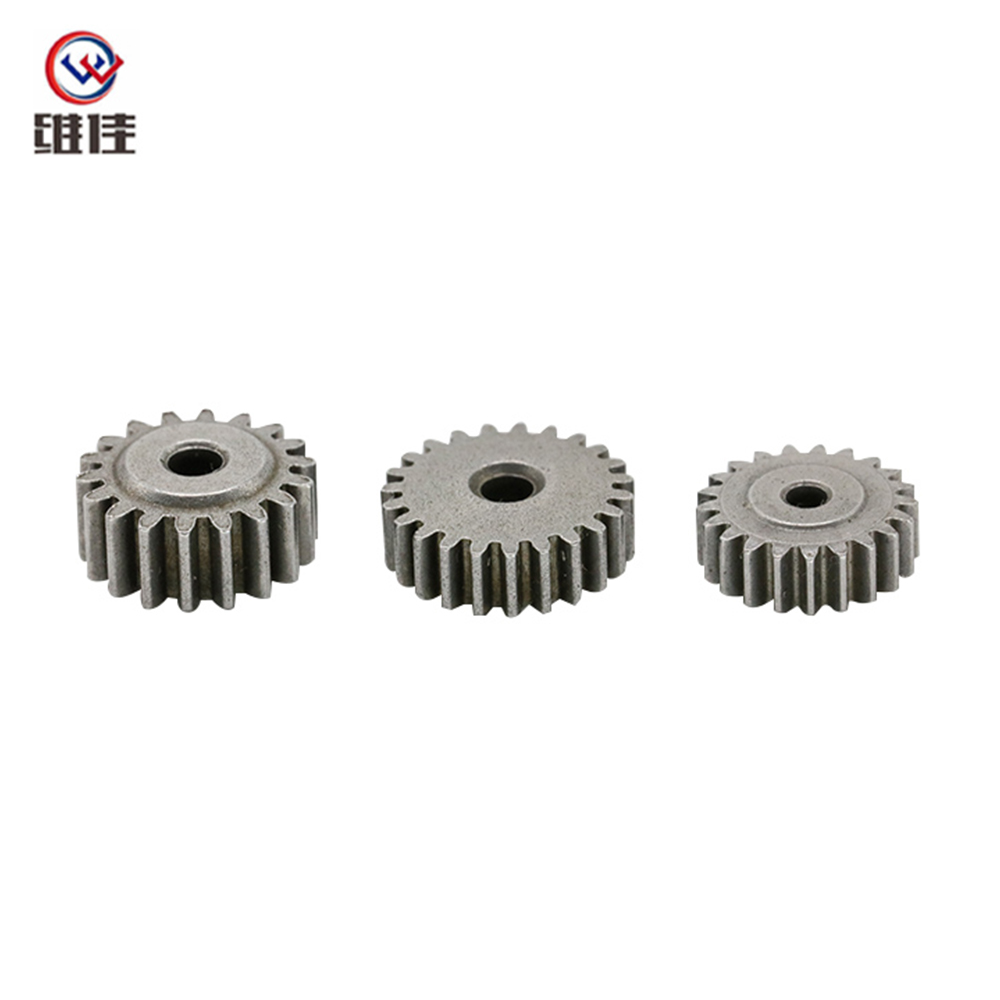
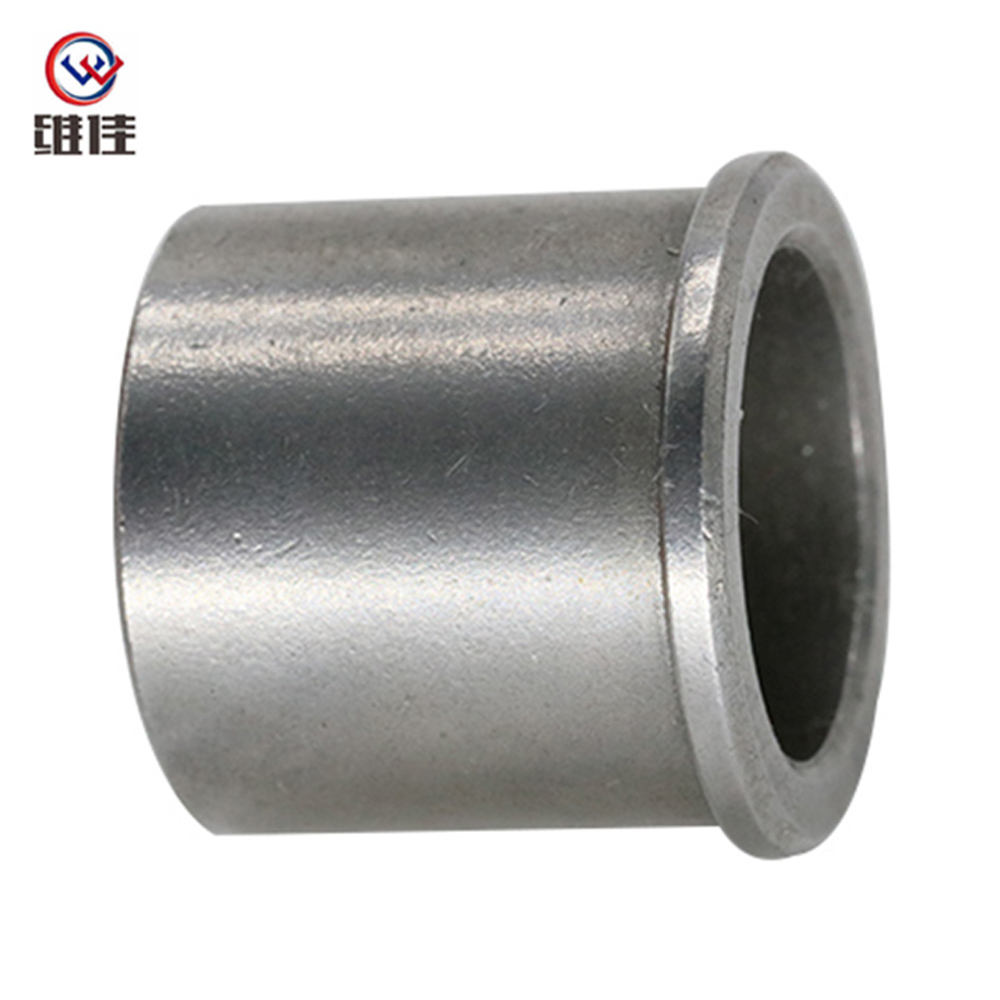
Sintered Gears & Other Mechanical Structure Parts
Maintenance and Application Recommendations
Correct installation is essential for achieving the intended life of a sintered gear or structural component. Bores, shafts, mounting surfaces, and mating gears should be clean and free from burrs or contamination. Misalignment can create uneven tooth contact and accelerate wear, even when the component itself meets all dimensional requirements.
Lubrication should follow the application design. External lubricant must be compatible with the material, heat treatment, seals, and surrounding components. For oil-impregnated parts, the selected oil and operating temperature should be reviewed carefully. Contamination by abrasive dust or corrosive chemicals should be minimized whenever possible.
Operating loads should remain within the design range. Sudden overloads, excessive speed, insufficient lubrication, and frequent impact may shorten service life. If the application changes after product approval, the supplier should be consulted to determine whether material, density, heat treatment, or geometry needs to be revised.
Regular inspection can identify developing problems before failure. Changes in noise, backlash, vibration, temperature, or surface condition may indicate alignment or lubrication issues. Monitoring these factors is particularly valuable in industrial automation and automotive systems where unexpected downtime is costly.
Future Development of Sintered Mechanical Components
Powder metallurgy continues to develop as customers seek lighter, smaller, stronger, and more economical components. Improvements in powder formulation, compaction technology, sintering control, heat treatment, and digital inspection are expanding the range of applications.
Higher-density materials can provide improved strength and fatigue resistance. More advanced pressing systems can create better density distribution in complex parts. Precision tooling and process simulation can reduce development time and improve first-sample accuracy.
Automation and data collection are also becoming more important. Monitoring press force, furnace conditions, dimensional trends, and inspection results can help manufacturers detect variation early. Data-supported production contributes to improved repeatability and more effective preventive maintenance.
For customers, these developments create opportunities to replace multi-piece assemblies with integrated powder metallurgy components. Combining several functions into one part can reduce assembly labor, reduce the number of potential failure points, and simplify inventory management.
However, successful development still depends on practical engineering judgment. No single material or process is suitable for every application. The best results come from cooperation among the product designer, powder metallurgy engineer, tooling specialist, quality team, and end user.
Frequently Asked Questions
What are sintered gears?
Sintered gears are transmission components produced from metal powder. The powder is compacted in a precision die and heated in a controlled furnace so that the particles bond and form a strong, functional gear. Additional sizing, machining, heat treatment, or finishing may be used when required.
Are sintered gears as strong as machined steel gears?
The answer depends on the material, density, geometry, heat treatment, and operating conditions. Sintered gears can provide excellent performance in many moderate- and high-volume applications. Heat-treated nickel–copper–molybdenum sintered steels can achieve high tensile strength and may compare favorably with certain carburized steels. Extremely high-load applications may require specialized high-density processing or fully machined components.
What materials are available?
Common options include Fe–Cu, Fe–Cu–C, brass-based materials, and nickel–copper–molybdenum sintered steels. The appropriate material depends on load, wear, corrosion, temperature, lubrication, machinability, and cost requirements.
Can the parts be heat treated?
Yes. Suitable sintered steels can undergo carburizing, hardening, tempering, or other heat treatments. Heat treatment can improve hardness, strength, fatigue performance, and wear resistance. The treatment must be selected with consideration for distortion, dimensional tolerance, and final surface requirements.
Can sintered gears be customized according to drawings?
Yes. Custom gears and mechanical structure parts can be developed according to customer drawings, samples, three-dimensional models, or technical specifications. The supplier can review the design, recommend suitable materials and processes, develop tooling, produce samples, and organize mass production.
What industries use these components?
Applications include automotive systems, electric motors, gearboxes, power tools, home appliances, industrial automation equipment, and precision machinery. The exact component design and material are selected according to the operating requirements of each industry.
What is the difference between a sintered gear and an oil-impregnated bushing?
A sintered gear transfers rotary motion and torque through its teeth. An oil-impregnated bushing supports a shaft and provides sliding motion with lubrication retained in its porous structure. Both may be produced through powder metallurgy, but they require different material density, geometry, lubrication, and performance considerations.
Can powder metallurgy reduce production costs?
Yes, especially for medium- and high-volume production. Near-net-shape forming can reduce material waste, machining time, labor, and the number of production steps. The total economic benefit depends on component geometry, annual quantity, tooling cost, tolerance, and secondary processing requirements.
How are gear dimensions controlled?
Dimensions are controlled through powder preparation, die design, compaction, sintering, sizing, machining, and final inspection. Critical features may be checked for diameter, runout, concentricity, tooth thickness, profile, face width, and assembly fit.
What information should a customer provide for a quotation?
Useful information includes a drawing or sample, material preference, annual quantity, required tolerances, surface treatment, heat treatment, operating load, speed, temperature, lubrication, application environment, and delivery requirements. More complete information allows the supplier to recommend a more accurate process and price.
Can the supplier provide samples before mass production?
Yes. A normal development program includes tooling preparation, sample production, dimensional inspection, material or performance testing, and customer approval before mass production. The exact procedure depends on the component and the customer’s quality requirements.
Why is design review important?
Design review confirms that the component can be pressed, released from the die, sintered without excessive distortion, and finished economically. It also identifies critical dimensions and helps prevent unnecessary tooling modifications after production has begun.
Conclusion
Sintered gears and mechanical structure parts provide a compelling solution for manufacturers seeking a combination of strength, wear resistance, dimensional stability, design flexibility, and cost efficiency. Powder metallurgy forms much of the component close to its final shape, reducing material waste and machining requirements while supporting high-volume repeatability.
Fe–Cu and Fe–Cu–C alloys provide reliable performance for many general mechanical applications. Brass-based materials offer good machinability and corrosion resistance. Nickel–copper–molybdenum sintered steels provide a higher-performance option for demanding components and can achieve substantially improved strength after heat treatment.
The final quality of a sintered component depends on the entire manufacturing chain. Powder selection, blending, die design, compaction, controlled sintering, sizing, heat treatment, machining, finishing, and inspection must work together. A supplier with integrated facilities and strong engineering experience can help customers select the right process instead of simply manufacturing a drawing without technical review.
With a modern production base, advanced pressing and sintering equipment, precision machining capabilities, experienced personnel, and ISO 9001:2015 and IATF 16949:2016 certifications, Jiande Welfine Technology Co., Ltd. is equipped to support customized OEM and ODM projects. Its experience in powder metallurgy bushings, self-lubricating components, and precision parts provides a strong technical foundation for the development of sintered gears and structural components.
For automotive, power tool, appliance, motor, gearbox, and automation manufacturers, a properly designed sintered component can improve production efficiency while delivering dependable service performance. The most effective projects begin with early cooperation between the customer and manufacturer, clear operating requirements, suitable material selection, and disciplined quality control from raw powder to finished part.
References
1. Powder Metallurgy Metal Handbook, principles of powder preparation, compaction, sintering, and secondary processing.
2. ASM Handbook, Volume 7: Powder Metal Technologies and Applications.
3. International Organization for Standardization, ISO 9001:2015, Quality Management Systems—Requirements.
4. International Automotive Task Force, IATF 16949:2016, Quality Management System Requirements for Automotive Production and Relevant Service Parts Organizations.
5. Standard engineering references on sintered structural materials, iron-based powder metallurgy alloys, and heat-treated alloy steels.
6. Technical data supplied for custom Fe–Cu, Fe–Cu–C, brass-based, and nickel–copper–molybdenum sintered components.
7. General design guidelines for powder metallurgy components, including density control, pressing direction, tooling design, dimensional tolerances, and secondary machining.
Product: Sintered Gears & Other Mechanical Structure Parts

Related products
-
-
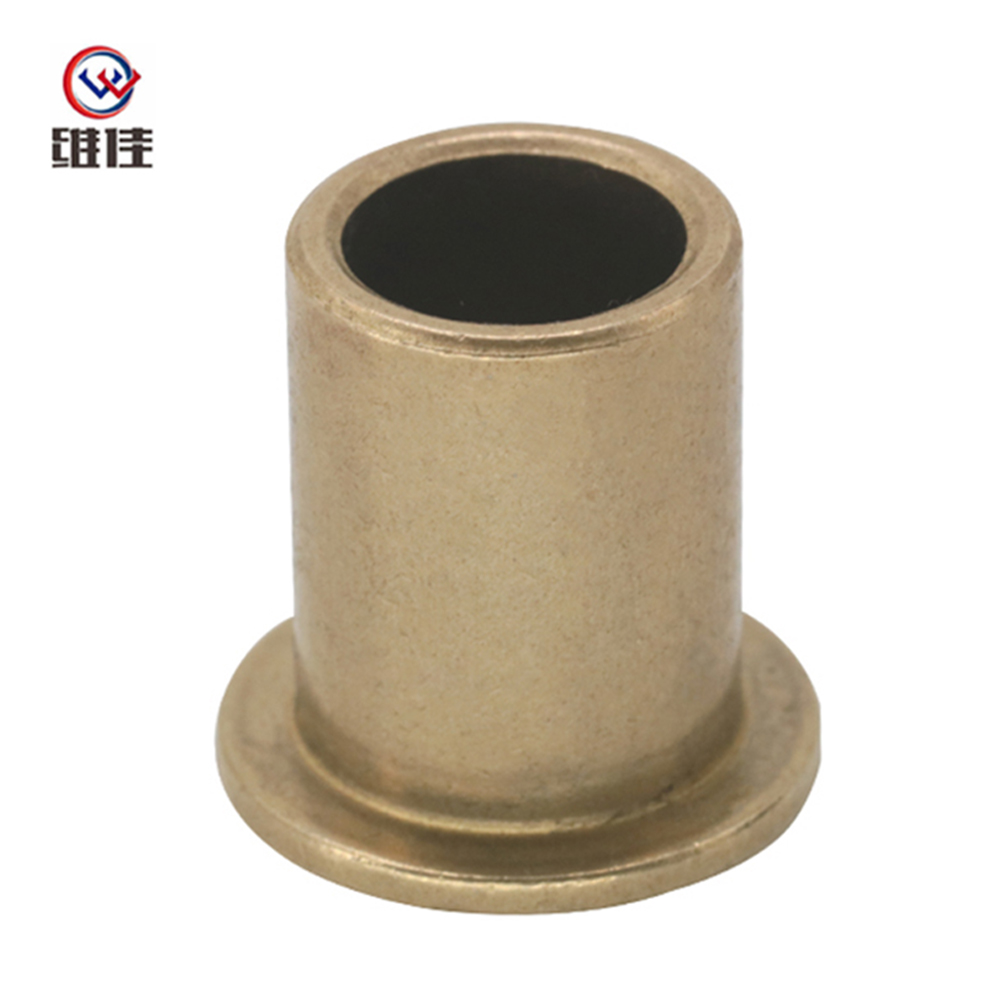
Our sintered bronze self-lubricating bearings are engineered for demanding industrial applications where traditional lubrication is impractical. Designed with advanced powder metallurgy technology, th...
See Details -
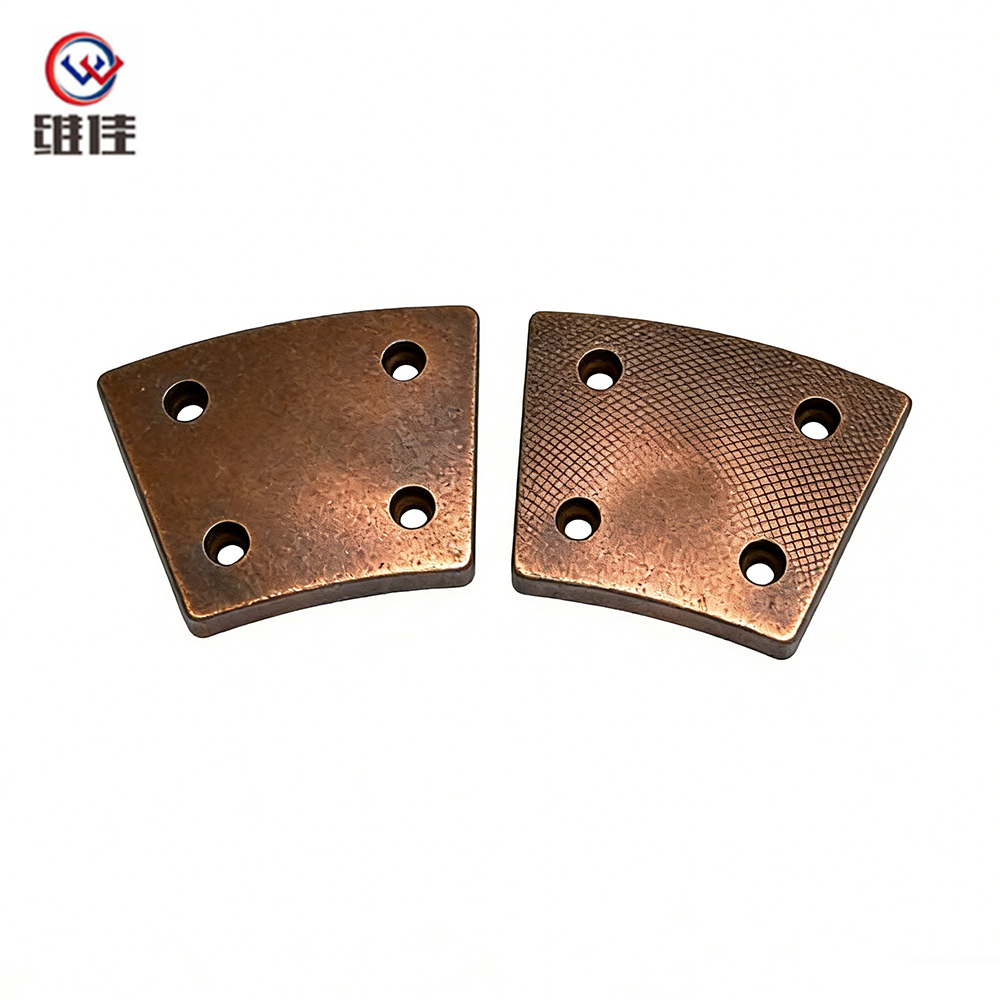
Description: 79.5×62×7.3mm copper-based brake pad with 4-hole design. Density 6.2g/cm³, weight 195g. Free from graphite segregation, cracks, and defects. Ideal for heavy-duty industrial braking system...
See Details
Copyright © Jiande Welfine Technology Co., Ltd. All Rights Reserved. Custom Self-lubricating Sintered Bushing Manufacturers
