E-mail us: [email protected]
Tel: +86-15239857375
 English
 中文简体
中文简体

 Home / Author / Luo Qian — Product Sales Supervisor / High-Performance SMC Stator Cores for Efficient Motor Applications
 High-Performance SMC Stator Cores for Efficient Motor Applications
 2026.08.07
 Luo Qian — Product Sales Supervisor
Content
- 1 1. Understanding the SMC Stator Core
- 2 2. Main Product Advantages
- 3 3. Product Technical Parameters
- 4 4. Advanced Powder Metallurgy Manufacturing Process
- 5 5. How Particle Size and Coating Affect Performance
- 6 6. Comparison with Conventional Laminated Silicon Steel
- 7 7. Application in Inverter Air Conditioner Motors
- 8 8. Commercial HVAC and Central Air Applications
- 9 9. Fresh Air, Air Purification, and Smart Appliance Motors
- 10 10. Noise Reduction, Thermal Stability, and Service Life
- 11 11. Manufacturing Capabilities and Company Strengths
- 12 12. Quality Control from Powder to Finished Core
- 13 13. Packaging, Storage, and Delivery
- 14 14. OEM and ODM Development Process
- 15 15. Frequently Asked Questions
- 15.1 What is an SMC stator core?
- 15.2 Why is an SMC core suitable for high-frequency motors?
- 15.3 How does an SMC core compare with a laminated silicon steel core?
- 15.4 What material is used for this stator core?
- 15.5 Can the tooth count and dimensions be customized?
- 15.6 What dimensions are specified for the reference model?
- 15.7 What magnetic performance is specified?
- 15.8 How does the manufacturer control product consistency?
- 15.9 Can the stator core be used in air conditioner motors?
- 15.10 What information should be supplied for a quotation?
- 16 16. Conclusion
- 17 References
- 18 Product: SMC Stator Core (SOMALOY 700HR-3P)
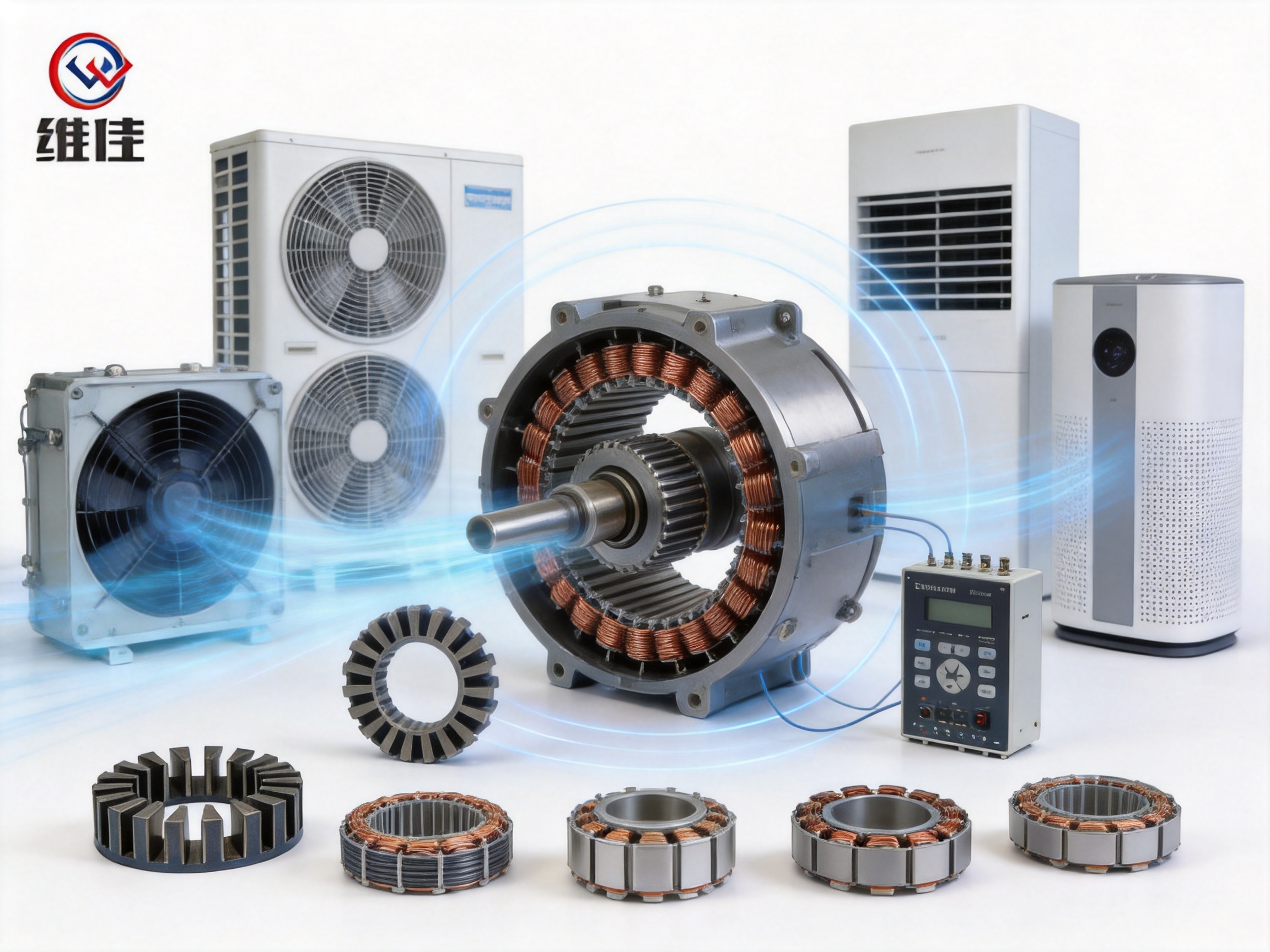
Soft Magnetic Composite (SMC) stator cores are increasingly important in the development of compact, efficient, and reliable electric motors. Unlike conventional laminated silicon steel cores, SMC components are produced from electrically insulated iron powder particles that can be compacted into three-dimensional magnetic structures. This manufacturing approach enables designers to create complex toothed geometries, reduce eddy current losses, and improve the utilization of magnetic flux in modern motor systems.
The SMC stator core described in this article is manufactured from SOMALOY 700HR-3P, a high-performance soft magnetic composite material. It is designed as a ring-shaped, toothed stator core for axial-flux and high-efficiency motor applications, particularly household inverter air conditioner motors, commercial HVAC fan motors, fresh air systems, air purification equipment, and other smart appliance drive systems.
Its combination of high magnetic performance, low high-frequency loss, light weight, dimensional precision, and reliable mechanical properties makes it a strong alternative to traditional laminated cores in applications where three-dimensional flux paths and compact motor design are important. Through powder metallurgy compaction, controlled thermal processing, insulation management, and precision post-processing, the core can be manufactured to demanding dimensional and performance requirements.
Jiande Welfine Technology Co., Ltd. supports the production of this type of precision magnetic component through more than two decades of powder metallurgy experience, a modern manufacturing base, advanced forming and testing equipment, and certified quality management systems. The company provides OEM and ODM services based on customer drawings, samples, or defined technical requirements.
1. Understanding the SMC Stator Core
A stator core provides the magnetic path and structural support around the windings of an electric motor. In a conventional motor, the stator is often manufactured from thin electrical steel laminations stacked and bonded together. Laminations reduce the circulation of eddy currents, but the layered construction may limit the available geometry and can require multiple cutting, stacking, welding, or bonding operations.
An SMC stator core uses a different principle. Iron-based magnetic particles are individually coated with an electrically insulating layer. The coated powder is mixed with carefully controlled additives, filled into a precision die, and compacted under high pressure. The result is a solid near-net-shape component in which the particles remain magnetically active while electrical insulation between particles restricts eddy current flow.
Because the material is compacted rather than assembled from separate sheets, the stator can include radial teeth, axial features, curved surfaces, slots, and other complex shapes. This geometric freedom is particularly valuable in axial-flux motors and other designs in which magnetic flux travels in multiple directions.
The product is configured as a ring-shaped toothed stator core with 18 teeth. Its nominal outer diameter is 100.0 millimeters, its inner diameter is 65.0 millimeters, and its nominal thickness is 10.0 millimeters. The design is suitable for motor winding and housing systems that require controlled tooth profiles, low runout, and accurate positioning during assembly.
The material grade, SOMALOY 700HR-3P, is selected for its balanced combination of permeability, resistivity, strength, and core-loss performance. This balance is important because a motor core must not only guide magnetic flux efficiently; it must also withstand pressing, handling, winding insertion, assembly loads, vibration, temperature changes, and long-term operation.
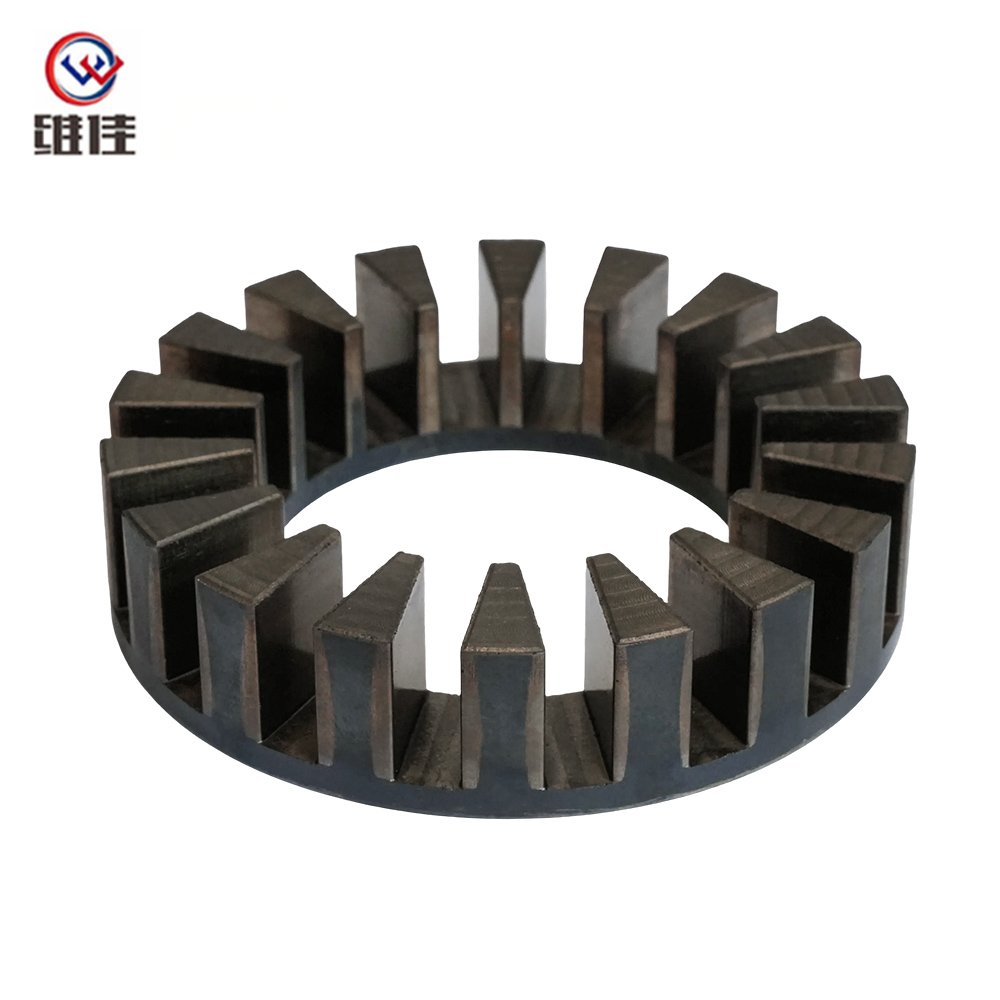
SMC Stator Core (SOMALOY 700HR-3P)
2. Main Product Advantages
2.1 Three-Dimensional Magnetic Circuit Design
One of the most important advantages of an SMC stator core is its ability to support three-dimensional magnetic circuit design. In a laminated core, the preferred magnetic path is generally aligned with the plane of the laminations. This can make it difficult to create efficient flux paths that move across different geometric directions.
SMC materials are magnetically isotropic, meaning that their magnetic behavior is more uniform in different directions than that of a conventional laminated stack. This allows engineers to consider axial, radial, and circumferential flux paths during motor design. The result can be a more compact magnetic circuit, improved space utilization, and greater flexibility in arranging the windings and teeth.
For axial-flux motors, the three-dimensional capability is especially valuable. The stator geometry may contain features that are difficult or expensive to manufacture from stacked laminations. Powder compaction can form these details in a single primary operation, reducing the number of individual parts and simplifying assembly.
2.2 Low Eddy Current Loss at Higher Frequencies
Each iron powder particle in the SMC is separated from neighboring particles by an insulation coating. This coating increases the electrical resistivity of the compacted material and limits the size of circulating electrical paths. As a result, eddy current losses can be reduced, especially when the motor operates at elevated electrical frequencies.
The specified electrical resistivity of the material is at least 80 micro-ohm centimeters. The product data also specifies a core loss of no more than 1.5 watts per kilogram at 1.0 tesla and 50 hertz, and no more than 12 watts per kilogram at 1.0 tesla and 400 hertz. Actual performance depends on test conditions, density, geometry, processing parameters, and the final motor design, but the data demonstrates the suitability of this material for efficient variable-speed motor systems.
Lower core loss helps reduce heat generation inside the motor. Reduced heat can support higher efficiency, improve thermal margins, and reduce the burden on cooling systems. In inverter-driven air conditioner motors, this can contribute to energy savings during frequent speed changes and long operating cycles.
2.3 High Magnetic Permeability
High magnetic permeability allows a magnetic material to carry flux with lower magnetizing force. The product specification lists an initial permeability of at least 300 times the permeability of free space and a maximum permeability of at least 1,000 times the permeability of free space.
A suitable permeability level helps the motor designer achieve the required magnetic flux density without unnecessarily increasing the size of the magnetic component. This can support a smaller motor package, greater output from a given volume, or improved efficiency at the same dimensions.
Permeability is affected by density, particle size distribution, coating condition, compaction pressure, heat treatment, and the presence of residual stress. For this reason, manufacturing consistency is essential. A technically suitable powder grade must be processed under controlled conditions to deliver repeatable magnetic performance from batch to batch.
2.4 Lightweight Construction
SMC stator cores can reduce motor weight compared with some conventional silicon steel constructions, particularly when the design benefits from near-net-shape forming and reduced assembly content. Lower weight is valuable in household appliances, compact HVAC equipment, portable systems, and applications where motor inertia affects response time.
A lighter stator may also reduce the structural load on the motor housing and supporting components. In a variable-speed system, lower rotor and stator assembly mass can contribute to faster dynamic response, although the overall result depends on the complete motor architecture.
2.5 Integrated Toothed Geometry
The powder metallurgy process can form the ring body and teeth as an integrated component. This reduces the need for separate tooth assembly, extensive cutting, or complex stacking operations. Integrated geometry can improve repeatability in the relationship between tooth position, slot shape, inner diameter, and outer diameter.
For the specified model, the tooth profile tolerance is controlled to plus or minus 0.03 millimeters. This level of control supports accurate winding placement and helps maintain consistent air gaps and electromagnetic behavior across production batches.
2.6 Mechanical Strength and Operating Stability
Although SMC materials are primarily selected for magnetic performance, mechanical properties are also critical. The product specification lists a hardness of at least 180 HV and a bending strength of at least 400 MPa. These properties help the core withstand pressing, handling, winding operations, assembly loads, and vibration.
The material is specified for an operating temperature range from minus 40 degrees Celsius to 180 degrees Celsius. This broad range is suitable for many indoor and outdoor motor environments, subject to the requirements of the complete system, insulation materials, adhesives, bearings, winding wire, and housing.
Uniform powder distribution, controlled compaction, suitable thermal processing, and careful handling all contribute to mechanical reliability. Defects such as cracks, density variation, chipped teeth, or damaged insulation can negatively affect both magnetic and mechanical behavior, so each stage of production requires appropriate inspection.
3. Product Technical Parameters
The following table summarizes the principal physical, magnetic, environmental, and dimensional specifications supplied for the SMC stator core model L1C10000557A-001A. These values are reference specifications and should be confirmed against the approved drawing, inspection plan, and customer application requirements before production release.
| Category | Parameter | Specification |
|---|---|---|
| Material | Material grade | SOMALOY 700HR-3P |
| Physical | Density | At least 6.5 g/cm³ |
| Physical | Electrical resistivity | At least 80 micro-ohm cm |
| Physical | Hardness | At least 180 HV |
| Physical | Bending strength | At least 400 MPa |
| Physical | Thermal expansion coefficient | 12 × 10⁻⁶ / degree Celsius from 20 to 100 degrees Celsius |
| Magnetic | Saturation magnetic induction | At least 1.5 T |
| Magnetic | Initial permeability | At least 300 times free-space permeability |
| Magnetic | Maximum permeability | At least 1,000 times free-space permeability |
| Magnetic | Coercivity | No more than 20 A/m |
| Magnetic | Core loss at 1.0 T and 50 Hz | No more than 1.5 W/kg |
| Magnetic | Core loss at 1.0 T and 400 Hz | No more than 12 W/kg |
| Environmental | Operating temperature | Minus 40 to 180 degrees Celsius |
| Environmental | Dielectric withstand voltage | At least 500 VAC for 1 minute |
| Environmental | Neutral salt spray | No significant rust after 48 hours |
| Environmental | Thermal shock | No cracking after 10 cycles between 150 degrees Celsius and room temperature |
| Dimensions | Outer diameter | 100.0 ± 0.1 mm |
| Dimensions | Inner diameter | 65.0 ± 0.1 mm |
| Dimensions | Thickness | 10.0 ± 0.05 mm |
| Dimensions | Number of teeth | 18 |
| Dimensions | Tooth profile tolerance | ± 0.03 mm |
| Dimensions | Flatness | No more than 0.05 mm |
| Dimensions | Parallelism | No more than 0.03 mm |
The combination of magnetic and dimensional specifications is important. A stator core with strong magnetic performance but poor dimensional control may create assembly problems, winding interference, uneven air gaps, or inconsistent motor output. Conversely, a geometrically accurate core with excessive core loss may reduce overall system efficiency. The manufacturing objective is therefore to control both electromagnetic and mechanical characteristics simultaneously.
4. Advanced Powder Metallurgy Manufacturing Process
4.1 Powder Selection and Particle Size Control
The manufacturing process begins with the selection and evaluation of iron-based magnetic powder. Particle size distribution affects flowability, compressibility, density, coating coverage, magnetic performance, and mechanical strength. A controlled distribution containing appropriately balanced fine and coarse particles can improve packing behavior and reduce excessive porosity.
Very fine particles may provide more surface area for insulation and can support reduced eddy current paths. However, excessive fines can increase inter-particle friction, reduce powder flow, and make die filling more difficult. Coarser particles can improve flow and reduce friction, but excessive coarse material may increase porosity and reduce mechanical strength.
For this reason, particle size should not be selected according to a single target value. The distribution must be evaluated as a complete system, including particle shape, apparent density, flow rate, coating behavior, lubricant compatibility, and compaction response.
4.2 Insulation Coating Management
The insulation coating is one of the defining elements of an SMC material. It must electrically separate adjacent particles while remaining sufficiently thin to avoid excessive magnetic dilution. The coating must also adhere to the iron particles during mixing, die filling, compaction, ejection, and subsequent thermal processing.
A coating that is too thin or discontinuous may allow electrical contact between particles. This can increase eddy current loss and reduce the material’s high-frequency advantage. A coating that is too thick can occupy too much volume, reduce effective magnetic material content, and lower permeability or saturation performance.
Coating uniformity is therefore monitored through controlled material preparation and testing. The production team must also avoid excessive mechanical damage during handling and compaction. Pressing conditions that are too aggressive, poorly balanced, or unsuitable for the powder system can damage the coating and create localized electrical paths.
4.3 Precision Die Compaction
After powder preparation, the material is filled into a dedicated precision die. The die is designed to create the ring body, internal opening, external profile, and 18 teeth in the required relationship. Accurate filling is essential because uneven powder distribution can lead to density gradients, dimensional distortion, and inconsistent magnetic properties.
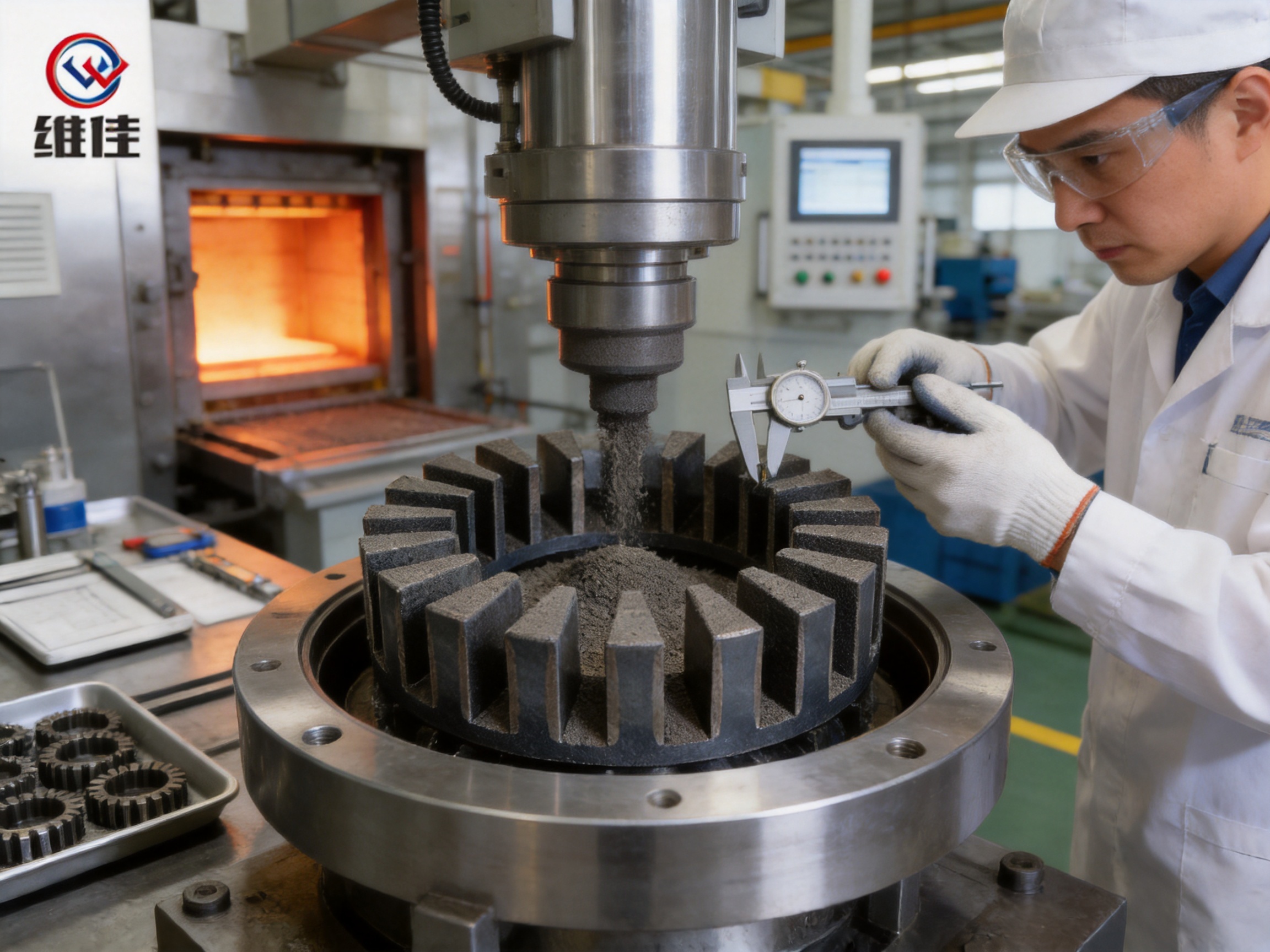
High-efficiency presses apply controlled pressure to form the part. The compaction schedule, pressure distribution, tooling alignment, powder lubrication, and ejection speed all influence final quality. The aim is to achieve sufficient green density while minimizing cracks, lamination defects, chipping, and stress concentration around the teeth.
Near-net-shape forming is a major advantage of powder metallurgy. Complex features can be produced during pressing, reducing the amount of cutting and machining required afterward. This improves material utilization and supports repeatable mass production when the tooling has been properly designed and maintained.
4.4 Controlled Thermal Processing
Following compaction, the green stator core undergoes controlled thermal processing. The exact schedule depends on the material system and approved process instructions. The objective is to stabilize the compact, remove processing additives when applicable, and achieve the required balance of strength, dimensional stability, and magnetic performance.
Temperature uniformity is important. Uneven heating or cooling may create internal stress, distortion, cracking, or local variations in properties. Furnace atmosphere and residence time also need to be controlled to prevent unwanted oxidation or degradation of the insulation system.
Thermal processing is not simply a heating operation. It is a carefully managed stage that connects the powder characteristics to the final component performance. Production records, furnace monitoring, and periodic property verification help ensure that the process remains stable over time.
4.5 Precision Post-Processing
Although the component is formed close to its final geometry, selected surfaces may require precision post-processing. This can include sizing, calibration, surface correction, deburring, tooth profile refinement, or dimensional finishing. The purpose is to achieve the required outer diameter, inner diameter, thickness, flatness, parallelism, and tooth accuracy.
Post-processing must be carefully controlled because excessive machining can remove material unevenly, damage tooth edges, or introduce stress. The finishing strategy is selected according to the drawing, tolerance class, production volume, and assembly method.
For the specified stator core, flatness is controlled to no more than 0.05 millimeters and parallelism to no more than 0.03 millimeters. Such requirements help the core seat correctly in its housing and maintain consistent alignment with associated motor components.
4.6 Inspection and Testing
Inspection is performed throughout production rather than only at the final stage. Incoming powder is evaluated for relevant material characteristics. During pressing, operators and engineers monitor filling, compact appearance, tool condition, and green-part dimensions. After thermal processing, the parts are inspected for cracks, distortion, surface defects, and dimensional stability.
Final inspection can include dimensional measurement, hardness testing, density verification, magnetic testing, electrical insulation testing, visual inspection, and sampling-based environmental validation. The appropriate inspection plan depends on the customer drawing and application risk.
5. How Particle Size and Coating Affect Performance
5.1 Relationship Between Particle Size and Permeability
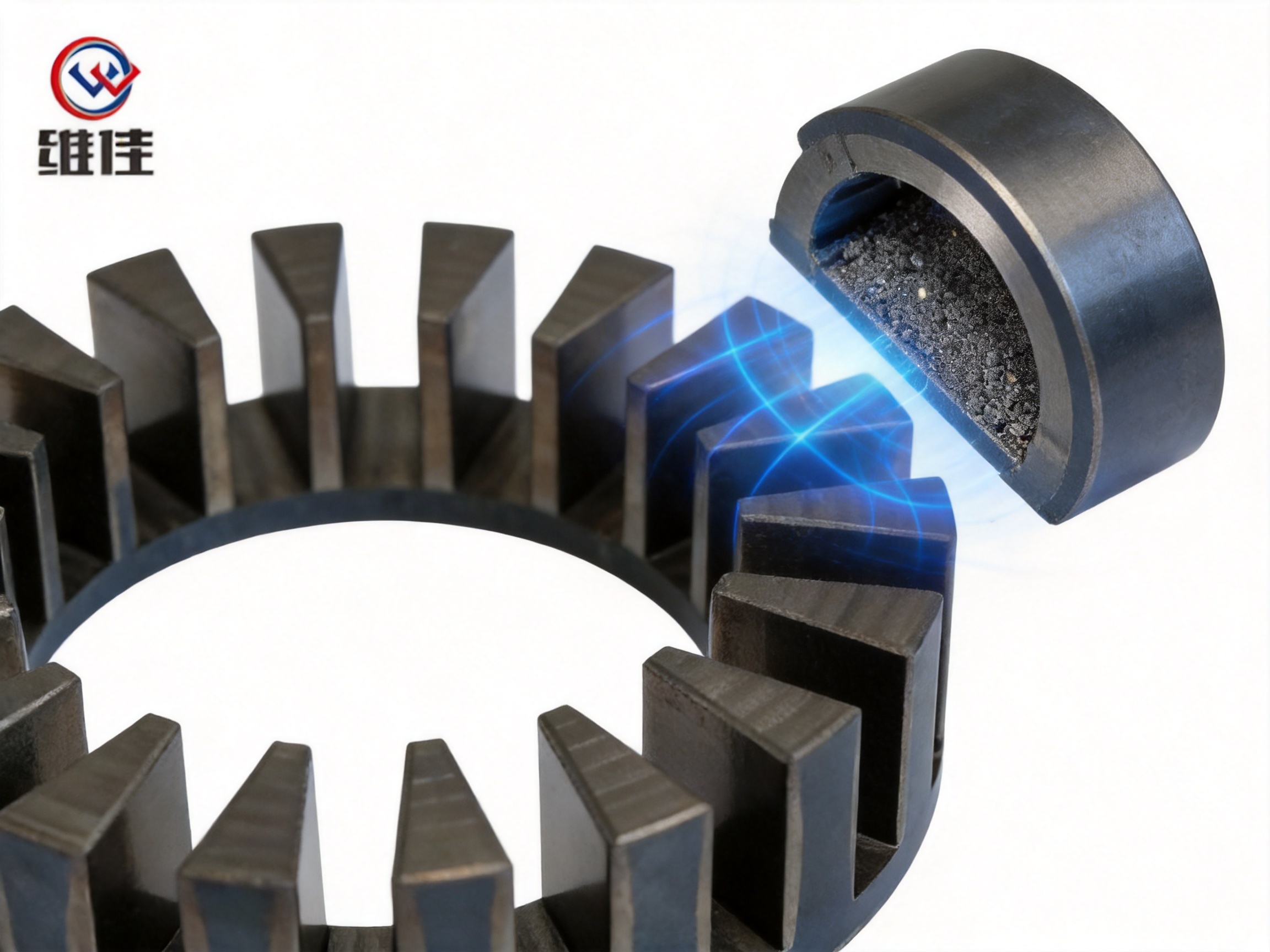
Particle size distribution influences the density and internal structure of the compact. An optimized combination of particle sizes can allow smaller particles to occupy spaces between larger particles, improving packing efficiency. Higher density generally supports improved magnetic flux transfer, provided that the insulation system remains effective and the compaction process does not create unacceptable defects.
Very fine powder can increase the total surface area that must be coated. It may also increase friction during die filling and compaction. If the powder does not fill the die uniformly, the final component may show local density differences. These variations can affect permeability, core loss, and mechanical strength.
Coarser powder may flow more easily, but excessive coarse material can leave larger pores. Porosity interrupts the magnetic path and reduces the effective cross-sectional area available for flux. A carefully optimized gradation provides a practical balance between flowability, density, permeability, and strength.
5.2 Relationship Between Coating Thickness and Core Loss
The coating must be electrically continuous enough to isolate the particles. When the coating is uniform and intact, eddy current loops are restricted to very small regions. This is particularly helpful as operating frequency increases, because eddy current loss typically becomes more significant at higher frequency.
However, a thicker coating occupies more volume that is not magnetically active. Excessive coating can reduce the effective iron content and increase the magnetic reluctance of the compact. The ideal coating is therefore not simply the thickest possible layer; it is a controlled layer that provides reliable electrical isolation with minimal impact on magnetic flux transfer.
Manufacturing control is essential because coating defects may be introduced during blending, transportation, die filling, or pressing. The coating formulation, adhesion, particle handling, compaction pressure, and thermal schedule must be considered together.
5.3 Relationship Between Powder Structure and Mechanical Strength
Mechanical strength depends on particle contact, density, bonding, residual stress, coating behavior, and geometry. A well-graded powder can increase the number of effective contact points after compaction. This can improve green strength and reduce the risk of damage during ejection or transfer.
At the same time, the insulation coating must remain compatible with the required mechanical properties. If the coating cracks extensively during pressing, it may reduce electrical resistance and weaken particle interfaces. If an excessive amount of organic material is present, it may interfere with particle bonding or reduce green strength.
The tooth geometry also deserves special attention. Stator teeth are relatively slender compared with the main ring body and may be vulnerable to chipping or cracking. Tool design, pressing direction, ejection control, corner radii, and handling procedures are therefore important contributors to final reliability.
| Material and Process Condition | Potential Magnetic Effect | Potential Mechanical Effect | Manufacturing Consideration |
|---|---|---|---|
| Very fine particle fraction | Can support good insulation coverage and lower eddy current paths | May increase friction and create compaction difficulty | Control flowability and die filling |
| Very coarse particle fraction | May increase porosity and reduce effective permeability | Can reduce strength because of larger voids | Balance flow and packing density |
| Uniform thin coating | Supports high resistivity and efficient flux transfer | Must resist cracking during pressing | Control coating adhesion and compaction stress |
| Excessively thick coating | May reduce permeability through magnetic dilution | May weaken particle bonding | Maintain coating within the approved range |
| High and uniform density | Generally improves flux transfer and reduces loss caused by porosity | Usually improves strength and dimensional stability | Monitor pressure distribution and tooling alignment |
6. Comparison with Conventional Laminated Silicon Steel
Laminated silicon steel remains an established material for many motor applications. It provides strong magnetic performance in the plane of the laminations and is supported by mature manufacturing methods. However, the laminated construction may require numerous individual sheets, insulation between layers, stacking, alignment, welding, bonding, and additional operations.
SMC stator cores offer a different set of benefits. Their principal advantages include three-dimensional magnetic capability, simplified formation of complex geometries, reduced eddy current circulation between particles, and the potential for lower component weight. They are especially attractive when the motor design cannot be efficiently represented by a simple two-dimensional laminated stack.
The choice between SMC and laminated steel should be based on motor speed, frequency, magnetic flux direction, output requirements, temperature, mechanical loading, production volume, tooling cost, and total system economics. SMC is not automatically superior for every motor. Its strongest competitive position is in applications where geometric freedom, isotropic magnetic behavior, and high-frequency performance provide meaningful design value.
Compared with a conventional laminated core, an SMC component can reduce the number of assembled pieces and may eliminate some cutting and stacking operations. This can support simplified logistics and improved geometric repeatability. It can also help designers integrate features that would otherwise require multiple parts.
Compared with lower-grade powder-based magnetic components, a high-performance SMC grade provides a more carefully balanced combination of permeability, resistivity, strength, and loss characteristics. The final advantage depends on the complete production process, not only on the material name. Powder preparation, insulation control, compaction, thermal processing, finishing, and inspection all determine whether the intended material performance is achieved.
7. Application in Inverter Air Conditioner Motors
Household inverter air conditioners continuously adjust compressor and fan speed to match cooling or heating demand. This operating mode can improve comfort and reduce energy consumption, but it also places demands on the motor’s magnetic materials. The motor may operate across a wide speed range, experience frequent changes in electrical frequency, and run for extended periods.
An SMC stator core can support this type of application through low core loss at elevated frequency, controlled magnetic permeability, lightweight construction, and accurate tooth geometry. Reduced magnetic loss can help lower heat generation, while the integrated toothed structure supports consistent winding placement.
The specified design is intended for customized integration with air conditioner motor systems. Dimensional tolerances are controlled to support compatibility with windings, housings, shafts, and other associated components. Product approval should include confirmation of the customer’s air gap, winding configuration, electromagnetic load, thermal requirements, and assembly process.
In larger household systems, including models rated at approximately 1.5 horsepower and above, the core may contribute to efficient motor operation during rapid cooling, heating, and speed transition. The exact energy performance is determined by the complete air conditioning system, including the compressor, inverter, control software, refrigerant circuit, fan, and thermal management design.
8. Commercial HVAC and Central Air Applications
Commercial air conditioning systems often require fan motors that operate continuously or for long daily cycles. Reliability, efficiency, noise control, and stable performance are important because motor failure or excessive energy consumption can affect building operating costs.
SMC stator cores can be applied in fan motors for commercial multi-split systems, ducted air conditioners, and other HVAC equipment. The material’s low-loss characteristics may support efficient operation over a broad frequency range. Its ability to form complex magnetic structures can also help designers develop compact motors with optimized winding arrangements.
Stable dimensional control is particularly important in commercial systems because production volumes can be high and service requirements can be demanding. Consistent tooth geometry, flatness, and parallelism help reduce variation during winding and assembly. Reliable packaging and moisture protection help preserve the component during storage and transportation before motor assembly.
9. Fresh Air, Air Purification, and Smart Appliance Motors
Fresh air systems and air purification equipment commonly use motors that must operate quietly and efficiently. These systems may run at low speed for long periods, with occasional higher-speed operation when ventilation or purification demand increases.
The SMC stator core can provide stable magnetic circuit support in low-speed, high-torque operating conditions. Its uniform magnetic behavior and integrated geometry may also help reduce sources of mechanical and electromagnetic noise when the motor is correctly designed and balanced.
The same core technology can be extended to other smart appliance drive motors, including dehumidifiers, portable air conditioners, and related home comfort equipment. The exact core dimensions, tooth count, magnetic loading, and mechanical interfaces can be modified through OEM or ODM development.
10. Noise Reduction, Thermal Stability, and Service Life
10.1 Supporting Quiet Operation
Motor noise can originate from mechanical imbalance, bearing behavior, housing resonance, winding forces, switching effects, and magnetic deformation. An SMC stator core cannot eliminate every noise source, but it can support a more uniform magnetic circuit and help reduce certain electromagnetic noise mechanisms when integrated correctly.
Uniform material structure and precise tooth geometry help maintain consistent magnetic forces around the stator. Lower magnetostriction and controlled flux distribution may contribute to quieter operation. The final acoustic performance still depends on winding design, rotor balance, inverter control, bearing selection, housing stiffness, and assembly accuracy.
10.2 Thermal Stability
Core loss becomes heat inside the motor. By reducing high-frequency eddy current loss, the SMC structure can help limit one source of internal heat generation. The specified operating temperature range of minus 40 to 180 degrees Celsius provides a broad material reference range for system design.
Thermal expansion must also be considered. The specified coefficient of thermal expansion is 12 × 10⁻⁶ per degree Celsius between 20 and 100 degrees Celsius. Designers should evaluate the compatibility of this behavior with the housing, winding insulation, adhesives, bearings, and other materials in the motor assembly.
10.3 Long-Term Reliability
Long service life requires stable magnetic, mechanical, and electrical properties. Consistent powder preparation reduces batch-to-batch variation. Controlled compaction helps limit internal defects. Proper thermal processing stabilizes the compact, while precision post-processing protects assembly interfaces.
The product data includes a dielectric withstand voltage of at least 500 VAC for one minute, no significant rust after a 48-hour neutral salt spray test, and no cracking after ten thermal shock cycles between 150 degrees Celsius and room temperature. These are useful indicators for qualification planning, although customers should define the final validation program according to the intended environment and applicable standards.
11. Manufacturing Capabilities and Company Strengths
Jiande Welfine Technology Co., Ltd. was established in 2001 and specializes in powder metallurgy sintering, bushings, self-lubricating bushings, and precision components. Its experience in compacted and sintered parts provides a practical foundation for producing complex magnetic components with controlled density, geometry, and repeatability.
The company operates a modern production base of approximately 13,039 square meters and employs more than 150 skilled personnel. Its equipment includes high-efficiency presses, high-temperature sintering furnaces, precision forming machines, and testing equipment. This combination supports the complete manufacturing sequence from powder preparation and forming through thermal treatment, finishing, inspection, and delivery.
Experience with powder metallurgy bushings and precision sintered parts is relevant to SMC stator core production because many of the same fundamental controls apply. These include powder flow, tooling design, compaction behavior, ejection, density distribution, dimensional stability, furnace control, surface quality, and statistical process monitoring.
The company has passed ISO 9001:2015 and IATF 16949:2016 certification requirements. ISO 9001 supports structured quality management across processes, documentation, corrective action, and customer satisfaction. IATF 16949 adds automotive-oriented requirements for risk management, traceability, process control, defect prevention, and continual improvement. These systems are valuable when magnetic components are supplied for high-volume or quality-sensitive applications.
With OEM and ODM capabilities, the company can work from customer drawings, samples, performance targets, or application requirements. Depending on the project, customization may include outer and inner diameters, thickness, tooth count, tooth shape, mounting features, density targets, permeability requirements, core-loss limits, strength levels, surface treatment, packaging, and inspection documentation.
Technical cooperation is most effective when customers provide the motor’s operating frequency, magnetic flux density, speed range, temperature profile, winding information, housing interface, and required production volume. These details help the engineering team select a suitable powder system, define tooling, identify critical dimensions, and establish an appropriate validation plan.
12. Quality Control from Powder to Finished Core
Quality begins with incoming material verification. The powder must be checked against approved requirements for grade, particle distribution, apparent density, flow behavior, coating condition, and other relevant characteristics. Traceability allows production teams to connect each finished batch with its raw material and process records.
During mixing and preparation, the objective is to maintain a consistent distribution of powder, lubricant, and any approved additives. Excessive mixing can damage the coating, while insufficient mixing can create local variation. Process windows should therefore be established and monitored.
Tooling inspection is equally important. The die must maintain the required tooth geometry, inner diameter, outer diameter, and dimensional relationships. Wear on tooth-forming surfaces can gradually alter the part profile. Preventive maintenance and periodic dimensional verification help identify such changes before they affect a large production quantity.
Green-part inspection can identify pressing problems at an early stage. Operators look for cracks, edge damage, incomplete filling, chipped teeth, abnormal color, and dimensional variation. A defect that is visible before thermal processing is generally easier to correct than one discovered after final assembly.
After sintering or thermal treatment, final dimensional inspection confirms thickness, flatness, parallelism, diameters, and tooth profile. Magnetic and electrical tests verify that the component meets the approved performance requirements. Sampling plans may be used for destructive tests such as bending strength, while non-destructive inspection is applied to routine production wherever practical.
Quality documentation can include material certificates, process records, dimensional reports, magnetic test results, capability studies, nonconformance reports, corrective action records, and packaging verification. The documentation level should match the customer’s quality agreement and application requirements.
13. Packaging, Storage, and Delivery
SMC stator cores should be protected from moisture, impact, contamination, and corrosion during handling and transportation. The recommended packaging approach uses moisture-proof and rust-resistant independent packaging to reduce oxidation risk and prevent teeth from contacting one another or striking the container.
Individual separation can be important when the tooth profile contains thin or precise features. Packaging materials should provide sufficient cushioning without introducing fibers, particles, or chemical contaminants that could interfere with motor assembly.
Storage conditions should be controlled according to the approved packaging specification. Components should remain in a clean, dry environment and should not be exposed unnecessarily to condensation, corrosive chemicals, or heavy vibration. Before assembly, customers should inspect packaging integrity and verify that parts remain free from visible rust, deformation, oil contamination, and mechanical damage.
Production scheduling can be adjusted according to order quantity, tooling status, inspection requirements, and delivery plans. Stable batch supply is supported through coordinated production planning and process control. For new projects, customers should allow time for drawing review, tooling confirmation, first-article production, testing, and approval before full-scale delivery.
14. OEM and ODM Development Process
A typical custom development project begins with a review of the customer’s drawing or sample. Engineers examine the required geometry, tolerances, tooth configuration, assembly interfaces, performance targets, and expected annual volume. They also identify any features that may require special tooling, secondary operations, or additional inspection.
The next step is material and process planning. The engineering team considers the operating frequency, flux density, temperature, mechanical load, and cost target. A suitable powder and insulation system is selected, followed by die design and compaction simulation or practical process evaluation where appropriate.
Prototype or first-article parts are then produced and inspected. Dimensional results are compared with the drawing, and magnetic or mechanical tests are conducted according to the agreed specification. If necessary, the tool design, compaction parameters, coating management, or post-processing sequence is adjusted.
After approval, production moves into controlled batch manufacturing. Key process parameters are documented, inspection frequencies are defined, and changes are managed through the quality system. This approach helps maintain consistency as production volume increases.
OEM and ODM support is especially useful for customers developing new air conditioner motors, fan motors, high-efficiency appliance motors, or compact axial-flux systems. Rather than treating the core as a standard catalog item, the supplier can cooperate with the customer to match the magnetic component to the motor’s complete design.
15. Frequently Asked Questions
What is an SMC stator core?
An SMC stator core is a motor stator component made from electrically insulated iron powder particles. The particles are compacted into a designed shape and thermally processed to create a magnetic core with three-dimensional flux capability and reduced eddy current circulation.
Why is an SMC core suitable for high-frequency motors?
The insulation surrounding individual iron particles restricts the size of electrical current loops. This helps reduce eddy current loss compared with a solid, electrically conductive iron component. The advantage becomes increasingly relevant as motor electrical frequency rises, although final performance depends on material grade, density, coating quality, and operating conditions.
How does an SMC core compare with a laminated silicon steel core?
An SMC core offers greater geometric freedom, more isotropic magnetic behavior, and the possibility of integrated three-dimensional teeth and flux paths. Laminated silicon steel may remain preferable for some applications requiring very high in-plane permeability or established conventional designs. The correct selection depends on motor architecture, frequency, loss targets, production volume, and total cost.
What material is used for this stator core?
The specified material is SOMALOY 700HR-3P, a high-performance soft magnetic composite grade. It is selected for its balance of permeability, electrical resistivity, magnetic loss, strength, and thermal capability.
Can the tooth count and dimensions be customized?
Yes. OEM and ODM production can be developed according to customer drawings, samples, or approved technical specifications. Possible customization includes tooth count, tooth profile, outer diameter, inner diameter, thickness, mounting details, dimensional tolerances, density, and performance requirements.
What dimensions are specified for the reference model?
The reference model L1C10000557A-001A has an outer diameter of 100.0 ± 0.1 millimeters, an inner diameter of 65.0 ± 0.1 millimeters, a thickness of 10.0 ± 0.05 millimeters, and 18 teeth. The tooth profile tolerance is ± 0.03 millimeters, with flatness of no more than 0.05 millimeters and parallelism of no more than 0.03 millimeters.
What magnetic performance is specified?
The reference specification includes saturation magnetic induction of at least 1.5 tesla, initial permeability of at least 300 times free-space permeability, maximum permeability of at least 1,000 times free-space permeability, coercivity of no more than 20 amperes per meter, core loss of no more than 1.5 watts per kilogram at 1.0 tesla and 50 hertz, and core loss of no more than 12 watts per kilogram at 1.0 tesla and 400 hertz.
How does the manufacturer control product consistency?
Consistency is supported through controlled powder selection, particle size management, coating control, precision die compaction, furnace process monitoring, post-processing, dimensional inspection, magnetic testing, and documented quality procedures. The company operates under ISO 9001:2015 and IATF 16949:2016 quality management certifications.
Can the stator core be used in air conditioner motors?
Yes. The design is intended for household inverter air conditioner motors and can also be adapted for commercial HVAC fan motors, fresh air systems, air purifiers, dehumidifiers, portable air conditioners, and other efficient appliance drive systems. Final suitability must be confirmed through motor-level electromagnetic, thermal, mechanical, acoustic, and life testing.
What information should be supplied for a quotation?
Customers should provide a drawing or sample, annual quantity, target delivery schedule, motor operating frequency, flux density, speed range, temperature range, winding information, housing interface, required magnetic properties, dimensional tolerances, packaging requirements, and inspection standards. More complete information helps shorten technical evaluation and reduce quotation uncertainty.
16. Conclusion
The high-performance SMC stator core provides a practical solution for motor designers seeking three-dimensional magnetic capability, low high-frequency loss, lightweight construction, integrated toothed geometry, and accurate assembly interfaces. Manufactured from SOMALOY 700HR-3P, the product combines a high-resistivity particle structure with controlled permeability, strength, dimensional precision, and thermal stability.
Its strongest advantages over conventional approaches appear in axial-flux motors, variable-speed HVAC systems, high-efficiency air conditioner motors, commercial fan motors, and compact smart appliance drives. The ability to form complex structures in a near-net-shape process can simplify component construction and provide design options that are difficult to achieve with stacked laminations.
Product performance depends on more than the selected powder grade. Particle size distribution, insulation coating quality, die filling, compaction pressure, thermal processing, post-processing, inspection, and packaging all influence the finished core. A supplier with established powder metallurgy expertise and a complete quality system is therefore essential for dependable production.
With a manufacturing history dating from 2001, a modern 13,039-square-meter facility, more than 150 employees, advanced forming and testing equipment, and ISO 9001:2015 and IATF 16949:2016 certifications, Jiande Welfine Technology Co., Ltd. is equipped to support customized SMC stator core development and stable batch production. Its OEM and ODM capabilities allow the component to be matched to customer drawings, samples, motor architectures, and performance targets.
For customers developing efficient, quiet, lightweight, and compact motor systems, a precision SMC stator core can provide both material-level benefits and design-level flexibility. Proper application engineering and validated manufacturing control enable these benefits to be converted into reliable performance in demanding commercial and household equipment.
References
1. Powder Metallurgy Materials and Processes, general principles of powder characterization, compaction, sintering, and dimensional control.
2. Soft Magnetic Materials for Electrical Machines, principles of permeability, coercivity, saturation, hysteresis loss, and eddy current loss.
3. Soft Magnetic Composite Design Guidelines, considerations for particle insulation, three-dimensional magnetic circuits, density, and frequency-dependent performance.
4. ISO 9001:2015, Quality Management Systems — Requirements.
5. IATF 16949:2016, Quality Management System Requirements for Automotive Production and Relevant Service Parts Organizations.
6. Product technical data for the SOMALOY 700HR-3P SMC stator core, model L1C10000557A-001A.
7. Internal manufacturing and quality information supplied for Jiande Welfine Technology Co., Ltd., including powder metallurgy production capabilities, equipment, certifications, and OEM/ODM services.
8. General engineering references concerning electric motor stator construction, inverter-driven motor efficiency, HVAC motor applications, and magnetic core loss evaluation.
Product: SMC Stator Core (SOMALOY 700HR-3P)

Related products
-
-
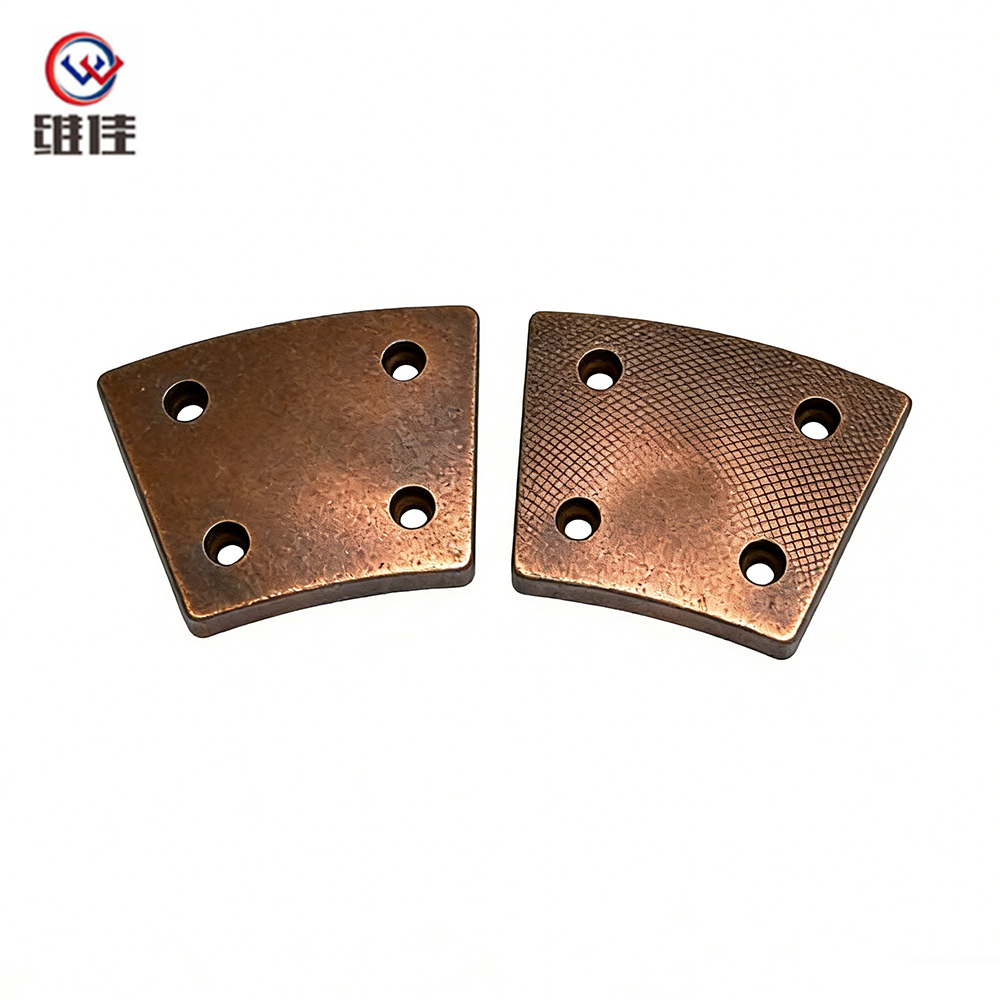
Description: 79.5×62×7.3mm copper-based brake pad with 4-hole design. Density 6.2g/cm³, weight 195g. Free from graphite segregation, cracks, and defects. Ideal for heavy-duty industrial braking system...
See Details -
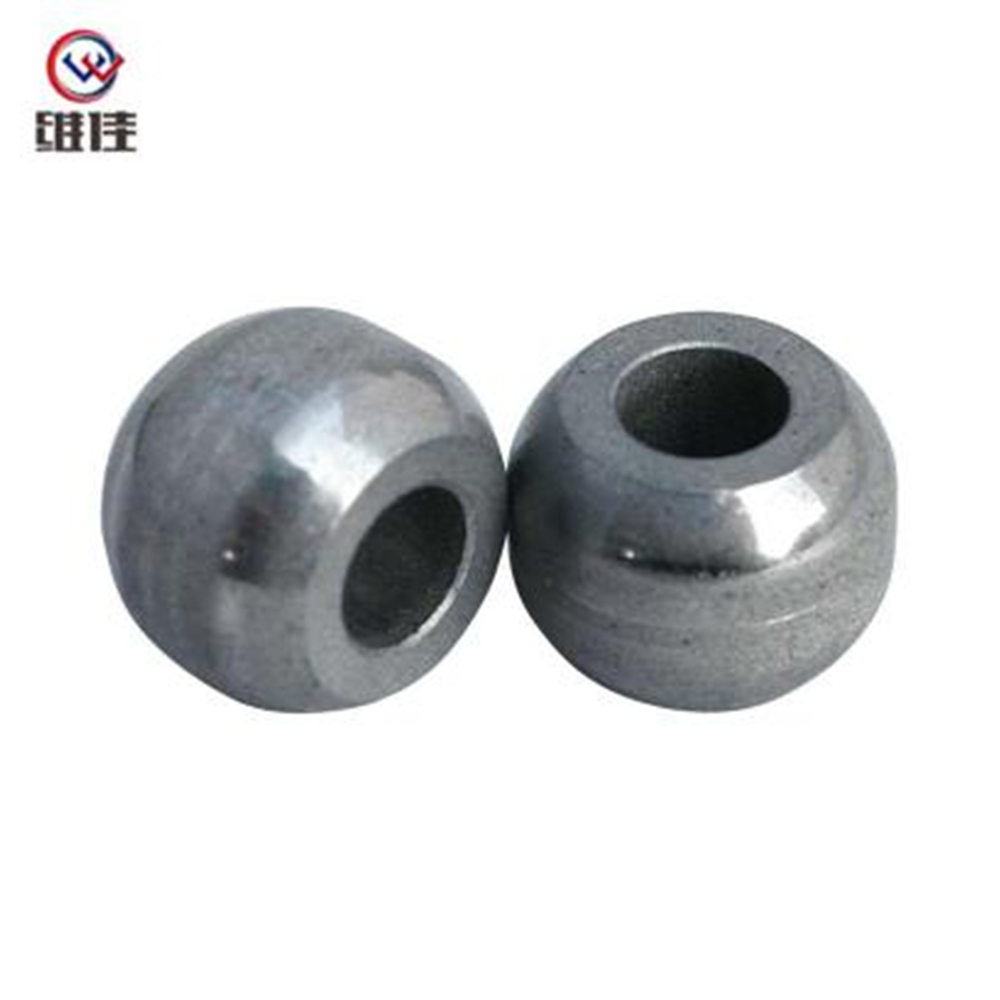
Product Description: High-precision powder metallurgy part (S14*7*10) made of iron material from Jiande Wefine, customized PM components with strict tolerance control.
See Details
Copyright © Jiande Welfine Technology Co., Ltd. All Rights Reserved. Custom Self-lubricating Sintered Bushing Manufacturers
