E-mail us: [email protected]
Tel: +86-15239857375
 English
 中文简体
中文简体

 Home / Author / Luo Qian — Product Sales Supervisor / CuSn10 Powder Metallurgy Bronze Bushing: Precision Self-Lubricating Performance for Demanding Machinery
 CuSn10 Powder Metallurgy Bronze Bushing: Precision Self-Lubricating Performance for Demanding Machinery
 2026.09.04
 Luo Qian — Product Sales Supervisor
Content
- 1 Product Overview
- 2 How the Oil-Impregnated Structure Works
- 3 Material Advantages of CuSn10 Bronze
- 4 Advantages Compared with Competing Bushing Solutions
- 5 Precision Manufacturing Process
- 6 Quality Control and Manufacturing Strengths
- 7 Why the Manufacturer Is Suitable for OEM and ODM Projects
- 8 Application Areas
- 9 How to Evaluate a CuSn10 Powder Metallurgy Bushing
- 10 Installation and Maintenance Recommendations
- 11 Ordering and Customization Process
- 12 Future Development of Sintered Bronze Bushings
- 13 Conclusion
- 14 Questions and Answers
- 14.1 What is a CuSn10 powder metallurgy bronze bushing?
- 14.2 What is the material of product A0667?
- 14.3 How does oil impregnation reduce maintenance?
- 14.4 Can the bushing operate without additional lubrication?
- 14.5 Is CuSn10 suitable for high-speed rotating equipment?
- 14.6 What is the difference between a powder metallurgy bushing and a cast bronze bushing?
- 14.7 Can the A0667 dimensions be customized?
- 14.8 What information should be provided for a quotation?
- 14.9 How is the quality of the bushing inspected?
- 14.10 Where can this bushing be used?
- 14.11 How should the bushing be installed?
- 14.12 Does the manufacturer support small-batch prototypes?
- 14.13 What quality certifications does the manufacturer hold?
- 14.14 What affects the service life of a CuSn10 bushing?
- 15 References
- 16 Product: Powder Metallurgy Bronze Bushing (A0667)
Modern machinery requires bearing components that can operate reliably under friction, repeated motion, variable loads, and limited maintenance conditions. A bushing may be a relatively small component, but its performance has a direct influence on equipment efficiency, operating noise, service life, and maintenance cost. When a bushing is manufactured with inconsistent dimensions, unsuitable porosity, insufficient oil retention, or poor surface quality, the entire assembly may experience premature wear, shaft damage, vibration, or unexpected downtime.
The CuSn10 Powder Metallurgy Bronze Bushing, product code A0667, is designed to address these challenges through a copper-tin material system, controlled porosity, precision sizing, and vacuum oil impregnation. Manufactured from CuSn10 bronze powder, this bushing combines wear resistance, dimensional consistency, thermal conductivity, corrosion resistance, and self-lubricating capability. Its compact cylindrical design and carefully controlled specifications make it suitable for precision machinery, automotive components, hydraulic systems, household appliances, fans, refrigerators, and various industrial motion assemblies.
Unlike ordinary machined bushings that depend entirely on an external supply of grease or oil, a powder metallurgy oil-impregnated bushing stores lubricant inside its interconnected pores. During operation, the lubricant can gradually migrate toward the sliding interface. This structure helps reduce direct metal-to-metal contact and supports stable operation over extended periods.
This article explains the construction, material advantages, production technology, quality control system, customization capabilities, application value, and selection considerations associated with this precision bronze bushing. It also examines why powder metallurgy can provide advantages over conventional brass, cast bronze, and fully machined alternatives.
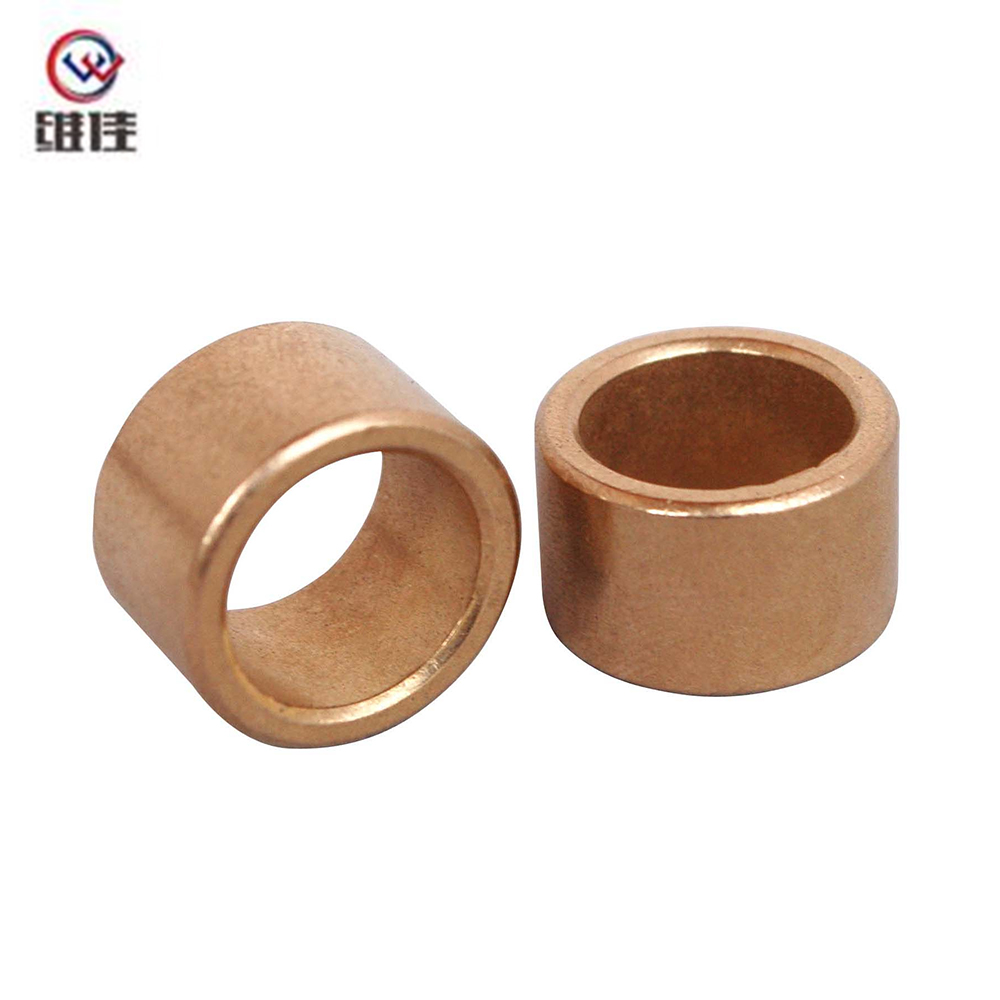
Powder Metallurgy Bronze Bushing (A0667)
Product Overview
The A0667 is a copper-based powder metallurgy bushing made from CuSn10 bronze. The production route includes powder compaction, sintering, sizing, precision processing, cleaning, and vacuum oil impregnation. Each stage contributes to the final balance between mechanical strength, dimensional accuracy, porosity, and lubrication performance.
CuSn10 contains approximately 10% tin in a copper-based alloy system. Tin increases the hardness and wear resistance of the bronze matrix while maintaining the favorable thermal and friction characteristics associated with copper alloys. When the material is processed through powder metallurgy, the final component contains a controlled porous network. These pores are not random defects; they are an engineered feature that allows the bushing to retain lubricating oil.
The standard A0667 specification is intended for compact, accurate bushing assemblies. Its nominal dimensions are 10G7 × 13s7 × 10 mm, with a 0.4 × 45° chamfer. The specified concentricity is no greater than 0.05 mm, and the key dimensional tolerance can be controlled within ±0.02 mm according to the supplied product information. These controls are particularly important where the bushing must align with a shaft, housing, gear, linkage, or hydraulic component.
| Product Item | Specification |
| Product Name | Powder Metallurgy Bronze Bushing |
| Product Code | A0667 |
| Material | CuSn10 |
| Nominal Size | 10G7 × 13s7 × 10 mm |
| Chamfer | 0.4 × 45° |
| Weight | 3.36–3.41 g |
| Density | 5.7–5.8 g/cm³ |
| Concentricity | ≤0.05 mm |
| Sintering Parameter | TCI 690 ± 30°C |
The weight and density ranges provide useful indicators of production consistency. Density affects strength, oil-holding capacity, friction behavior, and dimensional stability. If a porous bushing is excessively dense, it may not retain enough lubricant. If it is too porous, its mechanical strength may be reduced. Maintaining the specified density range is therefore an important part of balancing load capacity and self-lubrication.
How the Oil-Impregnated Structure Works
Powder metallurgy begins with carefully prepared metal powders. The powder is placed into a precision die and compacted under controlled pressure. During compaction, the powder particles form the approximate shape of the bushing while retaining interconnected voids. The compacted part is then heated in a controlled atmosphere below the alloy’s melting point. This sintering stage bonds the particles together and creates a stable bronze structure.
The pores formed during compaction and sintering are subsequently filled with lubricating oil. For the A0667 bushing, 46# mechanical oil is introduced in an 80°C vacuum environment. Vacuum processing helps remove air from the porous structure, allowing oil to penetrate more thoroughly. After impregnation, the bushing is cleaned so that excess oil does not remain on the external surface or interfere with assembly.
When the bushing is operating, frictional heat and contact pressure influence the movement of oil within the pores. A small quantity of lubricant can reach the sliding surface and form a lubricating film between the bushing and the shaft. When the equipment stops, some of the oil can return to the porous structure. This reversible behavior supports repeated start-stop operation and helps reduce the need for frequent manual lubrication.
The self-lubricating characteristic does not mean that the bushing is completely maintenance-free under every possible condition. High loads, excessive speed, contamination, poor alignment, elevated temperatures, and an unsuitable shaft surface can all affect service life. Nevertheless, compared with a conventional solid bushing that has no internal oil reserve, the oil-impregnated design can provide a more stable and maintenance-friendly lubrication system.
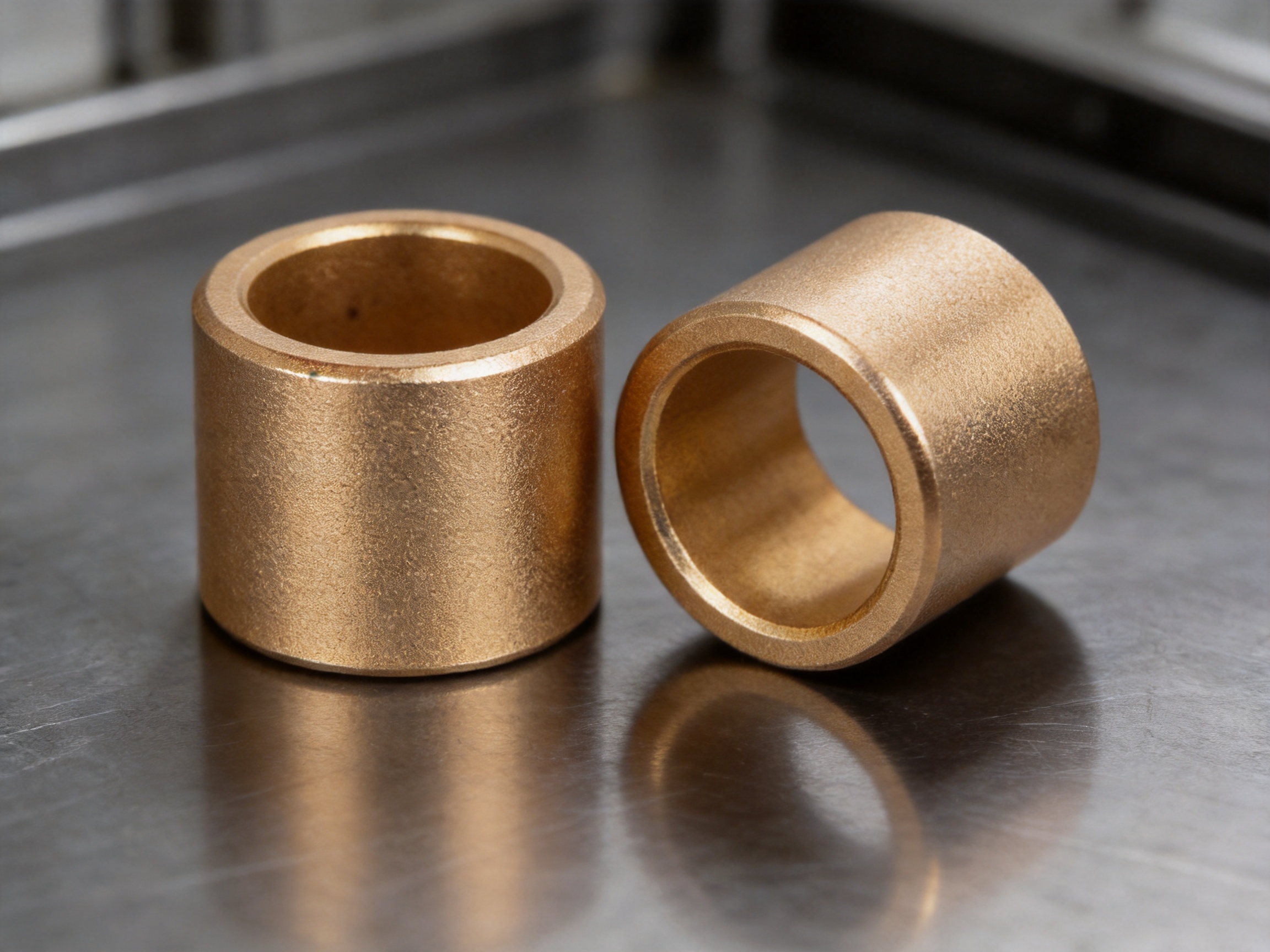
Material Advantages of CuSn10 Bronze
Wear Resistance
Tin strengthens the copper matrix and improves resistance to adhesive and abrasive wear. This is valuable in applications where the shaft repeatedly rotates, oscillates, or reciprocates inside the bushing. A wear-resistant bronze matrix helps preserve the internal diameter and maintain a more stable clearance over time.
Wear resistance is also influenced by porosity, oil retention, shaft condition, loading, and surface finish. CuSn10 powder metallurgy technology provides a way to control these characteristics together rather than treating material selection as an isolated decision. The bronze matrix carries the load, while the porous structure contributes to lubrication.
Load-Carrying Capability
A bushing must support radial or oscillating loads without excessive deformation. CuSn10 offers a useful balance between hardness and toughness. The tin-containing bronze structure provides greater resistance to surface damage than many softer copper materials, while the sintered body maintains the geometric form required for accurate operation.
Load capacity must always be evaluated together with speed, lubrication, temperature, duty cycle, and shaft hardness. A bushing that performs well at moderate speed and intermittent loading may require a different design for continuous high-speed operation. For this reason, application-specific technical review is recommended when the bushing will be used in heavily loaded or highly dynamic machinery.
Thermal Conductivity
Copper-based alloys generally dissipate heat more effectively than many iron-based materials. In a sliding bearing, heat generation is associated with friction, speed, load, and lubrication conditions. Good thermal conductivity can help transfer heat away from the contact area, reducing the risk of localized temperature increases.
Thermal performance is especially relevant in electric motors, appliance transmission mechanisms, hydraulic accessories, and compact mechanisms where there may be limited space for cooling. The CuSn10 material, combined with oil retention, supports a more stable operating environment in these applications.
Corrosion Resistance
Bronze provides useful resistance to many common industrial environments. This can be an advantage over untreated ferrous materials when the component is exposed to humidity, occasional condensation, or the general atmosphere found in industrial equipment. Corrosion resistance does not eliminate the need for suitable environmental protection, but it can improve the reliability of the bearing assembly.
Compatibility with Oil Impregnation
The porous CuSn10 structure is well suited to oil impregnation. The interconnected pores act as microscopic reservoirs that can hold lubricant throughout the bushing wall. The balance of density and porosity is critical: sufficient open porosity is needed for oil absorption, while the solid bronze framework must remain strong enough to withstand service loads.
Advantages Compared with Competing Bushing Solutions
Bushing materials are available in many forms, including solid brass, cast bronze, sintered bronze, steel-backed composites, polymer materials, and fully machined alloys. Each type has a suitable operating range. The value of the CuSn10 powder metallurgy bushing lies in the combination of material performance and manufacturing efficiency.
| Performance Item | CuSn10 Powder Metallurgy Bronze | Standard Brass | Conventional Cast Bronze |
| Wear Resistance | Excellent | Moderate | Good |
| Oil Retention | Excellent | Low | Usually requires external lubrication |
| Dimensional Consistency | High | Depends on machining | May require additional finishing |
| Mass Production Efficiency | High | Moderate | Moderate |
| Material Utilization | High | Lower when machined from bar stock | Moderate |
| Maintenance Requirement | Reduced through oil impregnation | Generally dependent on external lubrication | Generally dependent on external lubrication |
Compared with Standard Brass Bushings
Standard brass can provide good machinability and adequate performance in less demanding conditions, but it generally does not offer the same controlled oil-retaining structure as a porous sintered bronze bushing. A solid brass bushing depends more heavily on grease or oil supplied during assembly or service. If lubrication is neglected, friction and wear may increase more quickly.
The CuSn10 bushing is therefore advantageous where maintenance access is limited or where the equipment manufacturer wants a component with built-in lubricant storage. Its bronze composition also provides a more wear-oriented material solution for repeated sliding contact.
Compared with Cast Bronze Bushings
Cast bronze bushings can offer high strength and good wear performance, particularly in large or heavily loaded assemblies. However, they are generally nonporous and often require an external lubrication system. Casting may also involve greater variation in microstructure, shrinkage, machining allowance, and finishing requirements.
Powder metallurgy provides more direct control over the final geometry and porosity. For small and medium-sized precision components, this can reduce material waste and secondary machining. The result is a component that combines predictable dimensions with internal lubricant storage.
Compared with Fully Machined Bushings
Machining a bushing from solid bar stock can be flexible for prototypes or low-volume production, but it may generate considerable material waste. Complex production schedules can also increase cost when many small components are needed. Powder metallurgy is particularly competitive for repeat orders because tooling produces near-net-shape parts with limited finishing requirements.
For customers requiring custom dimensions, the manufacturing route can be adapted to the drawing, material specification, tolerance, density, oil type, and production volume. This allows the supplier to balance tooling cost, prototype requirements, and mass-production efficiency.
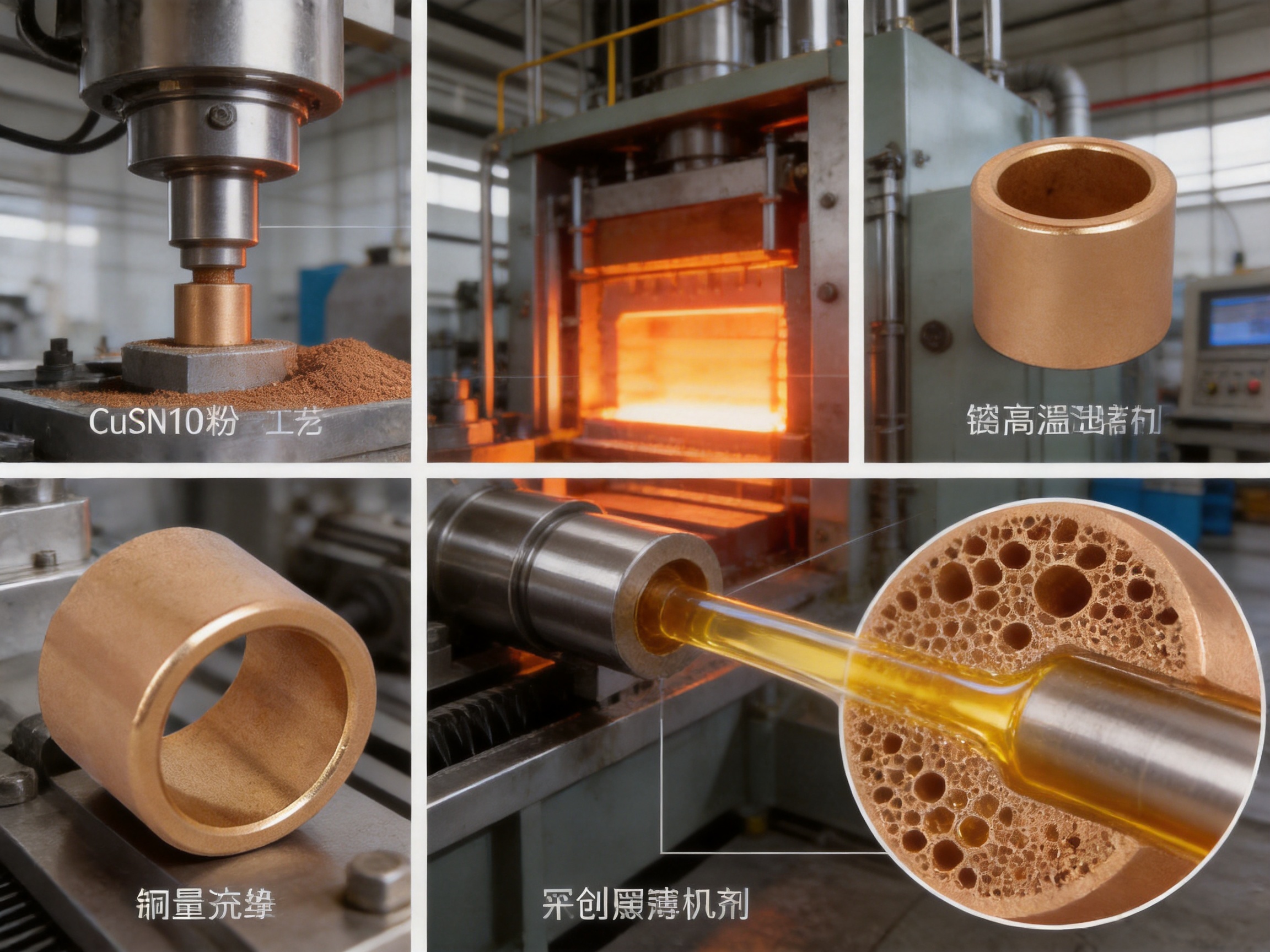
Precision Manufacturing Process
Raw Material Preparation
Product quality begins with powder quality. Copper-based powder is checked for chemical composition and particle-size characteristics before production. The supplied quality system identifies raw material inspection as a control point for every batch. Proper particle-size distribution affects filling behavior, compact density, pore structure, surface condition, and final mechanical properties.
Powder formulation must also be consistent. Variations in alloy composition or powder flow can cause differences in density and dimensional shrinkage after sintering. Batch inspection helps reduce this risk and supports stable production from one order to the next.
Compaction
During compaction, powder is filled into a shaped die and compressed using a powder metallurgy press. Tool design determines the external profile, internal diameter, end geometry, and dimensional repeatability of the green compact. Pressing parameters must be selected to achieve uniform density distribution throughout the bushing.
Uneven density can result in nonuniform shrinkage, localized weakness, or inconsistent porosity. Advanced forming control is therefore important for products with small dimensions and tight concentricity requirements. The A0667 design includes a defined chamfer, which assists insertion and helps reduce the risk of interference during assembly.
Sintering
The compacted part is heated in a controlled sintering furnace. For this product, the stated sintering parameter is TCI 690 ± 30°C. During sintering, contact points between powder particles bond together, creating a continuous bronze matrix. Atmosphere control is necessary to help protect the material and achieve stable metallurgical bonding.
Sintering temperature, heating rate, holding time, cooling conditions, and atmosphere all influence density, strength, dimensional change, and porosity. A controlled furnace process helps ensure that the bushing does not develop unacceptable distortion or inconsistent properties.
Sizing and Precision Forming
After sintering, the bushing may undergo sizing or precision forming. This operation improves dimensional accuracy by pressing the component through a calibrated tool. It can correct small deviations created during compaction and sintering while improving the internal and external geometry.
Sizing is particularly useful for small bushings that must maintain consistent fits in a housing. The process supports the stated dimensional tolerance and concentricity requirements without requiring extensive material removal. Where necessary, additional precision machining can be applied to achieve customer-specific dimensions or surface conditions.
Cleaning and Oil Impregnation
Before impregnation, the workpiece is cleaned to remove processing residues and loose particles. The bushing is then immersed in 46# mechanical oil for approximately 20 minutes in an 80°C vacuum environment. Vacuum treatment encourages the removal of air from internal pores and improves oil penetration.
After the impregnation cycle, the external surface is cleaned to prevent oil stains, packaging contamination, or assembly problems. The goal is to retain lubricant inside the pore network while presenting a clean and usable component to the customer.
Inspection and Packaging
Inspection continues after oil impregnation. Finished products are checked for dimensions, appearance, weight, and other requirements specified by the product drawing or purchase order. Packaging is cleaned before packing to help protect the surface and prevent foreign matter from entering the package.
Appropriate packaging is important for oil-impregnated components. The package should help prevent contamination, physical damage, excessive oil loss, and contact with incompatible substances during storage and transportation. International delivery can be arranged through express, sea, or air freight according to order requirements.
Quality Control and Manufacturing Strengths
Reliable bushing performance depends on more than one inspection at the end of production. A robust quality system controls materials, equipment, process parameters, dimensional accuracy, and final product performance. The manufacturer’s stated inspection program includes raw material testing, first article inspection, online dimensional monitoring, and finished-product inspection.
Raw Material Control
Each batch of copper-based powder is evaluated for composition and particle size. These checks help verify that the material conforms to the required bronze formulation and is suitable for consistent compaction and sintering. Stable raw materials support stable density, porosity, and mechanical performance.
In-Process Control
First article inspection verifies the initial production parts before the order proceeds at full capacity. This allows the production team to confirm tooling condition, dimensions, weight, appearance, and process settings. Online monitoring during compaction, sintering, and sizing helps prevent nonconforming parts from moving to the next stage.
Finished Product Inspection
The stated finished-product program includes 100% full dimensional inspection. Sampling tests are also conducted for density, hardness, and wear resistance. Dimensional inspection is essential for verifying the shaft and housing fit, while density testing helps confirm the balance between strength and oil retention.
Hardness and wear-resistance testing provide additional evidence that the bronze matrix has achieved the required material condition. Together, these checks help ensure that the bushing is not judged only by appearance but by the characteristics that determine service behavior.
Certified Quality Management
The company operates with ISO 9001:2015 and IATF 16949:2016 certifications according to the supplied company information. ISO 9001:2015 supports systematic quality management, process documentation, corrective action, and customer-focused control. IATF 16949:2016 is associated with rigorous automotive quality requirements and reinforces attention to traceability, risk prevention, process capability, and continuous improvement.
These systems are especially valuable for OEM and ODM customers that require repeatability, documented controls, and stable delivery across multiple production batches.
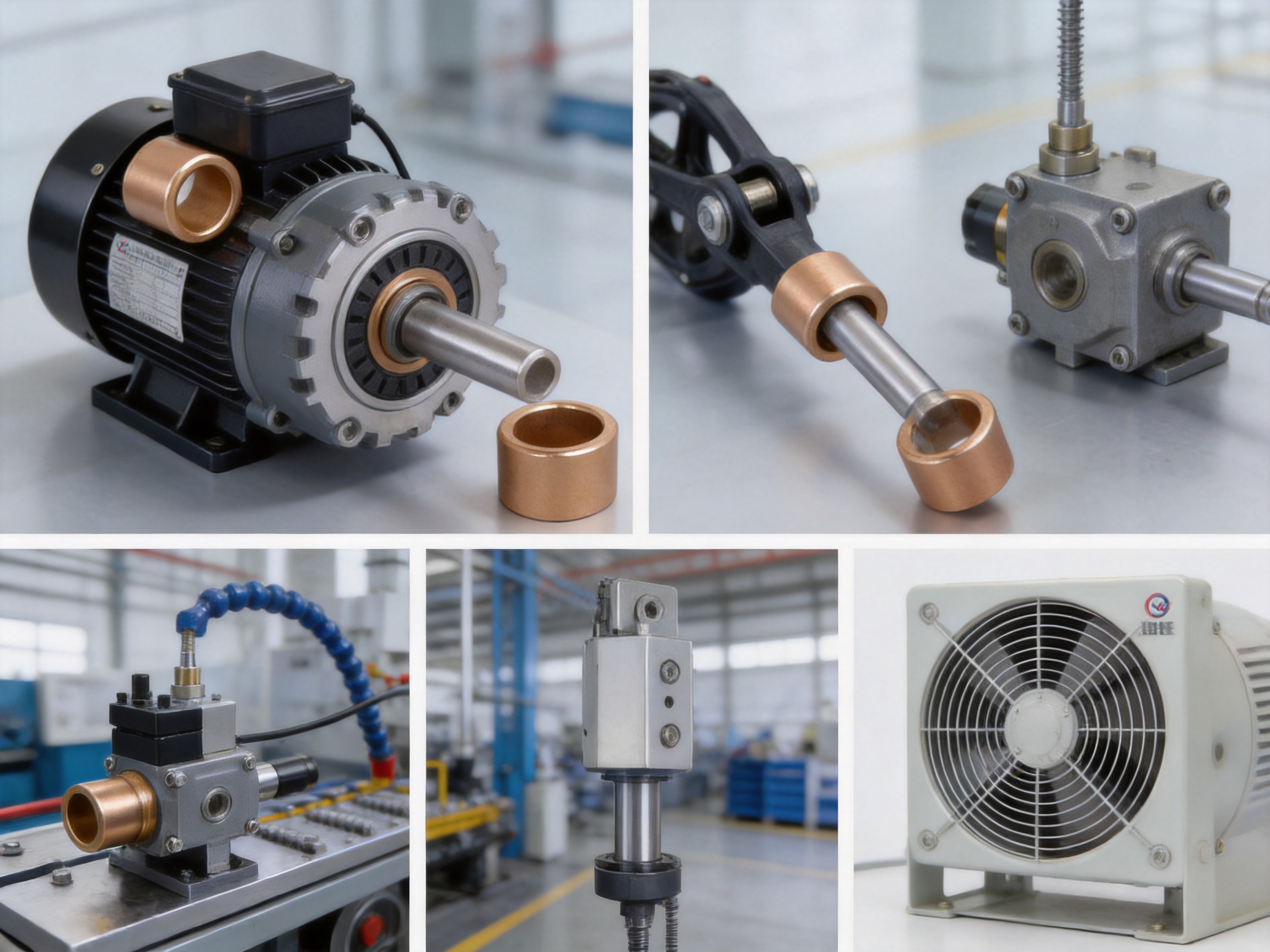
Why the Manufacturer Is Suitable for OEM and ODM Projects
Jiande Welfine Technology Co., Ltd. was established in 2001 and focuses on powder metallurgy bushings, self-lubricating bearings, and precision sintered components. More than two decades of experience provide a foundation for managing material selection, tooling, compaction, sintering, sizing, oil impregnation, and inspection as an integrated process.
The company operates a 13,039-square-meter production base with more than 150 skilled employees. Its equipment includes high-efficiency presses, high-temperature sintering furnaces, precision forming machines, and testing equipment. This combination of production capacity and process specialization supports both standard components and customer-specific designs.
For an OEM project, the supplier can review drawings or samples and evaluate the required material, dimensions, tolerances, porosity, oil type, surface condition, and packaging method. For an ODM project, the supplier can also contribute manufacturing suggestions intended to improve producibility, reduce unnecessary machining, and maintain the required performance within a practical production cost.
Customization can cover internal and external dimensions, length, chamfer geometry, density, material grade, oil impregnation requirements, and packaging. Small-batch prototyping is supported, while established designs can be transferred to mass production after validation. This approach helps customers avoid selecting a standard part that only partially matches their assembly requirements.
Application Areas
Automotive Engine and Chassis Components
Automotive mechanisms contain many rotating, pivoting, and oscillating interfaces. Compact bushings may be used in linkage systems, actuators, transmission-related mechanisms, chassis assemblies, and auxiliary equipment. The CuSn10 bushing offers low-friction operation, wear resistance, and dimensional stability for suitable automotive applications.
Automotive components are often exposed to vibration, temperature changes, dust, and repeated duty cycles. Properly selected oil impregnation and accurate installation are important for achieving the intended performance. The IATF 16949:2016 quality framework also makes the manufacturing system suitable for customers requiring automotive-oriented process discipline.
Precision Machine Tools
Machine tools depend on accurate movement and stable guidance. A bushing with poor concentricity or inconsistent internal dimensions can introduce play, vibration, or positioning errors. The A0667 specification includes a concentricity limit of no more than 0.05 mm, supporting applications where alignment and repeatability are important.
The 0.4 × 45° chamfer can help guide the component into its housing and reduce assembly interference. For more demanding machine tool designs, the customer can provide detailed shaft, housing, speed, load, and temperature information so that the bushing specification can be reviewed accordingly.
Hydraulic Pumps and Valve Assemblies
Hydraulic systems require accurate support and guidance for moving elements. Bushings may be used in pump mechanisms, valve groups, actuators, and linkage components. Dimensional consistency helps maintain controlled clearances, while bronze provides useful wear and corrosion resistance in suitable hydraulic environments.
Hydraulic applications can involve high loads and pressure-related vibration. The bushing must therefore be selected according to the actual operating conditions, fluid compatibility, shaft material, speed, and temperature. Oil impregnation should also be evaluated alongside the hydraulic medium to ensure that the lubricating oil and operating fluid do not create an undesirable interaction.
Electric Motors and Gearboxes
Electric motors and gearboxes often operate for long periods with repeated rotational contact. A self-lubricating bushing can reduce the frequency of manual lubrication and help maintain a stable sliding interface. Copper-based thermal conductivity can assist with heat dissipation in compact assemblies.
For high-speed equipment, the design engineer should confirm the allowable speed, load, clearance, shaft finish, and heat conditions. The product is suitable for many medium- and high-speed applications, but operating limits must be determined according to the complete system rather than the material name alone.
Fans and Refrigerators
Fans, refrigerators, and household appliances frequently use small bushings in motors, transmission structures, hinges, and rotating mechanisms. These components may be difficult to service after final assembly. An oil-impregnated bronze bushing can offer a practical way to reduce routine lubrication requirements while maintaining compact dimensions.
The A0667 bushing’s small size, controlled weight, defined chamfer, and precision geometry make it suitable for compact mechanical assemblies. Stable batch production is also important in appliance manufacturing, where large quantities of consistent components may be required.
Agricultural and Construction Machinery
Agricultural machines can operate in dusty environments and may experience frequent start-stop cycles. Construction equipment may encounter impact loads, vibration, and changing outdoor conditions. The CuSn10 bronze matrix and internal lubricant reserve provide useful characteristics for suitable low- to medium-speed pivoting or sliding locations.
Environmental contamination remains an important design consideration. Seals, protective covers, correct shaft fit, and appropriate maintenance should be used where abrasive particles or water exposure are significant. The bushing can contribute to durability, but the complete assembly must be engineered to control contamination.
Automation and Industrial Equipment
Automated production lines require repeatable motion and minimal unplanned downtime. Bushings can be used in guides, actuators, robotic joints, linkages, and motion assemblies. Powder metallurgy supports consistent dimensions across repeated orders, helping machine builders maintain predictable fits and motion characteristics.
| Industry | Typical Application | Relevant Product Benefit |
| Electric Motors | Shaft support and rotating assemblies | Low friction and oil retention |
| Hydraulic Systems | Guide components and valve accessories | Dimensional accuracy and load support |
| Construction Machinery | Articulated joints and pivots | Wear resistance and bronze durability |
| Automation Equipment | Motion assemblies and guides | Repeatable precision |
| Agricultural Machinery | Transmission and linkage systems | Reduced lubrication frequency |
| Household Appliances | Fan and refrigerator transmission structures | Compact design and self-lubrication |
How to Evaluate a CuSn10 Powder Metallurgy Bushing
Purchasers should evaluate more than the nominal alloy designation. Two bushings labeled CuSn10 may perform differently if their density, pore structure, oil content, dimensional tolerance, surface condition, or sintering quality differs. A reliable evaluation should include material, geometry, manufacturing process, and application conditions.
Check the Material and Density
The material should be verified through appropriate composition testing. Density should fall within the agreed range because it influences strength, porosity, and oil retention. Excessive density may reduce lubricant storage, while insufficient density may weaken the component.
Review Dimensional Accuracy
Internal diameter, external diameter, length, chamfer, roundness, cylindricity, and concentricity should be checked against the drawing. The shaft and housing tolerances must be considered together with the bushing tolerances. A bushing cannot compensate for an incorrectly manufactured shaft or housing.
Assess the Oil Impregnation Process
The supplier should be able to explain the oil type, temperature, vacuum conditions, immersion time, cleaning method, and packaging procedure. These details influence oil penetration and surface cleanliness. A controlled process is preferable to an unspecified soaking operation.
Consider Operating Conditions
Load, speed, temperature, motion type, duty cycle, shaft hardness, shaft finish, installation method, and environmental contamination all affect service life. The correct bushing is selected by matching the product design to the actual operating conditions.
Request Samples and Validation Data
For new applications, sample testing can help verify fit, friction, temperature behavior, noise, wear, and oil compatibility. The manufacturer can use drawings or physical samples to support customized development. Prototype evaluation before mass production reduces the risk of late-stage assembly problems.
Installation and Maintenance Recommendations
Before installation, inspect the bushing, shaft, and housing for burrs, contamination, scratches, or dimensional deviations. The housing bore should be clean and correctly aligned. A chamfered entry can help guide the bushing into position, but excessive force should be avoided because pressing damage may distort the internal diameter.
The shaft should have a suitable surface finish and hardness for the intended application. Sharp edges, rust, embedded particles, or rough machining marks can accelerate wear. If the design requires an interference fit, the press force should be applied evenly and in line with the bushing axis.
Although the oil-impregnated structure reduces lubrication requirements, additional lubricant should not be introduced without checking compatibility. Excessive external grease may block pores or attract abrasive particles. Maintenance personnel should follow the equipment manufacturer’s instructions and inspect the assembly periodically.
Inspection intervals should be adjusted according to load, speed, temperature, contamination, and operating importance. Signs of concern may include increased noise, vibration, rising temperature, shaft scoring, visible oil leakage, or excessive clearance. Early detection can prevent damage to more expensive components.
Ordering and Customization Process
Customers seeking a quotation should provide a technical drawing, sample, or detailed specification. Important information includes the internal diameter, external diameter, length, tolerance class, chamfer, material, density, operating load, speed, temperature, motion type, lubricant requirements, and expected annual quantity.
Based on the supplied information, the engineering team can assess whether the standard A0667 design is appropriate or whether a customized powder metallurgy bushing should be developed. Customization may involve a modified geometry, a different bronze composition, a revised density, an alternative oil, special packaging, or additional inspection requirements.
The company states that precise quotations can be provided within 24 hours after receiving drawings or samples. Standard orders are generally scheduled for delivery within 7–15 working days, while urgent orders may receive priority production support. Actual delivery depends on tooling, order quantity, material availability, inspection requirements, and shipping method.
International logistics can be arranged through DHL, FedEx, sea freight, or air freight. After-sales support includes replacement for products with mismatched dimensions or materials according to the applicable agreement, together with technical installation guidance.
Future Development of Sintered Bronze Bushings
Industrial equipment is increasingly designed for higher efficiency, compact dimensions, automation, and reduced maintenance. These trends support continued demand for self-lubricating bearing components. Powder metallurgy is well positioned to meet this demand because it can produce precise shapes while controlling porosity and material utilization.
Future applications may include electric mobility systems, new energy vehicles, electric tools, smart manufacturing equipment, robotic mechanisms, and advanced automated production lines. These applications may require further improvements in friction behavior, temperature resistance, dimensional accuracy, and oil formulation.
Manufacturers that combine material research, process control, precision forming, testing, and customer-specific engineering will be better positioned to support these developments. The CuSn10 powder metallurgy bronze bushing represents an established solution that can continue to evolve through improved tooling, tighter process monitoring, optimized impregnation, and application-specific design.
Conclusion
The CuSn10 Powder Metallurgy Bronze Bushing A0667 combines a wear-resistant copper-tin alloy with an engineered porous structure and vacuum oil impregnation. Its key advantages include self-lubrication, controlled dimensions, good thermal conductivity, corrosion resistance, high material utilization, and suitability for repeatable mass production.
Compared with standard brass or fully solid bushings, it can provide better oil retention and reduced dependence on external lubrication. Compared with conventional cast or machined bronze components, powder metallurgy offers strong control over density, porosity, geometry, and production consistency. These advantages make the bushing suitable for automotive components, precision machinery, hydraulic systems, motors, appliances, agricultural equipment, construction machinery, and industrial automation.
The manufacturer’s integrated capabilities in powder preparation, compaction, sintering, sizing, oil impregnation, inspection, and customized production provide an important foundation for reliable performance. With ISO 9001:2015 and IATF 16949:2016 certifications, a modern 13,039-square-meter production base, experienced personnel, and OEM and ODM support, the company can provide both standard products and engineered solutions based on drawings or samples.
For customers selecting a bushing for a new or existing assembly, the most important step is to match the product to actual load, speed, temperature, shaft, housing, lubrication, and environmental conditions. When these factors are properly evaluated, the CuSn10 powder metallurgy bronze bushing can offer a durable and cost-effective solution for precision sliding and rotating applications.
Questions and Answers
What is a CuSn10 powder metallurgy bronze bushing?
It is a bronze bushing made from a powder metallurgy material containing approximately 10% tin in a copper-based alloy. The bushing is compacted, sintered, sized, and impregnated with lubricating oil. Its controlled porous structure stores oil and supports self-lubricating operation.
What is the material of product A0667?
Product A0667 is made from CuSn10 copper-tin bronze powder metallurgy material. The product information specifies a density of 5.7–5.8 g/cm³ and a sintering parameter of TCI 690 ± 30°C.
How does oil impregnation reduce maintenance?
Vacuum oil impregnation fills the internal pores of the sintered bronze bushing with 46# mechanical oil. During operation, oil can migrate toward the sliding surface and help maintain a lubricating film. This reduces the frequency of manual lubrication compared with many solid bushings, although periodic inspection remains recommended.
Can the bushing operate without additional lubrication?
Under normal conditions, the internal oil reserve can support operation without frequent additional lubrication. However, performance depends on load, speed, temperature, alignment, shaft finish, and environment. High-load or high-temperature applications should be reviewed individually and inspected periodically.
Is CuSn10 suitable for high-speed rotating equipment?
CuSn10 bushings can be used in many medium- and high-speed applications because of their low-friction behavior, oil retention, and heat dissipation characteristics. The actual allowable speed must be confirmed using the complete operating conditions, including load, temperature, clearance, shaft surface, and duty cycle.
What is the difference between a powder metallurgy bushing and a cast bronze bushing?
A powder metallurgy bushing has a controlled porous structure that can retain lubricating oil. It also offers high material utilization, consistent dimensions, and efficient mass production. Cast bronze bushings can provide excellent strength and wear performance but are generally solid and may require an external lubrication system or more finishing operations.
Can the A0667 dimensions be customized?
Yes. Customized dimensions and materials can be produced according to customer drawings, samples, and technical requirements. Customization may include the internal diameter, external diameter, length, chamfer, density, oil type, tolerance, packaging, and inspection plan.
What information should be provided for a quotation?
Customers should provide a drawing or sample whenever possible. It is also helpful to specify the material, dimensions, tolerances, load, speed, temperature, motion type, shaft and housing materials, environmental conditions, annual quantity, packaging requirements, and delivery expectations.
How is the quality of the bushing inspected?
Quality control includes raw material composition and particle-size testing, first article inspection, in-process dimensional monitoring, and finished-product inspection. The stated finished-product program includes full dimensional inspection and sampling tests for density, hardness, and wear resistance.
Where can this bushing be used?
Typical applications include automotive engine and chassis components, machine tool bushings, hydraulic pump and valve accessories, electric motors, gearboxes, fans, refrigerators, household appliance transmission structures, agricultural machinery, construction equipment, and automated motion assemblies.
How should the bushing be installed?
The shaft and housing should be clean, aligned, and free from burrs or damage. The bushing should be pressed evenly into the housing using suitable tooling. Excessive impact should be avoided because it may deform the bushing. The shaft should have an appropriate surface finish and hardness for the selected operating conditions.
Does the manufacturer support small-batch prototypes?
The supplied product information states that small-batch prototyping and mass production are supported. Prototype development allows the customer to verify fit, friction, temperature, noise, wear, and assembly performance before committing to larger production volumes.
What quality certifications does the manufacturer hold?
According to the supplied company information, the manufacturer has ISO 9001:2015 and IATF 16949:2016 certifications. These systems support documented quality control, process consistency, risk prevention, and continuous improvement.
What affects the service life of a CuSn10 bushing?
Service life is affected by load, rotational or oscillating speed, temperature, lubrication, shaft hardness, surface finish, installation accuracy, alignment, contamination, and duty cycle. Correct selection, careful installation, and periodic inspection can significantly improve operating life.
References
1. Product specification and technical information for Powder Metallurgy Bronze Bushing A0667, CuSn10 material.
2. Internal manufacturing process information covering powder compaction, sintering, sizing, cleaning, vacuum oil impregnation, and packaging.
3. ISO 9001:2015, Quality Management Systems—Requirements.
4. IATF 16949:2016, Quality Management System Requirements for Automotive Production and Relevant Service Parts Organizations.
5. General powder metallurgy engineering principles concerning density, porosity, sintering, dimensional control, and oil-impregnated bearings.
6. General engineering guidance for bronze sliding bearings, shaft compatibility, lubrication, installation, and wear evaluation.
Product: Powder Metallurgy Bronze Bushing (A0667)

Related products
-
-
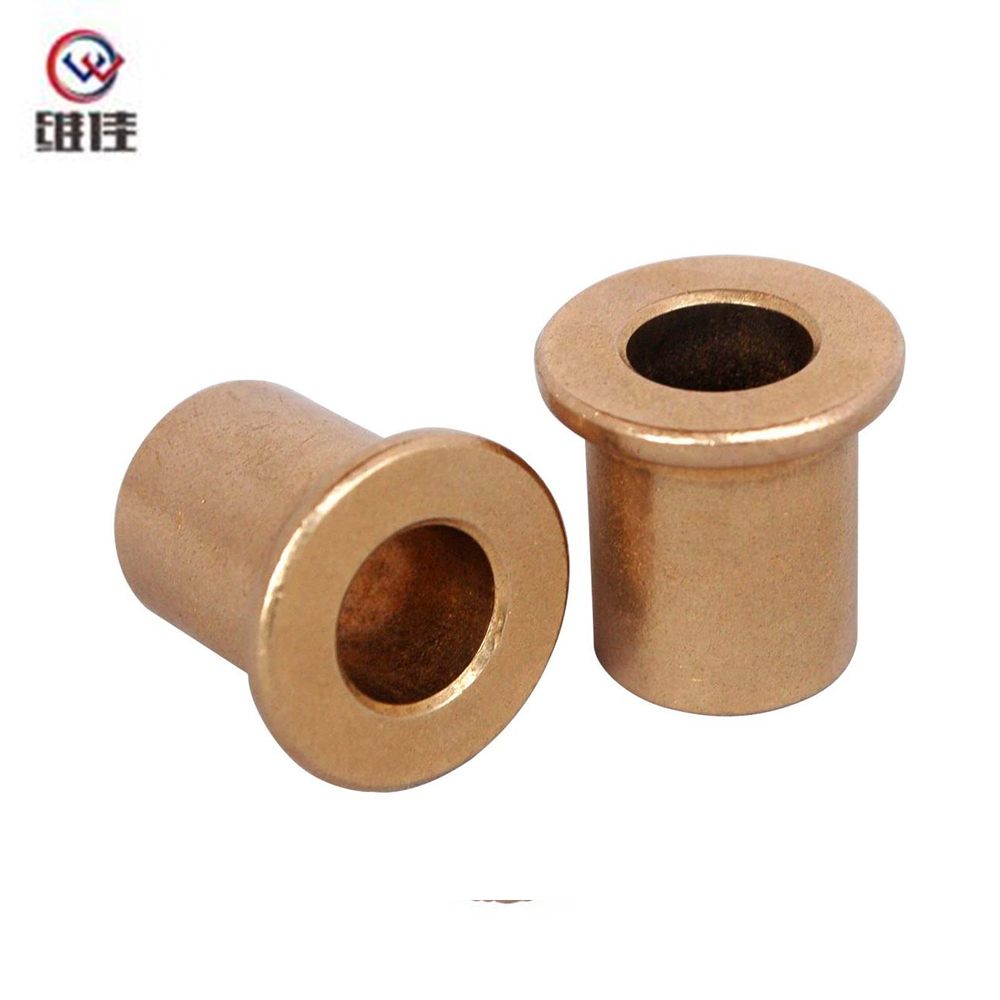
This copper-based powder metallurgy bushing is manufactured through an integrated process of compaction, sintering, sizing, and oil impregnation. It features excellent wear resistance and self-lubrica...
See Details -
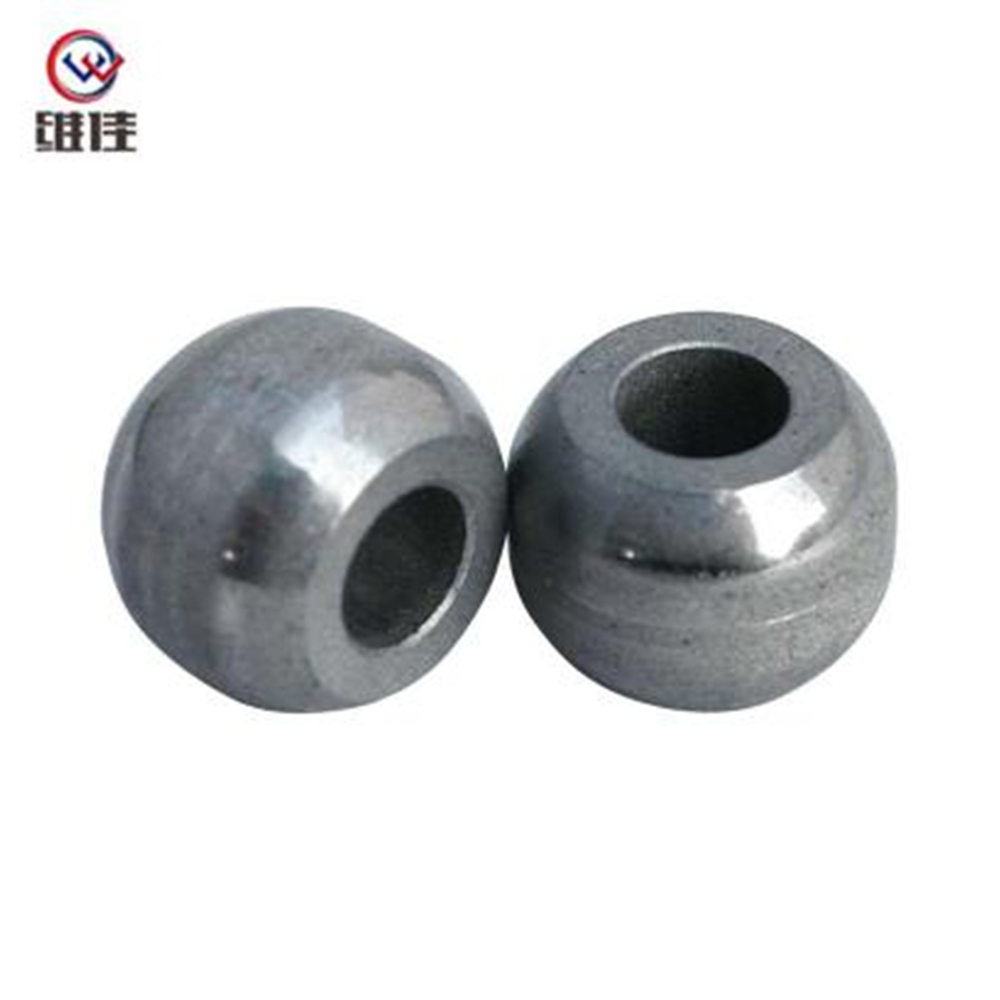
Product Description: High-precision powder metallurgy part (S14*7*10) made of iron material from Jiande Wefine, customized PM components with strict tolerance control.
See Details -
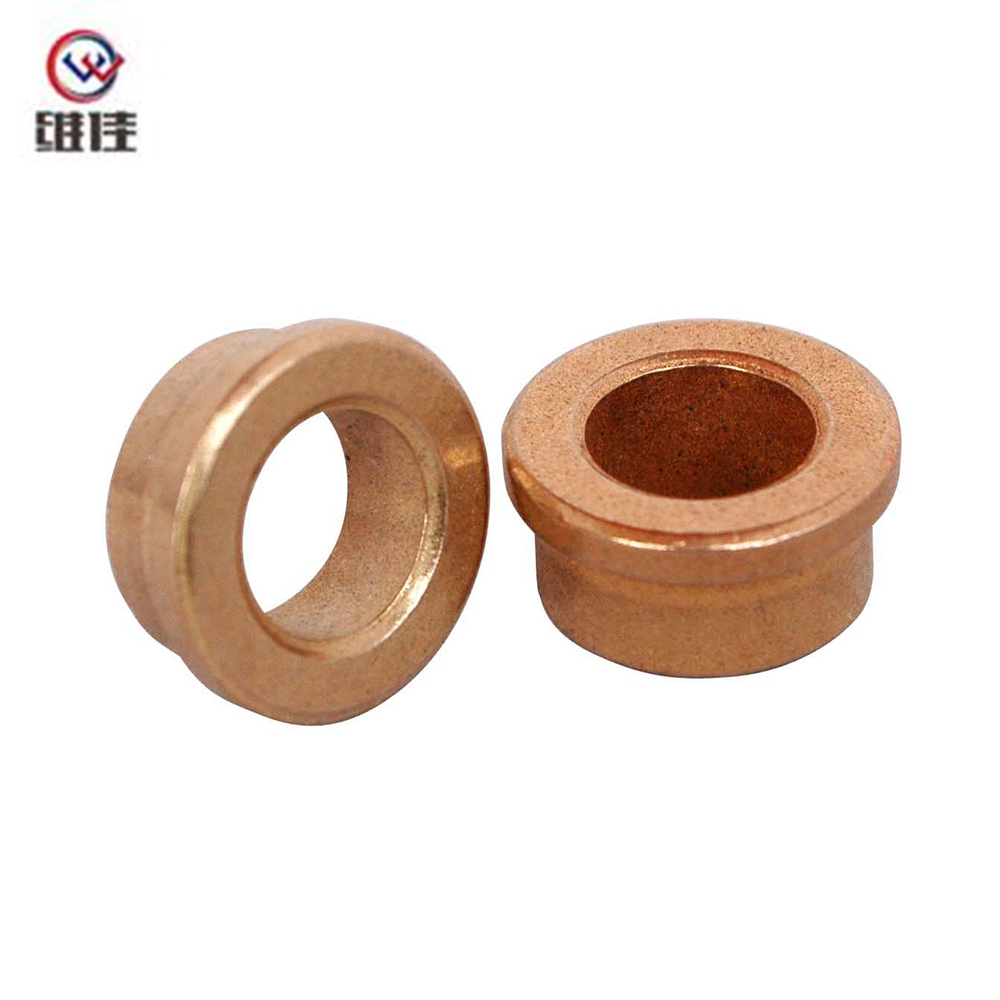
Premium Material: Our flange bushing is crafted from Sint B50 oil-impregnated bronze, featuring an 18% oil content. The high-quality tin bronze material ensures exceptional hardness, wear resistance, ...
See Details
Copyright © Jiande Welfine Technology Co., Ltd. All Rights Reserved. Custom Self-lubricating Sintered Bushing Manufacturers
