 English
 中文简体
中文简体
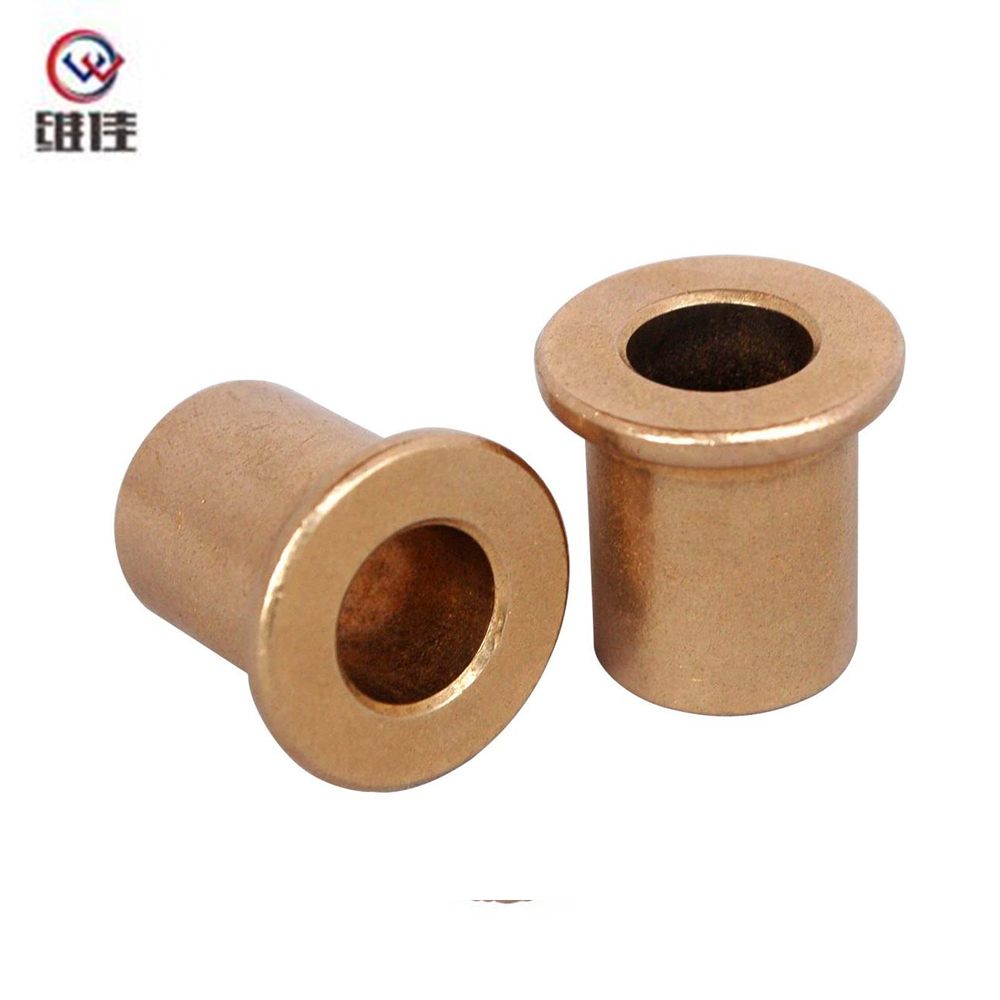
Premium Material: Our flange bushing is crafted from Sint B50 oil-impregnated bronze, featuring an 18% oil content. The high-quality tin bronze material ensures exceptional hardness, wear resistance, ...
See DetailsE-mail us: [email protected]
Tel: +86-15239857375


 Home / Author / Gao Manli — Overseas Sales Manager / Sint B50 Powder Metallurgy Oil-Impregnated Bronze Flange Bushing: A Reliable Self-Lubricating Solution
 Sint B50 Powder Metallurgy Oil-Impregnated Bronze Flange Bushing: A Reliable Self-Lubricating Solution
 2026.08.27
 Gao Manli — Overseas Sales Manager
Content
- 1 What Is a Sint B50 Oil-Impregnated Bronze Flange Bushing?
- 2 Material Characteristics of Sint B50 Sintered Bronze
- 3 How the Self-Lubricating Mechanism Works
- 4 Advantages of the Flange Configuration
- 5 Advantages Over Conventional Bushing Solutions
- 6 Precision Manufacturing Process
- 7 Manufacturing Strengths of Jiande Welfine Technology Co., Ltd.
- 8 Application Areas
- 9 Design and Selection Considerations
- 10 Installation Recommendations
- 11 How the Product Supports Lower Total Cost of Ownership
- 12 Why Powder Metallurgy Is Important for This Product
- 13 Product Quality Evaluation
- 14 Customization and Engineering Support
- 15 Recommended Industries and Equipment
- 16 Environmental and Operational Benefits
- 17 Future Development of Self-Lubricating Bushings
- 18 Frequently Asked Questions
- 18.1 Does the Sint B50 oil-impregnated bronze flange bushing require regular lubrication?
- 18.2 What does the 18% oil content mean?
- 18.3 Can this bushing be used for axial loads?
- 18.4 Is the product suitable for high-speed rotation?
- 18.5 Can the bushing operate under oscillating movement?
- 18.6 What type of shaft should be used?
- 18.7 Can the flange bushing be customized?
- 18.8 How should the bushing be stored before use?
- 18.9 Can the product be used in dusty or wet environments?
- 18.10 How can product quality be verified?
- 18.11 What are the main reasons for premature bushing failure?
- 18.12 Why choose a flanged bushing instead of a cylindrical bushing?
- 18.13 What industries commonly use this type of bushing?
- 18.14 Does the product support mass production?
- 19 Conclusion
- 20 References
- 21 Product: Sint B50 Powdered Metallurgy Oil-Impregnated Bronze Flange Bushing
Modern machinery depends on many small components to deliver stable, efficient, and reliable performance. Among these components, bushings often work under continuous sliding or oscillating motion while supporting radial loads, controlling alignment, and reducing friction between moving parts. Although a bushing may appear simple, its material composition, pore structure, dimensional accuracy, lubrication behavior, and manufacturing consistency can directly influence the service life of an entire machine.
The Sint B50 powder metallurgy oil-impregnated bronze flange bushing is designed for applications that require dependable motion support, reduced maintenance, and long-term operating stability. Manufactured from oil-impregnated sintered bronze with an oil content of approximately 18%, this flange bushing combines the strength and wear resistance of a copper-based alloy with the convenience of integrated self-lubrication.
Unlike conventional solid bronze bushings that usually require periodic external lubrication, the porous structure of a sintered bronze bushing stores lubricant within the body of the component. During operation, frictional heat and movement encourage the oil to migrate toward the bearing surface. When the equipment stops and cools, the lubricant can be drawn back into the internal pores. This repeating process helps maintain a lubricating film over an extended service period.
The flange design further increases the functional value of the component. In addition to supporting radial movement, the integrated flange can assist with axial positioning and retention. This can simplify assembly, reduce the number of separate hardware components, and improve the compactness of a mechanical system.
Produced by Jiande Welfine Technology Co., Ltd., the Sint B50 oil-impregnated bronze flange bushing is suitable for automotive components, industrial machinery, agricultural equipment, household appliances, hydraulic systems, automated equipment, and other applications requiring low-maintenance bearing support. Through powder metallurgy, controlled oil impregnation, precision sizing, and systematic inspection, the product is manufactured to provide consistent performance in demanding production environments.
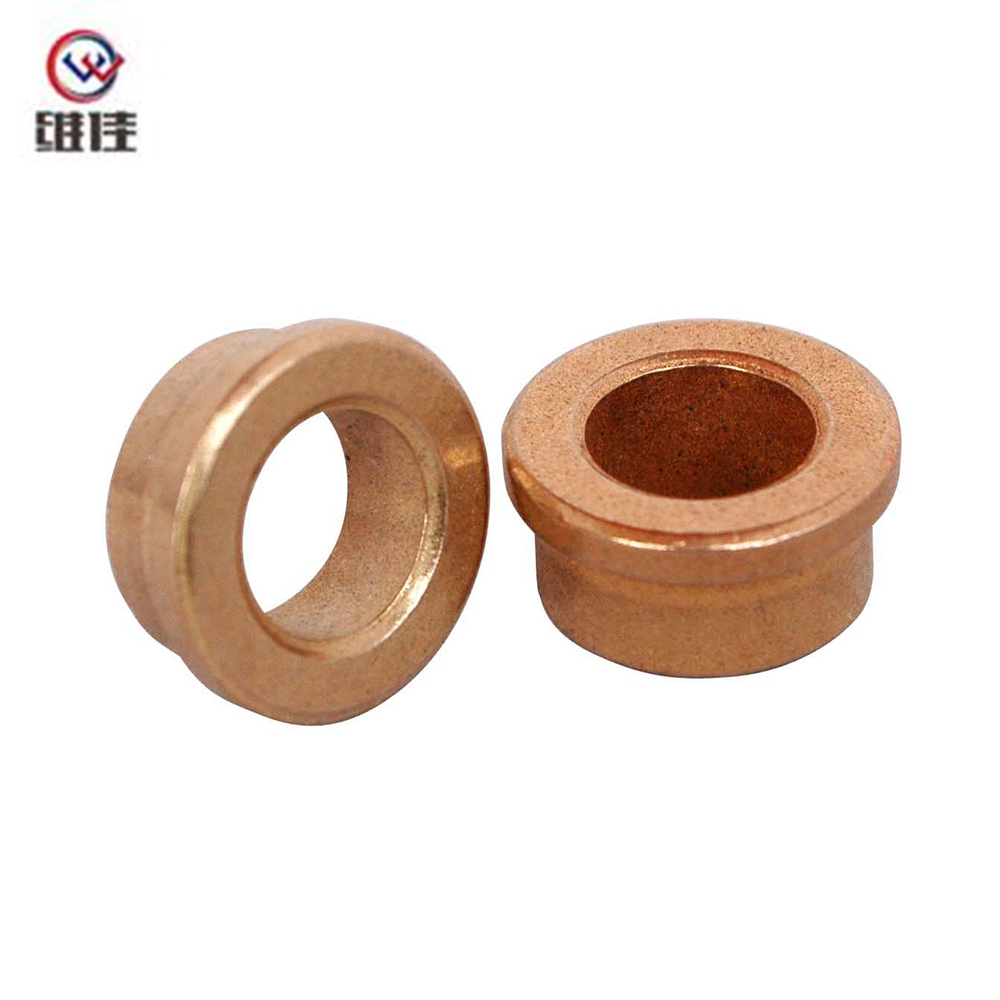
Sint B50 Powdered Metallurgy Oil-Impregnated Bronze Flange Bushing
What Is a Sint B50 Oil-Impregnated Bronze Flange Bushing?
A Sint B50 oil-impregnated bronze flange bushing is a porous plain bearing manufactured using powder metallurgy technology. It is formed from carefully selected copper-based alloy powders that are compacted under controlled pressure and then sintered at elevated temperatures. After sintering, the component is impregnated with lubricating oil so that its interconnected pores become internal lubricant reservoirs.
The term “flange bushing” refers to the geometry of the component. A standard cylindrical bushing supports a shaft primarily in the radial direction. A flange bushing includes an extended shoulder or flange at one end. This flange can help locate the bushing in its housing and can provide support against certain axial forces, depending on the application design and loading conditions.
The designation B50 identifies a specific sintered bronze material grade used for oil-impregnated bearing applications. The material is engineered to balance strength, porosity, oil storage, wear resistance, and friction performance. The approximately 18% oil content provides a significant internal lubricant reserve while preserving sufficient structural integrity for general industrial use.
Because the bushing is produced through powder metallurgy rather than being machined entirely from a solid bronze bar, the manufacturing process can create a controlled porous network throughout the component. This network is essential to the self-lubricating function. The pores are intentionally formed during compaction and sintering and are not random surface defects.
In practical terms, the product performs as a compact, integrated bearing and lubrication solution. It supports a rotating or oscillating shaft, reduces friction at the sliding interface, helps control wear, and supplies lubricant without requiring constant connection to an external lubrication system.
Material Characteristics of Sint B50 Sintered Bronze
The performance of an oil-impregnated bushing begins with the quality and composition of its base material. Sint B50 sintered bronze is a copper-based bearing material selected for its combination of mechanical strength, sliding performance, thermal behavior, and compatibility with lubricating oils.
Copper-based alloys are widely used in plain bearing applications because they provide good resistance to sliding wear and can operate reliably against properly finished steel shafts. The addition of tin and the controlled sintering process contribute to the hardness and structural stability required for repeated movement.
The material offers a useful balance between load-bearing capacity and porosity. A bushing with too little porosity may not store enough lubricant to support self-lubricating operation. A bushing with excessive or poorly distributed porosity may lose mechanical strength and dimensional stability. The B50 material is designed to maintain a controlled pore structure that supports both functions.
The internal oil content of approximately 18% is another important characteristic. The oil is distributed throughout the porous bronze body rather than applied only to the outer surface. This allows the bushing to release lubricant progressively as operating conditions require it. The stored oil also helps reduce the risk of immediate dry sliding during start-up or intermittent operation.
Material quality is influenced by powder purity, particle-size distribution, powder blending, compaction pressure, sintering temperature, furnace atmosphere, cooling conditions, and post-processing. Variations in any of these stages can affect density, porosity, hardness, dimensional accuracy, and oil absorption. For this reason, reliable production requires more than simply selecting a bronze powder; it requires control of the entire manufacturing chain.
How the Self-Lubricating Mechanism Works
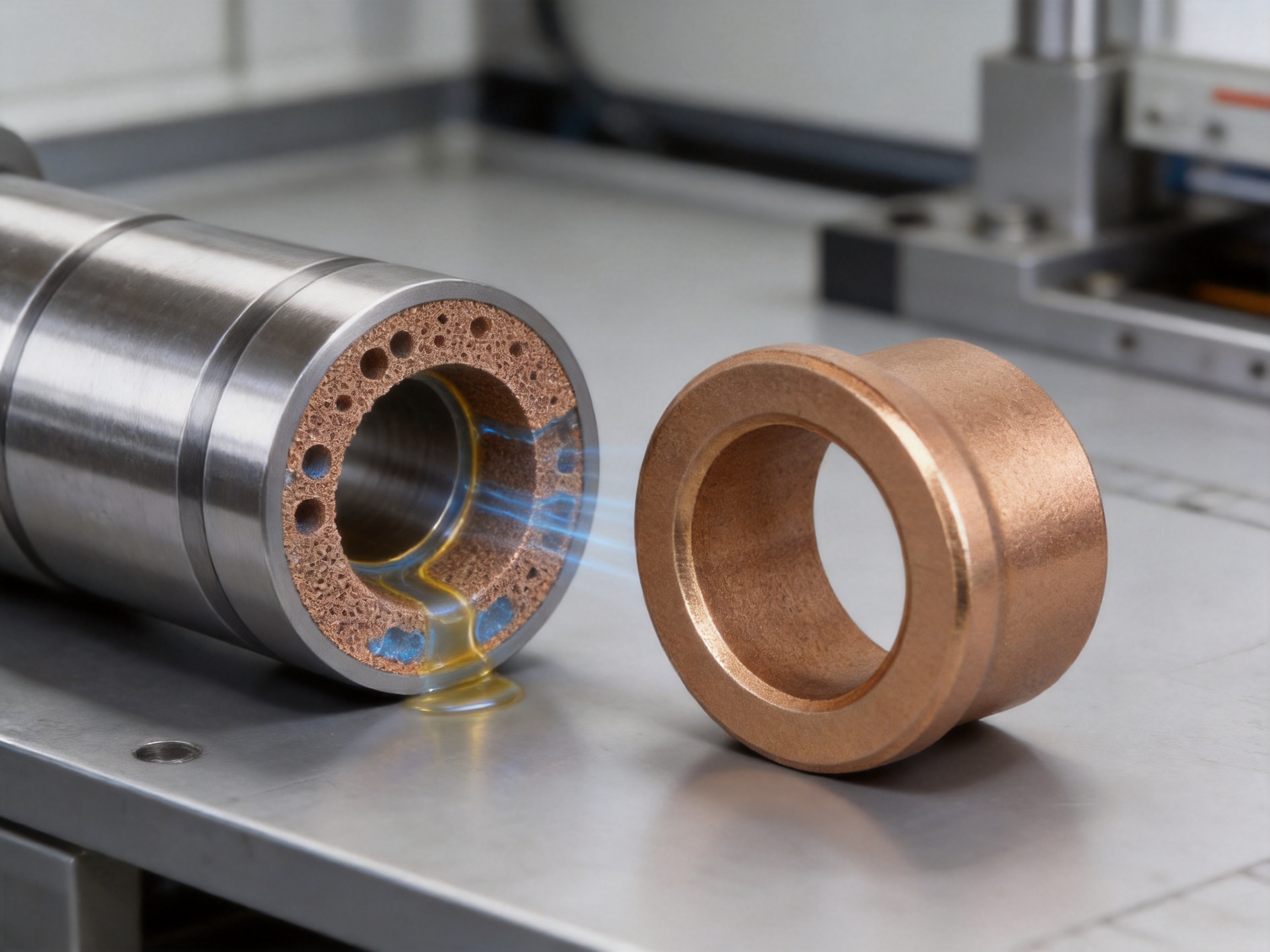
The principal advantage of the Sint B50 flange bushing is its ability to retain and release lubricant from within the component. During the sintering process, microscopic interconnected pores remain in the bronze structure. These pores act as a distributed network of oil reservoirs.
When the bushing is installed and the shaft begins to rotate or oscillate, friction develops at the contact interface. The resulting temperature increase and pressure changes encourage oil to move from the internal pores toward the sliding surface. The oil forms a thin film between the shaft and the bushing, reducing direct metal-to-metal contact.
This oil film performs several functions. It reduces friction, helps carry away a portion of the heat generated by sliding, limits adhesive wear, and supports smoother operation. It can also reduce vibration and operating noise, particularly in systems where the shaft motion is continuous and the bearing surface is properly aligned.
When the machine stops, the temperature at the bearing interface generally decreases. Capillary forces and the porous structure help draw a portion of the oil back into the bushing. The lubricant is therefore not consumed immediately in a single operating cycle. Instead, the bushing can continue to participate in a repeated release and recovery process.
This mechanism is often described as lifelong or maintenance-free lubrication under suitable operating conditions. However, the actual service life depends on shaft surface quality, load, speed, temperature, environmental contamination, alignment, installation accuracy, and the compatibility of the lubricant with the application. Proper design remains essential even when the bushing is self-lubricating.
The self-lubricating function is especially valuable in locations where routine greasing is difficult. It can also be beneficial in sealed assemblies, compact mechanisms, automated production lines, appliances, and equipment where regular maintenance would require costly downtime.
Advantages of the Flange Configuration
The flange is more than a geometric variation. It can provide several practical advantages compared with a standard straight bushing, particularly when the assembly requires axial positioning or limited axial support.
Integrated Axial Positioning
The flange can locate the bushing within a housing and help prevent axial movement. This may eliminate the need for separate retaining rings, washers, collars, or other positioning hardware, depending on the assembly design.
Simplified Assembly
A flanged component can be pressed into a prepared housing until the flange reaches a defined stop. This makes installation more repeatable and helps establish the correct axial position. Fewer separate parts can reduce assembly time and lower the possibility of incorrect installation.
Improved Space Efficiency
Combining radial bearing support and axial positioning in one component can be useful where installation space is limited. Designers may be able to reduce the overall number of parts or shorten the axial length of a mechanism.
Support for Combined Loads
A flange bushing can accommodate radial loads while also reacting to certain axial forces. The allowable axial load depends on the flange dimensions, contact area, speed, material condition, lubrication behavior, and mounting arrangement. It should not be assumed that every flanged bushing is suitable for heavy continuous thrust without application-specific verification.
Reliable Component Retention
The flange helps maintain the bushing’s position during operation. Stable positioning is important because excessive axial movement can lead to uneven wear, shaft misalignment, noise, and premature failure.
| Feature | Benefit in Mechanical Design | Application Value |
|---|---|---|
| Porous sintered bronze body | Stores and releases lubricant internally | Reduced need for routine relubrication |
| Approximately 18% oil content | Provides an internal lubricant reserve | Longer intervals between maintenance activities |
| Integrated flange | Supports positioning and certain axial forces | Simpler, more compact assemblies |
| Copper-based alloy structure | Offers wear resistance and load support | Suitable for many sliding and oscillating mechanisms |
| Precision manufacturing | Promotes consistent fit and alignment | Reliable high-volume assembly |
| Oil-impregnation process | Distributes lubricant through the porous network | Smoother operation and lower friction |
Advantages Over Conventional Bushing Solutions
Different bushing materials and structures are appropriate for different operating conditions. The value of the Sint B50 oil-impregnated bronze flange bushing is best understood by comparing it with common alternatives.
Compared with Solid Machined Bronze Bushings
Solid machined bronze bushings can provide excellent mechanical strength and may be selected for high-load or severe-duty applications. However, they generally require an external lubrication strategy. This may involve grease fittings, oil grooves, automatic lubricators, or regular manual maintenance.
The oil-impregnated sintered bushing contains lubricant within its own structure. This can reduce the need for additional lubrication hardware and make the component more suitable for compact or inaccessible assemblies. Powder metallurgy also provides efficient material utilization and repeatable production for large quantities.
Solid bronze remains advantageous in some high-load, high-temperature, or heavily contaminated environments. The correct choice depends on the complete duty cycle. Nevertheless, for moderate loads and applications where maintenance reduction is a priority, the oil-impregnated B50 bushing offers a strong practical alternative.
Compared with Plastic Bushings
Polymer bushings can provide low noise, chemical resistance, and good performance in selected dry-running applications. Some polymer materials, however, may be sensitive to temperature, creep, dimensional changes, or specific load-speed combinations.
The bronze structure of the B50 bushing provides a rigid metallic support surface and good dimensional stability in many industrial operating conditions. Its internal oil supply can also provide a more consistent lubrication effect than a dry-running polymer design. In applications involving elevated mechanical loads or repeated shaft movement, the metal structure may offer valuable durability.
Plastic remains a suitable option where electrical insulation, corrosion resistance, very low weight, or special chemical compatibility is required. The B50 bushing is particularly attractive where metallic load support and self-lubrication are more important.
Compared with Rolling Bearings
Rolling bearings can offer very low friction at suitable speeds and are often used where high rotational speed, strict runout control, or low starting torque is required. They also include multiple precision components and may require careful sealing, preload control, and installation procedures.
A plain bushing has a simpler construction, fewer moving parts, and generally lower space and component complexity. The Sint B50 flange bushing can be effective in oscillating motion, intermittent movement, low-to-medium speed operation, and applications where simplicity and low maintenance are more important than the lowest possible rolling friction.
Because a plain bushing does not contain rolling elements, it can also operate quietly and tolerate certain forms of motion that are not ideal for rolling bearings. Selection should be based on load, speed, movement type, operating temperature, available space, and required service life.
Compared with Externally Lubricated Sintered Bushings
Some sintered bushings are manufactured for use with external lubrication rather than permanent oil impregnation. These products can be useful where the lubrication system is already available, but they may require more maintenance infrastructure.
The B50 oil-impregnated design integrates the lubricant into the bushing during production. This makes it suitable for self-lubricating applications and reduces dependence on external oil or grease delivery systems.
Precision Manufacturing Process
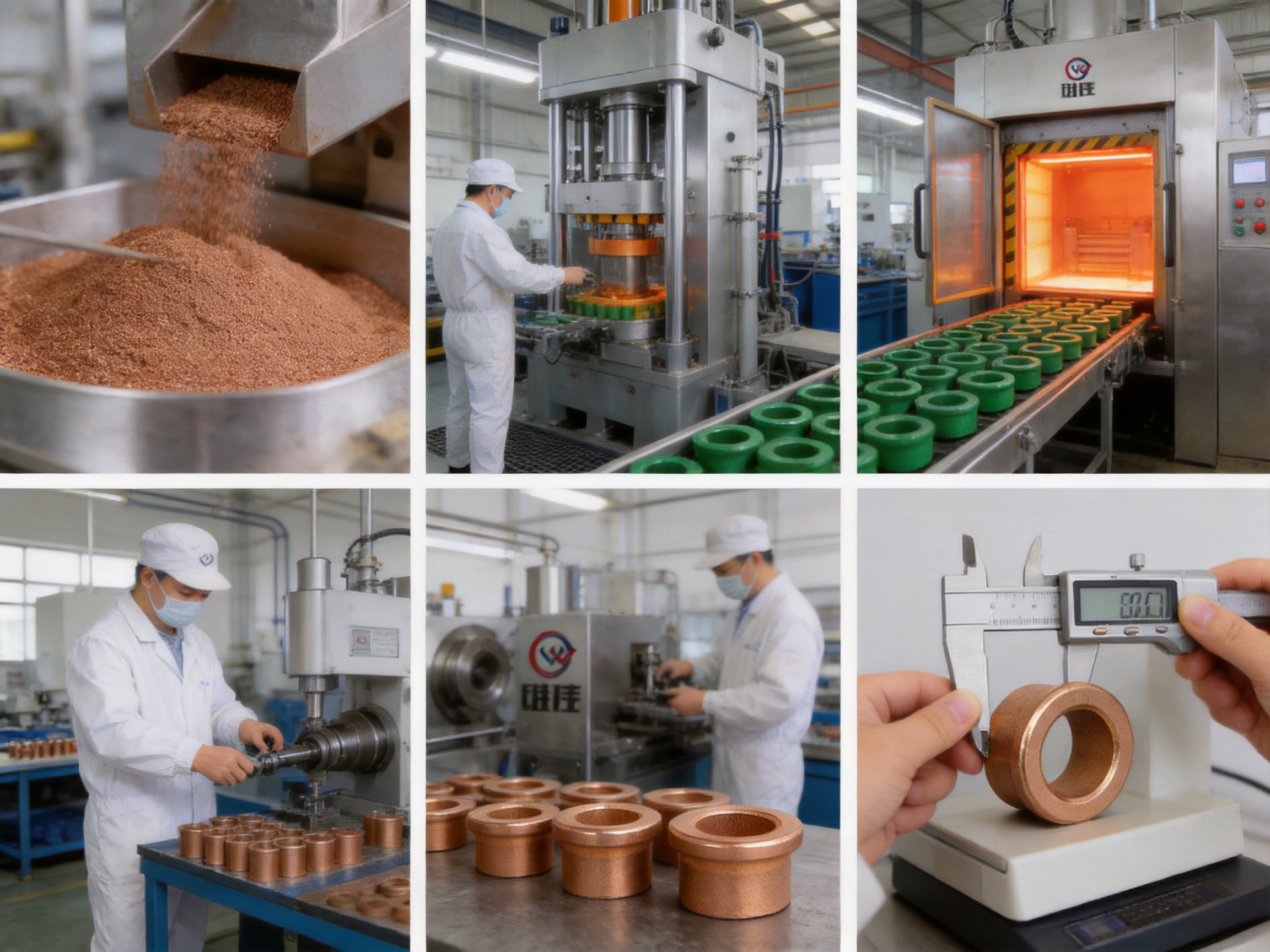
The performance of a sintered bronze flange bushing depends heavily on process discipline. Jiande Welfine Technology Co., Ltd. integrates powder preparation, compaction, sintering, oil impregnation, precision machining, inspection, and customized manufacturing within its production system.
Powder Selection and Blending
Production begins with copper-based alloy powders selected according to the required material characteristics. Powder purity and particle-size distribution influence packing behavior, green strength, sintered density, pore geometry, and final mechanical properties.
Controlled blending helps distribute the alloy constituents evenly. A uniform blend is important because localized composition variations can produce inconsistent hardness, shrinkage, oil absorption, or wear behavior. Powder handling must also be controlled to minimize contamination and maintain repeatability between production batches.
High-Pressure Compaction
The blended powder is placed into a precision die and compacted under controlled pressure. The die defines the basic bushing geometry, including the cylindrical body and flange. Compaction parameters influence the density distribution and shape of the unfinished component.
Uniform compaction is particularly important for flanged bushings because the body and flange may have different cross-sectional areas. Poorly controlled pressure distribution can create density differences, distortion, cracking, or inconsistent dimensional change during sintering.
High-efficiency presses and precision forming equipment help maintain stable production conditions. Tooling design, powder filling, press speed, ejection behavior, and die maintenance all contribute to component consistency.
High-Temperature Sintering
After compaction, the formed parts are sintered in a controlled high-temperature furnace. Sintering bonds the powder particles together through solid-state diffusion and develops the mechanical strength of the bronze structure.
Temperature profile, furnace atmosphere, heating rate, holding time, and cooling conditions must be carefully managed. These variables affect the final density, pore structure, hardness, dimensional stability, and surface condition of the bushing.
A controlled atmosphere helps protect the copper-based material from undesirable oxidation and supports stable metallurgical development. Consistent furnace control is essential when producing components for high-volume assemblies where even small variations can affect fit or performance.
Oil Impregnation
Following sintering and any required finishing operations, the porous bushings undergo oil impregnation. Vacuum-assisted impregnation can remove air from the internal pore network and encourage the lubricant to penetrate deeply and evenly into the material.
The selection of oil depends on the intended operating conditions. Viscosity, temperature range, compatibility, evaporation behavior, and expected speed should be considered. A consistent impregnation process helps ensure that the bushing contains a reliable internal lubricant reserve rather than only a superficial coating.
Precision Sizing and Machining
Although powder metallurgy can produce near-net-shape components, certain bushing surfaces may require sizing, calibration, turning, reaming, grinding, or other precision machining operations. These processes establish the final bore size, outside diameter, flange dimensions, surface finish, and geometric accuracy.
A properly finished bore is essential for shaft compatibility. Excessive clearance can increase vibration and wear, while insufficient clearance can cause high friction, heat generation, or seizure. The correct fit depends on the shaft material, shaft diameter, operating temperature, speed, load, and installation method.
Precision machining also helps maintain consistent results across production batches. This is especially valuable for automated assembly, where components must fit housings and shafts without repeated manual adjustment.
Inspection and Testing
Final inspection may include dimensional measurement, visual inspection, density evaluation, hardness testing, oil-content verification, surface-finish assessment, and functional testing according to customer requirements. Process records and quality checkpoints help trace production conditions and identify deviations before shipment.
The integration of manufacturing and testing equipment within one production base supports better process coordination. It also allows engineering teams to adjust tooling, process parameters, and inspection methods based on application requirements.
Manufacturing Strengths of Jiande Welfine Technology Co., Ltd.
Jiande Welfine Technology Co., Ltd. was established in 2001 and specializes in powder metallurgy sintering and related precision machining. The company integrates research and development, production, sales, and customized technical support into one operating system.
With a modern production base covering approximately 13,039 square meters, the company operates equipment for powder compaction, high-temperature sintering, precision forming, machining, and product testing. This integrated capability supports control across multiple production stages instead of relying entirely on disconnected external processes.
The company has more than 20 years of experience in powder metallurgy manufacturing and employs more than 150 skilled personnel. This combination of accumulated process knowledge and technical staff provides a foundation for stable production of bushings and other precision sintered components.
Integrated Research and Development
Product development begins with understanding the application rather than selecting a standard part without evaluating the operating environment. Engineering teams can assess drawing requirements, shaft conditions, loading patterns, movement type, speed, temperature, installation structure, and maintenance expectations.
Based on these factors, the company can support decisions relating to material selection, bushing geometry, flange dimensions, oil characteristics, tolerances, and finishing requirements. This application-based approach helps customers obtain components that are better matched to actual working conditions.
OEM and ODM Capability
Standard catalog dimensions may not always meet the needs of specialized equipment. Jiande Welfine Technology Co., Ltd. provides OEM and ODM services based on customer drawings, samples, technical specifications, and application requirements.
Customized services can include non-standard inside and outside diameters, flange dimensions, overall length, grooves, chamfers, locating features, tolerances, and packaging requirements. The feasible design depends on material behavior, tooling conditions, production volume, and required performance.
When customers provide samples, engineering teams can study the existing component and develop a production process for a compatible or improved replacement. When customers provide drawings, the manufacturing team can review dimensional relationships, critical tolerances, and production efficiency before confirming the final process.
Process Control and Consistency
Powder metallurgy requires consistency across many connected variables. The company’s production system is designed to control the sequence from powder preparation through final inspection. This supports stable density, pore structure, dimensions, oil content, and surface finish.
Consistency is especially important for customers purchasing large quantities. A bushing that performs well in a prototype but varies significantly during mass production can create assembly delays and field reliability concerns. Repeatable tooling, controlled furnace operation, accurate machining, and systematic inspection reduce this risk.
Quality Management Certifications
Jiande Welfine Technology Co., Ltd. has obtained ISO 9001:2015 and IATF 16949:2016 certifications. ISO 9001 provides a framework for quality management, documented processes, corrective action, customer focus, and continual improvement. IATF 16949 is associated with the automotive supply chain and emphasizes process control, risk management, traceability, defect prevention, and consistent product quality.
These certifications do not replace product-specific engineering validation, but they demonstrate that the company operates within recognized quality management systems. For customers in automotive, industrial, appliance, and automation markets, this provides additional confidence in supplier organization and manufacturing discipline.
Application Areas
Automotive Components
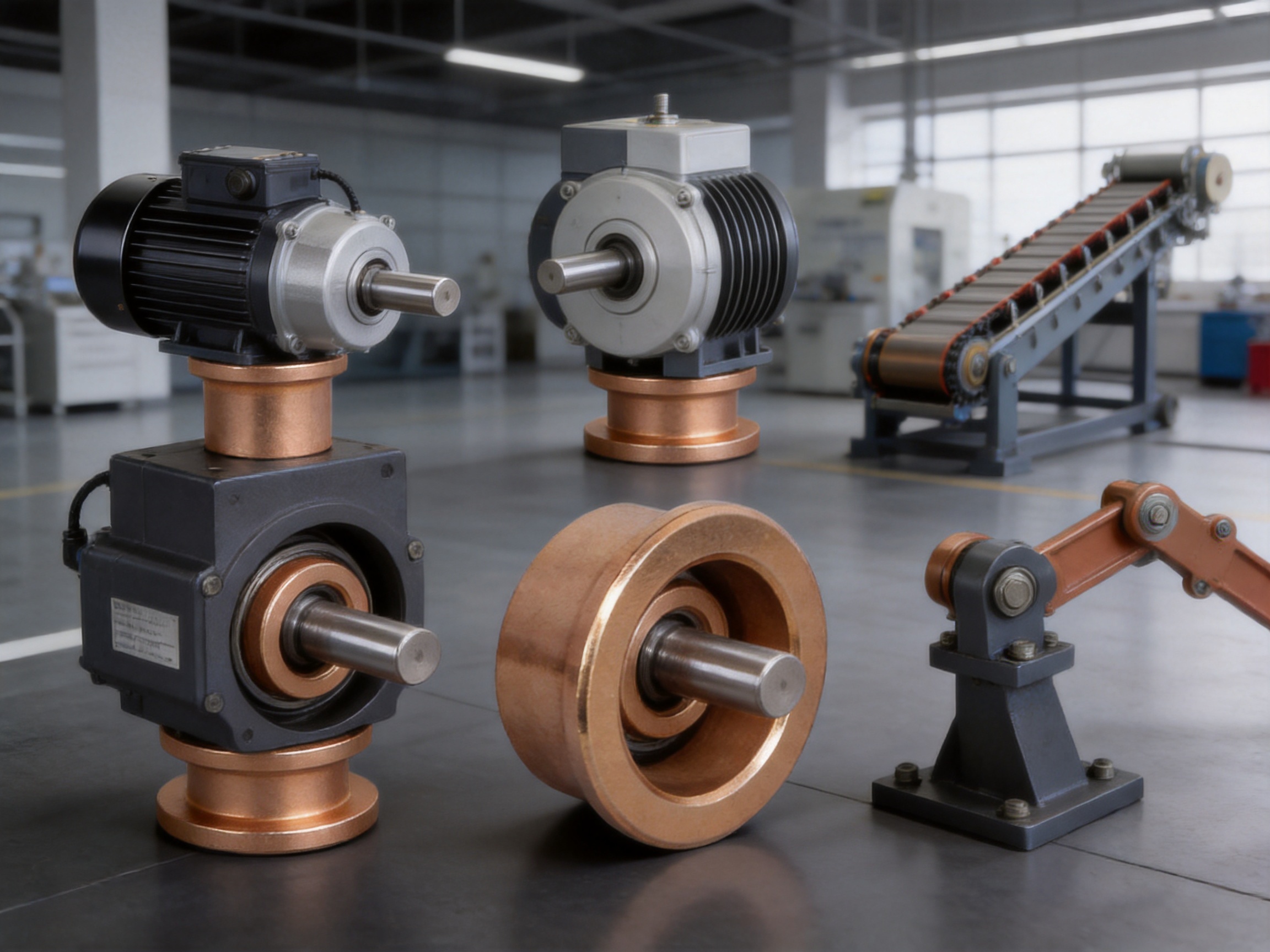
Automotive systems contain numerous compact mechanisms with repeated movement and limited maintenance access. Flange bushings can be used in seat adjustment mechanisms, windshield wiper drive systems, sunroof assemblies, cooling fan motors, latches, actuators, and other motion-control components.
The self-lubricating design is useful where a component must operate for long periods without a convenient relubrication point. The flange can also assist with positioning in compact mechanisms where axial retention is important.
Household Appliances
Washing machines, air-conditioning units, fans, vacuum cleaners, food-processing equipment, and other appliances often require quiet, reliable, and economical bearing support. A sintered bronze bushing can reduce friction noise and simplify the internal design.
Appliance components may experience frequent start-stop cycles rather than continuous operation. The oil reservoir within the bushing can support repeated cycles, provided the load, speed, temperature, and shaft finish remain within the intended design range.
Industrial Automation
Conveyors, packaging equipment, textile machinery, printing machines, material-handling systems, and automated actuators require reliable motion with minimal interruptions. Maintenance downtime can affect production schedules and operating costs.
Oil-impregnated flange bushings can support pivot points, guide mechanisms, rollers, linkages, and low-to-medium speed rotating shafts. Their simple construction is suitable for equipment designers seeking to reduce part count and simplify maintenance procedures.
Agricultural Equipment
Agricultural machinery often includes pivoting joints, adjustment mechanisms, drive components, and linkages exposed to demanding duty cycles. A flanged bushing can help maintain the position of a moving shaft or pin while reducing dependence on frequent lubrication.
In dusty or contaminated environments, correct sealing and protection remain important. The bushing should be selected together with suitable housing design, shaft material, clearance, and contamination-control measures.
Hydraulic and Mechanical Systems
Hydraulic equipment, compact actuators, pumps, valves, and mechanical transmission systems may use bushings for support and alignment. The B50 bushing can be considered for applications requiring stable sliding support and low maintenance.
Compatibility with hydraulic fluids, cleaning agents, seals, and surrounding materials should be verified before use. The internal bearing oil and external operating fluid must not create an unfavorable chemical or performance interaction.
Power Tools and Compact Equipment
Power tools and small mechanical devices frequently require compact components that tolerate vibration, repeated movement, and limited service access. A sintered bronze flange bushing can provide a quiet and economical alternative to more complex bearing assemblies in suitable locations.
Design and Selection Considerations
Selecting a bushing only by nominal diameter is not sufficient. The complete operating environment should be reviewed before final approval.
Load
Radial load, axial load, impact load, and load direction should be identified. Flange bushings can support certain axial forces, but the allowable load depends on flange area, material strength, contact pressure, and movement conditions.
Speed and Movement
Rotational speed, oscillation angle, reciprocating frequency, acceleration, and duty cycle influence heat generation and oil migration. An application with slow oscillation may behave differently from one involving continuous high-speed rotation, even when the nominal load is similar.
Temperature
Operating temperature affects oil viscosity, dimensional clearance, material strength, and lubricant evaporation. The selected oil and bushing fit should be appropriate for the expected temperature range, including start-up and peak conditions.
Shaft Quality
The shaft should have suitable hardness, roundness, straightness, and surface finish. A rough or damaged shaft can accelerate wear and consume lubricant more quickly. Sharp edges, burrs, or inadequate chamfers can damage the bushing during installation.
Housing Design
The housing must provide adequate support and correct interference or clearance conditions. The bore should be properly aligned and free from contamination. The flange seat should be flat and accurately positioned so that the bushing is not distorted during pressing.
Environmental Conditions
Dust, water, corrosive chemicals, vibration, shock, and exposure to cleaning agents can affect bearing life. Where contamination is severe, seals, shields, protective covers, or alternative materials may be required.
Maintenance Expectations
The B50 bushing is designed to reduce or eliminate routine lubrication under normal conditions, but it should still be inspected as part of a broader equipment maintenance program. Abnormal noise, increased clearance, temperature rise, vibration, or visible wear may indicate an issue with alignment, loading, shaft condition, or the surrounding assembly.
Installation Recommendations
Correct installation is essential for achieving the expected performance of an oil-impregnated bronze bushing. Before installation, inspect the bushing, shaft, and housing for burrs, dirt, corrosion, and damage.
Do not strike the bushing directly with a hard tool. Use a suitable pressing fixture or installation mandrel that applies force evenly and contacts the appropriate surface. The mandrel should be aligned with the housing bore to prevent tilting or deformation.
The housing bore should meet the specified dimensional and geometric requirements. An incorrect interference fit can either allow the bushing to move during operation or compress the bore excessively. Both conditions can cause premature failure.
The shaft should be inserted carefully after confirming that its surface is clean and free from burrs. If an external lubricant is used during assembly, its compatibility with the impregnated oil should be confirmed. Excessive grease or incompatible fluids may interfere with the intended oil-release behavior.
After installation, the assembly should be checked for free movement, correct axial positioning, abnormal resistance, and proper alignment. Initial operation should be monitored for unusual noise, excessive temperature, or unexpected vibration.
How the Product Supports Lower Total Cost of Ownership
The purchase price of a bushing is only one part of its overall economic value. A component that reduces maintenance, simplifies assembly, and improves equipment uptime may offer a lower total cost of ownership even when its unit price is not the lowest available.
Reduced Lubrication Requirements
The internal oil reserve reduces dependence on manual greasing or external lubrication systems. This can lower labor costs and reduce the need for grease fittings, oil lines, pumps, or maintenance tools.
Lower Downtime
When maintenance access is difficult, relubrication can require disassembly or production interruption. A self-lubricating bushing helps reduce the frequency of these interruptions under suitable operating conditions.
Fewer Assembly Components
The integrated flange can replace separate positioning hardware in some designs. Fewer parts can reduce procurement complexity, inventory requirements, assembly labor, and the risk of missing components.
Efficient Material Utilization
Powder metallurgy forms components close to their final geometry. Compared with machining a complete bushing from solid stock, this can reduce material waste and improve production efficiency, particularly in high-volume manufacturing.
Stable Mass Production
Repeatable forming and controlled finishing support consistent dimensions across large orders. Consistency can reduce rejected assemblies, line stoppages, and field service costs.
Why Powder Metallurgy Is Important for This Product
Powder metallurgy allows manufacturers to develop material structures that are difficult to obtain through conventional casting or machining alone. For oil-impregnated bronze bushings, the most important advantage is the ability to create a controlled porous network.
In a traditionally machined solid bronze bushing, there is no internal pore structure designed to store oil. Lubrication must therefore be supplied from outside. In a powder metallurgy bushing, porosity is intentionally incorporated into the material and subsequently filled with lubricant.
The process also supports near-net-shape production. Flanges, locating shoulders, and other geometric features can be formed directly in the compacted part. Additional machining can then be concentrated on critical surfaces rather than removing large volumes of material from a solid billet.
Powder metallurgy is also suitable for repeatable high-volume production. Once the tooling and process parameters are validated, large quantities of similar components can be produced with stable geometry and material characteristics.
However, powder metallurgy requires careful engineering. Inadequate powder filling, uneven compaction, poor sintering control, or inconsistent oil impregnation can compromise performance. The value of the process depends on the manufacturer’s ability to control each stage, which is why technical experience and inspection systems are important differentiators.
Product Quality Evaluation
Purchasers and engineers can evaluate a Sint B50 bushing through several technical and supplier-related criteria.
Material Verification
The base alloy should be consistent with the specified B50 material grade. Material documentation, production records, and appropriate testing can help verify composition and batch consistency.
Dimensional Accuracy
Inside diameter, outside diameter, length, flange thickness, flange diameter, concentricity, roundness, and perpendicularity should be checked according to the drawing and application requirements.
Porosity and Oil Content
Porosity should be sufficient for lubricant storage while remaining compatible with the required mechanical strength. Oil content should be controlled so that the component provides consistent self-lubricating performance from batch to batch.
Surface Finish
The bore and external surfaces should have a suitable finish for the shaft and housing. A smooth, uniform bore helps minimize friction and wear, but the surface should not be modified in a way that blocks the intended oil-release behavior.
Mechanical Performance
Hardness, compressive strength, wear resistance, and dimensional stability should be evaluated when required by the application. Testing conditions should reflect the actual load, speed, temperature, and lubrication environment as closely as possible.
Supplier Capability
A capable supplier should be able to explain its powder preparation, compaction, sintering, oil impregnation, machining, inspection, and traceability processes. Certifications such as ISO 9001:2015 and IATF 16949:2016 provide useful evidence of a structured quality system.
Customization and Engineering Support
Many equipment manufacturers require bushing designs that are not available as standard parts. Customization may involve the basic dimensions, flange geometry, oil type, tolerances, surface finish, packaging, or special inspection requirements.
Jiande Welfine Technology Co., Ltd. can support OEM and ODM projects using customer drawings, samples, and application data. The development process may begin with a review of the component’s function and operating environment. Engineers can then recommend a suitable manufacturing route and identify critical dimensions that require special control.
For new designs, early communication between the customer and manufacturer can improve manufacturability. Appropriate flange thickness, draft considerations, pressing direction, machining allowance, and tolerance selection can reduce tooling complexity and improve production efficiency.
For replacement parts, sample evaluation can help identify the original material, dimensional relationships, and wear pattern. If the original component failed prematurely, the analysis can also consider whether the cause was excessive load, poor alignment, contamination, incorrect fit, inadequate shaft finish, or unsuitable lubrication conditions.
Customized engineering does not mean changing specifications without validation. The final design should be reviewed through prototypes, dimensional inspection, functional testing, and application trials where appropriate.
Recommended Industries and Equipment
| Industry | Typical Equipment or Mechanism | Relevant Product Benefit |
|---|---|---|
| Automotive | Seat adjusters, wiper drives, sunroof systems, fan motors | Low maintenance and compact axial positioning |
| Household appliances | Fans, washing machines, vacuum cleaners, air-conditioning equipment | Quiet operation and integrated lubrication |
| Industrial automation | Conveyors, packaging machines, actuators, robotic mechanisms | Reduced downtime and repeatable assembly |
| Agriculture | Linkages, pivot joints, adjustment devices, drive mechanisms | Reliable sliding support in demanding duty cycles |
| Hydraulic systems | Valves, pumps, compact actuators, support mechanisms | Simple construction and low service requirements |
| Power tools | Compact drives, pivot assemblies, moving controls | Space efficiency and reduced operating noise |
| General machinery | Guides, rollers, shafts, hinges, sliding mechanisms | Wear resistance and cost-effective production |
Environmental and Operational Benefits
Self-lubricating components can contribute to more efficient equipment maintenance. By reducing the quantity of external grease or oil required, they may help simplify lubrication management and reduce the chance of over-lubrication or lubricant leakage.
Lower maintenance frequency can also reduce the number of service visits, replacement activities, and production interruptions. In automated facilities, this may support higher equipment availability and more predictable operating schedules.
Powder metallurgy can provide efficient material utilization because the component is formed close to its final shape. Reduced machining waste can be beneficial in high-volume production, although the overall environmental effect depends on powder production, furnace energy consumption, machining, oil selection, packaging, and end-of-life handling.
Longer component life may reduce the frequency of replacement and the resources required to manufacture and transport spare parts. To achieve this benefit, the bushing must be correctly selected and installed for the application.
Future Development of Self-Lubricating Bushings
Demand for self-lubricating bushings is expected to increase as manufacturers pursue lower maintenance costs, higher automation, improved energy efficiency, and longer service life. Automated production lines and smart equipment often require components that can operate reliably with minimal human intervention.
Future advances in powder metallurgy may improve load capacity, pore distribution, dimensional precision, wear resistance, and thermal performance. Improvements in lubricant formulation may also expand the usable temperature range and enhance compatibility with specialized operating environments.
Digital manufacturing and process monitoring can provide more detailed control of powder filling, compaction force, furnace conditions, machining dimensions, and inspection data. These developments may help manufacturers identify process trends earlier and deliver more consistent components.
Customized designs are also likely to become more common. Instead of selecting a generic bushing, equipment manufacturers may specify flange geometry, clearance, oil characteristics, and surface requirements according to the complete mechanical system.
The Sint B50 oil-impregnated bronze flange bushing is well positioned within this development because it combines a mature material system with an efficient manufacturing process and a simple, reliable mechanical design.
Frequently Asked Questions
Does the Sint B50 oil-impregnated bronze flange bushing require regular lubrication?
Under normal operating conditions, the bushing is designed to operate without routine external lubrication. Oil stored in the porous bronze structure is released during operation and can be partially reabsorbed when the component cools. Additional lubrication should only be introduced after confirming compatibility with the impregnated oil and the equipment manufacturer’s recommendations.
What does the 18% oil content mean?
The approximately 18% oil content refers to the lubricant retained within the porous sintered bronze structure. It provides an internal oil reserve that supports the self-lubricating function. Actual oil retention and release behavior depend on the material structure, oil type, operating temperature, load, speed, and duty cycle.
Can this bushing be used for axial loads?
The flange can support positioning and certain axial forces, but the allowable axial load must be evaluated for the specific design. Flange size, contact area, speed, pressure, temperature, and duration of axial movement all influence suitability. Heavy continuous thrust applications may require a different bearing design or additional thrust component.
Is the product suitable for high-speed rotation?
Suitability depends on the combined pressure-velocity condition, shaft finish, clearance, temperature, and lubrication behavior. The product is generally considered for suitable low-to-medium speed sliding and rotating applications. High-speed designs should be validated through engineering calculations and testing.
Can the bushing operate under oscillating movement?
Yes. Sintered bronze plain bushings can be used in many oscillating and intermittent-motion applications. The load, oscillation angle, frequency, temperature, and reversing movement should be reviewed because these conditions can influence oil distribution and wear.
What type of shaft should be used?
The shaft should be clean, properly aligned, dimensionally accurate, and free of burrs or damage. A suitable hardness and surface finish are important for controlling wear. The exact shaft requirements should be determined according to the bushing size, operating conditions, and assembly design.
Can the flange bushing be customized?
Yes. Custom dimensions, flange geometry, tolerances, oil specifications, surface finishes, and packaging requirements may be available through OEM and ODM production. Customers can provide drawings, samples, or technical information for engineering review.
How should the bushing be stored before use?
The bushing should be stored in a clean, dry environment and protected from contamination, excessive heat, corrosive chemicals, and mechanical damage. Because it contains impregnated oil, prolonged exposure to high temperatures or aggressive solvents should be avoided.
Can the product be used in dusty or wet environments?
It may be used in certain contaminated environments when the housing, seals, shields, and shaft design provide adequate protection. Dust and water can reduce service life by damaging the sliding interface or affecting the lubricant. The complete assembly should be evaluated rather than the bushing alone.
How can product quality be verified?
Quality can be evaluated through material verification, dimensional inspection, oil-content measurement, porosity assessment, surface-finish checks, hardness testing, and application-specific functional testing. Supplier certifications, process documentation, traceability, and production experience are also important considerations.
What are the main reasons for premature bushing failure?
Common causes include excessive load or speed, incorrect clearance, poor shaft finish, misalignment, housing distortion, contamination, improper installation, excessive temperature, incompatible external lubricants, and insufficient axial support. Reviewing the complete assembly is necessary when investigating a failure.
Why choose a flanged bushing instead of a cylindrical bushing?
A flanged bushing can provide radial support, axial positioning, and limited axial-load capability in one component. It may reduce the need for separate retaining hardware and simplify assembly. A cylindrical bushing may be more appropriate when no flange or axial location feature is required.
What industries commonly use this type of bushing?
Typical industries include automotive manufacturing, household appliances, industrial automation, agricultural equipment, hydraulic systems, power tools, general machinery, and compact electromechanical equipment.
Does the product support mass production?
Yes. Powder metallurgy is well suited to repeatable high-volume production after the material, tooling, and process parameters have been validated. Precision forming, controlled sintering, oil impregnation, machining, and inspection help support consistent dimensions and performance.
Conclusion
The Sint B50 powder metallurgy oil-impregnated bronze flange bushing is a practical solution for mechanical systems that require reliable sliding support, reduced maintenance, and compact assembly. Its sintered bronze structure provides mechanical strength and wear resistance, while its approximately 18% oil content enables an internal self-lubricating function.
The integrated flange adds value by supporting axial positioning and certain axial forces while simplifying installation. Compared with conventional externally lubricated bushings, the component can reduce maintenance requirements and eliminate some lubrication hardware. Compared with more complex rolling-bearing assemblies, it offers a simple construction with fewer moving parts and low operating noise in suitable applications.
Its performance is supported by a controlled manufacturing process that includes powder selection, blending, high-pressure compaction, high-temperature sintering, vacuum oil impregnation, precision sizing, machining, and final inspection. Jiande Welfine Technology Co., Ltd. strengthens this process with more than two decades of powder metallurgy experience, an approximately 13,039-square-meter production base, skilled technical personnel, OEM and ODM capabilities, and ISO 9001:2015 and IATF 16949:2016 certifications.
For automotive systems, appliances, industrial automation, agricultural machinery, hydraulic equipment, power tools, and general mechanical assemblies, the product offers an effective combination of self-lubrication, dimensional consistency, wear resistance, and production efficiency. Final selection should always consider load, speed, temperature, shaft quality, housing design, contamination, and the complete operating cycle.
When properly designed, installed, and matched to its working conditions, the Sint B50 oil-impregnated bronze flange bushing can contribute to smoother operation, fewer maintenance interruptions, lower lifecycle costs, and more dependable equipment performance.
References
1. Powder Metallurgy Components: Materials, Processes, and Applications, technical manufacturing reference.
2. Plain Bearings and Sintered Bronze Bushings, general engineering design reference.
3. ISO 9001:2015, Quality Management Systems — Requirements.
4. IATF 16949:2016, Quality Management System Requirements for Automotive Production and Relevant Service Parts Organizations.
5. Industrial Bearing Selection Principles, guidance on load, speed, clearance, lubrication, and installation.
6. Copper-Based Bearing Materials, reference information on bronze alloy performance, wear resistance, and sliding applications.
7. Powder Metallurgy Manufacturing Practice, reference information on powder preparation, compaction, sintering, porosity, and dimensional control.
Product: Sint B50 Powdered Metallurgy Oil-Impregnated Bronze Flange Bushing
Related products
-
-
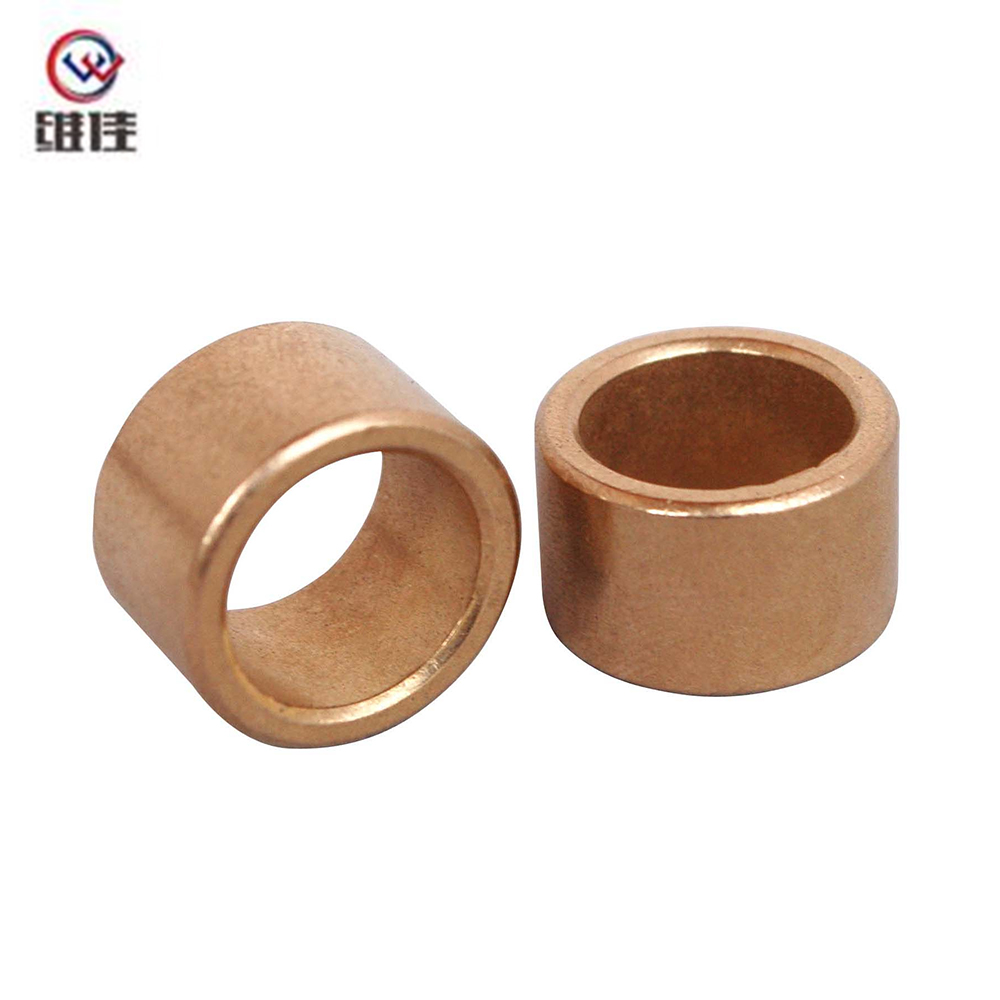
This copper-based powder metallurgy bushing is manufactured through an integrated process of compaction, sintering, sizing, and oil impregnation. It features excellent wear resistance and self-lubrica...
See Details -
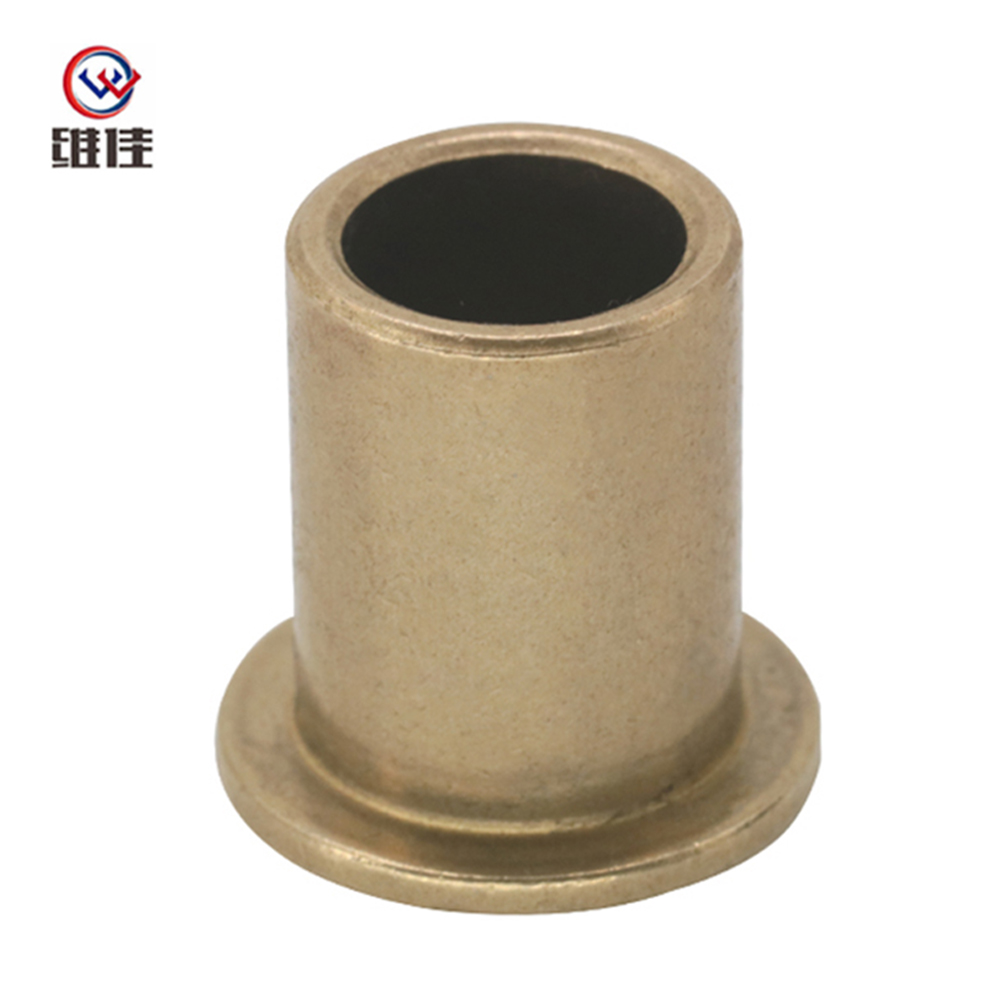
Our sintered bronze self-lubricating bearings are engineered for demanding industrial applications where traditional lubrication is impractical. Designed with advanced powder metallurgy technology, th...
See Details -
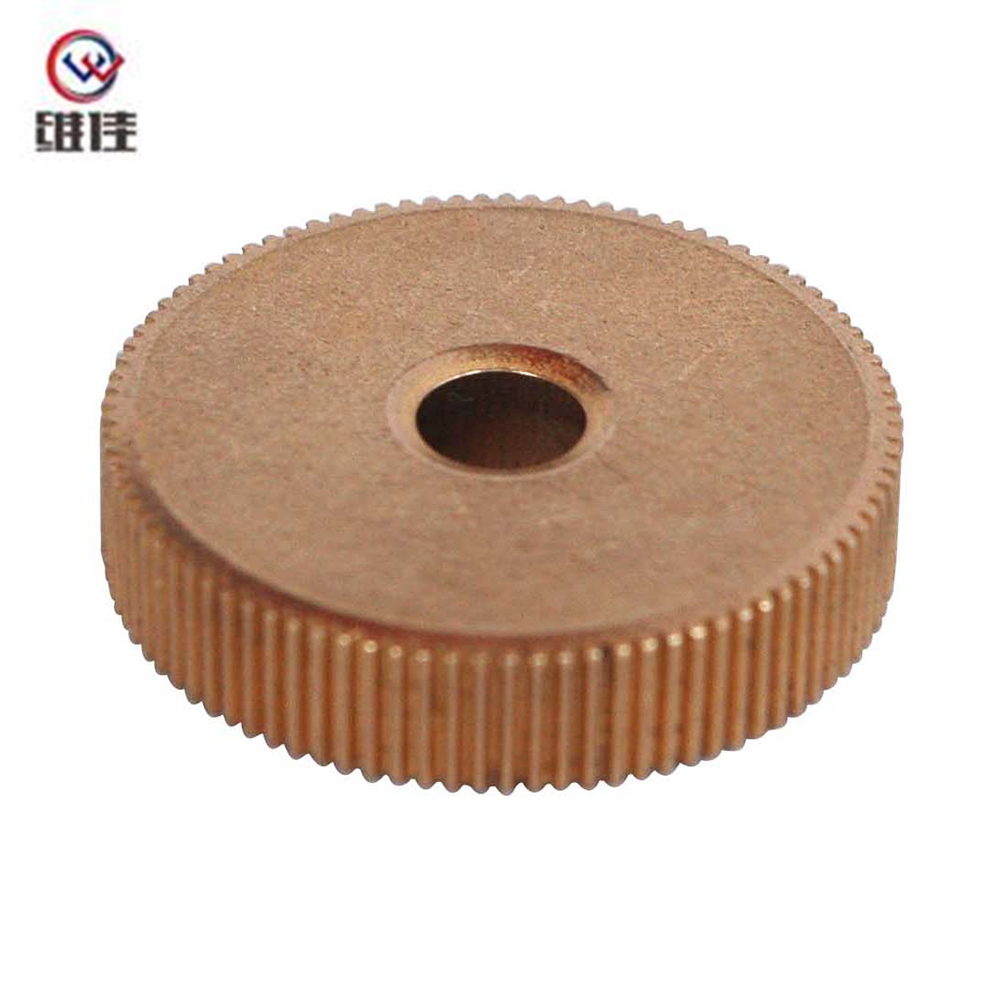
This 4×11.5×5.2mm powder metallurgy gear is manufactured through a precise press-sinter-through hole-oil impregnation process, with strict control of press density (6.7–6.8g/cm³) and sintering tempera...
See Details -
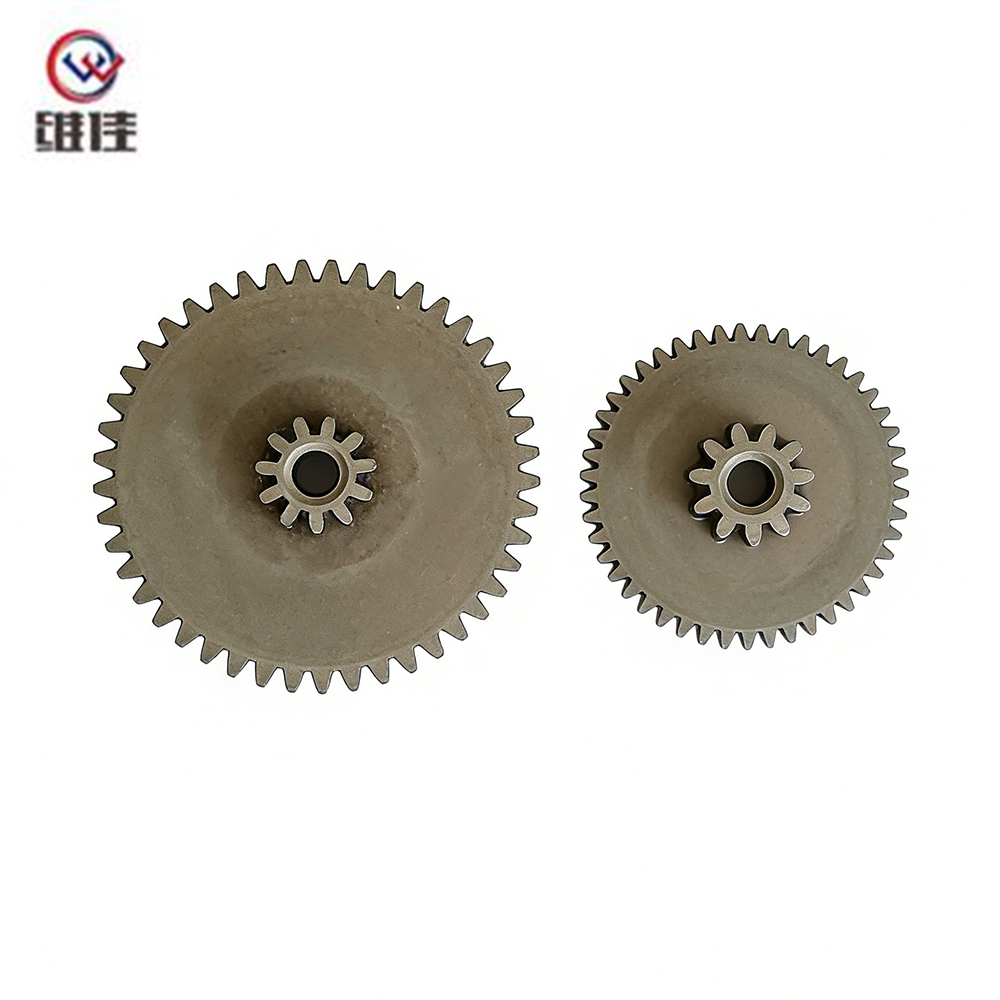
Core Specifications Parameter Specification Gear Teeth Z46 (large gear) & Z11 (small pinion) Module 0.8 Small Gear Bore 11 mm Material AB powder metallurgy (high-strength iron-based all...
See Details
Copyright © Jiande Welfine Technology Co., Ltd. All Rights Reserved. Custom Self-lubricating Sintered Bushing Manufacturers
