 English
 中文简体
中文简体
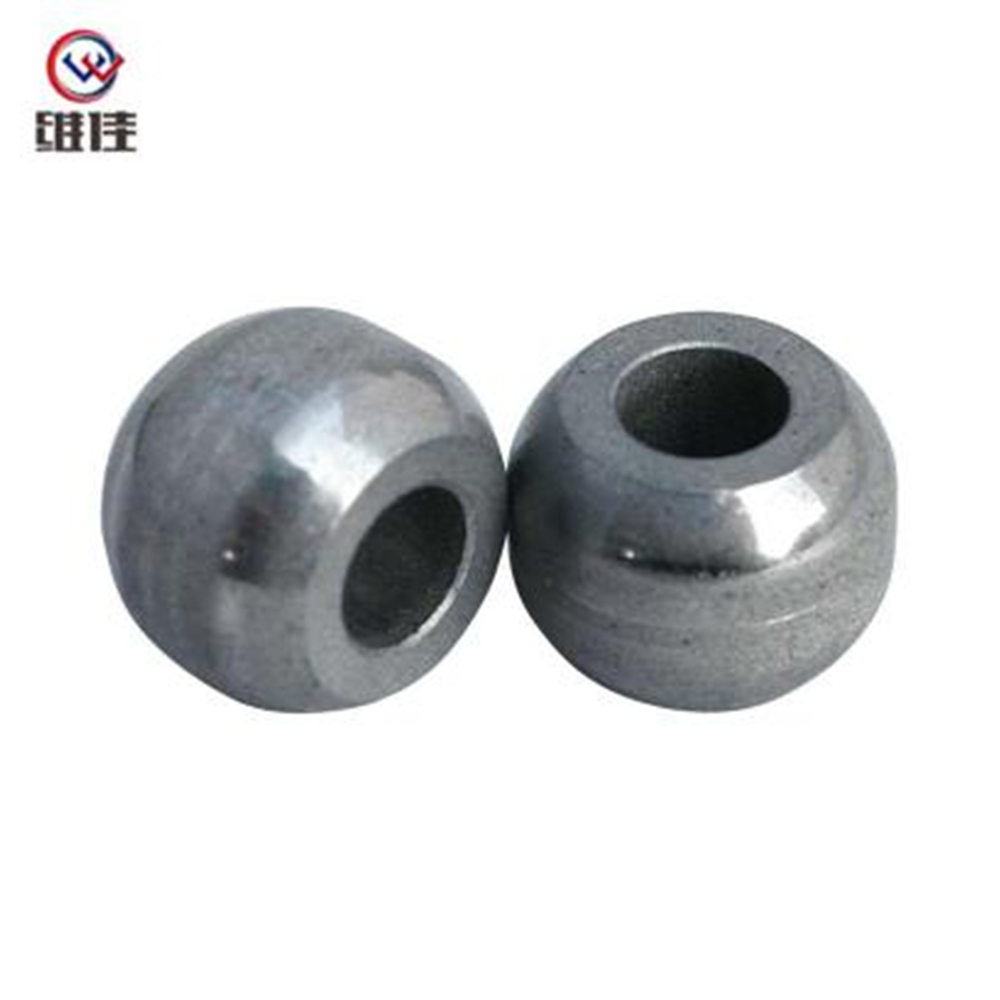
Product Description: High-precision powder metallurgy part (S14*7*10) made of iron material from Jiande Wefine, customized PM components with strict tolerance control.
See DetailsE-mail us: [email protected]
Tel: +86-15239857375


 Home / Author / Gao Manli — Overseas Sales Manager / Custom Sintered Powder Metallurgy Planetary Gears for High-Precision Drive Systems
 Custom Sintered Powder Metallurgy Planetary Gears for High-Precision Drive Systems
 2026.08.23
 Gao Manli — Overseas Sales Manager
Content
- 1 What Is a Powder Metallurgy Planetary Gear?
- 2 Product Specifications and Customization Options
- 3 Advantages of Powder Metallurgy Planetary Gears
- 4 Manufacturing Process
- 5 Green Density and Sintering Temperature
- 6 Performance in Automotive and EV Applications
- 7 Comparison with Forged and Machined Steel Gears
- 8 Quality Assurance and Process Control
- 9 Company Manufacturing Strengths
- 10 Application Scenarios
- 11 Design Recommendations for Custom Planetary Gears
- 12 Technical Validation and Testing
- 13 Frequently Asked Questions
- 13.1 Can powder metallurgy planetary gears replace forged steel gears?
- 13.2 What accuracy can be achieved?
- 13.3 What material is best for a planetary gear?
- 13.4 How does density affect gear strength?
- 13.5 Can the gear be oil impregnated?
- 13.6 What surface treatments are available?
- 13.7 Are PM gears suitable for EV motor systems?
- 13.8 Can Welfine produce prototypes before mass production?
- 13.9 What information should be supplied for a quotation?
- 13.10 How is batch consistency maintained?
- 14 Why Choose a Specialized PM Gear Manufacturer?
- 15 Conclusion
- 16 References
- 17 Product: Powder Metallurgy Planetary Gear
Powder metallurgy planetary gears are compact, efficient transmission components designed to transfer torque through planetary gearsets used in automotive systems, industrial machinery, electric vehicle drive units, servo reducers, and household appliances. By combining controlled powder materials, precision compaction, programmed sintering, sizing, and optional surface treatment, these gears can provide consistent tooth geometry, lower production costs, reduced weight, and reliable wear resistance in high-volume applications.
Jiande Welfine Technology Co., Ltd. manufactures custom powder metallurgy planetary gears and related sintered metal components for OEM and ODM customers. The company supports production according to customer drawings, samples, performance specifications, or application requirements. Its capabilities include powder mixing, precision pressing, controlled-atmosphere sintering, sizing, finishing, oil impregnation, plating, phosphatization, steam treatment, and selected machining operations.
Compared with conventionally machined or forged steel gears, a well-designed powder metallurgy planetary gear can offer important advantages. The powder compaction process can form the gear body, teeth, holes, recesses, and lightweight features in a single tooling operation. This reduces material waste and machining time while allowing engineers to create compact and weight-efficient geometries. For suitable load, speed, and service conditions, PM gears can also provide favorable noise, vibration, lubrication, and cost performance.
Because planetary gears operate under repeated tooth contact and may rotate at high speed, material selection and process control are critical. The final performance depends on green density, density distribution, sintering temperature, atmosphere, dimensional correction, tooth accuracy, hardness, surface condition, and lubrication. Welfine combines these controls with inspection and batch traceability to produce custom gears for demanding transmission applications.
What Is a Powder Metallurgy Planetary Gear?
A planetary gear is a gear that rotates around a central sun gear while also rotating about its own axis. In a typical planetary transmission, several planetary gears are mounted on a carrier and mesh with both the sun gear and an outer ring gear. This arrangement distributes torque across multiple gear meshes and can provide high torque density, compact packaging, multiple speed ratios, and balanced force transmission.
A powder metallurgy planetary gear is produced from metal powders rather than being machined from a solid billet or shaped through conventional forging. Selected powders are blended with lubricants and alloying additions, compacted in a precision die, sintered at high temperature, and then sized or finished to meet the required dimensions and gear tolerances.
The process is particularly suitable for small and medium-sized gears manufactured in substantial quantities. It can reproduce complex external profiles and internal features while reducing scrap. Depending on the material system and required performance, the gear may be used in an as-sintered condition or receive additional operations such as sizing, steam treatment, carburizing, carbonitriding, oil impregnation, zinc plating, phosphatization, or precision machining.
Planetary gears require accurate tooth spacing and stable geometry because even small deviations can influence backlash, transmission error, vibration, and contact stress. For this reason, the powder metallurgy process must be designed around the complete gearset rather than only the individual gear. Welfine evaluates the gear tooth profile, bore, face width, density, hardness, material composition, and mating components when developing a custom solution.
Product Specifications and Customization Options
The standard product concept is a precision sintered planetary gear manufactured for use in automotive, industrial, appliance, and electromechanical transmissions. The principal specifications can be adjusted according to the customer’s drawing and application conditions.
| Specification | Typical Capability or Option | Engineering Consideration |
|---|---|---|
| Product type | Powder metallurgy planetary gear | Designed for planetary gearsets, reducers, actuators, and drive systems |
| Material | Reduced iron powder, Fe-Cu alloy, Fe-Ni alloy, and other iron-based formulations | Selected according to torque, speed, wear, strength, and heat-treatment requirements |
| Gear accuracy | Approximately Grade 7–9, depending on design and finishing | Actual accuracy depends on module, tooth geometry, size, density distribution, tooling, and post-processing |
| Hardness | Approximately HRB 60–90 before optional hardening | Can be modified through alloy selection, sintering, carburizing, or carbonitriding |
| Sintered density | Typically from approximately 6.8 g/cm³ upward | Higher density generally improves strength and contact fatigue performance |
| Surface treatment | Oil impregnation, zinc plating, phosphatization, steam treatment, carburizing, or carbonitriding | Chosen for lubrication, corrosion protection, wear resistance, or surface hardness |
| Torque range | Approximately 5–500 N·m for application-dependent designs | Final rating must be confirmed through gear geometry, material, speed, lubrication, and duty-cycle analysis |
| Quality systems | ISO 9001:2015 and IATF 16949:2016 certified processes | Supports process control, documentation, traceability, and automotive supply requirements |
Material customization is one of the most important advantages of PM gear production. Reduced iron powder can be used for economical applications with moderate loading. Fe-Cu alloys can improve strength and dimensional behavior, while Fe-Ni systems and pre-alloyed powders can be considered for applications requiring improved hardenability, wear resistance, or fatigue performance.
The material should not be selected only by nominal hardness. Planetary gears experience tooth contact stress, bending stress at the tooth root, sliding friction, impact during engagement, and in some cases high-speed centrifugal loading. A suitable material and process combination must therefore be selected based on the complete operating profile.
Customer-specific features may include a special bore, chamfer, relief, hub, web, keyway, lubrication hole, weight-reduction recess, or carrier interface. Powder metallurgy can integrate many of these features directly into the compacted geometry, potentially reducing secondary machining and improving production efficiency.
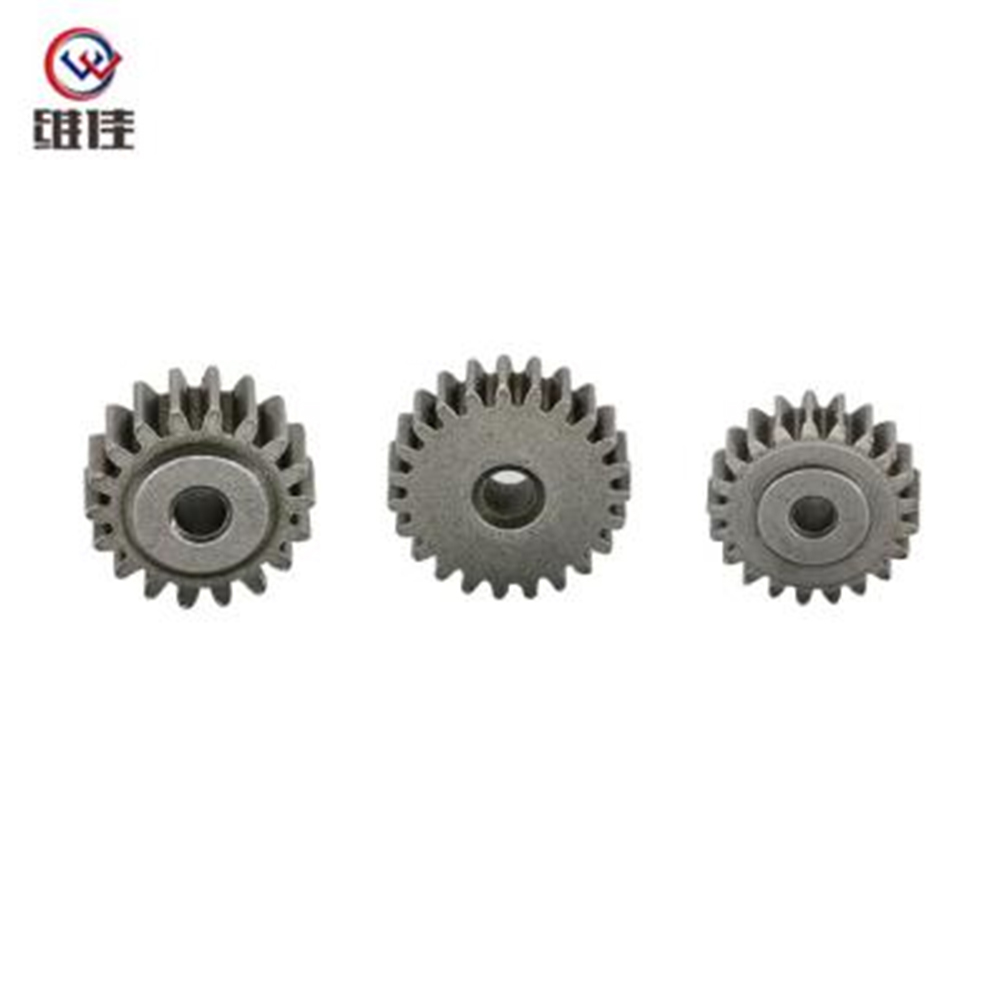
Powder Metallurgy Planetary Gear
Advantages of Powder Metallurgy Planetary Gears
High-Precision Tooth Formation
Precision powder compaction uses a purpose-designed die and punch assembly to form the gear profile. When tooling, powder flow, pressing conditions, and sintering shrinkage are properly controlled, the process can create repeatable tooth geometry with limited material waste. Sizing after sintering can further correct the tooth profile, bore, and critical dimensions.
For many applications, the product can achieve gear accuracy in the Grade 7–9 range. The exact result depends on the gear module, outside diameter, face width, tooth count, profile modification, material, density distribution, and whether the part is used as-sintered, sized, or machined. Where a higher accuracy level is necessary, Welfine can evaluate additional sizing or precision machining requirements.
Stable tooth geometry supports smooth meshing with the sun gear and ring gear. It can reduce transmission error, tooth-to-tooth spacing variation, runout, and unwanted backlash. These improvements are particularly valuable in seat adjusters, actuator gearboxes, servo reducers, and other systems where noise and positional repeatability are important.
Wear Resistance and Self-Lubricating Performance
Oil impregnation is an optional treatment for suitable PM gears. During this process, interconnected pores in the sintered structure are filled with a selected lubricating oil. When the gear operates and the temperature changes, the oil can migrate toward the contact surface and support self-lubricating behavior.
This feature can reduce the need for frequent external lubrication in certain low- and moderate-load mechanisms. It is useful in compact gearboxes where adding a separate lubrication system would increase size or complexity. Oil impregnation must be matched with the operating temperature, lubricant compatibility, load, speed, and sealing design.
For applications requiring more substantial contact strength, the gear may be manufactured at higher density or receive surface hardening. Carburizing and carbonitriding can create a harder case while maintaining a tougher core. Steam treatment can form a magnetite layer that supports corrosion resistance and improves surface behavior in selected applications.
Efficient Mass Production
Traditional gear manufacturing often involves cutting, hobbing, shaping, broaching, turning, drilling, and heat treatment. These operations can generate substantial machining scrap and require multiple production stages. Powder metallurgy forms much of the component geometry in the die, so material utilization can be high and cycle times can be reduced.
For stable high-volume production, one-step or near-net-shape forming can increase efficiency and reduce unit cost. The actual savings depend on part complexity, annual volume, tooling cost, dimensional requirements, and the amount of secondary machining required. For suitable designs, powder metallurgy can lower manufacturing cost by reducing raw material waste and machining labor.
Tooling is an important investment in PM production, but the tooling cost can be distributed over a large production quantity. This makes the process attractive for automotive mechanisms, electric actuators, appliance gearboxes, power tools, and other products manufactured in repeated batches.
Lower Weight and Integrated Lightweight Features
Iron-based PM materials generally have a density below fully dense wrought steel because of controlled residual porosity. This can reduce the mass of a planetary gear when the external dimensions remain similar. A lower mass can reduce rotating inertia and may support faster acceleration and deceleration in high-speed systems.
Powder compaction also allows designers to include recesses, holes, thin webs, and asymmetrical lightweight structures in the compacted component. These features may be difficult or expensive to create in a forged gear because they would require additional drilling or milling. The final design must still maintain sufficient tooth-root strength, hub strength, and resistance to deformation.
In EV motor systems and compact actuator mechanisms, lower rotational inertia can improve response characteristics. However, the benefit should be calculated from the actual mass distribution rather than density alone. The polar moment of inertia is strongly influenced by material located far from the axis of rotation.
Potential Noise and Vibration Benefits
Gear noise is influenced by tooth accuracy, transmission error, backlash, surface roughness, housing stiffness, lubrication, operating speed, and load. The controlled microstructure of a PM gear can provide a degree of internal damping compared with a fully dense steel component. In some applications, this may help reduce the transmission of high-frequency vibration.
Low mass, consistent tooth spacing, and controlled runout can also reduce excitation forces. Optional steam treatment, phosphatization, or other surface treatments may improve initial running behavior. The actual noise level must be verified through application-specific testing because a gear cannot be evaluated independently from its mating gears, carrier, bearings, housing, lubricant, and motor.
For EV systems operating at high speed, PM gears can be evaluated through gear test rigs and NVH measurements. Important test conditions include rotational speed, torque, lubricant temperature, gear mesh frequency, housing configuration, and microphone position. Welfine can support such validation for customers requiring data-driven gear development.
Manufacturing Process
1. Powder Selection and Mixing
The process begins with the selection of an iron-based powder system. The formulation may contain reduced iron powder, copper, nickel, molybdenum, graphite, and other controlled additions. The selection is based on required density, compactibility, strength, hardness, wear resistance, and heat-treatment response.
Powder particle size distribution affects flow into the die cavity, apparent density, compaction behavior, and sintering response. A suitable distribution helps the powder fill narrow tooth cavities and reduces variation between parts. Lubricants may be added to improve die filling, reduce ejection force, and protect tooling.
Welfine uses controlled material blending to achieve uniform powder composition. Mixing parameters must be managed carefully because excessive mixing can alter lubricant distribution, while insufficient mixing can produce local variations in alloy content. The batch is documented for traceability and subsequent process verification.
2. Precision Compaction
During compaction, the blended powder is loaded into a precision die and compressed at high pressure. Typical forming pressure may range from approximately 300 to 600 MPa, while the available press capacity can extend from approximately 200 to 800 tons depending on the part and production line.
The objective is to create a green compact with the required shape, sufficient handling strength, and an even density distribution. Planetary gears can be challenging because the tooth regions, hub, web, and bore may not compact identically. Uneven density can produce differential shrinkage during sintering and may lead to tooth distortion or dimensional variation.
Precision tooling, controlled filling, multiple punches, and optimized pressing profiles help reduce these problems. For selected designs, double-press and double-sinter or other high-density processes can be considered. The appropriate process depends on the gear dimensions, material, required fatigue strength, and target accuracy.
3. Sintering in a Controlled Atmosphere
The green compact is heated in a sintering furnace at a temperature below the melting point of the principal metal. For many iron-based systems, sintering temperatures are commonly within the approximate range of 1,050–1,250°C, depending on the alloy and required performance.
During sintering, particles bond through diffusion and neck growth. Lubricants and binders are removed, alloying elements diffuse into the iron matrix, and the compact develops its final metallurgical structure. The furnace atmosphere protects the component from oxidation and supports the desired carbon and alloy balance.
Temperature uniformity is essential. A controlled temperature profile helps ensure consistent shrinkage, density, hardness, and dimensional stability across the batch. Welfine uses mesh-belt and pusher furnace technologies with multi-zone atmosphere and temperature control. For demanding processes, furnace uniformity can be maintained within approximately ±5°C across controlled zones.
For high-density planetary gears, a sintering range of approximately 1,180–1,220°C may be evaluated for suitable iron-based alloys. The best temperature is not universal. Excessive temperature can cause grain growth, distortion, excessive shrinkage, or unwanted dimensional changes. Insufficient temperature can leave weak particle bonds and interconnected porosity.
4. Sizing and Finishing
After sintering, the gear may undergo sizing. In this operation, the part is pressed through a precision sizing die to improve the bore, outside diameter, tooth dimensions, runout, and other critical features. Sizing can improve repeatability without requiring complete cutting of the gear teeth.
Additional finishing may include turning, drilling, chamfering, reaming, grinding, or selective tooth correction. The decision depends on the required accuracy and the economic objective. Powder metallurgy is often most competitive when secondary machining is limited, but precision machining remains available for critical interfaces.
Dimensional inspection can include bore gauges, coordinate measurement, gear measurement equipment, runout testing, and functional roll testing with mating gears. The inspection plan is established according to the drawing, control plan, and customer quality requirements.
5. Surface Treatment
Surface treatment is selected according to the gear environment. Oil impregnation supports lubrication and can reduce friction in appropriate applications. Zinc plating can improve corrosion protection, while phosphatization may provide a suitable base for lubrication or coating.
Steam treatment creates a controlled oxide layer on the surface. This treatment can improve corrosion resistance, increase surface hardness in selected conditions, and support running-in behavior. For higher load and wear requirements, carburizing or carbonitriding may be used to increase case hardness.
Surface treatment must be evaluated together with dimensional tolerances. Coating thickness, oxidation, heat treatment, and impregnation can influence the bore, tooth flank, friction coefficient, and assembly fit. Welfine can define treatment controls as part of the complete production specification.
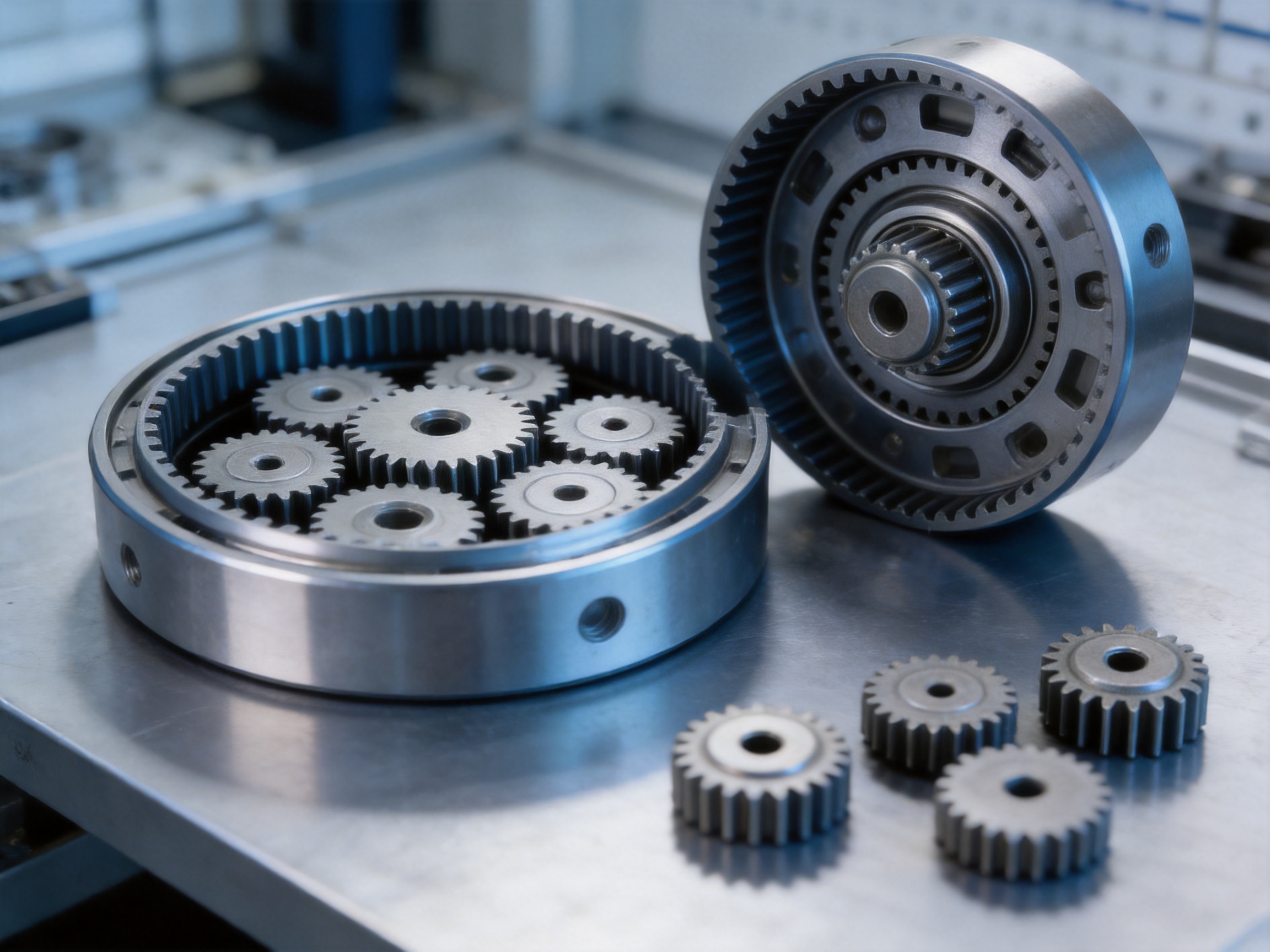
Green Density and Sintering Temperature
Green density is the density of the compacted part before sintering. It is one of the most important variables in PM gear production because it affects the amount and distribution of porosity in the final gear. Higher green density generally creates larger particle contact areas, stronger sintered bonds, and fewer stress concentration sites.
Green density alone does not guarantee high performance. Density must be uniform throughout the gear. If the tooth tip, tooth root, web, and hub have significantly different densities, they may shrink at different rates during sintering. This can cause tooth profile distortion, bore movement, runout, and variation in backlash.
For demanding planetary gears, a green density above approximately 7.1 or 7.2 g/cm³ may be considered, subject to material and tooling limitations. High-density compaction may improve contact fatigue performance, but it may also increase ejection force, tooling stress, and the risk of pressing defects. The production method must balance density, geometry, productivity, and tooling life.
Sintering temperature controls diffusion, neck growth, alloy homogenization, and final dimensional change. A low temperature may leave insufficient metallurgical bonding and greater residual porosity. An optimized higher temperature can improve strength and contact fatigue resistance. An excessive temperature may promote grain growth and distortion.
| Green Density | Approximate Sintering Range | Indicative Gear Performance | Potential Application |
|---|---|---|---|
| 6.6–6.8 g/cm³ | 1,120–1,150°C | Lower strength and greater porosity; suitable for light-duty designs when validated | Small actuators, low-speed mechanisms, and light-load products |
| 6.9–7.1 g/cm³ | 1,150–1,180°C | Balanced strength, accuracy, and production cost | Power tools, appliance gearboxes, and mid-range reducers |
| 7.2–7.4 g/cm³ | 1,180–1,220°C | Improved contact fatigue and dimensional stability when properly controlled | Automotive mechanisms, e-bike systems, and precision reducers |
| Above 7.4 g/cm³ with advanced processing | 1,220–1,250°C | Higher density and strength potential, with greater process sensitivity | Heavy-duty planetary systems and selected robotic transmissions |
The values in this table are engineering reference ranges rather than universal guarantees. Actual performance must be established through material testing, gear calculations, dimensional inspection, and application validation. Gear size, module, tooth width, lubricant, speed, load spectrum, heat treatment, and mating component quality all influence the final result.
Welfine controls the density and sintering relationship through powder formulation, compaction pressure, tooling design, furnace temperature mapping, atmosphere control, and in-process inspection. Archimedes density testing, metallographic pore analysis, hardness checks, and gear measurement can be used to verify the process.
Performance in Automotive and EV Applications
Planetary gearsets are used in automatic transmissions, hybrid systems, electric drive units, seat adjusters, side-mirror actuators, parking mechanisms, oil pumps, and other automotive systems. These applications may require compact dimensions, repeatable gear geometry, controlled noise, resistance to lubricant exposure, and stable performance over long service periods.
For light- and medium-duty automotive mechanisms, powder metallurgy can provide a strong balance between performance and cost. The near-net-shape process is particularly useful for high-volume components with repeated geometry. Integrated hubs, holes, and weight-reduction features can reduce the number of separate manufacturing operations.
EV motor and e-drive applications place special emphasis on NVH, high rotational speed, thermal stability, and low inertia. PM gears may contribute to a lower rotating mass than equivalent fully dense steel gears. The effect is determined by the density, geometry, and position of the gear in the transmission. The gear should also be checked for burst speed, tooth-root stress, contact stress, and thermal behavior.
In an oil-cooled system, surface porosity and lubricant compatibility must be addressed. Depending on the design, high-density processing, steam treatment, resin impregnation, or another sealing method may be used to limit unwanted fluid absorption. The final treatment should be evaluated against the actual transmission fluid, temperature range, pressure, and service duration.
For high-speed EV applications, Welfine can support evaluation through dimensional measurement, hardness testing, porosity analysis, inertia calculations, and NVH testing when required. A customer should provide speed, torque, duty cycle, gear geometry, lubrication, operating temperature, and target noise level for a reliable feasibility assessment.
Comparison with Forged and Machined Steel Gears
Forged steel gears remain highly capable components for severe loads, high impact, and applications requiring very high fatigue strength. They can be heat treated and hard finished to achieve excellent surface performance. Powder metallurgy should therefore be selected based on the application rather than treated as a universal replacement for forged steel.
PM gears have a different microstructure and normally contain controlled residual porosity. This can reduce ultimate strength compared with fully dense forged steel, but it may also provide lower mass and increased internal damping. The near-net-shape process can produce economic advantages, particularly when the part includes complex geometry or is manufactured in large quantities.
| Factor | Forged or Machined Steel Gear | Powder Metallurgy Planetary Gear |
|---|---|---|
| Material utilization | Machining may generate substantial chips and scrap | Near-net-shape forming can reduce material waste |
| Geometry | Complex features may require several machining operations | Teeth, holes, recesses, and webs can often be formed in the die |
| Density | Near-full density, typically about 7.85 g/cm³ for steel | Controlled density commonly below fully dense steel |
| Weight | Higher mass for identical geometry | Potentially lower mass and rotating inertia |
| Fatigue strength | Very high potential after heat treatment and finishing | High performance is achievable with optimized density and surface hardening |
| Noise behavior | Depends strongly on finishing, housing, lubrication, and gear accuracy | May benefit from lower mass and material damping in suitable applications |
| High-volume cost | Can be higher because of machining and finishing operations | Often favorable after tooling is amortized over production volume |
| Design flexibility | Broad material and heat-treatment options | Strong capability for integrated features and customized powder formulations |
| Best use case | Severe loads, impact, and maximum fatigue requirements | High-volume, compact, weight-sensitive, and cost-sensitive applications with validated loads |
The most appropriate comparison is not only between materials but between complete manufacturing systems. A forged steel gear may require hobbing, heat treatment, shaving, grinding, and inspection. A PM gear may require pressing, sintering, sizing, and selective finishing. The best choice depends on annual volume, required tolerances, load, speed, design complexity, and total lifecycle cost.
Quality Assurance and Process Control
Quality assurance begins with incoming powder control. Material composition, apparent density, flow rate, particle distribution, and lubricant condition can influence pressing behavior. Each powder batch should be identified and recorded so that finished products can be traced to their raw materials and process history.
During compaction, production teams monitor fill consistency, pressing force, ejection behavior, green dimensions, and visible defects. Green compacts must be handled carefully because cracks, laminations, edge damage, or density variation may not be obvious after sintering.
Sintering control includes furnace temperature, belt speed, atmosphere composition, dew point, carbon potential where applicable, and cooling conditions. A stable furnace profile supports consistent dimensional change and mechanical properties. Periodic furnace mapping and process verification help identify drift before it affects a large production batch.
Post-sintering inspections may include density measurement, hardness testing, dimensional inspection, gear roll testing, tooth profile measurement, runout measurement, metallographic analysis, and surface treatment verification. The inspection plan can be customized according to the component’s critical characteristics.
Welfine maintains batch traceability through unique production codes. This allows the manufacturing history of a gear batch to be reviewed when analyzing dimensional variation, material performance, or customer feedback. Traceability is especially valuable for automotive and industrial customers with formal supplier quality requirements.
The company operates under ISO 9001:2015 and IATF 16949:2016 quality management systems. These certifications support documented procedures, corrective action, process monitoring, customer communication, and continuous improvement. Certification does not replace product validation, but it provides a structured framework for consistent manufacturing.
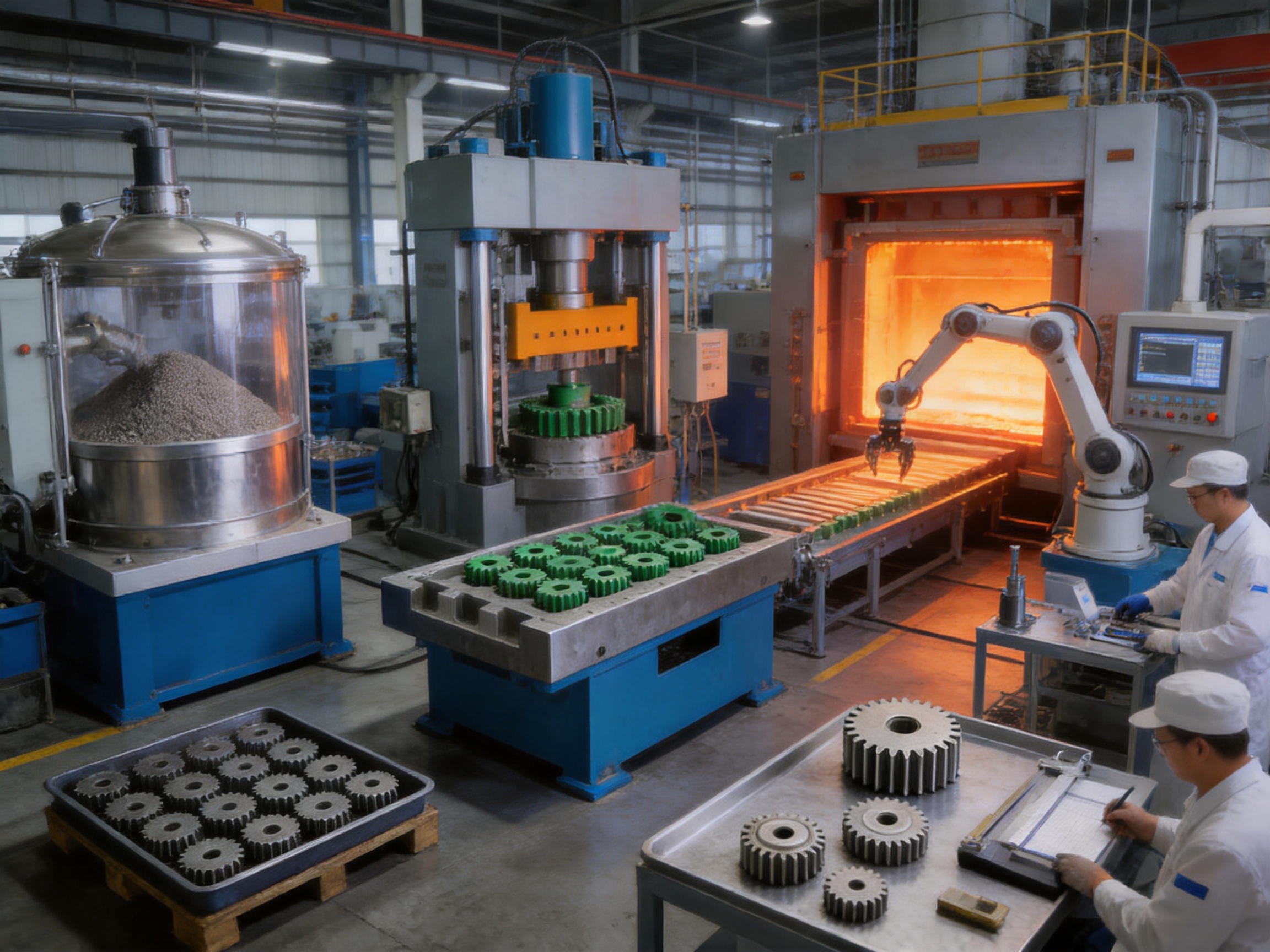
Company Manufacturing Strengths
Jiande Welfine Technology Co., Ltd. was established in 2001 and has more than two decades of experience in powder metallurgy sintering and related precision manufacturing. The company operates a production base of approximately 13,039 square meters and employs more than 150 skilled personnel.
Its product experience includes powder metallurgy bushings, self-lubricating bearings, sintered structural parts, gears, hubs, friction materials, magnetic materials, and other precision components. This broader PM background is useful when developing planetary gears because gear performance often depends on the interaction between the gear, shaft, bearing, carrier, lubricant, and housing.
Welfine’s equipment includes high-efficiency compaction presses, high-temperature sintering furnaces, precision forming machines, gear inspection instruments, hardness testers, density measurement equipment, and metallographic analysis capabilities. The company can coordinate tooling design, trial production, process adjustment, inspection, and mass production within an integrated manufacturing system.
OEM and ODM support is available for customers who provide drawings, samples, 3D models, or functional requirements. Engineers can assess the gear module, tooth count, bore, outside diameter, face width, material, density target, heat treatment, and dimensional tolerances before preparing a production plan.
Rapid prototyping can be used to evaluate different density levels, sintering profiles, materials, or finishing options. A prototype program may include dimensional reports, hardness results, density records, metallographic observations, and gear inspection charts. For customers developing a new transmission, this staged approach can reduce the risk of committing to a mass-production process before the gear has been validated.
Application Scenarios
Automotive Transmission and Actuation
Planetary gears are suitable for automatic transmission subassemblies, seat adjustment gearboxes, side-mirror mechanisms, parking actuators, latch systems, and other compact automotive mechanisms. Their repeatable geometry and high-volume manufacturing potential support automotive programs requiring stable supply and controlled cost.
Electric Vehicle Drive Systems
In EV systems, PM planetary gears can be evaluated for e-drive transmissions, motor reduction systems, oil pump drives, actuator gearboxes, and auxiliary mechanisms. Their potential benefits include lower mass, integrated lightweight features, reduced machining, and favorable NVH behavior when the gearset is properly designed and tested.
Industrial Machinery and Robotics
Servo motor reducers, robot joints, CNC feed systems, automated equipment, and compact industrial actuators often require accurate motion transmission and dependable wear performance. A planetary arrangement can provide high reduction ratios in a compact space, while a precision PM gear can support cost-effective repeated production.
Home Appliances
Washing machine drive gearboxes, refrigerator compressor systems, air-conditioner swing motors, small pumps, and other appliances may benefit from economical sintered gears. Oil impregnation and corrosion-resistant treatments can be selected when the component operates with limited maintenance or in a humid environment.
Power Tools and Small Mechanisms
Power tools and small electromechanical products often use planetary reducers because they require high output torque from a compact package. PM gears can be designed for the required speed, noise level, and duty cycle while supporting high-volume production.
Design Recommendations for Custom Planetary Gears
The design process should begin with the operating conditions rather than a material name. Customers should define input speed, output speed, continuous torque, peak torque, load direction, duty cycle, operating temperature, lubrication method, expected service life, and allowable noise.
Gear geometry should include the module, pressure angle, number of teeth, face width, profile shift, tooth modifications, outside diameter, root diameter, bore, and mounting features. The relationship between the planetary gear and its mating sun and ring gears must be checked carefully because tooth count and center distance influence the complete planetary assembly.
Density targets should be selected according to load and fatigue requirements. A high-density gear may provide improved strength, but it may also require higher pressing force, more complex tooling, and additional process controls. A lower-density gear may be appropriate for light-duty applications where reduced mass, damping, or cost is more important than maximum load capacity.
Designers should avoid unnecessarily thin sections, sharp internal corners, abrupt thickness changes, and features that prevent uniform powder filling. Proper radii, balanced sections, suitable pressing directions, and well-designed ejection surfaces improve manufacturability.
Allowance for sintering shrinkage must be built into the tooling. Shrinkage is influenced by powder composition, green density, furnace temperature, atmosphere, and section thickness. Tooling compensation should be based on trial results and statistical process data rather than a simple universal percentage.
When a gear requires a very tight bore or tooth tolerance, the drawing should identify critical dimensions and functional requirements separately from non-critical dimensions. This allows the manufacturer to apply precision operations where they create the greatest functional value and avoid unnecessary cost on features that do not affect performance.
Technical Validation and Testing
A prototype or pre-production validation program may include dimensional inspection, tooth profile measurement, lead deviation, pitch error, runout, hardness, density, microstructure, and surface treatment checks. These measurements establish whether the gear meets the drawing and whether the manufacturing process is stable.
Functional testing should evaluate the gear in its actual or representative planetary assembly. Important results may include transmission efficiency, backlash, temperature rise, noise, vibration, wear, tooth contact pattern, and torque capacity. Testing at different speeds and loads can reveal behavior that is not visible in a static dimensional report.
Contact fatigue testing evaluates resistance to pitting and spalling under repeated Hertzian contact stress. Bending fatigue testing evaluates the tooth root and the ability of the gear to withstand cyclic torque. High-density PM gears with suitable alloying and case hardening can achieve significantly improved fatigue performance compared with lower-density, untreated materials.
For high-speed applications, overspeed and balance testing may be considered. The test program should reflect the maximum operating speed, transient speed, temperature, lubricant, and mounting condition. EV applications may also require NVH testing over a speed and torque map.
Welfine can support customers with process inspection and technical communication during development. The final validation plan should be agreed between the customer and manufacturer because the required tests depend on the application’s safety classification and service conditions.
Frequently Asked Questions
Can powder metallurgy planetary gears replace forged steel gears?
They can replace forged or machined steel gears in many light- and medium-duty applications, particularly when high production volume, compact geometry, low weight, and controlled cost are important. However, forged steel may remain preferable for extreme impact loads, very high contact stress, or applications requiring the maximum fatigue strength. A feasibility review should consider the complete load spectrum and service life.
What accuracy can be achieved?
Custom PM planetary gears can typically be developed within approximately Grade 7–9 accuracy, depending on gear size, module, material, tooling, sintering behavior, sizing, and finishing. Precision sizing and selective machining can improve critical dimensions. The final achievable accuracy should be confirmed from the customer’s drawing and gear inspection requirements.
What material is best for a planetary gear?
There is no single best material for every application. Reduced iron powder may be suitable for economical light-duty parts. Fe-Cu, Fe-Ni, and other alloyed iron-based systems can provide higher strength, improved hardenability, or better wear performance. The correct choice depends on torque, speed, temperature, lubrication, fatigue requirements, and surface treatment.
How does density affect gear strength?
Higher density generally reduces porosity and increases the effective load-bearing area between sintered particles. This can improve tooth-root strength and contact fatigue resistance. Density uniformity is equally important because local low-density regions may become stress concentration areas. The target density should be balanced with pressing feasibility, dimensional stability, and cost.
Can the gear be oil impregnated?
Yes. Oil impregnation is available for suitable designs. The treatment fills accessible pores with lubricating oil and can provide self-lubricating behavior during operation. The oil type, temperature range, speed, load, and compatibility with other lubricants must be evaluated before approval.
What surface treatments are available?
Available options may include oil impregnation, zinc plating, phosphatization, steam treatment, carburizing, and carbonitriding. Treatment selection depends on corrosion conditions, hardness requirements, wear, lubrication, dimensional tolerance, and the mating gear material.
Are PM gears suitable for EV motor systems?
They may be suitable for selected EV drive and auxiliary systems, including e-drive reduction mechanisms, oil pump gears, actuators, and compact planetary gearsets. The design must be validated for high speed, temperature, transmission fluid compatibility, tooth contact stress, bending fatigue, balance, and NVH performance.
Can Welfine produce prototypes before mass production?
Yes. Welfine supports prototype and trial production programs. Customers can evaluate different powder formulations, density levels, sintering profiles, and surface treatments before finalizing the production process. Prototype lead time depends on tooling complexity, part size, testing requirements, and customer approval procedures.
What information should be supplied for a quotation?
A quotation is easier to prepare when the customer provides a drawing or 3D model, material preference, annual quantity, prototype quantity, gear accuracy, hardness, density target, surface treatment, operating torque, speed, temperature, lubricant, and inspection requirements. If a drawing is unavailable, a sample or functional description can be used for an initial assessment.
How is batch consistency maintained?
Batch consistency is supported through controlled powder mixing, documented pressing conditions, furnace monitoring, density checks, hardness testing, dimensional inspection, and traceability codes. The quality system provides procedures for process control, nonconformance handling, corrective action, and continuous improvement.
Why Choose a Specialized PM Gear Manufacturer?
A planetary gear is not simply a circular part with teeth. It is a precision transmission component whose performance depends on a controlled relationship between geometry, density, sintering, finishing, lubrication, and assembly. A supplier with experience in powder metallurgy can identify manufacturing risks early and recommend a design that is both technically reliable and economically practical.
Welfine’s experience in sintered bushings, structural components, gears, hubs, and other PM products provides a broad foundation for developing application-specific components. Its integrated approach covers tooling, powder preparation, compaction, sintering, finishing, treatment, inspection, and customer support.
The company’s OEM and ODM capabilities allow customers to request custom tooth geometry, materials, dimensional tolerances, density levels, surface treatments, packaging, and inspection documentation. This flexibility is useful for customers developing new products or replacing machined components with near-net-shape PM alternatives.
With an established production base, experienced personnel, modern equipment, ISO 9001:2015 certification, and IATF 16949:2016 certification, Welfine is positioned to support both industrial and automotive supply programs. Its technical team can help evaluate whether a powder metallurgy planetary gear is appropriate for the required speed, torque, service life, and production volume.
Conclusion
Custom powder metallurgy planetary gears provide a practical solution for compact and high-volume transmission systems. Their principal advantages include near-net-shape manufacturing, efficient material utilization, integrated geometry, adjustable material formulations, controlled density, optional self-lubrication, reduced weight, and competitive production economics.
Performance depends on the complete manufacturing process. Uniform green density, suitable compaction pressure, controlled-atmosphere sintering, accurate sizing, appropriate surface treatment, and disciplined inspection are necessary to achieve reliable gear performance. Higher density and optimized sintering can improve contact fatigue strength, while careful tooling and furnace control support dimensional stability and transmission accuracy.
For automotive mechanisms, EV drive systems, industrial reducers, servo motors, robotics, appliances, and power tools, a custom PM planetary gear can offer a strong alternative to conventional forged or machined steel components when the application is properly designed and validated.
Jiande Welfine Technology Co., Ltd. provides OEM and ODM powder metallurgy planetary gear solutions from prototype development through mass production. Customers can submit drawings, samples, or technical requirements for material selection, tooling evaluation, process development, inspection planning, and production quotation.
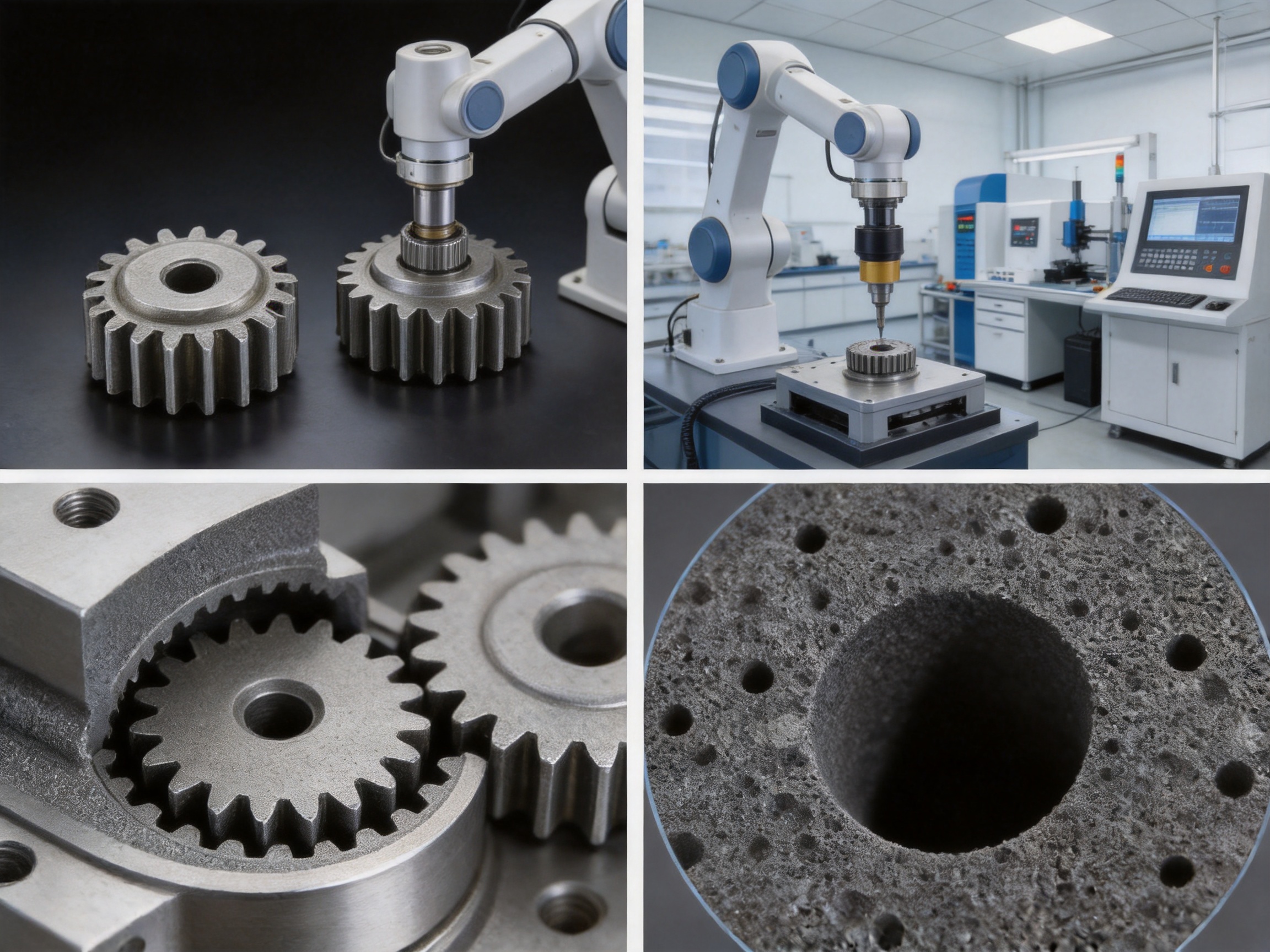
References
1. ISO 9001:2015, Quality Management Systems — Requirements.
2. IATF 16949:2016, Quality Management System Requirements for Automotive Production and Relevant Service Parts Organizations.
3. ISO 6336, Calculation of Load Capacity of Spur and Helical Gears.
4. ISO 1328, Cylindrical Gears — ISO System of Flank Tolerance Classification.
5. Powder Metallurgy Review, fundamentals of powder compaction, sintering, density control, and PM component design.
6. ASM Handbook, Volume 7: Powder Metal Technologies and Applications.
7. Metal Powder Industries Federation, powder metallurgy design and material selection guidance.
8. German Institute for Standardization, DIN gear accuracy and inspection principles.
Product: Powder Metallurgy Planetary Gear
Related products
-
-
Description: Custom powder metallurgy planetary gear with high precision, wear resistance for automotive, industrial machinery & home appliances. OEM/ODM supported.
See Details -
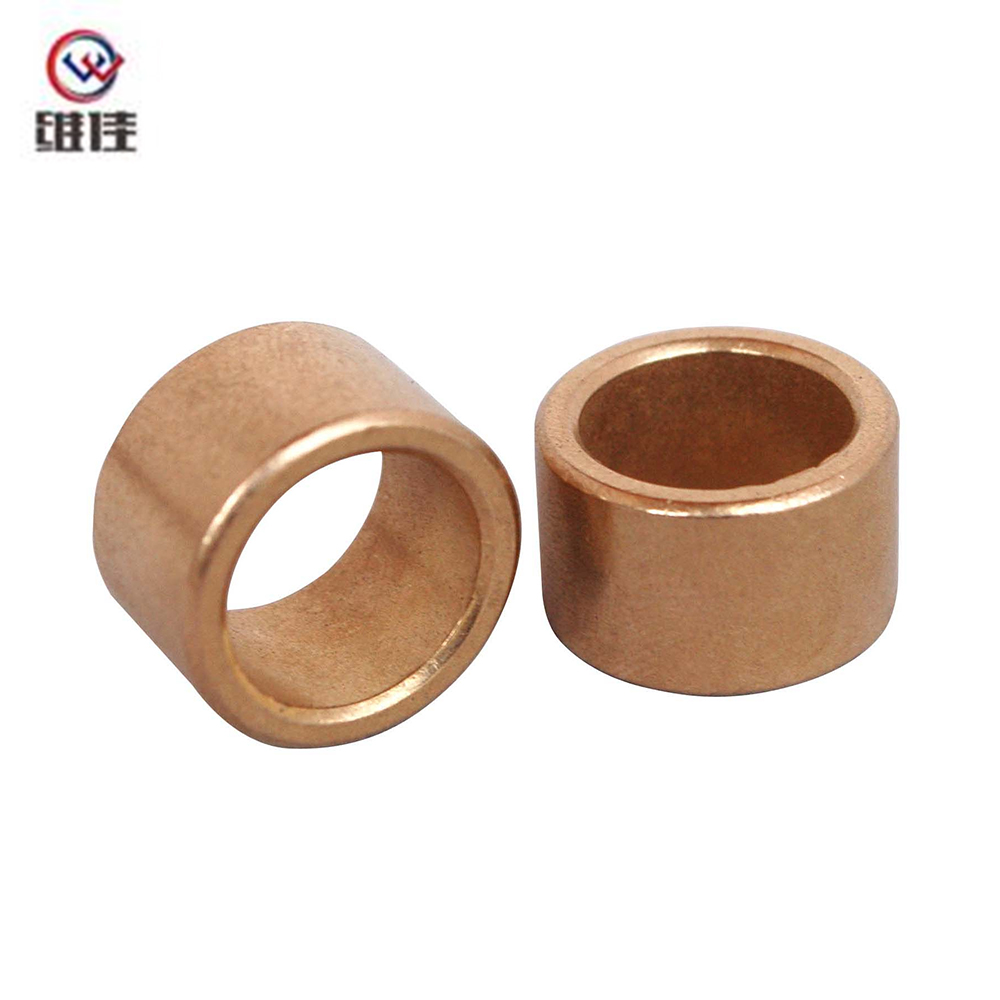
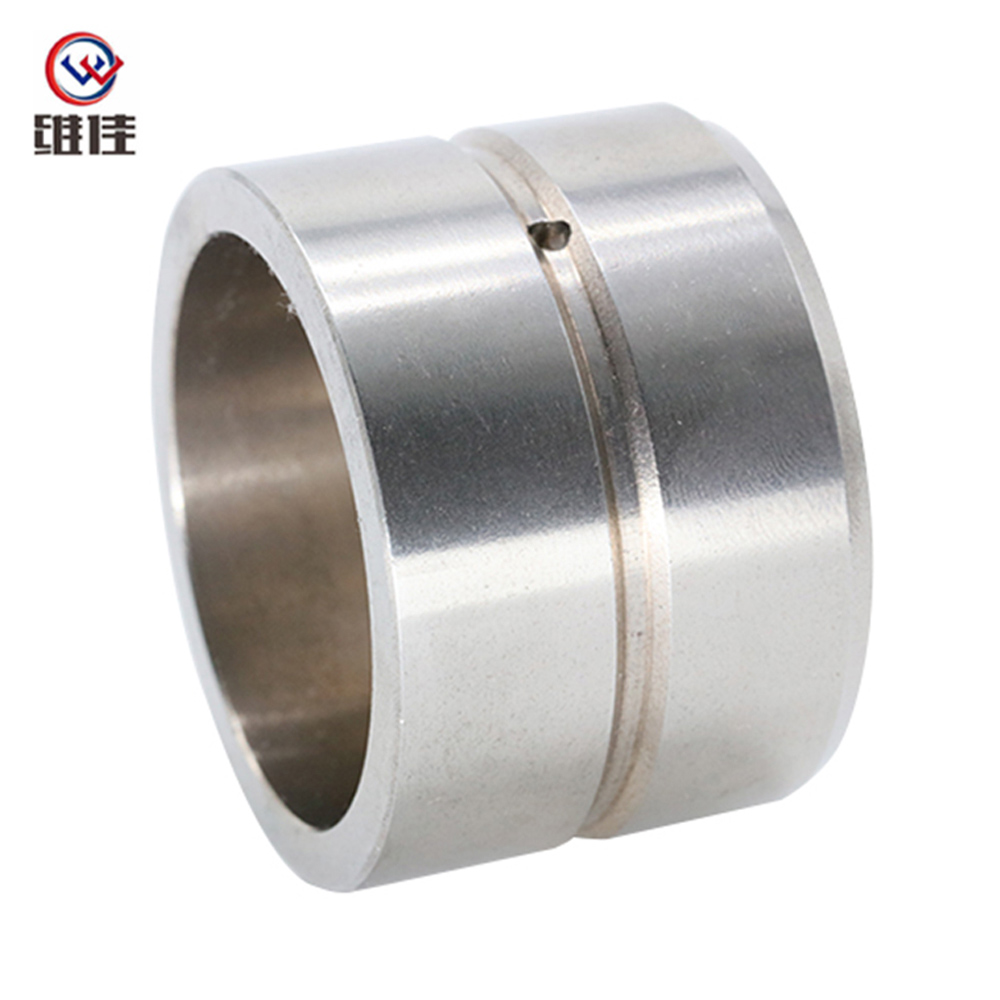
This copper-based powder metallurgy bushing is manufactured through an integrated process of compaction, sintering, sizing, and oil impregnation. It features excellent wear resistance and self-lubrica...
See Details
Copyright © Jiande Welfine Technology Co., Ltd. All Rights Reserved. Custom Self-lubricating Sintered Bushing Manufacturers
