E-mail us: [email protected]
Tel: +86-15239857375
 English
 中文简体
中文简体

 Home / Author / Gao Manli — Overseas Sales Manager / High-Precision FC0208 Powder Metallurgy Components for Industrial Fuel Heaters
 High-Precision FC0208 Powder Metallurgy Components for Industrial Fuel Heaters
 2026.08.05
 Gao Manli — Overseas Sales Manager
Content
- 1 Product Overview
- 2 Why Powder Metallurgy Is Suitable for Industrial Heater Components
- 3 FC0208 Material Characteristics
- 4 Detailed Manufacturing Process
- 5 Product Advantages Compared with Alternative Manufacturing Approaches
- 6 Performance in Industrial Fuel Heater Applications
- 7 Dimensional Accuracy and Interchangeability
- 8 Quality Control System
- 9 Manufacturing Strengths of the Supplier
- 10 Engineering Considerations for Customization
- 11 Installation and Service Recommendations
- 12 Environmental and Cost Benefits
- 13 Applications Beyond the Initial Heater Model
- 14 Recommended Supplier Qualification Process
- 15 Frequently Asked Questions
- 15.1 What is the main material used for this component?
- 15.2 What are the nominal dimensions?
- 15.3 Can this part be used in high-temperature equipment?
- 15.4 Why is machining performed after sintering?
- 15.5 What is the purpose of black oxide treatment?
- 15.6 Can the product be customized?
- 15.7 Are alternative materials available?
- 15.8 Can the supplier provide samples before mass production?
- 15.9 How is dimensional quality controlled?
- 15.10 What quality certifications does the manufacturer hold?
- 15.11 How should the components be stored?
- 15.12 What information should be supplied for a quotation?
- 16 Conclusion
- 17 References
- 18 Product: Powder Metallurgy Components for Industrial Fuel Heaters
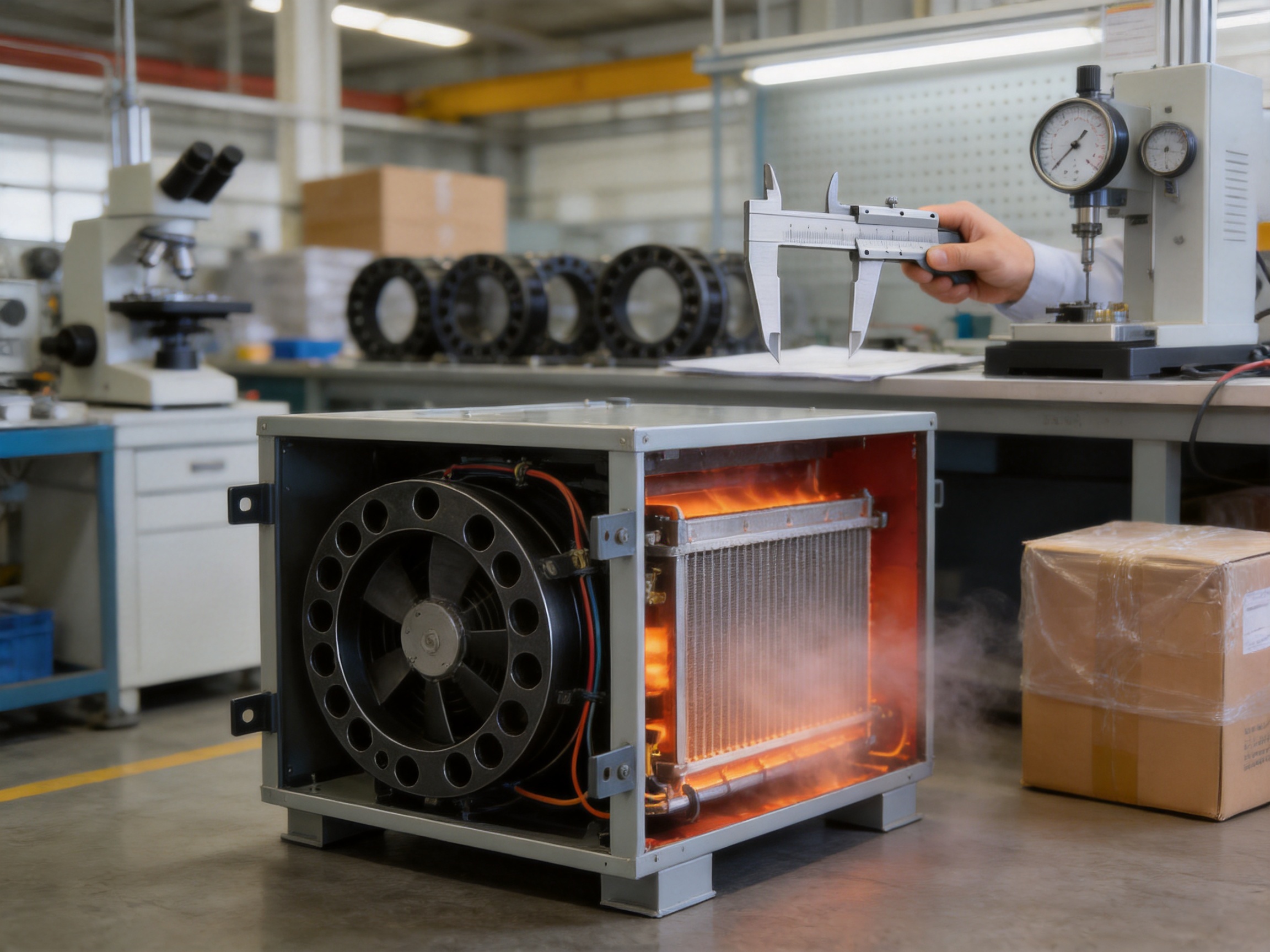
Industrial fuel heaters operate in demanding environments where elevated temperatures, continuous vibration, repeated thermal cycling, and long operating hours place significant stress on structural components. A small internal part must often maintain accurate dimensions, resist wear, tolerate mechanical loading, and remain stable throughout the service life of the equipment. For these applications, powder metallurgy provides an efficient and dependable manufacturing route for producing complex, consistent, and cost-effective components.
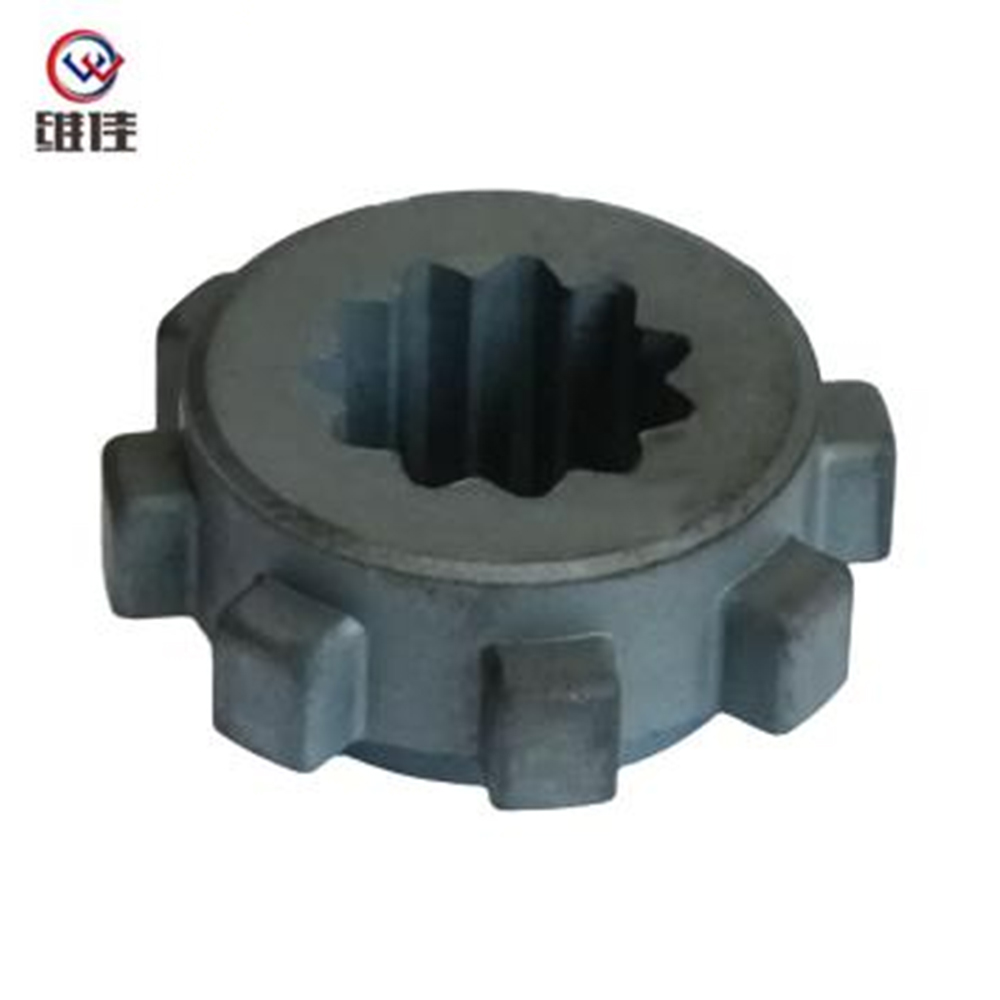
The FC0208 powder metallurgy structural component described in this article is specially developed for industrial fuel heaters, diesel warm air heaters, and high-power industrial hot air generators. It is manufactured from an iron-copper-carbon material and processed through powder mixing, precision compaction, protective-atmosphere sintering, machining, black oxide treatment, inspection, and protective packaging. The result is a dimensionally accurate component designed for reliable assembly and stable operation in demanding heating equipment.
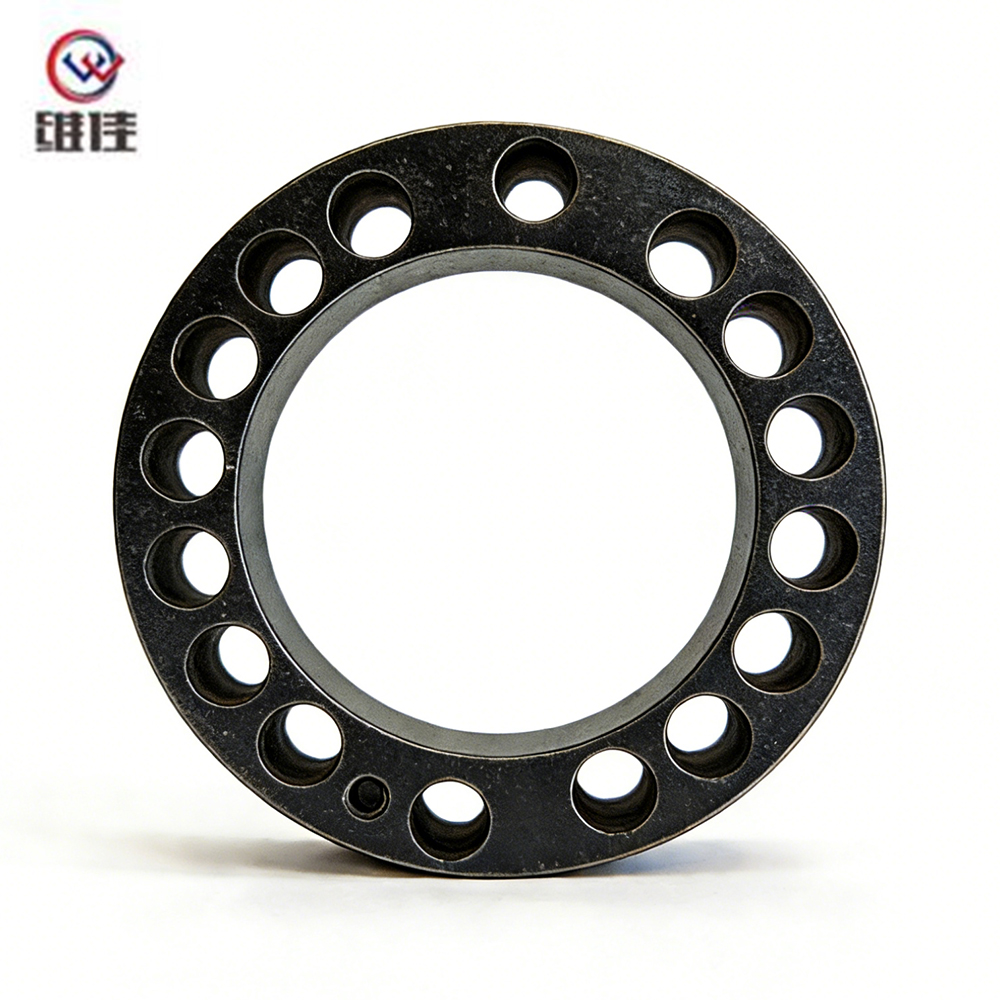
With a nominal size of 60.6 mm × 88.9 mm × 15.84 mm, the component combines the production advantages of powder metallurgy with carefully controlled secondary operations. It is suitable for medium-load structural applications where consistency, machinability, vibration resistance, corrosion protection, and economical mass production are important.
Product Overview
The product is an iron-based powder metallurgy structural part manufactured from FC0208 material, commonly identified as an iron-copper-carbon composition containing approximately 2% copper and 0.8% carbon. Its design and production are intended for use inside industrial fuel heaters and related hot-air equipment.
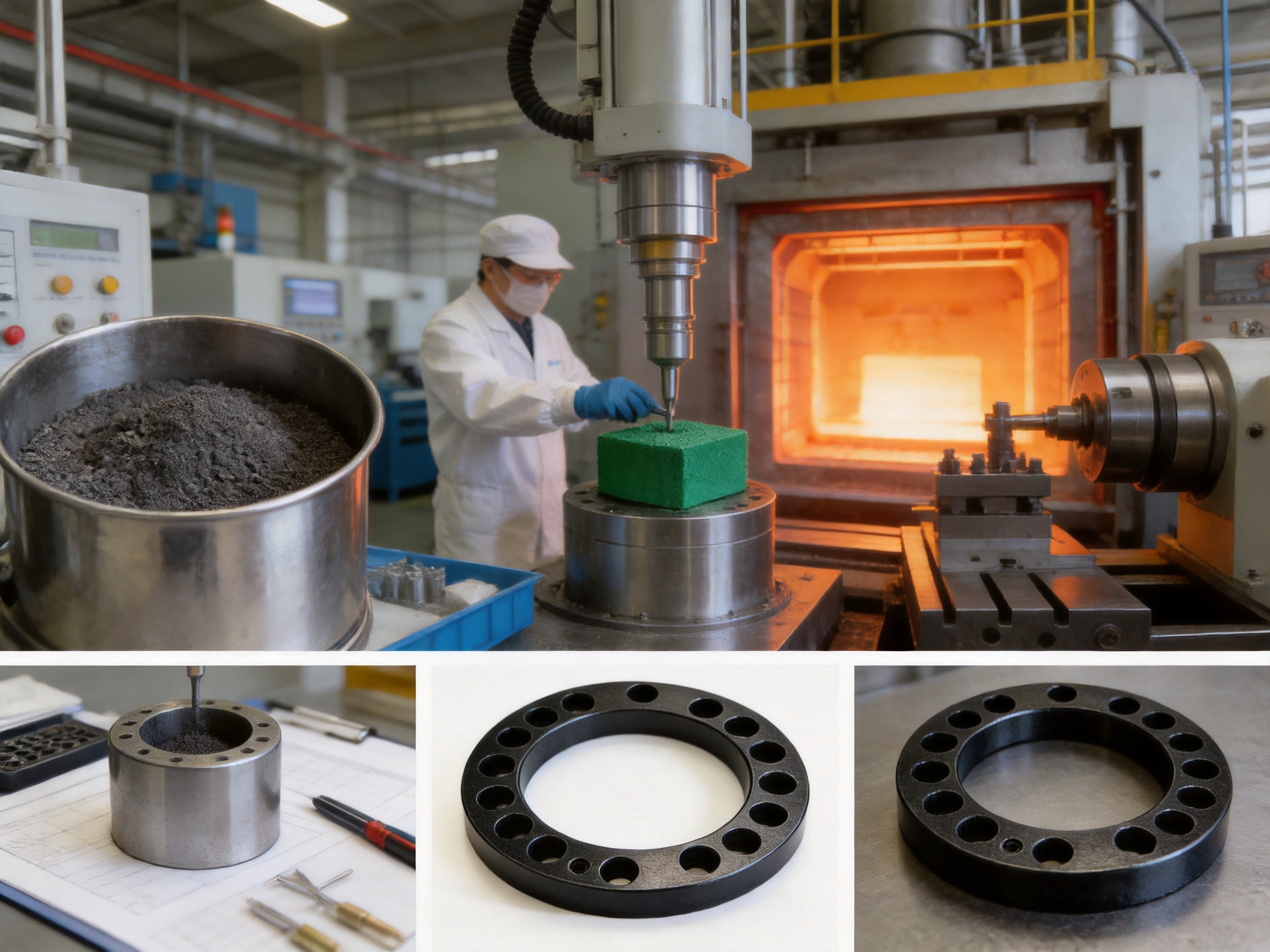
The component is produced through a controlled sequence of powder formulation, compaction, sintering, precision machining, blackening, cleaning, inspection, and packaging. Each stage contributes to the final performance of the part. Compaction establishes the basic geometry, sintering develops the required metallurgical bond and mechanical properties, machining refines critical dimensions, and black oxide treatment improves surface protection and visual consistency.
Unlike a basic pressed-and-sintered part that may be suitable only for less demanding applications, this component includes precision machining and surface treatment. These additional operations help improve dimensional accuracy, assembly compatibility, resistance to handling damage, and protection against rust during storage and service.
| Item | Specification |
|---|---|
| Product type | Powder metallurgy structural component |
| Primary application | Industrial fuel heaters and hot-air heating equipment |
| Product model | PM-FC0208-60.6×88.9×15.84 |
| Nominal dimensions | 60.6 mm × 88.9 mm × 15.84 mm |
| Material | FC0208, iron-copper-carbon powder metallurgy material |
| Approximate material designation | Fe-2Cu-0.8C |
| Manufacturing process | Compaction, sintering, machining, blackening, inspection, and packaging |
| Surface treatment | Black oxide coating, also known as blackening |
| Suitable equipment | Industrial fuel heaters, diesel heaters, and industrial hot-air blowers |
| Customization | Available according to customer drawings, samples, material, and finish requirements |
Why Powder Metallurgy Is Suitable for Industrial Heater Components
Powder metallurgy is a manufacturing technology in which metal powders are mixed, compacted into a controlled shape, and sintered at an elevated temperature below the melting point of the principal metal. The process allows manufacturers to form components with repeatable geometry while using material efficiently.
For industrial fuel heater applications, powder metallurgy offers several practical benefits. The process supports stable mass production, reduces material waste compared with machining from solid bar or plate, and makes it possible to produce repeatable shapes with limited variation between batches. When the component design contains repeated features, controlled thicknesses, or a geometry that would require considerable machining, powder metallurgy can reduce production time and overall manufacturing cost.
Another important benefit is production consistency. A properly controlled powder formulation, compaction process, sintering cycle, and inspection program can provide highly repeatable density, dimensions, and mechanical behavior. This consistency is valuable for heating equipment manufacturers because interchangeable parts simplify assembly, reduce adjustment work, and support stable field performance.
Powder metallurgy also provides flexibility in material selection. Iron-based materials such as FC0208 can be formulated to provide a balance of strength, toughness, machinability, and cost. Copper is added to improve the performance of the iron matrix, while carbon contributes to strength and hardness. The final properties depend on the powder specification, compacting conditions, sintering atmosphere, sintering temperature, cooling cycle, and any secondary operations.
FC0208 Material Characteristics
FC0208 is an iron-copper-carbon powder metallurgy material intended for structural and medium-load applications. Its approximate designation, Fe-2Cu-0.8C, indicates an iron-based composition with copper and carbon additions. The material offers a practical balance between mechanical performance and manufacturing efficiency.
Strength and Toughness
The material is suitable for structural parts that must maintain their shape under normal mechanical loading, vibration, and repeated operation. Its iron-based matrix provides a useful level of strength, while the controlled copper and carbon content contributes to the desired hardness and load-bearing behavior.
Although exact mechanical properties depend on density, processing conditions, heat treatment, and test methods, FC0208 is widely used where a general-purpose iron-based powder metallurgy material is required. It is particularly appropriate when the component does not require the extreme strength of a high-alloy steel but must perform more reliably than a low-strength basic pressed part.
Vibration and Fatigue Resistance
Industrial fuel heaters commonly contain fans, motors, fuel systems, combustion chambers, and mounting structures that generate vibration during operation. The component must therefore tolerate repeated dynamic loading rather than only a single static load.
The FC0208 material and the controlled sintering process provide a stable base for applications exposed to vibration. Correct powder preparation and compaction help maintain uniformity, while sintering creates metallurgical bonding between the compacted particles. Precision machining further reduces the risk of poor assembly fit, uneven contact, or localized loading that could increase vibration-related stress.
Machinability
Some powder metallurgy parts require machining after sintering to achieve final dimensions or to refine functional surfaces. FC0208 is compatible with common machining operations, allowing critical areas to be turned, drilled, reamed, milled, or otherwise finished as required by the design.
Machinability is an important advantage when compared with materials or processes that provide shape but make secondary finishing difficult. The ability to machine selected surfaces means the component can combine near-net-shape forming with targeted precision, avoiding the cost of machining every feature from a solid blank.
High-Temperature Suitability
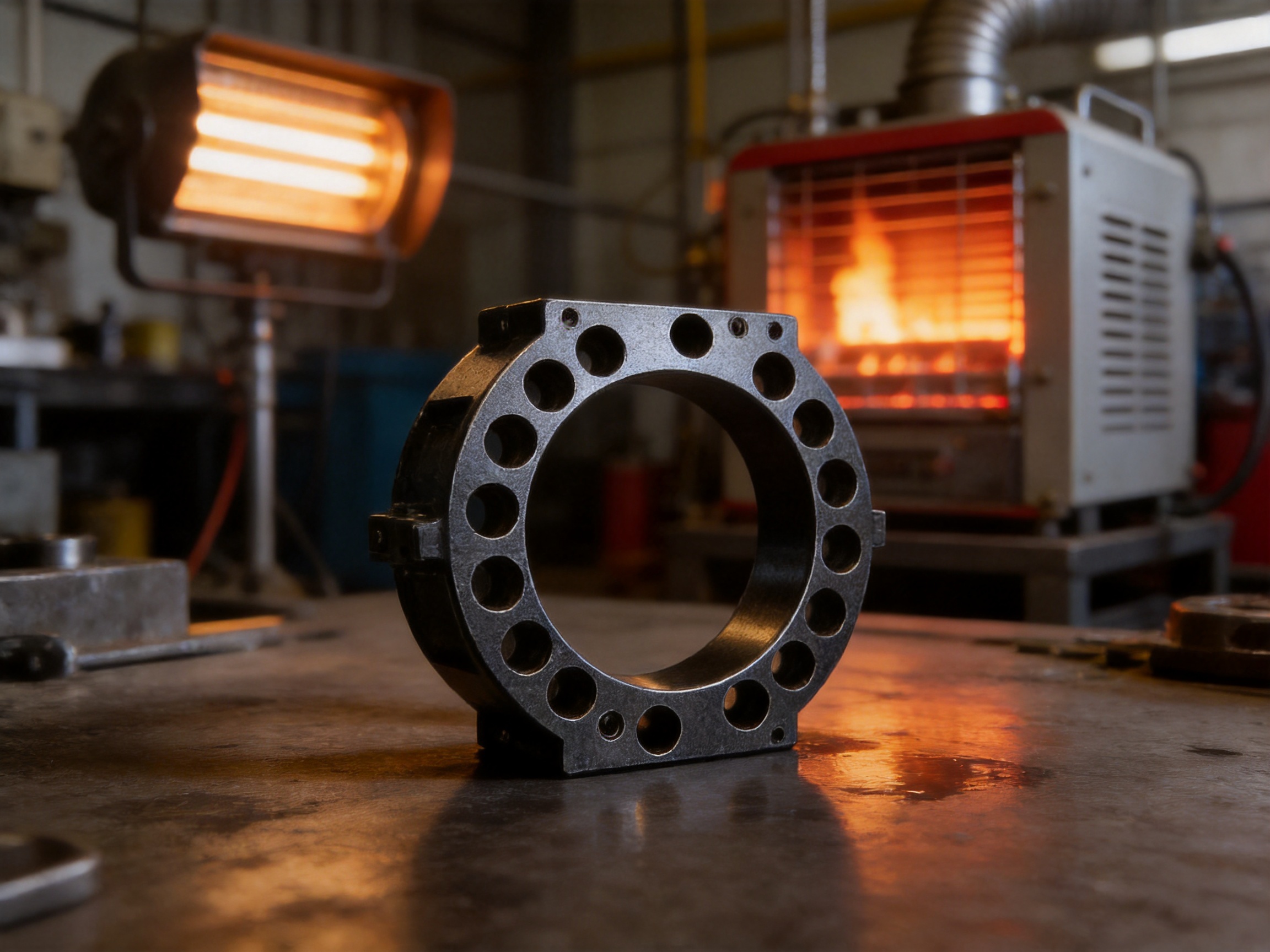
Fuel heaters generate heat and may expose nearby components to elevated temperatures. The component must retain dimensional stability and structural integrity in the operating environment specified by the equipment designer. FC0208 offers useful high-temperature stability for suitable medium-load heater applications, especially when the part is correctly positioned and not exposed beyond its design limits.
Temperature performance is influenced by more than material composition. The heater design, local temperature, heat transfer, ventilation, contact with other components, surface condition, and operating cycle all affect service life. For this reason, final material and process selection should be confirmed against the customer’s temperature, load, and duty-cycle requirements.
Detailed Manufacturing Process
The performance of a powder metallurgy component depends on the complete manufacturing chain. A high-quality raw material cannot compensate for poor powder mixing, nonuniform compaction, improper sintering, or inadequate inspection. The manufacturing route for this heater component is therefore organized as a series of controlled stages.
Powder Mixing and Formulation
The first stage is the preparation of the powder mixture. Iron powder is combined with copper, carbon, lubricant, and any other approved additions required by the material specification. The purpose of mixing is to distribute each constituent as uniformly as possible throughout the batch.
Uniform powder formulation is essential because local variation in copper or carbon content may cause differences in density, hardness, strength, machinability, or dimensional change during sintering. Mixing parameters such as time, sequence, equipment condition, and batch size must be controlled to promote consistent material behavior.
Powder handling also requires attention to moisture, contamination, storage conditions, and traceability. Clean and properly stored powders help protect the stability of the process and reduce the risk of defects. Production records can be used to connect the finished component with its material batch and processing history.
High-Precision Compaction
After mixing, the powder is placed into a precision die and compacted under controlled pressure. The compaction stage creates the initial shape of the part, which is often called a green compact before sintering.
Compaction must be carefully managed to achieve a suitable density distribution. Differences in powder filling, tooling geometry, pressure transmission, or ejection behavior can lead to density variation within the part. Excessive variation may affect shrinkage, dimensional accuracy, strength, and machining performance.
Modern powder metallurgy presses and forming equipment allow manufacturers to control filling, pressing, dwell, and ejection conditions. Proper tool design is equally important. The die and punch system must support the required geometry while minimizing stress concentration and preventing damage during removal from the tooling.
For a structural part used in a heater, the compaction process is especially important because the component must fit correctly with surrounding parts. Accurate green geometry establishes a strong foundation for the final machining and inspection stages.
Protective-Atmosphere Sintering
The compacted parts are sintered in a high-temperature furnace under a controlled protective atmosphere. During sintering, the particles bond together through diffusion and other metallurgical mechanisms. The compact gains strength, toughness, and structural stability as the furnace cycle progresses.
The sintering temperature, heating rate, holding time, atmosphere composition, cooling conditions, and furnace loading can all affect final performance. A protective atmosphere helps reduce unwanted oxidation and supports consistent surface and internal conditions. Stable furnace control is essential for minimizing variation between production batches.
Sintering also causes dimensional changes. These changes must be considered during tooling design and process development. Experienced powder metallurgy manufacturing allows the company to compensate for predictable shrinkage and maintain the required final dimensions after sintering and machining.
Compared with an uncontrolled heating process, a properly managed protective-atmosphere cycle provides better repeatability and improved protection of the iron-based material. It supports stable hardness, density, strength, and dimensional behavior, which are important for interchangeable heater components.
Precision Machining
After sintering, selected surfaces are machined to achieve the required dimensional accuracy and functional fit. Powder metallurgy is highly efficient for forming the general geometry, but machining remains valuable for critical dimensions, holes, bearing areas, locating surfaces, threads, or other features that require tighter control.
The machining operation is planned according to the component drawing and its relationship with adjacent heater parts. Correct workholding is important because sintered components may have a controlled porous structure and must be supported without distortion or damage. Cutting tools, feeds, speeds, and coolant conditions may also be adjusted according to the material and required surface quality.
The combination of powder compaction and precision machining provides a strong competitive advantage. It delivers the production efficiency of near-net-shape forming while maintaining the dimensional control associated with conventional machining. This balanced approach is more economical than machining the entire component from a solid steel blank and more precise than relying on an unmachined compact alone.
Blackening and Surface Protection
The component receives a black oxide surface treatment after machining. Blackening creates a dark, uniform finish and provides a degree of protection against rust and handling-related corrosion. It can also improve the appearance of the component and help distinguish finished parts from untreated production items.
Black oxide is not intended to replace heavy-duty corrosion systems in highly corrosive environments, but it is a practical finish for many indoor industrial applications when combined with suitable oiling, packaging, and storage. The treatment is particularly useful when the part requires a low-profile appearance, modest corrosion protection, and compatibility with mechanical assembly.
Surface preparation before blackening is important. Machining residues, oil, dirt, and loose particles should be removed so that the coating can form consistently. After treatment, the parts should be inspected for coverage, adhesion, discoloration, scratches, or other visible abnormalities.
Cleaning and Final Inspection
Following surface treatment, the component is cleaned and inspected. Inspection may include dimensional checks using calipers, gauges, and optical measuring equipment. Depending on the customer’s requirements, additional checks can include density, hardness, material composition, coating adhesion, and visual appearance.
Inspection is not limited to a single final measurement. Process monitoring throughout production helps identify variation earlier and supports corrective action before a large quantity of nonconforming parts is produced. A structured quality system also provides better traceability from raw material to finished product.
Packaging and Delivery
Finished parts are packaged using anti-rust and anti-collision methods. Moisture-proof bags and cartons help protect the blackened surfaces during transportation and storage. Packaging design should prevent excessive movement, impact, abrasion, and exposure to humidity.
Storage in a dry and ventilated environment is recommended. Even a properly treated iron-based component can be affected by condensation, high humidity, salt contamination, or prolonged exposure to corrosive chemicals. Appropriate packaging and warehouse conditions help preserve the product until it reaches the customer’s assembly line.
Powder Metallurgy Components for Industrial Fuel Heaters
Product Advantages Compared with Alternative Manufacturing Approaches
Industrial heater manufacturers can obtain structural parts through several methods, including machining from solid material, stamping, casting, forging, plastic molding, and conventional pressed-and-sintered production. The most appropriate method depends on geometry, quantity, load, temperature, tolerance, and cost. For the specified application, the FC0208 powder metallurgy process offers several practical advantages.
Compared with Machining from Solid Steel
Machining from a solid steel blank can provide excellent strength and dimensional accuracy, but it may generate substantial material waste and require long cycle times. If the part contains a shape that is close to a compacted powder metallurgy form, machining the entire component from solid stock may be unnecessarily expensive for medium or high production volumes.
The powder metallurgy route uses a die to create much of the required shape before machining. Only critical areas need secondary finishing, reducing cutting time and scrap. This can lower unit cost while maintaining the dimensional accuracy required for assembly.
Compared with Casting
Casting is useful for larger or more complex geometries, but it may involve draft angles, machining allowances, porosity control, surface defects, and additional finishing. For a relatively compact industrial heater component, powder metallurgy can provide a cleaner and more repeatable production route.
Powder compaction also supports close control of the basic geometry and allows the manufacturer to tailor the material composition for the application. When the part size and annual volume are suitable, powder metallurgy can offer better repeatability and more efficient material utilization than casting.
Compared with Stamping
Stamping is highly productive for thin sheet-metal components, but it is less suitable for parts requiring greater thickness, three-dimensional features, controlled density, or integrated structural geometry. The FC0208 component is formed from metal powder rather than sheet, allowing a broader range of three-dimensional shapes.
Powder metallurgy can also provide a useful balance between strength and dimensional stability for parts that experience vibration and moderate mechanical loading. Stamped parts may require additional forming or assembly operations to achieve comparable geometry.
Compared with Basic Pressed-and-Sintered Parts
A basic pressed-and-sintered part may be sufficient for simple, low-load applications, but heater components often require more precise fit and improved surface protection. The addition of precision machining and black oxide treatment provides a more complete solution.
Machining improves control of critical dimensions and functional surfaces, while blackening offers a practical barrier against ordinary rust during handling, storage, and service. These additional operations can reduce assembly difficulties and improve product presentation.
Compared with Generic Low-Cost Components
Low-cost components may appear attractive when evaluated only by purchase price. However, variation in dimensions, material consistency, surface condition, or inspection standards can create hidden costs through assembly delays, premature wear, field failures, and replacement requirements.
The value of this component lies in the combination of controlled FC0208 material, established process steps, precision finishing, and quality inspection. For equipment manufacturers, stable interchangeability and reduced failure risk can be more important than the lowest initial unit price.
| Evaluation factor | FC0208 powder metallurgy component | Machined solid steel part | Cast component | Stamped sheet-metal part |
|---|---|---|---|---|
| Material utilization | High, with near-net-shape forming | Lower when substantial material is removed | Generally efficient, depending on runners and allowances | High for suitable flat geometries |
| Three-dimensional shaping | Good for suitable compacted geometries | Good but may require lengthy machining | Very good for castable shapes | Limited by sheet forming capability |
| Mass-production consistency | High when powder, tooling, and furnace cycles are controlled | High but cycle time may be longer | Dependent on mold and casting controls | High for appropriate designs |
| Secondary machining | Targeted machining for critical surfaces | Often extensive | Usually required for precision areas | May require forming, piercing, or assembly |
| Suitable load range | Low to medium and selected higher-load designs | Broad, including high-load designs | Broad, depending on alloy and casting quality | Generally lower structural thickness |
| Surface treatment compatibility | Blackening and other treatments available | Broad compatibility | Depends on surface quality and alloy | Broad compatibility |
| Cost efficiency for repeated production | Very favorable after tooling development | Can be less favorable for large quantities | Favorable for suitable large or complex parts | Very favorable for thin sheet parts |
Performance in Industrial Fuel Heater Applications
Industrial fuel heaters are used in construction sites, factories, farms, warehouses, workshops, maintenance facilities, and other locations that require dependable space heating. Many models operate for extended periods and may be transported, installed, or repositioned repeatedly. Internal components must therefore withstand both operating and handling conditions.
The FC0208 structural part is suited to locations where the component may experience mechanical vibration from fans and motors. Accurate dimensions help maintain correct positioning within the equipment, while the material’s balanced strength and toughness support stable performance under normal medium-load conditions.
In diesel warm air heaters, the component may be part of a support, mounting, positioning, or transmission-related assembly. Its exact role depends on the heater design. Regardless of its specific position, the component must work reliably with adjacent parts and maintain its geometry during repeated heating and cooling cycles.
In high-power industrial hot-air generators, the part may be exposed to a combination of vibration, heat, dust, and long operating cycles. The black oxide finish helps protect the surface against ordinary rust, while the underlying powder metallurgy material provides the required structural base for the intended application.
The product may also be considered for construction heating equipment, factory heating systems, breeding facilities, and storage-area heaters. Before adoption, the equipment designer should review actual operating temperature, applied loads, assembly tolerances, chemical exposure, lubrication conditions, and required service life.
Dimensional Accuracy and Interchangeability
Interchangeability is a major requirement for industrial equipment manufacturers. When a replacement part must be installed in an existing assembly, the component should fit without excessive adjustment, rework, or modification. The specified dimensions of 60.6 mm × 88.9 mm × 15.84 mm establish the nominal envelope, while customer drawings define detailed tolerances and functional features.
Powder compaction provides repeatable basic geometry, but final accuracy is achieved through a combination of tooling design, controlled sintering, machining, and inspection. The manufacturer can identify critical-to-function dimensions and establish suitable measurement methods for each one.
Calipers may be used for general dimensions, while gauges provide fast production checks for repeated features. Optical measuring devices can support the inspection of profiles, hole locations, angles, and other geometrical characteristics. The appropriate measurement system depends on the drawing requirements and tolerance level.
Stable dimensions also reduce assembly variation. If a part is too large, too small, warped, or incorrectly machined, it may cause interference, looseness, misalignment, noise, or accelerated wear. Consistent production helps protect the performance of the complete heater rather than treating the component as an isolated item.
Quality Control System
Reliable powder metallurgy production requires quality control from raw material receipt through final delivery. The manufacturing company maintains a production base equipped with powder metallurgy presses, high-temperature sintering furnaces, precision forming equipment, machining resources, and inspection instruments.
Raw Material Control
Incoming powders should be checked against the approved material specification. Important considerations include powder type, particle characteristics, chemical composition, packaging condition, and batch identification. Records support traceability and make it easier to investigate any variation.
Process Control
Compaction parameters, tooling condition, furnace temperature, protective atmosphere, sintering time, and cooling conditions are monitored as part of the production process. Machining tools and fixtures must also be maintained to prevent dimensional drift.
Process control is particularly important for powder metallurgy because density and dimensional behavior can be affected by several interconnected factors. A stable process is more effective than relying only on final inspection to identify defects.
Dimensional Inspection
Finished components are checked using calipers, gauges, and optical measuring equipment. Inspection can cover overall dimensions, thickness, holes, locating features, profiles, and other points specified in the customer drawing.
For mass production, inspection frequency and sampling plans may be adjusted according to customer requirements, product risk, process capability, and historical performance. The company also supports full inspection before delivery when required by the order or application.
Material and Mechanical Checks
Depending on the project, the component may be evaluated for density, hardness, chemical composition, and other material characteristics. These checks help confirm that the finished product remains within the agreed specification.
Testing requirements should be defined before production begins. Customers may request specific standards, inspection reports, sample approval procedures, or documentation associated with a quality plan.
Surface and Appearance Inspection
The blackened surface is inspected for uniform coverage, visible defects, coating adhesion, scratches, excessive discoloration, and contamination. A consistent finish supports corrosion protection and helps ensure that the component is ready for assembly.
Quality Certifications and Manufacturing Experience
Jiande Welfine Technology Co., Ltd. has focused on powder metallurgy sintering and precision machining since its establishment in 2001. The company operates a production base of approximately 13,039 square meters and has more than 150 skilled employees.
The company has passed ISO 9001:2015 and IATF 16949:2016 certifications. These certifications support systematic quality management, controlled documentation, process discipline, and continual improvement. Certification alone does not replace product-specific validation, but it provides an important framework for consistent manufacturing and customer communication.
More than two decades of industry experience also support the development of customized components. Experience with powder metallurgy bushings, self-lubricating bushings, structural parts, and precision components enables the company to evaluate material selection, tooling, secondary machining, and surface treatment as an integrated process.
Manufacturing Strengths of the Supplier
The supplier’s principal strength is its concentration on powder metallurgy and related precision manufacturing. Rather than treating the product as a simple commodity, the company can support the complete development cycle from drawing review and material selection to tooling, production, inspection, packaging, and delivery.
Integrated Research and Development
Customer requirements often include more than a finished dimension. They may involve assembly fit, operating temperature, vibration, corrosion exposure, material documentation, packaging, and production volume. An integrated research and development capability helps convert these requirements into an achievable manufacturing plan.
The supplier supports development according to customer 2D drawings, 3D models, or physical samples. During the development stage, engineers can review whether the geometry is suitable for powder compaction, whether machining allowances are adequate, and whether the proposed surface treatment matches the operating environment.
Production Equipment
The production base includes high-efficiency presses, high-temperature sintering furnaces, and precision forming machines. These resources support the manufacture of repeatable powder metallurgy products and provide capacity for both sample development and mass production.
Equipment capability is important because tooling, compacting pressure, furnace capacity, and forming control all affect product consistency. A supplier with suitable equipment can reduce the need for excessive manual correction and provide a more stable production rhythm.
OEM and ODM Support
OEM and ODM services allow customers to obtain components developed for their own equipment rather than selecting a generic part with uncertain fit. The supplier can work from customer drawings or samples and coordinate the appropriate material, process, surface treatment, inspection method, and packaging specification.
For the FC0208 heater component, customization may include dimensional adjustments, feature changes, tolerance clarification, material alternatives such as FC0205 or other iron-based grades, and surface treatments such as blackening, oil impregnation, or zinc plating where technically appropriate.
Flexible Order Support
Sample orders and mass production are both supported. Samples allow customers to verify fit, surface condition, and basic performance before approving a larger order. Once the design and process are confirmed, production can be scaled according to forecast demand and delivery requirements.
This approach is useful for heating equipment manufacturers that are introducing a new model, modifying an existing heater, or qualifying an alternative supplier. It reduces the risk of committing to high-volume production before the component has been evaluated in the intended assembly.
Engineering Considerations for Customization
Customers considering this component should provide as much application information as possible. A complete drawing should include nominal dimensions, tolerances, material requirements, surface finish, inspection points, and any special functional characteristics.
Operating conditions should also be communicated. These may include continuous and peak temperatures, vibration levels, applied loads, assembly method, contact with lubricants or fuels, humidity, exposure to chemicals, and expected service life.
For powder metallurgy, certain geometrical features require special attention. Very thin sections, abrupt changes in thickness, deep unsupported holes, sharp internal corners, and complex undercuts may affect filling, compaction, ejection, or sintering. Early design review can identify such issues and suggest modifications that improve manufacturability without changing the intended function.
Tolerances should be assigned according to function rather than applied uniformly to every surface. Critical locating or mating surfaces may require machining, while noncritical surfaces can retain the economical dimensions achieved through compaction and sintering. This design strategy helps control tooling and machining costs.
Surface treatment should be selected based on actual environmental conditions. Black oxide is suitable for many general industrial applications, especially when the part is stored properly and not exposed to severe chemical corrosion. If the component will experience high humidity, salt spray, aggressive chemicals, or outdoor exposure, another treatment may be more suitable.
Installation and Service Recommendations
The component should be inspected before installation to confirm that the packaging has remained intact and that no visible damage, corrosion, contamination, or deformation is present. Mating surfaces should be clean and free of burrs or foreign particles.
Installation forces should be applied in a controlled manner. Improper pressing, impact, misalignment, or excessive tightening can damage a powder metallurgy component or create stress in surrounding parts. The assembly procedure should follow the heater manufacturer’s technical instructions.
Where the component is used near moving parts, correct alignment is important. Misalignment can create uneven loading, vibration, noise, and accelerated wear. The part should be installed with the specified clearances and fasteners, and any required lubrication should be compatible with the operating temperature and materials in contact.
Maintenance personnel should monitor abnormal vibration, unusual noise, visible rust, loosening, deformation, or changes in heater performance. Early detection of a problem can prevent damage to adjacent components and reduce unplanned downtime.
Environmental and Cost Benefits
Powder metallurgy is an efficient material-processing technology because it can form a substantial portion of the final geometry without producing the large chips associated with machining from solid material. Reduced material waste can contribute to lower production resource consumption, particularly in repeated manufacturing.
The process also supports automated and repeatable production. Stable production reduces rework and improves the efficient use of labor, energy, tooling, and inspection resources. When the component is manufactured in appropriate quantities, these advantages can contribute to a lower total cost of ownership for the equipment manufacturer.
Cost efficiency should not be evaluated only by the initial component price. A properly designed powder metallurgy part may reduce assembly labor, eliminate additional fabrication steps, improve replacement compatibility, and lower the likelihood of premature failure. These factors can be especially important for industrial heaters deployed in locations where service access is difficult or downtime is expensive.
Black oxide treatment can also be economically attractive compared with more elaborate coating systems when the application requires moderate corrosion protection rather than severe-environment resistance. The correct treatment should always be selected according to the actual service conditions.
Applications Beyond the Initial Heater Model
The specified component is designed for industrial fuel heaters, but the material and manufacturing approach may be applicable to other industrial products with similar requirements. Potential areas include diesel heating systems, hot-air generators, industrial fans, agricultural heating equipment, warehouse heating units, and selected mechanical support assemblies.
Other applications may be considered when the operating temperature, loading, geometry, and corrosion conditions remain within the capability of the FC0208 material and process. The part should not be transferred automatically to an unrelated application without engineering review. Each new use should be evaluated based on its specific service conditions.
The company’s broader powder metallurgy capabilities include bushings, self-lubricating bushings, and other precision components. This wider experience can be useful when a customer requires several related parts for a heater assembly or wishes to consolidate sourcing with one specialized powder metallurgy supplier.
Recommended Supplier Qualification Process
Before placing a production order, customers can follow a structured qualification process. First, provide the product drawing, sample, or three-dimensional model together with the application information. The supplier can then review manufacturability, material selection, tooling requirements, secondary operations, and inspection criteria.
Second, approve the technical specification. This should identify the material grade, dimensions, tolerances, surface treatment, appearance requirements, packaging method, and testing requirements. Any differences between the supplier’s standard process and the customer’s specification should be resolved before tooling begins.
Third, produce samples or trial parts. Samples should be checked for dimensional fit, assembly compatibility, appearance, and any available functional requirements. If possible, the part should be installed in a representative heater assembly or tested under simulated operating conditions.
Fourth, review the inspection results and approve the production process. This may include dimensional reports, material confirmation, hardness or density data, coating inspection, and sample approval records.
Finally, establish a production control plan for mass delivery. The plan may include batch traceability, inspection frequency, packaging standards, change-control procedures, and communication requirements for future design or process changes.
Frequently Asked Questions
What is the main material used for this component?
The component is manufactured from FC0208, an iron-copper-carbon powder metallurgy material with an approximate designation of Fe-2Cu-0.8C. The material is suitable for medium-load structural applications requiring balanced strength, toughness, machinability, vibration resistance, and production consistency.
What are the nominal dimensions?
The product model is PM-FC0208-60.6×88.9×15.84, and the nominal dimensions are 60.6 mm × 88.9 mm × 15.84 mm. Detailed tolerances and additional features should be confirmed against the customer’s technical drawing.
Can this part be used in high-temperature equipment?
It is designed for industrial fuel heaters and related hot-air equipment that expose components to elevated temperatures and vibration. Suitability depends on the actual temperature, applied load, operating cycle, and location of the part within the heater. Application-specific validation is recommended before full production.
Why is machining performed after sintering?
Compaction and sintering efficiently create the basic component shape, while machining refines critical surfaces and dimensions. This combination provides better assembly accuracy and interchangeability without requiring the entire component to be machined from solid steel.
What is the purpose of black oxide treatment?
Black oxide treatment, also called blackening, provides a dark and uniform surface finish with a degree of protection against ordinary rust and handling-related corrosion. It is suitable for many general industrial environments but should be evaluated carefully for severe chemical, salt, or outdoor exposure.
Can the product be customized?
Yes. Custom development can be based on customer 2D drawings, 3D models, or samples. Customization may include dimensions, tolerances, material selection, surface treatment, inspection requirements, packaging, and production quantity.
Are alternative materials available?
Material options may include FC0205, FC0208, and other iron-based powder metallurgy grades. The correct grade depends on strength, hardness, machinability, temperature, wear, and cost requirements. Material substitution should be approved through technical review and sample validation.
Can the supplier provide samples before mass production?
Sample orders and mass production are supported. Sample evaluation allows customers to confirm fit, appearance, process suitability, and basic performance before committing to a larger production quantity.
How is dimensional quality controlled?
Dimensional inspection may use calipers, gauges, and optical measuring devices. Inspection points and frequency can be established according to the customer drawing, product risk, process capability, and order requirements. Full inspection before delivery can also be arranged when required.
What quality certifications does the manufacturer hold?
Jiande Welfine Technology Co., Ltd. has passed ISO 9001:2015 and IATF 16949:2016 certifications. These systems support controlled manufacturing, documented procedures, traceability, quality monitoring, and continuous improvement.
How should the components be stored?
The components should remain in moisture-proof packaging and be stored in a dry, ventilated environment. They should be protected from condensation, excessive humidity, impact, abrasion, and corrosive contamination until installation.
What information should be supplied for a quotation?
A quotation request should ideally include the drawing or sample, annual and batch quantity, material requirement, surface treatment, dimensional tolerances, inspection requirements, packaging preferences, application, operating temperature, and delivery destination. Complete information helps the supplier provide a more accurate technical and commercial proposal.
Conclusion
The FC0208 powder metallurgy structural component for industrial fuel heaters is designed to provide a practical combination of dimensional accuracy, structural stability, machinability, vibration resistance, surface protection, and mass-production efficiency. Its nominal dimensions are 60.6 mm × 88.9 mm × 15.84 mm, and its manufacturing route includes powder compaction, protective-atmosphere sintering, precision machining, blackening, inspection, and protective packaging.
The component’s main advantage is not one isolated feature but the integration of material, forming, finishing, and quality control. Powder metallurgy reduces material waste and supports repeatable production. FC0208 offers a balanced material solution for medium-load structural applications. Precision machining improves assembly fit, while black oxide treatment contributes to rust protection and a consistent appearance.
For equipment manufacturers, these benefits can translate into easier assembly, improved interchangeability, more stable production, and lower total manufacturing cost. The product is suitable for industrial fuel heaters, diesel warm air heaters, hot-air generators, and other heating equipment operating under vibration and elevated-temperature conditions.
Jiande Welfine Technology Co., Ltd. supports custom OEM and ODM development based on drawings or samples. With powder metallurgy production equipment, precision machining capability, experienced technical personnel, and ISO 9001:2015 and IATF 16949:2016 quality systems, the company can support projects from initial design review through sample approval and mass production.
For the best result, customers should provide complete technical information and validate the component under actual or representative operating conditions. When the geometry, material, temperature, load, and surface treatment are properly matched, this FC0208 powder metallurgy component can provide a dependable and economical solution for long-term industrial heater operation.
References
1. ISO 9001:2015, Quality Management Systems—Requirements.
2. IATF 16949:2016, Quality Management System Requirements for Automotive Production and Relevant Service Parts Organizations.
3. Powder Metallurgy Materials and Processing Principles, technical reference literature on metal powder compaction and sintering.
4. Standard practices for iron-based powder metallurgy materials, density control, mechanical testing, and dimensional inspection.
5. Industrial heating equipment engineering guidance covering vibration, temperature cycling, component installation, and maintenance considerations.
6. Manufacturer-provided FC0208 product information, process description, application data, and customization capabilities.
Product: Powder Metallurgy Components for Industrial Fuel Heaters

Related products
-
-
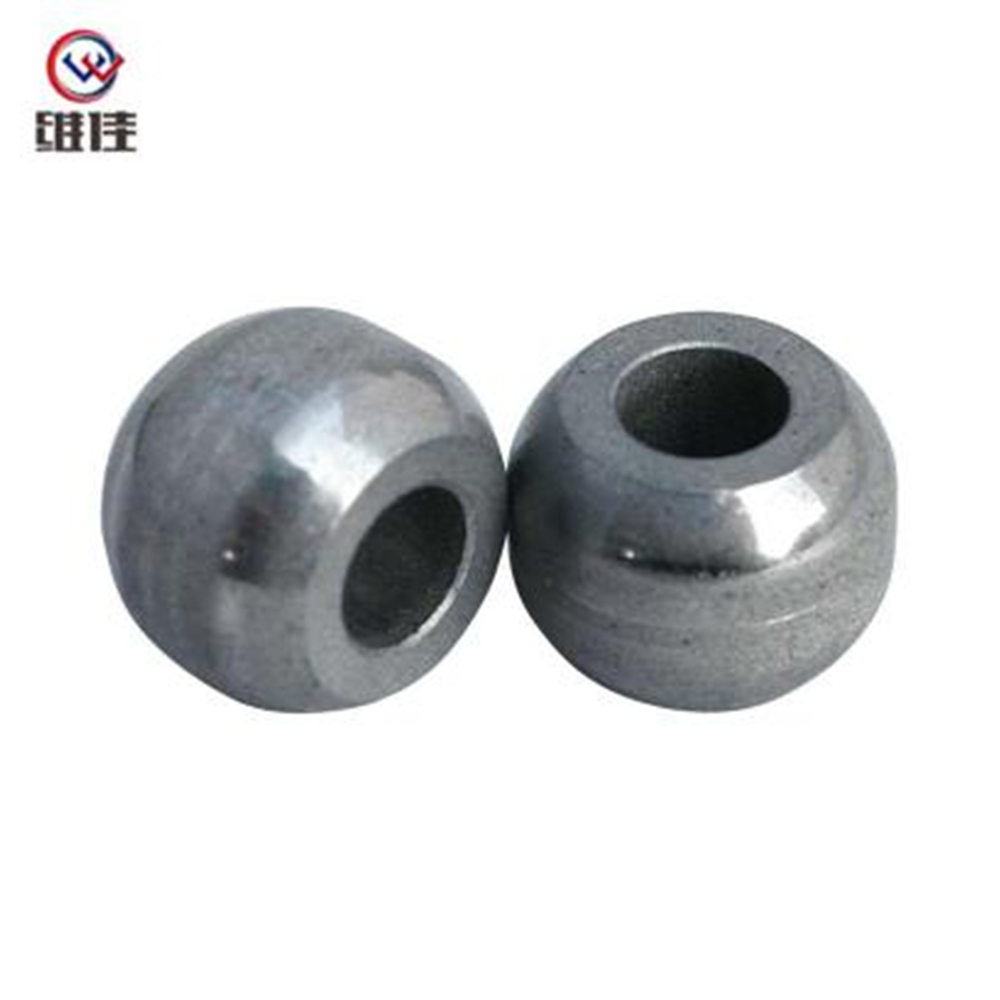
Product Description: High-precision powder metallurgy part (S14*7*10) made of iron material from Jiande Wefine, customized PM components with strict tolerance control.
See Details -
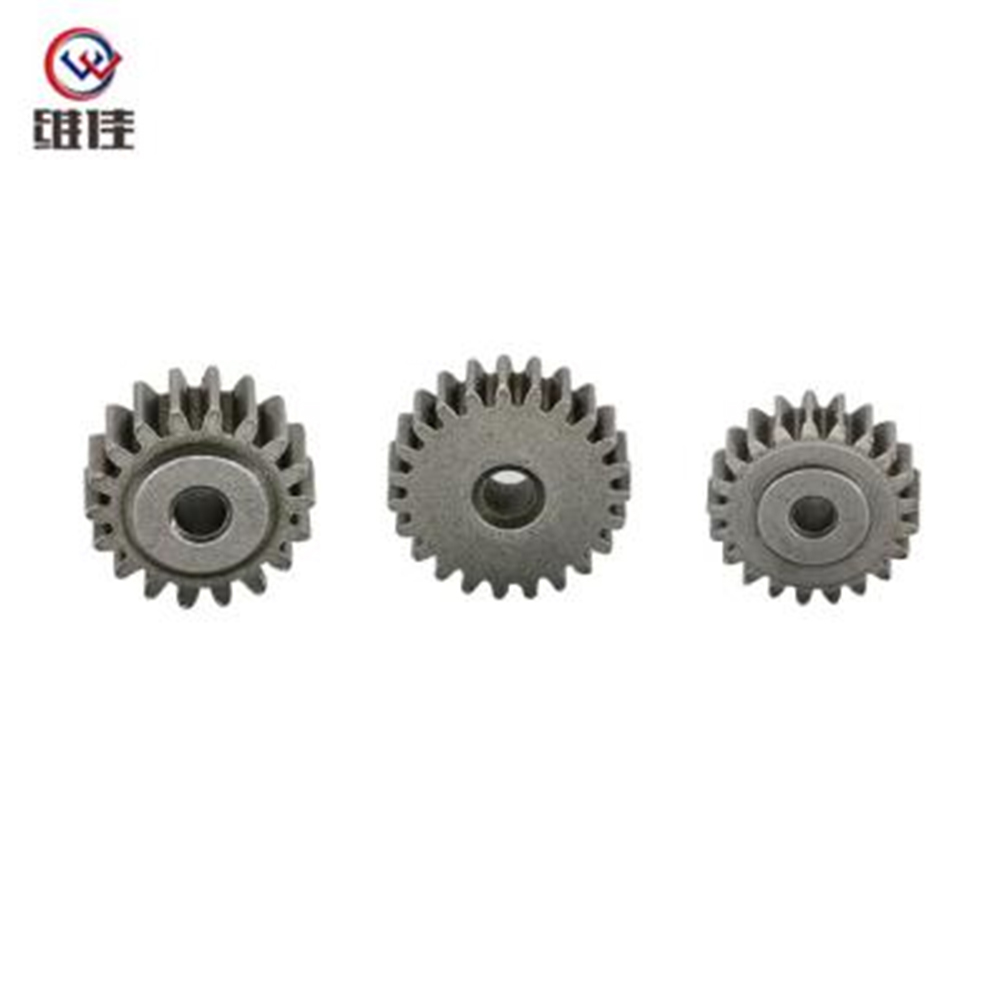
Description: Custom powder metallurgy planetary gear with high precision, wear resistance for automotive, industrial machinery & home appliances. OEM/ODM supported.
See Details -
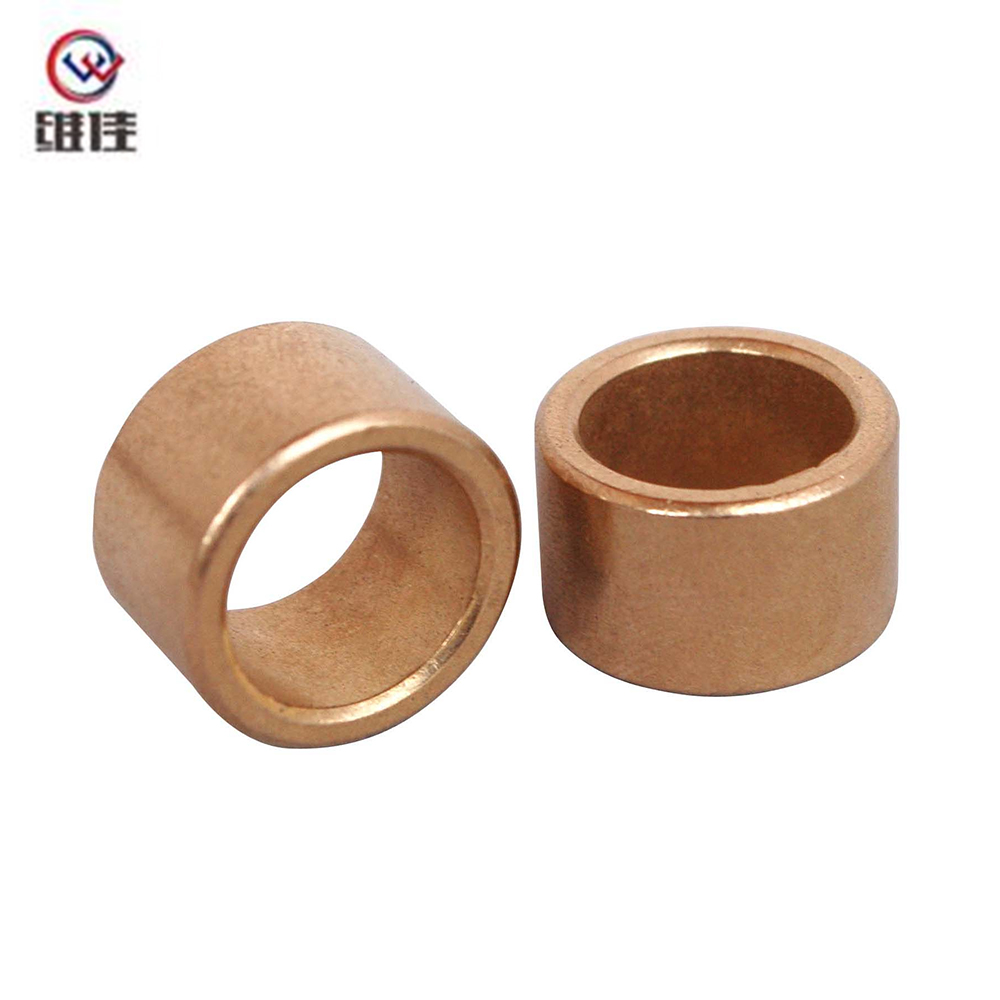
This copper-based powder metallurgy bushing is manufactured through an integrated process of compaction, sintering, sizing, and oil impregnation. It features excellent wear resistance and self-lubrica...
See Details -
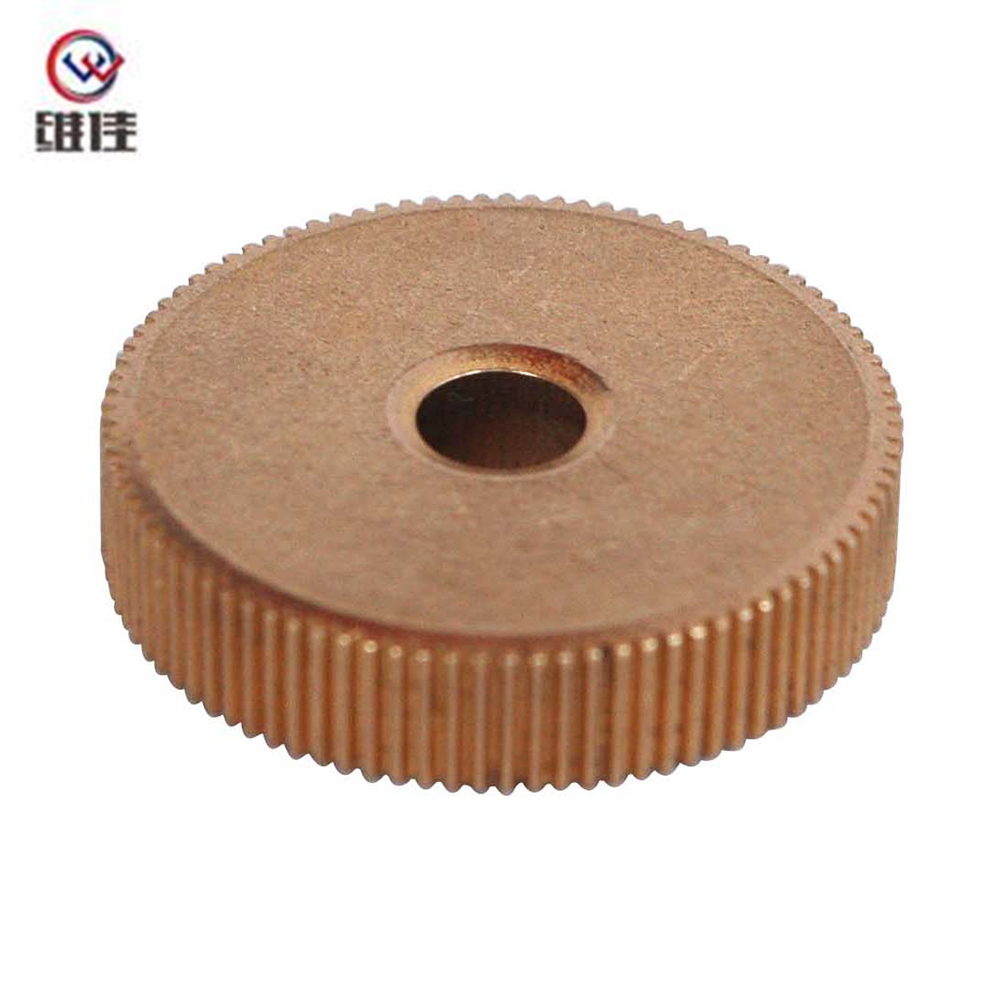
This 4×11.5×5.2mm powder metallurgy gear is manufactured through a precise press-sinter-through hole-oil impregnation process, with strict control of press density (6.7–6.8g/cm³) and sintering tempera...
See Details
Copyright © Jiande Welfine Technology Co., Ltd. All Rights Reserved. Custom Self-lubricating Sintered Bushing Manufacturers
