 English
 中文简体
中文简体
Description: 79.5×62×7.3mm copper-based brake pad with 4-hole design. Density 6.2g/cm³, weight 195g. Free from graphite segregation, cracks, and defects. Ideal for heavy-duty industrial braking system...
See DetailsE-mail us: [email protected]
Tel: +86-15239857375


 Home / Author / Gao Manli — Overseas Sales Manager / High-Density Copper-Based Brake Pad: Performance, Manufacturing Quality, and Industrial Applications
 High-Density Copper-Based Brake Pad: Performance, Manufacturing Quality, and Industrial Applications
 2026.08.29
 Gao Manli — Overseas Sales Manager
Content
- 1 Product Overview
- 2 Why Copper-Based Sintered Friction Material Is Suitable for Heavy-Duty Braking
- 3 High Density as a Functional Performance Requirement
- 4 Graphite Distribution and Defect Prevention
- 5 Advantages of the Four-Hole Mounting Design
- 6 Dimensional Accuracy and Fitment Reliability
- 7 Performance Compared with Competing Friction Materials
- 8 Manufacturing Process and Quality Control
- 9 Application Scenarios
- 10 Service Life, Maintenance, and Operating Considerations
- 11 Customization and OEM/ODM Support
- 12 Manufacturing Strengths of Jiande Welfine Technology Co., Ltd.
- 13 Quality Assurance from Powder to Finished Brake Pad
- 14 How to Select the Correct Brake Pad
- 15 Frequently Asked Questions
- 15.1 Q1: What is the main advantage of a copper-based sintered brake pad?
- 15.2 Q2: What does the 6.2 g/cm³ density indicate?
- 15.3 Q3: Why is graphite segregation a problem?
- 15.4 Q4: What is the purpose of the four-hole design?
- 15.5 Q5: Can the dimensions be customized?
- 15.6 Q6: Is this pad suitable for wet or outdoor applications?
- 15.7 Q7: What industries commonly use this type of brake pad?
- 15.8 Q8: How long will the brake pad last?
- 15.9 Q9: Are samples available?
- 15.10 Q10: Which quality standards are used for testing?
- 15.11 Q11: How should the pad be installed?
- 15.12 Q12: Why should customers work directly with a manufacturer?
- 16 Conclusion
- 17 References
- 18 Product: High-Density Copper-Based Brake Pad | 79.5×62×7.3mm | 4-Hole Industrial Brake Lining

Industrial braking systems operate under conditions that are considerably more demanding than those encountered in ordinary passenger vehicles. Cranes, mining equipment, wind turbines, rolling mills, conveyors, elevators, marine machinery, and heavy engineering systems must often stop large loads repeatedly, safely, and with minimal downtime. In these applications, a friction pad is not simply a replaceable wear component. It is a carefully engineered safety element that must maintain stable friction, resist wear, dissipate heat, remain dimensionally accurate, and withstand mechanical forces throughout its service life.
The high-density copper-based brake pad described in this article is designed for such demanding service. Measuring approximately 79.5 × 62 × 7.3 mm and incorporating a four-hole mounting configuration, the pad is manufactured from a sintered copper-based friction material. Its specified density is 6.2 g/cm³, and its approximate weight is 195 g. The material is engineered to provide strong thermal conductivity, reliable mechanical integrity, stable friction under heavy loads, and resistance to common production defects such as graphite segregation, cracking, and dimensional inconsistency.
Compared with conventional organic friction materials and less precisely controlled sintered products, this copper-based pad offers a combination of heat management, structural strength, mounting stability, and long-term wear performance. Its value comes not from one isolated specification, but from the relationship between material formulation, powder preparation, compaction, sintering, machining, inspection, and application-specific design.
Jiande Welfine Technology Co., Ltd. supports the production of this type of precision sintered friction component through powder metallurgy expertise, modern manufacturing equipment, quality management systems, and OEM and ODM customization capabilities. The company has focused on powder metallurgy sintering and precision components since its establishment in 2001, serving customers that require repeatable parts manufactured according to drawings, samples, or technical specifications.
Product Overview
This brake pad is a copper-based sintered friction element intended for industrial braking assemblies. The copper matrix provides a strong and thermally conductive structural phase, while friction modifiers and solid lubricant phases contribute to controlled braking behavior. The sintered construction allows the material to retain its designed composition throughout the pad rather than relying on a surface coating that may wear away quickly.
The product is supplied in a four-hole configuration. The holes support secure mechanical installation and help distribute mounting forces across the pad. Correct hole position, hole diameter, countersink geometry, and dimensional tolerances are important because even a small mismatch can create installation difficulty, uneven contact pressure, vibration, or premature wear. For this reason, the pad should be specified together with the customer’s caliper or backing-plate drawing whenever a replacement or customized version is required.
The standard product information identifies the principal dimensions as 79.5 × 62 × 7.3 mm. The nominal density is 6.2 g/cm³, and the approximate unit weight is 195 g. Final dimensions, tolerances, mounting-hole details, surface condition, and packaging requirements can be confirmed during technical review before production.
| Item | Specification |
|---|---|
| Material type | Copper-based sintered friction material |
| Nominal dimensions | 79.5 × 62 × 7.3 mm |
| Mounting configuration | Four-hole design |
| Nominal density | 6.2 g/cm³ |
| Approximate weight | 195 g per piece |
| Friction coefficient | Approximately 0.35–0.40 under dry conditions |
| Wear rate | Not greater than 1.0 × 10⁻⁴ cm³/J under the stated test conditions |
| Shear strength | At least 7 MPa under the stated test conditions |
| Working temperature range | Approximately -40°C to 600°C, subject to application validation |
| Typical applications | Industrial calipers, cranes, conveyors, wind turbines, mining machinery, marine equipment, and heavy machinery |
Actual performance depends on the complete braking system, including rotor material, rotor surface condition, caliper pressure, braking speed, cooling conditions, duty cycle, environmental exposure, and installation quality. Product testing should therefore be performed under representative operating conditions before final approval for safety-critical applications.
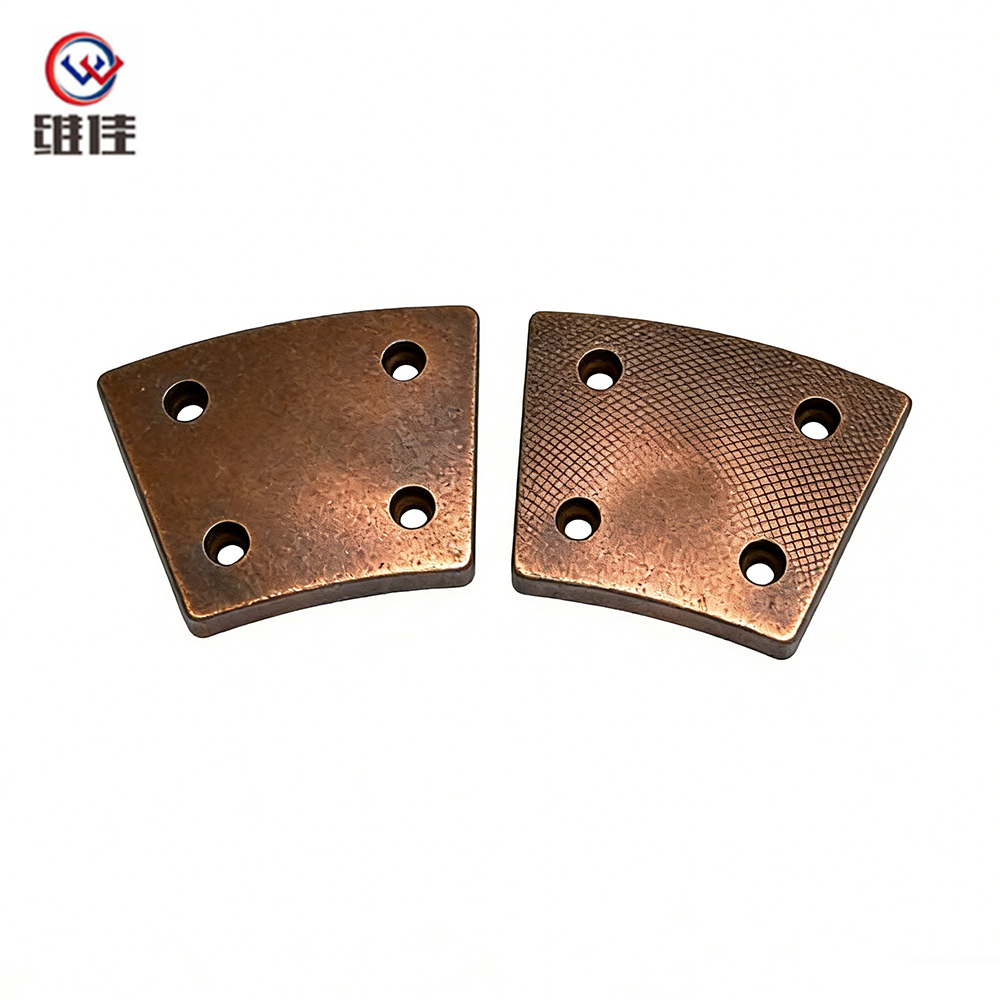
High-Density Copper-Based Brake Pad | 79.5×62×7.3mm | 4-Hole Industrial Brake Lining
Why Copper-Based Sintered Friction Material Is Suitable for Heavy-Duty Braking
Copper is used as the principal matrix metal because it provides excellent thermal conductivity relative to many alternative friction-material matrices. During braking, kinetic energy is converted into heat at the interface between the pad and rotor. If this heat is not conducted away efficiently, the contact temperature can rise rapidly, causing friction fade, accelerated wear, surface glazing, thermal cracking, or damage to adjacent components.
A copper-based matrix helps spread heat across the pad and transfer it toward the backing structure and surrounding braking assembly. This reduces the likelihood of severe localized hot spots. Thermal conductivity does not eliminate thermal stress, but it can improve temperature uniformity and help the pad retain more stable friction behavior during repeated braking events.
The sintered structure also provides a combination of hardness, load-bearing capacity, and controlled porosity. During powder metallurgy production, copper powder and other formulated materials are compacted under controlled pressure and then heated in a carefully regulated atmosphere. The particles bond through diffusion and solid-state mechanisms, producing a dense and mechanically integrated friction element.
Compared with many conventional resin-bonded materials, copper-based sintered pads can remain more stable at elevated temperatures. They are particularly useful in applications where braking is frequent, load levels are high, or cooling conditions are unpredictable. The material can also be formulated for different friction coefficients, wear rates, rotor interactions, and environmental conditions.
Stable Friction Under Heat and Load
A brake pad must generate adequate friction without excessive variation. If the friction coefficient changes significantly during a braking cycle, the equipment operator may experience inconsistent stopping behavior, vibration, or unexpected stopping distances. For heavy machinery, such variation can create safety risks and production interruptions.
The specified dry friction coefficient of approximately 0.35–0.40 places this product within a useful range for many industrial braking systems. The copper matrix supports heat dissipation, while the formulation can include solid lubricants and friction modifiers that help control surface behavior. The objective is not simply to maximize friction. Excessively high friction can increase rotor wear, temperature generation, noise, and mechanical shock. A stable and application-appropriate coefficient is generally more valuable than the highest possible coefficient.
Mechanical Strength and Structural Integrity
Industrial brake pads are exposed to compressive loading, tangential shear, vibration, thermal cycling, and repeated mechanical shocks. The pad must remain intact while transferring braking force to the caliper or backing plate. A weak or poorly consolidated pad may crumble, deform, delaminate, or develop cracks during service.
The specified shear strength of at least 7 MPa indicates that the material is designed to resist tangential forces generated during braking. The actual required strength depends on mounting design and load conditions, but the combination of material consolidation and four-hole mechanical retention provides a strong basis for reliable installation.
High density also contributes to the pad’s load-bearing ability. At 6.2 g/cm³, the compact has been consolidated to a level intended to balance strength, wear resistance, friction behavior, and useful porosity. Density must be controlled throughout the production batch because significant variation can lead to inconsistent wear and friction performance between individual pads.
High Density as a Functional Performance Requirement
In a sintered friction material, density is more than a marketing specification. It reflects how thoroughly the powder compact has been formed and sintered. A controlled density affects the amount, size, and distribution of internal pores. These characteristics influence mechanical strength, thermal conductivity, friction stability, fluid resistance, and wear behavior.
Underdense material may contain excessive or interconnected porosity. Such a structure can reduce the effective contact area, increase compliance, raise initial wear, and permit moisture or fluid penetration. In outdoor or wet industrial environments, uncontrolled porosity may contribute to friction changes during rain, wash-down, or condensation exposure.
However, maximum density is not automatically the ideal condition. Excessive compaction can close the pore network too aggressively and may interfere with the intended function of graphite or other lubricant phases. A balanced structure is necessary. The target density of 6.2 g/cm³ is intended to provide a controlled level of consolidation without eliminating the functional characteristics required by the friction formulation.
Achieving consistent density requires control at several production stages. Powder particle size distribution must be managed so that the die fills uniformly. Mixing must prevent heavy and light constituents from separating. Die filling must be repeatable. Compaction pressure and dwell time must be calibrated. Ejection must avoid damage to the green compact. Finally, the sintering cycle must provide sufficient diffusion bonding without oxidation or distortion.
Jiande Welfine Technology Co., Ltd. uses powder metallurgy production methods supported by high-efficiency presses, high-temperature sintering furnaces, precision forming equipment, and inspection systems. Process monitoring under an ISO 9001:2015 quality framework helps connect production records with final inspection results, supporting batch-to-batch consistency.
Graphite Distribution and Defect Prevention
Graphite is frequently used in copper-based friction formulations as a solid lubricant and friction-control phase. It can assist in forming a transfer film on the rotor surface, reducing direct metal-to-metal contact and helping stabilize the friction interface. The amount and particle characteristics of graphite must be selected according to the required friction coefficient, wear rate, temperature range, and rotor compatibility.
One of the manufacturing challenges is that graphite has a much lower density than copper. During handling, mixing, and die filling, graphite particles can migrate or collect unevenly if the process is not carefully controlled. This phenomenon is commonly known as graphite segregation.
Graphite segregation can produce localized differences in pad behavior. An area with excessive graphite may generate a lower friction coefficient and wear more quickly. An area with insufficient graphite may experience higher local friction, greater heat generation, and increased risk of surface damage. Uneven distribution can therefore affect not only braking performance but also rotor wear and pad life.
To reduce this risk, the powder formulation and mixing sequence must be engineered together. Copper powder and metallic additives may first be blended to create a more cohesive base. Graphite and other low-density phases can then be introduced under controlled conditions. Mixing time, speed, batch size, material order, and handling procedures all influence final uniformity.
Welfine’s stated quality controls include inspection for graphite segregation, cracks, and other defects. Metallographic analysis, density measurement, dimensional inspection, and visual examination can be used as part of a broader quality program. The appropriate inspection plan depends on the customer’s application, production volume, and risk classification.
Cracks may originate during compaction, ejection, machining, or sintering. Ejection stresses can be caused by friction between the compact and die wall, inadequate lubrication, or unsuitable geometry. During sintering, differences in thermal expansion between the copper matrix and other phases can create internal stress. Process optimization, tooling control, and appropriate thermal profiles help reduce these risks.
Advantages of the Four-Hole Mounting Design
The four-hole design provides positive mechanical retention and supports a more balanced distribution of mounting forces. When a pad is secured at multiple points, it is less likely to shift during operation. Stable positioning helps maintain even contact with the rotor and reduces the chance of localized loading.
In heavy-duty equipment, braking forces are not always applied perfectly symmetrically. Vibration, caliper movement, equipment flex, and changing load direction can introduce additional stress. A properly designed hole pattern helps the pad remain aligned under these conditions.
Mechanical retention is also important when the friction lining is installed on or against a steel backing component. In applications where the lining experiences tangential shear, relying only on bonding may not be sufficient. Four-hole retention can supplement the backing structure and reduce the risk of lining movement or separation.
The design can be adapted to customer drawings. Depending on the assembly, customization may include hole diameter, hole spacing, countersink shape, edge distance, positional tolerance, pad thickness, and external profile. Such customization is especially valuable for replacement parts where the original brake assembly remains in service but the original supplier is no longer available.
Dimensional Accuracy and Fitment Reliability
For a friction pad, dimensional accuracy directly affects installation and braking performance. The nominal face dimensions of 79.5 × 62 mm define the contact area and influence the pressure applied by the caliper. Thickness affects available wear allowance, mounting clearance, and the relationship between the pad and rotor.
A pad that is too thick may prevent correct assembly or cause insufficient retraction. A pad that is too thin may create excessive clearance, reduced service life, or an unsuitable piston position. Incorrect hole location can make installation impossible or place fasteners under unintended stress. Surface irregularity can produce incomplete contact and local hot spots.
Precision forming and machining are therefore important complements to material formulation. Welfine’s manufacturing capabilities include precision forming and related precision machining. These processes can be arranged according to the customer’s tolerance requirements, drawing controls, and inspection standards.
Before mass production, a technical review should confirm all critical dimensions. This includes overall length and width, thickness, radius or chamfer details, mounting-hole dimensions, hole-to-edge distance, hole positional tolerance, surface flatness, parallelism, and any backing-plate interface requirements.
Where the product is used as a replacement, sample matching can also be helpful. A customer may provide an existing pad, a backing plate, a caliper drawing, or a dimensional inspection report. The supplier can then evaluate the geometry and recommend a suitable production route.
Performance Compared with Competing Friction Materials
The primary alternatives to copper-based sintered pads include organic friction materials, semi-metallic materials, ceramic formulations, and iron-based sintered materials. Each material family has strengths and limitations. The appropriate comparison depends on operating temperature, braking frequency, rotor cost, environmental conditions, noise requirements, and desired service life.
| Performance factor | Copper-based sintered material | Organic friction material | Iron-based sintered material |
|---|---|---|---|
| Thermal conductivity | High | Generally lower | Moderate |
| High-temperature stability | Strong for repeated industrial braking | More vulnerable to thermal fade | Strong at very high temperatures |
| Typical friction range | Approximately 0.25–0.40, formulation dependent | Broadly variable, often moderate | Approximately 0.35–0.50, formulation dependent |
| Rotor aggressiveness | Generally rotor-friendly when correctly formulated | Usually moderate | Can be more aggressive toward the rotor |
| Wet braking behavior | Good potential stability | Dependent on resin and porosity | Variable according to formulation |
| Heavy-load suitability | Very suitable for many industrial systems | More limited in severe duty cycles | Suitable for selected high-temperature applications |
| Manufacturing consistency | Highly dependent on powder and sintering control | Highly dependent on resin curing and fiber distribution | Highly dependent on powder metallurgy control |
Compared with Organic Friction Materials
Organic pads can offer low noise, moderate cost, and good performance in lighter-duty applications. However, resin-based materials may be more sensitive to temperature, prolonged braking, and thermal fade. They can also experience changes in mechanical properties when repeatedly exposed to high heat.
The copper-based sintered pad is better suited to applications where heat must be moved away from the contact interface and where braking is repeated under substantial load. It can provide greater structural stability and longer service in environments that would accelerate the degradation of conventional organic materials.
Compared with Iron-Based Sintered Materials
Iron-based sintered pads can provide high friction and strong performance at elevated temperatures. They may be selected for high-temperature presses, specialized industrial equipment, or systems requiring a higher friction coefficient. However, iron-based materials can be harder on the rotor and may increase rotor wear or heat generation.
Copper-based pads are often preferred when thermal conductivity, balanced friction, and rotor protection are priorities. Their lower rotor aggressiveness can be valuable when rotor replacement is expensive, difficult, or disruptive to production. The final selection should always be based on tested system compatibility rather than material category alone.
Manufacturing Process and Quality Control
The reliability of a sintered brake pad depends on the complete manufacturing chain. A high-quality raw material cannot compensate for poor mixing, inconsistent compaction, unsuitable sintering, or inadequate inspection. Welfine’s production approach combines powder metallurgy process control with precision forming, dimensional inspection, and customer-specific engineering support.
Raw Material Preparation
Material preparation begins with the selection and control of copper powder, graphite, friction modifiers, structural additives, and other formulation components. Particle size, purity, morphology, apparent density, and flow characteristics can affect die filling and compact uniformity.
Raw materials should be received against defined specifications. Batch identification and traceability help ensure that any performance variation can be investigated. Proper storage is also important because moisture, contamination, and oxidation can alter powder behavior and sintering response.
Controlled Powder Mixing
Mixing must achieve a uniform distribution of the copper matrix and functional additives without damaging particles or promoting segregation. The mixing sequence is selected according to the density and particle characteristics of each ingredient. Low-density graphite requires particular attention because it can separate from heavier metallic powders during transport or storage.
Process parameters may include mixer type, mixing speed, mixing duration, loading quantity, and order of addition. The objective is to produce a stable, free-flowing blend that fills the die consistently and creates similar composition throughout the compact.
Precision Compaction
The mixed powder is placed into a shaped die and compacted under controlled pressure. The pressing operation determines the green compact’s geometry, green density, internal stress, and strength before sintering.
Uniform die filling is essential for a part with holes and a defined face profile. Uneven filling can produce density gradients, which may cause distortion or cracking during ejection and sintering. Press settings, tooling condition, lubricant control, and ejection speed must therefore be monitored.
High-efficiency presses support repeatable production and can be configured for different component geometries. Tooling can be developed or modified for OEM dimensions, four-hole patterns, special edge profiles, and other customer requirements.
Controlled Atmosphere Sintering
Sintering heats the compact to a temperature at which particles bond and the material develops its final mechanical structure. The furnace atmosphere is controlled to limit oxidation and promote diffusion bonding within the copper matrix.
Important parameters include heating rate, peak temperature, soak time, cooling rate, atmosphere composition, and furnace loading. Inadequate sintering may leave weak particle bonds and excessive porosity. Excessive temperature or an unsuitable atmosphere may cause distortion, oxidation, or unwanted reactions between material phases.
High-temperature sintering furnaces provide the thermal control required for consistent production. Furnace records and process monitoring can be used to support traceability and identify deviations before they become recurring quality issues.
Secondary Forming and Machining
After sintering, secondary operations may be used to achieve final dimensions, flatness, hole accuracy, surface condition, or assembly-specific geometry. Precision forming and machining are particularly important for pads that must fit existing calipers or backing plates.
Machining allowances and clamping methods should be selected carefully because sintered friction materials can contain hard phases and may have different machining behavior from conventional steel. The process must maintain the integrity of the friction surface and avoid introducing cracks near mounting holes or edges.
Inspection and Testing
Quality inspection may include visual examination, dimensional measurement, density verification, hardness or strength testing, metallographic analysis, friction testing, wear testing, and checks for cracks or segregation. The inspection plan can be adjusted according to customer requirements and product risk.
Dimensional checks confirm the 79.5 × 62 × 7.3 mm nominal geometry and the four-hole mounting pattern. Density checks help verify compaction and sintering consistency. Visual inspection identifies surface defects, chipped edges, contamination, or visible cracks. Metallographic examination can reveal internal distribution of graphite, pores, copper matrix, and other phases.
The stated technical references include GB/T 5763-2018 for friction coefficient evaluation, GB/T 10421-2002 for wear rate, GB/T 10419-2008 for shear strength, and GB/T 3399-1982 for thermal conductivity. Test methods and acceptance criteria should be agreed with the customer because different industries may use additional international, national, or customer-specific standards.
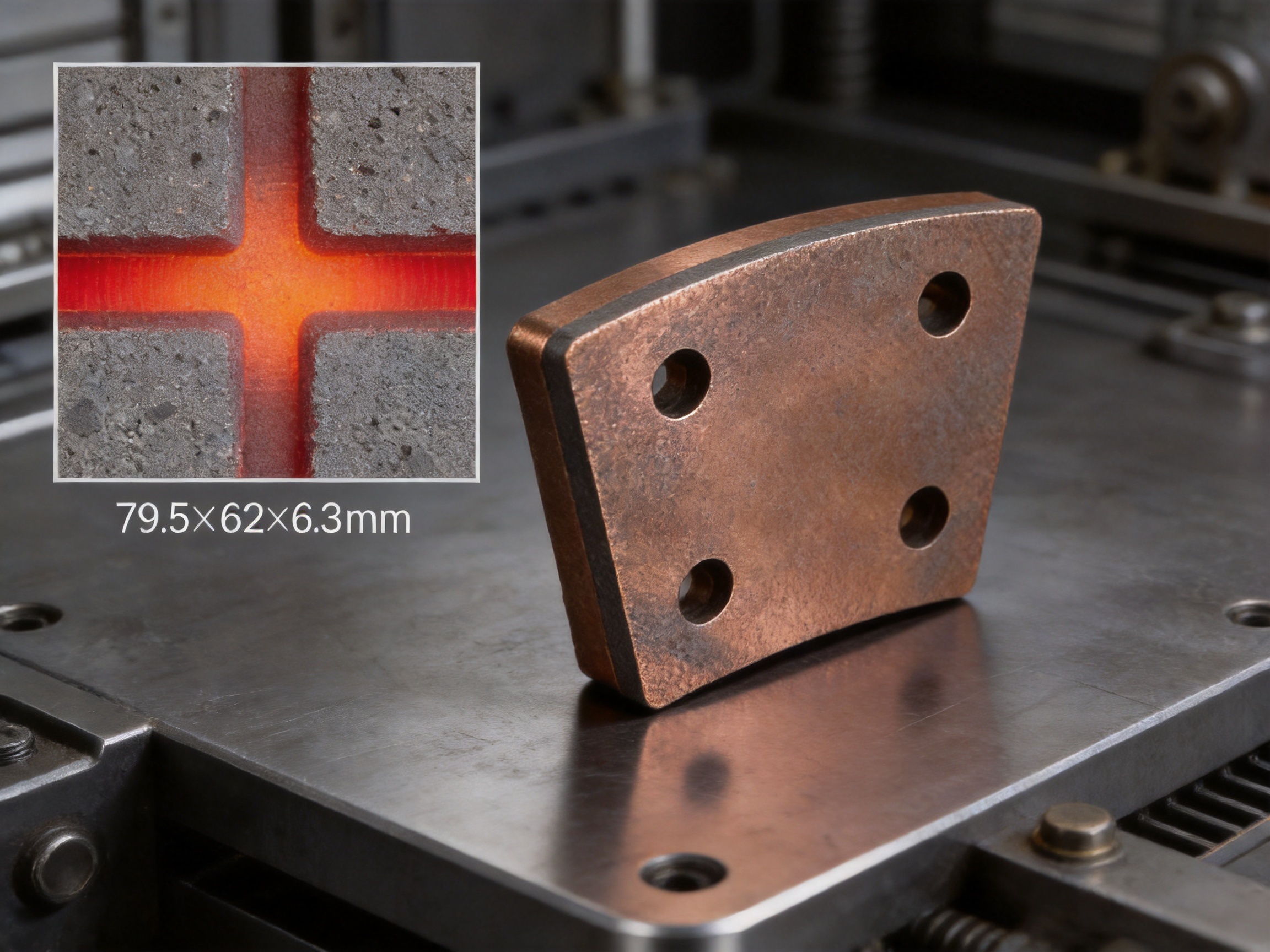
Application Scenarios
Cranes and Lifting Equipment
Cranes require dependable braking during lifting, lowering, travel, and emergency stopping. Brake pads may be exposed to repeated cycles, variable loads, vibration, outdoor moisture, and long idle periods followed by sudden operation. Copper-based sintered friction material can provide stable heat management and reliable friction for crane travel drives, hoisting systems, and auxiliary braking assemblies.
The four-hole mounting design supports secure retention in equipment where vibration and mechanical shock are common. Correct fitment and regular inspection remain essential, particularly for cranes operating in ports, steel plants, construction sites, and material-handling facilities.
Wind Turbine Braking Systems
Wind turbines use braking components in yaw systems, pitch systems, rotor-locking arrangements, and emergency stopping mechanisms. These parts may experience changing temperature, humidity, rain, salt exposure, and infrequent but critical high-load events.
A copper-based pad can help manage the heat generated during stopping while maintaining controlled friction at variable environmental conditions. Rotor compatibility is also important because maintenance at height or in remote wind farms can be costly. A rotor-friendly friction formulation may help reduce overall maintenance requirements.
Mining Machinery
Mining equipment operates in dusty, wet, abrasive, and high-load environments. Mine hoists, winches, conveyors, shearer loaders, and transport systems may depend on braking components for both routine control and emergency stopping.
High-density construction can provide the structural durability required for repeated loading. The pad’s formulation and surface behavior should be validated against the specific dust, moisture, rotor material, and braking duty cycle present at the mine site.
Metallurgical Equipment
Rolling mills, continuous casters, steel-processing lines, and other metallurgical systems expose components to heat, vibration, scale, and demanding production schedules. Brake pads in these facilities must withstand repeated operation while minimizing unplanned line stoppages.
The thermal conductivity of the copper matrix can be advantageous where braking heat accumulates quickly. In addition, consistent density and composition help reduce pad-to-pad performance variation during scheduled maintenance.
Marine and Offshore Equipment
Marine deck machinery, winches, cranes, and offshore platforms require braking materials that can operate in humid, corrosive, and variable-temperature environments. Moisture resistance and stable wet-braking behavior are important considerations.
Copper-based sintered materials can be formulated for wet environments, but complete system protection also depends on rotor condition, corrosion control, sealing, storage, and maintenance. The brake pad should be tested under the intended marine operating conditions before approval.
Elevators and Industrial Machinery
Elevators, machine tools, automated production systems, and industrial drives may require compact brake pads that operate repeatedly and predictably. Even when the individual braking energy is lower than in mining or steel equipment, high cycle counts can produce substantial cumulative wear.
The product’s controlled dimensions, mechanical retention, and stable friction behavior make it suitable for evaluation in a range of industrial caliper assemblies. The final design should be selected according to load, speed, stopping frequency, and applicable safety requirements.
Service Life, Maintenance, and Operating Considerations
The service life of a brake pad is determined by more than material composition. Load, braking speed, frequency, rotor hardness, contact pressure, alignment, cooling, contamination, and maintenance all influence wear. Under normal operating conditions, the product is expected to provide a service life significantly longer than many conventional friction materials, but no universal service-life figure can apply to every machine.
Regular inspection should include pad thickness, mounting security, surface condition, cracking, uneven wear, discoloration, rotor scoring, and signs of overheating. A pad that wears unevenly may indicate caliper misalignment, uneven hydraulic or mechanical force, rotor runout, contamination, or incorrect installation rather than a material problem alone.
The rotor should be inspected whenever pads are replaced. A rough, damaged, heavily scored, or contaminated rotor can rapidly reduce the performance of a new pad. The contact surfaces should be clean and correctly aligned, and all fasteners should be tightened according to the equipment manufacturer’s requirements.
Brake bedding or burnishing may be required after installation. A controlled bedding process gradually establishes contact between the pad and rotor and encourages formation of the intended transfer film. Aggressive braking immediately after installation can create localized hot spots and may reduce service life.
Storage conditions are also important. Pads should be protected from water, oil, corrosive chemicals, impact, and contamination. Packaging should prevent edge damage and preserve the mounting-hole geometry. Products should be identified by batch or order number to support traceability during installation and maintenance.
Customization and OEM/ODM Support
Industrial braking assemblies are not always standardized. Customers may require different dimensions, hole patterns, friction levels, densities, surface finishes, or backing configurations. A supplier with powder metallurgy and precision machining capabilities can adapt the product more effectively than a distributor offering only fixed replacement sizes.
Welfine provides OEM and ODM support based on customer drawings or samples. Customization may involve:
• Overall length, width, and thickness.
• Four-hole or alternative mounting patterns.
• Hole diameter, countersink, counterbore, and positional tolerance.
• Friction coefficient and wear-rate targets.
• Density and porosity range.
• Copper-based formulation and lubricant content.
• Backing-plate interface and mechanical retention details.
• Surface flatness, chamfers, radii, and edge treatment.
• Packaging, labeling, sampling, and inspection requirements.
Before tooling or mass production, the customer and manufacturer should review the complete application. Useful information includes braking torque, rotor diameter, rotor material, clamping force, operating speed, ambient conditions, braking frequency, expected temperature, and available cooling. This information allows the friction formulation and geometry to be evaluated for the actual duty cycle.
Sample testing is available for fitment and performance verification. A sample program can include dimensional inspection, installation checks, friction testing, wear testing, thermal cycling, and comparison with the currently used pad. For safety-critical systems, testing should be performed using representative equipment or a validated dynamometer procedure.
Manufacturing Strengths of Jiande Welfine Technology Co., Ltd.
Jiande Welfine Technology Co., Ltd. was established in 2001 and specializes in powder metallurgy sintering and precision components. Its product experience includes powder metallurgy bushings, self-lubricating bushings, sintered structural parts, and other customized components. This broader powder metallurgy background is relevant to the production of copper-based friction products because it involves the same fundamental disciplines of powder preparation, compaction, sintering, forming, machining, and inspection.
The company operates a modern production base of approximately 13,039 square meters and employs more than 150 skilled workers. Its equipment includes high-efficiency presses, high-temperature sintering furnaces, precision forming machines, and testing equipment. These resources support both development and repeat production.
Quality management is supported by ISO 9001:2015 and IATF 16949:2016 certifications. ISO 9001:2015 provides a framework for controlled processes, documentation, corrective action, and customer-focused quality management. IATF 16949:2016 reflects additional discipline associated with automotive-quality systems, including process control, risk management, traceability, and continuous improvement.
For industrial customers, the practical value of these systems lies in manufacturing consistency. A friction pad must perform not only when a sample is tested, but also when hundreds or thousands of pieces are produced over multiple batches. Documented process parameters, inspection records, controlled tooling, and corrective-action procedures help reduce variation.
The company also emphasizes technical consultation and after-sales support. Engineering assistance can help customers evaluate drawings, select material characteristics, confirm fitment, organize sample testing, and address production questions. This is particularly useful for customers transitioning from an obsolete product, developing a new braking assembly, or requiring a nonstandard friction component.
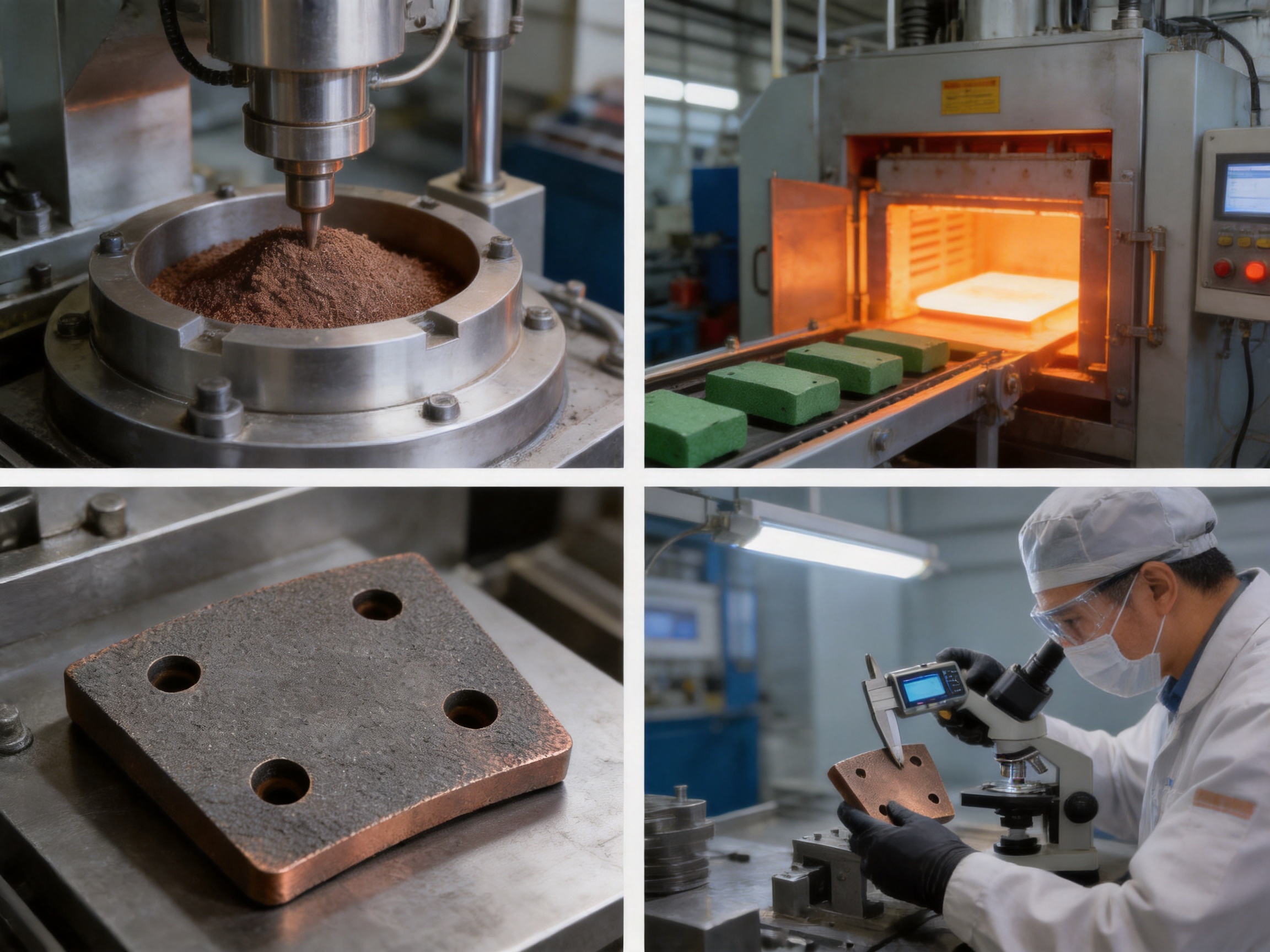
Quality Assurance from Powder to Finished Brake Pad
A dependable quality program begins before pressing. Supplier qualification, raw-material inspection, batch identification, and controlled storage establish the foundation for stable production. Powder characteristics must be consistent enough to support predictable flow, fill, compaction, and sintering.
During production, operators and engineers monitor mixing, die filling, pressing force, ejection, furnace conditions, and secondary operations. Where appropriate, statistical process control can be used to identify trends before dimensions or density move outside the acceptable range.
Finished-product inspection should be based on agreed specifications. The most important checks for this brake pad include:
• Overall dimensions and thickness.
• Four-hole position and size.
• Density and weight.
• Surface condition and edge integrity.
• Evidence of cracks or delamination.
• Graphite distribution and internal structure.
• Friction coefficient and wear performance.
• Shear strength and mechanical integrity.
• Packaging and product identification.
Inspection frequency can be adjusted according to production volume and customer quality requirements. For critical applications, customers may request batch reports, material certificates, inspection records, first-article approval, or additional functional testing.
How to Select the Correct Brake Pad
When selecting a copper-based sintered brake pad, the first requirement is geometric compatibility. The pad must fit the caliper, backing plate, retainer, and rotor assembly without interference. Nominal dimensions alone may not be sufficient; hole position, edge profile, flatness, and thickness tolerance can determine whether the product installs correctly.
The second requirement is friction compatibility. The specified friction coefficient should match the braking system’s clamping force and torque requirement. A higher coefficient is not always better because it may produce excessive rotor wear or aggressive engagement. A lower coefficient may be appropriate for controlled braking but unsuitable for emergency stopping.
The third requirement is thermal compatibility. The customer should estimate peak and average braking energy, duty cycle, cooling capacity, and surrounding temperatures. Copper-based materials are well suited to many high-temperature applications, but the complete system must still be evaluated to prevent overheating.
The fourth requirement is environmental compatibility. Outdoor, marine, mining, and wash-down applications may expose the pad to water, dust, oil, salt, or chemicals. Material selection, rotor treatment, sealing, and maintenance practices should be considered together.
The fifth requirement is verification. Sample testing under representative conditions is strongly recommended before approving a new supplier or material. Testing provides evidence that the pad fits correctly, achieves the required stopping behavior, and wears acceptably with the intended rotor.
Frequently Asked Questions
Q1: What is the main advantage of a copper-based sintered brake pad?
The principal advantage is the combination of thermal conductivity, mechanical strength, stable friction, and wear resistance. The copper matrix helps transfer heat away from the braking interface, while the sintered structure supports repeated heavy-duty operation. The product is particularly suitable for industrial systems where thermal fade and rapid wear are concerns.
Q2: What does the 6.2 g/cm³ density indicate?
The density indicates the degree of consolidation achieved during pressing and sintering. A controlled density supports predictable strength, porosity, thermal behavior, and wear. The target must be balanced because excessive porosity can weaken the pad, while excessive densification may interfere with the intended function of lubricant phases.
Q3: Why is graphite segregation a problem?
Graphite is lighter than copper and may separate during mixing or die filling if process controls are inadequate. Uneven distribution can create areas with different friction coefficients and wear rates. The result may be inconsistent braking, localized heat, rotor damage, or premature pad failure. Controlled mixing and inspection help reduce this risk.
Q4: What is the purpose of the four-hole design?
The four-hole design provides secure mechanical retention and helps distribute mounting forces. It reduces the likelihood of pad movement, vibration, and uneven loading during braking. Hole dimensions and positions should be matched to the customer’s caliper or backing-plate drawing.
Q5: Can the dimensions be customized?
Yes. Welfine supports OEM and ODM production based on customer drawings or samples. Dimensions, hole patterns, density, friction characteristics, surface details, and backing interfaces can be reviewed for customization.
Q6: Is this pad suitable for wet or outdoor applications?
Copper-based formulations can provide good wet-braking stability and are suitable for evaluation in outdoor industrial environments. However, actual performance depends on the rotor, water exposure, contamination, drainage, temperature, and equipment design. Representative wet-condition testing should be completed before final approval.
Q7: What industries commonly use this type of brake pad?
Typical applications include cranes, wind turbines, mining machinery, conveyors, rolling mills, continuous casters, elevators, machine tools, marine deck equipment, offshore platforms, and other heavy-duty industrial braking systems.
Q8: How long will the brake pad last?
Service life depends on load, braking frequency, speed, rotor condition, cooling, alignment, and maintenance. Under comparable conditions, the high-density copper-based pad may last substantially longer than conventional friction materials. A precise service-life estimate requires application data and testing.
Q9: Are samples available?
Sample testing can be arranged for fitment and performance verification. Customers may provide drawings, existing samples, equipment information, or technical requirements so that the correct product configuration can be confirmed.
Q10: Which quality standards are used for testing?
The supplied technical information references GB/T 5763-2018 for friction coefficient testing, GB/T 10421-2002 for wear rate, GB/T 10419-2008 for shear strength, and GB/T 3399-1982 for thermal conductivity. Additional standards or customer-specific test methods can be discussed during the technical review.
Q11: How should the pad be installed?
The pad should be installed according to the equipment manufacturer’s instructions. The rotor and mounting surfaces must be clean, aligned, and free from oil or contamination. Fasteners should be tightened to the specified torque, and a controlled bedding procedure should be used where required. Any sign of cracking, movement, uneven contact, or abnormal noise should be investigated before continued operation.
Q12: Why should customers work directly with a manufacturer?
Direct cooperation provides access to material engineering, tooling development, process control, inspection records, customization, and technical support. It also makes it easier to resolve fitment problems, optimize friction characteristics, and maintain consistent quality across repeat orders.
Conclusion
The 79.5 × 62 × 7.3 mm high-density copper-based brake pad is designed as a durable and thermally capable friction component for demanding industrial braking systems. Its 6.2 g/cm³ density, four-hole mechanical retention, copper-based sintered structure, controlled friction range, and focus on defect prevention provide a balanced solution for heavy equipment.
Its advantages over conventional friction materials include improved heat dissipation, stronger structural integrity, better suitability for repeated heavy-duty braking, and the potential for longer service life. Compared with some iron-based sintered materials, the copper-based formulation can offer a more rotor-friendly balance and strong wet-braking potential, while still maintaining the mechanical performance needed for industrial service.
Product reliability depends on disciplined manufacturing. Powder selection, graphite distribution, controlled compaction, high-temperature sintering, precision machining, dimensional verification, and functional testing must work together. Jiande Welfine Technology Co., Ltd. combines more than two decades of powder metallurgy experience with modern production equipment, ISO 9001:2015 and IATF 16949:2016 quality systems, OEM and ODM capabilities, and technical support for customized applications.
For customers seeking a stable supplier of copper-based sintered friction material, the most effective process is to begin with the complete application requirements. Drawings, samples, load conditions, braking cycles, rotor information, environmental conditions, and testing expectations can be used to confirm the correct configuration. With proper validation and installation, this high-density four-hole brake pad can support safe, repeatable, and economical operation in a wide range of industrial braking systems.
References
GB/T 5763-2018, Automotive Brake Linings—Performance Testing and Evaluation Methods.
GB/T 10421-2002, Test Methods for Wear Performance of Friction Materials.
GB/T 10419-2008, Test Methods for Mechanical and Shear Properties of Friction Materials.
GB/T 3399-1982, Test Method for Thermal Conductivity of Metallic Materials.
ISO 9001:2015, Quality Management Systems—Requirements.
IATF 16949:2016, Quality Management System Requirements for Automotive Production and Relevant Service Parts Organizations.
Powder Metallurgy Materials and Processes, general principles of powder preparation, compaction, sintering, density control, and dimensional accuracy.
Industrial Friction Materials Engineering, general guidance on friction coefficient stability, wear mechanisms, thermal management, and brake-system compatibility.
Product: High-Density Copper-Based Brake Pad | 79.5×62×7.3mm | 4-Hole Industrial Brake Lining
Related products
-
-
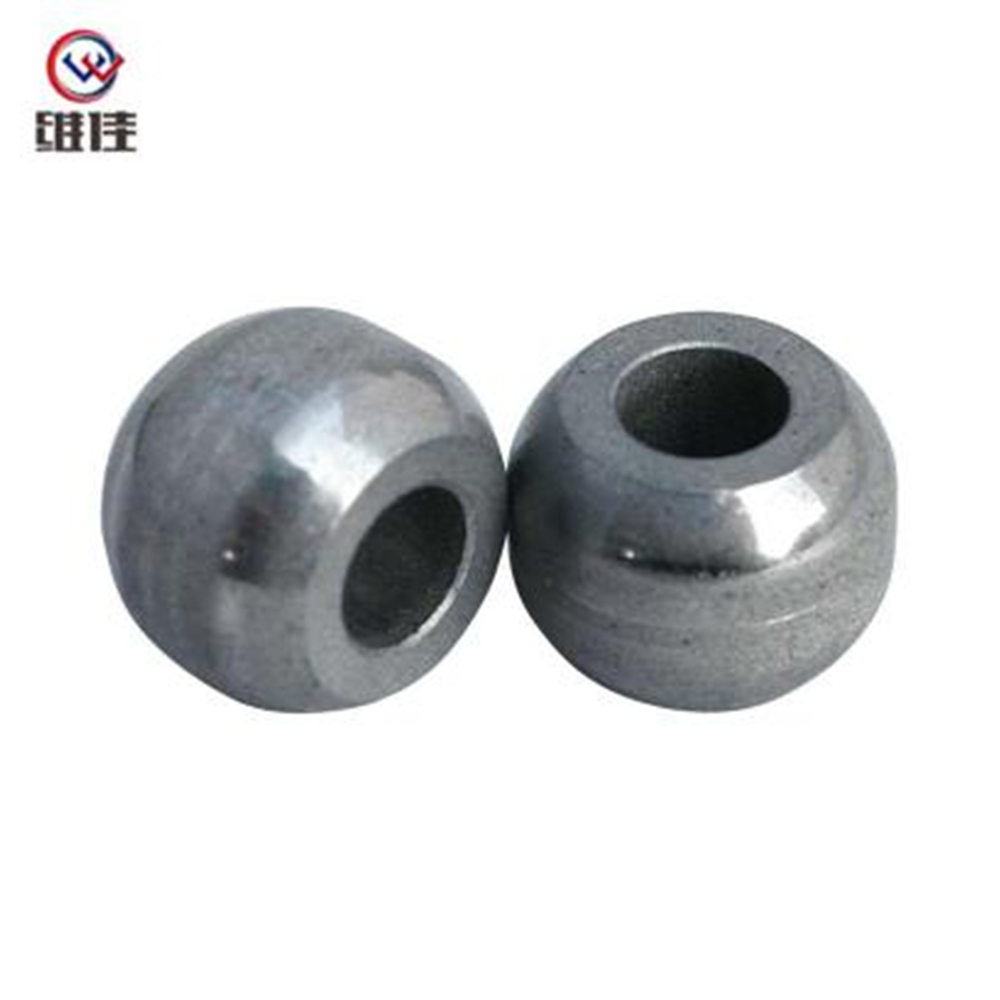
Product Description: High-precision powder metallurgy part (S14*7*10) made of iron material from Jiande Wefine, customized PM components with strict tolerance control.
See Details
Copyright © Jiande Welfine Technology Co., Ltd. All Rights Reserved. Custom Self-lubricating Sintered Bushing Manufacturers
