 English
 中文简体
中文简体
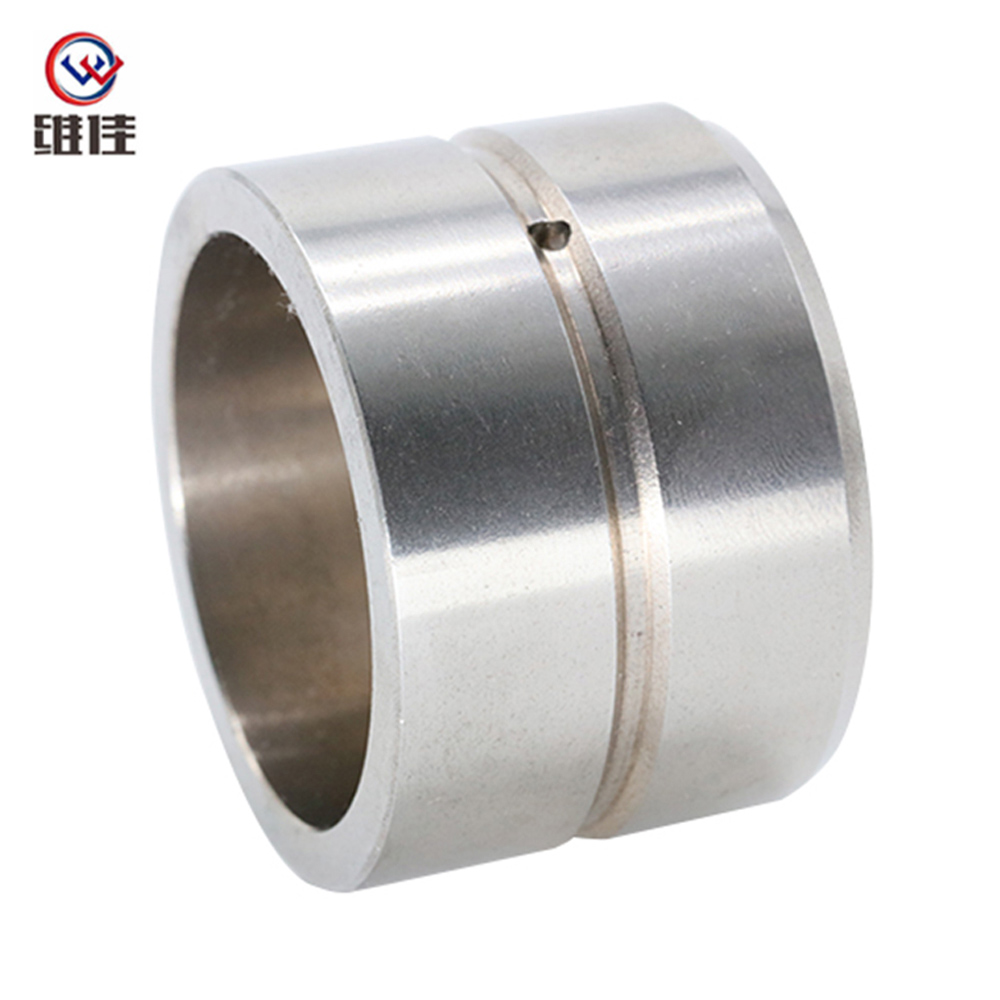
Product Description: High-precision powder metallurgy part (S14*7*10) made of iron material from Jiande Wefine, customized PM components with strict tolerance control.
See DetailsE-mail us: [email protected]
Tel: +86-15239857375


 Home / Author / Gao Manli — Overseas Sales Manager / High-Performance SMC Stator Core for Efficient Powder Metallurgy Motors
 High-Performance SMC Stator Core for Efficient Powder Metallurgy Motors
 2026.08.31
 Gao Manli — Overseas Sales Manager
Content
- 1 Understanding the SMC Stator Core
- 2 Material Characteristics of SOMALOY 700HR-3P
- 3 How the Powder Metallurgy Process Creates the Core
- 4 Dimensional Accuracy and Product Configuration
- 5 Magnetic Performance and Electrical Efficiency
- 6 Advantages Compared with Conventional Laminated Cores
- 7 Influence of Particle Size and Coating Thickness
- 8 Mechanical Strength and Long-Term Reliability
- 9 Electrical Insulation and Environmental Performance
- 10 Applications in Inverter Air Conditioner Motors
- 11 Applications in Commercial HVAC Equipment
- 12 Applications in Fresh Air and Air Purification Systems
- 13 Applications in Other Smart Appliances
- 14 Manufacturing Strengths of Jiande Welfine Technology Co., Ltd.
- 15 OEM and ODM Customization Options
- 16 Quality Control from Powder to Finished Core
- 17 Packaging, Storage, and Delivery
- 18 Recommended Engineering Validation
- 19 How the SMC Core Adds Application Value
- 20 Frequently Asked Questions
- 20.1 What is an SMC stator core?
- 20.2 Why is SOMALOY 700HR-3P suitable for high-frequency motors?
- 20.3 How does an SMC core compare with a laminated silicon steel core?
- 20.4 Can the 18-tooth stator core be customized?
- 20.5 What dimensional tolerances are available?
- 20.6 What tests can be performed on the stator core?
- 20.7 Is the core suitable for air conditioner motors?
- 20.8 How does particle size affect the finished product?
- 20.9 What happens if the insulation coating is too thick?
- 20.10 How does the manufacturer ensure consistent production?
- 20.11 What information should customers provide for an OEM project?
- 21 Conclusion
- 22 References
- 23 Product: SMC Stator Core (SOMALOY 700HR-3P)
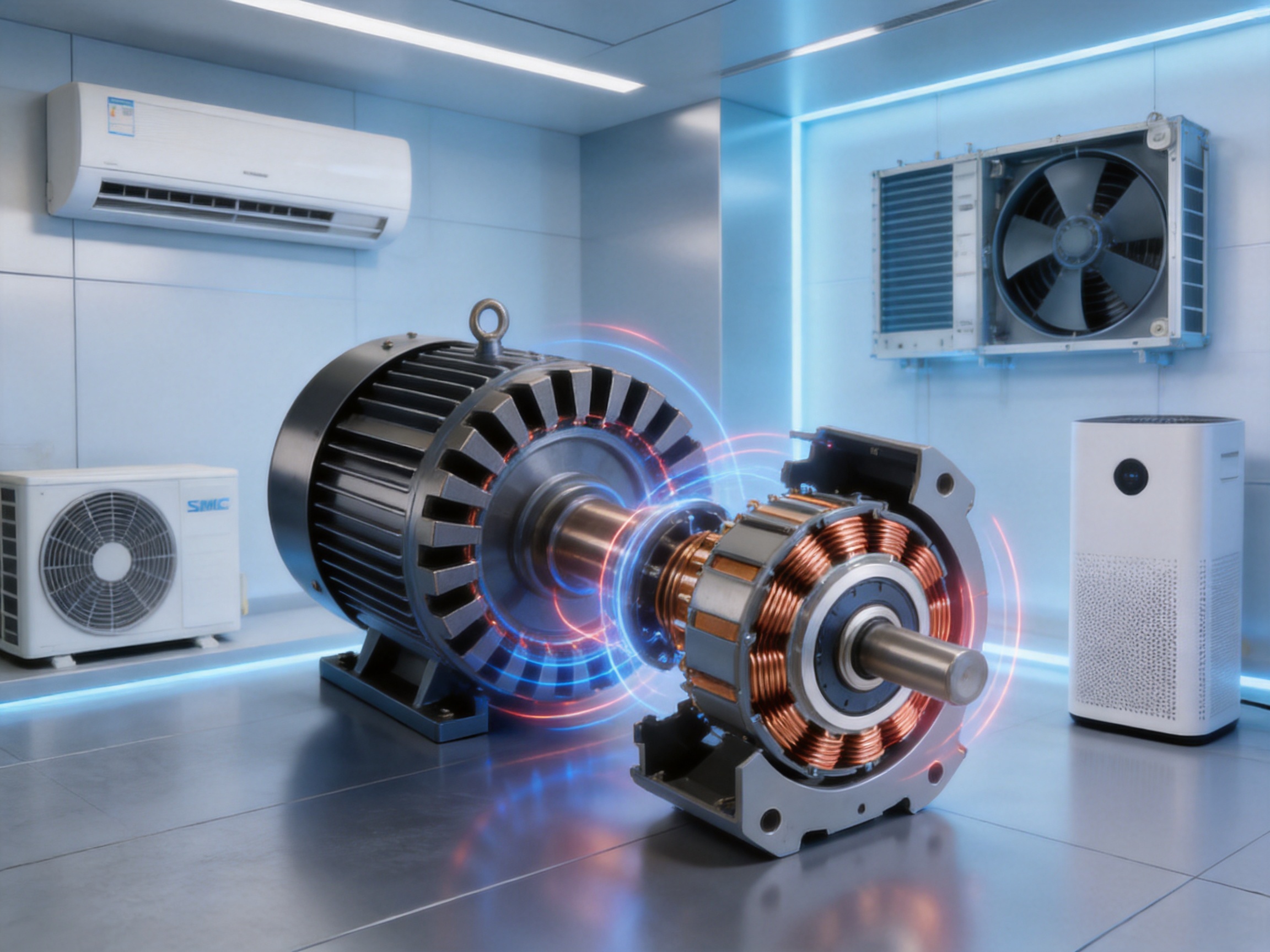
Soft Magnetic Composite (SMC) stator cores are becoming increasingly important in the development of compact, energy-efficient, and high-frequency electric motors. By combining insulated iron particles with precision powder metallurgy, an SMC stator core can provide three-dimensional magnetic performance, low eddy current loss, reduced weight, and greater design flexibility than many conventional two-dimensional laminated cores.
The SMC stator core described in this article is manufactured from SOMALOY 700HR-3P, a high-performance soft magnetic composite material. It is designed as a ring-shaped, toothed stator component for axial-flux and high-efficiency motor applications, including household inverter air conditioners, commercial HVAC equipment, fresh air systems, air purifiers, dehumidifiers, and other smart appliance drive motors.
Its product model is L1C10000557A-001A, with an outer diameter of Φ100.0 ±0.1 mm, an inner diameter of Φ65.0 ±0.1 mm, a thickness of 10.0 ±0.05 mm, and 18 precisely formed teeth. The component is produced through powder metallurgy compaction, controlled thermal processing, and precision post-processing. These processes enable complex geometric features to be formed efficiently while maintaining strict dimensional and magnetic performance requirements.
For customers seeking a stable source of custom SMC stator cores, Jiande Welfine Technology Co., Ltd. combines more than two decades of powder metallurgy experience with modern production facilities, advanced testing equipment, and ISO-certified quality systems. The company supports OEM and ODM projects based on customer drawings, technical specifications, or physical samples.
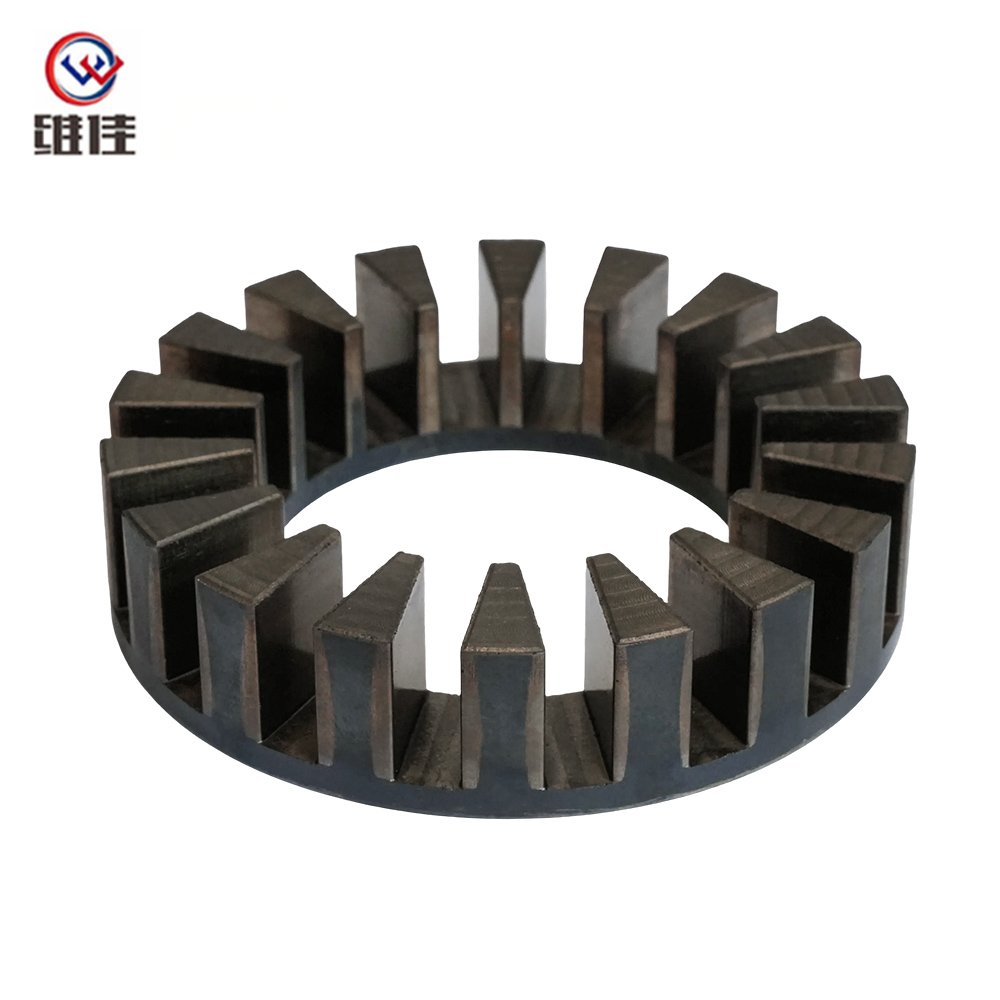
SMC Stator Core (SOMALOY 700HR-3P)
Understanding the SMC Stator Core
A stator core is the stationary magnetic component of an electric motor. It supports the windings, guides magnetic flux, and contributes directly to motor torque, efficiency, temperature rise, vibration, and acoustic performance. In a conventional motor, the stator is commonly produced from stacked laminations of electrical steel. These laminations are electrically insulated from one another to reduce circulating eddy currents.
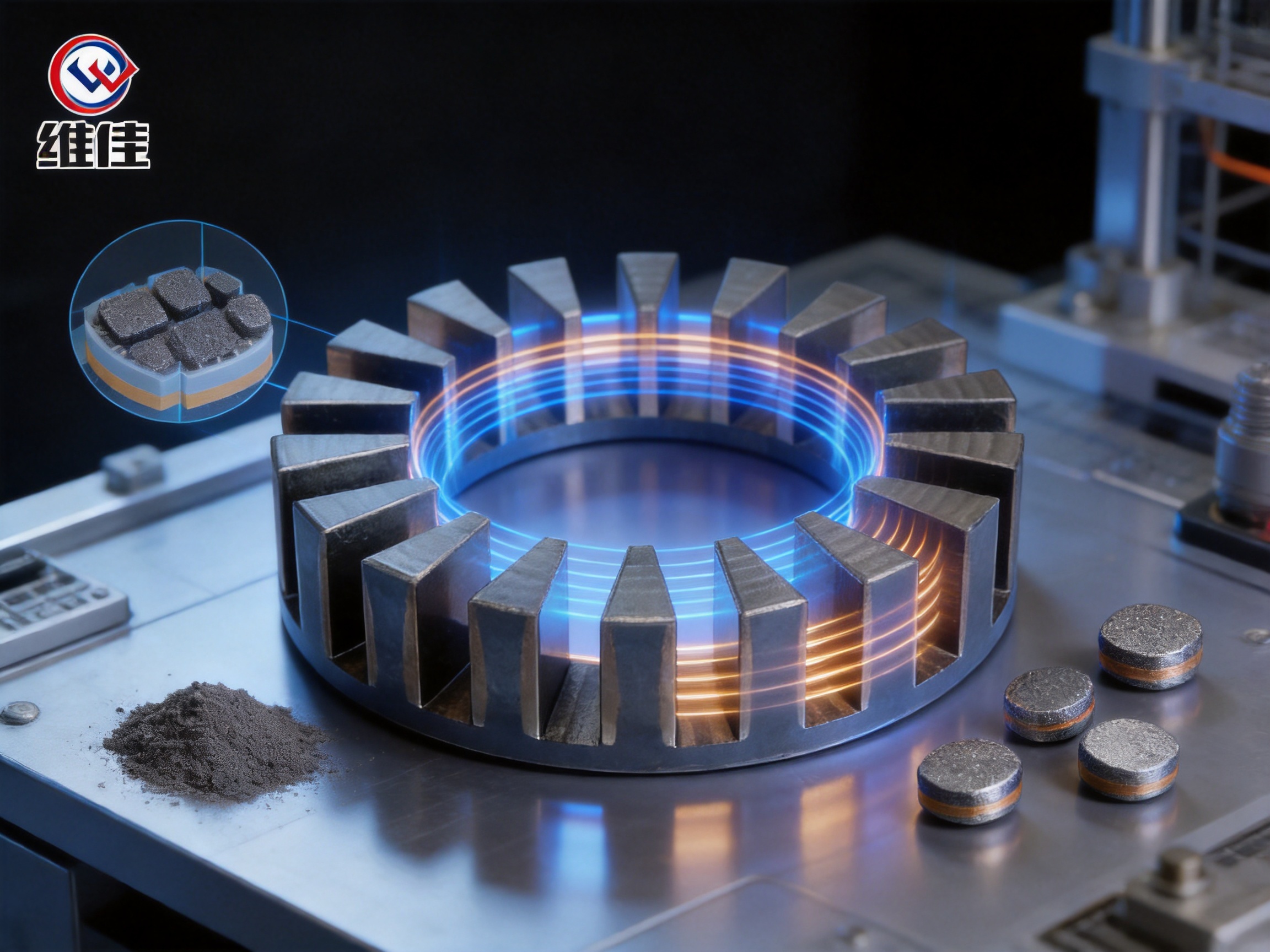
An SMC stator core uses a different material and manufacturing concept. Instead of stacking thin sheets, the core is formed from iron-based magnetic powder. Each powder particle is surrounded by an electrically insulating coating. During compaction, the coated particles are pressed into the required three-dimensional shape. The finished component can then be heat-treated and subjected to precision finishing operations.
This structure offers a major design advantage: magnetic flux can travel in three dimensions. Laminated electrical steel is highly effective when the magnetic flux remains mainly within the plane of the sheets, but its performance can become less suitable when the motor requires axial or radial flux movement across complex paths. An SMC material is magnetically isotropic, meaning that its magnetic behavior is more uniform in different directions.
For motors with complicated magnetic circuits, concentrated windings, axial-flux architectures, or unusual tooth shapes, the three-dimensional capability of SMC can simplify the design and reduce the number of assembled parts. It may also reduce manufacturing steps associated with stamping, stacking, bonding, and interlocking laminations.
The SOMALOY 700HR-3P SMC stator core is configured as a toothed ring. The 18-tooth geometry is created using a precision powder metallurgy forming process. This configuration supports accurate winding placement and controlled interaction between the stator and rotor magnetic fields.
Material Characteristics of SOMALOY 700HR-3P
SOMALOY 700HR-3P is selected for applications that require a balance of magnetic performance, mechanical reliability, dimensional consistency, and high-temperature stability. The material contains electrically insulated ferromagnetic particles. The insulation reduces electrical connectivity between individual particles, limiting the formation of eddy current loops.
Particle insulation is especially important when a motor operates at elevated electrical frequency or when the magnetic field changes rapidly. Under these conditions, eddy current losses can produce unnecessary heat and reduce efficiency. By isolating the particles, the SMC structure helps control these losses while retaining useful magnetic permeability.
The material also supports near-net-shape forming. Complex teeth, internal openings, shoulders, locating features, and other geometric elements can be created directly during pressing. This can reduce machining requirements compared with processes that begin with a simple block or sheet and remove material to create the final profile.
Material performance depends on several interconnected factors, including powder particle size distribution, coating integrity, compaction pressure, density, heat-treatment conditions, dimensional design, and post-processing. A reliable manufacturer must control the entire process rather than treating the powder, press operation, and finishing stage as separate activities.
| Property | Typical Specification | Importance in Motor Applications |
|---|---|---|
| Material grade | SOMALOY 700HR-3P | Provides a high-performance SMC platform for efficient magnetic components |
| Density | ≥6.5 g/cm³ | Supports magnetic flux capability and mechanical integrity |
| Electrical resistivity | ≥80 μΩ·cm | Helps reduce inter-particle eddy current circulation |
| Hardness | ≥180 HV | Improves resistance to handling, assembly, and surface wear |
| Bending strength | ≥400 MPa | Provides structural reliability during motor assembly and operation |
| Thermal expansion coefficient | 12×10⁻⁶ /℃ from 20℃ to 100℃ | Supports dimensional compatibility across normal temperature changes |
How the Powder Metallurgy Process Creates the Core
Powder preparation and inspection
The manufacturing process begins with controlled magnetic powder. Particle size distribution is monitored because it affects flowability, compacting behavior, density, surface quality, magnetic permeability, and strength. A narrow distribution may improve consistency, while a carefully optimized combination of particle sizes can fill voids more effectively and increase packing density.
The powder is inspected before forming. Important considerations include particle morphology, apparent density, flow rate, moisture content, coating condition, and chemical consistency. Proper incoming inspection helps prevent variations that could later appear as density gradients, cracks, incomplete filling, or unstable magnetic results.
Insulation coating control
Each iron particle requires a stable insulating layer. The coating must be sufficiently continuous to interrupt electrical current paths, but it should not be unnecessarily thick because excessive nonmagnetic material can dilute the magnetic structure and reduce permeability.
A coating that is too thin or uneven may break during handling or compaction. Local defects can create conductive paths between particles and increase core loss. Conversely, an overly thick coating may reduce particle contact, lower density, and weaken the compact. The manufacturing objective is therefore a uniform, well-adhered, and appropriately controlled insulating layer.
Coating quality also influences mechanical behavior. During compaction, particles move, rotate, and deform under high pressure. The insulation must resist excessive cracking while still allowing sufficient particle contact for a strong compact. Powder preparation and coating technology must therefore be optimized together.
Die filling and compaction
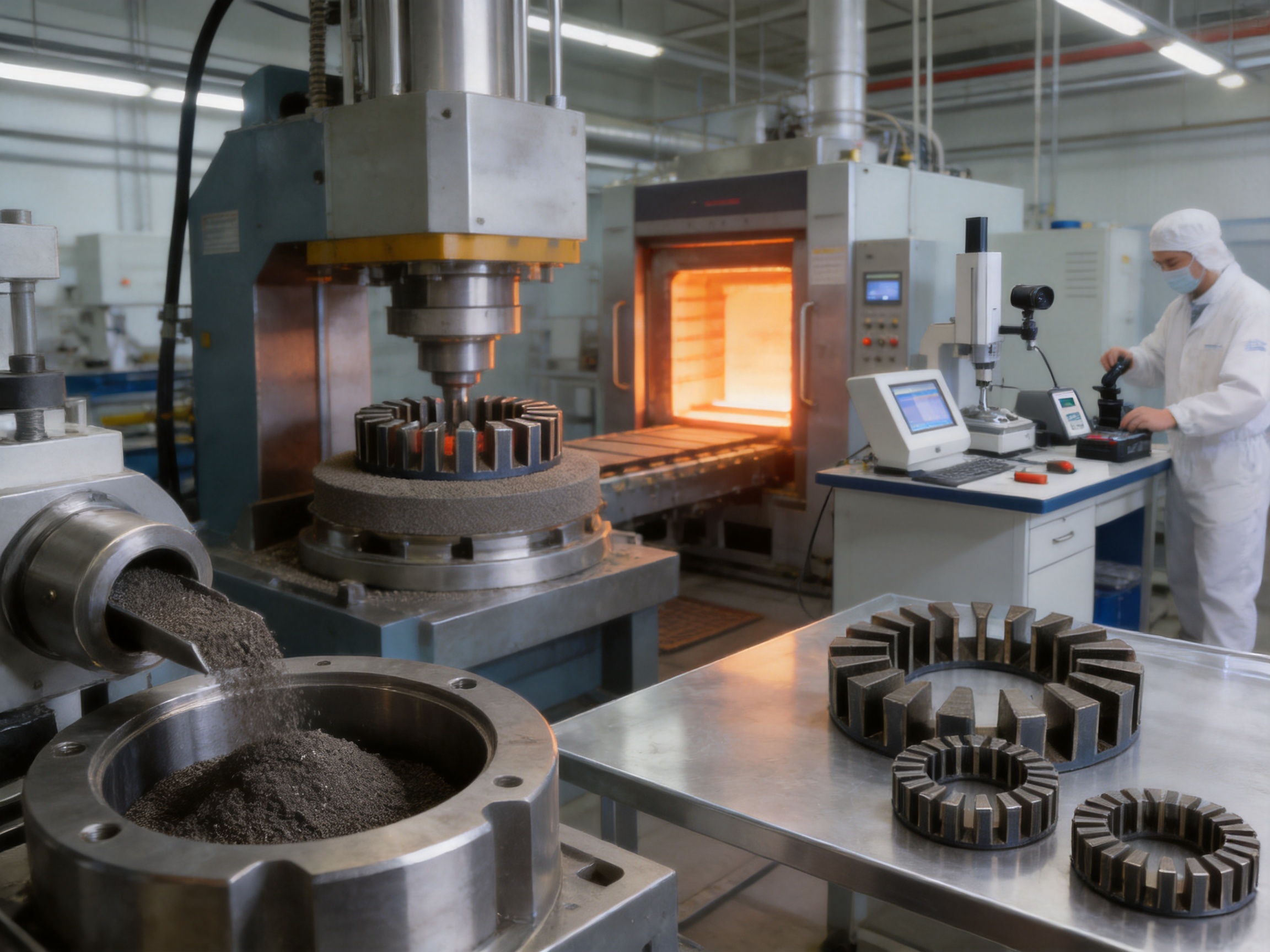
The treated powder is metered into a precision die. Uniform die filling is essential for a toothed ring because the teeth, inner diameter, outer diameter, and central regions may have different filling characteristics. If the powder distribution is inconsistent, the finished component may show density variation or dimensional distortion.
High-efficiency presses form the component under controlled pressure. The tooling is designed around the 18-tooth profile and the required dimensional tolerances. In many cases, the complex shape can be produced in a single principal pressing operation, reducing the need for extensive cutting or milling.
Compaction pressure must be selected carefully. Higher pressure can increase density and strength, but excessive pressure may damage the insulating layer, increase tool wear, or create internal stress. The correct pressing window is determined through process trials, material evaluation, dimensional inspection, and magnetic testing.
Thermal processing and stress control
After pressing, the compact undergoes a controlled thermal process. The purpose is to stabilize the component, reduce forming-related stresses, and achieve the required balance of mechanical and magnetic properties. Temperature, atmosphere, heating rate, holding time, and cooling conditions must be controlled to prevent oxidation, distortion, cracking, or degradation of the particle insulation.
The thermal process is not simply a generic sintering step. SMC materials require conditions that protect the electrical insulation between particles. Excessive heat can damage the coating and increase electrical conductivity, while insufficient treatment may leave excessive residual stress or inadequate strength.
Modern high-temperature furnaces and process monitoring equipment help maintain repeatability across production batches. Furnace loading, component orientation, temperature uniformity, and atmosphere control can all influence the final result.
Precision post-processing
Although powder metallurgy produces components close to their final shape, selected post-processing operations may be required. These can include sizing, surface correction, deburring, dimensional calibration, hole finishing, and controlled machining of functional reference surfaces.
For the L1C10000557A-001A model, post-processing supports the required outer diameter, inner diameter, thickness, tooth profile, flatness, and parallelism. The objective is not to remove large amounts of material, but to correct critical surfaces and ensure reliable assembly with windings, housings, shafts, and related motor components.
Dimensional Accuracy and Product Configuration
Motor cores must meet strict dimensional requirements because even small deviations can influence air gaps, winding placement, rotor alignment, noise, vibration, and final efficiency. The SMC stator core is therefore inspected against defined dimensional and geometric criteria.
| Dimension or Feature | Specification | Functional Significance |
|---|---|---|
| Outer diameter | Φ100.0 ±0.1 mm | Ensures correct fit within the motor housing or supporting structure |
| Inner diameter | Φ65.0 ±0.1 mm | Maintains rotor, shaft, or internal assembly clearance |
| Thickness | 10.0 ±0.05 mm | Controls axial stack position and magnetic path length |
| Number of teeth | 18 | Matches the intended winding and electromagnetic design |
| Tooth profile tolerance | ±0.03 mm | Supports consistent winding location and magnetic performance |
| Flatness | ≤0.05 mm | Improves seating and reduces assembly distortion |
| Parallelism | ≤0.03 mm | Helps maintain accurate alignment between mating surfaces |
Dimensional inspection may involve coordinate measurement, optical measurement, dedicated gauges, height measurement, and surface evaluation. Production control should combine first-article inspection, in-process checks, final inspection, and statistical monitoring for repeat orders.
The manufacturer can also review customer drawings to determine which dimensions are functionally critical and which can be assigned standard process tolerances. This approach helps control cost without compromising motor performance.
Magnetic Performance and Electrical Efficiency
The performance of a stator core is measured not only by its shape but also by its magnetic response. The SMC stator core is specified with a saturation magnetic induction of at least 1.5 T, initial permeability of at least 300 μ₀, and maximum permeability of at least 1000 μ₀.
High permeability allows magnetic flux to pass through the core with less reluctance. This can help the motor designer achieve the required flux density with lower magnetizing force. Saturation induction indicates the material’s ability to carry increasing magnetic flux before the incremental magnetic response decreases significantly.
Coercivity is specified at no more than 20 A/m. Lower coercivity is generally desirable in soft magnetic components because it indicates that the material can be magnetized and demagnetized with less hysteresis-related energy loss.
The stated core loss is no more than 1.5 W/kg at 1.0 T and 50 Hz, and no more than 12 W/kg at 1.0 T and 400 Hz. These values illustrate the importance of the SMC structure in applications where magnetic fields change at higher frequency.
| Magnetic Property | Specification | Design Relevance |
|---|---|---|
| Saturation magnetic induction | ≥1.5 T | Supports strong magnetic flux before saturation |
| Initial permeability | ≥300 μ₀ | Helps establish magnetic flux at lower magnetizing force |
| Maximum permeability | ≥1000 μ₀ | Supports efficient magnetic conduction within the operating range |
| Coercivity | ≤20 A/m | Limits hysteresis-related magnetic resistance |
| Core loss at 1.0 T/50 Hz | ≤1.5 W/kg | Indicates low loss at standard test frequency |
| Core loss at 1.0 T/400 Hz | ≤12 W/kg | Supports evaluation under higher-frequency operating conditions |
Actual motor performance depends on the complete electromagnetic system, including winding design, rotor magnets, air gap, switching strategy, operating temperature, speed, and load. The stated material values should therefore be used as engineering reference specifications rather than as a guarantee of identical efficiency in every motor design.
Advantages Compared with Conventional Laminated Cores
Three-dimensional magnetic circuit capability
The most important advantage of SMC technology is its ability to support three-dimensional magnetic flux. A laminated core is constructed from thin sheets, and the sheet orientation creates a preferred direction for magnetic flux. An SMC core does not rely on a stacked-sheet architecture, making it more suitable for magnetic circuits that require flux to move through radial, circumferential, and axial directions.
This freedom can be valuable in axial-flux motors, integrated motor modules, compact appliance motors, and designs with complex tooth geometry. Engineers can explore magnetic circuits that may be difficult or expensive to manufacture with stamped laminations.
Reduced eddy current loss at higher frequency
The electrically insulating coating around each particle interrupts large circulating current paths. This can reduce eddy current loss when the magnetic field changes quickly. In inverter-driven motors, operating frequency may vary over a broad range as the controller adjusts motor speed and torque.
Lower core loss can contribute to reduced heat generation. This may allow the motor to operate more efficiently, reduce cooling requirements, or maintain performance within a smaller package. The final benefit depends on the motor’s operating point and electromagnetic design.
Complex shapes formed efficiently
Powder metallurgy can create complicated tooth profiles and three-dimensional features in a compacting operation. Conventional laminated construction may require progressive stamping, individual lamination handling, stacking, bonding, welding, or additional machining. Each step introduces opportunities for burrs, misalignment, material waste, and process variation.
Near-net-shape forming can reduce material waste and simplify the production route. It can also make it easier to integrate features that would otherwise require several separate components or complicated tooling.
Lower component weight
The SMC stator core can be lighter than an equivalent traditional core in certain motor configurations. A lower core weight is valuable in portable air-conditioning equipment, compact appliances, fan systems, and equipment where overall system mass affects installation or transportation.
Reducing the mass of rotating or reciprocating assemblies may also improve dynamic response. Although a stator is stationary, its lower mass can still contribute to a lighter overall motor and more compact equipment design.
Potential noise and vibration benefits
The uniform three-dimensional magnetic structure, low magnetostriction behavior, and accurate tooth geometry can help reduce electromagnetic excitation. When combined with balanced windings and a properly designed rotor, this may support quieter motor operation.
Noise performance is influenced by many factors, including bearing condition, rotor balance, switching frequency, housing rigidity, assembly tolerance, and control algorithms. The SMC stator core is one important part of this broader system.
Influence of Particle Size and Coating Thickness
Particle size distribution has a direct effect on both magnetic and mechanical performance. Fine particles provide a large surface area for insulation and may help reduce eddy current path length. However, very fine powders can have higher inter-particle friction, lower flowability, and greater difficulty during die filling.
Coarser particles may flow more easily and can support efficient filling, but excessive particle size may lower packing density and increase residual porosity. A carefully designed gradation can combine the filling characteristics of larger particles with the void-filling ability of smaller particles.
The following comparison illustrates general engineering tendencies. Actual values depend on powder chemistry, coating formulation, compaction pressure, heat treatment, density, and test method.
| Powder or Coating Condition | Magnetic Tendency | Mechanical Tendency | Manufacturing Consideration |
|---|---|---|---|
| Fine particles, ≤50 μm | Potentially low high-frequency loss, but permeability may be limited by friction and density effects | Can provide good green strength but may be more sensitive to brittleness | Requires careful flow and lubrication control |
| Coarse particles, ≥150 μm | May provide lower insulation surface area but can suffer from increased porosity | May have lower strength because of reduced contact area | Offers good flow but may require optimized filling |
| Optimized particle gradation | Improves packing density and supports balanced permeability | Can increase inter-particle contact and final strength | Requires controlled powder blending and inspection |
| Very thin coating | Maintains magnetic contact but may increase eddy current risk if defective | May crack during compaction if adhesion is inadequate | Uniformity and coverage are critical |
| Moderate coating thickness | Provides effective particle-to-particle electrical isolation | Can maintain a useful balance between strength and insulation | Generally preferred when properly controlled |
| Excessively thick coating | May reduce permeability through magnetic dilution | Can weaken particle bonding and reduce density | Must be avoided through coating process control |
The manufacturing team at Jiande Welfine Technology Co., Ltd. can adjust powder preparation and forming parameters according to the required magnetic permeability, core loss, density, and mechanical strength. For custom programs, the target values should be defined together with the operating frequency, magnetic flux density, temperature range, and mechanical loading conditions.
Mechanical Strength and Long-Term Reliability
Magnetic performance is only one requirement for a stator core. The component must also tolerate handling, winding, insertion into the housing, thermal cycling, vibration, and long-term motor operation. The specified hardness of at least 180 HV and bending strength of at least 400 MPa provide a basis for evaluating structural durability.
Mechanical strength is influenced by density and particle bonding. Higher density generally improves strength, but the compaction process must not damage the insulating coating. Tool design, pressing speed, powder lubrication, ejection conditions, and thermal treatment all influence the final result.
Uneven ejection forces can create internal stress or cracks, especially in components with teeth and variable cross-sectional thickness. Precision tooling and controlled press operation help reduce these risks. After forming, visual inspection and dimensional checks can identify chipped teeth, edge damage, cracks, or deformation.
The component is specified for an operating temperature range from -40℃ to 180℃. This range is relevant to HVAC and appliance environments where motors may experience repeated heating and cooling cycles. The stated thermal shock requirement is no cracking after 10 cycles between 150℃ and room temperature.
Corrosion resistance is also important because iron-based materials can be vulnerable to oxidation during storage, transport, assembly, and operation. The product specification calls for no significant rust after a 48-hour neutral salt spray test. Moisture-proof and rust-proof packaging provides additional protection before the part reaches the customer’s production line.
Electrical Insulation and Environmental Performance
The stator core is specified with a dielectric withstand voltage of at least 500 VAC for one minute. This characteristic supports electrical safety evaluation when the core is used near motor windings, insulation systems, and conductive housings.
Electrical insulation performance should be considered together with the final motor assembly. The core surface, winding enamel, slot insulation, adhesives, varnish, and housing clearances may all influence the complete insulation system. Customers should validate the finished motor under the intended voltage, frequency, temperature, humidity, and contamination conditions.
Environmental performance also includes dimensional stability. The coefficient of thermal expansion is specified as 12×10⁻⁶ /℃ from 20℃ to 100℃. Matching the expansion behavior of surrounding components can help reduce stress and preserve assembly accuracy as the motor heats during operation.
Applications in Inverter Air Conditioner Motors
Inverter air conditioners continuously adjust compressor and fan motor speed to match cooling or heating demand. Unlike fixed-speed systems, inverter motors operate across a wide range of electrical frequencies and loads. This places greater importance on low loss, thermal stability, low noise, and accurate magnetic control.
The SMC stator core is suitable for indoor and outdoor drive motors in household inverter air conditioners. It is especially applicable to larger units, including models rated at approximately 1.5 horsepower and above, where energy efficiency, airflow control, and long-duration operation are important design objectives.
The core’s low high-frequency loss can help reduce heat generation in variable-speed operation. Its accurate tooth profile supports repeatable winding placement. Its compact and lightweight structure may assist designers who are trying to reduce motor size or overall equipment weight.
In a properly optimized motor, the SMC core can contribute to rapid cooling and heating response, stable low-speed operation, and reduced acoustic output. These advantages are relevant to air conditioners designed to meet higher energy-efficiency requirements.
Applications in Commercial HVAC Equipment
Commercial multi-split systems, ducted air conditioners, and central air-conditioning equipment often operate for long periods. Their fan motors must maintain stable performance while exposed to temperature variation, vibration, dust, and repeated load changes.
The SMC stator core can be used in commercial fan motor assemblies where high efficiency and compact packaging are required. The material’s magnetic characteristics support efficient flux transfer, while its mechanical properties help withstand continuous operation.
By contributing to lower motor losses, the core may help reduce the overall energy consumption of an HVAC system. Lower energy use can improve the operating economics of commercial buildings and support efforts to reduce indirect environmental impact.
For commercial projects, the manufacturer can coordinate batch production, inspection documentation, packaging requirements, and delivery scheduling. This is important when a motor program requires stable supply over an extended period.
Applications in Fresh Air and Air Purification Systems
Fresh air systems and air purifiers commonly use compact fan motors that must operate quietly and efficiently. Some operating modes require low-speed rotation with stable torque, while other modes demand higher airflow and rapid speed changes.
The SMC stator core supports flexible motor design for these requirements. Its three-dimensional magnetic capability may be useful in compact motor structures where the magnetic circuit does not follow the geometry of a conventional laminated stack.
Low noise is particularly important in bedrooms, offices, classrooms, and healthcare environments. Accurate tooth formation and uniform material properties can help reduce magnetic imbalance. The core must still be integrated with a balanced rotor, suitable bearings, a rigid housing, and an appropriate control system to achieve the desired acoustic result.
Applications in Other Smart Appliances
The same SMC technology can be extended to motor components used in dehumidifiers, portable air conditioners, circulation fans, ventilation equipment, and other smart appliances. These applications may require small, lightweight, efficient, and quiet motors with reliable operation over changing loads.
Because powder metallurgy can form complex shapes, customers may be able to integrate magnetic features that would be difficult to produce from laminated steel. This flexibility can support product miniaturization and the development of specialized motor architectures.
Before transferring the core to a new appliance, the customer should review the expected speed range, torque profile, temperature, electromagnetic frequency, housing structure, winding configuration, and assembly method. These factors determine whether the standard design is appropriate or whether a customized geometry is required.
Manufacturing Strengths of Jiande Welfine Technology Co., Ltd.
Jiande Welfine Technology Co., Ltd. was established in 2001 and operates as a high-tech enterprise integrating research and development, production, and sales. The company’s principal expertise is powder metallurgy sintering and related precision machining.
Although the company manufactures powder metallurgy bushings, self-lubricating bushings, and other precision components, its accumulated process experience is also valuable for SMC stator core production. Powder preparation, die design, compaction, thermal treatment, dimensional calibration, and quality inspection are all central capabilities in precision powder metallurgy.
The company operates a modern production base covering approximately 13,039 square meters. The facility includes high-efficiency presses, high-temperature sintering furnaces, precision forming machines, and testing equipment. This combination allows the company to manage important production steps internally and maintain closer control over process consistency.
More than 150 skilled employees support production and technical operations. Experienced personnel are important because SMC components require close coordination between materials engineering, tool design, pressing, thermal processing, inspection, and customer application requirements.
Welfine has passed ISO 9001:2015 and IATF 16949:2016 certifications. These quality systems support documented procedures, traceability, corrective action, process monitoring, supplier control, and continuous improvement. IATF 16949 experience is particularly relevant to customers that require disciplined automotive-style quality management, even when the component is intended for an appliance or HVAC motor.
Integrated research and development
Early engineering involvement can reduce development risk. The manufacturer can review customer drawings, identify difficult features, recommend suitable tolerances, evaluate pressing direction, and assess whether a component can be formed close to net shape.
Design-for-manufacturing analysis is especially useful for toothed cores. Tooth width, root radius, wall thickness, draft, ejection direction, density distribution, and tooling access can all influence the final result. A design that is ideal electromagnetically may require refinement to achieve reliable and economical powder compaction.
Tooling and precision forming
Accurate tooling is essential for maintaining the tooth profile and circular geometry of the stator ring. Tool wear must be monitored because progressive changes in punch and die dimensions can affect production tolerances.
Precision forming equipment supports the calibration of critical surfaces and helps maintain flatness and parallelism. Stable tooling, controlled lubrication, and repeatable press parameters contribute to consistent dimensions from one production batch to the next.
Testing and quality assurance
Quality assurance for an SMC stator core should include material verification, density testing, dimensional inspection, hardness testing, mechanical strength evaluation, electrical resistivity measurement, dielectric testing, magnetic performance testing, and environmental evaluation where required.
Inspection plans can be adapted to the customer’s quality requirements. Depending on the project, documentation may include material certificates, process records, dimensional reports, magnetic test results, capability studies, first-article inspection reports, and batch traceability records.
Consistent testing is particularly important because magnetic properties can vary with density and orientation. A component may meet its dimensional requirements but still require investigation if permeability or core loss deviates from the target. Combining geometric and magnetic inspection provides a more complete understanding of product quality.
OEM and ODM Customization Options
Customers may require stator cores with different outside diameters, inside diameters, thicknesses, tooth counts, tooth profiles, mounting features, or magnetic targets. Jiande Welfine Technology Co., Ltd. provides OEM and ODM services based on customer drawings or samples.
Customization can involve the component geometry, powder grade, particle size distribution, insulation coating, compaction parameters, post-processing method, surface protection, inspection plan, and packaging format. The appropriate solution depends on the motor’s design objectives and production volume.
For magnetic customization, customers should provide as much application information as possible. Useful inputs include operating frequency, peak flux density, expected core temperature, motor speed, duty cycle, target permeability, allowable core loss, mechanical loading, and environmental exposure.
The company can support custom permeability requirements in the approximate range of µr 150 to 300 and transverse rupture strength targets in the approximate range of 50 to 120 MPa, subject to detailed material and process evaluation. Any target should be confirmed through agreed test methods and prototype validation.
Prototype development may begin with a technical review, tooling assessment, sample production, dimensional inspection, and magnetic testing. After the design is approved, process parameters can be documented for pilot production and subsequent mass production.
Quality Control from Powder to Finished Core
A reliable SMC stator core requires control at every stage of production. The following sequence illustrates a practical quality approach:
First, incoming powder is checked for identification, particle size distribution, flowability, apparent density, moisture, and coating condition. Material lots are recorded to maintain traceability.
Second, powder blending and handling are controlled to prevent segregation. Excessive vibration or improper storage can cause fine and coarse particles to separate, affecting die filling and final density.
Third, the press operation is monitored for fill weight, compaction pressure, ejection behavior, cycle time, and tooling condition. Abnormal pressure curves or ejection force may indicate a problem with powder flow, lubrication, die filling, or tool wear.
Fourth, thermal treatment is controlled through furnace temperature profiles, atmosphere monitoring, loading procedures, and cooling conditions. Components are inspected for cracks, oxidation, distortion, or surface defects after treatment.
Fifth, precision post-processing is verified through dimensional and geometric inspection. Critical features such as tooth profile, inner diameter, outer diameter, thickness, flatness, and parallelism should be measured using calibrated equipment.
Finally, finished parts are subjected to the agreed magnetic, mechanical, electrical, and environmental tests. Records are retained according to the customer’s quality and traceability requirements.
Packaging, Storage, and Delivery
Iron-based SMC components must be protected from moisture and oxidation during storage and transportation. The product is supplied using moisture-proof and rust-proof independent packaging designed to reduce exposure to humidity, contamination, impact, and abrasion.
Individual packaging can also help prevent teeth from contacting one another during handling. This is important because a small chip or deformation at the tooth tip may affect winding placement or motor assembly.
Customers should store the cores in a dry, clean environment and keep the packaging sealed until the components are needed. If parts have been stored for an extended period or exposed to high humidity, they should be inspected before use.
Delivery scheduling can be arranged according to order volume, tooling status, inspection requirements, and production capacity. Flexible production planning supports both prototype quantities and stable batch supply for established programs.
Recommended Engineering Validation
Before approving an SMC stator core for mass production, the customer should perform validation in the intended motor system. Material test results provide important information, but motor-level testing confirms how the core interacts with the winding, rotor, controller, housing, and cooling system.
Recommended evaluations may include no-load current, rated-load efficiency, torque-speed performance, temperature rise, acoustic noise, vibration, insulation resistance, dielectric withstand, overload behavior, high-temperature aging, thermal cycling, humidity exposure, and endurance testing.
For inverter applications, testing should cover the complete operating frequency range rather than a single rated point. Core loss and temperature rise may change significantly with frequency, flux density, switching strategy, and motor speed.
Dimensional validation should also include the assembled motor. The customer should verify winding insertion, tooth clearance, rotor alignment, air-gap uniformity, housing fit, and any interference during assembly.
How the SMC Core Adds Application Value
Improving energy efficiency
Lower core loss reduces the amount of electrical energy converted into heat inside the motor. In a variable-speed air conditioner, even small efficiency improvements can become significant over the equipment’s operating life because the motor may run for many hours each year.
An SMC stator core can support an energy-efficient motor design by reducing high-frequency loss, enabling efficient magnetic circuits, and allowing compact geometries. The improvement must be assessed together with winding copper loss, rotor loss, bearing friction, inverter loss, and fan or compressor load.
Supporting compact system design
Complex three-dimensional geometry can help engineers use available space more effectively. A compact core may allow a shorter motor, a reduced housing diameter, or an integrated motor module. This is useful when appliance manufacturers are seeking slimmer products or higher functionality within the same enclosure.
Reducing operating noise
Uniform magnetic properties and accurate tooth geometry can reduce electromagnetic imbalance and related excitation forces. In air conditioners and air purification equipment, this can support quieter operation, particularly at low speeds where tonal noise is more noticeable.
Extending service life
Stable magnetic and mechanical properties help the motor maintain performance during long-term use. Resistance to thermal cycling, appropriate hardness, controlled dimensional stability, and protection against corrosion all contribute to reliable operation.
Frequently Asked Questions
What is an SMC stator core?
An SMC stator core is a stationary motor magnetic component formed from electrically insulated iron-based powder. Unlike a conventional laminated core made from stacked electrical steel sheets, an SMC core is compacted into a three-dimensional shape. The insulation between particles helps reduce eddy current paths, while the powder metallurgy process enables complex tooth and magnetic circuit geometries.
Why is SOMALOY 700HR-3P suitable for high-frequency motors?
SOMALOY 700HR-3P uses insulated magnetic particles designed to limit electrical current circulation between particles. This structure can reduce eddy current loss under changing magnetic fields. The material also offers a balance of permeability, saturation induction, mechanical strength, and thermal stability suitable for efficient motor applications.
How does an SMC core compare with a laminated silicon steel core?
An SMC core can provide three-dimensional magnetic flux capability, complex near-net-shape forming, reduced part count, and useful high-frequency performance. Laminated silicon steel remains highly effective for many conventional motor designs, especially where flux is primarily confined to the lamination plane. The best choice depends on motor architecture, frequency, magnetic loading, cost, volume, and required mechanical properties.
Can the 18-tooth stator core be customized?
Yes. Customization may include the outer diameter, inner diameter, thickness, tooth count, tooth profile, mounting features, tolerances, material targets, and inspection requirements. OEM and ODM development can be based on customer drawings, samples, or application specifications.
What dimensional tolerances are available?
The supplied model has an outer diameter tolerance of ±0.1 mm, inner diameter tolerance of ±0.1 mm, thickness tolerance of ±0.05 mm, tooth profile tolerance of ±0.03 mm, flatness of no more than 0.05 mm, and parallelism of no more than 0.03 mm. Final tolerances should be confirmed during technical review because achievable values depend on geometry, tooling, volume, and post-processing requirements.
What tests can be performed on the stator core?
Testing can include dimensional inspection, density, hardness, bending or transverse rupture strength, electrical resistivity, dielectric withstand voltage, permeability, saturation induction, coercivity, core loss, corrosion resistance, and thermal shock evaluation. The inspection plan can be adapted to the customer’s product standards and validation process.
Is the core suitable for air conditioner motors?
Yes. The design is suitable for household inverter air conditioner motors, commercial HVAC fan motors, fresh air equipment, air purifiers, dehumidifiers, portable air conditioners, and related appliance drive systems. Application suitability should be confirmed through motor-level electromagnetic, thermal, acoustic, and endurance testing.
How does particle size affect the finished product?
Fine particles can support short electrical current paths and uniform coating coverage, but they may reduce flowability and increase friction during compaction. Coarse particles may flow easily but can create more porosity. An optimized particle size distribution can improve packing density, permeability, strength, and process stability.
What happens if the insulation coating is too thick?
An excessively thick coating can reduce magnetic contact between particles and introduce more nonmagnetic material into the core. This may lower permeability and density and can weaken particle bonding. The coating should be continuous and electrically effective while remaining as thin and uniform as the material system allows.
How does the manufacturer ensure consistent production?
Consistency is supported through controlled powder inspection, documented forming parameters, precision tooling, monitored thermal processing, calibrated measurement equipment, magnetic testing, traceability, and certified quality management systems. Jiande Welfine Technology Co., Ltd. operates under ISO 9001:2015 and IATF 16949:2016 quality systems.
What information should customers provide for an OEM project?
Customers should provide drawings or samples, annual demand, prototype quantity, motor operating frequency, flux density, speed range, temperature range, torque requirements, assembly method, magnetic targets, mechanical requirements, surface treatment expectations, packaging specifications, and applicable quality standards.
Conclusion
The SOMALOY 700HR-3P SMC stator core provides a practical solution for motor designers who need low loss, three-dimensional magnetic performance, accurate tooth geometry, lightweight construction, and reliable operation across demanding conditions.
Its powder metallurgy construction enables complex ring-shaped stator designs to be formed efficiently. Insulated particles help reduce eddy current loss, while controlled density and precision post-processing support magnetic consistency and mechanical strength. The product is particularly suitable for inverter air conditioners, commercial HVAC systems, fresh air equipment, air purifiers, dehumidifiers, and other smart appliance motors.
Jiande Welfine Technology Co., Ltd. strengthens this product offering through more than 20 years of powder metallurgy experience, a modern 13,039-square-meter manufacturing base, advanced presses and furnaces, precision forming capability, in-house inspection resources, and more than 150 experienced employees. Its ISO 9001:2015 and IATF 16949:2016 certifications provide an established framework for process control and quality assurance.
With OEM and ODM support, the company can work with customers on material selection, particle size distribution, insulation coating, tooling, dimensional tolerances, magnetic targets, testing, packaging, and delivery planning. For manufacturers developing efficient, compact, and quiet motors, a carefully engineered SMC stator core can provide both design flexibility and long-term application value.
References
1. Powder Metallurgy Materials and Processes, general principles of compacting, sintering, density control, and dimensional calibration.
2. Soft Magnetic Materials for Electrical Machines, technical principles related to permeability, saturation, coercivity, hysteresis loss, and eddy current loss.
3. Electrical Steel and Soft Magnetic Composite Core Design, comparative considerations for laminated cores and three-dimensional magnetic circuits.
4. ISO 9001:2015, Quality Management Systems — Requirements.
5. IATF 16949:2016, Quality Management System Requirements for Automotive Production and Relevant Service Parts Organizations.
6. Powder Metallurgy Design Guidelines, recommendations for die filling, compaction, ejection, tooling, and near-net-shape component production.
7. Manufacturer technical information for SOMALOY 700HR-3P SMC materials and the L1C10000557A-001A stator core specification.
Product: SMC Stator Core (SOMALOY 700HR-3P)
Related products
-
-
Description: Custom powder metallurgy planetary gear with high precision, wear resistance for automotive, industrial machinery & home appliances. OEM/ODM supported.
See Details
Copyright © Jiande Welfine Technology Co., Ltd. All Rights Reserved. Custom Self-lubricating Sintered Bushing Manufacturers
