E-mail us: [email protected]
Tel: +86-15239857375
 English
 中文简体
中文简体

 Home / Author / Gao Manli — Overseas Sales Manager / Precision Powder Metallurgy Structural Components for Washing Machines
 Precision Powder Metallurgy Structural Components for Washing Machines
 2026.09.06
 Gao Manli — Overseas Sales Manager
Content
- 1 1. The Role of Structural Components in Washing Machines
- 2 2. Product Construction and Material Characteristics
- 3 3. Manufacturing Process: From Powder to Finished Component
- 4 4. Key Product Advantages
- 5 5. Comparison with Conventional Manufacturing Methods
- 6 6. Engineering Design Considerations
- 7 7. Quality Assurance and Production Reliability
- 8 8. OEM and ODM Development Support
- 9 9. Sustainability and Resource Efficiency
- 10 10. Applications in Washing Machine Systems
- 11 11. Why Select an Experienced Powder Metallurgy Supplier?
- 12 12. Recommended Customer Specification Checklist
- 13 13. Frequently Asked Questions
- 13.1 Q1: What are these powder metallurgy components used for?
- 13.2 Q2: Which materials are available?
- 13.3 Q3: Why use powder metallurgy instead of machining the part from steel?
- 13.4 Q4: Does the component require additional machining?
- 13.5 Q5: What is the purpose of blackening treatment?
- 13.6 Q6: Can the inner and outer profiles be customized?
- 13.7 Q7: How does the supplier control dimensional consistency?
- 13.8 Q8: Can prototypes be supplied before mass production?
- 13.9 Q9: What information is needed for a quotation?
- 13.10 Q10: What quality certifications does the manufacturer have?
- 13.11 Q11: Are these components suitable for every washing machine?
- 13.12 Q12: How can the supplier help reduce development risk?
- 14 14. Conclusion
- 15 References
- 16 Product: Powder Metallurgy Structural Components for Washing Machines
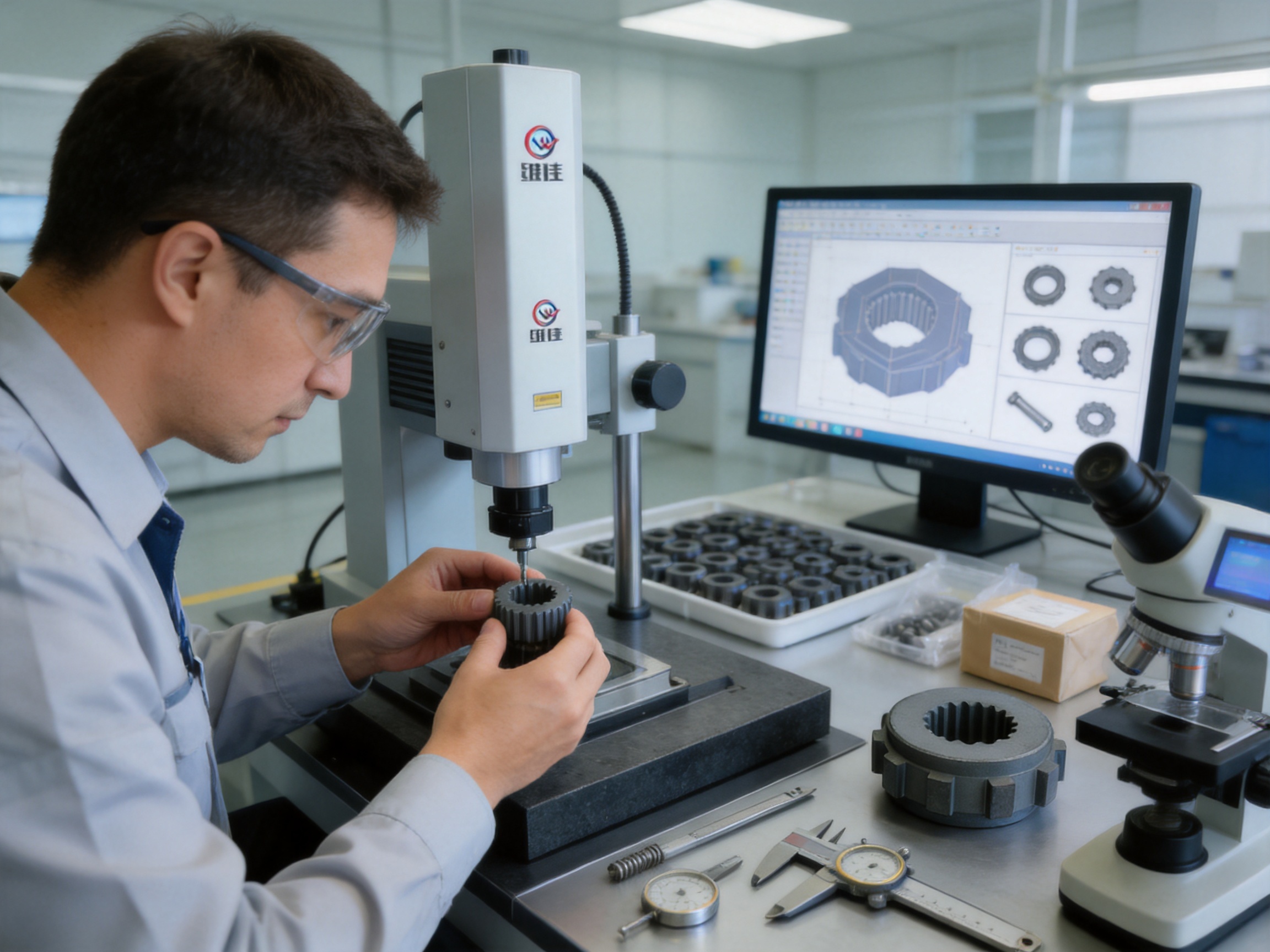
Modern washing machines rely on compact, durable, and precisely fitted mechanical components to deliver reliable washing and spinning performance. Among the most important of these components are the structural parts used in clutch assemblies, transmission mechanisms, and torque-transfer systems. Although these parts may be small compared with the complete appliance, they must withstand repeated starting and stopping, changing rotational speeds, vibration, friction, shock loading, and exposure to humid operating conditions.
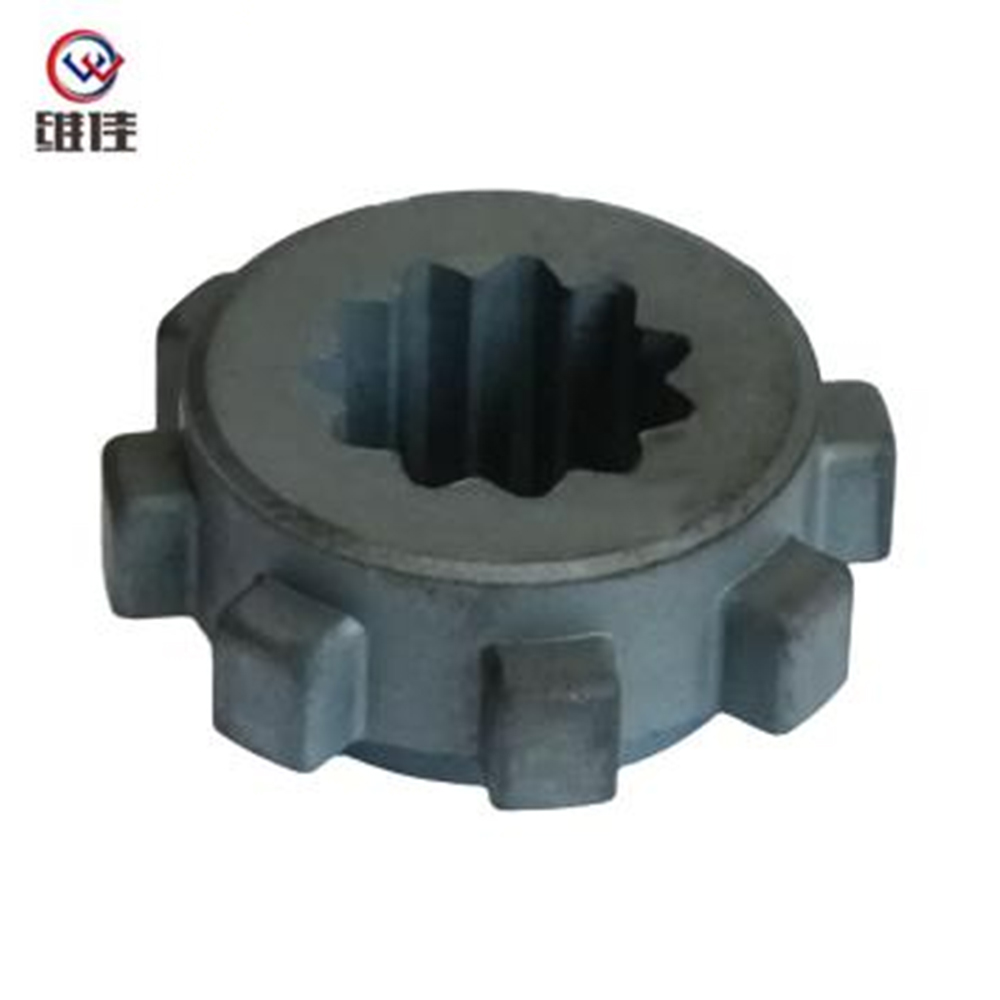
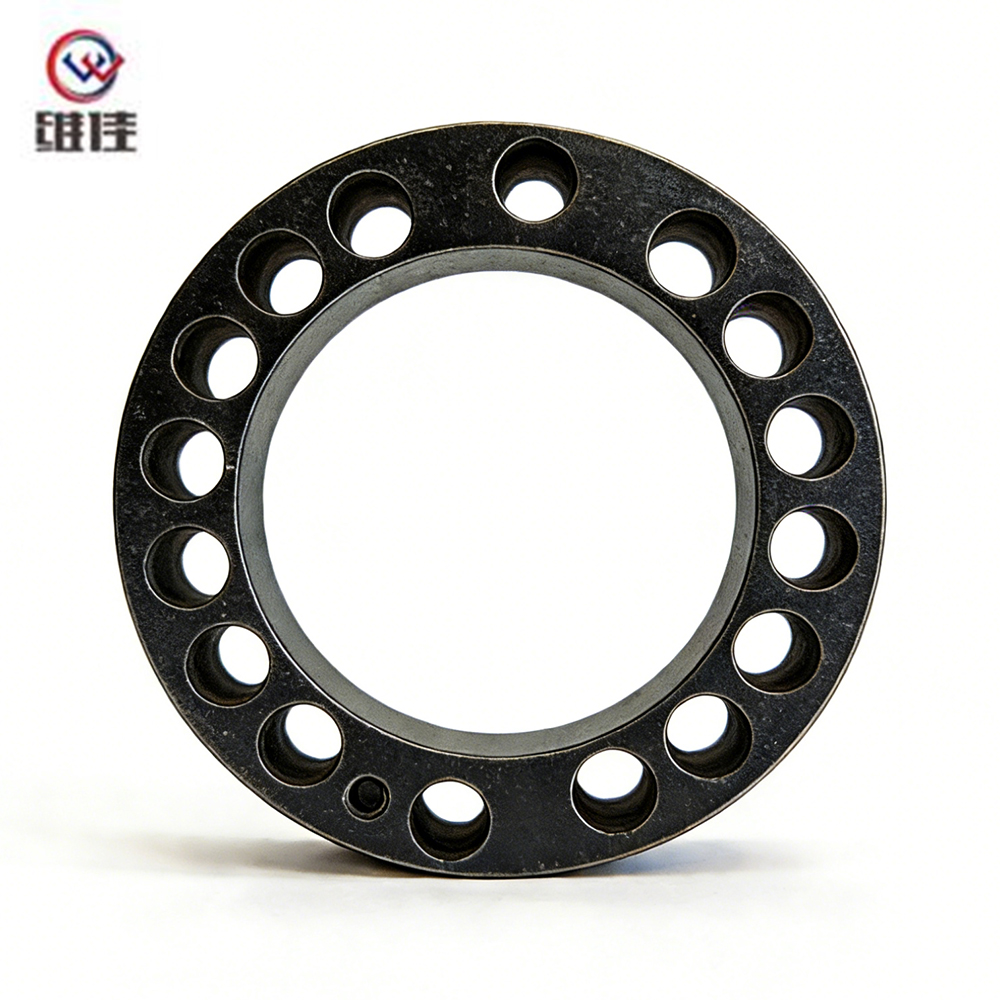
Powder metallurgy structural components provide an efficient solution for these demanding requirements. Manufactured from iron-based powder metallurgy alloys through controlled compaction, high-temperature sintering, and surface blackening, these parts combine strength, dimensional stability, complex geometry, and cost efficiency. Their inner splines or serrations transmit torque, while their outer geared or serrated profiles support reliable clutch engagement and disengagement.
Designed for washing machine clutch assemblies and transmission systems, these components can be customized according to equipment design, load requirements, spline configuration, material specification, and dimensional tolerances. The manufacturing approach supports both high-volume production and OEM or ODM development, allowing appliance manufacturers to obtain consistent parts that integrate smoothly into their assemblies.
Compared with conventionally machined parts, powder metallurgy components can reduce material waste, minimize secondary machining, and produce complex profiles with stable repeatability. Compared with less specialized suppliers, a manufacturer with dedicated powder metallurgy equipment, engineering experience, quality systems, and precision testing capabilities can provide better control over density, hardness, dimensions, surface condition, and batch-to-batch consistency.
Powder Metallurgy Structural Components for Washing Machines
1. The Role of Structural Components in Washing Machines
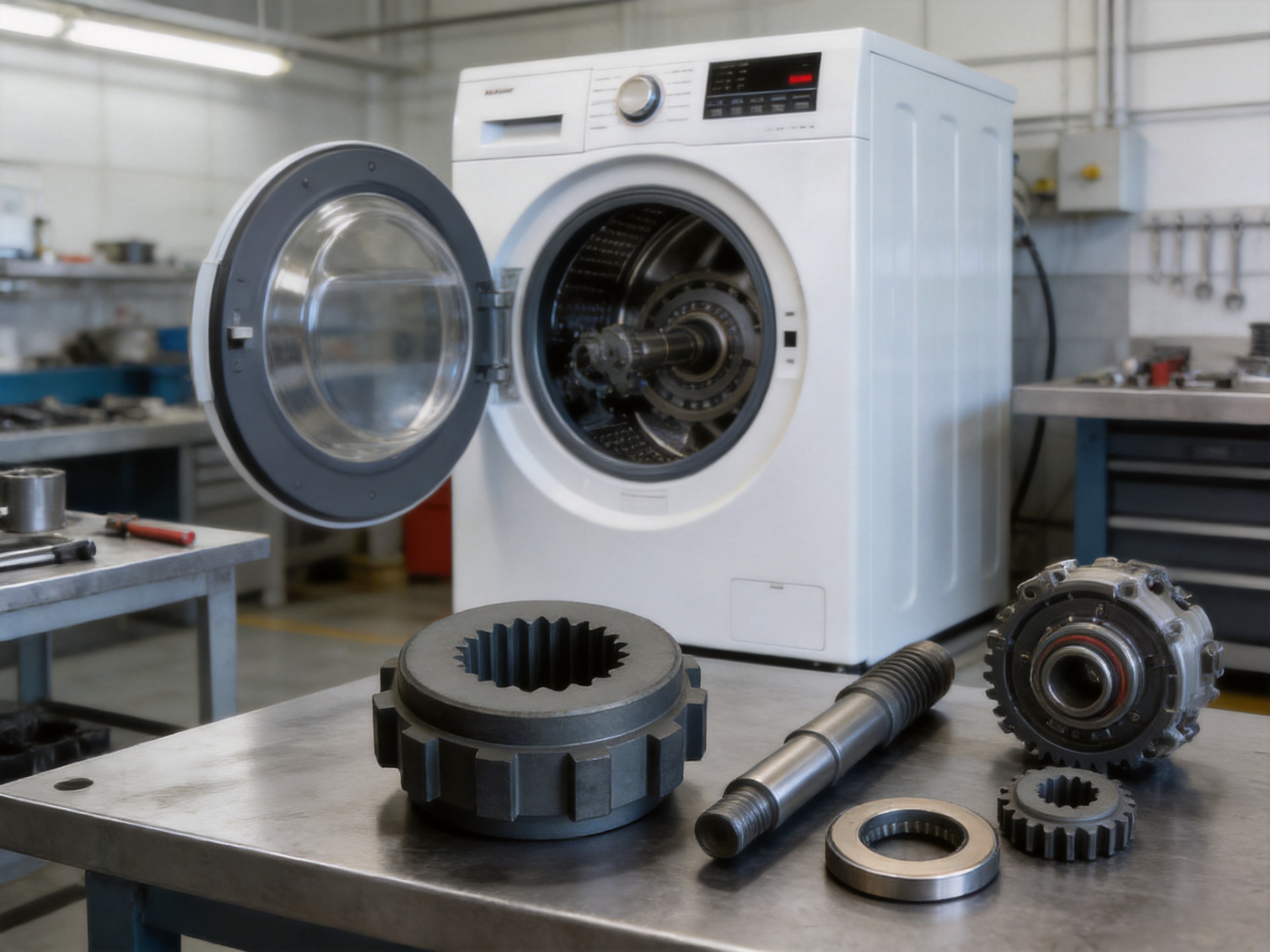
A washing machine contains several mechanical systems that must work together in a controlled sequence. The motor generates rotational power, the transmission adjusts or transfers that power, and the clutch system determines how the drum or pulsator responds during washing and spinning cycles. Structural components within these systems help transfer torque, align rotating elements, engage gears, and maintain mechanical stability.
During a washing cycle, the machine may repeatedly change rotational direction. During a spin cycle, the rotating assembly may operate at substantially higher speed. These operating conditions place cyclic loads on the internal components. The parts must therefore maintain their shape and functional profiles over a long service life rather than merely withstand a single high load.
The structural components described in this article are typically installed in areas where torque must be transmitted through an inner bore and where engagement with another mechanism is required around the outer profile. The inner profile may use splines or serrations to connect with a shaft or mating component. The external profile may incorporate teeth, serrations, or another engagement geometry for clutch operation.
Accurate geometry is essential. If a spline is too loose, backlash and impact may increase. If it is too tight, assembly may become difficult and friction may rise. If an external tooth profile is inconsistent, clutch engagement may become noisy or unreliable. Powder metallurgy offers a practical way to form these profiles with repeatable tooling and controlled production conditions.
1.1 Torque transmission
The primary function of many washing machine structural parts is torque transmission. Torque from the motor must pass through several components before reaching the drum or other rotating assembly. The component must transfer this force without excessive deformation, tooth damage, or bore wear.
Iron-based powder metallurgy materials are well suited to this role because they can provide a strong and stable foundation for the inner and outer profiles. Material selection can be adjusted according to the required strength, density, hardness, wear performance, and cost target. Common material families include Fe-Cu-C and Fe-Ni-C systems, subject to the design requirements and production specification.
1.2 Clutch engagement and disengagement
The clutch mechanism allows the washing machine to perform different operating modes. A component may need to engage a drive path during spinning and disengage or change engagement during washing. Repeated engagement places localized loads on the teeth, serrations, and contact surfaces.
A precisely compacted and sintered component can provide a consistent engagement profile. The resulting repeatability helps reduce assembly variation and supports predictable interaction between the clutch parts. Surface blackening further improves the appearance and provides an additional protective oxide layer for suitable operating environments.
1.3 Mechanical stability under repeated loading
Washing machine components experience fluctuating loads rather than a single constant force. Uneven laundry distribution, acceleration and deceleration, vibration, and changes in operating direction can all create mechanical stress. Dimensional stability is therefore as important as initial strength.
Controlled powder metallurgy production helps maintain consistent dimensions across large production batches. When compaction pressure, powder characteristics, sintering temperature, atmosphere, and tooling conditions are properly controlled, manufacturers can achieve predictable part geometry and mechanical properties.
2. Product Construction and Material Characteristics
These washing machine structural components are manufactured primarily from iron-based powder metallurgy alloys. Iron provides the main structural framework, while alloying elements and carbon help adjust strength, hardness, machinability, wear behavior, and sintering response.
Product characteristic |
Typical specification or function |
Base material |
Iron-based powder metallurgy alloy |
Possible material systems |
Fe-Cu-C or Fe-Ni-C, selected according to application requirements |
Internal profile |
Splined or serrated bore for torque transmission |
External profile |
Serrated or geared edge for clutch engagement |
Primary production route |
Powder blending, compaction, high-temperature sintering, inspection, and blackening |
Surface treatment |
Black oxide coating for improved surface protection and a uniform dark finish |
Application |
Washing machine clutch assemblies and transmission systems |
Design flexibility |
Custom dimensions, spline forms, external profiles, and material formulations |
The final material specification should be determined according to the actual application. Factors may include transmitted torque, operating speed, mating material, lubrication conditions, required wear life, dimensional tolerances, and production volume. A component intended for a compact household appliance may have different requirements from one designed for a heavy-duty commercial washing system.
Powder metallurgy also allows the material formulation to be matched with the manufacturing process. The powder blend must flow consistently into the die cavity, compact uniformly, and sinter into a stable structure. These factors directly influence density distribution and final performance. Consistent powder preparation is therefore an important part of product quality.
3. Manufacturing Process: From Powder to Finished Component
The performance of a sintered structural component depends on every stage of production. Powder metallurgy is not simply a method of pressing metal powder into a shape. It is an integrated process that requires control of powder formulation, tooling, compaction, sintering, finishing, surface treatment, inspection, and packaging.
3.1 Powder preparation and blending
Production begins with the preparation of the iron-based powder mixture. Depending on the material grade, the blend may include iron powder, carbon, copper, nickel, lubricants, and other controlled additions. The proportions are selected to achieve the required sintered properties and processing behavior.
Uniform blending is essential. If alloying elements are unevenly distributed, different areas of the finished component may exhibit variation in strength, hardness, or dimensional response. A controlled blending procedure helps ensure that each batch has a consistent composition and predictable compaction behavior.
Powder characteristics such as particle size, apparent density, flowability, and compressibility affect the filling of the die cavity. Consistent flow helps reduce filling defects and supports uniform density from one component to another.
3.2 Precision die filling
For a component with an internal spline and an external serrated or geared profile, tool design is especially important. The die must reproduce the required geometry while allowing the compact to be removed without damage. The tooling system must also support stable production over repeated pressing cycles.
Controlled die filling helps maintain the desired mass and density distribution. Variations at this stage can influence shrinkage during sintering and may result in dimensional inconsistency. Experienced process engineers use suitable tooling layouts, powder flow control, and press settings to achieve a stable compacting operation.
3.3 Compaction
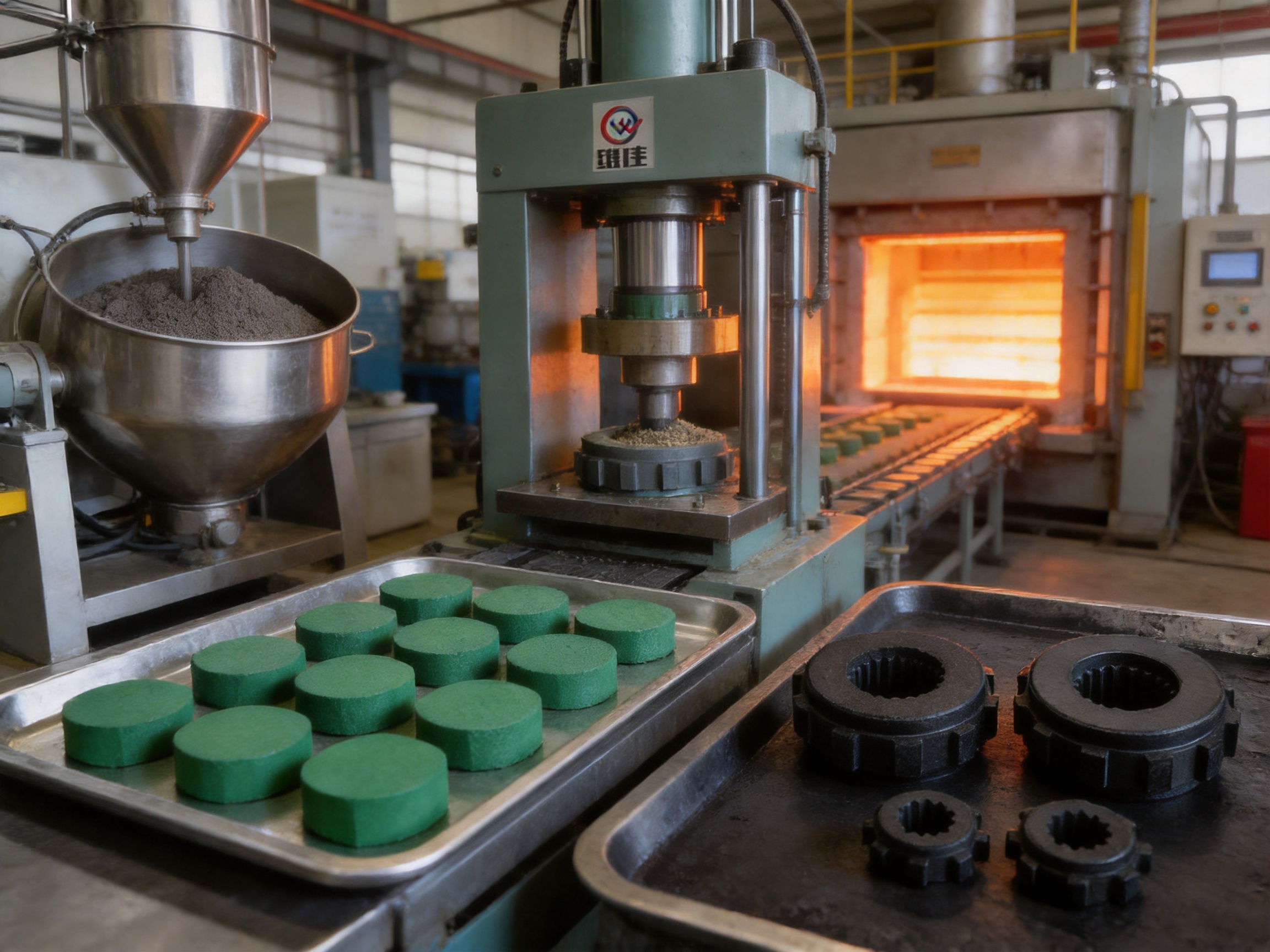
During compaction, the powder is pressed inside a precision die to form a green compact. The pressing force must be sufficient to create a compact with enough handling strength while maintaining a density distribution appropriate for sintering.
Compaction pressure, punch movement, filling height, lubricant content, and tool condition all influence the result. For components that contain multiple profiles or changes in cross-section, uniform pressure transmission can be challenging. The production process must be developed to limit density differences that could cause distortion or cracking.
The green compact is not yet a finished metal part. It has enough strength for careful handling, but its final mechanical properties are developed during sintering. At this stage, dimensional control and handling procedures are critical because damage to the spline or external teeth can affect the finished component.
3.4 High-temperature sintering
The compacted parts are placed in a high-temperature sintering furnace. The furnace atmosphere, temperature profile, heating rate, holding time, and cooling conditions must be controlled according to the material system and part geometry.
Sintering bonds the individual powder particles together through diffusion and metallurgical contact. It also produces the strength, hardness, toughness, and wear characteristics required for service. During this stage, the part may undergo controlled dimensional change. Predictable shrinkage behavior is therefore important when designing the die and establishing process parameters.
High-temperature sintering equipment supports stable production when furnace temperature and atmosphere are properly monitored. Consistent furnace conditions help reduce variation between batches and maintain the intended material structure.
For structural components used in clutch and transmission systems, the sintered part must balance strength and dimensional stability. Excessive porosity may reduce load-bearing capacity, while inappropriate density distribution may increase the risk of distortion. The material grade and compaction strategy must be selected together rather than independently.
3.5 Surface blackening treatment
After sintering and necessary inspection or sizing operations, the components may undergo blackening treatment. This process creates a dark oxide layer on the surface. The treatment provides a uniform appearance and contributes to corrosion protection under suitable environmental conditions.
Washing machines operate in humid environments, and internal components may encounter moisture during service or storage. Black oxide treatment helps improve the surface condition and provides additional resistance against rust formation when combined with appropriate handling, packaging, and operating conditions.
The blackened surface may also support wear and friction performance in the intended application. However, the final friction behavior depends on the complete system, including mating materials, lubrication, contact pressure, speed, temperature, and operating cycle. The surface treatment should therefore be evaluated as part of the whole assembly rather than as an isolated feature.
Blackening also produces a consistent dark finish that can help distinguish treated components and provide a clean appearance during assembly. The treatment is compatible with the functional purpose of structural components while avoiding the need for a more extensive decorative coating.
3.6 Sizing, secondary operations, and inspection
Although powder metallurgy is a near-net-shape process, selected components may require sizing, calibration, deburring, machining, or other secondary operations. These operations can be used to achieve tighter dimensional tolerances or refine functional surfaces.
The purpose of secondary processing is not to replace the benefits of powder metallurgy but to complement them. By forming most of the geometry directly during compaction, the amount of machining can remain limited. This reduces material waste and shortens production time compared with manufacturing the complete component from bar stock.
Inspection may include dimensional measurement, visual examination, mass verification, density evaluation, hardness testing, and mechanical property testing. The specific inspection plan should reflect the component drawing and the critical-to-function features of the washing machine assembly.
4. Key Product Advantages
4.1 Near-net-shape manufacturing
One of the most important advantages of powder metallurgy is the ability to produce components close to their final shape. Internal splines, external serrations, and other complex profiles can be formed directly in the compacting tool.
Traditional machining often begins with a larger piece of steel and removes material through turning, milling, broaching, hobbing, or grinding. This approach can produce accurate parts, but it may generate substantial scrap and require multiple operations. Powder metallurgy reduces the amount of removed material and can simplify the manufacturing route.
Near-net-shape production is particularly valuable for medium and high-volume washing machine components. Once the tooling has been developed and validated, the process can deliver repeatable parts at a competitive unit cost.
4.2 Efficient production of complex profiles
The inner bore and outer edge of a washing machine clutch component may contain several functional features. Forming these features in a single compacting operation can reduce the need for separate machining processes.
The ability to produce complex geometry is a major advantage over less specialized manufacturing methods. It can help reduce alignment errors between separately machined features and support consistent concentricity between the inner and outer profiles.
The practical limits of the geometry depend on the component design, material, tooling, density requirements, and tolerances. Engineering review at the development stage helps identify the best balance between powder metallurgy forming and any required secondary operations.
4.3 Material utilization and cost efficiency
Because powder metallurgy uses a measured quantity of material and forms most of the final geometry in the die, it can reduce scrap compared with subtractive processes. Lower material waste is particularly valuable when alloying elements or higher-grade materials are required.
Production cost is also influenced by cycle time, tooling investment, secondary machining, labor, inspection, and production volume. For suitable designs, the powder metallurgy route can reduce machining time and improve manufacturing efficiency without compromising the functional requirements of the component.
4.4 Consistent quality
Stable powder preparation, controlled compaction, and monitored sintering help maintain consistent quality across production batches. Consistency is essential for washing machine manufacturers because a clutch or transmission assembly may contain multiple interacting parts produced over an extended supply period.
Consistent mass, dimensions, profile geometry, and surface condition help reduce assembly variation. They also support predictable noise, vibration, engagement, and service performance.
4.5 Strength and wear resistance
Iron-based sintered components can provide the mechanical strength required for torque transmission and repeated cyclic loading. Material selection and density control determine the final balance of strength, hardness, toughness, and wear resistance.
The blackening treatment adds surface protection and can support wear performance under suitable conditions. When combined with correct lubrication and appropriate mating materials, the component can operate reliably through repeated washing and spin cycles.
4.6 Dimensional stability
Dimensional stability is vital in clutch and transmission assemblies. If a component changes shape excessively under load or through environmental exposure, engagement may become unreliable and wear may accelerate.
Powder metallurgy production can provide stable geometry when the powder blend, die design, compaction conditions, and sintering cycle are properly controlled. Calibration or sizing can be applied where tighter dimensions are necessary for the final assembly.
4.7 Customization
Washing machine manufacturers often use different transmission layouts, shaft dimensions, clutch configurations, and drum designs. A standard component may not fit every model. Custom powder metallurgy production allows the inner spline, outer profile, overall dimensions, material composition, and surface treatment to be adjusted according to the application.
OEM and ODM development can begin with technical drawings, samples, or functional requirements. Engineering support can then be used to review manufacturability, identify critical dimensions, develop tooling, produce prototypes, and scale the validated design to mass production.
5. Comparison with Conventional Manufacturing Methods
Conventional machined steel components remain useful for many applications, especially prototypes, very low-volume production, and designs requiring exceptionally tight machined tolerances. However, powder metallurgy can offer important advantages for repeated production of compact parts with complex profiles.
Evaluation area |
Powder metallurgy structural component |
Conventional fully machined component |
Material utilization |
High utilization with limited material removal |
More scrap may be generated from bar or billet stock |
Complex profiles |
Splines and serrations can be formed during compaction |
May require several machining or broaching operations |
High-volume efficiency |
Well suited to repeat production after tooling validation |
Cycle time may increase with the number of machining steps |
Material flexibility |
Powder formulations can be adjusted for application needs |
Material is commonly selected from available steel stock |
Dimensional repeatability |
Supported by controlled tooling and sintering processes |
Dependent on machine capability, tool wear, and operator control |
Development economics |
Tooling investment is balanced by lower unit cost at volume |
May be more economical for prototypes or small quantities |
The best choice depends on the product design and production volume. Powder metallurgy is especially competitive when the component has a repeatable geometry, requires large quantities, contains profiles that can be formed in a die, and must meet controlled cost targets.
A capable supplier should not promote powder metallurgy as a universal replacement for machining. Instead, the supplier should evaluate the drawing, load conditions, tolerances, material requirements, and projected volume. This engineering-based approach helps ensure that the selected process is appropriate for the actual application.
6. Engineering Design Considerations
6.1 Inner spline design
The inner spline must match the mating shaft or drive element. Important factors include the number of teeth, tooth form, pressure angle, major and minor diameters, engagement length, clearance, and required torque capacity.
The spline should provide sufficient contact area while allowing practical assembly. Excessive clearance may create backlash, noise, and impact loading. Insufficient clearance may make assembly difficult and increase friction. The supplier should review the mating components before finalizing the tool design.
6.2 Outer serration or gear profile
The external profile is often associated with clutch engagement. It must be compatible with the mating clutch ring, gear, or actuator. Tooth thickness, pitch, profile accuracy, edge condition, and concentricity can influence engagement smoothness and service life.
The profile should also be designed with powder removal, compaction, ejection, and sintering behavior in mind. A design that is technically possible to machine may require modification to achieve stable powder metallurgy production.
6.3 Density distribution
Different areas of the component may experience different loads. The spline teeth, outer engagement profile, hub area, and shoulder sections may not require exactly the same density. However, significant uncontrolled density variation can create weak areas or uneven dimensional change.
Engineering analysis of the pressing direction and tool configuration helps determine whether the part can be compacted effectively. Where necessary, the design may be adjusted to improve powder flow, reduce thin sections, or support more uniform compaction.
6.4 Tolerances and functional dimensions
Not every dimension on a component requires the same tolerance. Critical dimensions should be identified according to their function in the assembly. These may include the inner bore, spline dimensions, external engagement profile, overall thickness, concentricity, and mounting surfaces.
Defining functional tolerances rather than applying unnecessarily tight tolerances to every feature can reduce production cost while preserving performance. The manufacturer can recommend suitable tolerances based on powder metallurgy capability and the assembly requirements.
6.5 Surface and lubrication conditions
Operating conditions should be considered when selecting the surface treatment. Black oxide improves surface protection, but it is not a substitute for suitable corrosion control, lubrication, or sealing in a demanding environment.
The design team should specify whether the component operates with grease, oil, dry contact, or another lubricant. The compatibility of the blackened surface with mating components and lubricants should be evaluated during prototype testing.
7. Quality Assurance and Production Reliability
Quality assurance begins before production. It includes drawing review, material selection, tooling design, process validation, inspection planning, and control of production records. A reliable supplier should be able to connect each major quality characteristic with a defined process or inspection method.
Jiande Welfine Technology Co., Ltd. integrates research and development, production, and sales, with a focus on powder metallurgy sintering and related precision machining. Its production base covers approximately 13,039 square meters and includes high-efficiency presses, high-temperature sintering furnaces, precision forming equipment, and testing resources.
The company was established in 2001 and has more than two decades of experience in powder metallurgy and bushing-related production. With more than 150 skilled employees, it provides customized OEM and ODM solutions based on customer drawings or samples.
Its quality management credentials include ISO 9001:2015 and IATF 16949:2016 certifications, according to the supplied company information. These systems support controlled manufacturing, traceability, corrective action, and continuous improvement. For appliance component buyers, a formal quality system is valuable because it helps establish repeatable procedures rather than relying only on individual operator experience.
7.1 Dimensional inspection
Dimensional inspection verifies whether the component meets the drawing requirements. Measurements may include bore diameter, spline dimensions, outer profile dimensions, height, thickness, concentricity, and critical positional relationships.
Inspection equipment and methods should be selected according to the required tolerance. Gauges may be used for high-volume verification, while coordinate measuring equipment or other precision instruments may be used during development and periodic audits.
7.2 Material and mechanical testing
Material testing may include density measurement, hardness testing, metallographic examination, tensile testing of representative specimens, and verification of chemical composition where required. The test plan should correspond to the material specification and the functional risk of the part.
Mechanical property testing helps verify that the sintering process has produced the intended structure. It can also identify changes caused by powder variation, furnace conditions, or process drift.
7.3 Visual and surface inspection
Visual inspection checks for cracks, chips, incomplete profiles, excessive burrs, discoloration, surface contamination, and blackening defects. Because the component is installed in a mechanical assembly, small profile damage can affect engagement or create abnormal wear.
Packaging inspection is also important. Proper packaging protects the blackened surface and prevents impact damage during storage and transportation. Components should arrive clean, identifiable, and ready for assembly or any customer-specified finishing operation.
8. OEM and ODM Development Support
Custom production is most successful when the supplier is involved early in the design process. A technical drawing, sample, or functional description can be used as the starting point for manufacturability analysis.
The engineering team can review the component geometry and identify features that may affect powder filling, compaction, ejection, sintering, sizing, and inspection. Early review can prevent costly tooling changes after production has begun.
8.1 Drawing review
A complete drawing should identify material, dimensions, tolerances, spline or serration details, surface treatment, inspection requirements, and any special performance criteria. If some details are not yet finalized, the supplier can help define them according to the mating parts and operating conditions.
8.2 Prototype and sample testing
Prototype samples allow the customer to evaluate fit, engagement, torque transmission, noise, vibration, wear, and assembly behavior. Sample testing may also reveal opportunities to optimize the material grade, density, surface treatment, or profile geometry.
Testing should represent actual service conditions as closely as practical. Laboratory evaluation may include repeated engagement cycles, load testing, speed variation, environmental exposure, and dimensional checks before and after testing.
8.3 Tooling development
Tooling is a major factor in powder metallurgy production. The die and punches must produce the required geometry, withstand repeated pressing, and support consistent ejection. Tool design must also account for expected sintering dimensional change.
Once the tooling is validated, it can support efficient mass production. Proper maintenance and inspection of the tooling help preserve profile accuracy and reduce gradual changes caused by wear.
8.4 Production scaling
After prototype approval, production can be scaled through controlled process transfer. Important parameters include powder batch control, press settings, furnace loading, sintering cycles, blackening conditions, inspection frequency, and packaging procedures.
A structured scale-up process helps ensure that mass-produced parts retain the properties observed during development. It also provides a basis for investigating any future quality issue or customer feedback.
9. Sustainability and Resource Efficiency
Powder metallurgy can support more efficient use of metal materials. Because the component is formed from a measured powder charge and usually requires limited cutting, less material may be discarded compared with machining from oversized stock.
Lower machining requirements can also reduce the energy, coolant, tooling, and labor associated with multiple cutting operations. The overall environmental benefit depends on the complete production system, including powder preparation, furnace energy consumption, surface treatment, packaging, and transportation.
Long service life is another important sustainability factor. A durable structural component that maintains its function through repeated washing and spinning cycles can reduce the need for replacement parts and help extend the useful life of the washing machine.
Near-net-shape production can also support compact product design. When a component is formed efficiently and integrates several functional profiles into one part, the assembly may require fewer separate pieces or operations. This can contribute to manufacturing efficiency and supply chain simplification.
10. Applications in Washing Machine Systems
These iron-based structural components are suitable for a range of washing machine mechanisms. The exact location depends on the equipment design, but common application areas include clutch assemblies, transmission units, drive interfaces, and torque-transfer mechanisms.
In a clutch assembly, the component may engage with a mating profile to control whether rotational power is directed toward the washing or spinning function. The component must respond reliably to repeated actuation and maintain profile integrity after many operating cycles.
In a transmission system, the component may help connect shafts, gears, or other rotating members. It must maintain alignment and transfer torque while tolerating vibration and changing load conditions.
In a drive interface, the splined or serrated bore can provide a positive mechanical connection. This is generally preferable to relying only on friction because the profile directly transmits rotational force and helps prevent relative slipping.
The product can be adapted for compact domestic appliances as well as other equipment requiring similar torque-transfer structures. Before application, the customer should confirm the actual load, speed, temperature, lubrication, corrosion exposure, and expected cycle life.
11. Why Select an Experienced Powder Metallurgy Supplier?
The performance of a sintered component is determined by more than its material name. Powder quality, formulation accuracy, die design, compaction control, furnace stability, surface treatment, inspection, and technical communication all affect the final result.
An experienced supplier can identify potential problems before they become production issues. For example, the supplier may recognize that a thin section could be difficult to compact uniformly, that a spline profile requires a particular ejection strategy, or that a specified tolerance may require sizing or precision machining after sintering.
A manufacturer with dedicated presses and sintering furnaces can control the core production process directly. This can improve responsiveness, reduce dependence on multiple subcontractors, and simplify communication during development or corrective action.
Integrated production also supports better traceability. Material batches, tooling conditions, furnace records, inspection results, and surface treatment data can be managed within a coordinated quality system.
Jiande Welfine Technology Co., Ltd. provides powder metallurgy bushings, self-lubricating bushings, and precision components for industrial applications. Its experience in sintering and precision forming supports the development of customized washing machine structural components with splined or serrated profiles.
The company offers technical drawings and sample testing support for OEM and ODM projects. Its engineering team can assist with prototype development, customization of dimensions and profiles, material formulation, and transition to mass production.
12. Recommended Customer Specification Checklist
When requesting a quotation or technical review, customers should provide as much information as possible. A complete specification helps the supplier recommend a suitable material and process while reducing the risk of misunderstanding.
Part drawing or physical sample
Required material grade or target mechanical properties
Inner spline or serration dimensions
Outer gear or serration profile
Critical dimensions and tolerances
Required surface treatment and appearance
Operating torque and rotational speed
Expected service cycles or target service life
Lubrication and environmental conditions
Annual demand and preferred production volume
Inspection and packaging requirements
Prototype schedule and mass production deadline
If some requirements are not yet known, the customer can provide information about the washing machine model, mating components, motor output, clutch design, or field failure concerns. The supplier can then help determine suitable technical targets.
13. Frequently Asked Questions
Q1: What are these powder metallurgy components used for?
They are used mainly in washing machine clutch assemblies, transmission systems, and torque-transfer mechanisms. Their inner splined or serrated bore connects with a shaft or mating drive element, while the external geared or serrated profile supports clutch engagement or interaction with another mechanism.
Q2: Which materials are available?
The components are based on iron powder metallurgy alloys. Fe-Cu-C and Fe-Ni-C material systems are possible examples. The final material should be selected according to torque, wear, hardness, density, dimensional stability, lubrication, and cost requirements.
Q3: Why use powder metallurgy instead of machining the part from steel?
Powder metallurgy can form complex profiles near their final shape, reduce material waste, lower secondary machining requirements, and support consistent high-volume production. Machining may still be preferable for prototypes, very low quantities, or designs requiring specialized tolerances that are not economical to achieve through compaction.
Q4: Does the component require additional machining?
Many components can be produced close to their final shape, but selected features may require sizing, calibration, deburring, or precision machining. The need depends on the drawing, tolerance requirements, mating parts, and functional performance targets.
Q5: What is the purpose of blackening treatment?
Blackening creates a dense black oxide layer that improves surface protection and anti-rust performance under suitable conditions. It also provides a uniform dark appearance and may support wear and friction behavior. The complete corrosion and wear performance still depends on lubrication, sealing, storage, and operating conditions.
Q6: Can the inner and outer profiles be customized?
Yes. Inner spline or serration configurations, outer engagement profiles, dimensions, material formulations, and surface treatments can be developed according to customer drawings, samples, or functional requirements.
Q7: How does the supplier control dimensional consistency?
Dimensional consistency is supported through controlled powder preparation, precision tooling, stable compaction, monitored sintering, optional sizing operations, and dimensional inspection. Critical dimensions should be identified during the drawing review so that the inspection plan reflects assembly requirements.
Q8: Can prototypes be supplied before mass production?
Prototype and sample testing support is available for OEM and ODM projects. Samples allow customers to verify fit, engagement, torque transmission, wear, noise, vibration, and compatibility with the complete washing machine assembly before full-scale production.
Q9: What information is needed for a quotation?
A drawing or sample, material requirements, dimensions, tolerances, surface treatment, application information, estimated quantity, and delivery expectations are helpful. If the drawing is incomplete, information about the mating shaft, clutch, operating load, speed, and service conditions can support an initial engineering assessment.
Q10: What quality certifications does the manufacturer have?
According to the supplied company information, Jiande Welfine Technology Co., Ltd. has passed ISO 9001:2015 and IATF 16949:2016 certifications. These systems support documented quality management and controlled manufacturing procedures.
Q11: Are these components suitable for every washing machine?
No component should be considered universally suitable without engineering validation. The part must match the specific clutch, shaft, transmission, load, speed, and environmental conditions of the target washing machine. Customization and prototype testing are recommended for new designs.
Q12: How can the supplier help reduce development risk?
The supplier can review the drawing, assess powder metallurgy manufacturability, recommend material and process options, develop tooling, provide samples, perform testing, and support production scaling. Early cooperation helps identify issues related to profiles, density, shrinkage, tolerances, and surface treatment before mass production.
14. Conclusion
Powder metallurgy structural components provide a practical and efficient solution for washing machine clutch and transmission systems. Their iron-based construction supports the strength and wear resistance needed for repeated torque transmission, while splined or serrated profiles enable reliable mechanical engagement.
The combination of compaction, high-temperature sintering, controlled secondary operations, and blackening treatment creates a component with useful mechanical performance, dimensional stability, surface protection, and cost efficiency. Near-net-shape production reduces material waste and machining requirements, while precision tooling supports the formation of complex internal and external profiles.
The strongest results are achieved when the manufacturer is involved from the design stage. Drawing review, material selection, tooling development, prototype testing, inspection planning, and production scaling should be managed as one connected process. This approach helps ensure that the final component fits the washing machine assembly and performs reliably throughout its intended service life.
With a modern production base, experienced engineering personnel, powder metallurgy equipment, precision forming capabilities, and ISO-certified quality systems, Jiande Welfine Technology Co., Ltd. is positioned to support customized OEM and ODM requirements. Its technical support covers product development, sample testing, material and profile customization, and mass production of sintered precision components.
For washing machine manufacturers seeking durable, repeatable, and cost-effective structural parts, customized powder metallurgy components offer a strong alternative to fully machined solutions. When correctly designed and validated, they can improve manufacturing efficiency while supporting reliable clutch engagement, torque transmission, and long-term appliance performance.
References
1. Powder Metallurgy Industry Standards and Recommended Practices, general guidance on powder preparation, compaction, sintering, and inspection.
2. Materials and Processes for Powder Metallurgy Components, technical reference on iron-based sintered alloys and density control.
3. Engineering Design Guidelines for Sintered Structural Parts, guidance on tooling, tolerances, profiles, ejection, and dimensional change.
4. Surface Engineering Reference Materials, general information on black oxide treatment, corrosion protection, and wear considerations.
5. ISO 9001:2015 Quality Management Systems, principles for controlled production, documentation, traceability, and continual improvement.
6. IATF 16949:2016 Quality Management System Requirements, principles for process control and quality assurance in precision component manufacturing.
Product: Powder Metallurgy Structural Components for Washing Machines

Related products
-
-
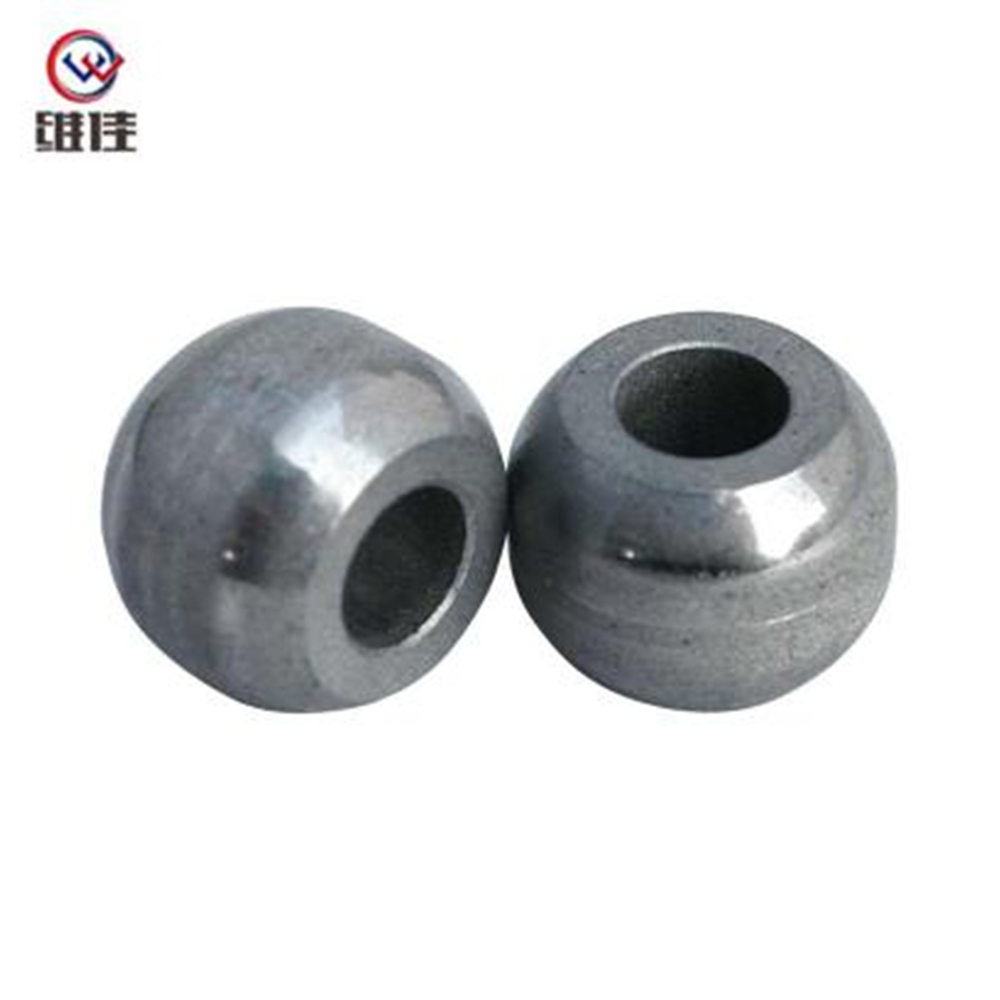
Product Description: High-precision powder metallurgy part (S14*7*10) made of iron material from Jiande Wefine, customized PM components with strict tolerance control.
See Details -
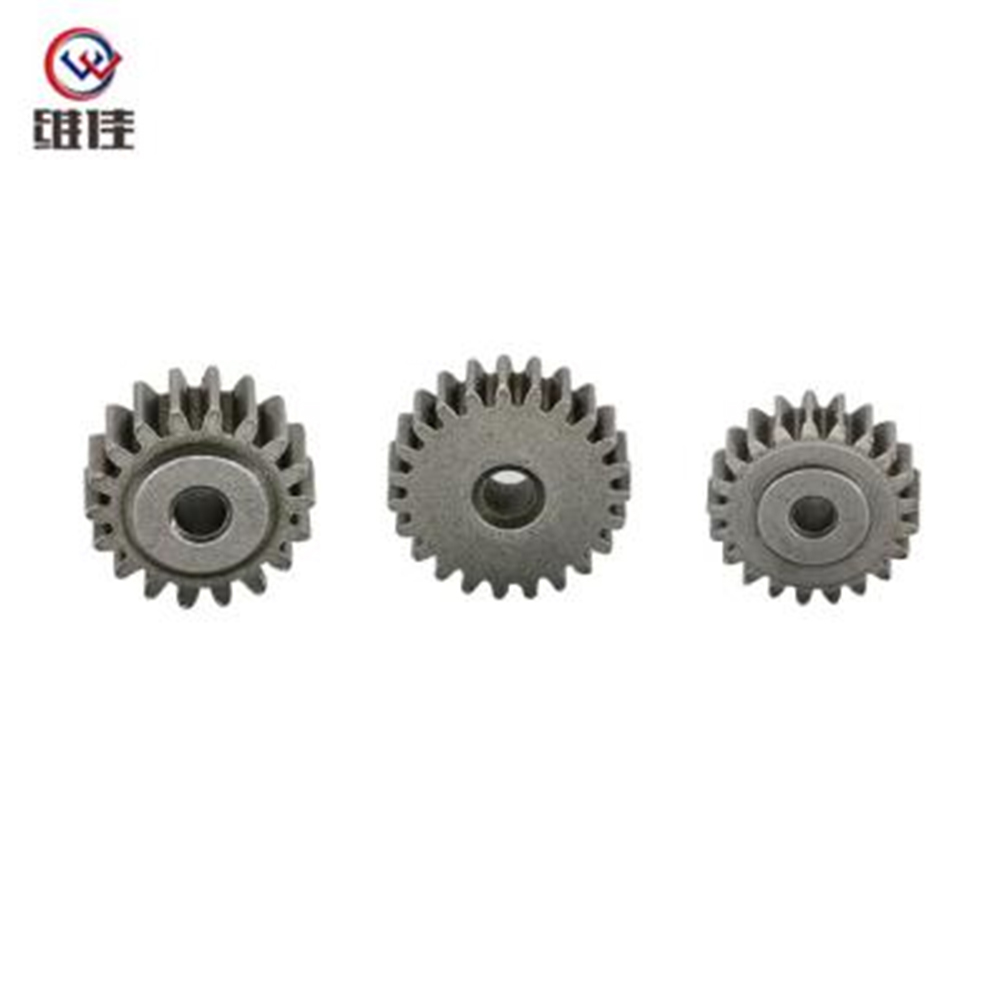
Description: Custom powder metallurgy planetary gear with high precision, wear resistance for automotive, industrial machinery & home appliances. OEM/ODM supported.
See Details -
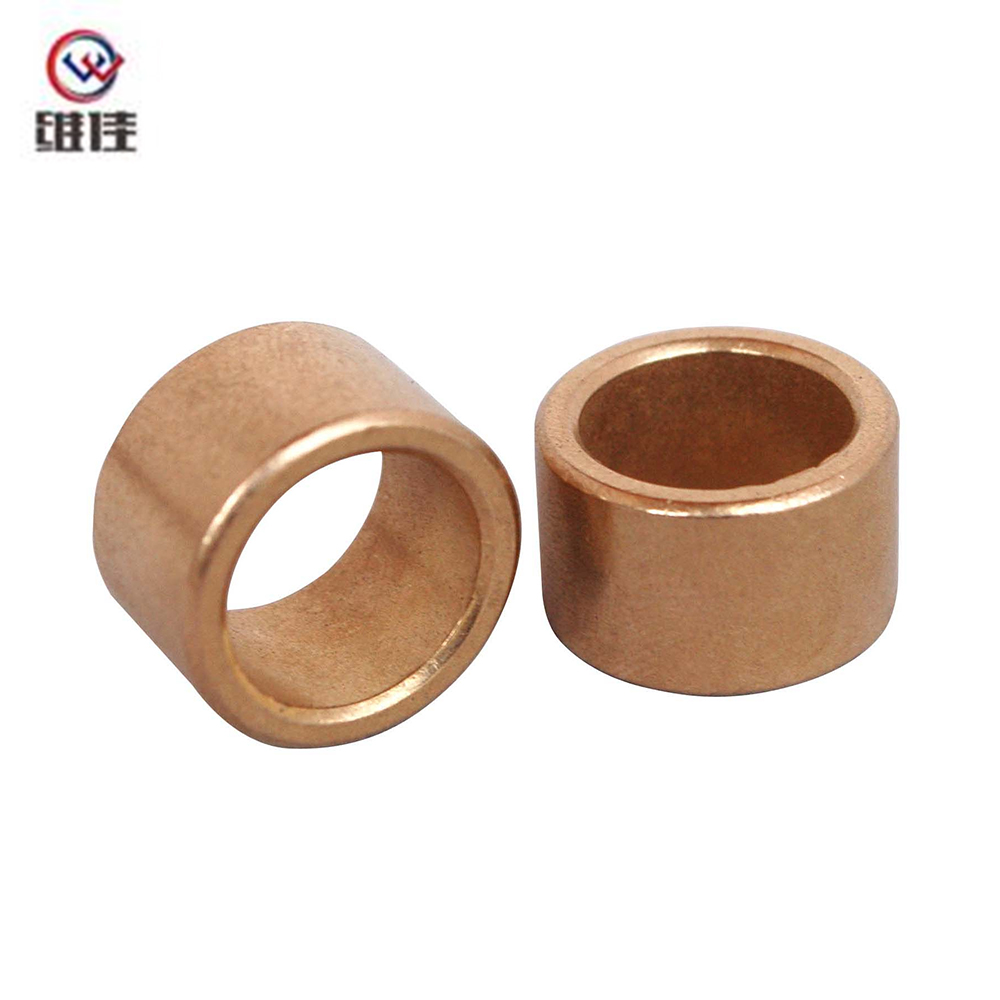
This copper-based powder metallurgy bushing is manufactured through an integrated process of compaction, sintering, sizing, and oil impregnation. It features excellent wear resistance and self-lubrica...
See Details -
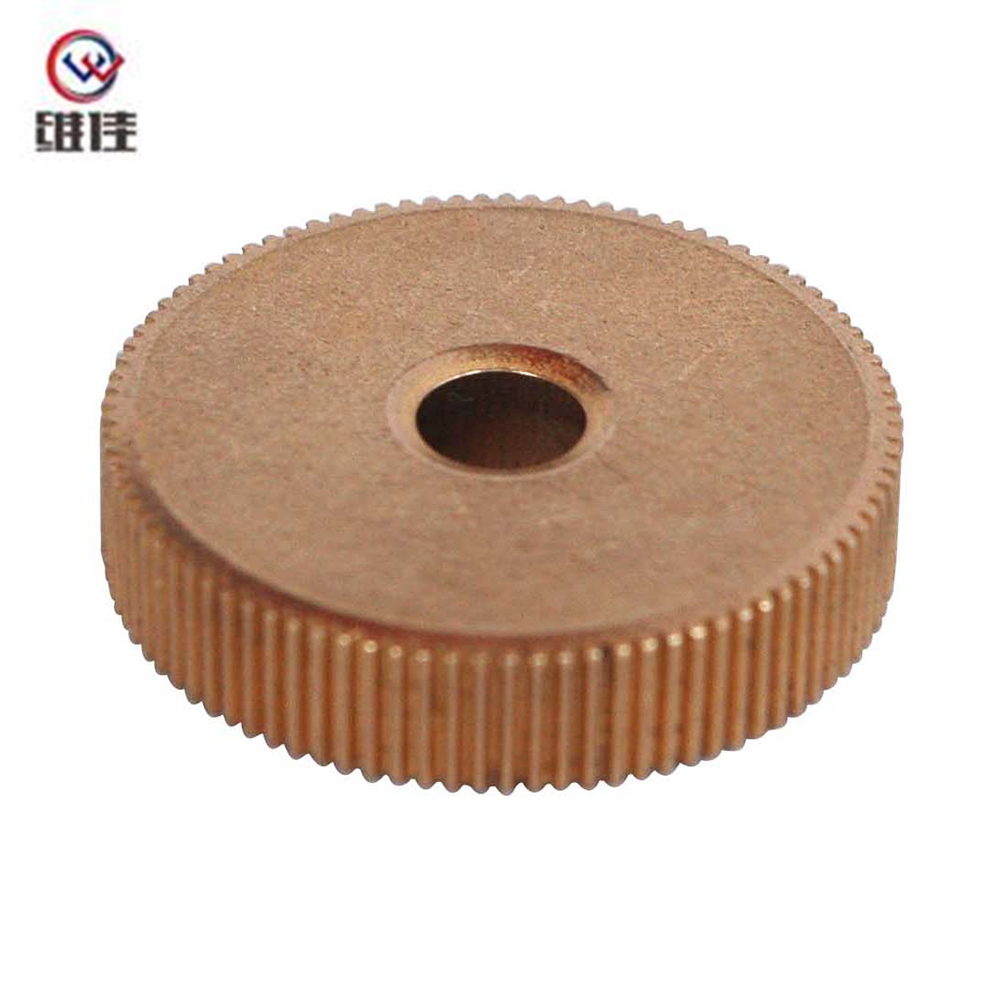
This 4×11.5×5.2mm powder metallurgy gear is manufactured through a precise press-sinter-through hole-oil impregnation process, with strict control of press density (6.7–6.8g/cm³) and sintering tempera...
See Details
Copyright © Jiande Welfine Technology Co., Ltd. All Rights Reserved. Custom Self-lubricating Sintered Bushing Manufacturers
