E-mail us: [email protected]
Tel: +86-15239857375
 English
 中文简体
中文简体

 Home / Author / Gao Manli — Overseas Sales Manager / SAE841 Tin Bronze Open-Type Bushings for Durable Self-Lubricating Motion Systems
 SAE841 Tin Bronze Open-Type Bushings for Durable Self-Lubricating Motion Systems
 2026.06.28
 Gao Manli — Overseas Sales Manager
Content
- 1 Product Overview and Core Value
- 2 Why SAE841 Tin Bronze Is a Strong Material Choice
- 3 Open-Type Structural Design and Installation Advantages
- 4 Key Performance Advantages Over Conventional Bushings
- 5 Application Value in Greenhouse Top Systems
- 6 Powder Metallurgy Manufacturing Process
- 7 Manufacturing Strength and Quality Assurance
- 8 How Process Control Improves Product Performance
- 9 Comparison With Competing Solutions
- 10 Design Considerations for Proper Use
- 11 Customization and OEM/ODM Capability
- 12 Packaging, Storage, and Handling
- 13 Reliability in Long-Term Outdoor and Humid Environments
- 14 Economic Benefits and Total Cost Advantage
- 15 Q&A Section
- 15.1 What is an SAE841 Tin Bronze Open-Type Bushing?
- 15.2 Why is SAE841 tin bronze suitable for self-lubricating bushings?
- 15.3 Does this bushing require additional lubrication?
- 15.4 What are the advantages of the open-type design?
- 15.5 Where is this product commonly used?
- 15.6 How does it compare with conventional bronze bushings?
- 15.7 Is the bushing suitable for humid environments?
- 15.8 Can the product be customized?
- 15.9 What quality systems support production?
- 15.10 What factors influence service life?
- 16 Conclusion
- 17 References
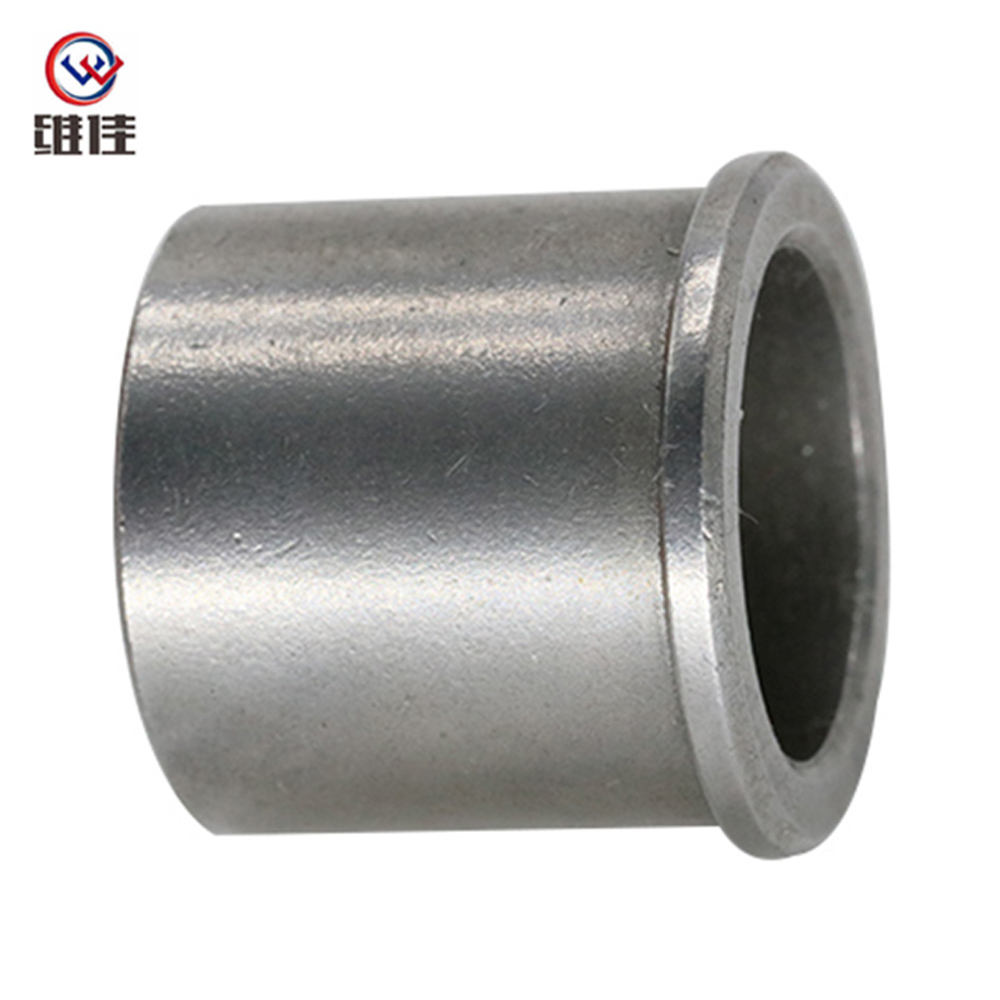
- 18 Product: SAE841 Tin Bronze Bushing Open-Type Component
In mechanical assemblies where shafts, housings, sliding supports, and rotating systems must work reliably over long periods, the bushing is often a small component with a large influence on total equipment performance. A poorly selected bushing can increase friction, generate noise, accelerate shaft wear, and force frequent lubrication maintenance. A properly engineered bushing, by contrast, can stabilize motion, reduce downtime, and extend service life in demanding environments.
The SAE841 Tin Bronze Open-Type Bushing is designed for applications requiring stable sliding performance, self-lubrication, wear resistance, and installation flexibility. Manufactured from SAE841 tin bronze powder metallurgy material, this component combines the advantages of porous oil-impregnated bronze with an open structural design. It is particularly valuable for agricultural greenhouse top mechanisms, including film rolling systems, ventilation devices, shading systems, and related automation equipment exposed to humidity, outdoor air, temperature changes, and long operating cycles.
Unlike conventional solid bronze bushings that often depend heavily on external lubrication, the SAE841 tin bronze structure stores lubricating oil within its interconnected pores. During operation, frictional heat and pressure help release oil to the sliding surface, forming a protective lubricating film between the shaft and the bushing. This function reduces metal-to-metal contact, lowers friction, and supports maintenance-free or low-maintenance operation under suitable working conditions.
For manufacturers, agricultural equipment builders, automation suppliers, and engineering buyers, this product offers a practical balance of performance, production efficiency, dimensional precision, and cost control. Its open-type structure also improves installation adaptability, making it suitable for assembly environments where efficiency, repeatability, and stable positioning are important.
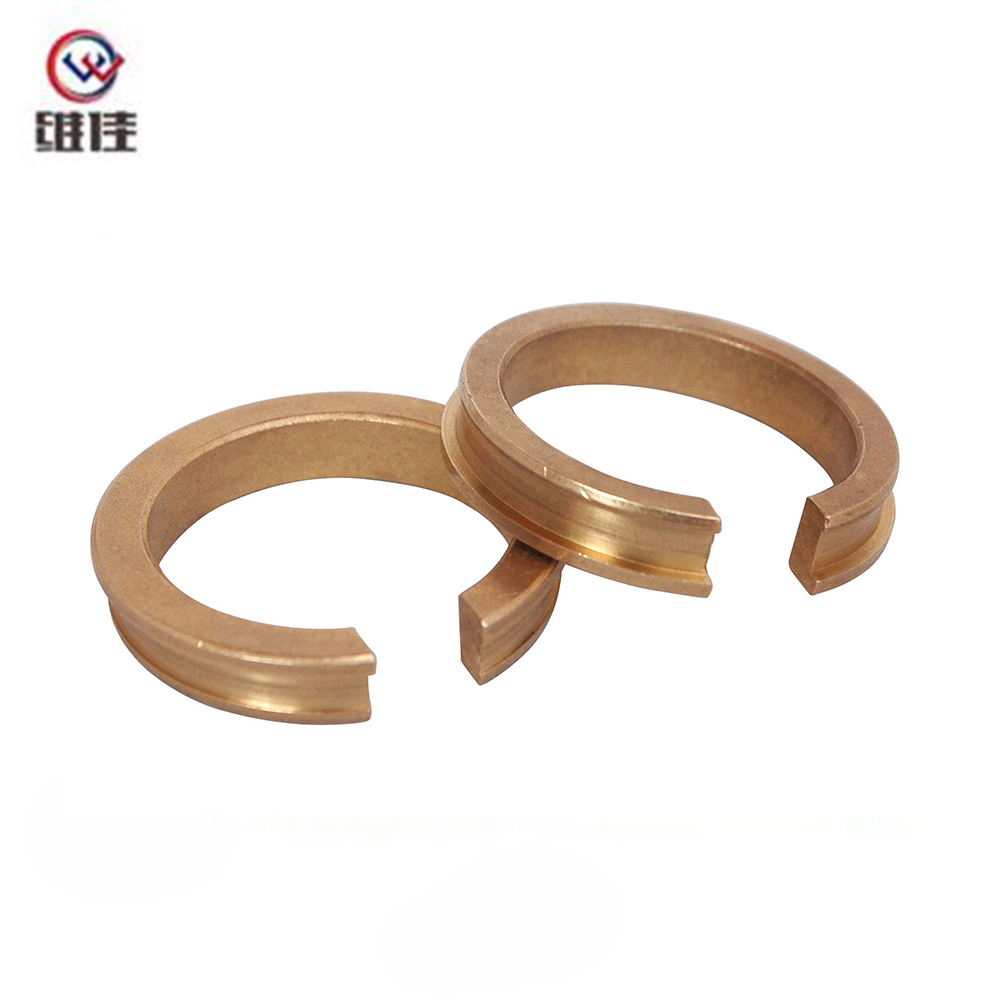
SAE841 Tin Bronze Bushing Open-Type Component
Product Overview and Core Value
The SAE841 Tin Bronze Open-Type Bushing is an oil-impregnated powder metallurgy component produced through compaction, sintering, sizing, oil impregnation, and coil packaging. Its material, SAE841 tin bronze, is widely recognized as a standard material for self-lubricating bronze bearings and sliding parts. The product is designed as an open structural component, allowing easier installation and improved adaptability in assemblies where minor dimensional variations, thermal expansion, or assembly tolerances may occur.
The component is especially suitable for the top parts of vegetable greenhouses and agricultural greenhouses. In these applications, bushings may be used in film rolling mechanisms, ventilation and window-opening systems, sunshade net driving systems, and sliding or rotating support structures. These systems often operate in humid, dusty, and outdoor conditions where regular manual lubrication may be inconvenient or neglected. A self-lubricating bronze bushing helps solve this problem by providing internal lubrication throughout service.
The product’s basic manufacturing parameters reflect its performance-oriented design. The material is SAE841 tin bronze, the structure is open type, and the sintering temperature is controlled at approximately 720°C with a tolerance range of ±30°C. The process route includes powder compaction, sintering, sizing, oil impregnation, and coil packaging. Each step contributes to final quality: compaction creates the initial shape and density, sintering bonds the metal particles, sizing refines the final dimensions, oil impregnation delivers self-lubricating function, and coil packaging supports efficient storage, handling, and large-scale assembly.
The component dimensions are specified as 34.7 × 42.8 × 44.5 × 1.5 × 7.5K, and customized dimensions can also be produced based on customer drawings or samples. This flexibility is important because bushings are often integrated into existing mechanical platforms, where even small dimensional changes can affect shaft alignment, assembly load, and friction behavior.
Why SAE841 Tin Bronze Is a Strong Material Choice
SAE841 tin bronze is widely used in oil-impregnated bearings because it offers a reliable combination of mechanical strength, wear resistance, oil retention, and corrosion resistance. The material is produced by powder metallurgy, a manufacturing method that creates a controlled porous structure inside the component. These pores are not defects; they are functional reservoirs designed to hold lubricating oil.
When the shaft rotates or slides against the bushing, a small amount of oil migrates from the pores to the contact surface. This oil forms a thin lubricating layer that separates the moving surfaces. As the assembly cools or rests, some of the oil can be reabsorbed into the pores. This dynamic oil release and recovery process is one of the main reasons SAE841 bushings are preferred in applications where external lubrication is difficult.
Tin bronze also provides good resistance to wear and seizure. Tin improves the bearing properties of bronze, helping the bushing resist surface damage during repeated sliding contact. In moderate-load and moderate-speed conditions, this material can provide stable performance over long periods. The result is smoother movement, lower friction, reduced noise, and longer service life compared with many conventional non-impregnated bushings.
In greenhouse systems, corrosion resistance is also important. Agricultural environments often include high humidity, condensation, fertilizer exposure, and outdoor temperature fluctuations. SAE841 tin bronze has better corrosion resistance than many ordinary iron-based sliding components, making it more suitable for such environments. Combined with oil impregnation, the bushing can maintain more stable operation even where moisture is present.
Open-Type Structural Design and Installation Advantages
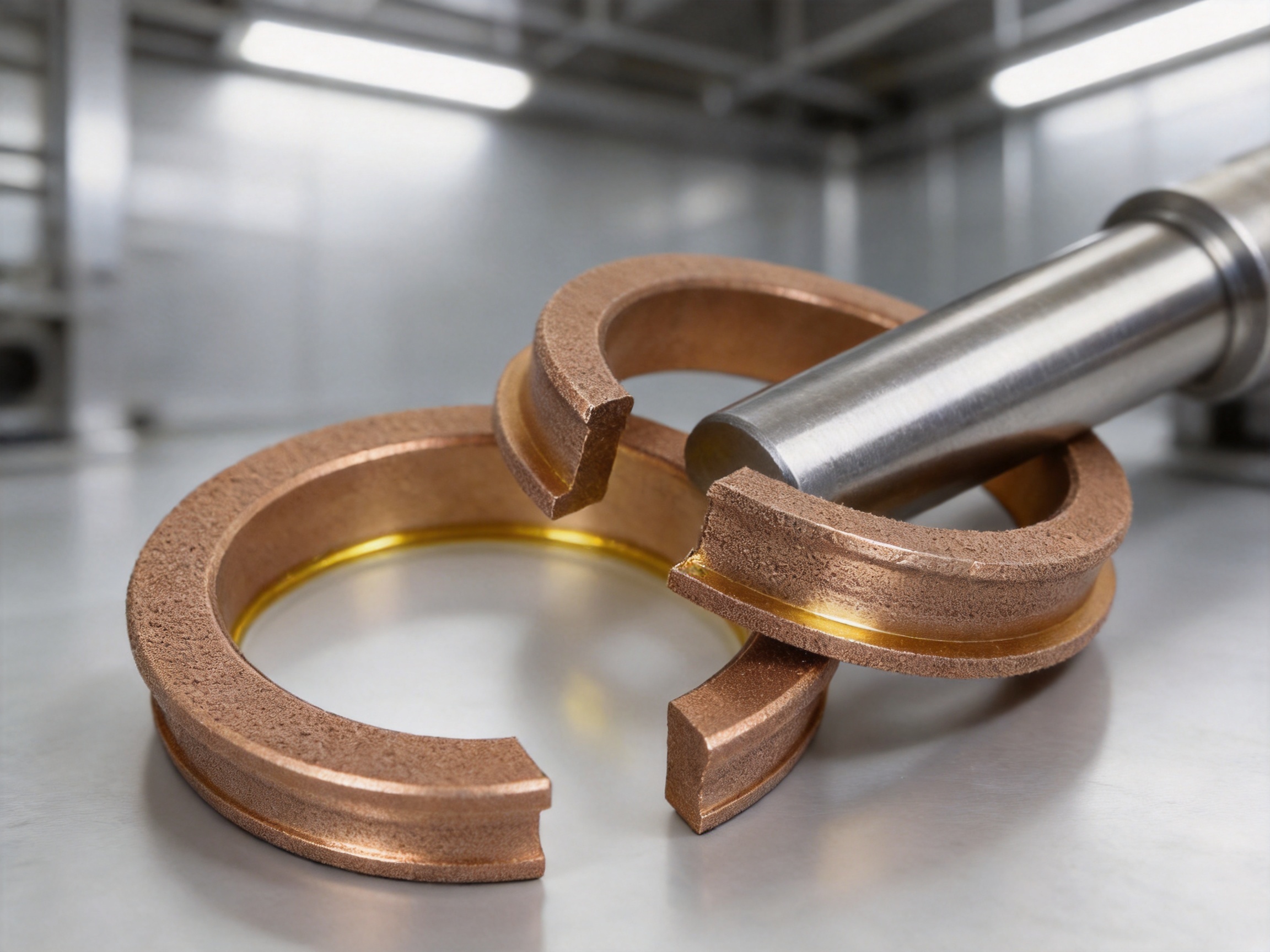
The open-type structure is one of the key design advantages of this product. Unlike fully closed cylindrical bushings, an open bushing has a split or slotted configuration that provides a degree of flexibility during installation. This design can simplify assembly and help compensate for minor tolerance variations between the bushing and housing.
In high-volume production environments, installation efficiency matters. If a bushing requires excessive force to press into place, assembly time increases and the risk of deformation or misalignment also rises. The open-type structure can reduce installation difficulty while still providing stable support after assembly. This is especially useful in agricultural equipment and greenhouse automation systems, where components may be assembled in large quantities and need to maintain consistent performance.
The open design also supports thermal expansion compensation. Greenhouse top systems may be exposed to sunlight, cold nights, ventilation cycles, and seasonal temperature changes. Metal components expand and contract under changing temperatures. A split structure can offer improved adaptability compared with a rigid solid sleeve, reducing the risk of stress concentration or difficult movement caused by minor dimensional changes.
For maintenance and replacement, open-type bushings may also offer practical advantages. In certain assemblies, they can be easier to fit or remove than closed bushings. When maintenance crews work on greenhouse equipment in outdoor or semi-outdoor conditions, faster replacement can reduce labor time and equipment downtime.
Key Performance Advantages Over Conventional Bushings
The SAE841 Tin Bronze Open-Type Bushing provides several performance advantages when compared with conventional bronze bushings, plastic bushings, or ordinary metal sleeves. These advantages are especially clear in applications where lubrication maintenance is difficult, environmental humidity is present, and long-term stability is required.
First, the self-lubricating capability is a major advantage. Conventional bronze bushings usually require grease or oil to be applied externally. If lubrication is missed, friction increases quickly. SAE841 oil-impregnated bushings contain lubricant within their structure, reducing dependence on frequent manual lubrication. This helps lower maintenance costs and reduces the chance of failure caused by lubrication neglect.
Second, the wear resistance is strong. The tin bronze matrix provides good bearing properties, while the lubricating oil reduces direct metal contact. This combination helps the bushing resist abrasion, scuffing, and seizure. For greenhouse film rolling or ventilation systems that may operate daily, consistent wear resistance is essential.
Third, friction is lower and motion is smoother. The oil film created during operation reduces sliding resistance, which can help decrease operating noise and energy consumption. In motorized greenhouse systems, lower friction can also reduce load on drive motors and gear mechanisms.
Fourth, the product offers good dimensional stability. Powder metallurgy manufacturing, combined with sizing after sintering, allows the bushing to achieve controlled dimensions. This helps maintain stable shaft fit and reliable assembly performance. Dimensional consistency is particularly important for OEM customers who need repeated production batches to match the same assembly requirements.
Fifth, the open structure improves assembly flexibility. Compared with rigid solid bushings, the open-type design can better tolerate minor variations in housing size and can simplify installation. This can reduce assembly scrap, rework, and labor cost.
| Performance Factor | SAE841 Tin Bronze Open-Type Bushing | Conventional Solid Bronze Bushing | Basic Plastic Bushing |
| Lubrication Method | Oil-impregnated self-lubrication | Usually requires external lubrication | May run dry but can wear under load |
| Wear Resistance | High in suitable medium-load conditions | Moderate to high with regular lubrication | Variable, often lower under abrasive conditions |
| Humidity Resistance | Good corrosion resistance for greenhouse use | Good, depending on alloy and lubrication | Good moisture resistance but lower heat stability |
| Installation Flexibility | Open structure supports easier fitting | Less flexible closed sleeve design | Flexible but may deform under load |
| Maintenance Requirement | Low under proper operating conditions | Higher due to lubrication needs | Low but service life may be shorter |
| Dimensional Stability | High after precision sizing | High if machined accurately | Can be affected by temperature and load |
Application Value in Greenhouse Top Systems
Vegetable greenhouses and agricultural greenhouses increasingly rely on mechanical and automated systems to control ventilation, film rolling, shading, and environmental regulation. These systems must operate reliably because they directly affect crop growth conditions. If a ventilation mechanism becomes stuck, temperature and humidity may rise too quickly. If a film rolling system fails, crop protection can be compromised. Therefore, even small parts such as bushings contribute to agricultural production stability.
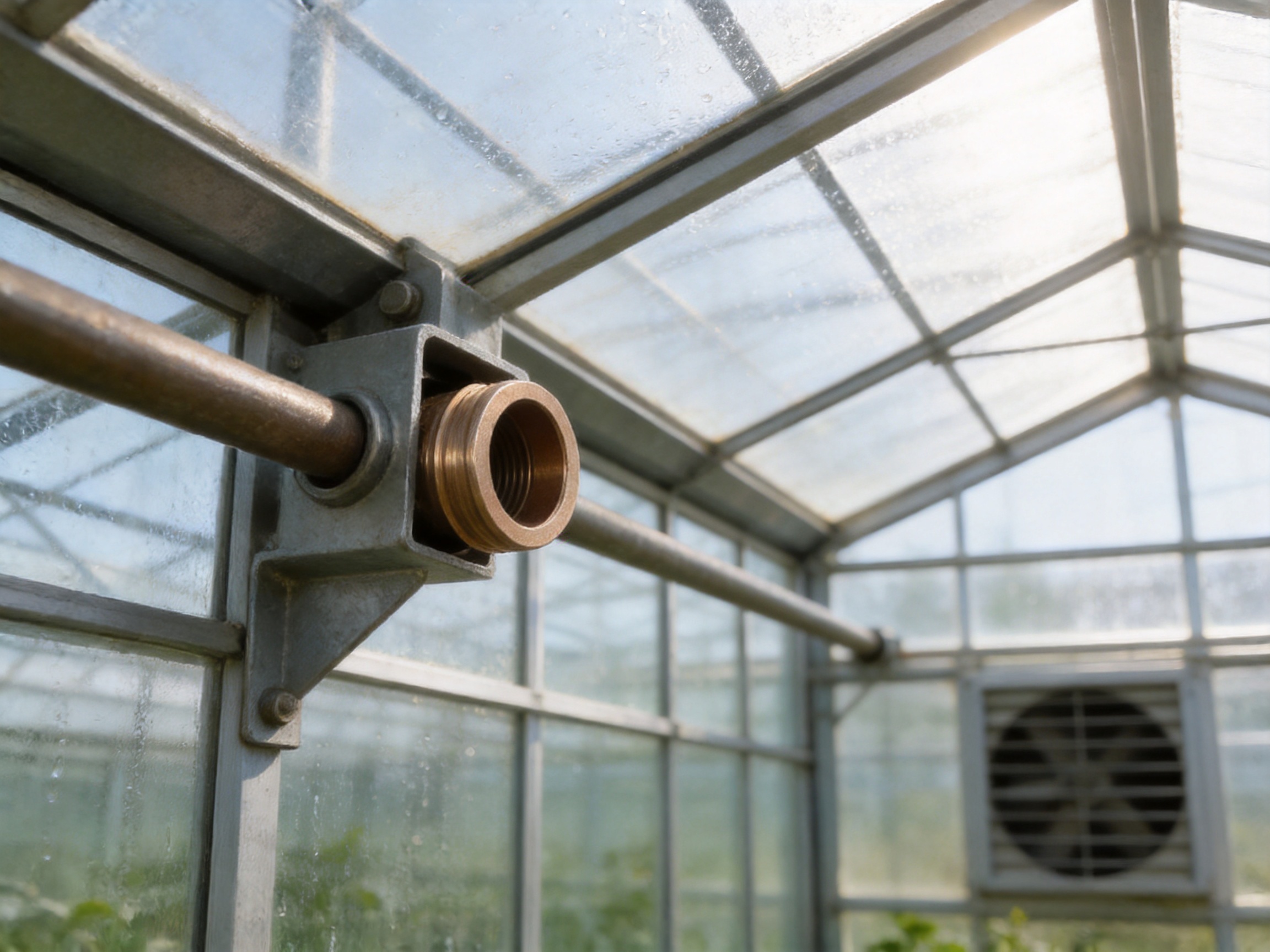
The SAE841 Tin Bronze Open-Type Bushing is designed for top greenhouse applications where movement support, low friction, and humidity resistance are required. In film rolling mechanisms, the bushing can support rotating shafts or sliding interfaces that help open and close plastic film covers. In ventilation and window-opening systems, it can support pivoting or sliding parts that move repeatedly during daily environmental control. In sunshade net systems, it can help reduce friction in driving and guide mechanisms.
Greenhouse environments create several challenges. Moisture and condensation are common, especially during temperature changes between day and night. Dust, soil particles, and plant-related residue may also be present. Equipment may be exposed to sunlight, wind, and seasonal weather changes. Maintenance access can be difficult because many components are located at the top of the greenhouse structure. A bushing that requires frequent relubrication is not ideal in such a setting.
The self-lubricating function of SAE841 tin bronze helps reduce maintenance demand. The bronze material provides corrosion resistance, and the open structure assists installation in practical greenhouse assemblies. For agricultural equipment manufacturers, these features create a component that supports stable operation while helping reduce after-sales maintenance problems.
Powder Metallurgy Manufacturing Process
The performance of an oil-impregnated bushing depends not only on material selection but also on process control. Powder metallurgy is a precision manufacturing method in which metal powders are compacted into shape and then sintered at high temperature. For SAE841 tin bronze bushings, this process creates a porous structure that is both strong enough for bearing use and capable of storing lubricating oil.
The first step is powder preparation and compaction. Metal powder must be selected and controlled carefully to ensure chemical consistency, flowability, and particle distribution. During compaction, the powder is pressed in a high-precision mold to form a green compact. Pressing force, mold accuracy, powder fill consistency, and tool condition all influence density and dimensional stability.
The second step is sintering. The compacted part is heated to approximately 720°C, with a controlled tolerance range of ±30°C. During sintering, metal particles bond together, creating strength while preserving interconnected porosity. Temperature control is critical. If the temperature is too low, bonding may be insufficient. If it is too high or poorly controlled, porosity and dimensions may be affected. A stable sintering furnace and strict process parameters are therefore essential for reliable quality.
The third step is sizing. After sintering, the part is calibrated using precision tooling to achieve final dimensional accuracy. Sizing improves roundness, diameter control, wall consistency, and fit performance. For bushings, this step is especially important because shaft clearance directly influences friction, oil film formation, noise, and service life.
The fourth step is oil impregnation. The sintered porous bronze part is impregnated with lubricating oil, often under vacuum conditions. Vacuum oil impregnation allows oil to penetrate into the internal pore network rather than remaining only on the surface. This creates the self-lubricating function that distinguishes SAE841 bushings from ordinary bronze sleeves.
The final step is packaging. Coil packaging or professional handling methods help protect the product from contamination, rust risk, and mechanical damage during storage and transport. Proper packaging also supports automated assembly and large-scale use by customers.
Manufacturing Strength and Quality Assurance
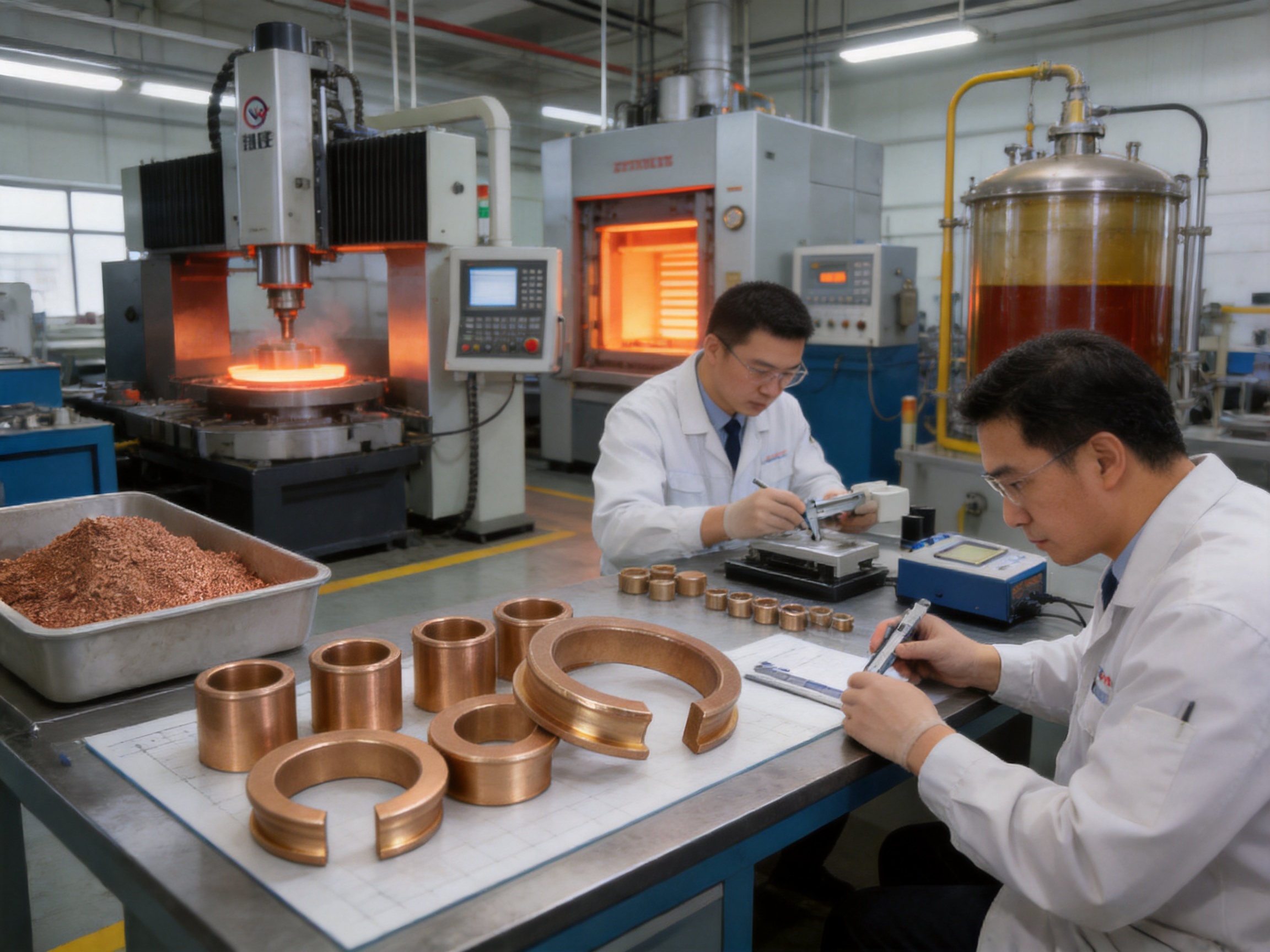
Jiande Welfine Technology Co., Ltd. was established in 2001 and has developed extensive experience in powder metallurgy sintering, self-lubricating bushings, and precision metal components. The company integrates research and development, production, and sales, allowing it to support customers from early product design to mass production supply. This integrated capability is important because bushing performance depends on both engineering design and manufacturing consistency.
The company operates a modern production base covering 13,039 square meters and is equipped with advanced production and testing equipment. High-efficiency presses support stable powder compaction. High-temperature sintering furnaces provide controlled thermal processing. Precision forming and sizing equipment help achieve dimensional accuracy. Testing and inspection systems support quality verification before shipment.
With more than 20 years of industry experience and over 150 skilled employees, the company can provide OEM and ODM customized bushing solutions based on drawings, samples, or specific application requirements. This is valuable for customers who need special dimensions, material adjustments, surface treatments, packaging formats, or performance targets.
Quality management is another major strength. The company has passed ISO 9001:2015 and IATF 16949:2016 certifications. ISO 9001 demonstrates a systematic quality management foundation, while IATF 16949 reflects higher-level process control requirements associated with automotive supply chains. For industrial buyers, these certifications provide confidence that the supplier has established procedures for documentation, traceability, inspection, corrective action, and continuous improvement.
For the SAE841 Tin Bronze Open-Type Bushing, quality control includes full-dimensional inspection, oil content verification, appearance inspection, and strict process monitoring from powder to finished product. Before delivery, products are inspected to ensure they meet customer requirements. This approach reduces the risk of batch variation and supports stable long-term cooperation.
How Process Control Improves Product Performance
In powder metallurgy, small differences in process control can create significant differences in final performance. Two bushings may appear similar visually, but their porosity, oil content, density, dimensional accuracy, and mechanical strength can differ greatly. These hidden factors determine how well the bushing performs in actual operation.
Porosity control is one of the most important factors. If porosity is too low, the bushing may not hold enough oil for effective self-lubrication. If porosity is too high, strength may be reduced. A reliable manufacturer must balance oil storage capacity and structural integrity. This balance is achieved through controlled powder characteristics, compaction pressure, sintering temperature, and sintering time.
Density uniformity also matters. Uneven density can lead to uneven wear, inconsistent oil release, and dimensional instability. High-quality compaction tooling and stable press operation help ensure the powder is distributed uniformly and compacted consistently.
Dimensional accuracy affects clearance between the shaft and bushing. If clearance is too tight, friction and heat may increase. If clearance is too loose, noise, vibration, and misalignment may occur. Precision sizing after sintering is therefore essential. The sizing step helps correct minor dimensional changes from sintering and creates a more reliable final part.
Oil impregnation quality directly affects the self-lubricating function. Surface oil alone is not enough. The oil must penetrate deeply into the interconnected pore network. Vacuum oil impregnation helps achieve this result. Proper oil selection can also be adjusted according to the customer’s operating environment, temperature range, and load conditions.
Packaging and storage conditions also influence product condition. Bronze components should be protected from contamination and excessive moisture before installation. Professional anti-rust and moisture-proof treatment, combined with clean packaging, helps preserve product quality during shipping and storage.
Comparison With Competing Solutions
When engineers choose a bearing or bushing solution, they often compare several options: machined bronze bushings, plastic bushings, steel-backed composite bushings, rolling bearings, and powder metallurgy oil-impregnated bushings. Each solution has its own advantages, but the SAE841 Tin Bronze Open-Type Bushing occupies a strong position where moderate load, moderate speed, low maintenance, and compact design are required.
Compared with machined solid bronze bushings, SAE841 oil-impregnated bushings offer better built-in lubrication. Solid bronze can perform well, but it typically requires regular external lubrication. In applications where relubrication is difficult, the oil-impregnated structure offers a practical advantage. Powder metallurgy can also reduce material waste compared with machining from solid bar stock.
Compared with plastic bushings, SAE841 tin bronze provides better dimensional stability under load and temperature variation. Plastic bushings may be lightweight and corrosion-resistant, but some materials deform under continuous load, swell in certain environments, or lose strength at elevated temperatures. Bronze offers stronger mechanical support and better thermal stability for many medium-load mechanisms.
Compared with rolling bearings, the bushing has a simpler structure, lower profile, and better tolerance for certain contamination conditions. Rolling bearings are excellent for low-friction high-speed rotation, but they may require seals, precise alignment, and more space. For slow to medium-speed sliding or oscillating motion, an oil-impregnated bushing can be more economical and robust.
Compared with ordinary iron-based sleeves, SAE841 tin bronze has better corrosion resistance and bearing properties. Iron-based components can be economical, but in humid greenhouse conditions they may be more vulnerable to corrosion if not properly protected. Tin bronze is a more reliable choice for outdoor or moisture-prone applications.
Design Considerations for Proper Use
To obtain the best performance from an SAE841 Tin Bronze Open-Type Bushing, engineers should consider load, speed, shaft material, surface finish, alignment, operating temperature, and environmental conditions. Although the bushing is self-lubricating, it must still be used within appropriate design limits.
Load affects wear rate and oil film stability. Excessive load can squeeze out the lubricating film and increase direct contact. The bushing is best suited for medium-load conditions where the oil-impregnated bronze structure can maintain stable lubrication.
Speed also matters. At moderate speeds, frictional heat can help release oil to the surface. At very high speeds, heat generation may become excessive and require additional engineering evaluation. For high-speed applications, shaft clearance, oil type, and heat dissipation should be reviewed carefully.
Shaft surface finish is critical. A rough shaft can scrape the bushing surface and accelerate wear. A properly finished shaft helps maintain the oil film and reduces friction. Shaft hardness should also be suitable to avoid rapid wear or scoring.
Alignment should be controlled during assembly. Even a high-quality bushing can fail prematurely if the shaft is misaligned or if the housing bore is distorted. The open structure helps installation flexibility, but it does not replace proper mechanical design.
Operating environment should also be considered. In greenhouse use, humidity resistance is important, but contamination such as soil, sand, or fertilizer particles should be minimized where possible. Protective covers, proper installation locations, and periodic inspection can improve long-term reliability.
For special applications involving high temperature, heavy impact, corrosive chemicals, or unusual movement patterns, customized engineering evaluation is recommended. The manufacturer can adjust dimensions, materials, oil type, and surface treatment according to customer requirements.
Customization and OEM/ODM Capability
Many industrial buyers do not need only a standard catalog bushing. They need a component that fits a specific assembly, meets a specific tolerance, and performs reliably under a defined working condition. Customization capability is therefore a major advantage for bushing suppliers.
Jiande Welfine Technology Co., Ltd. provides customized production based on customer drawings and samples. Dimensions, materials, surface treatments, oil impregnation requirements, and packaging methods can be adjusted. The company supports sample testing, small-batch trial production, and mass production. This flexibility helps customers reduce development risk before committing to large-volume orders.
For agricultural greenhouse equipment manufacturers, customization can include special open-slot geometry, adjusted wall thickness, different length or diameter combinations, and packaging formats suitable for automated assembly lines. For industrial automation customers, tighter tolerances or special oil types may be required. For automotive or appliance applications, batch consistency and traceability may be especially important.
OEM and ODM support also helps customers optimize total cost. A custom bushing can be designed to reduce assembly steps, improve service life, or replace a more expensive component. In some cases, switching from a machined bushing to a powder metallurgy oil-impregnated bushing can reduce machining waste and lower total production cost while maintaining performance.
Packaging, Storage, and Handling
Proper packaging and storage help preserve the performance of oil-impregnated bushings before installation. Because the bushing contains lubricating oil within its pores, cleanliness is important. Dust, metal chips, or abrasive particles should be prevented from entering the bushing surface. Packaging should also protect against moisture, impact, and deformation.
The SAE841 Tin Bronze Open-Type Bushing uses professional anti-rust and moisture-proof treatment. Coil packaging supports convenient transportation, storage, and use. For customers with automated assembly requirements, organized packaging can improve feeding efficiency and reduce manual handling.
Storage should be in a dry, ventilated, and non-corrosive environment. Parts should be kept away from aggressive chemicals, excessive heat, and contamination. Before installation, operators should avoid wiping away all surface oil unnecessarily, because the oil contributes to initial lubrication. If cleaning is required, the cleaning method should be compatible with oil-impregnated bronze components.
Reliability in Long-Term Outdoor and Humid Environments
One of the strongest reasons to select SAE841 tin bronze for greenhouse top applications is its ability to support reliable function in humid and outdoor environments. In agriculture, mechanical components are often exposed to weather-related stress that indoor factory equipment does not face. Condensation, rain exposure near openings, wind-driven dust, and temperature changes can all affect performance.
The corrosion resistance of tin bronze helps protect the bushing from rapid degradation. The oil-impregnated structure also provides a lubricating barrier at the contact surface. While no bushing is completely immune to harsh conditions, SAE841 tin bronze provides a practical and durable solution for long-term use where low maintenance is required.
Stable performance is especially important in greenhouse automation. Modern greenhouses may use motors, controllers, sensors, and transmission systems to regulate internal climate. If a small sliding component becomes stuck, the entire ventilation or shading function may be affected. By reducing friction and supporting smooth motion, the SAE841 Tin Bronze Open-Type Bushing contributes to system reliability.
For end users, reliability means fewer interruptions and lower maintenance labor. For equipment manufacturers, it means fewer warranty issues and stronger product reputation. For distributors and procurement teams, it means a more dependable supply component with measurable application value.
Economic Benefits and Total Cost Advantage
Component price is only one part of purchasing value. A low-cost bushing that wears quickly, requires frequent lubrication, or causes equipment downtime may become expensive over time. The SAE841 Tin Bronze Open-Type Bushing offers total cost advantages by reducing maintenance demand, supporting long service life, and improving assembly efficiency.
Self-lubrication can reduce the need for grease fittings, manual lubrication schedules, and maintenance labor. In greenhouse systems where components are installed overhead, this benefit is particularly meaningful. Less maintenance also reduces the chance of human error, such as missed lubrication intervals or improper lubricant selection.
Wear resistance helps extend replacement intervals. If a bushing lasts longer, fewer spare parts are required, and equipment uptime improves. In production or agricultural environments, downtime can be more costly than the component itself.
The open-type structure can reduce assembly difficulty. Faster installation can lower labor cost in manufacturing. Better tolerance adaptability can reduce rework and scrap. For high-volume equipment builders, these small savings can accumulate into significant annual cost reductions.
Powder metallurgy also supports economical mass production. Compared with machining every feature from solid metal, powder compaction and sintering can produce near-net-shape parts with less material waste. This helps balance performance with competitive manufacturing cost.
Q&A Section
What is an SAE841 Tin Bronze Open-Type Bushing?
It is a self-lubricating bushing made from SAE841 tin bronze powder metallurgy material. The part has a porous structure that stores lubricating oil and an open-type structure that improves installation flexibility. It is used to support sliding or rotating motion in mechanical assemblies.
Why is SAE841 tin bronze suitable for self-lubricating bushings?
SAE841 tin bronze has good wear resistance, low-friction bearing properties, corrosion resistance, and controlled porosity. The pores store oil, which is released during operation to form a lubricating film between the shaft and bushing.
Does this bushing require additional lubrication?
Under normal medium-load and medium-speed conditions, the internal oil impregnation provides long-term self-lubrication. However, supplementary lubrication may be recommended for high-load, high-temperature, high-speed, or unusually harsh applications.
What are the advantages of the open-type design?
The open-type design improves installation flexibility, helps accommodate minor dimensional variations, and can provide better adaptability during thermal expansion. It is useful in large-scale assembly and applications where easy fitting is important.
Where is this product commonly used?
It is especially suitable for vegetable greenhouse top systems, including film rolling mechanisms, ventilation and window-opening systems, sunshade net driving systems, and agricultural automation equipment. It can also be applied in industrial automation, home appliances, motors, office equipment, and medium-load sliding systems.
How does it compare with conventional bronze bushings?
Compared with conventional solid bronze bushings, the SAE841 oil-impregnated bushing provides built-in lubrication, lower maintenance requirements, stable friction performance, and strong wear resistance. Conventional bronze bushings often rely more heavily on external lubrication.
Is the bushing suitable for humid environments?
Yes. Tin bronze has good corrosion resistance, and the oil-impregnated structure supports stable operation in humid conditions. This makes the product well suited for agricultural greenhouse environments, provided it is installed and stored correctly.
Can the product be customized?
Yes. Jiande Welfine Technology Co., Ltd. can provide OEM and ODM customization based on drawings, samples, and application requirements. Dimensions, materials, surface treatments, oil types, and packaging methods can be adjusted.
What quality systems support production?
The manufacturer follows strict quality management procedures and has obtained ISO 9001:2015 and IATF 16949:2016 certifications. Production control includes dimensional inspection, oil content inspection, appearance checks, and process monitoring from powder to finished product.
What factors influence service life?
Service life depends on load, speed, shaft surface finish, alignment, operating temperature, contamination level, humidity, and installation quality. When used within suitable conditions, the bushing can provide long and stable service life.
Conclusion
The SAE841 Tin Bronze Open-Type Bushing is a practical and high-performance solution for mechanical systems requiring self-lubrication, wear resistance, corrosion resistance, and easy installation. Its powder metallurgy structure stores lubricating oil, reducing maintenance needs and supporting smooth operation. Its tin bronze composition provides reliable bearing properties, while its open-type structure improves assembly flexibility and tolerance adaptability.
For greenhouse top systems, the product offers clear application value. It supports film rolling, ventilation, shading, and agricultural automation mechanisms in humid and outdoor environments where stable movement and low maintenance are essential. For industrial customers, it provides an efficient alternative to conventional bronze sleeves, plastic bushings, and other sliding components in suitable medium-speed and medium-load applications.
The strength of the product is reinforced by advanced manufacturing capability. Through controlled powder compaction, sintering at approximately 720°C, precision sizing, vacuum oil impregnation, and professional packaging, the manufacturer creates a component with stable porosity, accurate dimensions, and dependable lubrication performance. With more than 20 years of industry experience, a modern production base, skilled employees, OEM/ODM customization capability, and certified quality systems, Jiande Welfine Technology Co., Ltd. provides strong support for global customers seeking reliable sintered metal components and self-lubricating bushing solutions.
In a market where equipment reliability, maintenance reduction, and production efficiency are increasingly important, the SAE841 Tin Bronze Open-Type Bushing stands out as a compact but valuable component. It combines proven material science with practical structural design and controlled manufacturing, delivering long-term value for agricultural, industrial, and mechanical motion systems.
References
1. Metal Powder Industries Federation. Powder Metallurgy Design Manual.
2. ASM International. ASM Handbook, Volume 7: Powder Metal Technologies and Applications.
3. Society of Automotive Engineers. SAE Standards for Powder Metallurgy Bronze Bearing Materials.
4. ISO 9001:2015. Quality Management Systems Requirements.
5. IATF 16949:2016. Quality Management System Standard for Automotive Production and Relevant Service Parts Organizations.
6. German, R. M. Powder Metallurgy and Particulate Materials Processing.
7. Neale, M. J. The Tribology Handbook.
Product: SAE841 Tin Bronze Bushing Open-Type Component

Related products
-
-
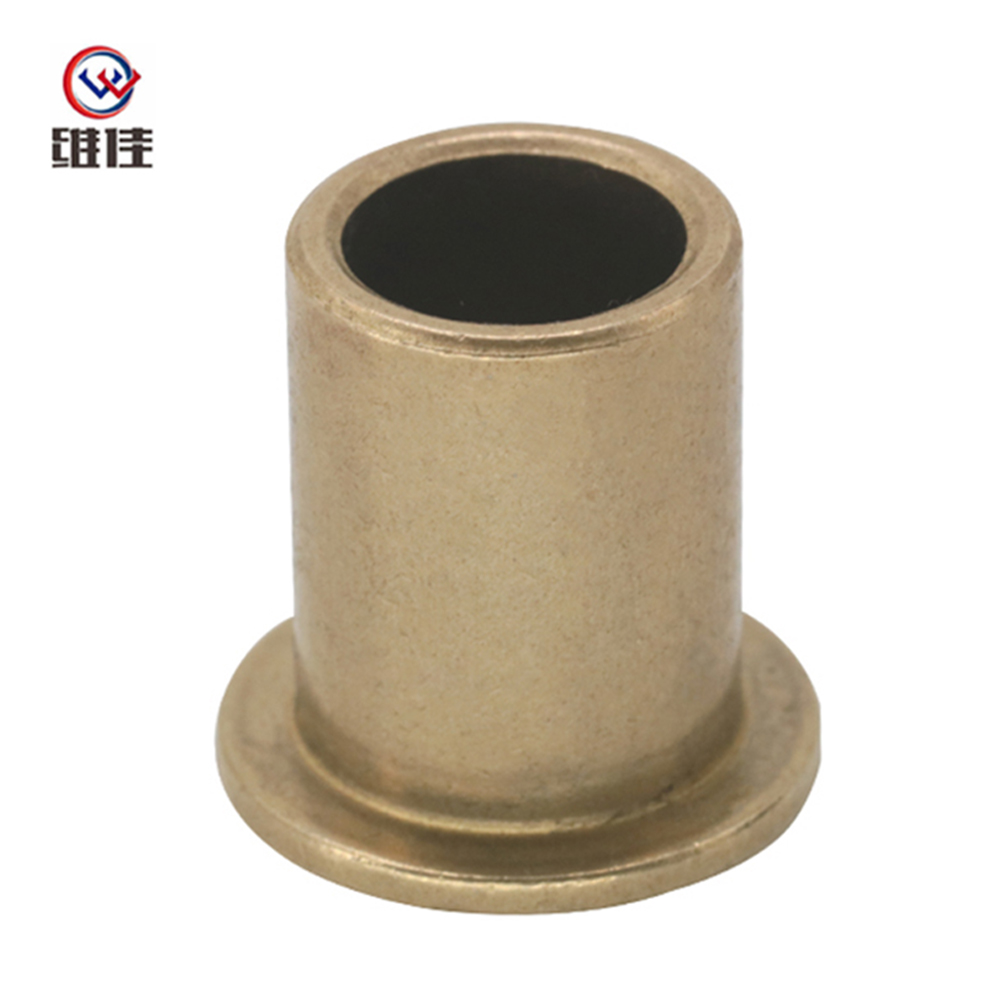
Our sintered bronze self-lubricating bearings are engineered for demanding industrial applications where traditional lubrication is impractical. Designed with advanced powder metallurgy technology, th...
See Details
Copyright © Jiande Welfine Technology Co., Ltd. All Rights Reserved. Custom Self-lubricating Sintered Bushing Manufacturers
