E-mail us: [email protected]
Tel: +86-15239857375
 English
 中文简体
中文简体

 Home / Author / Gao Manli — Overseas Sales Manager / SAE841 Tin Bronze Open-Type Bushing for Durable Self-Lubricating Motion Systems
 SAE841 Tin Bronze Open-Type Bushing for Durable Self-Lubricating Motion Systems
 2026.07.04
 Gao Manli — Overseas Sales Manager
Content
- 1 Product Overview: A Specialized Open-Type Structural Component
- 2 Why SAE841 Tin Bronze Is an Effective Bearing Material
- 3 Advantages of the Open-Type Structure
- 4 Performance Benefits Compared with Conventional Alternatives
- 5 Manufacturing Process and Its Influence on Product Quality
- 6 Manufacturing Strengths Behind the Product
- 7 Application in Greenhouse Top Systems
- 8 Broader Industrial Uses
- 9 Dimensional Precision and Stability
- 10 Self-Lubrication and Maintenance-Free Operation
- 11 Wear Resistance and Shaft Protection
- 12 Corrosion Resistance in Humid and Outdoor Environments
- 13 Quality Control and Inspection
- 14 Customization for Drawings, Samples, and Application Needs
- 15 Cost Efficiency and Total Value
- 16 Selection Considerations for Engineers
- 17 Packaging and Storage
- 18 Why Manufacturer Capability Matters
- 19 Future Outlook for Self-Lubricating Open-Type Bushings
- 20 Q&A Section
- 20.1 What is the SAE841 Tin Bronze Open-Type Bushing used for?
- 20.2 Why is SAE841 tin bronze suitable for self-lubricating bushings?
- 20.3 What is the advantage of the open-type design?
- 20.4 Does the bushing require additional lubrication?
- 20.5 How does this bushing compare with a conventional bronze bushing?
- 20.6 Is it suitable for humid greenhouse environments?
- 20.7 Can the dimensions be customized?
- 20.8 What manufacturing steps are used to make the product?
- 20.9 Why is supplier quality management important for this product?
- 20.10 Is the bushing suitable for high-speed or heavy-impact applications?
- 21 Conclusion
- 22 References
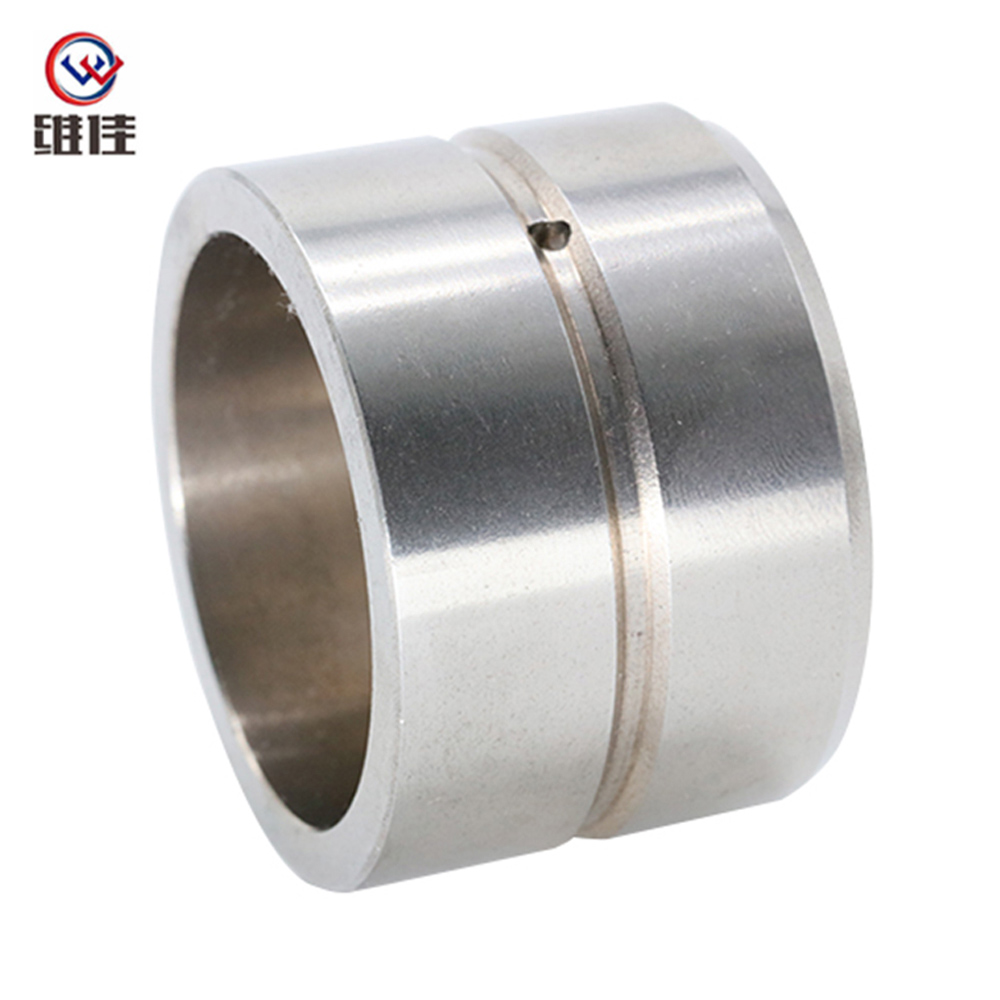
- 23 Product: SAE841 Tin Bronze Bushing Open-Type Component
In modern mechanical design, a small bushing can determine whether an entire assembly runs quietly, reliably, and economically over many years. The SAE841 Tin Bronze Open-Type Bushing is a precision powder metallurgy component developed for applications where low friction, self-lubrication, wear resistance, corrosion resistance, and stable dimensional performance are essential. It is especially suitable for greenhouse top mechanisms, agricultural ventilation systems, film rolling devices, shading systems, light-duty transmission units, and other mechanisms that require long service life with minimal maintenance.
This product combines the proven advantages of SAE841 oil-impregnated tin bronze with an open-type structure that improves installation flexibility and adapts well to practical assembly conditions. Unlike conventional solid bronze bushings that often require frequent lubrication, careful maintenance, and higher installation precision, the SAE841 tin bronze open-type bushing stores lubricating oil inside its porous structure and releases it gradually during operation. This makes it a practical choice for humid, outdoor, dusty, and difficult-to-maintain environments.
For buyers, engineers, and equipment manufacturers, the value of this bushing is not limited to material performance. Its reliability depends on controlled powder compaction, accurate sintering, precision sizing, vacuum oil impregnation, and strict quality inspection. Jiande Welfine Technology Co., Ltd. manufactures this type of component through a complete powder metallurgy process supported by advanced equipment, more than 20 years of production experience, ISO 9001:2015 certification, IATF 16949:2016 certification, and OEM/ODM customization capabilities.
SAE841 Tin Bronze Bushing Open-Type Component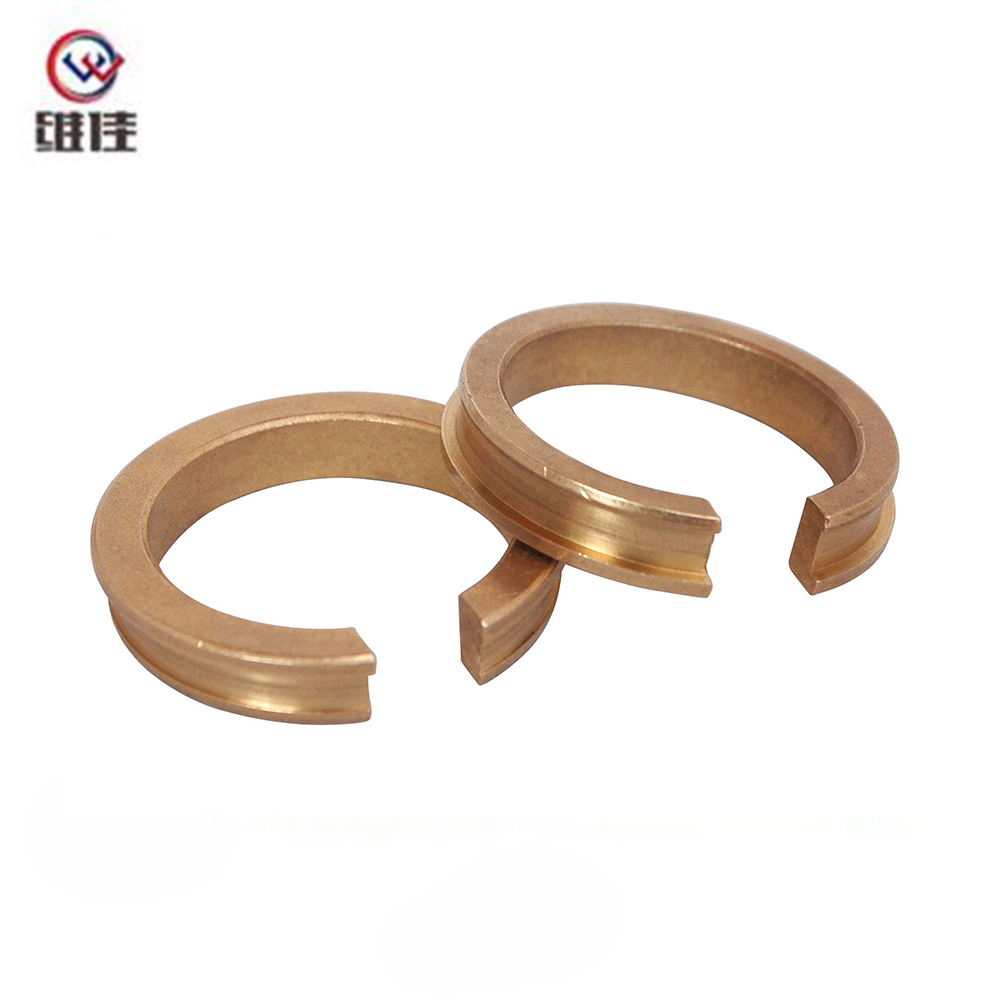
Product Overview: A Specialized Open-Type Structural Component
The SAE841 Tin Bronze Open-Type Bushing is an oil-impregnated powder metallurgy component designed to provide smooth sliding support between moving parts. Its structure is open rather than fully closed, allowing easier installation, moderate elastic compensation, and better adaptability to certain mounting conditions. The product described here is professionally designed for the top systems of vegetable greenhouses, where it can be used in film rolling, ventilation, window opening, and sunshade driving mechanisms.
The component is made from SAE841 tin bronze, a widely recognized standard material for self-lubricating sintered bronze bearings. This material is produced from bronze powder through compaction and sintering, forming a controlled porous network. After sizing, the bushing is impregnated with lubricating oil, allowing it to function as a self-lubricating bearing during operation. When the shaft rotates or slides, frictional heat and pressure encourage oil to migrate from the internal pores to the contact surface, forming a lubricating film that reduces direct metal-to-metal contact.
The product parameters include SAE841 tin bronze material, an open structural form, sintering at approximately 720°C with a controlled tolerance range, sizing for dimensional precision, oil impregnation for self-lubricating performance, and coil packaging for efficient storage, transport, and assembly. The listed dimensional specification is 34.7 * 42.8 * 44.5 * 1.5 * 7.5K, and custom dimensions can be produced according to customer drawings or samples.
Because greenhouse top mechanisms often operate in humid, warm, and outdoor conditions, the bushing must resist corrosion, aging, dust, and long idle periods. It must also perform reliably when maintenance access is limited. The SAE841 tin bronze open-type bushing addresses these requirements through its material composition, oil-impregnated porous structure, and stable powder metallurgy manufacturing process.
Why SAE841 Tin Bronze Is an Effective Bearing Material
SAE841 is one of the most widely used materials for oil-impregnated bronze bushings. Its popularity comes from the balance between mechanical strength, wear resistance, friction control, oil storage capacity, manufacturability, and cost efficiency. Compared with many polymer bushings, SAE841 tin bronze offers better thermal stability, stronger load-bearing capability in suitable applications, and better resistance to deformation. Compared with conventional machined bronze bushings, it provides built-in lubrication and reduced maintenance requirements.
The tin bronze composition contributes to anti-wear and anti-seizure properties. Tin improves the bronze matrix’s resistance to adhesive wear, making the material more suitable for sliding contact under moderate loads and speeds. Meanwhile, the powder metallurgy route creates porosity that cannot be achieved in the same way by ordinary casting or machining processes. These pores act as microscopic oil reservoirs distributed throughout the bushing wall.
During operation, oil stored in the pores reaches the friction surface and forms a thin lubricating film. This film lowers the coefficient of friction, reduces noise, decreases temperature rise, and slows material wear. When the equipment stops, part of the oil can be drawn back into the pores through capillary action. This cycle supports long-term lubrication without frequent external oiling.
SAE841 tin bronze is especially useful in equipment that operates intermittently or continuously under moderate conditions. Greenhouse film rolling systems, small motors, ventilation drive shafts, agricultural automation components, fans, office equipment, and household appliances all benefit from low-friction motion. In these applications, the bushing’s ability to provide lubrication internally can reduce maintenance labor and improve equipment availability.
Advantages of the Open-Type Structure
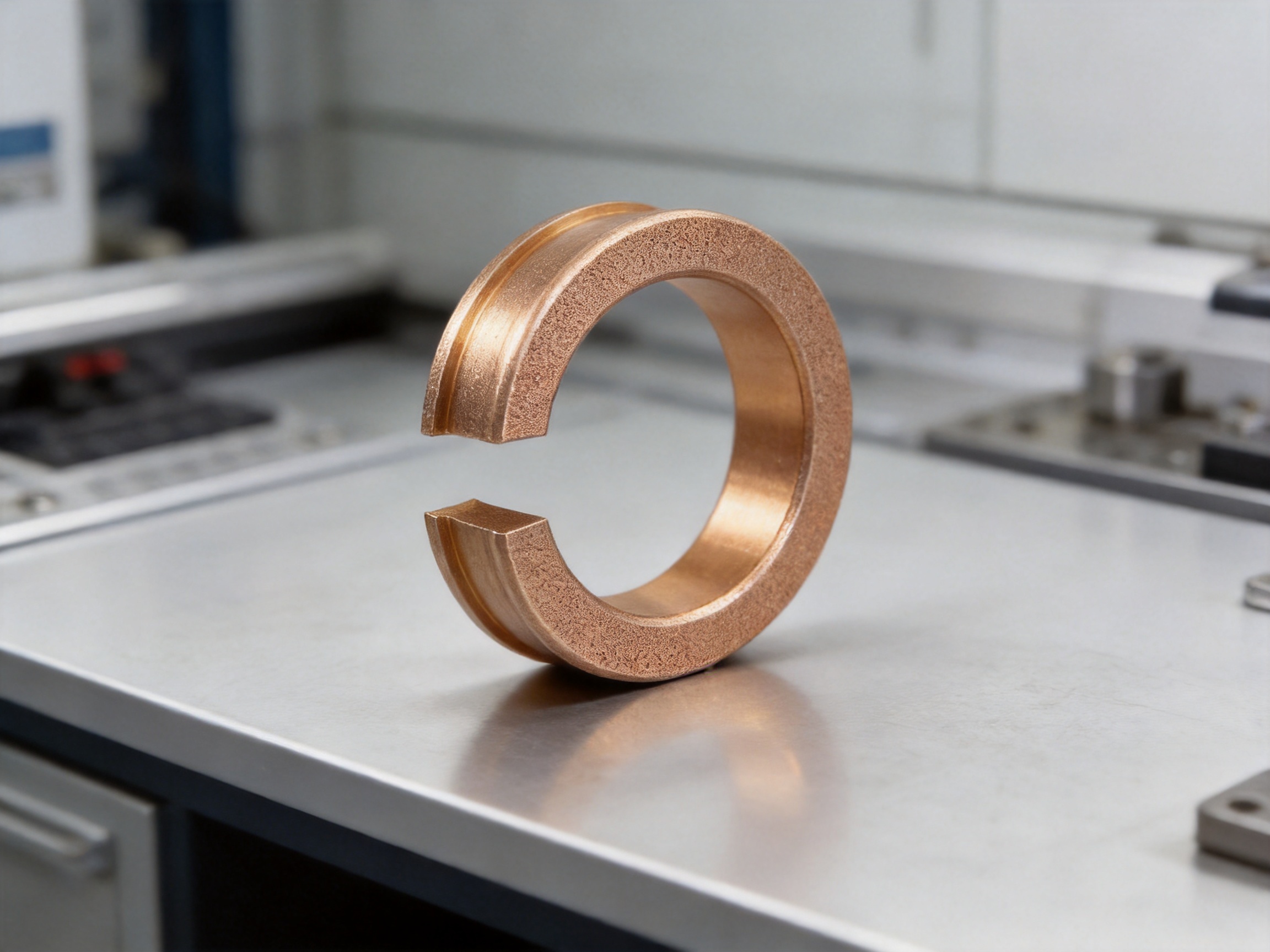
The open-type design is a key feature of this product. A traditional cylindrical bushing is closed around its full circumference. While this design offers rigidity, it can be less forgiving during installation and may require more precise housing preparation. An open-type bushing has a split or slotted structure that allows slight flexibility during fitting. This can be particularly valuable in assemblies where installation speed, tolerance accommodation, and practical field maintenance matter.
In greenhouse equipment, components are often installed in long frames, rotating shafts, support brackets, and exposed mechanisms. Minor dimensional variation can occur because of sheet metal parts, welded frames, temperature changes, or outdoor installation conditions. The open structure can help the bushing adapt to these real-world variations. It can also simplify replacement, which is important for agricultural users who need fast maintenance during seasonal operation.
The open structure can also support thermal expansion compensation. Greenhouses experience temperature fluctuations throughout the day, especially under direct sunlight. Metal shafts and frames expand and contract. A bushing that provides slight installation flexibility can reduce the risk of binding or assembly stress compared with a rigid component that has no tolerance accommodation.
For manufacturers assembling equipment at scale, the open-type bushing can improve assembly efficiency. Faster insertion, easier alignment, and reduced dependence on complex lubrication steps can lower total manufacturing cost. Even if the individual bushing is a small part, multiplied across thousands of units, improved assembly efficiency and reduced after-sales maintenance can create significant economic value.
Performance Benefits Compared with Conventional Alternatives
When evaluating bushing solutions, buyers often compare SAE841 tin bronze open-type bushings with machined bronze bushings, cast bronze bushings, plastic bushings, steel-backed bushings, and low-cost non-impregnated sleeves. Each alternative has its place, but the SAE841 open-type bushing provides a strong combination of self-lubrication, wear resistance, corrosion resistance, dimensional stability, and assembly convenience.
Compared with conventional bronze bushings, the most obvious advantage is self-lubrication. A machined bronze bushing may require grease grooves, oil holes, regular lubrication, or an external maintenance schedule. If lubrication is missed, wear accelerates quickly. SAE841 bushings reduce this risk because oil is already stored inside the bearing structure. This is extremely useful in equipment that is installed outdoors or in locations that operators rarely inspect.
Compared with plastic bushings, SAE841 tin bronze generally offers better dimensional stability under heat and better resistance to creep in suitable load ranges. Plastic materials can be economical and corrosion resistant, but they may deform under sustained stress, experience thermal expansion, or lose strength at elevated temperatures. In a greenhouse roof system exposed to sunlight and seasonal temperature changes, metallic dimensional stability can be an important advantage.
Compared with low-cost stamped or non-impregnated sleeves, the SAE841 open-type bushing provides more reliable sliding performance and a longer maintenance interval. Cheap sleeves may appear attractive during procurement, but they can increase noise, shaft wear, downtime, and replacement frequency. The total cost of ownership often favors a higher-quality self-lubricating component.
| Comparison Item | SAE841 Tin Bronze Open-Type Bushing | Conventional Machined Bronze Bushing | Plastic Bushing | Low-Cost Non-Impregnated Sleeve |
| Lubrication Method | Internal oil impregnation with self-lubricating function | Usually requires external grease or oil | May be dry-running depending on material | Often requires external lubrication |
| Wear Resistance | High under suitable load and speed conditions | Good if properly lubricated | Variable, depending on polymer grade | Usually limited |
| Maintenance Demand | Low | Medium to high | Low to medium | Medium to high |
| Dimensional Stability | Good metallic stability | Good metallic stability | May be affected by heat and creep | Variable |
| Installation Flexibility | Good due to open structure | Lower for rigid closed design | Often flexible but material-dependent | Variable |
| Outdoor Greenhouse Suitability | Strong, especially in humid and maintenance-limited conditions | Requires lubrication management | Depends on UV, heat, and load conditions | Often less reliable |
This comparison shows why the SAE841 tin bronze open-type bushing is attractive for customers who want stable performance rather than only the lowest initial purchase price. It offers practical advantages in the exact areas where many equipment failures begin: lubrication neglect, friction heat, shaft wear, installation difficulty, and environmental exposure.
Manufacturing Process and Its Influence on Product Quality
The quality of a sintered bushing is determined by every stage of production. A high-performance SAE841 bushing cannot be created only by selecting the right powder. It requires careful control of powder characteristics, compaction pressure, mold precision, sintering temperature, atmosphere, sizing accuracy, oil impregnation conditions, inspection methods, and packaging.
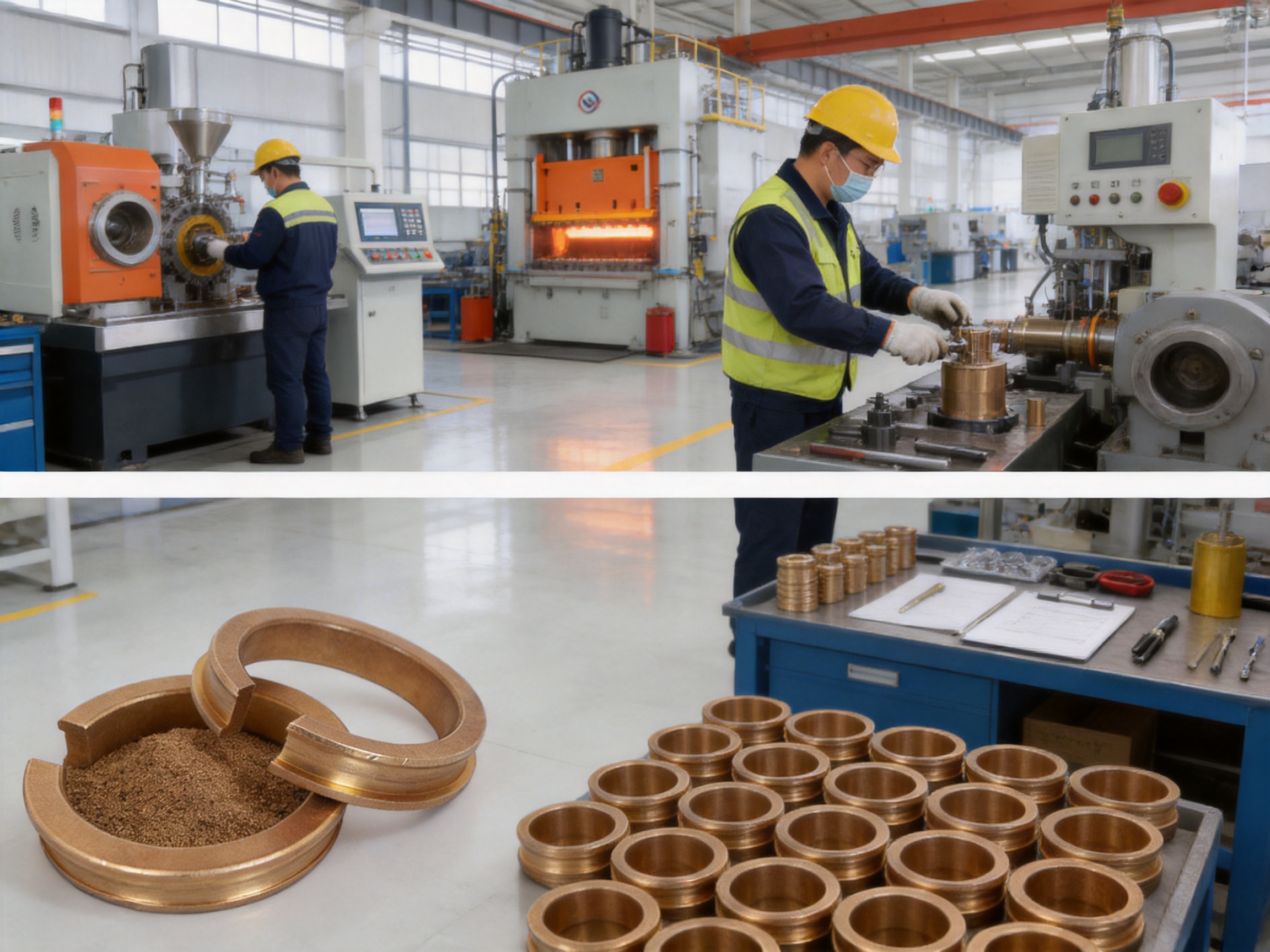
The standard process for this component is compaction, sintering at approximately 720°C, sizing, oil impregnation, and coil packaging. Each step has a direct influence on final performance. If compaction is not uniform, density variations can create weak zones or inconsistent porosity. If sintering is poorly controlled, the bronze particles may not bond correctly, reducing strength and service life. If sizing is inaccurate, the bushing may not fit properly during assembly. If oil impregnation is insufficient, self-lubricating performance will decline.
Powder compaction uses precision tooling to press bronze powder into the desired open-type shape. The goal is to create a green compact with stable geometry and controlled density. Tooling quality is critical because the bushing has relatively thin sections and must maintain shape consistency. A stable pressing process helps ensure repeatability during mass production.
Sintering at approximately 720°C bonds the powder particles together while preserving the porous structure needed for oil storage. This balance is one of the central technical challenges of powder metallurgy. Too little sintering may produce insufficient strength, while excessive densification can reduce porosity and oil capacity. Controlled temperature, time, and furnace atmosphere help create the required microstructure.
Sizing is performed after sintering to calibrate dimensions and improve roundness, thickness consistency, and assembly accuracy. For a bushing, small dimensional differences can influence clearance, friction, noise, and service life. Precision sizing helps ensure that the component fits reliably in the mating structure and supports smooth shaft motion.
Oil impregnation is usually carried out under vacuum or controlled conditions so that lubricating oil penetrates the interconnected pores of the sintered bronze. This step gives the bushing its self-lubricating character. The oil content must be sufficient and consistent. Inadequate impregnation can lead to dry running, while improper oil selection may affect performance under temperature or environmental changes.
Coil packaging supports convenient handling, transportation, storage, and automated assembly. For customers using bushings in large quantities, packaging is not a minor detail. Good packaging reduces contamination, protects against moisture and rust, and supports efficient feeding into assembly operations.
Manufacturing Strengths Behind the Product
Jiande Welfine Technology Co., Ltd. was established in 2001 and focuses on powder metallurgy sintering and related precision machining. With more than 20 years of experience, the company has developed expertise in powder metallurgy bushings, self-lubricating bushings, and precision sintered components used across industrial fields. This background is important because producing reliable SAE841 bushings requires both material knowledge and process discipline.
The company operates a modern production base covering 13,039 square meters. Its manufacturing equipment includes high-efficiency presses, high-temperature sintering furnaces, precision forming machines, and testing systems. These resources allow the company to support both standardized production and customized OEM/ODM projects based on customer drawings or samples.
One of the company’s strengths is its ability to manage the full production chain from powder forming to final inspection. This integrated approach improves control over density, porosity, dimensions, oil content, surface appearance, and packaging quality. For customers, integrated manufacturing can reduce communication complexity and improve consistency between prototype samples and mass production batches.
The company has more than 150 skilled employees, providing practical production knowledge and quality awareness. In powder metallurgy, experienced operators and engineers play a major role in maintaining stable press settings, furnace conditions, tooling maintenance, and inspection standards. Advanced equipment is essential, but process experience is what transforms equipment capability into repeatable product quality.
Quality management is supported by ISO 9001:2015 and IATF 16949:2016 certifications. ISO 9001 demonstrates systematic quality management, while IATF 16949 is especially relevant for automotive and high-reliability supply chains. These certifications indicate that the company pays attention to process control, traceability, corrective action, continuous improvement, and customer requirements.
For global customers, these strengths reduce procurement risk. A bushing may be small, but failure can stop a ventilation system, damage a shaft, increase noise, or cause downtime. Working with a manufacturer that understands powder metallurgy and maintains certified quality systems helps ensure stable long-term supply.
Application in Greenhouse Top Systems
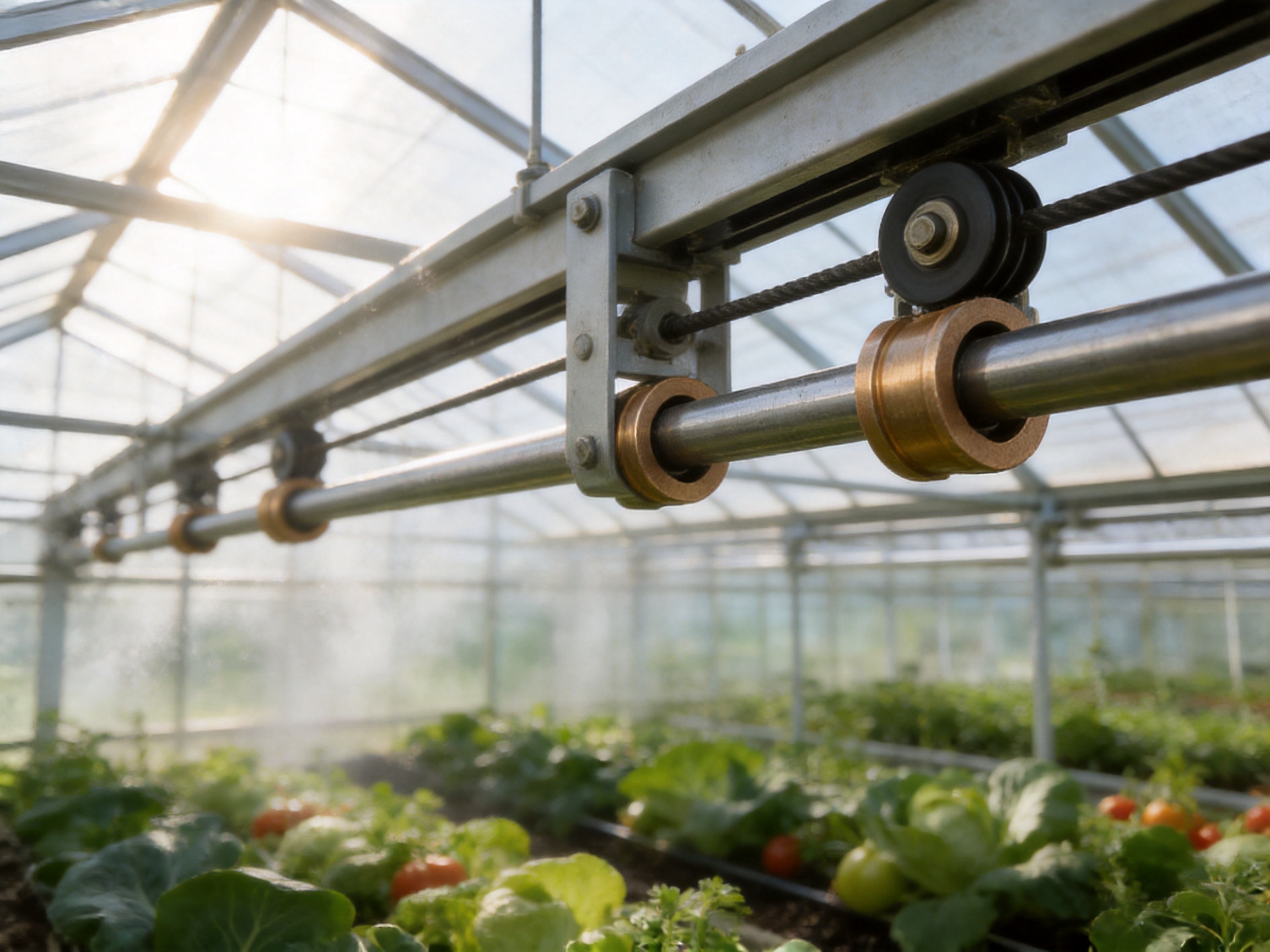
The product is specifically designed for vegetable greenhouse top parts. Greenhouse mechanisms may look simple, but their operating environment is demanding. They are exposed to moisture, condensation, temperature cycling, fertilizer vapors, dust, sunlight, and seasonal use patterns. Some systems operate daily for ventilation, while others may remain idle for long periods and then need to work immediately when weather changes.
In film rolling systems, bushings support rotating shafts that roll or unroll plastic film. Smooth rotation is important because uneven friction can cause motor overload, manual operating difficulty, film tension problems, or premature wear of support brackets. A self-lubricating SAE841 bushing reduces friction and supports stable motion even when frequent maintenance is not practical.
In ventilation and window opening systems, the bushing can support shafts, linkages, or sliding components that open and close roof vents. These systems are essential for controlling temperature, humidity, and airflow inside the greenhouse. If a bushing seizes or wears severely, ventilation performance can decline, affecting crop growth. A corrosion-resistant, oil-impregnated bushing helps improve reliability.
In sunshade net driving systems, the bushing contributes to smooth movement of shading mechanisms. Shading systems often operate under high temperature and sunlight, where material stability and low friction are valuable. The tin bronze structure provides better heat stability than many low-grade plastic alternatives, while the internal oil supply supports low maintenance.
Agricultural greenhouse automation equipment increasingly relies on motors, gearboxes, shafts, rollers, brackets, and transmission elements. As greenhouses become more automated, the importance of dependable small components grows. A high-quality bushing helps automation systems operate consistently, reducing the need for manual adjustment and unplanned repairs.
Broader Industrial Uses
Although this product is designed for greenhouse top applications, SAE841 tin bronze open-type bushings can also be used in many medium-speed and medium-load sliding applications. Typical industries include automotive components, agricultural machinery, office equipment, home appliances, power tools, fans, conveyors, small motors, gear mechanisms, and industrial automation equipment.
In automotive systems, self-lubricating bushings are often valued for seat adjustment motors, small actuators, linkages, and auxiliary mechanisms. These applications require low noise, consistent performance, and long service intervals. IATF 16949 certification is particularly meaningful for customers in this sector because automotive supply chains demand strict process control and traceability.
In home appliances and office equipment, bushings must operate quietly and reliably while keeping manufacturing cost under control. Oil-impregnated bronze bushings can provide low friction and noise reduction in fans, printers, copiers, washing machine mechanisms, and small drive units. Their long service life can improve end-user satisfaction.
In agricultural machinery, the operating environment may include dust, moisture, vibration, and irregular maintenance. Self-lubricating bushings help reduce dependence on manual greasing and can improve reliability in seeders, harvesters, adjustment mechanisms, and accessory drives. The open-type structure may be useful where quick replacement or assembly tolerance accommodation is needed.
In industrial automation, conveyors and small reduction mechanisms often run for long hours. Components that reduce friction and maintenance frequency directly improve productivity. A bushing that performs consistently under repetitive motion can reduce downtime and support predictable maintenance planning.
Dimensional Precision and Stability
Dimensional precision is critical for bushing performance. If the inner diameter is too small, friction and temperature rise may increase. If the clearance is too large, noise, vibration, and uneven wear may occur. If the outer dimension is unstable, the bushing may be difficult to install or may loosen during operation. Therefore, precision sizing and inspection are essential.
The manufacturing process includes sizing after sintering to correct and stabilize the component’s dimensions. Powder metallurgy parts shrink during sintering, and the amount of shrinkage depends on powder characteristics, green density, furnace conditions, and geometry. Experienced manufacturers use controlled process parameters and precision calibration to achieve consistent final dimensions.
For open-type bushings, dimensional control is especially important because the split structure must retain the desired shape while still allowing installation flexibility. The bushing must provide enough support after assembly without excessive deformation. Proper tooling design, material density, and sizing control all contribute to this balance.
Stable dimensions also support automated assembly. Customers who use coil packaging and high-volume production methods need parts that feed, orient, insert, and function consistently. Dimensional inconsistency can cause assembly interruptions or quality defects. By emphasizing full-dimensional inspection and strict process control, the manufacturer helps customers maintain efficient production lines.
Self-Lubrication and Maintenance-Free Operation
The self-lubricating performance of SAE841 tin bronze is one of the product’s most important advantages. The porous sintered bronze structure stores lubricating oil throughout the material. During operation, oil is released to the contact surface and helps form a protective film between the shaft and the bushing.
This lubrication mechanism reduces friction, heat, wear, and noise. It also reduces reliance on external grease fittings, oiling schedules, or manual maintenance. In greenhouse top systems, where components may be difficult to access after installation, this is a major benefit. Operators can focus on crop management rather than frequent mechanical lubrication.
Maintenance-free does not mean the bushing can operate under any condition without consideration. Load, speed, shaft material, surface finish, alignment, temperature, contamination, and installation quality all affect performance. However, under suitable conditions, the internal oil supply greatly extends lubrication intervals and reduces the chance of dry-running failure.
For equipment manufacturers, self-lubrication can also simplify product design. Eliminating grease points or reducing lubrication instructions can make equipment easier for end users. This can improve market competitiveness, especially in agricultural equipment where users value durability and low maintenance.
Wear Resistance and Shaft Protection
Wear resistance is central to bushing selection. When two surfaces slide against each other, friction can gradually remove material, increase clearance, create noise, reduce positioning accuracy, and eventually cause failure. SAE841 tin bronze reduces wear through a combination of material strength and lubrication.
The tin bronze matrix provides good anti-wear characteristics, while the oil film reduces direct contact. This combination helps protect both the bushing and the mating shaft. Reduced shaft wear is often overlooked but very important. Replacing a small bushing is easier than replacing a long shaft, gearbox assembly, or greenhouse drive mechanism.
In many applications, the bushing acts as a sacrificial but controlled wear element. It supports motion while preventing damage to more expensive parts. A high-quality self-lubricating bushing extends replacement intervals and keeps shaft surfaces in better condition.
The product’s corrosion resistance also contributes to wear performance. In humid environments, corrosion products can act as abrasive particles or cause surface roughness that accelerates wear. Tin bronze provides better corrosion resistance than many plain steel alternatives, making it more suitable for greenhouse moisture and outdoor exposure.
Corrosion Resistance in Humid and Outdoor Environments
Greenhouses are naturally humid environments. Water vapor condenses on frames and mechanisms, especially during night temperature drops. Fertilizers, soil particles, and plant treatment chemicals may also be present. These conditions can be challenging for ordinary metal components.
SAE841 tin bronze provides good corrosion resistance compared with many ferrous materials. While no material is completely immune to all environmental attack, bronze is generally well suited to humid environments where plain carbon steel would rust quickly. The oil impregnation can also provide some surface protection by limiting direct moisture contact.
For greenhouse top mechanisms, corrosion resistance supports long-term movement reliability. A rusty bushing or sleeve can seize, create high operating torque, or damage the shaft. By using tin bronze with oil impregnation, equipment manufacturers can reduce corrosion-related problems and improve customer satisfaction.
Proper packaging and storage further protect the product before installation. Anti-rust and moisture-proof treatment, dry storage, and non-corrosive warehouse conditions help preserve the bushing’s quality. This is especially important for customers who purchase in bulk and store components for future production.
Quality Control and Inspection
Quality control for SAE841 tin bronze open-type bushings must include dimensional inspection, appearance inspection, oil content verification, process monitoring, and final inspection before delivery. Since the bushing’s performance depends on both geometry and internal porosity, inspection must be more comprehensive than simply checking external appearance.
Full-dimensional inspection confirms that the product meets required drawings or specifications. Precision measuring tools are used to check key dimensions, shape, and tolerances. For custom parts, this step ensures that customer-specific requirements are fulfilled.
Oil content inspection confirms that the bushing has received adequate impregnation. Insufficient oil content can reduce self-lubricating performance and shorten service life. Appearance inspection identifies cracks, deformation, burrs, contamination, or other visible defects that could affect assembly or operation.
Strict process control from powder to finished product improves consistency. Instead of relying only on final inspection, the manufacturer controls each production stage to prevent defects from occurring. This approach is aligned with modern quality management principles and supports reliable mass production.
Before delivery, 100% inspection can be applied to critical products or customer requirements. This reduces the risk of defective parts entering the customer’s assembly line. For components used in equipment where reliability matters, such inspection discipline is an important competitive advantage.
Customization for Drawings, Samples, and Application Needs
Many equipment manufacturers need bushings that match unique housing dimensions, shaft sizes, installation methods, or environmental requirements. Jiande Welfine Technology Co., Ltd. provides OEM and ODM customization services based on customer drawings, samples, and application information. This capability allows customers to obtain parts that fit their product designs rather than forcing designs around standard catalog items.
Customization can include dimensions, structure, material selection, oil type, surface treatment, packaging method, and performance requirements. For example, a customer may need a specific open gap, wall thickness, length, or coil packaging format for automated assembly. Another customer may require sample testing before moving to mass production. Flexible manufacturing support helps turn these requirements into practical products.
Sample testing is particularly useful when operating conditions are uncertain. Load, speed, shaft material, clearance, temperature, and environmental exposure can all influence bushing performance. By producing samples for trial assembly and testing, the manufacturer and customer can verify suitability before large-scale procurement.
Small-batch and mass production support is also important. Early-stage projects may require limited quantities, while mature equipment programs need stable high-volume supply. A manufacturer with both development support and production capacity can accompany customers from prototype to long-term production.
Cost Efficiency and Total Value
When purchasing bushings, focusing only on unit price can be misleading. A cheaper part may increase maintenance, cause downtime, wear shafts, create noise, or complicate assembly. The SAE841 tin bronze open-type bushing offers value through lower maintenance frequency, longer service life, smoother operation, easier installation, and better environmental resistance.
For greenhouse equipment, downtime can affect crop management and labor schedules. A failed ventilation or film rolling mechanism may require urgent repair, especially during weather changes. Using a more reliable self-lubricating bushing helps reduce these risks.
For equipment manufacturers, fewer customer complaints and warranty issues create long-term savings. A reliable bushing can also become a selling point for finished equipment. Customers increasingly value low-maintenance agricultural automation systems, and component quality contributes directly to perceived equipment quality.
For assembly operations, the open-type design and coil packaging can reduce handling time and improve production efficiency. When combined with stable dimensions and quality inspection, this supports smoother manufacturing and fewer line interruptions.
Therefore, the product’s competitive advantage lies in total value rather than only material cost. It is designed to reduce hidden costs across the product lifecycle.
Selection Considerations for Engineers
To achieve the best performance from an SAE841 tin bronze open-type bushing, engineers should consider load, speed, shaft hardness, shaft surface finish, housing design, clearance, alignment, temperature, and contamination. Although the product is self-lubricating, correct application design remains essential.
The bushing is generally suitable for medium-speed and medium-load applications. It may not be ideal for extremely high-speed, high-impact, or heavily contaminated environments without additional engineering evaluation. If loads are too high or alignment is poor, lubrication film stability may be reduced and wear may accelerate.
Shaft surface finish should be compatible with sintered bronze bushings. A rough shaft can abrade the bushing, while an unsuitable shaft material may increase wear. Proper clearance allows oil film formation and thermal expansion. Too tight a fit can cause friction heat, while too loose a fit can increase vibration and noise.
Housing design should support the open-type bushing without causing excessive distortion. Installation tools and procedures should avoid damaging the bushing edge or closing the open gap improperly. For greenhouse systems, designers should also consider drainage, contamination protection, and accessible replacement if needed.
When special conditions exist, consultation with the manufacturer is recommended. Custom material adjustments, dimensional changes, or additional lubrication strategies may be considered for demanding applications.
Packaging and Storage
Packaging has a direct influence on product cleanliness and usability. The SAE841 tin bronze open-type bushing can be supplied with professional coil packaging, which supports efficient transportation, storage, and automatic assembly. Coil packaging is particularly useful for customers using continuous production processes or feeding systems.
Anti-rust and moisture-proof treatment helps protect the product during shipping and storage. Although bronze has good corrosion resistance, proper packaging prevents contamination and preserves the impregnated oil condition. Products should be stored in a dry, ventilated, non-corrosive environment.
Storage conditions matter because sintered oil-impregnated bushings contain lubricant. Excessive heat, contamination, or chemical exposure may affect oil performance or surface cleanliness. Good warehouse management ensures that parts remain ready for assembly when needed.
Why Manufacturer Capability Matters
The performance of an SAE841 tin bronze open-type bushing depends heavily on manufacturing capability. Two bushings made from similar material can perform very differently if their density, porosity, dimensions, sintering quality, and oil content are not equally controlled. This is why supplier selection is as important as material selection.
Jiande Welfine Technology Co., Ltd. combines powder metallurgy expertise, precision machining capability, advanced equipment, experienced personnel, and certified quality systems. This combination supports reliable production of sintered metal parts, self-lubricating sintered bushings, and custom sintered metal components.
The company’s long experience since 2001 provides accumulated knowledge in tooling, sintering behavior, material selection, and customer-specific problem solving. Its 13,039-square-meter production base and more than 150 skilled employees support stable manufacturing capacity. ISO 9001:2015 and IATF 16949:2016 certifications provide confidence in quality management and process discipline.
For customers purchasing bushings internationally, stable communication, customization support, sample development, mass production capability, and consistent inspection are major advantages. A professional manufacturer can help customers reduce development time, avoid unsuitable material choices, and maintain long-term supply stability.
Future Outlook for Self-Lubricating Open-Type Bushings
Demand for self-lubricating bushings is expected to grow as equipment manufacturers pursue lower maintenance, higher reliability, and improved automation. Agricultural greenhouses are becoming more intelligent, with automated ventilation, shading, irrigation, and climate control systems. These systems require dependable mechanical components that can operate in humid and outdoor environments.
Beyond agriculture, industries such as new energy equipment, robotics, smart home devices, automotive actuation, and industrial automation are increasing their use of compact drive mechanisms. Many of these mechanisms require bushings that are quiet, durable, cost-effective, and maintenance-friendly. SAE841 tin bronze open-type bushings fit this trend well.
Future customers will likely demand tighter tolerances, more specialized shapes, higher consistency, cleaner packaging, and application-specific lubrication options. Manufacturers with strong R&D capability, powder metallurgy process control, and flexible customization will be better positioned to serve these needs.
As sustainability becomes more important, long-life components also support resource efficiency. A bushing that reduces replacement frequency, protects shafts, and lowers maintenance lubricant consumption can contribute to more sustainable equipment operation.
Q&A Section
What is the SAE841 Tin Bronze Open-Type Bushing used for?
It is used as a self-lubricating sliding support component in greenhouse top systems, film rolling mechanisms, ventilation devices, sunshade systems, agricultural automation equipment, motors, fans, conveyors, appliances, and other medium-speed and medium-load mechanisms.
Why is SAE841 tin bronze suitable for self-lubricating bushings?
SAE841 tin bronze is produced through powder metallurgy, which creates a porous structure capable of storing lubricating oil. The bronze matrix provides wear resistance, while the stored oil forms a lubricating film during operation, reducing friction and maintenance demand.
What is the advantage of the open-type design?
The open-type structure improves installation flexibility, helps accommodate minor dimensional variations, and can provide some compensation for thermal expansion. It is useful in high-volume assembly and practical field applications where perfect conditions are difficult to guarantee.
Does the bushing require additional lubrication?
Under normal suitable operating conditions, the bushing is oil-impregnated and can provide long-term self-lubrication. However, additional lubrication may be considered for high-load, high-temperature, high-speed, or unusually demanding environments.
How does this bushing compare with a conventional bronze bushing?
A conventional bronze bushing usually requires regular external lubrication. The SAE841 tin bronze bushing stores oil internally and releases it during operation, reducing maintenance frequency and improving reliability in applications where lubrication is often neglected.
Is it suitable for humid greenhouse environments?
Yes. Tin bronze offers good corrosion resistance, and the oil-impregnated structure supports smooth operation in humid, outdoor, and maintenance-limited greenhouse conditions. Proper installation and storage further improve reliability.
Can the dimensions be customized?
Yes. Jiande Welfine Technology Co., Ltd. provides OEM and ODM customization based on customer drawings, samples, and application requirements. Dimensions, material options, structure, surface treatment, oil type, and packaging can be discussed according to project needs.
What manufacturing steps are used to make the product?
The main process includes powder compaction, sintering at approximately 720°C, sizing, oil impregnation, and coil packaging. Each step is controlled to achieve strength, porosity, dimensional accuracy, and self-lubricating performance.
Why is supplier quality management important for this product?
Bushing performance depends on consistent density, porosity, dimensions, oil content, and surface quality. A supplier with certified quality systems, advanced equipment, and powder metallurgy experience can provide more stable products and reduce failure risks.
Is the bushing suitable for high-speed or heavy-impact applications?
It is generally optimized for medium-speed and medium-load applications. For high-speed, heavy-impact, or special operating environments, engineers should perform detailed evaluation and consult the manufacturer for suitable design recommendations.
Conclusion
The SAE841 Tin Bronze Open-Type Bushing is a practical and high-value solution for motion systems requiring self-lubrication, wear resistance, corrosion resistance, and installation flexibility. Its SAE841 tin bronze material provides a porous oil-retaining structure, while the open design improves assembly adaptability and supports real-world operating conditions. For greenhouse top systems, film rolling devices, ventilation mechanisms, and agricultural automation equipment, these advantages translate into smoother operation, lower maintenance, and longer service life.
The product’s performance is strengthened by a controlled powder metallurgy process: precision compaction, sintering at approximately 720°C, sizing, vacuum oil impregnation, and professional coil packaging. Each process step contributes to strength, dimensional stability, porosity, oil content, and reliable operation.
Jiande Welfine Technology Co., Ltd. adds further value through more than 20 years of powder metallurgy experience, a modern 13,039-square-meter manufacturing base, advanced production and testing equipment, over 150 skilled employees, ISO 9001:2015 certification, IATF 16949:2016 certification, and OEM/ODM customization services. For customers seeking dependable sintered metal parts, self-lubricating bushings, and precision sintered components, the company offers both technical capability and stable manufacturing support.
In a competitive market, the best bushing is not simply the cheapest part. It is the component that reduces friction, protects shafts, simplifies installation, lowers maintenance costs, and supports reliable equipment performance over time. The SAE841 tin bronze open-type bushing meets these expectations and remains a strong choice for modern agricultural, industrial, and mechanical applications.
References
1. Powder Metallurgy Design Manual, Metal Powder Industries Federation.
2. ASM Handbook, Volume 7: Powder Metallurgy, ASM International.
3. Standard practices for oil-impregnated sintered bronze bearings and self-lubricating bearing materials.
4. ISO 9001:2015 Quality Management Systems Requirements.
5. IATF 16949:2016 Quality Management System Standard for Automotive Production and Relevant Service Parts Organizations.
6. Engineering references on tribology, sliding bearings, lubrication mechanisms, and porous bronze bearing materials.
Product: SAE841 Tin Bronze Bushing Open-Type Component

Related products
-
-
Our sintered bronze self-lubricating bearings are engineered for demanding industrial applications where traditional lubrication is impractical. Designed with advanced powder metallurgy technology, th...
See Details -
This copper-based powder metallurgy bushing is manufactured through an integrated process of compaction, sintering, sizing, and oil impregnation. It features excellent wear resistance and self-lubrica...
See Details -
Premium Material: Our flange bushing is crafted from Sint B50 oil-impregnated bronze, featuring an 18% oil content. The high-quality tin bronze material ensures exceptional hardness, wear resistance, ...
See Details
Copyright © Jiande Welfine Technology Co., Ltd. All Rights Reserved. Custom Self-lubricating Sintered Bushing Manufacturers
