 English
 中文简体
中文简体
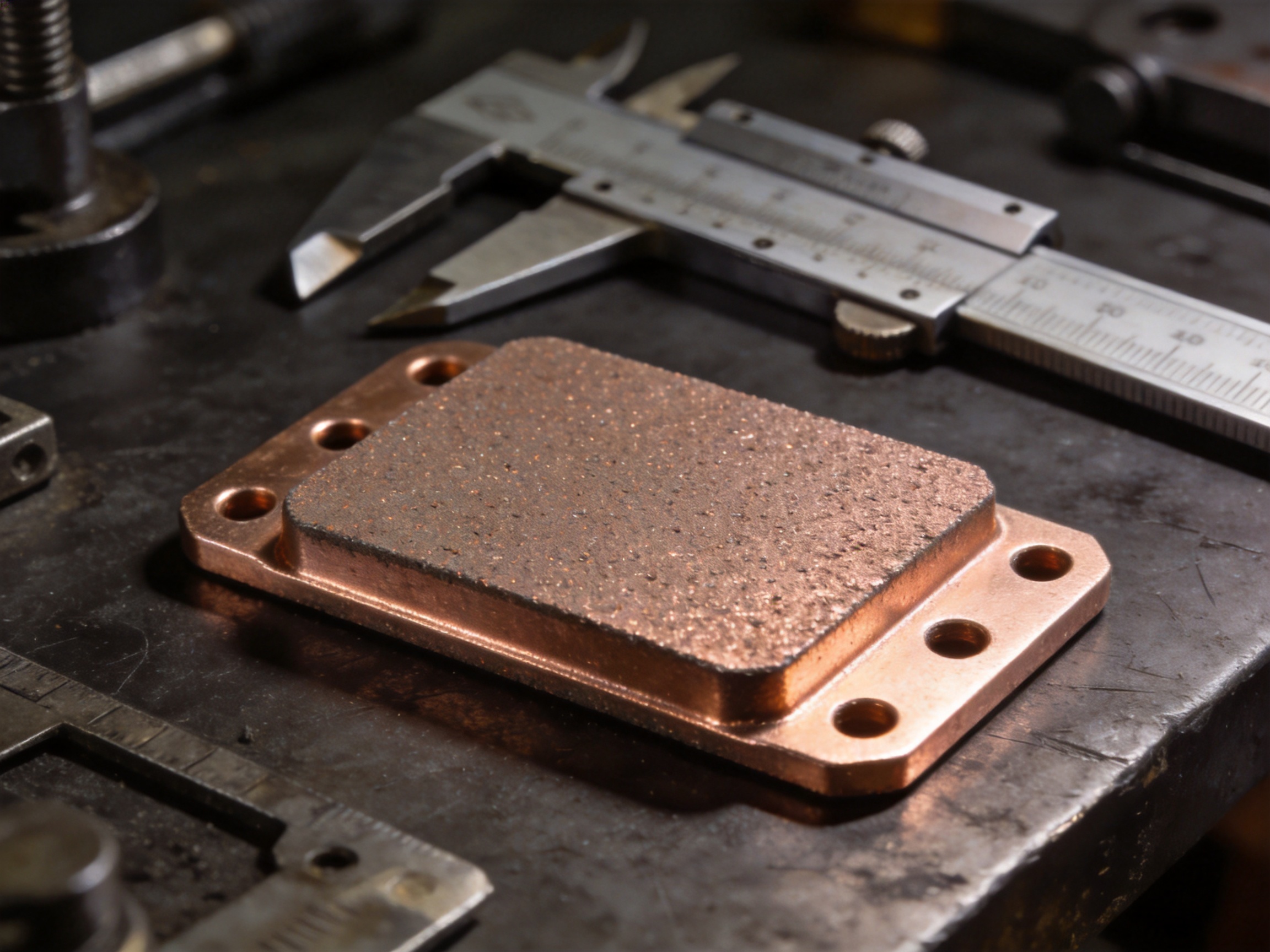
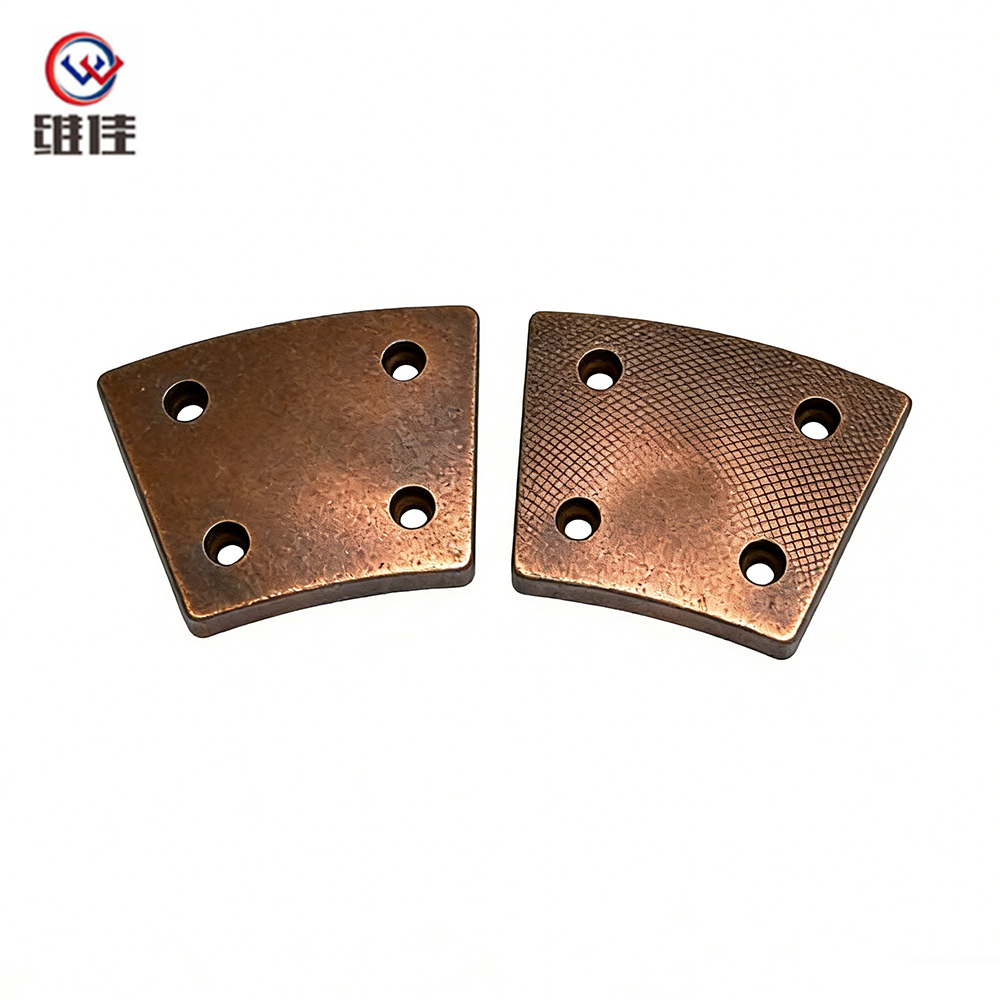
Description: 79.5×62×7.3mm copper-based brake pad with 4-hole design. Density 6.2g/cm³, weight 195g. Free from graphite segregation, cracks, and defects. Ideal for heavy-duty industrial braking system...
See DetailsE-mail us: [email protected]
Tel: +86-15239857375


 Home / Author / Tan Xinyue — After-Sales Technical Coordinator / High-Density Copper-Based Brake Pad for Heavy-Duty Industrial Braking
 High-Density Copper-Based Brake Pad for Heavy-Duty Industrial Braking
 2026.05.15
 Tan Xinyue — After-Sales Technical Coordinator
Content
- 1 Product Overview: A Compact Brake Pad Built for Heavy Work
- 2 Core Specifications
- 3 Why Copper-Based Friction Materials Matter
- 4 Advantages Over Conventional Brake Pad Materials
- 5 The Importance of the 4-Hole Mounting Design
- 6 Density Control and Its Effect on Performance
- 7 Graphite Segregation: Why It Must Be Eliminated
- 8 Crack-Free and Defect-Free Quality
- 9 Advanced Powder Metallurgy Manufacturing Process
- 10 Manufacturing Strengths Behind the Product
- 11 Quality Management: From Raw Powder to Finished Brake Pad
- 12 Performance in Heavy Engineering Machinery
- 13 Performance in Metallurgical Equipment
- 14 Performance in Mining Machinery
- 15 Performance in Industrial Equipment
- 16 Performance in Marine Engineering
- 17 Customization for OEM and ODM Requirements
- 18 Cost Benefits Over the Full Service Life
- 19 Safety and Reliability Considerations
- 20 Installation and Maintenance Guidance
- 21 Technical Comparison With Lower-Grade Alternatives
- 22 Why Professional Manufacturing Matters
- 23 Environmental and Operational Efficiency Benefits
- 24 Buyer Considerations Before Selection
- 25 Q&A Section
- 25.1 Q1: What makes this copper-based brake pad suitable for heavy-duty industrial braking?
- 25.2 Q2: Why is the 79.5×62×7.3mm dimension important?
- 25.3 Q3: What is the benefit of the 4-hole design?
- 25.4 Q4: Why is density control important?
- 25.5 Q5: What does “no graphite segregation” mean?
- 25.6 Q6: What problems can cracks cause in a brake pad?
- 25.7 Q7: How does copper improve brake pad performance?
- 25.8 Q8: What applications are suitable for this brake pad?
- 25.9 Q9: Can the brake pad be customized?
- 25.10 Q10: Why choose a manufacturer with powder metallurgy expertise?
- 26 Conclusion
- 27 References
In heavy-duty industrial braking, reliability is not a marketing phrase; it is a safety requirement, a productivity factor, and a direct contributor to operating cost control. The high-density copper-based brake pad with a size of 79.5×62×7.3mm and a 4-hole mounting design is engineered for demanding braking systems that require stable friction, high thermal resistance, dimensional accuracy, and long service life. With a density of 6.2g/cm³ and a product weight of approximately 195g, this brake lining is designed to deliver consistent performance in harsh industrial applications such as engineering machinery, metallurgical equipment, mining systems, marine machinery, wind power equipment, elevators, and machine tools.
This article presents a detailed technical overview of the product, its material advantages, its structural design, its quality-control requirements, its performance benefits over conventional alternatives, and the manufacturing strengths behind it. It also explains how a professional powder metallurgy manufacturer with more than two decades of production experience can provide stable, customized, and inspection-driven brake pad solutions for global industrial customers.
Product Overview: A Compact Brake Pad Built for Heavy Work
The product is a copper-based friction brake pad designed for industrial brake assemblies where compact size, high density, high strength, and predictable braking behavior are all essential. Its nominal dimensions are 79.5mm in length, 62mm in width, and 7.3mm in thickness. The brake pad uses a 4-hole configuration for mounting stability and balanced force distribution. The high-density copper-based matrix provides a combination of thermal conductivity, wear resistance, and mechanical integrity that makes it suitable for braking systems exposed to repeated load cycles and elevated temperatures.
The copper-based formulation distinguishes this brake pad from many organic, semi-metallic, and lower-density friction alternatives. In heavy industrial braking, friction materials must resist heat build-up, avoid rapid wear, maintain bonding and shear strength, and provide predictable friction under changing operating conditions. A copper-based powder metallurgy friction material offers important benefits in these areas. The copper matrix transfers heat efficiently, while the controlled composition and sintered structure help preserve friction stability and prevent structural failure during repeated braking.
The product is specifically described as being free from graphite segregation, cracks, and visible defects. These quality requirements are especially important for friction materials. Graphite segregation can cause local differences in friction behavior, uneven wear, abnormal noise, and performance instability. Cracks may grow under thermal cycling and braking pressure, eventually leading to chipping, delamination, or premature failure. A defect-free surface and internal structure allow the brake pad to perform more consistently throughout its service life.
Core Specifications
The following table summarizes the key technical and dimensional details of the copper-based brake pad.
Parameter |
Specification |
Performance Significance |
Product Type |
Copper-based industrial brake pad |
Suitable for heavy-duty braking systems requiring high thermal conductivity and stable friction. |
Dimensions |
79.5×62×7.3mm |
Precision size control supports accurate installation and consistent contact with mating parts. |
Mounting Structure |
4-hole design |
Improves installation stability, pressure balance, and resistance to shifting during braking. |
Density |
6.2g/cm³ |
High density improves strength, wear resistance, and braking durability. |
Weight |
Approximately 195g |
Provides a compact but solid friction component for industrial assemblies. |
Friction Coefficient |
Stable, approximately 0.35–0.40 under dry conditions |
Supports predictable braking force and operational safety. |
Wear Rate |
≤1.0×10⁻⁴ cm³/J |
Helps extend service life and reduce replacement frequency. |
Shear Strength |
≥7 MPa |
Supports structural reliability under braking stress. |
Working Temperature |
-40℃ to 600℃ |
Suitable for cold-start and high-temperature industrial environments. |
Quality Requirements |
No graphite segregation, no cracks, no defects |
Ensures uniform performance, reduced failure risk, and stable wear behavior. |
Why Copper-Based Friction Materials Matter
Friction materials must convert kinetic energy into heat while maintaining controlled contact with the mating surface. In industrial machinery, this process is often repeated under heavy loads, dusty environments, high vibration, or intermittent shock. When braking generates heat faster than the material can dissipate it, the pad may experience thermal fade, surface glazing, cracking, accelerated wear, or unstable friction. Copper-based friction materials address these challenges through superior thermal conductivity and mechanical strength.
Copper is an excellent conductor of heat compared with many non-metallic friction materials. When used as the primary matrix in a powder metallurgy brake pad, it helps distribute heat away from the contact surface. This reduces localized hot spots and improves friction stability. In high-load braking systems, the ability to spread and dissipate heat can be the difference between controlled deceleration and dangerous friction fade.
The copper matrix also provides a strong skeleton for the friction formulation. Through powder metallurgy processing, copper powders and friction modifiers can be mixed, pressed, and sintered into a controlled structure. This allows the manufacturer to balance thermal conductivity, coefficient of friction, wear resistance, and mechanical strength. The result is a brake pad that can operate under demanding industrial conditions while maintaining a stable and predictable braking response.
Advantages Over Conventional Brake Pad Materials
Compared with many conventional friction materials, the high-density copper-based brake pad offers several competitive advantages. These advantages are especially valuable in heavy-duty braking applications where downtime is expensive and safety margins must remain high.
More Stable Friction Under Heat
Organic and resin-bonded materials can perform well in moderate conditions, but they may suffer thermal degradation when exposed to sustained high temperatures. Under repeated braking, friction may drop, resulting in longer stopping distance or reduced holding force. The copper-based brake pad is designed to maintain a stable friction coefficient under dry conditions, typically around 0.35–0.40, supporting consistent braking response even when heat generation is significant.
Better Heat Dissipation
Heat dissipation is one of the strongest advantages of copper-based friction materials. Industrial brakes often operate with limited cooling time between cycles. A material that conducts heat effectively can reduce surface overheating and protect both the brake pad and mating disc or drum. This can extend service life, reduce thermal deformation, and improve operating safety.
Higher Mechanical Strength
Industrial brake pads are exposed not only to friction but also to compression, shear stress, vibration, and mounting forces. A high-density sintered copper-based structure provides strong mechanical integrity. With shear strength of at least 7 MPa, the pad is designed to resist separation, cracking, and damage during operation. This strength is particularly important for crane brakes, winch brakes, mining conveyors, and other systems where braking failure can create serious risks.
Lower Wear and Longer Service Life
Wear resistance is closely related to material density, formulation uniformity, surface compatibility, and thermal stability. The 6.2g/cm³ density helps improve resistance to mechanical erosion. In practical use, reduced wear can lower maintenance costs, decrease replacement frequency, and minimize unplanned downtime. For equipment operating continuously or in remote locations, longer brake pad life is a major economic advantage.
Improved Quality Consistency
One of the key product promises is freedom from graphite segregation, cracks, and defects. In many friction materials, inconsistent mixing or poor compaction may cause localized weak zones or material concentration differences. These defects can lead to uneven wear, vibration, noise, or premature failure. By using controlled powder mixing, precision pressing, sintering, and inspection, the product aims to provide consistent performance from batch to batch.
The Importance of the 4-Hole Mounting Design
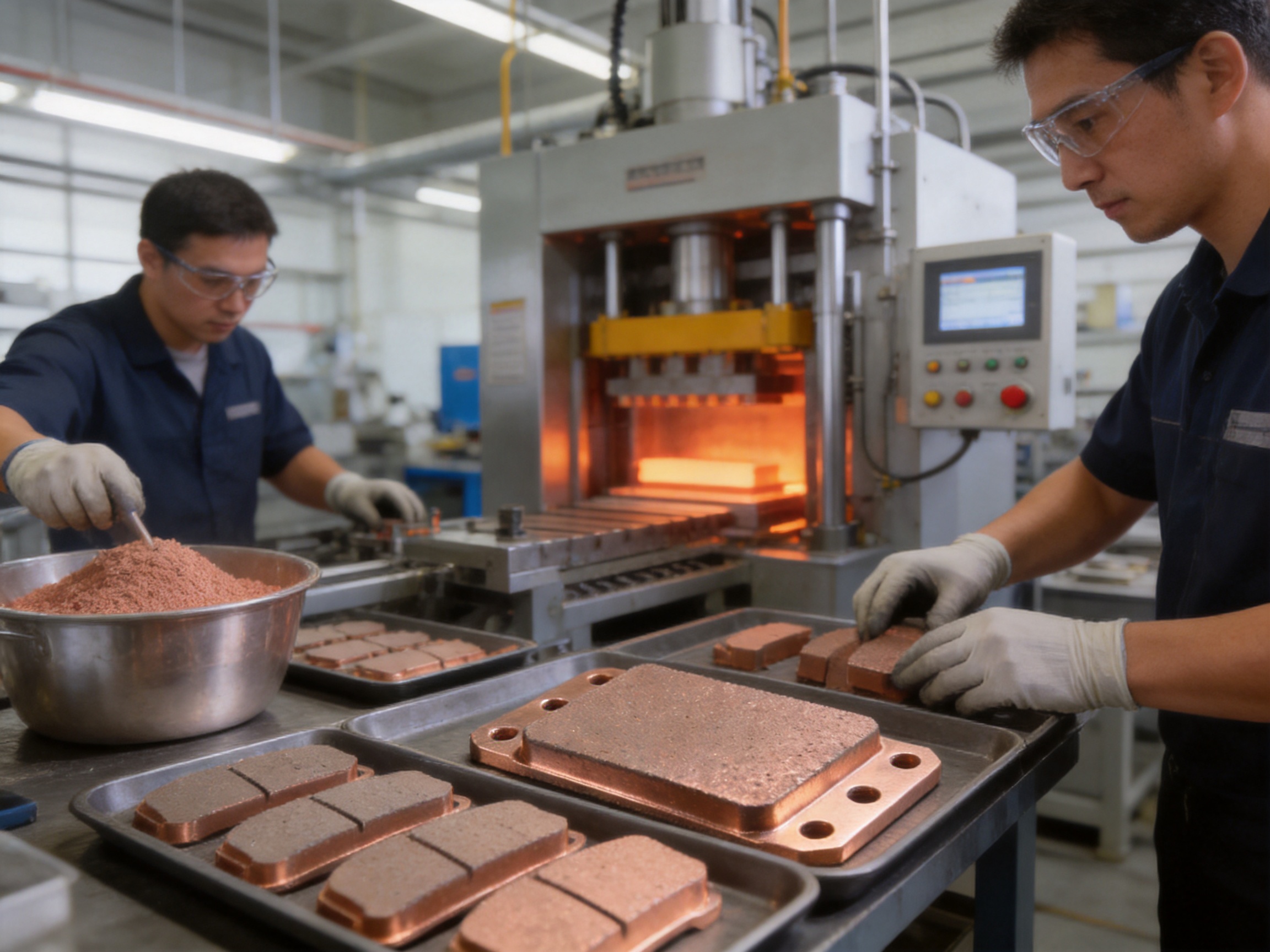
The 4-hole structure is more than a simple installation feature. In braking systems, the way a pad is mounted affects pressure distribution, contact stability, vibration behavior, and wear pattern. A poorly secured brake pad can shift under load, create uneven contact, generate noise, or produce abnormal wear. The 4-hole design helps distribute mounting force across the brake pad and provides a secure interface with the brake assembly.
Balanced mounting pressure is important because braking force is not always perfectly uniform. Under heavy loads, the pad may experience dynamic forces caused by rotating components, vibration, thermal expansion, and repeated engagement. Four mounting holes help keep the brake pad aligned and reduce the risk of edge lifting or localized stress concentration. This contributes to smoother braking and longer component life.
The design also supports maintenance efficiency. Industrial maintenance teams prefer components that can be installed reliably and replaced without excessive adjustment. A stable 4-hole configuration helps simplify positioning and reduces the chance of installation error. For equipment fleets, this can improve service speed and standardize maintenance procedures.
Density Control and Its Effect on Performance
The specified density of 6.2g/cm³ is an important indicator of product quality. In powder metallurgy friction components, density affects strength, porosity, thermal conductivity, wear resistance, and friction behavior. If the density is too low, the pad may have excessive porosity, reduced mechanical strength, and higher wear. If density is inconsistent across the part, braking performance may vary across the contact surface.
High density supports better load-bearing ability. During braking, the pad must withstand compressive pressure and frictional shear. A dense structure resists deformation and chipping. It also helps maintain a stable contact surface, which is essential for predictable friction.
Density is controlled through powder selection, mixing uniformity, pressing pressure, tool accuracy, sintering temperature, sintering atmosphere, and post-processing. A professional manufacturer must manage each of these factors carefully. Pressing must create a compact green part with uniform density distribution, while sintering must bond particles properly without causing distortion or unwanted phase changes. The final inspection verifies that the part meets dimensional and physical requirements.
Graphite Segregation: Why It Must Be Eliminated
Graphite is often used in friction materials because it can influence lubrication, wear behavior, and friction stability. However, graphite must be uniformly distributed. Graphite segregation occurs when graphite particles agglomerate or concentrate in certain zones instead of being evenly dispersed throughout the material. This can create uneven friction zones and weak areas.
If one region of the pad contains too much graphite, it may become locally softer or more lubricating, reducing friction in that area. Another region with insufficient graphite may become more aggressive and wear faster. The result can be uneven contact, vibration, noise, hot spots, and shortened service life. In severe cases, segregation can contribute to cracking or local material failure.
The product’s guarantee of no graphite segregation reflects strict process control. Uniform powder mixing, controlled handling, proper compaction, and metallographic inspection are essential. By avoiding segregation, the brake pad can deliver more consistent friction and wear behavior throughout its working surface.
Crack-Free and Defect-Free Quality
Cracks are unacceptable in industrial friction components. A small crack can expand under thermal cycling, vibration, and repeated braking pressure. Surface cracks can lead to chipping, while internal cracks can reduce strength and cause sudden failure. For this reason, crack-free quality is not merely cosmetic; it is a fundamental safety requirement.
Defects may also include pits, delamination, edge damage, uneven surfaces, dimensional deviation, incomplete sintering, or foreign material contamination. Any of these problems can compromise braking performance. For example, surface defects may reduce effective contact area, while dimensional defects may cause poor fitment or uneven pressure distribution.
Advanced inspection helps prevent defective parts from reaching customers. Visual inspection identifies surface problems. Dimensional measurement confirms that the 79.5×62×7.3mm size is maintained within required tolerance. Metallographic analysis can confirm material distribution and internal structure. Additional mechanical or friction testing may be used according to customer requirements or application severity.
Advanced Powder Metallurgy Manufacturing Process
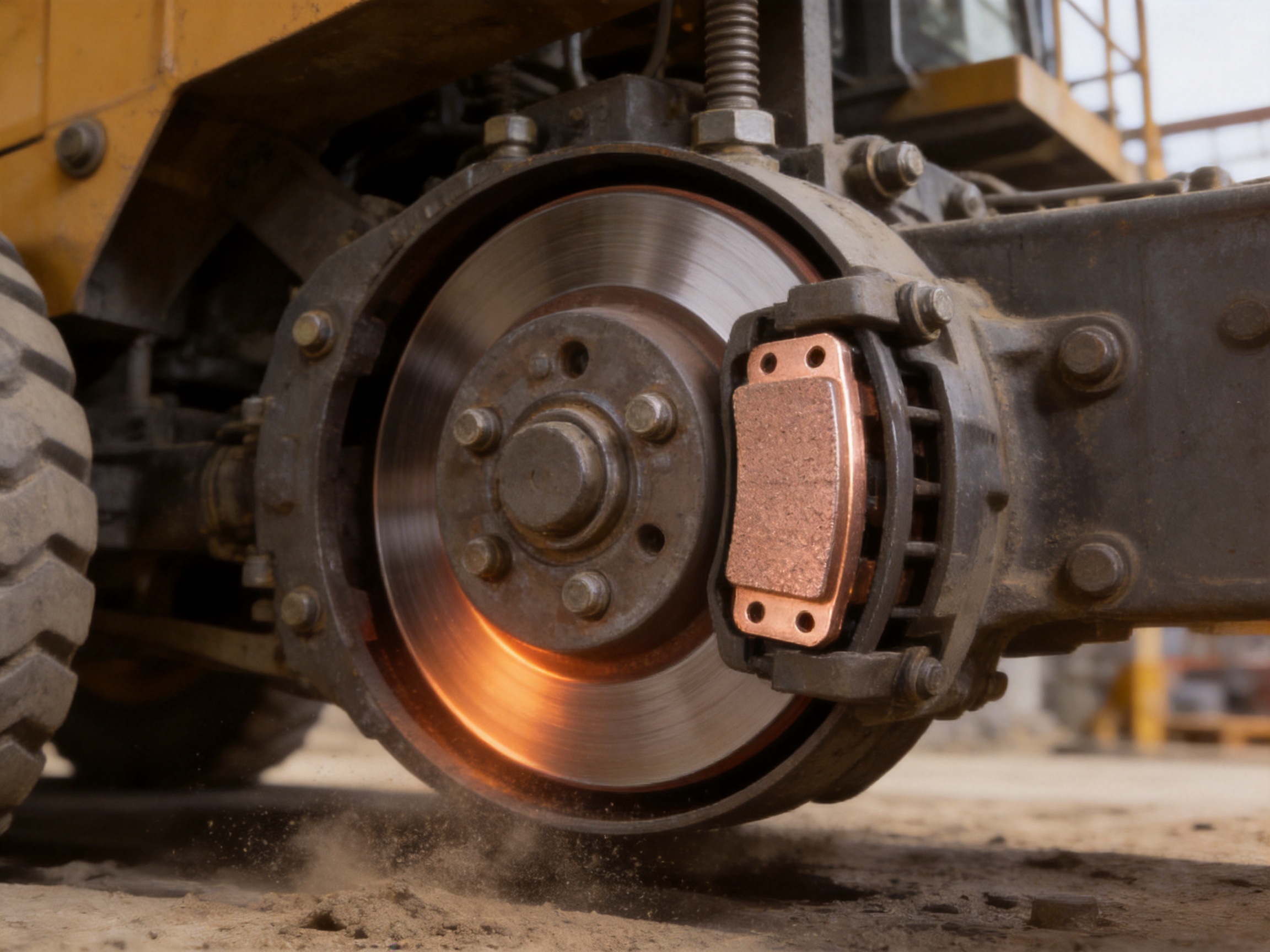
The brake pad is produced using powder metallurgy technology, a manufacturing method well suited for copper-based friction materials. Powder metallurgy allows precise control over composition, density, and microstructure. It also supports near-net-shape production, reducing material waste and enabling consistent batch manufacturing.
Material Selection
The process begins with the selection of copper powder and functional additives. Copper provides thermal conductivity and structural support. Other powders may be used to adjust friction coefficient, wear resistance, thermal stability, and mechanical strength. Raw material quality is critical because impurities, inconsistent particle size, or poor powder flow can affect compaction and sintering results.
Precision Mixing
Powder mixing must create a uniform blend. This step is especially important for preventing graphite segregation and ensuring consistent friction performance. Controlled mixing time, equipment design, powder sequence, and anti-segregation handling all influence final quality. A well-mixed powder blend ensures that each pressed part contains the intended composition throughout its volume.
High-Efficiency Pressing
The mixed powder is pressed in precision tooling to form a green compact. Pressing pressure and tool design affect dimensional accuracy and density distribution. Uniform pressure helps avoid weak zones, lamination, or density gradients. For a brake pad with a thin 7.3mm thickness, accurate pressing is essential to maintain flatness and consistent contact behavior.
High-Temperature Sintering
After pressing, the green compact is sintered at controlled high temperature. Sintering bonds powder particles and develops the final mechanical properties. Temperature, atmosphere, heating rate, holding time, and cooling conditions all influence strength, porosity, microstructure, and dimensional stability. Proper sintering is essential for achieving the product’s high density, shear strength, and resistance to cracking.
Precision Finishing and Machining
After sintering, the part may require finishing operations to meet final dimensional and surface requirements. Precision forming or machining ensures accurate dimensions, hole quality, and mounting compatibility. A brake pad must fit the brake assembly correctly; even small deviations can affect installation and pressure distribution.
Final Inspection
Each product is inspected to verify that it meets quality requirements. Inspection includes dimensional checks, surface examination, and defect detection. For critical friction applications, additional testing can include density measurement, hardness evaluation, shear strength testing, friction coefficient testing, wear testing, and metallographic analysis. This multi-stage quality approach helps ensure that customers receive stable and reliable parts.
Manufacturing Strengths Behind the Product
The manufacturing foundation behind this product is provided by Jiande Welfine Technology Co., Ltd., a high-tech enterprise established in 2001. The company integrates research and development, production, and sales, with a focus on powder metallurgy sintering and related precision machining. Its production experience is particularly relevant because copper-based friction materials require careful process control, stable equipment, and knowledgeable technical teams.
The company operates a modern production base of approximately 13,039 square meters. Its equipment includes high-efficiency presses, high-temperature sintering furnaces, and precision forming machines. These capabilities support repeatable production of powder metallurgy components, including bushings, self-lubricating bearings, precision parts, and friction materials. The same technical foundation used for powder metallurgy structural parts and oil-impregnated bushings also supports the manufacturing discipline required for high-density brake pads.
With more than 20 years of industry experience and over 150 skilled employees, the manufacturer can provide OEM and ODM customization according to customer drawings or samples. This is important because industrial brake systems often vary by equipment model, operating condition, mounting interface, and friction requirement. Customers may need adjustments in dimensions, hole arrangement, density, friction coefficient, or material formulation. A manufacturer with both powder metallurgy knowledge and precision machining capability can respond more effectively to these requirements.
The company has passed ISO 9001:2015 and IATF 16949:2016 certifications. These quality management systems support standardized production, traceability, corrective action, and process control. For industrial buyers, certification is valuable because it demonstrates that the supplier has established systems for maintaining consistent quality rather than relying only on final inspection.
Quality Management: From Raw Powder to Finished Brake Pad
A reliable brake pad is the result of controlled manufacturing, not chance. Quality management begins before production, with raw material verification. Powder composition, particle size distribution, moisture content, and flow behavior can influence every later step. Poor raw material control can cause density variation, segregation, and unstable performance.
During powder mixing, operators must follow documented process parameters. The mixing process must create uniform distribution of copper, graphite, and other friction-modifying ingredients. Process discipline at this stage is a direct defense against graphite agglomeration and performance inconsistency.
During pressing, equipment condition and tooling accuracy are monitored. A worn tool can cause dimensional deviation or uneven compaction. Pressing parameters must be selected to achieve proper density without causing lamination or cracking. For a thin brake pad, thickness control and flatness are especially important.
During sintering, furnace temperature uniformity and atmosphere control are critical. Over-sintering may cause deformation or unwanted structural changes, while under-sintering may reduce strength. Controlled sintering allows the material to develop the required bonding and durability.
After sintering and finishing, inspection confirms that the product is free from visible defects, cracks, and graphite segregation. Dimensional inspection verifies length, width, thickness, and hole position. The objective is to deliver a brake pad that installs correctly and performs predictably from the first braking cycle.
Performance in Heavy Engineering Machinery
Heavy engineering machinery such as cranes, excavators, loaders, and concrete pump trucks often operates under high load and frequent braking conditions. Cranes require reliable holding and stopping ability when lifting heavy materials. Loaders and excavators may work in dusty, abrasive, and shock-loaded environments. Concrete pump trucks may experience repeated braking during positioning and job-site movement.
In these machines, a brake pad must resist heat and wear while maintaining stable friction. The copper-based structure helps dissipate heat, while the dense sintered matrix provides strength. The 4-hole design helps resist movement under vibration and load. Compared with lower-grade friction materials, the high-density copper-based pad can provide better service life and more consistent performance, reducing maintenance interruptions on construction sites.
Performance in Metallurgical Equipment
Metallurgical equipment presents some of the most severe industrial braking conditions. Rolling mills, continuous casters, and steel plant braking systems may operate near high temperatures and heavy mechanical loads. Braking components in these settings must tolerate heat, dust, vibration, and continuous operation.
The working temperature range of -40℃ to 600℃ makes the brake pad suitable for broad industrial conditions, including high-temperature areas. The material’s thermal conductivity helps reduce hot spots, while its wear resistance reduces replacement frequency. In steel production, unplanned downtime can be extremely costly; therefore, a durable brake pad can contribute directly to production efficiency.
Performance in Mining Machinery
Mining equipment such as mine winches, conveyors, and shearer loaders requires brake components that can function in abrasive, dusty, and high-load environments. Mine winches need reliable braking and holding capability for lifting and lowering loads. Conveyors require predictable stopping and safety control. Underground or remote mining sites also make maintenance more difficult.
A long-life brake pad reduces the need for frequent replacement and helps maintain equipment availability. The crack-free and defect-free quality requirement is particularly important in mining, where component failure can create safety hazards and production delays. The high-density copper-based brake pad offers the combination of strength, friction stability, and wear resistance needed for these environments.
Performance in Industrial Equipment
Industrial equipment includes machine tools, elevators, wind turbine generators, and various automated systems. These applications may not all have the same load profile, but they share the need for predictable braking behavior. Machine tools require controlled motion and stopping accuracy. Elevators require reliable braking for passenger or goods safety. Wind turbines require braking materials that can withstand environmental variation and intermittent high-energy braking events.
The stable friction coefficient and high-temperature capability of the copper-based brake pad make it a strong option for many industrial braking systems. The 4-hole mounting design improves fitment and stability, while precision dimensional control supports compatibility with standard assemblies.
Performance in Marine Engineering
Marine engineering applications such as ship deck machinery and offshore platform braking systems expose components to vibration, humidity, salt-containing atmospheres, and variable loads. Brake pads used in these environments must maintain reliable performance while resisting mechanical and thermal stress. Although corrosion protection depends on the full assembly and operating environment, a dense copper-based friction component offers strong heat transfer and mechanical stability.
Marine maintenance can be difficult and costly, especially offshore. Long service life and low maintenance demand are valuable. The high-density construction, stable friction behavior, and strict defect control of this brake pad help support dependable operation in marine-related industrial systems.
Customization for OEM and ODM Requirements
Although the product described here has fixed dimensions of 79.5×62×7.3mm and a 4-hole design, many industrial customers require customized friction parts. Different brake assemblies may require different hole positions, thicknesses, mounting features, material densities, or friction levels. A manufacturer with powder metallurgy and precision machining capabilities can provide customized solutions based on drawings, samples, or application requirements.
Customization may involve several engineering considerations. The target friction coefficient must match braking torque requirements. The density and composition must support expected loads and temperature. The hole pattern must fit the mounting plate. The thickness must ensure correct clearance and contact pressure. The material must be compatible with the mating disc or drum to avoid excessive wear on either side.
Jiande Welfine Technology Co., Ltd. supports OEM and ODM work, making it possible for customers to request tailored brake pad solutions. Engineering consultation can help determine whether a standard copper-based material is suitable or whether formulation adjustments are needed. Sample testing can be provided so customers can verify fitment and performance before larger orders.
Cost Benefits Over the Full Service Life
The purchase price of a brake pad is only one part of its real cost. Industrial buyers should consider total service cost, including replacement frequency, labor cost, downtime, equipment damage, safety risk, and inventory burden. A low-cost brake pad that wears quickly or performs inconsistently can become more expensive than a high-quality product.
The high-density copper-based brake pad is designed for longer service life and lower maintenance. Its wear-resistant matrix reduces replacement frequency. Its stable friction behavior reduces the risk of overheating or braking instability. Its defect-free quality reduces premature failure. Its precise dimensions reduce installation problems. These advantages combine to reduce operating cost over time.
In many industrial environments, the cost of downtime is much higher than the cost of the brake pad itself. A crane stopped for brake maintenance, a conveyor halted due to braking failure, or a production line interrupted by equipment repair can create major losses. By selecting a durable and reliable brake pad, operators can improve equipment availability and reduce maintenance planning uncertainty.
Safety and Reliability Considerations
Brake pads are safety-critical components. In heavy-duty systems, braking failure can damage machinery, interrupt production, or endanger personnel. Safety depends on material performance, installation quality, maintenance condition, and system design. A high-quality brake pad contributes to safety by providing stable friction, adequate strength, and predictable wear.
The stable friction coefficient supports controlled braking torque. The high-temperature capability reduces the risk of thermal fade. The 4-hole design improves mounting security. The crack-free structure reduces the possibility of sudden mechanical failure. The absence of graphite segregation improves uniform contact behavior. Together, these features help create a safer braking system.
However, proper installation and maintenance remain essential. Brake pads should be installed according to equipment requirements, with correct torque and alignment. The mating surface should be inspected for excessive wear, contamination, or damage. Operators should monitor braking performance, noise, vibration, and pad thickness. Even the best friction material performs best when used in a well-maintained braking system.
Installation and Maintenance Guidance
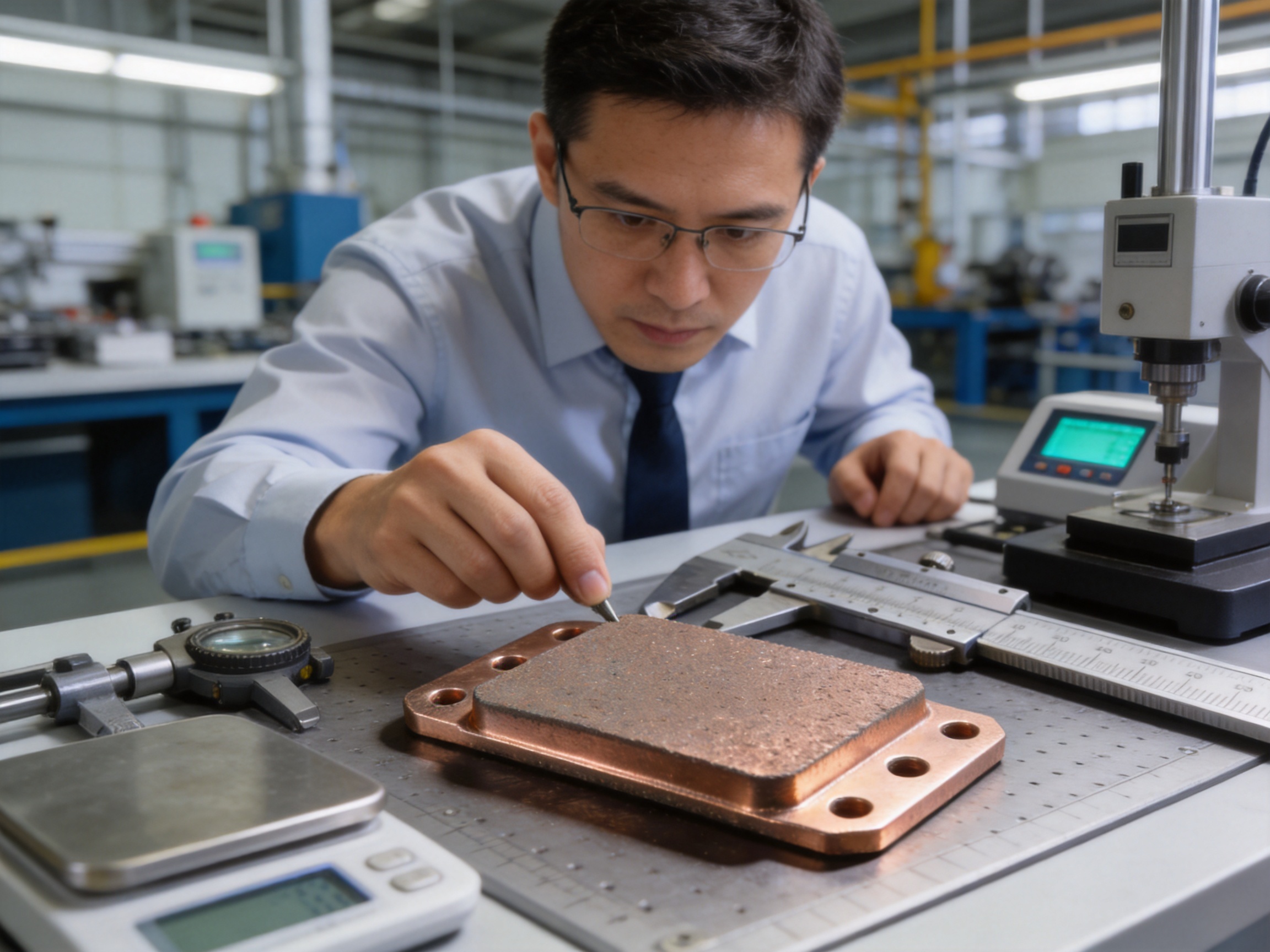
Before installation, the brake pad should be inspected for transportation damage, surface contamination, and dimensional compatibility. The 4-hole mounting points should align correctly with the brake assembly. The mating disc or plate should be clean and free of oil, grease, severe scoring, or foreign particles. Contaminants can reduce friction and cause abnormal wear.
During installation, the pad should be seated evenly. Mounting fasteners should be tightened according to equipment specifications. Uneven tightening can cause pad distortion, uneven pressure, or vibration. If the brake system requires bedding-in, the process should be performed according to the equipment manufacturer’s instructions to establish stable contact between the pad and mating surface.
During operation, maintenance personnel should monitor wear thickness, friction performance, braking noise, vibration, and temperature. A sudden change in braking behavior may indicate contamination, mounting looseness, mating surface damage, or abnormal operating load. Regular inspection helps detect problems before they become serious failures.
Replacement intervals depend on operating load, braking frequency, environment, and maintenance quality. Under normal working conditions, the service life may be significantly longer than conventional friction materials, but actual results vary by application. For severe environments, operators should establish inspection intervals based on field data.
Technical Comparison With Lower-Grade Alternatives
Many lower-grade brake pads may initially appear attractive because of lower purchase cost. However, their limitations become clear in demanding applications. Lower-density pads may wear faster, crack more easily, or provide less stable friction. Materials with poor thermal conductivity may overheat and suffer performance fade. Pads with inconsistent graphite distribution may show uneven braking behavior.
The copper-based brake pad described here addresses these weaknesses with a dense metallic matrix, stable friction coefficient, controlled microstructure, and strict defect inspection. It is built for industrial users who value reliability, durability, and predictable performance over short-term savings. When evaluated over the full operating life, its benefits can include fewer replacements, less downtime, improved safety, and better equipment protection.
Why Professional Manufacturing Matters
Friction material performance depends heavily on manufacturing quality. Two brake pads may look similar from the outside but perform very differently if their internal structures are different. Powder segregation, poor compaction, improper sintering, or inadequate inspection can all lead to unstable performance. Therefore, supplier capability is as important as product specification.
A professional manufacturer with advanced presses, sintering furnaces, precision forming equipment, and experienced technicians can control the details that determine final quality. Jiande Welfine Technology Co., Ltd. has developed powder metallurgy expertise over more than 20 years, serving multiple industrial fields. Its experience with sintered components, bushings, self-lubricating bearings, and precision parts supports a disciplined approach to brake pad manufacturing.
The company’s commitment to technology leadership, quality priority, stable manufacturing, continuous innovation, and long-term cooperation is reflected in its quality systems and customization capabilities. For customers, this means access not only to a product, but also to engineering support, sample testing, production consistency, and responsive service.
Environmental and Operational Efficiency Benefits
Durable friction components can contribute to operational efficiency and resource conservation. A brake pad with longer service life reduces the number of replacements required over the life of the equipment. This means fewer spare parts consumed, less maintenance labor, reduced packaging and shipping frequency, and less waste from worn components.
Stable braking performance can also improve energy and system efficiency by reducing unnecessary drag, vibration, or corrective maintenance. When brake pads fit correctly and wear evenly, the braking system can operate more smoothly. This helps protect related components and supports predictable machine operation.
Although the product is primarily designed for industrial performance, its long-life and low-maintenance characteristics can help customers reduce indirect environmental impact associated with frequent replacement and unplanned repair.
Buyer Considerations Before Selection
When selecting an industrial brake pad, buyers should provide detailed application information whenever possible. Important details include equipment type, braking torque requirement, operating temperature, braking frequency, load condition, mating material, installation method, environmental exposure, and expected service life. Drawings or samples are especially useful for confirming dimensions and hole locations.
For replacement projects, buyers should also share previous failure modes. If the old brake pad cracked, wore too quickly, overheated, produced noise, or caused disc damage, the supplier can analyze possible causes and recommend suitable adjustments. In some cases, material formulation, density, thickness, or mounting design can be optimized.
Sample testing is recommended when the application is critical or when replacing a different material type. Testing allows the customer to verify fitment, braking response, wear rate, and compatibility with the mating component. This reduces risk before full-scale procurement.
Q&A Section
Q1: What makes this copper-based brake pad suitable for heavy-duty industrial braking?
The product combines a high-density copper-based matrix, stable friction coefficient, strong heat dissipation, and a secure 4-hole mounting design. These characteristics help it withstand high load, repeated braking, and elevated temperature conditions common in heavy industrial equipment.
Q2: Why is the 79.5×62×7.3mm dimension important?
Precise dimensions ensure that the brake pad fits the intended brake assembly correctly. Accurate length, width, thickness, and hole position help maintain proper contact pressure, reduce installation problems, and support stable braking performance.
Q3: What is the benefit of the 4-hole design?
The 4-hole design improves mounting stability and distributes force more evenly during braking. It helps prevent pad shifting, reduces vibration, improves contact consistency, and simplifies installation and maintenance.
Q4: Why is density control important?
Density affects strength, wear resistance, thermal conductivity, and friction stability. A density of 6.2g/cm³ helps provide a strong and durable structure that resists excessive wear and mechanical damage under industrial braking loads.
Q5: What does “no graphite segregation” mean?
It means graphite is uniformly distributed throughout the friction material rather than concentrated in local areas. Uniform distribution helps maintain consistent friction, even wear, and stable braking behavior.
Q6: What problems can cracks cause in a brake pad?
Cracks can expand under braking pressure, vibration, and thermal cycling. They may lead to chipping, delamination, uneven contact, or premature failure. A crack-free brake pad is essential for safety and reliability.
Q7: How does copper improve brake pad performance?
Copper provides excellent thermal conductivity and mechanical support. It helps dissipate heat, reduce thermal fade, and maintain structural stability during repeated braking cycles.
Q8: What applications are suitable for this brake pad?
It is suitable for cranes, excavators, loaders, rolling mills, continuous casters, mining winches, conveyors, machine tools, elevators, wind turbine generators, ship deck machinery, and offshore platform braking systems.
Q9: Can the brake pad be customized?
Yes. Customization can be provided for dimensions, density, hole arrangement, friction properties, and other design requirements according to customer drawings, samples, or operating conditions.
Q10: Why choose a manufacturer with powder metallurgy expertise?
Powder metallurgy friction materials require strict control of raw powders, mixing, pressing, sintering, finishing, and inspection. An experienced manufacturer can deliver more consistent density, microstructure, dimensions, and braking performance.
Conclusion
The 79.5×62×7.3mm high-density copper-based brake pad is a compact but powerful friction component designed for demanding industrial braking systems. Its 6.2g/cm³ density, approximately 195g weight, stable dry friction coefficient, low wear rate, high shear strength, and wide working temperature range make it suitable for heavy engineering machinery, metallurgical equipment, mining systems, industrial machines, and marine applications.
Its advantages over many conventional friction materials include better heat dissipation, stronger mechanical integrity, longer service life, more stable friction, and stricter quality consistency. The 4-hole design improves mounting stability, while the commitment to no graphite segregation, no cracks, and no defects supports safe and reliable operation.
Behind the product is a manufacturing system based on powder metallurgy expertise, advanced pressing and sintering equipment, precision forming capability, certified quality management, and more than two decades of industrial experience. For customers seeking durable, customizable, and inspection-driven brake pad solutions, this copper-based friction material offers a strong balance of performance, reliability, and long-term value.
References
GB/T 5763-2018, Brake Linings for Automobiles and Industrial Applications, Standardization Administration of China.
GB/T 10421-2002, Test Method for Wear Performance of Friction Materials, Standardization Administration of China.
GB/T 10419-2008, Test Method for Shear Strength of Friction Materials, Standardization Administration of China.
GB/T 3399-1982, Test Methods for Thermal Conductivity of Metallic Materials, Standardization Administration of China.
German, R. M., Powder Metallurgy and Particulate Materials Processing, Metal Powder Industries Federation.
ASM Handbook, Volume 7: Powder Metal Technologies and Applications, ASM International.
Blau, P. J., Friction Science and Technology: From Concepts to Applications, CRC Press.
Hutchings, I. M. and Shipway, P., Tribology: Friction and Wear of Engineering Materials, Butterworth-Heinemann.
Related products
-
-
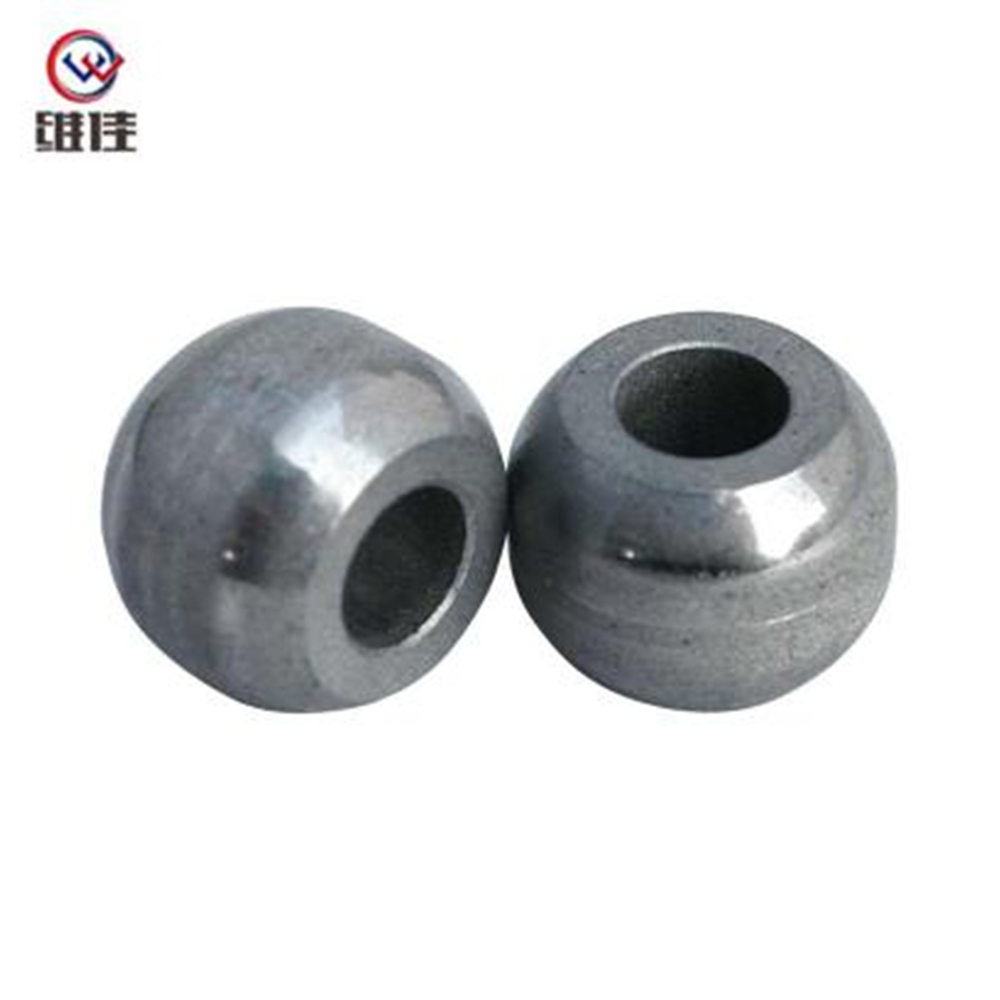
Product Description: High-precision powder metallurgy part (S14*7*10) made of iron material from Jiande Wefine, customized PM components with strict tolerance control.
See Details
Copyright © Jiande Welfine Technology Co., Ltd. All Rights Reserved. Custom Self-lubricating Sintered Bushing Manufacturers
