E-mail us: [email protected]
Tel: +86-15239857375
 English
 中文简体
中文简体

 Home / Author / Shen Yiruo — Senior After-Sales Service Manager / Precision Sintered Forklift Components for Heavy-Duty Self-Lubricating Performance
 Precision Sintered Forklift Components for Heavy-Duty Self-Lubricating Performance
 2026.06.24
 Shen Yiruo — Senior After-Sales Service Manager
Content
- 1 Product Overview
- 2 Basic Product Parameters
- 3 Why Powder Metallurgy Is Ideal for Forklift Components
- 4 FeCu20 Material and Its Performance Advantages
- 5 Manufacturing Process and Quality Control
- 6 Advantages Over Conventional and Competing Components
- 7 Comparison with Common Alternatives
- 8 Application Areas in Forklift Systems
- 9 Importance of Dimensional Precision
- 10 Role of HD460 Oil in Self-Lubrication
- 11 Company Manufacturing Strengths
- 12 Quality Assurance and Certifications
- 13 Customization Capabilities
- 14 Packaging and Transportation Protection
- 15 How the Component Supports Lower Total Cost of Ownership
- 16 Process Control as a Competitive Advantage
- 17 Selection Considerations for Buyers
- 18 Q&A Section
- 18.1 What is the main function of this precision sintered forklift component?
- 18.2 Why is FeCu20 used for this product?
- 18.3 What is the advantage of HD460 oil impregnation?
- 18.4 How does this product differ from a conventional machined bushing?
- 18.5 Can the product be customized?
- 18.6 What quality controls are used during production?
- 18.7 Why is powder metallurgy suitable for mass production?
- 18.8 Is this component suitable for heavy-duty forklift operation?
- 19 Conclusion
- 20 References
- 21 Product: Sumitomo Forklift Component
Modern forklift systems depend on compact, durable, and highly consistent mechanical parts that can operate under heavy loads, repeated motion, vibration, and long working cycles. Among these parts, iron-based oil-impregnated powder metallurgy components play an essential role in maintaining stable movement, reducing friction, and extending service life in transmission, support, and motion-control assemblies.
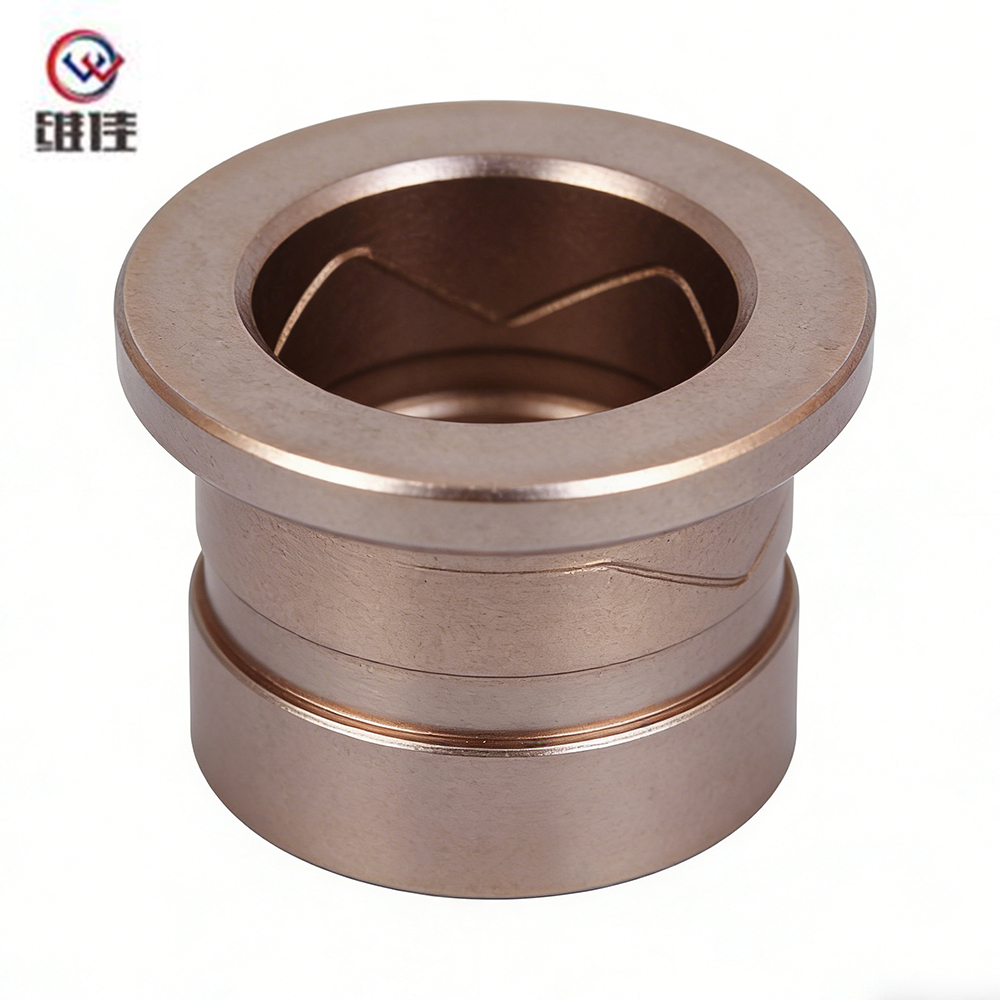
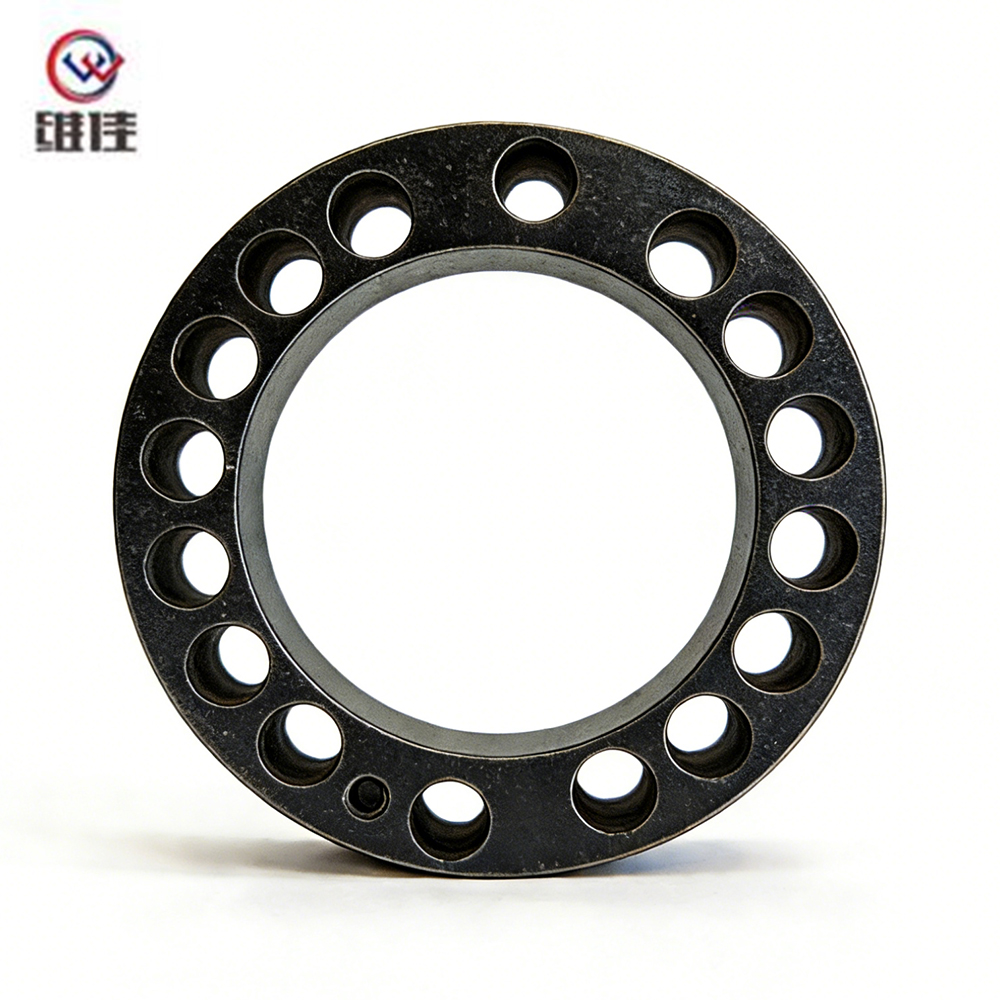
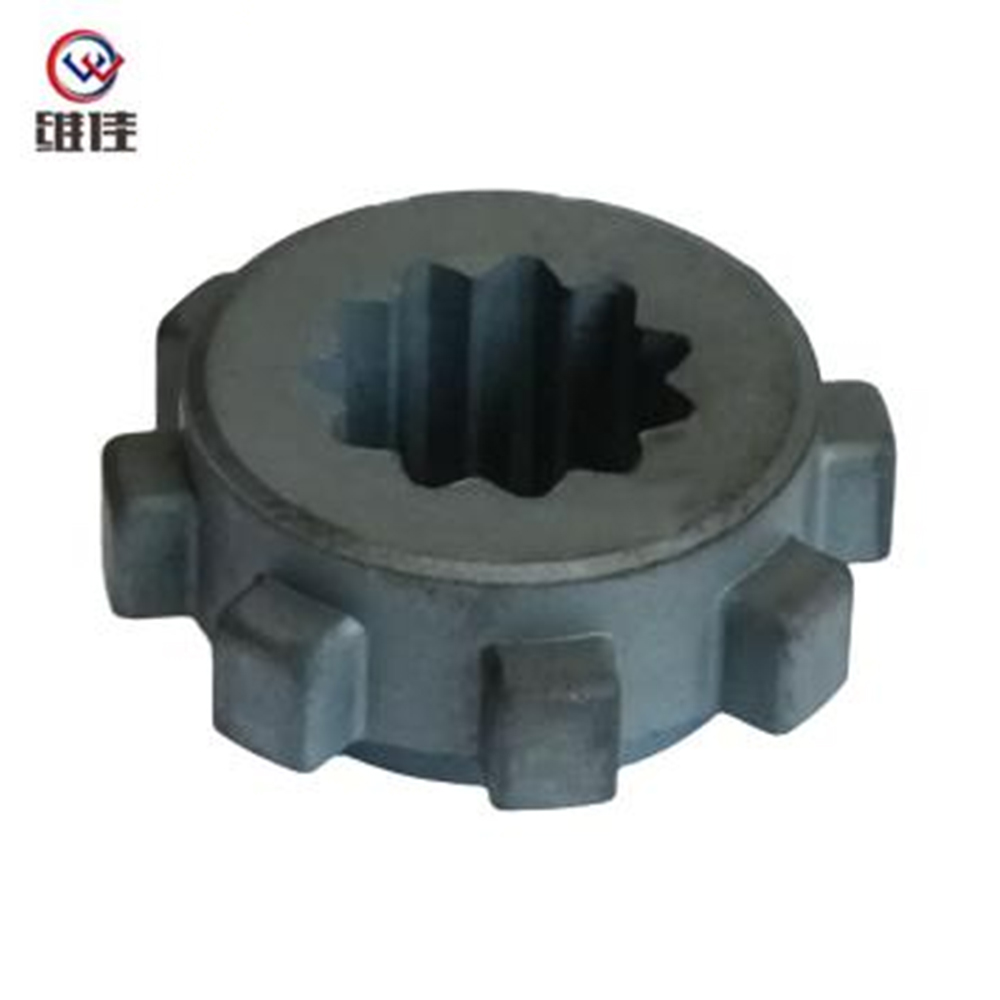
The precision powder metallurgy component discussed in this article is designed for Sumitomo forklift applications and manufactured as an iron-based oil-impregnated bearing or structural component. It uses FeCu20 material and is produced through a controlled process that includes pressing, sintering, heat treatment, machining, drilling, oil impregnation with HD460 oil, and protective packaging. This combination of material science, forming accuracy, and lubrication technology makes the product suitable for demanding forklift environments where reliability, interchangeability, and low maintenance are essential.
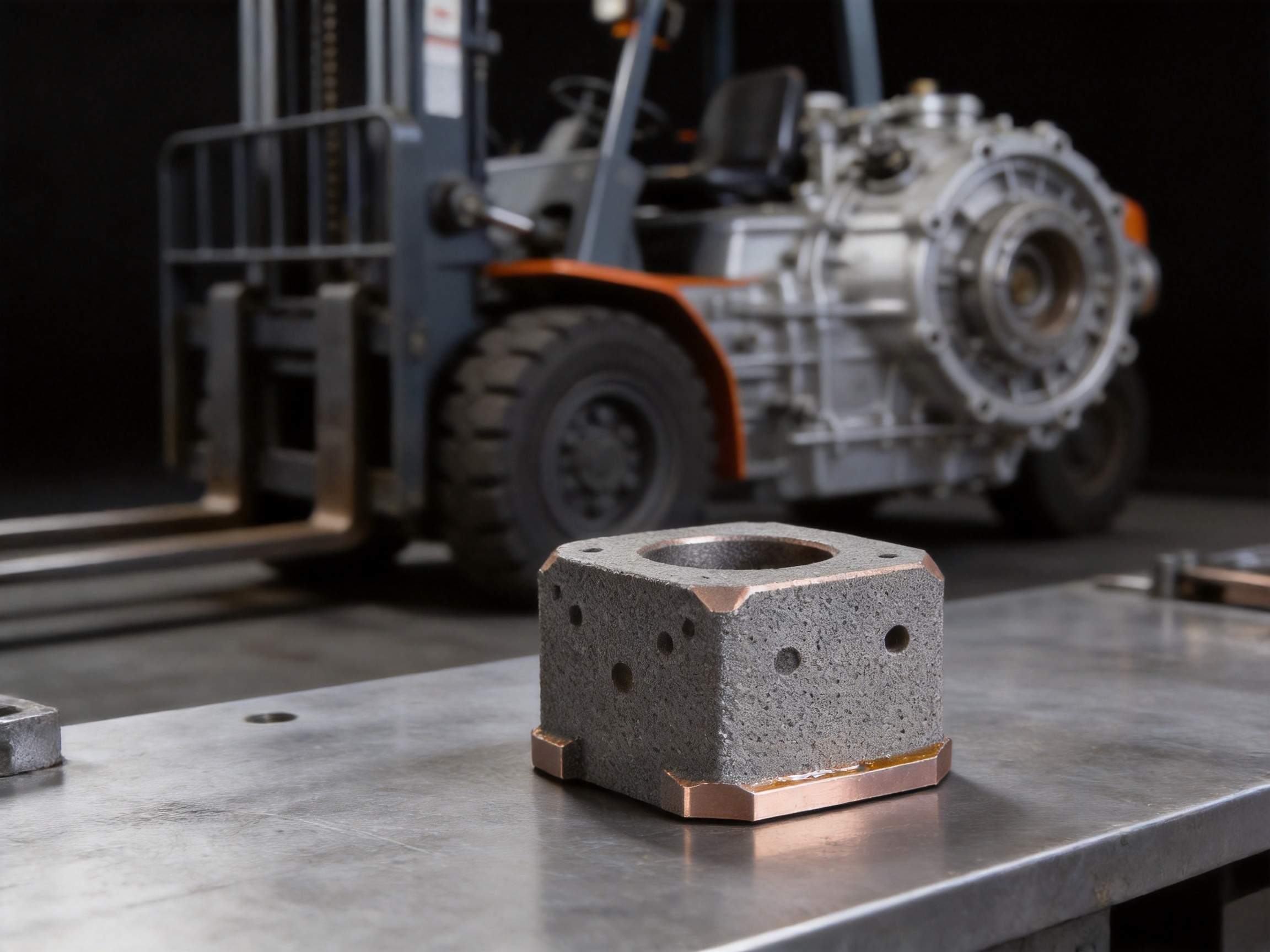
Unlike conventional machined metal parts that may require extensive cutting, external lubrication, and frequent maintenance, this sintered component is engineered with internal porosity that stores lubricating oil. During operation, the oil is gradually released to the friction surface, helping reduce wear, noise, and heat generation. This self-lubricating mechanism is one of the main reasons powder metallurgy components are widely used in industrial vehicles, material handling equipment, and power transmission systems.
Jiande Welfine Technology Co., Ltd. manufactures this product with a strong focus on precision, consistency, and OEM/ODM customization. Established in 2001, the company integrates research and development, production, sales, powder metallurgy sintering, and related precision machining. With ISO 9001:2015 and IATF 16949:2016 certifications, a 13,039-square-meter production base, advanced presses, high-temperature sintering furnaces, precision forming equipment, and more than 150 skilled employees, the company provides a reliable manufacturing foundation for high-performance sintered metal parts and self-lubricating bushings.
Product Overview
This precision sintered forklift component is manufactured from FeCu20, an iron-copper powder metallurgy material known for its mechanical strength, wear resistance, dimensional stability, and compatibility with demanding load-bearing applications. The part is designed to support stable forklift operation in environments where components must withstand frequent starting, stopping, load changes, impact, and continuous motion.
The product belongs to the category of iron-based oil-impregnated bearings and powder metallurgy structural parts. Its function may include support, alignment, rotation assistance, sliding guidance, power transmission support, or self-lubricating bearing action, depending on the forklift assembly in which it is installed. Because forklifts are often used in warehouses, ports, factories, logistics centers, and outdoor industrial sites, every mechanical component must perform reliably even when operating conditions are not ideal.
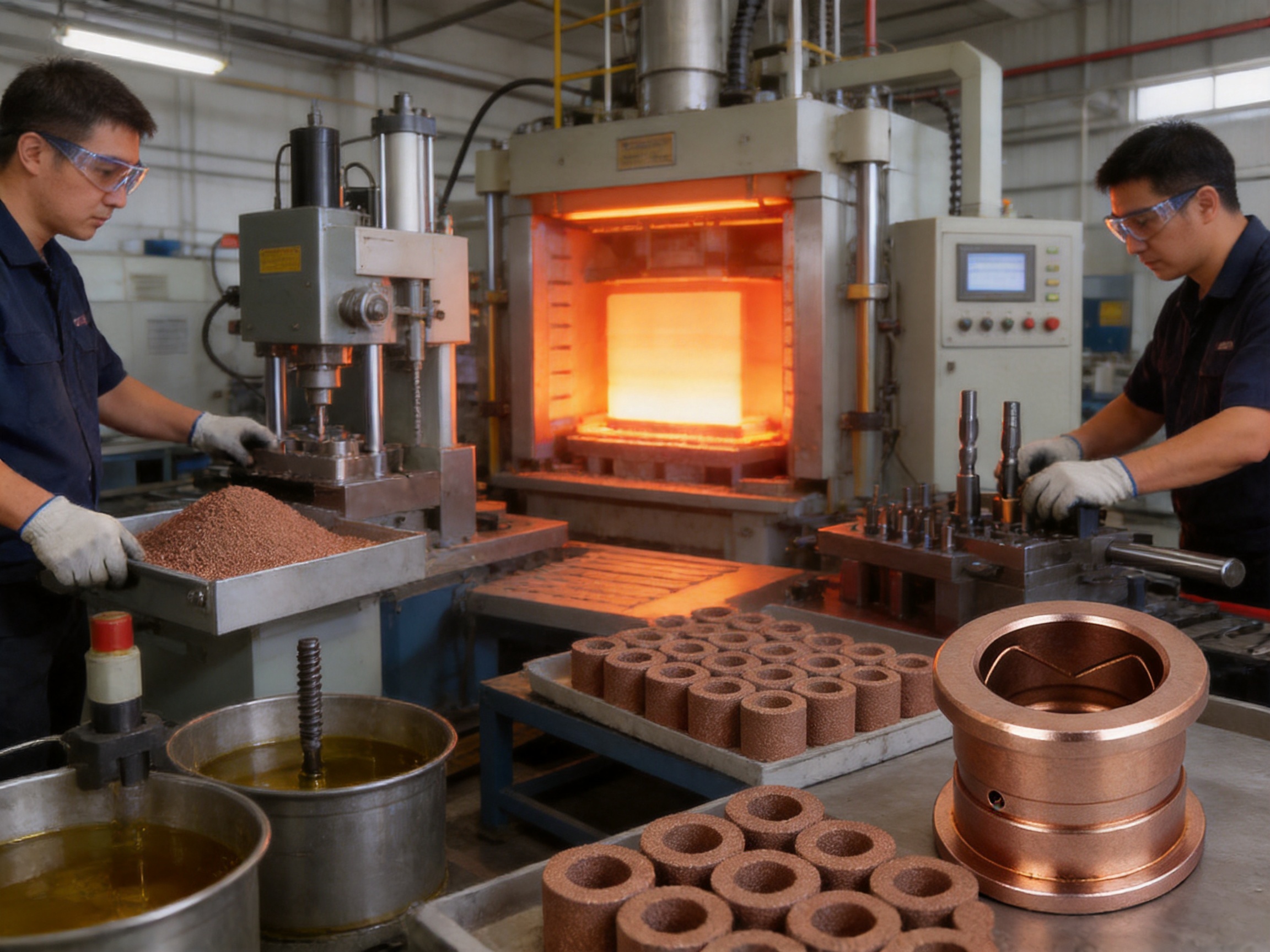
The component is produced according to OEM-level requirements and forklift industry standards. Its manufacturing route is not limited to forming and sintering; instead, it includes multiple precision-enhancing steps. Pressing forms the compacted green part. Sintering gives the component metallurgical bonding and structural strength. Heat treatment improves hardness, toughness, and wear resistance. Machining and drilling refine critical dimensions and functional holes. Oil impregnation with HD460 provides self-lubricating capability. Packaging protects the component from rust, collision, moisture, and contamination during storage and transportation.
This full-process production approach gives the component several advantages over common alternatives. It supports long-term operation with reduced lubrication maintenance, offers good dimensional consistency for assembly, provides high material utilization compared with conventional machining, and enables stable mass production for customers requiring repeatable quality over long supply cycles.
Basic Product Parameters
| Item | Specification |
| Product Type | Powder metallurgy structural and bearing component |
| Application | Forklift transmission, support, motion, and bearing systems |
| Material | FeCu20 iron-copper powder metallurgy material |
| Lubrication Method | Oil impregnation |
| Impregnation Oil | HD460 oil |
| Main Process | Pressing, sintering, heat treatment, machining, drilling, oil impregnation, packaging |
| Typical Function | Self-lubricating support, sliding, guiding, and load-bearing operation |
| Quality Standard | OEM standard and forklift industry standard |
| Customization | Available according to drawings, samples, material requirements, and application conditions |
Why Powder Metallurgy Is Ideal for Forklift Components
Powder metallurgy is especially suitable for forklift components because it combines material efficiency, shape control, porosity design, and repeatable mass production. In this process, metal powder is blended, compacted into shape, sintered at high temperature, and finished through secondary operations. Unlike conventional machining, which removes material from solid metal, powder metallurgy forms the part close to its final shape. This reduces waste and improves production efficiency.
For forklift components, the advantages are more than economic. Powder metallurgy allows engineers to design controlled porosity inside the part. These pores can hold lubricating oil, creating a self-lubricating structure. When the component is exposed to friction and operating temperature, the impregnated oil gradually migrates to the surface. This reduces direct metal-to-metal contact and helps control wear. When the equipment stops and cools, some oil can be reabsorbed into the porous network, supporting repeated lubrication cycles.
Forklifts operate under challenging conditions. They may carry heavy loads, turn frequently, lift and lower materials, travel across uneven ground, and work for many hours each day. Components in the drivetrain, steering, lifting, and support systems are exposed to vibration, pressure, and repeated motion. A sintered self-lubricating component can improve system reliability by offering stable friction behavior and reducing dependence on external lubrication.
Compared with cast, forged, or fully machined parts, powder metallurgy components can also provide superior consistency in large-volume production. Once the tooling, powder mix, compaction pressure, sintering temperature, and finishing parameters are controlled, each production batch can maintain stable dimensional accuracy and performance. This is important for OEM and replacement-part supply because forklift assemblies require interchangeability and predictable fit.
FeCu20 Material and Its Performance Advantages
FeCu20 is an iron-copper-based powder metallurgy material with a copper content designed to improve sintering behavior, wear resistance, mechanical stability, and load-bearing performance. The iron matrix provides strength and structural support, while copper contributes to improved bonding, enhanced anti-friction properties, and good dimensional stability after sintering.
In forklift applications, material selection must consider more than static strength. The component may experience repeated pressure, sliding motion, shock load, vibration, and heat generated by friction. FeCu20 is suitable for such conditions because it offers a balanced combination of hardness, toughness, fatigue resistance, and machinability. When combined with heat treatment, its wear resistance and surface durability can be further improved.
The material is also suitable for oil impregnation. Its controlled pore structure allows HD460 oil to be stored inside the component. This internal lubrication is especially valuable in assemblies that are difficult to service frequently. For forklifts used in continuous logistics operations, reducing lubrication intervals helps lower maintenance downtime and operating cost.
Another important benefit is dimensional stability. Powder metallurgy materials can be engineered to maintain predictable shrinkage and final dimensions after sintering. With precision compaction and sizing or machining, the component can meet tight assembly requirements. This ensures proper fitting with shafts, housings, pins, or other mating parts.
Manufacturing Process and Quality Control
The performance of a sintered forklift component depends heavily on manufacturing control. A good material specification alone is not enough; the final part must be formed, sintered, finished, and inspected with strict process discipline. Jiande Welfine Technology Co., Ltd. applies a complete process route to ensure stable performance from raw powder to finished product.
Powder Preparation and Material Control
The process begins with metal powder selection and blending. Powder particle size, shape, purity, and distribution influence compaction behavior, density, porosity, and final mechanical properties. For FeCu20 components, iron and copper-based powders must be mixed uniformly to ensure consistent composition throughout the part.
Uniform powder mixing helps avoid weak zones, local density variation, and inconsistent sintering. Lubricants or additives may be used to improve pressing performance and protect tooling. Careful control at this stage creates the foundation for repeatable production.
Precision Pressing
Pressing transforms the powder mixture into a green compact with the required geometry. High-efficiency presses and precision tooling are used to form the shape under controlled pressure. The pressing stage determines the initial density distribution, dimensional profile, and green strength of the part.
For forklift components, stable compaction is essential because density variation can lead to inconsistent strength, uneven shrinkage, distortion during sintering, or reduced wear resistance. Precision mold design and controlled press parameters help ensure that the component maintains accurate shape and uniform density.
High-Temperature Sintering
After pressing, the green compact is sintered in a high-temperature furnace. During sintering, metal particles bond together and form a strong metallurgical structure. Temperature, time, atmosphere, and furnace stability all influence final performance.
Controlled sintering strengthens the iron-copper matrix and creates the designed pore structure required for oil impregnation. If the sintering temperature is too low, bonding may be insufficient. If it is too high or poorly controlled, distortion or unwanted microstructural changes may occur. Advanced sintering equipment and experienced process management are therefore essential.
Heat Treatment
Heat treatment is applied to optimize hardness, toughness, strength, and wear resistance. Forklift parts must often balance hardness with impact resistance. Excessive hardness without toughness can increase brittleness, while insufficient hardness may accelerate wear. A properly controlled heat treatment process improves the component’s ability to operate under heavy load and repeated motion.
Precision Machining and Drilling
Although powder metallurgy can produce near-net-shape parts, certain features require secondary machining. Machining is used to refine critical surfaces, improve tolerance, achieve specific fit requirements, and create assembly features. Drilling may be required for holes, oil passages, installation points, or special functional requirements.
This component undergoes machining and drilling after heat treatment and sintering. These operations ensure that the part fits accurately into the forklift system. High dimensional precision reduces assembly difficulty, prevents abnormal vibration, and supports stable mechanical performance.
Oil Impregnation with HD460
Oil impregnation is a key process for this product. The sintered component contains interconnected pores that can absorb and retain lubricating oil. HD460 oil is introduced into the internal pore structure, creating a self-lubricating bearing or sliding component.
During operation, friction and temperature changes encourage the oil to move toward the working surface. This lubrication film reduces wear, lowers noise, helps prevent seizure, and improves operating smoothness. HD460 oil is selected for its viscosity and suitability for heavy-duty industrial applications where load and motion stability are important.
Protective Packaging
Packaging is more than a logistics step. Oil-impregnated sintered components must be protected from rust, dust, moisture, impact, and oil leakage. Professional packaging helps preserve product cleanliness and performance before installation. Anti-rust, anti-collision, shockproof, moisture-proof, and dust-proof measures are used according to shipment and storage requirements.
Advantages Over Conventional and Competing Components
This precision sintered forklift component offers several advantages compared with conventional machined bushings, cast parts, and lower-grade sintered components. These advantages come from the combination of FeCu20 material, controlled powder metallurgy, heat treatment, precision finishing, and HD460 oil impregnation.
Self-Lubricating Operation
One of the most important advantages is self-lubrication. Traditional metal bushings often require frequent greasing or external lubrication. If lubrication is neglected, friction increases, leading to noise, heat, wear, and possible failure. The oil-impregnated porous structure of this component reduces dependence on external lubrication and supports more stable operation over time.
High Wear Resistance
The FeCu20 material and heat treatment process improve resistance to sliding wear and mechanical stress. In forklift systems, wear resistance is critical because parts are subjected to repeated motion and load changes. Improved wear resistance means longer service life, better dimensional retention, and reduced replacement frequency.
Reliable Dimensional Precision
Precision forming, machining, and drilling help ensure accurate dimensions and stable assembly. Dimensional errors in forklift components can cause misalignment, vibration, abnormal noise, and accelerated wear. High precision supports proper fit with mating parts and improves overall system reliability.
Stable Mass Production Quality
Because powder metallurgy is highly repeatable when properly controlled, it is suitable for long-term supply and batch production. Customers requiring consistent parts for OEM assembly, repair markets, or spare parts programs benefit from stable dimensions, repeatable mechanical performance, and controlled lubrication characteristics.
Better Material Utilization
Conventional machining removes significant material from bar stock or cast blanks. Powder metallurgy forms the part close to the required shape, reducing scrap and improving material utilization. This advantage can help control production cost while supporting sustainability and efficient manufacturing.
Lower Maintenance Burden
Self-lubricating performance reduces lubrication frequency and can lower maintenance downtime. In busy logistics operations, downtime is costly. Components that help forklifts operate longer between service intervals provide practical value for fleet managers, maintenance teams, and equipment owners.
Improved Noise and Vibration Control
Lubrication stability and accurate fit help reduce friction noise and vibration. In warehouse or indoor industrial environments, quieter operation improves working conditions. Reduced vibration also protects nearby components and supports longer system life.
Comparison with Common Alternatives
| Performance Factor | Oil-Impregnated FeCu20 Sintered Component | Conventional Machined Bushing | Low-Grade Generic Sintered Part |
| Lubrication | Internal HD460 oil impregnation supports self-lubrication | Usually depends on external grease or oil | May have inconsistent oil storage or limited lubrication |
| Wear Resistance | High due to FeCu20 material and heat treatment | Depends on alloy and surface finish | Variable due to material and process instability |
| Dimensional Consistency | Controlled pressing, sintering, machining, and drilling | Can be accurate but less efficient in mass production | Often less stable across batches |
| Maintenance Demand | Lower because of self-lubricating structure | Higher because lubrication is often manual | Uncertain depending on porosity and oil retention |
| Material Utilization | High near-net-shape manufacturing efficiency | Lower due to cutting waste | High, but quality may be inconsistent |
| Suitability for Heavy-Duty Forklift Use | Strong compatibility with demanding load and motion conditions | Possible, but may require frequent lubrication | Risk of premature wear if process control is weak |
| Batch Supply Stability | Excellent for OEM/ODM and long-term production | Depends on machining capacity and material supply | Often less reliable without strict quality systems |
Application Areas in Forklift Systems
This sintered component is suitable for multiple forklift operating systems where strength, precision, and lubrication are needed. It may be applied in transmission systems, power transmission matching assemblies, motion-control structures, support points, self-lubricating bearing positions, and related mechanical interfaces.
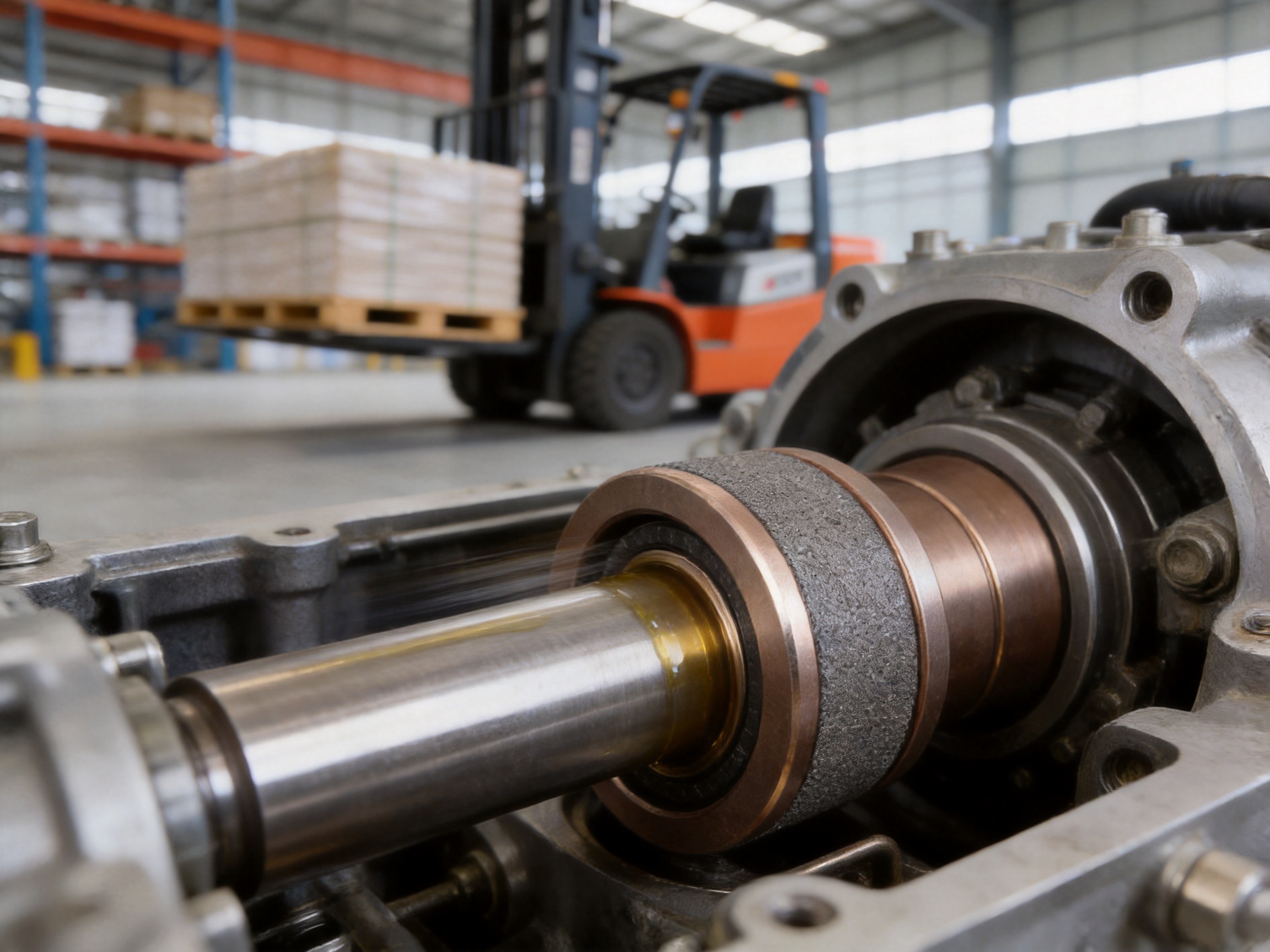
In transmission systems, stable support and low friction help improve power transfer efficiency. In support structures, the component helps maintain alignment and load distribution. In motion-control assemblies, accurate dimensions and smooth movement help prevent jamming and abnormal wear. In bearing or bushing positions, the oil-impregnated structure reduces friction between moving surfaces.
The product is particularly valuable in forklift systems that operate for long working hours. Many forklifts are used in logistics warehouses where equipment utilization is high and maintenance windows are limited. A component that can provide long-term lubrication and stable wear resistance helps reduce unplanned downtime.
It is also useful in environments where dust, moisture, vibration, or variable loads are present. Although no component is maintenance-free under all conditions, a high-quality oil-impregnated sintered part can offer better resilience than ordinary metal components when properly selected and installed.
Importance of Dimensional Precision
Dimensional precision directly affects forklift safety, performance, and service life. In a mechanical assembly, a bushing or structural support part must maintain the correct clearance with shafts, pins, housings, or mating surfaces. If clearance is too small, friction and heat can increase. If clearance is too large, vibration, impact, misalignment, and noise may occur.
The manufacturing route for this component includes both near-net-shape powder forming and secondary finishing. Pressing creates the basic geometry, sintering stabilizes the structure, and machining or drilling refines functional features. This layered approach helps achieve precision without sacrificing the material advantages of powder metallurgy.
High dimensional consistency is especially important for customers purchasing components in bulk. If each batch varies, assembly teams may need additional sorting, adjustment, or inspection. Stable dimensions reduce assembly time, simplify inventory control, and help ensure that replacement parts perform as expected.
For OEM or ODM projects, dimensional precision also supports design flexibility. Customers can provide drawings or samples, and the manufacturer can evaluate whether powder metallurgy forming, machining allowance, porosity requirements, oil impregnation, and heat treatment should be adjusted to meet actual working conditions.
Role of HD460 Oil in Self-Lubrication
The oil impregnation step is a defining feature of this product. HD460 oil is used to fill the internal pores of the sintered structure. The oil acts as a built-in lubrication reservoir, reducing friction during operation. The viscosity characteristics of HD460 make it suitable for heavy-duty applications where a stable oil film is beneficial.
In a forklift component, lubrication must remain effective despite load changes, vibration, and repeated motion. An oil-impregnated component can release lubricant where it is needed most: at the contact interface. This helps protect the metal surface, lower the coefficient of friction, reduce noise, and minimize heat generation.
Self-lubrication is not only a performance advantage but also a maintenance advantage. Forklifts in industrial environments may be difficult to service frequently, especially when equipment operates across multiple shifts. A component that stores lubricant internally can help extend maintenance intervals and reduce the risk of dry running.
The effectiveness of oil impregnation depends on pore structure, oil compatibility, impregnation method, cleanliness, and post-treatment handling. Proper process control ensures that the component absorbs sufficient oil and retains it until installation and operation.
Company Manufacturing Strengths
Jiande Welfine Technology Co., Ltd. has developed strong capabilities in powder metallurgy and precision machining since its establishment in 2001. As a high-tech enterprise integrating research and development, production, and sales, the company focuses on powder metallurgy sintering, self-lubricating bushings, oil-impregnated bearings, and precision sintered components for industrial applications.
The company’s 13,039-square-meter production base provides the space and organization required for efficient manufacturing. Advanced production and testing equipment support stable output, including high-efficiency presses, high-temperature sintering furnaces, and precision forming machines. These facilities allow the company to control critical production stages from powder forming to final inspection.
More than 150 skilled employees contribute to production management, process control, technical support, inspection, and customer service. Their experience is important because powder metallurgy quality depends not only on equipment but also on process knowledge. Tooling design, powder selection, compaction parameters, sintering atmosphere, heat treatment conditions, machining strategy, and oil impregnation control all require technical judgment.
The company has more than 20 years of industry experience and supports OEM/ODM customization based on customer drawings or samples. This is important for forklift components because each application may have unique dimensional, load, lubrication, and assembly requirements. Rather than offering only standard parts, the company can provide material, size, and process optimization according to application conditions.
Quality Assurance and Certifications
Quality assurance is fundamental for forklift components because failure can affect equipment performance, maintenance cost, and operational safety. Jiande Welfine Technology Co., Ltd. strictly implements quality management systems and has passed ISO 9001:2015 and IATF 16949:2016 certifications. These certifications support disciplined production, traceability, corrective action, and continuous improvement.
For this sintered forklift component, quality control may include dimensional inspection, material composition testing, hardness testing, density measurement, porosity evaluation, machining accuracy inspection, oil impregnation verification, appearance inspection, and packaging checks. Full-dimensional inspection using precision measuring instruments helps confirm that the part meets drawing requirements. Hardness and density testing confirm that sintering and heat treatment have achieved the expected mechanical properties.
Oil impregnation testing is also important because lubrication performance depends on oil content and distribution. A component with insufficient oil may wear faster, while poor handling after impregnation can lead to leakage or contamination. Proper inspection and packaging help maintain lubrication quality before use.
Before shipment, products are inspected to ensure they meet customer and industry requirements. This emphasis on inspection is especially valuable for customers purchasing customized components, where part geometry and performance requirements may differ from standard catalog items.
Customization Capabilities
Customization is a major strength of powder metallurgy manufacturing. Customers can provide drawings, samples, load requirements, working environment information, shaft or housing dimensions, lubrication requirements, and expected service life. The manufacturer can then recommend suitable material, density, heat treatment, machining tolerance, surface finish, and oil impregnation strategy.
For this forklift component, customization may include dimensional adjustment, hole position modification, groove or chamfer design, density control, hardness optimization, oil type selection, and packaging method. Small-batch trial production can be used to verify fit and function before mass production. Once the design is approved, tooling and process parameters can be stabilized for repeat supply.
This customized approach gives customers an advantage over generic off-the-shelf parts. A component designed for the actual application can reduce wear, improve assembly compatibility, and extend service life. For forklift repair and maintenance markets, customized replacement components can also help restore equipment performance when original parts are difficult to source.
Packaging and Transportation Protection
Oil-impregnated sintered components require careful packaging because they must remain clean, rust-free, and protected from impact. Professional anti-rust and anti-oil-leakage treatment helps preserve the component during storage and long-distance transportation. Inner packaging may be shockproof, moisture-proof, and dust-proof. Outer packaging can include cartons or pallets depending on shipment quantity and customer requirements.
Packaging quality matters because even a precisely manufactured component can be damaged by poor logistics. Rust can affect surface function, dust can contaminate oil and friction surfaces, and impact can damage edges or precision holes. Proper packaging reduces these risks and ensures that the customer receives parts ready for inspection, assembly, or storage.
How the Component Supports Lower Total Cost of Ownership
The purchase price of a component is only one part of its economic value. For forklift operators and equipment manufacturers, total cost of ownership includes installation efficiency, maintenance frequency, downtime, replacement rate, reliability, and spare parts management. A high-quality oil-impregnated sintered component can reduce long-term cost in several ways.
First, self-lubricating performance can reduce manual lubrication requirements. This saves labor and reduces the risk of improper maintenance. Second, wear resistance and dimensional stability can extend replacement intervals. Third, stable batch quality reduces assembly problems and inspection burden. Fourth, high compatibility with forklift systems helps prevent secondary damage to mating components.
In industrial operations, downtime can be more expensive than the part itself. If a forklift is unavailable during a busy logistics period, productivity suffers. Components that help maintain equipment reliability provide value far beyond their individual cost.
Process Control as a Competitive Advantage
Many suppliers can produce sintered metal parts, but not all can maintain stable quality under long-term production. Process control is what separates high-performance components from ordinary products. For this product, control is required at every stage: powder blending, pressing, sintering, heat treatment, machining, drilling, oil impregnation, inspection, and packaging.
Stable powder blending ensures material consistency. Controlled pressing prevents density variation. Accurate sintering creates the required microstructure and pore network. Heat treatment improves mechanical properties. Machining and drilling ensure assembly precision. Oil impregnation provides lubrication performance. Inspection verifies compliance. Packaging protects the finished part.
This complete control chain gives the product a competitive advantage. Customers receive not only a metal part but a carefully engineered component with predictable behavior in demanding forklift environments.
Selection Considerations for Buyers
When selecting a sintered forklift component, buyers should evaluate more than basic dimensions. Important factors include material grade, density, hardness, porosity, lubrication method, oil type, operating load, shaft speed, working temperature, mating surface material, environmental contamination, and maintenance expectations.
For applications requiring self-lubrication, the buyer should confirm oil impregnation quality and compatibility with the working environment. For high-load applications, material strength and heat treatment should be considered. For precision assemblies, tolerance and surface finish should be specified clearly. For customized projects, drawings and samples should be provided with application details.
Working with an experienced manufacturer helps ensure that these factors are evaluated correctly. Jiande Welfine Technology Co., Ltd. can provide technical support for material, size, and process optimization according to actual conditions.
Q&A Section
What is the main function of this precision sintered forklift component?
The component is used as a powder metallurgy structural or bearing part in forklift systems. It can support sliding, guiding, rotation assistance, load-bearing, alignment, or power transmission matching depending on the assembly. Its oil-impregnated structure helps reduce friction and wear.
Why is FeCu20 used for this product?
FeCu20 provides a strong iron-based matrix with copper-enhanced sintering performance, wear resistance, and dimensional stability. It is suitable for heavy-load and long-term operating conditions commonly found in forklift systems.
What is the advantage of HD460 oil impregnation?
HD460 oil is stored in the porous structure of the sintered component. During operation, the oil gradually reaches the friction surface, helping reduce wear, noise, heat, and the need for frequent external lubrication.
How does this product differ from a conventional machined bushing?
A conventional machined bushing is usually made from solid material and often depends on external lubrication. This sintered component has controlled porosity for internal oil storage, offers efficient near-net-shape production, and provides self-lubricating performance that can reduce maintenance.
Can the product be customized?
Yes. Jiande Welfine Technology Co., Ltd. supports OEM/ODM production based on customer drawings, samples, material requirements, and application conditions. Customization can include dimensions, holes, tolerances, heat treatment, oil impregnation, and packaging.
What quality controls are used during production?
Quality control can include material composition testing, density testing, hardness testing, dimensional inspection, machining accuracy checks, oil impregnation verification, visual inspection, and final inspection before shipment.
Why is powder metallurgy suitable for mass production?
Powder metallurgy forms components close to their final shape, reduces material waste, and supports repeatable production once tooling and process parameters are controlled. It is ideal for high-volume parts requiring consistent geometry and performance.
Is this component suitable for heavy-duty forklift operation?
Yes. The FeCu20 material, heat treatment, precision machining, and HD460 oil impregnation make it suitable for heavy-load, long-working-hour, and complex forklift operating conditions when properly selected and installed.
Conclusion
The precision oil-impregnated sintered forklift component represents a practical combination of advanced material engineering, powder metallurgy manufacturing, and self-lubricating technology. Made from FeCu20 and impregnated with HD460 oil, it provides strong wear resistance, dimensional stability, load-bearing capability, and reduced maintenance requirements.
Its manufacturing process includes pressing, sintering, heat treatment, machining, drilling, oil impregnation, and protective packaging. Each stage contributes to final performance. Compared with conventional machined bushings or lower-grade generic parts, this component offers better lubrication stability, efficient material use, reliable mass production consistency, and suitability for demanding forklift applications.
Jiande Welfine Technology Co., Ltd. strengthens the product value with more than 20 years of powder metallurgy experience, a modern 13,039-square-meter production base, advanced equipment, skilled personnel, OEM/ODM customization, and certified quality management systems. For customers seeking durable, precise, and self-lubricating forklift components, this product provides a reliable solution for improving operational stability and reducing long-term maintenance burden.
References
German, R. M. Powder Metallurgy and Particulate Materials Processing. Metal Powder Industries Federation.
ASM International. ASM Handbook, Volume 7: Powder Metallurgy.
Thümmler, F., and Oberacker, R. Introduction to Powder Metallurgy. The Institute of Materials.
Hoganas AB. Handbook for Sintered Components: Materials, Processes, and Applications.
ISO 5755. Sintered Metal Materials: Specifications and Mechanical Properties.
ISO 9001:2015. Quality Management Systems: Requirements.
IATF 16949:2016. Quality Management System Requirements for Automotive Production and Relevant Service Parts Organizations.
Product: Sumitomo Forklift Component

Related products
-
-
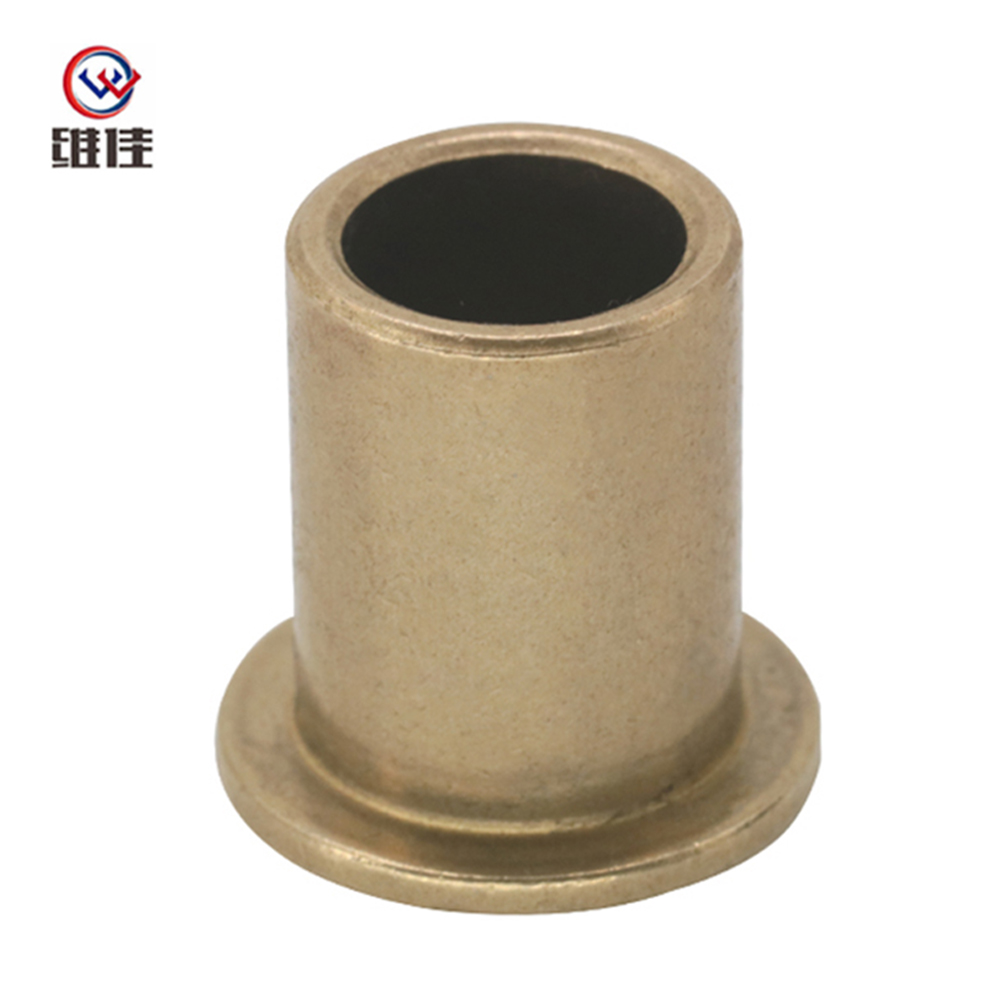
Our sintered bronze self-lubricating bearings are engineered for demanding industrial applications where traditional lubrication is impractical. Designed with advanced powder metallurgy technology, th...
See Details
Copyright © Jiande Welfine Technology Co., Ltd. All Rights Reserved. Custom Self-lubricating Sintered Bushing Manufacturers
