 English
 中文简体

This 4×11.5×5.2mm powder metallurgy gear is manufactured through a precise press-sinter-through hole-oil impregnation process, with strict control of press density (6.7–6.8g/cm³) and sintering tempera...
See DetailsE-mail us: [email protected]
Tel: +86-15239857375


 Home / Author / Shen Yiruo — Senior After-Sales Service Manager / Oil-Impregnated Powder Metallurgy Gear for High-Performance Small Appliances
Oil-Impregnated Powder Metallurgy Gear for High-Performance Small Appliances
 2026.09.20
 Shen Yiruo — Senior After-Sales Service Manager
Content
- 1 1. Product Overview and Design Characteristics
- 2 2. Why Powder Metallurgy Is Suitable for Small Gears
- 3 3. Controlled Manufacturing Process
- 4 4. Technical Advantages Compared with Injection-Molded Plastic Gears
- 5 5. Performance in Small Appliance Applications
- 6 6. Manufacturing and Quality Strengths
- 7 7. Customization and OEM Development
- 8 8. Installation and Application Considerations
- 9 9. Service Life and Reliability Evaluation
- 10 10. Economic and Production Advantages
- 11 11. Comparison with Other Gear Solutions
- 12 12. Frequently Asked Questions
- 12.1 Q1: What are the nominal dimensions of the product?
- 12.2 Q2: What does oil impregnation do?
- 12.3 Q3: Is the gear suitable for coffee makers and food processors?
- 12.4 Q4: Can this gear replace an injection-molded plastic gear?
- 12.5 Q5: Will the sintered gear be quieter than a plastic gear?
- 12.6 Q6: What material is normally used?
- 12.7 Q7: What density does the product use?
- 12.8 Q8: What is the sintering temperature?
- 12.9 Q9: How long can the oil remain effective?
- 12.10 Q10: What inspections are available?
- 12.11 Q11: Can the supplier produce customized gears?
- 12.12 Q12: How should customers begin a project?
- 13 13. Recommended Purchasing and Validation Checklist
- 14 14. Conclusion
- 15 References
- 16 Product: Powder Metallurgy Oil-Impregnated Gear (4×11.5×5.2mm)
Small appliances depend on compact transmission systems that must deliver reliable torque, accurate motion, low maintenance, and long service life. Coffee makers, coffee grinders, food processors, juice extractors, office devices, power tools, and automated mechanisms often operate in confined spaces where gears are exposed to repeated starts and stops, vibration, moderate impact loads, elevated temperatures, and limited opportunities for servicing. In these applications, the selection of a small gear can strongly influence the reliability, noise level, efficiency, and warranty performance of the complete product.
The 4 × 11.5 × 5.2 mm oil-impregnated powder metallurgy gear is designed for compact transmission assemblies that require stable dimensions, dependable mechanical strength, and self-lubricating performance. Manufactured through a controlled press-sinter-through-hole-oil-impregnation process, this gear combines the dimensional repeatability of powder metallurgy with the low-maintenance operating characteristics of an oil-impregnated component.
Produced by Jiande Welfine Technology Co., Ltd., the gear is manufactured for OEM and ODM applications in which customers require consistent dimensions, application-specific material selection, controlled porosity, and stable international supply. Its compact size makes it suitable for precision mechanisms, while its sintered metal structure provides performance advantages over many injection-molded plastic alternatives, particularly where load, temperature, dimensional stability, and service life are important.
This article explains the product structure, manufacturing process, performance advantages, application suitability, quality controls, customization options, and selection considerations for buyers and engineers evaluating oil-impregnated sintered gears for small appliances and industrial equipment.
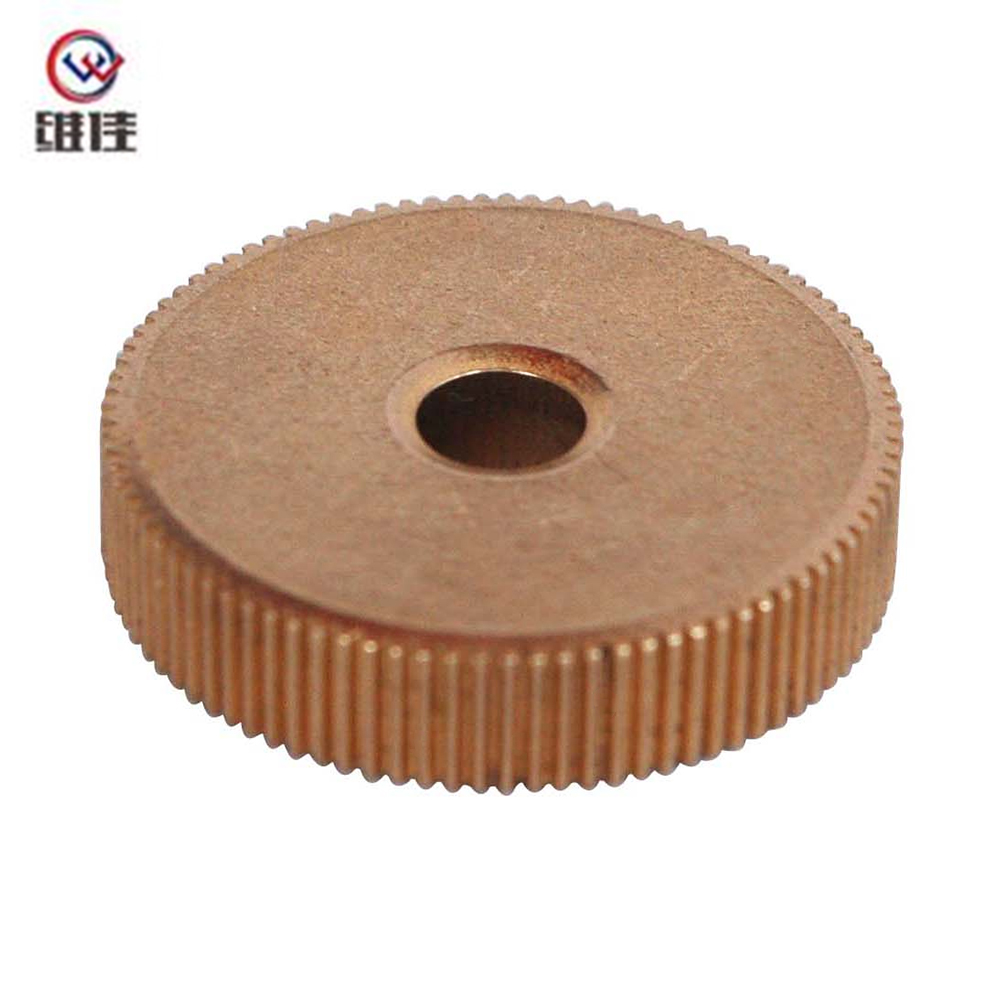
Powder Metallurgy Oil-Impregnated Gear (4×11.5×5.2mm)
1. Product Overview and Design Characteristics
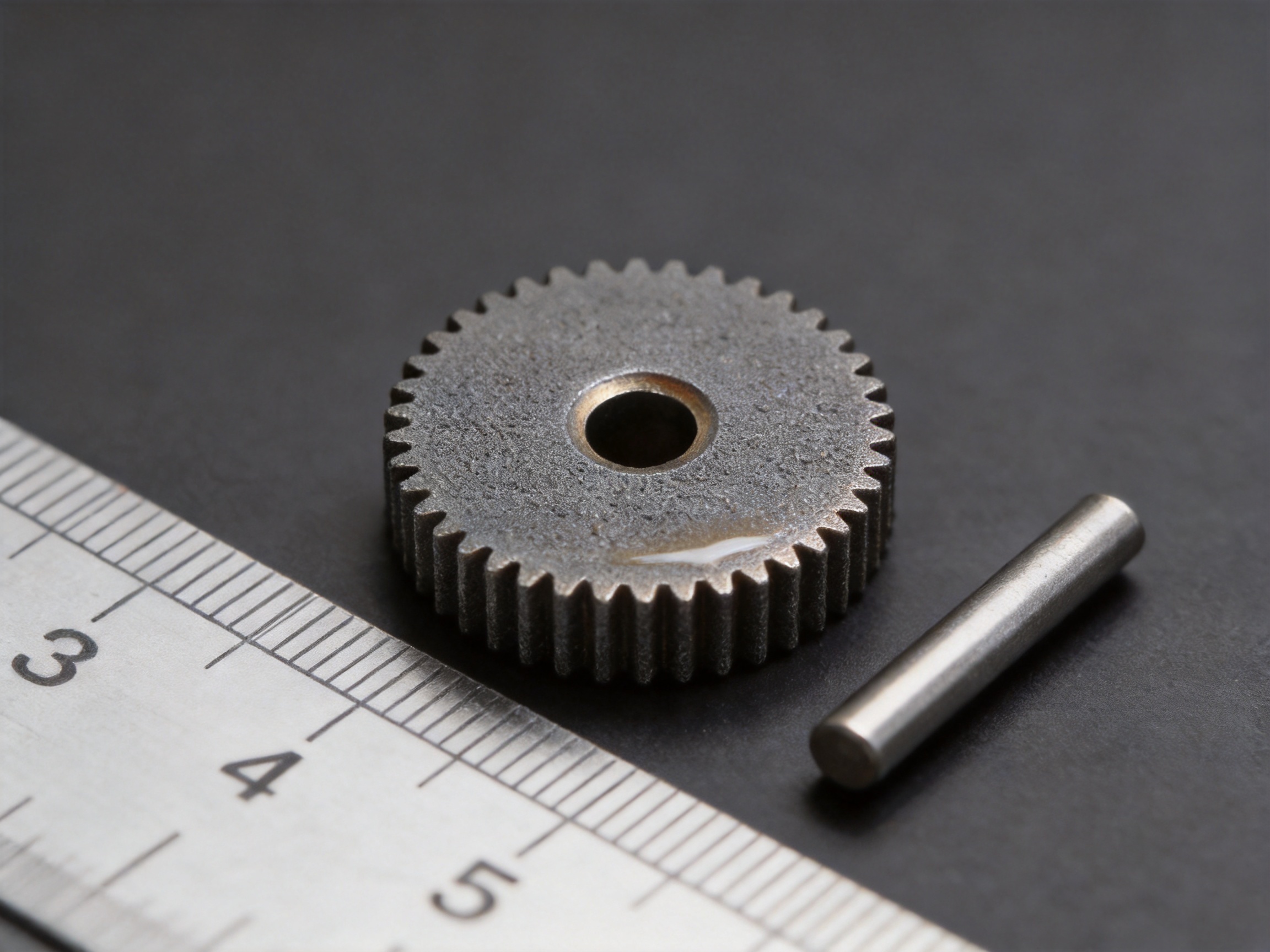
The product is a powder metallurgy oil-impregnated gear with nominal dimensions of 4 mm, 11.5 mm, and 5.2 mm. Depending on the drawing convention used by the customer, these dimensions may represent the gear thickness, outside diameter, bore-related dimension, or other critical envelope measurements. Final interpretation is confirmed through the customer’s engineering drawing, sample, or three-dimensional model before production.
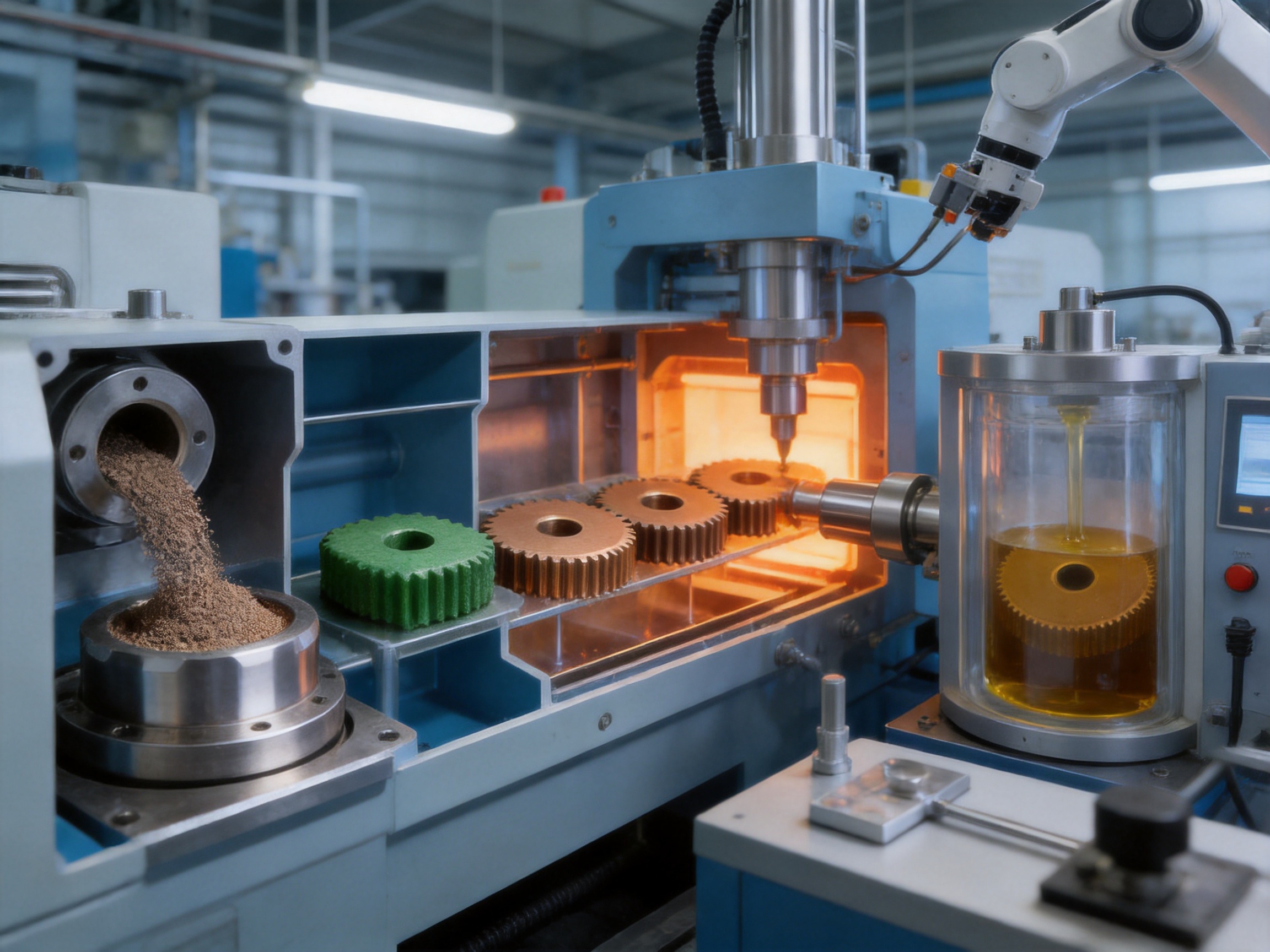
The gear is formed from a carefully selected metal powder blend, compacted under controlled pressure, sintered at a specified temperature, finished through precision sizing or hole machining, and impregnated with lubricating oil. The resulting component contains a controlled network of interconnected pores. These pores store lubricant and release it gradually during operation, supporting continuous or intermittent self-lubrication.
The nominal press density for this model is controlled within approximately 6.7–6.8 g/cm³. Density is a critical manufacturing parameter because it influences tooth strength, dimensional consistency, porosity, oil capacity, impact resistance, and wear behavior. A density that is too low may reduce mechanical strength, while excessive densification can reduce the pore volume available for lubricant storage. The specified density range therefore represents a balance between strength and self-lubricating function.
The sintering temperature for this product is approximately 690°C under the stated production route. Actual furnace profiles may include controlled heating, soaking, cooling, and atmosphere management according to the selected powder composition and customer performance requirements. Process control is used to achieve a stable metallurgical bond between particles while preserving the interconnected porosity needed for oil impregnation.
The gear is intended for applications where a compact metal gear can provide greater mechanical reliability than a conventional plastic gear. It is particularly appropriate when the transmission may experience temporary overload, elevated operating temperature, repeated cycling, or environmental humidity. It can also be selected when the customer wants to reduce scheduled lubrication and simplify assembly maintenance.
2. Why Powder Metallurgy Is Suitable for Small Gears
Powder metallurgy is a manufacturing technology in which metal powders are blended, compacted in a precision die, and thermally bonded through sintering. For small gears and other repetitive components, the process offers a practical combination of material utilization, dimensional repeatability, production efficiency, and design flexibility.
Unlike machining from solid bar stock, powder metallurgy can form much of the gear geometry near its final shape. This reduces material waste and can minimize secondary machining. The process is especially valuable for high-volume production because the forming die establishes key features consistently from part to part.
Powder metallurgy also permits controlled porosity. In a conventional fully dense machined gear, there is no internal pore network capable of storing oil. In an oil-impregnated sintered gear, the pore structure is deliberately retained and managed. After vacuum impregnation, the pores act as a reservoir that supports lubricant release during movement and reabsorption when the gear cools or stops.
Another advantage is the ability to tailor the material system. Iron-based, iron-copper-carbon, and alloyed powder compositions can be selected according to the required combination of strength, wear resistance, machinability, hardness, and oil retention. For higher-load designs, additional alloying elements may be considered after reviewing the operating torque, speed, temperature, mating gear material, and duty cycle.
The process is also suitable for producing compact components with repeatable external dimensions. This is important in small appliance transmissions, where a small change in tooth geometry, bore size, or face width can affect backlash, meshing noise, friction, and assembly alignment.
3. Controlled Manufacturing Process
3.1 Engineering Review and Material Selection
Production begins with a review of the customer’s drawing, sample, application data, and inspection requirements. Important information includes the gear module, tooth count, pressure angle, outside diameter, root diameter, face width, bore geometry, shaft fit, rotation speed, operating torque, load direction, operating temperature, lubrication environment, and expected service life.
The material is selected according to the balance between strength and oil retention. A Fe-Cu-C material system can provide a practical combination of strength, wear resistance, dimensional stability, and impregnation capability for many small appliance applications. For higher mechanical demands, alloy systems containing nickel, molybdenum, or other strengthening elements may be evaluated.
Material selection must also consider the mating components. A gear running against a hardened steel pinion may require different surface characteristics from a gear operating against another sintered component. The design team may also adjust the density, heat treatment, sizing allowance, or oil grade to meet the performance requirements of the complete transmission.
3.2 Powder Blending
Selected powders are blended to achieve a consistent chemical composition and flow behavior. Additives may be used to support pressing, reduce friction between the powder and tooling, and improve the stability of the compact. The blending process must be controlled because segregation or uneven distribution can lead to density variation, dimensional differences, or inconsistent mechanical properties.
For precision gears, powder characteristics such as particle size distribution, apparent density, compressibility, and flowability are important. Stable powder behavior helps the material fill the die cavity uniformly. Uniform filling is essential for minimizing density gradients between the hub, tooth region, and face of the gear.
3.3 High-Density Pressing
During pressing, the powder is placed into a precision die and compacted under controlled pressure. The die defines the principal gear profile and dimensional features. Pressing conditions are adjusted to achieve the target density range of approximately 6.7–6.8 g/cm³ for the described product.
High-density pressing improves the load-bearing capability of the gear and supports better dimensional stability. It can also improve tooth definition and reduce the risk of deformation during handling and sintering. At the same time, the process must preserve sufficient interconnected porosity for oil impregnation. This balance is one of the most important technical considerations in oil-impregnated powder metallurgy.
Pressing parameters may include filling height, compaction speed, upper and lower punch movement, powder quantity, die temperature, and ejection speed. Close control of these variables helps reduce cracks, laminations, density gradients, and ejection damage. For miniature parts, even a small defect can affect assembly or operating performance, so tooling condition and press repeatability are carefully managed.
3.4 Sintering at a Controlled Temperature
After pressing, the green compact has the approximate shape of the finished gear but does not yet possess sufficient strength for service. Sintering thermally bonds the powder particles. The compact is heated in a controlled atmosphere to promote diffusion and metallurgical bonding while limiting oxidation or undesirable chemical reactions.
For this gear, the specified sintering temperature is approximately 690°C. The actual furnace cycle includes controlled heating, a holding stage, and cooling. Temperature uniformity is important because localized overheating or underheating may cause inconsistent shrinkage, hardness, pore structure, or mechanical strength.
Sintering strengthens the compact and stabilizes its material structure. It also affects final dimensions. For this reason, the tooling design and production parameters must account for predictable shrinkage. Consistent furnace loading, atmosphere control, belt speed, and temperature monitoring help maintain dimensional repeatability from batch to batch.
3.5 Through-Hole Processing and Precision Sizing
Where the design requires a highly accurate through-hole, the gear may receive a secondary hole-processing or sizing operation after sintering. This step supports accurate shaft fit, concentricity, and alignment with the mating gear. A reliable bore is particularly important in small transmissions because eccentricity can create uneven tooth loading and increased noise.
Precision sizing can also be used to improve critical external dimensions. The operation applies controlled pressure to the sintered part, bringing selected dimensions closer to the required tolerance. Secondary machining may be used where the drawing requires a level of accuracy that cannot be achieved through pressing and sizing alone.
The appropriate finishing route depends on the dimensional tolerance, material, production volume, tooth profile, and customer inspection standard. A production plan may include bore gauging, outside diameter measurement, face width inspection, runout testing, and gear roll inspection.
3.6 Oil Impregnation
Oil impregnation is the defining finishing process for this product. The sintered gear is placed in a controlled oil impregnation system, commonly using vacuum to remove air from the internal pore network. Lubricating oil is then introduced so that it penetrates the open pores. After pressure equalization and draining, the gear retains oil within its internal structure.
The oil-filled pore network releases lubricant gradually when the gear operates. Frictional heat and movement can bring oil to the surface and tooth interfaces. When the gear cools or stops, some oil may return into the pores through capillary action. This behavior supports a self-lubricating cycle and reduces dependence on frequent external grease or oil application.
Oil selection depends on the operating temperature, speed, load, environmental conditions, and any regulatory or food-contact requirements. Industrial oils in an appropriate viscosity range may be suitable for general mechanisms. Food-processing or beverage equipment may require an optional food-grade lubricant, such as an NSF H1 or equivalent formulation, when the application and risk assessment require it.
4. Technical Advantages Compared with Injection-Molded Plastic Gears
Injection-molded plastic gears made from materials such as POM or PA66 are widely used because they are lightweight, economical, electrically insulating, and naturally capable of reducing noise. They remain an excellent choice in many applications. However, the operating conditions of some small appliances exceed the practical capabilities of plastic gears, particularly where high localized loading, temperature, creep, or dimensional variation is involved.
Oil-impregnated sintered gears provide a metal structure with greater resistance to tooth deformation and load-related damage. The following comparisons are typical engineering ranges rather than universal guarantees. Actual values depend on material grade, density, heat treatment, tooth geometry, lubrication, speed, temperature, and testing method.
| Performance factor | Typical plastic gear characteristic | Oil-impregnated sintered gear characteristic | Practical benefit |
|---|---|---|---|
| Tooth bending strength | Approximately 60–80 MPa for typical POM materials | Approximately 250–350 MPa for selected Fe-Cu-C materials at suitable density | Greater resistance to tooth fracture under torque and short-term overload |
| Contact fatigue resistance | Approximately 15–25 MPa in representative conditions | Approximately 80–120 MPa in representative conditions | Lower risk of tooth profile deterioration and pitting under repeated loading |
| Continuous temperature capability | Often approximately 80–100°C, depending on polymer and load | Approximately 120–150°C with appropriate oil and design | Greater thermal margin near motors, heaters, and hot-water systems |
| Coefficient of thermal expansion | Approximately 80–120 × 10-6/K | Approximately 11–14 × 10-6/K | More stable gear mesh and shaft clearance across temperature changes |
| Moisture absorption | PA66 may absorb approximately 2–3% moisture by weight | Metal structure has negligible moisture absorption | More stable bore and tooth dimensions in humid or splash-prone environments |
| Long-term creep | May reach approximately 0.5–2% under sustained load, depending on temperature | Typically below 0.05% in comparable conditions | Improved preload, backlash, and positioning stability |
| Lubrication requirement | May require grease or compatible self-lubricating additives | Oil stored in the pore structure supports self-lubrication | Reduced scheduled maintenance and simplified service planning |
4.1 Higher Load Capacity
Tooth bending strength is particularly important in compact appliances because the available gear diameter and face width are limited. A small tooth must transmit torque through a narrow cross-section. If the tooth root is exposed to repeated overload, a plastic gear may deform or fracture, while a properly designed sintered metal gear can provide a greater safety margin.
In coffee grinders, for example, a temporary jam caused by a hard foreign particle or excessive coffee beans can create a sharp torque spike. In a food processor, an overloaded bowl or blocked blade can generate a similar event. An oil-impregnated sintered gear may tolerate short-term overloads more effectively than a plastic gear, although the final allowable torque must always be confirmed through application-specific testing.
Higher strength does not eliminate the need for correct gear design. Tooth geometry, pressure angle, shaft support, alignment, backlash, speed, and mating material remain important. A metal gear installed in a poorly aligned transmission can still experience premature wear. The advantage is that the material provides a stronger foundation for a properly engineered assembly.
4.2 Better Resistance to Heat Aging
Many small appliances combine electric motors with heaters, pumps, or hot-water circuits. The gear may not be directly exposed to the heating element, but the surrounding temperature can rise significantly during repeated operation. Plastic materials may soften, oxidize, or lose strength when exposed to heat over long periods. The result can be creep, increased backlash, tooth deformation, or eventual failure.
A sintered metal gear does not undergo polymer-chain degradation in the same way as a plastic gear. With appropriate oil selection and thermal design, it can operate over a wider temperature range. For some applications, continuous operation around 120–150°C may be considered, subject to validation. The oil itself must be selected for thermal stability, evaporation resistance, and compatibility with the surrounding materials.
Representative heat-aging comparisons indicate that a plastic gear may lose a significant portion of its original bending strength after extended exposure to elevated temperature, while the metal matrix of a sintered gear can retain a much higher proportion of its mechanical capability. Actual retention depends on atmosphere, temperature, stress, oil condition, and material grade.
4.3 Improved Dimensional Stability
Dimensional stability directly affects gear backlash and tooth engagement. Plastic gears are sensitive to thermal expansion and, in the case of hygroscopic polymers such as nylon, moisture absorption. A change in bore diameter can affect the shaft fit, while a change in tooth dimensions can alter backlash or increase the risk of binding.
Sintered metal has a coefficient of thermal expansion closer to that of steel shafts and many metal housings. This similarity helps maintain more consistent clearance across temperature changes. The gear is also substantially less sensitive to humidity and water exposure than a hygroscopic plastic component.
For equipment subjected to thousands of thermal cycles, a metal gear can help preserve center distance and tooth alignment. This can contribute to lower variation in operating noise and more consistent transmission efficiency over the product life.
4.4 Self-Lubrication and Reduced Maintenance
External grease can attract dust, migrate away from a small gear, or require additional assembly operations. In sealed consumer products, scheduled lubrication may be impractical. The oil-impregnated structure provides an internal lubricant reservoir without requiring a separate grease chamber or frequent manual application.
Self-lubrication is particularly useful in remote or enclosed mechanisms. It can reduce maintenance labor, prevent dry running during normal operation, and support more consistent friction behavior. It also simplifies the customer’s assembly process because the gear can arrive ready for installation after impregnation and quality inspection.
Self-lubrication does not mean that the component is immune to wear or that oil will last indefinitely under every condition. Excessive speed, high temperature, incompatible cleaning chemicals, shaft misalignment, or extreme load can accelerate oil loss and wear. For demanding applications, life testing under the actual operating cycle is recommended.
4.5 Environmental and Functional Advantages
Compared with plastic gears, sintered metal gears can provide greater resistance to certain solvents, heat sources, and mechanical impacts. They may also offer a more stable fit in assemblies exposed to humidity or periodic cleaning. The metal substrate can be compatible with conductive or grounded mechanisms where electrical insulation is not required.
Plastic remains advantageous where extremely low noise, minimum weight, electrical insulation, or very low cost is the primary objective. A sintered gear should therefore be selected based on the complete application rather than on material strength alone. The most appropriate choice depends on the balance between noise, load, temperature, life, cost, and manufacturing requirements.
5. Performance in Small Appliance Applications
5.1 Coffee Makers and Coffee Grinders
Coffee equipment may combine motors, hot water, steam, vibration, intermittent duty, and compact transmission spaces. Gears in a grinder may experience repeated starts, high local torque, and occasional jamming. Gears in a brewing mechanism may drive valves, positioning systems, covers, or compact actuators.
The oil-impregnated gear can support reliable operation where the gear is isolated from the direct food path. If the component is located near food or beverage areas, the customer must define the applicable hygiene, lubricant, and contamination-control requirements. Optional food-grade oil impregnation may be considered where appropriate, but the complete appliance design must still prevent unintended lubricant migration into the product path.
The gear’s compact envelope allows it to be integrated into miniature drives while its metal structure helps maintain tooth geometry during repeated operation. The final service life depends on the motor torque, gear ratio, duty cycle, temperature, alignment, and jam frequency.
5.2 Food Processors and Juice Extractors
Food processors and juice extractors can expose transmission components to high intermittent loads. Hard ingredients, uneven loading, or blade obstruction can create short-duration overload events. A metal gear may provide a stronger transmission element than a lightweight plastic gear in applications where tooth stripping is a concern.
Moisture resistance is also important. Although the gear should normally be installed in a protected housing, cleaning operations and condensation can create humid conditions. The sintered metal structure does not absorb water like nylon, helping to preserve bore and tooth dimensions. Appropriate corrosion protection and housing design remain necessary when the equipment is exposed to water, food residues, or cleaning agents.
5.3 Power Tools and Electromechanical Devices
Compact power tools may require high torque transmission in a small space. Start-stop cycles, vibration, and impact can place considerable stress on gear teeth and shaft interfaces. An oil-impregnated sintered gear can be evaluated for auxiliary drives, adjustment systems, and other mechanisms where a compact self-lubricating component is preferred.
In electromechanical products, the gear may be used in actuators, positioning devices, small pumps, office equipment, or precision instruments. Dimensional stability can help maintain repeatable positioning, while the internal oil reservoir can reduce the need for service access.
5.4 Automotive and Industrial Mechanisms
Powder metallurgy gears are also used in automotive and industrial subassemblies, including seat adjusters, window lifter mechanisms, instrument systems, textile machinery, automation equipment, and office devices. The described 4 × 11.5 × 5.2 mm model is intended for compact mechanisms, while related designs can be developed for different loads, dimensions, and environmental requirements.
For automotive applications, additional requirements may include temperature cycling, vibration, corrosion resistance, traceability, and customer-specific validation. The material, oil, surface treatment, and inspection plan can be adjusted after reviewing the relevant specification.
6. Manufacturing and Quality Strengths
6.1 Integrated Production Capability
Jiande Welfine Technology Co., Ltd. integrates research and development, powder metallurgy production, precision forming, secondary processing, and sales support. The company was established in 2001 and has more than two decades of experience in powder metallurgy sintering and precision components.
Its production base covers approximately 13,039 square meters and includes high-efficiency presses, high-temperature sintering furnaces, precision forming equipment, and testing facilities. This integrated capability supports process coordination from powder preparation and compaction through sintering, sizing, impregnation, inspection, and export packaging.
Integrated production can reduce communication gaps between engineering and manufacturing teams. It also helps the supplier respond more efficiently when customers require a dimensional change, revised material, different oil, additional inspection, or a new packaging specification.
6.2 Quality Management Systems
The company operates under ISO 9001:2015 and IATF 16949:2016 quality management certifications. These systems support controlled documentation, process monitoring, corrective action, traceability, inspection planning, and continuous improvement.
Certification does not replace product-specific validation, but it provides a structured framework for managing repeat production. For an OEM customer, this can be important when the gear is used in a large production program and consistent batch performance is required.
6.3 Inspection and Verification
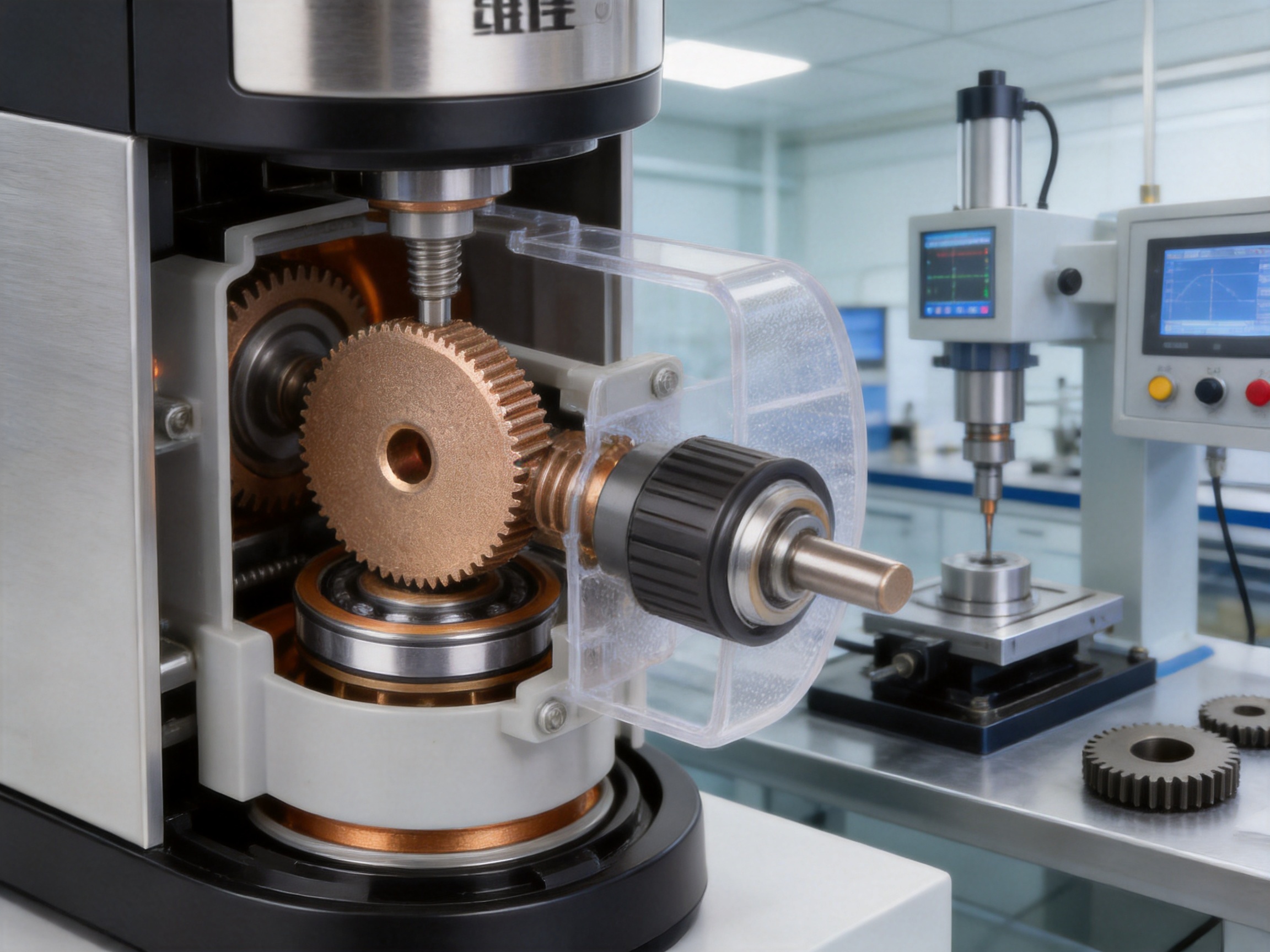
Inspection may include dimensional measurement, visual examination, density verification, hardness testing, radial crush strength testing, oil-content measurement, and gear roll inspection. The specific control plan is established according to the customer drawing and performance requirements.
Oil content can be evaluated through extraction methods such as ASTM B328-related procedures or an agreed equivalent method. This helps verify that impregnation has achieved the required level. Dimensional inspection may include bore diameter, outside diameter, face width, tooth profile, concentricity, and runout.
Gear roll inspection evaluates the interaction between the manufactured gear and a master gear or specified test setup. It can reveal profile variation, eccentricity, tooth-to-tooth errors, and operating irregularities that may not be evident from a simple dimensional check.
For critical applications, customers may request capability studies, first-article inspection reports, control plans, material certificates, life testing, thermal aging tests, or sample approval before mass production. These requirements can be incorporated into the project quality plan.
6.4 Export Experience and Packaging
The product has been exported to Bulgaria and other European markets, where it has been used by industrial customers requiring stable dimensions and dependable operation. Export experience supports familiarity with international documentation, packaging, delivery coordination, and customer communication.
Small gears can be damaged by impact, contamination, or uncontrolled movement during transport. Export-grade packaging is therefore important. Packaging may include protective bags, compartmentalized trays, moisture-control measures, labeled cartons, and palletized shipment according to the customer’s logistics requirements.
7. Customization and OEM Development
Although the reference product is specified as 4 × 11.5 × 5.2 mm, powder metallurgy production can be adapted to different dimensions, tooth profiles, materials, densities, and oil specifications. OEM and ODM development generally begins with a customer drawing or sample.
Customers should provide as much application information as possible, including:
Required gear dimensions, tooth count, module, pressure angle, and bore details.
Nominal and peak torque, rotation speed, direction of rotation, and duty cycle.
Operating temperature range and expected thermal cycling.
Mating gear material, shaft material, housing material, and alignment conditions.
Required operating life, noise target, backlash range, and efficiency target.
Environmental exposure, humidity, cleaning chemicals, dust, and vibration.
Lubricant requirements, including food-grade or high-temperature oil requirements.
Inspection standards, packaging specifications, traceability expectations, and annual volume.
Based on these details, the engineering team can evaluate material grade, density, porosity, tooth design, finishing operations, oil type, and testing requirements. If the customer has an existing plastic gear that is failing because of tooth stripping, creep, or heat aging, the existing component can serve as a starting point for a metal conversion study.
8. Installation and Application Considerations
Correct installation is essential to obtain the full benefit of an oil-impregnated gear. The shaft and housing should be clean and free from burrs. Press-fitting forces should be applied through the appropriate gear region rather than across delicate tooth edges. Excessive interference can distort the bore or increase friction, while insufficient interference can permit slippage or eccentric rotation.
The mating gear should be aligned with the correct center distance and backlash. Misalignment can concentrate load on only part of the tooth face, accelerating wear and increasing noise. Shaft runout and bearing clearance should also be controlled, especially in miniature mechanisms.
External cleaning should be performed with chemicals compatible with the impregnating oil and the metal material. Aggressive solvents may remove surface oil or alter the lubricant. If the gear is exposed to water, steam, salts, or corrosive food residues, the customer should evaluate the need for protective treatment, sealing, or a corrosion-resistant material system.
During assembly, the gear should be protected from unnecessary impact. Even though sintered metal provides good strength, sharp impacts can damage teeth or create microcracks. Components should remain in their protective packaging until they are ready for controlled installation.
9. Service Life and Reliability Evaluation
Service life is determined by more than the gear material. The complete system must be evaluated because gear performance depends on load distribution, lubrication, speed, temperature, alignment, housing stiffness, and operating cycle. A gear that performs well under one duty profile may require a different design under another.
Typical reliability testing may include continuous running, start-stop cycling, overload simulation, thermal aging, humidity exposure, jam testing, noise measurement, and dimensional inspection after testing. For coffee grinders, testing may include repeated grinding cycles and controlled jam events. For food processors, the test may simulate hard ingredients, uneven loading, and blade obstruction.
During validation, engineers can measure tooth wear, bore enlargement, backlash change, oil loss, temperature rise, vibration, and noise. These results help confirm whether the selected material, density, oil, and geometry are appropriate.
The reference information indicates that an oil-impregnated gear with an open porosity network of approximately 18–22% can be designed for effective oil storage, while the exact porosity must be balanced against strength and dimensional requirements. A claimed operating life of several years in an intermittent coffee grinder application should be treated as an application-specific target rather than a universal guarantee. Final life must be confirmed under the customer’s actual duty conditions.
10. Economic and Production Advantages
Powder metallurgy can provide economic advantages in repeat production because the process forms near-net-shape components with efficient material utilization. Once the tooling is validated, the same die can produce large quantities of consistent parts with limited secondary machining.
For small gears, reduced material waste can be important because machining miniature teeth from bar stock may generate substantial scrap and require several operations. Powder metallurgy can combine tooth formation and basic body geometry in one pressing operation. Secondary sizing and hole processing are added only where the drawing requires them.
The self-lubricating function may also reduce assembly costs. If the application does not require a separate grease application step, the customer can simplify production and reduce the risk of under-lubrication or inconsistent manual lubrication.
Lower maintenance can provide additional value over the equipment life. A gear that maintains its geometry, operates without scheduled lubrication, and withstands occasional overload may reduce service calls, downtime, and warranty replacements. These benefits should be evaluated together with tooling cost, annual volume, validation requirements, and the target product life.
11. Comparison with Other Gear Solutions
Machined steel gears provide high density and excellent strength but may involve more material waste, longer machining cycles, and higher cost for miniature high-volume components. They may also require separate lubrication arrangements and additional finishing processes.
Injection-molded plastic gears are lightweight, quiet, and economical for many applications. They are often preferred when low noise and electrical insulation are important. However, they may be more vulnerable to creep, moisture absorption, thermal expansion, and tooth deformation under high load.
Oil-impregnated sintered gears occupy a practical middle ground. They offer a metal substrate with improved load and temperature capability while retaining a built-in lubrication reservoir. They may not be the quietest or lightest option, but they can provide a strong balance of durability, dimensional stability, production efficiency, and maintenance reduction.
| Gear type | Primary strengths | Potential limitations | Suitable selection conditions |
|---|---|---|---|
| Injection-molded plastic | Low weight, low noise, electrical insulation, economical tooling at suitable volume | Creep, moisture sensitivity, thermal expansion, lower overload tolerance | Low to moderate loads and applications where noise and weight are primary concerns |
| Machined steel | High strength, high density, precise finished geometry | More machining, material waste, higher cost for some miniature parts, external lubrication often required | High-load applications or low-volume designs requiring fully dense metal |
| Oil-impregnated sintered metal | Good load capacity, self-lubrication, dimensional stability, efficient repeat production | Requires controlled porosity, material and oil selection, and appropriate handling | Compact mechanisms requiring durability, heat resistance, and reduced maintenance |
12. Frequently Asked Questions
Q1: What are the nominal dimensions of the product?
The reference product is identified as a 4 × 11.5 × 5.2 mm powder metallurgy oil-impregnated gear. Because dimension order can vary between drawings, the customer should confirm which value represents the face width, outside diameter, bore-related feature, or other dimension before tooling and mass production.
Q2: What does oil impregnation do?
Oil impregnation fills the interconnected pores of the sintered metal gear with lubricating oil. During operation, oil can migrate gradually to the gear surface and tooth interface, reducing friction and supporting self-lubrication. This reduces the need for repeated manual lubrication but does not eliminate the need for correct load, speed, temperature, and alignment control.
Q3: Is the gear suitable for coffee makers and food processors?
It can be suitable for internal transmission mechanisms in coffee makers, coffee grinders, food processors, and similar appliances. If the gear could contact food or beverages, the customer must specify the applicable hygiene and lubricant requirements. Optional food-grade oil impregnation can be evaluated, and the complete appliance must be designed to prevent unintended lubricant migration into the food path.
Q4: Can this gear replace an injection-molded plastic gear?
In many cases, a metal replacement can be developed, especially when the plastic gear is failing because of tooth fracture, heat aging, creep, or dimensional change. However, a direct replacement should not be assumed without reviewing the gear geometry, shaft fit, center distance, backlash, torque, noise target, and housing strength. A prototype and application test are recommended.
Q5: Will the sintered gear be quieter than a plastic gear?
Plastic generally provides better inherent noise damping because of its lower modulus. A sintered metal gear may produce a slightly higher-pitched sound. Noise can be reduced through accurate sizing, controlled runout, suitable backlash, improved alignment, higher density, and appropriate system design. If minimum acoustic output is the highest priority, plastic may remain preferable; if durability and thermal stability are more important, sintered metal may be advantageous.
Q6: What material is normally used?
A Fe-Cu-C material system is a practical option for balanced strength, wear behavior, and oil retention. For higher-load applications, an alloyed Fe-Cu-Ni-Mo material may be considered. The final grade should be selected after reviewing torque, speed, temperature, mating materials, required hardness, and expected life.
Q7: What density does the product use?
The stated press density for the reference gear is approximately 6.7–6.8 g/cm³. Density may be adjusted for a customized design because it affects strength, dimensional stability, porosity, and oil capacity. Any change should be validated through mechanical and dimensional testing.
Q8: What is the sintering temperature?
The stated sintering temperature is approximately 690°C. The complete furnace profile includes heating, holding, cooling, and atmosphere control. The appropriate cycle may vary according to the powder composition, part geometry, furnace configuration, and required properties.
Q9: How long can the oil remain effective?
Oil retention life depends on temperature, speed, load, duty cycle, oil grade, pore structure, sealing, and environmental exposure. In an intermittent coffee grinder application operating around 70°C, a service life of several years may be achievable with a suitable design, but the actual result must be confirmed through application testing. Commercial equipment operating for many thousands of hours may require higher oil capacity or a serviceable lubrication design.
Q10: What inspections are available?
Inspection may include dimensions, density, hardness, radial crush strength, oil content, visual condition, bore accuracy, runout, tooth profile, and gear roll performance. Customers can discuss first-article inspection, capability analysis, material certification, life testing, and special traceability requirements with the supplier.
Q11: Can the supplier produce customized gears?
Yes. OEM and ODM production can be based on customer drawings, samples, or application requirements. Customization may include dimensions, tooth geometry, material, density, porosity, hole accuracy, surface treatment, lubricant, inspection, and packaging.
Q12: How should customers begin a project?
Customers should provide a drawing or sample together with torque, speed, temperature, duty cycle, mating components, environmental conditions, required service life, annual volume, and applicable quality standards. This information allows the engineering team to recommend a suitable material and manufacturing route before tooling and validation.
13. Recommended Purchasing and Validation Checklist
Before approving a purchase order, the customer should confirm the complete technical specification rather than relying only on the nominal gear dimensions. The following checklist can help establish a clear project basis.
Confirm the gear tooth count, module, pressure angle, outside diameter, root diameter, face width, and bore dimensions.
Define the allowable dimensional tolerances, concentricity, runout, backlash, and shaft fit.
Specify the normal torque, peak torque, rotation speed, acceleration, and direction of rotation.
Identify the expected operating temperature, heat sources, thermal cycles, and cooling conditions.
Define whether the gear will encounter humidity, water, cleaning chemicals, dust, or food-related exposure.
Choose the material grade and confirm whether heat treatment or surface treatment is required.
Specify the oil type, viscosity range, food-grade status, high-temperature requirement, and oil-content target.
Establish the expected life, number of cycles, overload events, and acceptable wear limit.
Confirm the inspection plan, test methods, sample quantity, certificates, and traceability requirements.
Review packaging, labeling, export documents, delivery schedule, and storage conditions.
Conduct prototype testing before final mass-production approval, particularly when converting from plastic to metal or when the gear is used in a safety-critical or high-temperature mechanism.
14. Conclusion
The 4 × 11.5 × 5.2 mm oil-impregnated powder metallurgy gear is a compact transmission component developed for applications requiring mechanical reliability, dimensional stability, and reduced maintenance. Its controlled press density of approximately 6.7–6.8 g/cm³, sintering temperature of approximately 690°C, precision through-hole processing, and vacuum oil impregnation provide a balanced performance profile for small appliances and industrial mechanisms.
Compared with many injection-molded plastic gears, the sintered metal design can offer higher tooth strength, better overload resistance, improved heat-aging performance, lower thermal expansion, lower moisture sensitivity, and reduced long-term creep. Its internal oil reservoir supports self-lubricating operation and can simplify assembly and maintenance.
The product is manufactured by Jiande Welfine Technology Co., Ltd., a powder metallurgy specialist established in 2001 with an approximately 13,039-square-meter production base, more than 150 skilled employees, and ISO 9001:2015 and IATF 16949:2016 certifications. Its integrated capabilities include powder metallurgy pressing, controlled-atmosphere sintering, precision forming, through-hole processing, oil impregnation, testing, OEM development, and export packaging.
For customers seeking a reliable alternative to plastic gears, the most important step is application-specific engineering validation. By reviewing load, temperature, speed, lubrication, alignment, noise, and service-life requirements, the correct material and production route can be selected. With appropriate design and quality control, oil-impregnated sintered gears can provide a durable and efficient solution for coffee equipment, food processors, electromechanical devices, automation systems, power tools, automotive mechanisms, and other compact transmission applications.
References
ASTM B328, Standard Test Method for Density, Oil Content, and Open Porosity of Powder Metallurgy Products.
ISO 9001:2015, Quality Management Systems — Requirements.
IATF 16949:2016, Quality Management System Requirements for Automotive Production and Relevant Service Parts Organizations.
MPIF Standard 35, Materials Standards for Metal Powder Products.
ASM Handbook, Volume 7: Powder Metal Technologies and Applications.
ASM Handbook, Volume 18: Friction, Lubrication, and Wear Technology.
ISO 6336, Calculation of Load Capacity of Spur and Helical Gears.
ISO 1328, Cylindrical Gears — ISO System of Accuracy.
General engineering data supplied for the 4 × 11.5 × 5.2 mm oil-impregnated powder metallurgy gear and its intended application categories.
Product: Powder Metallurgy Oil-Impregnated Gear (4×11.5×5.2mm)
Related products
-
-
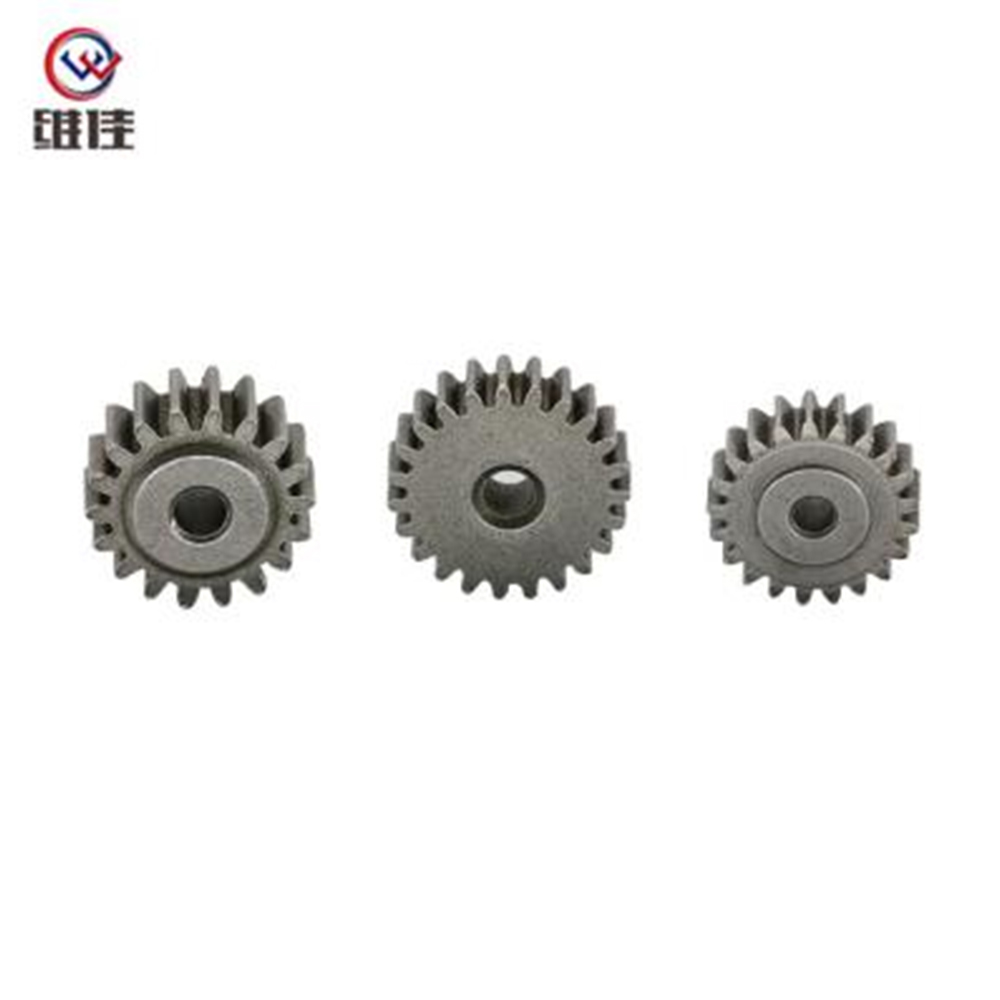
Description: Custom powder metallurgy planetary gear with high precision, wear resistance for automotive, industrial machinery & home appliances. OEM/ODM supported.
See Details -
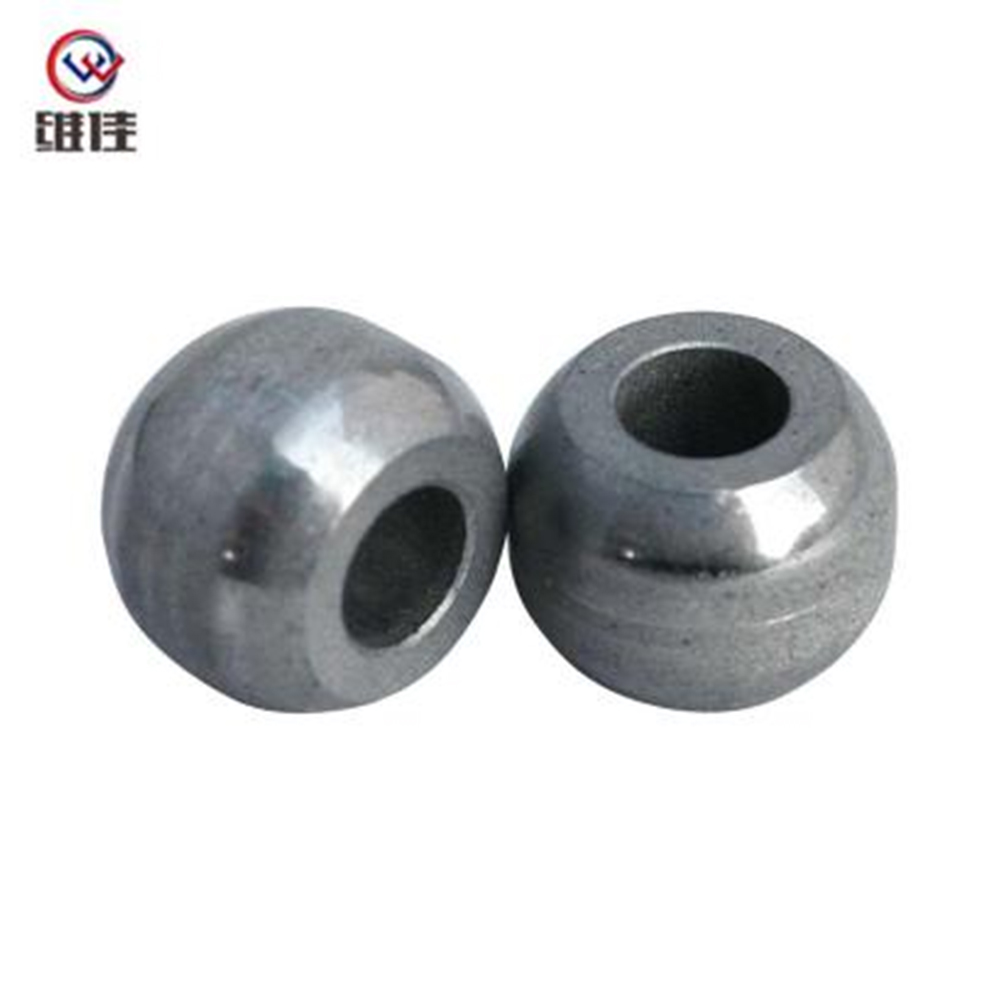
Product Description: High-precision powder metallurgy part (S14*7*10) made of iron material from Jiande Wefine, customized PM components with strict tolerance control.
See Details -
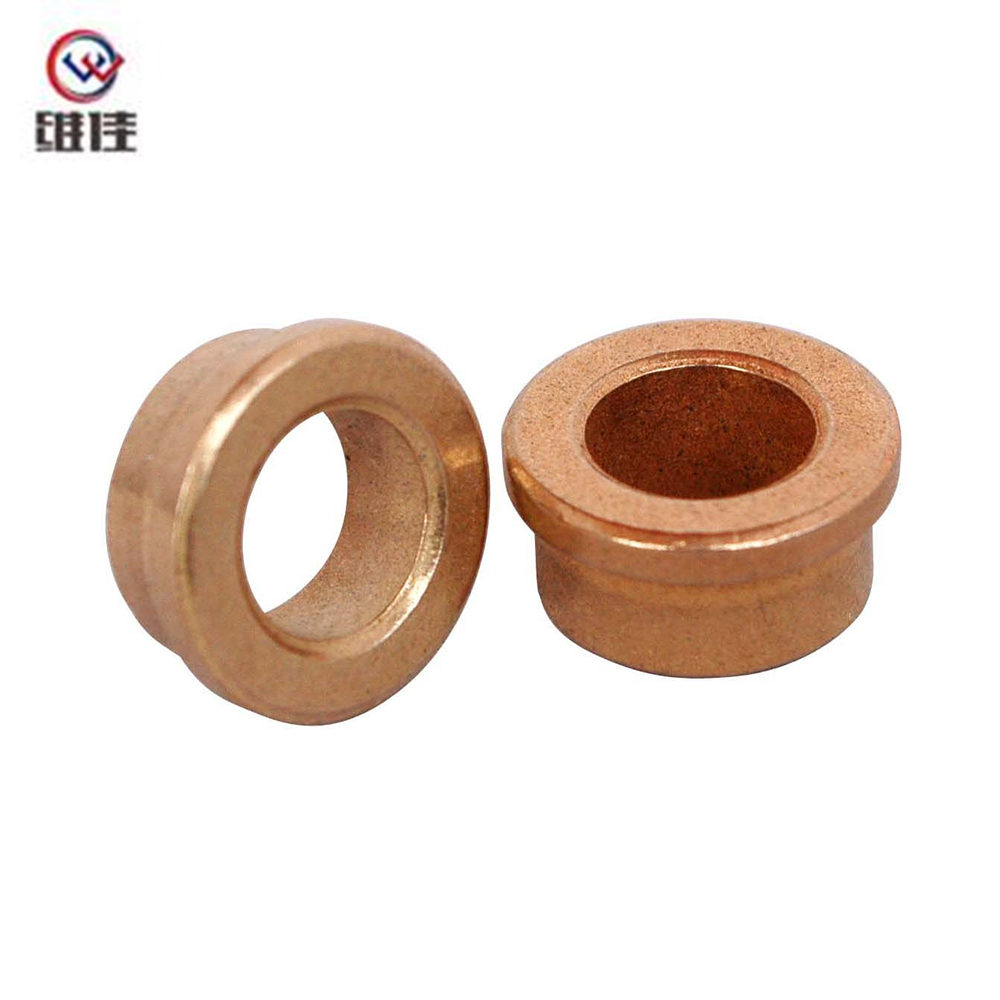
Premium Material: Our flange bushing is crafted from Sint B50 oil-impregnated bronze, featuring an 18% oil content. The high-quality tin bronze material ensures exceptional hardness, wear resistance, ...
See Details
Copyright © Jiande Welfine Technology Co., Ltd. All Rights Reserved. Privacy Custom Self-lubricating Sintered Bushing Manufacturers
