 English
 中文简体
中文简体
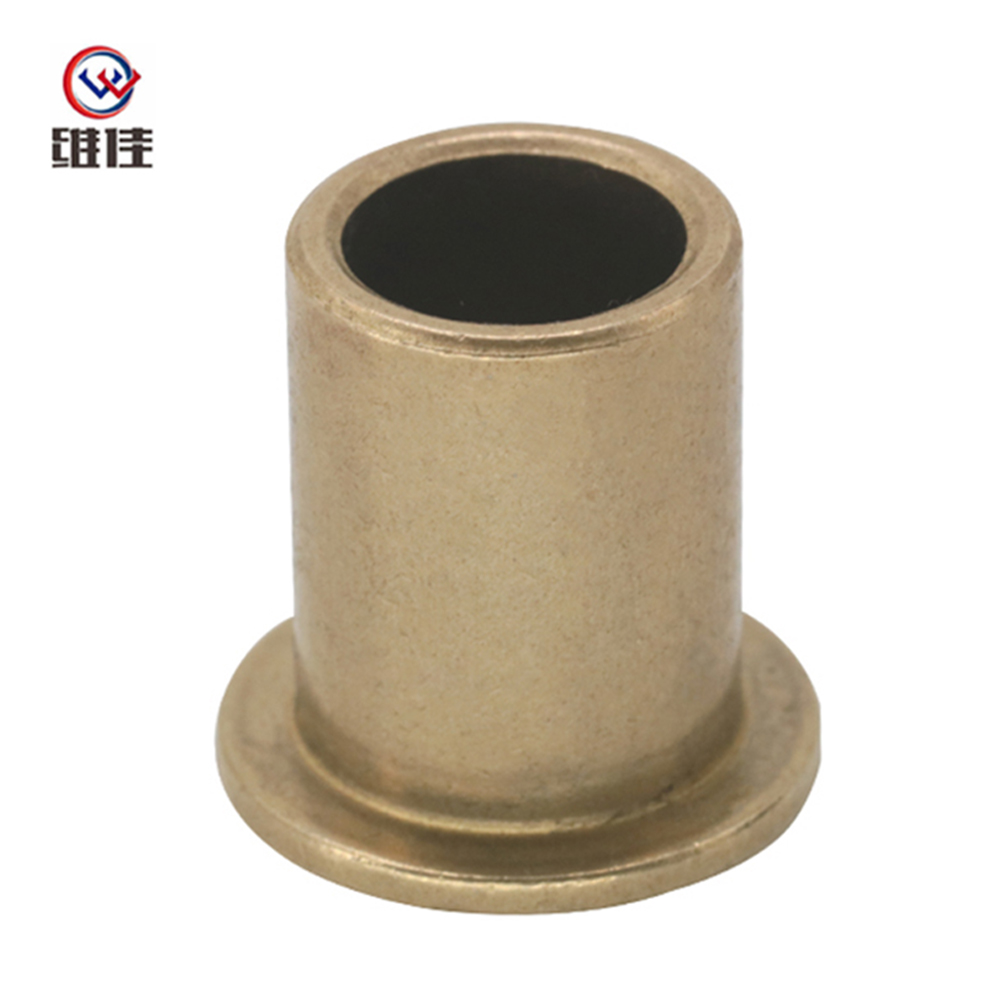
Our sintered bronze self-lubricating bearings are engineered for demanding industrial applications where traditional lubrication is impractical. Designed with advanced powder metallurgy technology, th...
See DetailsE-mail us: [email protected]
Tel: +86-15239857375


 Home / Author / Luo Qian — Product Sales Supervisor / Sintered Bronze Self-Lubricating Bushings for Maintenance-Free Industrial Motion
 Sintered Bronze Self-Lubricating Bushings for Maintenance-Free Industrial Motion
 2026.05.13
 Luo Qian — Product Sales Supervisor
Content
- 1 Understanding Sintered Bronze Self-Lubricating Bushings
- 2 Why Self-Lubrication Matters in Modern Equipment
- 3 Core Product Advantages
- 4 Comparison with Common Bearing Alternatives
- 5 Material Systems: CuSn and CuPb Series
- 6 Advanced Powder Metallurgy Manufacturing
- 7 Company Strengths Behind the Product
- 8 Application Areas
- 9 Design Considerations for Engineers
- 10 Advantages Over Competitors
- 11 Q&A: Practical Questions About Sintered Bronze Self-Lubricating Bushings
- 11.1 Q1: What makes a sintered bronze bushing self-lubricating?
- 11.2 Q2: Can these bushings operate without external lubrication?
- 11.3 Q3: Are sintered bronze bushings suitable for high-load applications?
- 11.4 Q4: How do they compare with plastic bushings?
- 11.5 Q5: What industries commonly use these bushings?
- 11.6 Q6: What is the difference between CuSn and CuPb series materials?
- 11.7 Q7: Can the bushings be customized?
- 11.8 Q8: What quality certifications support production reliability?
- 11.9 Q9: Are these bushings suitable for dusty or dirty environments?
- 11.10 Q10: What information should a customer provide for selection?
- 12 Conclusion
- 13 Company Contact Information
- 14 References
Sintered bronze self-lubricating bushings are essential components for machines that must operate reliably under load, temperature variation, dust, vibration, and limited maintenance access. Unlike conventional bearings that depend heavily on frequent grease or oil replenishment, these bushings are produced through powder metallurgy and designed with a porous metallic structure that stores lubricant inside the bearing material. During operation, the lubricant is gradually released to the sliding surface, reducing friction and wear while supporting stable motion over a long service life.
For industrial designers, maintenance engineers, purchasing teams, and equipment manufacturers, the value of a bushing is measured not only by its initial cost but also by its ability to reduce downtime, simplify lubrication systems, resist harsh working conditions, and maintain dimensional stability. Sintered bronze self-lubricating bushings meet these expectations by combining the strength and thermal conductivity of bronze with the functional advantages of controlled porosity and oil impregnation.
Jiande Welfine Technology Co., Ltd. manufactures sintered oil-impregnated bearings and powder metallurgy structural parts with a focus on precision, consistency, and customized engineering support. Established in 2001, the company has developed more than two decades of experience in powder metallurgy sintering and related precision machining. Its product range includes sintered bronze bushings, oil-impregnated bearings, self-lubricating bushings, friction materials, magnetic materials, and other powder metallurgy precision components used in demanding industrial applications.
Understanding Sintered Bronze Self-Lubricating Bushings
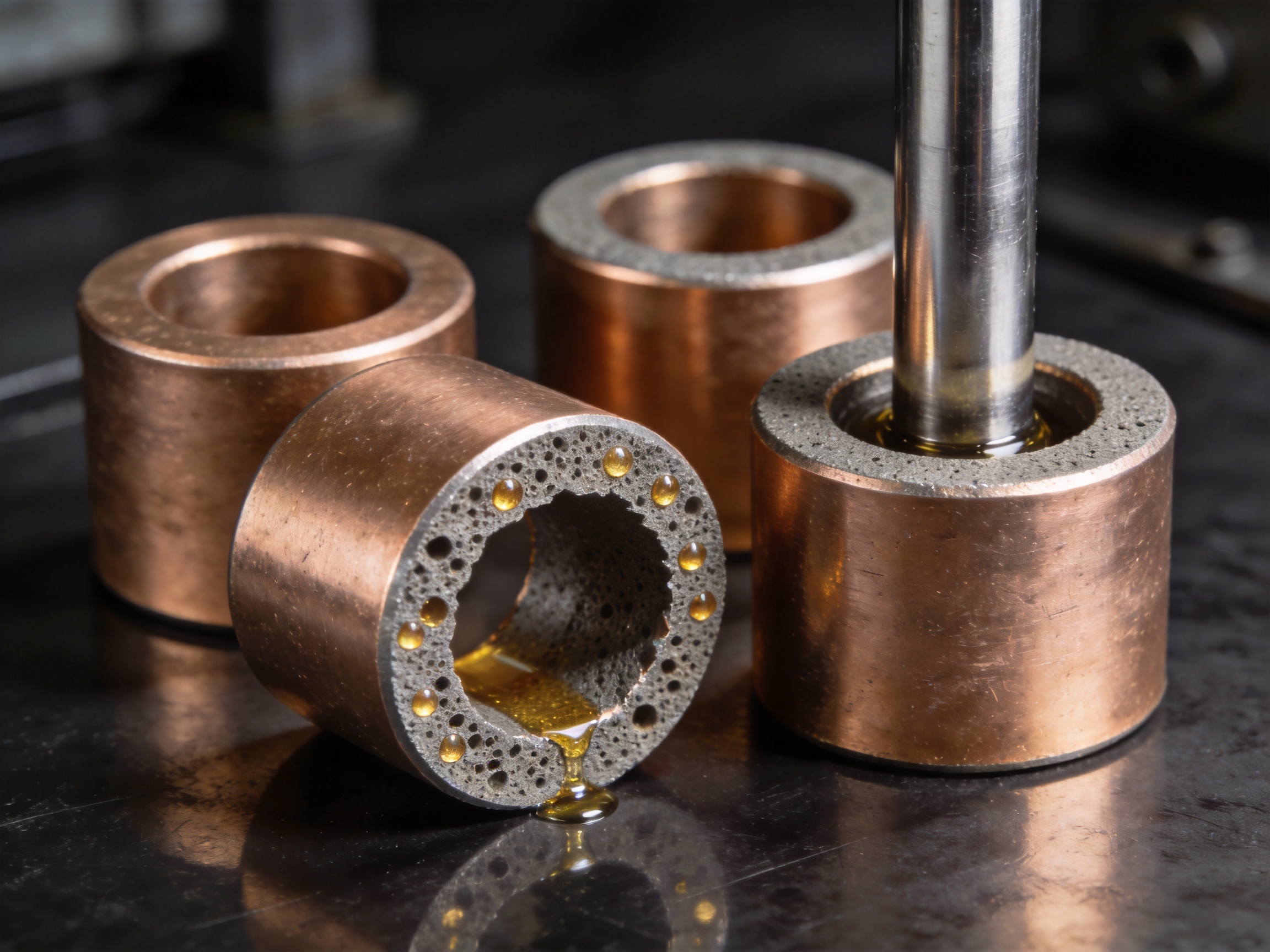
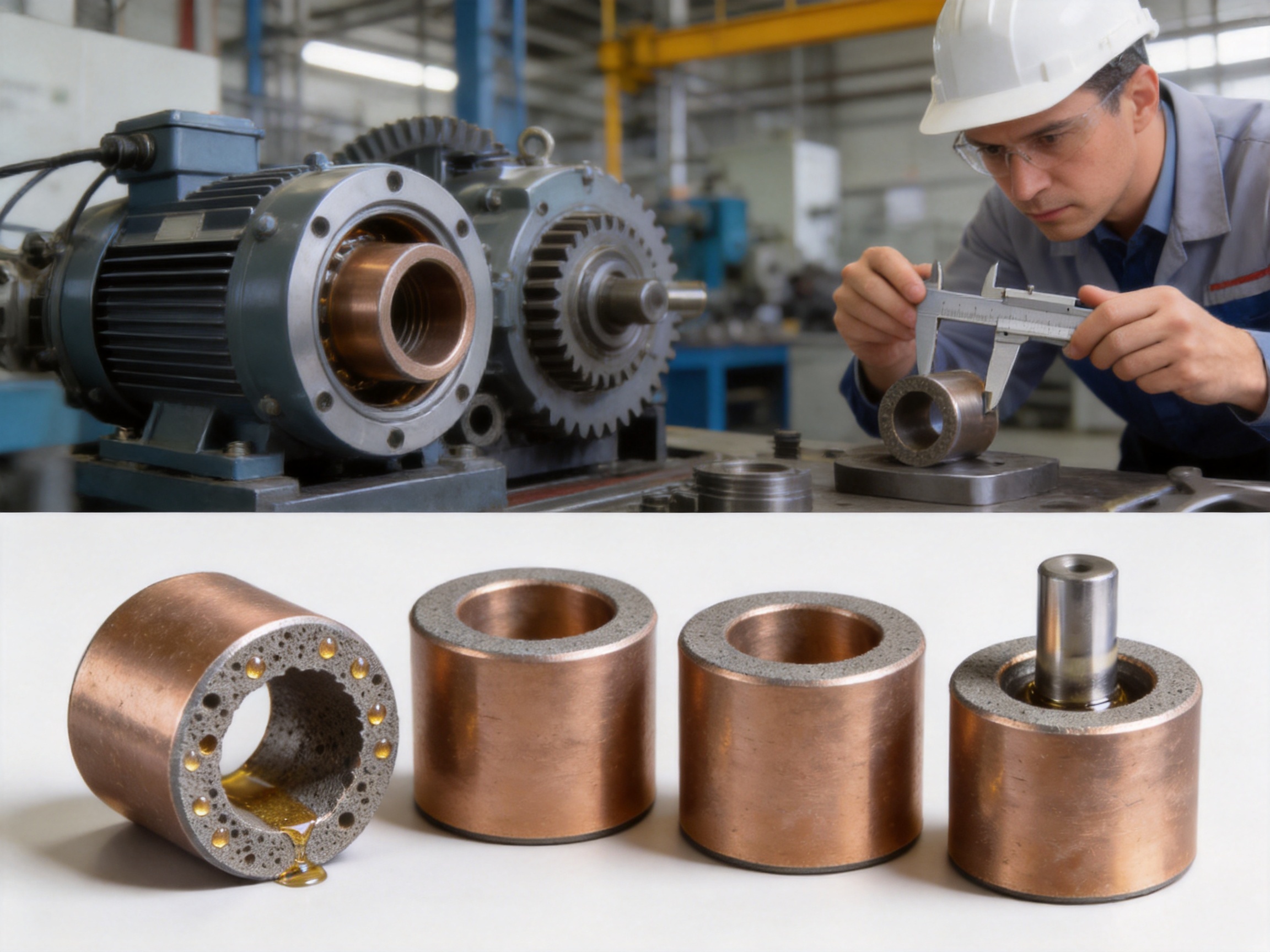
A sintered bronze self-lubricating bushing is a sleeve-type bearing made from bronze powder that is compacted, sintered at high temperature, calibrated, and impregnated with lubricant. The resulting material contains a network of interconnected pores. These pores act as tiny lubricant reservoirs. When the shaft rotates or slides inside the bushing, operating heat and capillary action help draw lubricant toward the contact surface. When the machine stops and the temperature decreases, part of the lubricant may be reabsorbed into the porous structure.
This mechanism allows the bearing to operate with minimal external maintenance. In many applications, the bushing can run for long periods without manual lubrication. This is especially useful in machines where grease points are difficult to access, where contamination from excessive grease is unacceptable, or where scheduled maintenance interruptions are expensive.
The product category covers sintered alloy self-lubricating bearings, dry-running and high-temperature bearings, sintered tin bronze bearings in CuSn series materials, and sintered lead bronze bearings in CuPb series materials. Each material system can be selected according to load, speed, temperature, corrosion resistance, shaft compatibility, and lubrication requirements.
Compared with machined solid bronze bushings, sintered bronze bushings offer important functional advantages. Their porous structure provides internal lubrication capability, while powder metallurgy manufacturing enables excellent material utilization, stable production quality, and efficient manufacturing for large quantities. Compared with plastic bushings, sintered bronze bushings provide higher temperature resistance, better thermal conductivity, electrical conductivity, improved dimensional stability, and stronger resistance to deformation under heavy load.
Why Self-Lubrication Matters in Modern Equipment
Lubrication is one of the most important factors affecting bearing life. In conventional bearing assemblies, oil or grease forms a film between two moving surfaces. If the film is insufficient, metal-to-metal contact increases friction, heat, vibration, and wear. This can cause premature failure, noise, seizure, and damage to surrounding components.
In many industrial environments, however, maintaining perfect lubrication is difficult. Equipment may operate in dusty workshops, construction sites, high-temperature zones, food-processing systems, household appliances, electric motors, gear systems, or remote machinery. Manual lubrication may be forgotten, applied inconsistently, or performed with the wrong lubricant. Excess lubricant can also attract dust and abrasive particles, accelerating wear instead of preventing it.
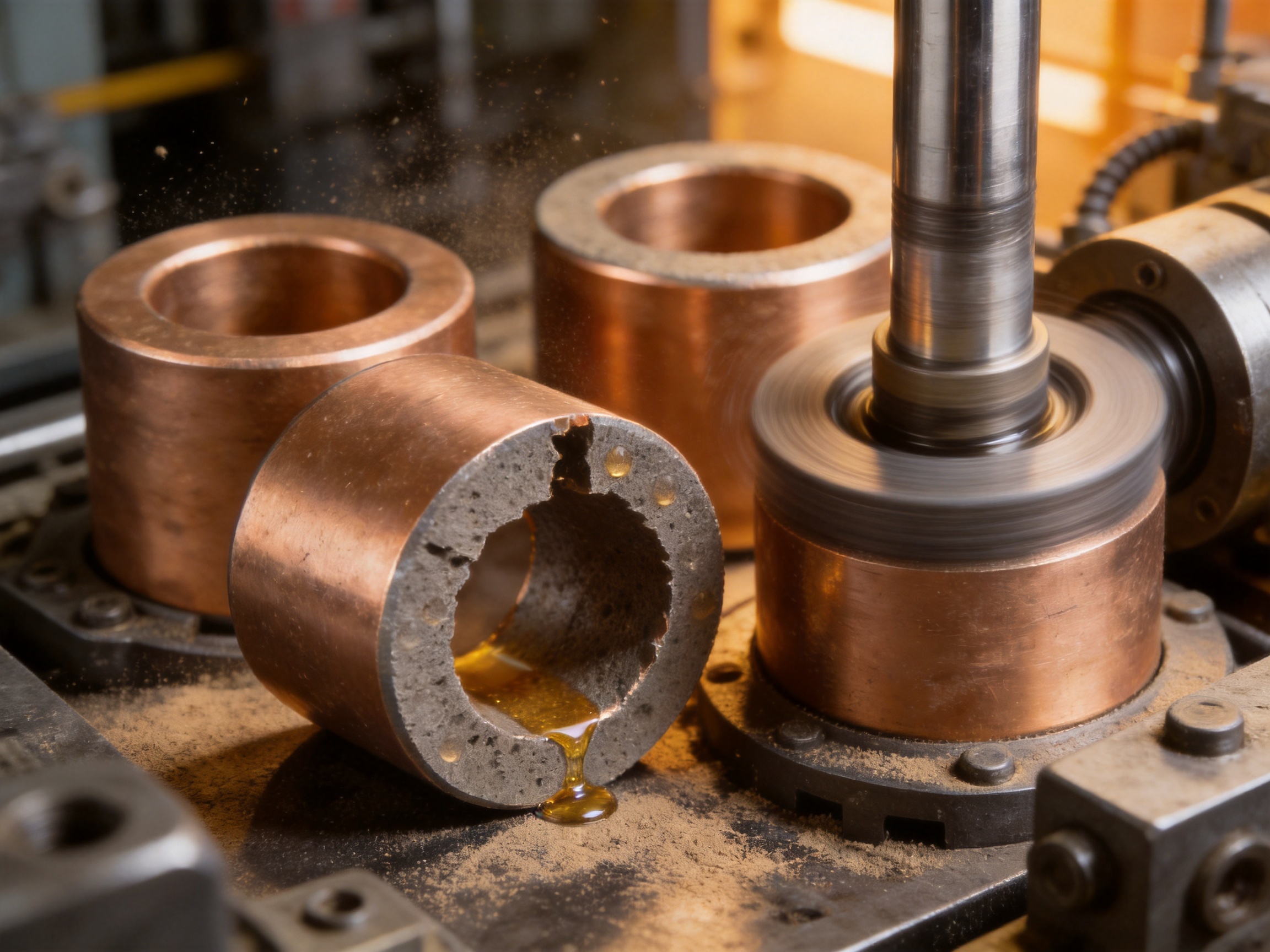
Sintered bronze self-lubricating bushings solve this problem by integrating lubrication into the material itself. The bearing is not simply coated with oil; it is engineered to hold lubricant throughout its porous body. This gives the component a built-in lubrication reserve and reduces dependence on external systems. For equipment manufacturers, this means simplified product design, fewer service points, reduced maintenance instructions, and greater user satisfaction.
Maintenance-free operation is not only convenient; it has measurable economic value. A bushing that reduces lubrication work can lower labor costs, reduce machine stoppages, prevent accidental dry running, and support predictable equipment performance. In applications with numerous bearing points, such as small motors, appliances, office equipment, agricultural devices, and automated machinery, the cumulative benefit can be significant.
Core Product Advantages
Maintenance-Free Performance
The most recognized advantage of sintered bronze self-lubricating bushings is maintenance-free or low-maintenance operation. The internal pores retain lubricant and supply it to the sliding interface during operation. This minimizes the need for frequent relubrication and helps the bearing continue functioning even when external lubrication is impractical.
For machinery builders, this advantage can simplify equipment architecture. Grease nipples, oil lines, automatic lubrication systems, or complex sealing arrangements may be reduced or eliminated depending on the application. For end users, this means fewer maintenance tasks and less risk of bearing failure caused by neglected lubrication.
High Load Capacity
Sintered bronze bushings are designed to withstand both static and dynamic loads. Bronze provides strong load-bearing capability, while powder metallurgy processing allows the material structure to be engineered for application-specific requirements. Properly designed bushings can support heavy-duty operating conditions in industrial machinery, construction equipment, automotive components, and gear systems.
High load capacity is particularly valuable when equipment must remain compact. A bushing that can carry higher loads within a limited installation space allows designers to reduce component size without compromising reliability. This is important for electric motors, compact gearboxes, household appliances, and automated equipment where space efficiency is a competitive advantage.
Excellent Wear Resistance
Wear resistance is achieved through a combination of material selection, surface quality, lubrication retention, and dimensional precision. The bronze matrix provides a durable sliding surface, while the oil-filled pores reduce direct contact between shaft and bushing. Lower friction reduces heat generation, and lower heat helps preserve lubricant and material properties.
In applications with oscillating movement, intermittent rotation, or start-stop cycles, self-lubricating bushings can perform especially well because they maintain lubrication at the interface during critical operating moments. This improves service life and reduces the possibility of scoring, galling, or seizure.
Wide Temperature Range
Industrial equipment often operates across a wide temperature spectrum. Bearings may be exposed to cold startup conditions, high ambient heat, heat generated by friction, or thermal cycling during operation. Sintered bronze self-lubricating bushings offer good thermal stability and heat dissipation because bronze conducts heat more effectively than many polymer materials.
For high-temperature systems, specially selected materials and lubricants can support stable performance when conventional grease or plastic bushings may degrade. For low-temperature conditions, the bearing can be engineered with appropriate lubricant selection to maintain adequate mobility and reduce startup friction.
Thermal Stability and Dimensional Integrity
Thermal stability is crucial when a bearing operates close to motors, engines, ovens, gearboxes, braking systems, or other heat sources. A bushing that expands excessively, softens, or loses mechanical integrity can lead to shaft misalignment, increased friction, and equipment damage. Sintered bronze offers strong structural integrity under continuous thermal stress.
Because powder metallurgy parts can be calibrated after sintering, dimensional control can be maintained with high consistency. This helps ensure accurate inner diameter, outer diameter, length, roundness, and surface finish. Consistent dimensions support predictable clearance between shaft and bushing, which is essential for smooth operation and long bearing life.
Electrical Conductivity
Unlike many plastic or composite bushings, bronze is electrically conductive. This can be beneficial in applications where static electricity buildup must be reduced or where conductive pathways are required. Metal-based bearing materials can help prevent electrostatic accumulation in sensitive equipment, depending on system design.
Electrical conductivity also reflects the broader advantage of metallic bushings in demanding industrial settings. They resist many limitations associated with non-metallic materials, including thermal degradation, creep under sustained load, and dimensional changes due to moisture absorption.
Corrosion and Contamination Resistance
Industrial environments often include dust, dirt, moisture, chemical exposure, abrasive particles, and limited cleaning access. Sintered bronze bushings can maintain consistent performance in contaminated environments when selected and applied correctly. Their self-lubricating function reduces dependence on external grease, which can attract contaminants and form abrasive paste.
Bronze materials also provide useful corrosion resistance in many operating conditions. For more challenging environments, material composition, lubricant selection, surface treatment, and sealing design can be adjusted to enhance durability.
Compatibility with Extreme Environments
Some applications require bearings that can operate in vacuum environments, radioactive environments, dry friction conditions, or other special surroundings where conventional lubricants or polymer materials may not be suitable. Sintered bronze bushings can be designed for such operating requirements through appropriate alloy selection, lubricant choice, and manufacturing control.
In dry-running or high-temperature applications, the bushing may use special materials or solid lubrication concepts to support operation where oil-based lubrication is limited. This makes sintered bronze technology valuable for equipment operating beyond standard factory conditions.
Comparison with Common Bearing Alternatives
Selecting the right bearing requires understanding trade-offs. No single bearing type is ideal for every application. However, sintered bronze self-lubricating bushings offer a strong balance of performance, cost efficiency, and manufacturing flexibility. The following table compares their typical advantages with several common alternatives.
| Performance Factor | Sintered Bronze Self-Lubricating Bushings | Solid Bronze Bushings | Plastic Bushings | Rolling Bearings |
|---|---|---|---|---|
| Lubrication Requirement | Internal oil storage supports maintenance-free operation | Usually requires regular external lubrication | May be dry-running but material dependent | Requires grease or oil for long life |
| Load Capacity | High static and dynamic load capability | High load capability | Moderate, with risk of creep under load | High, but sensitive to shock and contamination |
| Temperature Resistance | Excellent with proper material and lubricant selection | Excellent | Limited by polymer grade | Good, but lubricant and cage may limit performance |
| Contamination Tolerance | Good in dusty or dirty environments | Depends on lubrication and sealing | Varies by material | Often requires effective sealing |
| Maintenance Demand | Low | Medium to high | Low to medium | Medium |
| Dimensional Stability | High with precision calibration | High | May be affected by heat, load, and moisture | High, but requires precise housing alignment |
| Cost Efficiency in Volume | Excellent due to powder metallurgy production | Material and machining intensive | Good for suitable applications | Can be higher for precision assemblies |
The comparison shows why sintered bronze bushings are widely used in industrial machinery, automotive systems, electric motors, household appliances, construction equipment, and high-temperature mechanical systems. They provide a practical middle ground between simple sleeve bearings and more complex rolling bearing assemblies.
Material Systems: CuSn and CuPb Series
Sintered bronze bearings are often designed around tin bronze or lead bronze material systems. Tin bronze materials in the CuSn series are known for good strength, wear resistance, corrosion resistance, and compatibility with many general industrial applications. They are commonly selected when environmental durability and stable friction performance are required.
Lead bronze materials in the CuPb series can offer excellent conformability and embeddability. Conformability allows the bearing to adapt slightly to minor shaft misalignment or surface irregularities, while embeddability helps capture small particles and reduce scoring. These characteristics can be useful in applications where operating conditions include vibration, variable load, or imperfect lubrication.
The choice between CuSn and CuPb series materials depends on application requirements, regulatory considerations, load, speed, shaft hardness, temperature, and lubrication environment. Jiande Welfine Technology Co., Ltd. supports OEM and ODM customization based on customer drawings or samples, helping customers choose suitable material systems and dimensions for specific equipment designs.
Advanced Powder Metallurgy Manufacturing
The performance of a sintered bronze self-lubricating bushing is determined not only by material composition but also by manufacturing discipline. Powder metallurgy is a precision process that transforms metal powder into functional components through controlled compaction, sintering, sizing, impregnation, and inspection.
Powder Selection and Mixing
The process begins with carefully selected metal powders. Particle size distribution, powder purity, alloy composition, flowability, and compressibility all influence the final bearing structure. Bronze powder may be blended with alloying elements and additives according to the desired performance target. Accurate mixing ensures material uniformity from part to part and batch to batch.
Uniform powder blending is essential because uneven distribution can cause inconsistent porosity, density variation, local weakness, or uneven lubrication behavior. A manufacturer with strong powder metallurgy experience understands how to balance powder composition with pressing pressure, sintering profile, and final impregnation requirements.
High-Efficiency Pressing
After powder preparation, the material is compacted in precision tooling under controlled pressure. This stage forms the initial shape, often called the green compact. Pressing determines the density distribution, dimensional foundation, and pore structure of the component.
Jiande Welfine Technology Co., Ltd. operates a modern production base equipped with high-efficiency presses. These machines support stable forming, repeatable dimensions, and efficient volume production. For bushings, precise control of inner and outer geometry is critical because the component must fit accurately into a housing and maintain correct clearance with the shaft.
High-Temperature Sintering
Sintering is the thermal process that bonds powder particles together without fully melting the entire part. The compacted bushing is heated in a controlled furnace atmosphere to a temperature suitable for metallurgical bonding. During sintering, particles fuse at contact points, strength increases, and the porous network becomes stable.
The company uses high-temperature sintering furnaces to support reliable metallurgical quality. Furnace control is essential. Temperature uniformity, atmosphere control, belt speed or holding time, and cooling conditions influence mechanical strength, porosity, dimensional change, and surface condition. A well-controlled sintering process creates the balance required for a self-lubricating bearing: enough strength to support load and enough interconnected porosity to store lubricant.
Precision Forming and Calibration
After sintering, bushings may undergo sizing or calibration. This process refines dimensions by pressing the sintered part through precision tooling. Calibration improves roundness, diameter accuracy, surface finish, and consistency. For sleeve bearings, this step is extremely important because bearing clearance directly affects friction, noise, heat generation, and life.
Precision forming machines allow the manufacturer to produce components that meet customer drawings and assembly requirements. Consistent dimensional control also helps customers reduce inspection burden and assembly variation. When parts are used in automated assembly lines, stable dimensions contribute to smooth insertion and reduced rejection rates.
Oil Impregnation
Oil impregnation fills the interconnected pores with lubricant. This is typically performed through vacuum and pressure methods that remove air from the pores and replace it with oil. The selected lubricant must match the operating temperature, speed, load, environmental conditions, and expected life of the bearing.
Successful impregnation depends on correct porosity and process control. If pores are too closed or inconsistent, oil storage capacity may be reduced. If density is too low, mechanical strength may suffer. Powder metallurgy expertise is therefore necessary to achieve a functional balance between structural strength and lubricant capacity.
Precision Machining and Secondary Operations
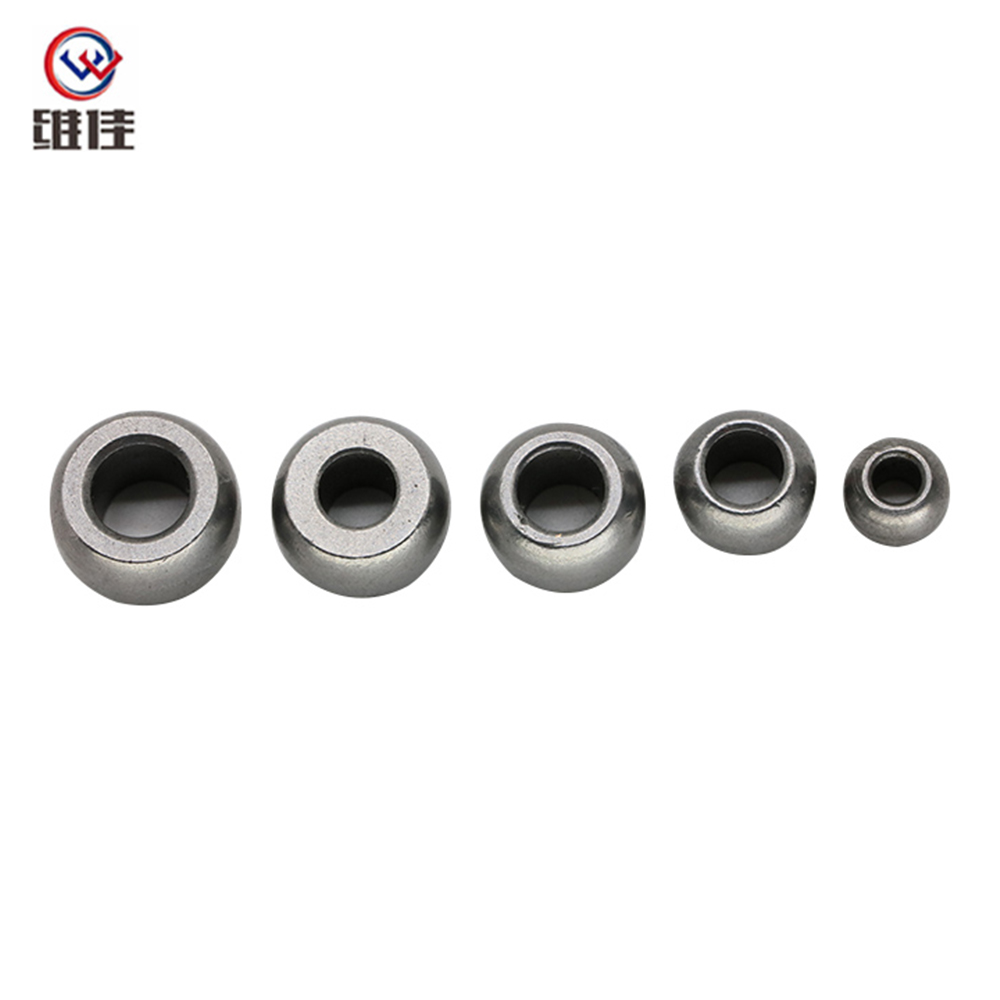
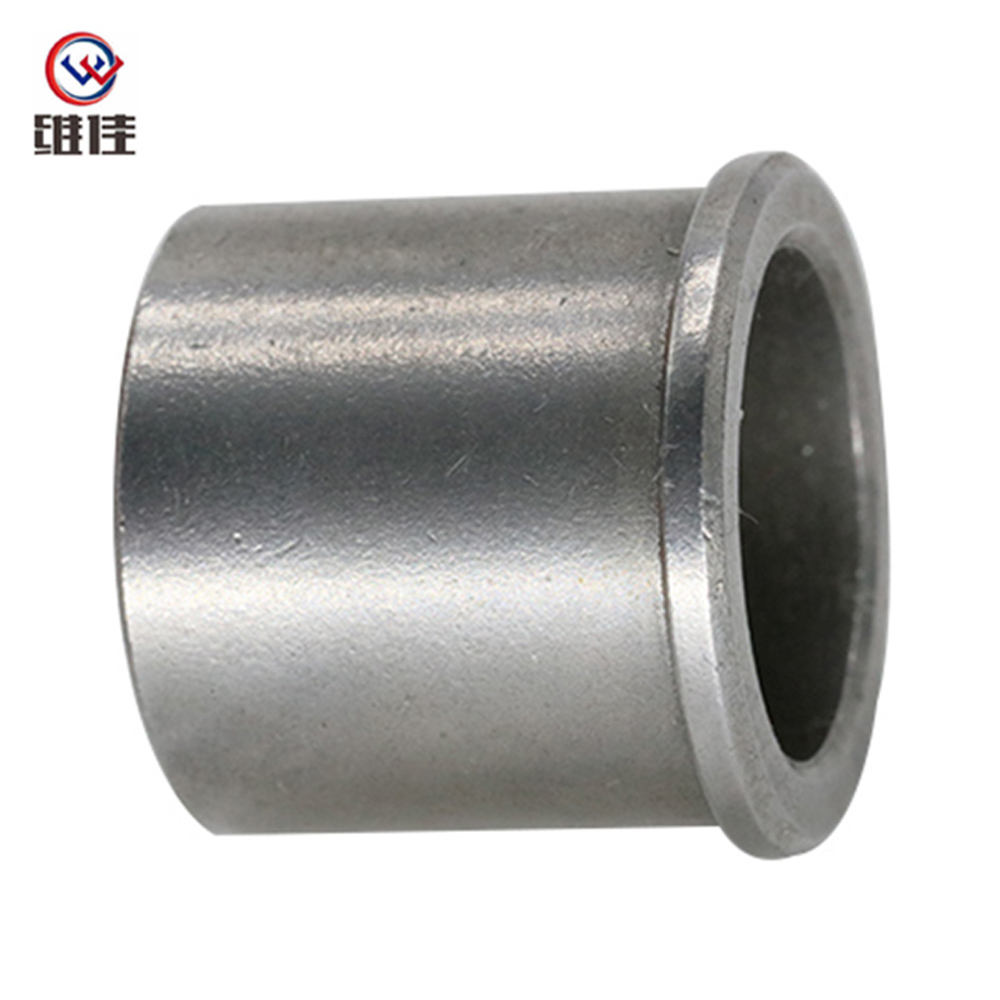
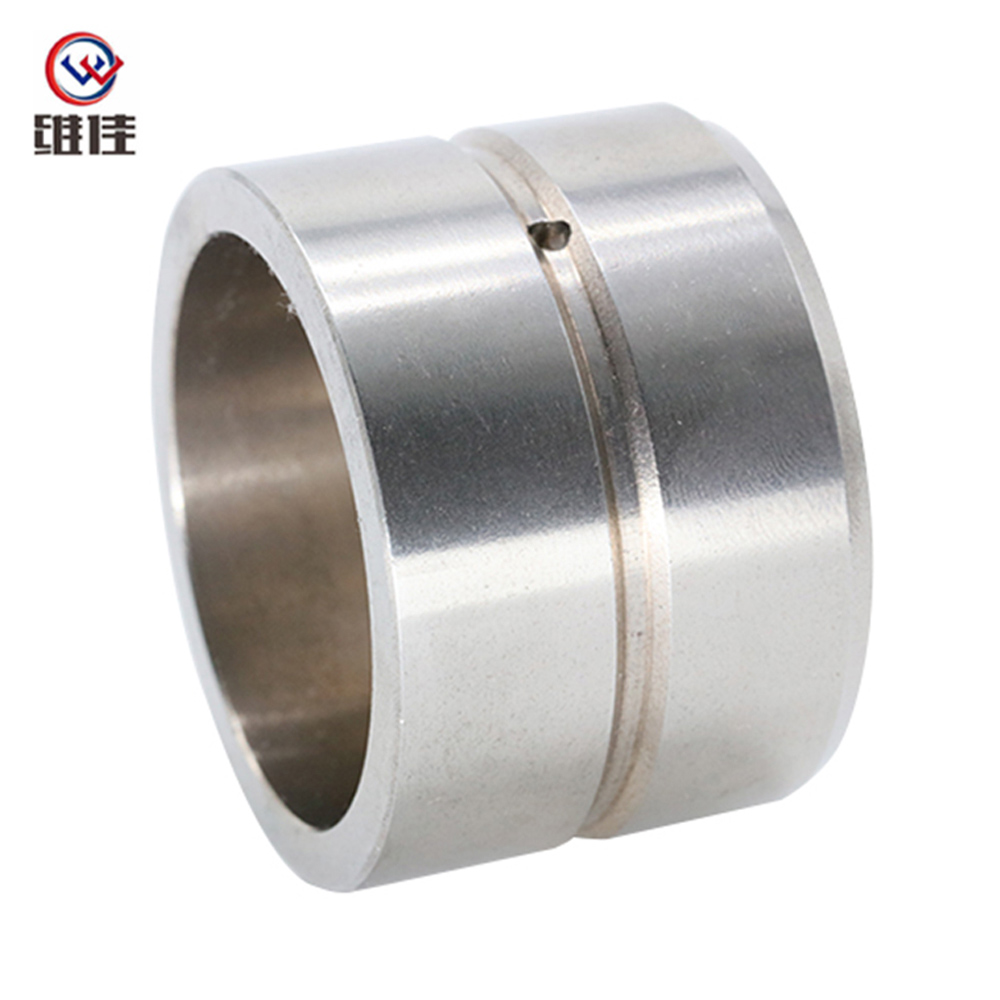
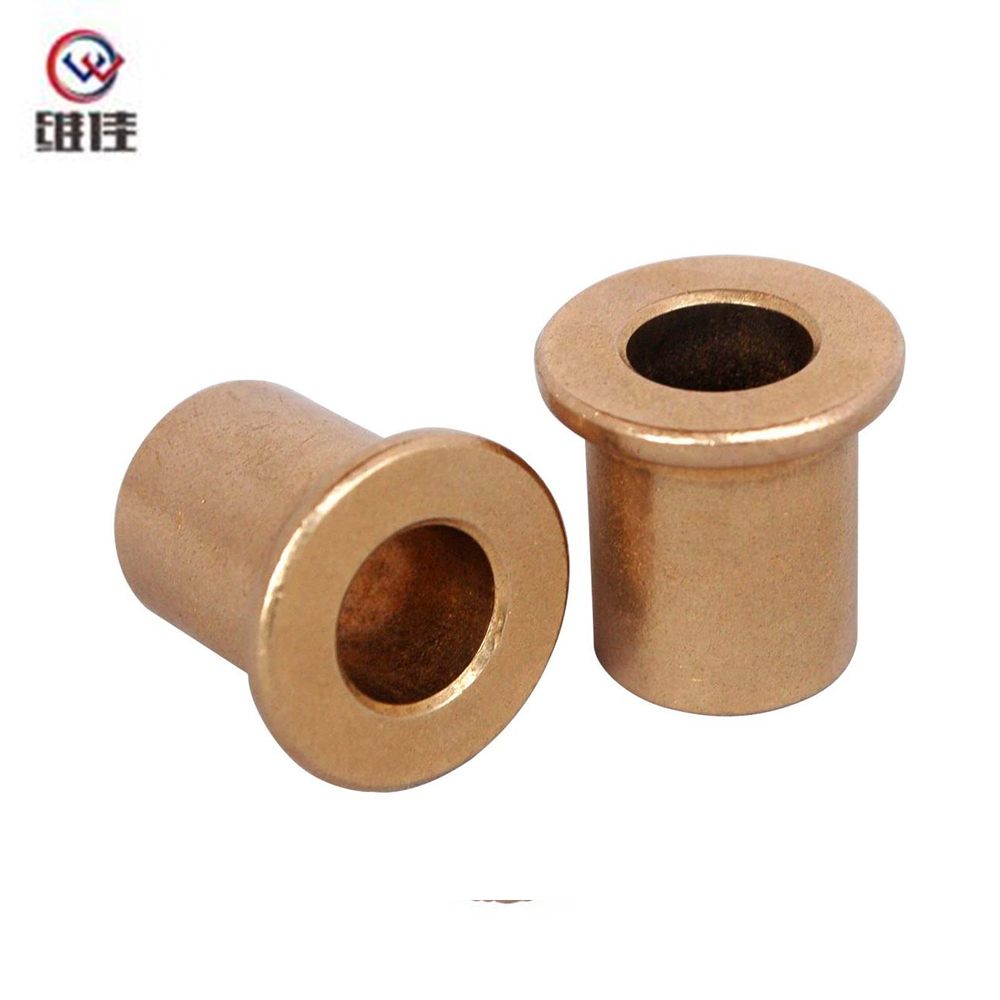
Some bushing designs require additional machining, chamfering, grooving, flange forming, special inner diameter finishing, or other secondary operations. Jiande Welfine Technology Co., Ltd. integrates powder metallurgy production with related precision machining, allowing customized bushing solutions based on drawings or samples.
This capability is valuable for customers requiring non-standard dimensions, special tolerances, flanged bushings, thrust washers, complex oil grooves, or application-specific shapes. Instead of relying only on catalog sizes, customers can obtain components designed around their machine architecture.
Quality Inspection and Certification
Reliable bearings require reliable quality systems. The company strictly implements quality management systems and has passed ISO 9001:2015 and IATF 16949:2016 certifications. These certifications are especially important for customers in automotive and industrial supply chains because they demonstrate systematic control over production, inspection, traceability, and continuous improvement.
Quality inspection may include dimensional measurement, density testing, hardness testing, porosity evaluation, oil content verification, visual inspection, surface finish checks, and functional assessment according to customer requirements. Consistent inspection ensures that the final product is not only correctly manufactured but also suitable for demanding operating conditions.
Company Strengths Behind the Product
A high-performance bushing depends on the manufacturer’s technical foundation. Jiande Welfine Technology Co., Ltd. was established in 2001 and has accumulated more than 20 years of industry experience. This long-term specialization in powder metallurgy gives the company practical knowledge of material behavior, tooling design, process control, sintering conditions, and customer application needs.
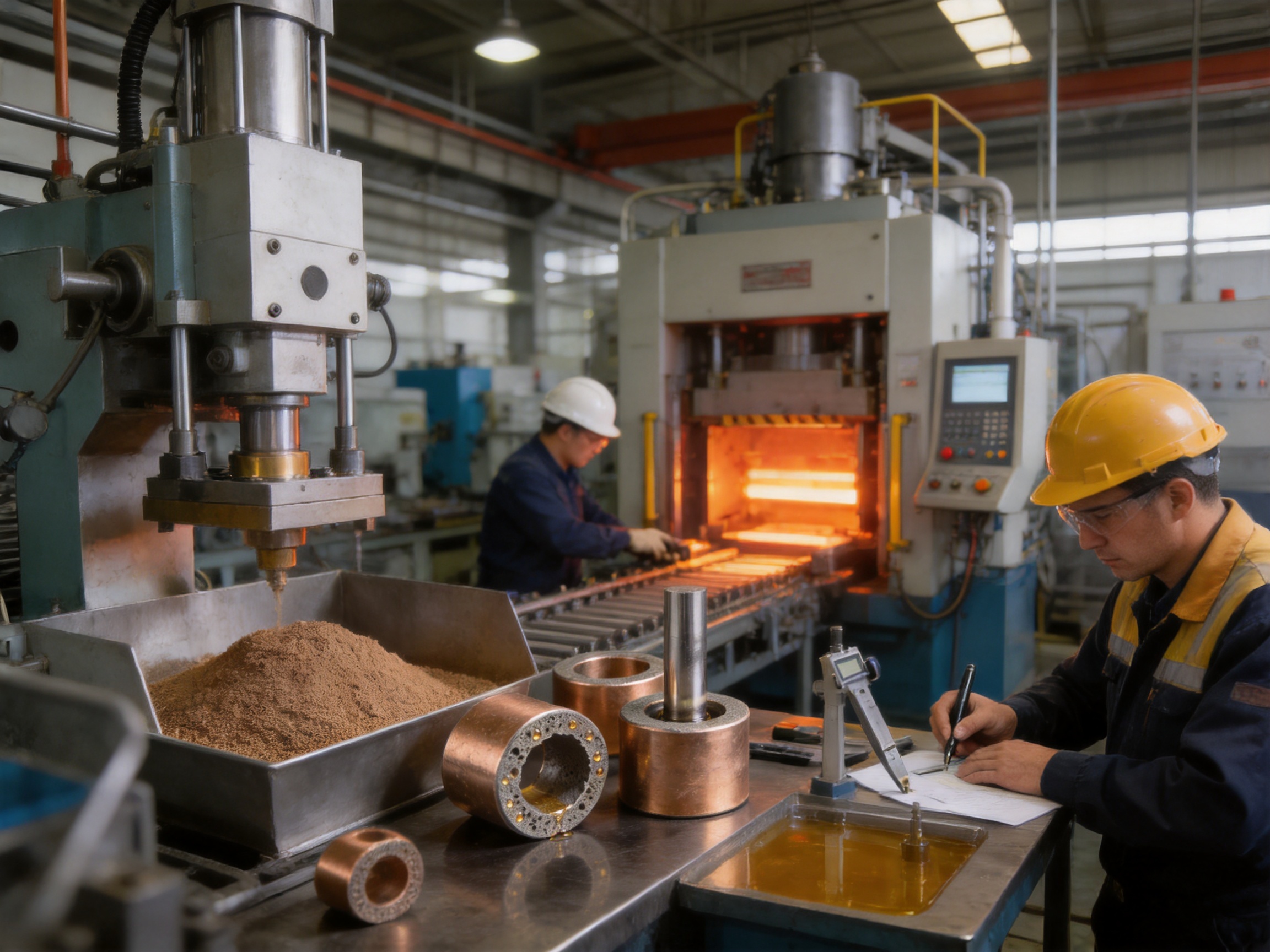
The company operates a 13,039-square-meter production base in Genglou Houtang Industrial Zone, Jiande City, Zhejiang Province, China. The facility is equipped with advanced production and testing equipment, including high-efficiency presses, high-temperature sintering furnaces, and precision forming machines. This manufacturing environment supports stable production capacity and consistent product quality.
With more than 150 skilled employees, the company can provide coordinated support across engineering, production, inspection, and customer service. Skilled personnel are essential in powder metallurgy because process details strongly influence product performance. Tooling adjustment, powder handling, furnace management, impregnation control, and inspection interpretation all require experience and discipline.
Another major strength is OEM and ODM customization. Many equipment manufacturers require bushings that fit unique housings, shaft sizes, load conditions, and operating environments. By working from customer drawings or samples, the company can provide customized bushing solutions rather than forcing customers to compromise with standard parts. This helps optimize equipment performance and reduce redesign costs.
The company’s philosophy emphasizes technology leadership, quality priority, stable manufacturing, continuous innovation, and long-term cooperation with global customers. These values align with the needs of industrial buyers who require not only a product but also a dependable manufacturing partner.
Application Areas
Industrial Machinery
Industrial machinery often includes shafts, levers, rollers, linkages, hinges, pumps, conveyors, and mechanical transmission systems. Many of these bearing points experience repetitive movement, moderate to heavy load, and exposure to dust or vibration. Sintered bronze self-lubricating bushings provide stable operation while reducing maintenance work.
Because they can perform without continuous external lubrication, they are useful in machines where access is limited or where downtime is costly. Their compact design also allows engineers to integrate them into tight assemblies.
Automotive Components
Automotive applications demand consistent quality, long service life, and resistance to vibration and temperature changes. Sintered bronze bushings can be used in various automotive mechanisms where sliding motion, oscillation, or rotational support is required. The company’s IATF 16949:2016 certification supports its ability to serve automotive-related supply chains with disciplined quality management.
In vehicles, reducing maintenance and ensuring stable performance are critical. Self-lubricating bushings can help improve reliability in components that are expected to function for years with minimal service.
Electric Motors and Gear Systems
Electric motors and gear systems require smooth rotation, low noise, and stable dimensional control. Sintered oil-impregnated bushings are widely used in small and medium motor assemblies because they provide dependable lubrication and quiet operation. Their ability to store lubricant internally makes them suitable for sealed or compact motor designs.
In gear systems, bushings may support shafts or intermediate components subjected to load and motion. Bronze’s thermal conductivity helps dissipate heat, while oil impregnation reduces friction during operation.
Household Appliances
Household appliances often require quiet, durable, and cost-effective bearing solutions. Fans, mixers, washing machines, small motors, and other devices may use sintered bronze bushings because they offer reliable performance without requiring the consumer to perform lubrication maintenance.
For appliance manufacturers, stable quality and high-volume production efficiency are important. Powder metallurgy is well suited for producing consistent parts in large quantities, helping maintain cost control while delivering functional reliability.
Construction Equipment
Construction machinery operates in difficult environments, including dust, mud, shock load, and outdoor temperature variation. Bearing components must be rugged and tolerant of contamination. Sintered bronze self-lubricating bushings can support reliable movement in selected construction equipment assemblies, especially where compact size and reduced lubrication demand are beneficial.
In such environments, proper sealing, shaft material, and load calculation remain important. When correctly applied, sintered bronze bushings can help reduce maintenance complexity and improve uptime.
High-Temperature Mechanical Systems
High-temperature systems require bearing materials that resist softening, deformation, and lubricant breakdown. Sintered bronze bushings offer strong thermal stability, and special dry-running or high-temperature versions can be developed for demanding heat conditions. Applications may include thermal processing equipment, high-temperature conveyors, oven mechanisms, or mechanical systems near heat sources.
For these applications, material and lubricant selection must be carefully reviewed. The manufacturer’s experience in powder metallurgy and customization can help customers identify suitable solutions.
Design Considerations for Engineers
To obtain the best performance from sintered bronze self-lubricating bushings, engineers should consider load, speed, shaft material, surface finish, operating temperature, installation method, and environmental exposure. Proper design ensures that the bearing’s advantages are fully realized.
Load and Speed
Bearing life depends strongly on the combination of pressure and velocity. High load increases contact stress, while high speed increases heat generation. Engineers should evaluate the pressure-velocity condition of the application and select a bushing material and size accordingly. If the bearing is undersized, excessive heat and wear may occur. If it is properly sized, the self-lubricating mechanism can operate effectively.
Shaft Compatibility
The shaft surface has direct contact with the bushing. Shaft hardness, roughness, roundness, and material influence wear performance. A shaft that is too rough may accelerate bushing wear, while a shaft that is too soft may be damaged under load. Proper surface finish helps maintain a stable lubricant film and reduces friction.
Clearance Control
Correct clearance between shaft and bushing is essential. Too little clearance can cause tight running, heat buildup, and seizure. Too much clearance can cause noise, vibration, misalignment, and uneven load distribution. Precision calibration and inspection help provide accurate bushing dimensions, but the housing and shaft must also be manufactured correctly.
Installation Method
Many sleeve bushings are installed by press fitting into a housing. The interference fit must be controlled to prevent excessive compression of the inner diameter. Engineers should consider housing material, wall thickness, insertion chamfers, and assembly force. After installation, the actual inner diameter should remain within the intended operating range.
Temperature and Lubricant Selection
Because the bushing’s self-lubricating behavior depends partly on lubricant properties, the oil or lubricant system should match the operating temperature. High temperatures may require special lubricants or dry-running materials. Low temperatures may require lubricant with suitable viscosity. When the environment is unusual, customers should consult the manufacturer during the design stage.
Environmental Conditions
Dust, moisture, chemicals, vacuum, radiation, and abrasive particles can affect bearing performance. Sintered bronze bushings are suitable for many difficult environments, but application-specific review is recommended. Protective seals, material modifications, or special impregnation may be used to improve performance.
Advantages Over Competitors
The competitiveness of sintered bronze self-lubricating bushings from Jiande Welfine Technology Co., Ltd. comes from the combination of material expertise, manufacturing capacity, process control, customization, and certified quality management. While many suppliers can provide standard bushings, not every supplier can consistently deliver application-specific performance, stable dimensions, and long-term production reliability.
First, the company’s more than 20 years of powder metallurgy experience provides a strong technical foundation. Powder metallurgy is sensitive to powder quality, pressing conditions, sintering atmosphere, porosity control, and oil impregnation. Experience reduces risk and improves the ability to solve customer problems.
Second, the company’s advanced equipment supports consistent production. High-efficiency presses improve forming stability. High-temperature sintering furnaces support metallurgical bonding and controlled porosity. Precision forming machines improve dimensional accuracy. Testing equipment helps verify product quality before shipment.
Third, the company offers OEM and ODM customization based on drawings or samples. This gives customers flexibility to obtain bushings that fit their assemblies precisely. Competitors focused only on standard catalog items may not be able to provide the same level of engineering adaptation.
Fourth, ISO 9001:2015 and IATF 16949:2016 certifications demonstrate a mature quality system. For customers serving automotive, industrial, and global markets, certification reduces supplier risk and supports traceability, continuous improvement, and process discipline.
Fifth, the company’s broad product category coverage allows customers to source related powder metallurgy parts from one experienced manufacturer. In addition to sintered oil-impregnated bearings, the company works with powder metallurgy structural parts, friction materials, magnetic materials, and steel cast copper products. This broader capability can support integrated purchasing and technical collaboration.
Finally, the company emphasizes stable manufacturing and long-term cooperation. For industrial buyers, supply continuity matters as much as sample quality. A reliable manufacturer must deliver consistent parts shipment after shipment, year after year. This stability is a key advantage in competitive global supply chains.
Q&A: Practical Questions About Sintered Bronze Self-Lubricating Bushings
Q1: What makes a sintered bronze bushing self-lubricating?
A sintered bronze bushing is self-lubricating because it contains interconnected pores created during the powder metallurgy process. These pores are filled with lubricant through oil impregnation. During operation, the lubricant moves toward the sliding surface and reduces friction between the shaft and bushing.
Q2: Can these bushings operate without external lubrication?
Yes, in many applications they can operate without frequent external lubrication. The internal lubricant supply supports maintenance-free or low-maintenance operation. However, performance depends on load, speed, temperature, shaft condition, and environmental factors.
Q3: Are sintered bronze bushings suitable for high-load applications?
Yes, they are designed to withstand both high static and dynamic loads when properly selected. Correct sizing, material choice, shaft compatibility, and installation are important for achieving reliable high-load performance.
Q4: How do they compare with plastic bushings?
Sintered bronze bushings generally offer better temperature resistance, thermal conductivity, electrical conductivity, dimensional stability, and load capacity than many plastic bushings. Plastic bushings may be suitable for lightweight or corrosion-specific applications, but bronze is often preferred for demanding mechanical environments.
Q5: What industries commonly use these bushings?
Common industries include industrial machinery, automotive components, electric motors, gear systems, household appliances, construction equipment, and high-temperature mechanical systems. They are especially useful where lubrication access is limited or maintenance reduction is important.
Q6: What is the difference between CuSn and CuPb series materials?
CuSn series tin bronze materials typically provide good strength, wear resistance, and corrosion resistance. CuPb series lead bronze materials can offer excellent conformability and embeddability. The best choice depends on application conditions and regulatory requirements.
Q7: Can the bushings be customized?
Yes. Jiande Welfine Technology Co., Ltd. provides OEM and ODM customized bushing solutions based on customer drawings or samples. Customization may include dimensions, material selection, tolerance requirements, shapes, flanges, grooves, and application-specific features.
Q8: What quality certifications support production reliability?
The company has passed ISO 9001:2015 and IATF 16949:2016 certifications. These certifications support process control, quality consistency, traceability, and continuous improvement, which are important for industrial and automotive customers.
Q9: Are these bushings suitable for dusty or dirty environments?
Yes, they can perform well in dusty, dirty, and contaminated environments when properly selected and installed. Their self-lubricating structure reduces reliance on external grease, which can attract abrasive particles. For severe contamination, sealing and application review are recommended.
Q10: What information should a customer provide for selection?
Useful information includes shaft diameter, housing diameter, bushing length, load, speed, movement type, temperature range, shaft material and surface finish, operating environment, expected service life, and any special requirements such as vacuum, dry running, or high-temperature operation.
Conclusion
Sintered bronze self-lubricating bushings provide a powerful solution for modern industrial motion systems. By combining bronze strength with powder metallurgy porosity and oil impregnation, they deliver maintenance-free operation, high load capacity, excellent wear resistance, thermal stability, electrical conductivity, and compatibility with demanding environments.
Their advantages are especially clear in applications where external lubrication is difficult, downtime is expensive, contamination is present, or long service life is required. Compared with solid bronze, plastic, and rolling bearing alternatives, sintered bronze self-lubricating bushings offer a balanced combination of reliability, compactness, cost efficiency, and engineering flexibility.
Jiande Welfine Technology Co., Ltd. strengthens these product advantages through advanced manufacturing processes, high-efficiency presses, high-temperature sintering furnaces, precision forming machines, strict quality management, and more than 20 years of powder metallurgy experience. With a 13,039-square-meter production base, more than 150 skilled employees, ISO 9001:2015 and IATF 16949:2016 certifications, and OEM/ODM customization capabilities, the company is well positioned to support global customers seeking durable and consistent bushing solutions.
For manufacturers designing industrial machinery, automotive mechanisms, motors, gear systems, appliances, construction equipment, or high-temperature systems, sintered bronze self-lubricating bushings offer a practical path to lower maintenance, longer service life, and more reliable performance.
Company Contact Information
Company: Jiande Welfine Technology Co., Ltd.
Address: Genglou Houtang Industrial Zone, Jiande City, Zhejiang Province, China
Phone: +86-15239857375
Email: [email protected]
References
1. German, R. M. Powder Metallurgy and Particulate Materials Processing. Metal Powder Industries Federation.
2. ASM International. ASM Handbook, Volume 7: Powder Metal Technologies and Applications.
3. Neale, M. J. The Tribology Handbook. Butterworth-Heinemann.
4. Bhushan, B. Introduction to Tribology. Wiley.
5. ISO 9001:2015 Quality Management Systems: Requirements. International Organization for Standardization.
6. IATF 16949:2016 Quality Management System Standard for Automotive Production and Relevant Service Parts Organizations.
Related products
Copyright © Jiande Welfine Technology Co., Ltd. All Rights Reserved. Custom Self-lubricating Sintered Bushing Manufacturers
