E-mail us: [email protected]
Tel: +86-15239857375
 English
 中文简体
中文简体

 Home / Author / Gao Manli — Overseas Sales Manager / Powder Metallurgy Structural Components for Reliable Washing Machine Transmission Systems
 Powder Metallurgy Structural Components for Reliable Washing Machine Transmission Systems
 2026.06.20
 Gao Manli — Overseas Sales Manager
Content
- 1 Product Overview
- 2 Core Technical Characteristics
- 3 Why Powder Metallurgy Is Ideal for Washing Machine Structural Parts
- 4 Competitive Advantages Over Conventional Machined Components
- 5 Advantages Over Lower-Quality Sintered Alternatives
- 6 Material Design: Fe-Cu-C and Fe-Ni-C Alloy Systems
- 7 Compaction: Forming Complex Profiles with Precision
- 8 High-Temperature Sintering: Creating Strength and Stability
- 9 Surface Blackening: Protection and Performance Enhancement
- 10 Dimensional Accuracy and Functional Fit
- 11 Role in Washing Machine Clutch and Transmission Systems
- 12 Manufacturing Strengths Supporting Product Reliability
- 13 Quality Assurance and Certification
- 14 Customization for OEM and ODM Projects
- 15 Cost Efficiency Without Sacrificing Performance
- 16 Durability in Real Operating Conditions
- 17 Design Flexibility and Engineering Optimization
- 18 Environmental and Production Efficiency Benefits
- 19 How the Product Supports Appliance Manufacturer Goals
- 20 Key Selection Considerations for Buyers
- 21 Q&A Section
- 21.1 What is the main purpose of this powder metallurgy structural component in a washing machine?
- 21.2 Why is powder metallurgy a good manufacturing method for this part?
- 21.3 What materials are commonly used for the component?
- 21.4 What is the benefit of the black oxide surface treatment?
- 21.5 Can the component be customized for different washing machine models?
- 21.6 How does this product compare with machined steel components?
- 21.7 Why are quality certifications important for this type of product?
- 21.8 What information should customers provide for a custom project?
- 22 Conclusion
- 23 References
- 24 Product: Powder Metallurgy Structural Components for Washing Machines
Powder metallurgy structural components for washing machines are precision-engineered sintered metal parts designed for demanding clutch, transmission, and torque-transfer applications in household appliance systems. In modern washing machines, small mechanical components must perform reliably under repeated start-stop cycles, alternating loads, vibration, moisture exposure, and long service periods. The product discussed in this article is an iron-based powder metallurgy structural component manufactured through compaction, high-temperature sintering, and surface blackening treatment. It features an inner splined or serrated bore for torque transmission and an outer serrated or geared profile for clutch engagement, making it suitable for washing machine drive assemblies where dimensional accuracy, wear resistance, and stable mechanical strength are essential.
Unlike conventionally machined steel parts, powder metallurgy components are produced by forming metal powders into near-net-shape geometries before sintering them into durable solid structures. This method enables complex internal and external profiles, reduces material waste, improves production consistency, and supports cost-efficient mass manufacturing. For washing machine manufacturers, these advantages translate into stable quality, reliable assembly performance, and better total cost control. When combined with black oxide surface treatment, the component gains improved corrosion resistance, anti-rust performance, enhanced surface durability, and a uniform black finish suitable for appliance environments.
Jiande Welfine Technology Co., Ltd. focuses on powder metallurgy sintering, self-lubricating bushings, and precision structural components. Established in 2001, the company has accumulated more than two decades of experience in sintered metal manufacturing and related precision machining. With a modern production base of approximately 13,039 square meters, advanced pressing equipment, high-temperature sintering furnaces, forming machinery, testing capabilities, and more than 150 skilled employees, the company provides OEM and ODM customized components based on customer drawings or samples. Its ISO 9001:2015 and IATF 16949:2016 quality management certifications support stable production, traceability, and consistent product performance for international customers.
Powder Metallurgy Structural Components for Washing Machines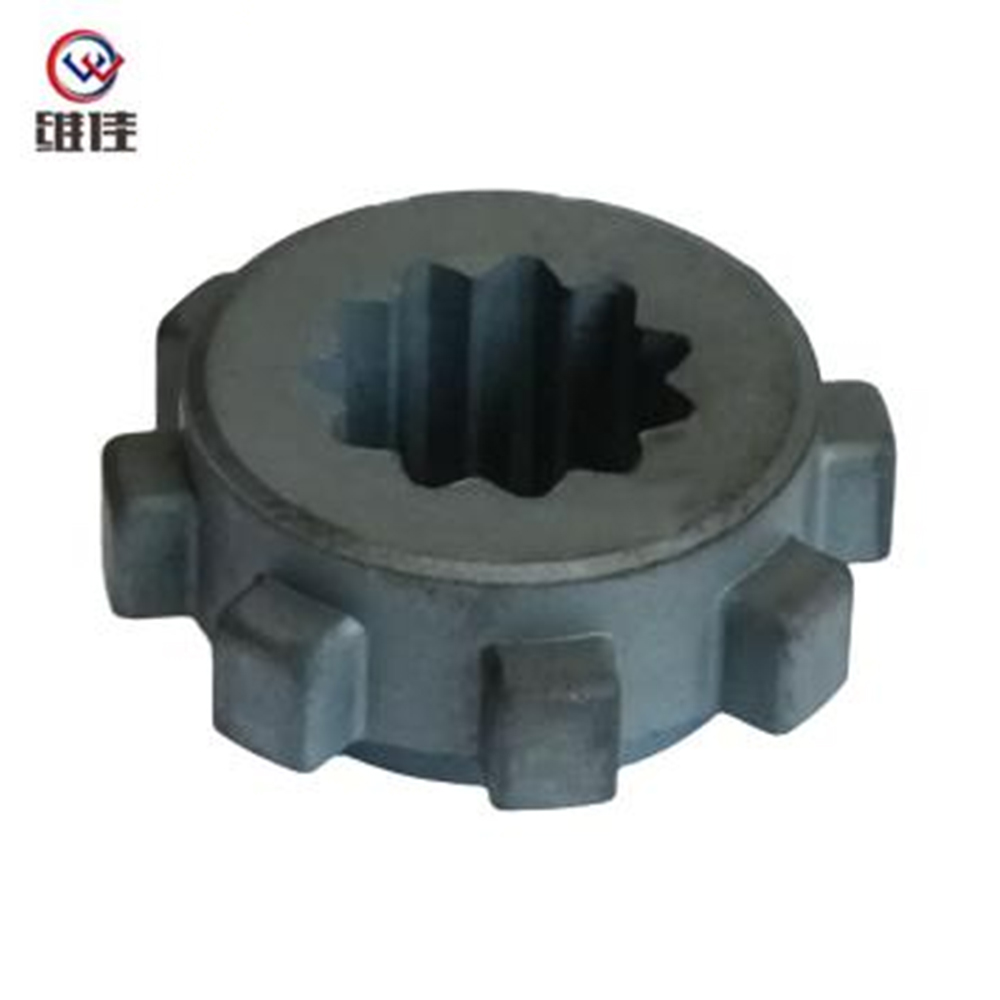
Product Overview
The powder metallurgy structural component for washing machines is typically produced from an iron-based powder metallurgy alloy such as Fe-Cu-C or Fe-Ni-C. These alloy systems are widely used in sintered structural applications because they provide a balanced combination of strength, hardness, dimensional stability, wear resistance, and process adaptability. Depending on the specific washing machine model and load conditions, material composition, density, profile geometry, surface treatment, and dimensional tolerances can be adjusted to meet application requirements.
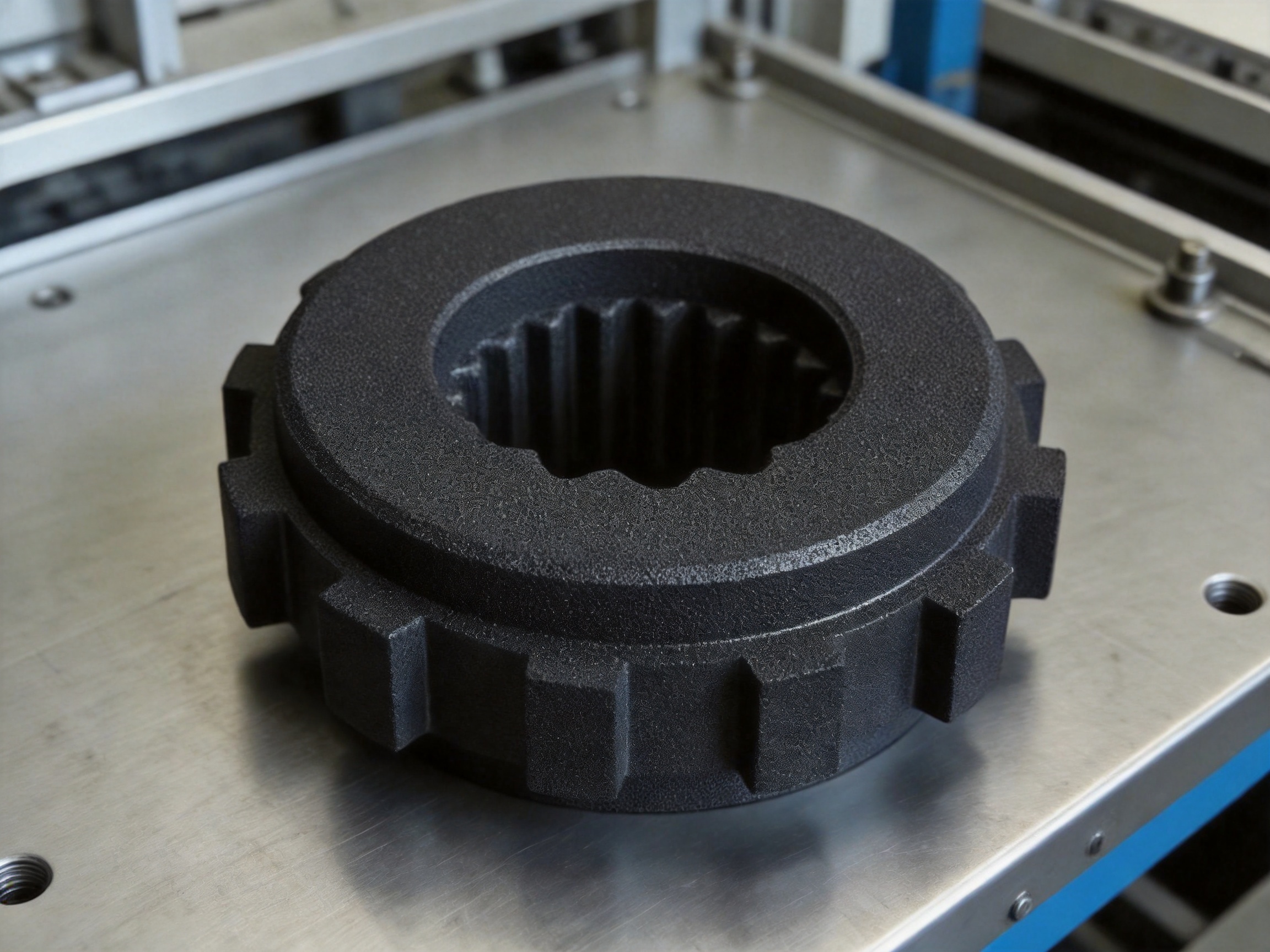
The component is designed as a functional transmission or clutch part. Its inner bore may include splines, serrations, or other interlocking forms to transmit rotational torque from a mating shaft or hub. Its outer edge may include serrations, gear-like teeth, or clutch engagement features that interact with adjacent mechanical parts. These profiles must be precise because small dimensional deviations can cause assembly difficulty, noise, uneven load distribution, accelerated wear, or poor clutch engagement. Powder metallurgy is especially suitable for this type of geometry because compaction tooling can form repeating tooth and spline structures efficiently and accurately.
In operation, washing machine drive systems experience frequent changes between wash and spin cycles. During these transitions, clutch components engage and disengage while the motor and drum move through varying speeds and torque levels. The sintered structural component must therefore withstand repeated mechanical stress, torsional load, vibration, and contact wear. It must also maintain its shape and functional dimensions over time. The blackening process further improves surface protection, helping the component resist rust and maintain reliable performance in a humid laundry environment.
Core Technical Characteristics
Parameter |
Specification and Value |
Application Benefit |
Material |
Iron-based powder metallurgy alloy, commonly Fe-Cu-C or Fe-Ni-C |
Provides strength, wear resistance, and stable load-bearing performance |
Manufacturing Process |
Powder mixing, compaction, high-temperature sintering, sizing or finishing as required, and surface blackening |
Supports near-net-shape production, repeatable quality, and efficient mass manufacturing |
Surface Finish |
Black oxide coating |
Enhances corrosion resistance, anti-rust capability, wear behavior, and visual consistency |
Inner Profile |
Splined or serrated inner bore |
Improves torque transmission and mating accuracy with shafts or hubs |
Outer Profile |
Serrated, geared, or toothed outer structure |
Supports clutch engagement and mechanical interlocking |
Size Range |
Customizable small and large variants |
Allows adaptation to different washing machine models and transmission layouts |
Primary Application |
Washing machine clutch assemblies and transmission systems |
Ensures durable torque transfer and stable cycle switching |
Quality Support |
ISO 9001 certified production with dimensional and mechanical property testing |
Improves batch consistency and customer confidence |
Why Powder Metallurgy Is Ideal for Washing Machine Structural Parts
Powder metallurgy offers significant advantages for components that require complex geometry, high production volume, controlled cost, and reliable performance. In traditional machining, a part with internal splines and external serrations may require multiple cutting, broaching, hobbing, or milling operations. These steps can increase cycle time, produce material waste, and introduce additional tolerance variation. Powder metallurgy, by contrast, forms many of these details directly in the pressing stage. The compacted green part is then sintered to create a metallurgical bond between powder particles, producing a strong functional component with minimal machining.
Near-net-shape manufacturing is one of the most important benefits. Instead of cutting a large amount of material away from a solid steel blank, the powder metallurgy process uses only the amount of powder required to create the part geometry. This reduces scrap, lowers raw material consumption, and supports more sustainable production. For appliance manufacturers that require large volumes of clutch and transmission parts, even small savings per component can become substantial across annual production.
Another advantage is consistency. Powder metallurgy production relies on controlled powder composition, compaction pressure, tooling geometry, sintering temperature, furnace atmosphere, and post-treatment parameters. Once a process is validated, each batch can be produced with stable density, dimensions, and mechanical properties. This repeatability is especially valuable in washing machine assembly lines, where components must fit automatically or semi-automatically without repeated adjustment. Stable dimensions reduce assembly downtime, rework, and warranty risk.
Powder metallurgy also enables controlled porosity and material engineering. For structural parts, density can be optimized to balance strength and cost. Alloying elements such as copper, carbon, and nickel can be selected to improve strength, hardness, and wear behavior. Heat treatment or surface treatment may be added when required. Because the process starts with powder, it offers flexibility in composition and performance design that can be difficult or expensive with conventional wrought steel machining.
Competitive Advantages Over Conventional Machined Components
Compared with conventional machined components, sintered washing machine structural parts provide a strong combination of cost efficiency, design freedom, and manufacturing repeatability. A machined clutch component with both inner and outer profiles may require several production steps. Each step can add cost, tooling complexity, inspection requirements, and lead time. Powder metallurgy consolidates much of this geometry formation into a single compaction operation followed by sintering, making it highly suitable for high-volume appliance applications.
Material utilization is a major competitive advantage. Machining removes material in the form of chips, which must be recycled or discarded. Powder metallurgy minimizes this waste by pressing the powder directly into the required shape. This efficient use of material is particularly important in markets where cost pressure is high and manufacturers must maintain profitability while delivering dependable appliance performance.
Dimensional repeatability is another key advantage. The tooling-based nature of powder metallurgy allows repeated production of complex shapes with consistent profiles. This is especially useful for splines and serrations that must align precisely with mating parts. Better profile consistency can improve torque transfer, reduce local stress concentration, minimize vibration, and improve overall transmission smoothness.
In addition, sintered parts can be designed for functional performance rather than merely copied from machined components. For example, tooth shapes, bore geometry, wall thickness, density, and material composition can be optimized for the specific loading and engagement behavior of a washing machine clutch. This gives OEM engineers more freedom to improve the entire assembly instead of simply replacing one part with another.
Advantages Over Lower-Quality Sintered Alternatives
Not all powder metallurgy components deliver the same level of quality. Competitive advantage depends not only on the process category but also on material control, tooling accuracy, sintering stability, surface treatment quality, inspection discipline, and engineering support. A lower-cost sintered part may appear similar in shape but fail to meet requirements for density uniformity, tooth accuracy, strength, blackening quality, or long-term wear resistance.
The product described here is designed for reliable application in washing machine clutch and transmission systems, where repeated load changes can expose weaknesses in poorly manufactured parts. If density is inconsistent, the component may have weak zones that crack or wear prematurely. If inner spline geometry is inaccurate, torque transmission may become uneven. If outer serrations are poorly formed, clutch engagement may become noisy or unreliable. If surface blackening is insufficient, corrosion may develop in humid conditions.
Jiande Welfine Technology Co., Ltd. strengthens product competitiveness through certified quality systems, advanced equipment, process knowledge, and a practical focus on OEM and ODM customization. The company’s experience in powder metallurgy bushings, self-lubricating bushings, and precision sintered parts supports strong technical understanding of material behavior, forming conditions, friction, wear, and dimensional control. This background allows the company to provide components that are not merely shaped correctly but engineered for function and durability.
Material Design: Fe-Cu-C and Fe-Ni-C Alloy Systems
Iron-based powder metallurgy alloys are commonly selected for structural applications because they provide a strong performance-to-cost ratio. Fe-Cu-C materials combine iron with copper and carbon to improve mechanical strength and wear resistance after sintering. Copper can enhance strength and sintering behavior, while carbon contributes to hardness and strength when properly controlled. This type of alloy is suitable for many appliance transmission components that require good durability without excessive material cost.
Fe-Ni-C materials use nickel as an alloying element to improve toughness, strength, and fatigue behavior. Nickel-containing sintered materials may be selected for applications with higher load requirements or where better impact resistance is needed. The final choice depends on the washing machine design, torque level, clutch configuration, expected service life, and customer specifications. A reliable manufacturer should be able to recommend material options based on drawing requirements, operating conditions, and performance targets.
Material selection is not limited to chemical composition. Powder particle size distribution, lubricant content, mixing uniformity, compaction pressure, green density, sintering temperature, furnace atmosphere, and cooling rate all influence final properties. For this reason, experienced powder metallurgy production is essential. The company’s long-term focus on sintering and precision parts helps ensure that material design and process parameters are aligned with the component’s functional requirements.
Compaction: Forming Complex Profiles with Precision
Compaction is the first major forming step in powder metallurgy. Metal powder is filled into a die cavity and pressed under high pressure to create a green compact. For washing machine structural components with inner splines and outer serrations, tooling design is critical. The die, punches, core rods, and profile-forming features must be accurately manufactured and maintained. Proper tooling ensures that tooth forms, bore features, thickness, and overall geometry are consistent from part to part.
During compaction, density distribution must be carefully controlled. Complex shapes can create areas that are more difficult to fill or compress evenly. If density variation is excessive, the final sintered part may show dimensional distortion, weak zones, or inconsistent mechanical properties. Experienced process engineers adjust powder flow, fill depth, pressing speed, compaction force, and tooling design to achieve stable green density.
The advantage of powder metallurgy is especially clear in this stage. Features that would otherwise require extensive machining can be formed directly in the press. This reduces the need for secondary processing and helps preserve dimensional consistency across high-volume production. For washing machine manufacturers, this means faster production, lower unit cost, and better supply stability.
High-Temperature Sintering: Creating Strength and Stability
After compaction, the green compact is fragile and must be sintered at high temperature. Sintering bonds the powder particles together through diffusion and metallurgical processes. The component gains strength, hardness, and structural integrity while retaining its formed geometry. Temperature, time, furnace atmosphere, and cooling conditions must be carefully controlled to achieve the required performance.
High-temperature sintering is one of the decisive stages in determining final quality. If the sintering temperature is too low or the atmosphere is not properly controlled, bonding may be insufficient and mechanical properties may fall below specification. If temperature or time is excessive, dimensions may shift or undesirable microstructural changes may occur. A stable sintering furnace and experienced process control are therefore essential for producing reliable structural components.
Jiande Welfine Technology Co., Ltd. operates advanced high-temperature sintering furnaces and has accumulated practical experience in sintered metal production since 2001. This manufacturing background supports consistent furnace control, stable metallurgical bonding, and dependable batch quality. For OEM customers, reliable sintering means fewer performance variations, fewer rejected batches, and stronger confidence in long-term supply.
Surface Blackening: Protection and Performance Enhancement
The blackening treatment forms a dense black oxide layer on the component surface. This surface finish provides several advantages for washing machine applications. First, it improves corrosion resistance and anti-rust performance. Washing machines operate in environments where moisture, detergent residue, and temperature changes may be present. Even internal mechanical components can be exposed to humidity over time. A black oxide surface helps protect the metal and maintain functional reliability.
Second, blackening can improve wear behavior and friction characteristics. In clutch and transmission assemblies, components may experience repeated contact, engagement, and sliding or micro-movement. A properly controlled black oxide layer can support better surface durability and reduce the risk of early surface degradation. While blackening is not a substitute for correct material strength or proper assembly design, it is an important finishing step that contributes to longer service life.
Third, blackening creates a uniform dark appearance. Although internal washing machine parts are not usually visible to consumers, consistent appearance is still a sign of controlled production and quality discipline. It helps customers quickly identify treated parts and supports professional assembly standards.
Dimensional Accuracy and Functional Fit
In a washing machine clutch system, dimensional accuracy is not optional. Inner splines must fit mating shafts or hubs. Outer serrations must engage with corresponding clutch elements. Flatness, thickness, concentricity, tooth form, bore dimensions, and surface condition all influence assembly and performance. Even a small profile error can lead to backlash, noise, excessive wear, or incomplete engagement.
The powder metallurgy process supports tight and repeatable dimensions when tooling, compaction, sintering, and finishing are properly controlled. Some parts may require sizing or calibration after sintering to achieve final dimensional precision. Sizing uses additional tooling to correct small dimensional changes and improve consistency. For applications with demanding tolerances, secondary machining or finishing may also be applied selectively.
The company’s ability to provide customized solutions based on drawings or samples is valuable because each washing machine platform may have unique dimensional requirements. OEM and ODM customers can request specific inner and outer spline configurations, material formulations, size variants, and performance targets. Engineering support during prototype development helps ensure that design intent is translated into manufacturable and reliable components.
Role in Washing Machine Clutch and Transmission Systems
The component’s main function is to transmit rotational torque and support controlled engagement within the washing machine drive system. During the wash cycle, the transmission may require one type of motion, speed, or direction. During the spin cycle, the system may shift to a different operating condition with higher rotational speed and different load behavior. Clutch components help manage these transitions.
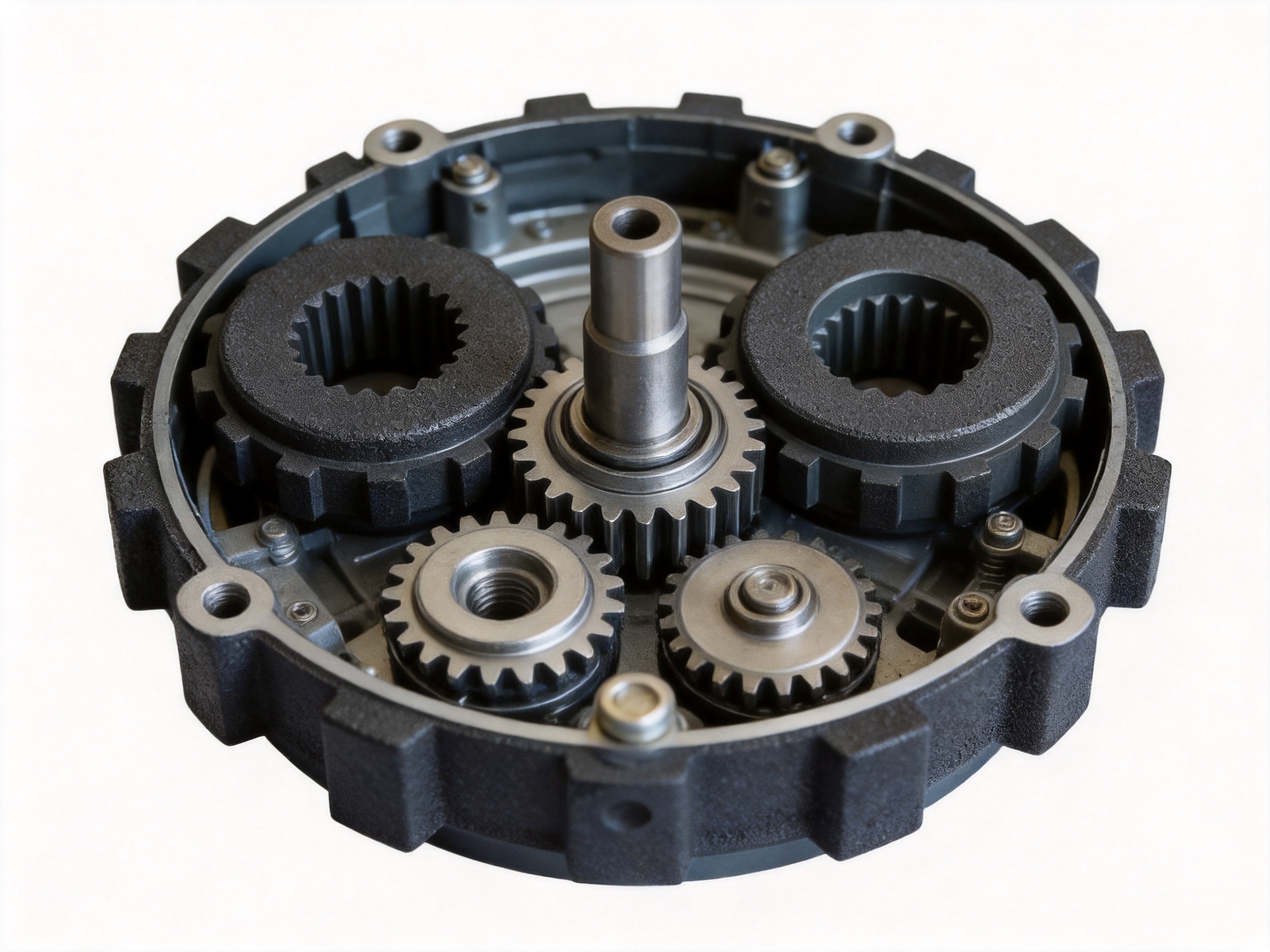
A structural component with an inner splined bore can lock onto a shaft or mating member and transfer torque without slipping. The outer serrated or geared edge can engage another component in the clutch assembly. This design allows mechanical power to be transferred, interrupted, or redirected depending on the cycle mode. Because the part participates directly in torque flow, it must resist tooth wear, cracking, deformation, and surface corrosion.
The repeated start-stop nature of washing machine operation makes fatigue resistance important. The component may experience thousands of cycles during the appliance’s service life. Each cycle can introduce load changes and impact-like engagement forces. A well-designed sintered component with appropriate density, alloy composition, and surface treatment can provide the durability needed for these conditions.
Manufacturing Strengths Supporting Product Reliability
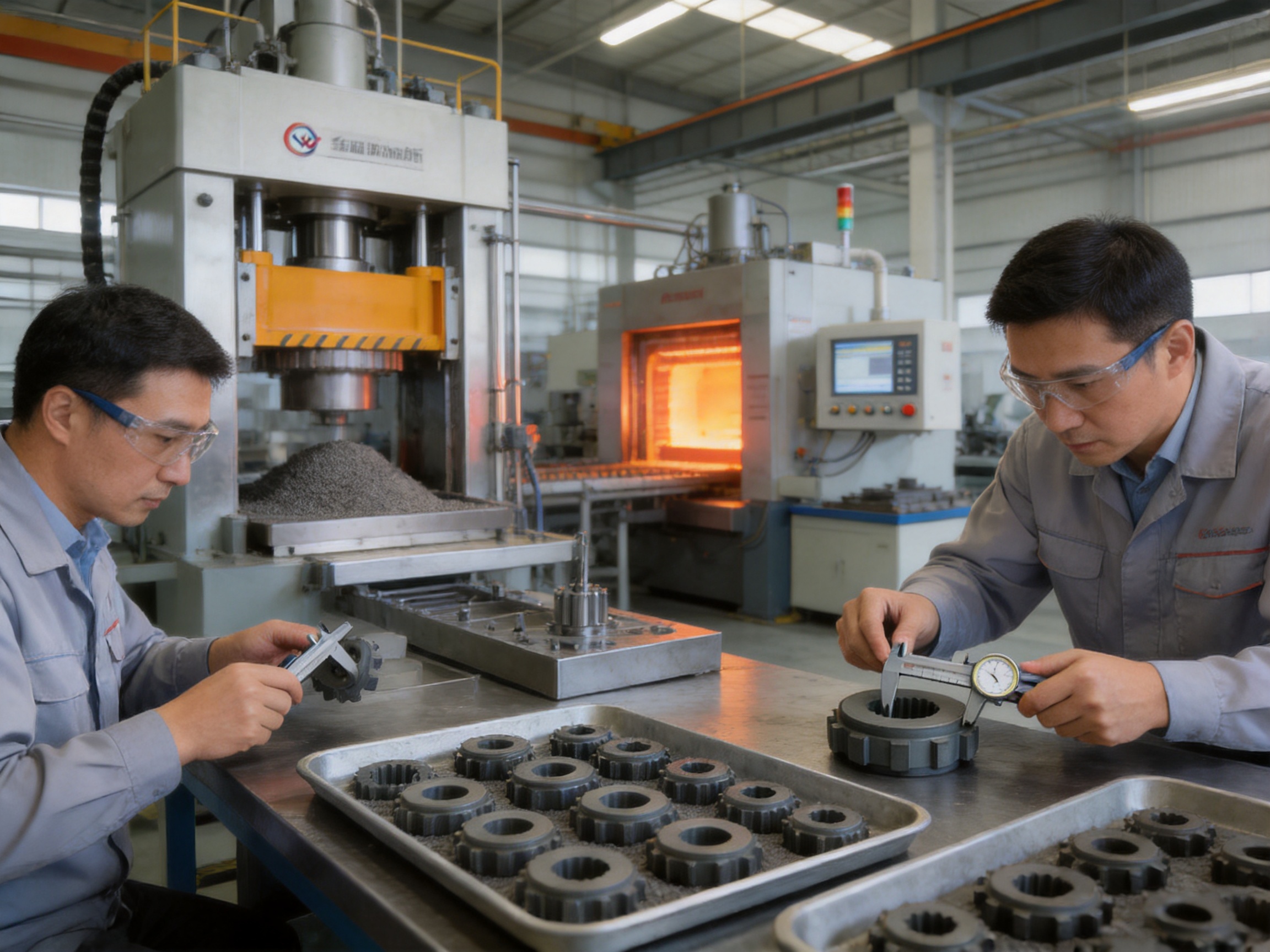
Manufacturing reliability begins with equipment capability and process knowledge. Jiande Welfine Technology Co., Ltd. has a production base equipped with high-efficiency presses, high-temperature sintering furnaces, precision forming machines, and inspection equipment. These resources allow the company to manage the full production flow from powder preparation and forming to sintering, finishing, blackening, and testing.
With more than 20 years of industry experience, the company understands how powder characteristics, tooling design, press settings, sintering parameters, and finishing steps interact. This experience is especially important for parts with complex inner and outer profiles. A manufacturer without strong process knowledge may produce acceptable samples but struggle with mass production stability. Long-term experience helps avoid such problems by establishing robust production windows and inspection standards.
The company’s workforce of more than 150 skilled employees also supports reliable manufacturing. Skilled technicians, engineers, and quality personnel contribute to tooling maintenance, process adjustment, dimensional inspection, mechanical testing, and customer communication. Powder metallurgy is a precision manufacturing field where human expertise remains important even with advanced equipment.
Quality Assurance and Certification
Quality assurance is essential for appliance components because failures can affect product reliability, warranty cost, and brand reputation. The company operates under ISO 9001:2015 and IATF 16949:2016 certifications. ISO 9001 supports systematic quality management, process control, corrective action, documentation, and customer satisfaction. IATF 16949, commonly associated with automotive quality systems, reflects stricter expectations for defect prevention, traceability, continual improvement, and production consistency.
For washing machine structural components, quality control may include incoming powder verification, tooling inspection, green density checks, sintered density measurement, dimensional inspection, hardness testing, strength evaluation, surface finish examination, and blackening quality checks. Depending on customer requirements, additional tests may be performed for wear behavior, torque capability, salt spray resistance, or assembly fit.
Full dimensional and mechanical property testing helps ensure that each production batch meets specification. This is especially important for OEM and ODM projects where the component is designed to match a particular machine model. Quality assurance also supports stable international supply because customers need confidence that parts received in later batches will perform like approved samples.
Customization for OEM and ODM Projects
Customization is a major advantage of powder metallurgy manufacturing. Washing machine designs vary by brand, market, capacity, motor type, transmission layout, and clutch mechanism. A standard off-the-shelf component may not meet every design requirement. The product can be customized in size, inner profile, outer profile, material composition, density, surface treatment, and finishing process.
The company supports custom OEM and ODM projects based on technical drawings or physical samples. Engineering teams can assist with prototype development, sample testing, and mass production scaling. This is important because a component that performs well in prototype quantities must also be practical for large-volume production. Early engineering collaboration can identify potential manufacturing issues such as thin wall sections, difficult tooth forms, density variation risks, or unnecessary machining requirements.
Free technical drawings and sample testing support can reduce development risk for customers. By working with a manufacturer experienced in powder metallurgy, customers can refine designs to achieve the best balance of performance, cost, manufacturability, and durability. This collaboration is especially valuable when replacing a machined part with a sintered alternative or upgrading a lower-quality component.
Cost Efficiency Without Sacrificing Performance
Cost efficiency is one of the reasons powder metallurgy has become widely used in structural components. However, cost savings must not come at the expense of reliability. The goal is to reduce unnecessary material waste, machining time, and production complexity while maintaining or improving functional performance. The described washing machine component achieves this through near-net-shape forming, efficient sintering, controlled finishing, and application-specific engineering.
Compared with machined components, powder metallurgy reduces raw material waste and can eliminate several machining operations. Compared with low-grade alternatives, a well-controlled sintered component reduces hidden costs related to assembly problems, premature failure, inconsistent batches, and customer complaints. In many cases, the lowest purchase price is not the lowest total cost. A stable component with reliable fit and long service life provides better value over the full product lifecycle.
For washing machine manufacturers, component cost must be evaluated together with assembly efficiency, warranty risk, production continuity, and supplier responsiveness. A capable supplier that provides technical support, stable quality, and customization can help reduce development time and avoid costly design changes later.
Durability in Real Operating Conditions
Washing machines may appear to operate in a simple household environment, but their internal mechanical systems face demanding conditions. Loads vary with laundry weight, water level, cycle selection, imbalance, and user behavior. Spin cycles can create high rotational speeds, while wash cycles can create frequent directional changes or intermittent motion. Clutch and transmission components must continue functioning despite these repeated stresses.
The iron-based sintered structure provides the necessary mechanical foundation. Proper alloy selection contributes to strength and wear resistance. Accurate tooth and spline geometry ensures even load transfer. High-temperature sintering creates strong particle bonding. Black oxide treatment improves resistance to corrosion and surface wear. Together, these factors allow the component to support long-term durability in the appliance.
Durability also depends on stable dimensional control. If a component is too loose, it may experience impact and fretting wear. If it is too tight, assembly may be difficult or stress may concentrate in certain areas. The precision manufacturing approach helps maintain the correct balance, allowing the component to perform reliably throughout repeated operating cycles.
Design Flexibility and Engineering Optimization
Powder metallurgy allows engineers to think beyond conventional machining limitations. Internal splines, external serrations, steps, shoulders, grooves, and complex profiles can often be formed directly in tooling. This opens opportunities to optimize component geometry for torque transfer, weight reduction, material efficiency, assembly orientation, and engagement behavior.
For example, the number of inner splines can be adjusted to distribute torque more evenly. Outer serration shape can be optimized for smoother clutch engagement. Wall thickness can be adjusted to improve strength in high-stress zones. Material density can be increased in critical areas through process design when feasible. Surface treatment can be selected according to corrosion and wear requirements.
Engineering optimization is most effective when the customer and supplier collaborate early. If the supplier receives only a finished drawing created for machining, some powder metallurgy advantages may not be fully used. By reviewing the design together, the manufacturer can suggest changes that improve manufacturability, reduce cost, or enhance performance without compromising the assembly function.
Environmental and Production Efficiency Benefits
Powder metallurgy contributes to more efficient resource use. Near-net-shape manufacturing reduces metal waste compared with subtractive machining. Lower material loss means less scrap handling, less recycling energy, and better raw material utilization. In high-volume appliance manufacturing, these environmental and economic benefits are meaningful.
The process also supports efficient production flow. Once tooling and process parameters are established, large quantities of parts can be produced with repeatable geometry. Reduced machining requirements can lower energy consumption, shorten cycle time, and simplify production planning. Stable batch quality reduces rework and rejection, further improving resource efficiency.
For global appliance manufacturers seeking more sustainable supply chains, powder metallurgy can provide a responsible option when combined with strong quality management and process control. The ability to produce durable parts efficiently supports both environmental and commercial objectives.
How the Product Supports Appliance Manufacturer Goals
Appliance manufacturers must balance performance, cost, quality, and production speed. A washing machine component may be small, but its failure can affect the entire product. The powder metallurgy structural component supports manufacturer goals in several ways. It provides reliable mechanical engagement, reduces manufacturing cost through efficient forming, supports high-volume production, and can be customized for specific models.
Because the part is suitable for clutch assemblies and transmission systems, it contributes directly to functional performance. Smooth torque transfer and stable engagement can reduce noise, vibration, and wear. Durable surface protection helps maintain reliability in humid environments. Precise dimensions support efficient assembly and reduce the risk of line stoppages.
The company’s OEM and ODM support further helps customers shorten development cycles. Instead of sourcing a generic component and adapting the assembly around it, customers can work with engineering personnel to develop a part matched to the exact application. This approach improves design integration and long-term reliability.
Key Selection Considerations for Buyers
When selecting powder metallurgy structural components for washing machines, buyers should consider more than price. Important factors include material composition, density, mechanical strength, tooth and spline accuracy, surface treatment quality, corrosion resistance, supplier experience, quality certifications, testing capability, customization support, and delivery stability.
Buyers should also evaluate whether the supplier can support both prototype and mass production. Some suppliers can make samples but lack stable high-volume process control. Others may offer low prices but limited engineering assistance. For clutch and transmission components, supplier capability directly affects final appliance quality. A qualified supplier should understand the application, review drawings carefully, recommend material and process options, and provide inspection data when required.
Jiande Welfine Technology Co., Ltd. combines powder metallurgy experience, certified quality systems, advanced manufacturing equipment, and customization services. These strengths help customers obtain components that meet both engineering and commercial requirements.
Q&A Section
What is the main purpose of this powder metallurgy structural component in a washing machine?
The component is mainly used in clutch assemblies and transmission systems. It helps transmit rotational torque, engage or disengage mechanical elements, and support reliable operation during wash and spin cycles.
Why is powder metallurgy a good manufacturing method for this part?
Powder metallurgy is suitable because it can form complex inner splines and outer serrations with high repeatability. It reduces material waste, minimizes secondary machining, supports mass production, and provides stable mechanical properties when properly controlled.
What materials are commonly used for the component?
The component is usually made from iron-based powder metallurgy alloys such as Fe-Cu-C or Fe-Ni-C. These materials provide a strong balance of strength, wear resistance, hardness, and cost efficiency.
What is the benefit of the black oxide surface treatment?
The black oxide coating improves corrosion resistance, anti-rust performance, wear behavior, and surface consistency. It is especially useful in washing machine environments where humidity and repeated mechanical contact may occur.
Can the component be customized for different washing machine models?
Yes. Size, inner spline profile, outer serration design, material composition, density, and surface treatment can be customized according to customer drawings, samples, or performance requirements.
How does this product compare with machined steel components?
Compared with machined steel parts, this sintered component can reduce material waste, lower machining time, improve production efficiency, and form complex profiles more economically. It also provides consistent quality in high-volume production.
Why are quality certifications important for this type of product?
Certifications such as ISO 9001:2015 and IATF 16949:2016 demonstrate systematic quality management, process control, traceability, and continual improvement. These are important for components used in high-volume appliance production.
What information should customers provide for a custom project?
Customers should provide drawings, samples, material requirements, tolerance specifications, application conditions, expected load, surface treatment needs, annual volume, and any testing standards. This information helps engineers recommend the best manufacturing solution.
Conclusion
Powder metallurgy structural components for washing machines provide an effective solution for clutch and transmission applications requiring strength, accuracy, wear resistance, corrosion protection, and cost-efficient mass production. Through iron-based alloy selection, precise compaction, high-temperature sintering, and black oxide treatment, the component achieves the performance needed for repeated torque transfer and engagement in household appliance systems.
Its advantages over conventional machined parts include near-net-shape manufacturing, reduced material waste, complex profile capability, consistent batch quality, and lower production cost. Its advantages over lower-quality sintered alternatives come from controlled materials, advanced manufacturing equipment, reliable sintering, certified quality systems, and strong engineering support. For washing machine manufacturers, these benefits support smoother assembly, longer service life, reduced failure risk, and improved total value.
Jiande Welfine Technology Co., Ltd. brings more than 20 years of powder metallurgy experience, a modern production base, skilled employees, advanced equipment, ISO 9001:2015 and IATF 16949:2016 certifications, and OEM/ODM customization capability. By combining manufacturing strength with application-focused engineering, the company provides sintered structural components that meet the practical needs of modern washing machine transmission systems.
References
German, R. M. Powder Metallurgy and Particulate Materials Processing. Metal Powder Industries Federation.
ASM International. ASM Handbook, Volume 7: Powder Metallurgy.
Upadhyaya, G. S. Powder Metallurgy Technology. Cambridge International Science Publishing.
Thümmler, F., and Oberacker, R. An Introduction to Powder Metallurgy. The Institute of Materials.
ISO 9001:2015. Quality Management Systems: Requirements. International Organization for Standardization.
IATF 16949:2016. Quality Management System Requirements for Automotive Production and Relevant Service Parts Organizations.
Product: Powder Metallurgy Structural Components for Washing Machines

Related products
-
-
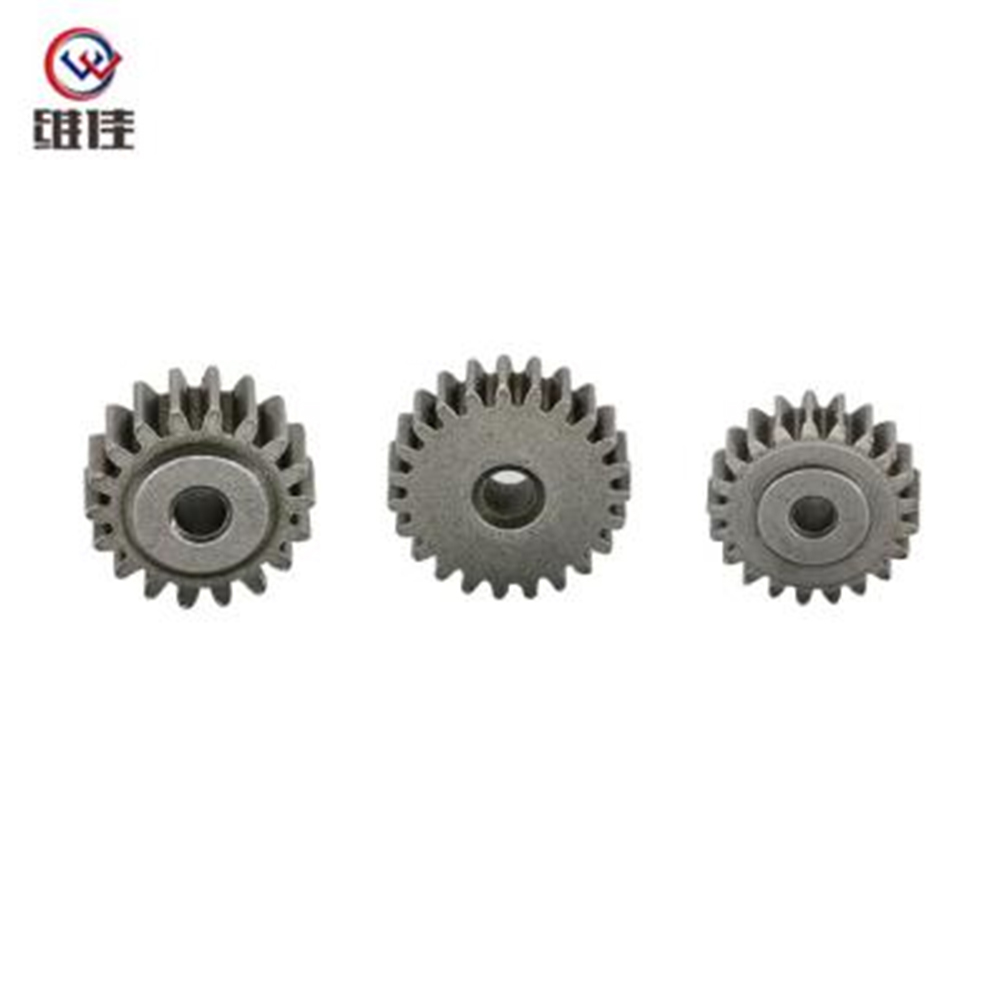
Description: Custom powder metallurgy planetary gear with high precision, wear resistance for automotive, industrial machinery & home appliances. OEM/ODM supported.
See Details -
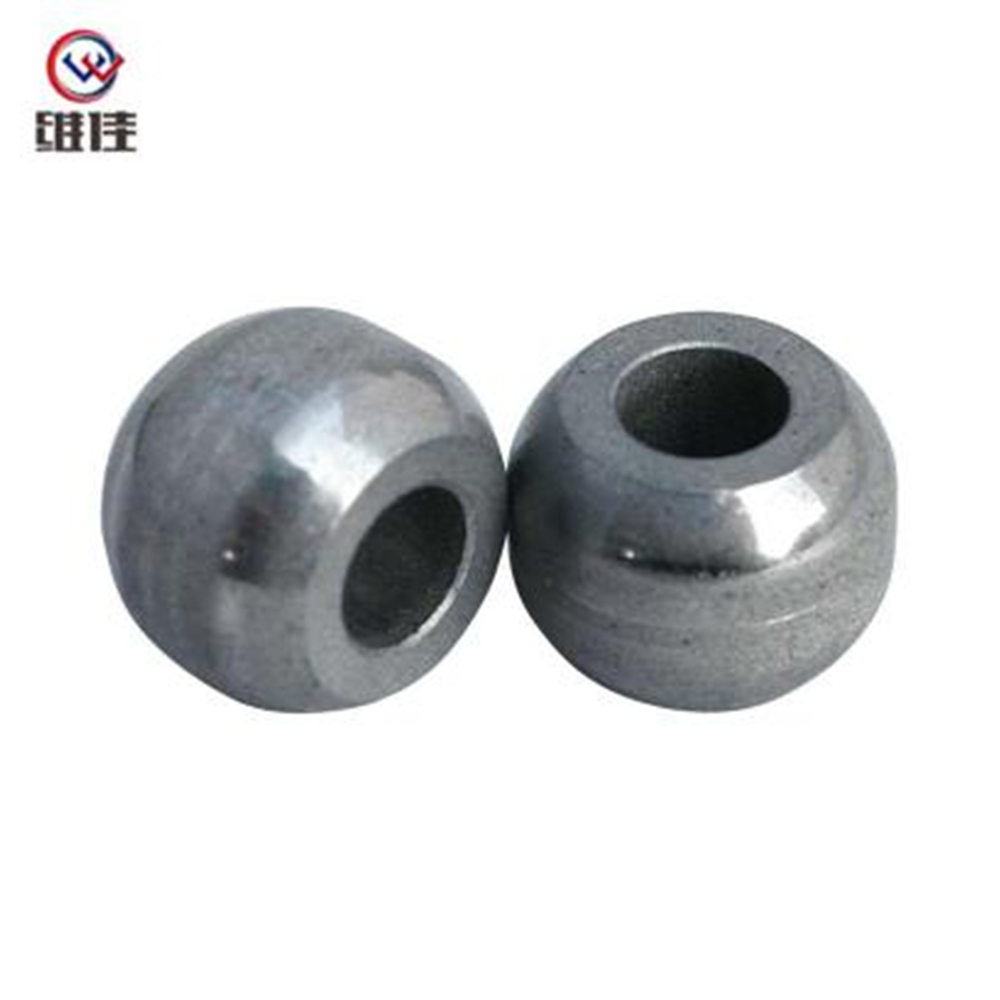
Product Description: High-precision powder metallurgy part (S14*7*10) made of iron material from Jiande Wefine, customized PM components with strict tolerance control.
See Details -
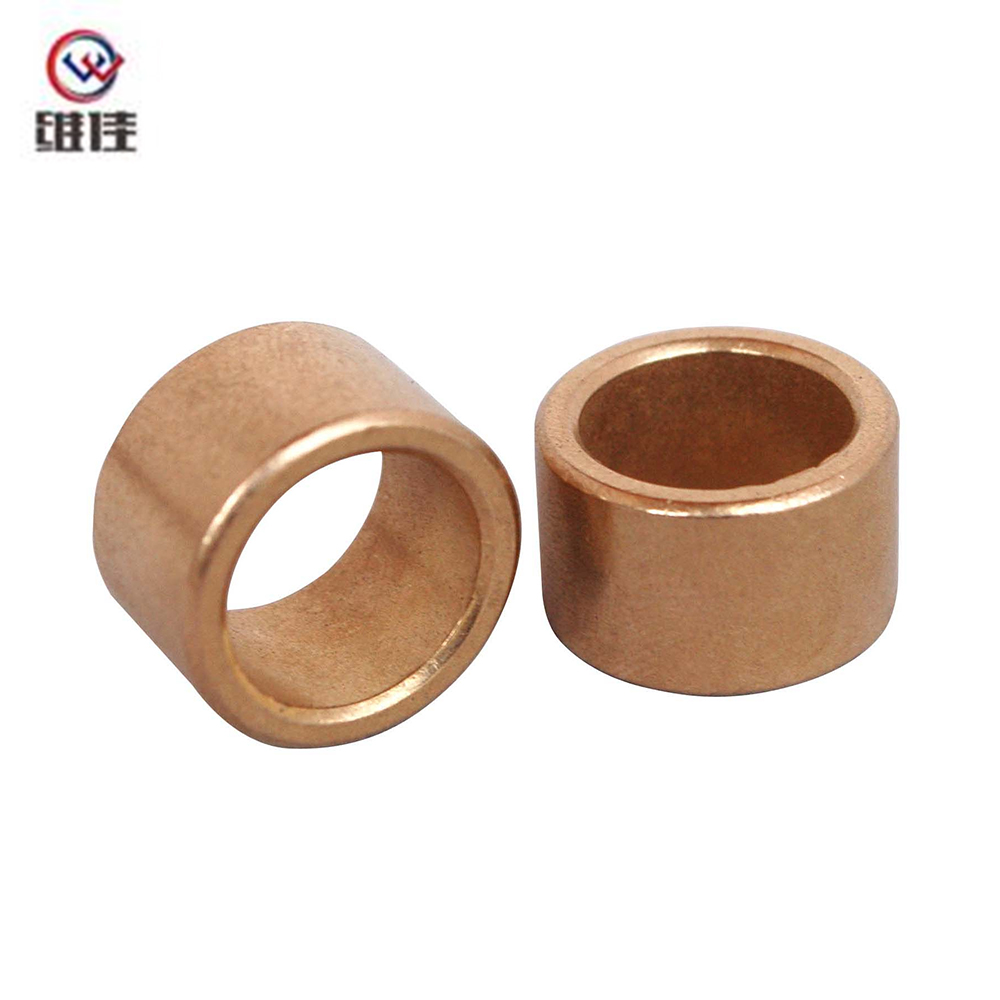
This copper-based powder metallurgy bushing is manufactured through an integrated process of compaction, sintering, sizing, and oil impregnation. It features excellent wear resistance and self-lubrica...
See Details -
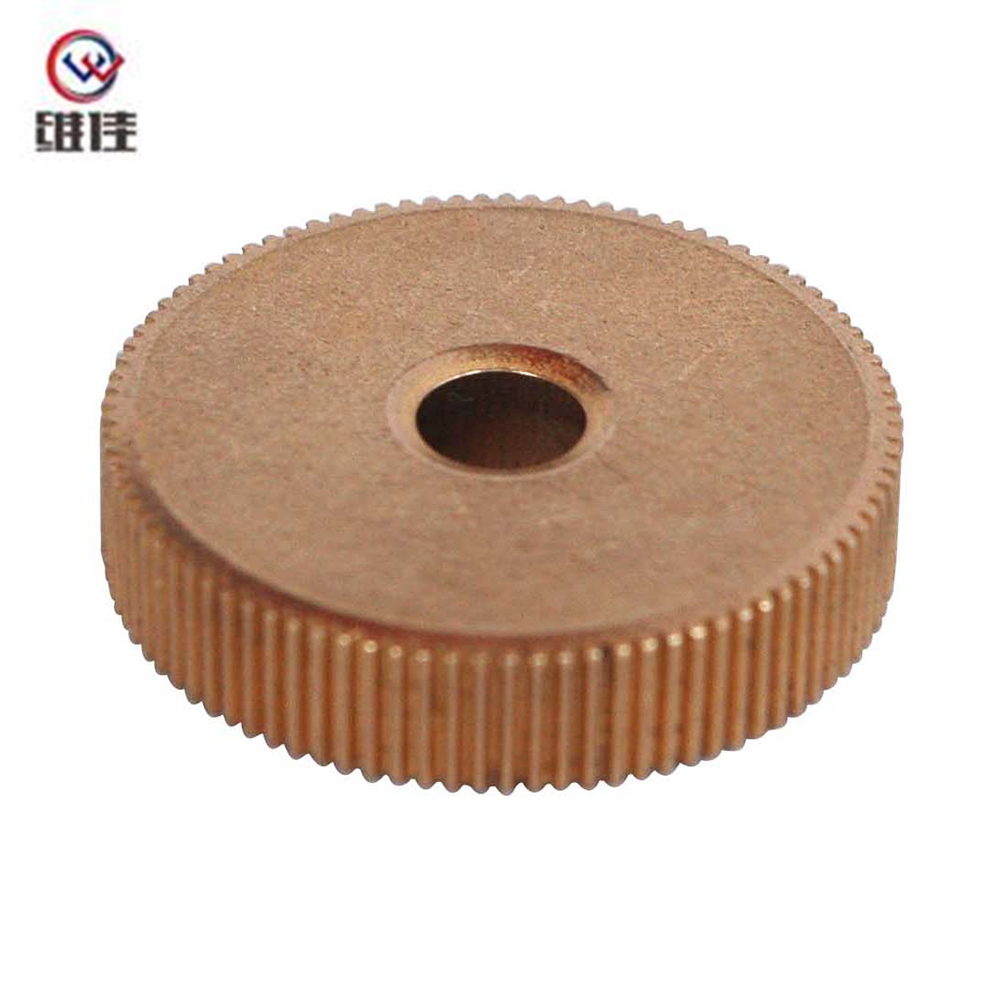
This 4×11.5×5.2mm powder metallurgy gear is manufactured through a precise press-sinter-through hole-oil impregnation process, with strict control of press density (6.7–6.8g/cm³) and sintering tempera...
See Details
Copyright © Jiande Welfine Technology Co., Ltd. All Rights Reserved. Custom Self-lubricating Sintered Bushing Manufacturers
