E-mail us: [email protected]
Tel: +86-15239857375
 English
 中文简体
中文简体

 Home / Author / Gao Manli — Overseas Sales Manager / Powder Metallurgy Self-Lubricating Tin Bronze Flanged Bushing for Reliable Motion Systems
 Powder Metallurgy Self-Lubricating Tin Bronze Flanged Bushing for Reliable Motion Systems
 2026.05.17
 Gao Manli — Overseas Sales Manager
Content
- 1 Product Overview
- 2 Why Self-Lubrication Matters
- 3 Core Advantages of the Tin Bronze Flanged Bushing
- 4 Material and Structural Characteristics
- 5 Manufacturing Process and Quality Control
- 6 Technical Parameters
- 7 Comparison with Alternative Bearing Solutions
- 8 Application Scenarios
- 9 Design Considerations for Proper Selection
- 10 Installation and Maintenance Guidance
- 11 Company Manufacturing Strengths
- 12 Packaging and After-Sales Support
- 13 How the Product Creates Value Across the Equipment Life Cycle
- 14 Common Customization Options
- 15 Performance Factors That Differentiate High-Quality Bushings
- 16 Q&A Section
- 16.1 What is a powder metallurgy self-lubricating tin bronze flanged bushing?
- 16.2 How does the bushing lubricate itself?
- 16.3 What are the main advantages compared with ordinary bronze bushings?
- 16.4 Can the dimensions be customized?
- 16.5 What materials are available?
- 16.6 What applications are suitable for this bushing?
- 16.7 What is the typical operating temperature range?
- 16.8 Does a self-lubricating bushing need any external oil or grease?
- 16.9 Why is the flange useful?
- 16.10 What quality certifications support production reliability?
- 17 Conclusion
- 18 References
In modern mechanical design, a small bearing component can determine whether a machine runs smoothly, quietly, and economically over its full service life. The powder metallurgy self-lubricating tin bronze flanged bushing is one of those critical parts. It combines the strength and wear resistance of tin bronze with the self-lubricating capability created by controlled porosity and oil impregnation. The result is a compact, maintenance-saving, and highly adaptable bushing designed for rotating, oscillating, and sliding applications in automotive systems, construction machinery, precision equipment, and general industrial mechanisms.
This product is especially valuable where conventional machined bronze bushings, plastic sleeves, or ordinary metal bearings struggle to deliver a balanced combination of load capacity, dimensional stability, lubrication reliability, and cost efficiency. Manufactured through powder metallurgy, the bushing is formed close to its final shape, sintered at high temperature, sized for accuracy, and impregnated with lubricating oil. During operation, the internal pores release oil to the contact surface and help form a stable lubricating film, reducing friction and wear without requiring frequent external lubrication.
The flanged design adds another important advantage. The integrated flange provides axial positioning, simplifies assembly, prevents unwanted movement, and improves the stability of the mating system. For equipment builders, this means faster installation, fewer auxiliary positioning parts, and more consistent alignment. For end users, it means smoother operation, reduced maintenance, and lower total ownership cost.
Product Overview
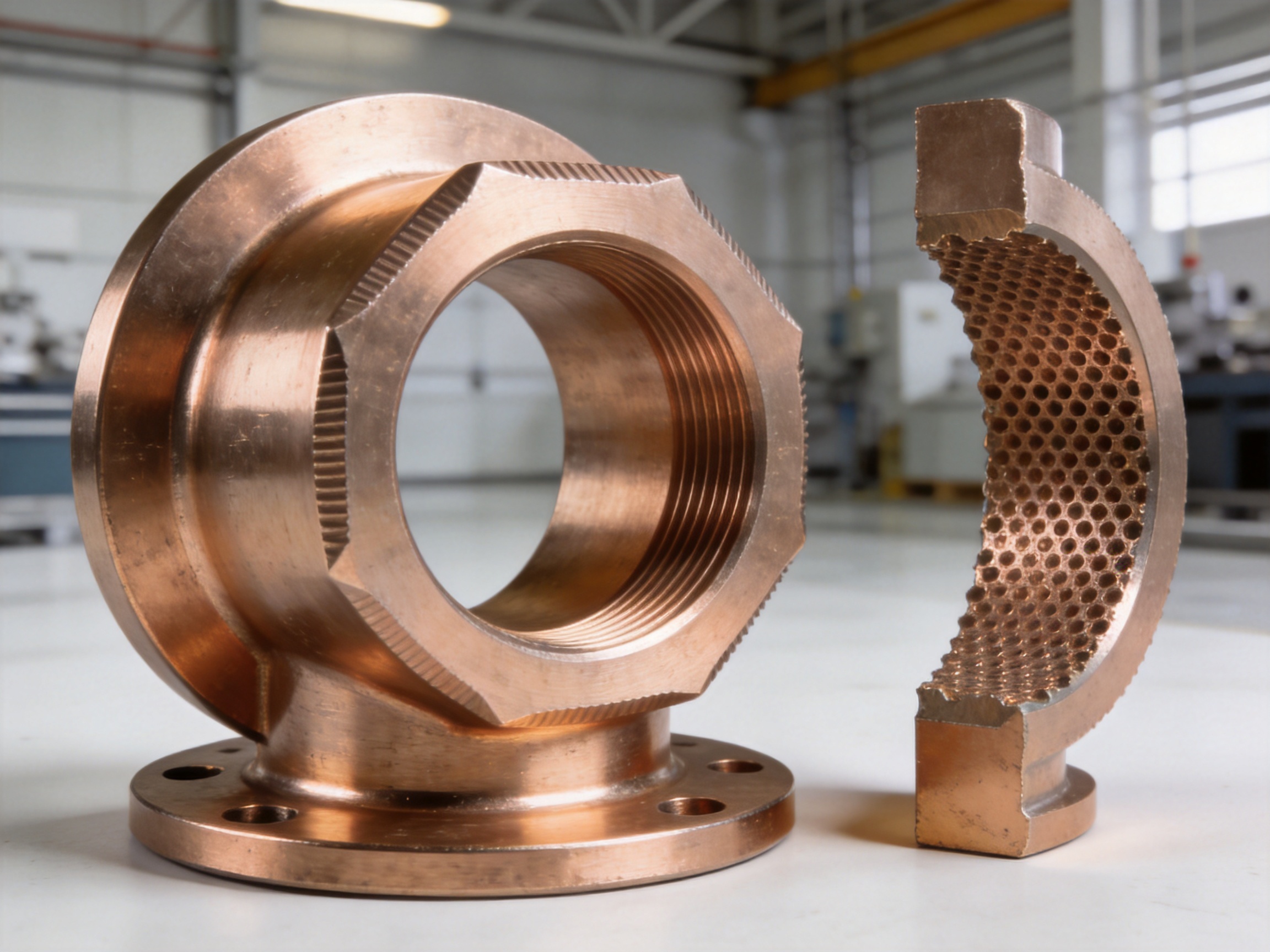
The powder metallurgy self-lubricating tin bronze flanged bushing is a bronze-based oil-impregnated bearing made from tin bronze powder, commonly available in grades such as CuSn6 or CuSn8. Through a controlled forming and sintering process, the material develops a network of uniformly distributed pores. These pores are then filled with lubricating oil through vacuum or pressure-assisted impregnation, enabling the bushing to provide lubrication from within its own structure.
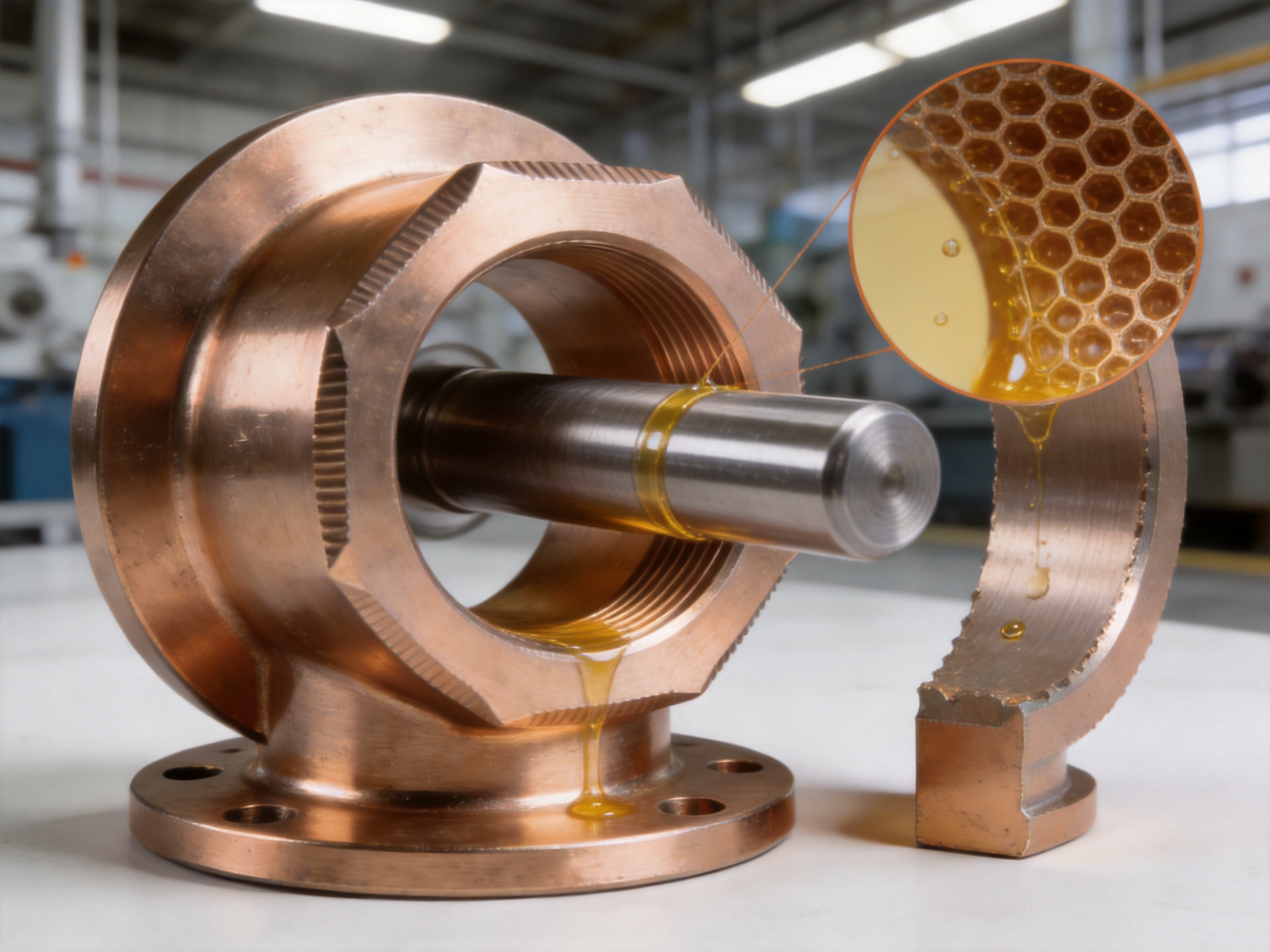
Unlike solid bronze bushings that depend heavily on grease channels, oil holes, or external maintenance schedules, this oil-impregnated bushing stores lubricant throughout its body. When the shaft begins rotating or oscillating, frictional heat and capillary action encourage oil to migrate toward the surface. When the motion stops, part of the oil is reabsorbed into the pores. This dynamic lubrication cycle is one of the core reasons powder metallurgy bronze bushings are widely used in machinery requiring dependable, low-maintenance sliding motion.
The tin bronze composition provides a strong balance of mechanical properties. Tin enhances wear resistance, corrosion resistance, and anti-seizure behavior. Bronze also has excellent compatibility with steel shafts, making it suitable for many industrial assemblies. When manufactured as a flanged bushing, the part can support radial loads while also helping manage axial location. This one-piece structure can replace more complex assemblies and reduce the number of components needed in a design.
Typical dimensions can be customized according to drawings or samples. Inner diameters may range from small precision sizes for office equipment to larger sizes used in industrial machinery and construction equipment. The product can be supplied with natural surface finish, phosphating, or tin plating depending on corrosion protection, appearance, and operating requirements.
Why Self-Lubrication Matters
Lubrication is one of the most important factors in bearing performance. Inadequate lubrication increases friction, generates heat, accelerates wear, and may cause seizure between the shaft and the bushing. In many machines, lubrication maintenance is difficult because the bearing position is hidden, exposed to dust, or located inside compact assemblies. In other applications, frequent greasing adds labor cost and increases downtime. A self-lubricating bushing reduces these problems by providing a built-in oil supply.
The powder metallurgy process gives this bushing a controlled porous structure. Instead of being a defect, porosity is intentionally engineered. The pores act as reservoirs that hold lubricating oil. A properly manufactured oil-impregnated bronze bushing can contain a significant amount of oil, with oil content of 18% or higher depending on material and design requirements. This oil is not only present on the surface; it is distributed inside the bearing wall, allowing continued lubrication over a long service period.
During motion, the oil film separates the bushing and the shaft as much as the operating conditions allow. This reduces direct metal-to-metal contact, lowering the friction coefficient and slowing wear. The result is quieter operation, reduced starting resistance, better energy efficiency, and longer replacement intervals. In applications such as seat adjustment mechanisms, brake pedals, textile machines, conveyor systems, and hydraulic equipment, this self-lubricating function can greatly improve reliability.
Compared with grease-lubricated bushings, oil-impregnated bronze bushings are cleaner and easier to install. They reduce the need for grease fittings, oil cups, lubrication lines, and manual service. Compared with polymer bushings, they offer better thermal stability, higher compressive strength, and improved dimensional reliability under load. Compared with rolling bearings, they are often more compact, more tolerant of oscillating motion, and better suited to certain low-speed or moderate-speed sliding applications.
Core Advantages of the Tin Bronze Flanged Bushing
Stable Self-Lubricating Performance
The most distinctive advantage of this bushing is its ability to lubricate itself. The internal pores formed during powder metallurgy are distributed throughout the material and filled with oil. This built-in lubrication helps the bearing continue working where external lubrication is limited or inconvenient. It also reduces the risk of maintenance omission, which is a common cause of premature bearing failure.
Self-lubrication is particularly useful in intermittent motion. When a mechanism starts and stops frequently, conventional hydrodynamic lubrication may not always be fully established. The oil-impregnated structure helps provide lubrication at startup, when wear risk is often high. This feature makes the bushing suitable for pedals, levers, hinge-like mechanisms, adjustment systems, and oscillating shafts.
High Wear and Seizure Resistance
Tin bronze is known for its wear resistance and compatibility with steel mating parts. In the bushing, the sintered bronze structure combines strength, toughness, and lubricity. The material resists adhesive wear and helps prevent seizure under demanding conditions. When properly selected and installed, the bushing can work reliably under high-speed, heavy-load, or mixed-friction situations within its rated limits.
Seizure resistance is essential in applications where equipment failure can cause costly downtime. In construction machinery, for example, pin bushings and hydraulic system components may face heavy loads, vibration, contamination, and uneven lubrication conditions. A tin bronze oil-impregnated bushing helps reduce the risk of sudden sticking or galling, supporting smoother mechanical movement.
Integrated Flange for Axial Positioning
The flange is more than a shape feature. It provides a practical assembly advantage. A flanged bushing can locate itself against a housing shoulder, preventing axial migration and simplifying installation. This is especially useful in production environments where assembly speed and repeatability matter.
Without a flange, designers may need additional spacers, retaining rings, shoulders, or washers to control axial position. A one-piece flanged bushing can reduce part count and improve alignment. It also helps protect the housing face in some applications by providing a broader contact area. The result is a more stable transmission structure and higher assembly efficiency.
Customizable Dimensions and Functional Adaptation
Many mechanical systems require bushings that match specific shafts, housings, tolerances, and load conditions. This product supports customization of inner diameter, outer diameter, length, flange diameter, flange thickness, chamfer, oil content, density, and surface treatment. Custom production based on customer drawings or samples allows the bushing to be optimized for the actual application rather than forcing the application to adapt to a standard part.
Customization is also valuable for replacement projects. When older equipment requires a bushing that is no longer readily available, a powder metallurgy manufacturer with strong tooling and forming capability can often reproduce or improve the part. For OEM projects, early engineering support can help optimize dimensions, material grade, and tolerance to balance cost and performance.
Cost Efficiency Through Near-Net-Shape Manufacturing
Powder metallurgy is a near-net-shape process. This means the component is formed close to the final geometry, reducing machining allowance and material waste. Compared with traditional solid bronze bushings machined from bar stock or cast blanks, powder metallurgy can significantly reduce cutting operations, scrap, and production time. In suitable quantities, the process can reduce costs by more than 30% compared with conventional copper bushing manufacturing methods.
Cost efficiency does not only mean a lower unit price. It also includes lower maintenance cost, reduced assembly time, longer service intervals, and fewer failures. The combination of self-lubrication, flange positioning, and accurate sizing helps lower the total cost of ownership for machinery manufacturers and end users.
Material and Structural Characteristics
The bushing is typically made from tin bronze powder, with grades such as CuSn6 or CuSn8 available according to application needs. Tin bronze offers good strength, fatigue resistance, corrosion resistance, and anti-friction behavior. The material is well suited for sliding contact with steel shafts and can perform reliably across a wide range of operating environments.
The density of the sintered material generally falls within the range of 6.2 to 6.8 g/cm³. This density range is important because it reflects the balance between mechanical strength and oil storage capacity. If density is too low, strength may be insufficient for higher loads. If density is too high, pore volume may be reduced and oil storage capacity may decline. Advanced powder metallurgy control allows the manufacturer to balance these requirements according to the intended use.
Oil content is another key parameter. With oil content at or above 18%, the bushing can provide a meaningful internal lubricant reserve. The actual oil type can be selected according to temperature, speed, load, and compatibility requirements. For general industrial use, standard lubricating oils are common. For special environments, alternative oils may be considered to improve oxidation stability, low-temperature performance, or high-temperature resistance.
The flange and sleeve are produced as a one-piece structure. This avoids weak joints and improves dimensional consistency. The inner bore can be sized to achieve precise tolerance, commonly reaching IT7 to IT8 accuracy depending on size and specification. Accurate bore geometry supports stable shaft fit, reduced vibration, and consistent lubrication film formation.
Manufacturing Process and Quality Control
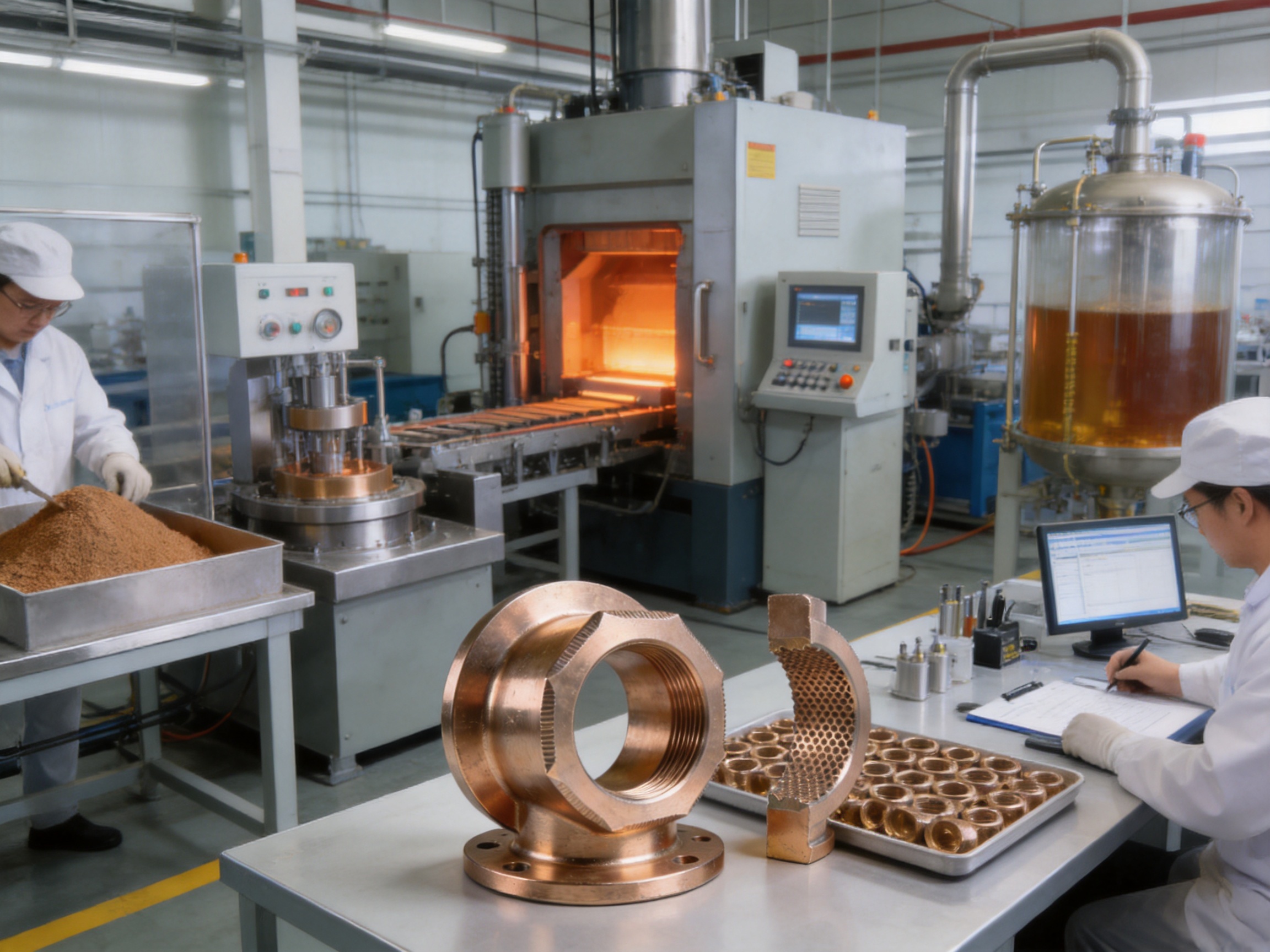
Powder Selection and Preparation
Manufacturing begins with the selection of appropriate bronze powder. Powder particle size, shape, purity, and composition influence compaction behavior, sintering response, pore distribution, and final mechanical properties. Tin content must be controlled to meet the required grade, and powder consistency is critical for stable batch-to-batch performance.
Before compaction, powders may be mixed with lubricants or additives to improve flowability and pressing behavior. Uniform mixing helps ensure that every part formed in the production batch has consistent composition and density distribution. This step is often overlooked by casual buyers, but it is fundamental to producing stable powder metallurgy components.
Precision Powder Compaction
In the compaction stage, the prepared powder is pressed into a die cavity under high pressure. The tool design defines the bushing shape, including the sleeve body and flange. Pressing pressure, fill accuracy, die alignment, and punch movement directly influence green density and dimensional consistency.
High-quality pressing equipment enables stable production of complex flanged shapes. Because the part is formed close to its final geometry, material waste is minimized. The ability to form a flange directly during compaction is a major advantage over machining-intensive methods. It allows higher productivity and better repeatability in serial production.
High-Temperature Sintering
After compaction, the green parts are sintered at high temperature in a controlled atmosphere. During sintering, powder particles bond together metallurgically, creating strength while preserving the porous network required for oil impregnation. Sintering temperature, time, atmosphere, and furnace uniformity must be carefully controlled.
Advanced sintering furnaces provide stable thermal profiles, helping each bushing achieve consistent mechanical properties. Poor sintering can lead to weak structures, unstable dimensions, oxidation, or inconsistent porosity. Proper sintering is therefore one of the most important factors separating reliable powder metallurgy bushings from low-grade alternatives.
Sizing for Dimensional Accuracy
After sintering, the bushing is sized to refine its dimensions and improve bore accuracy. Sizing is a controlled calibration process in which the sintered part is pressed through or against precision tooling. This improves roundness, diameter accuracy, and surface condition. For bearing applications, accurate sizing is essential because clearance between shaft and bushing strongly affects friction, noise, heat generation, and service life.
The product can achieve dimensional accuracy up to IT7 to IT8 depending on the specification. This level of precision supports stable assembly and reduces the need for secondary machining. For customers, accurate sizing means fewer rejected parts, easier installation, and more predictable mechanical performance.
Oil Impregnation
Oil impregnation fills the internal pores with lubricant. The process is commonly carried out using vacuum and pressure methods to remove air from the pores and replace it with oil. Proper impregnation ensures that oil is not merely coating the surface but is stored throughout the porous structure.
Impregnation quality can greatly affect performance. A bushing with insufficient oil may run dry prematurely, while a properly impregnated bushing can maintain lubrication over a longer period. Quality control may include checking oil content, weight gain, visual condition, and functional behavior. This step is central to the self-lubricating value of the product.
Surface Treatment Options
The bushing can be supplied with a natural finish for standard applications. Phosphating may be used to enhance rust prevention and surface compatibility. Tin plating can provide additional corrosion resistance and improve surface behavior in selected environments. The best surface option depends on storage conditions, working environment, mating materials, and customer requirements.
Inspection and Traceability
Consistent quality requires inspection throughout the production process. Important checks include material composition, density, hardness, dimensions, oil content, appearance, and packaging condition. For industrial customers, batch inspection reports provide confidence that parts meet agreed specifications. A controlled quality system also improves traceability, making it easier to identify and correct process variations.
Jiande Welfine Technology Co., Ltd. operates with ISO 9001:2015 and IATF 16949:2016 certified management systems. These certifications are especially important for customers in automotive and precision manufacturing fields, where process discipline, traceability, and stable production are required. The company’s experience in powder metallurgy sintering and precision machining supports both standard and customized bushing production.
Technical Parameters
Parameter |
Typical Value |
Practical Meaning |
Material |
Tin bronze, such as CuSn6 or CuSn8 |
Provides wear resistance, strength, and compatibility with steel shafts |
Oil Content |
18% or higher |
Supports long-term self-lubricating performance |
Density |
6.2 to 6.8 g/cm³ |
Balances strength and oil storage capacity |
Inner Diameter Range |
3 mm to 100 mm |
Suitable for small precision equipment and larger industrial assemblies |
Outer Diameter Range |
6 mm to 120 mm |
Adaptable to various housing designs |
Length Range |
5 mm to 100 mm |
Supports different load-bearing surface requirements |
Flange Diameter |
2 mm to 10 mm larger than outer diameter |
Improves axial positioning and assembly stability |
Operating Temperature |
-40°C to +220°C |
Works in broad industrial temperature conditions with suitable oil selection |
Ultimate PV Value |
2.5 MPa·m/s without oil lubrication |
Indicates load and speed capability under specified conditions |
Dimensional Accuracy |
Up to IT7 to IT8 |
Helps ensure reliable fit, alignment, and stable operation |
Comparison with Alternative Bearing Solutions
Designers often compare self-lubricating bronze flanged bushings with machined bronze bushings, polymer bushings, rolling bearings, and composite sliding bearings. Each type has its place, but the powder metallurgy tin bronze flanged bushing provides a particularly strong balance of performance, cost, and manufacturing flexibility.
Compared with machined solid bronze bushings, the powder metallurgy bushing offers internal oil storage rather than relying only on external grease or oil grooves. It also reduces material waste because it is formed near the final shape. Machined bronze bushings may be suitable for very high-load or special geometries, but they often require more machining time and higher raw material consumption.
Compared with polymer bushings, tin bronze has better heat resistance and higher load-bearing capacity. Polymers can be excellent for lightweight and corrosion-sensitive applications, but they may creep under sustained load or lose strength at elevated temperatures. Bronze offers better dimensional stability in many demanding mechanical environments.
Compared with rolling bearings, bronze bushings are simpler, more compact, and often more tolerant of oscillating movement. Rolling bearings perform well in continuous rotation with proper alignment, but they may be sensitive to shock loads, contamination, and very small oscillation angles. A self-lubricating bushing can be a more robust solution for pivots, linkages, pedals, and sliding shafts.
Compared with ordinary non-flanged sleeve bushings, the flanged version provides axial positioning and assembly convenience. It can eliminate extra locating components and reduce the chance of installation error. For mass production, this can improve efficiency and reduce cost.
Bearing Type |
Main Strength |
Common Limitation |
Advantage of Tin Bronze Flanged Bushing |
Machined solid bronze bushing |
High strength and traditional reliability |
Requires external lubrication and more machining |
Self-lubricating pores and lower material waste |
Polymer bushing |
Light weight and corrosion resistance |
Lower heat resistance and possible creep |
Better thermal stability and load capacity |
Rolling bearing |
Low friction in continuous rotation |
Sensitive to contamination, shock, and oscillation |
Compact, rugged, and suitable for sliding or oscillating motion |
Plain sleeve bushing |
Simple and economical |
Limited axial positioning |
Integrated flange improves location and assembly efficiency |
Application Scenarios
Automotive Industry
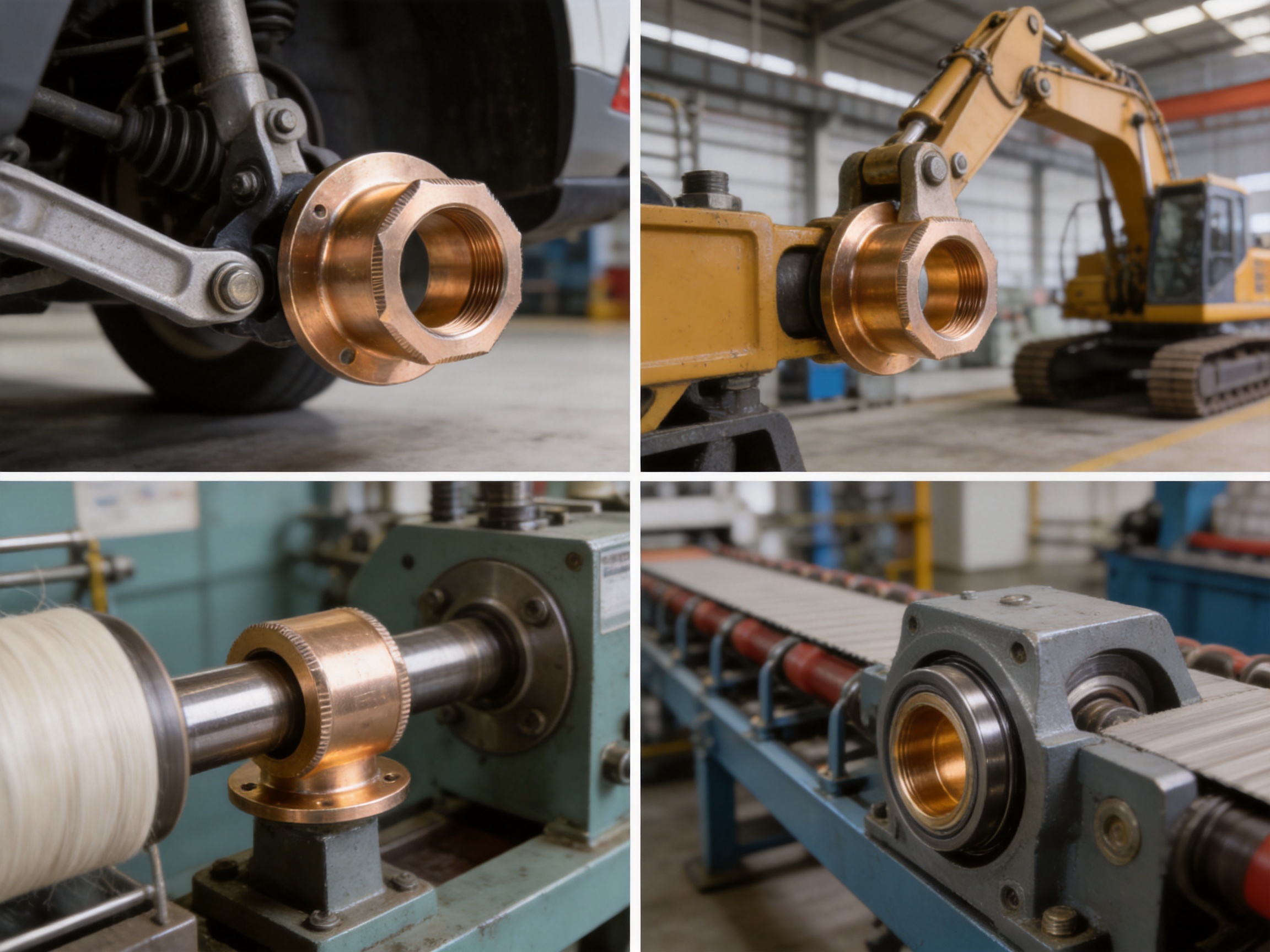
Automotive systems require components that are compact, durable, consistent, and suitable for high-volume production. The self-lubricating tin bronze flanged bushing can be used in steering systems, brake pedals, seat adjustment mechanisms, hinge points, and control linkages. These applications often involve repeated movement, moderate loads, and limited access for maintenance.
In brake pedal assemblies, smooth pivoting and low noise are important for driver comfort and safety perception. A bushing with reliable self-lubrication helps maintain consistent pedal feel. In seat adjustment systems, the bushing supports repeated sliding or rotational movement while reducing squeak and wear. In steering-related mechanisms, dimensional stability and wear resistance help maintain accurate motion transfer.
Construction Machinery
Construction machinery operates in harsh environments with dust, impact, vibration, and heavy loads. Excavators, loaders, hydraulic pumps, and valve groups require bushings that can resist wear and tolerate demanding service conditions. A tin bronze oil-impregnated flanged bushing is suitable for pin bushings, linkage points, pump supports, and hydraulic component assemblies within the appropriate load and speed range.
The self-lubricating structure reduces dependence on frequent greasing, while the bronze material provides strength and anti-seizure capability. In field conditions where maintenance may be delayed, a built-in oil reserve adds a useful layer of reliability. The flange also helps secure axial location in assemblies subject to vibration and repeated load changes.
Precision Equipment
Textile machinery, printing equipment, office equipment, and other precision machines require smooth, stable, and quiet motion. Bearings in these machines may be small, but their effect on product quality and operating noise can be significant. The powder metallurgy bushing offers accurate sizing, stable friction behavior, and low maintenance requirements.
In textile machinery, many moving elements operate continuously or repetitively. Reduced friction helps lower energy consumption and heat generation. In printing equipment, stable shaft support contributes to registration accuracy and smooth material feeding. In office equipment, low noise and compact size are valuable. The bushing’s self-lubricating nature helps keep these systems clean and reliable.
General Machinery
Motors, reducers, conveyors, agricultural machines, packaging equipment, and general industrial mechanisms all use sliding or rotating support points. A flanged bronze bushing can be installed in bearing housings, guide rollers, pivots, and transfer mechanisms. Its broad dimensional range makes it suitable for both small and medium-sized equipment.
For conveyor systems, durability and low maintenance are major priorities. For reducers and motors, stable support and controlled friction contribute to operating efficiency. For packaging machines, fast assembly and clean operation are important. In each case, the product provides a practical balance of economy and performance.
Design Considerations for Proper Selection
Although the self-lubricating tin bronze flanged bushing is versatile, correct selection is essential. Engineers should consider shaft diameter, housing bore, load, speed, temperature, operating cycle, lubrication environment, and alignment. The most important performance indicator is often the PV value, which represents the product of pressure and sliding velocity. Staying within recommended PV limits helps prevent excessive heat and wear.
Clearance between the shaft and bushing must be suitable for oil film formation and thermal expansion. If clearance is too small, the bushing may overheat or seize. If clearance is too large, the assembly may produce noise, vibration, or uneven wear. The recommended clearance depends on shaft size, load, speed, and temperature.
Shaft surface finish also affects performance. A shaft that is too rough may scrape away the oil film and accelerate wear. A shaft that is too soft may wear faster than the bushing. In many applications, a properly finished steel shaft provides good compatibility with tin bronze. Shaft hardness, coating, and surface roughness should be chosen based on the working environment.
Housing design is equally important. The housing bore should provide proper press fit without deforming the bushing excessively. Over-pressing may reduce internal clearance, while insufficient fit may allow the bushing to rotate in the housing. The flange should seat firmly against a flat surface to ensure axial positioning. Chamfers can help prevent damage during installation.
Temperature and oil selection should also be considered. The product can operate from -40°C to +220°C under appropriate conditions, but lubricant properties change with temperature. At low temperatures, oil viscosity increases, which may affect startup friction. At high temperatures, oxidation stability and evaporation resistance become important. For special applications, the oil type should be selected carefully.
Installation and Maintenance Guidance
Proper installation helps the bushing deliver its intended service life. Before installation, the housing bore and shaft should be clean and free from burrs, chips, and abrasive particles. The bushing should be handled carefully to avoid damaging the bore, flange, or oil-impregnated surface. If the bushing has been stored for a long period, it should remain protected from contamination and excessive heat.
Press fitting is usually recommended. The pressing force should be applied evenly and aligned with the bushing axis. For a flanged bushing, pressure should not be applied in a way that bends or cracks the flange. Installation tools should contact the correct surface and avoid scratching the inner bore. After pressing, the bore size should be checked if the application requires high precision.
Although the bushing is self-lubricating, some applications may benefit from initial assembly oil or supplemental lubrication, especially during running-in or under severe conditions. However, incompatible greases or oils should be avoided. If additional lubrication is used, it should match the operating temperature and material requirements.
Maintenance is generally simpler than with traditional bushings. Regular inspection may include checking noise, temperature, shaft play, and wear. If the mechanism operates in a dusty or abrasive environment, seals or protective design measures may extend service life. When replacement is needed, the bushing can typically be pressed out and replaced without major modification to the assembly.
Company Manufacturing Strengths
Jiande Welfine Technology Co., Ltd. was established in 2001 and has developed into a high-tech enterprise integrating research and development, production, and sales. The company focuses on powder metallurgy sintering and related precision machining, with core products including powder metallurgy bushings, self-lubricating bushings, and various precision structural parts.
The company operates a modern production base of 13,039 square meters and is equipped with advanced production and testing equipment. High-efficiency presses support stable compaction of powder metallurgy parts. High-temperature sintering furnaces provide controlled metallurgical bonding. Precision forming machines and sizing equipment help achieve accurate dimensions required for bearing applications.
With more than 20 years of industry experience and over 150 skilled employees, the company can provide OEM and ODM customized bushing solutions based on customer drawings or samples. This capability is especially valuable for customers who need non-standard dimensions, special materials, trial production, or design improvement support. The company supports small-batch trial production as well as larger production runs, allowing customers to validate performance before scaling up.
Quality management is a major strength. The company has passed ISO 9001:2015 and IATF 16949:2016 certifications, demonstrating disciplined process control and suitability for demanding industrial and automotive supply chains. Full-process inspection can include raw material verification, dimensional measurement, density testing, oil content checks, appearance inspection, and batch reporting. Stable quality helps customers reduce assembly problems and field failures.
Another advantage is delivery efficiency. Standard parts may be available from stock, while customized parts can often be delivered within 7 to 15 days depending on complexity and order conditions. Fast response is important for equipment manufacturers facing prototype schedules, production line maintenance, or urgent replacement needs.
The company also provides practical technical support for selection, installation, and maintenance. This service helps customers choose suitable materials, dimensions, tolerances, and surface treatments. A bushing is not only a purchased component; it is part of a working tribological system. Supplier engineering support can make the difference between average performance and optimized service life.
Packaging and After-Sales Support
Bronze oil-impregnated bushings must be protected during storage and transportation. Independent moisture-proof packaging helps prevent oxidation, contamination, and mechanical damage. Proper packaging also preserves surface quality and helps maintain cleanliness before assembly. For international shipments or long storage periods, packaging quality is especially important.
After-sales support includes a 12-month warranty, with free replacement for non-human-induced damage according to agreed conditions. Technical assistance is available for selection, installation, and maintenance guidance. This support reduces risk for customers using the product in new designs or challenging operating environments.
Reliable after-sales service reflects confidence in manufacturing quality. It also helps build long-term cooperation, especially for OEM customers who require stable supply, repeated orders, and continuous improvement. When a supplier understands powder metallurgy, bearing application requirements, and customer production realities, it can provide more than parts; it can provide practical solutions.
How the Product Creates Value Across the Equipment Life Cycle
The value of a bushing should be evaluated across the full equipment life cycle, not only by purchase price. At the design stage, the powder metallurgy flanged bushing offers dimensional flexibility and compact integration. The flange can reduce the need for separate thrust washers or positioning parts. The self-lubricating structure can simplify lubrication design. Near-net-shape production can reduce part cost once tooling is established.
At the assembly stage, the flanged design improves positioning and reduces installation uncertainty. Workers can press the bushing into place until the flange seats against the housing. This makes the assembly process more intuitive and repeatable. Reduced part count can also lower inventory complexity and prevent missing-component errors.
During operation, the internal oil reserve reduces friction, noise, and wear. The bushing can operate reliably in locations where manual lubrication is inconvenient. Reduced maintenance frequency improves equipment availability and lowers labor costs. In many industrial settings, avoiding one unplanned shutdown is worth far more than the cost of the bearing component itself.
At the replacement stage, a standardized or customized bushing can be replaced quickly. If the design is optimized from the beginning, the housing and shaft can be preserved, reducing repair cost. For OEM customers, consistent supply and batch traceability also reduce long-term procurement risk.
Common Customization Options
Customization can be applied to geometry, material, performance, and surface condition. Geometric customization includes inner diameter, outer diameter, length, flange diameter, flange thickness, chamfers, grooves, and special profiles. These dimensions can be designed according to the shaft and housing requirements of the customer’s equipment.
Material customization includes selecting tin bronze grades such as CuSn6 or CuSn8. Density and porosity can be adjusted within practical limits to balance load capacity and oil storage. Oil type can also be selected for temperature, speed, and environmental requirements. For special equipment, the lubricant may need improved oxidation resistance, low-temperature flow, or compatibility with surrounding materials.
Surface treatment customization includes natural finish, phosphating, and tin plating. Natural finish is suitable for many standard applications. Phosphating can improve rust resistance and may support better surface behavior in certain conditions. Tin plating can enhance corrosion protection and appearance while supporting specific assembly requirements.
Inspection and documentation can also be customized. Some customers require dimensional inspection reports, material certificates, process control data, or sample approval documents. For automotive or high-reliability applications, documentation is often part of the purchasing requirement. A supplier with strong quality systems can support these needs more effectively.
Performance Factors That Differentiate High-Quality Bushings
Not all powder metallurgy bushings are equal. Performance depends on powder quality, compaction uniformity, sintering control, pore distribution, sizing accuracy, oil impregnation, and inspection discipline. A low-cost bushing that lacks process control may have inconsistent density, poor oil content, irregular dimensions, or weak sintered structure. These problems can lead to noise, early wear, cracking, or seizure.
A high-quality bushing has uniform porosity that stores and releases oil predictably. Its bore is round and accurately sized. Its flange is flat and properly formed. Its material has sufficient strength for the specified load. Its surface is clean, and its oil impregnation is complete. These details are not always visible at first glance, but they become obvious during assembly and long-term operation.
Manufacturing experience is therefore critical. A company with decades of powder metallurgy experience understands how pressing parameters, sintering conditions, tooling wear, and oil impregnation methods interact. This expertise helps maintain stable production and solve application-specific challenges. For customers, choosing a capable manufacturer reduces the risk of hidden quality issues.
Q&A Section
What is a powder metallurgy self-lubricating tin bronze flanged bushing?
It is a sleeve-type sliding bearing with an integrated flange, made from sintered tin bronze powder. The porous structure is filled with lubricating oil, allowing the bushing to provide self-lubrication during operation. The flange helps with axial positioning and easier installation.
How does the bushing lubricate itself?
The powder metallurgy process creates interconnected pores inside the bronze structure. These pores are filled with oil during impregnation. When the bushing operates, heat and capillary action help release oil to the sliding surface. When operation stops, some oil can return into the pores.
What are the main advantages compared with ordinary bronze bushings?
The main advantages are built-in oil storage, reduced maintenance, lower friction, near-net-shape cost efficiency, and integrated flange positioning. Ordinary solid bronze bushings often require more external lubrication and more machining.
Can the dimensions be customized?
Yes. Inner diameter, outer diameter, length, flange diameter, flange thickness, chamfer, material grade, density, oil type, and surface treatment can be customized according to drawings or samples.
What materials are available?
The product is commonly made from tin bronze, including grades such as CuSn6 and CuSn8. These materials offer good wear resistance, strength, corrosion resistance, and compatibility with steel shafts.
What applications are suitable for this bushing?
Suitable applications include automotive steering systems, brake pedals, seat adjustment mechanisms, excavator and loader pin bushings, hydraulic pump and valve components, textile machinery, printing equipment, office equipment, motors, reducers, conveyors, and general machinery bearing housings.
What is the typical operating temperature range?
The typical operating temperature range is -40°C to +220°C, depending on oil selection, load, speed, and surrounding conditions.
Does a self-lubricating bushing need any external oil or grease?
In many applications, it can operate without frequent external lubrication. However, initial assembly lubrication or supplemental lubrication may be useful under severe loads, high speeds, contamination, or special working conditions. Lubricant compatibility should be confirmed.
Why is the flange useful?
The flange provides axial positioning, prevents movement along the shaft direction, simplifies installation, and may reduce the need for additional washers, spacers, or retaining parts.
What quality certifications support production reliability?
The manufacturer operates under ISO 9001:2015 and IATF 16949:2016 quality management systems, supporting consistent production, traceability, and process control for industrial and automotive customers.
Conclusion
The powder metallurgy self-lubricating tin bronze flanged bushing is a practical and high-value solution for modern motion systems. It combines self-lubricating performance, tin bronze wear resistance, accurate sizing, integrated axial positioning, and cost-efficient near-net-shape manufacturing. These advantages make it suitable for automotive assemblies, construction machinery, precision equipment, and general industrial mechanisms.
Its performance comes from the combination of material science and manufacturing control. Controlled porosity stores lubricating oil. High-temperature sintering creates a durable bronze structure. Sizing improves dimensional precision. Oil impregnation enables reliable self-lubrication. Surface treatments and customization options allow adaptation to different operating environments.
Compared with many competing bearing solutions, the tin bronze flanged bushing offers a strong balance of strength, lubrication reliability, thermal stability, assembly efficiency, and cost control. Supported by experienced powder metallurgy manufacturing, certified quality systems, advanced equipment, and responsive customization service, it provides equipment manufacturers and maintenance teams with a dependable component for long-lasting mechanical performance.
References
1. German, R. M. Powder Metallurgy and Particulate Materials Processing. Metal Powder Industries Federation.
2. ASM International. ASM Handbook, Volume 7: Powder Metal Technologies and Applications.
3. Neale, M. J. The Tribology Handbook. Butterworth-Heinemann.
4. Stachowiak, G. W., and Batchelor, A. W. Engineering Tribology. Butterworth-Heinemann.
5. Metal Powder Industries Federation. Standard Test Methods for Metal Powders and Powder Metallurgy Products.
6. ISO 9001:2015. Quality Management Systems Requirements.
7. IATF 16949:2016. Quality Management System Requirements for Automotive Production and Relevant Service Parts Organizations.

Related products
-
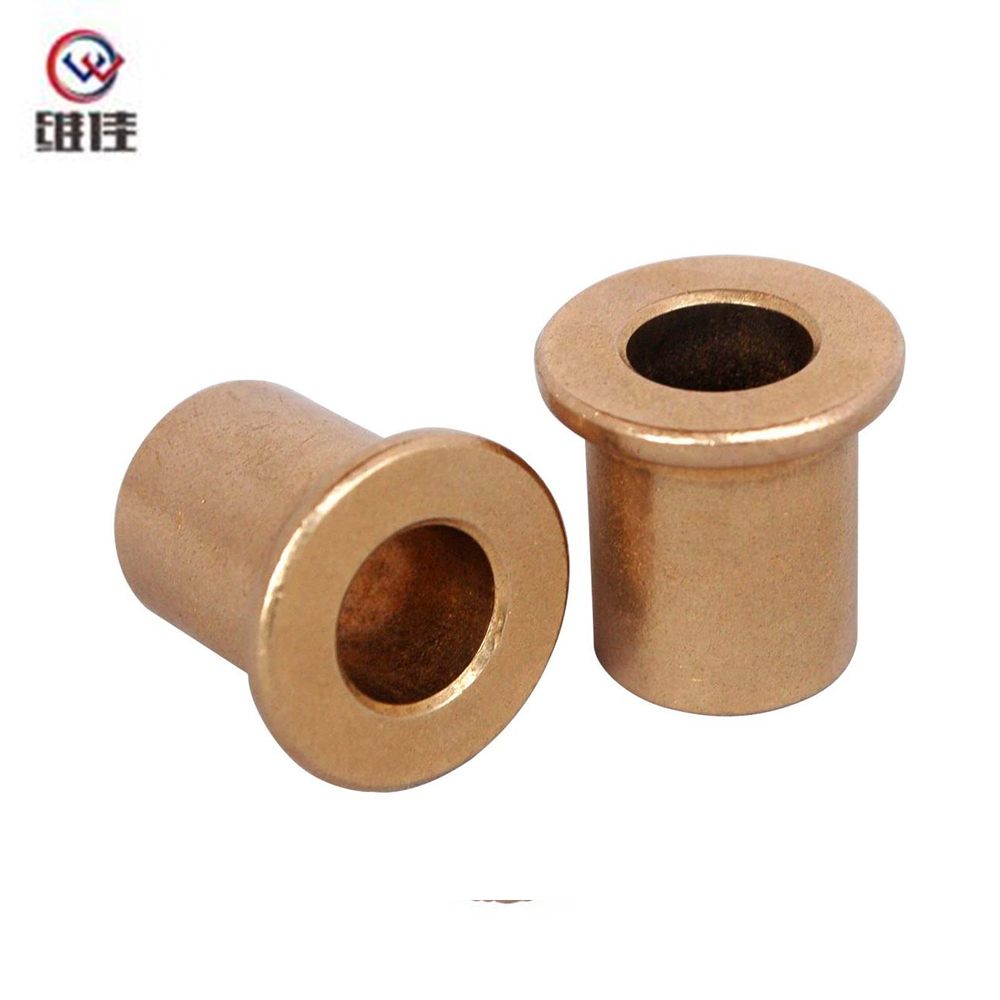
-
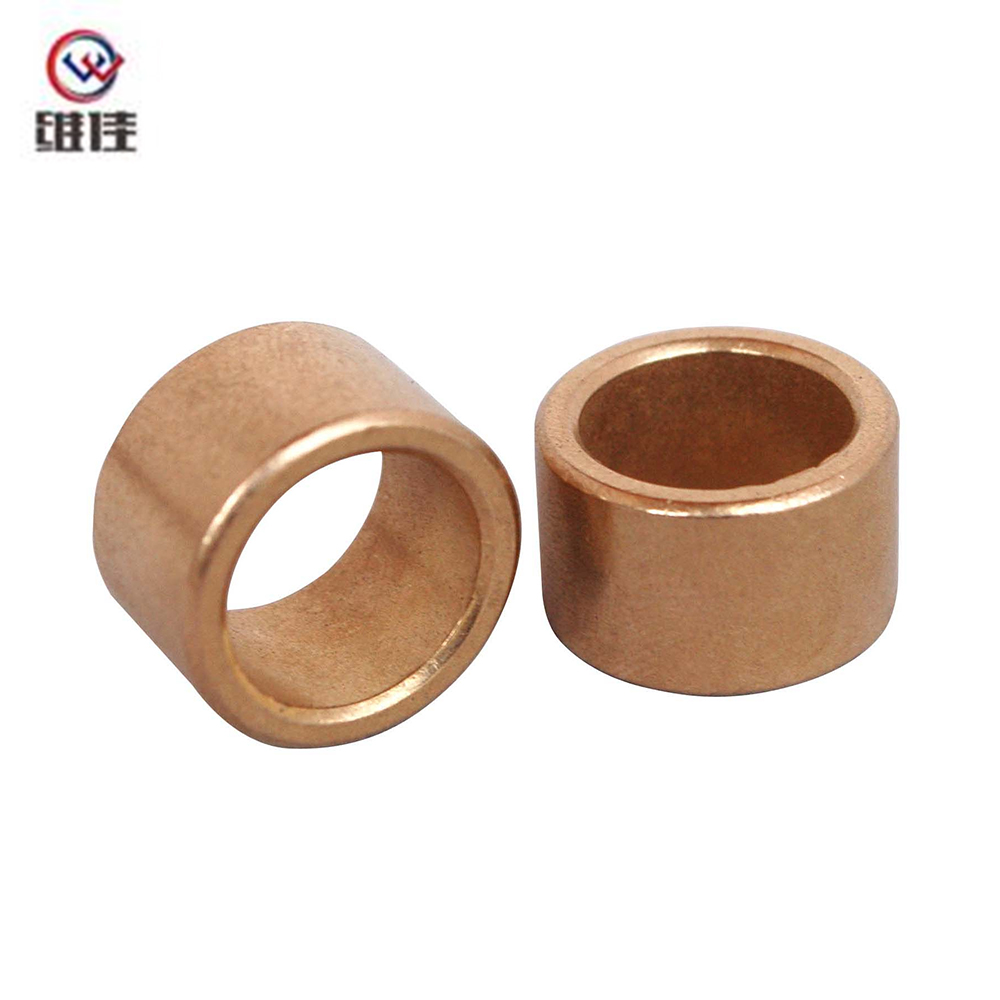
This copper-based powder metallurgy bushing is manufactured through an integrated process of compaction, sintering, sizing, and oil impregnation. It features excellent wear resistance and self-lubrica...
See Details -
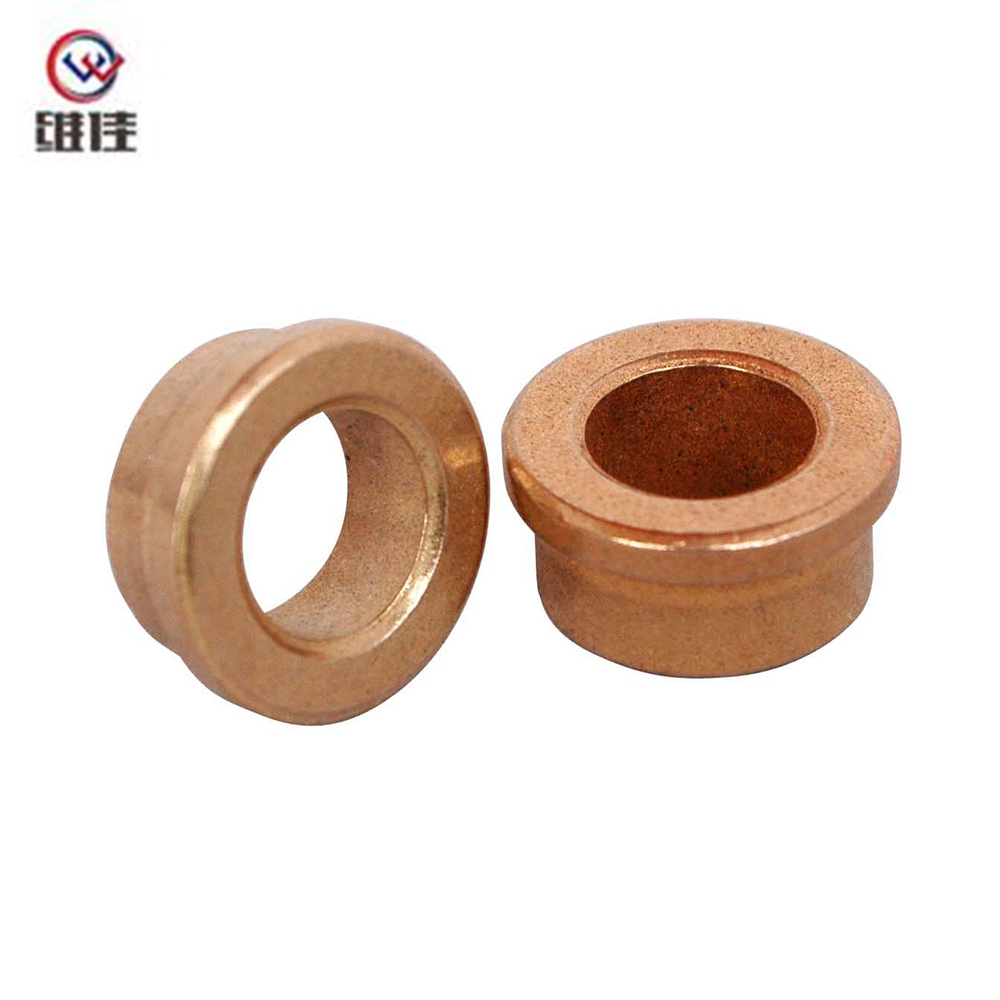
Premium Material: Our flange bushing is crafted from Sint B50 oil-impregnated bronze, featuring an 18% oil content. The high-quality tin bronze material ensures exceptional hardness, wear resistance, ...
See Details -
Description: Custom powder metallurgy planetary gear with high precision, wear resistance for automotive, industrial machinery & home appliances. OEM/ODM supported.
See Details
Copyright © Jiande Welfine Technology Co., Ltd. All Rights Reserved. Custom Self-lubricating Sintered Bushing Manufacturers
